

22 Mediterranean Wedding Ideas for Couples Who Love Olive Groves and Long Lunches
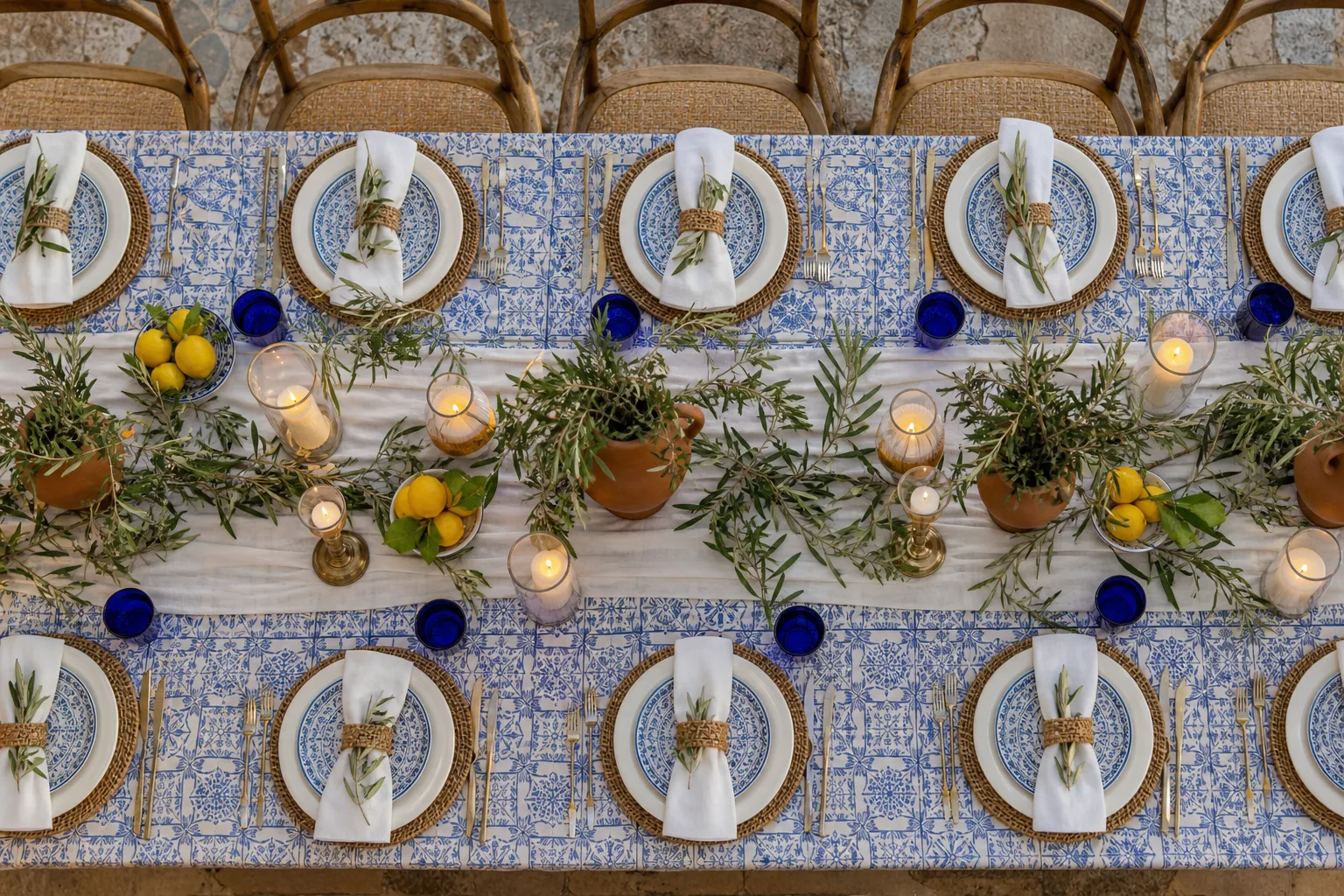
Picture the kind of wedding where lunch runs long, nobody checks a watch, and the olive trees are doing half the decorating for free. That is the whole promise of a Mediterranean wedding: terracotta, azure blue and ivory, warmed up with brass and citrus, carried from the biggest table to the smallest favor box.
The motif is olive and citrus, and it never sits still in one spot. Olive branches lie flat down the table, stand potted behind the altar, get tucked into the bouquet, then print themselves onto the invitation. Citrus does the same journey from centerpiece to cake to place card.
This suits an outdoor wedding in warm weather best: a courtyard, a terrace, a barn with the doors open, anywhere the light is good and the guests can wander. For more ways to dress the wider reception once this palette is set, there is 34 Wedding Decor Ideas Couples Are Choosing for Next Season.
This post contains affiliate links. If you buy through them, I may earn a small commission at no extra cost to you.
Table of Contents
The Reception Table
Start with the table everyone will sit at for hours, because in this theme the table is the whole room. Everything else, from the cake to the favors, is scaled down from what happens here.
Long Table Garlanded with Olive Branches
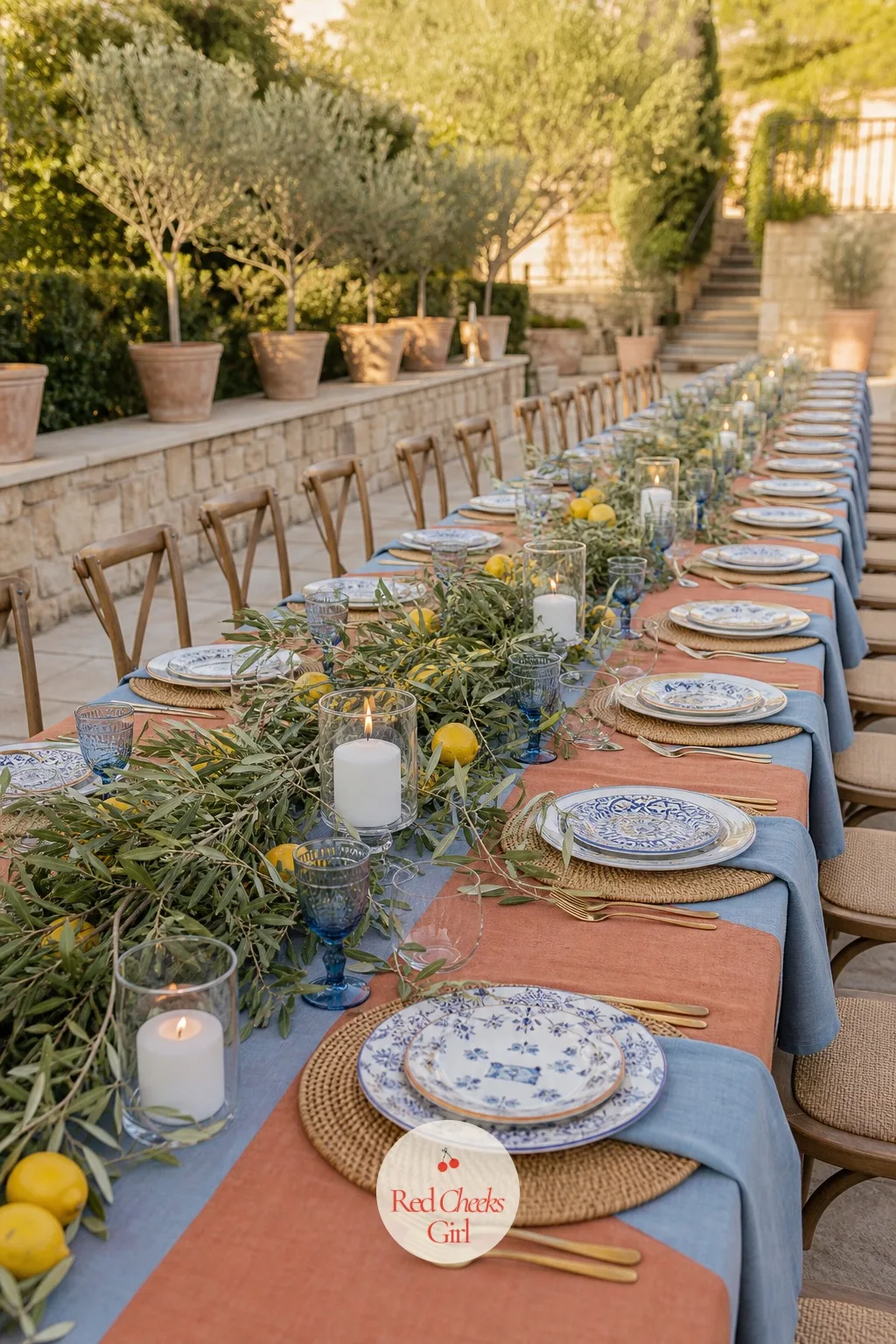
One long table beats a row of round ones here: nobody eats at the far end of the room, and everyone can see the bride without craning. Picture trestle tables pushed end to end under a terracotta and dusty blue runner, with loose olive branches laid flat down the centre instead of piled into tall arrangements.
From the bottom up: the tables themselves, a double runner on top, olive branches laid loose (not wired or arranged), then short glass hurricanes with taper candles set directly among the branches so the line stays low enough to talk across.
Tell the rental company you need farm tables and runners in terracotta and dusty blue, long enough to overlap by a foot where they meet. Tell the florist fresh olive branches by the yard, laid flat, no wire.
Branches you can cut yourself from a garden centre olive tree, the glassware is worth ordering in bulk. If fresh olive branches are not available locally, bay leaf garland keeps the same silvery green and lies just as flat.
🛍 Shop this look
Terracotta and Blue Glass Tablescape
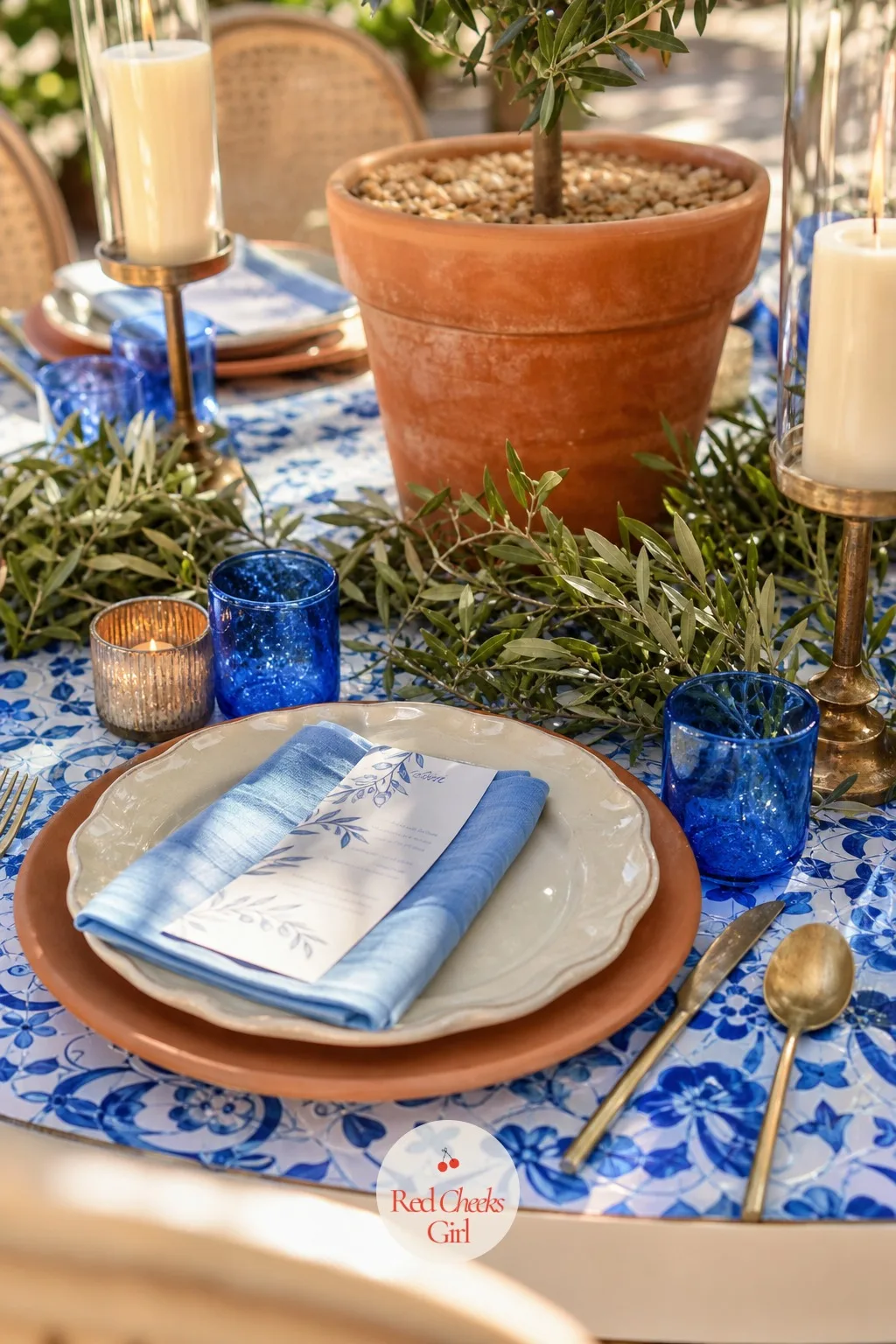
Plain white plates would read like any other wedding, and that is exactly the problem this solves. Set each place with a terracotta charger, a hand-painted ceramic dinner plate, and a cobalt or azure glass tumbler, so the colour sits at every seat before a single flower goes down.
Bottom to top: terracotta charger, glazed stoneware plate in cream or sand, folded linen napkin in clay or azure, then the glassware: a tall water glass and a short tumbler in blue glass. Give the rental company this line: terracotta chargers, cream glazed dinner plates, and blue glass tumblers and water goblets, one set per guest.
Chargers and napkins are easy to buy outright and keep afterward; the glassware is almost always cheaper and safer to rent by the dozen. If blue glass is hard to source in quantity, clear glass with a cobalt rim does the same job from a few feet away.
🛍 Shop this look
Citrus Centerpieces in Copper Pots
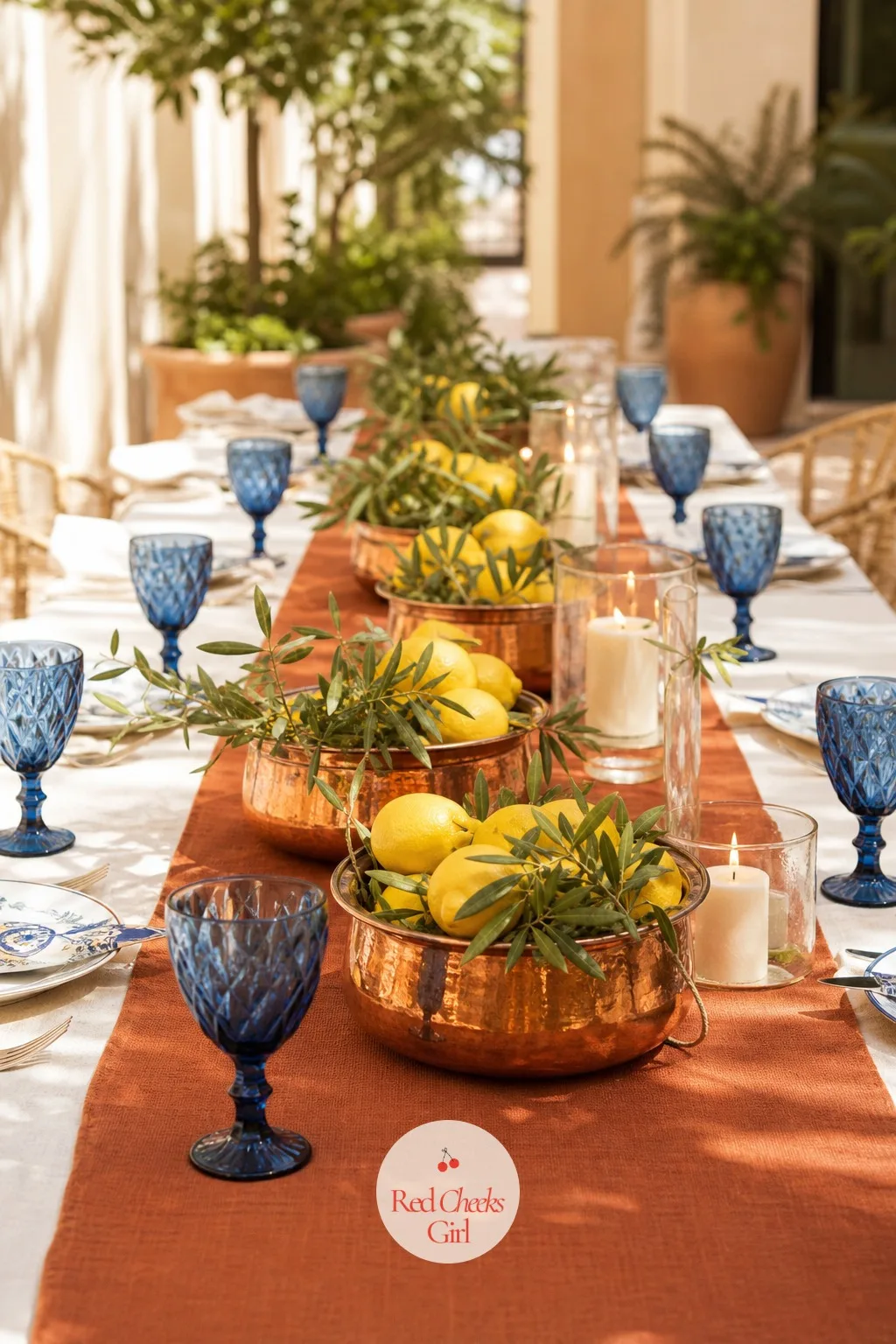
A tall floral centerpiece blocks the conversation across the table, which defeats the point of a long table in the first place. Swap it for squat copper pots of fresh lemons and olive foliage, set low enough that guests can see straight over them.
Each pot sits directly on the runner: copper or terracotta vessel, a handful of lemons piled inside, a few stems of olive or rosemary tucked through the top. Ask the florist for mixed citrus in copper or terracotta pots, lemons with stems and leaves left on where possible, kept under eight inches tall.
Real lemons with their leaves look best and cost little; faux citrus is the sensible swap for a wedding weeks away or a very hot room where fruit will sweat. Either way this is one you can assemble yourself the morning of, no florist required.
Woven Rattan Chargers and Menus
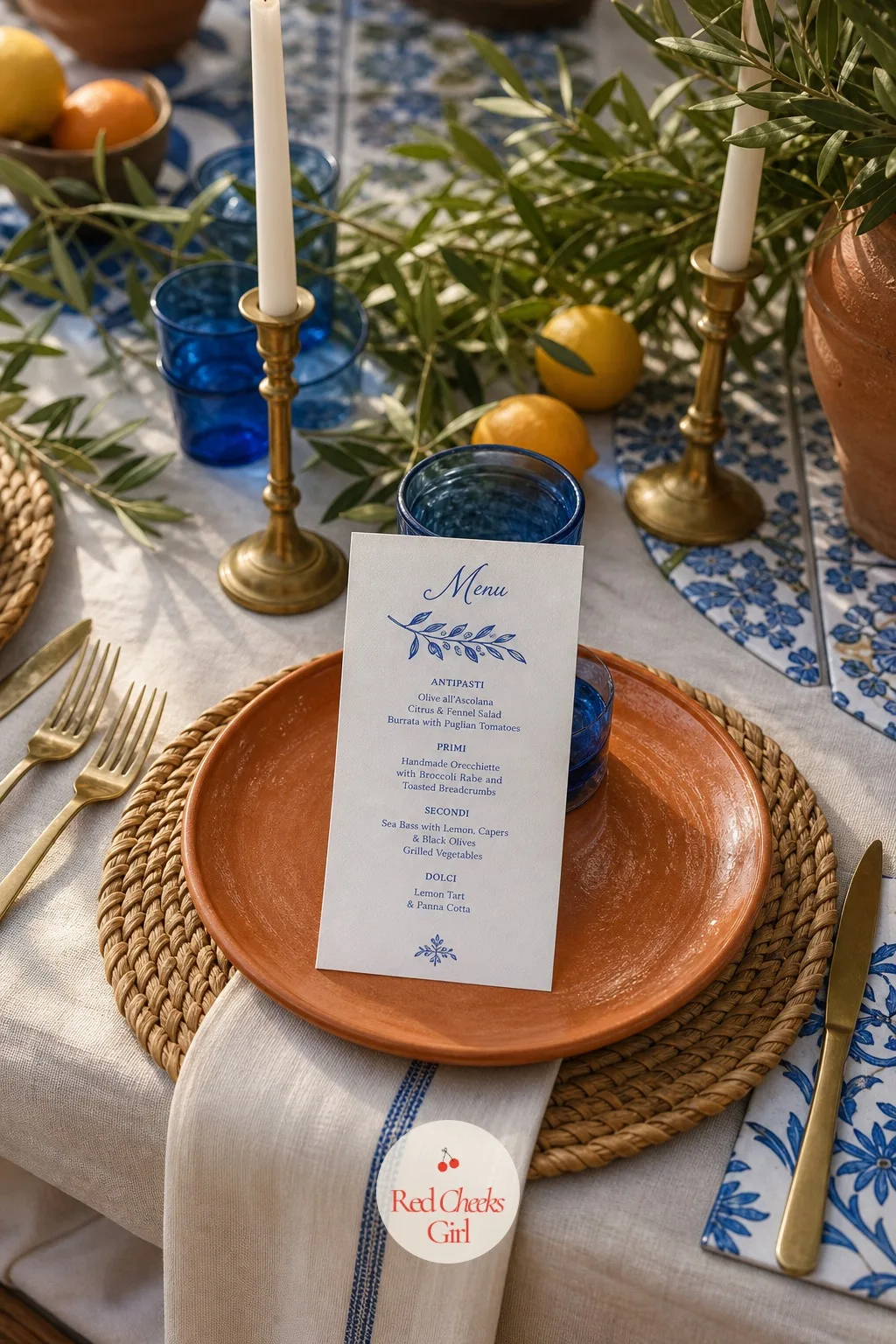
A plain paper menu card looks fine, but a woven charger underneath every place setting is the kind of detail a guest actually picks up and touches before she even sits down. Layer a round rattan charger beneath the terracotta one, with a small printed menu tucked on top.
Built from the table up: woven rattan charger, terracotta charger, plate, then a folded menu card printed in navy or terracotta ink resting against the glass. Tell the printer you want menu cards in a serif font, navy or terracotta ink on ivory stock, sized to sit against a water glass.
Rattan chargers are an easy bulk buy and reusable for a future dinner party, while the printed menus are worth having professionally done since they double as a small keepsake.
🛍 Shop this look
The Ceremony Space
The ceremony only needs a handful of strong pieces: something to stand in front of, something lining the walk, something underfoot. Keep it loose rather than built up, the Mediterranean does not do fussy altars.
Ceremony Backdrop of Potted Olive Trees
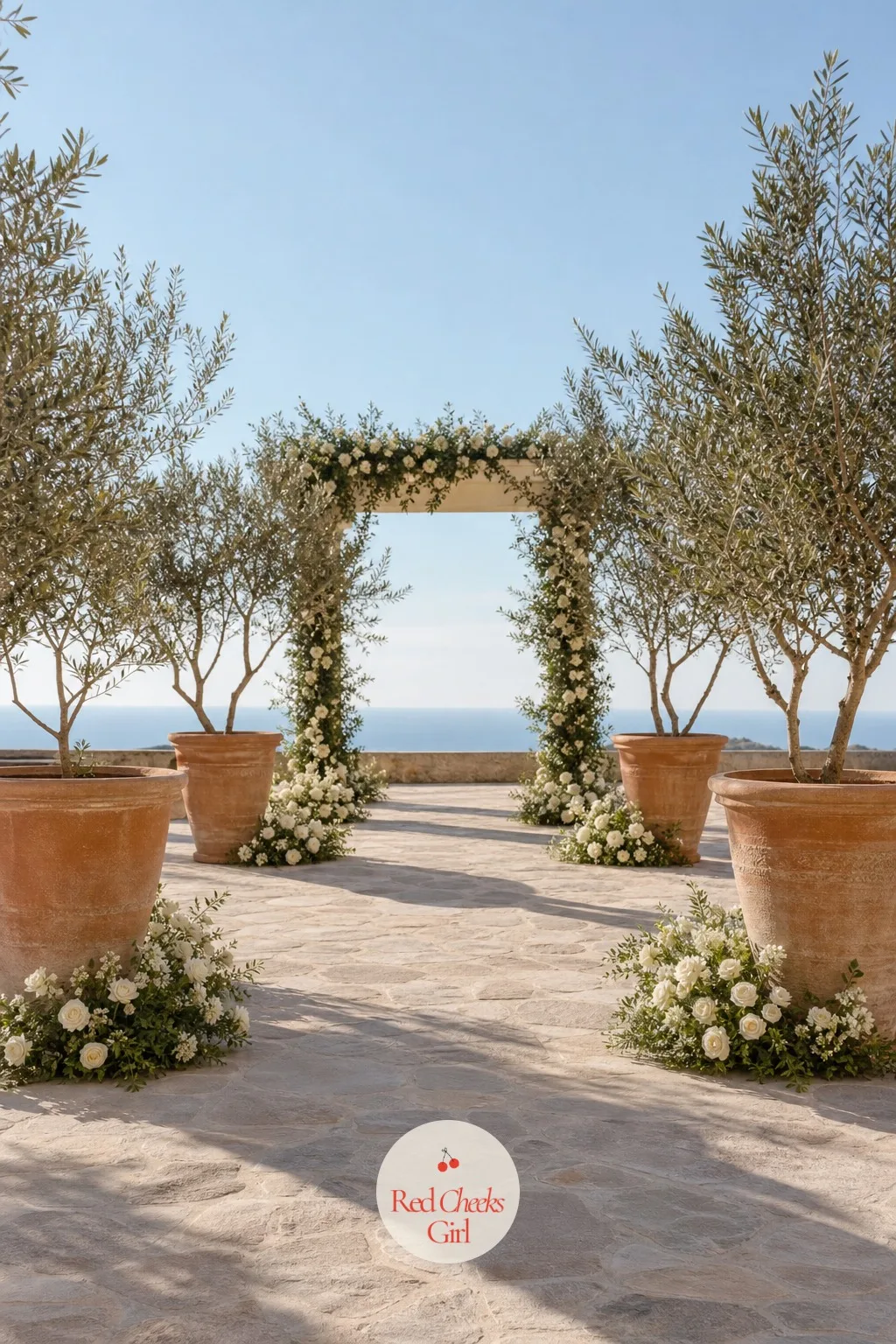
An arch covered in flowers can swallow the whole budget before the reception even starts. A line of potted olive trees does the same job of framing the couple, costs far less, and can be rented back for the lounge or the long table afterward.
Build it simply: large terracotta pots on the ground, full-grown potted olive trees standing in them, a scatter of white roses or ranunculus tucked low at the base of each pot, nothing wired overhead. Tell the rental company you need four to six potted olive trees in terracotta pots, five to six feet tall, delivered the morning of the ceremony.
Renting the trees is almost always cheaper than buying and far easier than moving; a florist can add the low white blooms at the base in minutes. Where potted olive trees are not available, tall potted rosemary or bay topiaries hold the same shape.
🛍 Shop this look
Aisle Lined with Terracotta Urns
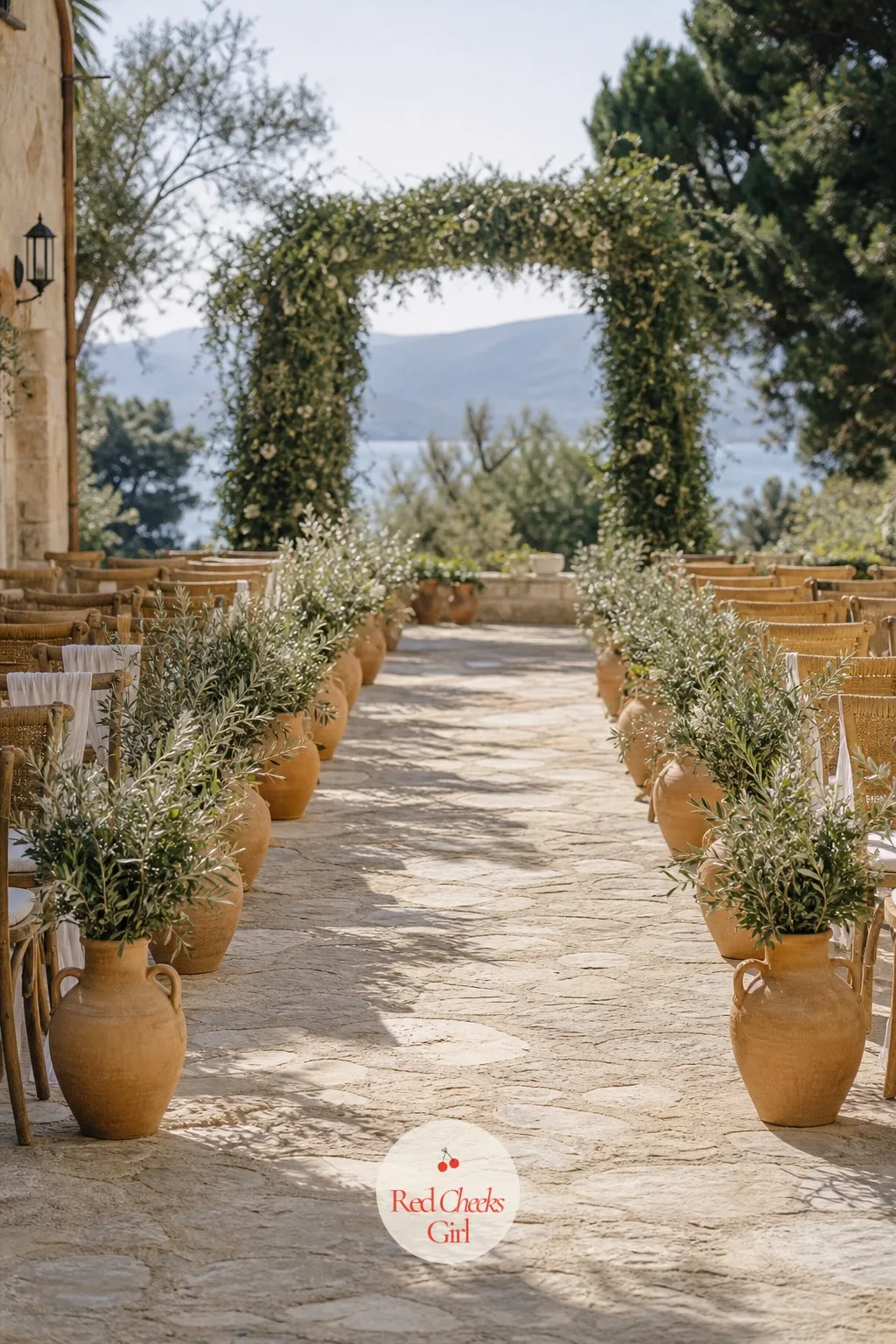
An empty aisle looks unfinished next to a dressed altar, but it does not need its own florist budget to fix. A pair of terracotta urns every few rows, each holding a loose bunch of olive and rosemary, pulls the eye straight down toward the couple.
Each urn stands directly on the ground or on a low stone plinth, with stems simply dropped in rather than arranged, so there is nothing to wilt before the ceremony starts. Ask the florist for loose olive and rosemary bunches, unwired, in terracotta urns spaced every third row.
These are easy to assemble an hour before the ceremony if someone is willing, and the urns themselves can be reused at the entrance to the reception.
🛍 Shop this look
Hand-Painted Tile Aisle Runner
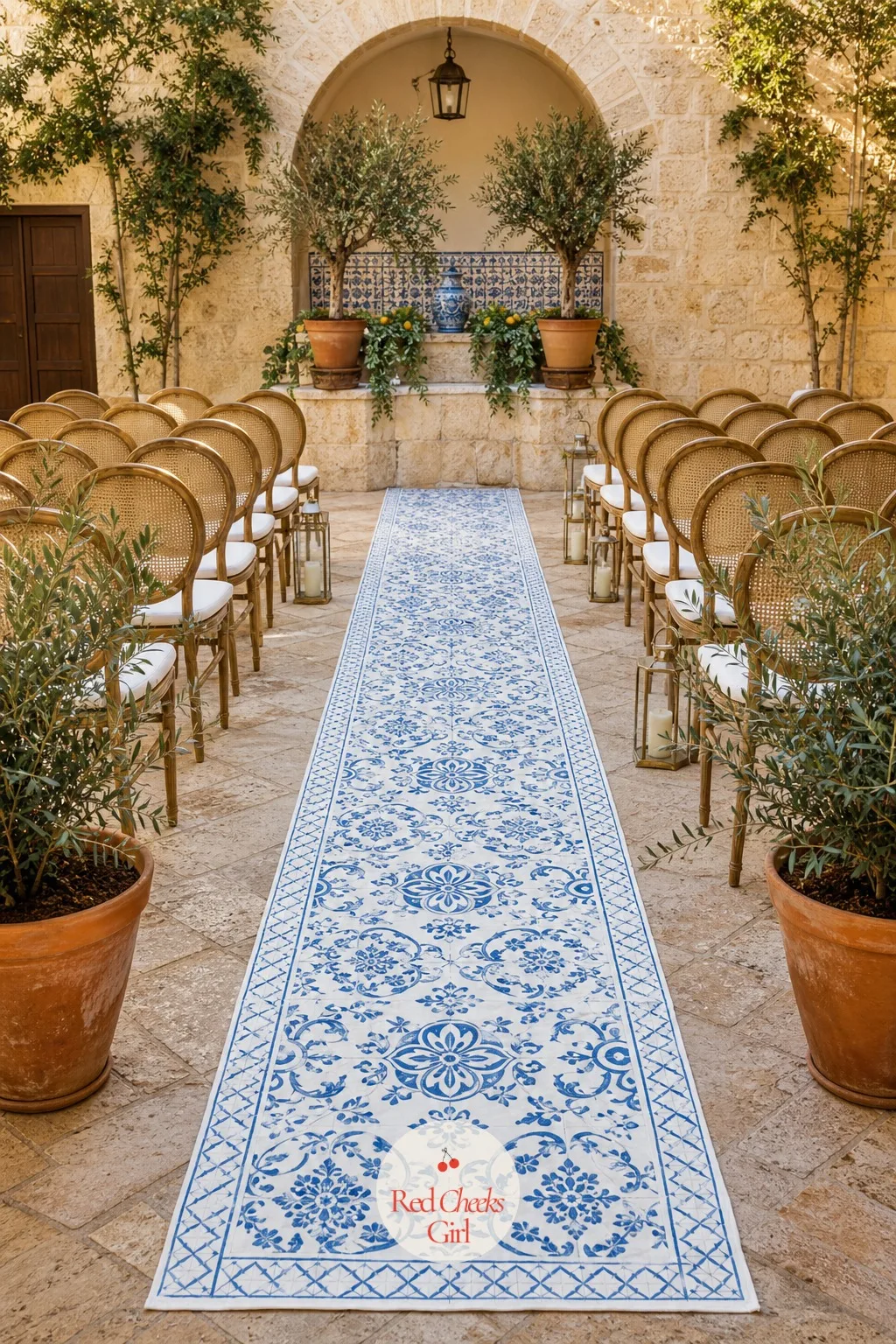
A plain white aisle runner disappears into the ground; a runner printed with a blue and white tile pattern turns the walk itself into part of the decor. It unrolls straight down the centre of the aisle, under the chairs, and needs nothing on top.
It is one flat layer: fabric runner, printed or painted in a repeating azulejo-style tile pattern in cobalt and white, anchored at both ends with a terracotta pot or stone. Tell the stationer or printer you need a fabric aisle runner in a cobalt and white tile pattern, the full length of the aisle.
This is worth ordering printed rather than hand-painting a long runner yourself; a plain cobalt runner with white ribbon trim is the easy swap if a custom print is not in the budget.
🛍 Shop this look
The Food and Drinks
This is a theme that is eaten as much as looked at. Mezze, citrus, olive oil and a spritz in hand carry the palette onto the plate and into the glass.
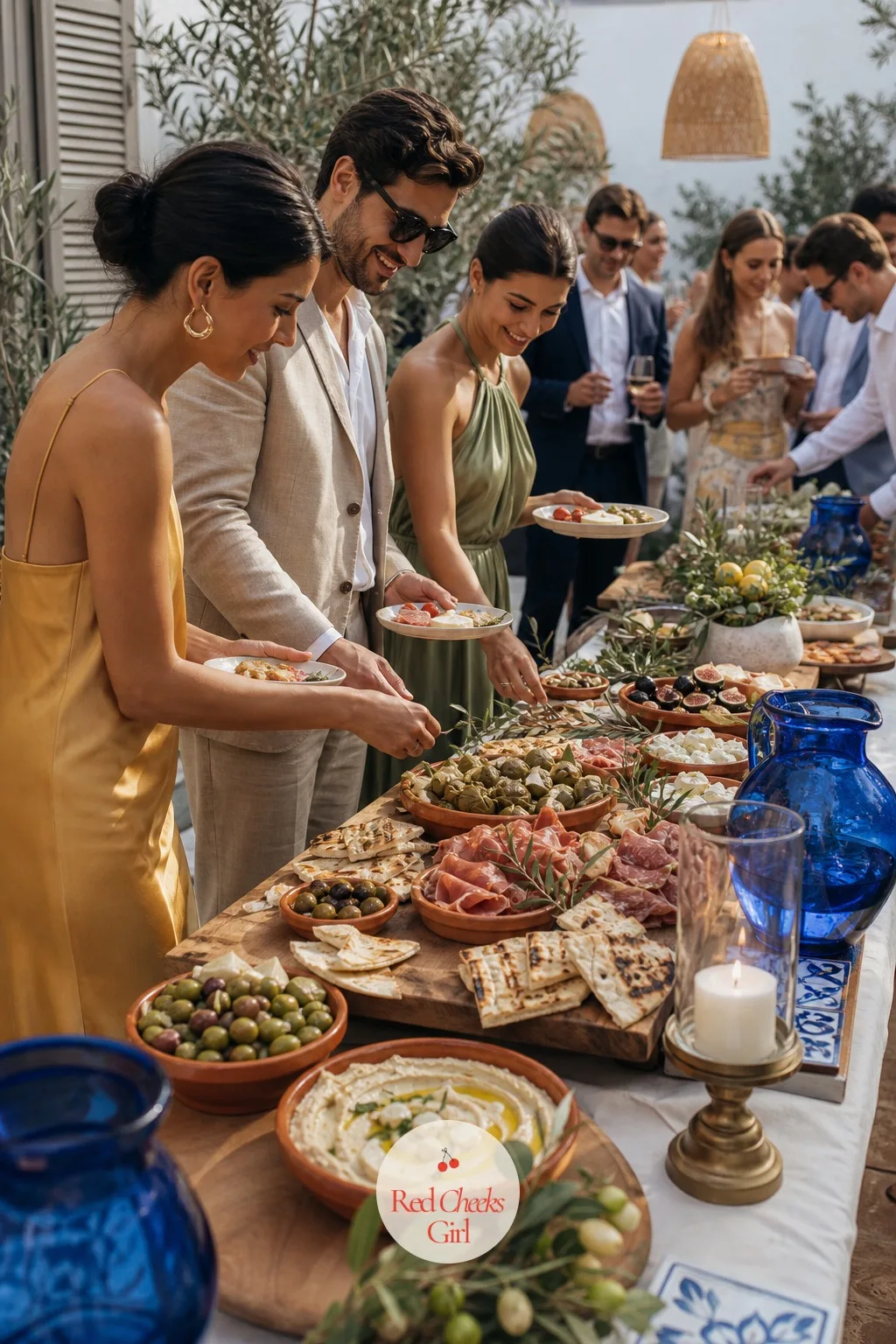
Mezze and Antipasti Grazing Station
Guests arriving before the toasts need somewhere to stand and eat with their hands, and a long grazing board does that far better than a passed tray. Set it on its own smaller table dressed the same way as the main one, stacked low to high so nothing blocks the next dish.
Build it in layers: a wooden board or marble slab on the table, terracotta bowls of olives, hummus and tzatziki set into it, cured meats and cheeses fanned around them, with fresh figs, grapes and bread tucked into the gaps.
Give the caterer a list: marinated olives, whipped feta, hummus, cured meats, soft and aged cheeses, fresh figs and grapes, grilled flatbread, arranged on a long board with terracotta serving bowls.
Most couples order the catering but set the board themselves an hour before guests arrive. A butcher’s paper runner under everything is the easy swap for a wooden board if renting one is not worth it.
🛍 Shop this look
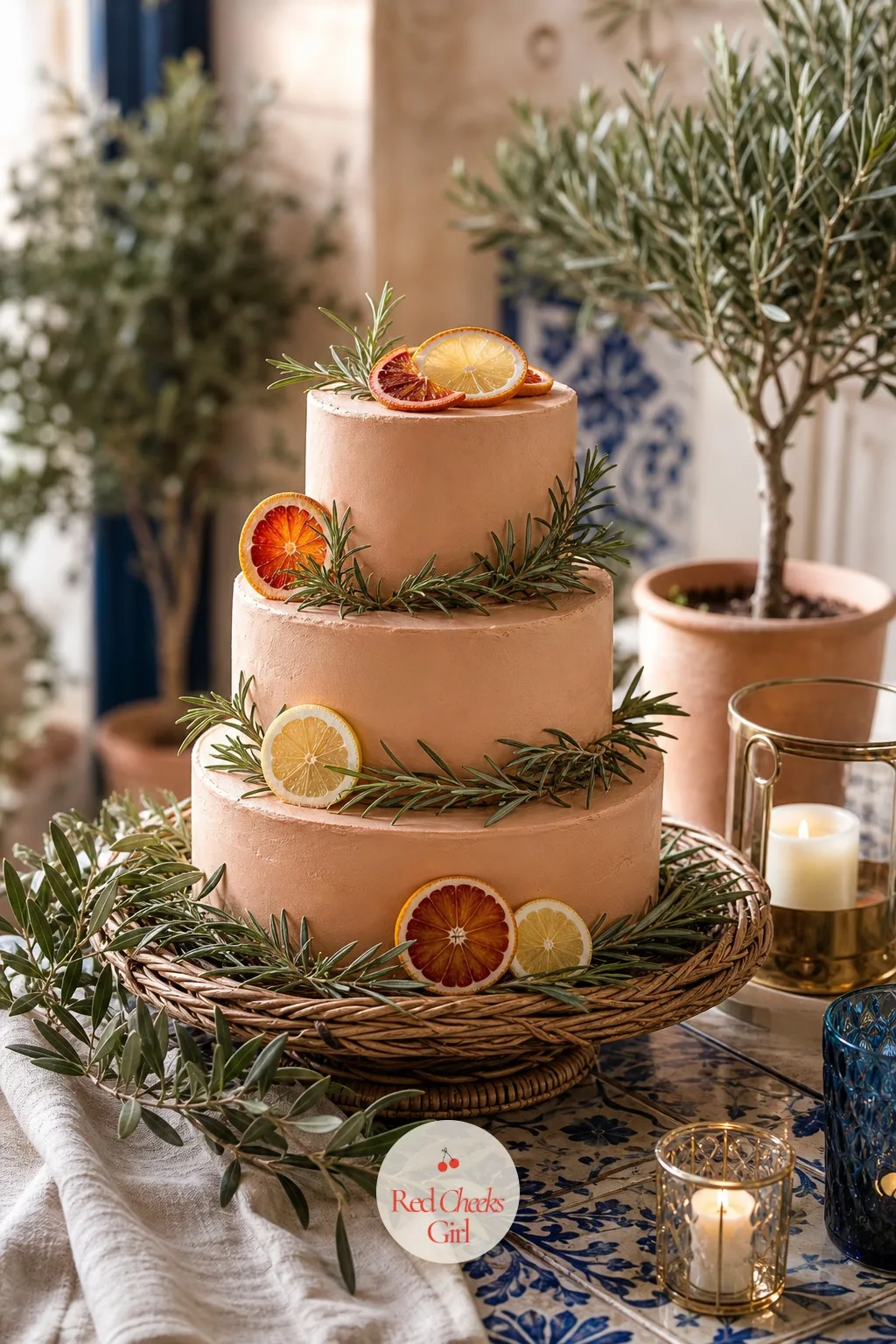
Cake Dressed in Citrus and Herbs
A smooth white cake looks like it belongs at any other wedding, and that is the whole argument for dressing it differently here. Keep the tiers plain, in ivory or pale terracotta buttercream, and let fresh citrus slices and herb sprigs do all the decorating.
It builds the usual way, tier on tier, but the finish is what carries the theme: a thin ivory or clay-toned buttercream, then fresh rosemary sprigs and halved blood oranges or lemons pressed against the side and scattered across the top.
Tell the baker you want a two or three tier cake in ivory or terracotta buttercream, finished with fresh rosemary and citrus slices, no fondant.
This is one to order rather than attempt at home, since fresh fruit against buttercream needs to go on the same day. If fresh citrus is not available, candied orange slices hold up just as well and keep longer.
🛍 Shop this look
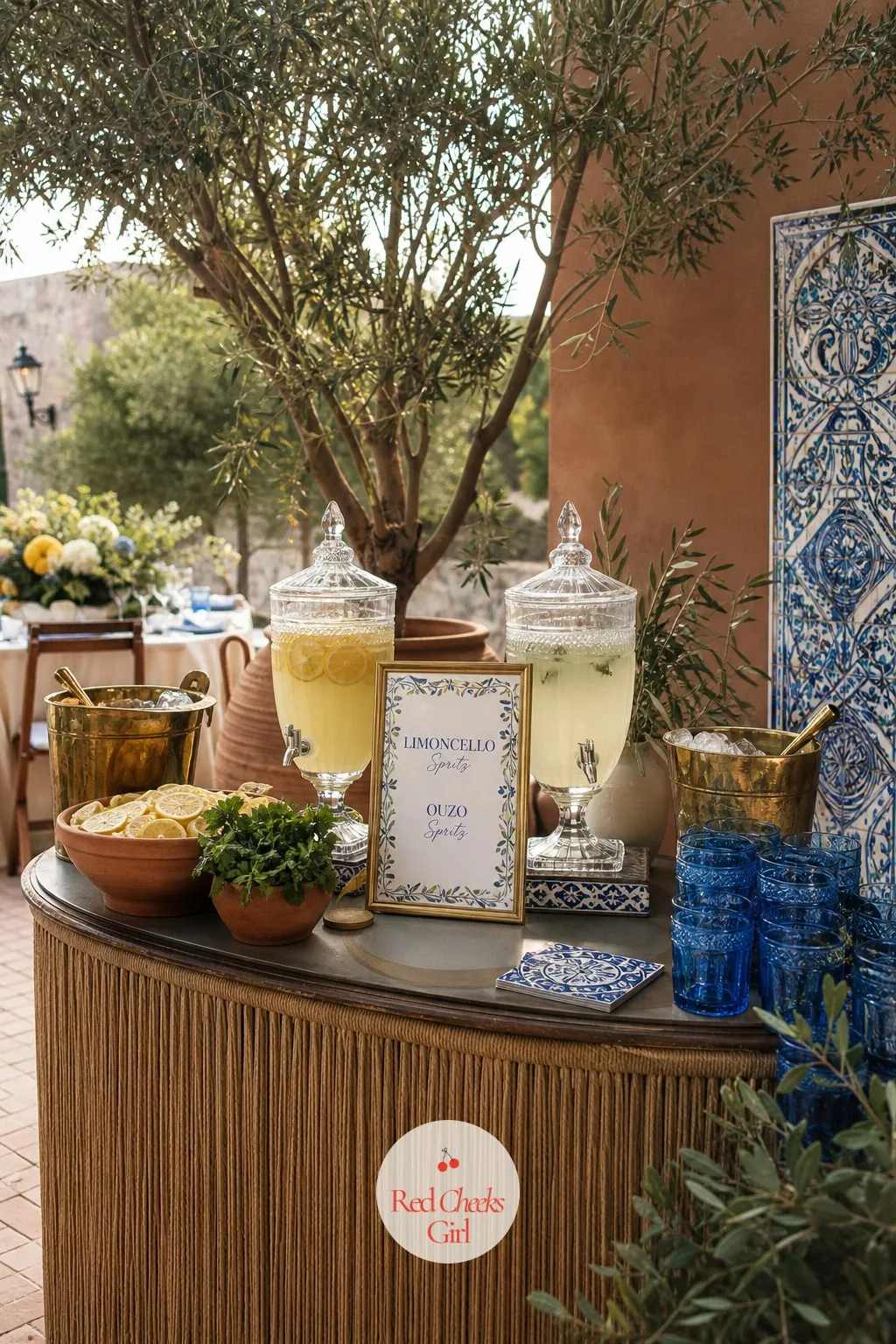
Limoncello and Ouzo Spritz Bar
A standard open bar does not say anything about where this wedding is pretending to be. A small station pouring limoncello spritzes and an ouzo-based cocktail over ice, garnished with lemon wheels and olive branch stirrers, says Italy and Greece in one glass.
Set it on a rattan-skirted table: glass dispensers of prosecco and limoncello, a second for ouzo and soda, a bowl of ice, lemon wheels and fresh mint in terracotta dishes beside it. Give the bartender or caterer the recipe names: limoncello spritz and an ouzo and soda over ice, garnished with lemon wheel and a small olive branch.
A caterer or hired bartender runs this more smoothly than a self-serve table once the crowd arrives, though a self-serve version works fine for a smaller, more relaxed guest list.
🛍 Shop this look
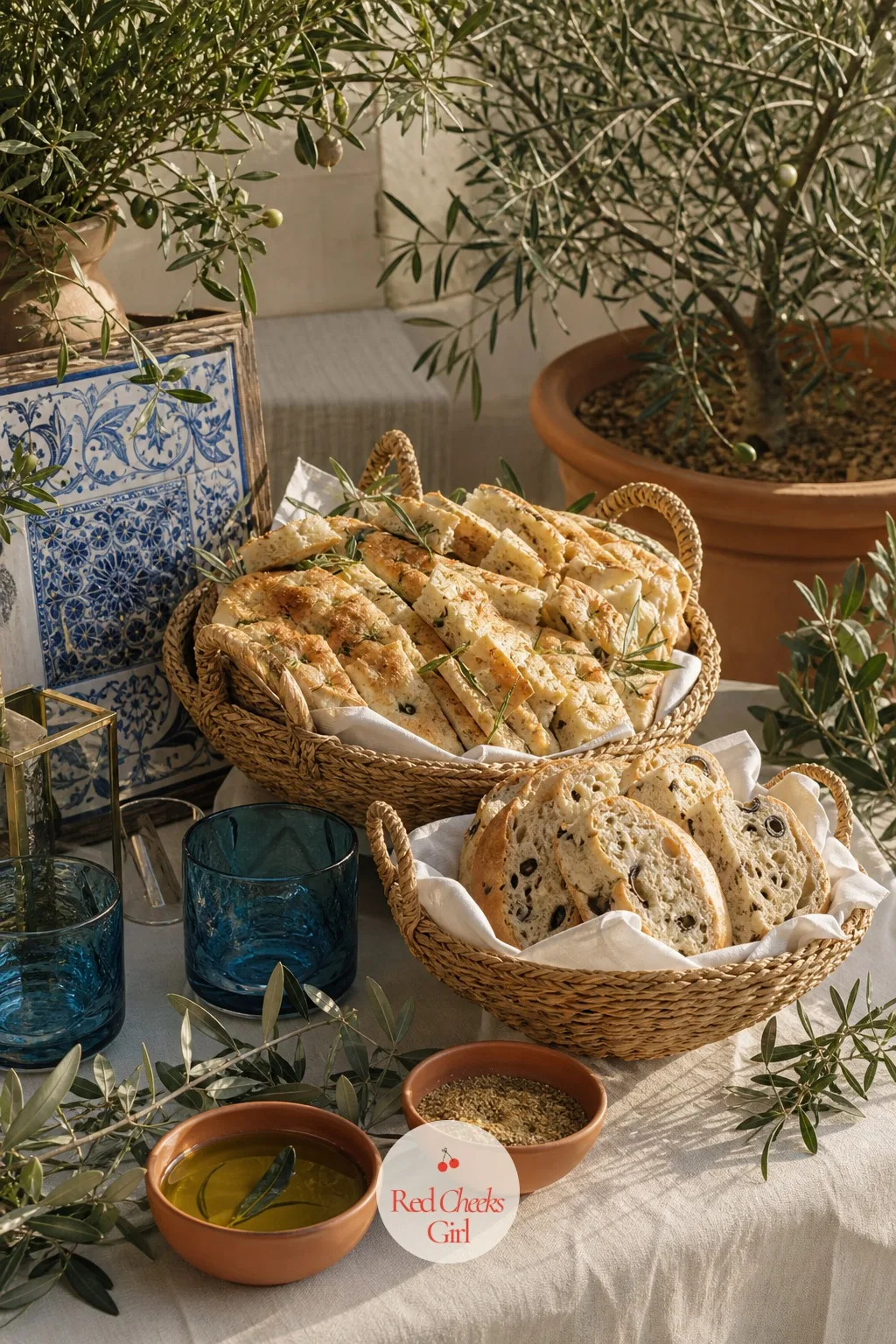
Olive Bread and Focaccia Basket Display
Bread baskets usually get an afterthought spot at the end of the table, but a proper display of warm focaccia and olive loaves earns a stop of its own. Stack loaves and torn pieces in woven baskets, drizzled visibly with oil, right where guests pass on the way to their seats.
From the surface up: a linen cloth laid over the table, two or three rattan baskets holding whole focaccia and rustic olive bread, small bowls of olive oil and dukkah set alongside for dipping. Tell the baker you want rosemary focaccia and an olive loaf, delivered the morning of, served warm in rattan baskets with oil for dipping.
This is one of the easiest pieces to order from a local bakery rather than attempt at home, and it costs very little next to a plated bread course.
🛍 Shop this look
Where Guests Gather
Once the toasts are done, give people somewhere low and shaded to fall into. This is where the rattan comes in, and where the party quietly keeps going after the band takes a break.
Rattan Lounge Corner
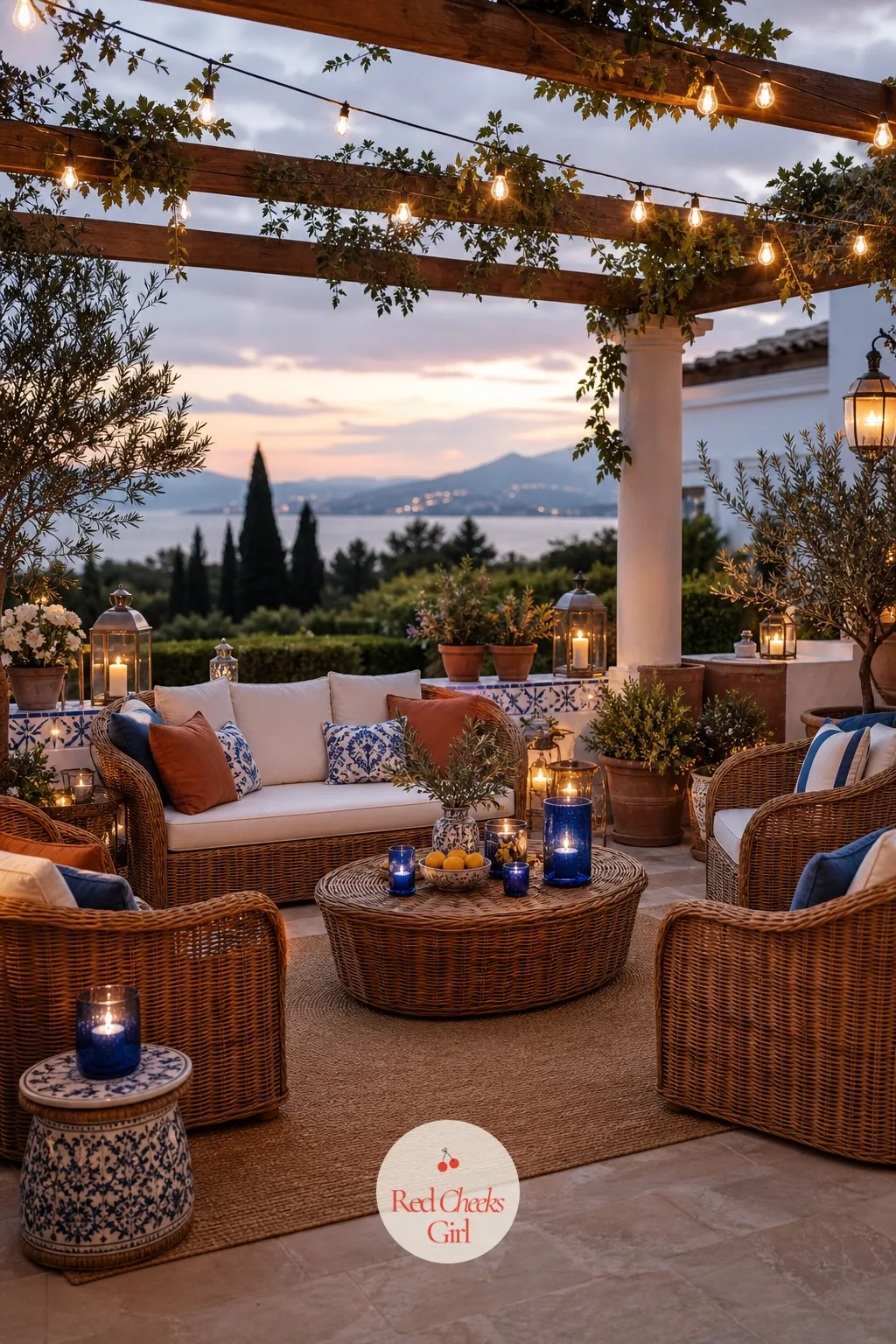
Once the formal part winds down, guests want somewhere low to sink into with a drink, not another row of folding chairs. A rattan lounge corner off to the side of the dance floor gives them exactly that, and photographs beautifully in late light.
Build it from the ground: a woven rug or jute mat down first, rattan sofas and armchairs arranged in a loose circle, a low rattan coffee table in the centre holding candles in blue glass.
Tell the rental company you need rattan lounge seating for eight to ten, a round rattan coffee table, and a neutral woven rug to anchor it.
Renting the furniture is far more practical than buying it for one day; a few borrowed outdoor armchairs and a coffee table are the easy swap if a full rattan set is out of reach.
🛍 Shop this look
Shaded Lounge with Azure Linen Pillows
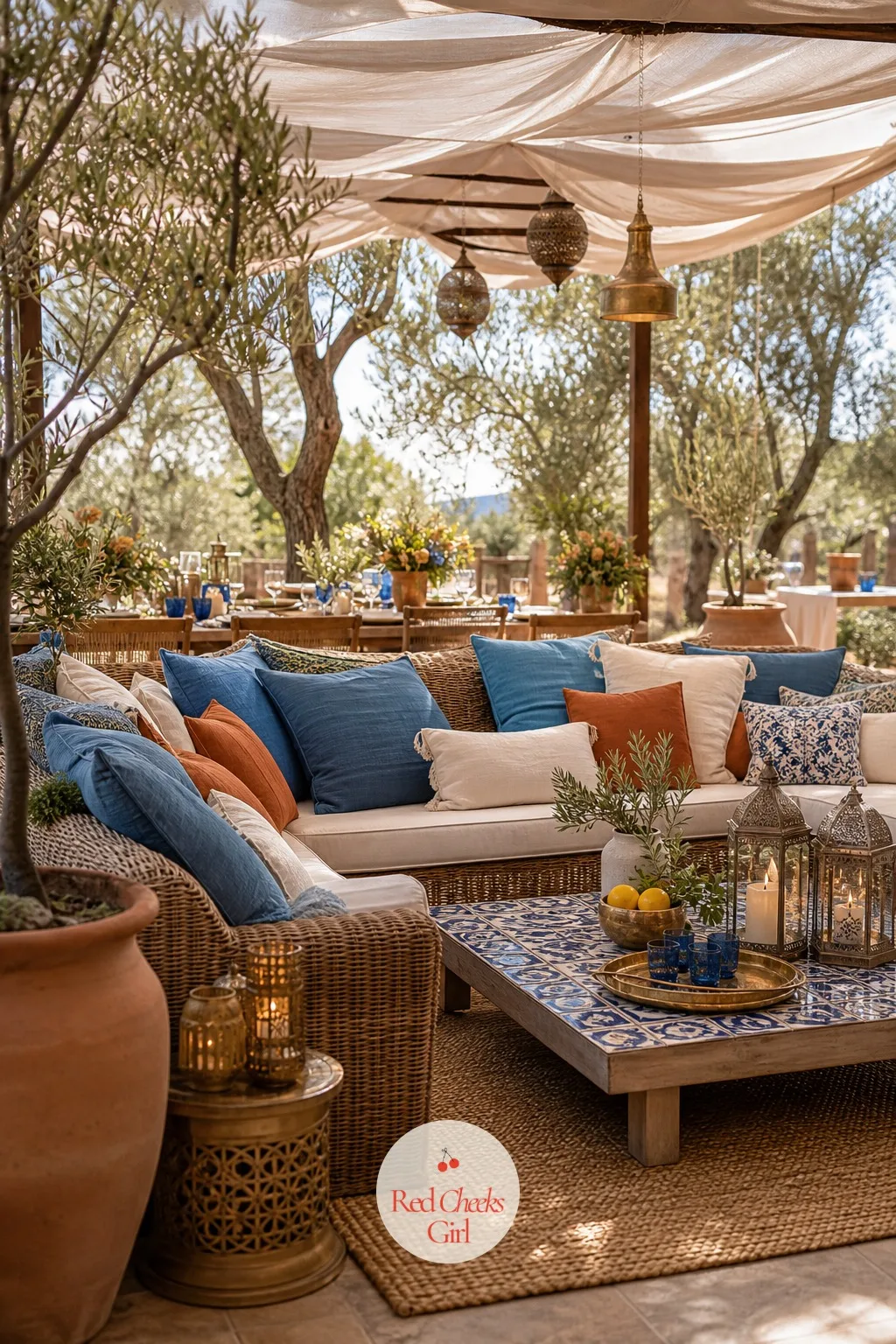
Bare rattan furniture reads a little stark without something soft thrown across it. Pile the sofas and chairs with cushions in azure, terracotta and ivory linen, and drape a canopy of sheer fabric overhead for shade if the lounge sits in direct sun.
It layers onto the furniture already there: linen cushion covers in the three palette colours, mixed patterns and plains, stacked two or three deep per seat, with a lightweight fabric canopy strung above on poles or a frame. Give the rental company this line: dyed linen cushions in azure, terracotta and ivory, plus a sheer canopy on poles for shade.
Cushion covers are cheap and simple to buy outright and keep afterward; the canopy is worth renting if the venue cannot provide natural shade already.
Citrus Grove Photo Corner
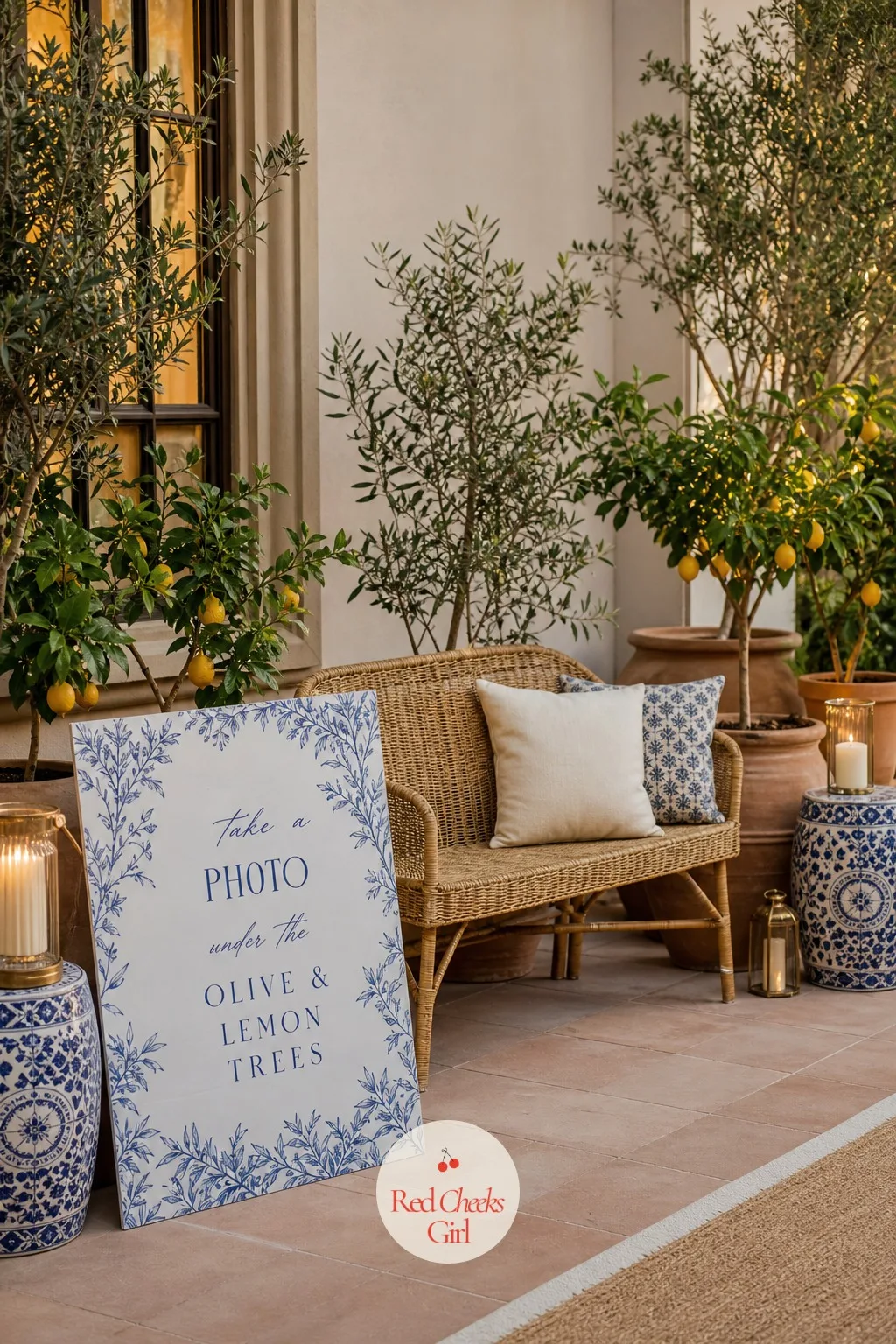
Guests always end up taking their own photos somewhere, so give them a spot worth standing in rather than a random corner of the garden. A citrus grove photo corner, built from potted lemon and orange trees around a small bench or arch, does the job without a hired photo booth.
It stands on its own footprint: potted citrus trees in terracotta pots arranged in a loose half circle, a rattan bench or two chairs in the middle, a small printed sign reading take a photo under the olive and lemon trees propped against one pot.
Tell the rental company you need four potted citrus trees and a rattan bench for a standalone photo corner.
It runs itself all evening: a guest wanders over, sits, a friend takes the photo, they move on, no attendant needed. Where potted citrus trees are not available, large citrus branches in tall floor vases hold the same shape at a fraction of the cost.
🛍 Shop this look
What the Bride Wears and Carries
The dress and the bouquet are the two things in close-up photographs all day, so they carry the theme at the smallest, most personal scale.
Bride’s Draped Grecian Gown
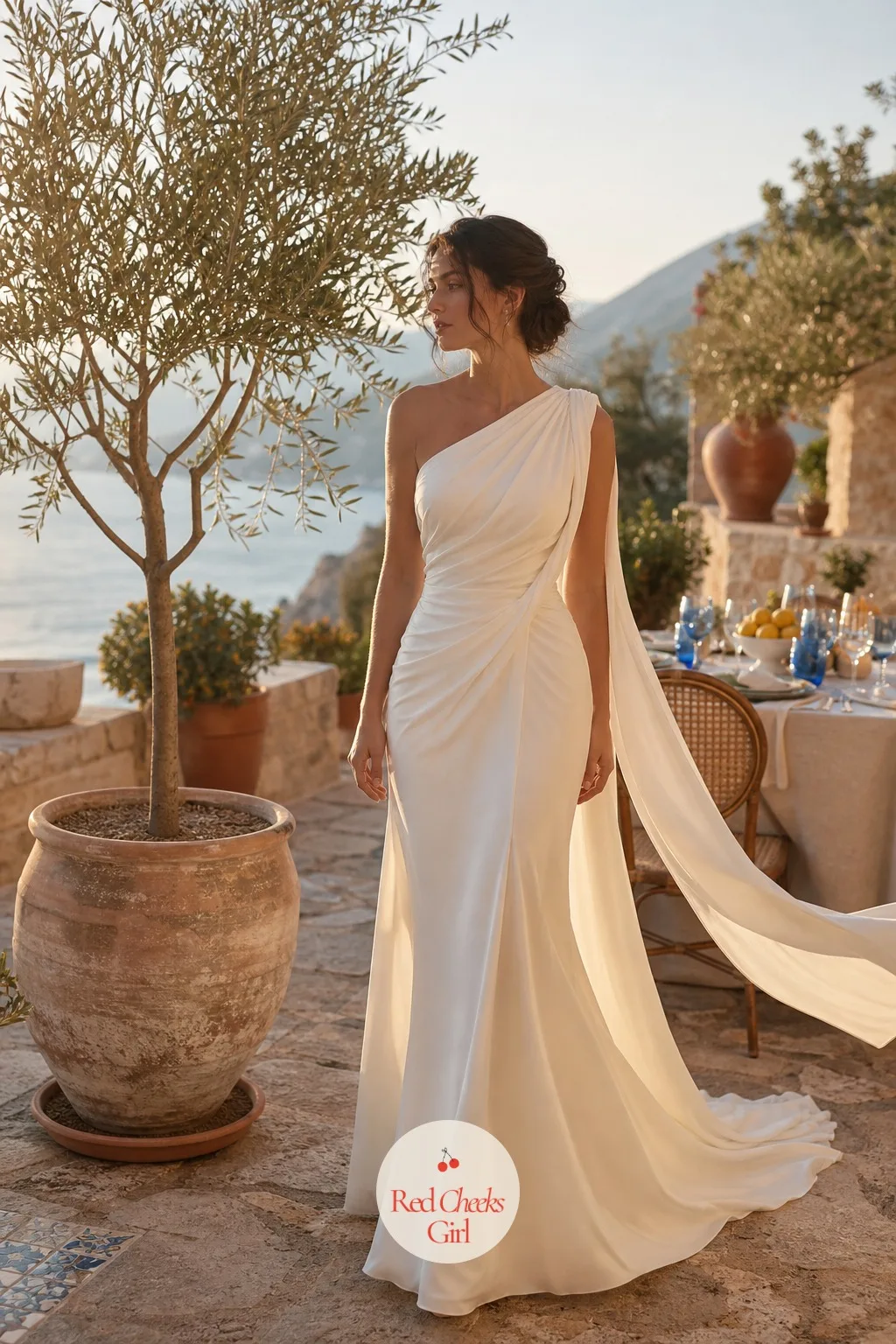
A heavily structured ballgown fights the whole relaxed point of this wedding. A draped Grecian-style gown in silk or crepe, gathered at one shoulder or cinched with a thin belt at the waist, moves with the breeze instead of against it and photographs just as well sitting down at a long table as standing at the altar.
It is built in soft layers: a lightweight silk or crepe underlayer, a draped overlayer gathered at the shoulder or hip, a thin belt or cord at the waist in ivory or gold. Tell the dressmaker or boutique you want a draped one-shoulder or asymmetric gown in silk or crepe, ivory, minimal structure.
This is one to try on and alter with a professional rather than attempt from a pattern, since drape depends entirely on how the fabric is cut and hung. A simpler slip dress in the same ivory silk is the easy swap for a smaller or more casual ceremony.
🛍 Shop this look
Bouquet of Olive Branches and White Roses
A tight, rounded bouquet of mixed colour looks out of place against this much green and terracotta. A loose bouquet built mostly of olive branches, with white roses and a few stems of white ranunculus threaded through, keeps the same silvery green that runs across the whole wedding, just scaled down to fit one hand.
It is built like the centerpieces but tighter: a base of olive branch foliage, white roses and ranunculus worked through at varying heights, the stems bound with a trailing ribbon in ivory or terracotta silk.
Give the florist this line: a loose hand-tied bouquet of olive branch, white garden roses and white ranunculus, bound with ivory silk ribbon, stems left long.
This is worth leaving to the florist, since the loose, unforced look takes more skill than it looks. A smaller posy of just olive and white roses, without the ranunculus, is the easy swap for a tighter budget.

🛍 Shop this look
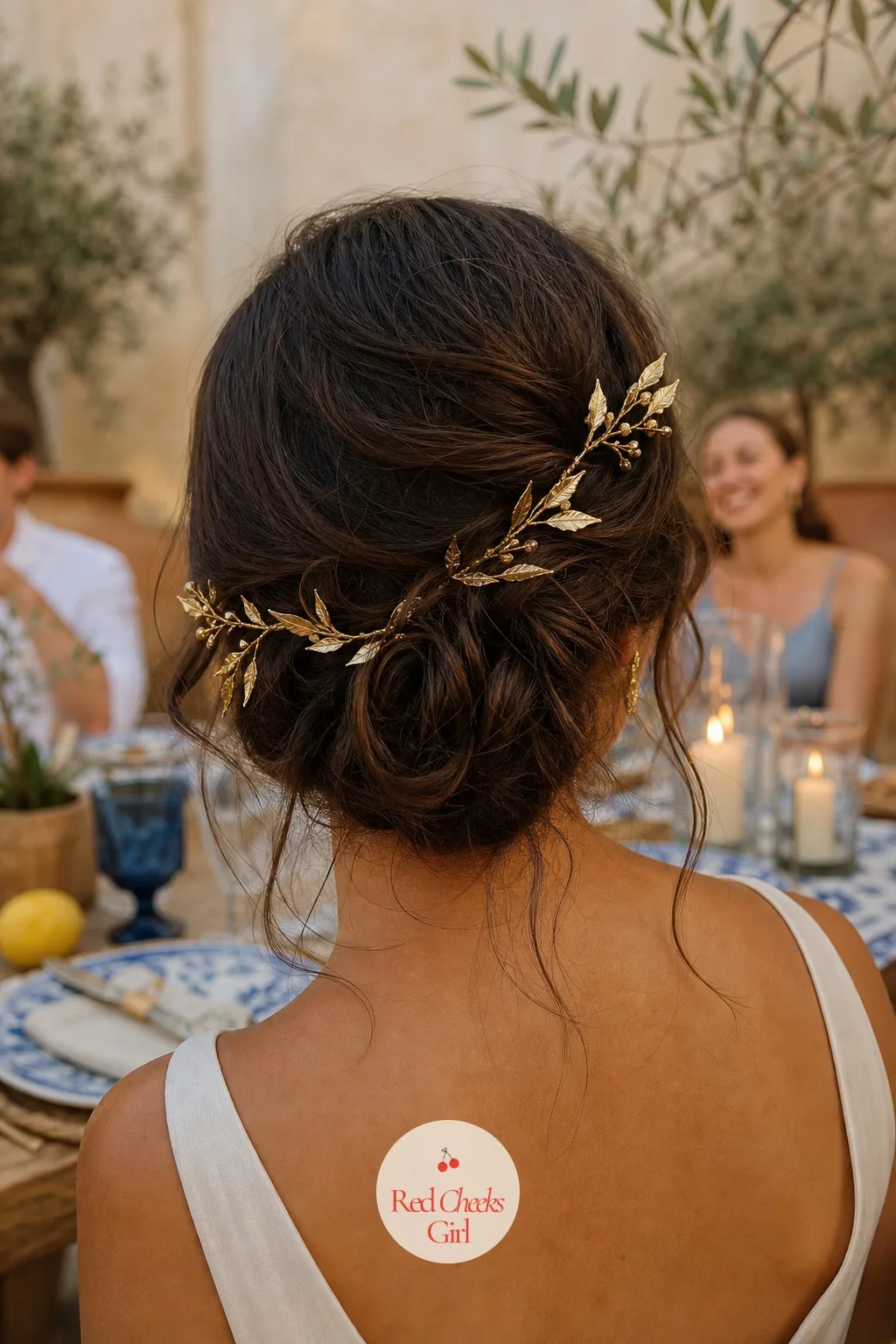
Gold Leaf Hair Vine
A full veil can feel heavy against a draped, barefoot-on-a-terrace kind of dress. A thin gold leaf hair vine, worn low across the forehead or woven through a loose bun, gives the same sense of occasion without the weight or the wind problem.
It sits directly in the hair: a flexible gold wire base shaped with small leaf detailing, pinned at two or three points so it holds through dancing. Tell the hairstylist you want a low gold leaf vine worked into a loose, textured low bun or half-up style.
This is simple enough to buy ready-made and worth it, since a custom gold vine is a fiddly thing to make well at home. A few loose stems of fresh olive leaf pinned into the hair instead is the no-cost swap.
🛍 Shop this look
The Small Details Guests Take Home
Last, the pieces a guest actually holds: the sign she reads walking in, the card that arrived weeks before, the bottle she carries out at the end of the night.
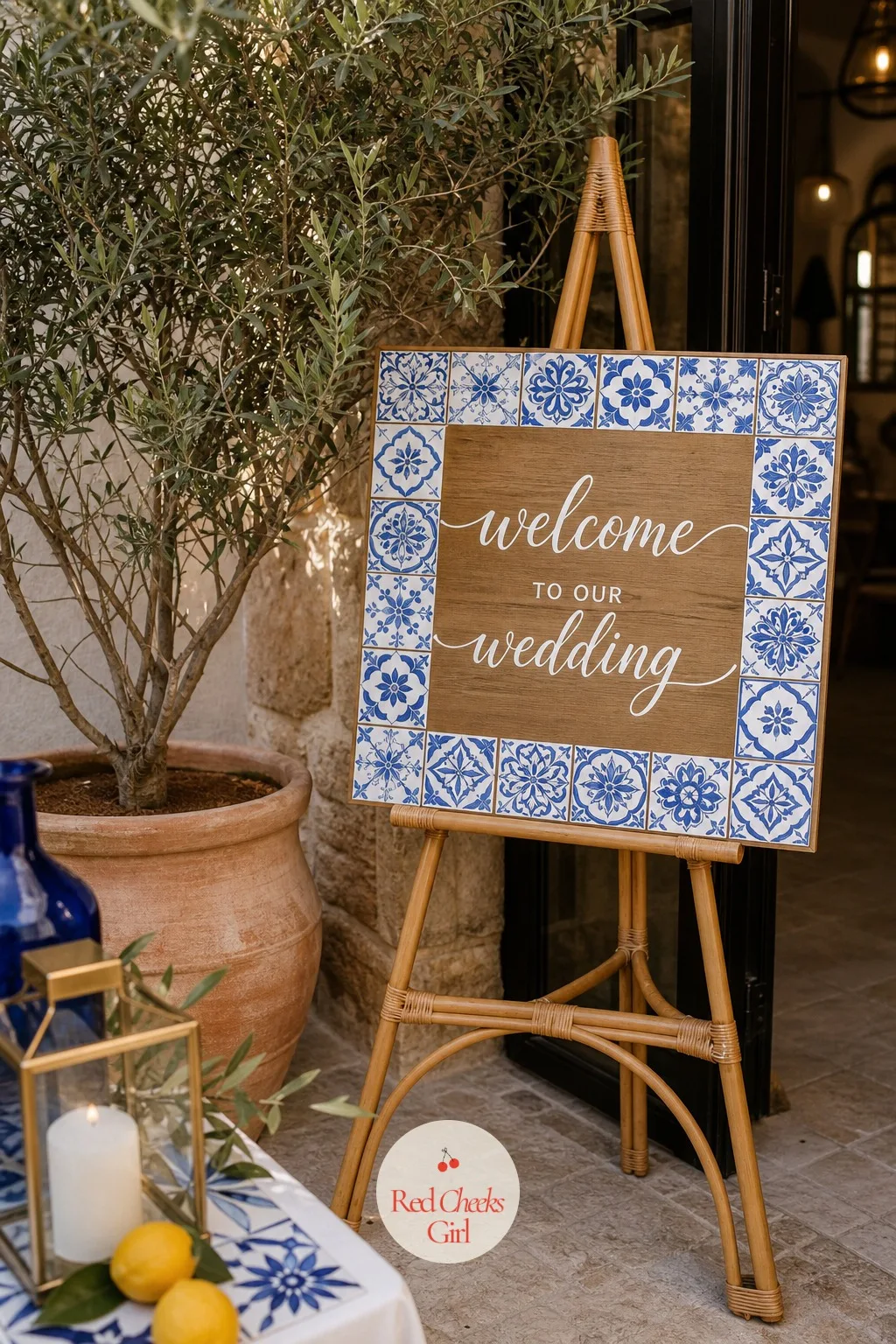
Tile-Pattern Welcome Signage
A guest’s very first impression of the whole wedding is the sign she reads walking in, so it carries more weight than its size suggests. A welcome sign painted or printed in the same cobalt and white tile pattern as the aisle runner, propped on a wooden or rattan easel, sets the palette before she has taken another step.
It stands simply: a wooden or rattan easel, a wood or acrylic sign panel painted with a tile-pattern border, hand-lettered with the couple’s names and welcome wording in the centre. Tell the sign painter or stationer you want a welcome sign with a cobalt and white tile-pattern border, hand-lettered centre reading welcome to our wedding, with the couple’s names.
This is worth ordering from a sign painter who already works in this style, since a hand-painted border is hard to fake convincingly. Printed vinyl on a wood panel is the budget swap and holds up just as well outdoors.
🛍 Shop this look
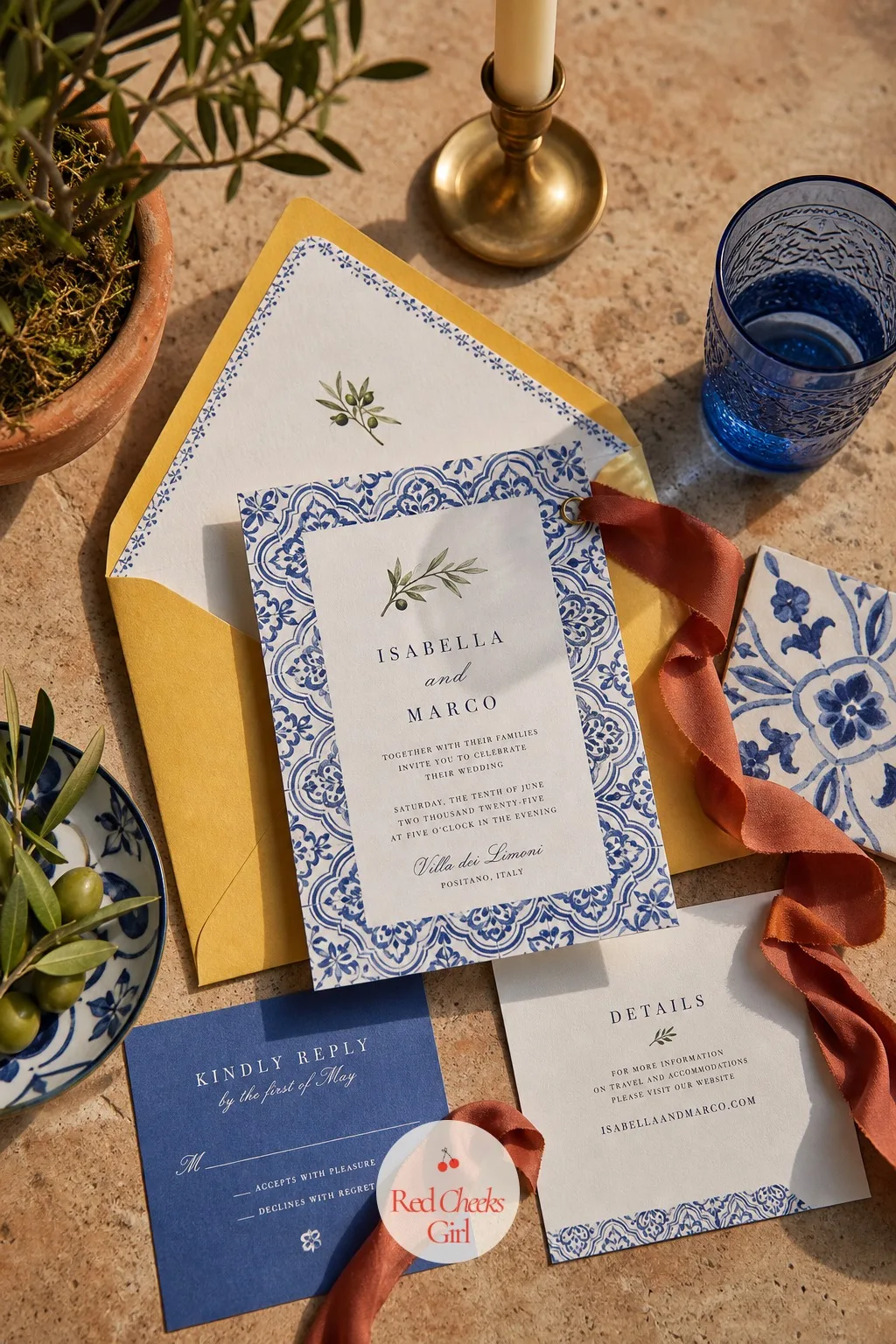
Watercolor Invitation Suite with Tile Border
The invitation arrives months before any of the rest of this exists, so it has to promise the whole wedding in one envelope. A watercolor suite with a hand-painted cobalt tile border, olive branch illustration, and citrus-yellow envelope liner does exactly that.
It is layered paper: the main card in ivory stock with a tile-pattern border printed along one edge and a small olive branch illustration in one corner, tucked into an envelope with a citrus-yellow liner, tied with a thin terracotta ribbon.
Tell the stationer you want a watercolor invitation suite on ivory stock, cobalt tile border, olive branch illustration, citrus-yellow envelope liner.
This is one to order from a stationer rather than print at home, since the tile border needs a steady hand or a proper illustrator. A simpler printed card with just an olive branch motif, no hand-painted border, is the budget swap.
🛍 Shop this look
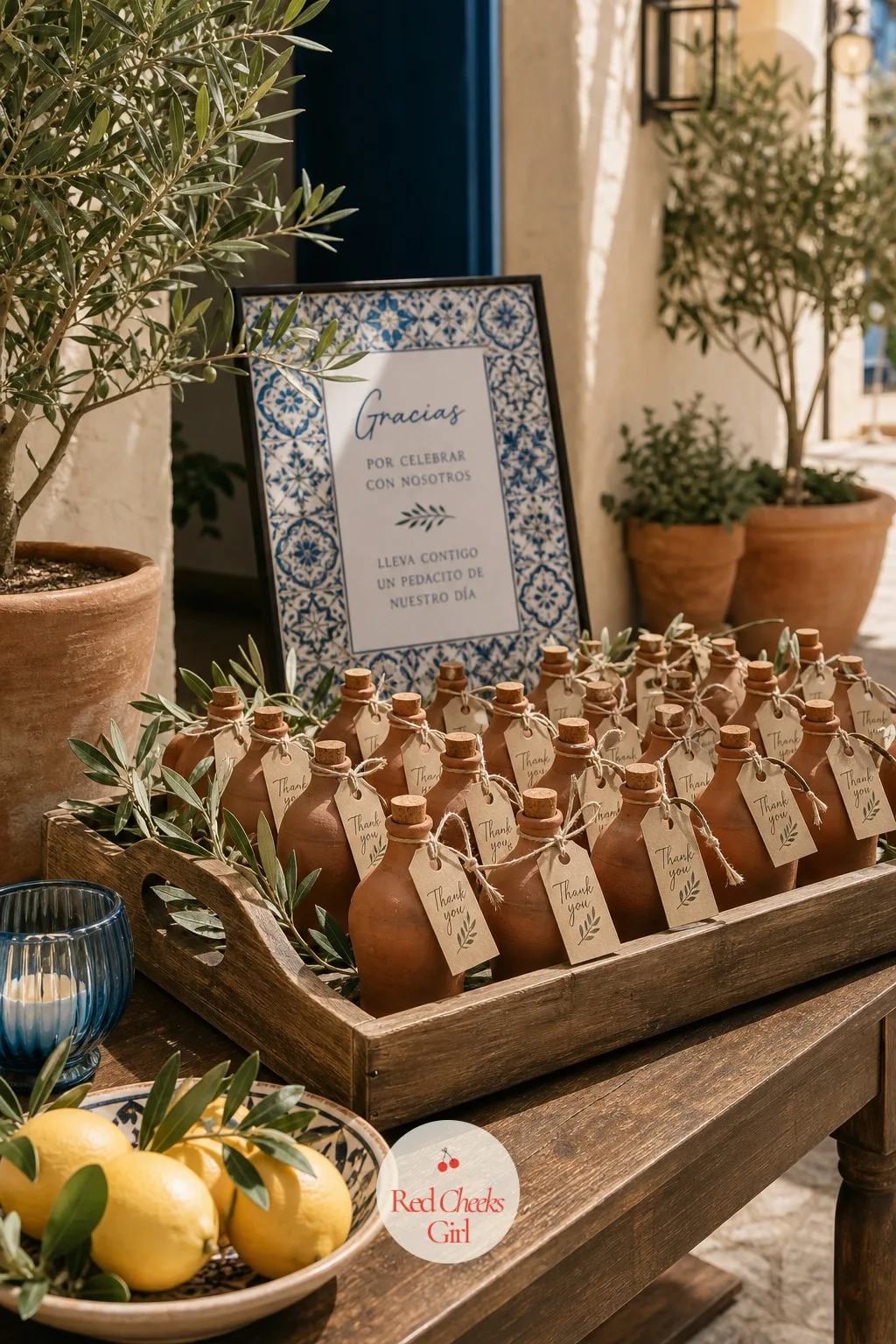
Olive Oil Favors in Terracotta Bottles
A favor that gets used is worth more than one that sits in a drawer, and a small bottle of good olive oil earns its place on a kitchen shelf long after the wedding. Line them up near the exit in terracotta-glazed bottles with a simple paper tag.
Each one is built the same way: a small terracotta or dark glass bottle filled with olive oil, a kraft or ivory paper tag tied at the neck with twine or thin ribbon, printed with the couple’s names and the date.
Tell the supplier or bottler you want three ounce terracotta or dark glass bottles of olive oil, with a printed tag reading the couple’s names and thank you.
Buying the oil and bottles separately and tagging them yourself is genuinely the cheaper route here, and it takes an evening at most. A small jar of local honey is the easy swap where olive oil is not practical to source or carry home.
Lemon and Rosemary Place Cards
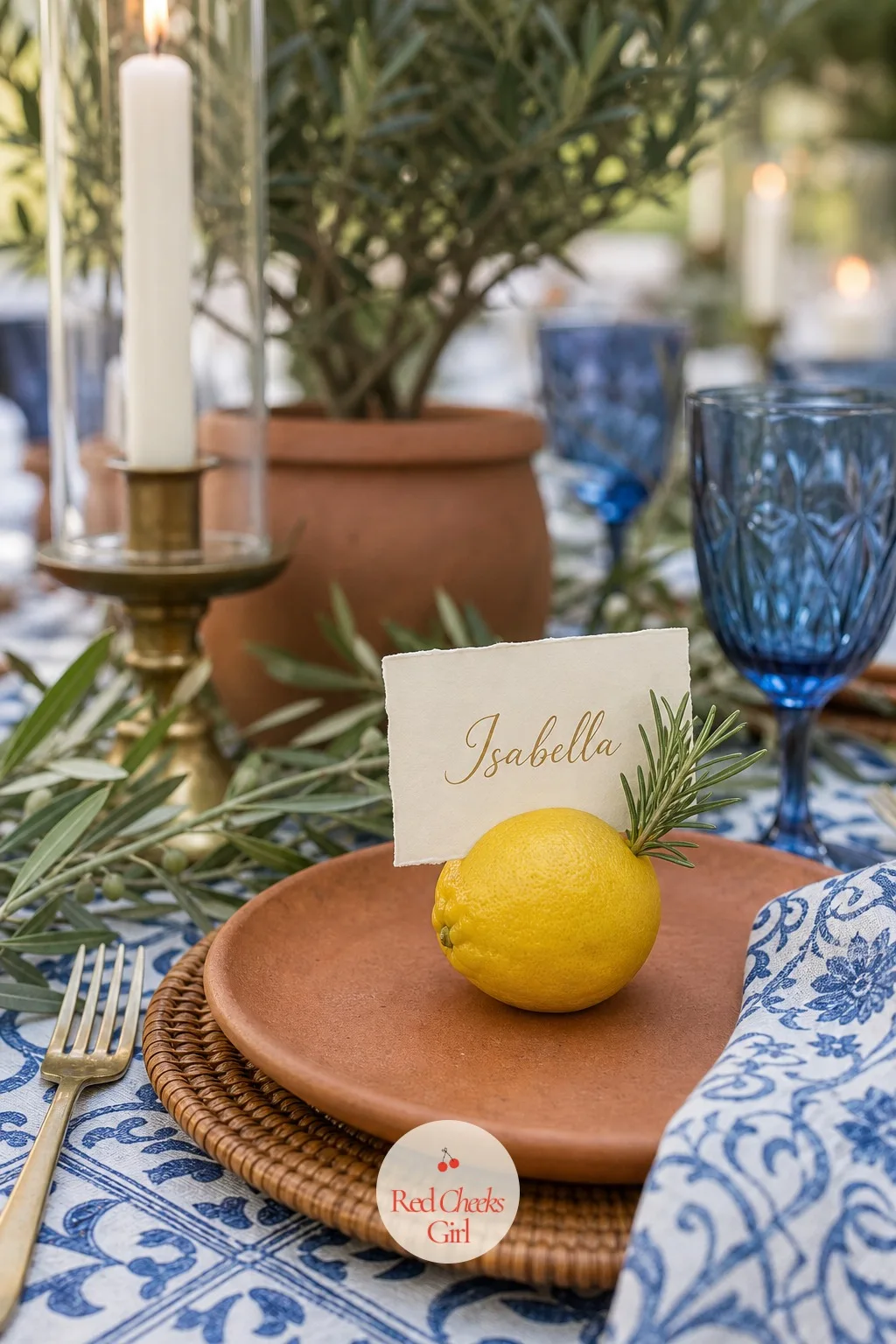
A folded card with a name on it is easy to lose in a stack; a place card tucked into a fresh lemon is not. Set one at every seat, the card slit into the top of a small lemon with a sprig of rosemary tucked beside it.
It is only two parts: a small ivory card printed with the guest’s name in the same font as the invitation, slotted into a slit cut in the top of a lemon, with a short rosemary sprig resting against it.
Tell the printer you want individual place cards, ivory stock, names printed in the invitation font, sized to slot into fresh lemons.
This is a genuinely easy one to assemble the morning of with a sharp knife and a box of lemons, no florist needed. Small terracotta place card holders are the practical swap if fresh lemons will not survive transport or heat.
🛍 Shop this look
Frequently Asked Questions
What colors are used in a Mediterranean wedding?
Terracotta, azure or cobalt blue and ivory form the base, usually warmed with brass, gold or citrus yellow. Some couples add coral or soft pink, but the theme holds together best with three or four colours, not more.
What is Mediterranean wedding style?
It is a relaxed, sunlit style drawn from Italy, Greece and Spain: potted olive trees, terracotta pottery, hand-painted blue tile, rattan furniture and citrus, built around a long shared table rather than a formal ballroom setup.
What flowers go with a Mediterranean wedding theme?
Olive branches, white roses, ranunculus and rosemary are the core choices, often mixed with citrus fruit on the stem. Keep arrangements loose and unwired rather than tightly structured, that undone look is the whole point.
What should guests wear to a Mediterranean wedding?
Light, breathable fabrics in the wedding’s own palette work best: linen, silk or cotton in terracotta, blue, ivory or soft citrus tones. Flat or block-heeled shoes are worth mentioning if the ceremony sits on grass or gravel.
What food is served at a Mediterranean wedding?
Mezze and antipasti boards, olives, fresh cheese, grilled flatbread and citrus-forward dishes are standard, often with a limoncello or ouzo based cocktail at the bar. Dessert usually leans on a citrus and herb finished cake rather than heavy fondant.
Where is the best setting for a Mediterranean wedding?
An outdoor courtyard, terrace, olive grove or barn with the doors thrown open all suit it, since the style depends on natural light and warm weather. It also works indoors if potted olive trees and tile accents carry the look.
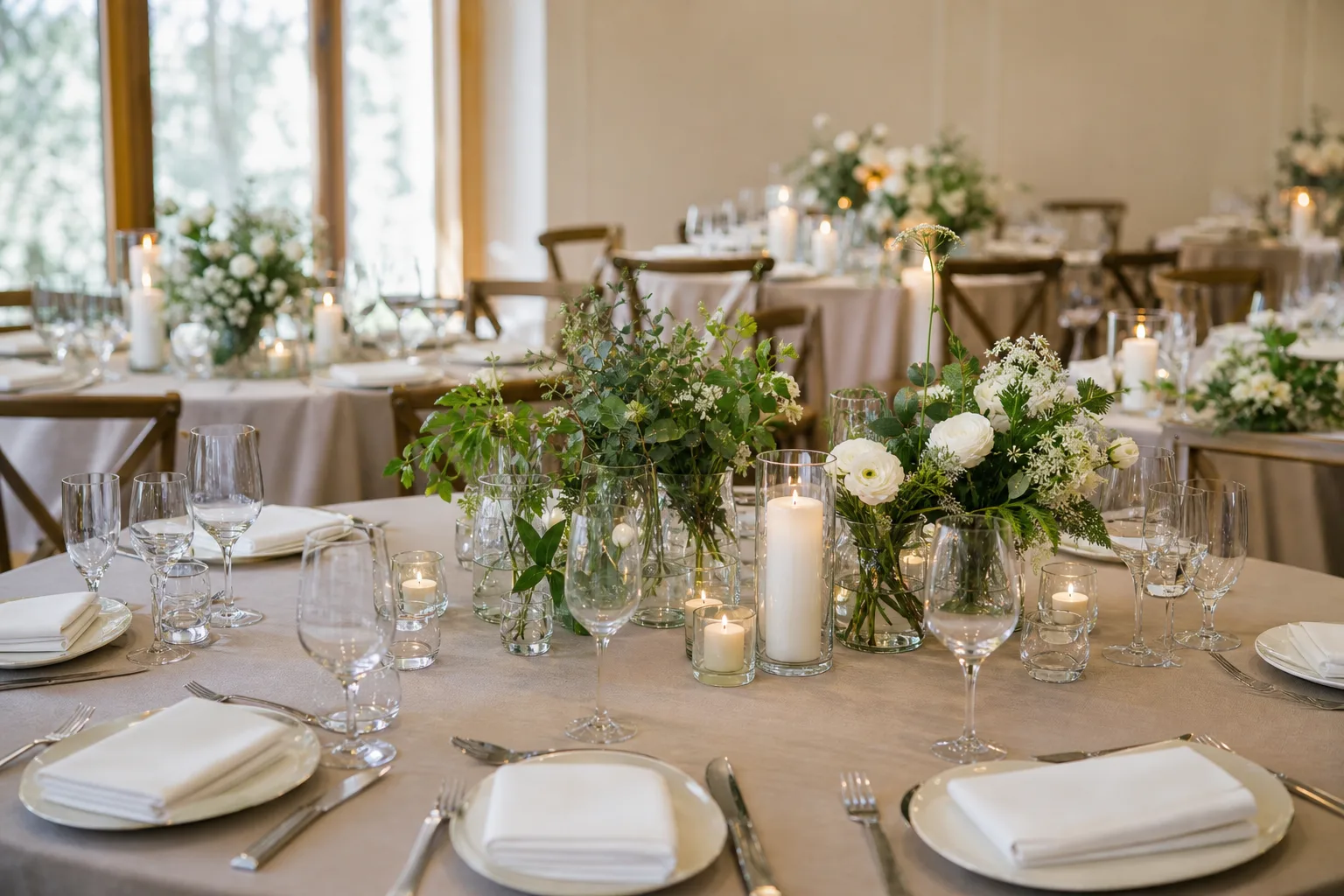
34 simple wedding centerpieces you can actually repeat across every table, from bud vases to julep c
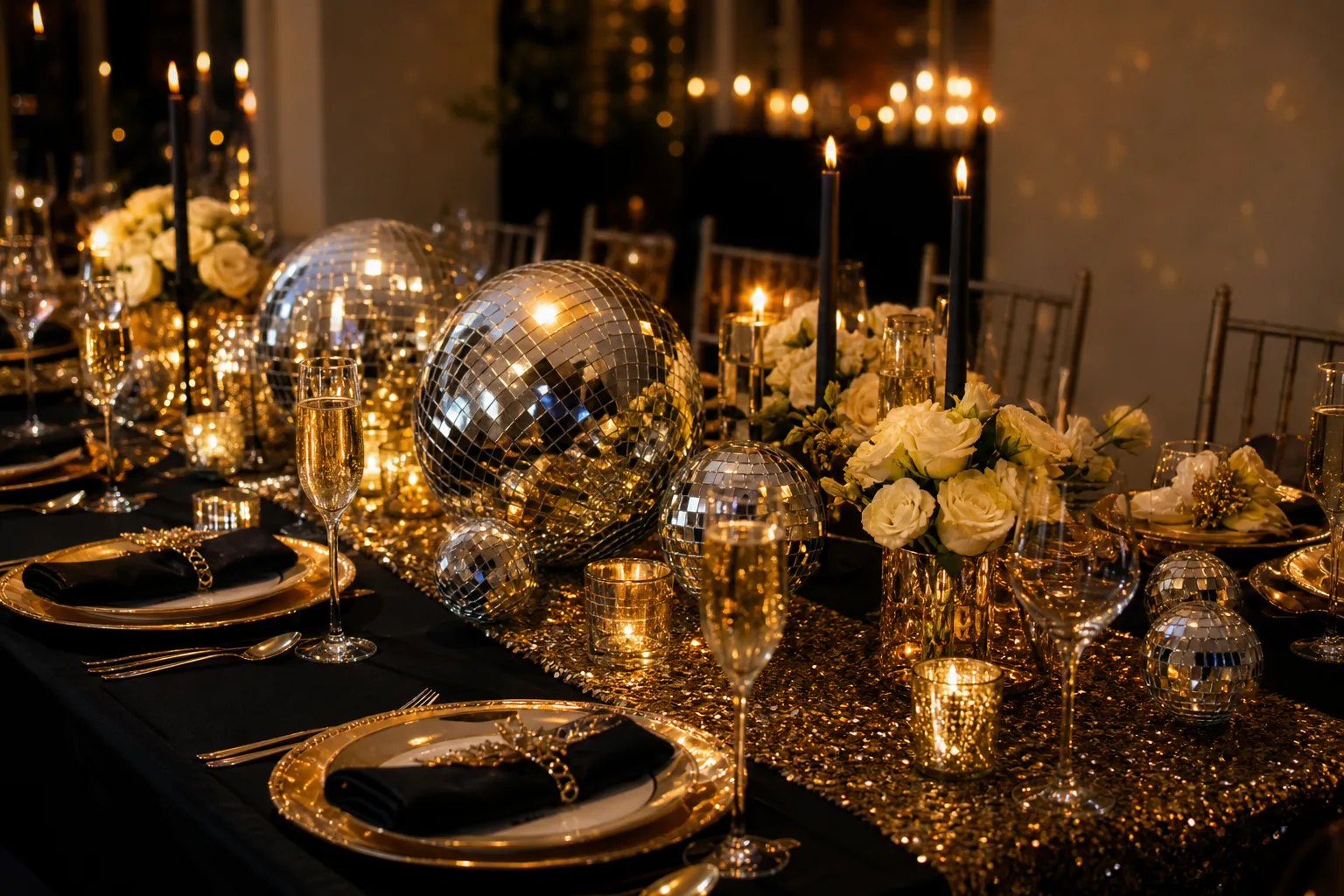
32 New Years Eve wedding ideas in black, gold and champagne, from the clock-themed ceremony to the m
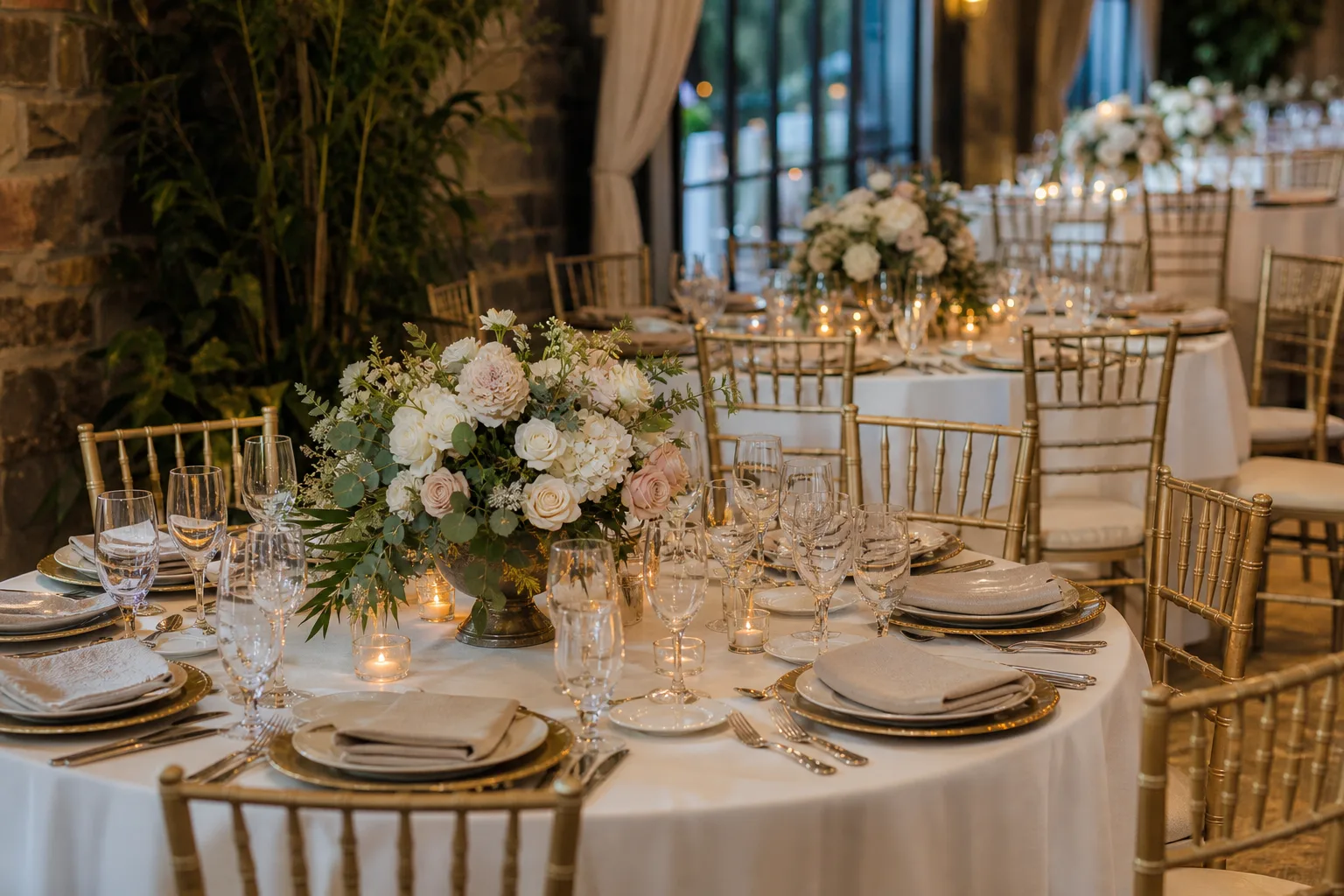
33 round table wedding centerpieces sized for 60 and 72 inch rounds: low, tall, candlelit and non-fl
Leave a Reply