

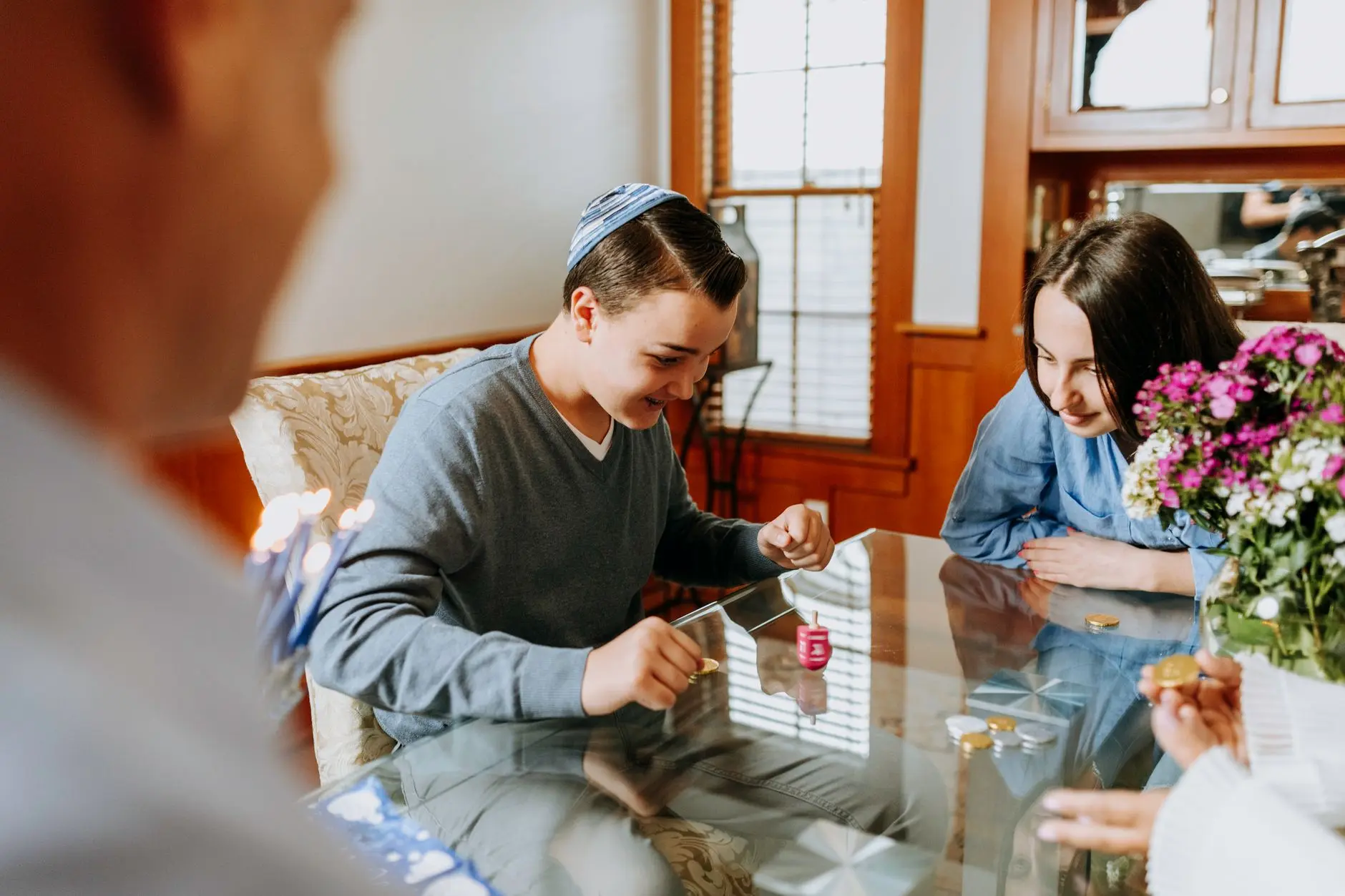
Looking for the best Hanukkah games for kids that actually feel like Hanukkah — not just any random party with a Star of David slapped on it? Same.
I’ve rounded up 15 games rooted in the real traditions of the Festival of Lights: spinning dreidels, hunting for gelt, building menorahs, and decorating sufganiyot (those gorgeous jelly doughnuts that honestly deserve their own holiday).
Whether you’re hosting a rowdy crew of eight-year-olds or a mixed-age family gathering on Night Three, there’s something here for everyone — including a handful of free printable sheets you can grab and go.
Every game on this list is easy to explain in under two minutes, light on supplies, and big on the Hanukkah spirit.
I’ve noted the ideal age range for each one so you can pick and mix without accidentally handing a toddler something that’ll end in tears (or a gelt avalanche — which, tbh, I’ve witnessed).
So light the shamash, cue your favorite Hanukkah playlist, and let’s make these eight nights genuinely magical for the kids in your life.
This post contains affiliate links — if you buy through them, I may earn a small commission at no extra cost to you.
- Classic Dreidel Game
- Hanukkah Bingo
- Gelt Scavenger Hunt
- Hanukkah I-Spy Sheet
- Pin the Shamash on the Menorah
- Color the Menorah Contest
- Latke Flip Race
- Count the Candles Sheet
- Dreidel Spin Contest
- Gelt Coin Stacking
- Menorah Building Blocks
- Hanukkah Freeze Dance
- Dreidel Toss Game
- Sufganiyot Decorating
- Hanukkah Wishes Circle
- Frequently Asked Questions
1. Classic Dreidel Game
You cannot talk about Hanukkah games for kids without starting here. The classic dreidel game is THE traditional Hanukkah game, played by Jewish kids all over the world for centuries — and it is still just as fun today.
Each player starts with 10–15 tokens (chocolate gelt is the gold standard, but pennies, jelly beans, or even raisins work great), and everyone takes turns spinning the four-sided top.
The four Hebrew letters — Nun, Gimmel, Hey, and Shin — each tell you what happens next: Nun means nothing (your turn ends), Gimmel means take the whole pot, Hey means take half, and Shin means put one in.
The player who collects all the tokens wins! Best for ages 4 and up.
To set up, have everyone sit in a circle and place a shallow bowl or plate in the center as the pot. Each player puts one token into the pot before every round.
When the pot empties completely, everyone antes up one more to refill it and the game continues. Tip: if your littlest players struggle to spin the dreidel, let them toss it gently onto the floor like a die — same result, zero frustration.
Post a simple rules card nearby so older kids can referee without adult help.
What makes this game timeless is the storytelling built right into it.
The letters Nun, Gimmel, Hey, and Shin stand for the Hebrew phrase Nes Gadol Haya Sham — ‘a great miracle occurred there’ — a nod to the miracle of the oil that burned for eight days in the rededicated Temple.
So even while kids are gleefully stealing each other’s gelt, they’re connecting to something genuinely meaningful. Variation: run a tournament bracket across all eight nights, keeping a running score so every night has a little extra suspense!
Set a 10-minute timer per round so the game wraps before sugar-fueled chaos sets in — your guests will thank you.
🛒 What you’ll need
2. Hanukkah Bingo
Bingo gets a festive Festival of Lights makeover and it is SO good for groups. Hanukkah Bingo replaces the usual numbered balls with Hanukkah symbols — dreidels, menorahs, gelt coins, Stars of David, sufganiyot, candles, oil jugs, flames, and more.
Each player gets a unique 5×5 bingo card filled with illustrated icons, the caller draws and names a symbol from a pile of calling cards, and the first player to get five in a row shouts ‘Chag Sameach!’ instead of Bingo.
It’s endlessly replayable and works beautifully for ages 3 and up.
Print one card per player (plus a set of calling cards to cut apart), grab some gelt coins or mini pompoms as markers, and you’re done.
The beauty of this setup is that even kids who can’t read yet can play — they’re matching pictures, not words. For a classroom or big party, laminate a few cards so you can wipe and replay across multiple rounds.
Keep a small prize bag nearby (dreidel stickers, extra gelt) for every winner so there’s consistent excitement throughout.
This game is a fantastic quiet anchor for your party — it reins in the energy after a big active game and gives kids a chance to sit, focus, and feel the pride of shouting their win across the room.
Want to make it extra educational? As you call each symbol, share a one-sentence fun fact about it. ‘Sufganiyot — jelly doughnuts fried in oil to remember the miracle!’ Kids absorb more than you think when they’re having fun.
- Ages 3 and up
- Classroom parties
- Large family gatherings of 6+ players
- Mixed-age groups where everyone needs an equal chance

🛒 What you’ll need
3. Gelt Scavenger Hunt
Hide chocolate gelt coins all over the party space — in coat pockets, under pillows, tucked behind books, peeking out from plant pots — and send the kids loose to find them all.
This is one of those Hanukkah games for kids that works indoors or outdoors and scales from a small living room to a full backyard.
Give each child a small bag or basket to collect their finds, set a timer for 5–8 minutes, and whoever collects the most gelt wins a bonus prize. Best for ages 3–10.
To set up without losing your mind, hide the coins before guests arrive and keep a rough count so you know how many should come back (spoiler: some will be mysteriously eaten during the hunt — I’m not pointing fingers).
For toddlers and preschoolers, hide coins in obvious spots at low heights; for older kids, get sneaky — tape a coin under a chair or nestle one inside a rolled-up scarf.
You can also add a few ‘golden gelt’ wild cards wrapped in shiny gold foil, worth an extra prize.
What makes this game so magical is how it teaches the value of gelt as a Hanukkah tradition — historically, giving coins was a way to celebrate and reward children during the holiday.
So you’re not just playing a scavenger hunt; you’re honoring a real custom while kids scramble with glee. Host tip: after the hunt, let kids pool a portion of their gelt into a tzedakah (charity) box to pass along the spirit of the season.
- Chocolate gelt coins (lots of them!)
- Small goodie bags or baskets, one per child
- A timer
- Optional: a few shiny ‘golden gelt’ wild-card coins for bonus prizes
🛒 What you’ll need
4. Hanukkah I-Spy Sheet
This one is perfect for the littlest party guests (and honestly, adults will sneak a look too).
The Hanukkah I-Spy sheet is a busy, illustrated scene packed with hidden Hanukkah objects — a dreidel tucked under a table, a sufganiyot floating near the menorah, a tiny gelt coin behind a candle — and kids have to find and count each one.
It’s a game they can play solo or with a buddy, making it ideal for early arrivals or that awkward ‘we’re waiting for everyone to show up’ moment. Best for ages 2–7.
Print one sheet per child and hand out crayons so they can circle each item as they spot it.
The sheet lists all the objects to find with a little checkbox or tally box beside each name — kids count how many of each they can spot and write the number in the box.
No reading required if you pair the item name with a small icon. Set up a cozy corner with the sheets and crayons so even shy kids have something to do the moment they walk in.
I-Spy games are low-key genius for mixed-age groups because you can layer the difficulty naturally — younger kids look for the big obvious items while older siblings try to find all the tiny hidden ones.
It doubles as a keepsake: let kids take their colored sheet home and the whole holiday scene becomes a little memory of the party. Pure win.
- Ages 2–7
- Solo play or partner play
- Quieting early arrivals or late-night wind-down moments

5. Pin the Shamash on the Menorah
This is the Hanukkah version of Pin the Tail on the Donkey, and it is genuinely SO cute. A large poster of a nine-branched hanukkiah (menorah) hangs on the wall — all eight candle spots are filled but the tall center shamash candle is missing.
Blindfolded players take turns trying to pin (or tape) their paper shamash in the correct center spot. Whoever gets closest wins! The shamash is the ‘helper’ candle used to light all the others, so this game does double duty as a fun tradition-teaching moment.
Best for ages 3–10.
You can make the poster yourself with a large piece of blue poster board and a painted or printed menorah, or print a clean version at home. Cut out individual paper shamash candles — one per player — and write each child’s name on theirs.
Use rolled painter’s tape on the back so nothing pokes little fingers. Spin each player three times before pointing them toward the poster for maximum giggling chaos. Mark where each shamash lands with a small sticker so every attempt is visible at the end.
The storytelling angle here is genuinely sweet: before you start, take one minute to explain what the shamash actually is — the ‘servant candle’ whose whole job is to light up all the others.
Then let the kids try to give it its rightful spot on the menorah. It’s a tiny lesson that sticks because it’s attached to a memory.
Host tip: hang the poster low enough for the smallest players to reach — nothing deflates a three-year-old’s confidence like a menorah that’s six feet off the ground.
Laminate the menorah poster so you can reuse it every year — just swap in fresh tape on the shamash candles each time!
🛒 What you’ll need
6. Color the Menorah Contest
Hand every kid a coloring sheet of a bold, detailed menorah outline and let them go wild with crayons, markers, or colored pencils.
When the timer runs out, display all the finished menorahs on a wall or string them up with mini clothespins for a gallery walk.
Everyone votes (on a little ballot slip) for their favorite, and the winner gets a prize — but every single sheet goes home as a keepsake. This is a beautiful activity that celebrates creativity while honoring one of Hanukkah’s most iconic symbols.
Best for ages 2 and up.
Print one sheet per child on sturdy cardstock so the markers don’t bleed through. Set out a communal bin of supplies in the center of the table so kids can share and experiment.
For the judging portion, give even the youngest players a sticker dot to press onto their favorite displayed artwork — it’s inclusive and adorable. You can also offer gold and silver metallic markers for the candles to make the menorahs truly glow.
The secret power of this game is that it is both a standalone activity AND the world’s easiest party decor solution.
String up all the finished menorahs along a blue and silver ribbon after the contest and suddenly your party space looks absolutely gorgeous — and the kids made it!
It also works beautifully as a calm transition activity between two high-energy games, giving little bodies a chance to breathe. If you’re throwing a classroom party, each child’s menorah also makes a wonderful take-home art piece for their family.
Doubles as instant party decor — string the finished menorahs up on ribbon for a gorgeous kid-made display that costs basically nothing.

🛒 What you’ll need
7. Latke Flip Race
Latkes — the crispy potato pancakes fried in oil that are basically the MVP of Hanukkah food — star in this hilarious relay race.
Give each player a spatula and a round, flat beanbag or paper plate ‘latke,’ and they must flip it in the air and catch it on the spatula while racing from one end of the room to the other.
Drop it, and you stop to pick it up before continuing. First team to get all their players across wins! This is one of those Hanukkah games for kids that causes maximum giggling in minimum time. Best for ages 4 and up.
Set up a simple relay course with two parallel lines of tape on the floor — start line and finish line — about 10–15 feet apart. Divide kids into teams of 3–4.
If you don’t have beanbags, cut sturdy circles from brown cardboard to serve as ‘latkes.’ Plastic spatulas from the dollar store work perfectly (and are cheap enough to send home as party favors!).
Run a quick practice flip before the race starts so everyone gets the feel for it and the youngest players don’t feel left behind.
The latke connection is a lovely way to sneak in some Hanukkah food education: before the race, mention that latkes are fried in oil to remember the miracle of the oil that burned for eight days in the Temple. Then send the kids racing!
Variation for toddlers: skip the flip and just have them balance the ‘latke’ on the spatula and walk without dropping — same concept, same laughs, no coordination required.
- One plastic spatula per player (or per team)
- Round flat beanbags or cardboard ‘latkes’
- Painter’s tape for start/finish lines
- Optional: a ‘Fry Cook Champion’ ribbon for the winner
🛒 What you’ll need
8. Count the Candles Sheet
This sweet printable is math meets Hanukkah magic, and it is absolutely perfect for the preschool and early elementary crowd.
The Count the Candles sheet shows a series of menorahs in different states — some with 2 candles lit, some with 5, some with all 8 plus the shamash — and kids count the flames and write the number in the blank box below each one.
It’s a gentle, joyful way to weave learning into the party, and the menorah’s eight-candle structure makes it naturally great for practicing numbers 1–9. Best for ages 3–7.
Print one sheet per child and set out pencils or crayons — kids can also color in each lit candle as they count it, which makes the counting more concrete and tactile for younger players.
The sheet works at a table station during party arrival, as a structured activity between active games, or as a take-home page for a classroom Hanukkah celebration. No scissors, no glue, no prep beyond printing — it’s the host’s best friend.
For older kids (ages 6–7), add a bonus challenge at the bottom of the sheet: ‘If you add all the candles together across all eight nights of Hanukkah, how many candles are used in total? (Answer: 44!)’
It turns a simple counting sheet into a genuine math puzzle that older siblings will actually want to solve.
And spoiler — the answer surprises a lot of adults too, which makes for a fun dinner-table conversation while the kids feel very smug about knowing the answer.
Sneaks in genuine math practice (counting 1–9) while kids are fully convinced they’re just playing a Hanukkah game. Teacher-approved, parent-approved, kid-approved.

9. Dreidel Spin Contest
Simple, thrilling, and requires exactly zero supplies beyond dreidels — the Dreidel Spin Contest is a head-to-head championship where kids compete to see whose dreidel spins the longest. Each player gets one dreidel and on the count of three, everyone spins at the same time.
The last dreidel still spinning wins the round. Run several rounds and keep a tally to crown an overall Spinning Champion. Sounds simple? Oh, it gets surprisingly intense — kids take dreidel-spinning very seriously once there’s a title on the line.
Best for ages 4 and up.
Use a smooth, hard surface like a wood floor or a table for the cleanest spins. Make sure every player has the same style of dreidel so nobody has an unfair advantage (a heavier wooden dreidel will almost always out-spin a lightweight plastic one).
For younger players who struggle with the spin technique, show them the pinch-and-flick method: hold the thin top stem between thumb and index finger, and flick sharply. A little practice round before the real competition keeps the youngest players from feeling frustrated.
To make the contest feel like a true event, make a simple bracket on a piece of paper — tournament style — so kids can see themselves advance through rounds.
You can also add a ‘longest spin of the night’ record on a sticky note on the wall, updated each round. It creates that perfect blend of individual effort and whole-group excitement that makes a party game unforgettable.
Plus, if anyone has an heirloom dreidel from a grandparent, this is the perfect moment to bring it out!
For ages 3–4, skip the contest format and just have a free-spin session — everyone spins at once and cheers for the last one standing, no elimination needed.
🛒 What you’ll need
10. Gelt Coin Stacking
Can you stack a tower of gelt coins higher than anyone else before it topples? That’s the whole game, and it is WILDLY fun.
Each player gets an equal pile of foil-wrapped gelt coins and races to stack them as high as possible in 60 seconds. The tallest standing tower when time is called wins.
It sounds easy until your hands start shaking and the kid next to you is already at 12 coins. This steady-hand challenge is perfect for all ages and needs zero setup. Best for ages 4 and up (though honestly, adults get very competitive too).
Set everyone up at a table with a flat, non-slip surface — a silicone mat or a rubber placemat works great to keep the base from sliding.
Give each player exactly the same number of coins (10 is a good starting count) so it’s a fair competition. Play three rounds and keep score across them.
For a team variation, pair kids up and let one person stack while the other quietly cheers — no touching or blowing allowed! Swap roles each round.
The gelt connection runs deep here: this game makes kids physically aware of just how much gelt builds up during Hanukkah, which is a fun lead-in to talking about the tradition of giving coins.
After the game, have kids count their stacks out loud for a sneaky math moment.
Host tip: use the foil-wrapped chocolate coins that are slightly larger in diameter for the most stable towers — the tiny ones topple instantly and cause premature heartbreak (also, they get eaten before the game even starts, which, fair).
- Ages 4 and up
- Small groups of 2–6 players
- A quick 5-minute filler game between bigger activities
🛒 What you’ll need
11. Menorah Building Blocks
Give kids a pile of soft foam blocks, wooden blocks, or even toilet-paper tubes and challenge them to build the tallest, most creative menorah they can — complete with nine ‘candles’ on top (pipe cleaners, crayons, or rolled paper make perfect candles).
Set a timer for 5–7 minutes and let the engineering begin! At the end, everyone does a gallery walk to admire each other’s creations before the big reveal: which menorah can survive a gentle ‘wind test’ (one puff of air)? Best for ages 3–9.
Prep is minimal — set out a bin of mixed building materials at each table cluster: foam blocks, toilet-paper rolls, cardboard squares, mini paper cups, and a handful of pipe cleaners or straws for the candles.
No need for instructions beyond ‘build a menorah with nine candles and make it as awesome as you can.’ Younger kids can work in pairs with an older sibling or parent.
The loose open-ended format means every child succeeds in their own way — there’s no wrong menorah.
This is one of my favorite Hanukkah games for kids because it combines creative play, STEM thinking, and holiday tradition in one package.
Before kids start building, take a moment to count the candles on a real menorah together: eight regular candles plus the taller shamash in the center makes nine.
That tiny detail — the shamash being taller — shows up in almost every kid’s design once you mention it, and it’s adorable every single time.
Keep the builds for display during the party so each child’s menorah can ‘light up’ the room alongside the real one.
- Foam blocks, wooden blocks, or cardboard tubes
- Pipe cleaners or straws for candles
- Yellow or orange pompoms or tissue-paper flames
- A timer
🛒 What you’ll need
12. Hanukkah Freeze Dance
Freeze dance gets the full Festival of Lights treatment and it is exactly as energetic and joyful as you’d hope.
Play Hanukkah music — there’s a surprisingly great playlist on every streaming service — and when the music stops, every kid freezes in their best ‘Hanukkah pose’: arms wide like a menorah, spinning like a dreidel, or puffed up like a sufganiyot (I once saw a five-year-old hold a truly committed sufganiyot pose for 15 seconds and I will never recover).
Anyone who moves is out; last one standing wins. Best for ages 2 and up, and it genuinely tires kids out, so your future self will thank you.
Clear a dance floor — push furniture to the walls and lay down a soft rug if you have little ones who might slip. Queue up a playlist of Hanukkah songs before the party so you can just hit play and go.
Designate three official ‘Hanukkah poses’ on a little sign taped to the wall (Menorah: arms stretched wide and up; Dreidel: spin once then freeze; Sufganiyot: arms out in a big round circle) so kids know exactly what to do when the music stops.
It keeps the freeze interesting beyond just ‘stand still.’
The genius of Freeze Dance at any kids’ party is the burst-and-pause rhythm — kids get wild during the music, then have to channel that energy into total stillness, which is actually great for self-regulation.
Run 5–6 rounds and then let the final two finalists have a pose-off judged by the whole group.
For toddlers who get ‘out,’ give them a shaker or tambourine so they become the rhythm section — nobody feels left out, and suddenly the music is even better.
Queue your Hanukkah playlist in advance and give it a quick listen so you know which tracks have great pauses — songs with natural breaks make the freeze more dramatic and fun.
13. Dreidel Toss Game
Set up a row of labeled buckets or rings on the floor, each marked with a dreidel letter — Nun, Gimmel, Hey, and Shin — and have kids toss mini dreidels (or beanbags decorated to look like dreidels) into them from a toss line.
Nun = 0 points, Hey = 5 points, Gimmel = 10 points (take the whole pot, naturally), and Shin = lose 2 points. Play three rounds and total up the scores.
It’s a carnival-style skill game with a Hanukkah rules twist, and kids love the drama of landing on Shin. Best for ages 4 and up.
Line up four buckets or plastic bins in a row a few feet from the toss line, or use hula hoops laid flat on the floor. Label each clearly with a large card showing the Hebrew letter and its English equivalent.
Give each player three tosses per round. Use soft beanbags if you’re indoors, or small dreidels in an outdoor setting. Tape a number line on the floor for each player to track their score — it’s a sneaky math exercise disguised as a carnival game.
This is one of those Hanukkah games for kids that rewards accuracy AND luck in equal measure, which means younger kids can absolutely beat older ones — a great equalizer at mixed-age parties.
For an extra layer of tradition, the letter designations on each bucket mean even the scoring system is a quick dreidel lesson. After a few rounds, quiz the kids: ‘What does Gimmel mean in the dreidel game?’ Watch them beam when they remember.
Host tip: keep a running leaderboard on a piece of butcher paper on the wall so everyone can track the standings in real time.
- 4 buckets or plastic bins
- Beanbags or small soft dreidels for tossing
- Letter labels for each bucket (Nun, Gimmel, Hey, Shin)
- Painter’s tape for the toss line
🛒 What you’ll need
14. Sufganiyot Decorating
Round doughnuts (or round doughnut holes) become tiny edible art projects in this activity that is equal parts game and celebration. Set up a decorating station with plain sufganiyot (jelly doughnuts), bowls of blue and white frosting, sprinkles, star-shaped sugar decorations, and dreidel-shaped candy.
Each child decorates one doughnut to look as Hanukkah-y as possible — and then everyone votes for their favorite before eating. The ‘Most Festive Sufganiyah’ award is one of those prizes everyone actually wants. Best for ages 3 and up.
Prep the station before guests arrive: lay out a paper-covered table, put a doughnut on a paper plate for each child, and set out small squeeze bottles of frosting (much easier for kids to control than spreading knives), plus toppings in small bowls.
Themed toppings that work especially well: blue and silver nonpareils, star-shaped sprinkles, mini chocolate chips, and edible gold glitter dust. Give each child 5 minutes on a timer so the activity stays focused and nobody is still decorating when it’s time to eat dinner.
Sufganiyot are a genuinely beloved Hanukkah food — fried in oil, they honor the same miracle as the latkes. So before kids dive in, share that one fact: ‘These doughnuts are fried in oil just like the oil that burned for eight miraculous days!’
Then let the decorating chaos begin. This activity pairs perfectly right after a big active game — it brings the energy down, focuses little hands, and ends with everyone eating something delicious.
If you’re hosting a kids’ party of any kind, an edible decorating station is honestly always a good idea.
Use squeeze bottles for frosting instead of spreading knives — kids have way more control and the results are actually more fun and creative.
🛒 What you’ll need
15. Hanukkah Wishes Circle
Save this one for the end of the night, when candles are glowing and the energy is soft and warm.
Gather kids in a circle — sitting cross-legged on the floor or around the table — and pass around a small ‘Hanukkah light’ (a battery-operated tea light or a glowstick) from child to child.
When the light reaches you, you share one wish for the new year, one thing you’re grateful for, or one hope for someone you love. It’s quiet, it’s meaningful, and it brings a beautiful close to all the joyful chaos.
Best for ages 4 and up.
You don’t need any supplies beyond the tea light, but you can add a little extra magic by giving each child a small star-shaped card and a gold pen to write their wish on before the circle begins.
After sharing, wishes can be collected in a jar to revisit next Hanukkah — a lovely family tradition in the making.
For very young children who feel shy, they can simply pass the light and say ‘I wish for happiness’ — there are no wrong answers in this circle.
The Hanukkah Wishes Circle works beautifully because it mirrors the spirit of the holiday itself — light, hope, and the power of small things to illuminate a whole room.
It gives even the quietest kids a moment to feel seen and heard, and it sends every guest home with something warmer than a party favor.
Pair this with a small take-home gift — maybe a mini dreidel, a bag of gelt, or even a holiday gift idea tucked in a little bag — and the night ends on the most perfect note.
Gently transitions kids from high-energy play to a calm, reflective close — perfect before pickup time so parents arrive to happy, settled children instead of a sugar-fueled whirlwind.
🛒 What you’ll need
Frequently Asked Questions
What is the traditional game kids play on Hanukkah?
The most iconic traditional Hanukkah game is the dreidel game.
Players spin a four-sided top called a dreidel, with each side marked by a Hebrew letter — Nun, Gimmel, Hey, and Shin — that tells you what to do with a pot of tokens (usually chocolate gelt).
The letters stand for the Hebrew phrase ‘Nes Gadol Haya Sham,’ meaning ‘a great miracle occurred there,’ connecting the game directly to the story of Hanukkah. It’s been played by Jewish children for centuries and is still the go-to game at Hanukkah celebrations worldwide.
How do you play dreidel with kids?
Give each player 10–15 tokens — chocolate gelt, pennies, or jelly beans all work. Everyone puts one token into the center pot to start each round.
Players take turns spinning the dreidel: Nun means do nothing, Gimmel means take the whole pot, Hey means take half, and Shin means put one in. When the pot empties, everyone antes up again. The player who collects all the tokens wins!
For toddlers who can’t spin the dreidel, let them gently drop it onto a flat surface like a die — same letters, same rules, same fun.
What are some fun Hanukkah party games for kids?
There are so many great options beyond classic dreidel!
Active favorites include the Gelt Scavenger Hunt (hiding chocolate coins all over the party space), Pin the Shamash on the Menorah (a blindfolded aiming game), the Latke Flip Race (a spatula relay), and Hanukkah Freeze Dance (freeze in a dreidel or menorah pose when the music stops).
For something crafty, Sufganiyot Decorating is always a hit — kids decorate jelly doughnuts with blue and white frosting and Hanukkah sprinkles. Printable games like Hanukkah Bingo and the Hanukkah I-Spy Sheet round out the mix perfectly for quieter moments.
What Hanukkah games can toddlers and preschoolers play?
Toddlers and preschoolers do best with simple, hands-on games that don’t require reading or complex rules.
Great options include the Gelt Scavenger Hunt (hide coins in obvious low spots), the Hanukkah I-Spy Sheet (matching pictures, no reading needed), Hanukkah Freeze Dance (music and movement — always a hit with little ones), Menorah Building Blocks (free-form creative play), Color the Menorah Contest (coloring is always toddler-approved), and a low-key version of the dreidel game where they simply drop the dreidel and watch which letter lands.
Keep games under 10 minutes and offer plenty of praise — little kids thrive on encouragement.
Are there Hanukkah games kids can play at school or in the classroom?
Absolutely!
Classroom-friendly picks include Hanukkah Bingo (works for any group size, no elimination so everyone stays engaged), the Count the Candles Sheet (great for practicing numbers 1–9 in early elementary), the Hanukkah I-Spy Sheet (solo or partner play, perfect for arrival time), and the Color the Menorah Contest (coloring sheets are classroom staples).
The Classic Dreidel Game also works well in small classroom groups. Printable sheets are especially great because they require minimal prep, no special supplies, and can go home as educational keepsakes.
What are some free printable Hanukkah games for kids?
This article includes four printable game sheets you can download: Hanukkah Bingo (with a 5×5 grid of Hanukkah symbols, great for parties), Hanukkah I-Spy Sheet (a busy illustrated scene with hidden holiday items to count and find), Color the Menorah Contest (a detailed menorah coloring page), and the Count the Candles Sheet (counting lit candles on menorahs — doubles as a math activity).
All four are designed to print cleanly on standard US Letter paper and can be used with crayons, markers, or pencils.
How can I make Hanukkah more fun and interactive for children?
The key is rooting the fun in the actual traditions of the holiday so kids are learning AND playing at the same time.
Mix active games (like Freeze Dance and the Dreidel Spin Contest) with hands-on crafty moments (like Sufganiyot Decorating and Menorah Building Blocks), and close the evening with something warm and reflective like the Hanukkah Wishes Circle.
Explaining the ‘why’ behind each activity — why we eat latkes and sufganiyot, what the shamash does, what the dreidel letters mean — gives kids context that makes the games feel genuinely meaningful rather than just random party activities. And gelt. Lots of gelt.
Kids love gelt.
What are some active or outdoor Hanukkah games for kids?
The Gelt Scavenger Hunt works beautifully outdoors — hide coins in the garden, under flowerpots, and in shrub branches for extra challenge. The Latke Flip Race is a perfect outdoor relay with a start and finish line on the lawn.
The Dreidel Toss Game can be set up with buckets or hula hoops on the grass for a carnival-style outdoor station. For big groups outside, Hanukkah Freeze Dance works great too — just use a Bluetooth speaker.
Active games like the Dreidel Spin Contest can also move outside where there’s more space for the tournament bracket setup.
Are there Hanukkah board games or card games made for kids?
Yes! Beyond the classic dreidel, there are several commercial options worth checking out. Hanukkah-themed memory match card games (matching Hanukkah symbols in pairs) are widely available and great for ages 3+. Some toy brands produce Hanukkah-edition bingo card sets with illustrated holiday symbols.
There are also dreidel dice games that put a modern spin on the classic mechanic, using dice marked with the four traditional letters for faster play. Check specialty Judaica shops or major toy retailers in the weeks before the holiday for seasonal releases.
How do you set up a Hanukkah scavenger hunt for kids?
A Hanukkah Gelt Scavenger Hunt is easy and takes about 10 minutes to prep. Before guests arrive, hide foil-wrapped chocolate gelt coins around your party space — indoors in pockets, under cushions, and behind books; outdoors under flower pots and in garden beds.
Count how many you hide so you know the total. Give each child a small bag or basket and set a timer for 5–8 minutes. Whoever finds the most coins wins a bonus prize.
For extra fun, add a few shiny ‘golden gelt’ wild-card coins worth bonus points, and hide them in extra-tricky spots for the older kids.
📌 Save These for Later
Loved these? Pin your favorite image below so you can find this list again when you’re planning.
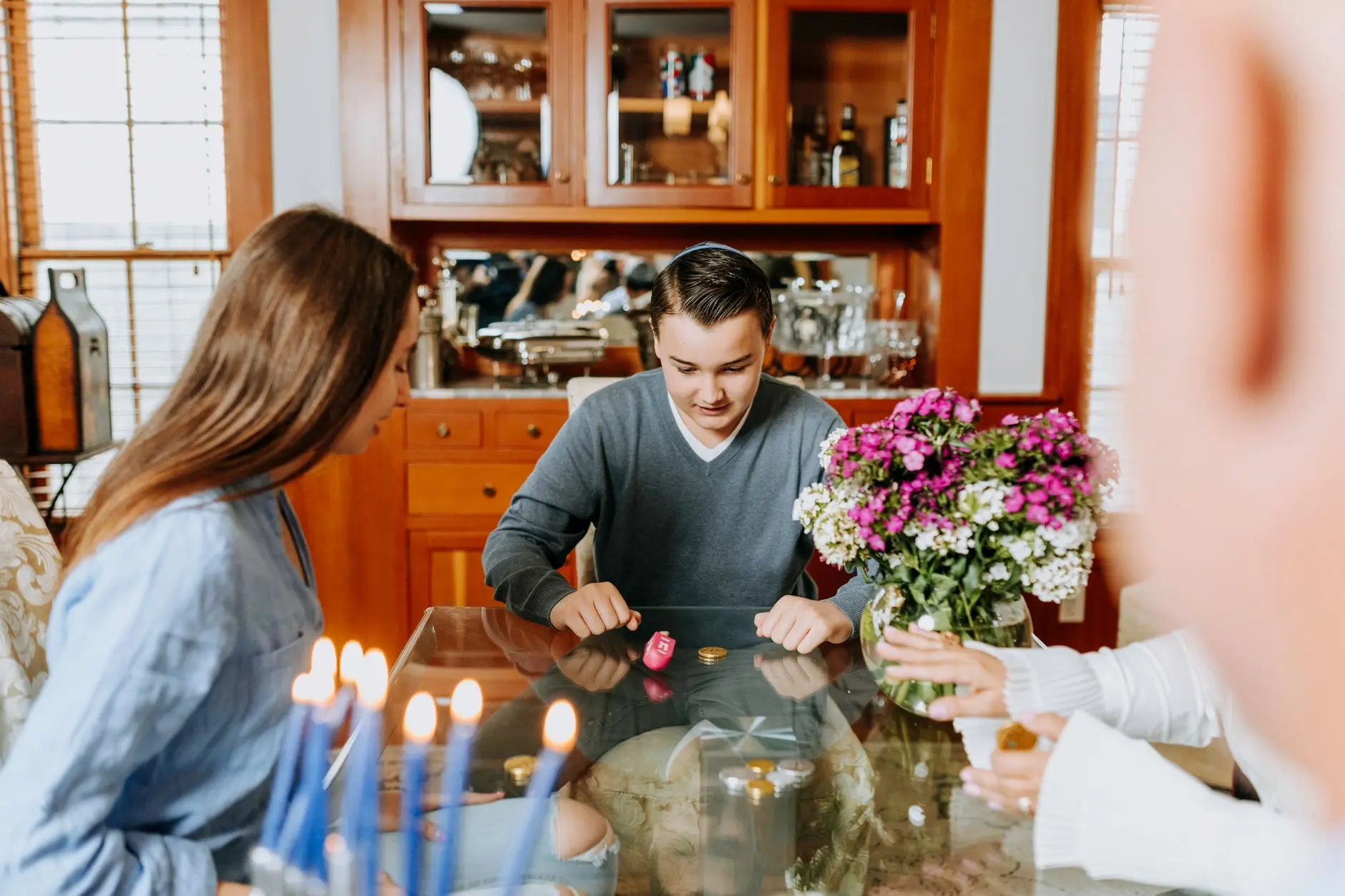
18 fun Hanukkah games rooted in real traditions — dreidel, gelt, menorahs & more. Perfect for fami
Fresh hanukkah party games for family night: 8 free printables plus 6 no-prep activities that fill e
Leave a Reply