

20 Halloween Party Activities With Free Printables for Fifteen Children at Once
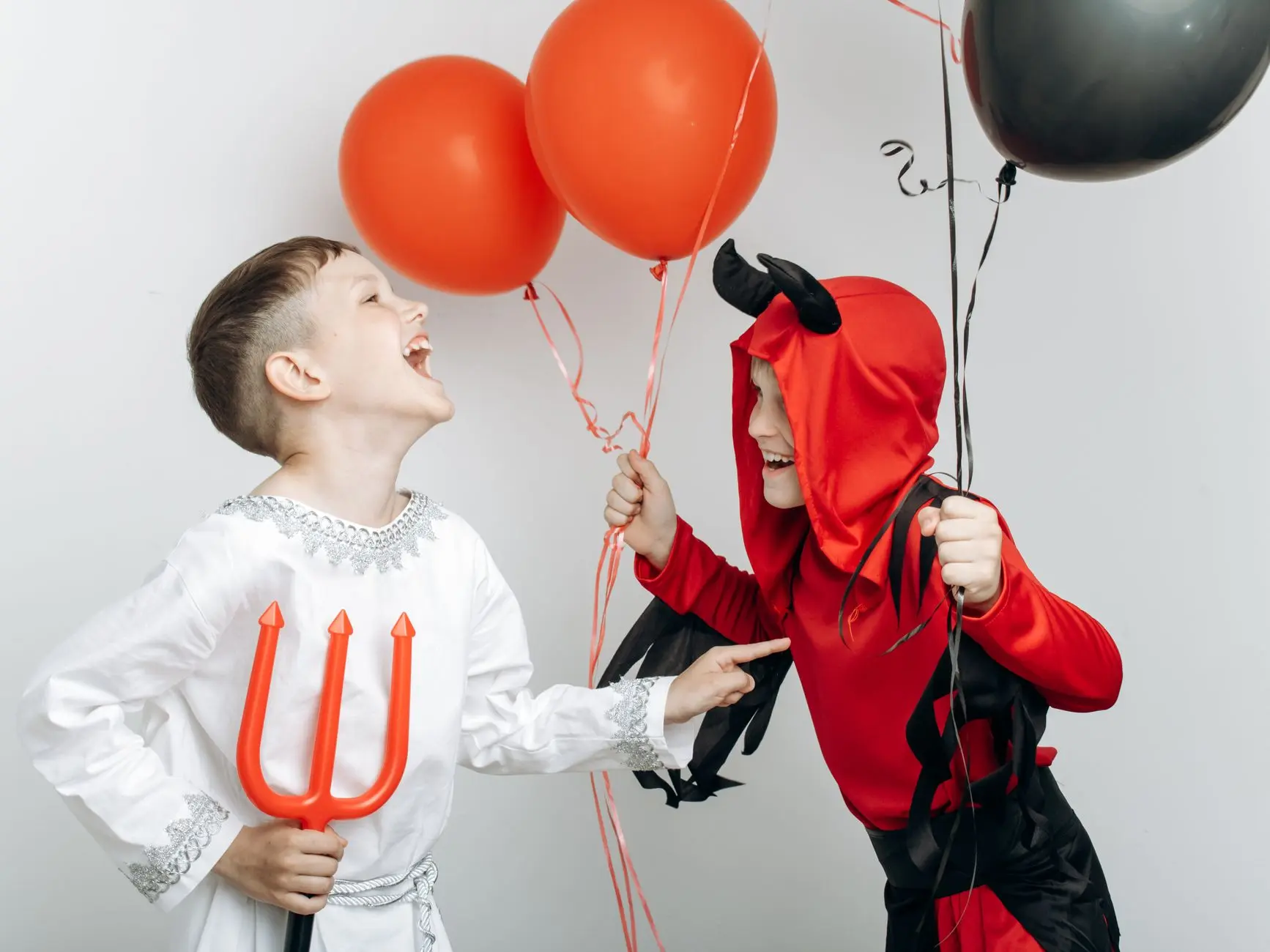
These halloween party activities for kids are built for the chaos of fifteen small witches and zombies arriving at the same door: everything runs in parallel, nobody waits in line, and the room stays (mostly) controlled.
You get eleven printable sheets to download and nine no-prep stations that need nothing but the supplies already on your table, so setup takes one afternoon, not a week.
This post contains affiliate links. If you buy through them, I may earn a small commission at no extra cost to you.
- The Party Passport, One Stamp per Station
- Pin the Nose on the Pumpkin
- Colour by Number at the Craft Table
- Ghost Bowling
- The Scavenger Hunt Clue Cards
- Doughnut on a String
- Halloween Bingo
- The Sensory Bin Corner
- Guess How Many Sweets
- Musical Statues
- The Costume Voting Slip
- The Torchlight Hunt in a Dark Room
- Cut and Build a Paper Mask
- Spot the Difference for the Quiet Corner
- Apple Bobbing Outside
- The Six Piece Puzzle Race
- Finish the Monster Drawing
- The Costume Parade at the End
- The Take Home Certificate
- Frequently Asked Questions
1. The Party Passport, One Stamp per Station
Each child gets a small folded booklet at the door. Every activity station in the room has a stamp, sticker, or ink pad beside it, and children collect one mark per station they complete. The passport gives every child a personal mission the moment they arrive, which means they self-direct around the room without bunching at one spot.
Print one booklet sheet per child, fold in half twice to make a four-page passport, and set a different stamp at each of the eight main stations. Plan roughly five minutes per station; most children will fill their passports in forty minutes. The only supply you need is a set of cheap ink stamps, one per table.
The fix for the child who loses their passport in the first ten minutes: keep a small stack of spares at the door table. The fix for the child who stamps every page at once: add a rule that the station host (an older helper or a parent) must initial beside the stamp.
- ink stamps, one per station
- ink pads in Halloween colours
- stapler to assemble booklets

🛍 Shopping guide
2. Pin the Nose on the Pumpkin
A large pumpkin face is pinned or taped to the wall with everything drawn except the nose. One at a time, each child is blindfolded, spun gently twice, and pointed toward the pumpkin. They press a foam triangle nose onto wherever they think the centre is, and their name goes on a sticky label stuck next to it.
No printing needed. Draw the pumpkin on a large sheet of orange paper or buy a poster version. Cut fifteen foam or card triangle noses beforehand and write each child’s name on one. A blindfold, two seconds of spinning, and a strip of reusable putty on each nose is all the setup required.
Keep all children seated in a semicircle so they are not in the blindfolded child’s path. If you are running this as a station rather than a whole-group game, two children can take turns while the rest are at other stations, which removes any wait entirely.
Tape the poster at child-height so even the youngest can reach the centre without stretching.
🛍 Shopping guide
3. Colour by Number at the Craft Table
Children sit at the craft table and fill in a Halloween scene using a numbered colour key: 1 is orange, 2 is black, 3 is purple, 4 is green. The image is split into dozens of numbered sections, so every child works independently and at their own pace, with no turns to take.
Print one sheet per child on plain paper. Set out a pot of crayons or felt-tip pens at each seat, matching the key colours. This station works for any age from four upward and keeps children quietly occupied for ten to fifteen minutes, which is exactly the gap you need while other stations cycle through.
If a child finishes quickly, flip the sheet over: a blank back becomes a free-draw zone. If a child cannot read the numbers yet, a helper can point to the matching crayon colour and the child does the colouring, which still counts as independent enough to keep the queue moving.
- Ages 4 and up
- Quiet independent work at a busy table
- Children who arrive early and need something immediate

🛍 Shopping guide
4. Ghost Bowling
Ten white plastic bottles or toilet-roll tubes wrapped in white tissue paper stand in a triangle at the end of a low hallway or along a wall. Children take turns rolling a small orange ball to knock them down, counting their score aloud and resetting the pins themselves before the next player goes.
No printing needed. Fill each bottle with a little sand or water so it stands upright but still falls with a solid hit. Mark a throwing line with a strip of painter’s tape. Two lanes running side by side means two children play at once, which cuts the effective wait in half for a group of fifteen.
The most common problem is pins that fall over before anyone bowls, especially on carpet. A thin strip of foam mat under the pins solves it. Write a face on each ghost-bottle with a black marker the night before: ten minutes of prep that makes the whole station feel properly decorated.
- 10 white plastic bottles per lane
- white tissue paper or paint
- small orange or black ball
- painter’s tape for the throw line
🛍 Shopping guide
5. The Scavenger Hunt Clue Cards
Eight clue cards are hidden around the house, each one leading to the next location.
Children work in small groups of two or three, reading each clue, racing to find the card at the next spot, and finally discovering a shared prize bag at the end.
Because groups start at different cards in the sequence, no two teams are ever crowding the same hiding spot.
Print the card sheet 8 up on cardstock and cut them apart. Laminating takes five extra minutes and means you can reuse the set.
Scatter starting points so each group of three begins at a different card number: group one starts at card one, group two at card three, group three at card five, and so on, looping the sequence. The hunt takes about twelve minutes per group.
If younger children cannot read yet, pair each group with one older reader or add a small picture clue below the written one. Keep a master list of hiding spots taped inside a kitchen cupboard so a helper can quietly nudge a stuck group without spoiling the hunt for others.
Tape each card inside a small orange envelope so it is harder to spot by accident from across the room.

🛍 Shopping guide
6. Doughnut on a String
Ring doughnuts hang from a washing line or rope strung across the garden or a wide doorway, one doughnut per child at mouth height. On the count of three, every child eats their doughnut with no hands. First to finish wins, but everyone gets to eat, which is a rare event where the prize is the game itself.
No printing needed. Tie a length of kitchen string through the hole of each doughnut and knot it to the line, spacing children roughly half a metre apart.
Run the whole group at once in two heats of seven or eight if the line is not long enough. This takes under five minutes including setup, so it works perfectly as a natural break between longer stations.
The mess is real: lay a sheet of paper under the line to catch crumbs. Children with braces or sensory issues around sticky food will opt out, so have a bag of wrapped sweets as an instant alternative rather than leaving anyone standing and watching.
- A natural energy break mid-party
- Running the whole group at once
- A moment that always gets laughed about in photos
🛍 Shopping guide
7. Halloween Bingo
Four different bingo grids cover the table so every child at the table holds a unique card. The caller draws image tiles from a bag and announces each one: black cat, cauldron, skeleton, spider web.
Children mark their grid with small sweets or counters, and the first to complete a row calls ‘Boo!’ The round resets in under a minute for the next game.
Print four grid sheets, each sheet holding one 5×5 bingo grid plus the call list at the bottom. Each grid is shuffled differently so no two cards match.
Provide a bag of small counters (sweets work perfectly and double as prizes) and a separate call list for the host. One round takes three to five minutes, so you can run three rounds in a single fifteen-minute slot.
The fix for a table of fifteen is simple: print four different grids in rotation, so grids 1 and 5 and 9 and 13 are the same card. Because the room is noisy and children mark at different speeds, near-identical cards rarely cause disputes. If they do, award both winners a sweet and move on fast.
- small sweets or counters as markers
- a bag or bowl to hold call tiles
- one printed call list for the host

8. The Sensory Bin Corner
A large plastic storage box filled with black dried rice or orange lentils hides a collection of small Halloween objects: tiny rubber spiders, plastic eyeballs, skeleton keychains, miniature pumpkins. Children dig through the bin with their hands or small scoops, finding as many hidden objects as they can within two minutes and counting them onto a tray beside the bin.
No printing needed. Dye a kilogram of rice black with food colouring the day before, spread it to dry overnight on a baking tray, then pour it into the bin with your hidden objects mixed through.
This corner works best as a quiet drop-in between louder stations, and it naturally self-limits: two or three children at a time fit comfortably around a standard storage tub.
Put the bin on a plastic tablecloth and accept that some rice will escape. A dustpan beside the bin lets an older helper sweep up between turns without interrupting the party. Do a full object count before the party and tape the number to the inside of the bin lid so you can verify everything comes out at the end.
Tape the hidden-object count inside the lid so nothing gets lost in the rice at the end of the party.
9. Guess How Many Sweets
A large clear jar sits on a table packed with wrapped sweets or small Halloween toys. Each child studies the jar, writes their best guess on a tally card, folds it, and drops it into a collection bowl. The child whose guess is closest to the actual number wins the jar and its contents to take home.
Print sixteen tally cards on one slip sheet and cut them apart, one per child. Set the jar out at the start of the party and let children guess whenever they pass; there is no dedicated slot needed.
Count the contents the night before and write the answer on a card sealed in an envelope, which the host opens dramatically at the end to announce the winner.
The most common error is not counting beforehand and then having to count in front of the group, which takes ages. Count, write it down, seal it. If two children guess the same number, the one who submitted first wins; the tally cards are collected in order, so this is easy to check.
Every child plays simultaneously, nobody waits, and the reveal gives the party a natural climax moment at the end.

🛍 Shopping guide
10. Musical Statues
Halloween music plays and all fifteen children dance freely around the room. The moment the music stops, every child freezes in the spookiest pose they can manage: arms out, eyes wide, mouths open. Any child who moves is out and becomes a judge for the next round, watching carefully for the tiniest twitch from their former competitors.
No printing needed. Use a free Halloween playlist on any streaming service and control it from a phone. The whole group plays simultaneously, which is the point: no waiting, no turns, pure movement. Rounds get faster as the group shrinks, and the last child standing wins a small prize.
Children who are out tend to drift away and lose interest, which can become a noise problem at the edge of the room. Give eliminated children an official job: they stand beside the host and vote by pointing at anyone they catch moving. A role keeps them engaged and surprisingly ruthless.
- Burning energy mid-party
- The whole group at once
- Ages 4 and up with no equipment needed
11. The Costume Voting Slip
Every child receives a voting slip and casts a secret ballot for one peer in each of three categories: Scariest Costume, Funniest Costume, Most Creative Costume.
Votes are collected in a cauldron bowl, tallied behind the scenes, and the winners are announced during the Costume Parade at the end.
The format means every child is a judge and every child is also being judged, which builds satisfying anticipation through the whole party.
Print sixteen slips on one sheet and cut them apart. Keep one slip as your master tally sheet. Hand them out thirty minutes before the end, give children five minutes to decide, then collect them in the cauldron.
A parent tallies quickly while the parade is happening. The slip needs a name line so you can stop the same child voting twice; the vote itself is anonymous because names face inward when folded.
Avoid a Best Overall category: it tends to crown the most expensive shop-bought costume rather than rewarding effort or originality. The three-category split means at least three different children win, which is a much warmer ending to the party.
Have at least three winner badges or ribbons ready so no single child sweeps all three categories by default.

🛍 Shopping guide
12. The Torchlight Hunt in a Dark Room
A room is blacked out with curtains and filled with twenty glow-in-the-dark or reflective Halloween stickers hidden at child height: under a chair, behind a cushion, along a skirting board.
Children enter in groups of three, each holding a small torch, and collect as many stickers as they find in two minutes. The group with the most stickers after their turn wins.
No printing needed. Stick the stickers in the same spots before every group enters: a helper resets them between turns using the master list taped inside the door.
Three children per group means five turns for fifteen children; each turn takes two minutes, so the station runs in about fifteen minutes total. Keep the door open a crack for safety and have a helper visible just outside.
Check the room for trip hazards before the party: move any low furniture and tape down any rugs. Some children are nervous about darkness; the option to hold a torch from the start, rather than entering and then receiving it, makes the transition easier and means no child ever stands in a pitch-black room without a light in hand.
- small torches, one per child
- glow-in-the-dark or reflective stickers
- blackout curtain or heavy blanket for the window
- master list of hiding spots
🛍 Shopping guide
13. Cut and Build a Paper Mask
Each child gets a half-pre-drawn mask sheet: the mask shape, eye holes, and basic features are already printed, but the decorating is blank.
Children cut along the outer edge, punch or cut the eye holes, add their own details with felt-tip pens, and thread a length of elastic through two small holes at the sides to wear it.
The finished mask goes home as a keepsake or gets worn for the Costume Parade.
Print one sheet per child on cardstock rather than plain paper so the mask is stiff enough to hold its shape. Pre-cut the elastic lengths beforehand and set out a hole punch, scissors, and markers at the table.
For younger children (four to six), pre-cut the outer edge before the party so they only need to decorate and assemble, which keeps the station running at pace.
The most common problem is children cutting the eye holes too large, which makes the mask impossible to wear properly. Print a small guide line around each eye hole and tell children to cut just inside it; those who go over simply have a more dramatic eye opening, which is rarely a tragedy at a Halloween party.
- cardstock, one sheet per child
- child-safe scissors
- hole punch
- elastic cord cut to length

🛍 Shopping guide
14. Spot the Difference for the Quiet Corner
Two nearly identical Halloween scenes sit side by side on one sheet: a haunted house with a ghost at the window, bats in the sky, a pumpkin on the step, and a witch flying past the moon.
Eight small differences are hidden between the two images. Children circle or tick each difference they spot and write the total they found in a box at the bottom.
Print one sheet per child, ideally on plain paper since this is a short activity. Set it in the quietest corner with a cup of pencils so children can drop in and work on it between louder activities, or use it as a calm-down zone after the torchlight hunt. Most children finish in five to eight minutes.
An answer key prints at the very bottom of the sheet in tiny font so the host can confirm disputed finds without having to remember the list.
The eight differences are: one extra bat in the right image, the ghost has a bow in the right image, the pumpkin smile is different, one window is lit in the right image, the witch hat has a star in the right image, the moon has a face in the right image, the door colour differs, and there is an extra spider on the fence in the right image.
- Children who need a quiet break
- A self-contained five-minute slot
- Works without any host supervision

15. Apple Bobbing Outside
A large tub of cold water holds a dozen floating apples. Children kneel at the tub, hands behind their backs, and try to bite an apple out of the water using only their teeth.
Every child who succeeds keeps their apple; those who do not get thirty seconds before passing to the next child. Run two tubs side by side outside so two children bob simultaneously.
No printing needed. Fill the tubs the hour before the party starts so the water reaches room temperature (or close to it). Have a stack of dry towels right beside each tub; wet sleeves on a cold October day are miserable. Keep this station outdoors or in a utility room with an easy-to-mop floor, because water will travel.
Children in face paint should skip this one or go before their paint is applied, since water destroys make-up in seconds. If hygiene is a concern, swap to a fork-drop version: children hold a fork in their mouth and drop it trying to spear an apple, keeping the water cleaner and the activity just as challenging.
Use the fork-drop version for younger children: drop a fork held in the mouth, try to spear an apple, no water on the face.
🛍 Shopping guide
16. The Six Piece Puzzle Race
Each child gets a sheet printed with a bold Halloween illustration divided into six large interlocking-style panels. They cut along the printed lines, mix up the pieces face-down, then race to reassemble the image as fast as possible. Because every child works on their own sheet simultaneously, the whole table races at the same moment with no sharing required.
Print one sheet per child on cardstock so the pieces are satisfyingly stiff. Score and pre-fold the cut lines the night before if you want to save scissors-time during the party. Provide child-safe scissors and a flat surface.
The race takes roughly two to four minutes per child, and you can run a second round by mixing two children’s cut pieces together for a cooperative reassembly challenge.
The big practical risk is pieces falling to the floor and mixing with a neighbour’s set. Give each child a small tray or a sheet of coloured paper as a work mat, so all their pieces stay in one defined area. A different border colour per sheet (printed in the design) makes it easy to sort mixed pieces without argument.
- Cut along the lines
- Mix pieces face-down
- Flip and reassemble as fast as possible
- First to complete the picture wins the round

17. Finish the Monster Drawing
The left half of a monster is printed on the sheet: one eye, half a jagged mouth, one arm, one leg, and a partial body outline. Children draw the missing right half, completing the monster however they like.
No two finished monsters will ever look the same, which means the table full of completed sheets becomes an instant gallery worth photographing.
Print one sheet per child on plain paper. Set out fine-tip black markers and a cup of coloured pencils at the table. Children who finish quickly can add a background: a haunted castle, a graveyard, a swamp. This activity needs no supervision once children understand the brief, so the host is free to manage other stations.
Some children freeze when asked to be creative without a guide.
Tell them the rule is simply that both sides of the monster must match in a rough way: if the printed half has a round eye, the drawn half gets a round eye too, but they choose the size and any extra details.
That tiny constraint removes the blank-page panic entirely.
Every child produces a unique result with no competition, so it suits mixed ages and abilities at the same table without anyone feeling compared.

🛍 Shopping guide
18. The Costume Parade at the End
Every child walks a short loop around the main room while Halloween music plays, showing off their costume to the seated parents and any children who have already finished. Each child is announced by name as they enter the loop. After one full circuit, they collect their voting results and any winner ribbons.
No printing needed. Mark a simple oval on the floor with orange balloons at the four corners as a runway guide. The parade takes about four minutes for fifteen children if each child gets a ten-second spotlight. Run it as the very last structured activity so it acts as a natural close to the party before pick-up.
Children who are shy about walking alone can invite a friend to walk with them; the parade is not a judging catwalk but a celebration, so pairs and trios are perfectly fine. Play the music loud enough that it covers any awkward silences but not so loud that the host’s announcements are inaudible from the runway entrance.
Ask one parent to photograph the parade entrance so every child gets at least one good costume photo to take home.
🛍 Shopping guide
19. The Take Home Certificate
Every child leaves the party with a personalised certificate acknowledging something specific: bravest at the torchlight hunt, best monster drawing, fastest puzzle, most creative costume, or simply ‘Official Halloween Party Champion’ for those who collected every passport stamp. The certificate is the last thing handed out, tucked into the party bag.
Print one per child on cardstock for a stiffer, more official feel. Fill in each child’s name and award title by hand in the blank fields before the party ends.
The host can do this during the Costume Parade: while the parade runs, a parent helper completes the certificates at the side table, which means they are ready the moment the parade finishes.
The temptation is to give every child the same generic award, which children immediately recognise as meaningless. Spend three minutes before the party writing one unique detail per child on a sticky note: the fastest puzzler, the most detailed monster, the child who found the most stickers in the torchlight hunt. Specific is always better than grand.
Write each child’s specific award on a sticky note before the party so the helper filling them in during the parade does not have to guess.

Frequently Asked Questions
How do you run halloween party activities for kids when fifteen children arrive at the same time?
Set up multiple stations before anyone arrives: craft table, printable game zone, active game area, quiet corner. Give each child a Party Passport at the door so they self-direct around the room. With six or seven stations running simultaneously, you never have more than two or three children at any one spot, and no formal queue ever forms.
What age group do these halloween party activities work for?
Most activities here suit ages four to ten. The Colour by Number and Finish the Monster Drawing work from age four upward. The Scavenger Hunt and Spot the Difference are better from age six.
For a mixed-age group, pair younger children with older ones at reading-heavy stations and keep the active games (Musical Statues, Ghost Bowling, Doughnut on a String) open to all.
How far in advance should you print the halloween party printables?
Print everything at least two days before the party so you have time to reprint anything that jams or comes out too faint. Cut the card sets and slip sheets the evening before. Load cardstock for the mask, puzzle, and certificate sheets; plain paper is fine for bingo, spot the difference, and colour by number.
Can you run these halloween party activities for kids indoors only?
Yes, with one swap: move Apple Bobbing to a utility room or bathroom with a tiled floor rather than skipping it entirely. Ghost Bowling and Musical Statues both work indoors if you push furniture to the walls.
The Torchlight Hunt needs only one room that can be blacked out, even a large wardrobe or walk-in cupboard works for a group of three.
How do you handle children who do not want to do certain activities?
The passport system helps enormously because children choose their own route. Keep the quiet corner (Sensory Bin, Spot the Difference) as a genuine opt-out zone with no pressure.
Have a small box of spare colouring sheets and sticker books as a fallback for any child who opts out of everything structured: the goal is that every child is happily occupied, not that every child completes every station.
What is the easiest way to keep halloween party activities for kids on schedule?
Set a visual timer on a tablet or use a cheap sand timer at each station: five minutes per station is enough for most activities. Announce transitions with one blast of a Halloween sound effect from your phone rather than shouting over the noise.
The Costume Parade as the last event gives the party a natural end point that every child can see coming, which makes the wrap-up calm rather than chaotic.

15 fun halloween icebreaker games to warm up strangers fast — zero prep, big laughs, perfect for p
22 trunk or treat ideas that keep crowds moving fast, every car a distinct themed station with light
20 easy Halloween party games with zero stress prep — active, printable & spooky quiet games for a
Leave a Reply