

20 French Chateau Wedding Ideas for Couples Who Dream of a Fairy-Tale Weekend
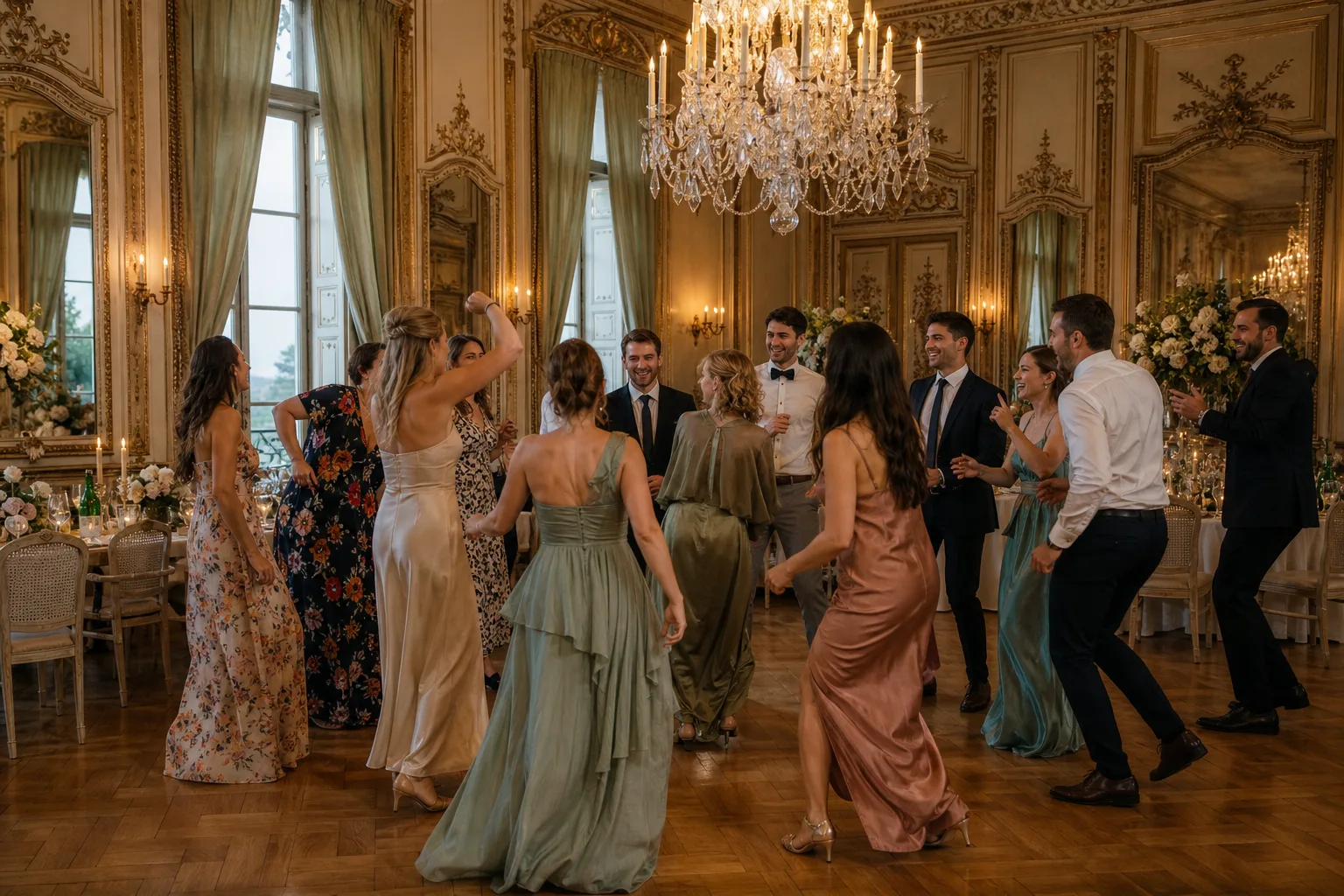
A French chateau wedding does not whisper. It stands in front of stone walls three centuries old and lets the architecture do half the work, then dresses the other half in ivory, champagne, sage, soft blush and antique gold.
The motif that carries every part of the day is candlelight: a candelabra on the dinner table, a lantern at the base of a stone urn, a votive glowing behind a sugar flower on the cake. It never looks like the same object twice, only the same warm, flickering idea.
The look suits a spring or early autumn wedding best, when the light is soft and a gravel courtyard will not bake anyone in full sun. A real chateau is not required: a manor house, a grand hotel terrace or a marquee against a stone-grey backdrop borrows the same romance.
This post contains affiliate links. If you buy through them, I may earn a small commission at no extra cost to you.
Table of Contents
The Ceremony at the Chateau
The biggest scene of the day is the chateau itself: stone facade, gravel underfoot, and an aisle that already looks finished before a single flower arrives. Everything here is weatherproof and built to be seen from thirty metres back, which is exactly the point.
The Stone Urns Lining the Aisle
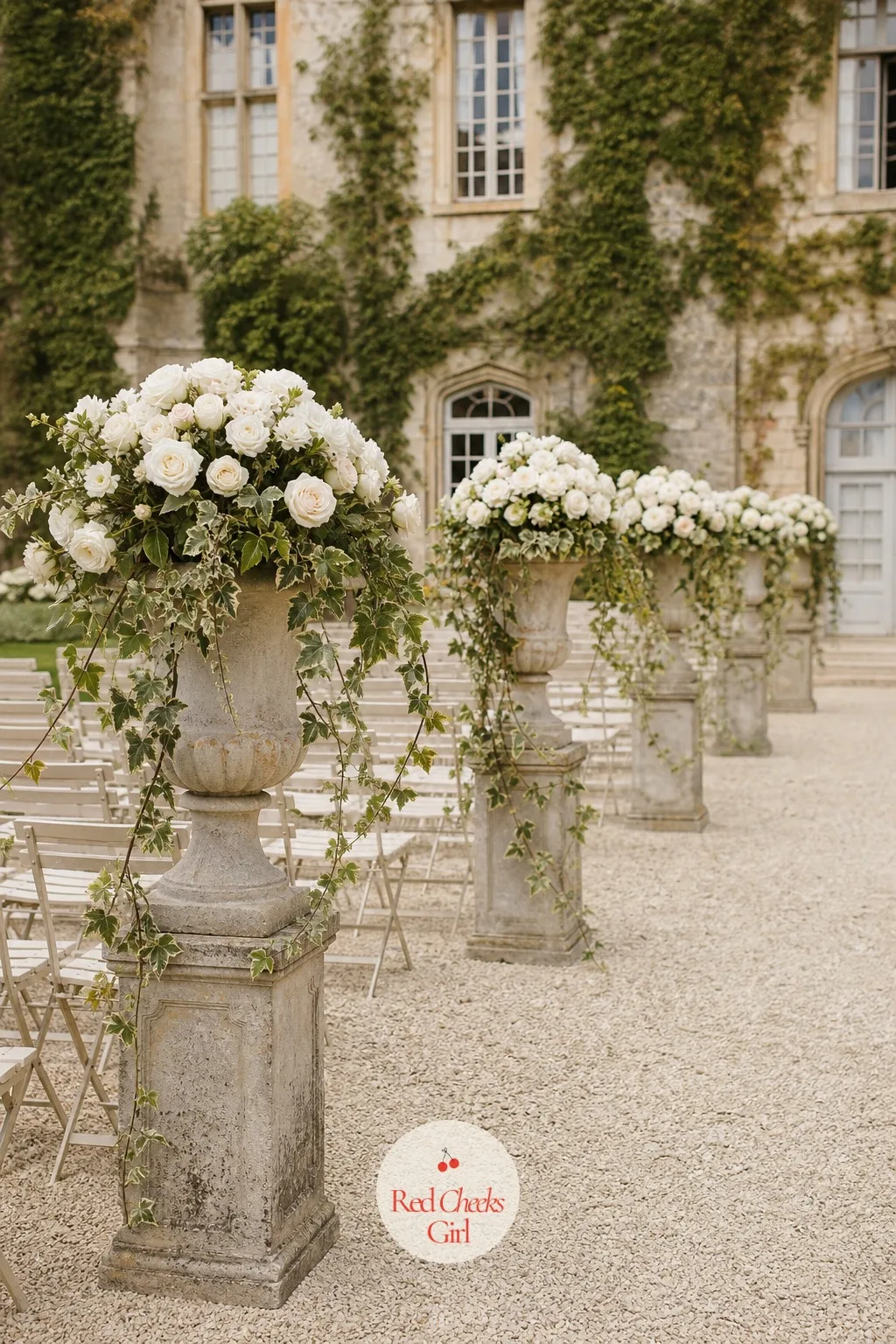
Guests round the drive and the aisle opens up before the music even starts. That is the stone urn doing its job: solid, weathered pairs of them, holding white flowers taller than anyone’s head.
Each urn stands directly on the gravel, spaced every few metres down the aisle. Inside sits a dense block of white rose, lisianthus and trailing ivy, with a few stems of sage eucalyptus breaking the line. A thick pillar candle in a glass hurricane sits at the base of every other urn for the evening light.
Tell the florist: urn arrangements in white rose, lisianthus and ivy, ivory and sage, sized to sit well above the rim, for however many urns line the aisle. Hiring stone urns from a prop house costs less than buying them. No gravel courtyard: the same pairs work either side of a barn door or terrace step.
🛍 Shop this look
The Chateau Facade as the Ceremony Backdrop
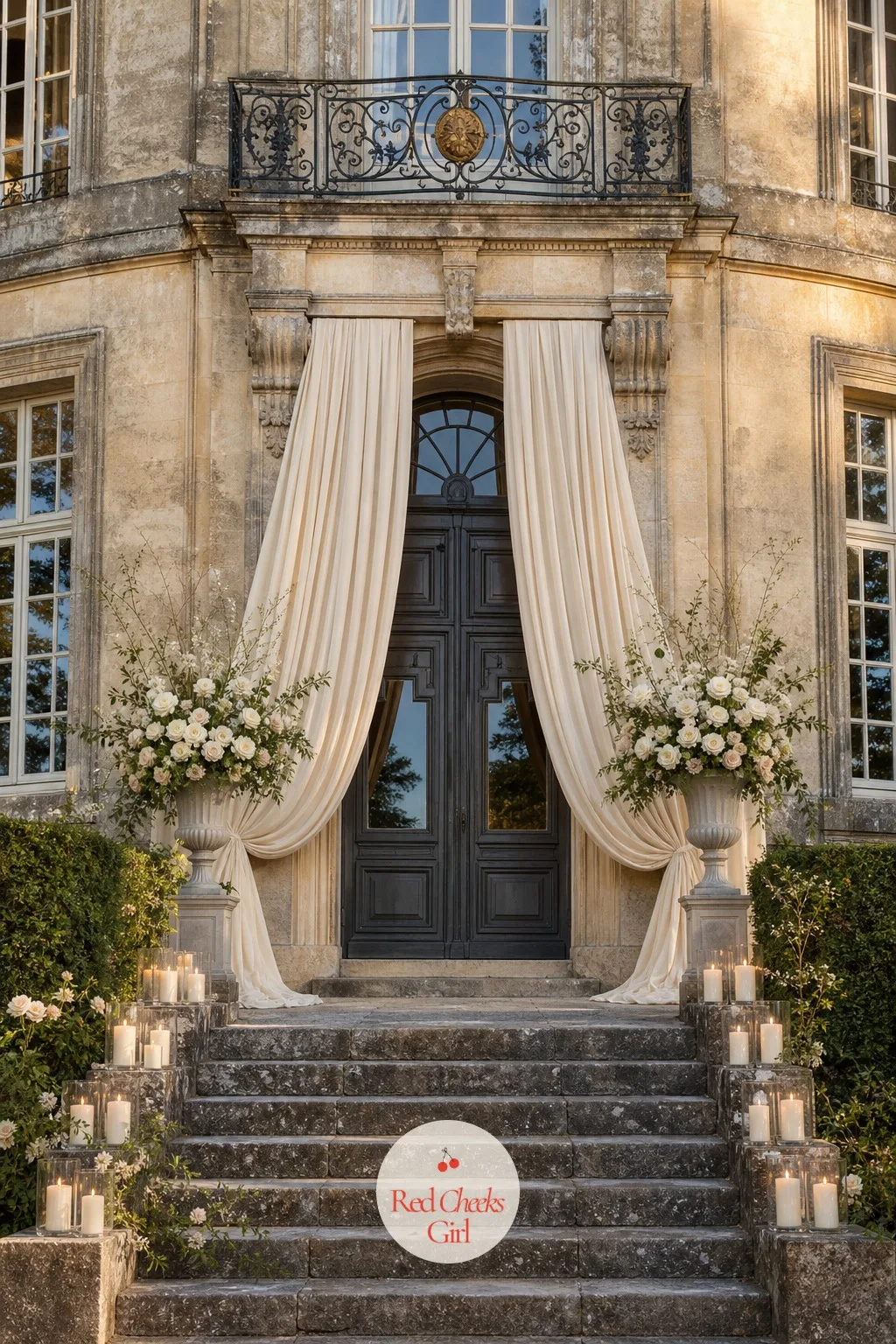
She will not need an arch here, and that is the relief of marrying at a real chateau: the building is the backdrop. A light dressing at the doorway is all it takes, never a structure fighting the stonework for attention.
A swag of ivory drapery hangs either side of the main door, caught back with a loop of satin ribbon. Two tall urns of white garden rose and sage foliage flank the bottom step, and a scatter of votive candles in glass holders lines the stone ledge above.
Give the stylist this exact brief: drape ivory fabric either side of the entrance, tied back, with a floral arrangement on each step in white rose and sage. No chateau to hand: the same drape and urns dress a barn door or a stone terrace just as well.
🛍 Shop this look
The Gravel Courtyard Seating
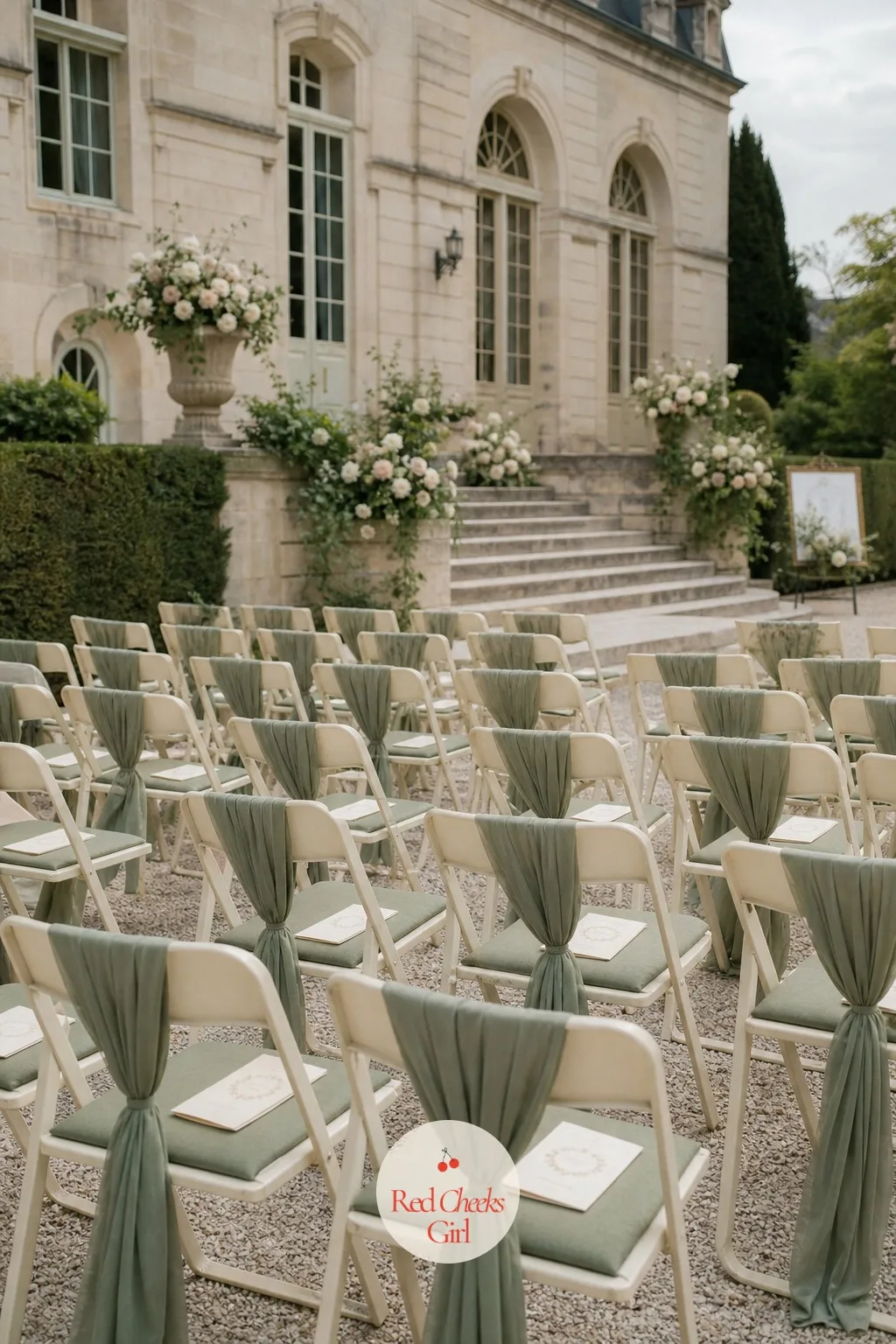
She might worry that folding chairs on gravel look thrown together. They do not, once every chair gets the same small treatment: a sash, a cushion, nothing more.
Rows of cross back or ivory folding chairs sit directly on the gravel, each one finished with a sage green sash tied at the back and a flat cushion pad in the same shade on the seat. A folded ceremony program waits on alternating chairs.
Ask the rental company for ivory folding chairs with sage chair sashes and seat cushions included, priced per chair. Tying the sashes herself the morning of, with a friend on the other end of the row, costs nothing but an hour.
The Arrival at the Chateau Gates
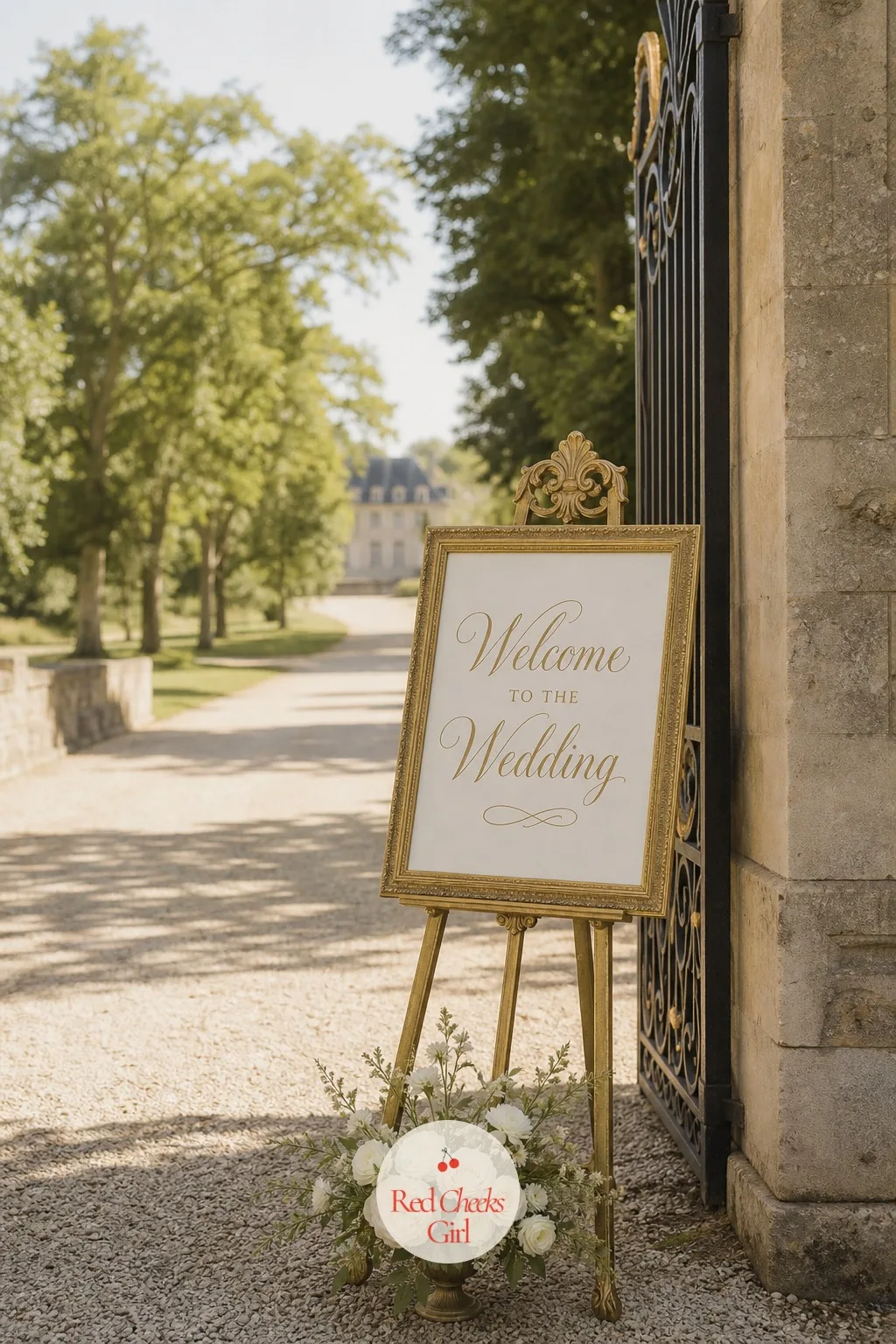
The first thing anyone sees should already promise the rest of the day. A welcome sign at the gate does that job quietly, before a single guest has set foot on the gravel.
A freestanding gold easel holds a framed sign reading Welcome to the Wedding, lettered by hand in gold script on an ivory ground. A simple arrangement of white rose and sage sits at its base, tied with ivory ribbon.
Give the calligrapher this wording exactly: Welcome to the Wedding, with the couple’s names and the date below if she wants them. A printed sign in the same lettering style is the quick, cheap stand in for hand calligraphy.
The Candlelit Dinner
Once the sun drops, the whole party moves to one long, glowing table. Antique gold candelabras, white roses and crystal do the work that overhead lighting cannot, and a gold rimmed plate catches every flame.
For more ways to dress the table beyond this one, 34 Wedding Decor Ideas Couples Are Choosing for Next Season has the full range.
The Candelabra Tablescape
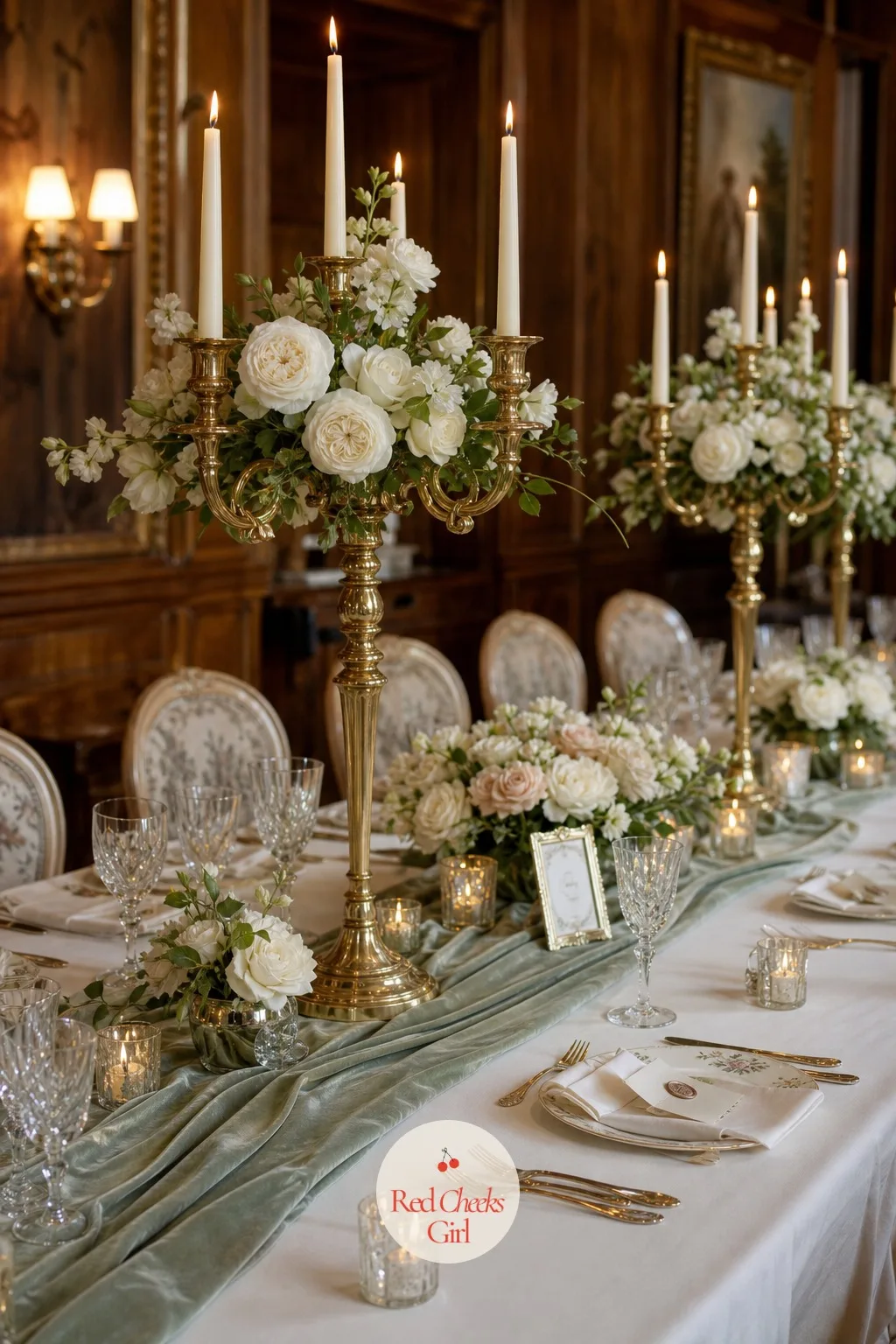
By the time dinner starts, the sun has usually gone, and this is where the whole look either holds or falls apart. A row of candelabras down the table’s spine solves it in one move.
The table itself wears a sage velvet runner over an ivory cloth. Antique gold six arm candelabras stand every metre or so down the centre, each ringed with low white rose and sweet pea, with small crystal votives filling the gaps between.
Tell the rental company: ivory tablecloth, sage velvet table runner, with six arm antique gold candelabras spaced down the centre of each table. Buying a few candelabras to keep is cheaper than it sounds if she wants them again for every anniversary dinner after.
🛍 Shop this look
The Gold Rimmed Place Setting
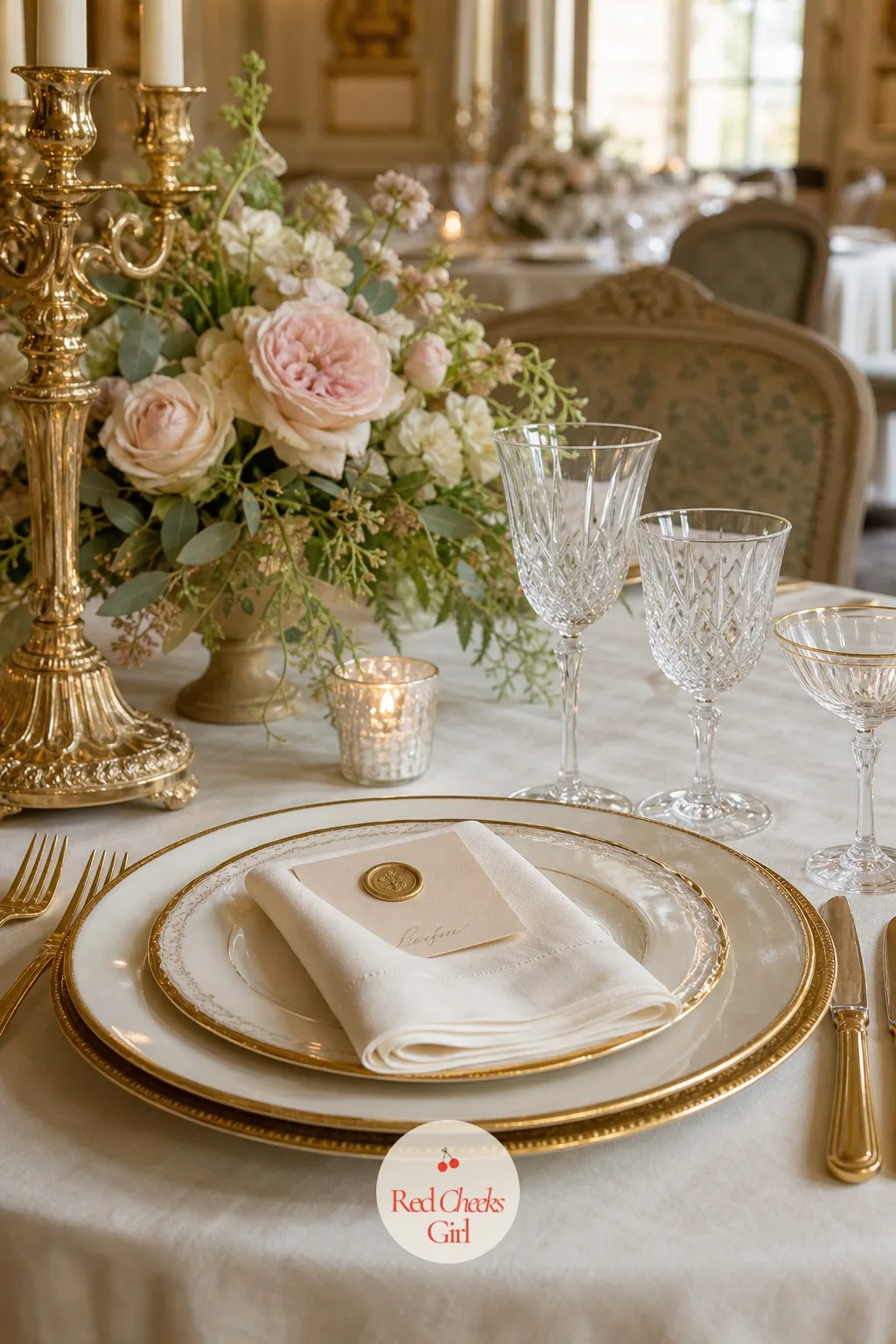
Up close is where a guest actually notices the theme, not from across the room but from her own plate. A gold rim does more than any centerpiece to make the table feel finished.
A gold rimmed charger sits under a matching dinner plate, with a crystal cut wine glass and water glass set above the knife, and gold flatware laid either side. An ivory cotton napkin, pressed flat, sits folded on the charger.
Say to the rental company: gold rim charger and dinner plates, crystal cut stemware, gold flatware, ivory cotton napkins, for the full place setting count. Charger plates are the one piece worth renting rather than buying, since storing a full set afterward is nobody’s idea of fun.
🛍 Shop this look
The White Rose Table Runner
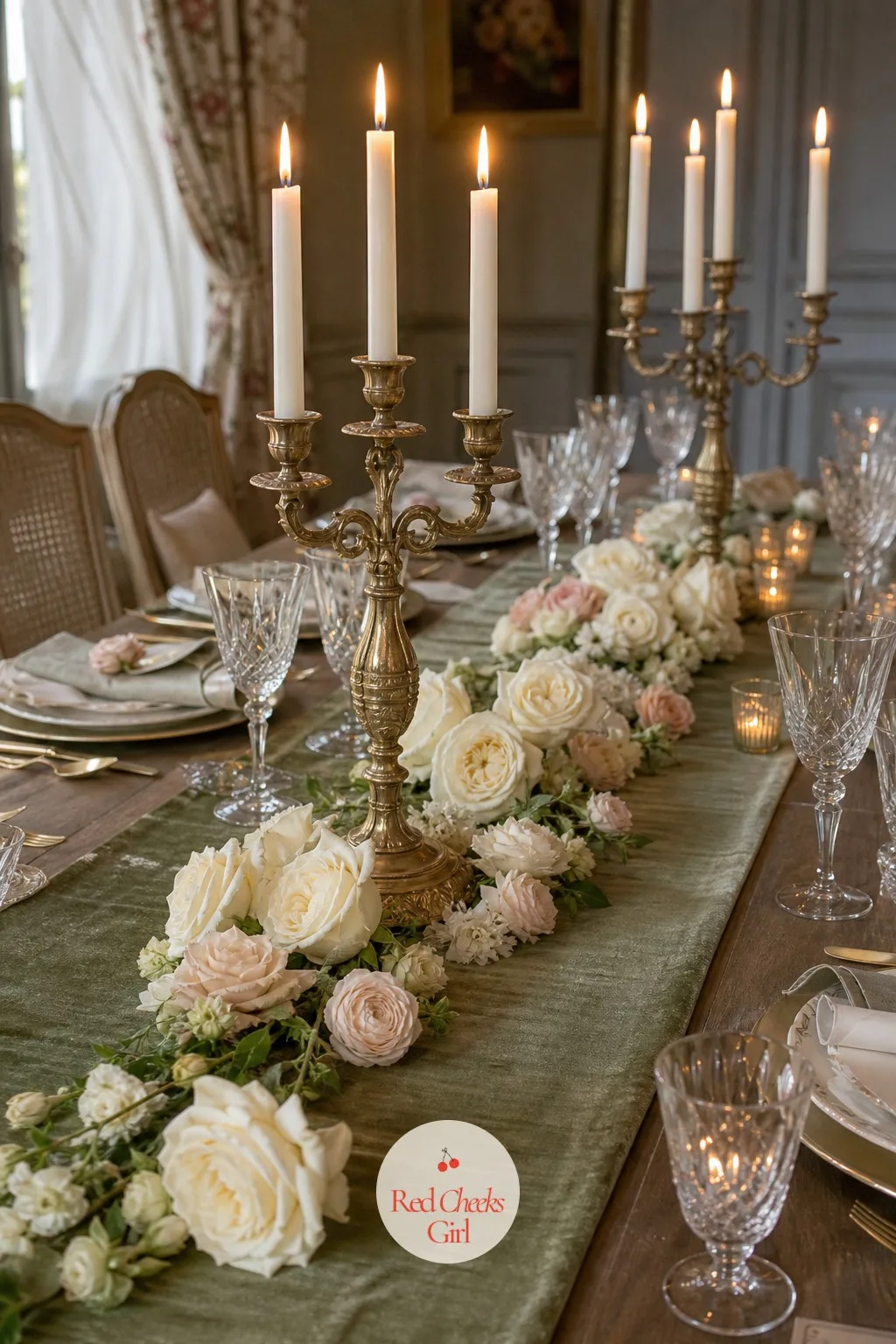
Between the candelabras, the table still needs something low and soft, or the gold starts to feel cold. A loose garland of white rose does that without blocking a single face across the table.
A thin trail of white roses, blush ranunculus and sage eucalyptus runs along the velvet runner, low enough that guests can see straight across for conversation. Stems sit directly on the fabric, no foam or wire showing.
Ask the florist for a low, loose table garland in white rose, blush ranunculus and sage eucalyptus, running the length of each table. This is the one piece worth doing herself the morning before, since fresh stems laid flat need no mechanics at all.
The Menu Cards at Each Place
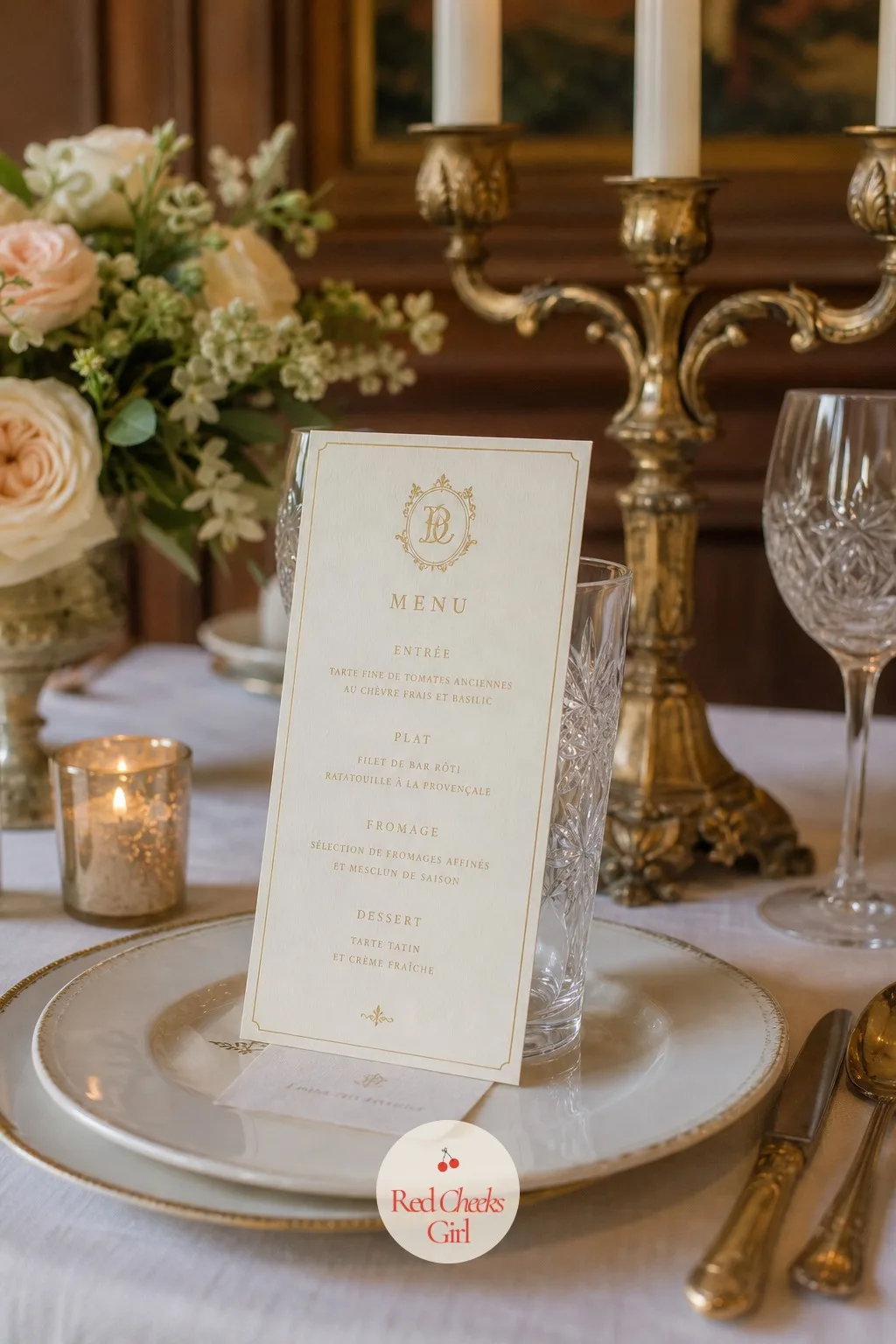
She wants guests to know what is coming, and a small card does that better than an announcement ever could. It also gives every place setting one more reason to look dressed.
A tall ivory menu card stands propped against the water glass at each setting, the courses lettered in gold ink, with a thin gold border printed around the edge.
Give the printer this brief: ivory cardstock menu cards, gold ink lettering, a thin gold border, one per guest. A gold calligraphy pen and a steady hand do the same job for a fraction of the cost, if she has an evening to spare.
The Antique Gold Napkin Detail
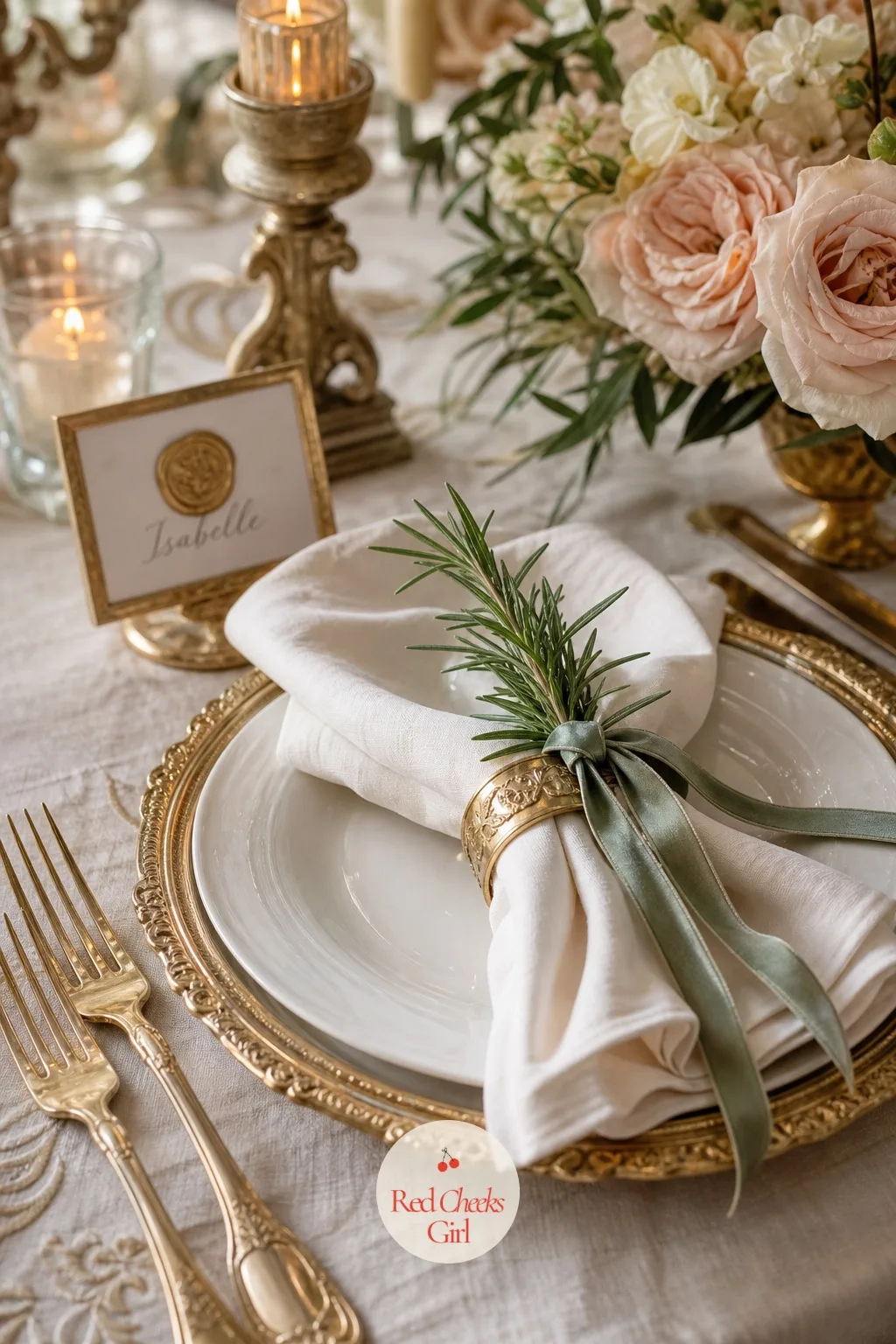
A folded napkin on its own looks unfinished at this table. One small ring around it finishes the thought in two seconds flat.
An antique gold napkin ring sits around the pressed ivory napkin, with a single sprig of rosemary tucked under a loop of sage ribbon for scent as much as looks.
Tell the rental company or stylist: antique gold napkin rings with a rosemary sprig and sage ribbon tucked under each one. This is genuinely a five minute table job, done once everything else is already in place.
The Cocktail Hour
Between the ceremony and the dinner bell, guests get one hour to stand around something beautiful with a glass in hand. A champagne tower earns its photographs here, and a courtyard full of lanterns gives people somewhere to actually sit.
The Champagne Tower
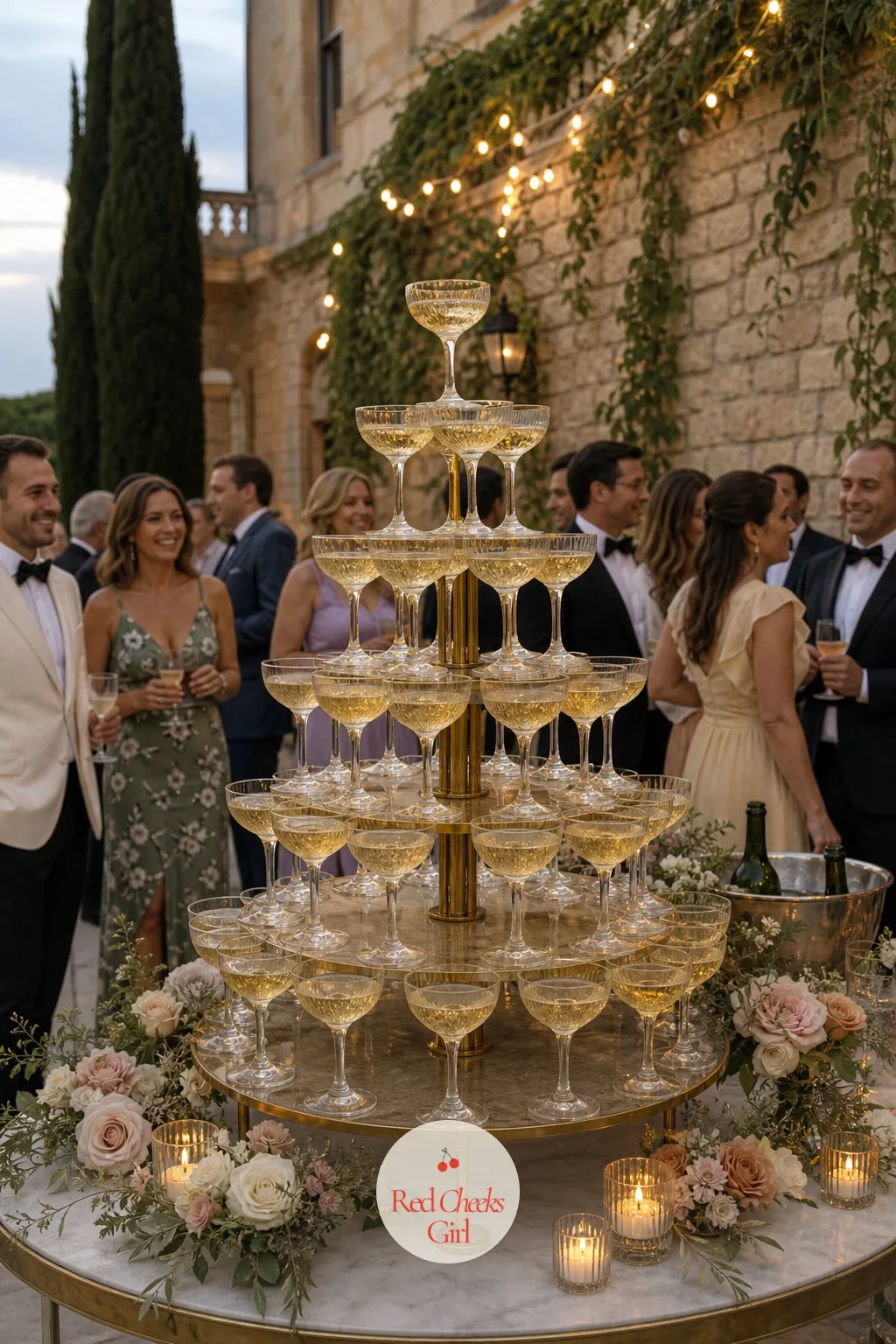
Nothing announces the start of a party like a wall of coupes waiting to be filled in one long pour. A champagne tower is pure theatre, and it photographs better than almost anything else on this list.
A tiered gold stand holds rows of crystal coupe glasses, stacked so the top glass sits alone. One bottle poured from above fills every glass below it in a cascade, no second pour needed.
Tell the caterer: a champagne tower stand for however many coupes the guest count calls for, poured as a timed moment during cocktail hour. Renting the stand and buying the coupes cheaply still beats hiring a full bar display.
The Courtyard Cocktail Lounge
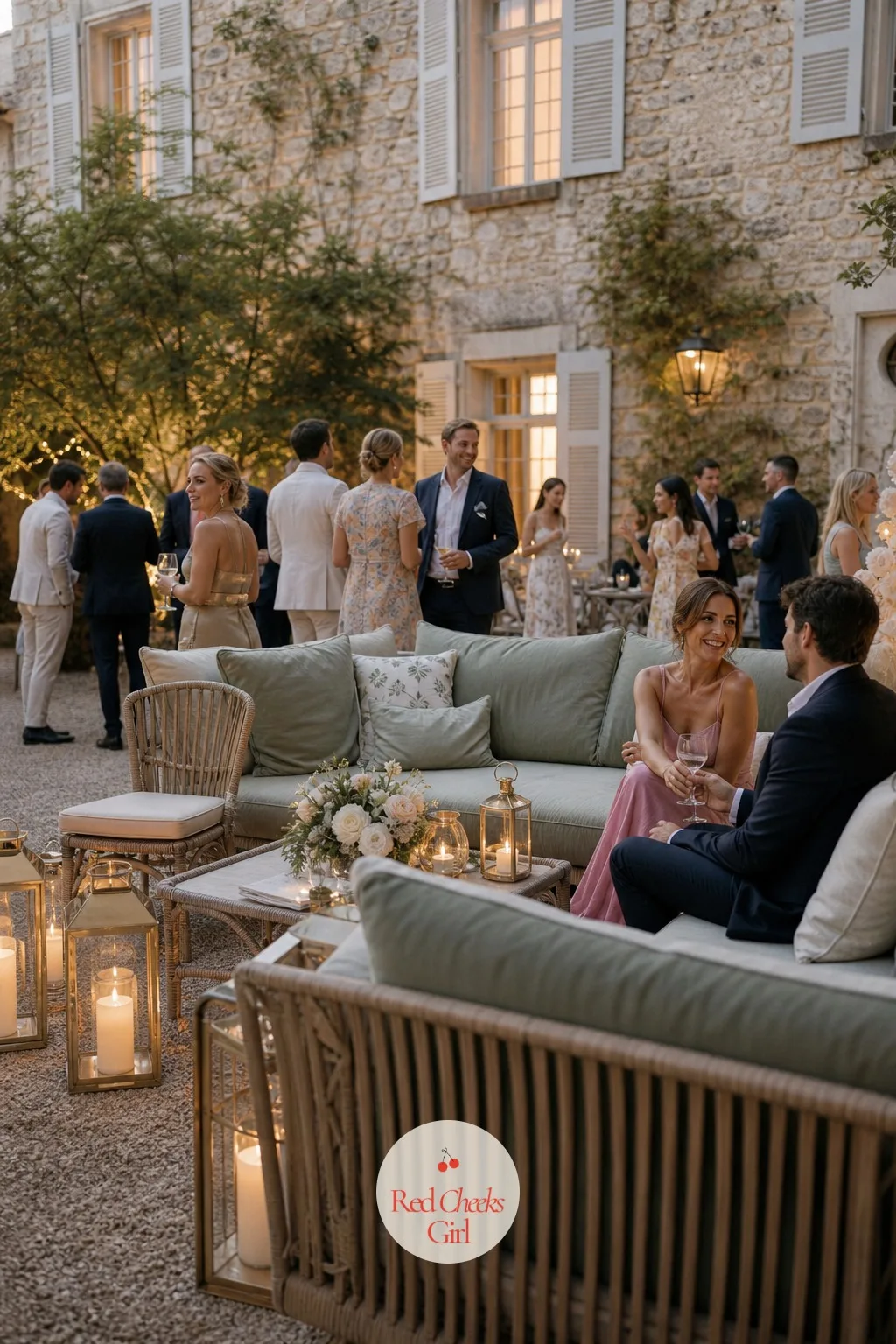
An hour is a long time to stand holding a glass with nowhere to put it down. A few low seating clusters in the courtyard solve that without needing a whole second venue.
Rattan lounge chairs and a low table sit in loose groups across the gravel, dressed with sage velvet throw cushions. Gold lanterns with candles inside sit at ankle height around each cluster as the light fades.
Ask the rental company for rattan lounge seating in small groupings with sage cushions and gold lantern lighting for the cocktail area. If renting furniture feels like overkill, a handful of stone urns and standing cocktail tables carry the same courtyard mood for less.
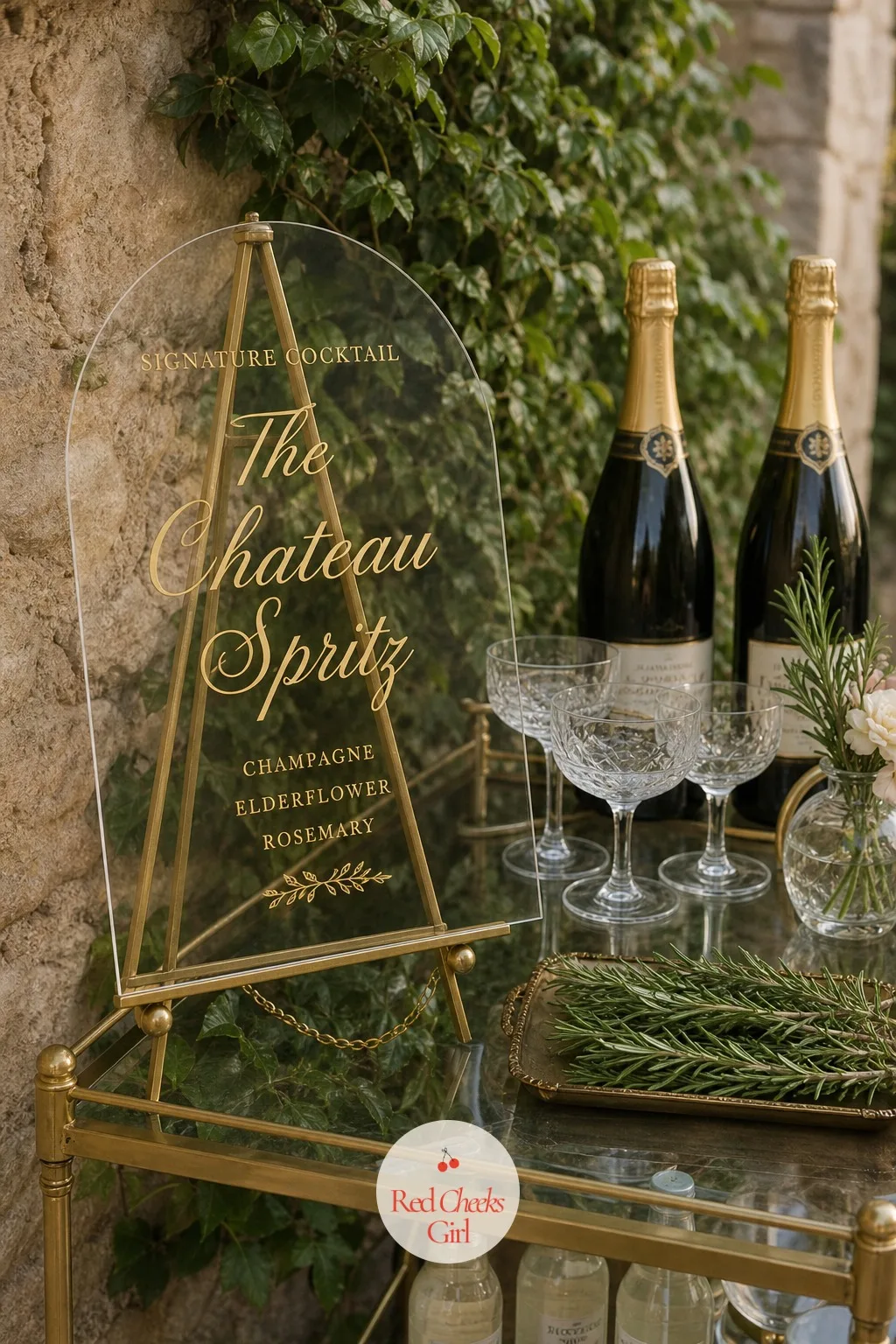
The Signature Cocktail Sign
One drink, named and written up somewhere guests can see it, turns a basic bar into a moment people remember and photograph without being asked.
A clear acrylic sign stands on a small brass easel beside the bar, hand lettered in gold paint pen to read The Chateau Spritz, champagne, elderflower, rosemary.
Give the bartender the drink and the sign writer this exact wording: The Chateau Spritz, champagne, elderflower, rosemary, lettered in gold. A printed card in the same gold on ivory does the job just as well if nobody on hand can letter by hand.
The Pastry and Cake Table
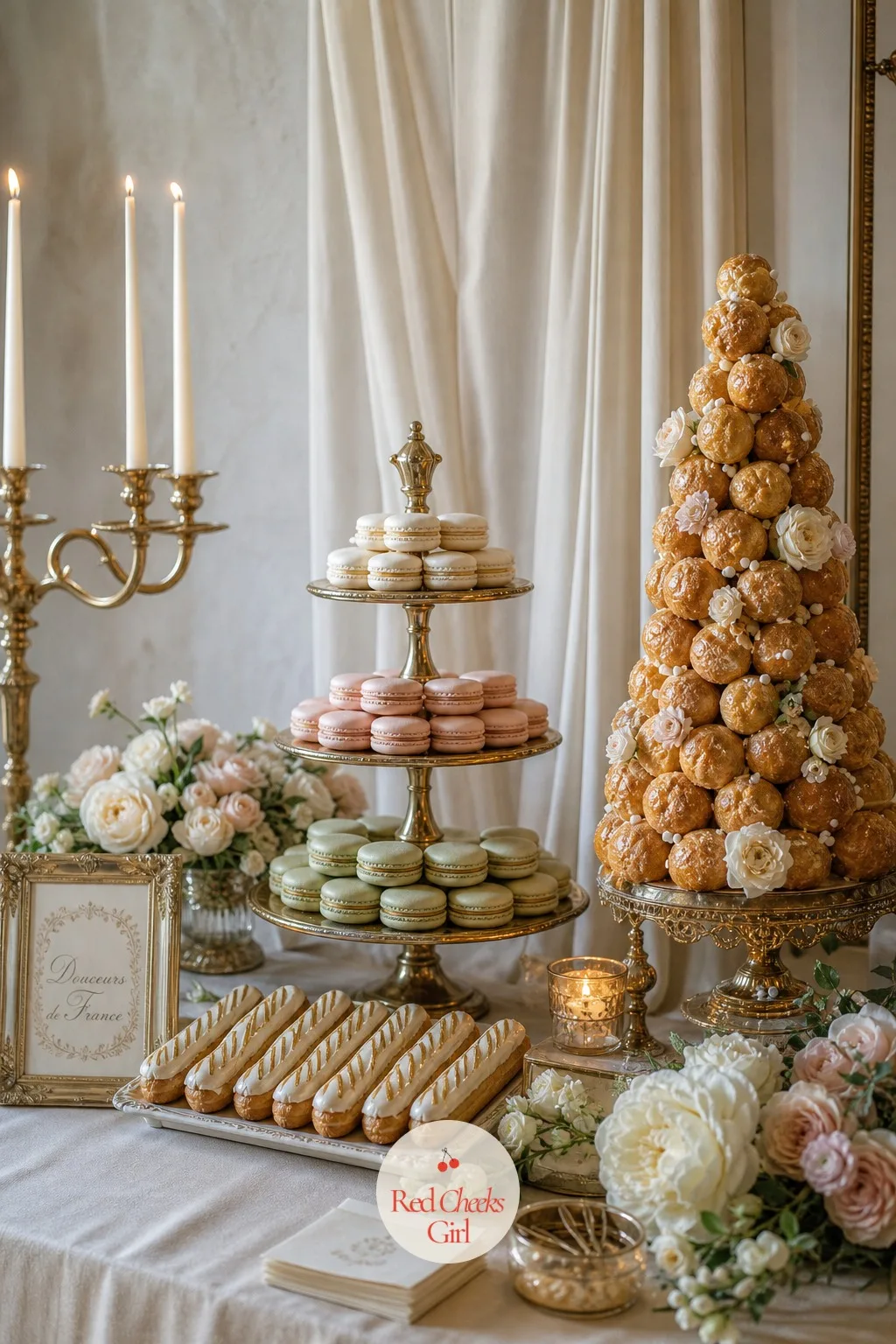
French pastry does the heavy lifting on dessert, so the table gets built like a small architectural project of its own: macarons, eclairs, a croquembouche and the cake, each on its own tier of gold.
The Pastry Table of Macarons, Eclairs and Croquembouche
French pastry does not need rescuing with extra decor. It just needs height, so every tier reads from across the room instead of blurring into one pale pile.
A gold tiered stand holds macarons in ivory, blush and sage at the bottom, eclairs with gold leaf stripes above them, and a tall croquembouche, caramel spun cones stacked and threaded with spun sugar, standing beside the stand rather than on it.
Tell the pastry chef: a croquembouche for the guest count, plus macarons in ivory, blush and sage and gold striped eclairs, styled across a gold tiered stand. Macarons travel well from a good bakery; the croquembouche is the one piece worth paying a professional for, since it genuinely does collapse if rushed.
If more is more sounds right for the whole dessert spread, 22 Maximalist Wedding Decor Ideas for Couples Who Believe More Is More pushes the same idea further.
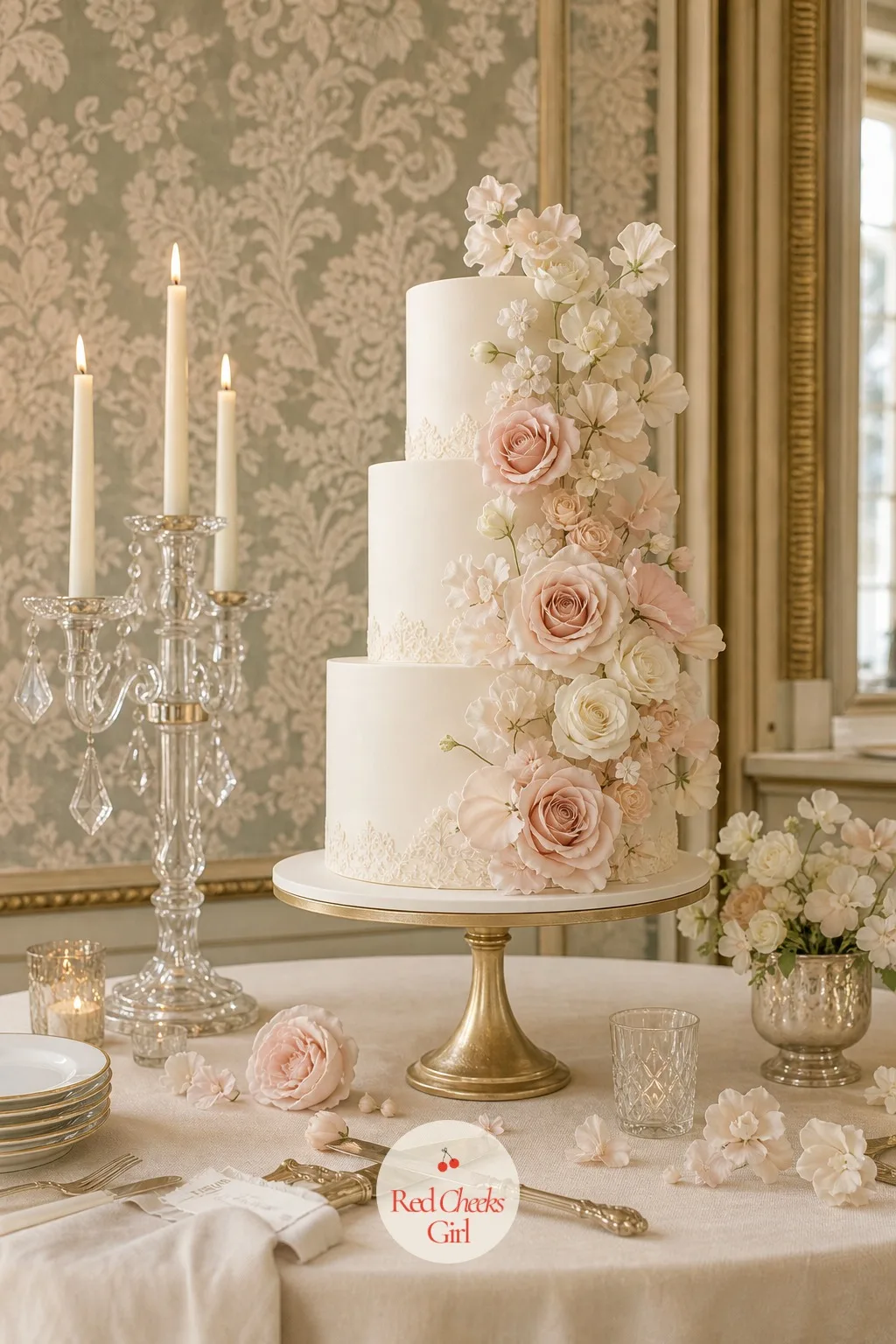
The Tiered Cake with Sugar Flowers
The cake gets its own small stage, slightly apart from the rest of the pastry, because it is the one dessert that gets photographed before it gets cut.
Three tiers in smooth ivory buttercream stand on a slim gold cake stand, each tier separated by thin gold dowels for support. Sugar flowers, roses and sweet peas, climb up one side in a cascade, with a few left loose on the cake table below.
Tell the baker: a three tier ivory buttercream cake with a cascade of sugar roses and sweet peas in blush and ivory, finished with a thin gold trim at the base of each tier. Sugar flowers are worth ordering from the baker directly; they rarely survive a swap for silk ones up close.
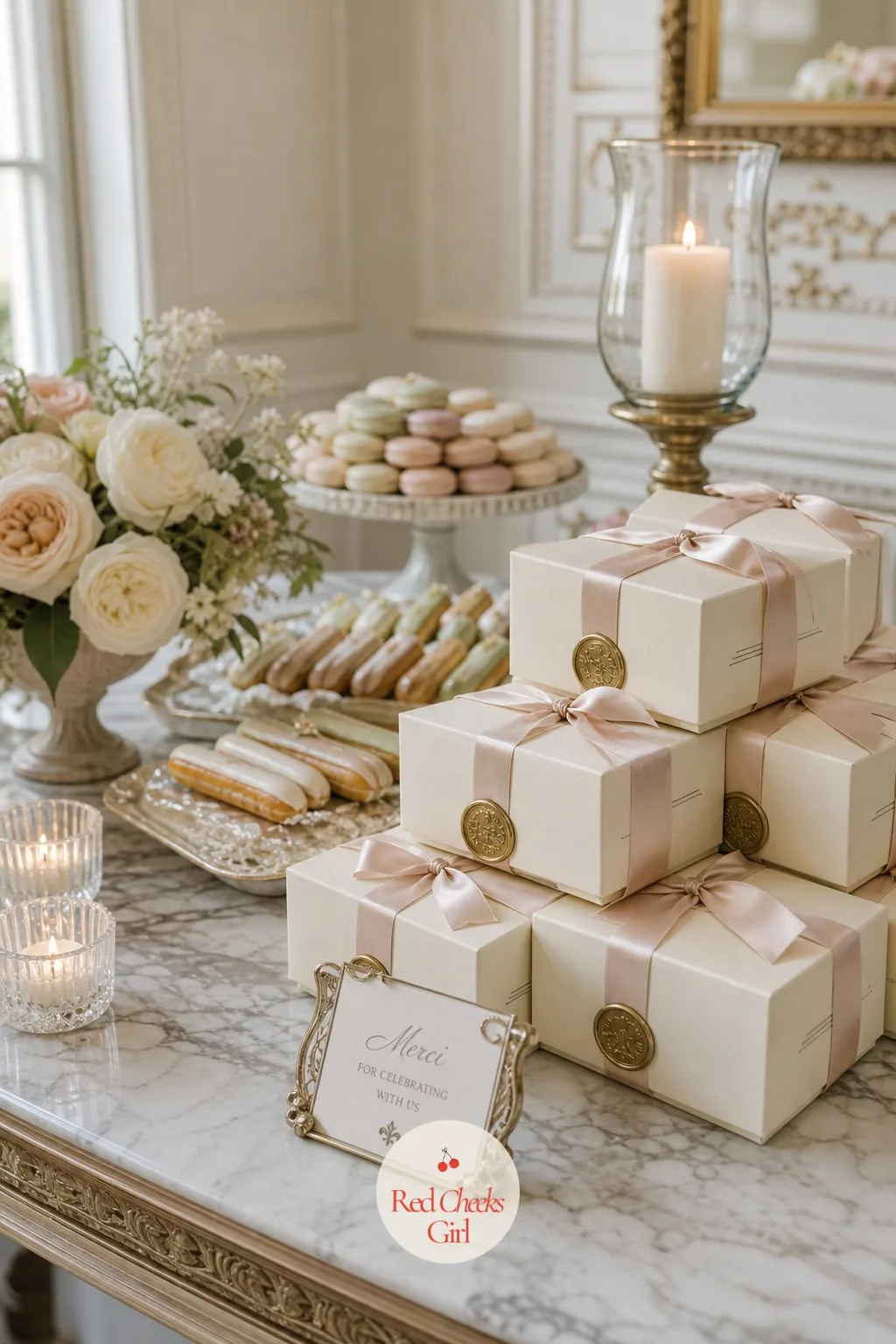
The Dessert Takeaway Boxes
Guests always want to take a little of the pastry table home, and a proper box beats a napkin wrapped around a macaron in someone’s bag.
A stack of small ivory bakery boxes sits at the end of the pastry table, each tied shut with blush satin ribbon and finished with a small gold foil seal.
Ask the bakery to box two or three extra pieces per guest into individual ivory boxes, tied with blush ribbon and sealed in gold. These are easy to assemble herself the night before, box, ribbon, seal, with a glass of something while she does it.
The Bridal Flowers
Every bloom at this wedding traces back to one bouquet: garden roses and sweet peas, carried by the bride and echoed, in a softer key, by everyone standing near her.
The Bridal Bouquet of Garden Roses and Sweet Peas
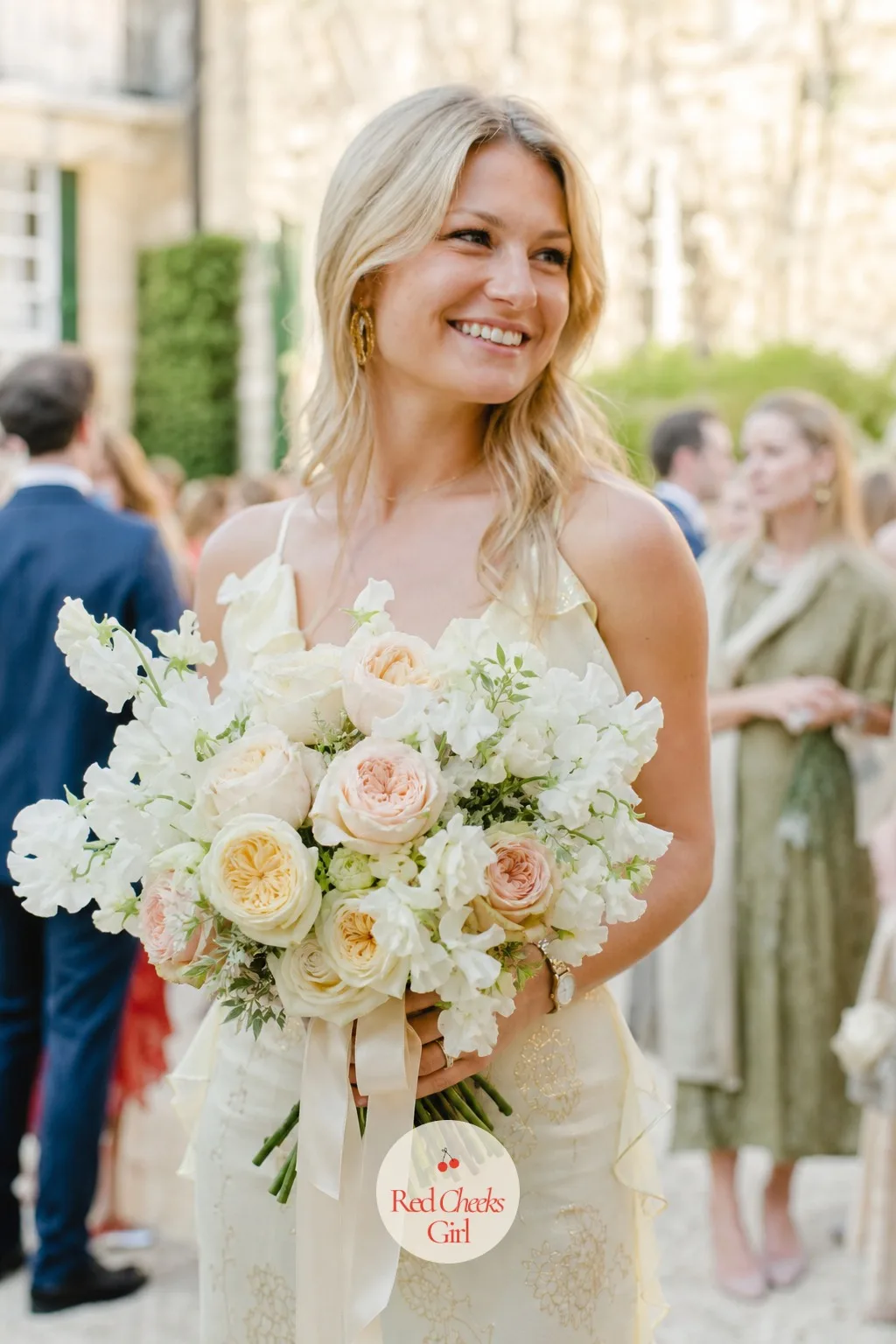
Everything else on this list takes its cue from what she is carrying. A loose, garden style bouquet of rose and sweet pea reads soft rather than stiff, which is exactly right against all that stone.
A hand tied bouquet built from ivory and blush garden roses, white sweet peas and a few trailing stems of sweet pea vine, wrapped at the stem in ivory satin ribbon with the ends left long.
Tell the florist: a hand tied, garden style bouquet in ivory and blush garden rose with white sweet pea, wrapped in ivory satin ribbon, trailing slightly at the base. Garden roses and sweet peas both bruise if handled too much the day before, so this is one to leave entirely to the florist.
The Bridal Party Flowers
The bridal party should look like they belong beside the bouquet, not like they borrowed flowers from a different wedding entirely.
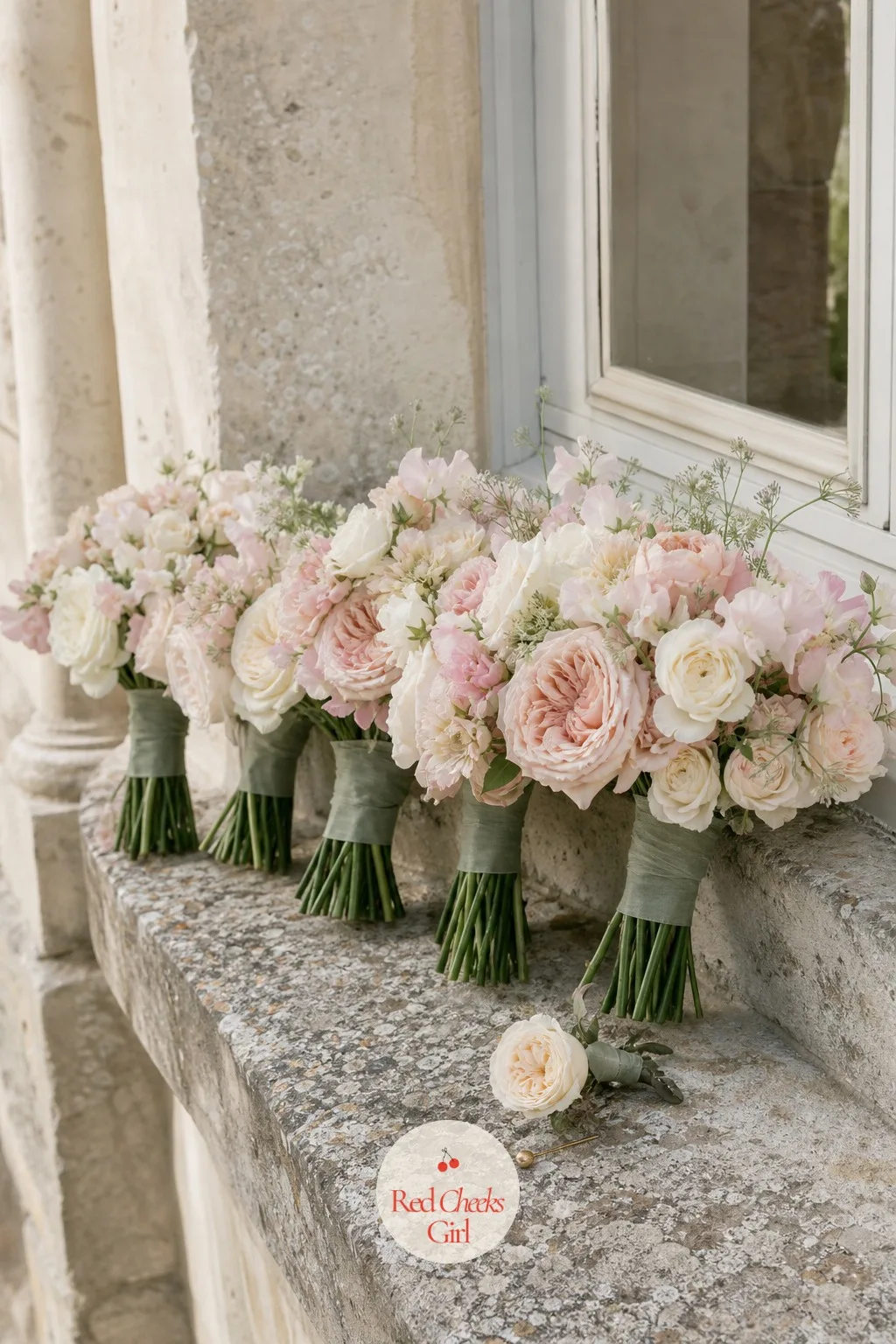
Bridesmaids carry smaller, looser bouquets in the same blush and ivory rose with sweet pea, wrapped in sage ribbon instead of ivory to set them apart slightly. The groom and groomsmen wear a single garden rose boutonniere with one sprig of sweet pea, pinned with a small gold pin.
Give the florist this line: bridesmaid bouquets in the same rose and sweet pea, smaller and wrapped in sage, plus boutonnieres of one rose and one sweet pea sprig each. Boutonnieres are simple enough to pin together herself the morning of, if the florist delivers the loose stems.
The Flower Girl’s Petal Cones
Someone small needs a job during the ceremony walk, and a paper cone of petals gives her one without anyone having to improvise on the day.
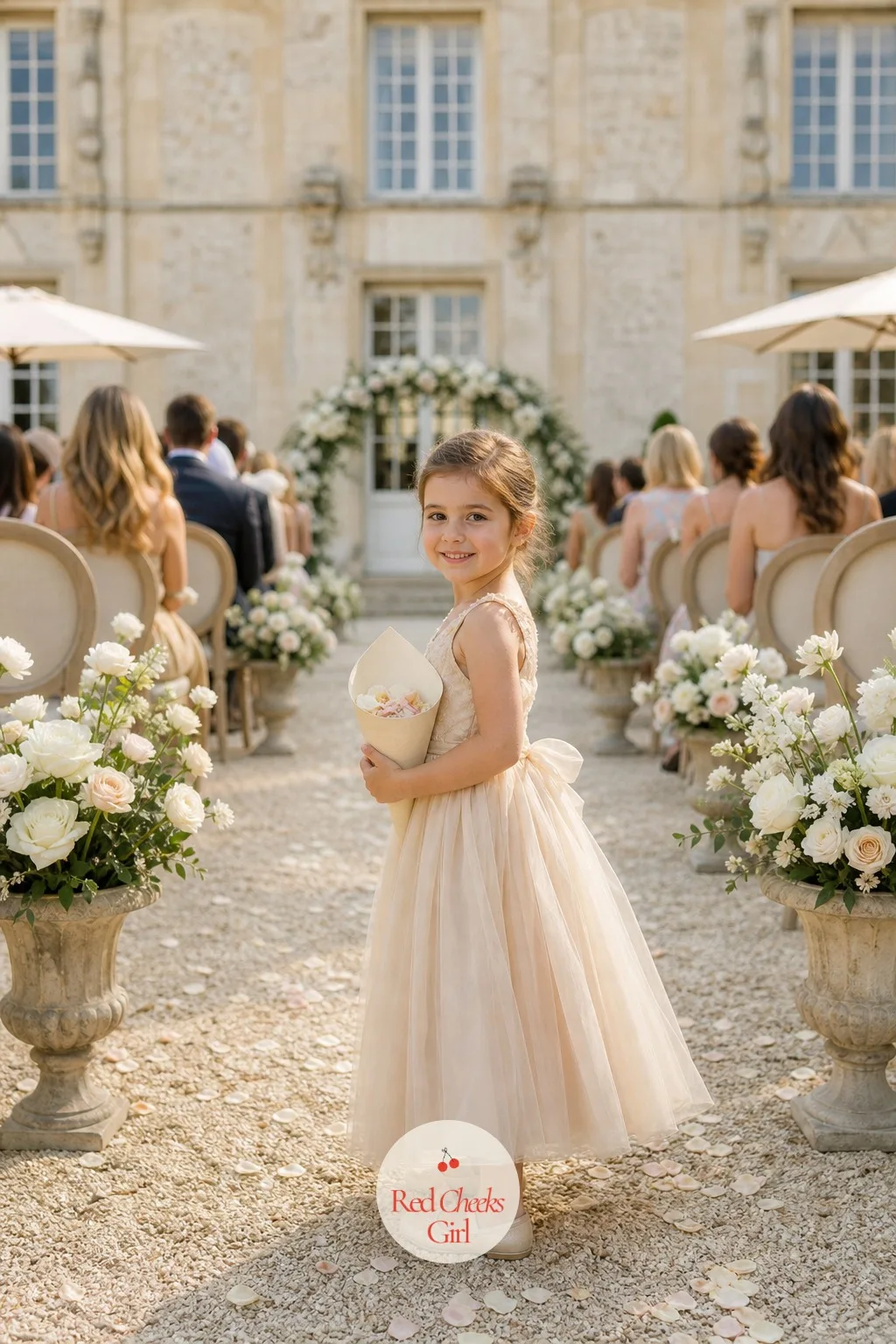
A simple ivory paper cone, rolled and glued at the seam, holds a loose handful of dried ivory and blush rose petals, light enough for a child to carry and scatter down the aisle.
Order ivory petal cones and dried rose petals in ivory and blush, enough for a generous handful per guest row. This is the cheapest item on the whole list and the easiest to make the night before with a glue stick and a steady table.
The Paper and Finishing Details
The smallest things arrive first in the planning and last in this list: a wax seal pressed into warm gold, and the invitation that told everyone where to show up in the first place.
The Place Cards with Wax Seals
She wants guests to find their seat without squinting at a list pinned to a board. A small place card, sealed shut, does that and looks like a tiny gift while it is at it.
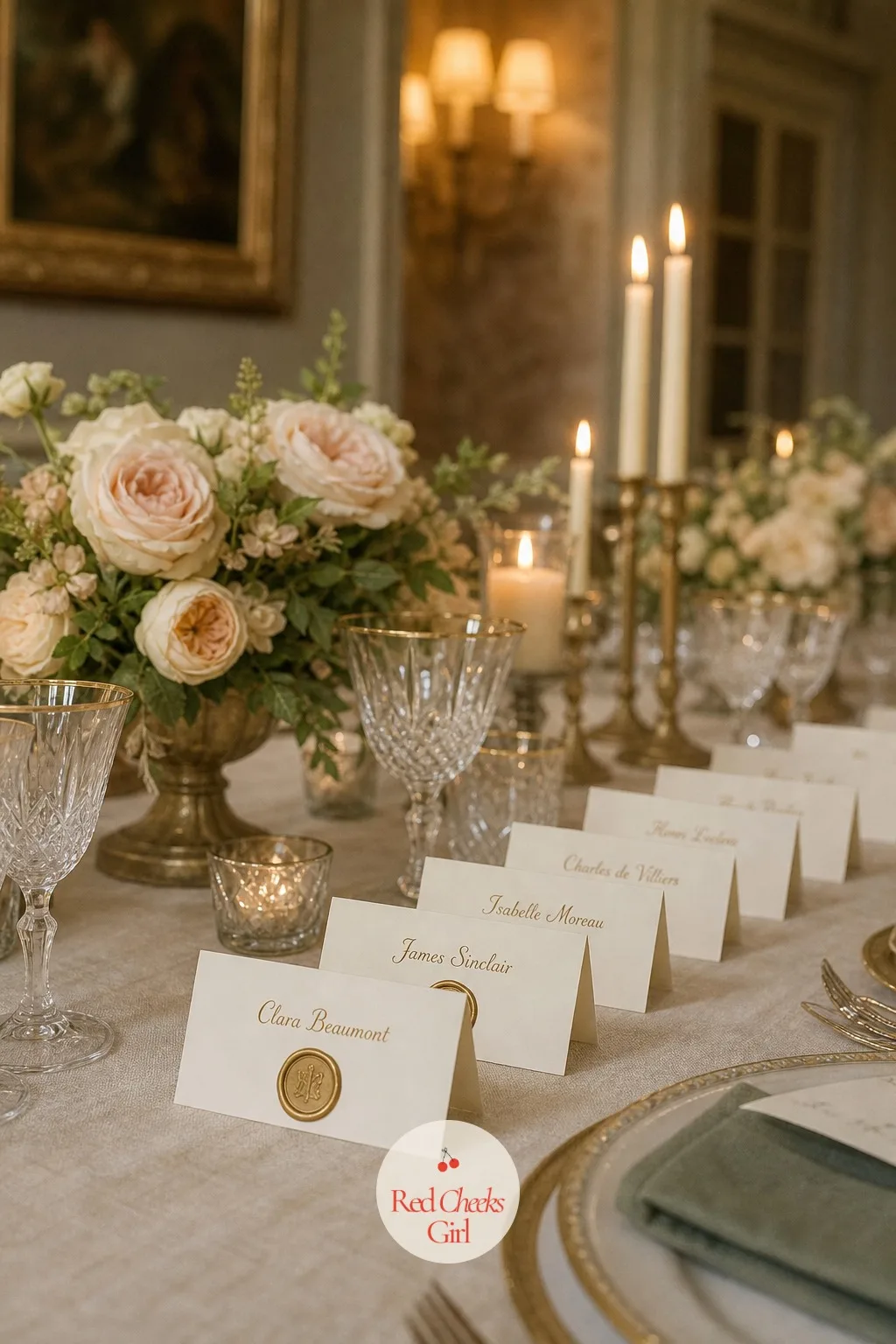
A folded ivory place card sits at each setting, the guest’s name lettered in gold ink, with a small gold wax seal pressed onto the fold, stamped with a simple initial or crest.
Tell the stationer: ivory place cards, gold lettering, one gold wax seal pressed on each, stamped with a single initial. Pressing the seals herself takes one evening, a glue gun style wax stick and a stamp, and genuinely is satisfying to do.
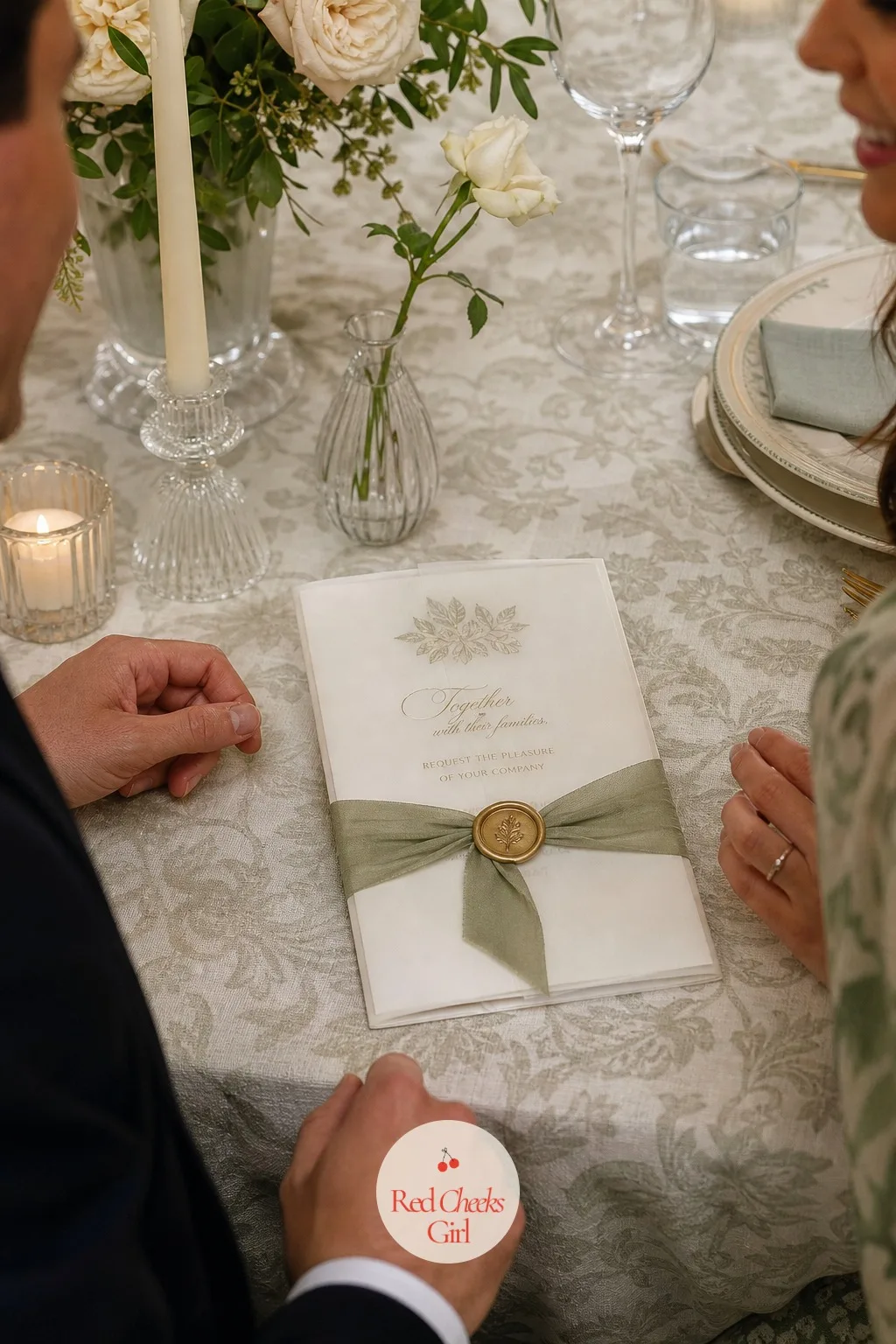
The Invitation Suite
Every guest meets this theme before they meet the chateau itself. The invitation sets the palette and the mood in someone’s hands weeks before the date, so it earns the care.
An ivory cardstock invitation, lettered in gold foil, sits wrapped in a sheet of translucent vellum tied with sage ribbon and finished with a gold wax seal where the ribbon crosses. The wording reads simply: Together with their families, request the pleasure of your company.
Give the stationer this exact line for the main card: Together with their families, request the pleasure of your company, in gold foil on ivory, wrapped in vellum with a sage ribbon and gold seal. A ready made template in the same palette is the quick route if custom foil printing is out of budget.
For the wider look this suite belongs to, 22 French Wedding Aesthetic Ideas for Couples Who Love Effortless Parisian Charm carries the same palette into a more relaxed version of the day.
🛍 Shop this look
Frequently Asked Questions
How much does a French chateau wedding cost?
A French chateau wedding for around 80 guests typically costs between €25,000 and €90,000, with smaller all-inclusive packages starting well below that for a more intimate guest list.
How many guests can a French chateau hold?
It depends entirely on the property: some intimate chateaux seat under 50, while larger estates cater for up to 150 guests for a sit-down dinner or up to 250 for a cocktail party.
Is a chateau wedding the same as a castle wedding?
Not quite. Château and castle are not the same word, and a chateau can mean a rented monument, a hotel with rooms, or a private house taken over whole for the weekend.
What is the best time of year for a French chateau wedding?
Late spring and early autumn suit the look best, with soft light for photographs and mild enough weather to use a gravel courtyard or garden without anyone wilting.
How far in advance should a French chateau wedding be booked?
Popular chateaux for peak season weekends often get booked twelve to eighteen months ahead, though off season or weekday dates can sometimes be secured with far less notice.
What happens to an outdoor chateau ceremony if it rains?
Most chateaux include an indoor hall, orangery or marquee as a built in backup, so the ceremony simply moves inside with the same candelabras and flowers rather than being cancelled.
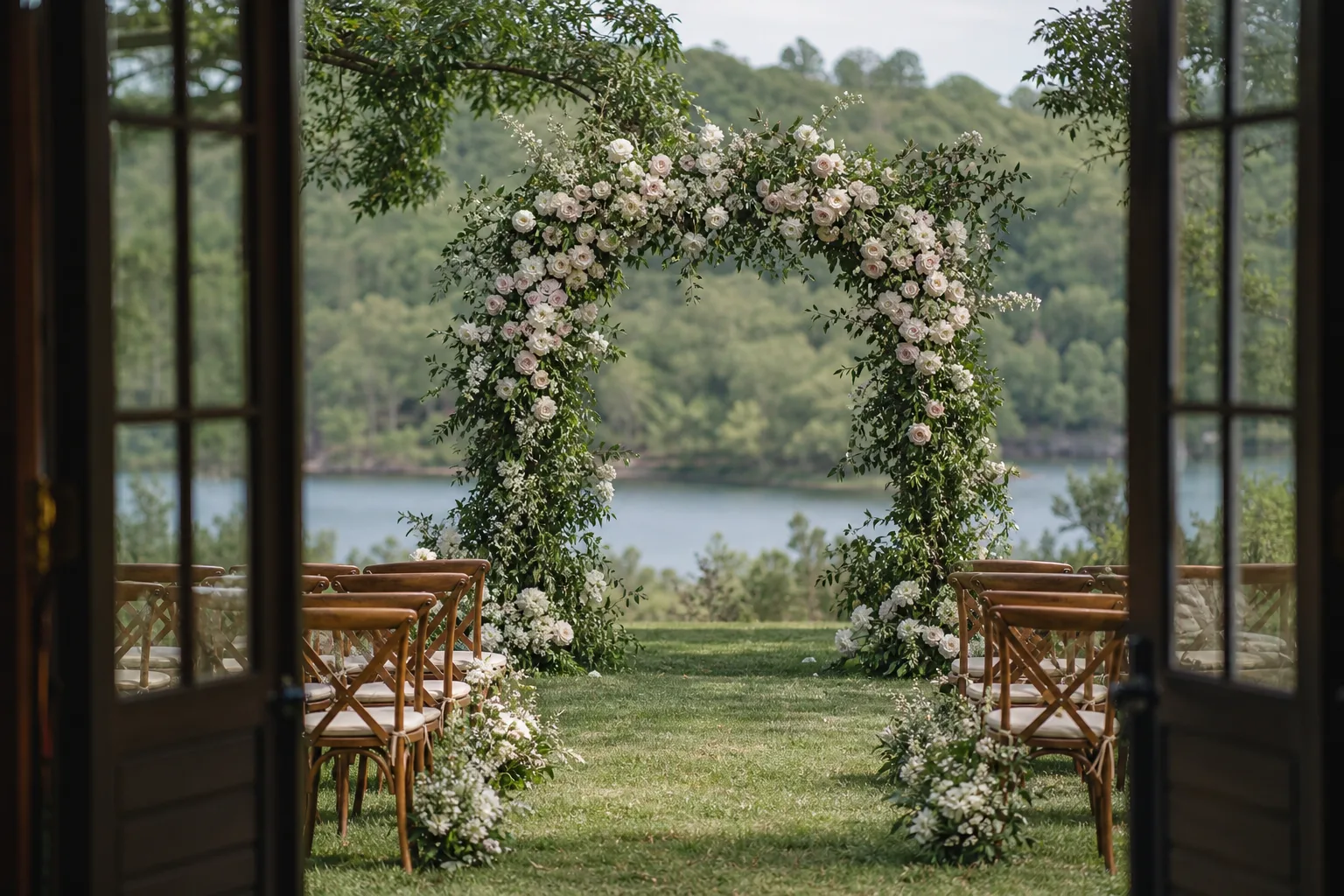
28 wedding arch flower looks by shape, season and budget, from a full floral cover to a wildflower m
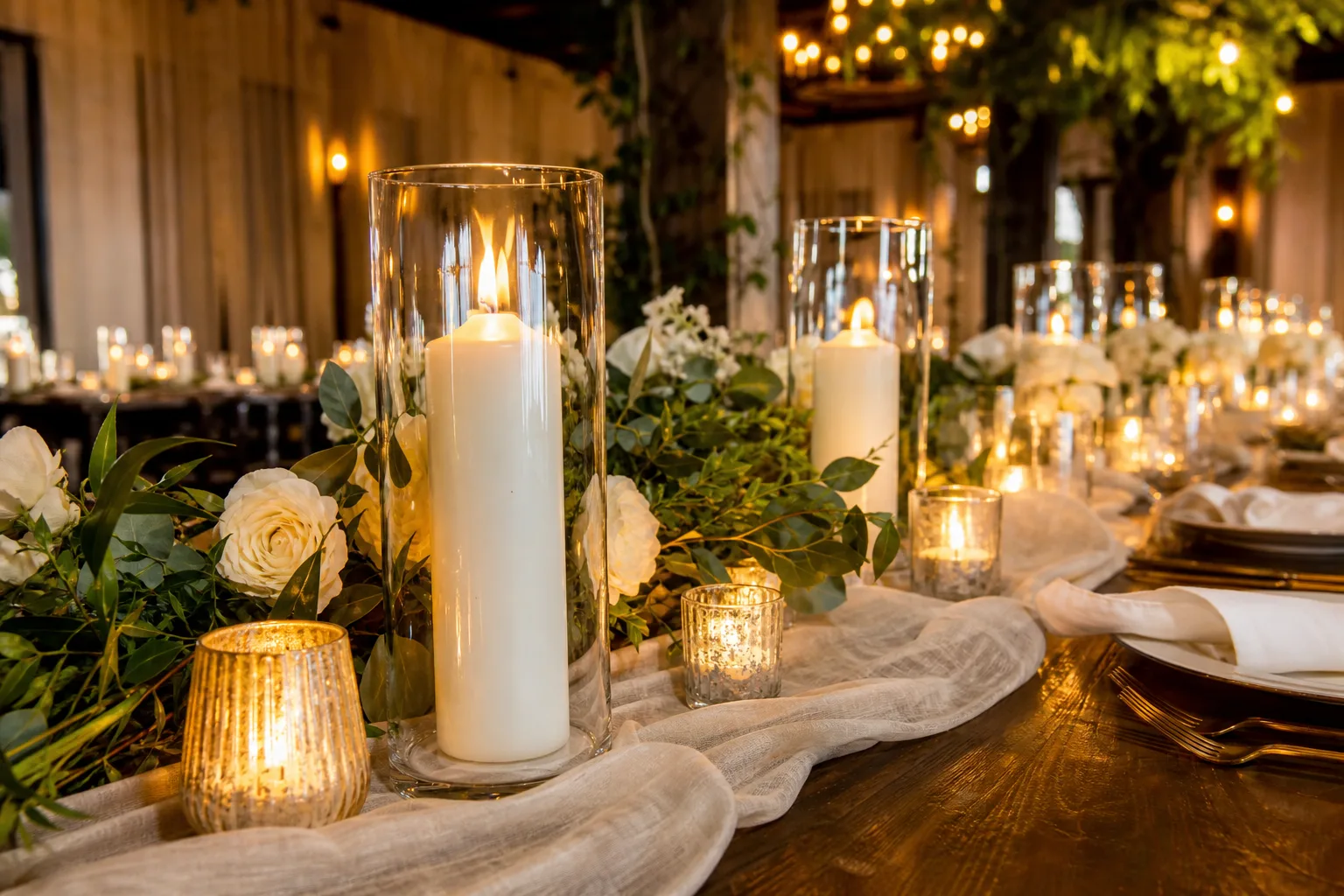
26 candle wedding centerpieces, from mixed brass tapers to floating glass bowls and mercury glass vo
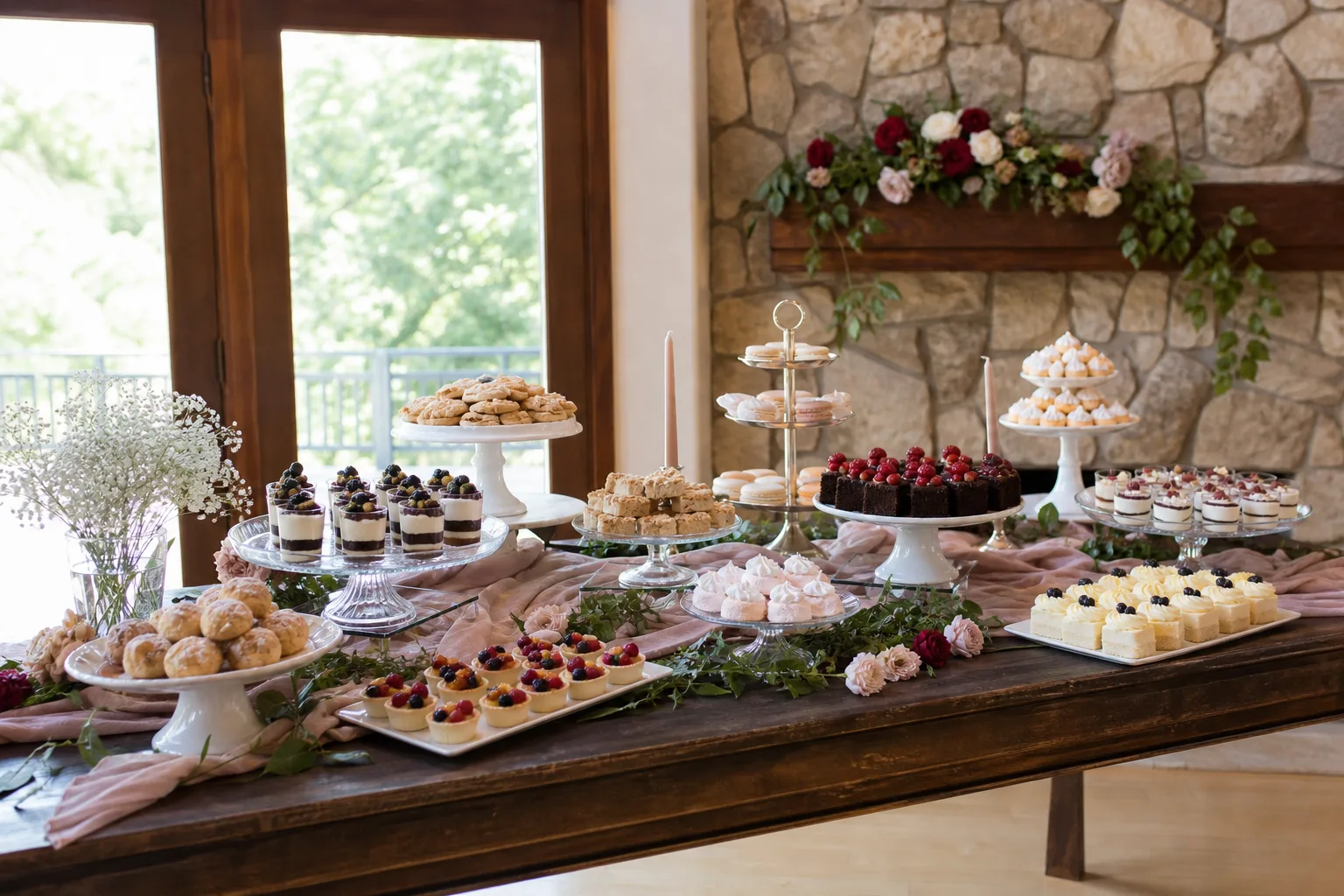
21 bridal shower desserts, from a tiered showpiece to lemon bars, with exact quantities, make-ahead
Leave a Reply