

17 Family Minute to Win It Games for a Game Night Everyone Joins
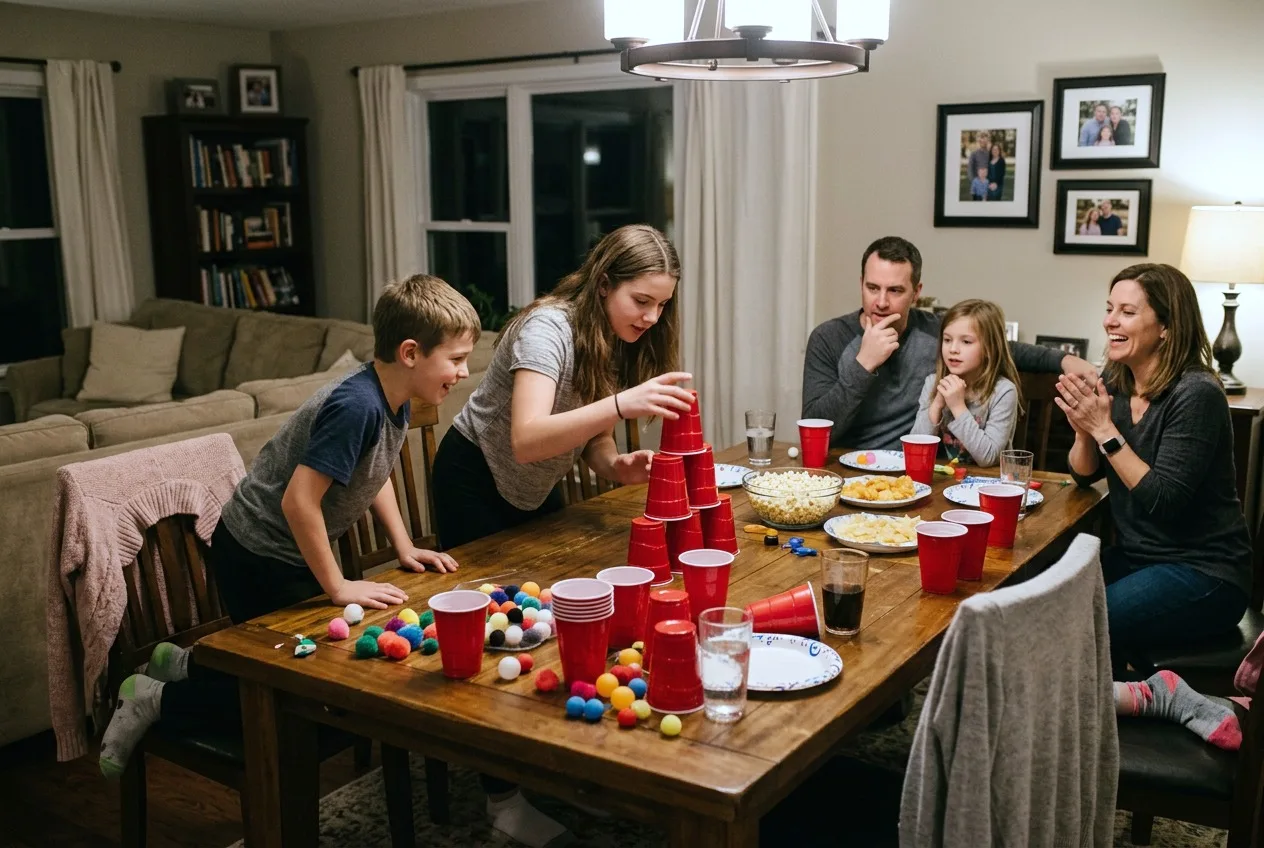
Nobody in this family agrees on charades, but everyone agrees on sixty seconds and a plastic cup. A good Minute to Win It night does not ask the six year old to out-argue grandma, it asks both of them to stack a cup pyramid before the timer beeps, and suddenly the playing field is flat.
Every game below runs on things already in the kitchen drawer or the recycling bin, a phone timer does the rest. Start with the relays that get everyone out of their chairs, work through the toss and steady hand rounds, and land on the sit-down games for when the littlest cousin is fading but nobody wants to stop playing.
If the night runs long and hungry, 15 Family Game Night Snacks and Finger Foods for the Whole Table covers what to set out between rounds without anyone leaving the living room.
This post contains affiliate links. If you buy through them, I may earn a small commission at no extra cost to you.
Table of Contents
Team Relays to Start the Night
Open with the games that need legs, not steady hands, so the energy is already up before anyone sits down to something fiddly. Split into two teams of mixed ages on purpose: a grandparent and a toddler on one side balances out a teenager and a parent on the other.
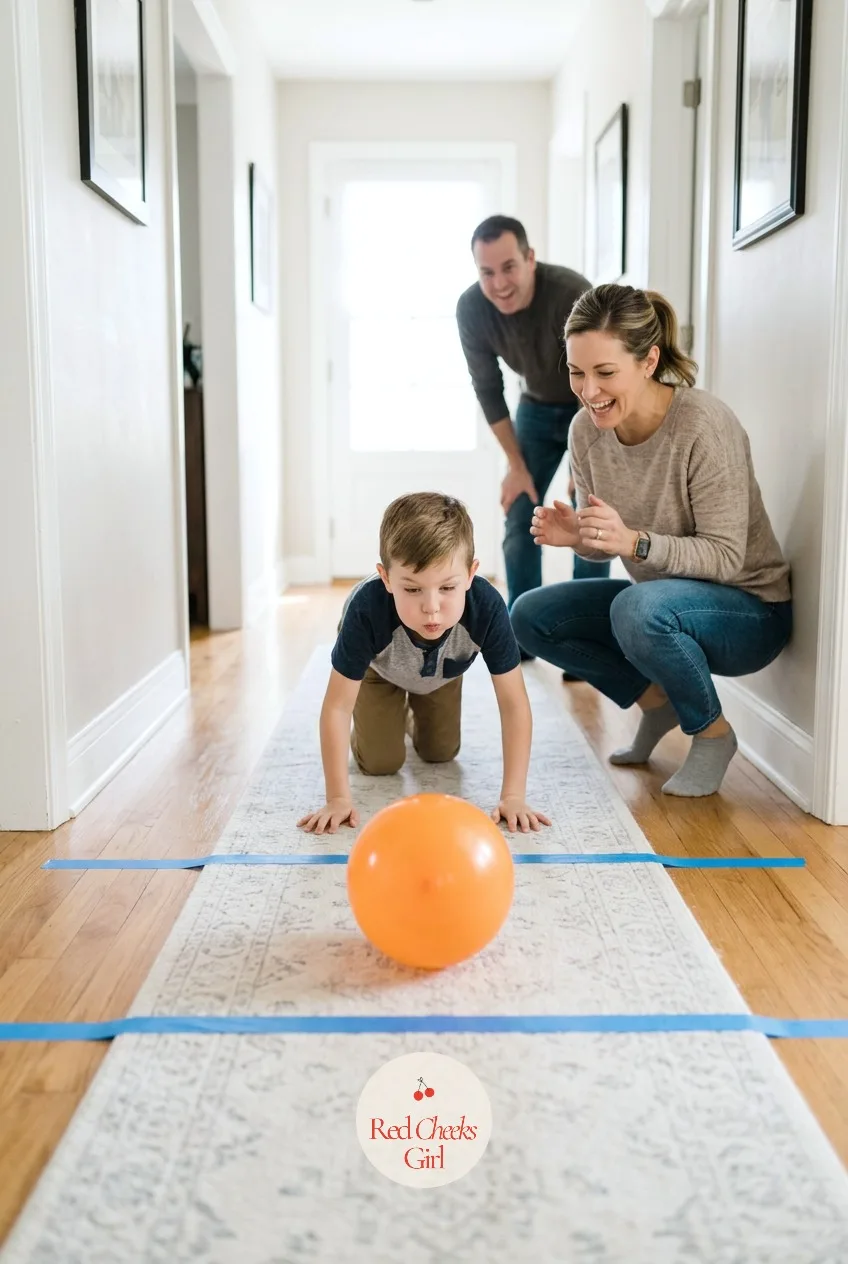
Race the Balloon Down the Hallway in a Relay
No kid believes she can beat an adult at anything timed, until a balloon trapped between the knees makes everyone look equally ridiculous. That is the whole point of opening on this one: it flattens the age gap in the first thirty seconds.
Line two teams up at one end of the hallway. The first player walks, no running, with a balloon held between the knees to the far wall and back, then hands it off to the next player without using their hands to pass it. Whichever team gets through the most players before the minute runs out wins the round.
If the hallway is narrow or full of furniture, run it across the living room between two armchairs instead. Let the smallest players carry the balloon in their arms rather than their knees so the round stays fair, and swap a second balloon in the moment one pops.
🛍 Shopping guide
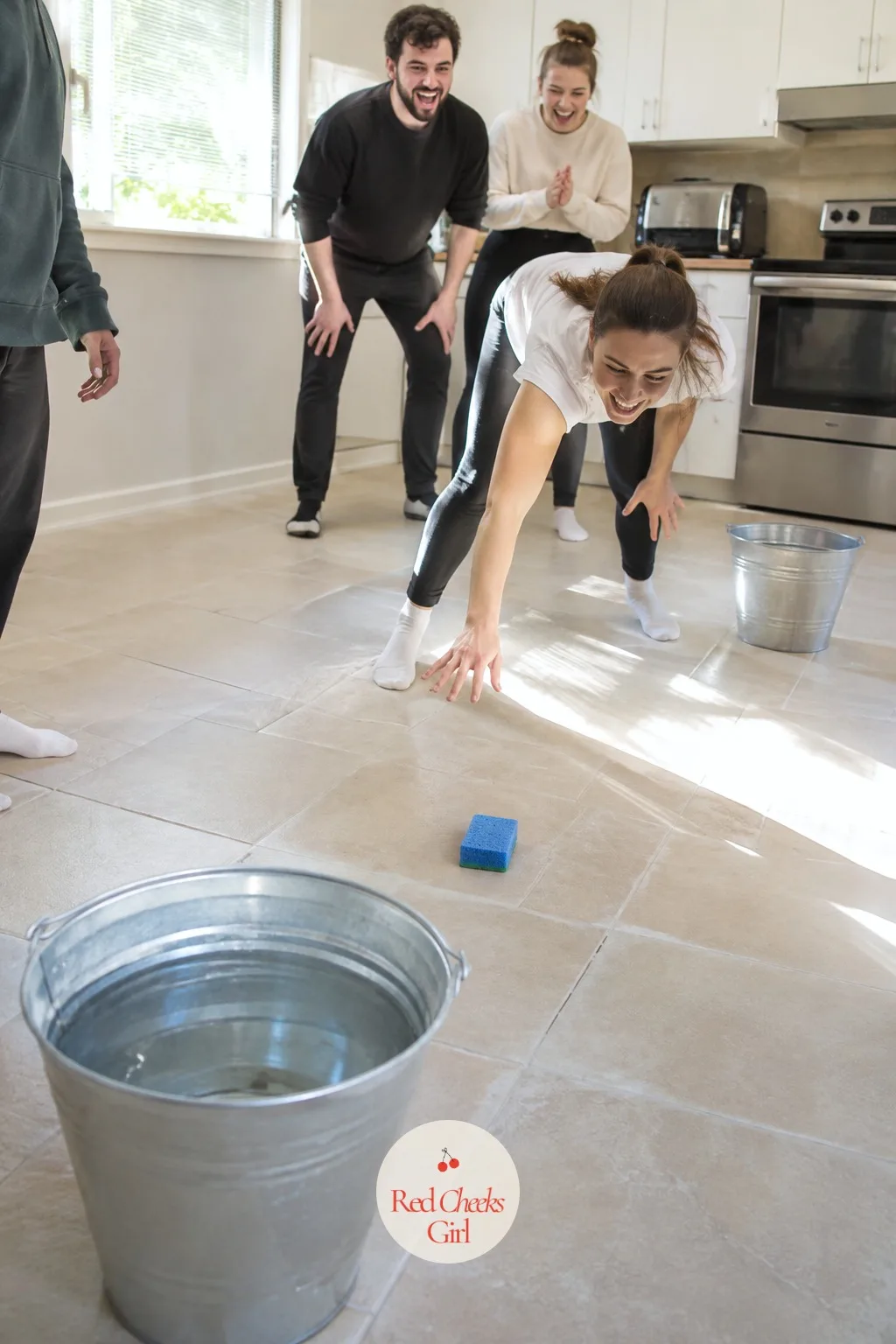
Pass the Water From Bucket to Bucket in a Relay
Somebody always groans at the idea of water indoors, and that is fair, so this one belongs on a kitchen floor or out on a patio rather than the good rug. It earns its spot anyway because it is the rare relay a seven year old and a grandparent run at the exact same speed.
Set a full bucket at one end of the line and an empty one at the other, with a small cup or sponge for each player.
On go, the first player scoops water and carries it down the line hand to hand, cup to cup, until it reaches the empty bucket, and the team with the most water transferred when the minute ends wins.
Swap the sponge for a kitchen cup if sponges are not handy, and do the whole thing over a towel on the kitchen tile so a splash does not matter. For an easier round, let players walk the water themselves instead of passing it hand to hand.
🛍 Shopping guide
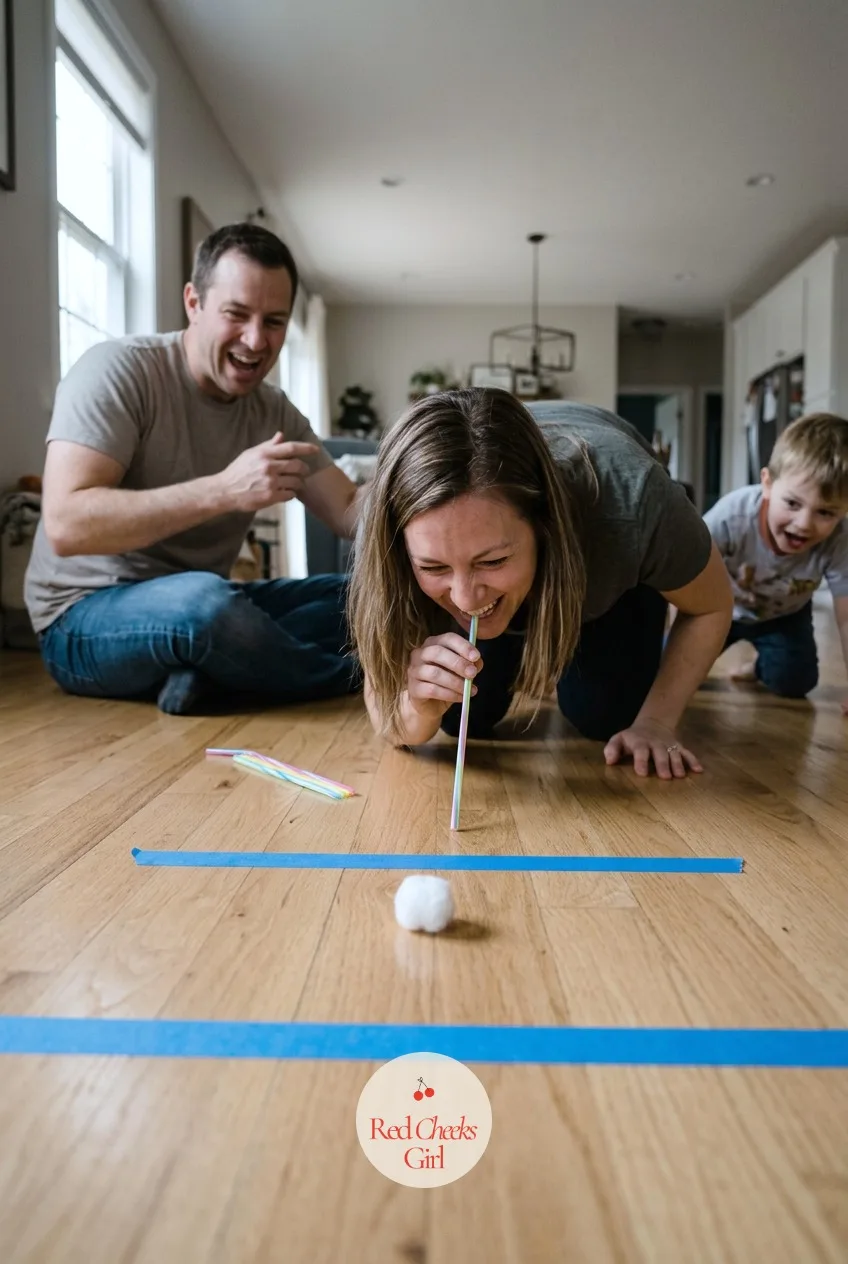
Blow the Cotton Ball Across the Finish Line
This is the one where grandpa ends up lightheaded and laughing, because there is no trick to beat except a strong set of lungs, and lungs do not care how old you are. It is also the quietest relay on the list, which matters once the hallway games have everyone a little loud.
Mark a start and finish line a few feet apart on the floor. Each player gets on all fours with a straw and a single cotton ball, and blows it across the finish line as fast as possible, tagging the next teammate to go.
The team whose last player crosses the line first, or who has moved furthest down the line when the minute ends, wins.
Use a pom-pom instead of a cotton ball if that is what is in the craft drawer already. Shorten the distance for the youngest player on each team so nobody is stuck crawling the full length of the hallway.
🛍 Shopping guide
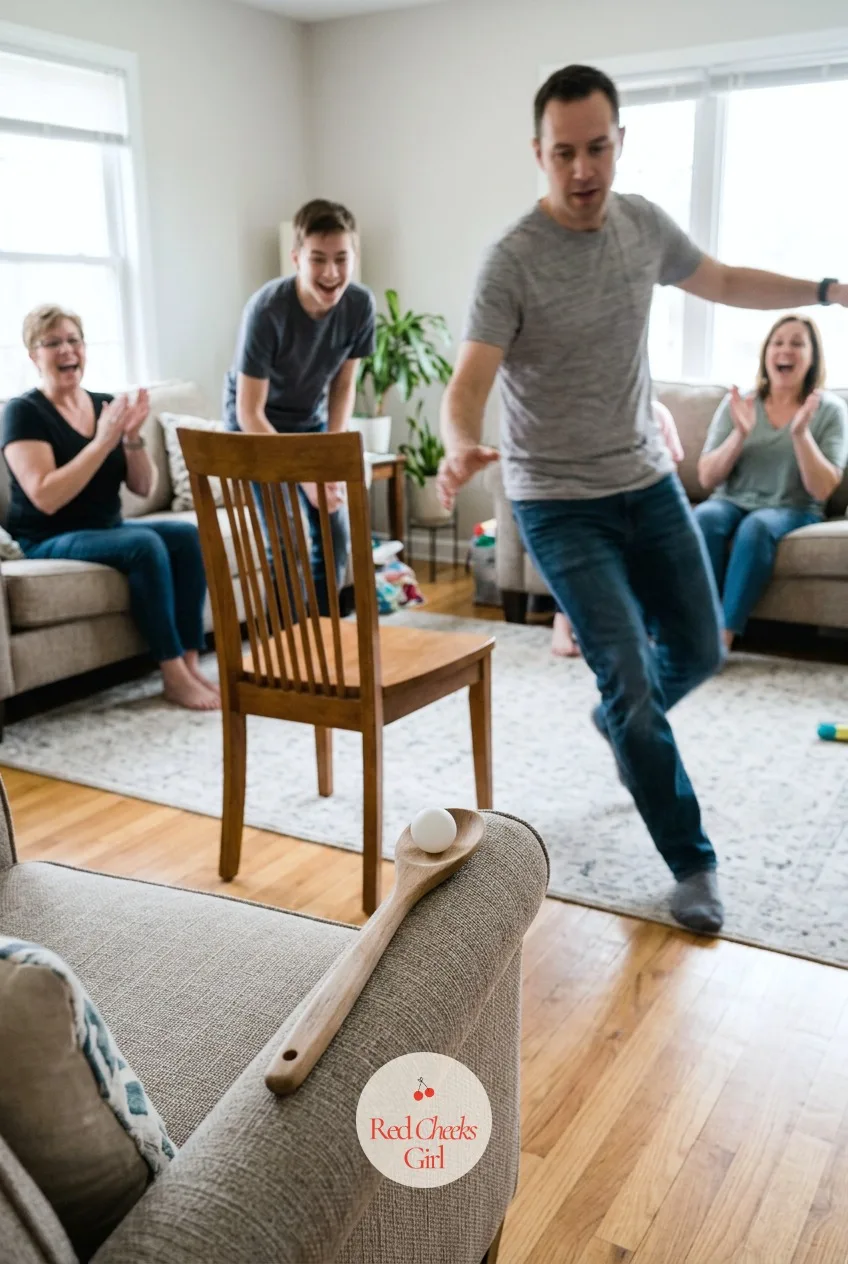
Carry the Ball on a Spoon Without Dropping It
Every family has one person who insists this game is easy right up until they drop the ball three steps in, and that is exactly why it belongs here. A wobbly spoon punishes confidence more than clumsiness, which keeps the littlest player from feeling outmatched.
Each player holds a spoon by the handle with a ping pong ball balanced on top and walks a short course, around a chair and back, before passing the spoon to the next teammate.
Drop the ball and that player has to stop and reset it before moving on. The team that finishes the most full laps in the minute wins.
A wooden spoon is easier to balance on than a thin plastic one if the round is feeling too hard for the youngest cousin. Swap in a small potato instead of a ping pong ball for a weightier, slower-rolling version once everyone has the hang of it.
🛍 Shopping guide
Grandparents Versus Kids Face-Offs
These two are the ones everybody actually remembers afterward, the head to head rounds where one generation gets bragging rights until next time. Run them as a straight duel rather than a team event, winner stays on for the next challenger.
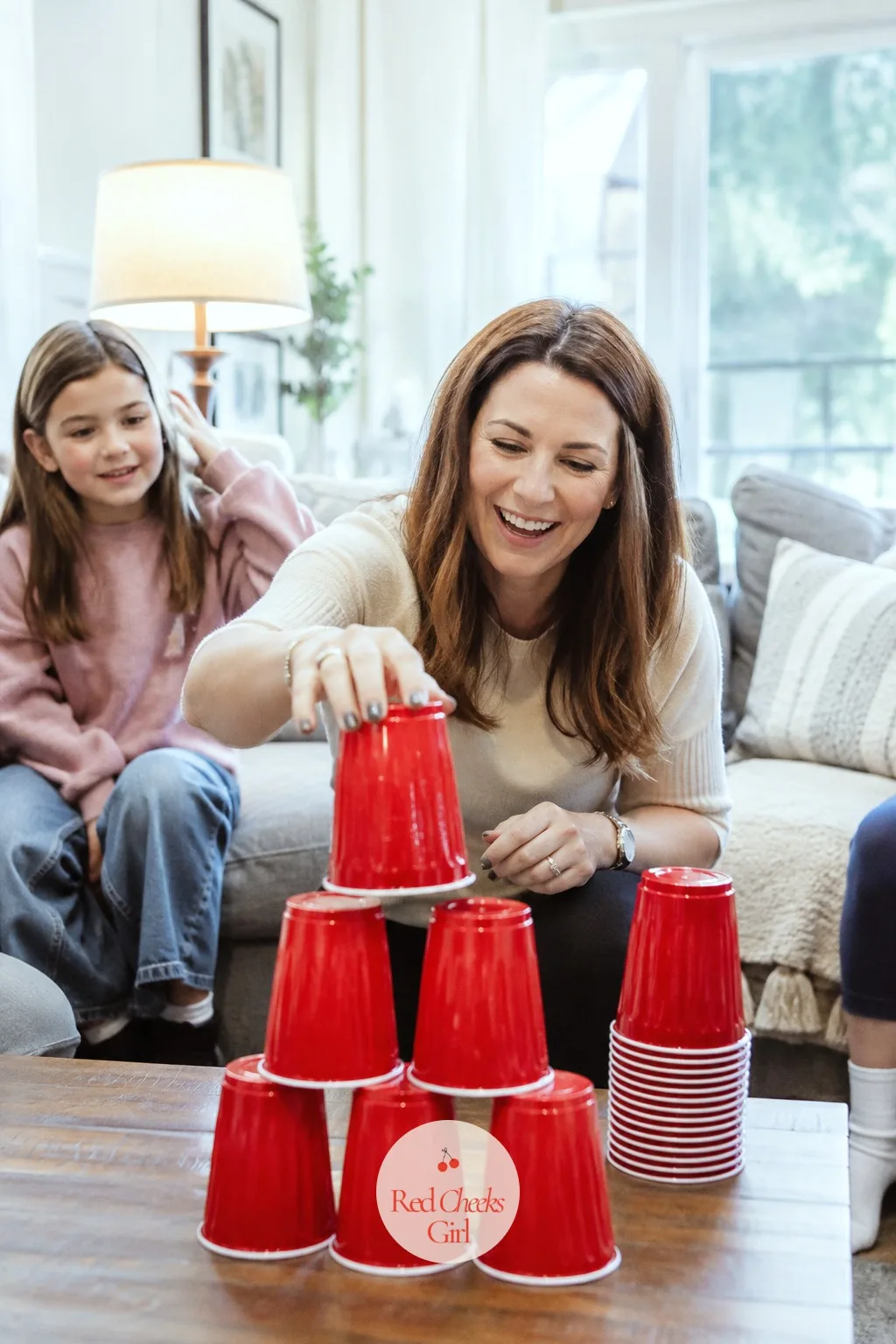
Stack the Cups Into a Pyramid, Grandparents Versus Kids
Nobody picks a side in this one, they just want to see if grandma’s hands are still faster than a nine year old’s, and the answer surprises people every time. It is the single most requested rematch of the night.
Give each player the same number of plastic cups, usually around fifteen to twenty. On go, they stack the cups into a pyramid and then unstack them back into a single tower, as fast as possible. Whoever finishes first, or has the smallest stack remaining when the minute runs out, wins that face-off.
Keep the cup count identical for every player so the match stays fair, and run it as a bracket with winners staying on to face the next challenger. Drop to twelve cups for a younger child competing against an adult, so the pyramid is the same shape but shorter to build.
🛍 Shopping guide
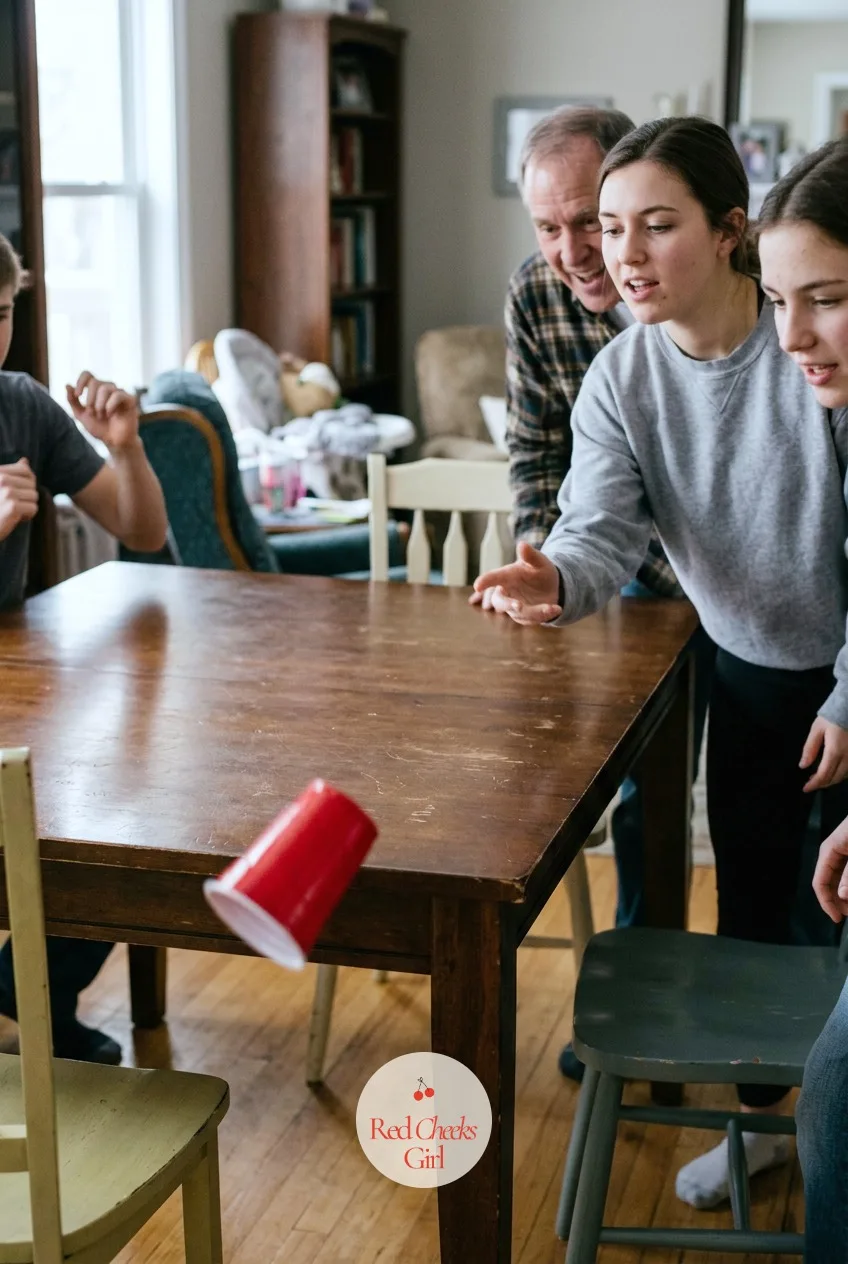
Flip the Cup Off the Table and Land It Upright
This is the quiet one that turns competitive fast, because landing a flipped cup right side up looks like luck until someone does it four times in a row. It rewards a light wrist more than brute strength, which is exactly why a ten year old can beat an uncle at it.
Set an empty cup at the edge of a table, bottom resting on the table and the top hanging off the edge. Flick the lip of the cup with a finger so it flips in the air and lands open-side up on the table. Count how many successful landings each player gets in the minute, most landings wins.
Let players reset the cup themselves after a miss rather than losing the turn, so younger players are not penalised twice for one slip. For a harder round, require two flips in a row before a landing counts.
🛍 Shopping guide
Toss and Catch Challenges
Nothing needs to be assembled for these, just thrown, so they work well as the middle stretch once the hallway has emptied out. Set each one up on its own small table so two rounds can run at once and nobody stands around waiting.
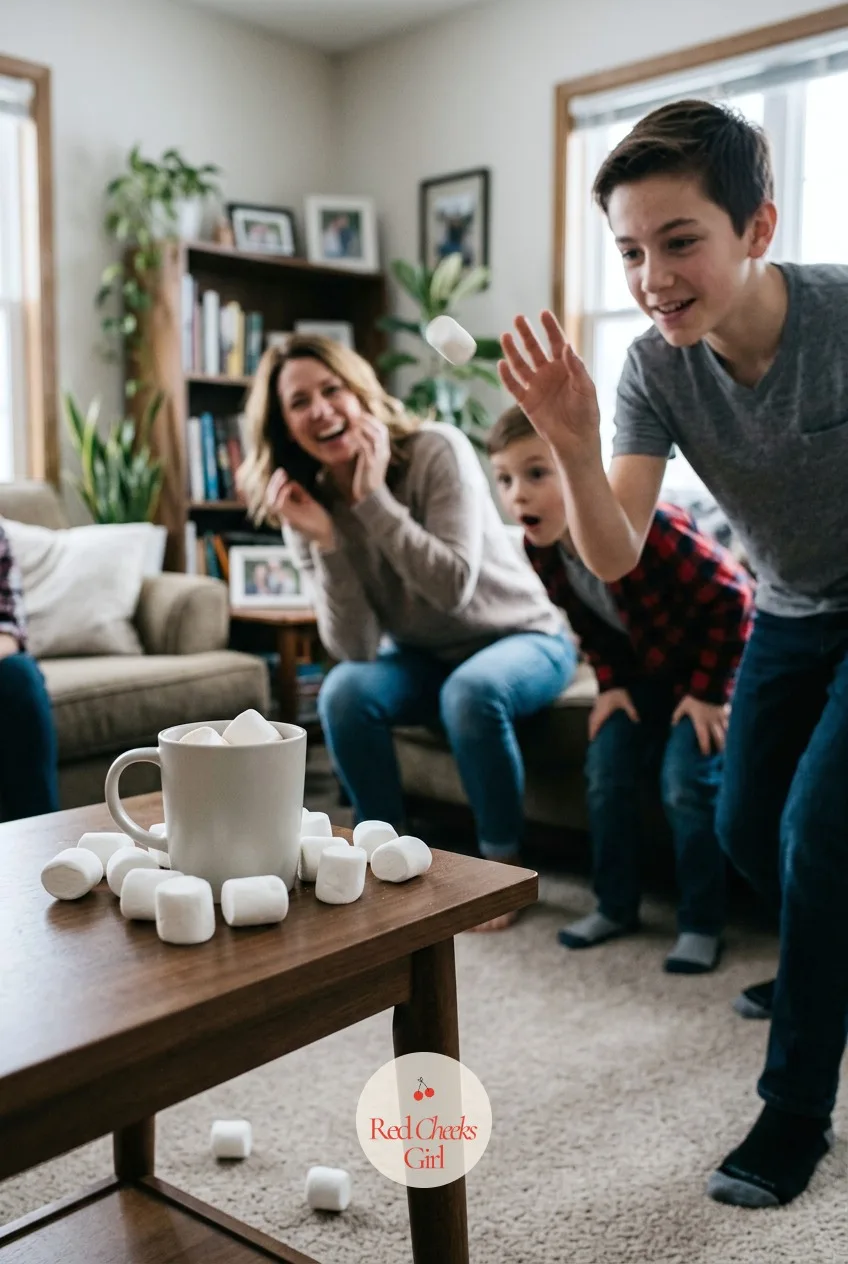
Toss the Marshmallow Into the Mug
Half the fun here is watching someone overthink a throw they would never overthink at a trash can, because a coffee mug feels smaller once the timer starts. It is an easy one to set up while another game is still running on the next table.
Set a mug at a fixed distance, a stride or two away, and give each player a small pile of marshmallows. Toss one at a time underhand, aiming for the mug, and count how many land inside and stay by the time the minute is up.
Move the mug closer for the youngest thrower at the table so the challenge stays about accuracy, not arm strength. Use mini marshmallows instead of large ones for a faster, higher-volume round once everyone has the throw down.
🛍 Shopping guide
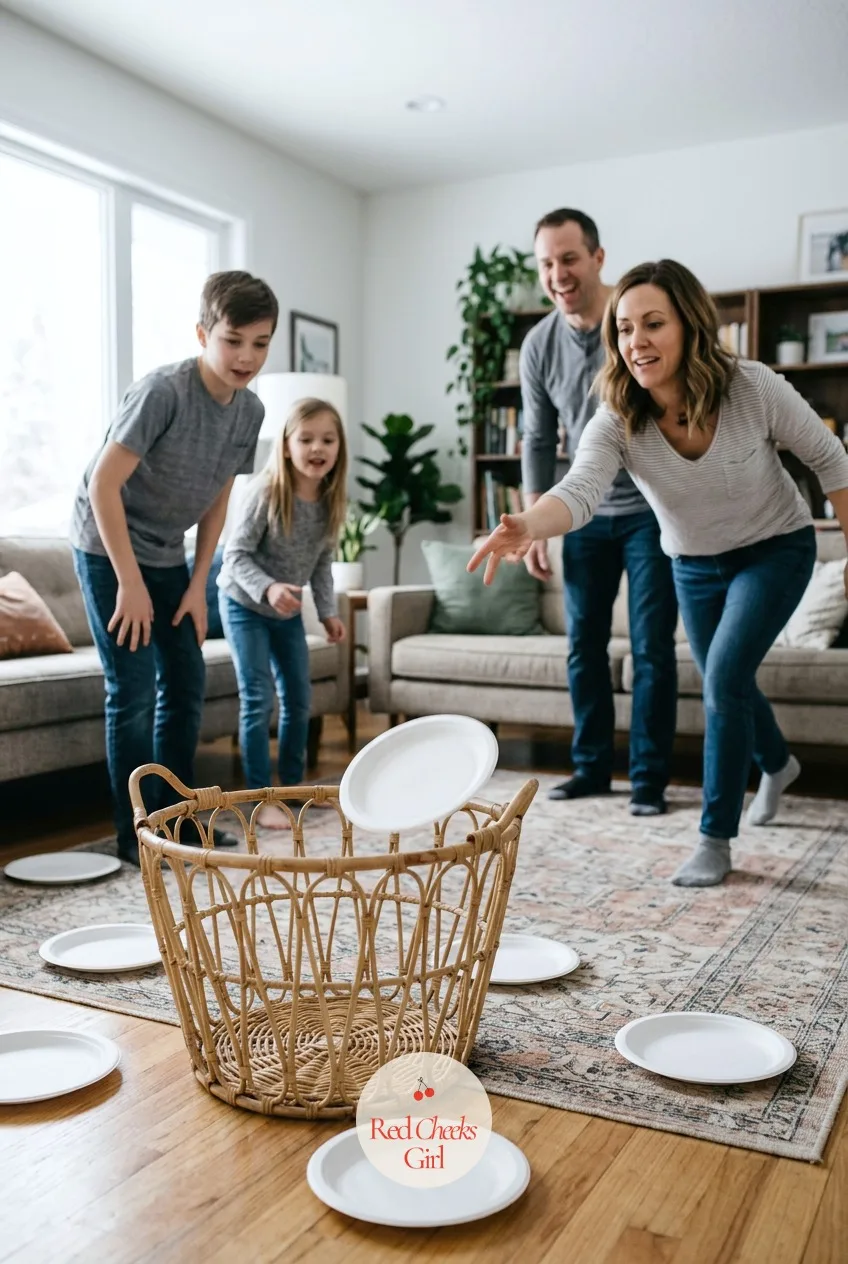
Sail the Paper Plate Frisbee Into the Laundry Basket
This is the game that needs no supply run at all, because a paper plate and an empty laundry basket are already sitting in the house. Kids throw it exactly like a frisbee without being told how, which makes it one of the easiest warm-ups for a player who feels shy about competing.
Set the basket a few steps away and give each player a stack of paper plates. Sail them one at a time toward the basket, aiming to land them inside, and count how many are in the basket when the minute ends.
Move the basket closer for a younger player, or tip it on its side facing the thrower for an easier target. For a harder round once the adults are playing, move the basket further back or raise it onto a low stool.
🛍 Shopping guide
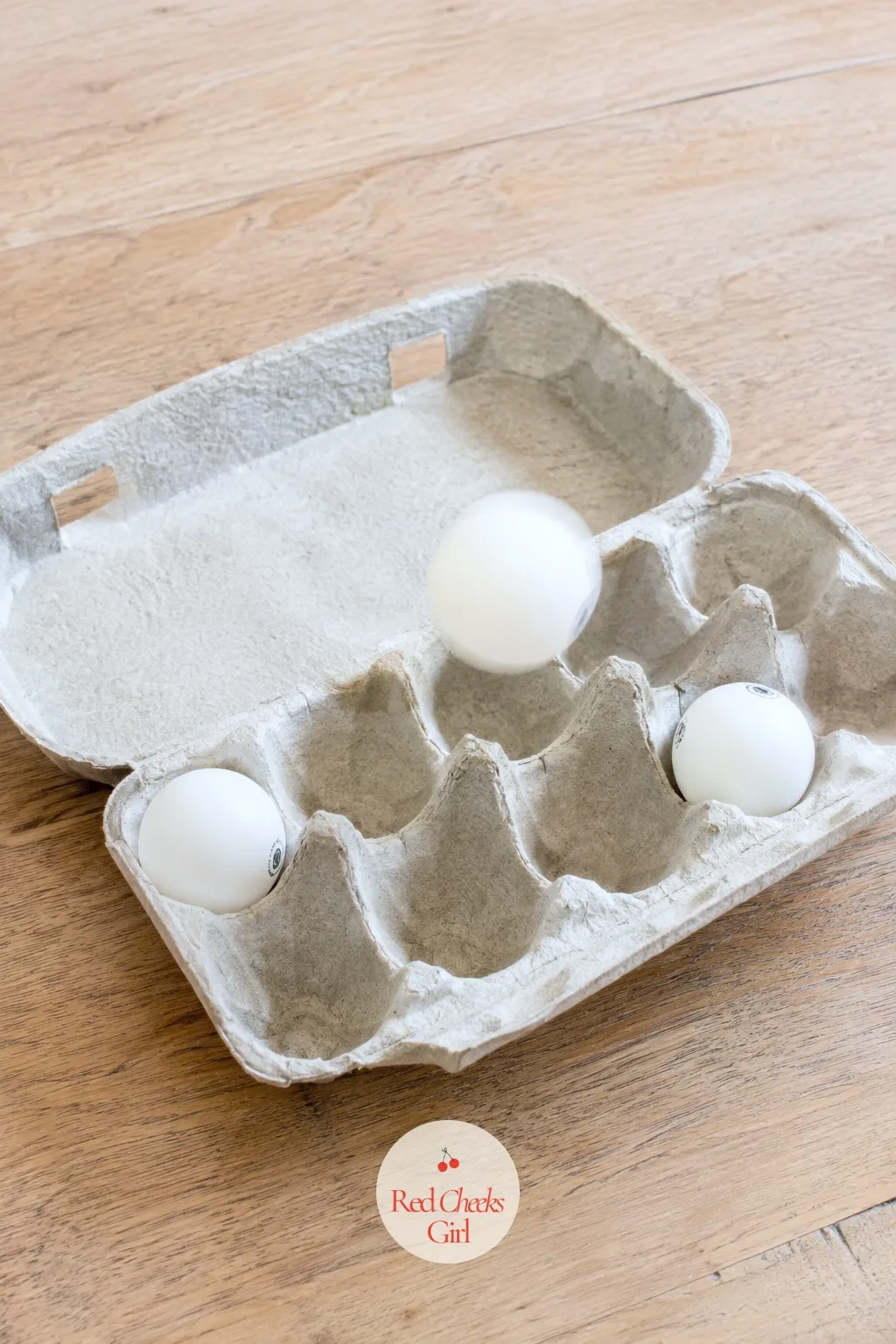
Bounce the Ping Pong Ball Into the Egg Carton
The first bounce always goes wide, and that is the joke everyone is in on by the second try, since the egg carton rewards a very specific wrist flick that takes a few goes to find. It gives even an adult who has never played this before a visible learning curve in sixty seconds.
Set an empty egg carton, lid off, on a table and give each player a handful of ping pong balls. Bounce each ball once off the table before it lands in a carton cup, and count how many land successfully in the minute.
Keep a damp cloth nearby, balls that miss tend to roll everywhere. For an easier version, allow the ball to be dropped straight in rather than bounced first, which still works well for the youngest player at the table.
🛍 Shopping guide
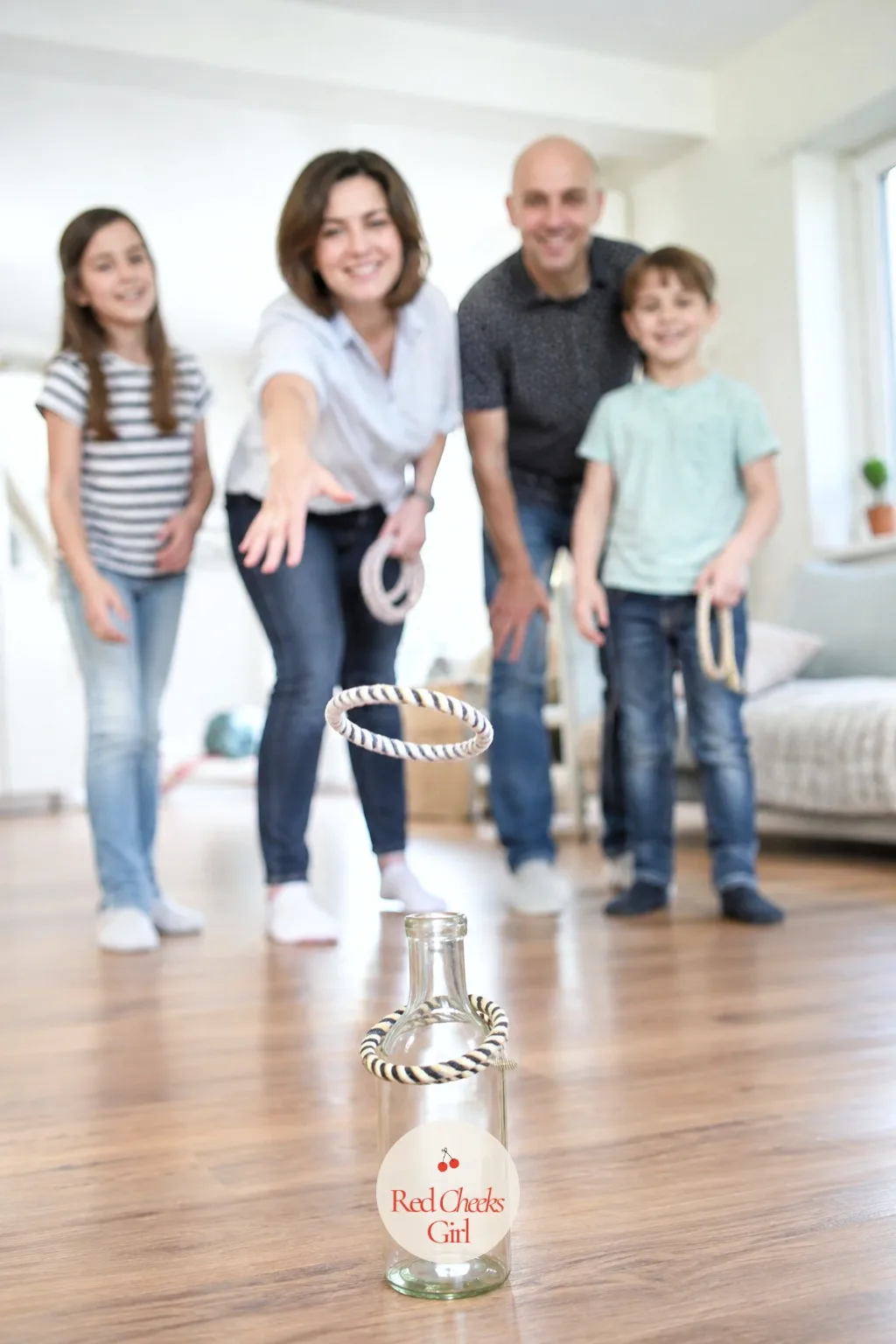
Loop the Ring Around the Bottle Neck
There is always one relative who claims they were good at ring toss as a kid and then misses three in a row, which is half the entertainment of running this as a group round rather than a solo one. It is a steady, quiet game that keeps its own gentle rhythm.
Stand a bottle upright on the floor or a low table. Each player gets a handful of small rope or plastic rings and tosses them from a set distance, trying to loop the bottleneck, and counts how many land successfully in the minute.
Shorten the throwing distance for a younger player and use a wider-necked bottle so the ring has more room to catch. Line up several bottles in a row for a version that scores by how far down the line a player can loop one.
🛍 Shopping guide
Steady Hand and Jar Challenges
The volume drops here on purpose: these reward a calm hand over a fast one, which means the shakiest teenager loses to the grandmother who sews on buttons every week. Good for the lull after the loud games, while someone refills drinks.
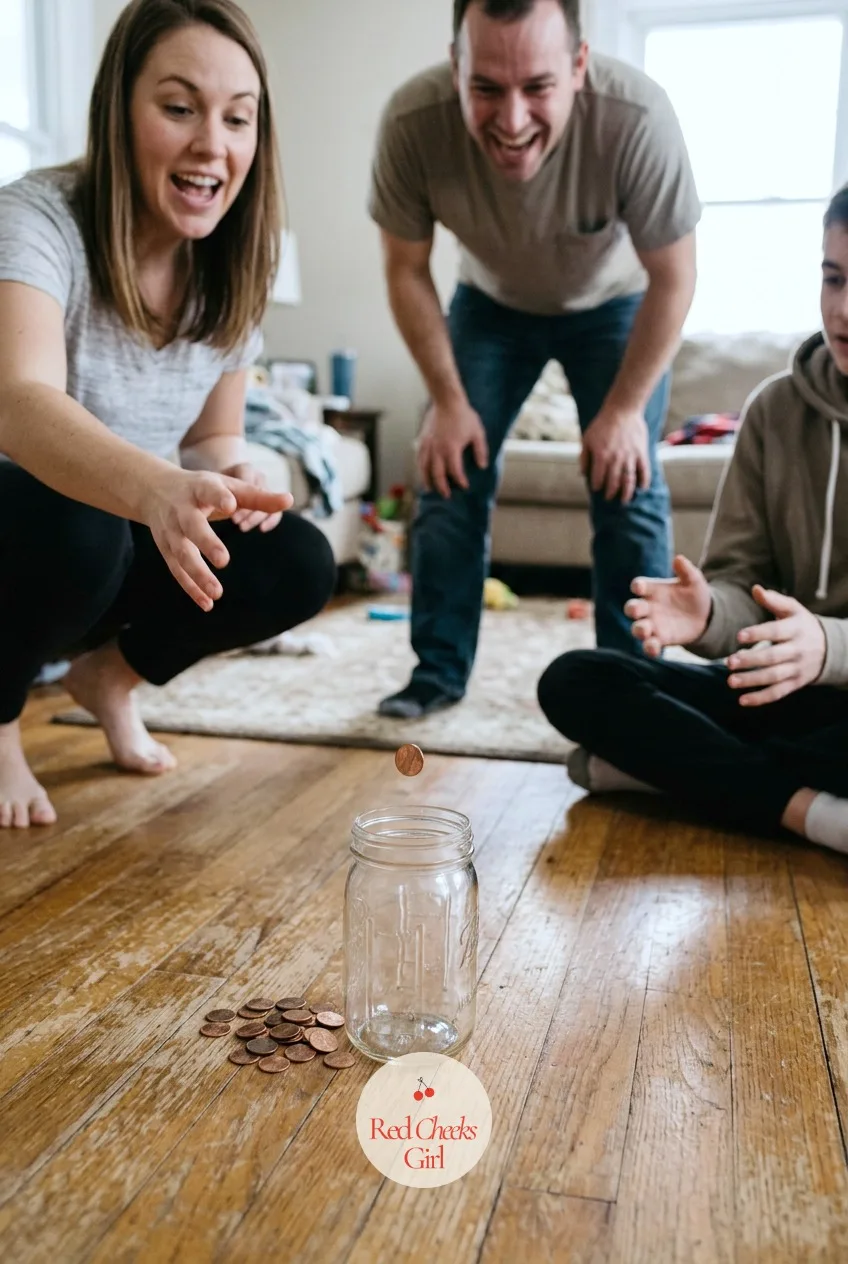
Drop the Penny Into the Jar
It looks almost too simple to be a real game until the jar mouth turns out to be smaller than everyone remembered, and a shaky hand standing at eye level makes even a steady adult miss twice in a row. That gap in difficulty is exactly what keeps a seven year old competitive against a grown-up.
Stand holding a penny at nose height over an open jar on the floor, and drop it straight down, no leaning or aiming with the hand lower. Count how many pennies land inside the jar out of a given pile within the minute.
Use a wide-mouthed mason jar for younger players and switch to a narrow bottle neck once the grown-ups take their turn, so the challenge scales without changing the rules. A rolled-up rug underneath keeps missed pennies from bouncing away.
🛍 Shopping guide
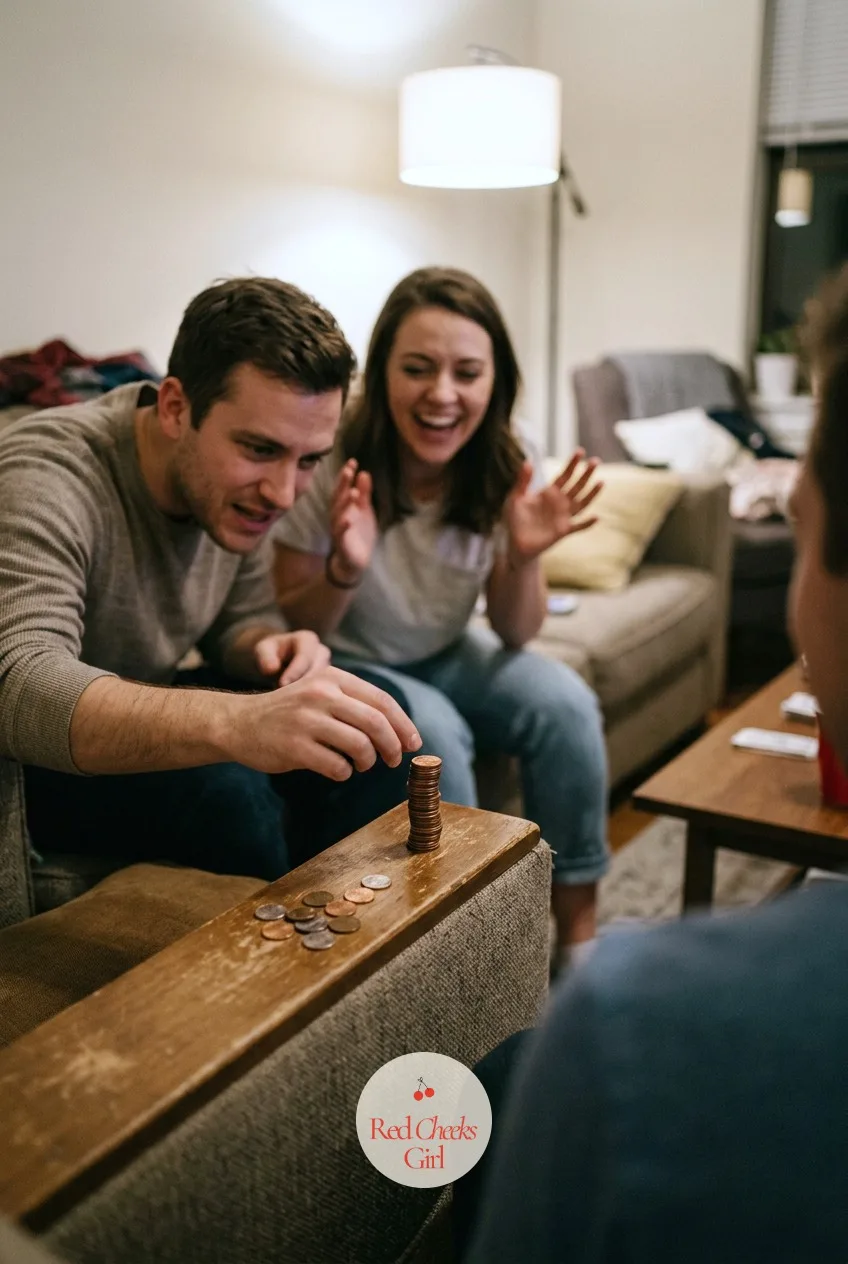
Balance the Pennies On the Back of Your Hand
This one goes dead silent in a room that has been loud all night, because the second a player starts breathing too fast the stack starts to slide. It is the great equaliser for a family that includes someone recovering from a cold or just not up for running relays.
Hold one hand out flat, palm down, and stack pennies one at a time on the back of it without letting any fall. If the stack topples, start again from zero, and whoever has the most pennies balanced when the minute ends wins.
Let the youngest player rest their elbow on a table for support rather than holding the arm up free, which keeps the challenge about patience rather than arm strength. Swap in slightly larger coins for small hands that struggle to grip pennies.
🛍 Shopping guide
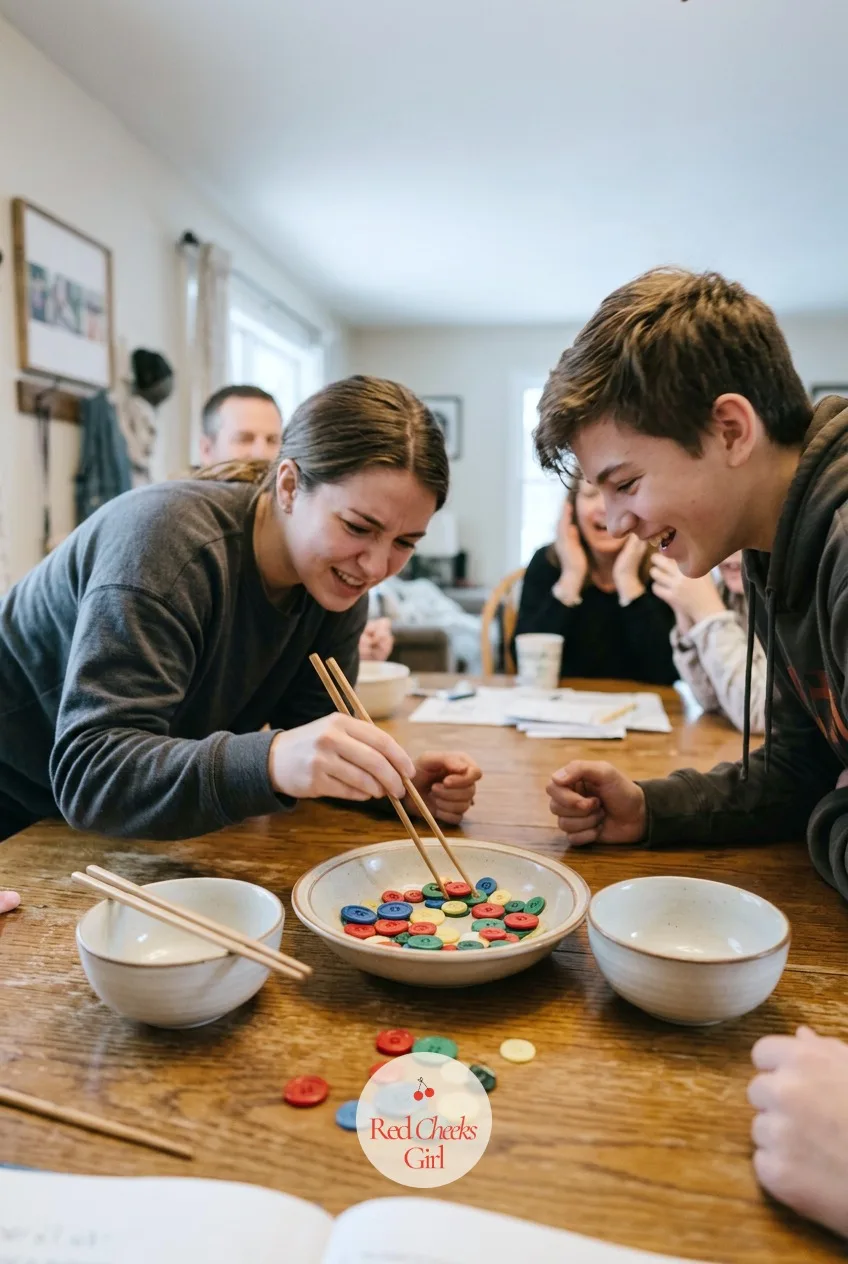
Sort the Buttons by Color With Chopsticks
Chopsticks level a different kind of playing field, because a grandparent who has used them for sixty years and a kid who has never held a pair both start the round equally awkward. It is a good one to slot in once everyone needs to sit down for a minute.
Fill one bowl with a mix of colored buttons and set out two or three empty bowls, one per color. Using only chopsticks, no fingers, sort as many buttons into their matching bowl as possible before the minute ends, counting correctly sorted pieces.
Swap chopsticks for a pair of kitchen tongs for a player who has never used chopsticks before, which keeps the mechanics the same but far less frustrating. Use large buttons rather than small ones for the youngest hands at the table.
🛍 Shopping guide
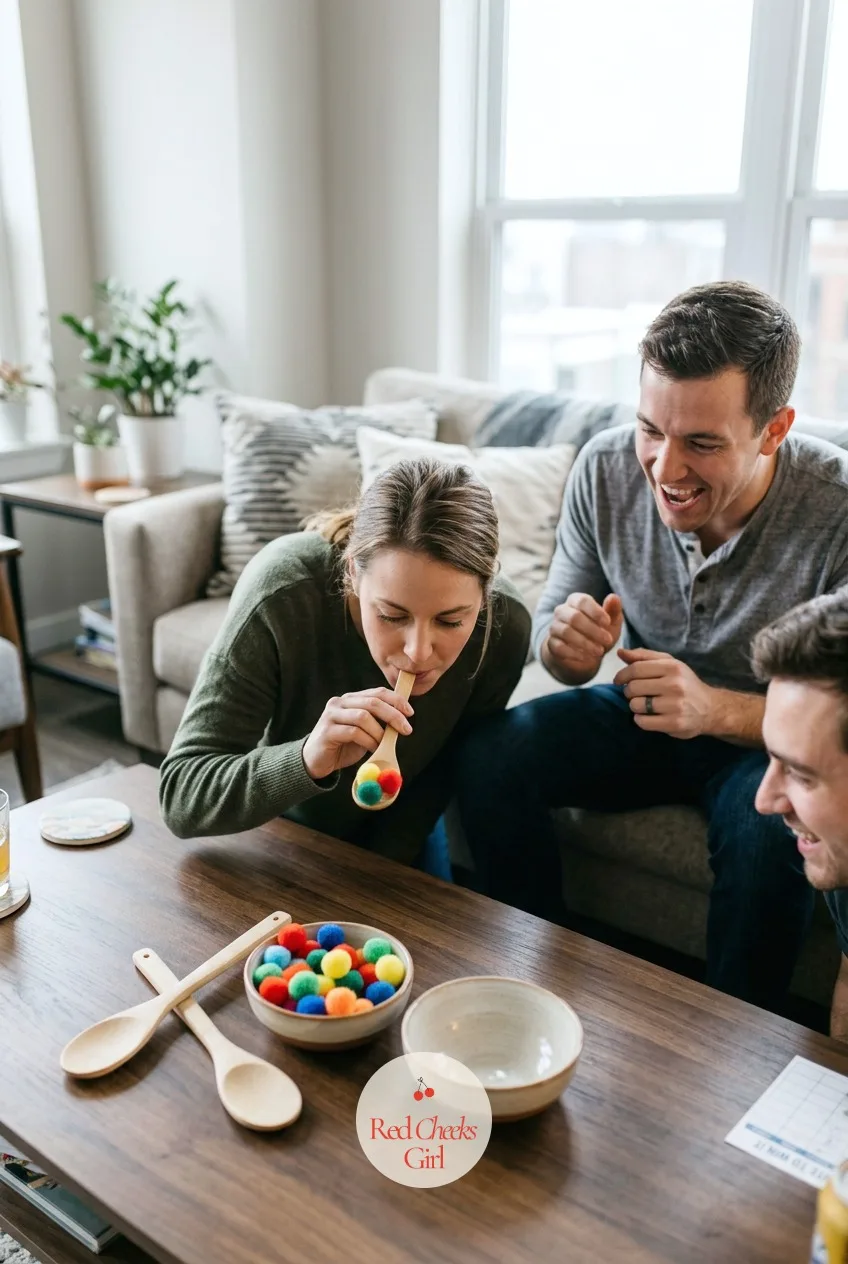
Pluck the Pom-Pom With Two Spoons
Nobody expects two spoons to be this hard to coordinate, which is exactly why the round gets funnier the longer it runs. It needs almost no space, so it slots in neatly at a coffee table while someone else is finishing a relay across the room.
Holding a spoon in each hand like oversized chopsticks, pinch and lift pom-poms from one bowl into an empty bowl beside it, no fingers allowed to touch the pom-poms directly. Count how many are successfully moved in the minute.
Let a very young player use just one spoon and a steady hand instead of two spoons, which keeps the idea intact without the extra coordination. Swap pom-poms for cotton balls if that is what is already on hand from an earlier game.
🛍 Shopping guide
Quick Sit-Down Rounds to Close the Night
Finish on the floor, literally, with everyone cross-legged on the rug for the last few rounds. These need almost no setup and no standing, which suits a grandparent whose knees have had enough and a four year old who wants to sit on someone’s lap.
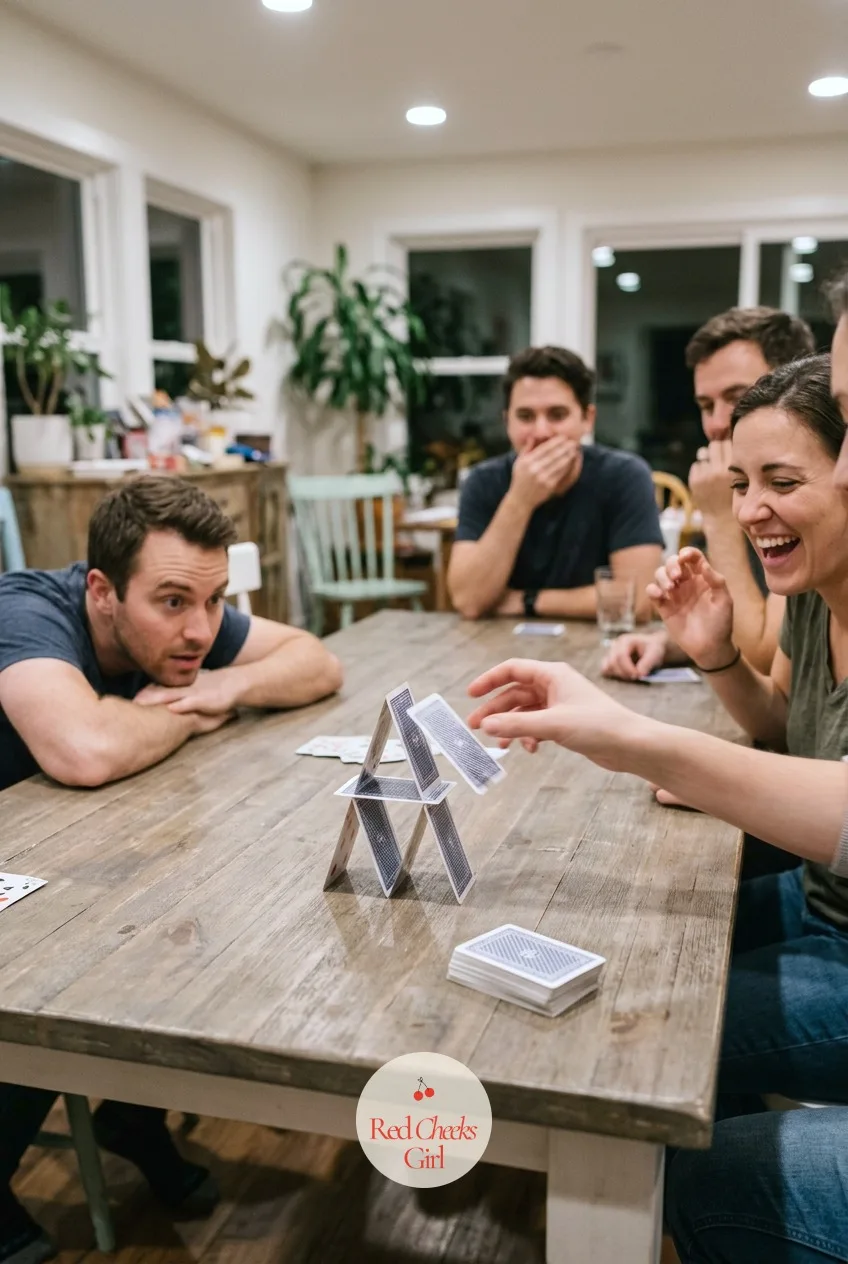
Build the Card House Before the Timer Stops
This is the round where the whole room goes quiet and leans in, because one sneeze or one heavy step on the rug can bring the whole thing down. It rewards patience over speed, which is a rare win for the grandparent who has been losing the fast games all night.
Each player gets a full deck of cards and a flat surface. Lean two cards together to form a triangle, lay a card flat across the top, and keep building up and out, floor to roof, story by story. Whoever has the tallest standing structure when the minute ends wins.
A tablecloth or playing mat gives more grip than a bare wood table, which makes the first level far less frustrating for small hands. For an easier version, allow a single flat base layer of cards laid side by side before building up.
🛍 Shopping guide
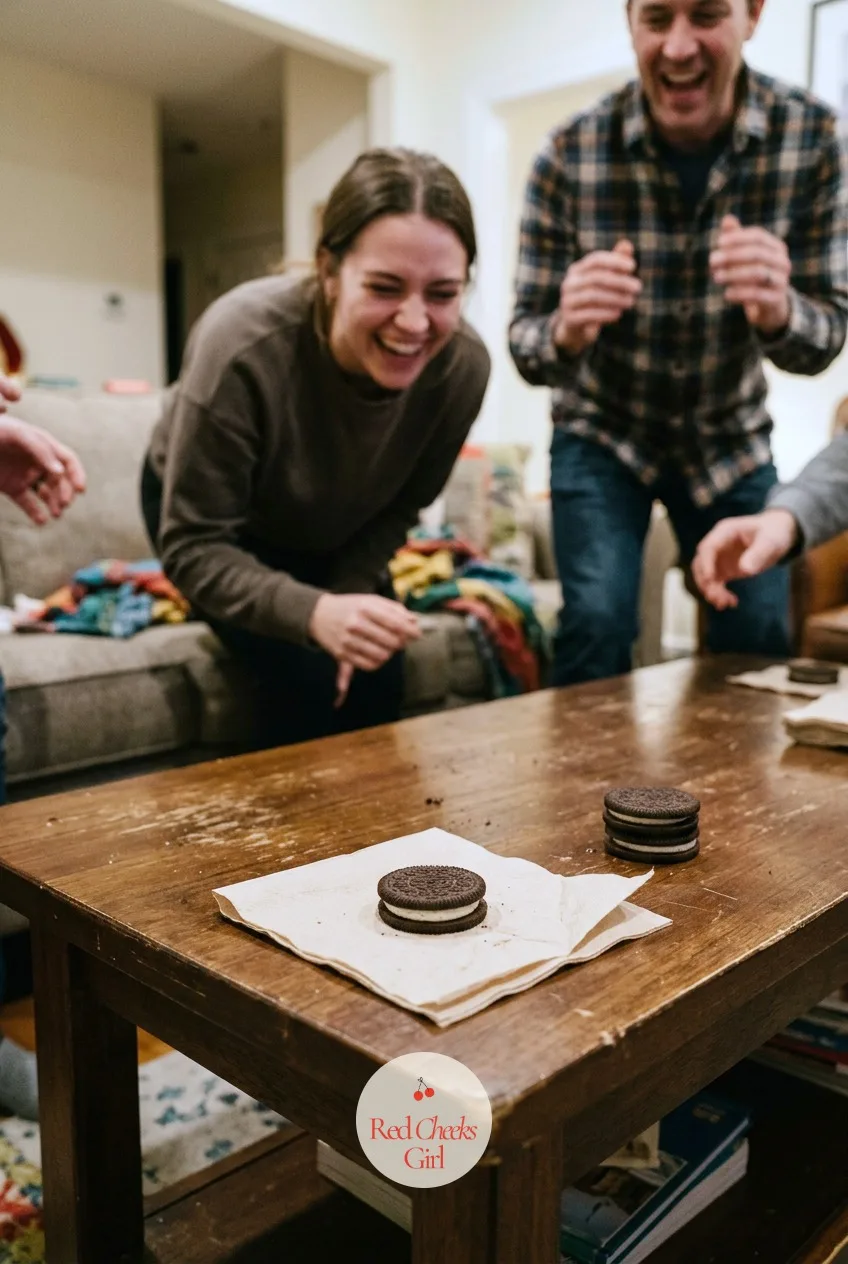
Move the Cookie From Forehead to Mouth
Everyone pretends they will be the one who stays composed through this round, and nobody ever is, which is why it belongs right near the end when the whole family wants to laugh rather than compete hard. It needs no standing and barely any space.
Place a flat round cookie on the forehead, tilt the head back, and using only facial muscles, no hands, work it down to the mouth. Whoever gets the cookie into their mouth, or furthest down their face, within the minute wins that round.
Use a larger, lighter cookie for a younger child who struggles to feel a small one on their skin. Run it seated in a circle on the rug so there is no standing required at all for a grandparent whose knees need a rest.
🛍 Shopping guide
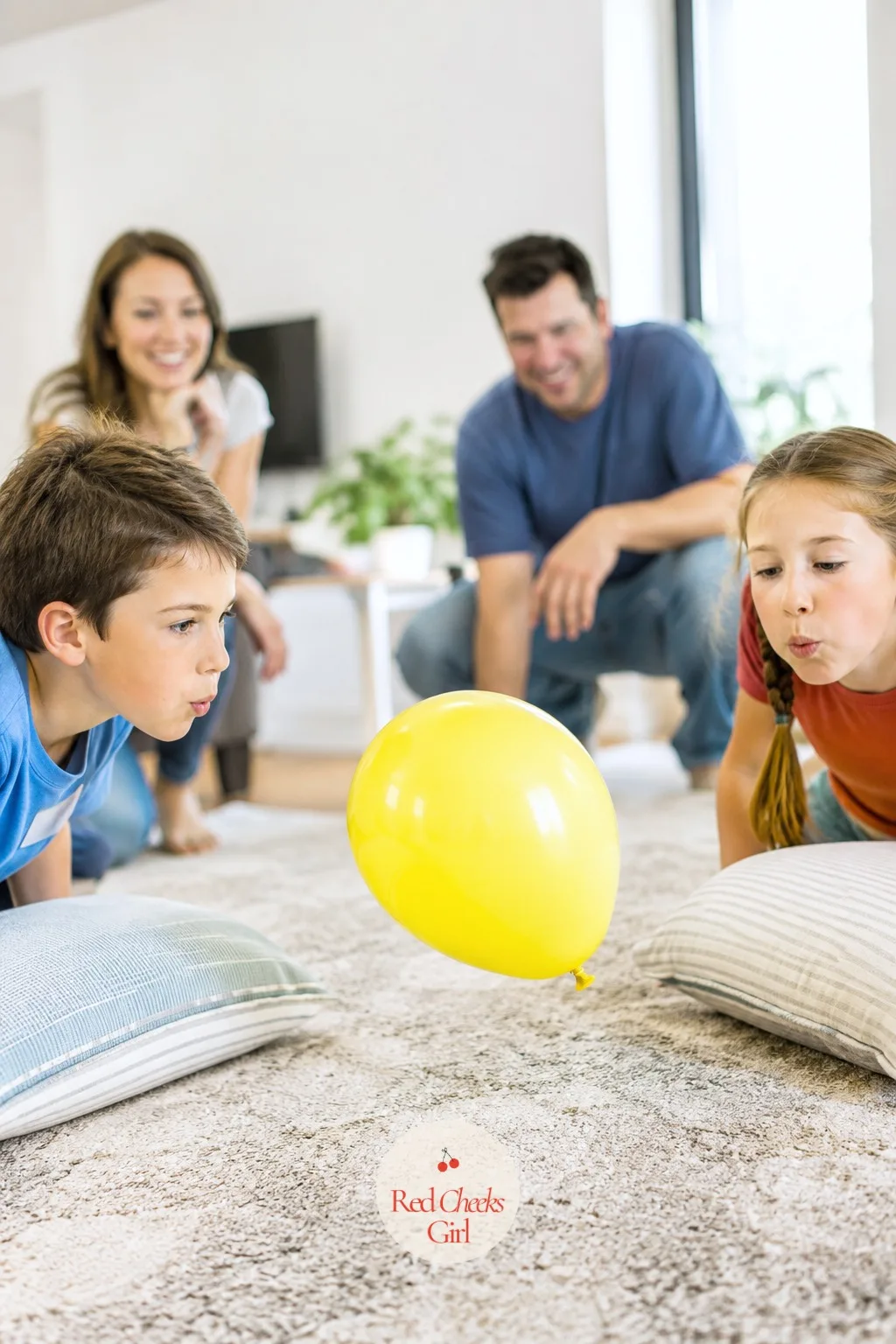
Keep the Balloon Off the Floor While Seated
This is the gentlest game on the list and the right one to close on, because everyone can play it cross-legged on the rug without getting up once. A toddler keeps up with a grandparent here in a way almost no other game on this list allows.
Sitting in a circle on the floor, keep a single balloon in the air using only taps, no catching and no standing up to reach it. If the balloon touches the floor, the group starts the count over at zero, and the goal is the highest number of taps the whole circle reaches together before the minute ends.
Use two balloons instead of one for a bigger group so nobody waits too long between taps. For a competitive rather than cooperative version, switch to one balloon per player and count individual taps instead of a shared total.
🛍 Shopping guide
Frequently Asked Questions
What are Minute to Win It games?
They are short, one minute challenges built from ordinary household objects like cups, balloons and pennies, where players race the clock rather than each other directly, which makes them easy to adapt for mixed ages.
How many Minute to Win It games should you plan for a family game night?
Plan for eight to twelve games for an evening of mixed ages, enough to fill about an hour with room to repeat a favorite round, rather than rushing through the full list.
What is the best Minute to Win It game for mixed ages, kids and grandparents together?
Games judged by accuracy or a steady hand rather than speed or strength, like dropping a penny into a jar or balancing it on the back of a hand, put a young child and a grandparent on genuinely equal footing.
Can toddlers or young kids play Minute to Win It games?
Yes, with adjustments: shorten the distance, lower the target, or let a toddler use both hands where an older player must use one, so the game stays the same idea at an easier scale.
Do you need a stopwatch for Minute to Win It games?
A phone timer works fine and is what most hosts actually use, the only requirement is that the beep or alarm is loud enough to hear over a living room full of cheering.
What do you give the winner of each round?
A small ribbon, a sticker, or simply bragging rights for the rest of the night works well, since the appeal of these games is the round itself rather than a big prize at the end.

Free fall alphabet coloring pages for kids, A to Z. Print one letter at a time or the full set. Perf

Twenty tried-and-tested indoor games for family rainy days, from printable scavenger hunts to sock b
20 family game night ideas for large groups — team games, printable sheets & station games so nobo
Leave a Reply