

20 Church Carnival Games Volunteers Can Build and Run in One Afternoon
Nobody on your committee has three weekends to spare and nobody wants a carnival lawn that looks like a sad row of folding tables either. The good news is that the booths families actually remember, the cake walk, the duck pond, the ring toss, are also the cheapest to build and the fastest to paint.
Every booth below uses plywood, paint, a tarp or a bucket: things already in a church shed or a twenty dollar run to the hardware store. One volunteer per booth, a can of bright paint and an afternoon is genuinely all it takes.
If your event also needs a bigger slate of large group activities, our 20 Easter Games for Large Groups to Run at a Church or Community Party pulls from the same low-budget, high-turnout playbook.
This post contains affiliate links. If you buy through them, I may earn a small commission at no extra cost to you.
Table of Contents
Classic Booths That Fill Up First
These five are the ones a family heads for the second they park the car. They need the least explanation and the shortest line of instructions for a volunteer who has never run a booth before.
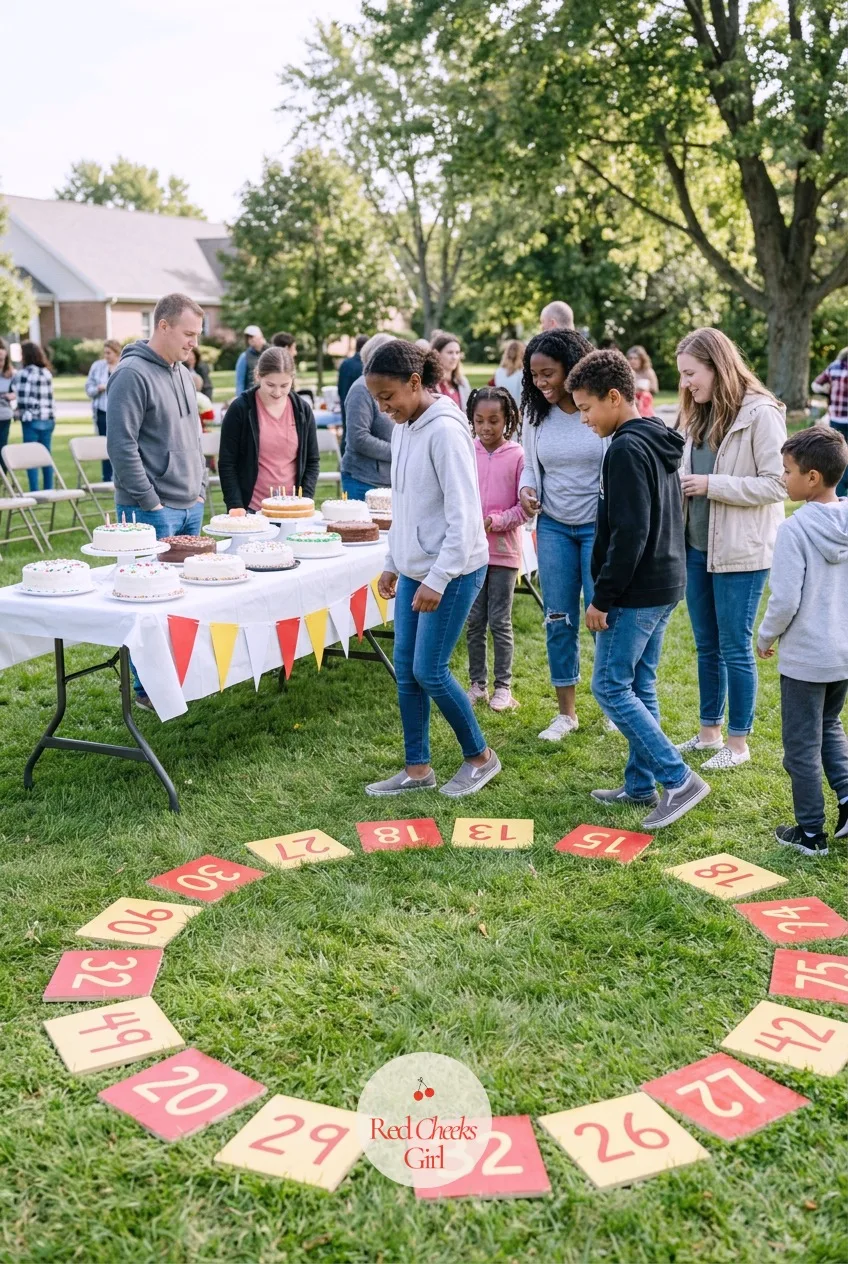
Set Up a Cake Walk on Numbered Squares
A ring of numbered squares on the grass, a speaker playing something upbeat, and a table of donated cakes behind it: this is the booth that never has a slow minute.
Walk the circle while the music plays, freeze on a number when it stops, and whoever’s shoe lands on the number called gets to pick a cake off the table.
Build it from a dozen rubber floor mats or cut plywood circles, numbered with a paint pen and set in a loop on the lawn. One volunteer runs the music and calls numbers, a second mans the cake table and keeps it stocked from congregation donations.
Works for every age since toddlers and grandparents walk the same loop. If rain is a risk, skip the mats and tape painted paper plates straight to the grass instead, they peel up just as fast when the booth closes.
🛍 Shopping guide
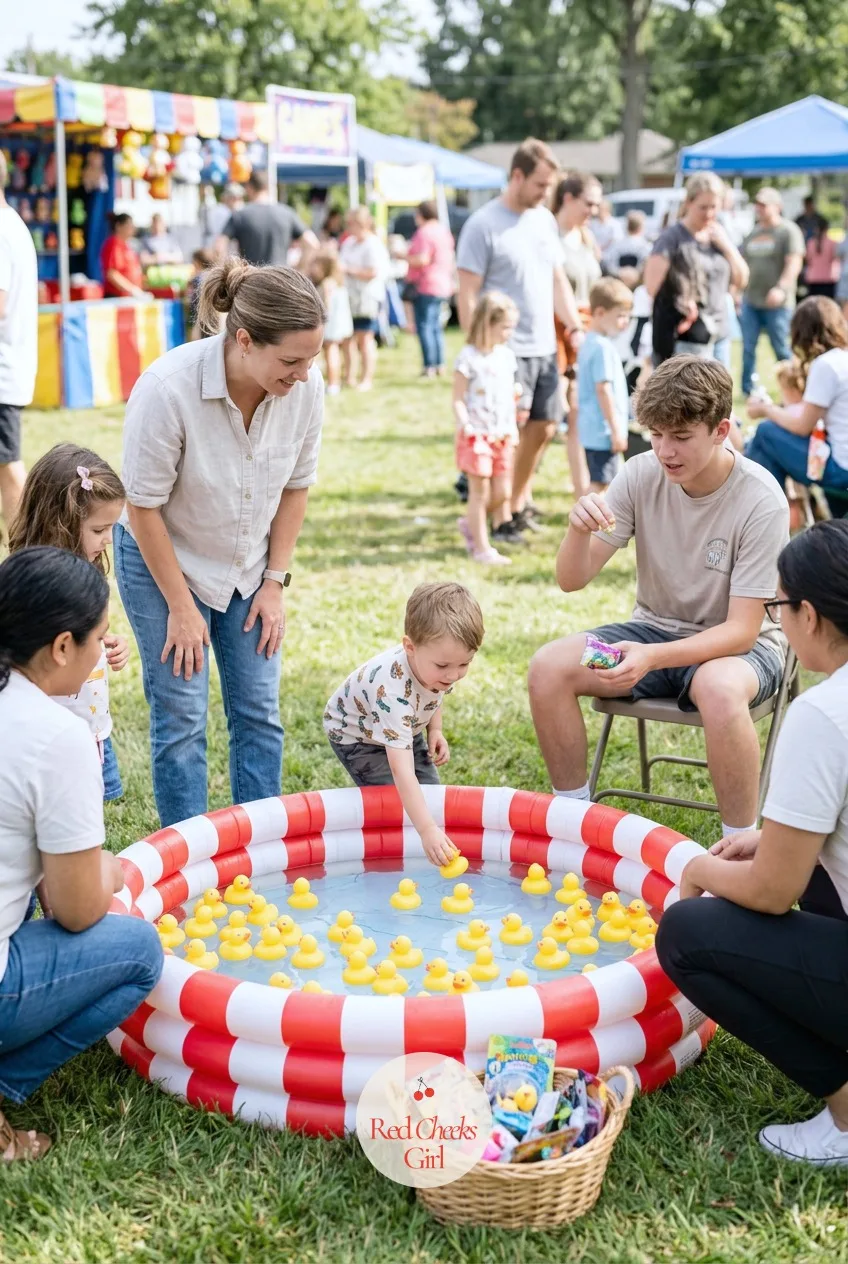
Fill a Kiddie Pool for the Duck Pond Pick
A pool of water bobbing with rubber ducks is the booth parents aim small children toward first, because there is no way to lose. Pick a duck, flip it over, check the mark painted on the bottom, and trade that mark for a small prize at the table beside the pool.
Build from a plastic kiddie pool filled a few inches deep, a bag of floating rubber ducks each marked underneath with a paint pen in a few prize tiers, and a basket of small prizes within arm’s reach of the volunteer.
Best for the youngest kids on the lawn since it asks nothing of balance or aim. No pool on hand, a painted plastic tub or a horse trough from the church equipment shed does the same job.
🛍 Shopping guide
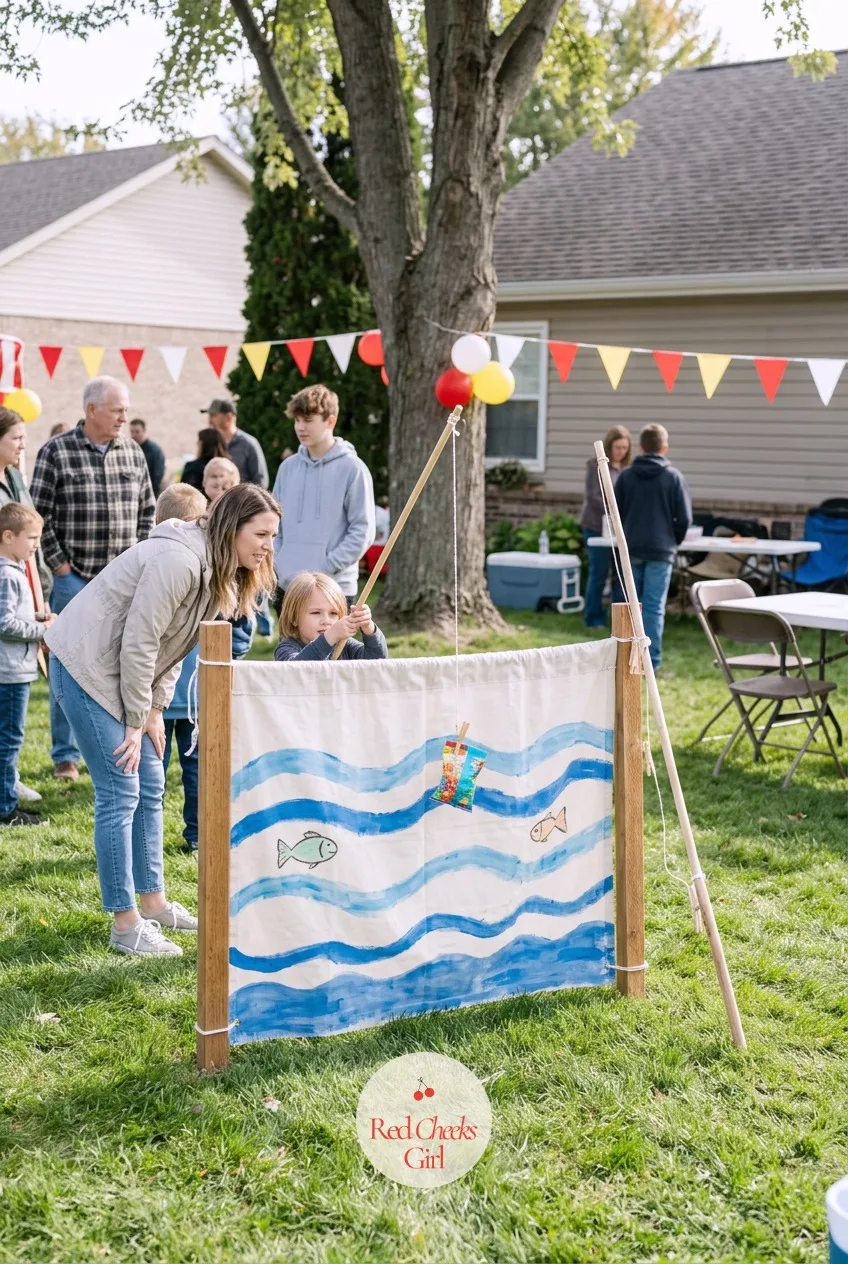
Hang a Painted Curtain for the Fishing Booth
A simple rod and string over a painted sheet, and from the other side comes the tug that makes every kid’s face light up. Cast the line over the curtain, wait, feel the pull, and reel in a prize clipped on by the volunteer hiding behind.
Build from a dowel pole with string and a clothespin tied to the end, cast over a painted drop cloth or old sheet strung on a rope between two step ladders or a simple 2×4 frame. Paint the curtain as waves or stripes so it reads as its own scene, not a bedsheet.
Works well tucked along a fence line where the hidden volunteer has a little shade. No ladders handy, a clothesline strung between two trees holds the curtain just as well.
🛍 Shopping guide
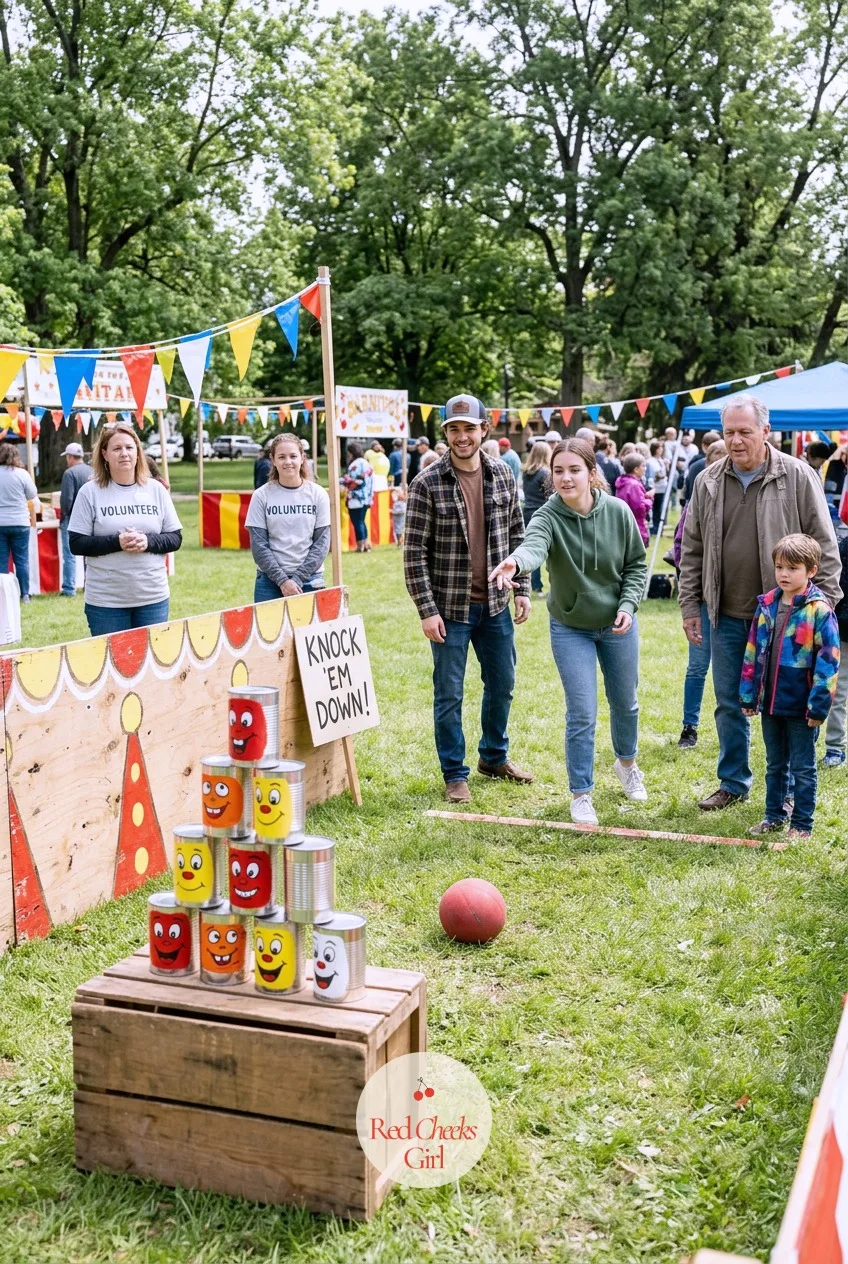
Paint Faces on Cans for the Knockdown Booth
Six cans stacked in a pyramid, each one wearing a goofy painted face, daring a kid to knock the whole grin off the shelf. Stand at the marked line, throw three soft balls, and clear the whole stack to win.
Build from empty cans weighted slightly with sand for stability, faces painted on with acrylic, stacked on a sturdy crate or cinder block platform with a plywood backstop behind to catch wild throws.
Good anywhere there is a flat patch of lawn and a backstop to protect the fence behind it. Make it easier by moving the line closer or stacking fewer cans; harder means adding weight to the cans or a step back from the line.
🛍 Shopping guide
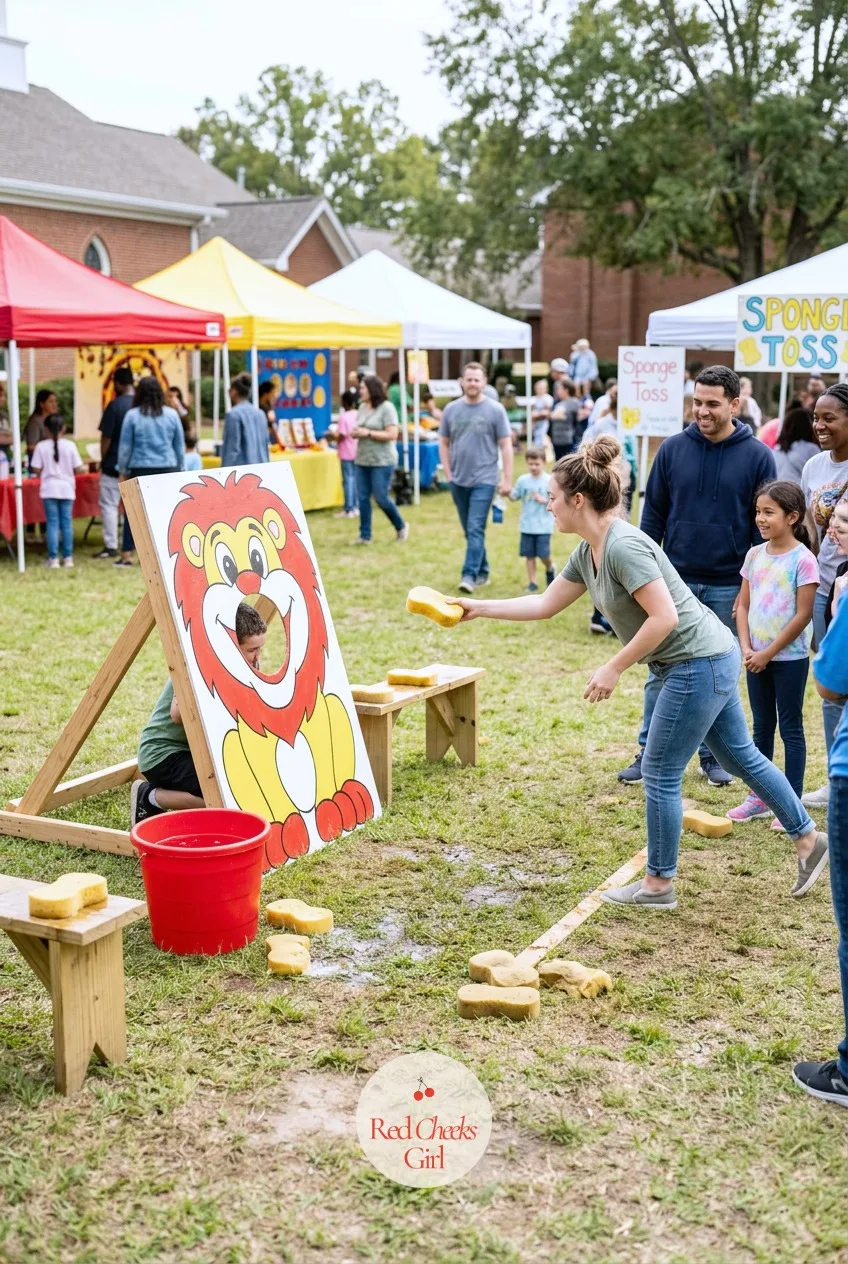
Cut a Face Hole Board for the Sponge Throw
A painted plywood character with a hole cut for a face, and behind it a very brave volunteer grinning through the gap, waiting to get soaked. Buy three wet sponges, throw from the line, and a direct hit earns a token.
Build from a plywood panel on a simple A-frame stand, hole cut at head height, body and scene painted around it, with a bucket of water and a bin of sponges close by and a poncho for whoever is sitting behind the board.
Works best in a spot with drainage or on grass that can take the splash. Swap the volunteer out every twenty minutes since the booth runs on who is willing to get wet.
🛍 Shopping guide
Toss, Aim and Sweep Booths
Steadier hands, slightly longer lines, and the booths that reward a kid who comes back for a second try. Each one needs one throw line, one target and almost no moving parts to break.
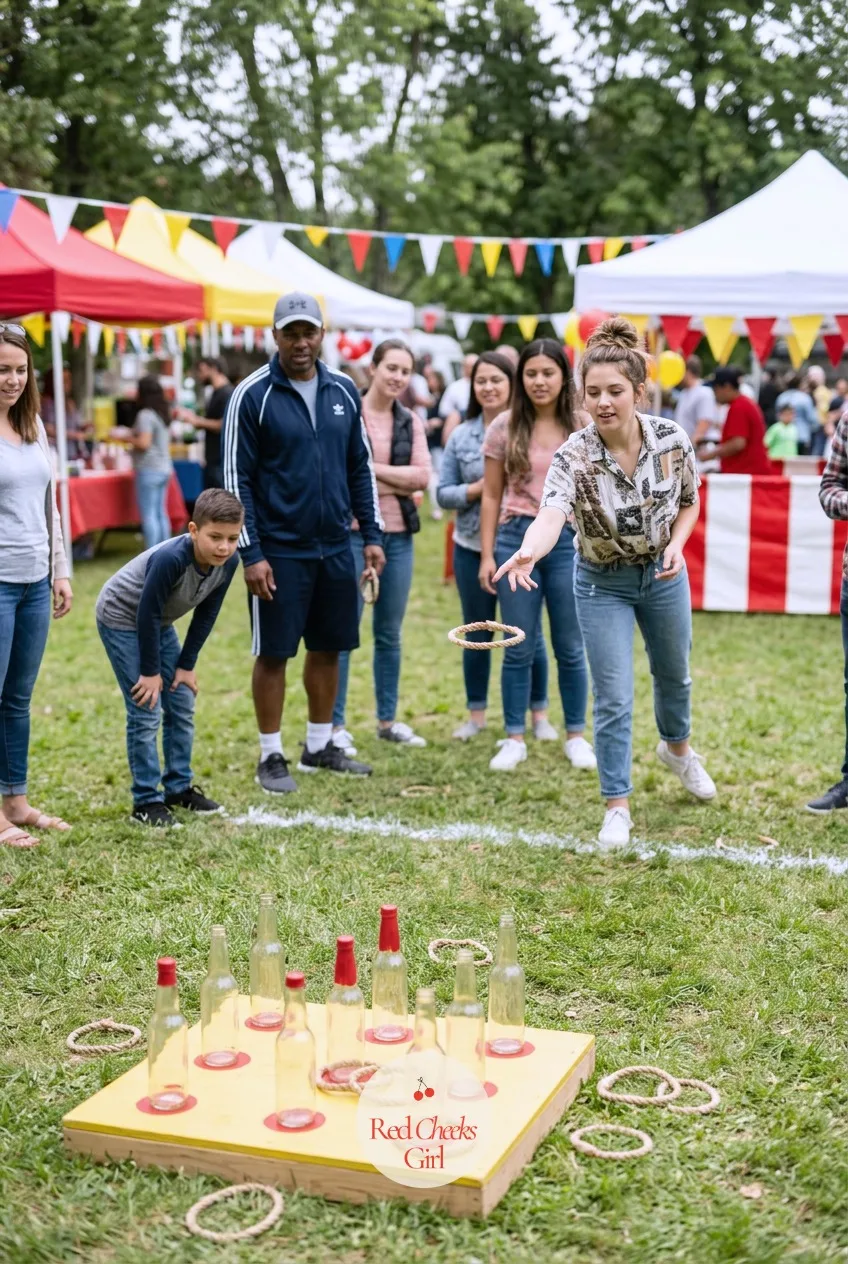
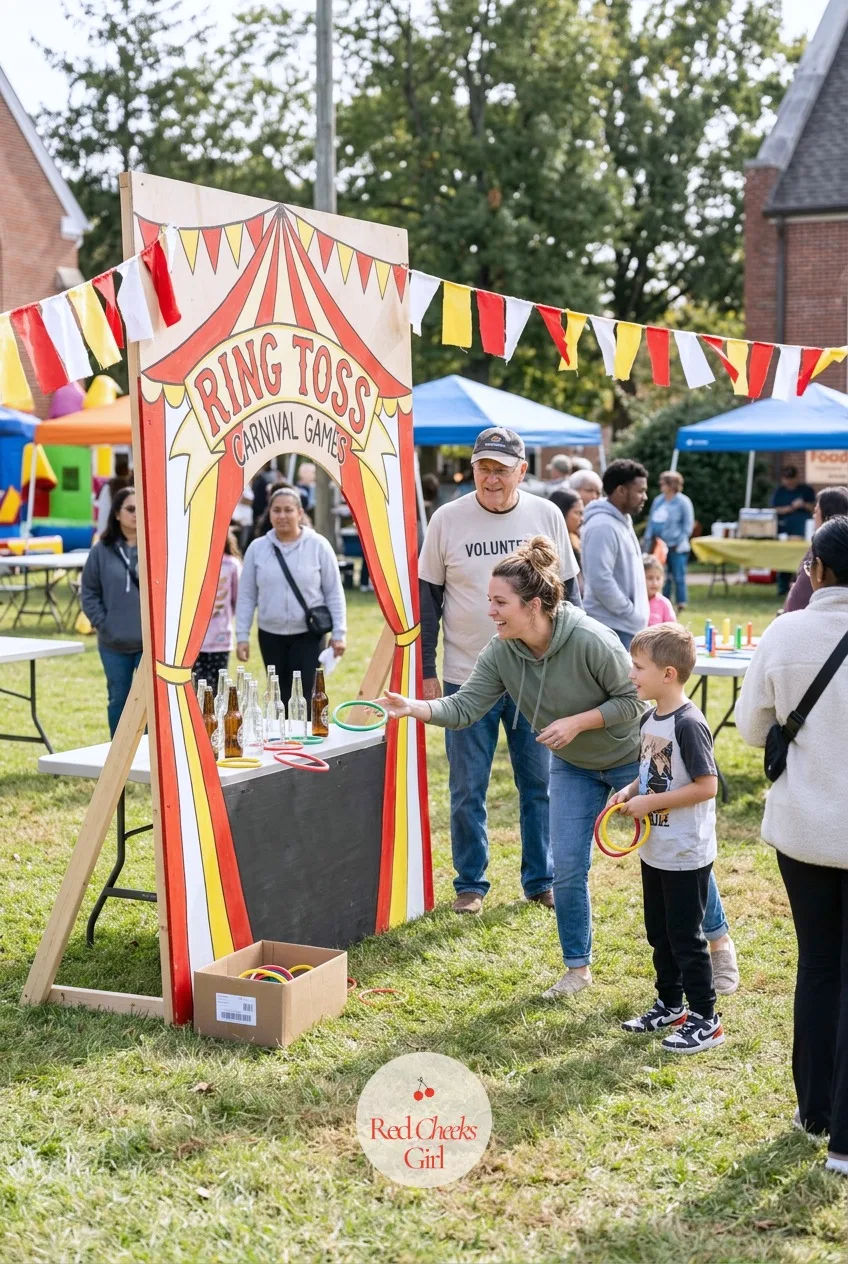
Line Up Soda Bottles for Ring Toss
A tight grid of glass soda bottles, each one daring a ring to drop clean over the neck. Stand at the line, toss three rings, and a ring that lands fully around any bottle neck wins.
Build from bottles weighted with a little sand so a bump does not send them rolling, set in a grid on a painted board or low crate, rings cut from rope circles or wooden embroidery hoops. Make it easier with bigger rings or a closer line, harder by spacing the bottles further apart or moving the line back a step.
Works well on a flat table rather than grass, since bottles on an uneven surface tip too easily. No glass bottles on hand, painted plastic bottles weighted the same way do the job just as well.
🛍 Shopping guide
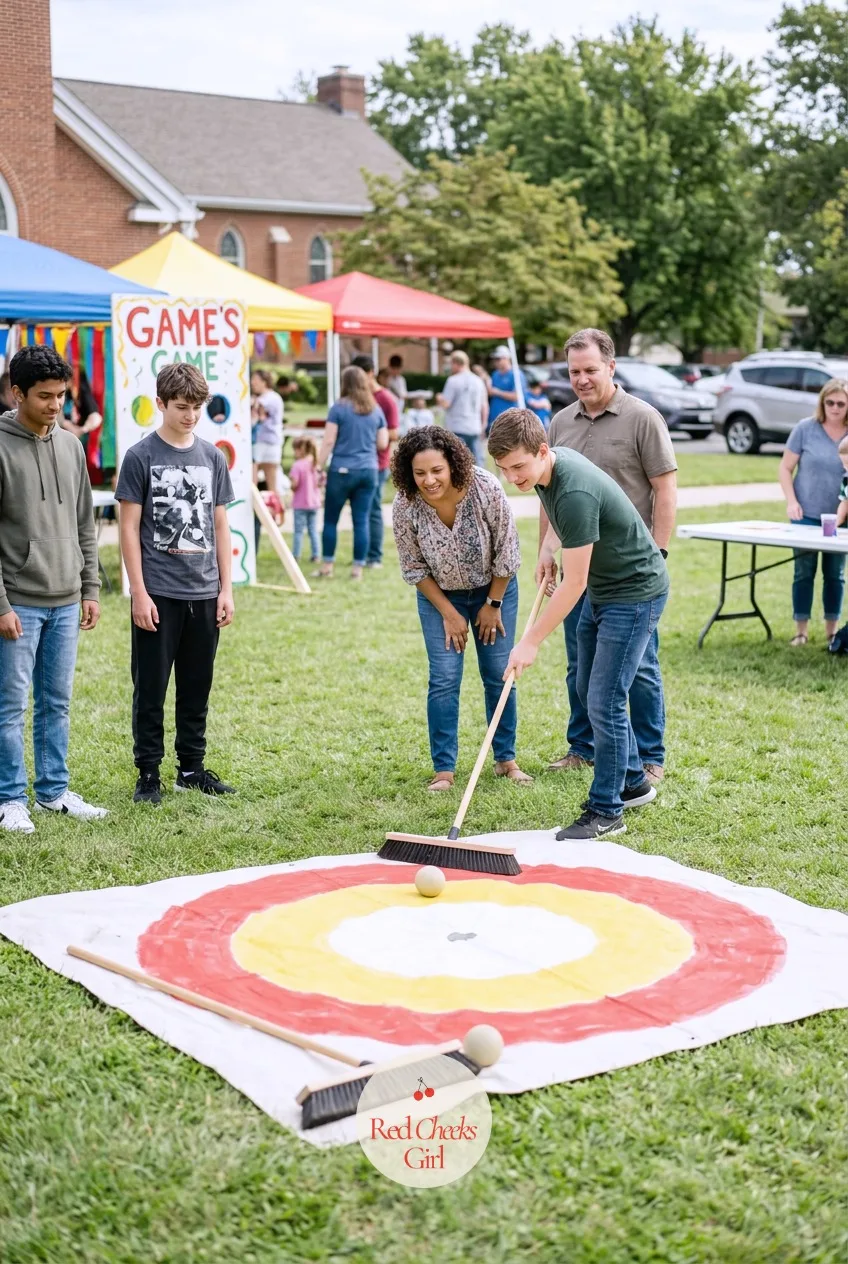
Mark a Target on a Tarp for Broom Curling
A painted bullseye on a tarp laid flat on the grass, and a broom in hand to sweep a ball toward the center ring. Two sweeps each, highest ring scored wins the round, and grandparents play this one as happily as the kids.
Build from a canvas drop cloth or tarp painted with concentric colored rings, a push broom, and a lightweight ball such as a rubber kickball or a rolled sock ball that glides rather than bounces. Make it harder by shrinking the center ring or moving the sweep line back, easier by widening every ring.
Good for a slower corner of the lawn where there is no running involved, a nice landing spot for a tired parent with a toddler on a hip.
🛍 Shopping guide
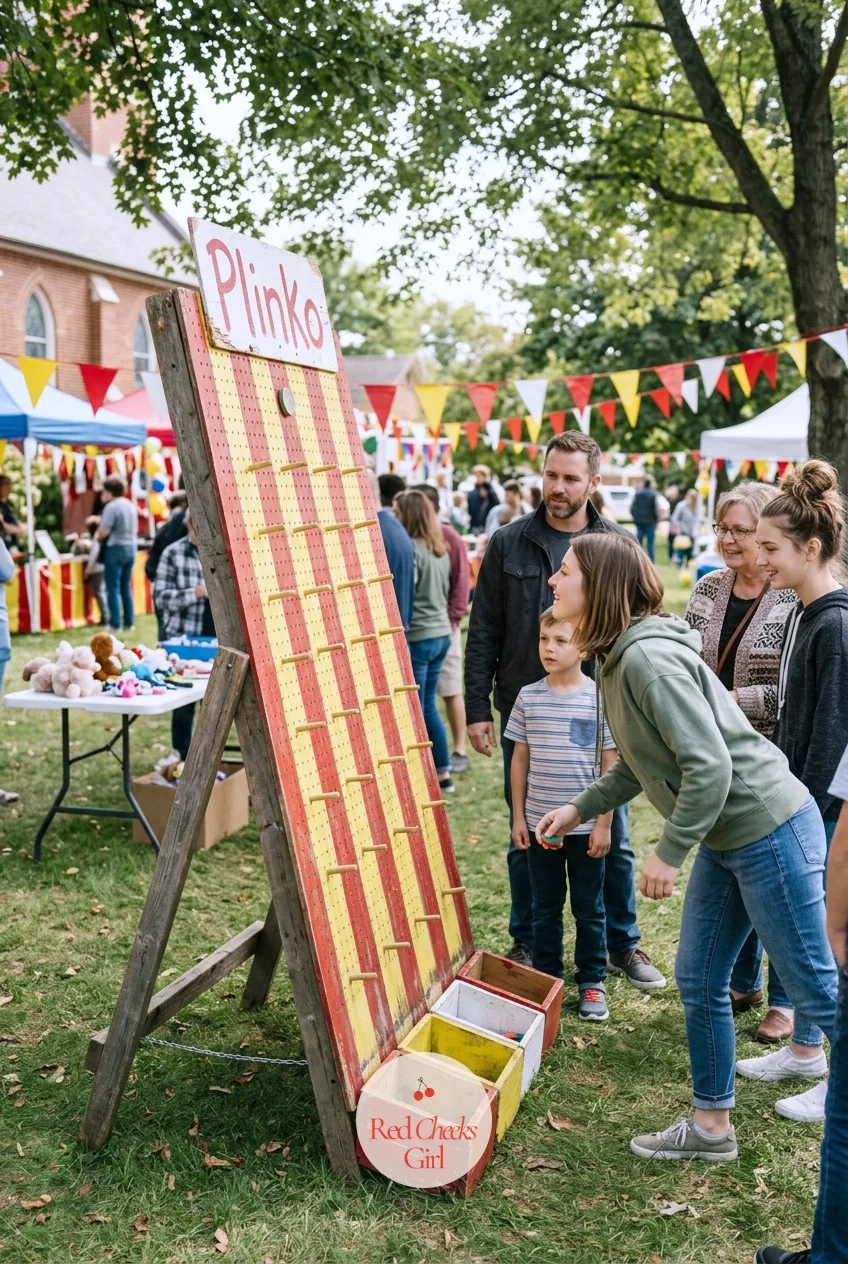
Build a Plinko Board From Pegboard and Dowels
A disc dropped from the top slot bounces off staggered rows of dowels, zigzagging down a painted pegboard until it lands in a prize slot at the bottom. Wherever it lands decides the prize, so every drop feels like a small gamble.
Build bottom-up: a wood frame stand props the pegboard upright at a gentle backward lean, dowels pushed through staggered holes across the board’s middle, and painted prize bins fixed along the bottom edge to catch the disc as it falls.
Works best leaned against a wall or a second frame for stability. No pegboard in the shed, a sheet of plywood with a grid of drilled holes and golf tees instead of dowels gives the same bounce.
🛍 Shopping guide
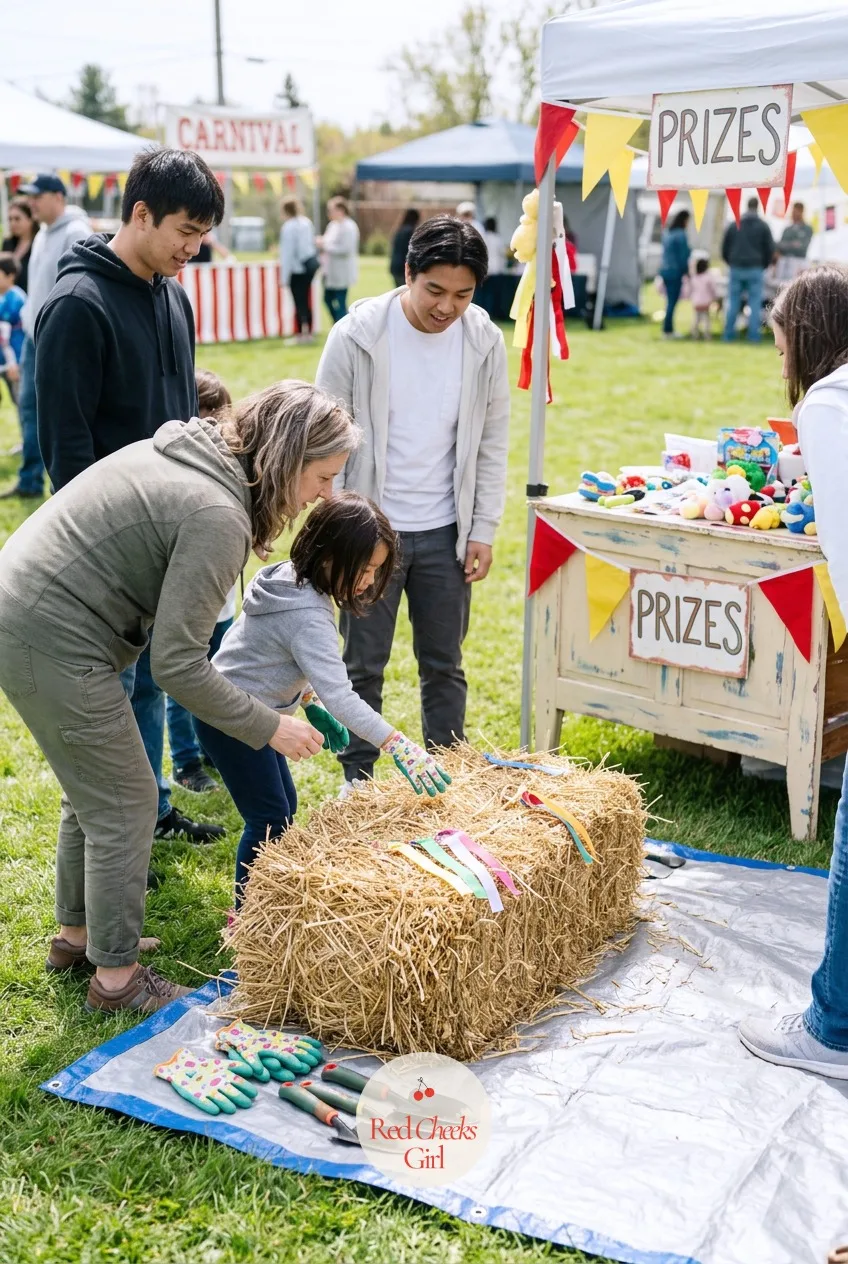
Bury Prize Tokens in a Straw Bale Treasure Dig
A straw bale set on a tarp, a dozen tokens pushed down inside it, and small hands digging to find one. Find a token in the minute allowed, trade it at the prize table, no token found means a free turn-again ticket instead.
Build from one or two straw bales set on a tarp to catch loose straw, prize tokens or small wrapped items buried through the bale by hand, with garden gloves and small trowels set out for diggers.
Works well as a standalone station since it needs almost no supervision once set up, just a volunteer to hand out gloves and swap tokens for prizes. Easier: leave a ribbon tail peeking out of each token’s hiding spot; harder: bury them deeper with no visible clue.
🛍 Shopping guide
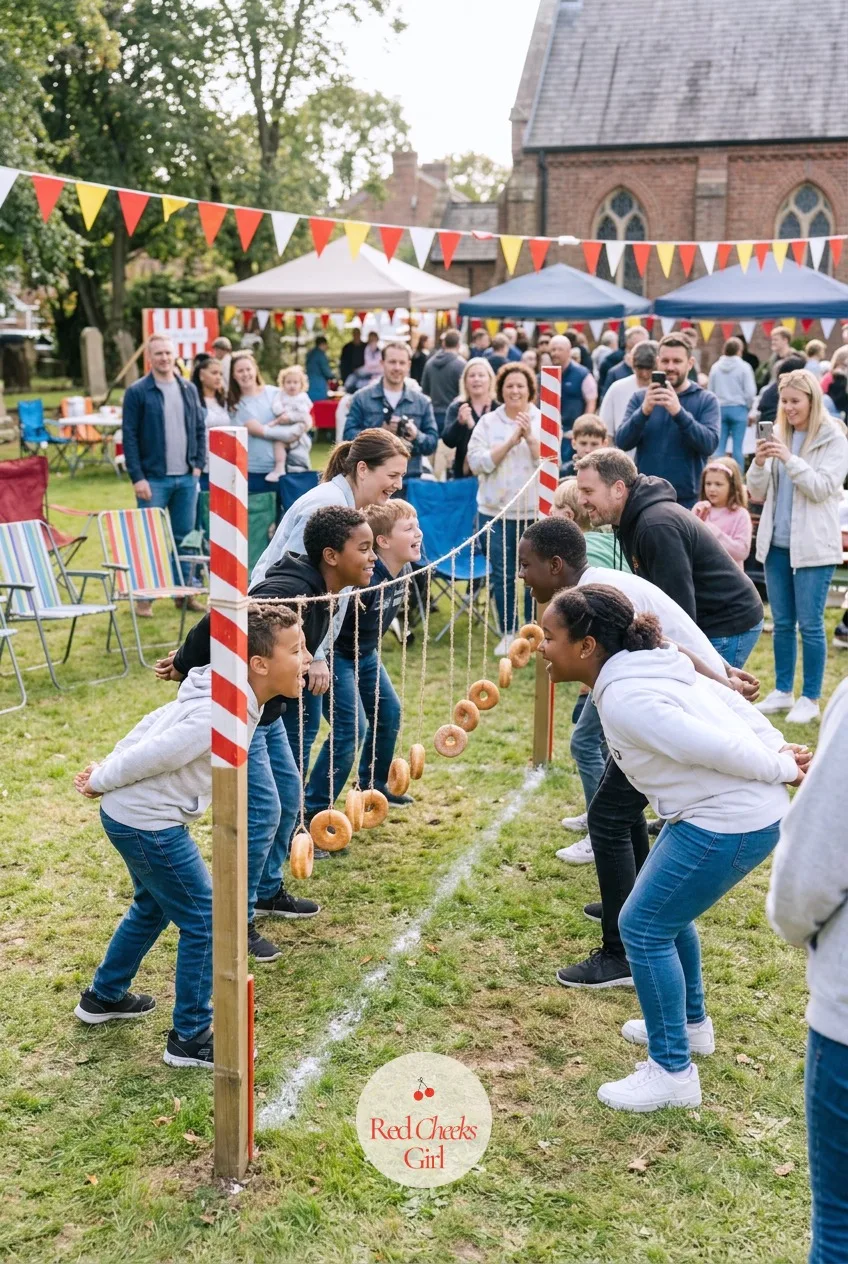
String Up Donuts for the No Hands Donut Race
A row of donuts dangling from twine, hands clasped firmly behind the back, and the first player to finish the whole donut wins bragging rights and a free turn next round. It is messy, it is loud, and it never has an empty line.
Build from rope or twine strung between two painted posts or a simple A-frame, a donut tied on a string of its own for each racer, heights adjusted so little ones aren’t stretching on tiptoe.
Budget a box of plain cake donuts per hour of play, they’re the cheapest part of the whole lawn. No posts to string between, a painted stepladder frame on each end holds the line just as well.
🛍 Shopping guide
Active Booths That Get Everyone Moving
Here is where the lawn gets loud. These booths want space, a bit of running room and a volunteer who does not mind a little chaos.
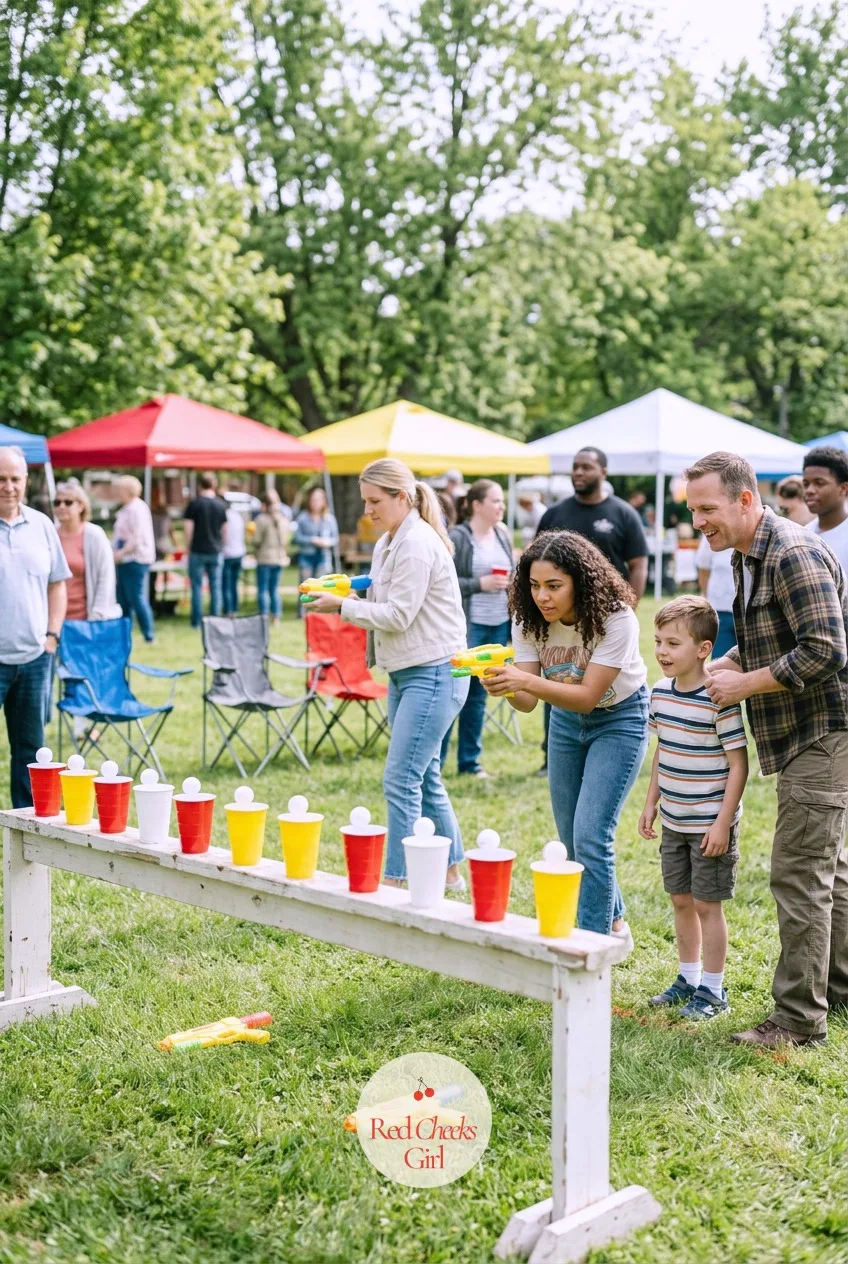
Squirt Water Guns to Race Ping Pong Balls Off Cups
A row of cups balanced with a ping pong ball on top, and two players squirting water guns head to head to see whose ball falls first. First ball off the cup wins the heat, loser steps aside and the next challenger steps up.
Build from a low painted rail or fence, cups taped or glued in a row along the top, a ping pong ball balanced on each one, and a bucket of water nearby for refilling squirters between turns.
Works well on a hot afternoon since getting a little splashed is half the fun. Easier: wider cups and bigger balls; harder: narrow rims and a longer squirt distance.
🛍 Shopping guide
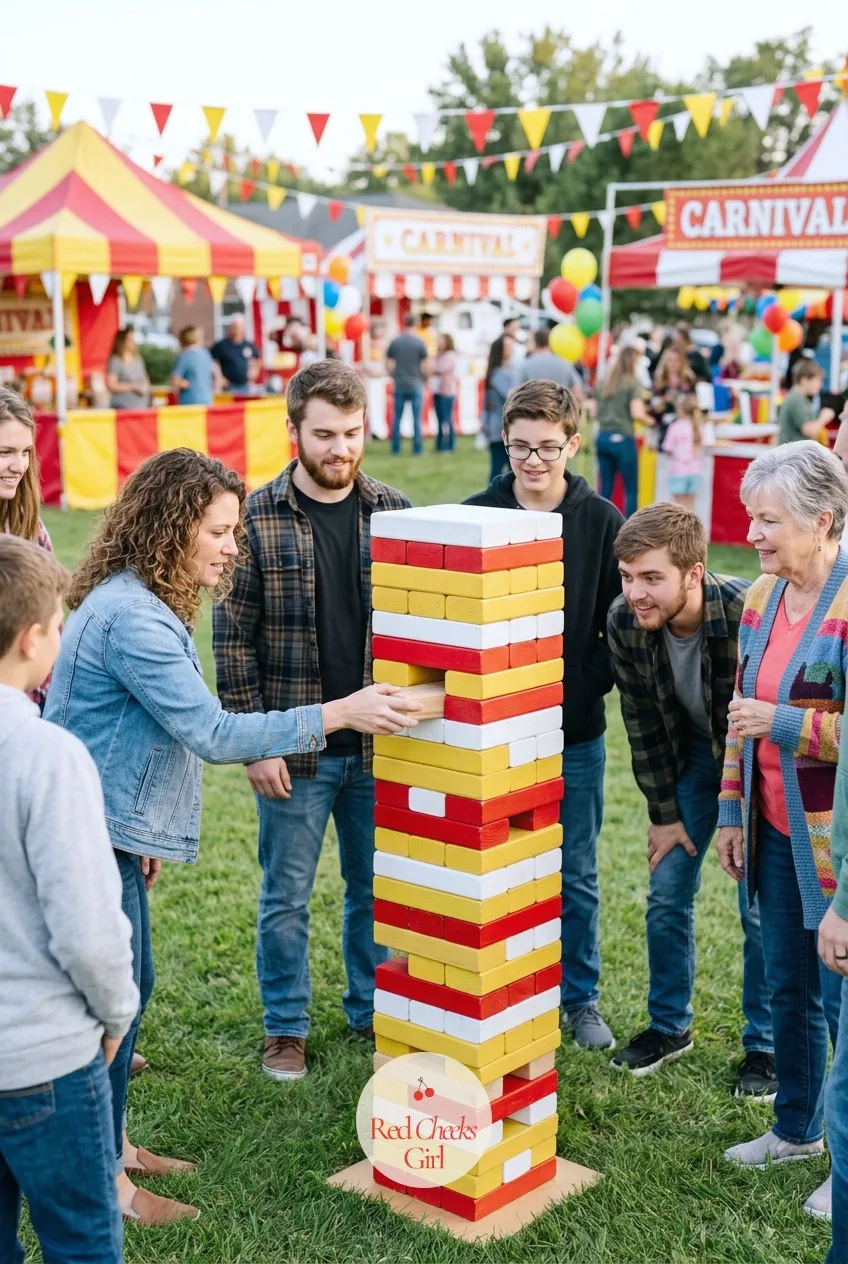
Stack a Giant Tumble Tower From Painted Two by Fours
An oversized stacking tower built from chunky wood blocks, and the whole crowd holds its breath as each player pulls one block and balances it back on top. Whoever topples the tower is out, and the next round starts fresh with a bigger stack.
Build bottom-up: cut 2×4 lumber into equal blocks, sand the edges smooth, paint them in rotating bright bands, then stack three crosswise per layer on a flat patch of lawn or a plywood base until the tower reaches about waist height on a grade-schooler.
Good as a centerpiece booth since it draws a crowd of watchers, not just players. Easier: fewer layers to start; harder: build it a head taller and add a one-hand rule for every pull.
🛍 Shopping guide
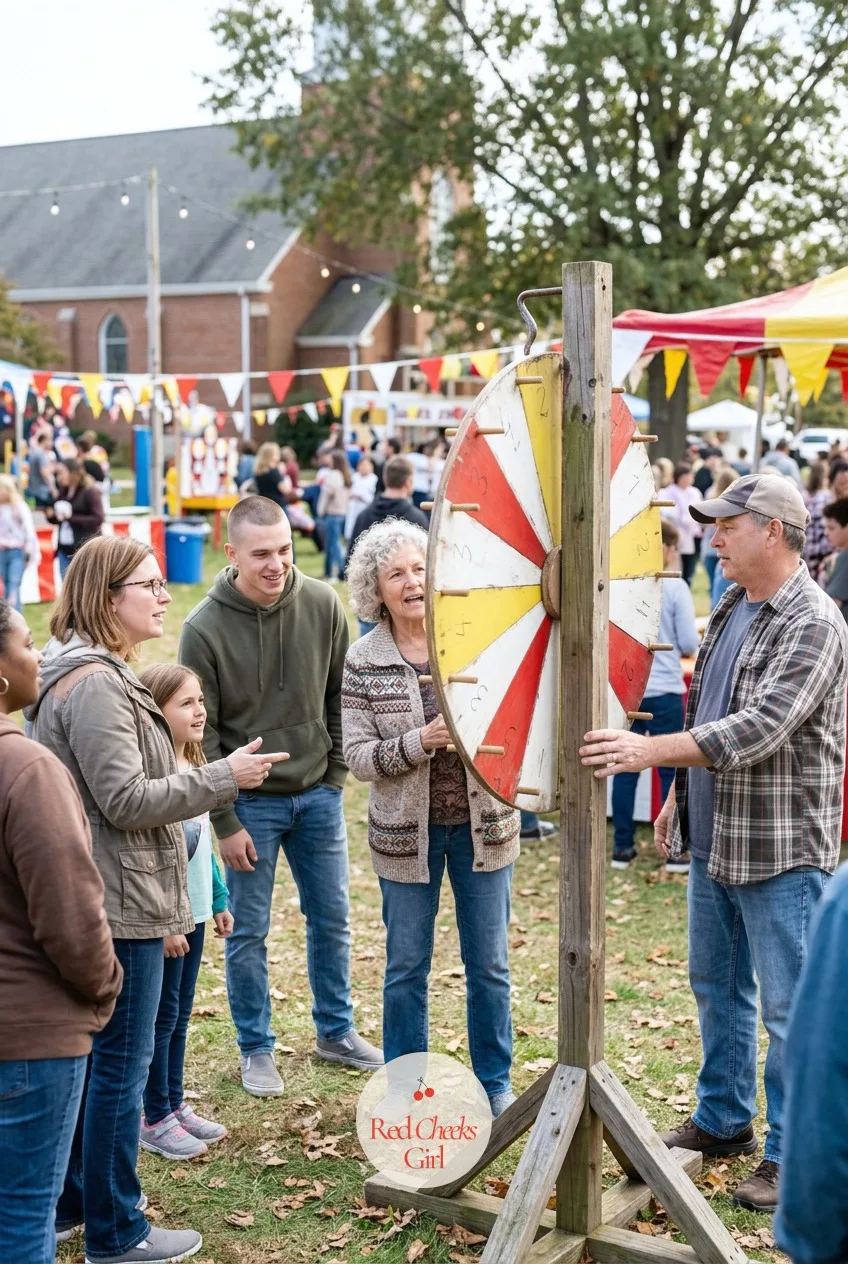
Spin a Painted Prize Wheel for Instant Winners
A tall wheel of painted wedges clicking past a bent flapper as it slows to a stop, and every single wedge wins something, so nobody walks away empty-handed. Spin once per ticket, collect whatever the wedge says.
Build from a plywood circle cut into pie wedges and painted, mounted through the center onto a sturdy post stand with a bearing or a simple bolt that lets it spin freely, and a flexible clicker screwed at the top to tap against small pegs as it turns.
Keep a few wedges marked ‘spin again’ to keep the line moving fast on a busy afternoon. No lathe or bearing on hand, a lazy susan turntable from a kitchen supply store makes a serviceable spindle.
🛍 Shopping guide
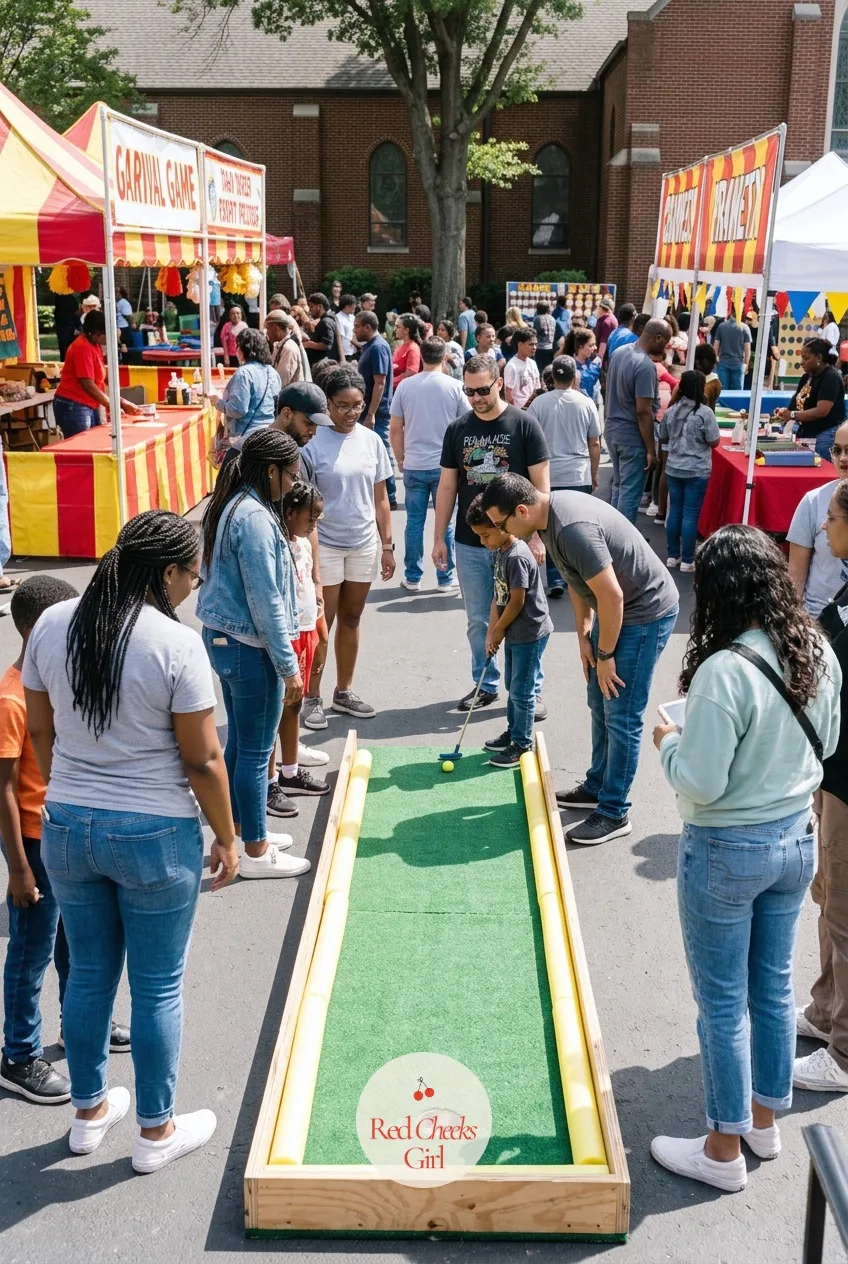
Build a Pool Noodle Mini Golf Hole
One long putting track, a soft bumper running along each side, and a cup sunk at the far end waiting for the ball. Putt from the start, fewest strokes to sink it wins, and little kids get a gentle nudge from the bumpers no matter how wild the swing.
Build from plywood sides or a length of rain gutter forming the track, pool noodles sliced lengthwise and glued along both edges as the bumper, outdoor carpet or turf remnant laid down the middle, and a sunk cup or can at the end.
Add a small ramp or a loop-around obstacle partway down for an older crowd. Works on a driveway just as well as grass, so it is one of the easier booths to move if weather turns.
🛍 Shopping guide
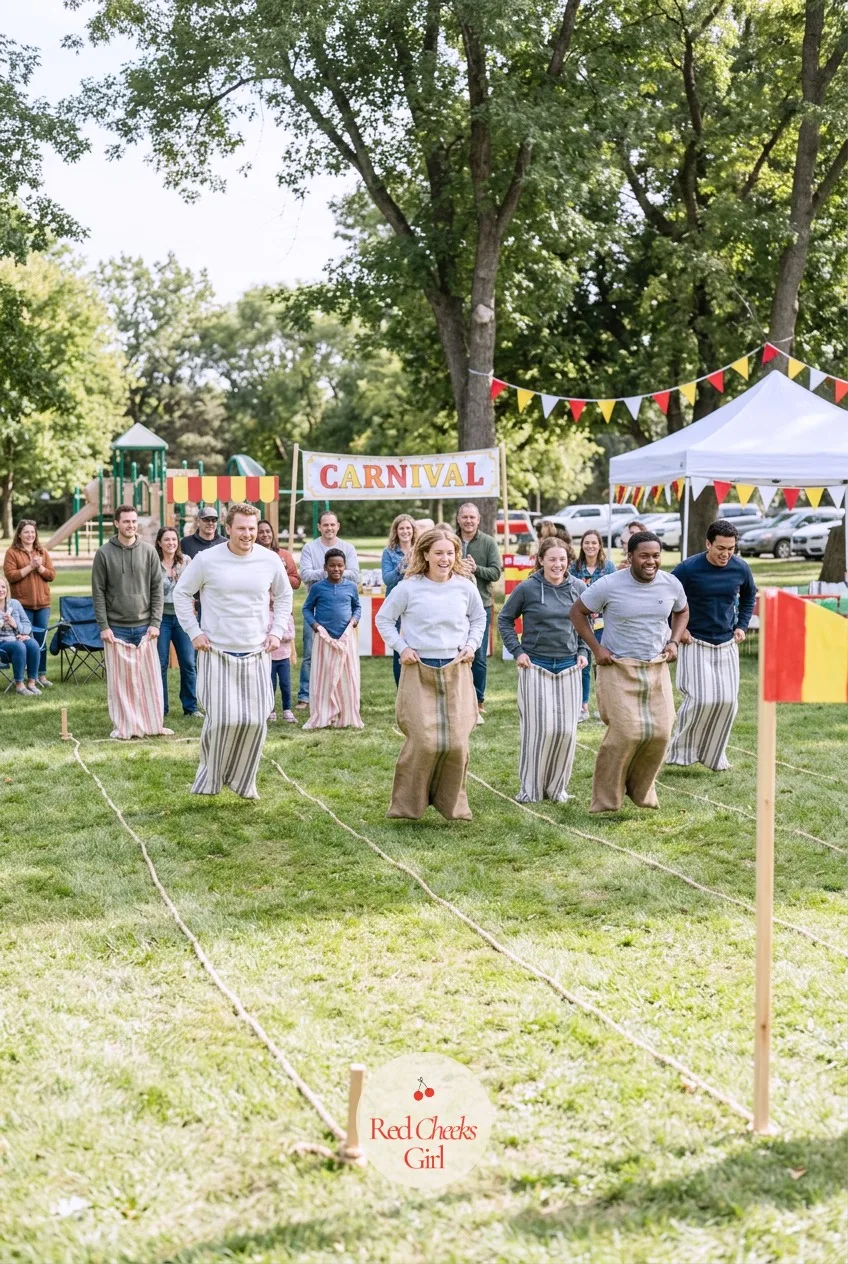
Mark Out a Sack Race Lane on the Lawn
Two lanes roped off on the grass, a painted flag at each end, and racers hopping as fast as their sack allows toward the finish. First one across the line wins the heat, then winners race winners until one sack is left standing.
Build from rope or twine staked along the grass to mark the lanes, large canvas sacks or painted pillowcases (skip anything scratchy) for racers to step into, and bright flags at the start and finish.
Easier for little ones with a shorter lane, harder with a cone to hop around halfway down. Works best on a flat, mowed stretch of lawn with no sprinkler heads in the way.
Quick Wins and Keepsake Stations
Short, sweet and easy to staff on a rotation, these close out the lawn with something to laugh at, something to guess, and something a family actually takes home.
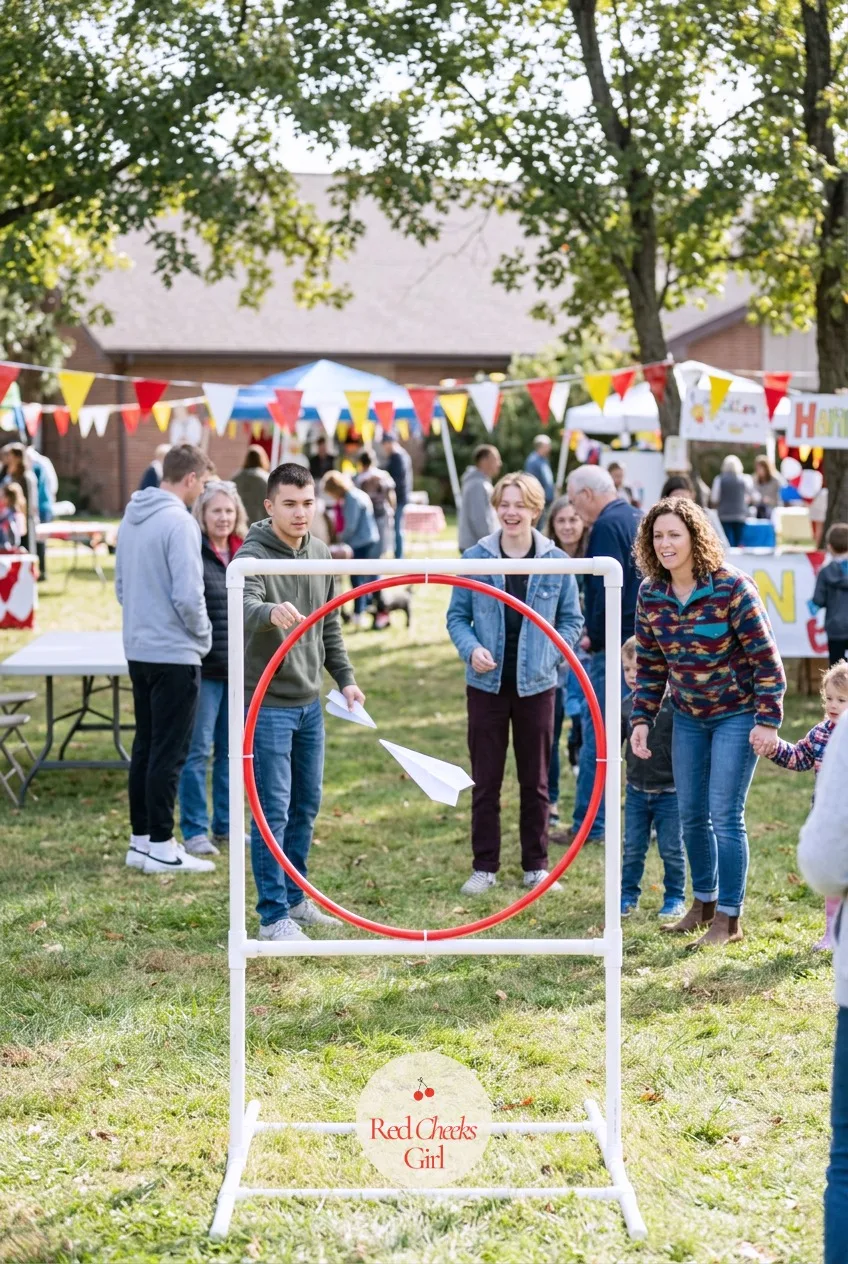
Fly Paper Airplanes Through a Hanging Hula Hoop
A painted hula hoop hangs at chest height from a simple frame, and the goal is a clean paper airplane pass straight through the center. Fold at the table, throw three from the line, and most clean passes in three throws wins the round.
Build from a PVC pipe frame or a repurposed swing-set bar holding the painted hoop, a small folding table with paper and a simple fold diagram pinned up, and a throw line marked on the grass a few steps back.
Easier with a bigger hoop set closer, harder with a smaller hoop set further, or hung so it sways a little. Works in a breezy spot, the breeze actually makes it more interesting, not less.
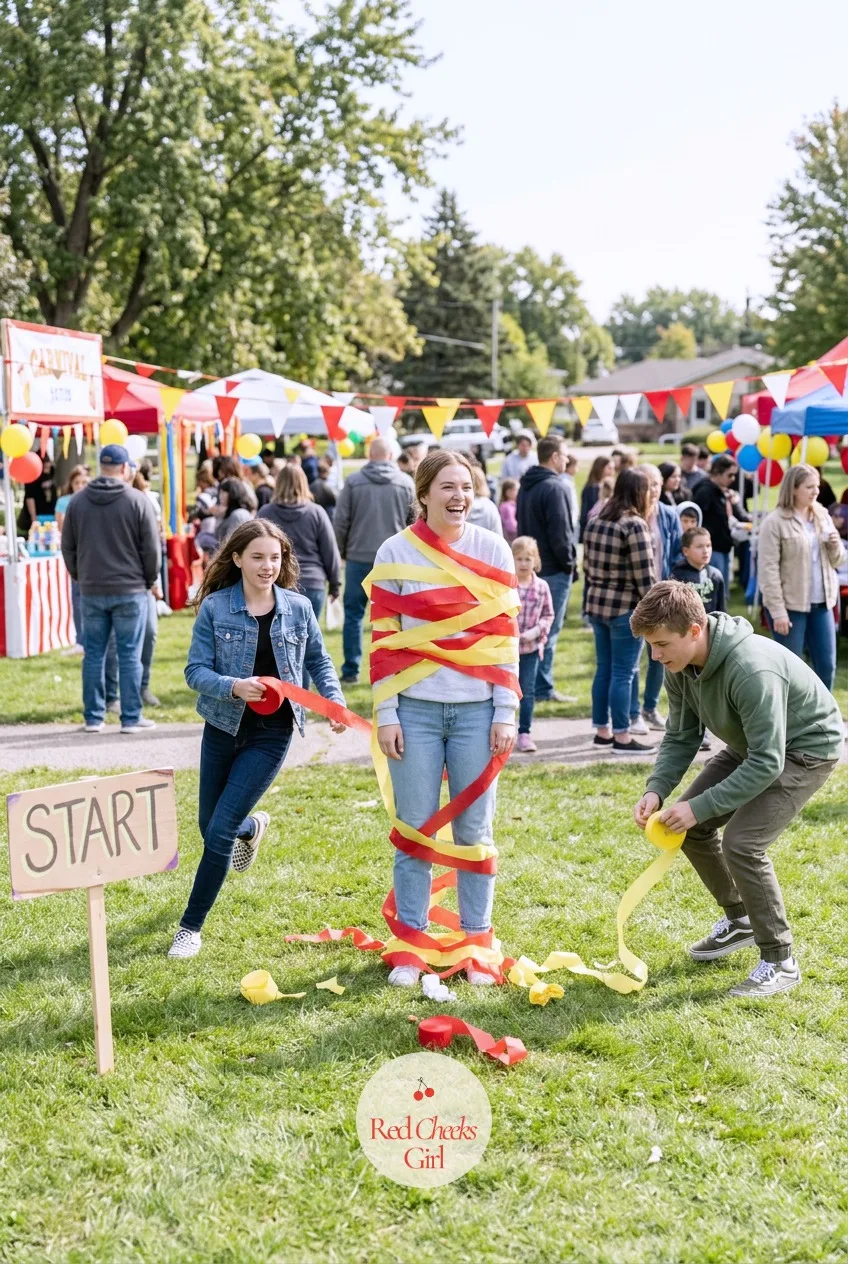
Wrap a Volunteer in Crepe Paper for the Streamer Relay
Teams of two or three race to wrap a standing volunteer head to toe in crepe paper before the roll runs out or the timer buzzes. Most fully wrapped team wins, and the winning mummy gets crowned on the spot with a silly paper hat.
Build the whole station from a few rolls of crepe paper streamer, a painted start and stop sign, and a stopwatch, nothing else needed. It’s one of the cheapest booths on the whole lawn to run.
Easier with a longer time limit, harder with one roll per team instead of two. Works best with teenage volunteers who don’t mind standing still while being decorated.
🛍 Shopping guide
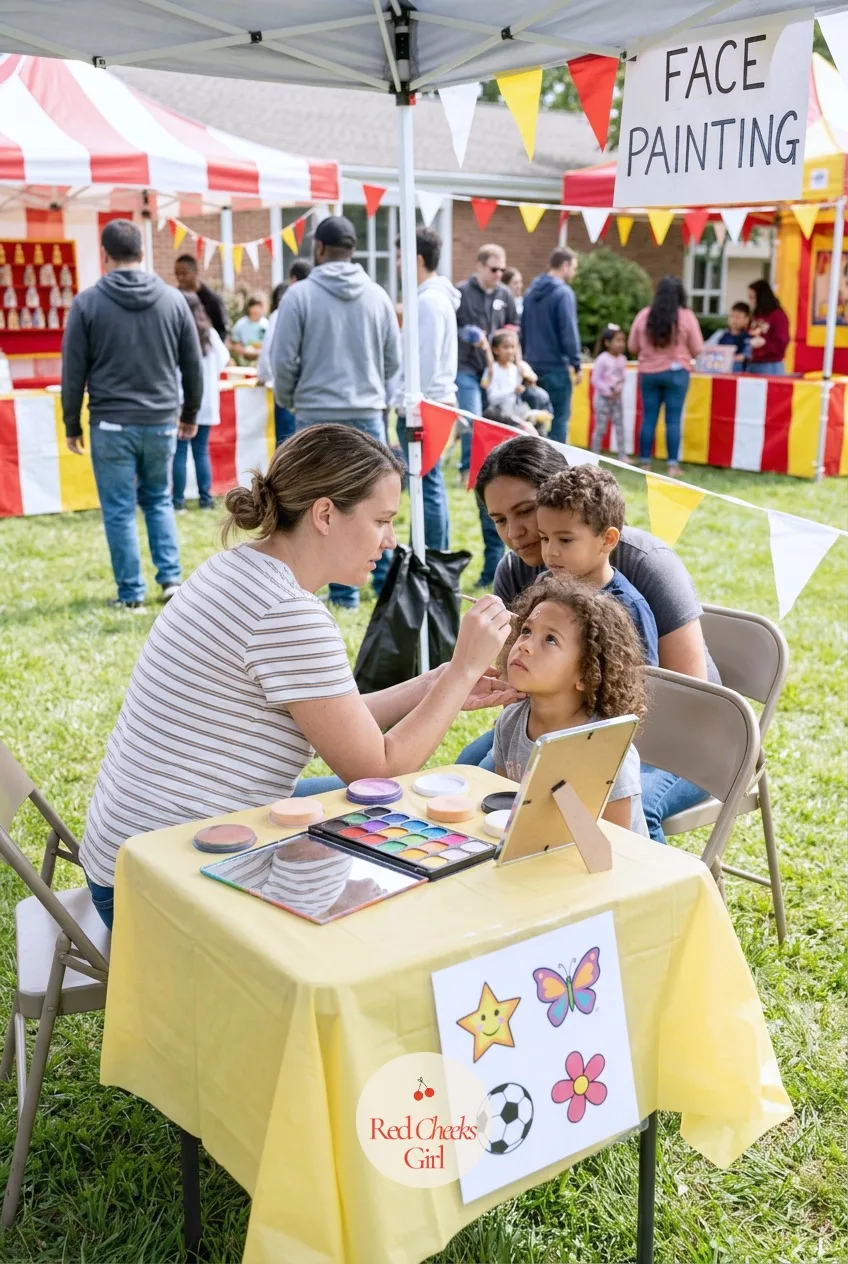
Set Up a Face Painting Table With Simple Stencils
A small table with a palette, a mirror and a menu of four or five quick designs keeps this line moving without anyone waiting more than a few minutes. Pick a design, sit still for two minutes, check it in the mirror on the way out.
Build from a folding table, a basic face paint kit, sponges, water cups, and a laminated card showing the exact designs on offer so nobody asks for anything that takes ten minutes to draw.
No trained painter on the team, swap in temporary carnival tattoos or glitter stickers instead and the line moves twice as fast with zero mess on the table.
🛍 Shopping guide
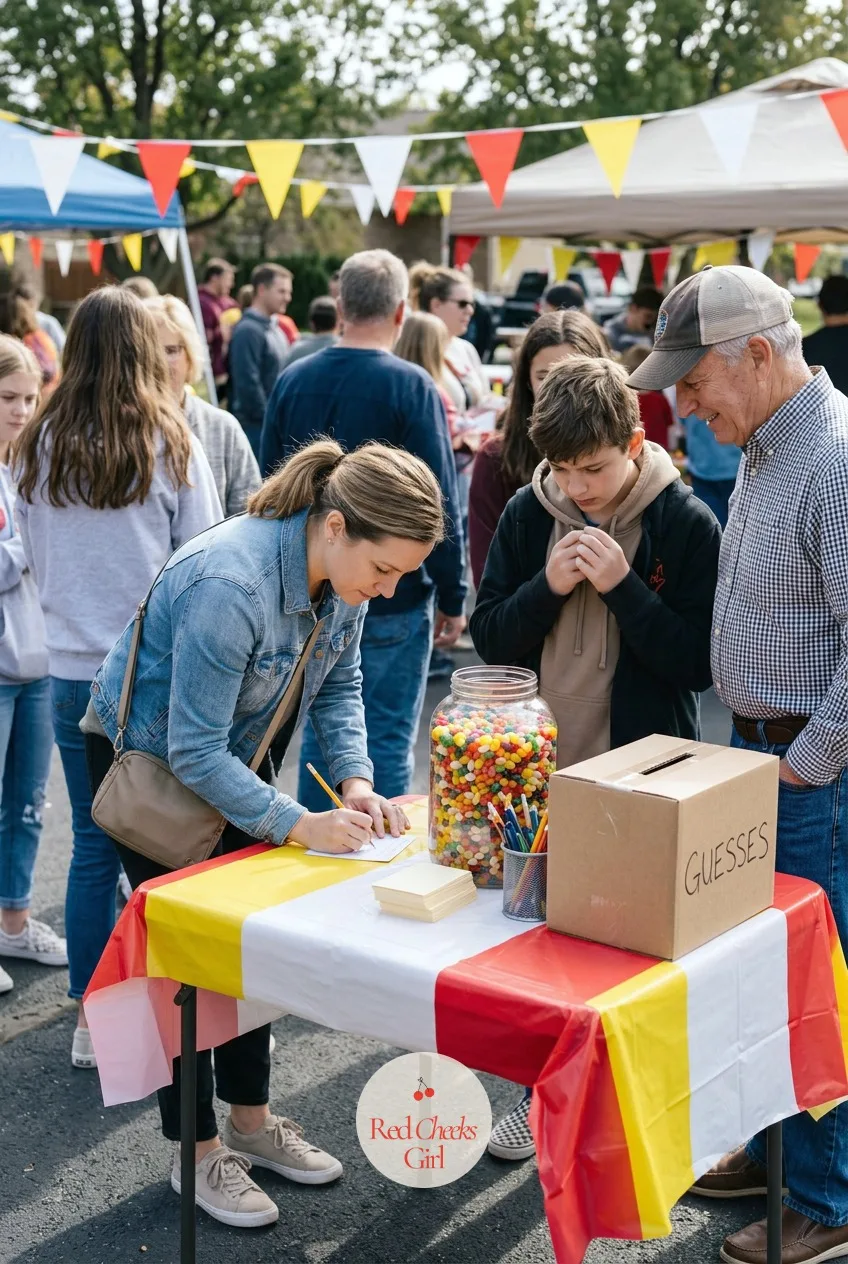
Fill a Big Jar for the Jellybean Guessing Game
One big jar of jellybeans sitting on a small table, a stack of guess cards beside it, and a winner announced at the very end of the day. Write a name and a number, drop the card in the box, closest guess without going over takes the jar home.
Build from a large clear jar, a counted batch of jellybeans logged ahead of time so the real total is known, small cards and pencils, and a sealed drop box to collect the guesses.
Works as an all-day, low-effort station since it needs no refereeing until the final count. No jellybeans on hand, a jar of wrapped mixed candy works exactly the same way.
🛍 Shopping guide
Paint a Backdrop Where Families Stop for a Photo
One painted scene standing on its own, a cutout window at just the right height, and families step in front to snap their own photo on the way out. It is the one booth on the whole lawn that does not need a volunteer at all.
Build from an exterior plywood sheet painted as a carnival scene with an arch or a cutout window, braced upright on a simple A-frame leg stand or staked to the lawn so it cannot tip, with bunting strung along the top edge.
No painting talent on the team, pin a bright printed vinyl banner across the same frame instead and get nearly the same effect in an afternoon.
🛍 Shopping guide
Frequently Asked Questions
How many volunteers does a church carnival need?
Plan for one volunteer running each booth plus a second person in reserve for breaks, since larger events often need forty or more people once setup and cleanup crews are counted.
How much should we budget for carnival prizes?
A common rule of thumb is roughly fifty to one hundred fifty dollars per booth for prizes, depending on how many kids are expected to come through the line.
How many booths should a small church carnival have?
Six to ten booths is plenty for a small to mid-size church event, enough variety to keep lines short without stretching the volunteer list too thin.
What are the best low-budget carnival games for kids?
Ring toss, duck ponds, cake walks and homemade cornhole-style knockdown booths are consistently named the easiest and cheapest games to set up for a church or community event.
What age range are church carnival games good for?
Most classic booths like the duck pond, cake walk and fishing booth work from toddler age through grade school, while sack races and tumble towers suit slightly older kids and teens.
How much does a full church carnival typically cost to run?
A scrappy, mostly homemade carnival can run under five hundred dollars in cash, while a mid-size event with rentals and catered concessions often lands between fifteen hundred and five thousand dollars.
21 gifts for mom sorted by budget and personality, from sentimental keepsakes to kitchen upgrades sh
18 gifts for hard to shop for men, sorted by what he actually does: recover, work, travel, stay warm
22 quiet luxury gifts for the friend who already has everything: timeless leather, gold tone jewelry
Leave a Reply