

18 Easter Egg Hunt Games That Make the Hunt Last Longer Than Five Minutes
Every family has lived the five minute hunt: eggs out at nine, yard cleared by nine oh four, and a toddler already asking what is next. The fix is not more eggs, it is more shapes of hunt stacked through the one morning.
What follows runs from the biggest yard-wide rounds down to the small indoor ones you can run from a sofa, with a grown-up round tucked in the middle for when the kids go in for snacks. Pick three or four, not all eighteen, and let the day build instead of ending flat.
Plastic eggs and a normal backyard are all any of this needs. No one is grading the lawn.
This post contains affiliate links. If you buy through them, I may earn a small commission at no extra cost to you.
Table of Contents
Go-Big Backyard Hunts
These want the whole yard, fence to fence, and they work best as the opening round while energy is still high. Mark zones loosely with ribbon or chalk and nobody needs a referee.
Run a Color Coded Hunt by Age Zone
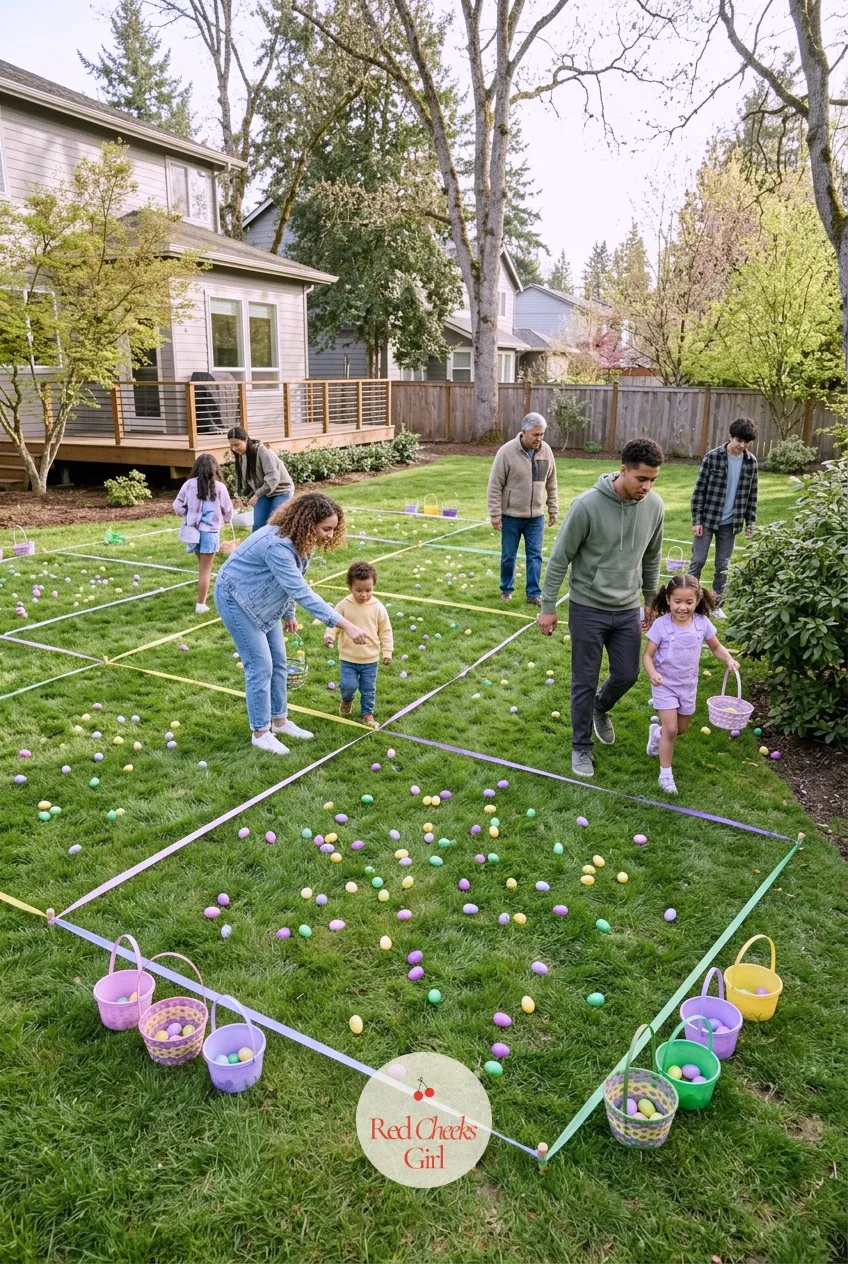
This is the one that stops a six year old and a sixteen month old from competing for the same egg. The whole yard splits into loose zones, patio for toddlers, lawn middle for school age, back fence for the big kids, each marked off with a strip of ribbon tied low between stakes.
Every child gets one egg color and one basket to match. Sort the eggs into colored bags before anyone arrives, then hide each color only inside its own zone, easy and low for the toddler zone, tucked into bushes and under pots further out.
It suits a mixed-age family gathering better than almost anything else on this list, and it works just as well on a small patio if you swap zones for rooms instead. No chalk or ribbon on hand, painter’s tape pressed flat along the grass edge does the same job.
When the host says go, each child hunts only their color inside their marked zone. The round ends once a zone is cleared, and the win is simply a full basket, no ranking needed.
For older siblings who find it too easy, send their color further out past the fence line; for a bigger menu of age-matched ideas, 20 Easter Egg Hunt Ideas for Kids has more to borrow from.
🛍 Shopping guide
Hide One Golden Egg for a Bonus Round
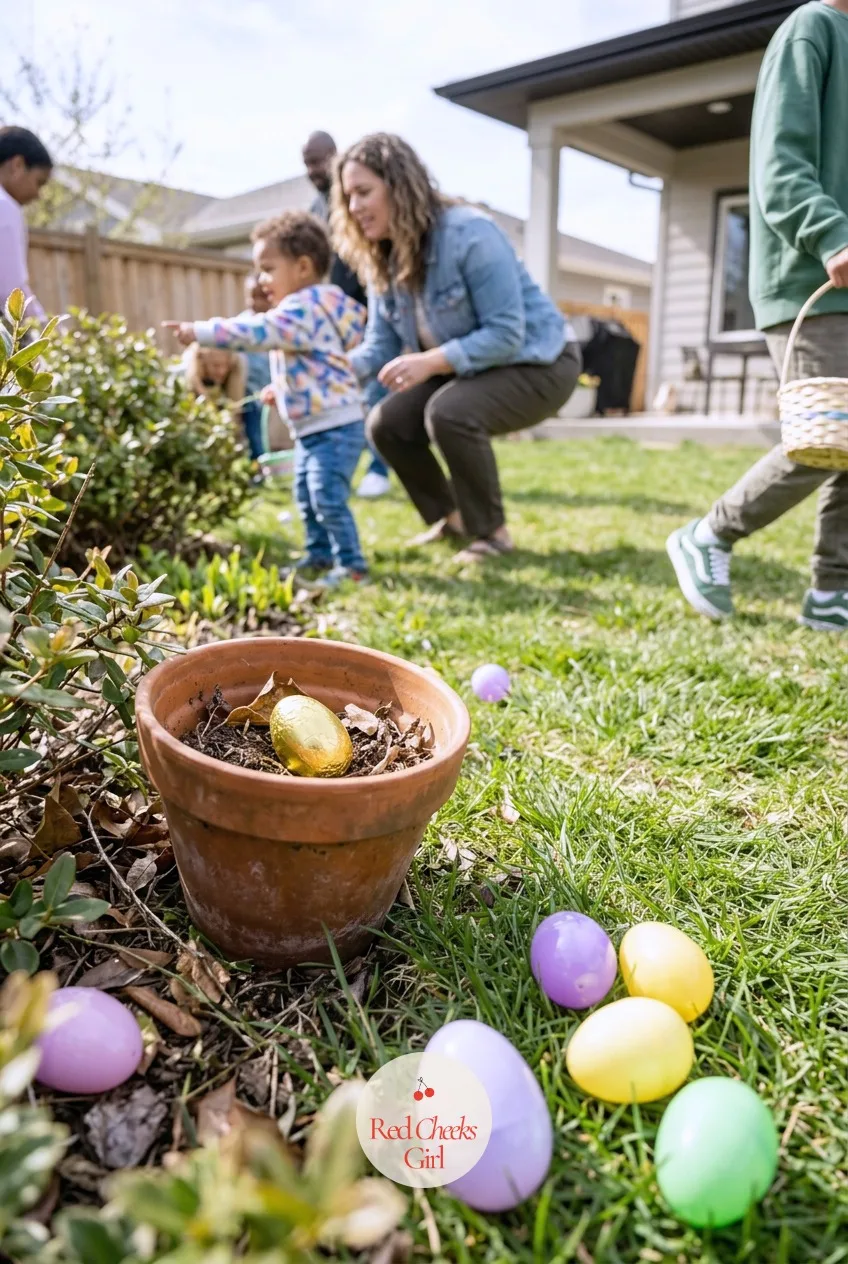
The main hunt wraps and the baskets look full, but there is still one egg left, gold, hidden somewhere nobody has checked yet. That gap between done and actually done is where this round lives, and it buys a good ten extra minutes of focus.
Spray-paint or gold-foil-wrap a single plastic egg and fill it with something worth the extra search, a bigger chocolate bunny, a five dollar bill, first pick of the dessert table. Hide it after the main hunt ends, somewhere harder than anywhere eggs went before, a planter, a tree fork, a mailbox.
Works for any size group and any age once kids can read a hint, and it costs almost nothing beyond a can of gold spray paint. No gold paint handy, a strip of gold ribbon tied around any plain egg reads just as well.
Announce the bonus round once the yard looks cleared and let everyone, including the grown-ups, search at once. The round ends the moment someone holds it up, and that one child takes the prize outright.
For younger groups, narrow the search to a single flower bed; for older kids, let the hiding spot be announced only as “somewhere off the ground.”
🛍 Shopping guide
Race in Teams for a Relay Egg Hunt
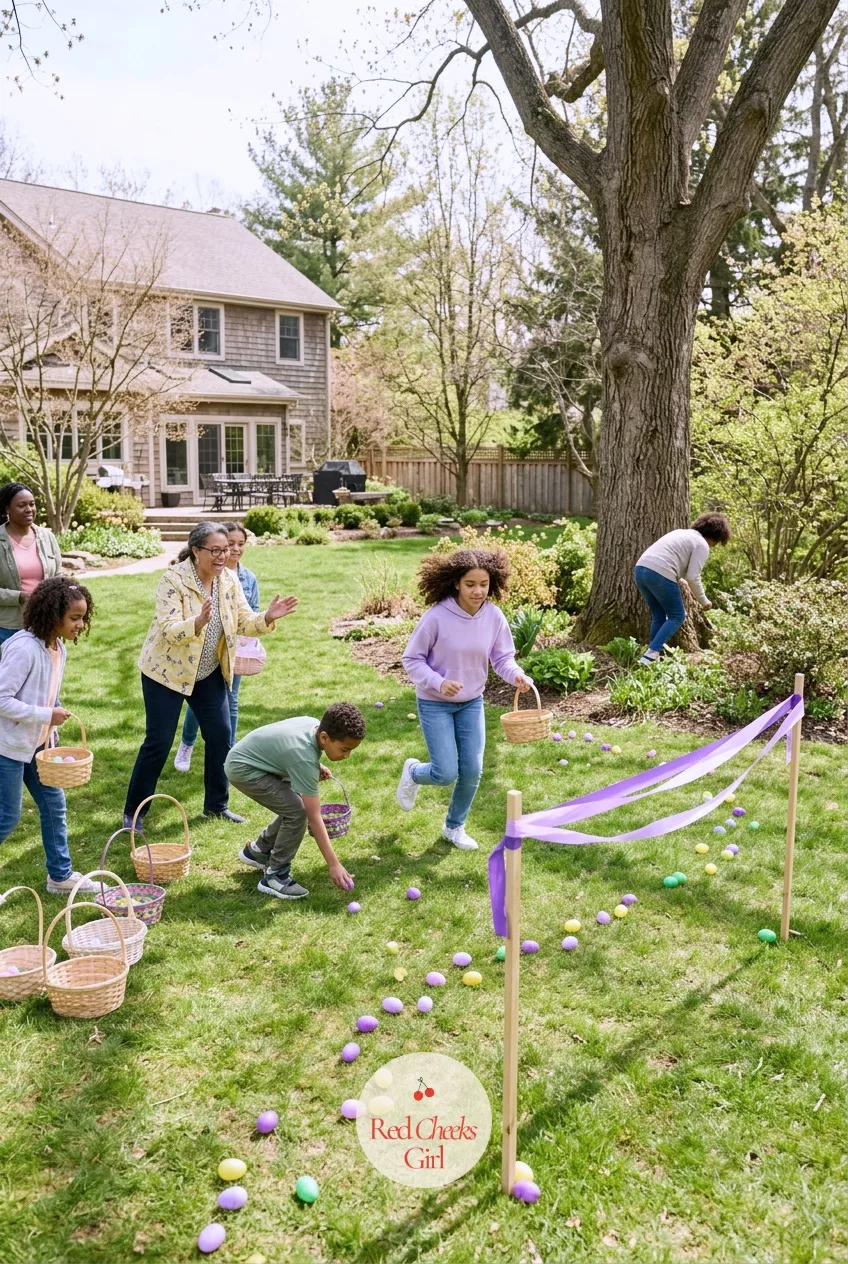
Split a bigger group into teams of two to four and this stops being a free-for-all and starts being a sport. It is the one that gets the grandparents clapping from the porch instead of just watching.
Mark a start line and a finish line across the lawn with ribbon tied between two stakes, give each team a basket in its own color, and scatter that team’s eggs across the course ahead. One runner goes at a time.
It needs more open ground than the zone hunt, so a long narrow side yard actually works better than a square one. No stakes on hand, two kitchen chairs holding the ribbon ends do the job just as well.
On “go,” the first runner sprints out, finds one egg in their team color, runs it back and tags the next teammate, who repeats until the team’s eggs are all collected.
The team that finishes first, or has the fullest basket when time is called, wins. Shorten the course for younger teams, or add a hop-only rule for older kids who find straight running too easy.
🛍 Shopping guide
Follow a Hand Drawn Yard Map to Find the Eggs
For the kid who has done five Easters of straight hunting, a map changes the whole feel of it, less chasing, more detective work. It is also the easiest way to slow down a child who usually finishes in ninety seconds flat.
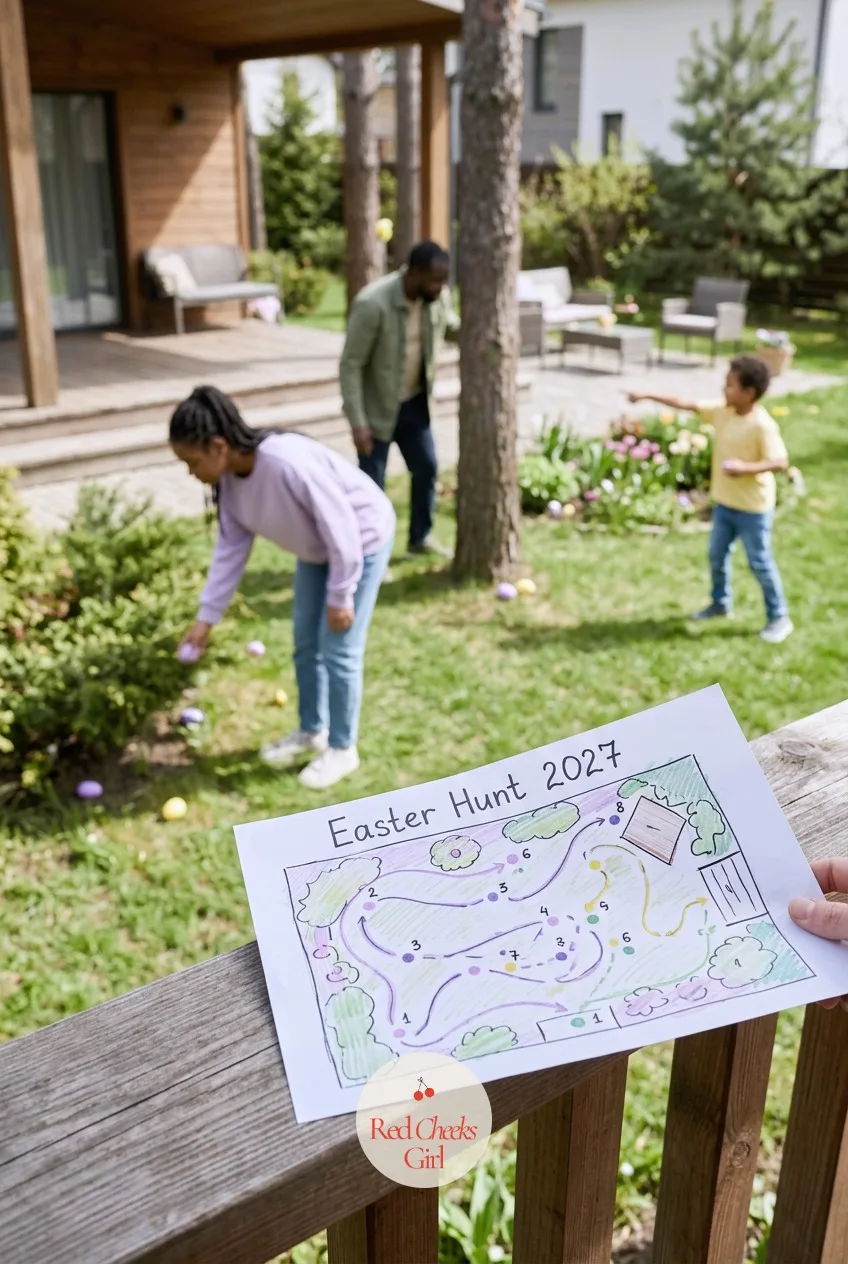
Sketch a rough outline of the yard on a sheet of paper, marking each hiding spot with a numbered dot, patio corner, under the oak, behind the shed. Clip it to a small board with a pencil so marks can be ticked off as spots are checked.
It suits kids who already read a little and want to feel ahead of the pace, and it needs nothing more complex than paper and a pencil. No clipboard around, any stiff piece of cardboard with a binder clip holds the map just as well.
Each child works their map alone or in a pair, crossing off numbers as they find the matching egg. The round ends when every number on the map is checked off, and whoever finishes their map first gets first pick from the prize basket. Make it harder by swapping numbers for simple symbols instead of digits.
🛍 Shopping guide
Challenge and Skill Hunts
Once the first basket is full, a straight hunt stops holding attention. These add one small rule, a spoon, a scale, a riddle, that turns finding eggs back into a game.
Open Puzzle Piece Eggs That Build to One Big Prize
Instead of a prize in every egg, the prize is what happens once all the eggs are open at once, a picture that only makes sense assembled. It turns the last five minutes of the hunt into the best part instead of the tired part.
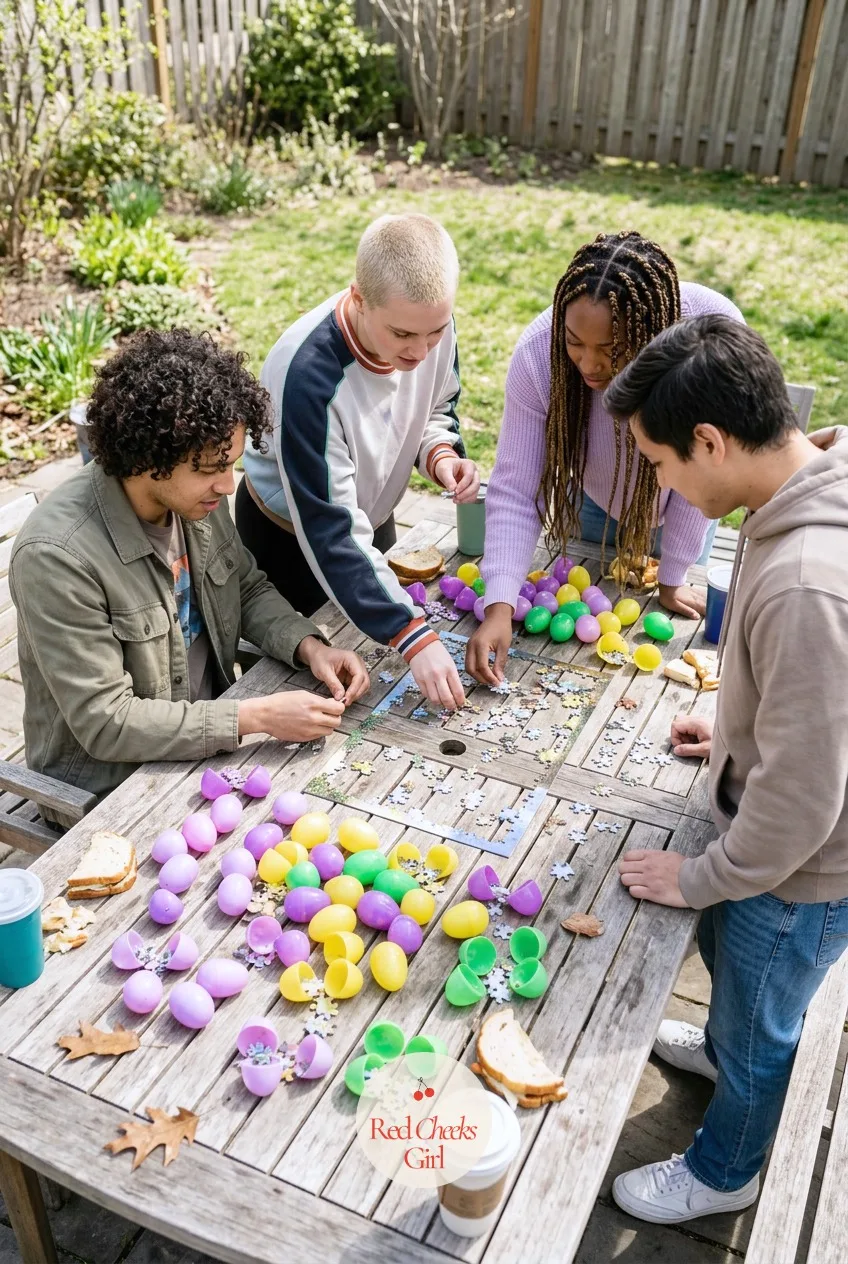
Cut a simple picture or word into six to ten jigsaw-style pieces, tuck one into each of a set of eggs, and hide those among the regular ones. A small table with a flat surface nearby is where the pieces get pieced together once found.
Works well for a slightly older group, six and up, who have the patience to fit pieces instead of just grabbing candy, and it costs nothing beyond cardstock and scissors. No time to cut a custom picture, a cheap children’s puzzle taken apart does the same job.
Kids hunt as normal, but once they spot a puzzle egg they bring the piece to the table instead of the basket.
The round ends when the picture is complete, and whoever places the final piece (or the group, if it is a shared puzzle) claims the prize it reveals. Split the pieces across two teams instead of one picture for a version that forces cooperation.
🛍 Shopping guide
Balance an Egg on a Spoon While You Hunt
This one slows down the fastest kid in the yard without anyone feeling singled out, because now everyone is fighting gravity, not just each other. Expect at least one dropped egg and a laugh, not a meltdown.
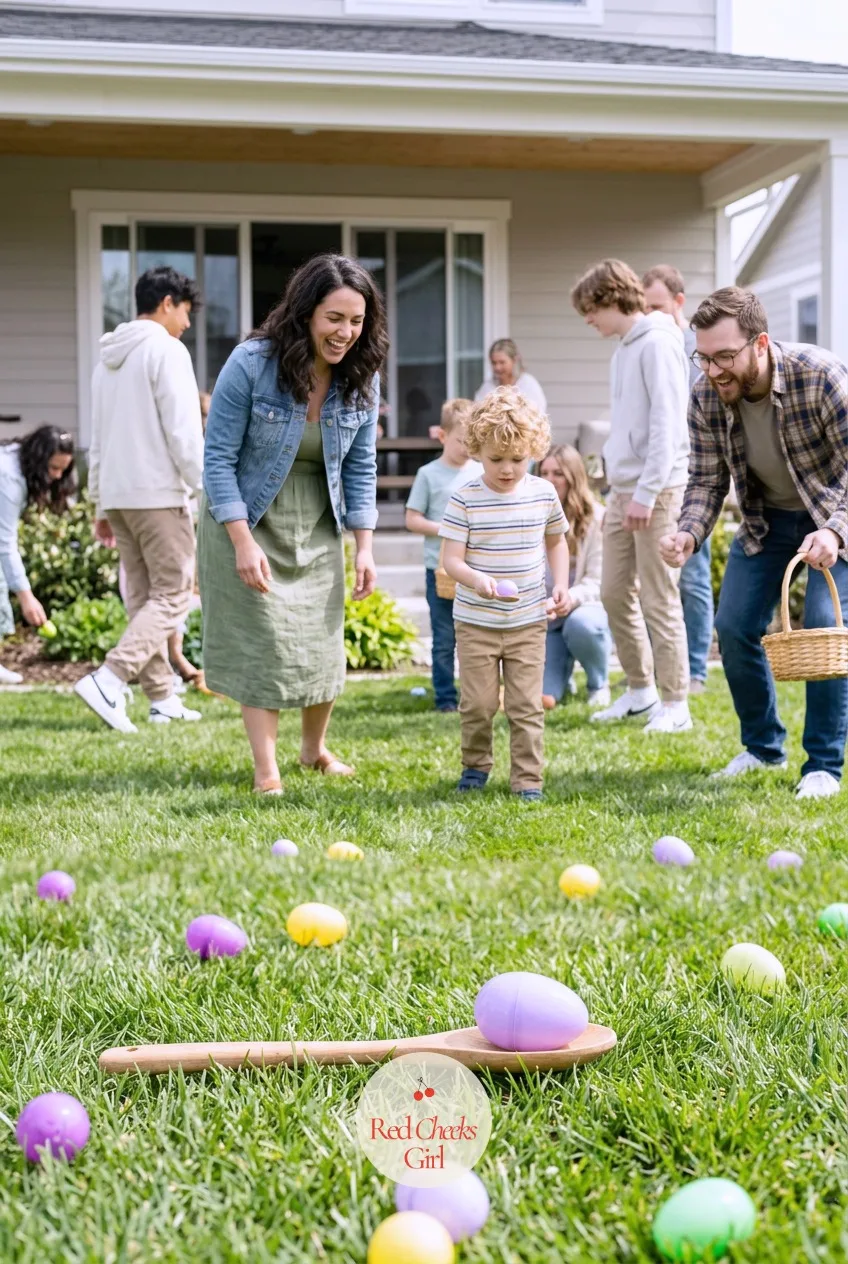
Hand each child a wooden spoon with one extra plastic egg already balanced on top. They hunt as normal, but if the spoon egg drops, they stop wherever they are and start the balance over before searching again.
Best on grass rather than pavement, since a dropped egg there does not roll far, and it suits kids old enough to manage both tasks at once, roughly five and up. No wooden spoons on hand, a flat wooden paint stirrer works nearly as well.
Set a time limit and let everyone hunt with their spoon egg balanced the whole time. When time is called, the child with the fullest basket and the fewest drops wins. Make it easier with a wider serving spoon, or harder by filling the balanced egg with a little sand for weight.
🛍 Shopping guide
Set a Basket Weight Limit to Turn the Hunt Into a Strategy Game
Give an eight year old an unlimited basket and they will grab every egg in sight without a second thought. Give them a weight limit and suddenly they are weighing options, literally, before every pickup.
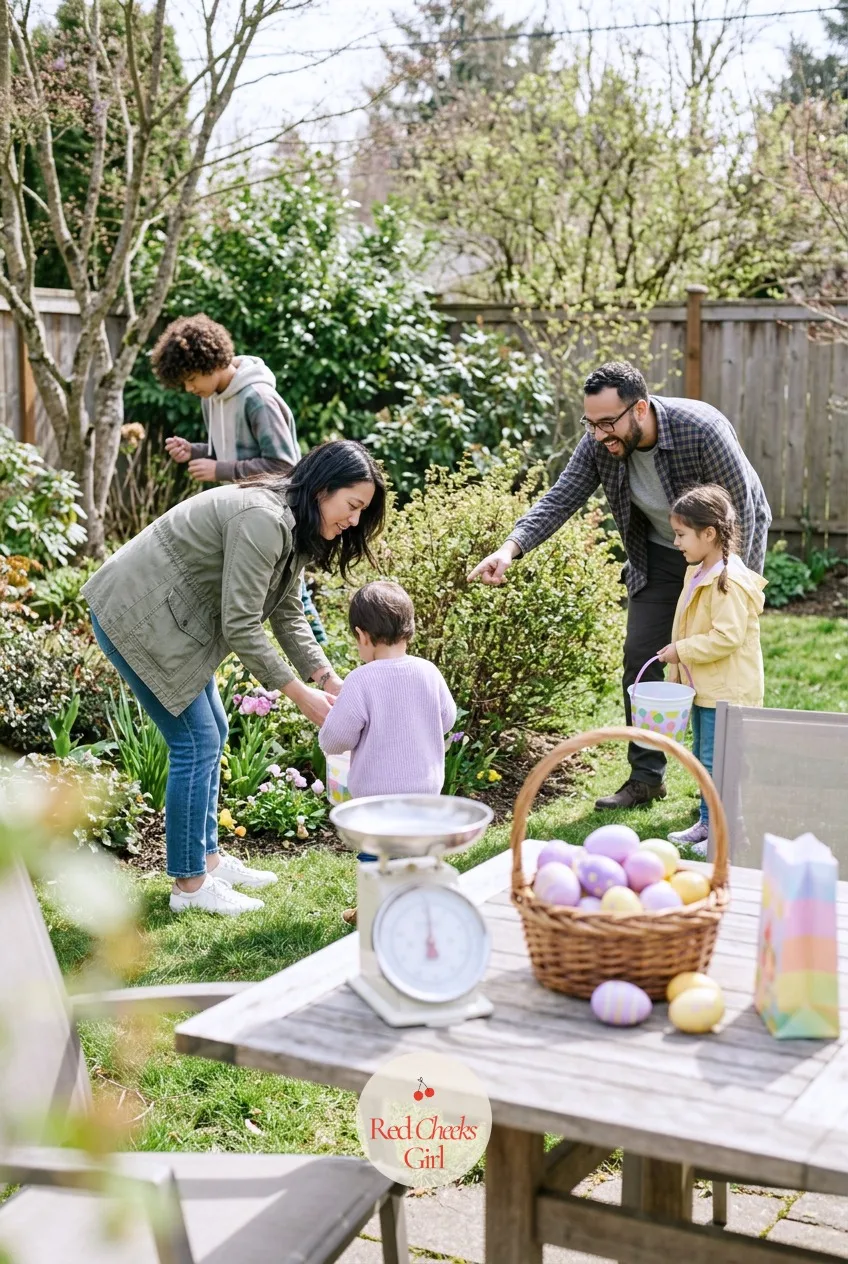
Set a small kitchen scale at a base camp table near the yard. Mix in a handful of heavier eggs filled with bigger prizes among the regular lighter ones. Once a basket hits its limit, the only way to add a heavy egg is to put a lighter one back.
This suits kids around seven and up who enjoy a bit of math under pressure, and it works in any yard size since the challenge is at the table, not the terrain. No digital scale around, a simple kitchen measuring cup swapped for “count” instead of weight works almost as well.
Hunt as normal with a time limit, swapping eggs at the scale whenever the basket maxes out. When time is called, the winner is decided by total prize value inside the basket, not egg count, so a basket of five heavy eggs can beat one of fifteen light ones.
Raise the weight limit for an easier round, or make heavier eggs worth double for a harder one.
🛍 Shopping guide
Solve Riddle Clues That Lead Egg to Egg
No egg here holds the prize directly, it holds the next clue, so the hunt becomes a trail rather than a scatter. It is the version that keeps a bored nine year old interested long after the little ones have lost steam.
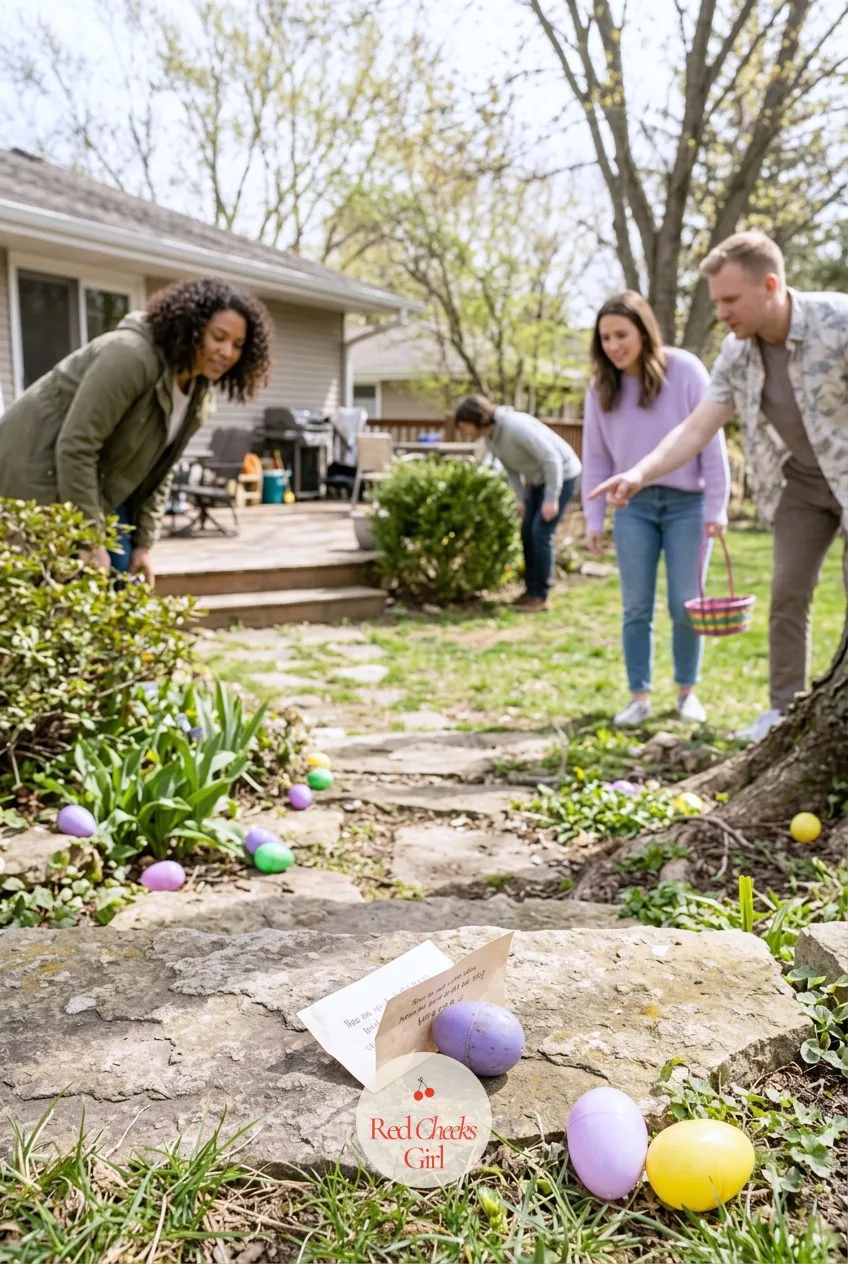
Write a short rhyming clue for each hiding spot, tuck the first one in plain sight at the start, and leave one inside every egg along the chain leading to the next spot. The final egg holds the actual prize.
Works best for readers, so aim it at kids seven and older or pair a younger reader with a grown-up. No time to write rhymes, a simple picture clue (a drawing of the mailbox, the swing) does the job for younger solvers.
Players read the clue, find the matching spot, open the egg and read the next one, continuing until the final egg is found. First to the last clue wins whatever that egg holds. For an easier round use picture clues throughout; for a harder one, make every clue rhyme and give no other hints.
🛍 Shopping guide
The Grown-Up and Teen Hunt
Send the kids in for juice and this is where the adults get their turn, with harder hiding spots and prizes that are not candy.
Challenge the Grown Ups With a Harder Hiding Hunt
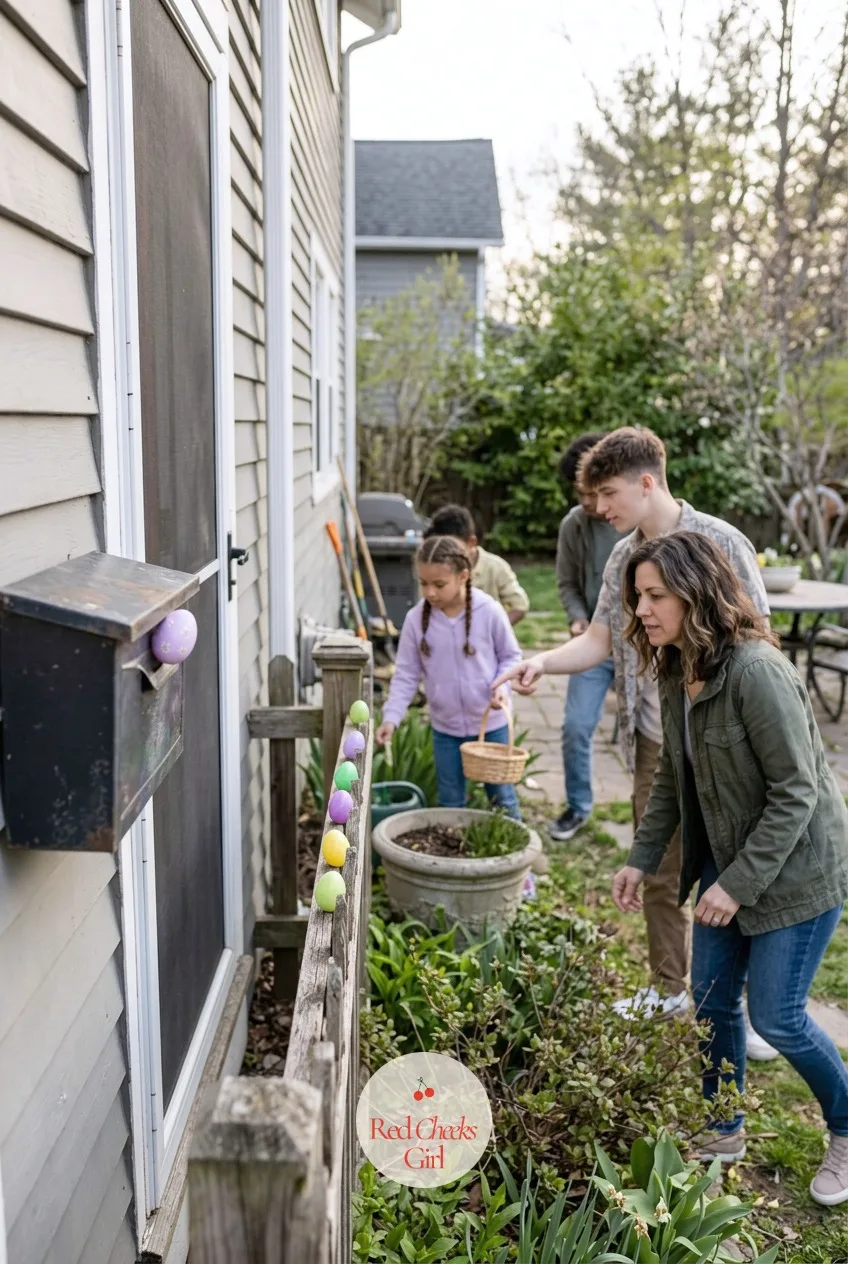
Send the kids in for snacks and this is where the adults, who have been setting up all morning, finally get a turn. Hide the eggs properly this time, not toddler-level obvious, and watch grown adults crouch behind a shed with real focus.
Use the hardest spots in the yard, tucked into a mailbox slot, balanced along a fence rail, wedged behind a hose reel. Fill the eggs with things that actually interest adults, a mini bottle, a scratch ticket, a folded five, a dare written on a slip of paper.
It suits a backyard with mature landscaping or a few built-in nooks, a flat empty lawn makes this round too easy. No tricky spots in a small yard, raise the bar instead by giving everyone only sixty seconds.
Set a ten minute timer and let the adults loose, solo or in pairs. The round ends at the timer, and whoever collected the highest total prize value wins first pick of the host’s good bottle of wine.
For more rounds built just for the grown-ups, 18 Easter Games for Adults That Are Not Just for the Kids has a full set.
🛍 Shopping guide
Swap Candy Eggs for Raffle Tickets in a Cash Hunt
Nobody over eighteen gets genuinely excited about finding another chocolate egg, but a ticket with a shot at real money changes the room’s energy completely. This is the round that gets loud.
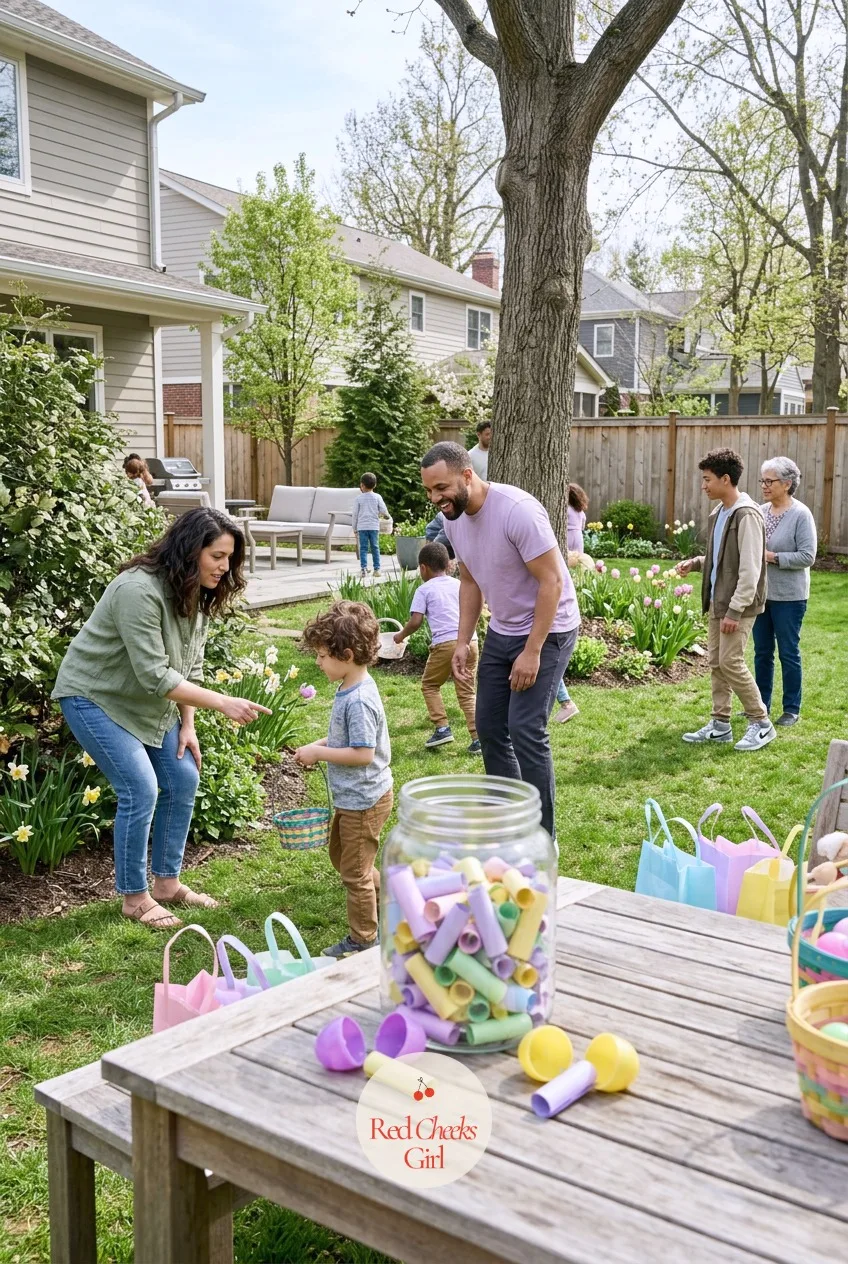
Fill a set of plastic eggs with rolled paper raffle tickets instead of candy, numbered so they match a drawing jar set out on the drinks table. Each ticket found goes straight into a personal pile, not pooled, so tracking stays simple.
Works well for a mixed group of teens and adults at a bigger family Easter, and it needs almost nothing beyond a ticket roll and a jar. No ticket roll handy, folded index cards with numbers written on work just as well.
Everyone hunts for a set time, collecting as many ticket eggs as they find. Once time is up, the host draws matching numbers from the jar for a cash prize or gift card, and whoever holds the drawn ticket wins.
Guarantee every player at least one ticket for a fairer easier version, or hide the tickets separately from the eggs for a harder one.
🛍 Shopping guide
Pair Up for a Blindfolded Egg Hunt
This is the round people talk about after the party is over, because watching a grown man get directed around a lawn by his teenager shouting “colder, colder, warmer” is genuinely funny. Keep it to a cleared patch of lawn, nothing to trip on.
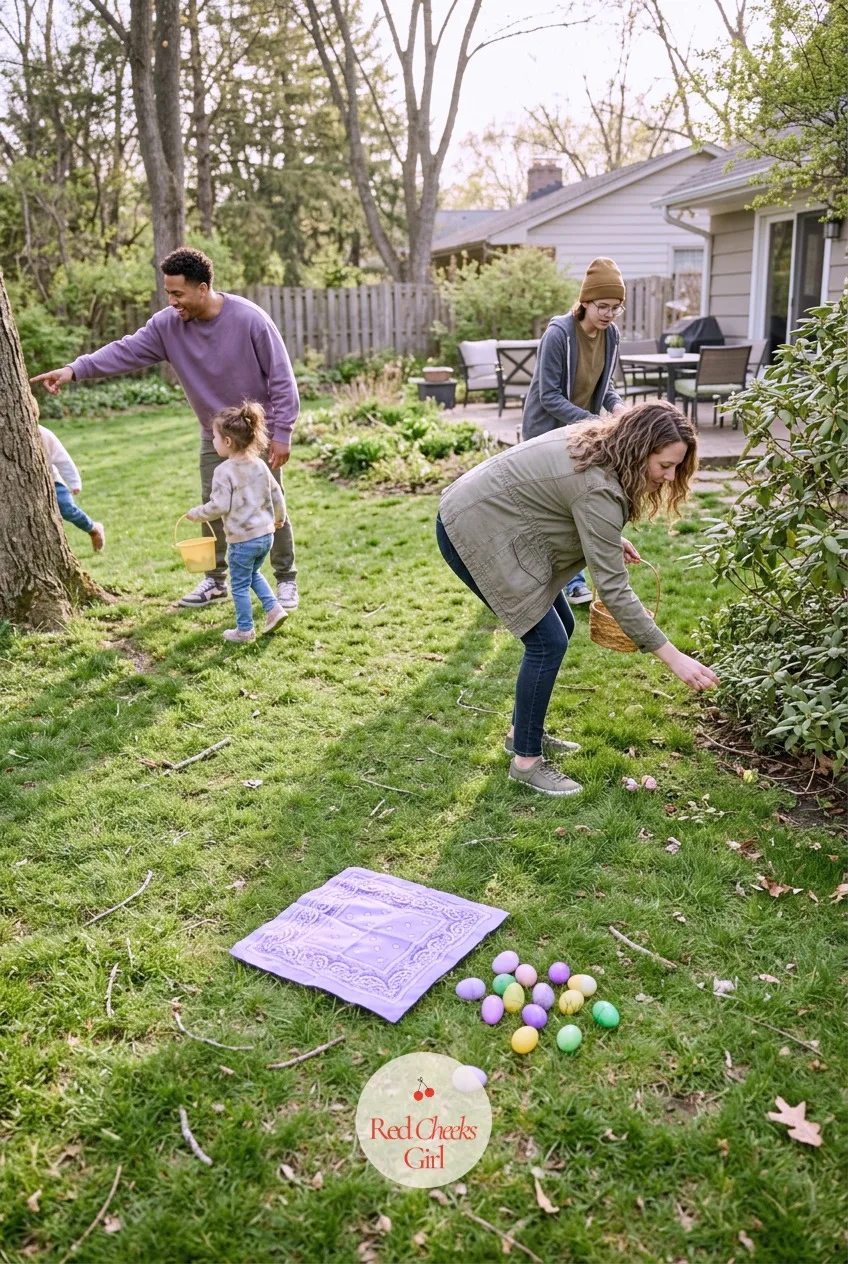
One partner wears a bandana blindfold while the other calls out directions from a few steps away, hot or cold, left or right, never touching. A handful of eggs sit loosely scattered across a safe, flat section of grass beforehand.
Best for teens and adults who can laugh at themselves, and it needs a cleared, obstacle-free patch rather than a full yard. No bandana on hand, a clean dish towel tied around the eyes works just the same.
Pairs swap blindfold duty each round, and whichever pair collects the most eggs across two or three rounds wins. Round ends once the patch is cleared. For an easier version let the guiding partner rest a hand on the blindfolded one’s shoulder; for chaos, run two pairs in the same patch at once.
🛍 Shopping guide
After-Dark Hunt
Once the sun drops, swap the eggs instead of ending the day. This is the round teenagers actually ask for again.
Switch to Glow in the Dark Eggs Once the Sun Sets
Just when the regular hunt feels used up for the day, the light drops and the whole thing starts over, with everyone, kids and grown-ups, out on the same dark lawn together. It is the round that actually gets requested again next year.
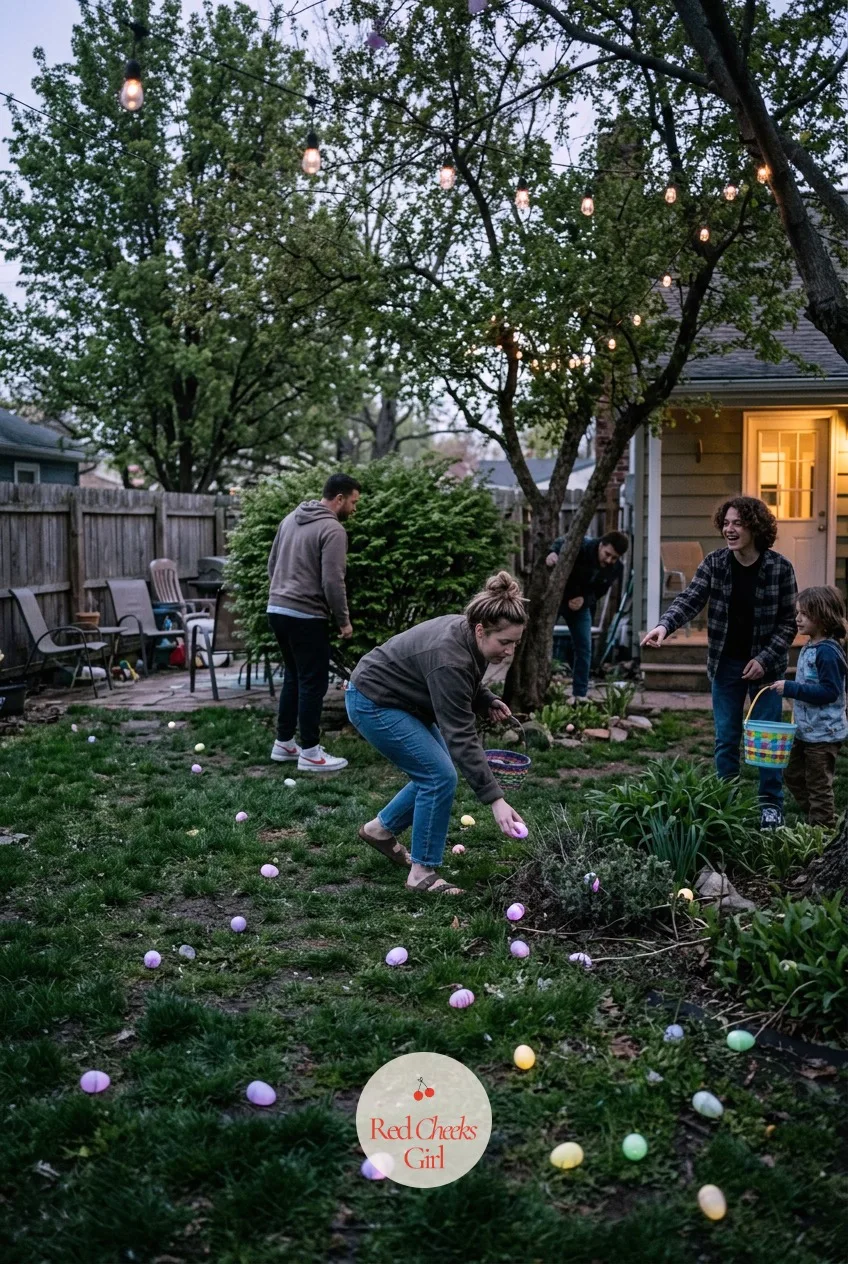
Charge glow-in-the-dark plastic eggs under a bright lamp for a few minutes before dusk so they hold their glow, or tuck a cracked glow stick inside clear eggs instead. String a few solar or battery fairy lights along the fence for just enough ambient light to walk by.
Suits any backyard once the sun is down, and it is the one round that genuinely works for teens who think they have outgrown egg hunts. No glow eggs on hand, glow bracelets dropped into clear plastic eggs do nearly the same job.
Everyone hunts together once full dark falls, with a set time limit or until the yard is clear. Most eggs collected wins. Keep the porch light on for an easier round with younger kids mixed in, or switch off every exterior light for the hardest version.
🛍 Shopping guide
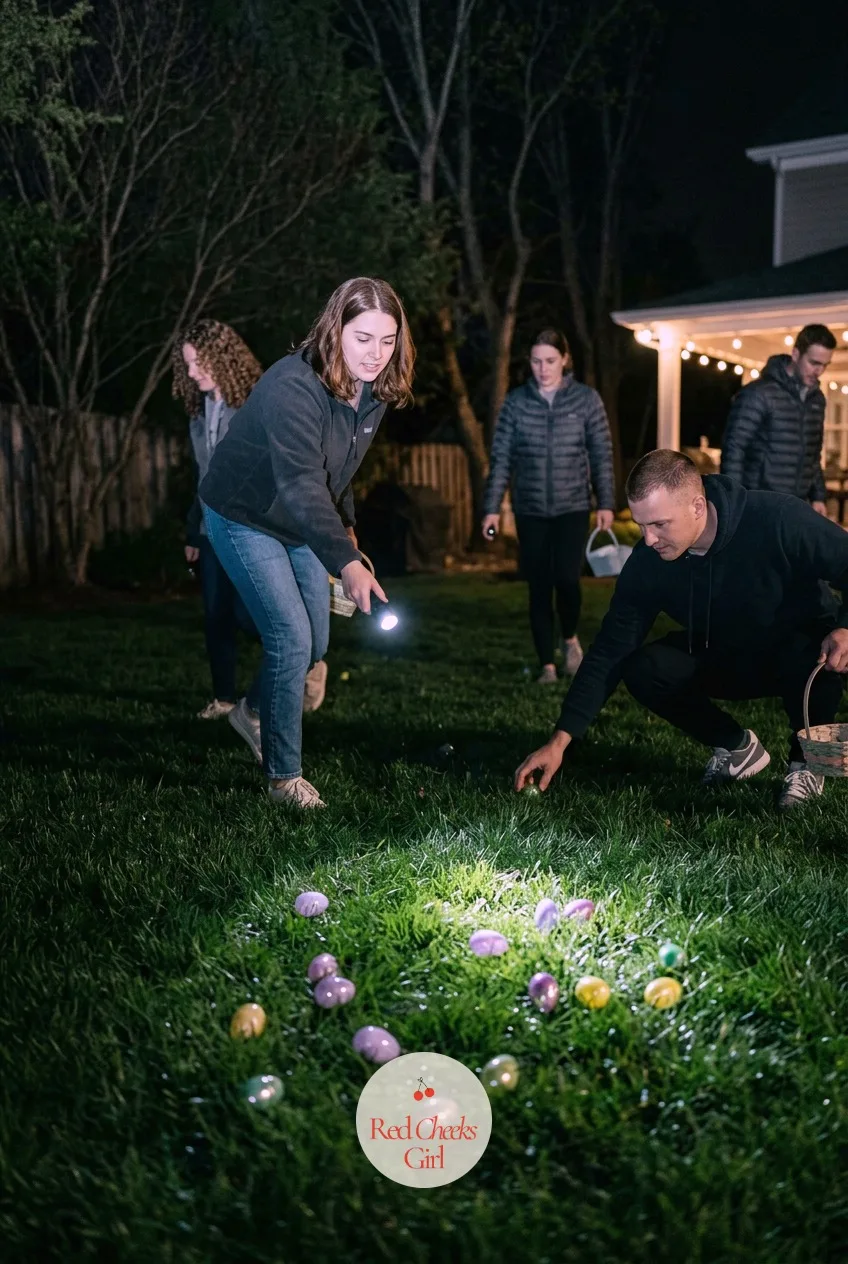
Hand Out Flashlights for a Beam Only Hunt
No porch light, no fairy lights, just a flashlight beam cutting through dark grass, which turns a simple hunt into something closer to a search mission. Kids take this one far more seriously than the daylight version.
Wrap a strip of reflective tape around each egg so it catches light instead of staying flat and dull. Turn off every outdoor light and let the yard go properly dark before handing out one flashlight per child or per pair.
Works in any yard with a flat, obstacle-free lawn, and it suits kids old enough to handle a flashlight responsibly, six and up. No reflective tape, a dab of white or silver paint on each egg catches the beam almost as well.
Set a short timer, two to three minutes works well, and let everyone sweep the lawn with their beam. Whoever has the fullest basket when the timer rings wins. Shrink the lit search area for an easier round, or make two children share a single flashlight for a harder one.
🛍 Shopping guide
Small-Space and Indoor Hunts
No yard, bad weather, or just a smaller crew: these fit one room and still feel like a proper hunt, not a consolation prize.
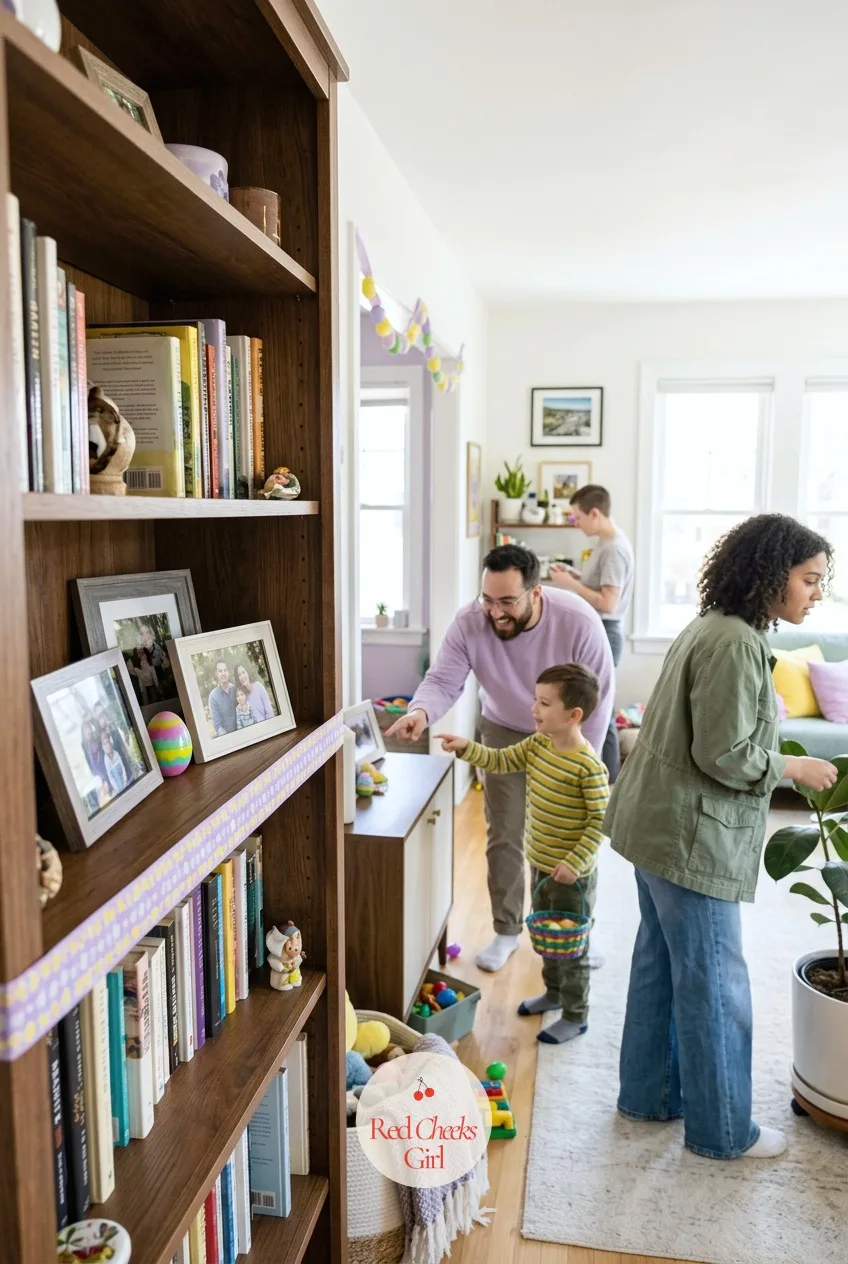
String a Ribbon Trail Through the Living Room
Rain changes the whole plan, but it does not have to shrink the fun, it just moves it indoors along a trail taped room to room. Following a ribbon feels like an adventure even inside four walls.
Tape a length of ribbon low along furniture edges, baseboards and shelf fronts, winding it from the front hall through to the living room. Tuck a small egg every few feet along the way, tied loosely to the ribbon or sitting right beside it.
Perfect for a smaller indoor gathering or a rainy backup plan, and it needs almost nothing beyond ribbon and tape. No ribbon on hand, a length of yarn taped down works exactly the same.
Players follow the ribbon from end to end, collecting an egg at each stop along the way. The hunt ends at the final knot, which holds a slightly bigger bonus egg.
First to reach the end claims it. Keep the trail to one straight room for an easier round, or send it branching through two or three rooms for a harder one.
🛍 Shopping guide
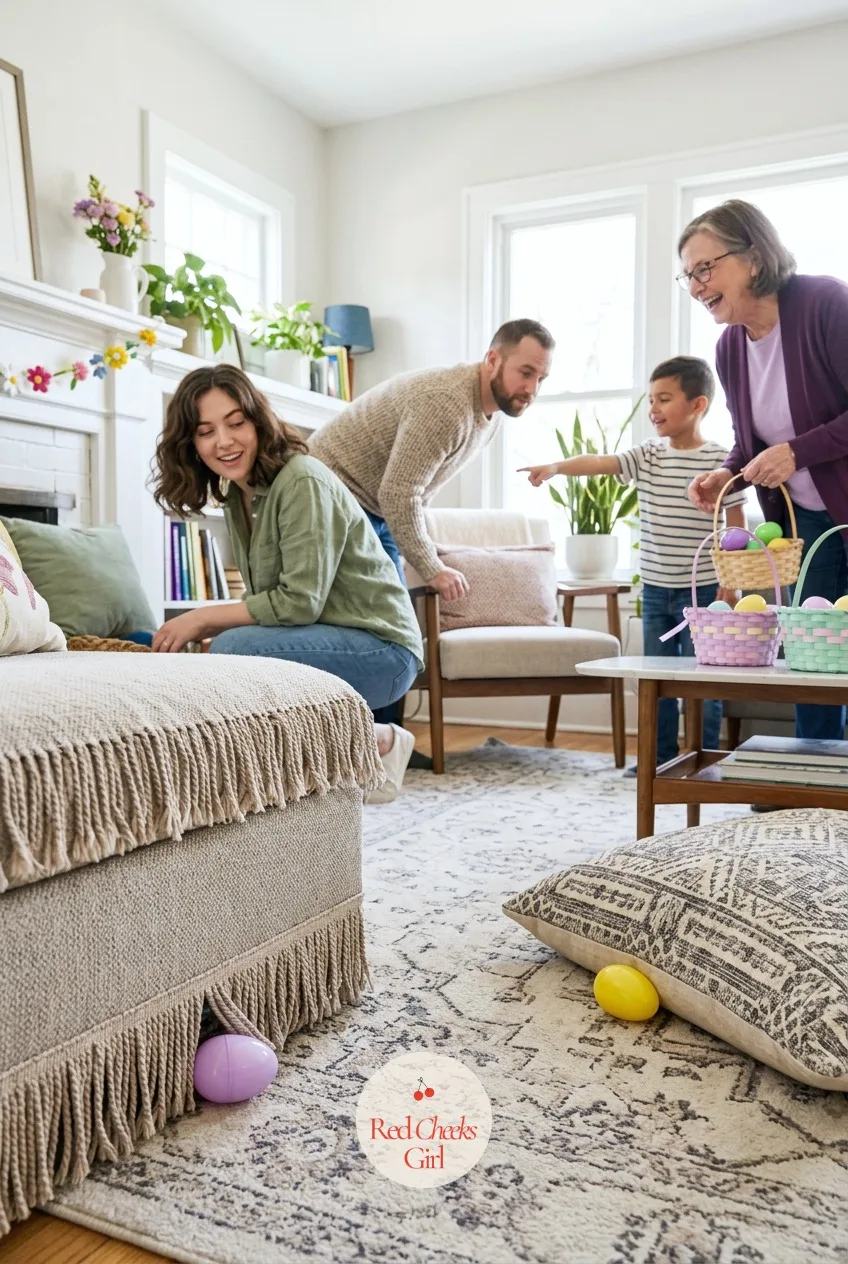
Send Everyone Under the Furniture for a Rainy Day Hunt
When the backyard plan gets rained out an hour before guests arrive, this is the hunt that saves the morning without anyone noticing the switch. It uses the house you already have, nothing more.
Tuck eggs under couch cushions, behind curtain folds, inside a shoe shelf, along the base of a bookcase, anywhere low and safe that does not need climbing or opening a drawer. Keep the whole hunt confined to one or two main rooms.
Good for any size living room or den, and it works as a genuine backup for the backyard rounds higher up this list if weather turns. No obvious under-furniture spots, add a few eggs in plain sight on low shelves to pad the count.
Set a time limit covering the whole floor and let everyone search at once. When time is called, most eggs found wins. Keep eggs fully visible at floor level for an easier toddler-friendly round, or tuck a few behind books on a shelf for a harder one.
For more rain-day backups that need no setup at all, 20 Easy Easter Games That Need Zero Prep is worth keeping on hand.
🛍 Shopping guide
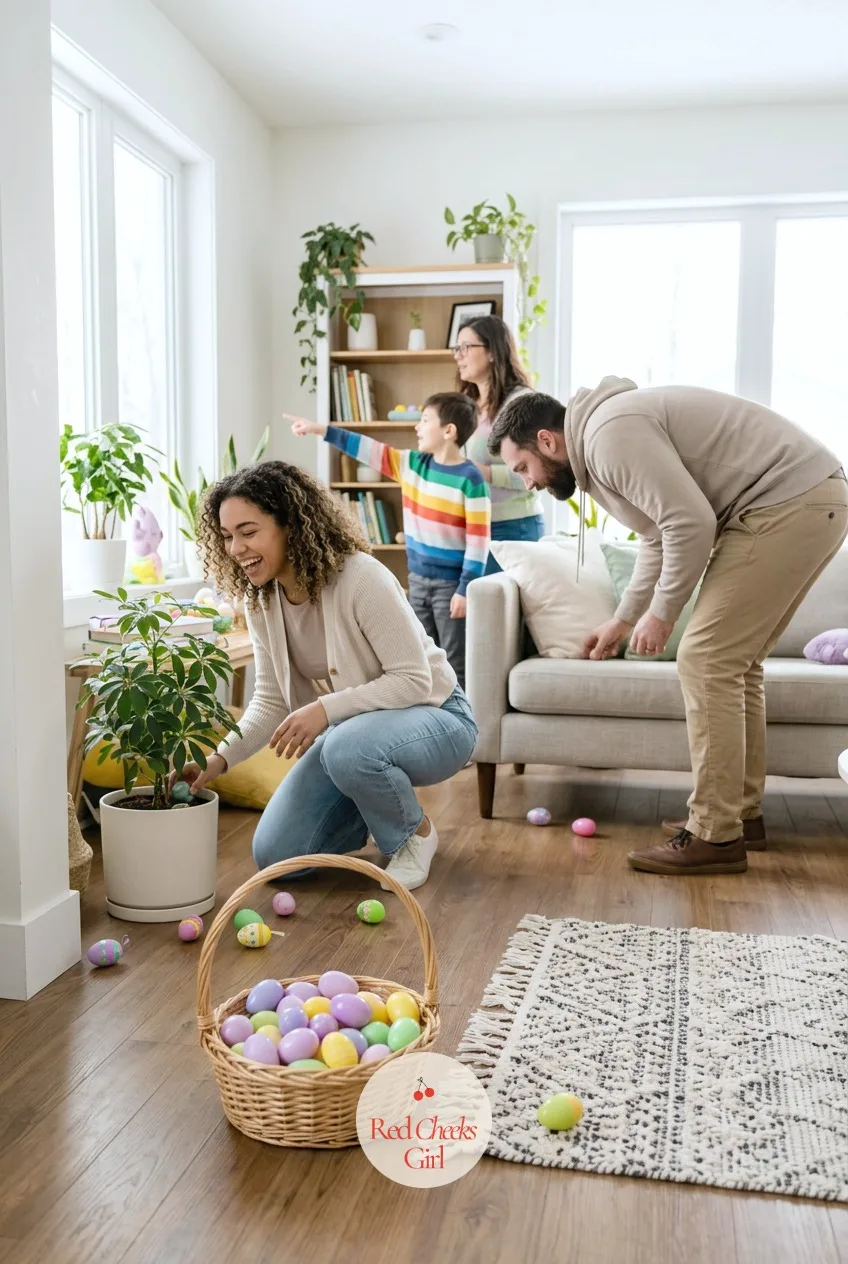
Place Full Baskets Around the Room for a Toddler Hunt
A real hunt asks too much of a toddler who still falls over on flat ground, so this version skips the hiding part entirely and keeps all the fun. Nobody cries over an empty basket here.
Set out three or four small decorative baskets already filled with a few large, easy-open eggs, placed at toddler eye level around one room, on a low stool, a windowsill, the bottom stair step. Nothing is tucked away or hard to spot.
Works best for the two to four age range at any family gathering, and a parent walking alongside makes it twice as fun. No small decorative baskets on hand, shallow bowls work just as well and are easier for little hands to reach into.
The toddler simply walks the room, moving eggs from each stop into their own basket, with a grown-up narrating along the way. The round ends once every stop basket is empty, and every toddler wins just by finishing. Space the baskets closer together for an easier round, or spread them further apart to encourage more walking.
Beat the Kitchen Timer in a Speed Hunt
For the last five minutes before everyone sits down to lunch, this is the quick burst that uses up remaining energy without dragging the day out longer. It is over almost as fast as it starts, which is the entire point.
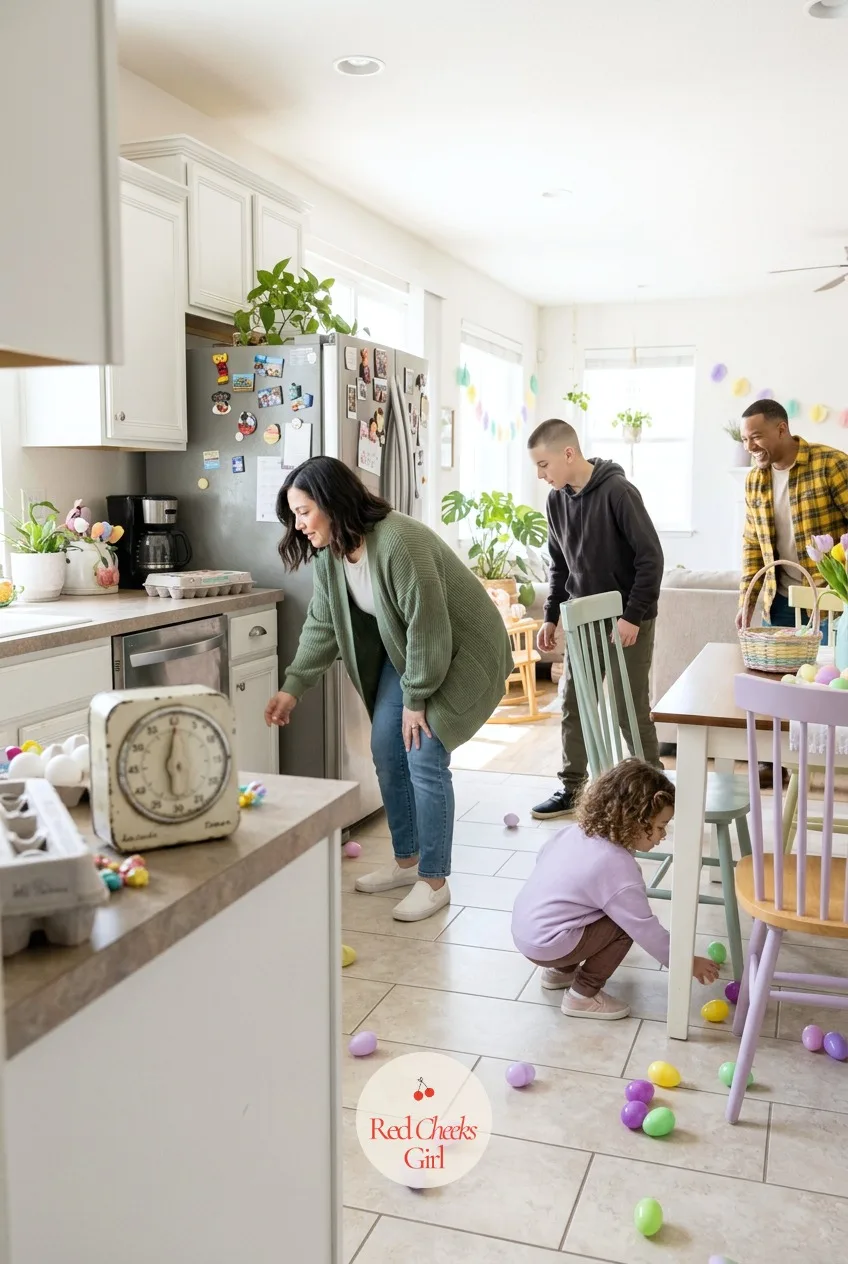
Scatter a handful of eggs across one small room, the kitchen or den works well, nothing hidden, just placed around at different heights. Set a classic wind-up kitchen timer for sixty to ninety seconds on the counter where everyone can see it ticking down.
Suits any age once a child can move quickly and safely indoors, and it needs only a timer and a basket. No wind-up timer handy, a phone timer with the sound on works just as well.
Start the timer and let everyone grab eggs as fast as they can. When the timer rings, the hunt stops instantly wherever hands are, and whoever has the most eggs wins. Extend the time for a gentler round with younger kids, or add a one-foot-hop rule for older ones who find straight grabbing too easy.
Match Older and Younger Siblings for a Teamwork Hunt
The usual sibling complaint, that the big one always finds more, disappears the moment they are sharing one basket instead of competing for the same eggs. This closes the day on a cooperative note rather than a competitive one.
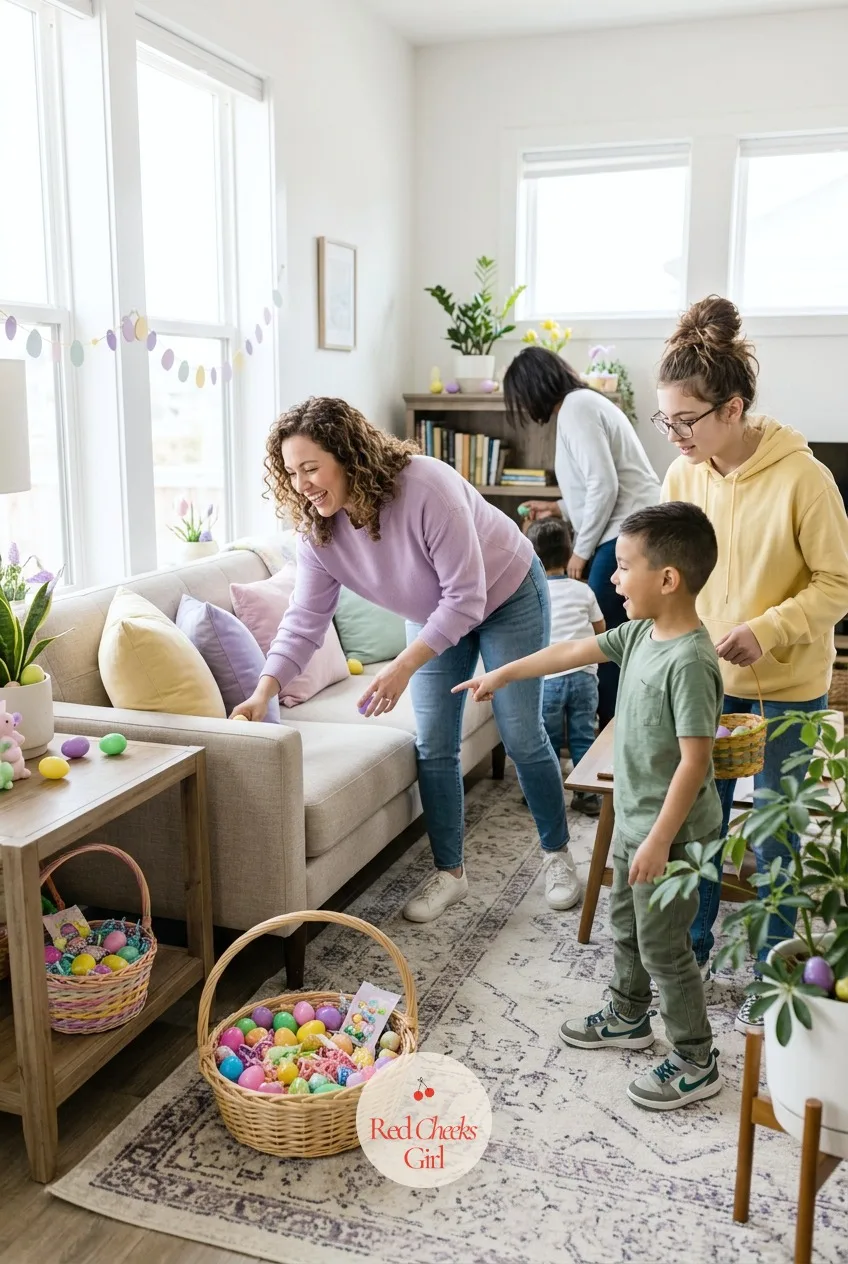
Pair an older and younger sibling with a single shared basket, then hide eggs at mixed heights through one small room, low ones a toddler can reach, a few higher up that need the older sibling’s help. One egg can even be tucked somewhere that genuinely takes both of them to lift down together.
Works well as a closing round once the bigger hunts are done and everyone is winding down, and it needs nothing beyond one room and a shared basket per pair. No obvious height split available, assign the older sibling to spot and the younger one to grab instead.
Pairs search the room together, with the older sibling pointing out hard-to-see eggs and the younger one doing the actual collecting. The hunt ends when the room is cleared, and the pair with the fullest shared basket splits a treat. Keep every egg at low height for an easier round, or add that one two-person egg for a harder one.
Frequently Asked Questions
How many eggs do you need per child for an egg hunt?
Toddlers can work with fewer, closer to six, while a bigger yard with older kids can stretch toward fifteen.
How long should an Easter egg hunt last?
Aim for roughly fifteen to twenty minutes per round, which is. Stacking two or three short hunts beats one long one.
How do you make an egg hunt fair across different ages?
Separate kids by age into zones or colors, and. A basket limit also stops older kids from clearing the whole yard first.
What are good Easter egg hunt ideas for adults?
Adults respond best to rounds built around prizes rather than candy: a cash or raffle hunt, a relay, or a harder hiding round once the kids are inside, all variations on what every year.
What should go inside the eggs besides candy?
Mix in small toys, stickers, coupons or tokens alongside the candy.
How do you keep teenagers interested in an Easter egg hunt?
Switch formats instead of repeating the same hunt, since many families find far more than another straight daylight round.

20 gifts for girly girls, from pearl jewelry to cashmere, sorted by what they cost and who she is so
22 gifts for homebodies, from cozy loungewear and sleep upgrades to kitchen gear, candles and pet ke
21 gifts for mom sorted by budget and personality, from sentimental keepsakes to kitchen upgrades sh
Leave a Reply