

Brioche French Toast: A Breakfast Idea With a Golden Custard Crust
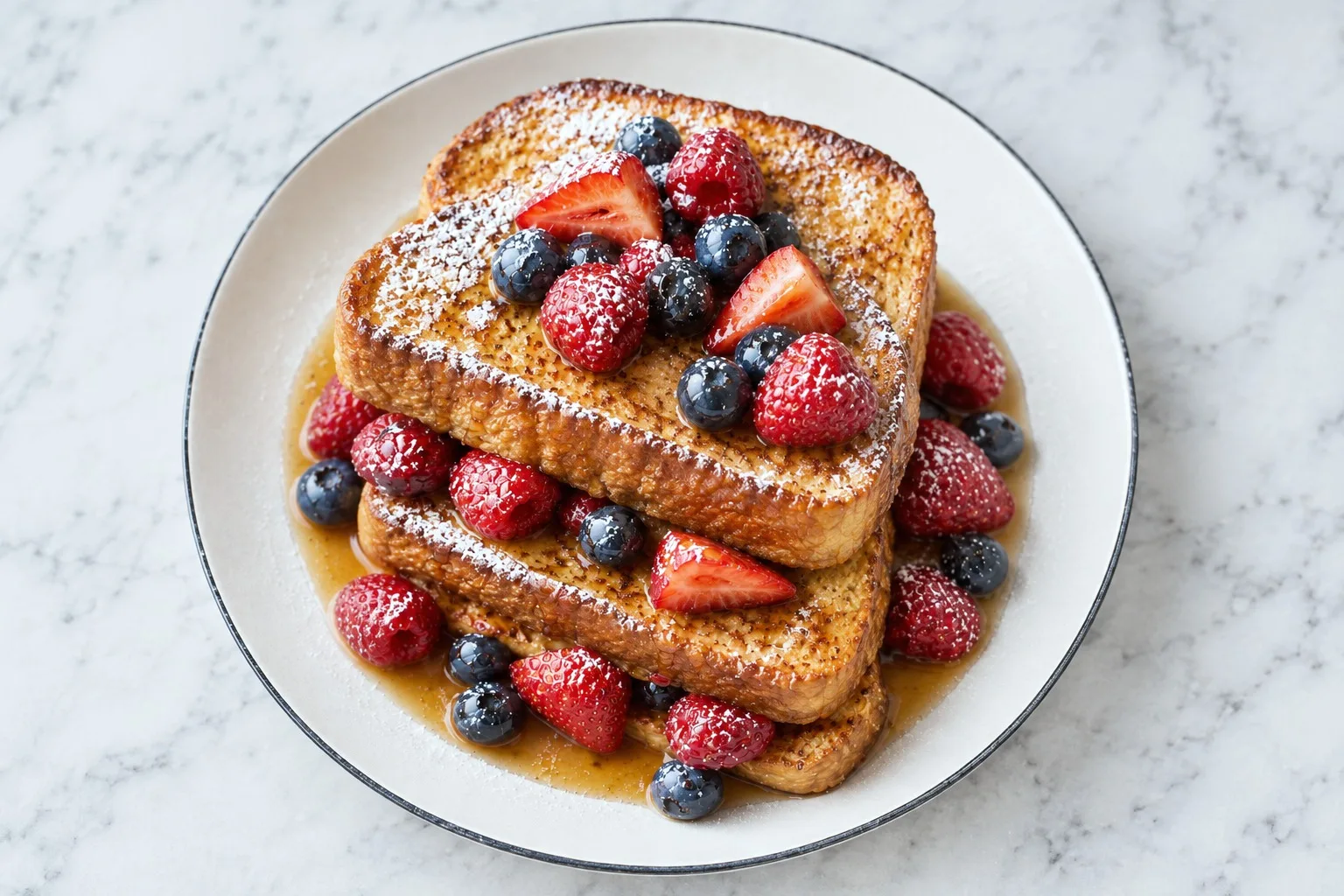
Brioche french toast turns a leftover loaf into the best thing on the table before anyone has had coffee.
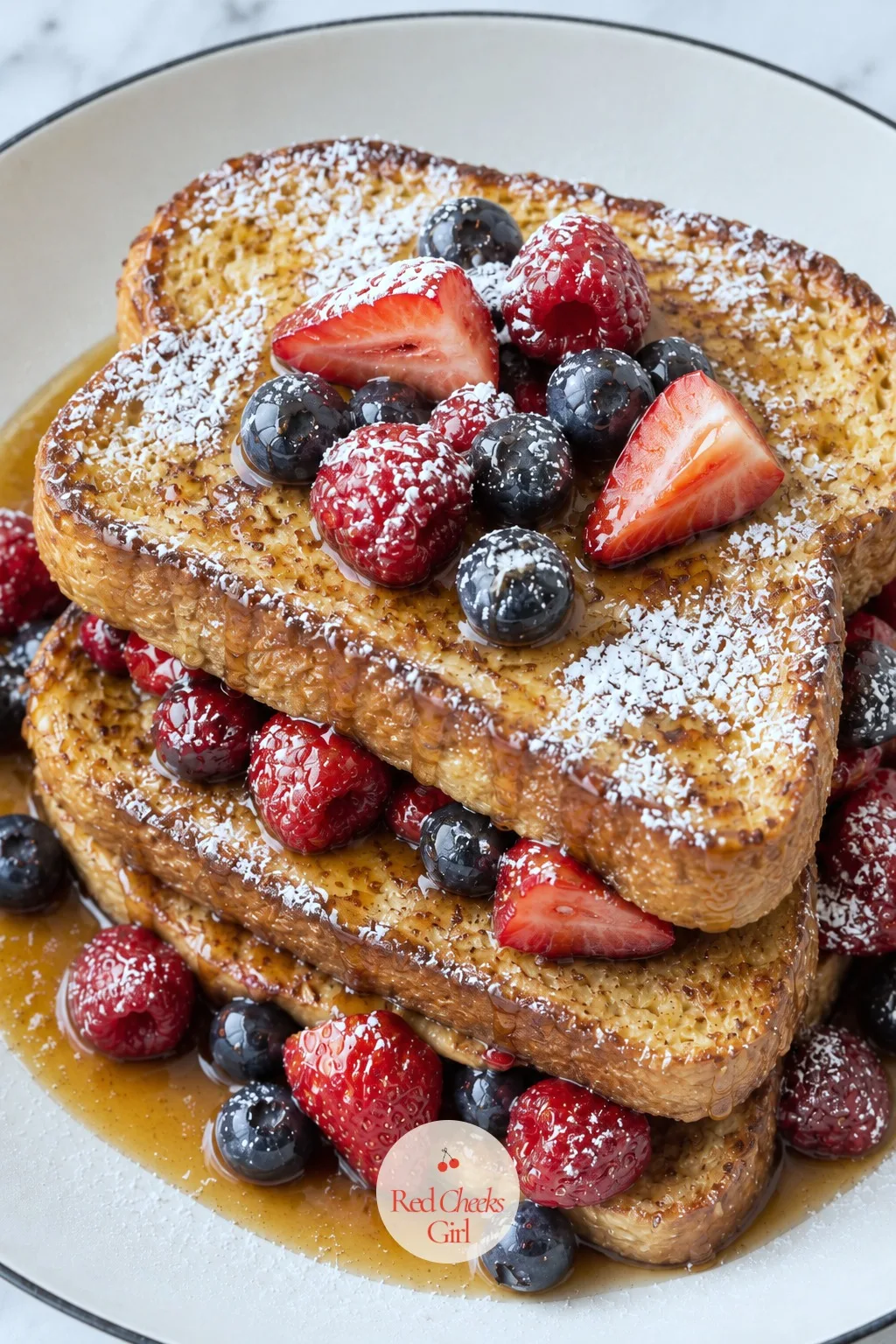
Thick slices soak low and slow in a custard perfumed with orange zest and cinnamon, then turn deep gold in butter while the center stays soft as pudding. Stack it, dust it white, pour the syrup hot, and brunch is basically done.
This post contains affiliate links. If you buy through them, I may earn a small commission at no extra cost to you.
Table of Contents
Why Brioche Makes the Best French Toast
A regular sandwich loaf goes soft and sad under custard within a minute. Brioche does not, and that single fact changes the whole morning: you can soak the slices properly, walk away to pour coffee, and come back to bread that still holds its shape.
Butter and eggs are already baked into the dough, so every slice fries up richer than its ingredient list suggests, no extra cream needed at the pan stage. That’s the part guests notice before they even taste it, the crust deep gold and almost lacquered, the center still giving like a soft pudding when you cut in.
None of this asks for a fancy technique. It asks for a loaf that’s a day old, a little patience at the stove, and the kind of unhurried morning that the 12 habits that create that effortless French girl vibe actually promise, rather than just photograph well.
The Custard That Makes It Work
Day-old brioche is not a suggestion here, it’s the one ingredient doing the heaviest lifting. A loaf that’s sat out overnight has lost just enough moisture to drink up the custard without turning to paste, so look for a bakery brioche or a soft store loaf and let it rest, uncovered, before you cut it.
Whole eggs set the custard, but whole milk and a little heavy cream are what keep the inside soft rather than firm like a quiche. Too much egg and not enough dairy turns the center rubbery, so this ratio favors cream over egg to keep every bite tender.
Vanilla rounds out the sweetness, cinnamon gives it warmth, and a few strokes of orange zest are the detail that makes people ask what’s different about this one. The zest doesn’t read as citrus so much as brightness, the thing that keeps the custard from tasting purely of eggs.
Butter in the pan does double duty, it browns the crust and seasons it at the same time, so don’t swap in oil unless you have no other choice. Warm maple syrup at the end is non-negotiable: cold syrup on a hot slice is the fastest way to a soggy stack.
How to Make It
This is the version that holds up for a table of six without anyone eating a cold slice. Soak times are exact, the oven trick for holding a batch warm is built into the method, and the stack at the end looks like it came from a weekend hotel breakfast.
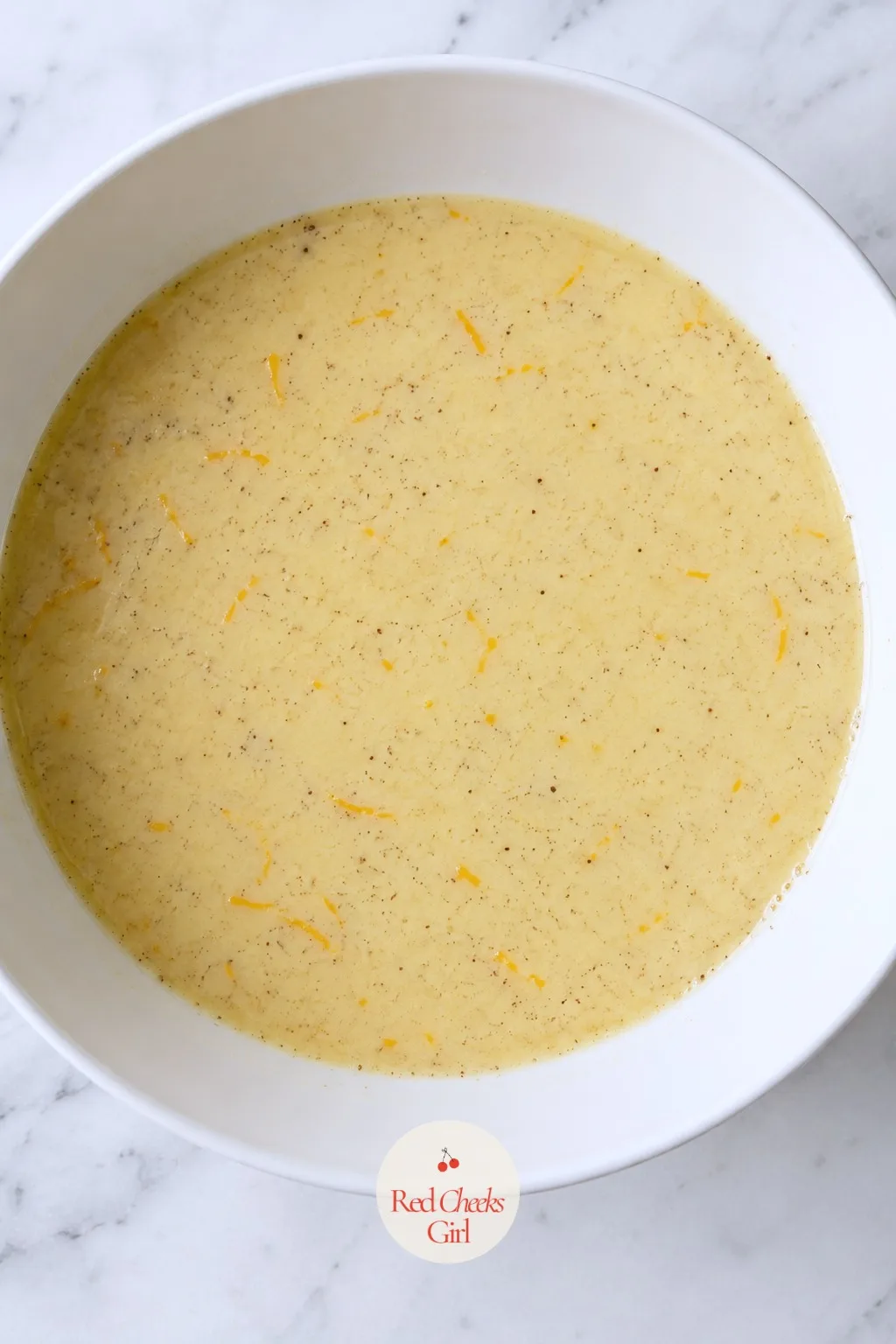
Whisk the custard
Whisk the eggs, milk, cream, vanilla, cinnamon and orange zest until the mixture turns smooth and pale gold. No streaks of egg white should remain, and the custard should coat the back of a spoon lightly.
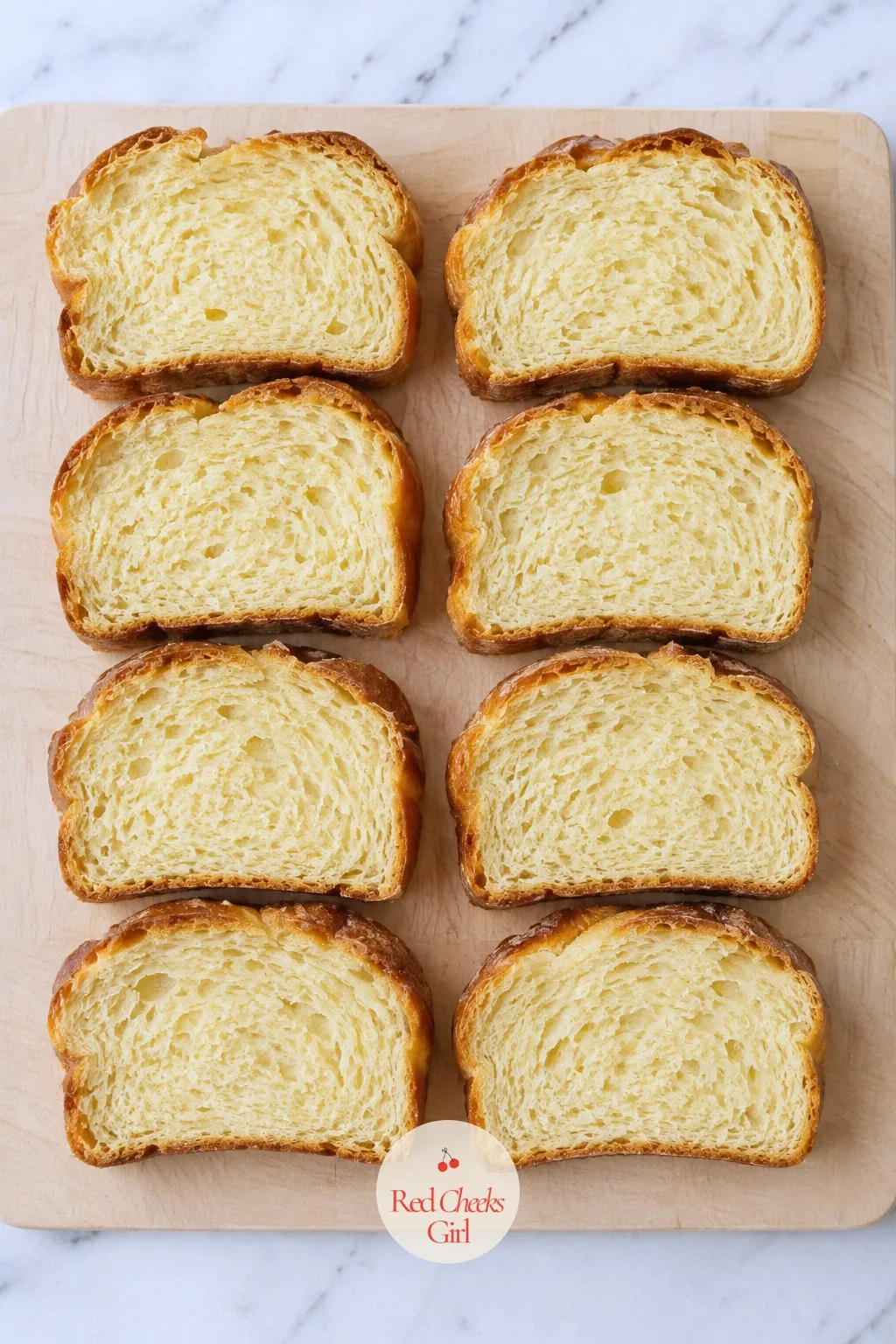
Slice the day-old brioche
Cut the loaf into eight thick slices, each about an inch wide, and line them up on the board. The crumb should look slightly dry at the edges, a sign the bread is ready to soak without falling apart.
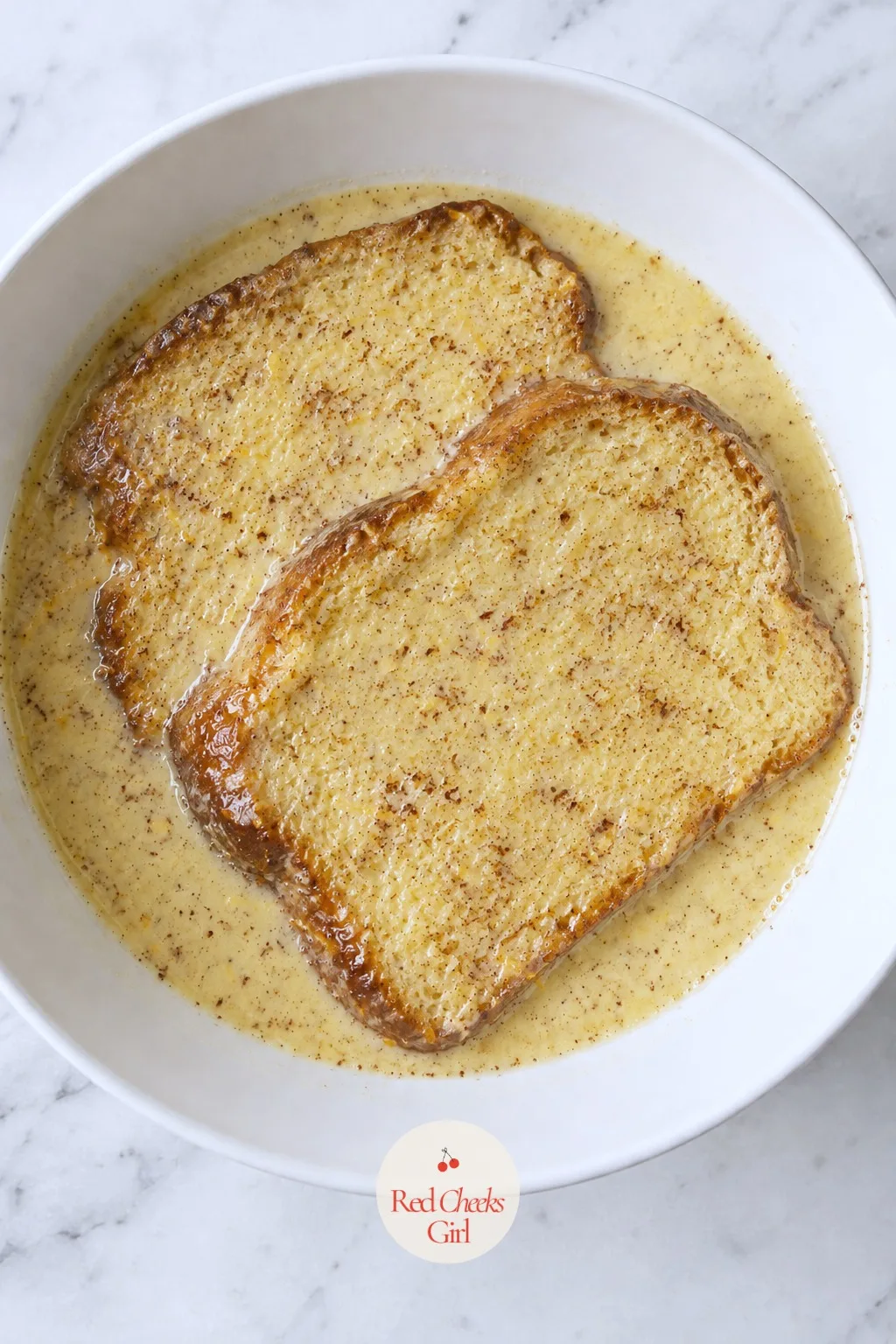
Soak the slices in custard
Lower two or three slices into the custard at a time, counting the seconds per side. The bread should look saturated at the edges and feel heavy, but still lift in one piece.
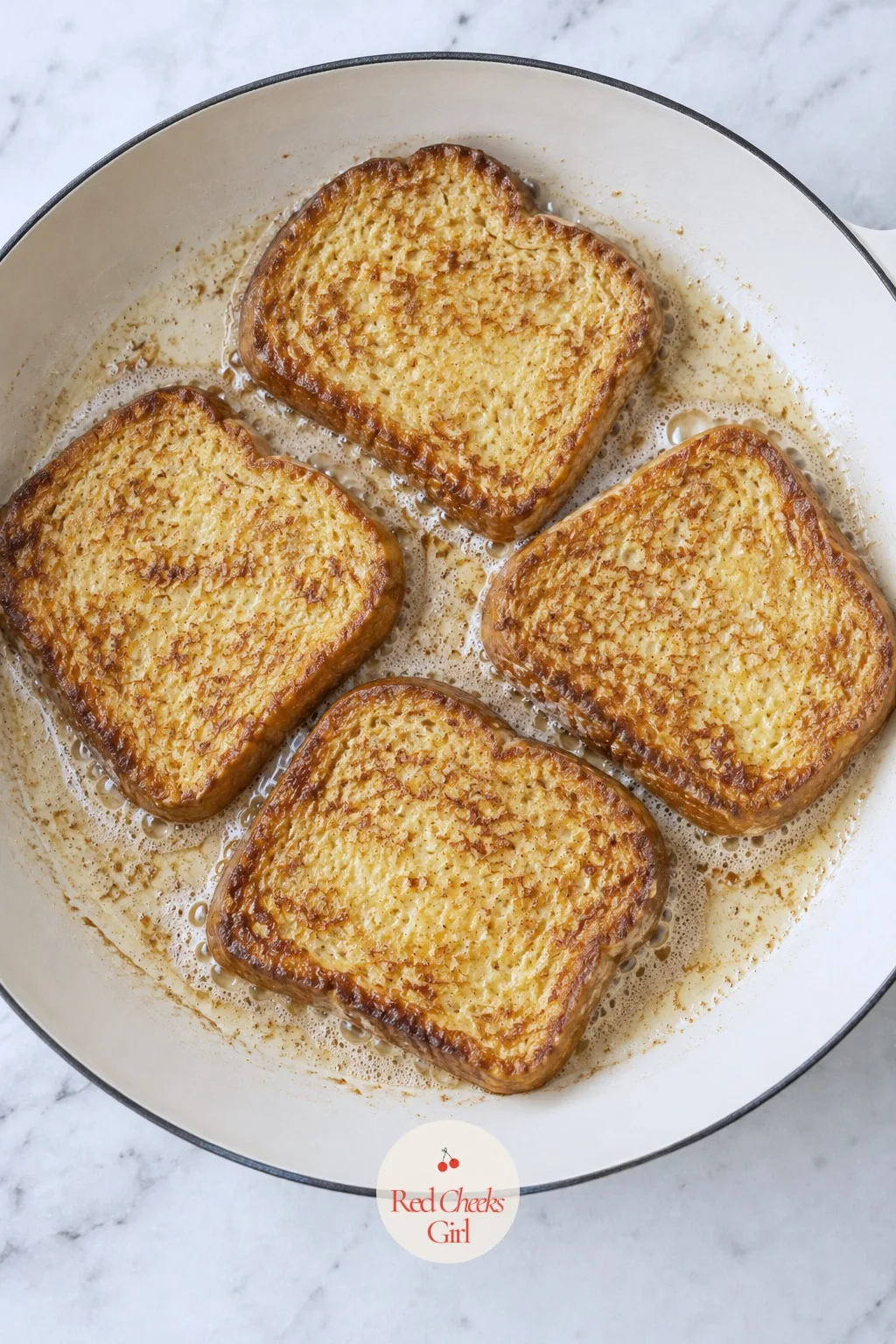
Fry the slices until golden
Cook the soaked brioche in butter until the underside turns deep golden brown. Flip once the edges look set, then finish the second side to match.
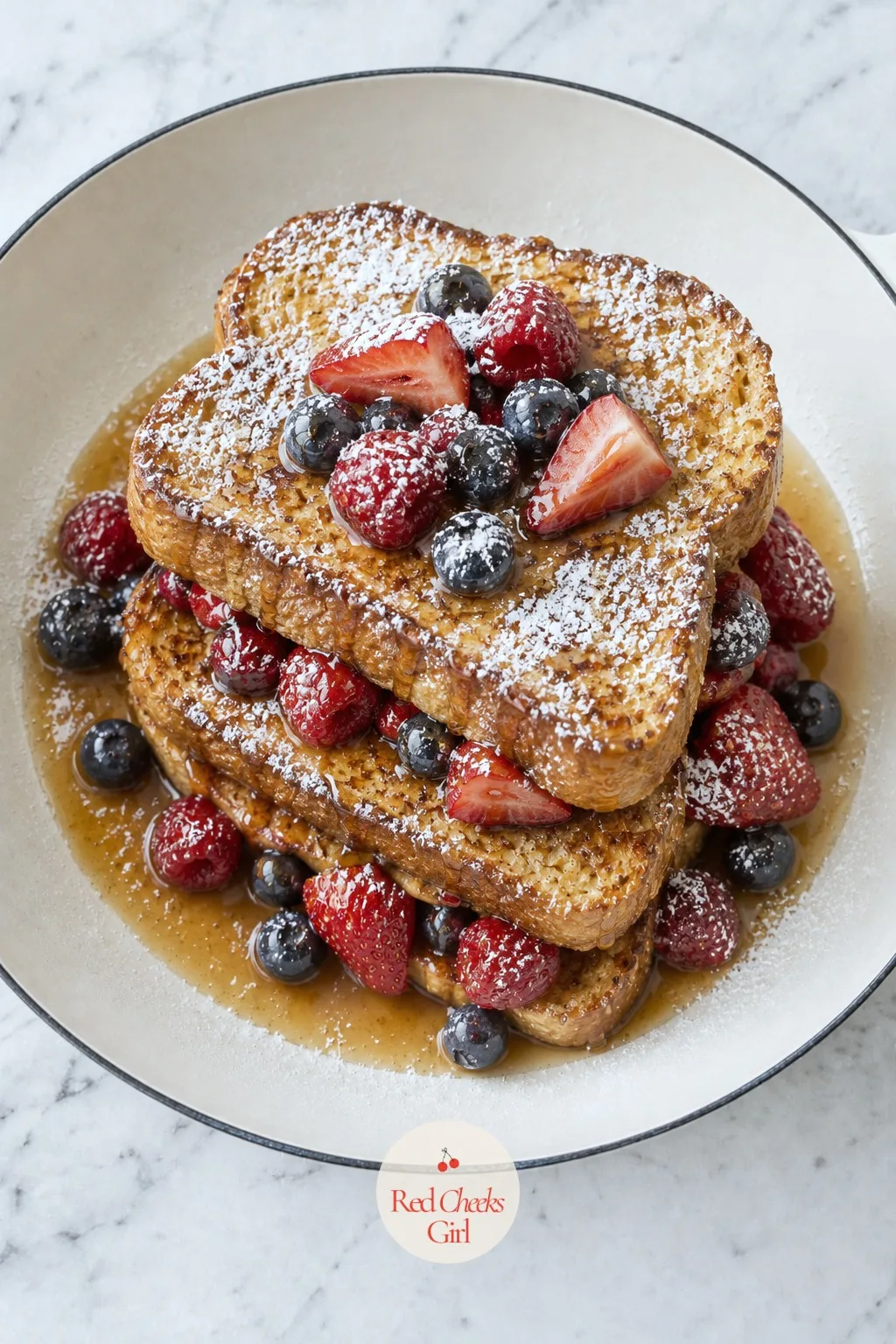
Stack, berry and syrup
Stack the warm slices, scatter the berries over and between the layers, dust heavily with powdered sugar, then pour the warm syrup over the top just before serving.
🛍 Shopping guide
Getting the Golden Crust and Soft Center Right
The single biggest mistake is soaking thick brioche too long because it looks like it needs more time.
Use your ears as much as your eyes here.
Resist the urge to press the slice flat with the spatula while it browns. It only squeezes the custard back out of the crumb you just built, so let it sit, flip once, and walk away for the couple of minutes it needs.
Hold the cooked batch in an oven set to about 200 degrees Fahrenheit while you fry the rest. without pushing it past done. not stacked directly on the pan, or the bottoms turn soft.
Swaps and Substitutions
No brioche in the store? Challah is the easy stand-in, and Cut it the same inch thick and soak it exactly as written.
Whole milk and cream keep this version rich, but a cup of half-and-half in place of both works almost as well if that’s what’s already in the fridge.
Oat milk can replace the dairy milk for anyone avoiding it, though the custard sets slightly softer and the crust won’t brown quite as deep. This dish contains eggs, dairy and wheat, so plan ahead for any guest with a serious allergy rather than trying to swap all three at once.
Orange zest is a quiet detail: swap in lemon zest for something sharper, or drop the citrus altogether if you’d rather let the vanilla and cinnamon carry the whole thing. A pinch of nutmeg is a fair stand-in for half the cinnamon if that’s the warmth you reach for first.
Feeding more than six and don’t want to stand at the stove the whole time? The sweet french toast casserole turns this same custard into one baked dish you slide into the oven and walk away from.
What to Serve It With at a Party
Keep the rest of the table simple since the toast itself is the centerpiece. A pot of good coffee, crisp bacon or breakfast sausage, and a bowl of extra berries on the side cover what people actually reach for.
For an adult brunch, a mimosa bar turns the morning into an event without much extra work, and our 15 mimosa bar ideas for a New Year’s Day brunch that runs itself has the ratios and setup already worked out. Pour responsibly and keep a non-alcoholic sparkling option on the table for anyone not drinking.
A small pitcher of extra warm syrup on the table saves you refilling plates, and a bowl of whipped cream on the side lets guests dress their own stack. Keep the berries whole rather than sliced, they hold their shape better against hot syrup.
Planning a bigger spread around it? The 23 brunch bridal shower ideas with a mimosa bar has the rest of the table sorted, from what else to serve to how to set it out.
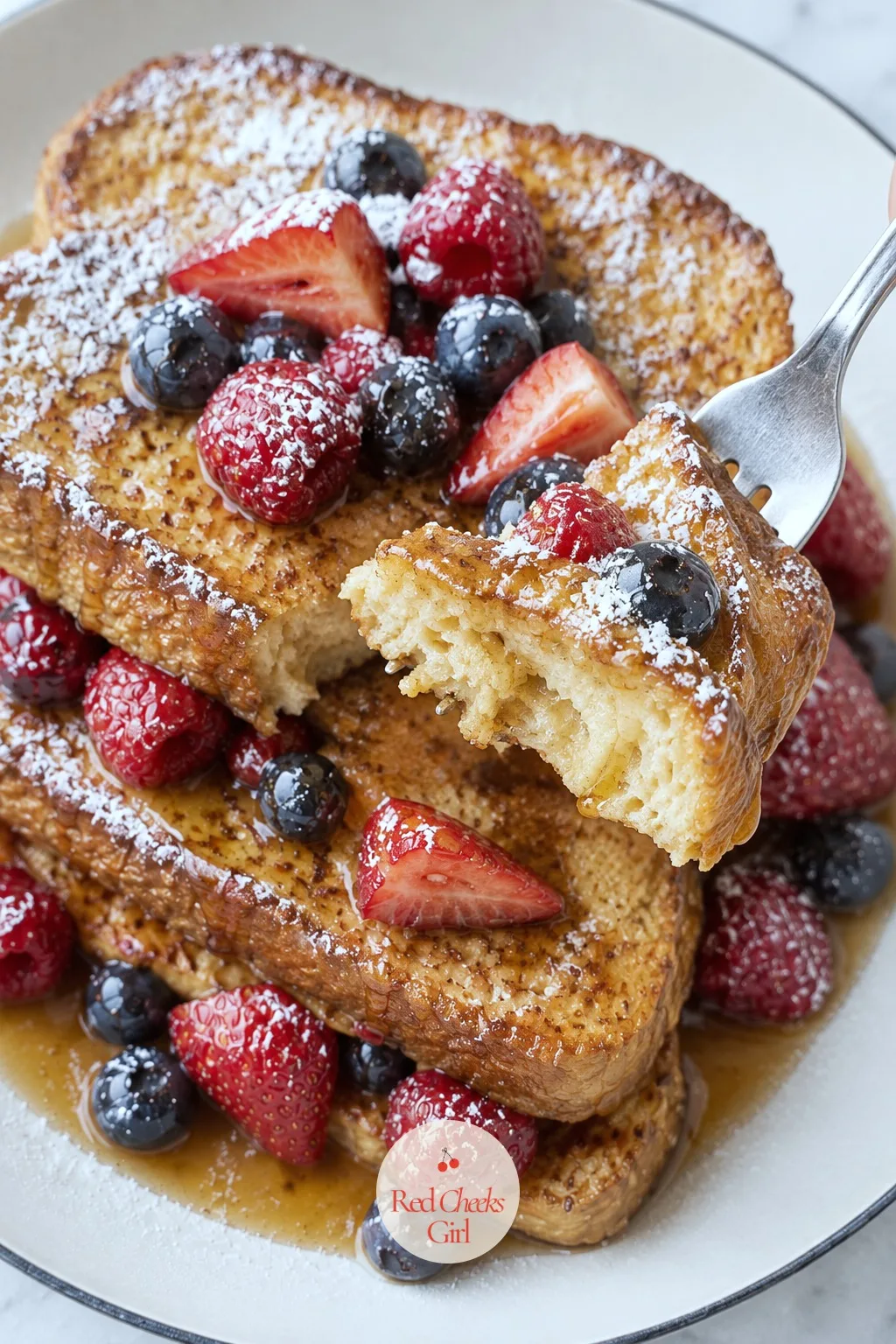
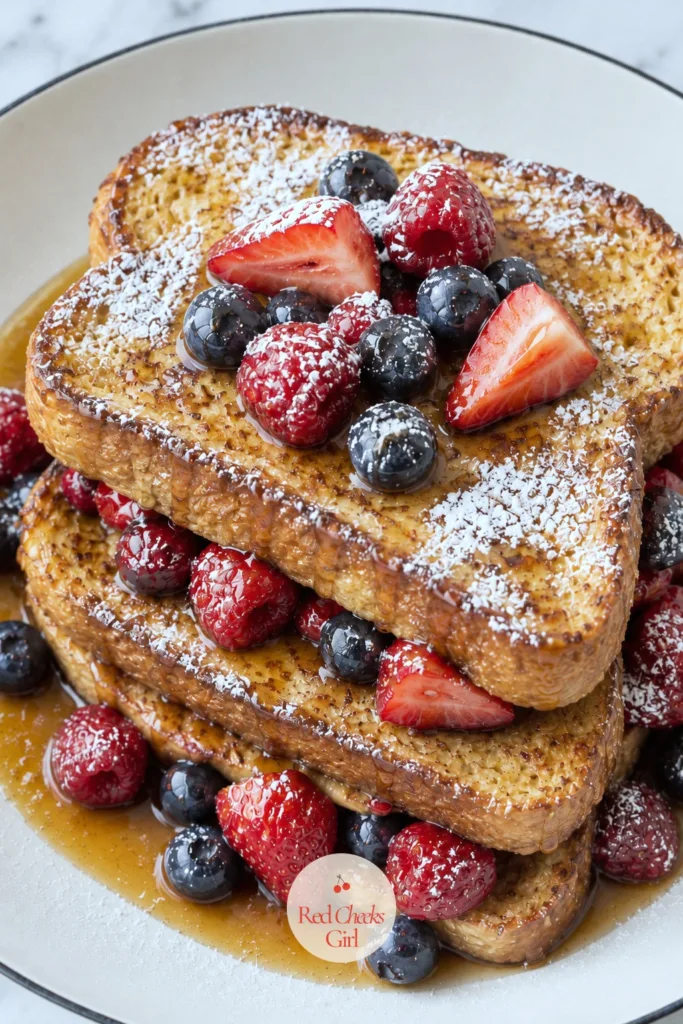
Brioche French Toast
Ingredients
- 1 day-old brioche loaf cut into 8 slices about 1 inch thick
- 6 large eggs
- 1 1/2 cups whole milk
- 1/2 cup heavy cream
- 2 teaspoons pure vanilla extract
- 1 teaspoon ground cinnamon
- 1 tablespoon orange zest from about 1 large orange
- 1/4 teaspoon fine salt
- 3 tablespoons unsalted butter divided, plus more as needed
- 1 cup pure maple syrup warmed
- 1 1/2 cups fresh berries strawberries, blueberries or raspberries
- powdered sugar for dusting
Instructions
- In a wide white ceramic bowl, whisk 6 large eggs, 1 1/2 cups whole milk, 1/2 cup heavy cream, 2 teaspoons vanilla extract, 1 teaspoon cinnamon, 1 tablespoon orange zest and 1/4 teaspoon salt until smooth and pale gold, with no streaks of egg white left.
- Set a wire rack inside a rimmed baking sheet and slide it into an oven preheated to 200 degrees Fahrenheit; this is where finished slices will wait, warm and unhurried, while you work through the rest of the loaf.
- Cut the day-old brioche loaf into 8 slices, each about 1 inch thick, and lay them on a pale wood board so they're ready the moment the custard is whisked.
- Lay 2 to 3 slices into the custard at a time and let them soak for 30 seconds per side if the bread still feels soft, or up to 45 seconds per side if it's firm and truly a day old; the slice should look saturated at the edges but still lift in one piece, never falling apart in your hand.
- Melt 1 tablespoon of the butter in a cream enameled skillet over medium heat until it foams and smells faintly nutty, swirling the pan so the whole surface is coated.
- Lift the soaked brioche from the custard, letting the excess drip back into the bowl, and lay the slices into the hot butter without crowding the pan, 2 to 3 slices at a time depending on their size.
- Cook the first side for about 3 minutes, until it's deep golden and firm enough to release cleanly from the pan, then flip and cook the second side for 2 to 3 minutes more, until it matches the first side and the center springs back rather than feeling wet when you press it gently.
- Transfer the cooked slices to the wire rack in the warm oven and repeat the soaking and frying with the remaining brioche, wiping the skillet clean and melting a fresh teaspoon of butter before each new batch goes in.
- Warm the maple syrup in a small saucepan over low heat for 2 to 3 minutes, just until it steams at the edges, so it's properly hot by the time it meets the toast.
- Stack 2 to 3 slices on each plate, scatter the berries over and between the layers, dust heavily with powdered sugar, and pour the warm syrup over the top just before carrying the plates to the table.
Good to Know
Frequently Asked Questions
What is the best bread for brioche french toast?
Day-old brioche is best because its slightly dried crumb drinks up custard without falling apart. Challah works as a close substitute, no changes to the method needed if you switch to challah.
Why is my brioche french toast soggy?
Soggy french toast is almost always a pan temperature problem rather than a soaking problem. Heat that’s too high browns the outside before the center cooks, while heat that’s too low never lets the custard fully set.
Can I make brioche french toast ahead of time?
Yes, the custard can be whisked up to a day ahead and kept covered in the refrigerator. Soak and fry the brioche fresh the morning you serve so the crust stays crisp.
Can I freeze brioche french toast?
Yes, cooked and fully cooled slices freeze well. Freeze them in an airtight container for up to 3 months, then reheat straight from frozen in a hot oven.
Why does my french toast taste too eggy?
An eggy taste usually means too much egg relative to milk and cream in the custard. This recipe leans on dairy over egg, with vanilla and cinnamon to round out the flavor.
Should you toast the bread first before dipping it?
No, pre-toasting isn’t necessary once the brioche is cut thick. Day-old or stale bread is the usual advice, but it isn’t necessary when the brioche itself is thick.
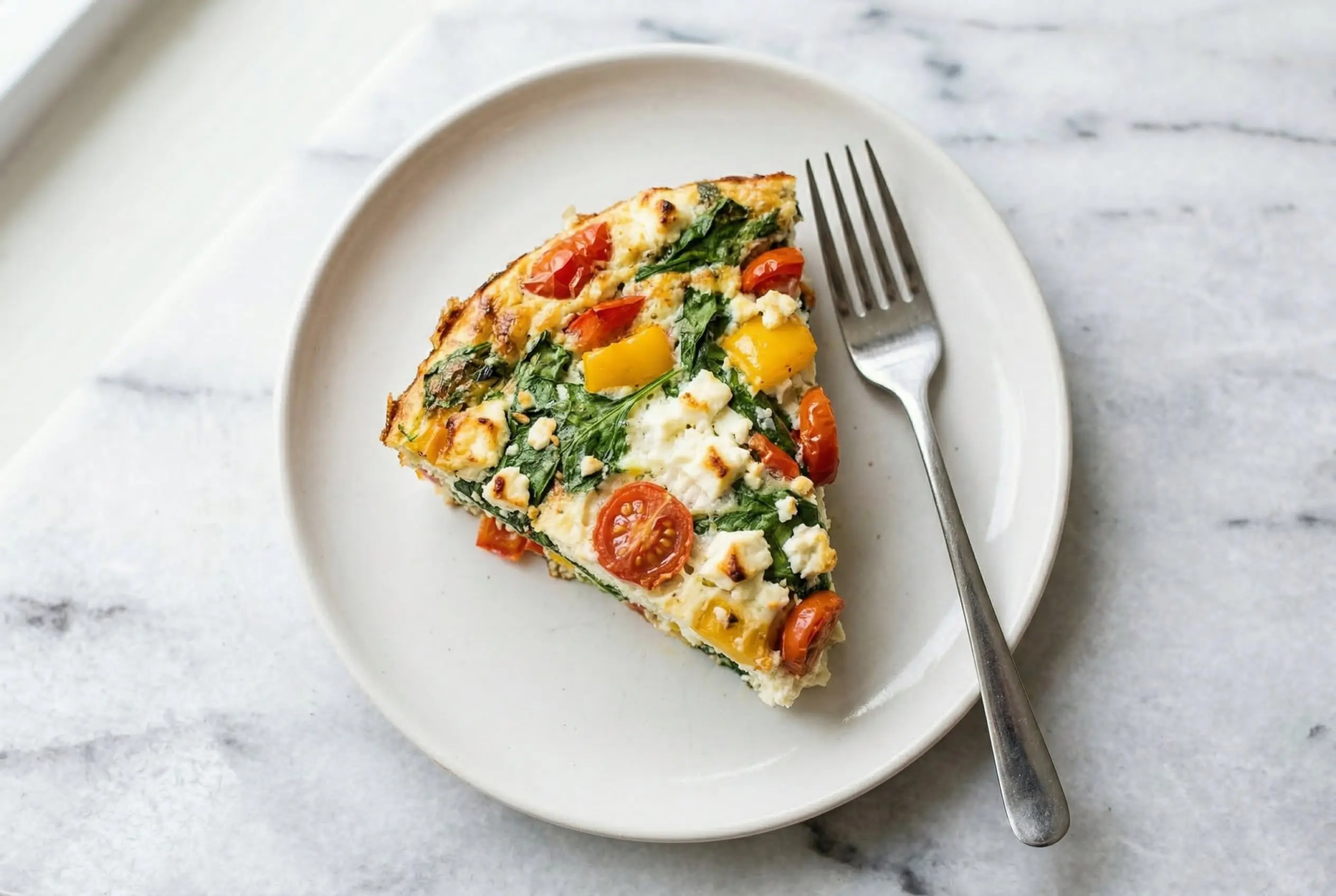
Healthy egg white breakfast casserole with spinach, peppers & feta. 18g protein, 140 calories. Light

Breakfast tacos layer soft scrambled eggs, crispy chorizo, crisp potatoes, cheese and fresh pico de
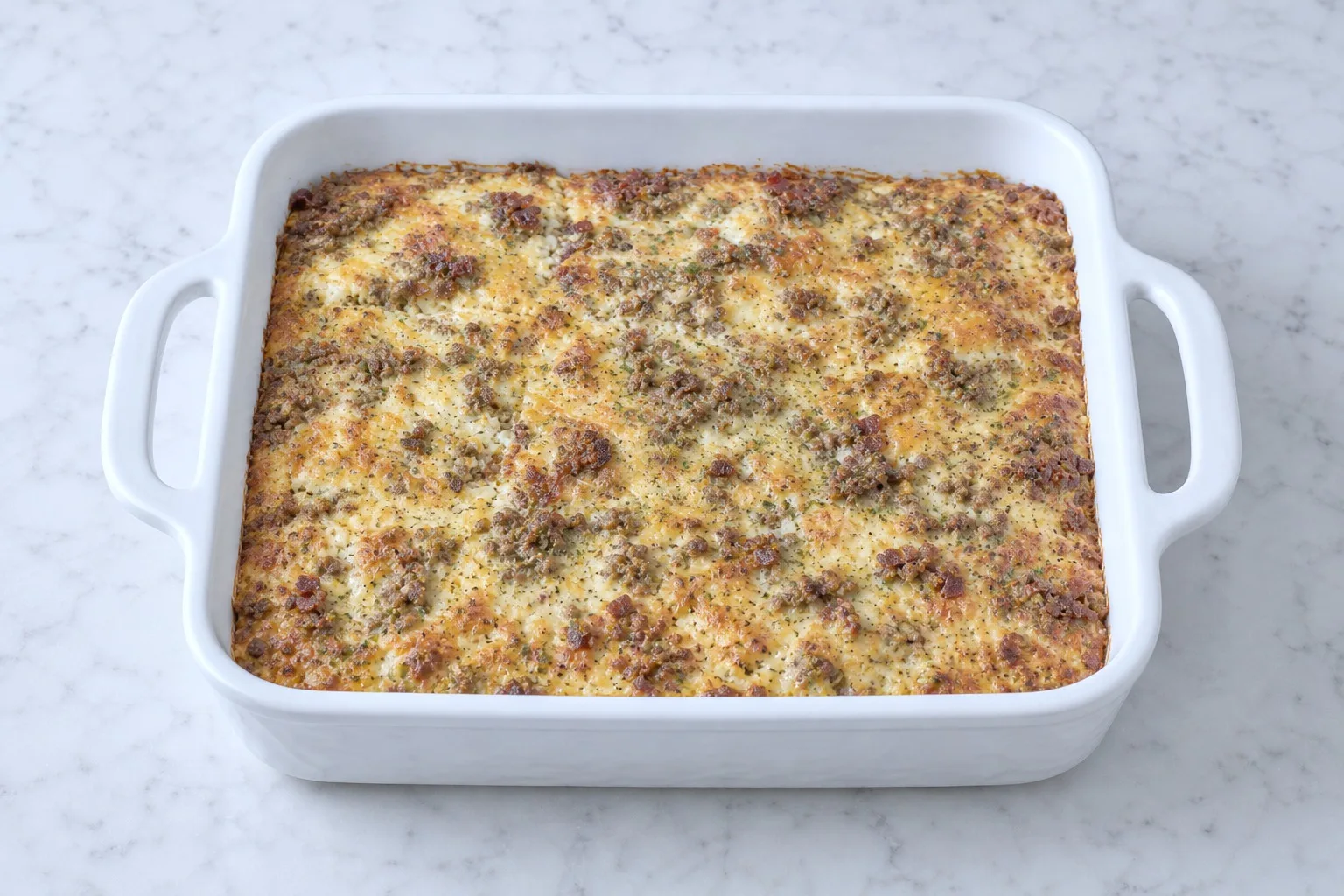
Sausage breakfast casserole feeds twelve with bacon, hash browns, cottage cheese and melted cheddar
Leave a Reply