

Easy Chicken Piccata: A Chicken Breast Recipe With Lemon, Capers and Butter Sauce
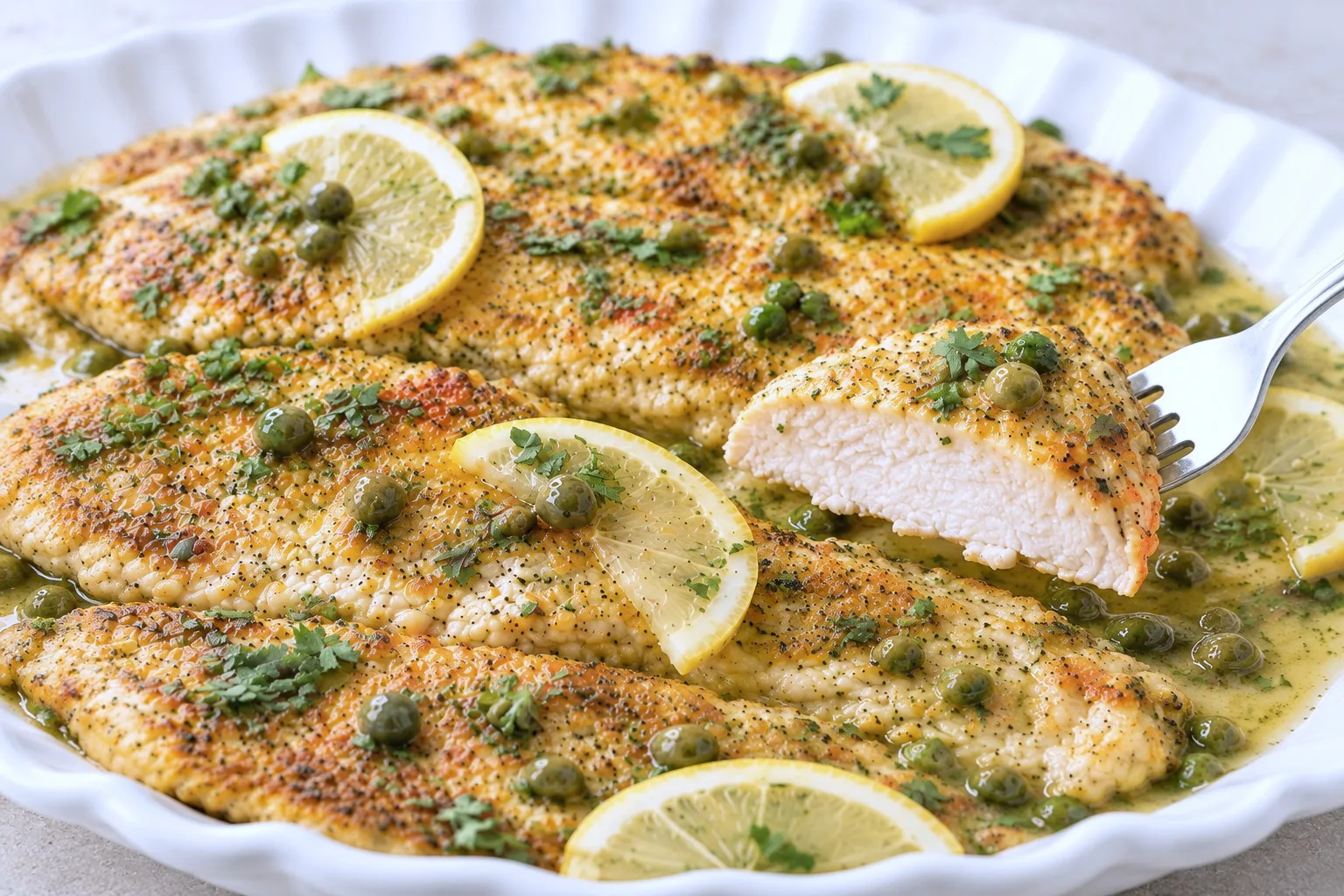
Chicken piccata easy enough to pull off before the table is even set, this is the dish that makes plain chicken breast taste like something a restaurant would charge you for. One skillet carries the whole thing from raw cutlet to glossy sauce, so the only real decision is whether you reach for the good wine or just the broth.
This post contains affiliate links. If you buy through them, I may earn a small commission at no extra cost to you.
Table of Contents
Why This Chicken Piccata Earns a Weeknight Spot
Say the word piccata out loud at the table and it sounds like effort. It isn’t. The whole dish lives in one skillet, from the first sizzle of butter to the last spoon of sauce, so there is no second pan quietly multiplying in the sink.
What she is really buying with thirty minutes is a sauce that tastes like it simmered all afternoon: bright lemon, salty capers, a thread of garlic, all of it pulled together by cold butter whisked in off the heat. That last move is the whole secret, and it costs nothing extra.
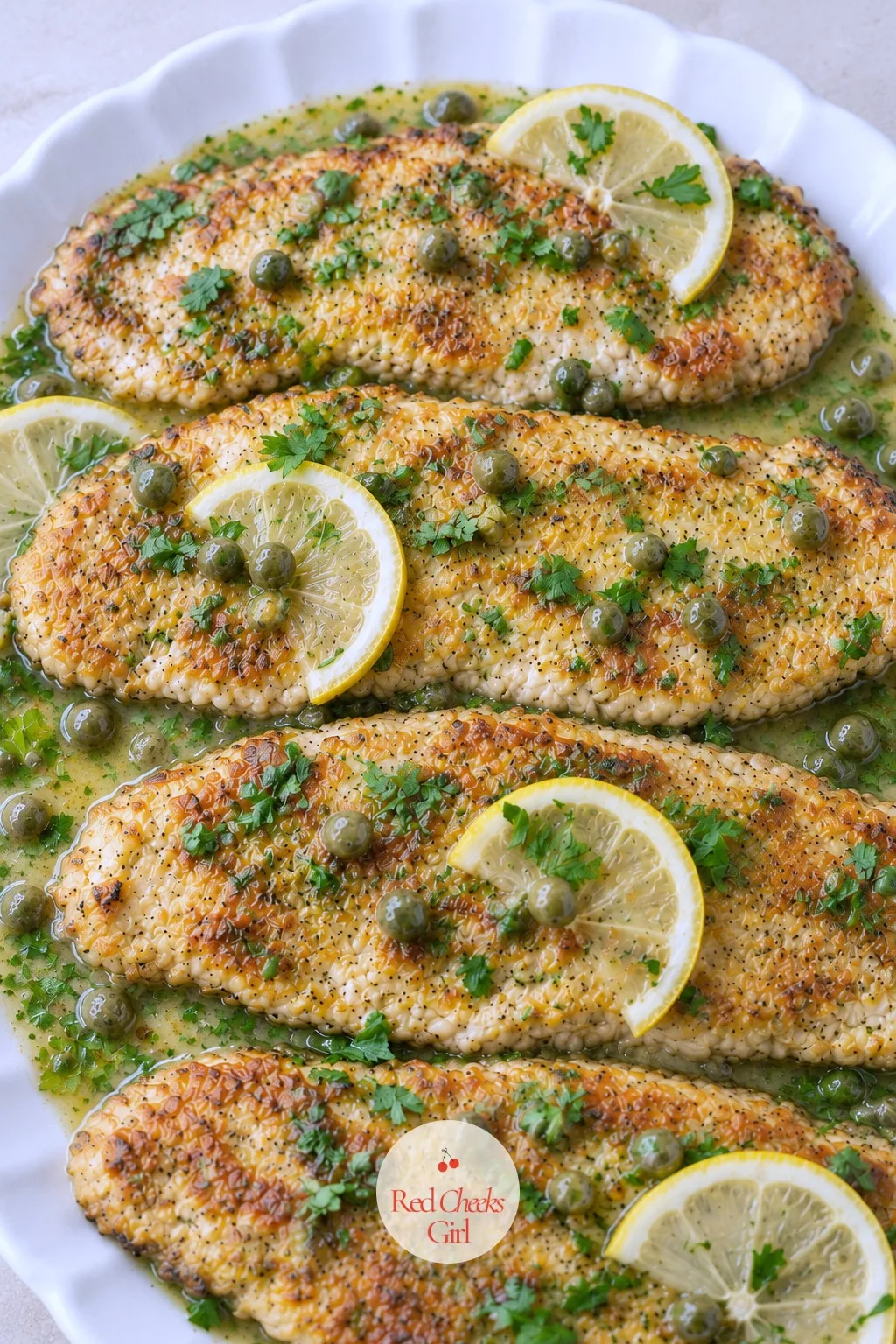
If the weeknight is the real audience, good: this is a dinner that holds its own at a dinner party too, plated with lemon slices and a scatter of parsley so it photographs like more trouble than it was.
For a fuller rotation of what else a chicken breast can do on a Tuesday, the 16 Chicken Breast Dinner Ideas Beyond the Same Old Bake make a good next stop.
The Ingredients That Make It Work
Start with the chicken breast itself, sliced horizontally into two thinner cutlets rather than one thick slab. Thin and even is the whole point here: it cooks through in minutes without drying out, and it browns instead of steaming.
Flour is doing more than you think. A thin dredge, shaken off until barely visible, gives the outside a little crust to brown against and later helps the pan sauce cling to the chicken instead of sliding off the plate.
Capers bring the salt and brine that a sauce this rich needs to stay interesting, and fresh lemon juice does the brightening that a bottle never quite manages. Cold butter, added at the very end and off the heat, is what turns a thin pan liquid into something glossy enough to spoon.
Dry white wine deepens the sauce if she is cooking for adults only; chicken broth alone keeps it just as good for a mixed table, only slightly less complex.
Either way this falls easily into the kind of lemon and herb cooking covered in 15 Mediterranean Chicken Recipes With Lemon, Herbs and Bright Vegetables, if that is the direction the week is already heading.
How to Make It
Everything happens in one large skillet, so have the chicken, flour and sauce ingredients measured out before the pan goes on the stove. The whole process, start to plate, takes about thirty minutes.
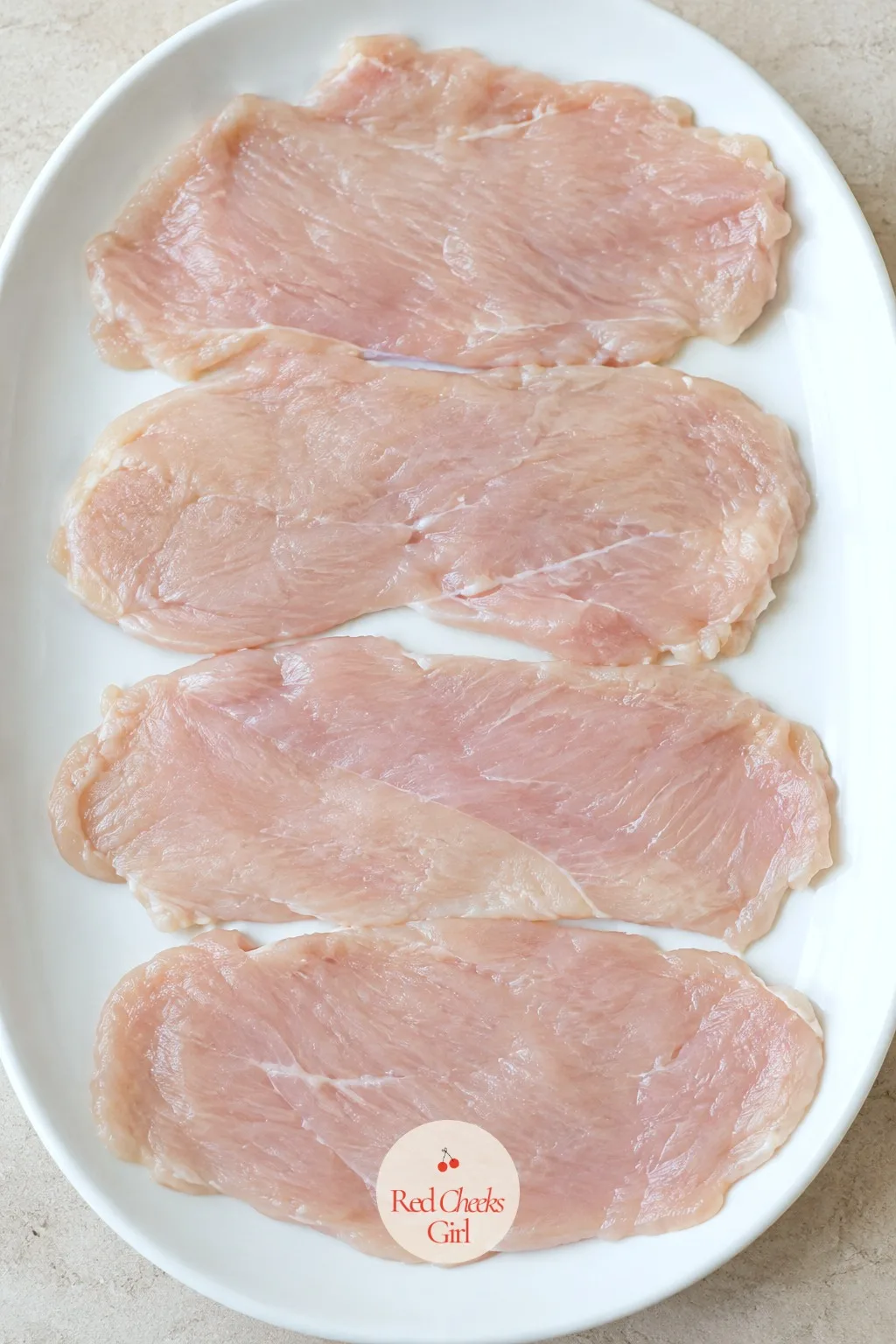
Slice and pound the chicken thin
Lay the sliced cutlets on the platter and pound each one between plastic wrap until it is an even quarter inch thick. Look for a flat, uniform surface with no thick ridge left in the center.
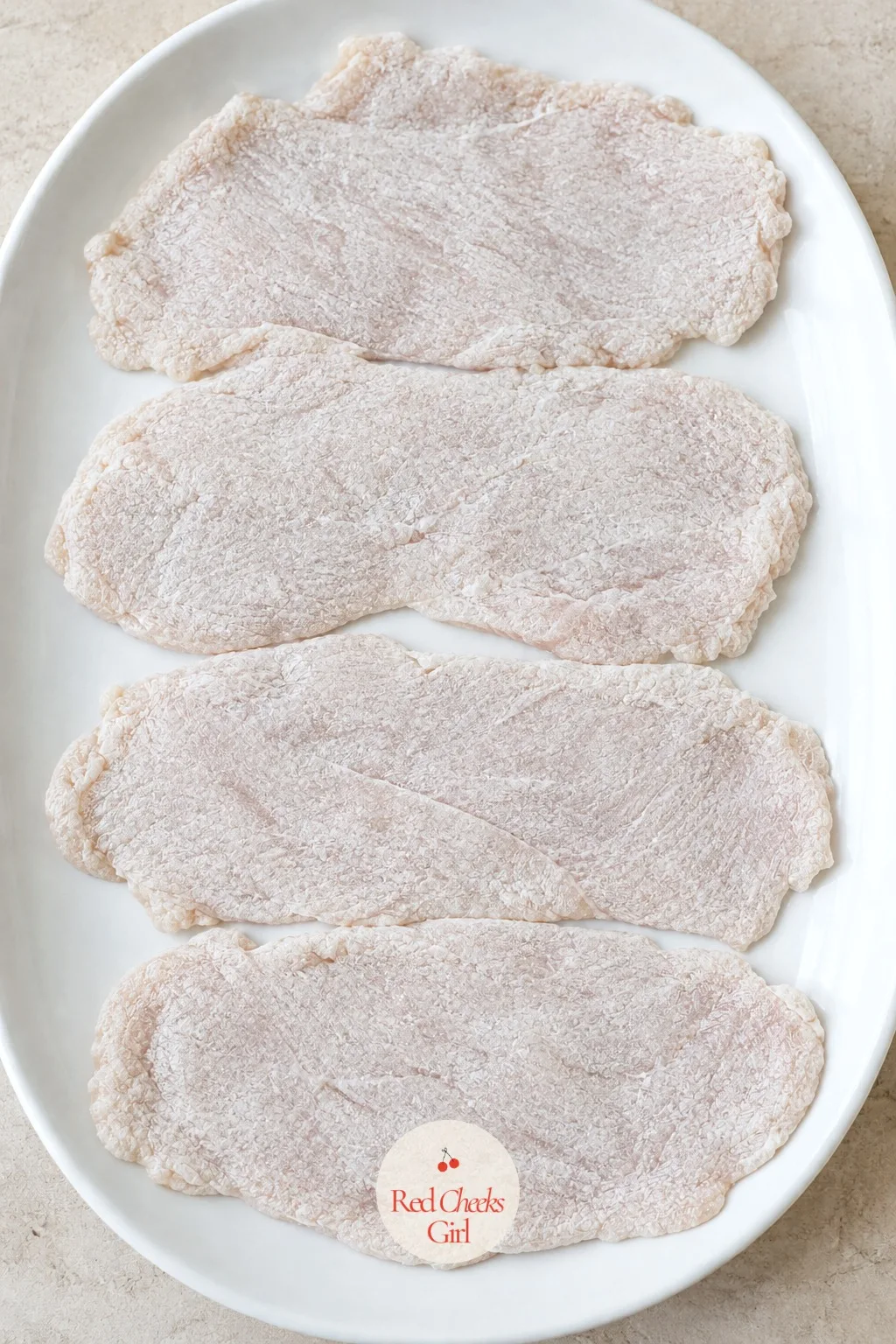
Dredge the cutlets in flour
Coat each cutlet lightly in flour and shake off the excess before it goes anywhere near the skillet. A thin, even, slightly dusty coating is exactly right, no thick white patches.
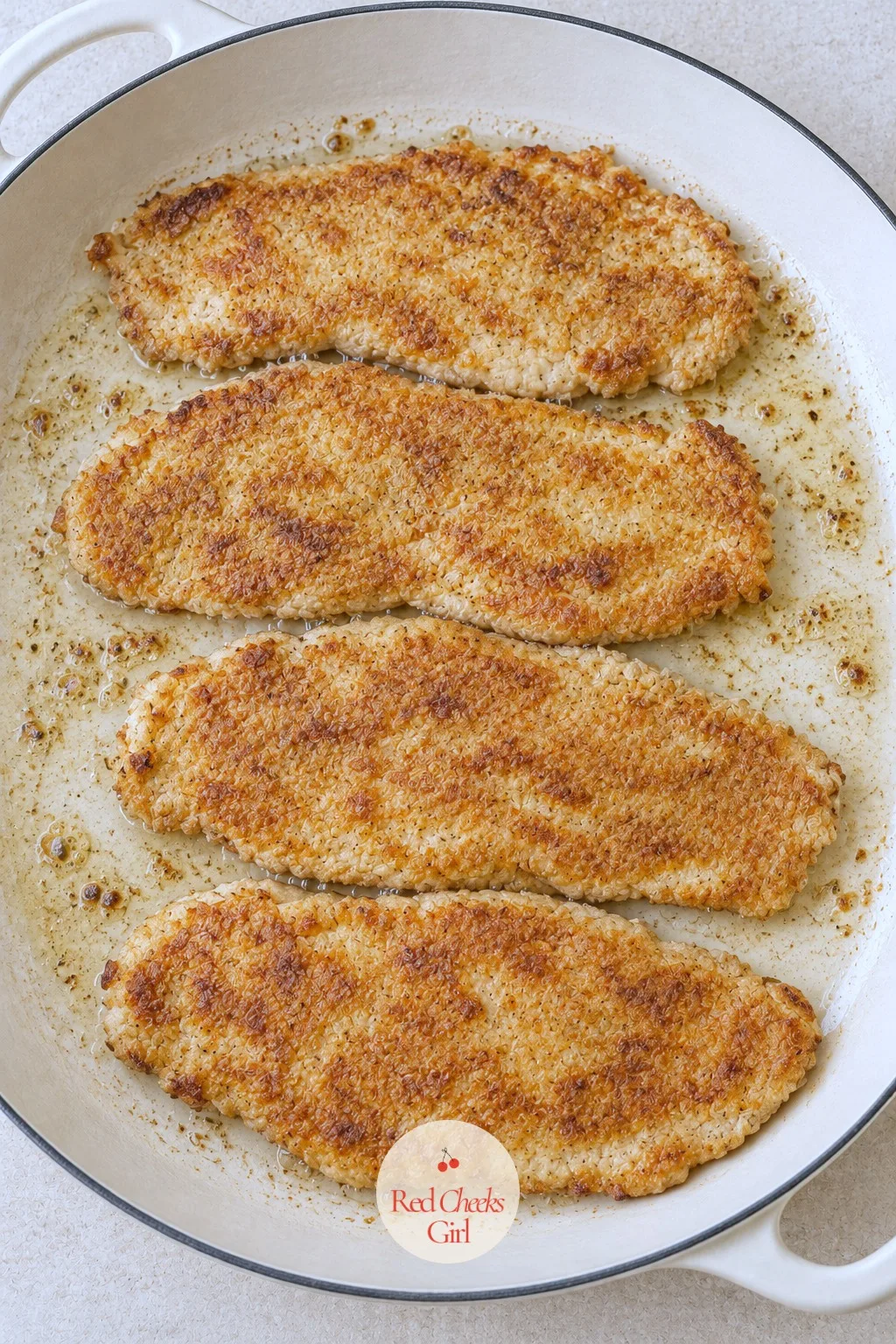
Brown the cutlets until golden
Cook the cutlets in the hot skillet until a deep golden crust forms on each side. The surface should look crisp and browned, not pale or wet, before it comes out of the pan.
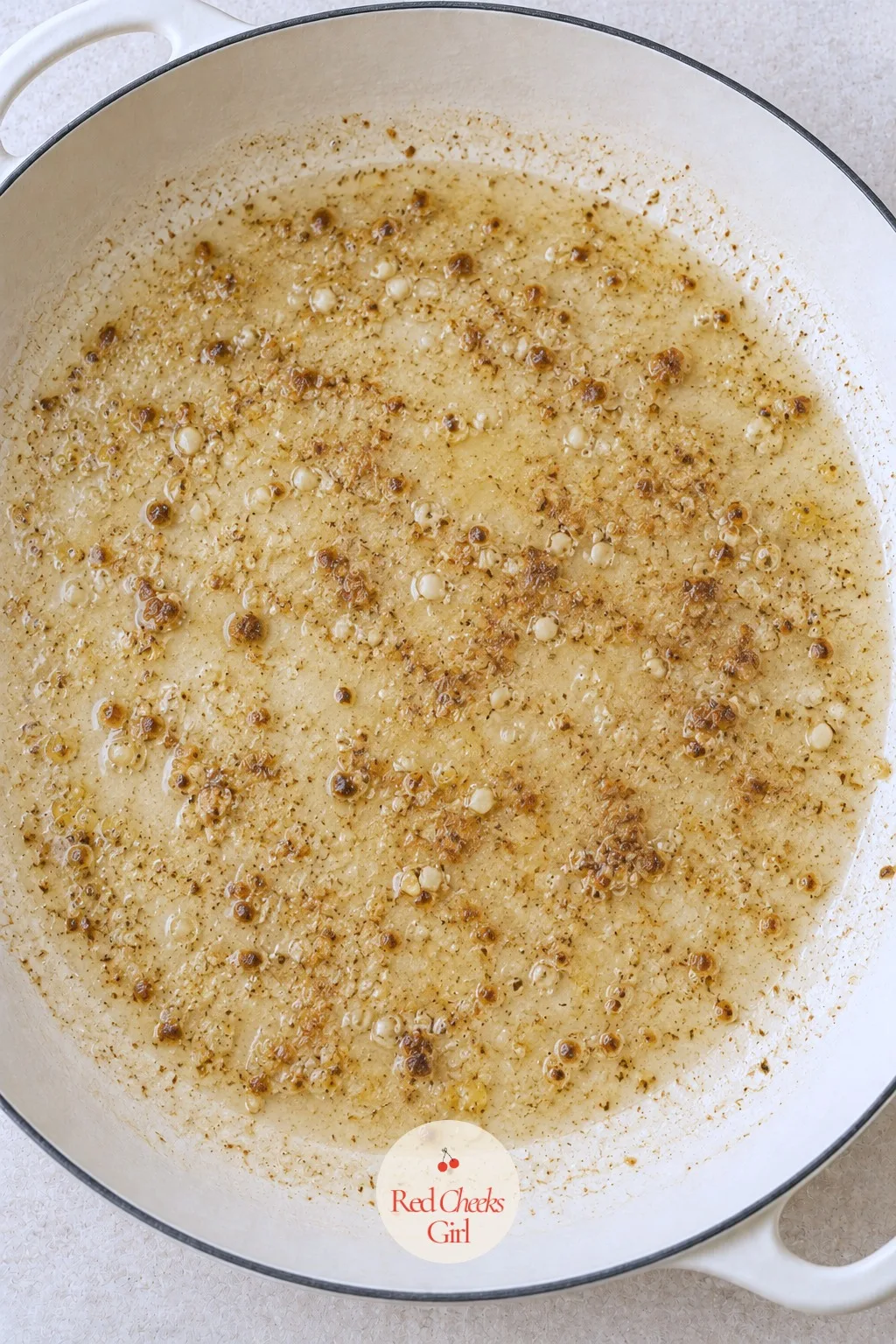
Reduce the wine in the empty skillet
With the chicken out of the pan, let the wine bubble down by half, scraping the browned bits loose as it reduces. The liquid should look thinner and slightly amber, not syrupy yet.
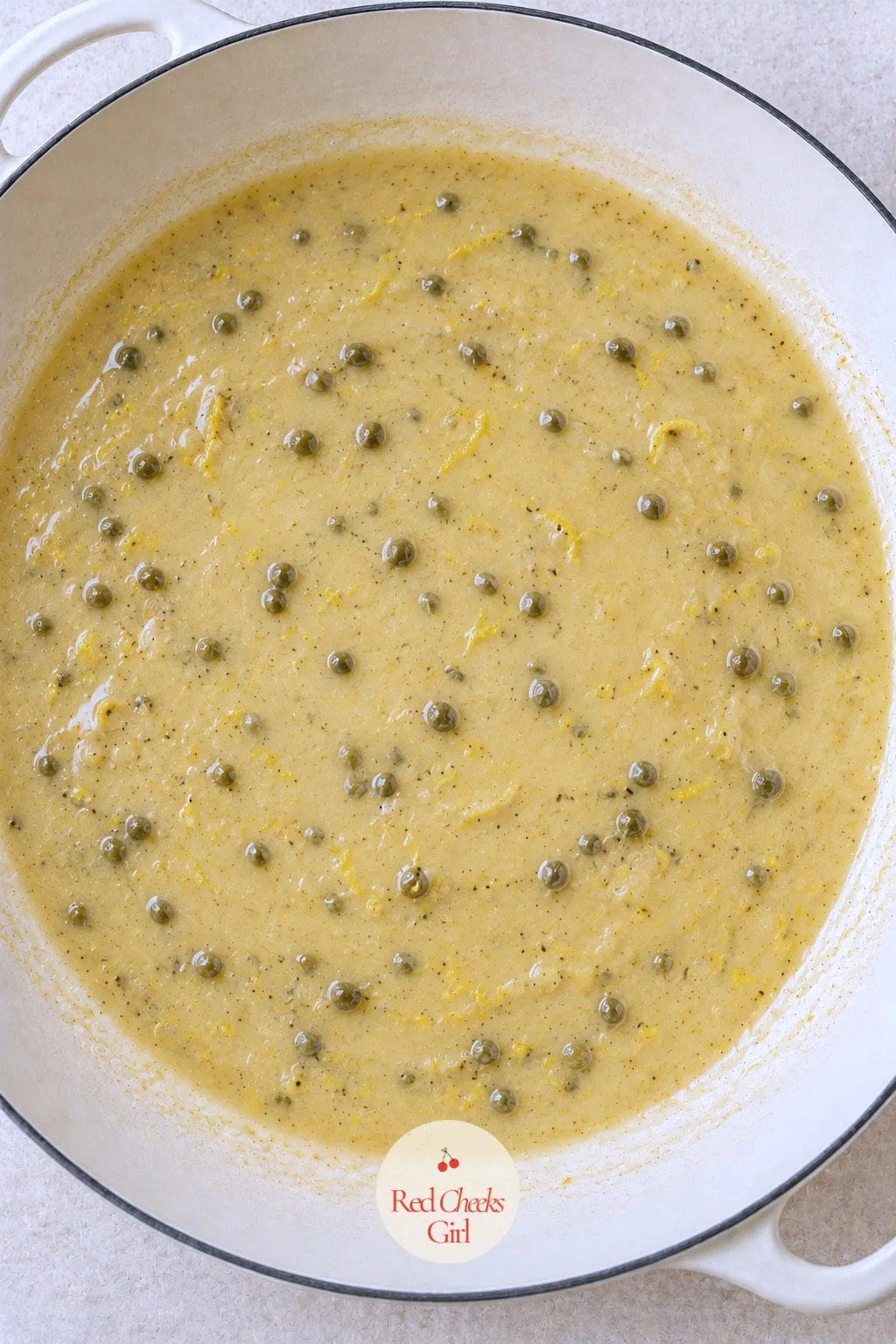
Whisk the butter into a glossy sauce
Off the heat, whisk in the cold butter until the sauce turns smooth, pale and glossy, studded with capers. It should look thick enough to coat a spoon, never greasy or separated.
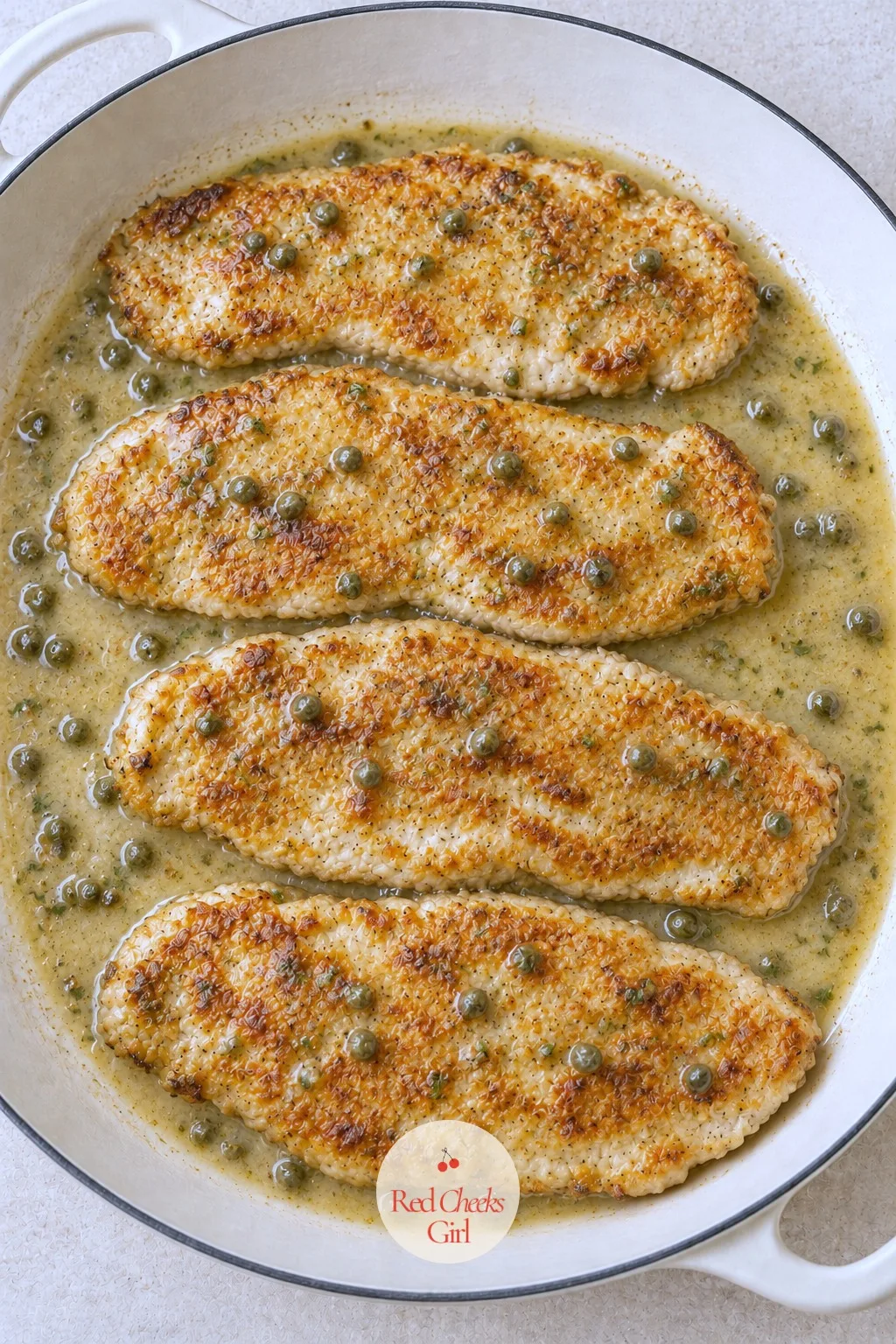
Return the chicken to the sauce
Nestle the browned cutlets back into the glossy sauce so each one sits coated and shining. The sauce should pool around the edges, not sink in or look watery.
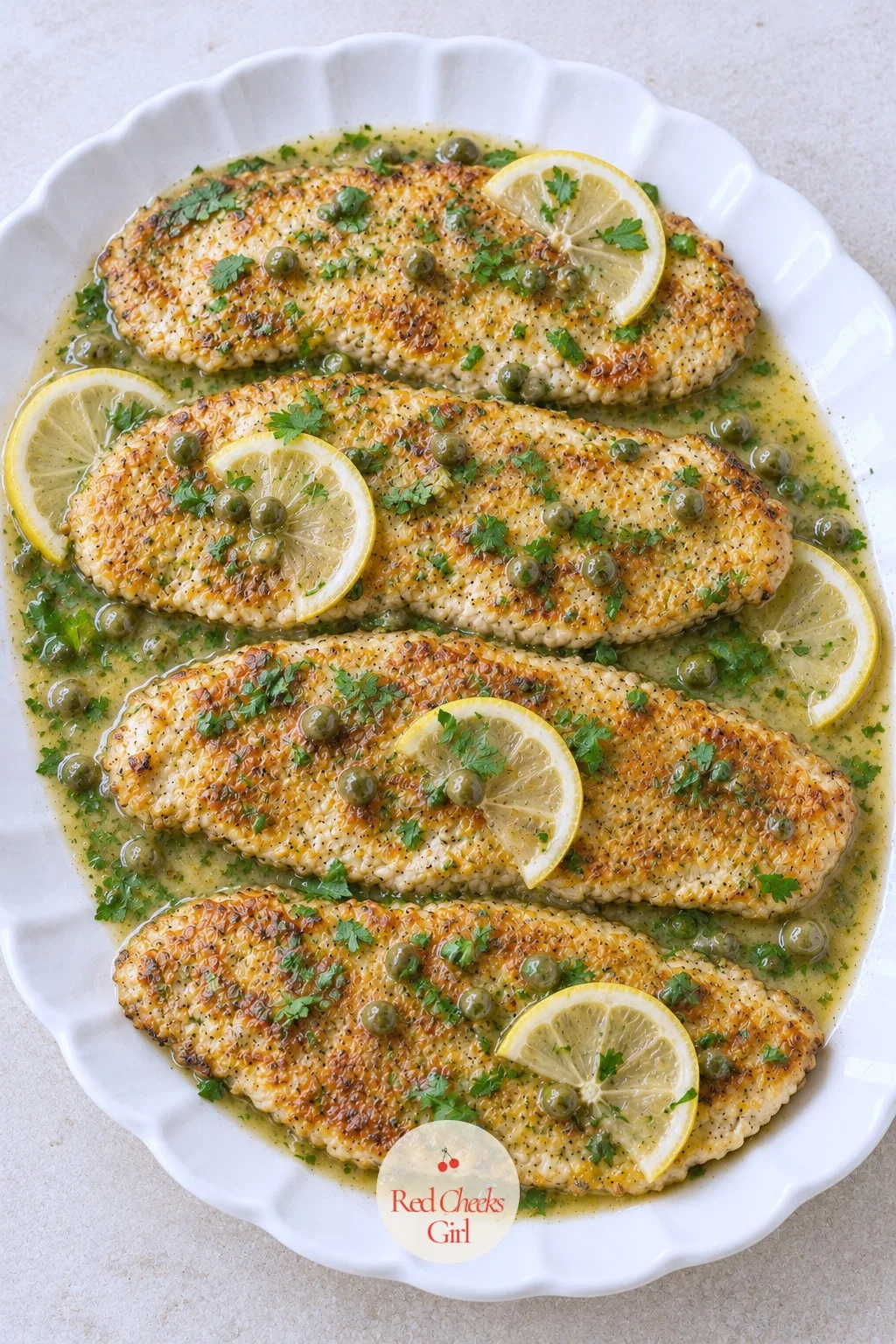
Finish with parsley and lemon slices
Plate the chicken, spoon extra sauce over the top, then scatter parsley and lay thin lemon slices across the dish. It should look bright, glossy and finished, ready straight to the table.
🛍 Shopping guide
Getting the Sauce Right
The single most common accident with this dish is a sauce that looks greasy instead of silky, with little pools of fat sitting on top instead of one smooth finish. That almost always means the butter went in while the pan was still too hot.
Crowding the pan is the second trap. Cutlets packed in tight steam each other instead of browning, and a pale cutlet never gets that little crust the flour was there to build. Work in two batches if the skillet is not wide enough for all four pieces to lie flat with room between them.
Skip the flour dredge and the sauce has nothing to cling to later; skip pounding the chicken even and thin and the thicker end overcooks while the rest is still pink in the middle. Both are five-second steps that decide whether the dish reads as restaurant-smooth or merely fine.
Overcooking the chicken after it goes back into the sauce is the last quiet mistake. Two minutes to warm through and soak up flavor is plenty; longer and the cutlets toughen in a pan that was otherwise forgiving.
Swaps and Substitutions
No wine in the house, or cooking for a crowd that includes anyone who shouldn’t have it? If wine is on the table, pour it for the adults only and keep a jug of water close by for anyone driving home.
Capers missing from the pantry is not a dealbreaker. so a small handful, chopped fine, slides in at the same point in the method.
, which makes an uneven cutlet and an uneven cook. If thighs are what is on hand, trim them flat as best as possible and expect a slightly shorter cook time per side.
Gluten-free flour swaps in at the same measure for the dredge without changing the method. For a different crust entirely, the Chicken Katsu Recipe: A Chicken Breast Recipe With a Crisp Panko Crust turns the same cut of chicken breast into something crunchier if that is the mood instead.
What to Serve It With
The sauce is the real reason to set the table, and whatever sits under the chicken is really there to catch it. Angel hair or spaghetti, tossed with a little olive oil so the strands stay loose, is the classic landing spot, letting every noodle pick up a little lemon and caper.
Roasted asparagus keeps things lighter if pasta feels like too much starch for the night, and it goes into the oven while the chicken rests in its sauce, no extra timing to juggle.
Crusty bread earns its place too, mostly because leaving sauce in the pan feels like a small crime; a warm slice of the Homemade Garlic Bread With Romano Butter is built exactly for this kind of mopping up.
For a quieter night in, built around one really good dinner rather than a spread, this slots neatly into the kind of evening covered in 13 Dinner Ideas for Two That Turn a Weeknight Into a Date.
A simple green salad with a sharp vinaigrette rounds things out without competing with the lemon already doing the work on the plate.
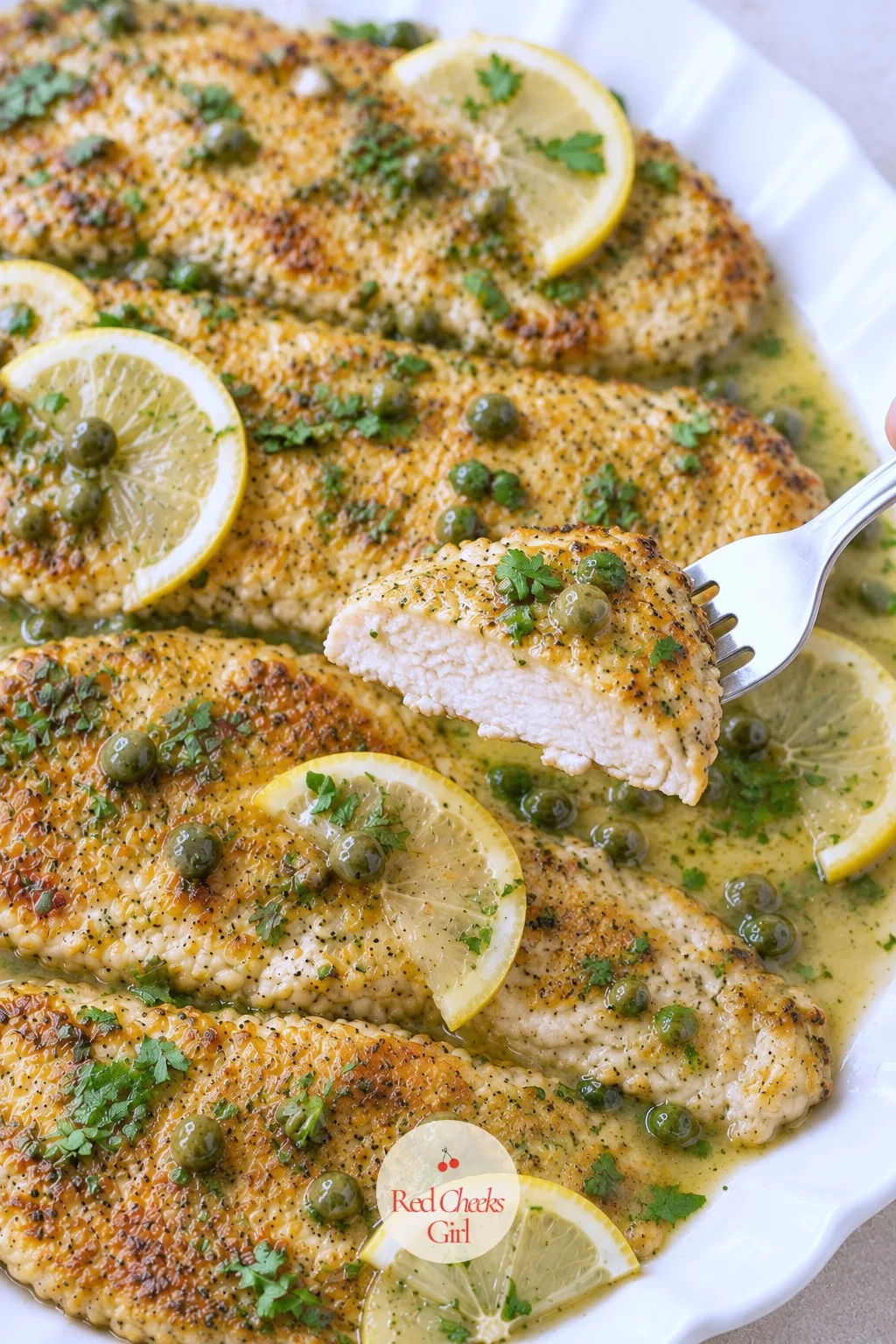
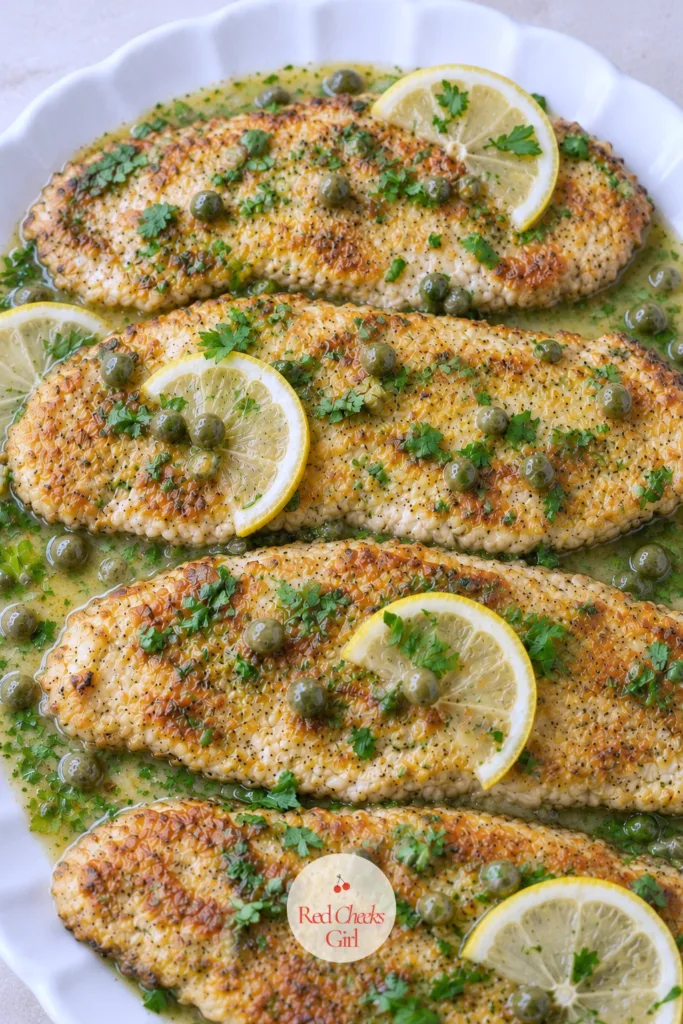
Chicken Piccata Easy
Ingredients
- 2 large boneless skinless chicken breasts (about 1 1/4 pounds total), sliced horizontally into 4 thin cutlets
- 3/4 teaspoon salt divided
- 1/2 teaspoon black pepper divided
- 1/2 cup all-purpose flour for dredging
- 2 tablespoons olive oil
- 5 tablespoons unsalted butter cold, cut into pieces, divided
- 3 cloves garlic minced
- 1/2 cup dry white wine or additional chicken broth for a non-alcoholic version
- 1/2 cup low-sodium chicken broth
- 1/4 cup fresh lemon juice about 2 lemons
- 3 tablespoons capers drained and rinsed
- 2 tablespoons chopped fresh parsley
- 1 lemon thinly sliced, for garnish
Instructions
- Slice each chicken breast horizontally into two thin cutlets, then place them between sheets of plastic wrap and pound with a meat mallet until they are an even 1/4 inch thick all over.
- Season both sides of each cutlet with the salt and pepper, using about half the amount now and saving the rest for the sauce.
- Spread the flour on a plate and dredge each cutlet lightly on both sides, shaking off the excess so only a thin coating remains.
- Heat the olive oil and 1 tablespoon of the butter in a large skillet over medium-high heat until the butter stops foaming and the oil shimmers.
- Lay the cutlets in the skillet without crowding, working in two batches if needed, and cook 3 minutes per side until golden brown and the centers reach 165 degrees F; transfer to a plate.
- Lower the heat to medium, add the minced garlic to the now-empty skillet, and stir for 30 seconds until fragrant but not browned.
- Pour in the white wine, scraping up the browned bits from the bottom of the pan with a wooden spoon, and simmer for 2 minutes until the liquid is reduced by half.
- Stir in the chicken broth, lemon juice and capers, and simmer for 3 minutes until the sauce reduces slightly and smells bright and lemony.
- Remove the skillet from the heat and whisk in the remaining cold butter, two tablespoons at a time, until the sauce turns glossy and coats the back of a spoon.
- Slide the chicken cutlets back into the skillet, spoon the sauce over the top, and let them sit in the warm sauce for 2 minutes to soak in flavor.
- Rest the pan off the heat for 2 minutes so the sauce settles and does not separate.
- Scatter the chopped parsley and lemon slices over the chicken and serve immediately.
Good to Know
Frequently Asked Questions
Can I make chicken piccata without wine?
Yes, chicken broth with a little extra lemon juice replaces the wine well. The sauce loses some depth but still turns out bright and glossy, and it keeps the dish fully alcohol-free.
What can I use instead of capers?
Chopped green olives give a very similar salty, briny punch. Use about the same amount and add them at the same point the capers would normally go into the sauce.
Why did my piccata sauce turn greasy instead of smooth?
The butter likely went in while the pan was still too hot and separated. Pull the pan off the heat, add a splash of cold water, and whisk in a few more cold butter pieces to bring it back together.
Can I use chicken thighs instead of chicken breasts?
Breasts work better here because thighs are made of smaller muscles that pull apart rather than flatten evenly under a mallet. Thighs can still be used, just expect a less uniform cutlet.
What is the difference between chicken piccata and chicken francese?
Piccata is dredged in flour only and finished with a lemon caper sauce, while francese is dipped in egg batter before searing and usually leaves out the capers entirely.
Carbonara recipe with crisp bacon, silky parmesan egg sauce, and pasta water for shine, plus a no-eg
Creamy Cajun chicken pasta simmers in one skillet: seared chicken, three bell peppers, a smoky parme
15 copycat restaurant recipes inspired by Olive Garden, Chipotle, Chick-fil-A and more, baked, saute
Leave a Reply