

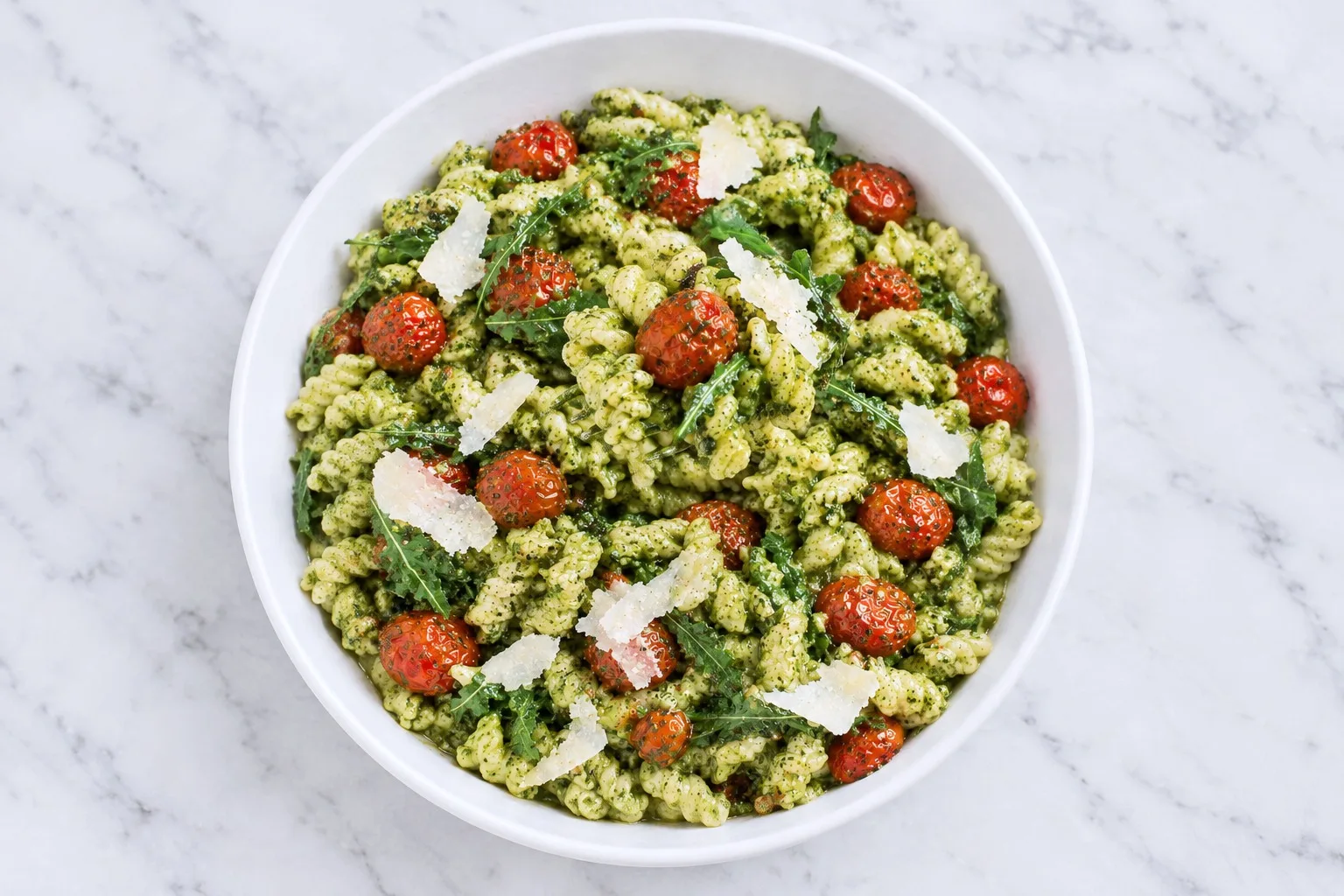
Creamy pesto pasta turns a handful of pantry basics into the kind of dinner someone photographs before they eat it. One skillet holds the whole thing: blistered tomatoes, a silky basil cream, short pasta and a last scatter of arugula and parmesan. It feeds four around a table or a dozen hands reaching for a shared platter at a party.
This post contains affiliate links. If you buy through them, I may earn a small commission at no extra cost to you.
Table of Contents
A Dinner That Looks Like You Tried Harder
Jarred pesto out of a bottle has a flat, almost metallic taste, and the oil on top separates into a dull film the moment it touches hot pasta. Creamy pesto pasta fixes both problems in one pan, with real basil ground fresh and a cream sauce that actually clings instead of pooling at the bottom of the bowl.
The whole thing builds in one skillet: tomatoes blister first, cream goes in next, pesto turns it green, then the pasta and a last handful of arugula finish it off. Nothing waits in a second pot, and nothing goes cold while you wash up another pan.
At a party it does double duty, a main course for four around a table, or a shared skillet set in the middle for people to spoon onto their own plates. Shaved parmesan on top does the dressing up; you do none of the extra work.
Start the table with something like a burrata appetizer with roasted tomatoes, basil and crostini if people are mingling before they sit, since it shares the same basil and tomato mood without repeating the pasta itself.
The Ingredients That Make the Sauce Work
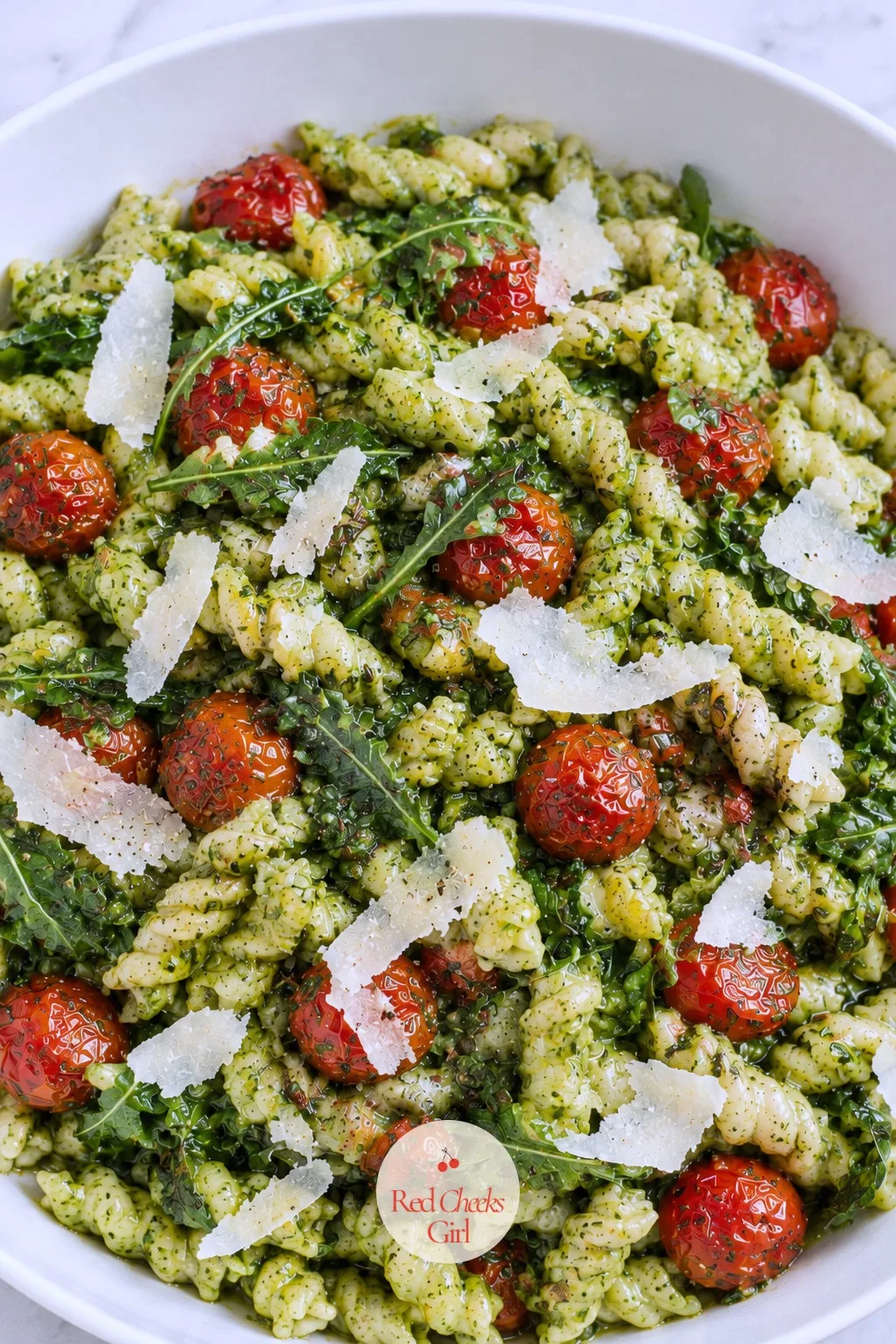
Basil, pine nuts and garlic are the real engine here, and all three want to be fresh rather than previously jarred. Pine nuts bring a buttery softness that walnuts and almonds only approximate, so toast them properly and the whole pesto tastes rounder for it.
Parmesan and olive oil carry the salt and the silk. Grate the parmesan yourself if you can, since the pre-shredded kind is cut with a starch that keeps it from melting smoothly into a sauce.
Heavy cream, not milk or half-and-half, is what gives the sauce its body here. It has enough fat to hold together with the pesto’s oil instead of splitting into two separate layers in the pan, which is the actual difference between a sauce that coats a fork and one that just sits next to the pasta.
A short, ridged pasta like fusilli, shells or casarecce catches the sauce in its curves and holds the tiny bits of garlic and pine nut in a way a flat noodle cannot.
Cherry tomatoes bring sweetness once they blister, and a handful of arugula at the very end adds the pepper and the bitterness the dish would be missing without it.
This is a dish built on dairy and tree nuts, so skip it or swap carefully if anyone at the table avoids either one; regular pasta also means gluten unless you switch to a gluten-free short shape.
How to Make It
This comes together in under 40 minutes with one skillet and one pot for the pasta water. Read through the ingredient list once before starting, since the pesto, the tomatoes and the sauce all move fast once the pasta hits its last minute of cooking.
Toast the Pine Nuts
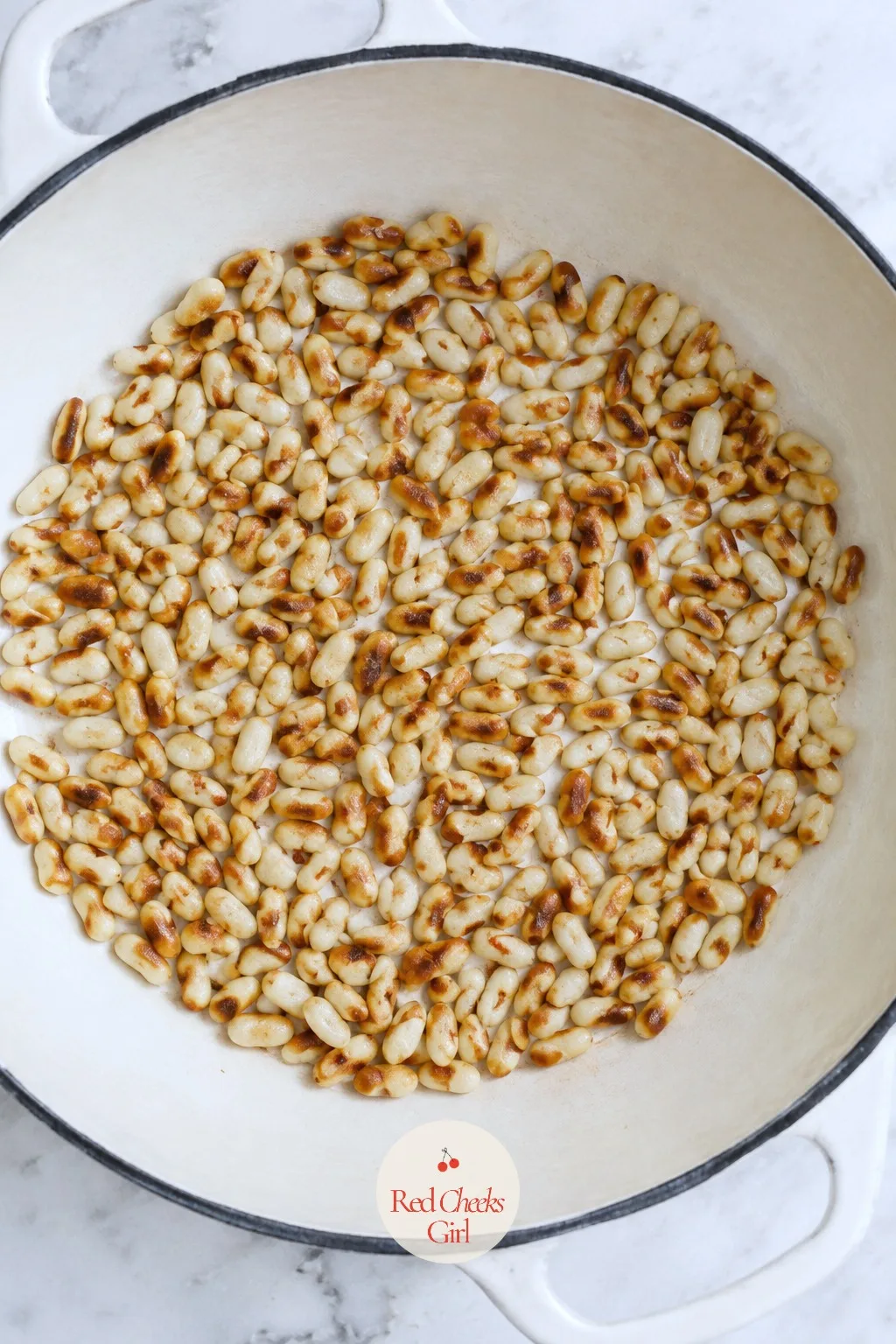
Keep them moving in the dry skillet so they color evenly instead of scorching in one spot. Pull them the second they smell toasted; they keep cooking for a few more seconds off the heat.
Blend the Basil Pesto
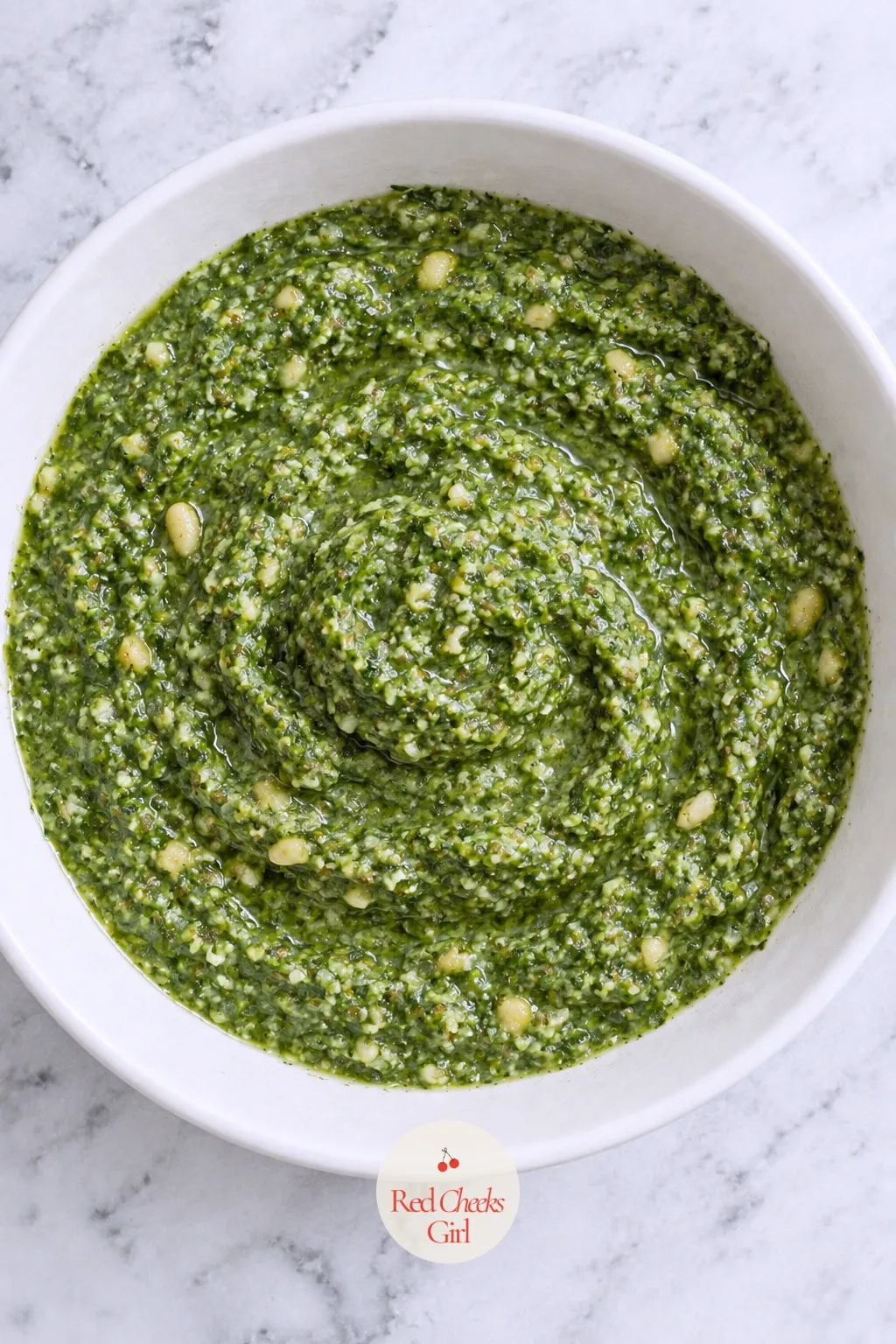
Work the basil, pine nuts, garlic and parmesan to a fine paste before the oil goes in, then stream it in slowly so the pesto turns glossy rather than greasy. It should hold its shape in a spoon, not run off it.
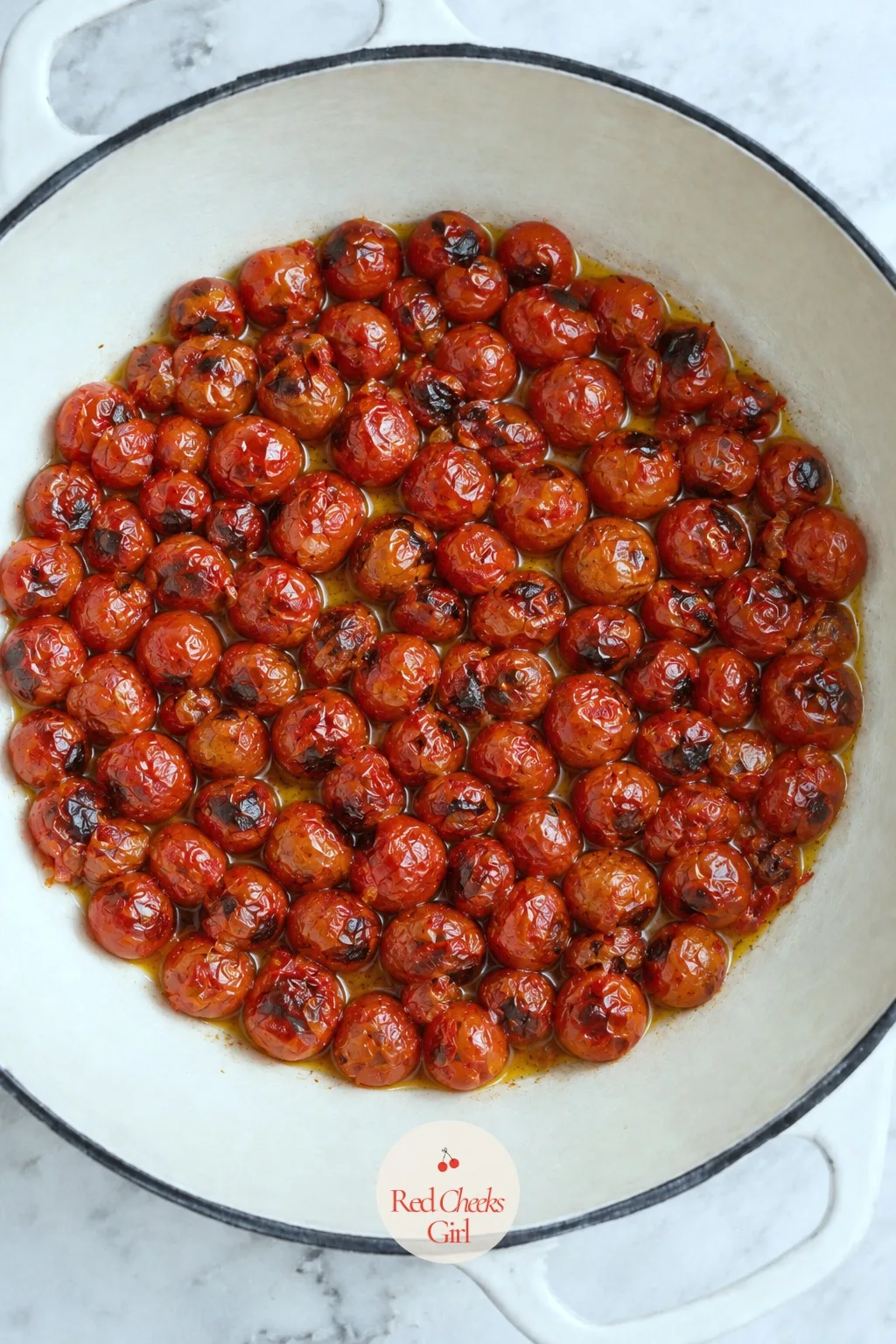
Blister the Cherry Tomatoes
Let the tomatoes sit still in the hot oil instead of stirring them constantly, so the skins actually blister and char rather than just softening. A few black spots mean the sauce underneath will taste sweeter.
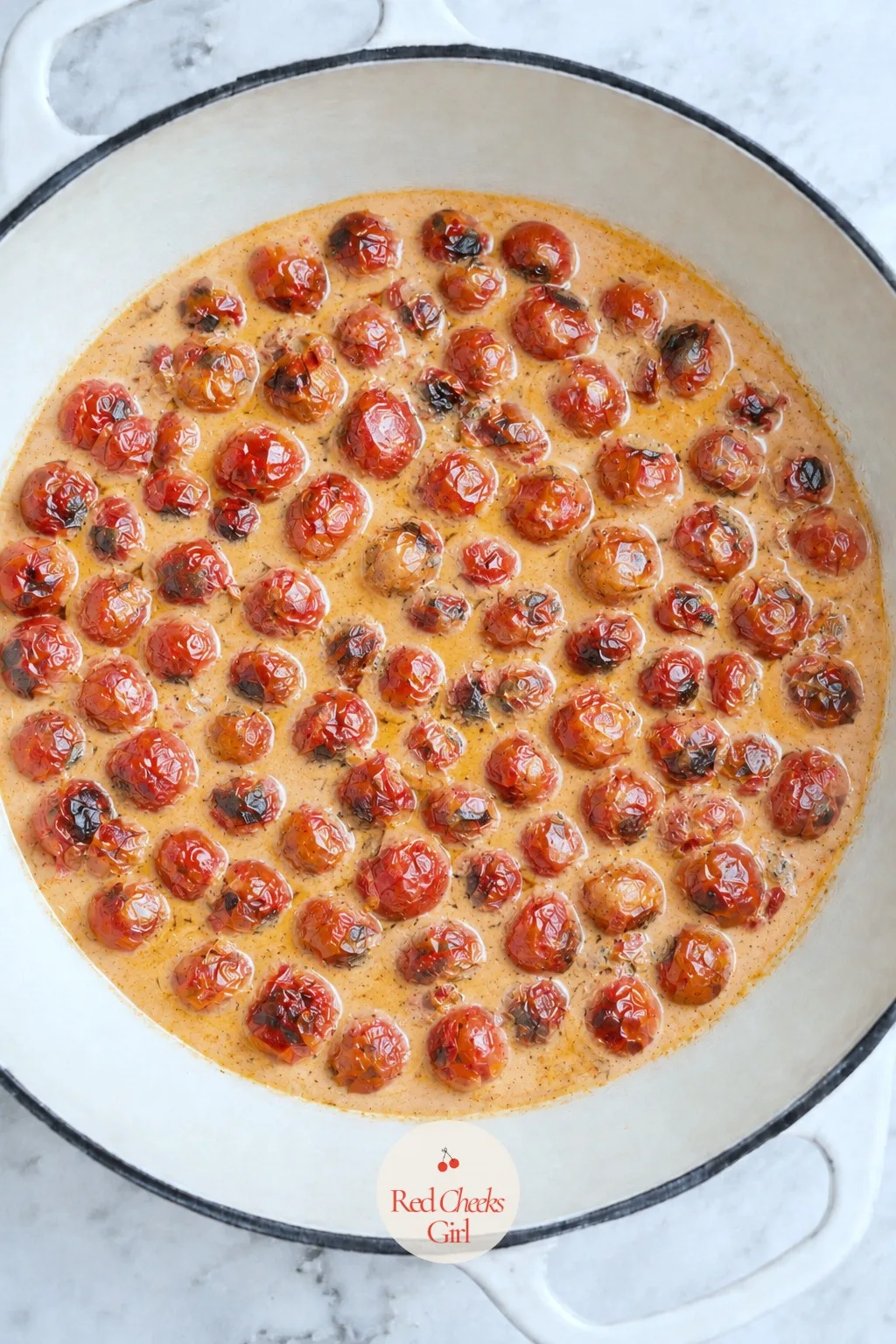
Build the Cream Sauce
Pour the cream in once the tomatoes have given up their juices, then keep the heat low so it never comes to a hard boil. A gentle simmer is what keeps a cream sauce silky instead of grainy.
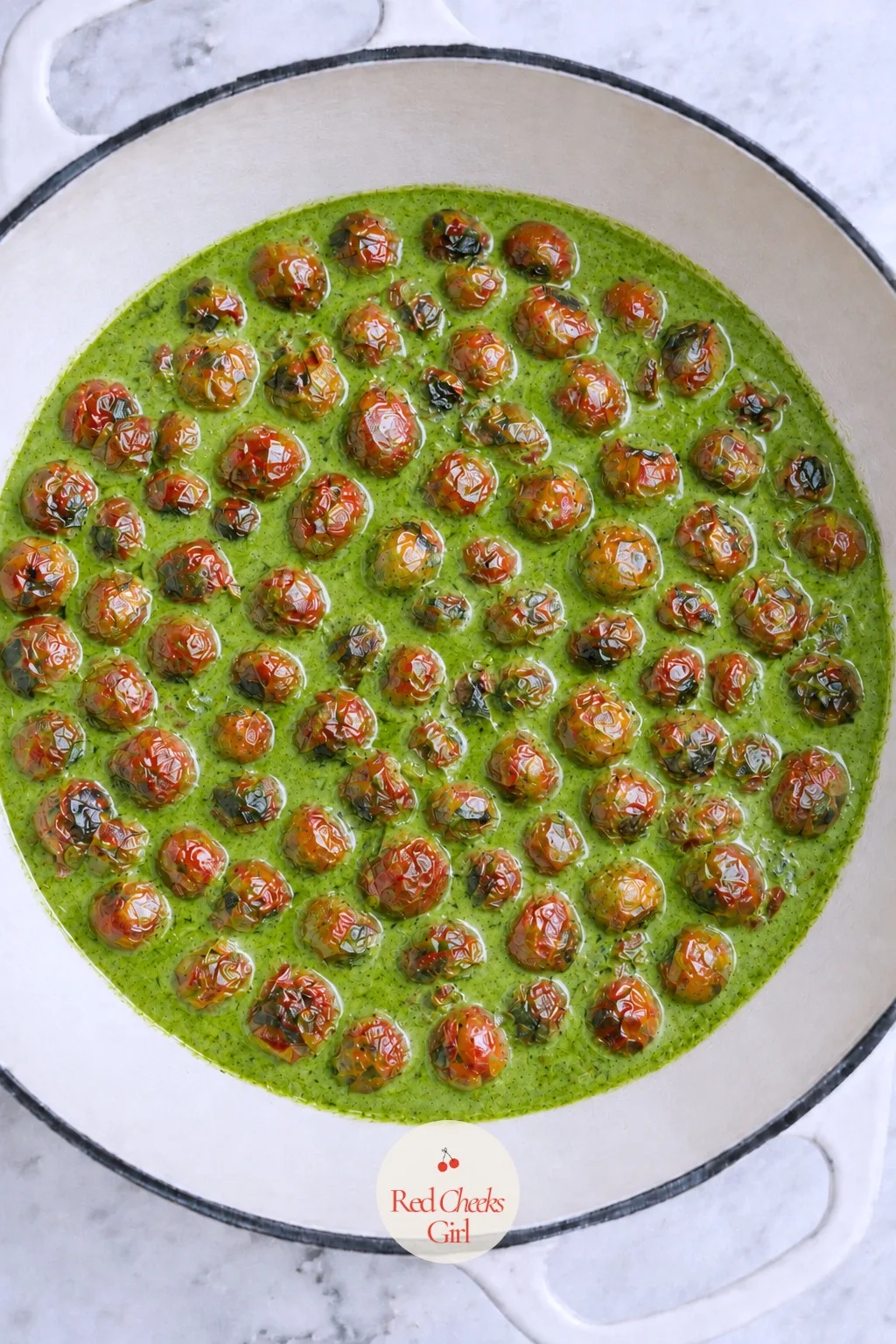
Stir the Pesto Into the Cream
Add the pesto off the highest heat so the basil keeps its color instead of turning a dull olive. The sauce should go fully green with no pale ribbons left in it.
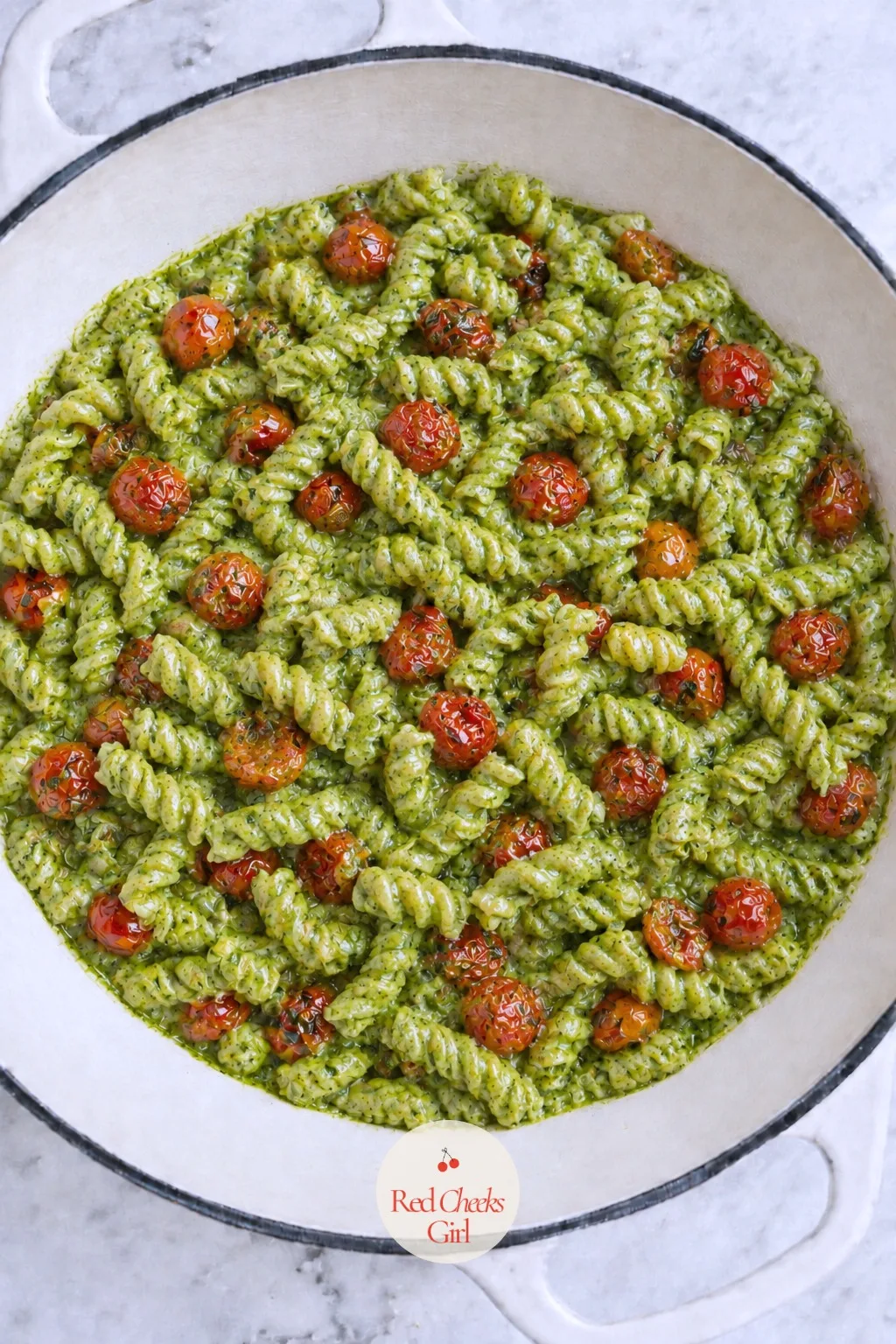
Toss the Pasta Through the Sauce
Add the pasta while the sauce is still warm and loose, tossing instead of stirring so every spiral gets coated. A splash more pasta water now is cheaper than a dry plate later.
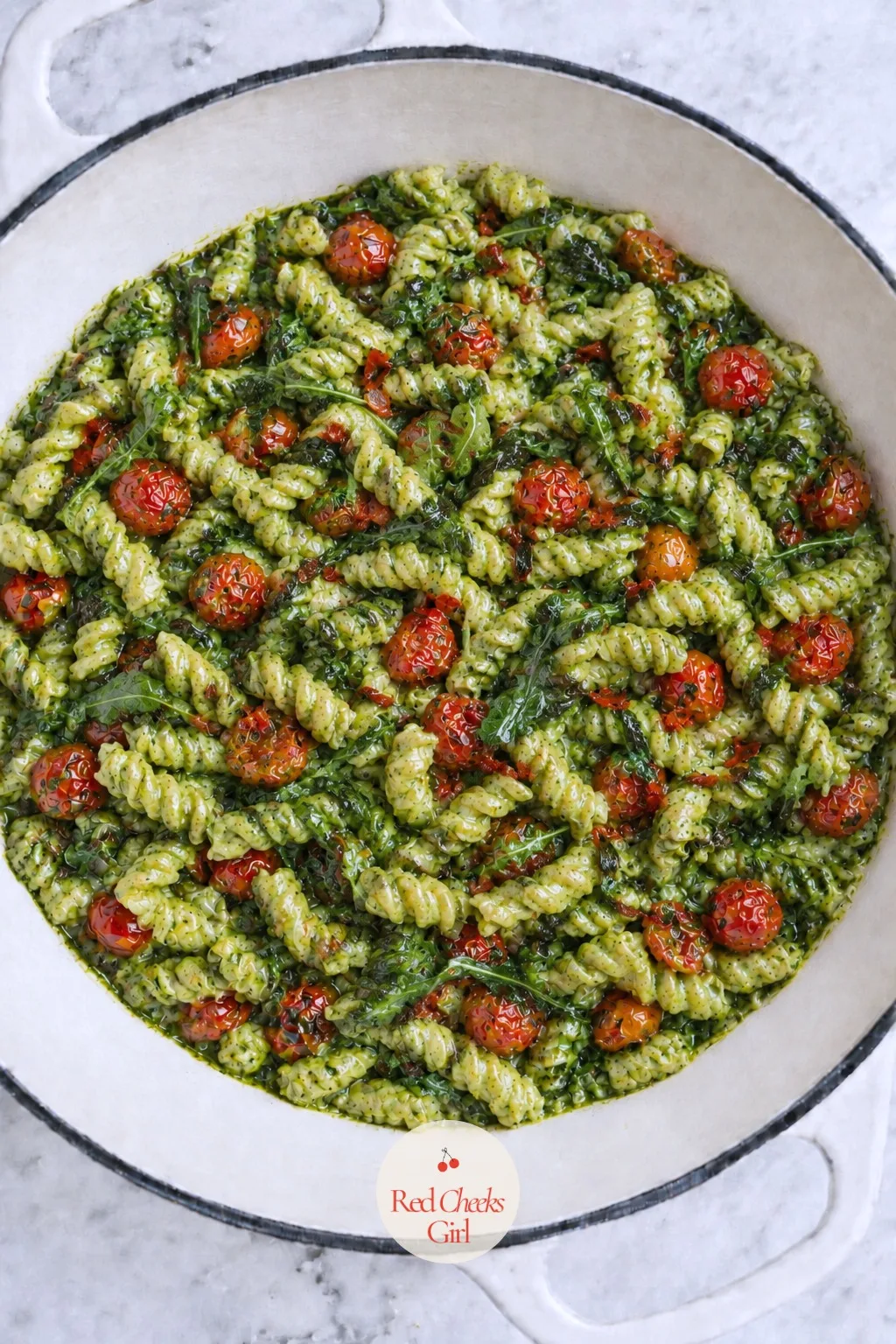
Fold in the Arugula
Add the arugula off the heat so it wilts just enough to lose its stiffness without turning to mush. It should still show some structure, not disappear into the sauce.
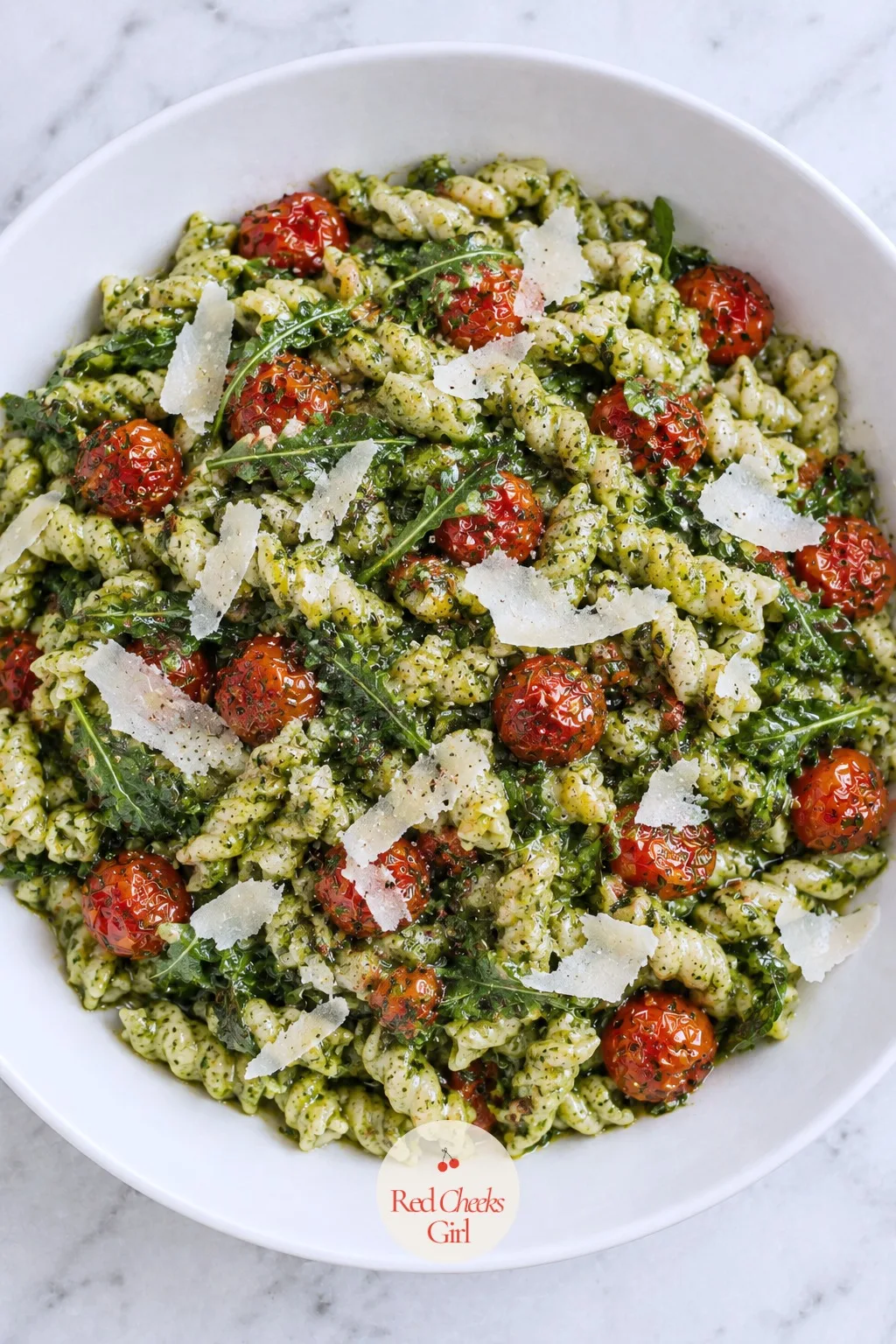
Serve It Right Away
Pile the pasta onto a platter while the sauce still looks glossy rather than tacky, then finish with shaved parmesan right before it goes to the table. This is the moment it photographs best, so do not let it sit.
🛍 Shopping guide
Where Creamy Pesto Pasta Usually Goes Wrong
The single biggest mistake is letting the cream sauce reach a hard boil. Cream that boils hard can break, leaving little flecks of fat floating instead of a smooth sauce, so keep the heat at a bare simmer the whole time it is in the pan.
Keeping the sauce green and silky instead of a dull khaki comes down to timing, not luck. Stir the pesto in only once you have pulled the pan back from the highest heat, since high heat is what oxidizes the basil and turns a bright green sauce into something closer to army green.
Skipping the reserved pasta water is the second most common slip. That starchy water is what lets the cream and the oil in the pesto bind into one sauce instead of sitting apart, so add it a little at a time rather than all at once.
Season at the very end, not at the start. Parmesan and pesto both already carry salt, and a sauce seasoned too early before those flavors concentrate usually ends up too salty by the time it reaches the table.
Swaps That Still Taste Like the Original
For a heartier plate, season two boneless chicken breasts with salt and pepper and grill them, about 6 minutes a side over medium-high heat until a thermometer at the thickest part reads 165 degrees F, then slice and lay them over the finished pasta instead of stirring them in, so the crust stays crisp.
The same lemon herb marinade used for grilled chicken skewers with peppers, red onion and a lemon herb marinade works just as well brushed over the chicken breasts here.
No pine nuts in the house, or they are simply too expensive this week. Walnuts or slivered almonds, toasted the same way, make a pesto that is just as nutty for a fraction of the price.
Half-and-half will work in place of heavy cream if that is what is open in the fridge, though the sauce will be noticeably thinner and will need less pasta water to loosen it. Reach for full heavy cream when the dish is going to a party table and needs to hold its texture for a while.
Good quality store-bought basil pesto saves almost all of the prep time if homemade is not happening tonight; taste it before adding extra salt since brands vary.
Baby spinach can stand in for the arugula if pepperiness is not what you are after, and any short pasta shape in the cupboard, from penne to orecchiette, will carry the sauce just as well as fusilli.
What to Put Next to It at a Party
Garlic bread next to a cream sauce is not an accident, it is the correct move. Something like cheesy garlic bread sliced like an accordion gives people something to drag through the extra sauce left on the plate.
A sharper, cooler dish balances the richness of the cream. A steak salad recipe with blue cheese, tomatoes and balsamic dressing on the side gives the table some acidity and crunch the pasta does not have on its own.
A crisp, unoaked white wine such as pinot grigio or sauvignon blanc cuts through the cream nicely if the evening calls for it; keep a non-alcoholic sparkling water with lemon on the table too, and pour responsibly for anyone who is driving home.
Keep the rest of the table simple. A single vegetable side or a bowl of olives is plenty; the pasta itself, with its tomatoes and arugula, is already doing the work of a vegetable course.
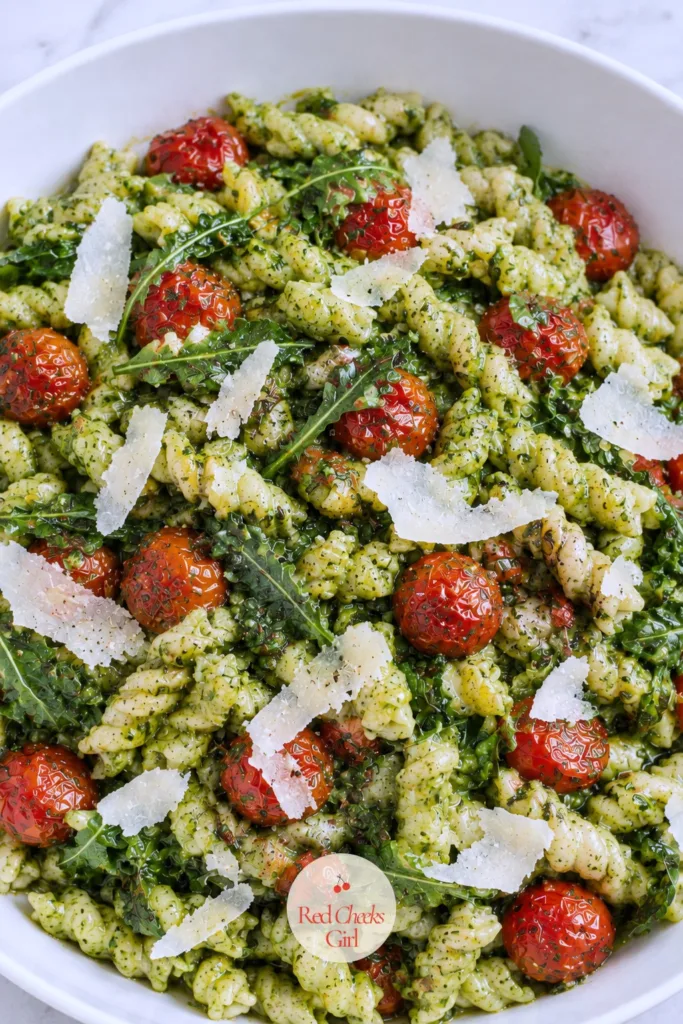
Creamy Pesto Pasta
Ingredients
- 12 ounces short pasta such as fusilli, shells or casarecce
- 1/3 cup pine nuts
- 2 cups packed fresh basil leaves about 2 ounces
- 2 cloves garlic peeled
- 1/2 cup finely grated parmesan plus more shaved for serving
- 1/2 cup olive oil plus 1 tablespoon
- 1/4 teaspoon salt plus more to taste
- 2 cups cherry tomatoes
- 1 cup heavy cream
- 2 cups baby arugula
- black pepper to taste
Instructions
- Bring a large pot of well salted water to a boil over high heat. Add 12 ounces short pasta and cook according to the package time, stirring once, until just al dente with a slight bite at the center. Before draining, scoop out and reserve 1 cup of the pasta water, then drain the pasta in a colander.
- Set a cream enameled skillet over medium heat with no oil and add 1/3 cup pine nuts. Toast them, shaking the pan every 30 seconds, for 3 to 4 minutes, until they turn golden brown and smell toasted, then tip them onto a plate.
- In a food processor, combine the toasted pine nuts, 2 cups packed fresh basil leaves, 2 peeled garlic cloves and 1/2 cup finely grated parmesan. Pulse 8 to 10 times until everything is finely chopped, scraping down the sides once.
- With the processor running, pour in 1/2 cup olive oil in a slow, steady stream until the pesto turns smooth and thick enough to hold a ribbon off a spoon. Season with 1/4 teaspoon salt, pulse once more, and scrape the pesto into a white ceramic bowl.
- Wipe out the skillet and set it back over medium-high heat with the remaining 1 tablespoon olive oil. Add 2 cups cherry tomatoes and cook, shaking the pan occasionally instead of stirring, for 4 to 5 minutes, until the skins blister, split and blacken in a few spots.
- Lower the heat to medium-low and pour 1 cup heavy cream into the skillet with the tomatoes. Stir gently and let it come to a bare simmer, with small bubbles only at the edge of the pan, for 2 to 3 minutes, until the sauce turns a soft coral color and coats the back of a spoon.
- Stir the basil pesto into the cream sauce a spoonful at a time, off the highest heat, until it turns a uniform bright green with no streaks of white left. Add 1/4 cup of the reserved pasta water and stir until the sauce loosens to a pourable, silky consistency.
- Add the drained pasta to the skillet and toss with tongs for 1 to 2 minutes, until every piece is glossy and coated in green sauce. Add more reserved pasta water, a tablespoon at a time, if the sauce clings in clumps rather than coating smoothly.
- Take the skillet off the heat, scatter in 2 cups baby arugula, and fold it through just until the leaves wilt slightly and darken from the residual heat, about 30 seconds.
- Taste the pasta and season with salt and black pepper as needed. Pesto and parmesan both carry salt on their own, so add extra gradually rather than all at once.
- Pile the pasta onto a large platter or into wide bowls. Shave extra parmesan over the top with a vegetable peeler and serve right away while the sauce is still warm and glossy.
Good to Know
Frequently Asked Questions
Why did my pesto turn brown before I even used it?
Pesto browns from oxidation, the same reaction that darkens a cut apple, once the basil’s surface meets air. Pour a thin layer of olive oil over the top before storing it, and it stays green far longer.
Can I make the pesto in a blender instead of a food processor?
A blender works fine, though it packs the basil tighter against the blades. Pulse in short bursts and scrape down the sides often so the pesto does not turn overly smooth and oily.
Can I use shrimp instead of chicken in this recipe?
Yes, shrimp is a quick swap for the grilled chicken version. Sauté peeled, deveined shrimp in a separate pan for about 2 minutes a side until pink and opaque, then scatter over the finished pasta.
Why is my creamy pesto sauce greasy instead of smooth?
A greasy sauce usually means the oil in the pesto separated from the cream instead of binding into it. Toss the pasta with a splash of reserved pasta water over low heat to pull it back together.
Can I double this recipe for a crowd?
Yes, but cook the cream sauce in two batches rather than doubling it in one pan. A larger volume of cream thins out and takes longer to come together properly, which risks a grainy result.
13 dinner ideas for two, from beef Wellington to a shared skillet cookie. Small-batch recipes with e
Lamb chops recipe with a garlic rosemary marinade, seared in cast iron and finished with a bright mi
14 Italian Christmas dinner recipes, from antipasto and lasagna to Sunday gravy meatballs and make-a
Leave a Reply