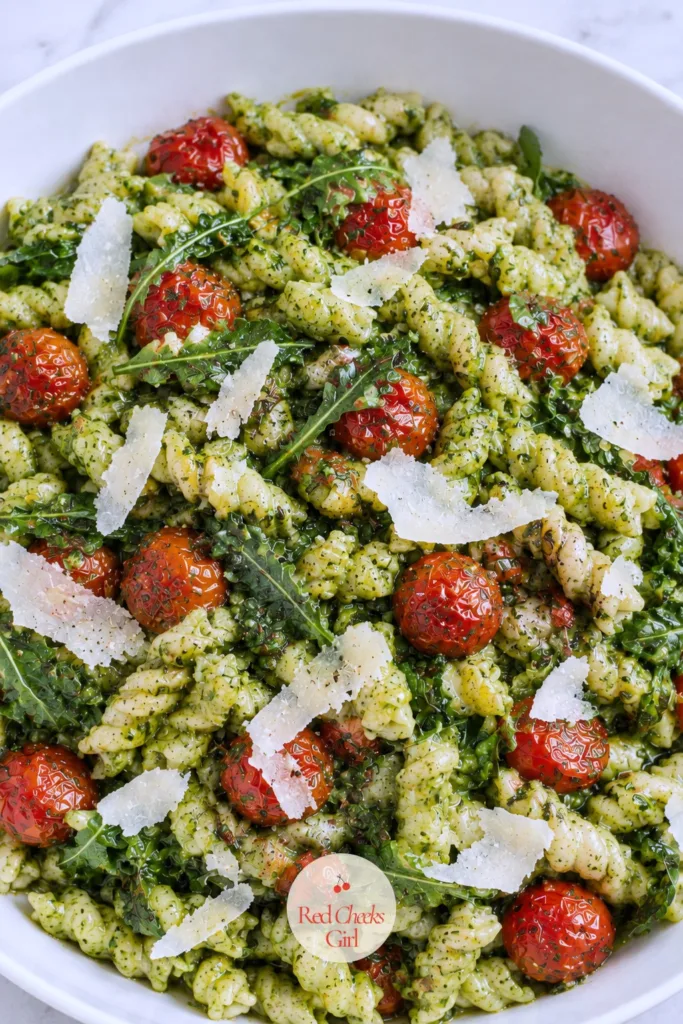
Creamy Pesto Pasta
Ingredients
- 12 ounces short pasta such as fusilli, shells or casarecce
- 1/3 cup pine nuts
- 2 cups packed fresh basil leaves about 2 ounces
- 2 cloves garlic peeled
- 1/2 cup finely grated parmesan plus more shaved for serving
- 1/2 cup olive oil plus 1 tablespoon
- 1/4 teaspoon salt plus more to taste
- 2 cups cherry tomatoes
- 1 cup heavy cream
- 2 cups baby arugula
- black pepper to taste
Instructions
- Bring a large pot of well salted water to a boil over high heat. Add 12 ounces short pasta and cook according to the package time, stirring once, until just al dente with a slight bite at the center. Before draining, scoop out and reserve 1 cup of the pasta water, then drain the pasta in a colander.
- Set a cream enameled skillet over medium heat with no oil and add 1/3 cup pine nuts. Toast them, shaking the pan every 30 seconds, for 3 to 4 minutes, until they turn golden brown and smell toasted, then tip them onto a plate.
- In a food processor, combine the toasted pine nuts, 2 cups packed fresh basil leaves, 2 peeled garlic cloves and 1/2 cup finely grated parmesan. Pulse 8 to 10 times until everything is finely chopped, scraping down the sides once.
- With the processor running, pour in 1/2 cup olive oil in a slow, steady stream until the pesto turns smooth and thick enough to hold a ribbon off a spoon. Season with 1/4 teaspoon salt, pulse once more, and scrape the pesto into a white ceramic bowl.
- Wipe out the skillet and set it back over medium-high heat with the remaining 1 tablespoon olive oil. Add 2 cups cherry tomatoes and cook, shaking the pan occasionally instead of stirring, for 4 to 5 minutes, until the skins blister, split and blacken in a few spots.
- Lower the heat to medium-low and pour 1 cup heavy cream into the skillet with the tomatoes. Stir gently and let it come to a bare simmer, with small bubbles only at the edge of the pan, for 2 to 3 minutes, until the sauce turns a soft coral color and coats the back of a spoon.
- Stir the basil pesto into the cream sauce a spoonful at a time, off the highest heat, until it turns a uniform bright green with no streaks of white left. Add 1/4 cup of the reserved pasta water and stir until the sauce loosens to a pourable, silky consistency.
- Add the drained pasta to the skillet and toss with tongs for 1 to 2 minutes, until every piece is glossy and coated in green sauce. Add more reserved pasta water, a tablespoon at a time, if the sauce clings in clumps rather than coating smoothly.
- Take the skillet off the heat, scatter in 2 cups baby arugula, and fold it through just until the leaves wilt slightly and darken from the residual heat, about 30 seconds.
- Taste the pasta and season with salt and black pepper as needed. Pesto and parmesan both carry salt on their own, so add extra gradually rather than all at once.
- Pile the pasta onto a large platter or into wide bowls. Shave extra parmesan over the top with a vegetable peeler and serve right away while the sauce is still warm and glossy.
Good to Know
If the sauce looks tight after sitting even a minute, a splash more hot pasta water brings it right back to silky before it reaches the table.