

Cream Puffs Recipe: A Classic Dessert With Crisp Choux and Vanilla Cream
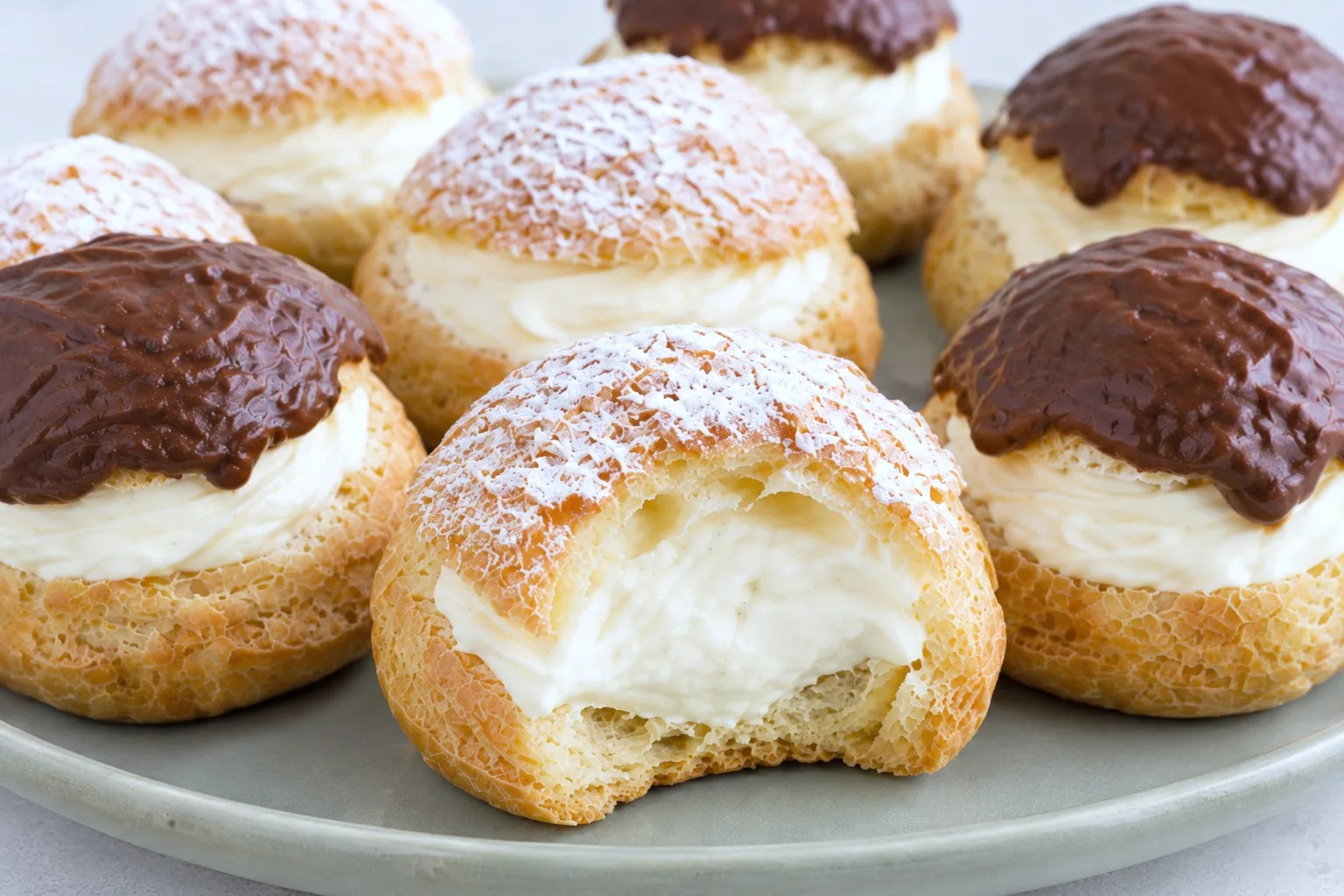
A cream puffs recipe has a reputation for being fussy, and most of that reputation is undeserved. The dough is four pantry staples cooked in one saucepan, and once the shells puff gold and hollow, the hard part is already behind you.
This post contains affiliate links. If you buy through them, I may earn a small commission at no extra cost to you.
Table of Contents
A Dessert That Looks Harder Than It Is
A cream puffs recipe has a reputation for being fussy, and most of that reputation is undeserved. The dough is four pantry staples cooked in one saucepan, and nothing about piping a round mound takes a steady hand.
What she will notice first is the shell: crisp, deeply golden, hollow enough to hold a real spoonful of cream. Bite through it and the inside stays light, never doughy, because the whole method hinges on steam rather than any leavener.
If a crowd needs feeding and a cake feels like too much commitment, cream puffs scale up without much extra work: double the dough, pipe another tray, and the oven does the rest.
Anyone drawn to the same vanilla cream in a different shape might prefer a crepe cake with vanilla cream instead, for a dessert that slices rather than pops open.
Nobody needs a stand mixer or a pastry course for this. A saucepan, a mixing bowl and a piping bag, or two spoons if that is what sits in the drawer, get the job done.
The Ingredients That Matter Most
Water alone bakes a crisper, more hollow shell; milk alone bakes a softer, richer one. Splitting the liquid between whole milk and water gets both: snap on the outside, enough tenderness inside to hold the cream without shattering.
Unsalted butter does double duty here. It carries flavor, and its water content turns to steam in the oven, which is the real engine behind the puff. A margarine swap flattens both the taste and the rise, so skip it.
Four eggs, added one at a time once the dough has cooled slightly, build the structure that traps that steam. Cold eggs straight from the fridge slow this down, so give them ten minutes on the counter first.
The filling leans on egg yolks and cornstarch for a pastry cream that holds its shape once piped, with real vanilla extract doing most of the flavor work. Folding in whipped heavy cream afterward keeps it from eating like a dense custard.
How to Make It
This part is the whole method, start to finish: cook the dough, pipe it, bake it with the oven door shut, then fill the cooled shells with cream lightened until it floats. The recipe contains eggs, dairy and wheat flour; it stays nut-free unless a praline topping gets added.
Dry the dough on the stove
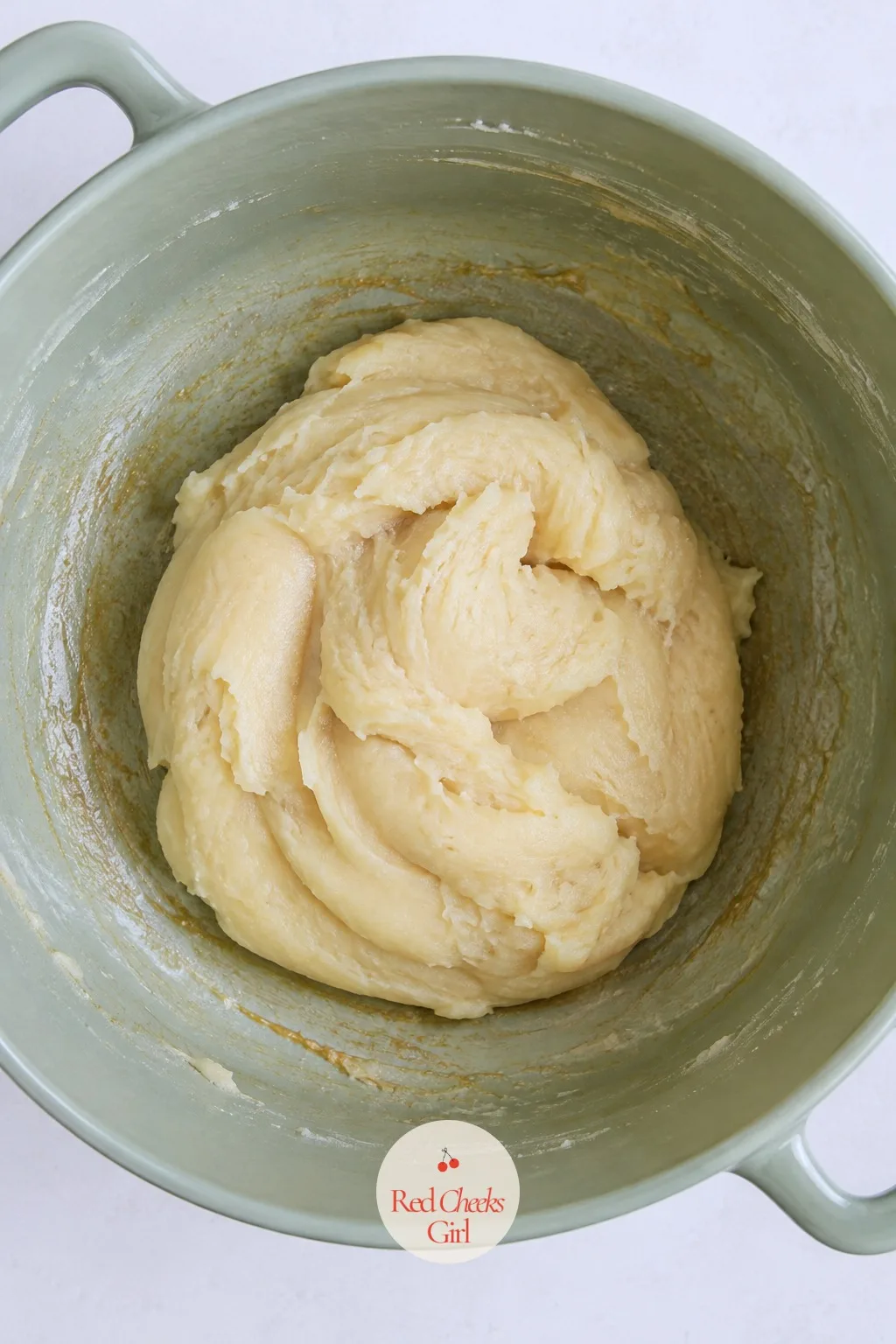
Once the flour goes in, the dough pulls into a single smooth ball and leaves a thin film on the pan. That film is the signal to stop: the dough is dry enough to take the eggs.
Pipe the dough into rounds
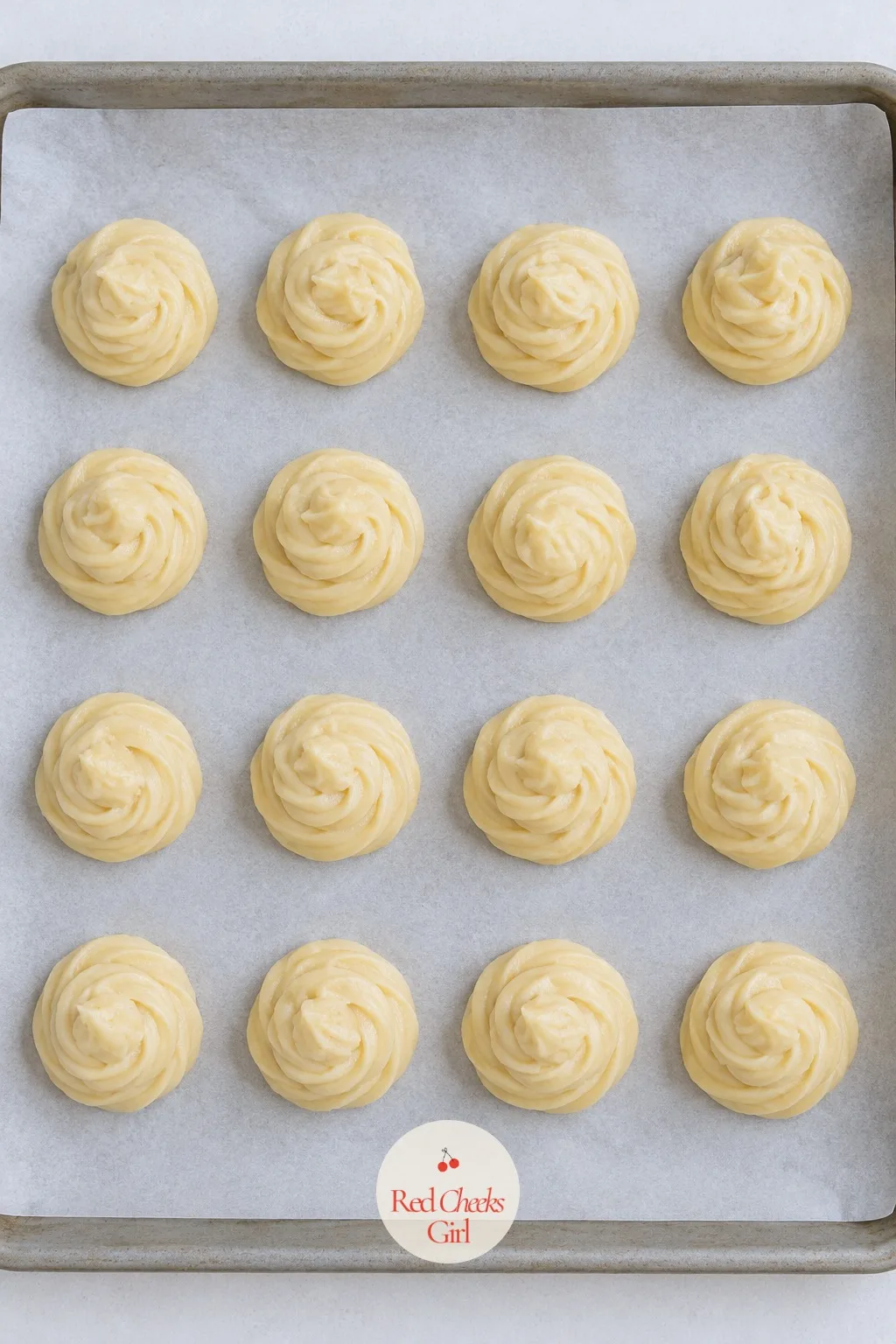
Sixteen even mounds sit spaced apart, smoothed flat on top with a wet fingertip. They look almost too plain right now; the oven is about to change that completely.
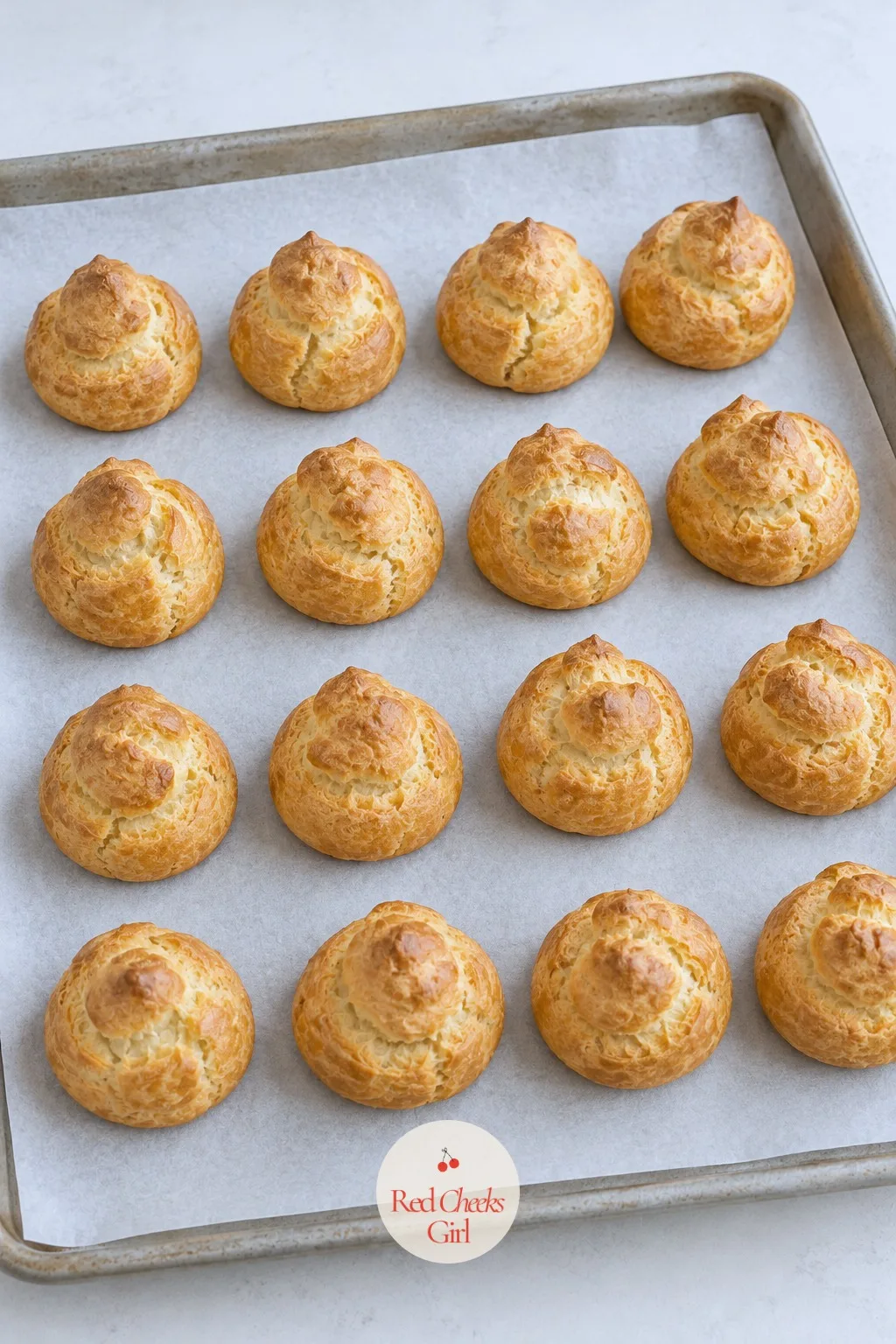
Bake until deeply golden and hollow
The mounds have tripled in size, gone deeply golden and gone firm when tapped. Break one open to check for a dry, mostly hollow center before pulling the whole tray.
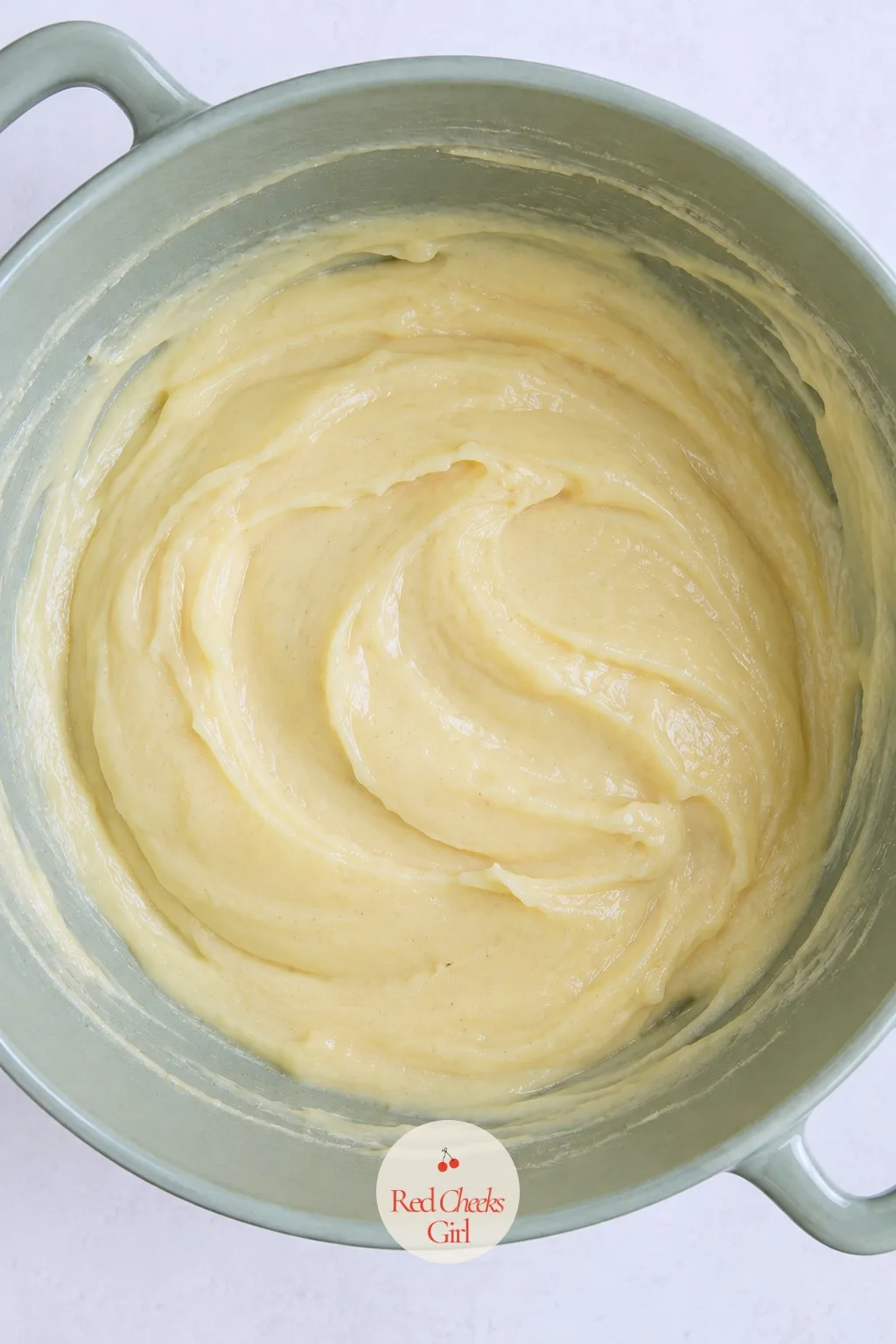
Cook the pastry cream until thick
The custard goes from thin and yellow to thick and glossy in about two minutes of steady whisking. It should coat the back of a spoon and hold a line when you drag a finger through it.
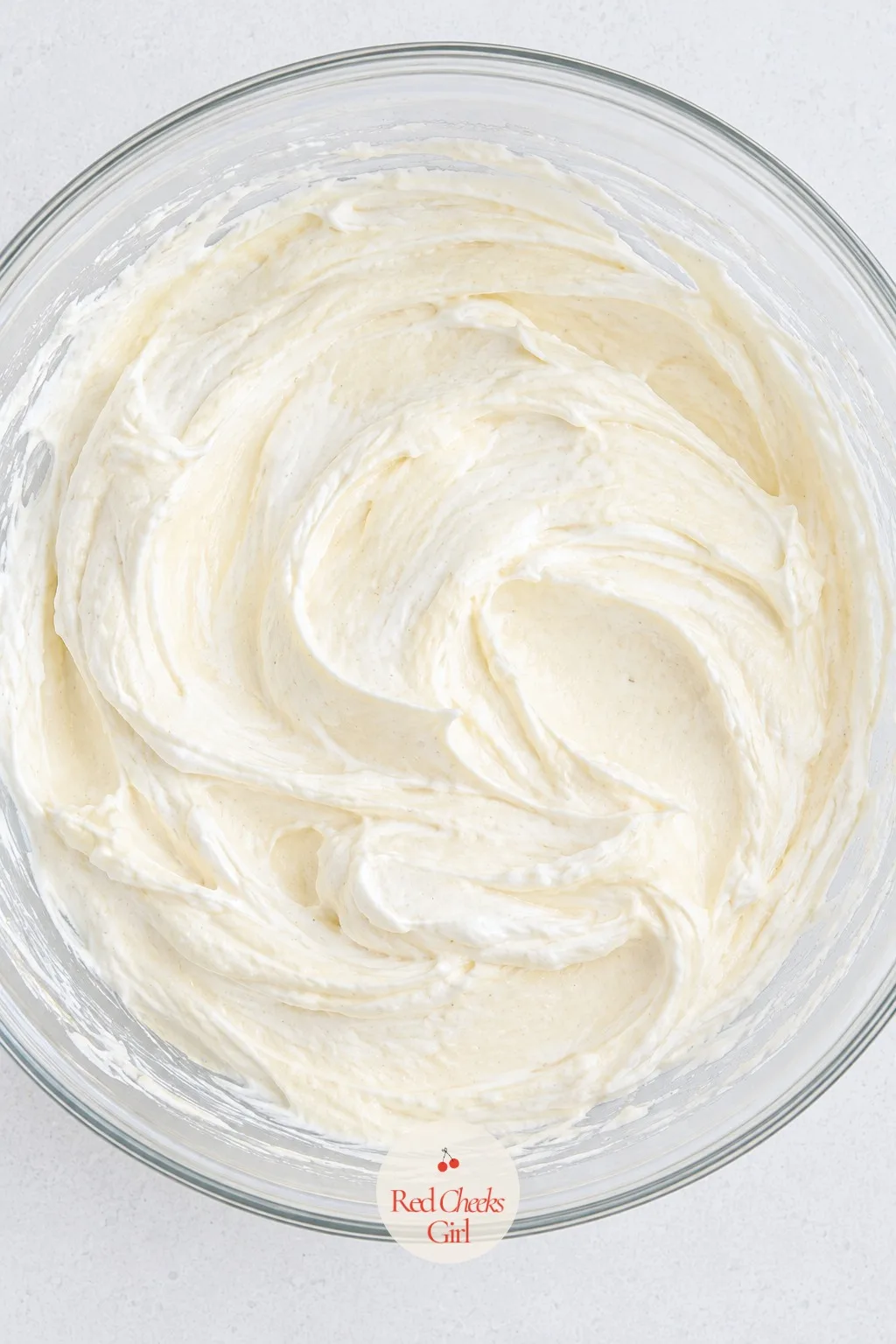
Lighten the cream with whipped cream
Folded gently, the dense pastry cream turns pale, airy and almost cloud-like. Stop folding the moment the streaks disappear, before the whipped cream has a chance to deflate.
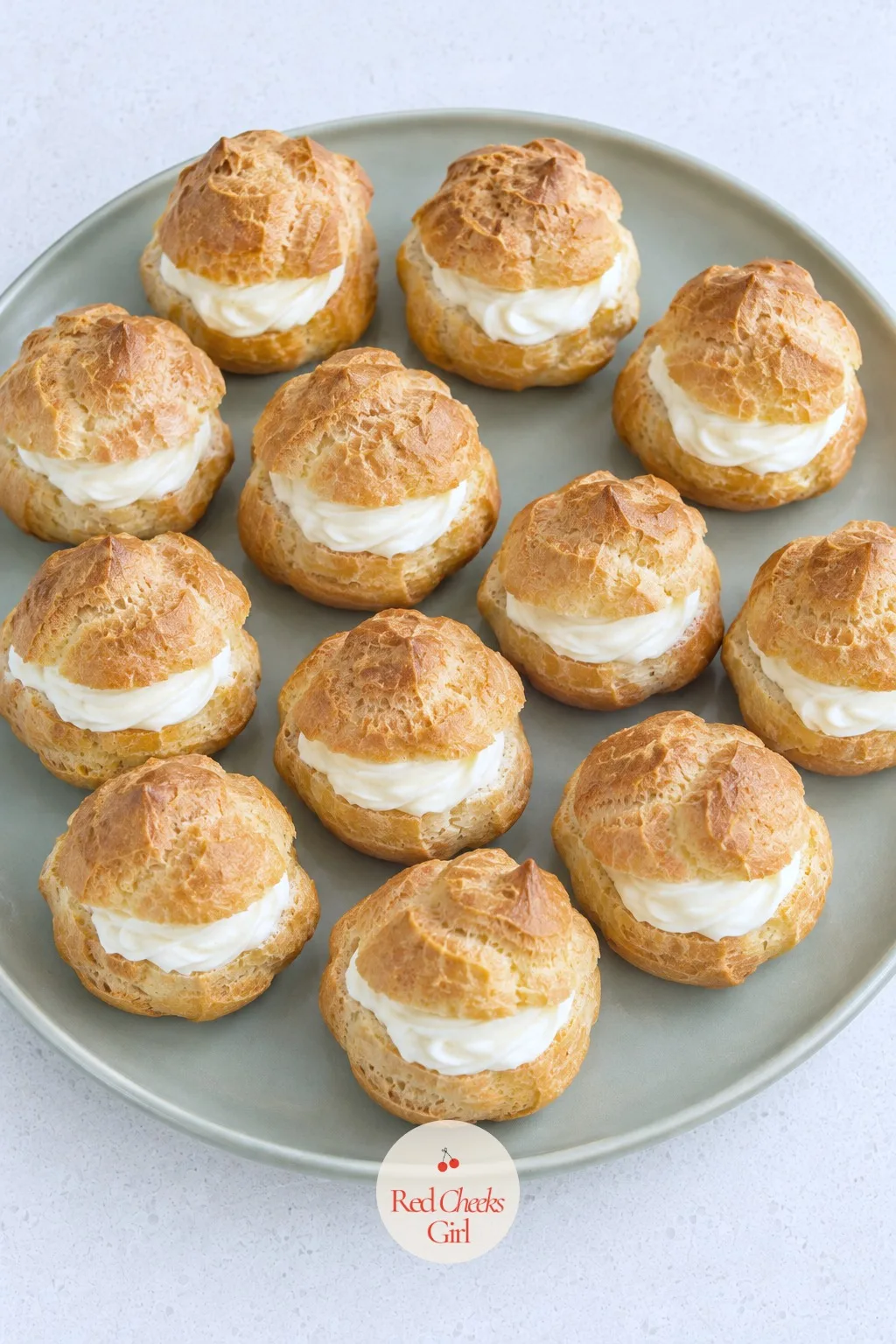
Fill the cooled shells
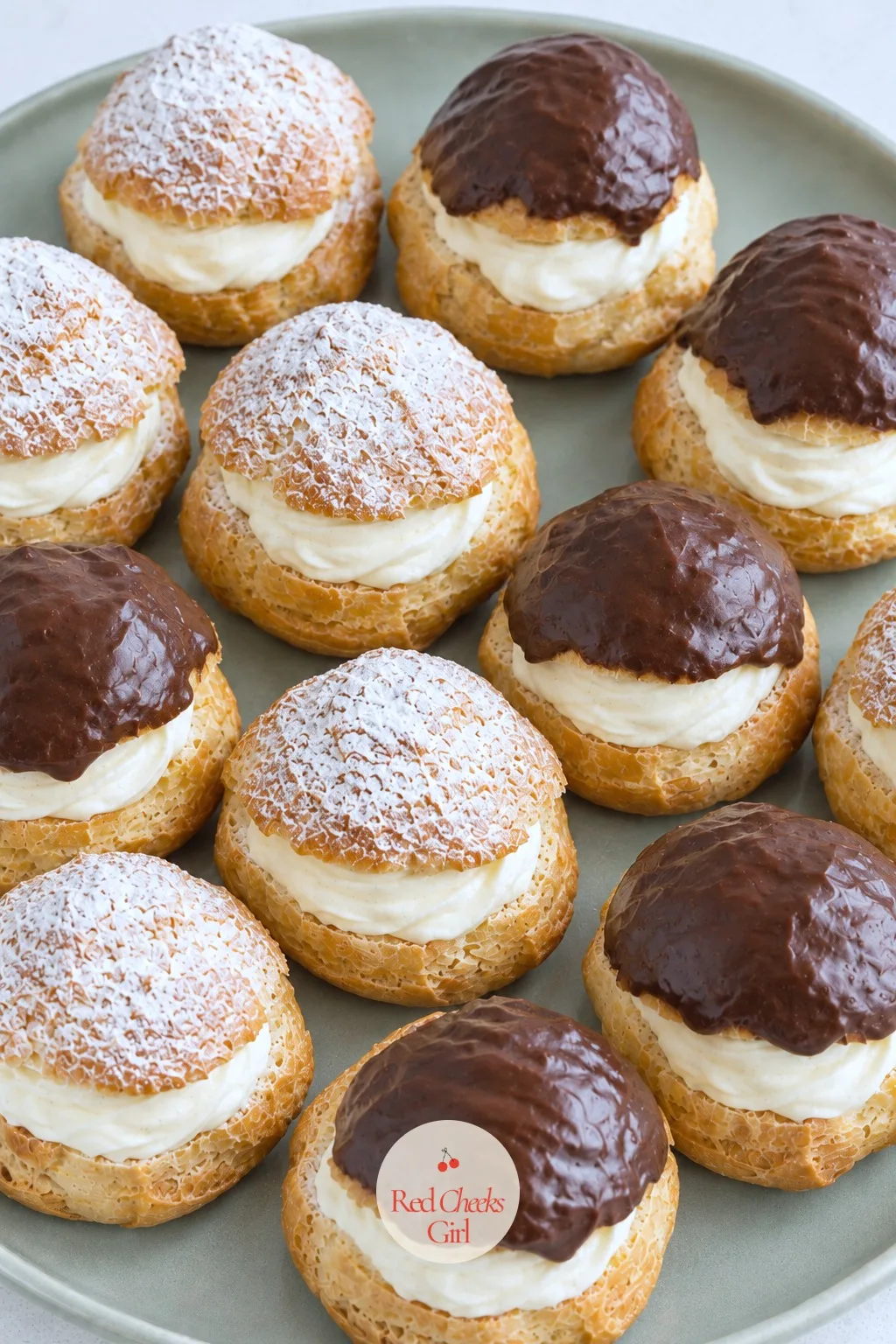
Each shell gets a generous pipe of cream before the top goes back on. Arranged together, they already look like the finished dessert, just without the final dusting.
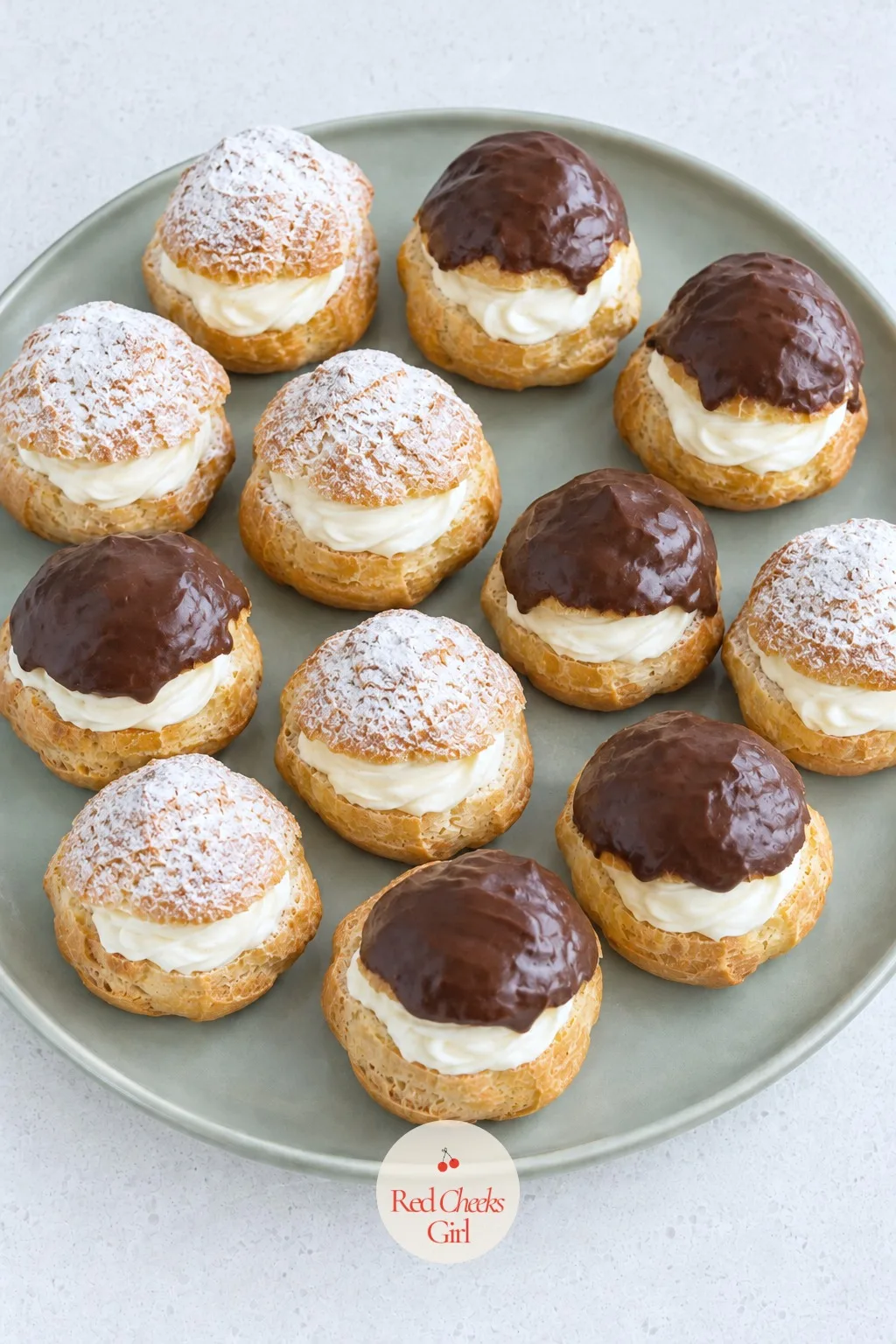
Dust or dip and serve
A fine snow of powdered sugar, or a glossy dip in chocolate ganache, finishes the plate. Serve within a few hours, while the shells are still at their crispest.
🛍 Shopping guide
Where Cream Puffs Go Wrong, and the Fix
Almost every deflated batch traces back to one moment at the oven. Set a timer, walk away from the kitchen if you have to, and trust the first 20 minutes.
Soft, sunken shells usually mean moisture that never cooked off. Break one shell open before pulling the whole tray: the inside should look dry, not shiny or spongy.
Cold butter, cold eggs and a rushed panade all work against the rise, since. Ten minutes on the counter for the eggs costs nothing and changes the outcome.
A full piping bag is tempting, but rather than a flood. Pipe, peek inside, and stop a little before it feels like enough.
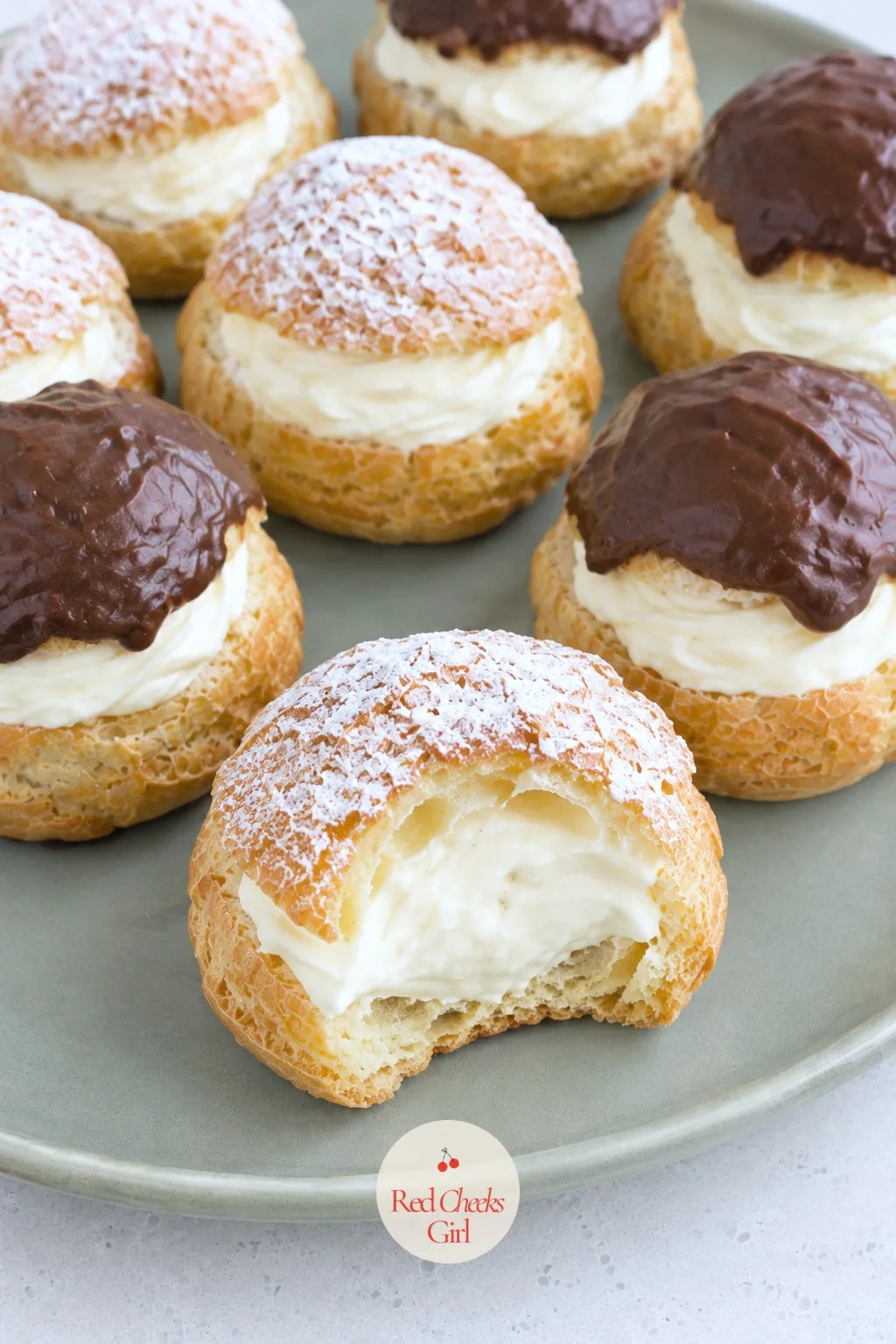
Swaps and Substitutions
No whole milk in the fridge, or a dairy-light household? Water alone for the dough still puffs a shell, just a touch crisper and less golden; replace the milk measure with more water and nothing else changes.
Short on time, short on patience, or feeding people who will not know the difference: instant vanilla pudding whisked with a little extra milk and folded with whipped cream fills a shell almost as well as scratch pastry cream, and it skips the stovetop step entirely.
Dipping the tops in dark or white chocolate ganache turns these into something closer to profiteroles, and that same chocolate-forward instinct is what drives a lot of the ideas in 14 Valentines Dessert Recipes in Red, Pink and Chocolate, if a color-matched platter is the goal for a specific occasion.
A spoonful of orange zest, instant espresso powder, or a few tablespoons of powdered freeze-dried raspberries stirred into the finished cream shifts the flavor without touching the dough at all. Gluten-free one-to-one flour blends work in the choux in a pinch, though the shells puff a little less dramatically.
What to Serve Them With at a Party
Cream puffs rarely need a solo spot on the table; they do better crowded in among other small things people can eat standing up. A dessert board built around 12 Birthday Party Treats to Fill a Dessert Table gives them good company without anyone running out of room.
For a daytime gathering with a tablecloth and good light, the same puffs sit comfortably next to the small sandwiches and scones from 18 Tea Party Food Ideas for Her Birthday Afternoon With the Girls, where a bite-sized cream pastry is exactly the register the whole spread is working in.
Closer to midnight, dipped in dark chocolate and set on a mirrored tray, they fit right into the lineup from 14 New Year’s Eve Dessert Recipes That Sparkle on the Midnight Table.
A glass of chilled sparkling wine alongside is lovely for the adults in the room; pour it for guests who want it, and keep the night easy for anyone driving home.
For something simpler, a pot of strong coffee or espresso does most of the work: the bitterness cuts through the sweet cream and nobody needs an explanation of what is on the plate.
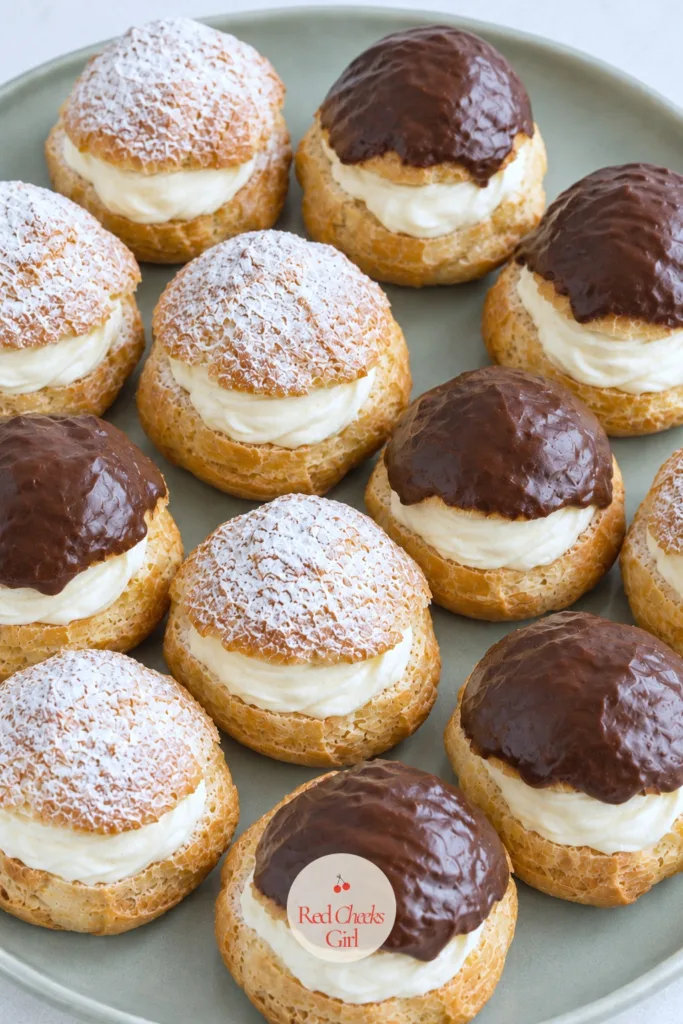
Cream Puffs Recipe
Ingredients
- 1/2 cup whole milk
- 1/2 cup water
- 1/2 cup unsalted butter cut into pieces
- 1 tablespoon granulated sugar
- 1/4 teaspoon salt
- 1 cup all-purpose flour
- 4 large eggs room temperature
- 2 cups whole milk for the pastry cream
- 4 large egg yolks
- 1/2 cup granulated sugar for the pastry cream
- 1/4 cup cornstarch
- 2 tablespoons unsalted butter for the pastry cream
- 2 teaspoons vanilla extract
- 1 cup heavy cream cold
- 2 tablespoons powdered sugar plus more for dusting
- 4 ounces semisweet chocolate chopped (optional, for ganache)
- 1/2 cup heavy cream optional, for ganache
Instructions
- Combine 1/2 cup whole milk, 1/2 cup water, 1/2 cup unsalted butter, 1 tablespoon granulated sugar and 1/4 teaspoon salt in a medium saucepan set over medium heat. Bring to a full rolling boil, stirring once or twice, until the butter melts completely: this takes about 4 minutes.
- Pull the pan off the heat and dump in 1 cup all-purpose flour all at once. Stir hard with a wooden spoon until the mixture forms a single ball, then set the pan back over low heat and keep stirring for 1 full minute: the dough is ready when it pulls cleanly from the sides and leaves a thin film on the bottom of the pan.
- Scrape the hot dough into a large mixing bowl and let it sit for 2 to 3 minutes, stirring once, until it is warm rather than hot. Beat in 4 large eggs one at a time with a wooden spoon or a hand mixer, making sure each egg disappears into the dough before adding the next: the finished dough is smooth, glossy and falls off the spoon in a slow V shape.
- Spoon the dough into a piping bag fitted with a large round tip and pipe 16 mounds, each about 2 inches wide and spaced 2 inches apart, onto a baking sheet lined with parchment paper. Wet a fingertip and press down any peaks so each mound bakes into an even dome.
- Slide the sheet into a 400 degree F oven and bake for 20 minutes without opening the door even once: this is what traps the steam that puffs the shells.
- Lower the oven temperature to 350 degrees F and continue baking for 15 to 20 minutes more, until the shells are deeply golden brown and firm when tapped. Break one open to check: the inside should look dry and mostly hollow, not wet or doughy.
- Turn off the oven, prop the door open a few inches with a wooden spoon, and leave the shells inside for 5 minutes to finish drying out. Poke a small hole in the side of each shell with a skewer to let the steam escape, then move them to a wire rack and cool completely, about 30 minutes.
- While the shells cool, pour 2 cups whole milk into a clean saucepan and heat over medium heat until small bubbles ring the edge: do not let it boil.
- Meanwhile, whisk 4 large egg yolks, 1/2 cup granulated sugar and 1/4 cup cornstarch together in a bowl until pale and thick. Pour the hot milk into the egg mixture in a slow stream, whisking constantly, then pour everything back into the saucepan. Cook over medium heat, whisking constantly, for about 2 minutes, until the cream thickens to the consistency of pudding and coats the back of a spoon.
- Strain the pastry cream through a fine mesh sieve into a clean bowl and stir in 2 tablespoons unsalted butter and 2 teaspoons vanilla extract. Press a sheet of plastic wrap directly onto the surface to stop a skin from forming, then chill for at least 2 hours, until fully cold.
- Whip 1 cup cold heavy cream with 2 tablespoons powdered sugar in a clean bowl until soft peaks hold their shape. Fold the whipped cream into the chilled pastry cream in two additions, working gently, until no white streaks remain.
- Spoon the finished filling into a piping bag fitted with a round or star tip. Cut the top third off each cooled shell with a serrated knife, or poke a hole in the base, and pipe the filling generously into each one, then set the tops back in place.
- Dust the filled puffs with powdered sugar through a fine sieve, or dip the tops in melted chocolate ganache and let it set for 5 minutes at room temperature before serving.
Good to Know
Frequently Asked Questions
Why did my cream puffs deflate after baking?
Deflated cream puffs usually lost steam before the shell had fully set. Opening the oven door too early during baking can cause them to collapse due to the loss of steam and heat, and underbaked shells deflate the same way once they cool.
Can I make cream puffs ahead of time?
Yes, the unfilled shells are the part to make ahead. The baked but still unfilled shells can be made up to a day ahead of time, then filled close to serving so they stay crisp.
Can I freeze cream puffs?
Yes, you can freeze the baked, unfilled cream puffs. Thaw them at room temperature and crisp briefly in a warm oven before filling; never freeze them once they hold cream.
Should cream puffs be soft or crispy?
Cream puffs should be light, airy, golden brown and crisp when they come out of the oven. A shell that bends instead of cracking usually needed a few more minutes to bake.
Are cream puffs served cold or at room temperature?
They taste best slightly chilled or cool, especially once filled with cream. Let a filled puff sit out for about ten minutes before serving so it loses its fridge chill.
What can I use instead of heavy cream in the filling?
A lighter filling can use whipped topping or a mix of half-and-half with a stabilizer, though the texture will differ from the rich creaminess that real heavy cream gives the filling.
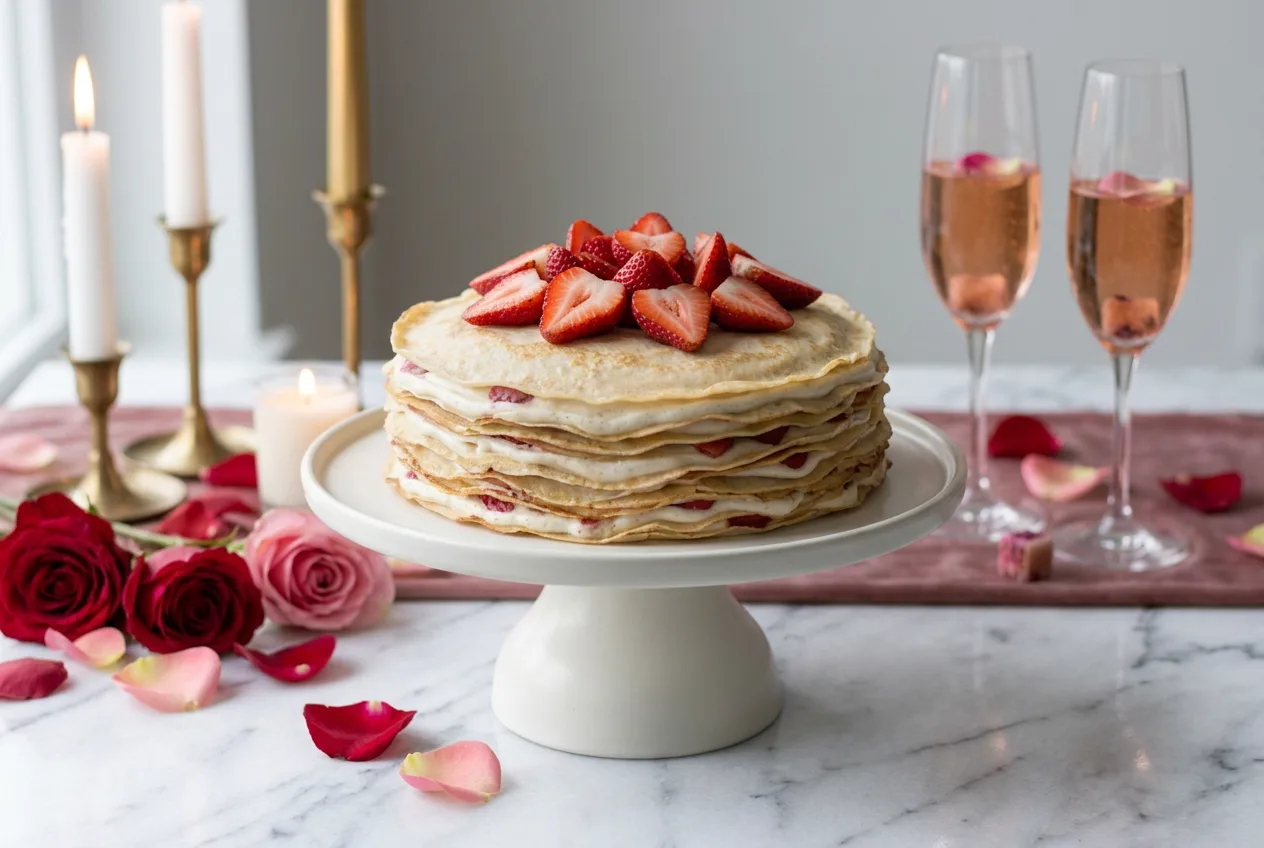
Strawberry crepe cake stacks twenty thin crepes with vanilla whipped cream and strawberries for a ch
Madeleines recipe for classic French shell cakes with brown butter, lemon zest, a chilled batter and
12 no-fuss birthday party treats that assemble fast, look beautiful at different heights and fill ev
Leave a Reply