

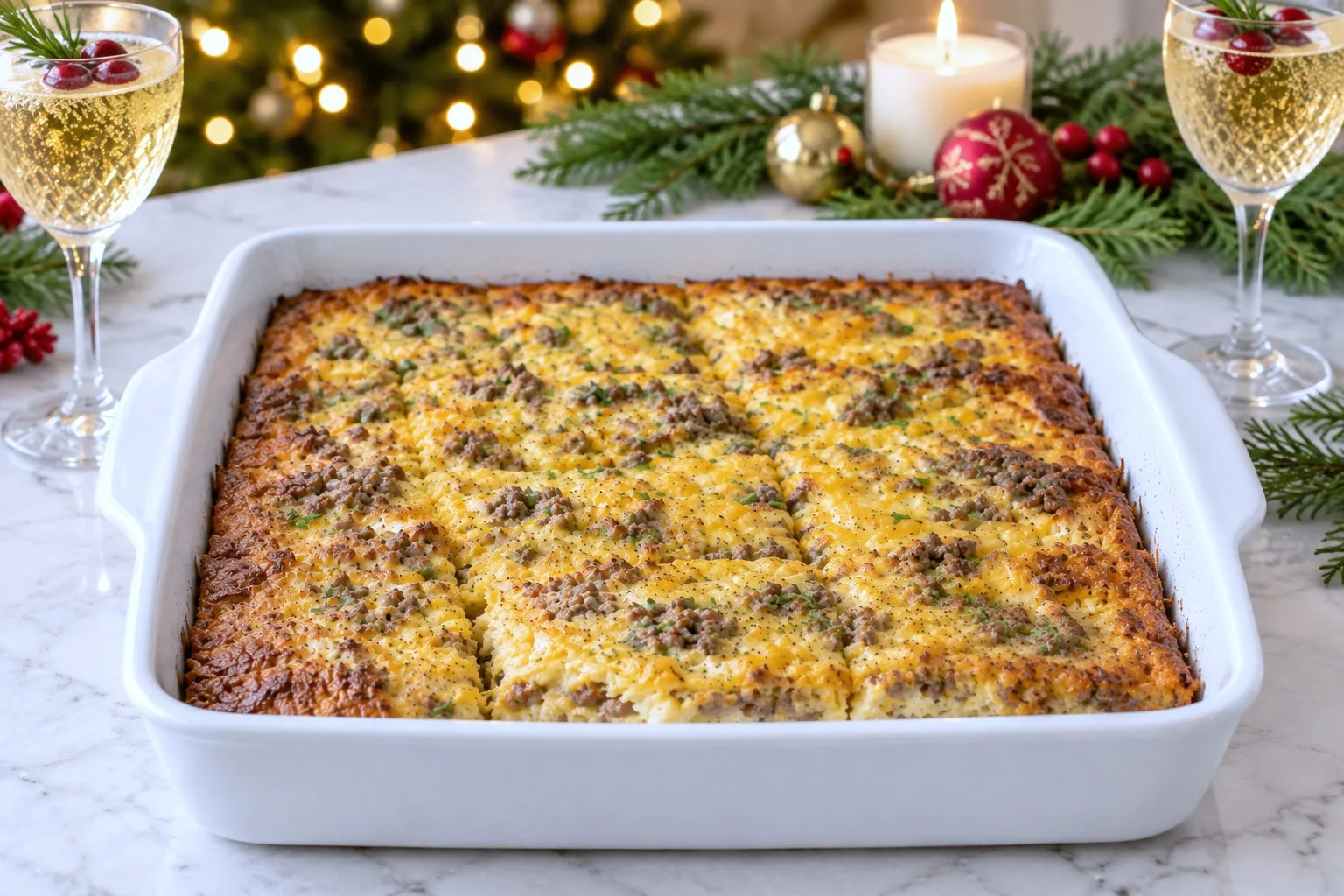
Overnight breakfast casserole solves the one real problem of Christmas morning: feeding a full house without standing at the stove while stockings get opened.
Bread, sausage and sharp cheddar soak overnight in a mustard-spiked egg custard, so the only job left at dawn is turning on the oven. It comes out puffed, golden and sliceable while the coffee is still dripping.
This post contains affiliate links. If you buy through them, I may earn a small commission at no extra cost to you.
Table of Contents
Why This One Earns Its Spot On the Table
Nobody wants to crack eggs into a pan at seven in the morning while half the house is still in pajamas arguing over the good coffee mug. This casserole moves that work to the quiet part of the evening, after the dishes are already done and the kitchen is yours again.
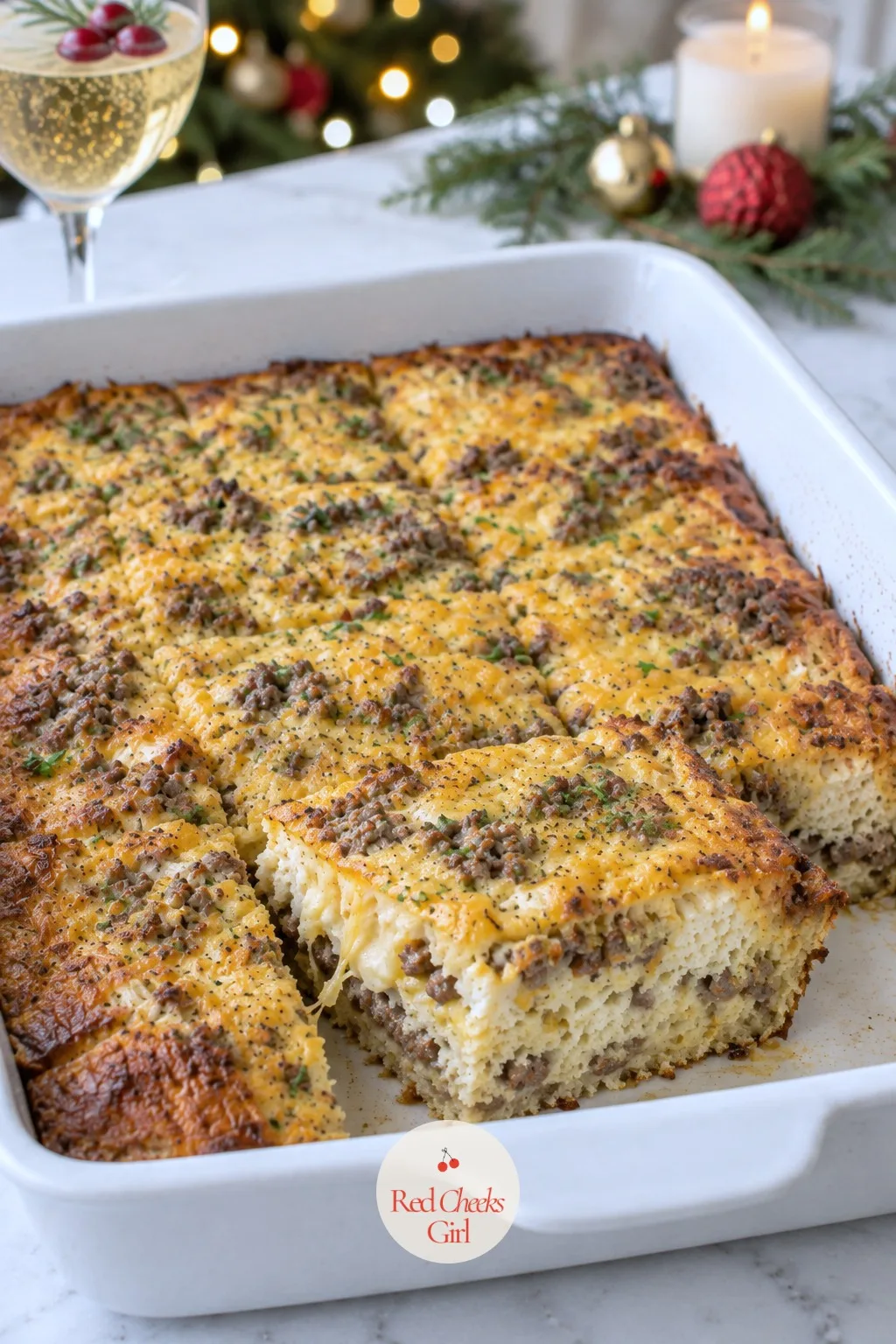
What comes out in the morning is not a tray of scrambled eggs going cold under foil. The overnight rest lets the custard soak all the way through the bread, so it bakes into something closer to a savory bread pudding: firm enough to cut into neat squares, soft all through the middle.
It also forgives a late night. Assemble it any time before bed, even after the last present is wrapped, and the fridge does the patient part while everyone sleeps.
The Ingredients That Actually Matter Here
Day-old bread is the whole trick. Soft, fresh bread collapses into paste once the custard hits it; a sturdy loaf like sourdough or French bread, cut into cubes and left out to stale a little, holds its shape and still drinks up the liquid overnight.
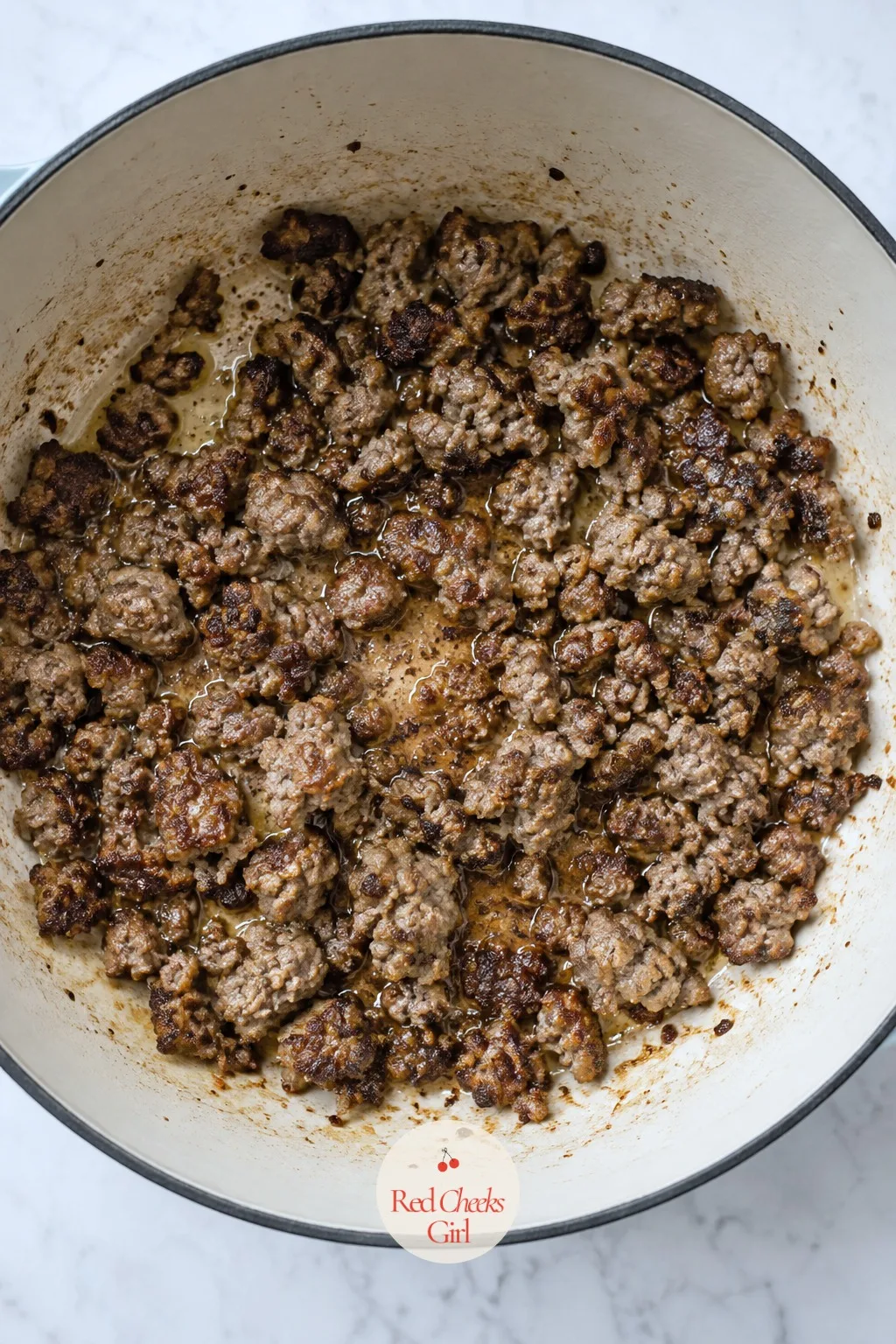
The sausage needs to be fully cooked and well drained before it ever touches the bread, because any extra grease pools at the bottom of the dish and turns the first layer soggy instead of custardy. A good eight minutes of browning in the pot, broken into small crumbles, is worth the few extra minutes.
Sharp cheddar earns its place over a milder block because it keeps its flavor after an hour in the fridge and another fifty minutes in the oven. Mild cheese tends to fade into the eggs; sharp cheddar still tastes like something at nine in the morning.
Dry mustard is the ingredient nobody notices until it is missing. It does not make the casserole taste like mustard at all; it just keeps the eggs and cheese from tasting flat and one-note, the way a pinch of salt sharpens a dessert.
How to Make It
This is the full method, start to finish: brown, layer, soak overnight, bake cold. Nothing here needs a stand mixer or a special pan, just a pot, a baking dish and a bowl you probably already own.
Brown the sausage
Crumble the sausage as it browns so no large clumps remain. It is ready once every piece has lost its pink color and the edges have gone deep brown.
Layer bread, sausage and cheddar
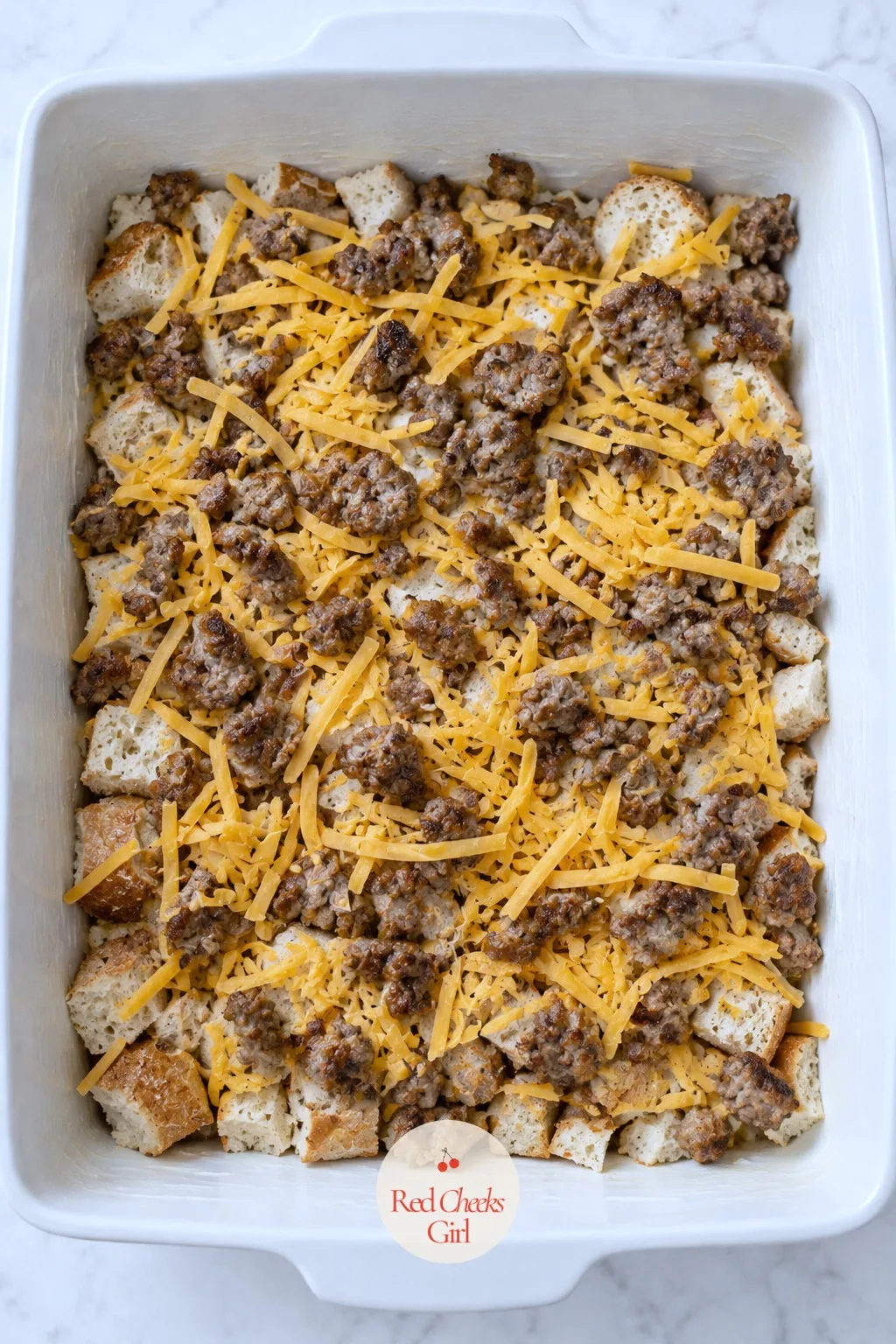
Build the layers evenly so every square gets bread, sausage and cheese. The dish should look about half full before the custard goes in.
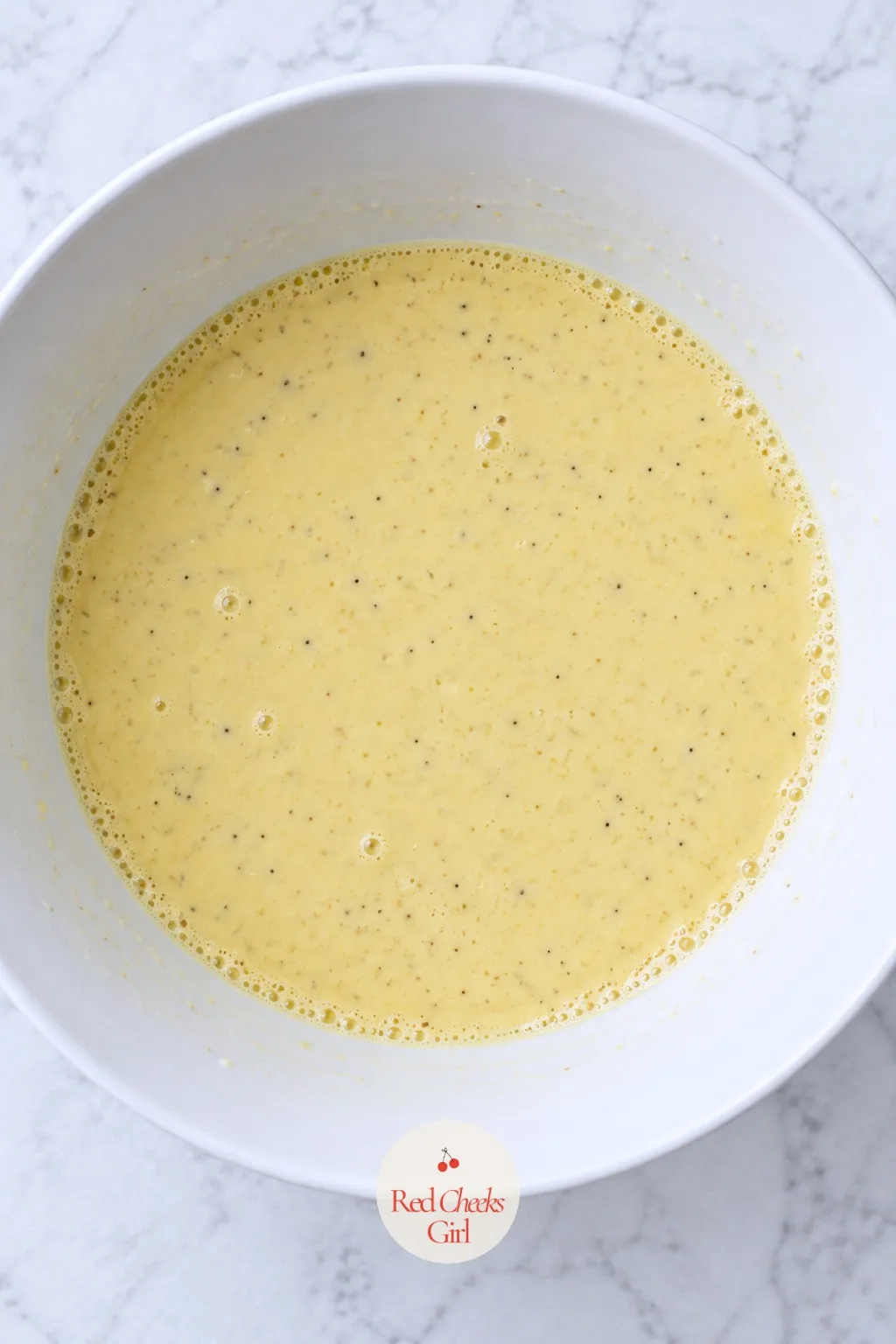
Whisk the egg custard
Whisk until the eggs and milk are fully combined. The mustard should disappear into the mixture, leaving a smooth pale yellow liquid with no streaks.
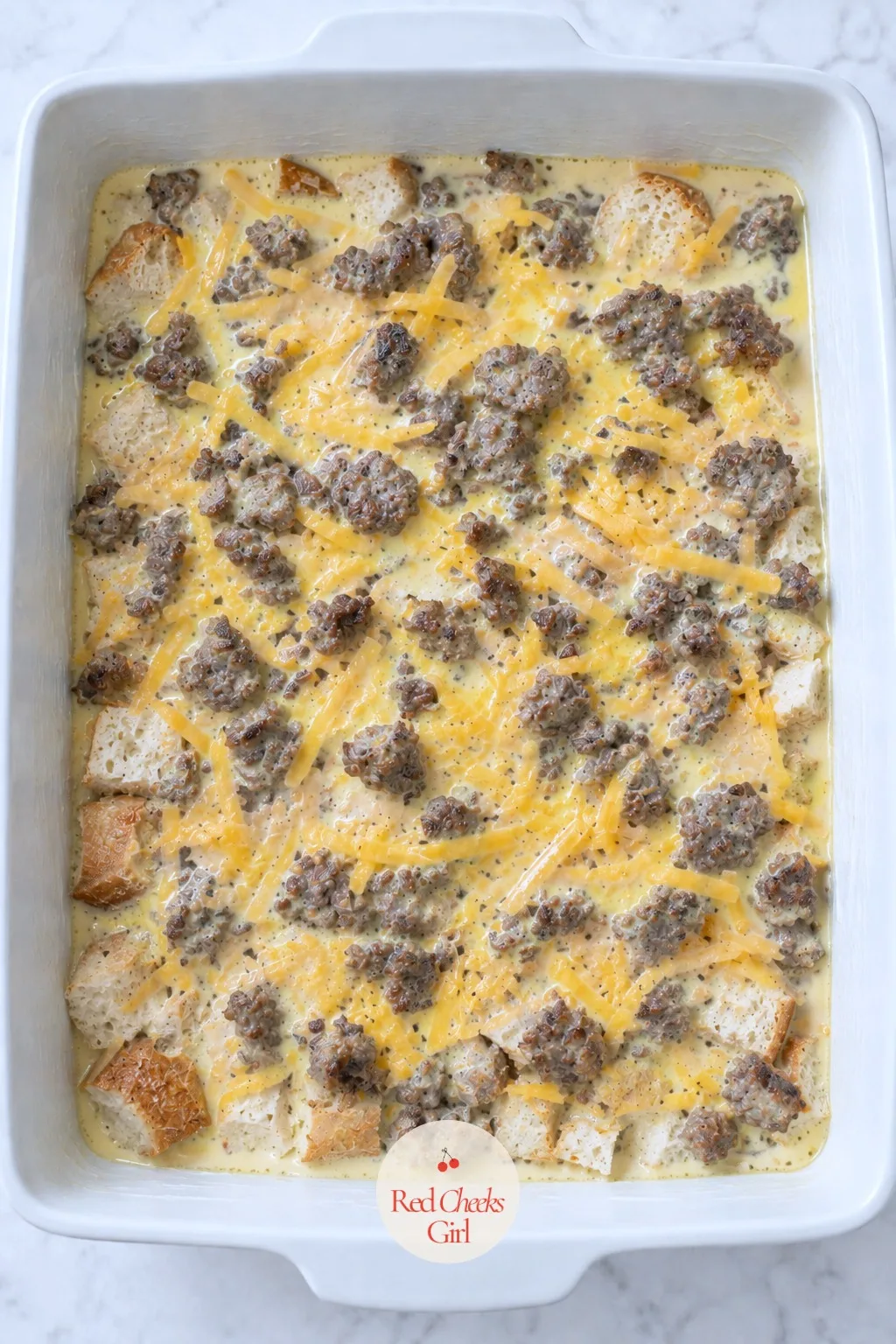
Pour the custard over the layers
Pour slowly so the liquid reaches every corner, then press the bread down gently. It should look soaked, not just topped, before it goes into the fridge.
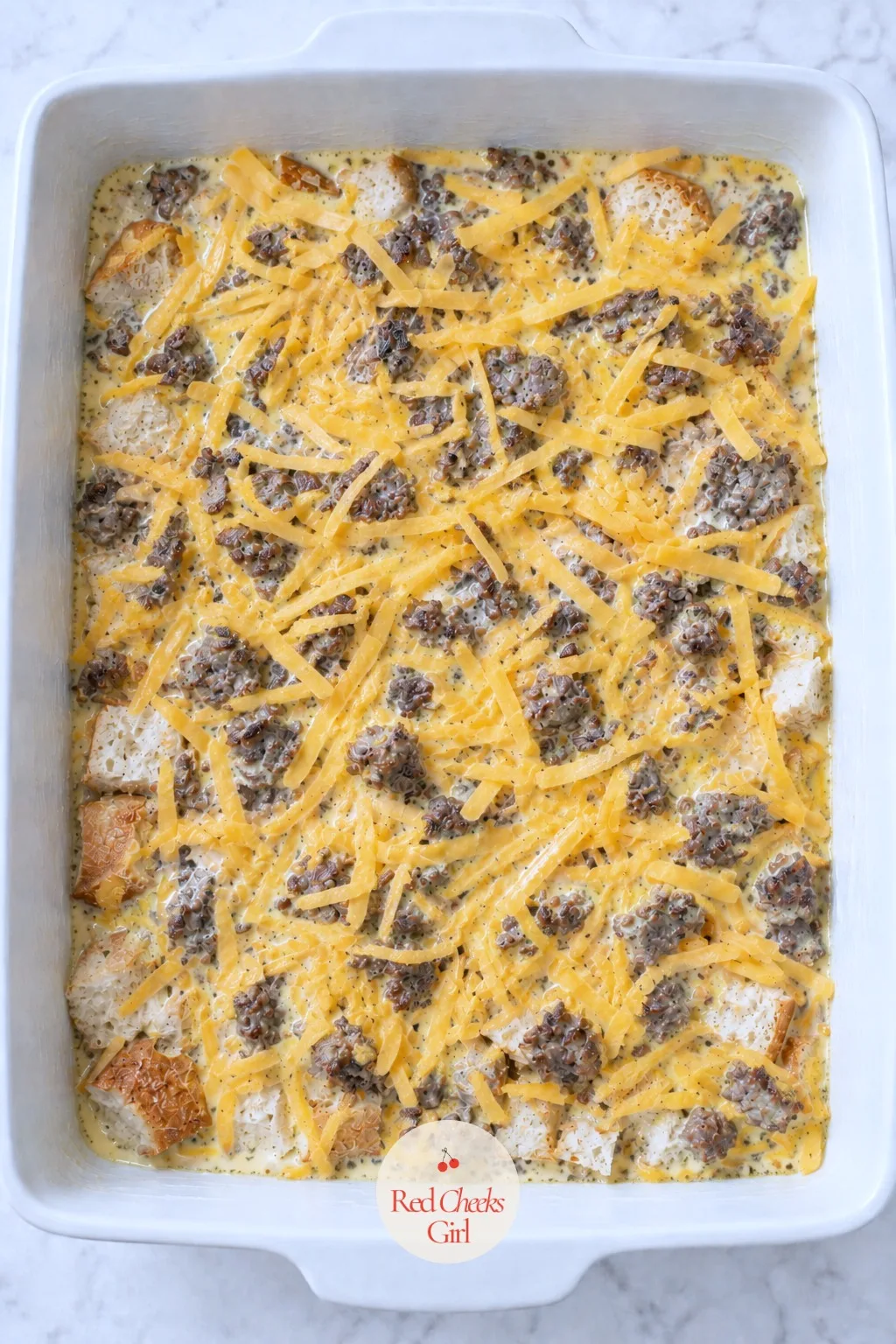
Scatter the last cheddar before baking
Straight from the fridge, the top gets one more handful of cheddar before it meets the oven. The dish should look full to the rim and still cold.
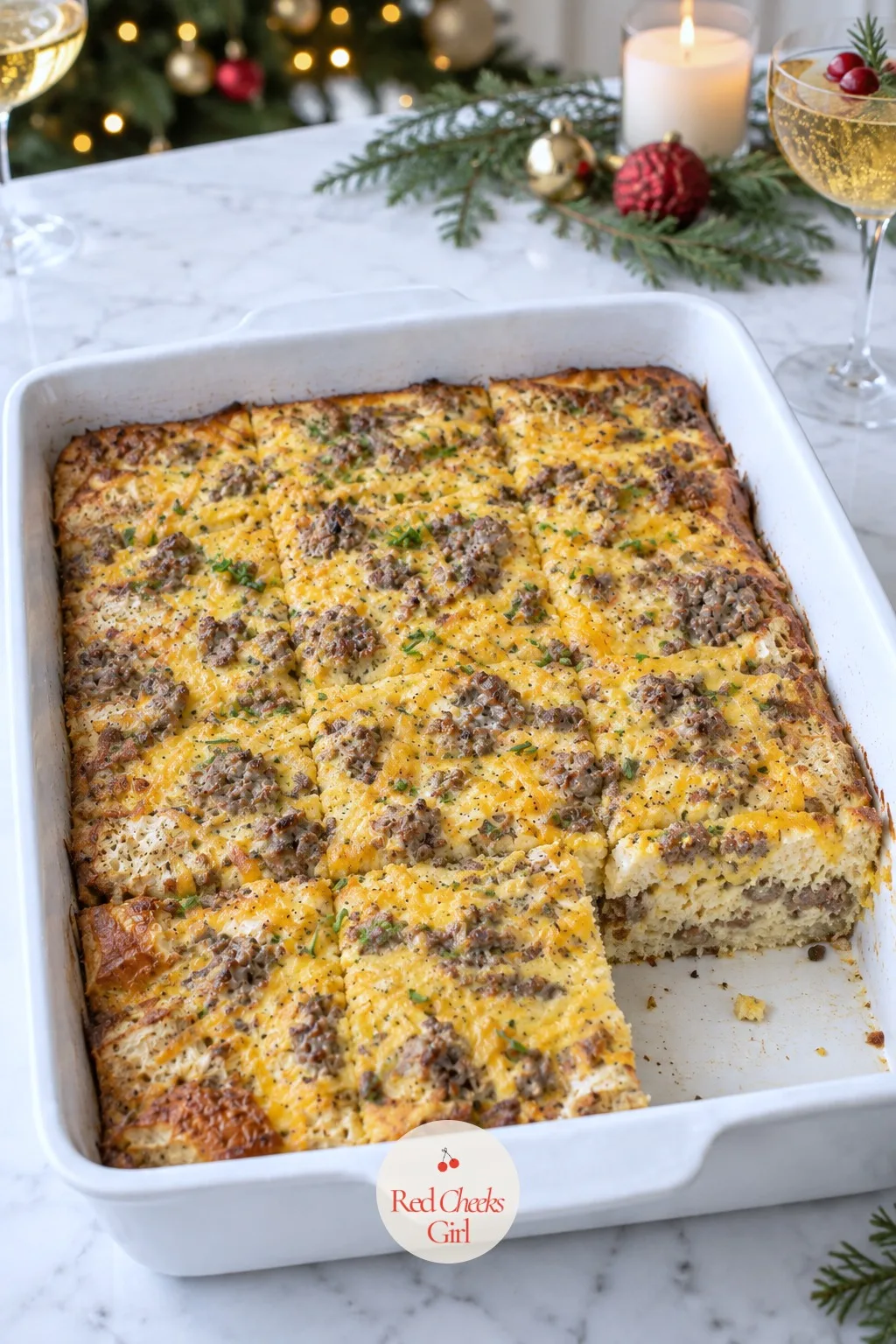
Slice and serve the casserole
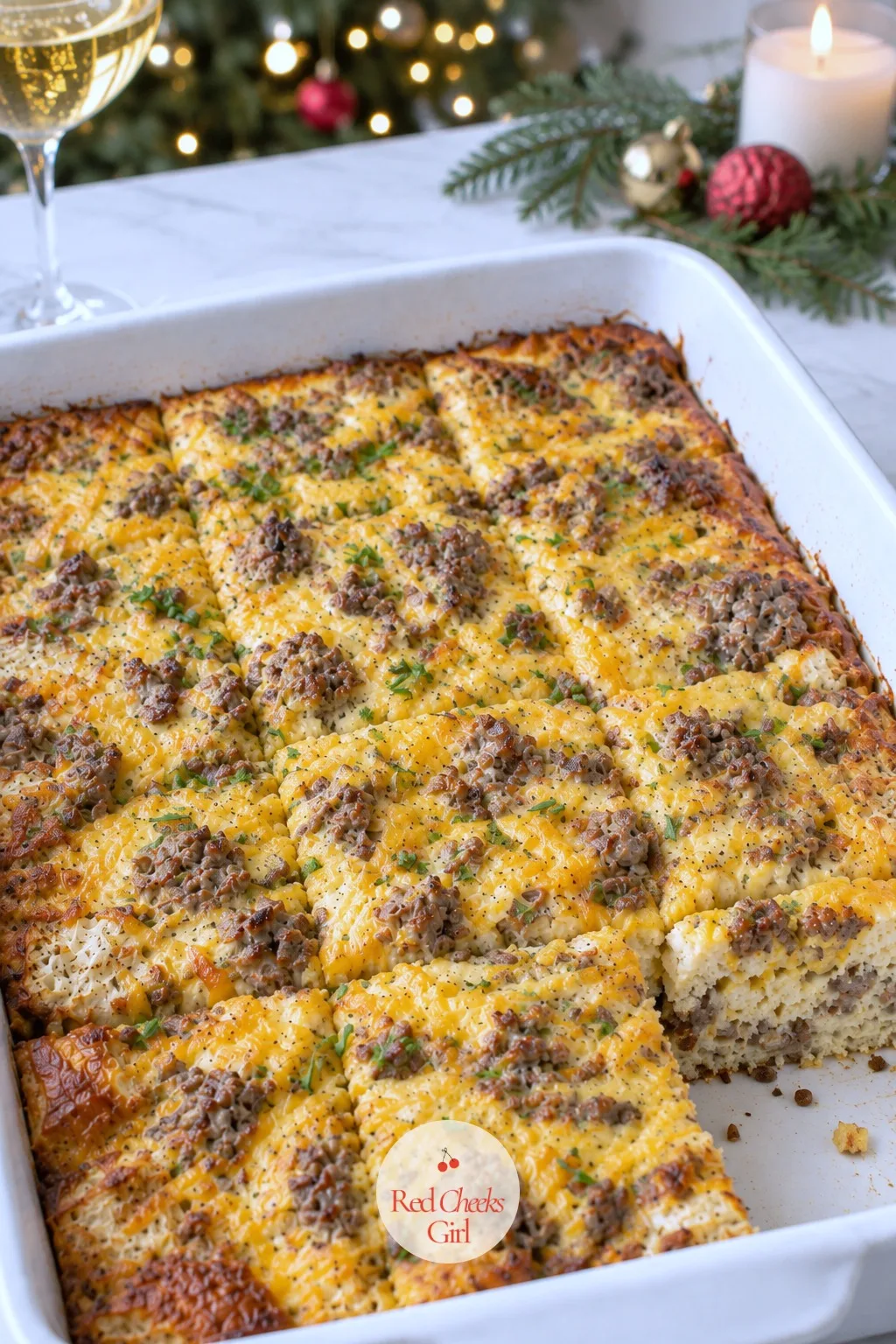
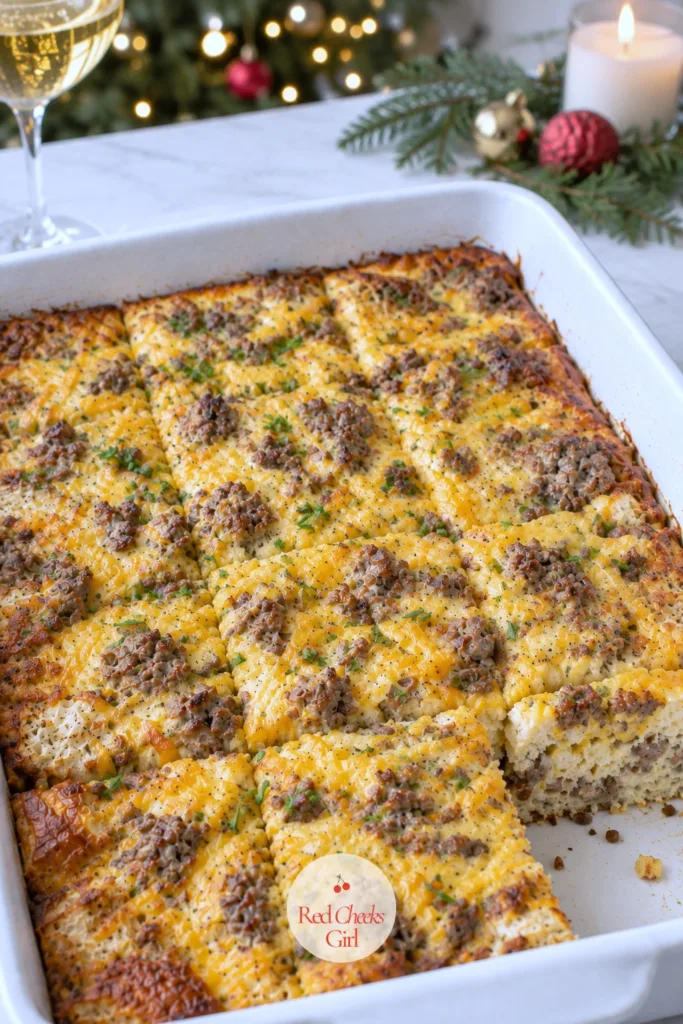
The finished casserole should be deeply golden on top with the edges pulled slightly from the dish. Cut into squares and serve it warm, right from the baking dish.
Getting It Right: The Mistakes That Ruin This Dish
Fresh, pillowy bread is the most common wreck. It soaks up custard too fast and too unevenly, and by morning the bottom layer has gone to paste while the top stays dry. Day-old bread, or fresh bread left uncovered on the counter for a few hours, holds its structure instead.
Skipping the dry mustard feels harmless because the amount is so small, but its absence is the reason some versions of this dish taste flat no matter how much cheese goes in. A single teaspoon does real work against all that richness.
Sausage that goes into the dish still greasy is the second most common mistake. Drain it properly on paper towels; that fat has nowhere good to go once it is sealed under custard overnight.
If people are sleeping over, set the casserole to bake the moment the first person wanders into the kitchen. The hands-off fifty minutes means nobody has to coordinate a wake-up time, and the smell alone pulls the rest of the house out of bed.
Cutting into it straight out of the oven is tempting but it will not hold a clean square. Give it the full ten minutes on the rack; the custard keeps setting as it cools, and the slices come out clean instead of collapsing.
Swaps That Still Work
No sausage in the house, or feeding someone who does not eat pork? Diced ham or cooked bacon slot in at the same quantity, and a mix of sauteed mushrooms, spinach and onion makes a meatless version that still has plenty going on.
Cheddar is not the only option. Gruyere melts smoother and tastes nuttier, pepper jack adds a little heat without turning the dish spicy, and Swiss works well if someone at the table finds cheddar too sharp.
Bread is where the dish changes the most. Croissants or challah, torn rather than cut, make a richer, more custardy result closer to a sweet bread pudding; if gluten is a concern, a sturdy gluten-free sandwich loaf, dried out the same way, holds up fine.
Short on time the night before and need something with fewer moving parts, the 5-Ingredient Quick Breakfast Casserole gets a similar result from a much shorter list. For a version built around more protein at the table, Classic High Protein Breakfast Casserole (30g Protein Per Serving!) leans the custard ratio toward eggs over bread.
What To Serve Alongside It
This casserole is rich, so it wants something cold and a little sharp next to it. A bowl of citrus segments or pomegranate seeds cuts through the cheese without asking anyone to cook a second dish.
For the rest of the spread, 21 Christmas Brunch Ideas That Make the Morning the Best Part of the Day lays out a full table built around exactly this kind of make-ahead main.
If the grown-ups are pouring, a simple mimosa bar with fresh orange juice and a chilled bottle sits well next to a baked dish like this one; keep a sparkling juice option out for anyone not drinking, and pour for guests responsibly.
When the guests are staying over already, matching the room to the morning makes the whole visit feel considered; 22 Christmas Bedding Finds That Make Bedtime Feel Like Christmas Morning is worth a look the night before.
Overnight Breakfast Casserole
Ingredients
- 1 pound bulk pork breakfast sausage
- 2 tablespoons unsalted butter softened, for the dish
- 8 cups cubed day-old sourdough or French bread crusts left on, cut into 1-inch cubes (about 1 pound)
- 2 1/2 cups shredded sharp cheddar cheese divided
- 10 large eggs
- 2 1/2 cups whole milk
- 1 teaspoon dry mustard
- 1/2 teaspoon kosher salt
- 1/4 teaspoon black pepper
- 2 tablespoons chopped fresh chives or parsley for serving (optional)
Instructions
- Cook the sausage in the cream enameled Dutch oven over medium heat, breaking it into small crumbles with a wooden spoon, for about 8 minutes, until no pink remains and the edges turn deep brown. Transfer to a paper towel-lined plate to drain.
- Butter a 9x13-inch white ceramic baking dish all the way into the corners, so nothing sticks once it bakes.
- Scatter half the cubed bread over the bottom of the dish, then scatter half the drained sausage and 1 cup of the shredded cheddar on top. Repeat with the remaining bread and sausage and another 1 cup of cheddar, then set the last 1/2 cup of cheddar aside in the fridge for the morning.
- Whisk the eggs, whole milk, dry mustard, salt and black pepper in a large white mixing bowl until the mixture is smooth and pale yellow, with no streaks of egg white left.
- Pour the custard slowly and evenly over the bread, sausage and cheese, then press down gently on the bread with the back of a spoon so every cube touches liquid and starts to soften.
- Cover the dish tightly with plastic wrap, pressing it onto the surface of the casserole, and refrigerate for at least 8 hours and up to 24 hours. This is the overnight part: the bread needs that full stretch in the cold to soak through, not just on top.
- In the morning, preheat the oven to 350 degrees Fahrenheit. Leave the casserole in the fridge until the oven is fully heated; it bakes straight from cold, with no counter rest.
- Remove the plastic wrap and scatter the reserved 1/2 cup of cheddar over the top. Cover the dish loosely with foil and set it directly in the hot oven, straight from the refrigerator.
- Bake covered for 25 minutes, then remove the foil and bake for another 25 to 30 minutes, until the top is puffed and golden, the edges have pulled slightly from the sides of the dish, and the center no longer jiggles when the dish is nudged. Total bake time from cold runs 50 to 55 minutes.
- Set the dish on a wire cooling rack and let the casserole rest for 10 minutes before cutting; it firms up as it sits, and slices hold their shape instead of collapsing.
- Scatter the chopped chives or parsley over the top if using, cut into squares, and serve warm, straight from the baking dish.
Good to Know
Frequently Asked Questions
Can you freeze an overnight breakfast casserole before baking?
Freezing the casserole unbaked makes the bread break down once thawed, so bake it fully first. Wrap cooled squares tightly and freeze up to 2 months, then reheat covered in a 350 degree oven.
Do you need to bring the casserole to room temperature before baking?
No, this casserole bakes straight from the refrigerator with no counter rest needed. The covered first 25 minutes of baking exist to give the cold center time to catch up before the top browns.
Is it safe to leave raw eggs and milk in the fridge overnight?
Yes, a fully assembled casserole kept covered and continuously refrigerated is safe for up to 24 hours before baking. The eggs cook completely once baked, so there is no raw-egg risk at serving.
Can you double this recipe for a crowd?
Yes, double every ingredient and split the mixture between two 9×13 dishes rather than one deep pan, since an oversized dish will not cook evenly in the center. Bake both pans together, rotating halfway through.
Can you bake breakfast casserole in a slow cooker instead of the oven?
Yes, a slow cooker works: cook on low for about 4 hours or on high for roughly 2 hours, until the center is set and a knife comes out clean. The top will not brown or puff as it would in an oven.

High cortisol levels can leave you feeling wired at night, exhausted during the day, and unable to r
Mashed sweet potatoes roast whole, then get mashed with brown butter, maple syrup and cinnamon for a
Hot honey chicken sliders combine crispy baked tenders, cool creamy slaw and tangy pickles on butter
Leave a Reply