

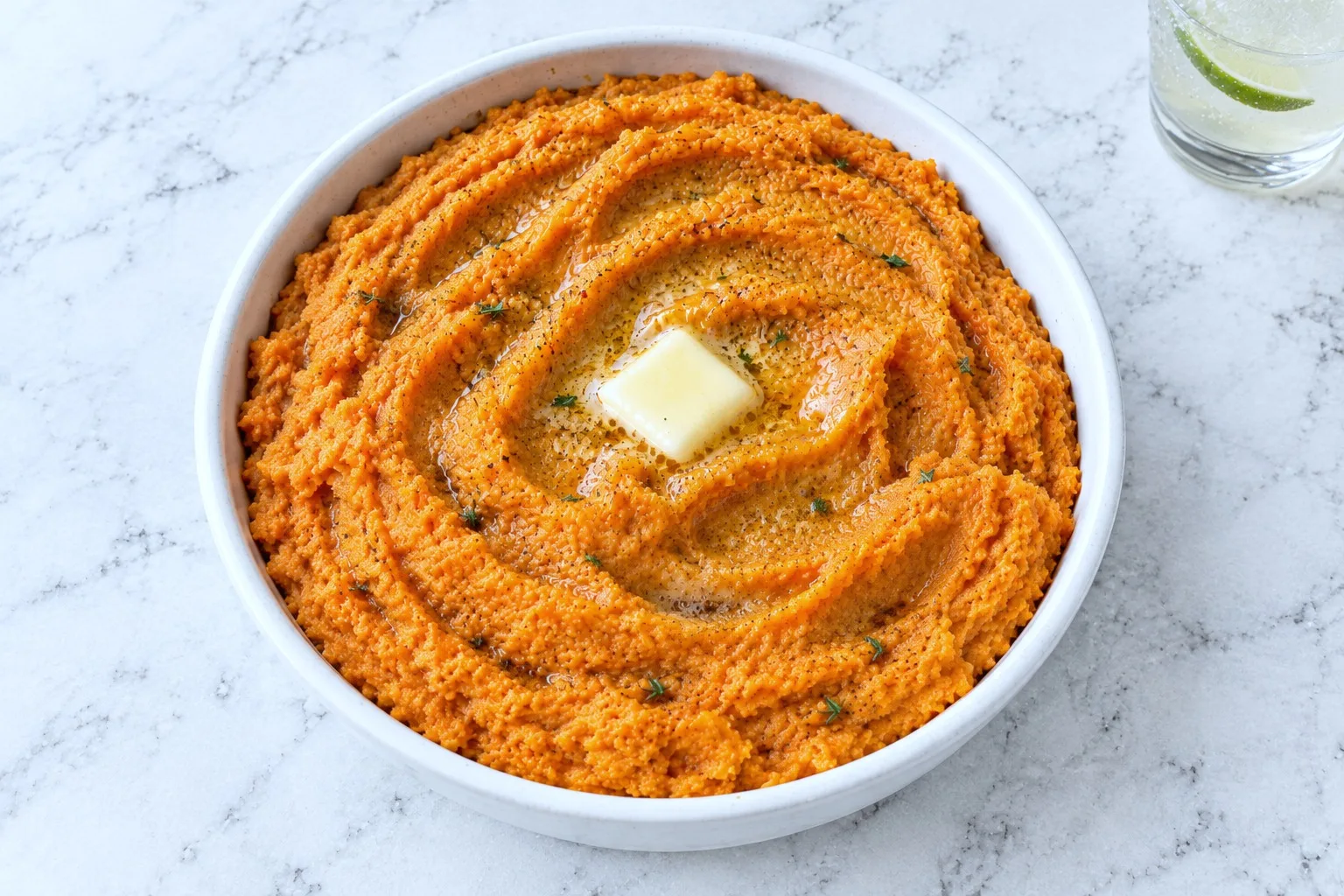
Mashed sweet potatoes earn their spot on the holiday table once the potatoes go into the oven whole instead of the pot.
Roasting concentrates the natural sugar instead of diluting it in boiling water, so the mash comes out thick, deeply orange and faintly caramelized before a single drop of maple syrup joins in. Brown butter and a pinch of cinnamon do the rest, no marshmallows required.
This post contains affiliate links. If you buy through them, I may earn a small commission at no extra cost to you.
Table of Contents
A Better Mashed Sweet Potato For The Holiday Table
Boiled sweet potato mash has a reputation problem. Water gets in through the cut sides while it simmers, and that same water has to go somewhere once you start mashing, usually straight into a thin, loose puddle at the bottom of the bowl.
Roasting sidesteps the whole issue. The potatoes cook in their own skins with nothing added, so the sugars caramelize instead of leaching out, and what lands in the bowl is already thick before the butter goes in.
This version leans sweet: brown butter, maple syrup, a pinch of cinnamon, because that is what a plate next to turkey or ham wants. A savory route with garlic and thyme sits further down for the table that would rather skip the sugar.
Nothing here asks for a stand mixer or a special trip to the store. Four sweet potatoes, butter and a bottle of maple syrup already in the pantry get you most of the way.
The Ingredients That Make This Mash Worth Repeating
Sweet potatoes do the heavy lifting, so buy ones that are roughly the same size, about 7 ounces each, so they finish roasting together. which is the kind to reach for here.
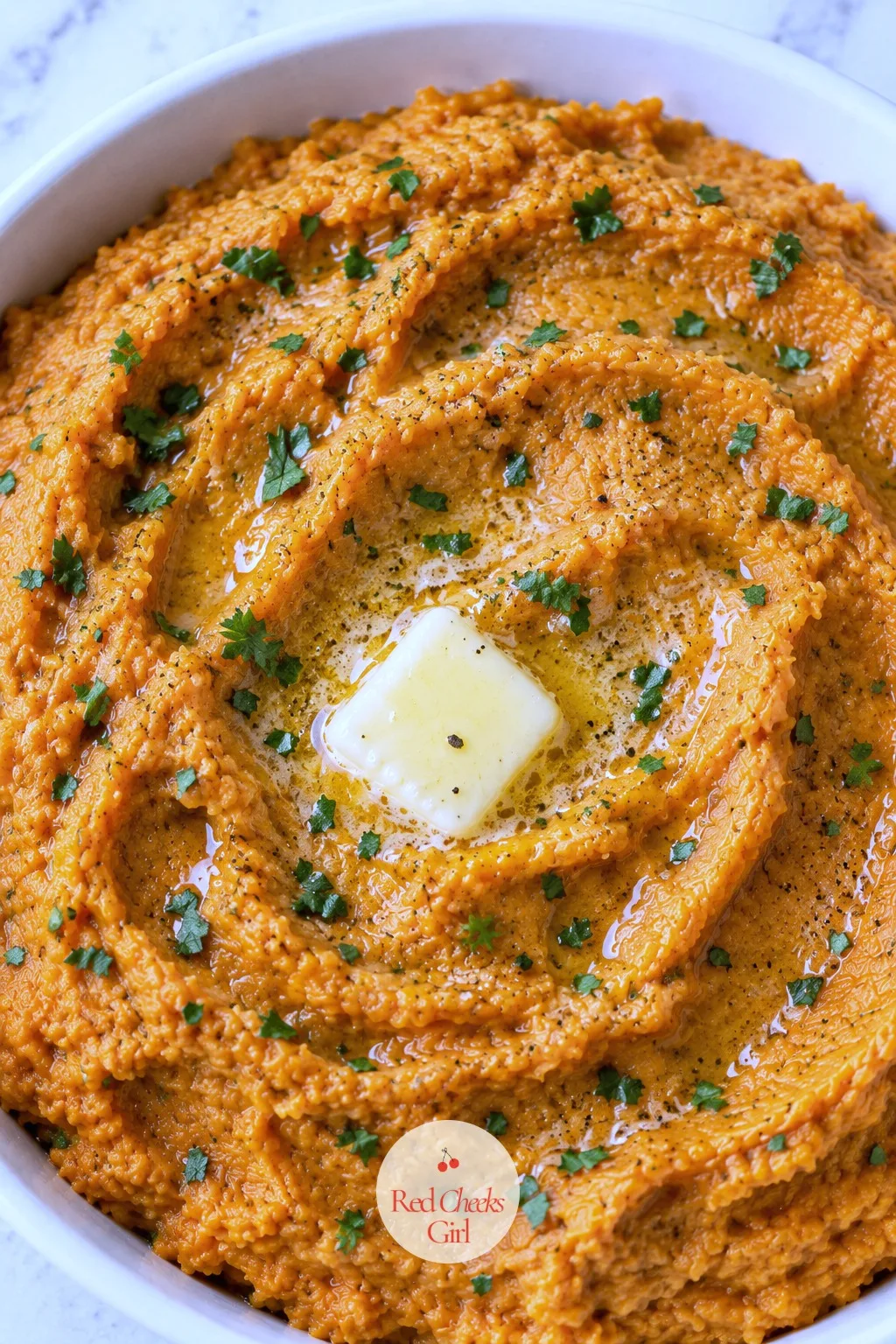
Butter browned on the stove smells like toasted hazelnuts and tastes nothing like the pale stick it started as. Those little brown flecks at the bottom of the pan are where the flavor lives, so every one of them goes into the bowl.
Maple syrup adds a second layer of caramel without turning the dish cloying, and a small pinch of cinnamon, not a spoonful, keeps it warm rather than turning it into dessert. Both measure in tablespoons and teaspoons here, not cups.
Salt is doing real work against all that natural sugar. A sweet potato with no salt tastes flat no matter how much butter goes in, so season it like a side dish, not an afterthought. This recipe contains dairy from the butter; swap in oil if that is a concern at your table.
How to Make It
This recipe makes enough for a holiday table of six to eight, with the brown butter doing most of the flavor work. Follow the times below and check doneness with a knife rather than the clock, since sweet potatoes vary in size.
Pierce and set the sweet potatoes to roast
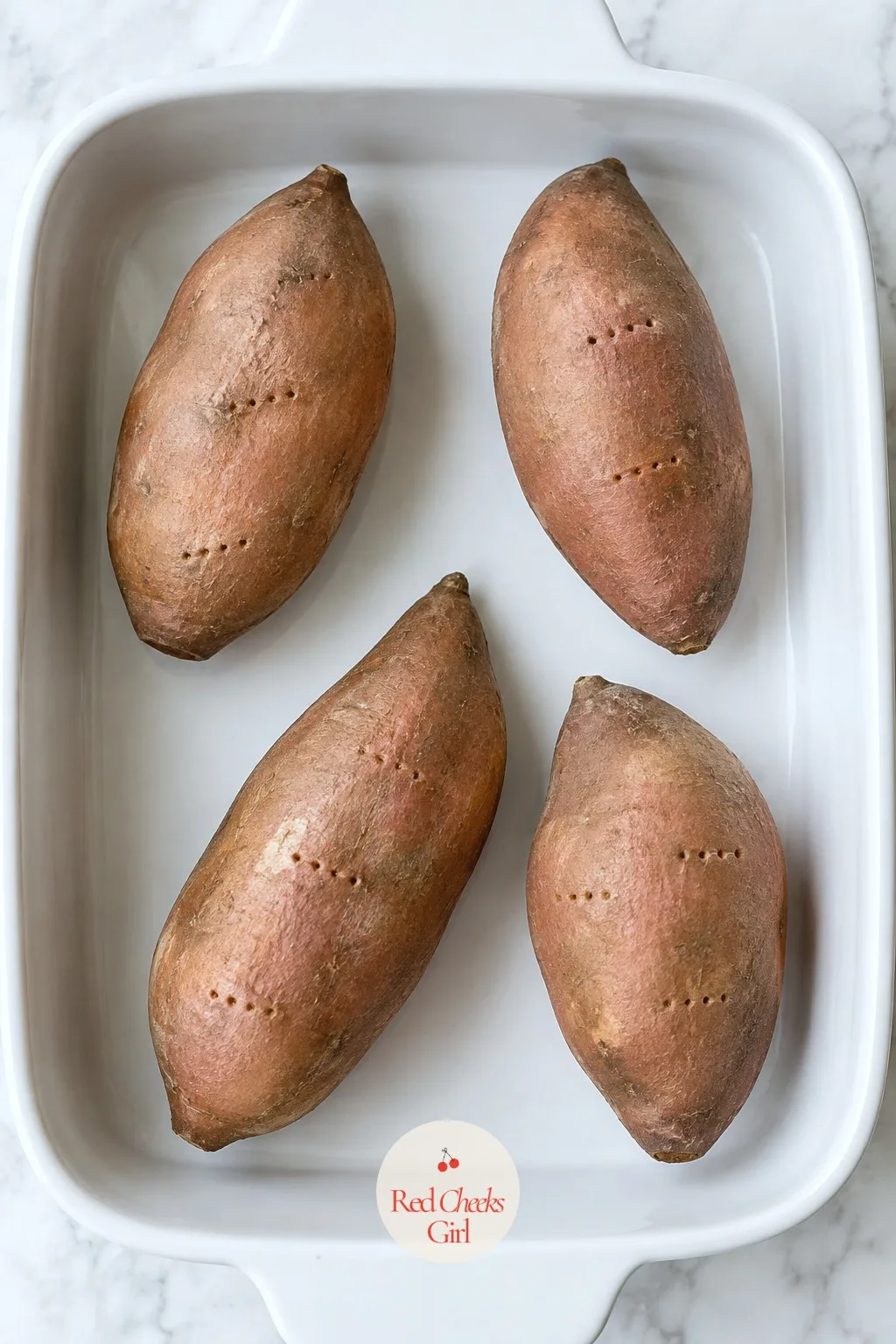
Scrub and pierce four sweet potatoes, then set them on the dish before they go into the oven. The skins still look tight and matte at this stage, nothing has browned yet.
Roast until the skins split
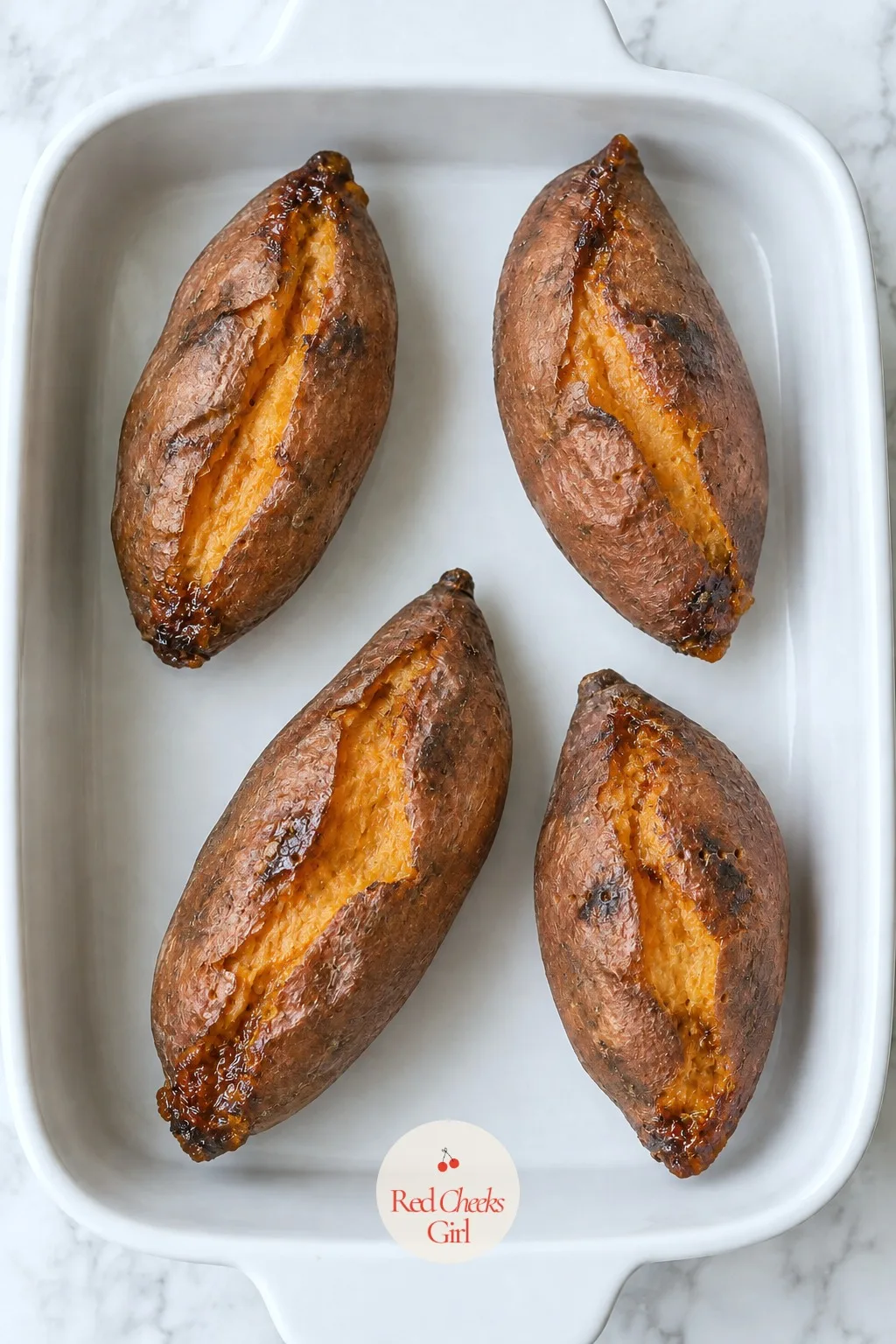
Roast until a knife meets no resistance and the skins split open on their own. Dark caramel beads at the cut ends, a sign the sugars have concentrated, not burned.
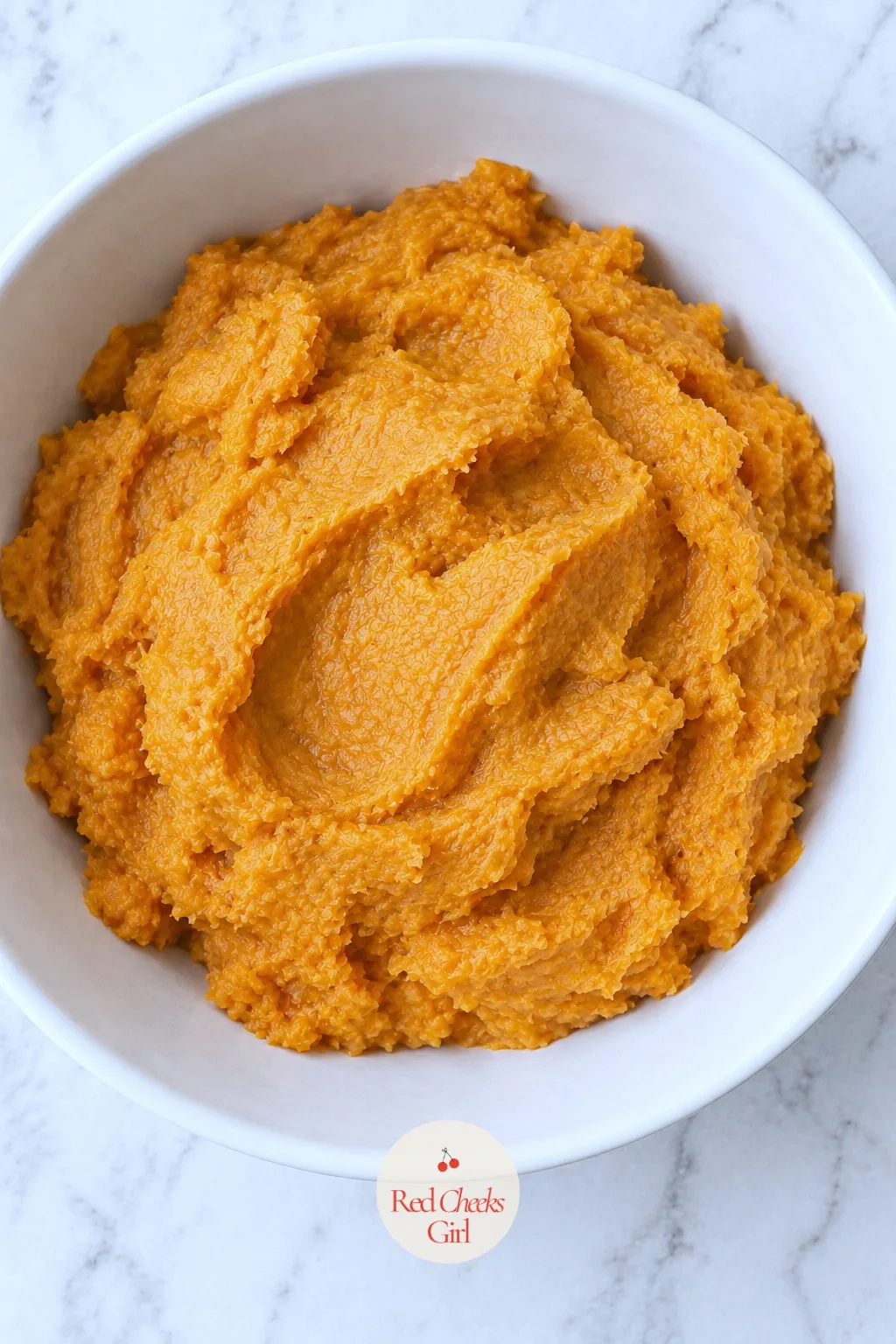
Scoop the soft flesh into the bowl
Scoop the soft flesh away from the skins into the bowl and discard the skins. The flesh should look bright orange and almost custardy, ready to mash.
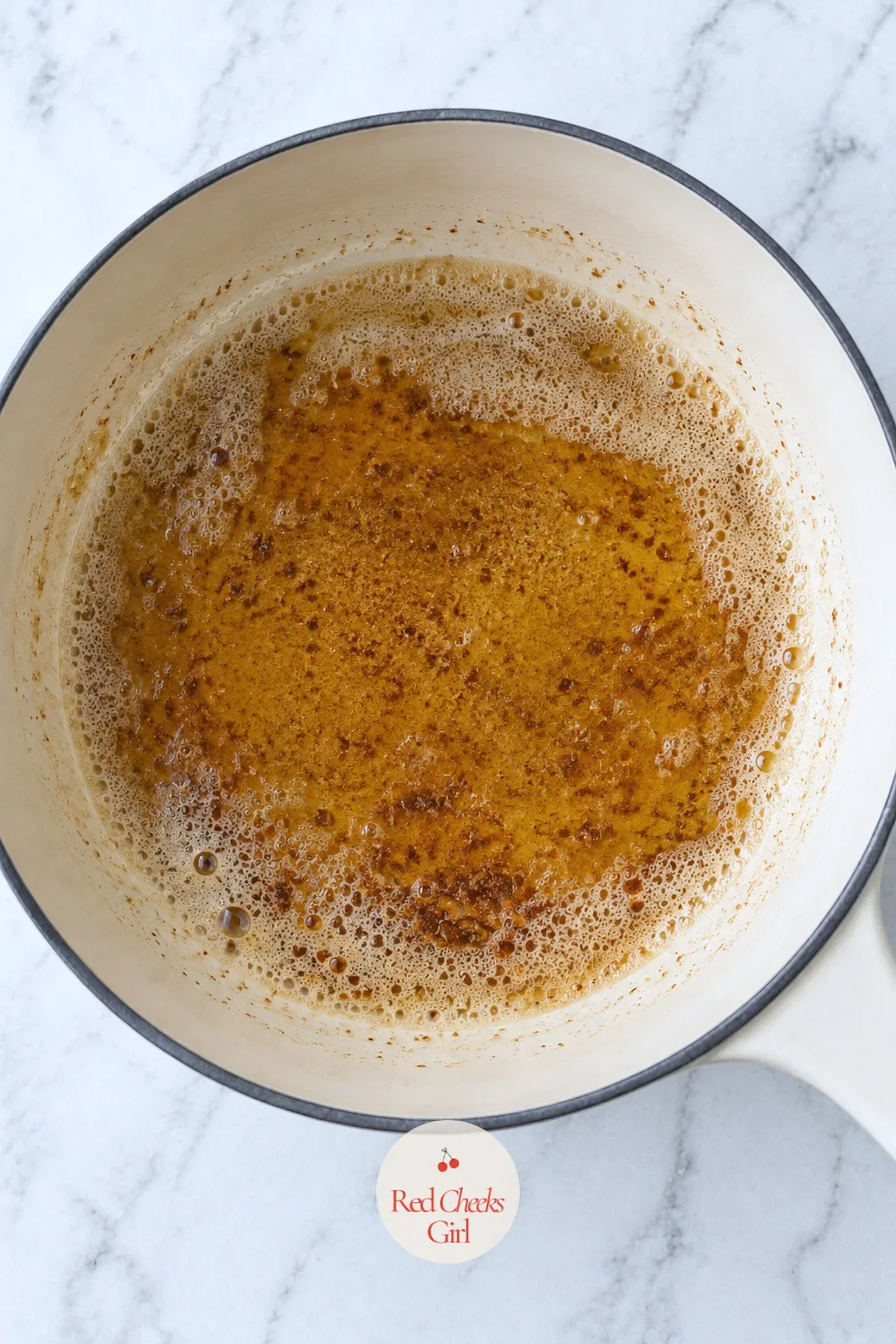
Brown the butter
Swirl the butter over medium heat until it turns a deep amber color and smells nutty. Small brown specks settling at the bottom are the sign it is ready.
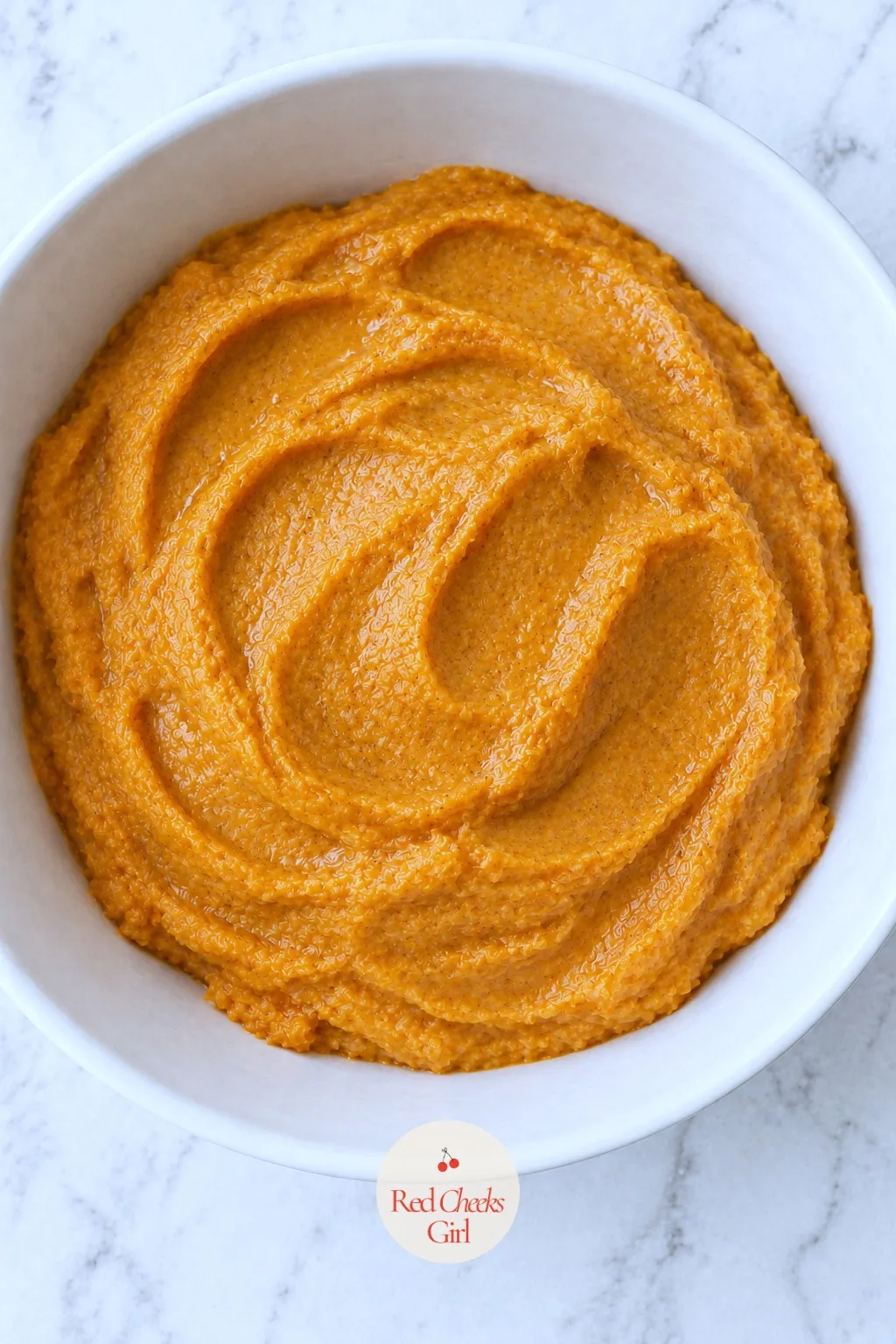
Mash until smooth
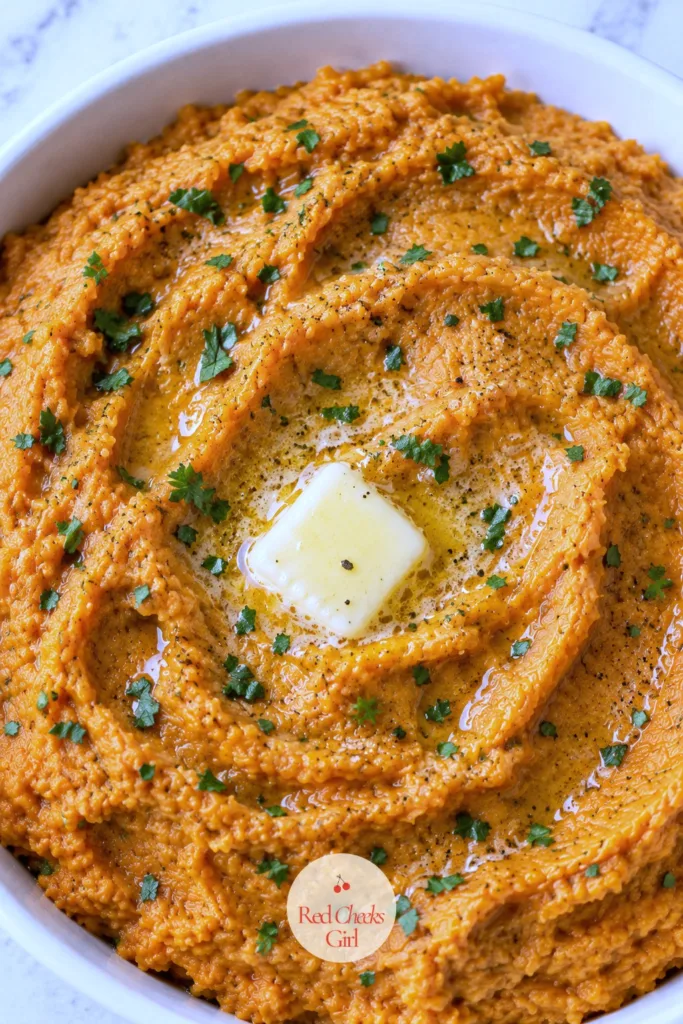
Mash until the sweet potato turns smooth and uniform, with no streaks of butter or stray lumps left. The color deepens slightly once the brown butter and maple syrup are worked through.
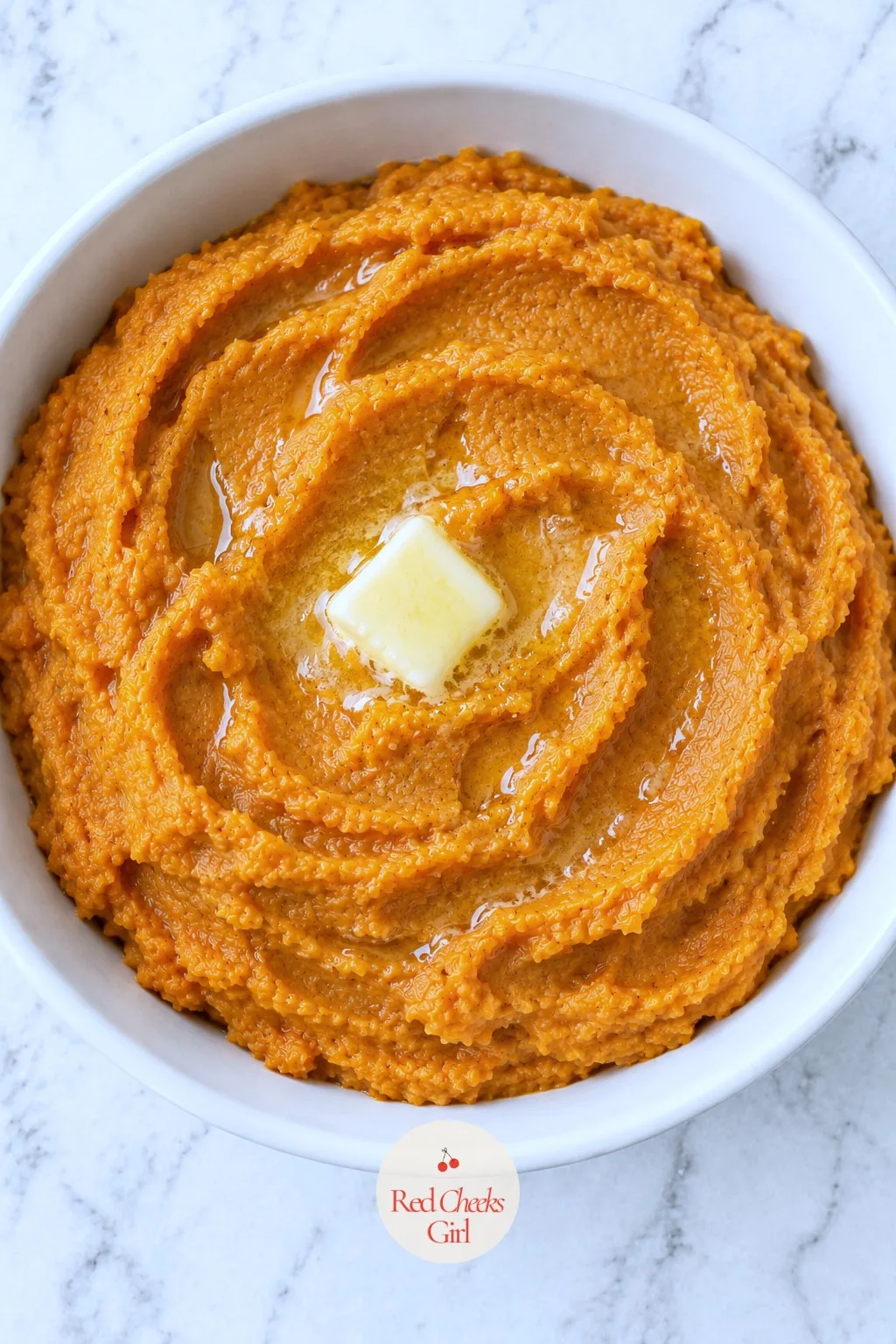
Serve the finished mash
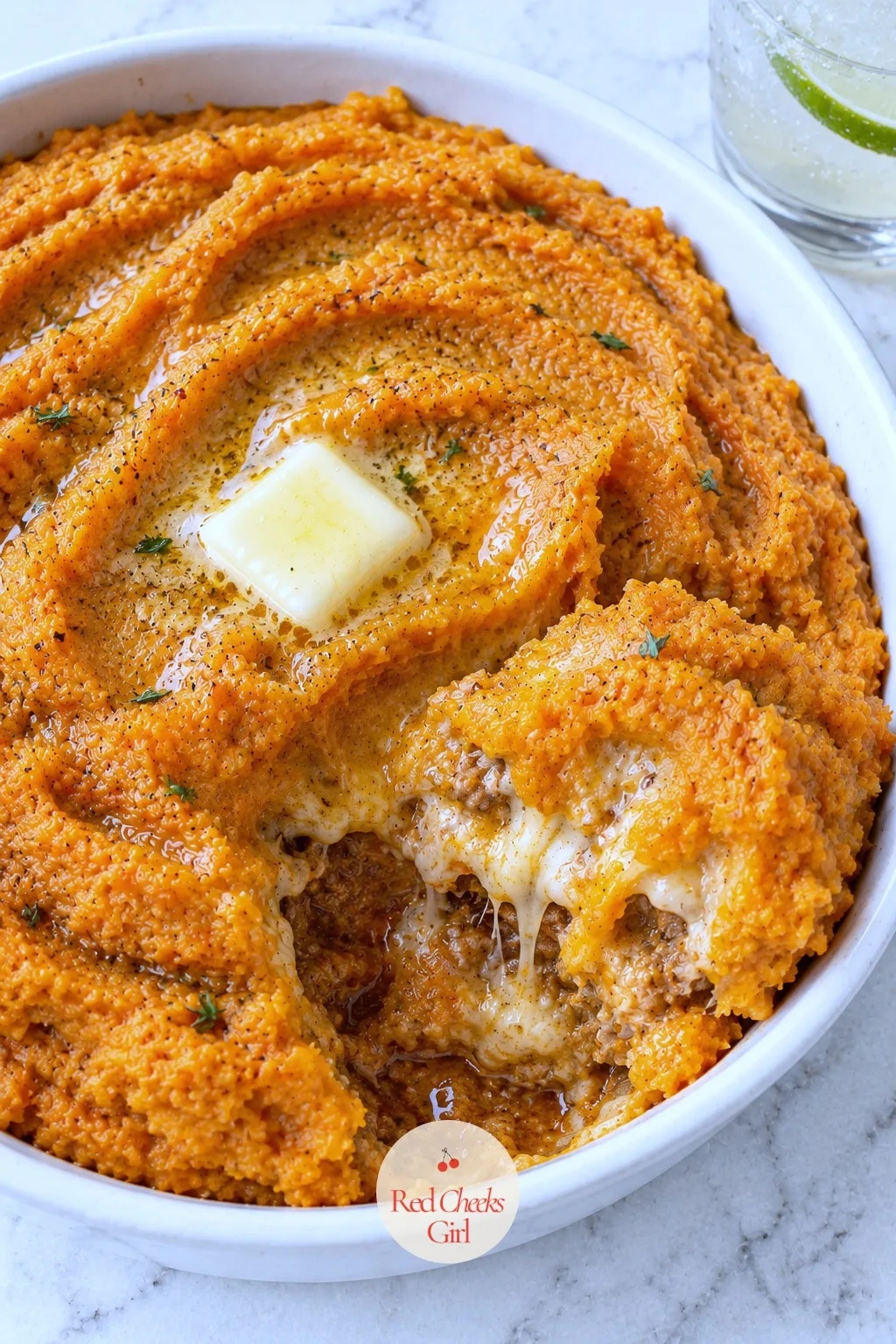
Spoon the mash into a clean serving dish and dot the top with a little extra butter before it reaches the table. This is the dish as your guests will see it, warm and glossy.
Getting The Texture Right
Watery mash almost always traces back to boiling. which is the single biggest reason this recipe skips the pot entirely and.
Older or larger sweet potatoes can turn stringy no matter how they cook..
Bland mash is almost never a flavor problem, it is a salt problem. so taste after mashing rather than before, since the sugar changes how much salt actually comes through.
Resist the urge to reach for a hand mixer. Overworked sweet potato turns gummy fast, and a masher or fork gives far more control over exactly how smooth it ends up.
Swaps And A Savory Version
For a savory version, leave out the maple syrup and cinnamon. Cook 2 cloves of minced garlic in the butter for the last minute before it browns, then stir in 1 tablespoon of chopped fresh thyme and an extra pinch of salt once the sweet potato is mashed.
Swap the butter for a neutral olive oil or a plant based butter if the table needs to stay dairy free; the sweetness carries the dish either way, though the flavor reads a little lighter without the browned milk solids.
No maple syrup in the pantry, honey or a spoonful of brown sugar steps in fine. Start with half the amount, since both taste sweeter than maple by volume, and add more only if it needs it.
If the table already has enough sweetness between the cranberry sauce and the pie, balance it out with something savory on the side, like Loaded Smashed Potatoes on One Sheet Pan.
What To Serve It With At A Party
This mash sits naturally next to the two centerpieces of a holiday table, sliced turkey or a glazed ham, where its sweetness plays against the salt on the plate instead of competing with another sweet side.
Round out the plate with something green and a little bitter, roasted Brussels sprouts or a simple sauteed spinach, so the sweetness has something to push against.
The same bowl earns a second life in spring: it sits just as well next to a glazed ham at Easter, an occasion covered in full in 18 Easter Dinner Ideas for a Family Table From Ham to Spring Sides.
Once plates are full, keep the table talking rather than scrolling with 16 Conversation Card Games That Turn Holiday Dinner Into Real Talk.
Mashed Sweet Potatoes
Ingredients
- 4 medium sweet potatoes about 7 ounces each, 2 pounds total
- 6 tablespoons unsalted butter cut into pieces
- 3 tablespoons pure maple syrup
- 1/4 teaspoon ground cinnamon
- 3/4 teaspoon kosher salt plus more to taste
Instructions
- Preheat the oven to 425°F and set a rack in the center position.
- Scrub 4 medium sweet potatoes (about 2 pounds total) under cool water, pat them dry, and pierce each one 4 to 5 times with a fork. Set them directly on a white ceramic baking dish, spaced apart so the heat reaches all sides.
- Roast the sweet potatoes on the center rack for 50 to 60 minutes, until a paring knife slides into the thickest one with no resistance and the skins have split and are oozing dark caramel at the cut ends.
- Let the sweet potatoes rest on the baking dish for 10 minutes, until cool enough to handle; this short rest also lets steam escape so the mash stays thick.
- Halve each sweet potato lengthwise and scoop the soft flesh into a white mixing bowl, discarding the skins. You should have about 3 cups of flesh.
- Melt 6 tablespoons unsalted butter in a small cream enameled saucepan over medium heat, swirling the pan constantly for 3 to 4 minutes, until the butter foams, turns deep amber, and smells toasted and nutty, with small brown flecks settled on the bottom.
- Pour the brown butter over the sweet potato flesh immediately, scraping in every brown fleck with a pale wood spoon, then add 3 tablespoons maple syrup, 1/4 teaspoon ground cinnamon, and 3/4 teaspoon kosher salt.
- Mash everything directly in the bowl with a potato masher or a large fork until smooth and no large lumps remain, about 1 to 2 minutes; for an ultra silky finish, press the mash through a fine mesh sieve.
- Taste and add more salt or maple syrup if the mash needs it; sweet potatoes vary in sweetness, so trust your spoon over the clock.
- Spoon the mash into a clean white ceramic serving dish, dot the top with a little extra butter, and serve warm.
Good to Know
Frequently Asked Questions
Do you need to peel sweet potatoes before roasting them for mash?
No, roasting works best with the skins left on. The skin holds moisture in while the inside steams itself soft, and you simply scoop the flesh out once it has cooled.
What type of sweet potato is best for mashing?
Look for the deep orange-fleshed kind simply labeled sweet potato at the grocery store. Pick ones that are short and fat rather than long and thin, since they hold fewer stringy fibers.
Do mashed sweet potatoes need milk or cream?
No, not when the potatoes are roasted rather than boiled. Roasting concentrates their natural starch and sugar, so brown butter and a spoonful of maple syrup make the mash silky without any dairy liquid.
Can you freeze mashed sweet potatoes?
Yes, mashed sweet potatoes freeze well sealed in an airtight container for up to four to six months. Thaw overnight in the refrigerator, then warm gently and whisk in a little extra butter.
Why do mashed sweet potatoes turn out watery?
Watery mash almost always comes from boiling, since the potatoes soak up water as they cook and release it back out once mashed. Roasting them whole sidesteps the problem since no water ever touches the flesh.
My stomach spent about three years being angry at me. Not dramatically sick — just tight, bloa
21 potassium rich foods, from white beans and potatoes to yogurt and salmon, each with one reason to

Potato latkes recipe for a crispy golden fry: grated russets squeezed dry, pan-fried hot, and served
Leave a Reply