

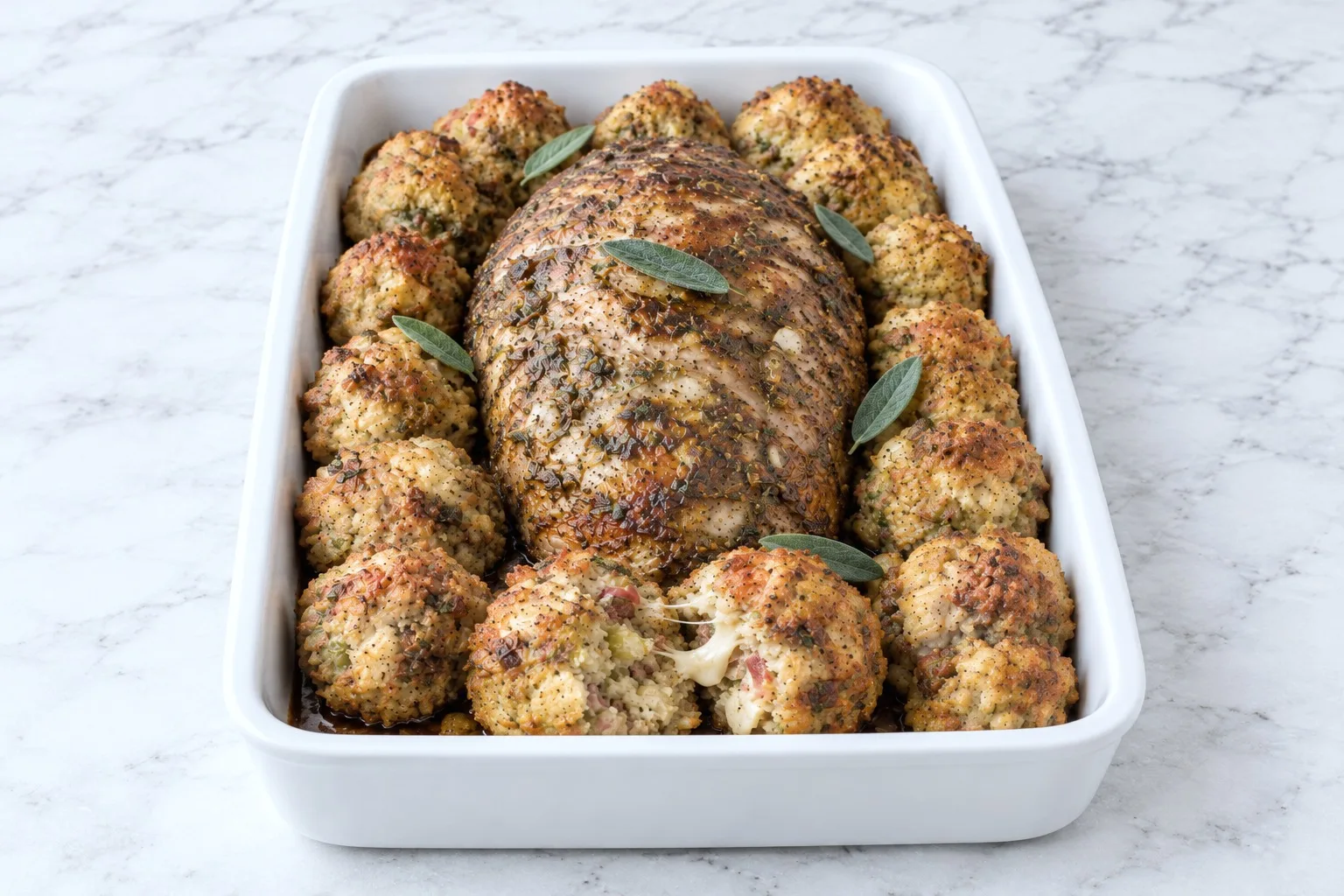
Sausage stuffing is the dish that disappears first off a holiday buffet, and the sausage, apple and sage version explains why. Cubes of dried bread soak up broth and egg until the inside turns soft and almost custardy, while the top bakes crisp and deeply golden.
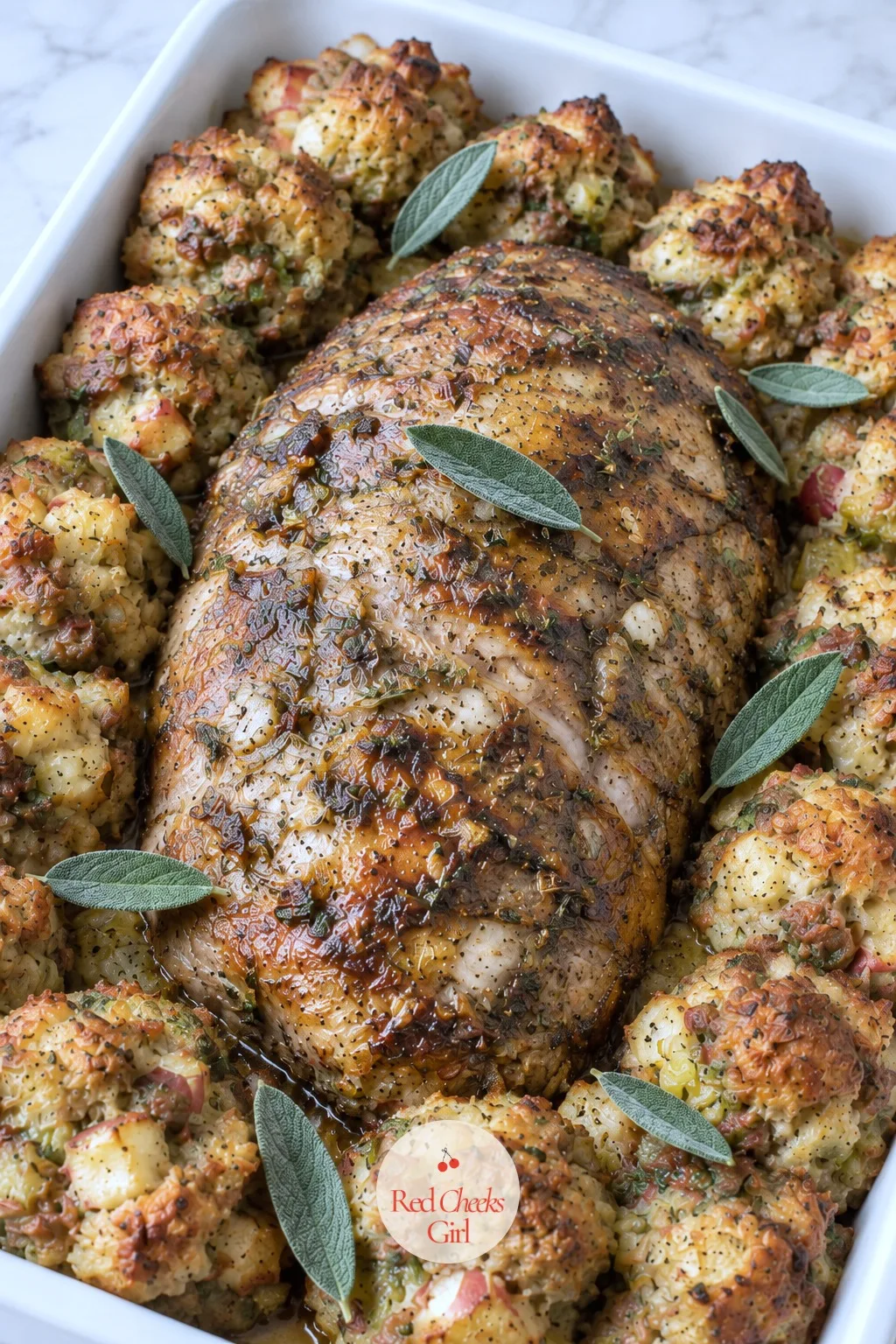
Shape part of the batch into stuffing balls and ring them around the roast platter for a plate that looks finished without any extra fuss.
This post contains affiliate links. If you buy through them, I may earn a small commission at no extra cost to you.
Table of Contents
A Stuffing Worth Making From Scratch
Boxed stuffing is fine on a weeknight, but it has no place next to a roast you actually planned for. This version takes the same half hour of effort and turns it into something with real texture: crisp on top, soft in the middle, studded with sausage and apple instead of dried-out crumbs from a bag.
The appeal is less about the flavor, which is good, and more about the shape it lets you work with. Bake most of it in one dish for the table, then roll the rest into stuffing balls to ring the roast platter, so the centerpiece has a finished, styled edge without you doing anything fussy.
If the occasion is smaller or earlier in the season, like a fall gathering, apples and sage already set the right mood: the same batch works well on the spread at a fall bridal shower, with pumpkins, apples and warm cider on the rest of the table.
Nothing here is expensive. Bread, sausage, onion, celery, an apple and a handful of sage leaves: a party-sized dish for the cost of a few grocery staples, with no special pan required beyond what already lives in the cupboard.
The Ingredients That Matter
Bread is the whole game. Give it the full drying time and do not rush it.
Bulk pork sausage, sage or mild, carries most of the seasoning. Browning it properly, until the edges turn deep brown rather than just gray, builds a layer of flavor in the fat that the onion and celery cook in next, so nothing in this dish tastes like a single note.
Onion, celery and apple round the mixture out. Pick a firm apple that holds its shape under heat, something like Honeycrisp or Granny Smith, rather than one that turns mealy and disappears into the stuffing.
Fresh sage, chopped and folded through, gives the dish its particular smell as it bakes. Dried sage is sharper and more concentrated, so it is not a one-for-one swap; use less if that is all you have.
Eggs and broth do the binding and moistening. Broth carries the moisture the dry bread needs to soften through the center.
How to Make It
One mixture, two shapes. Most of it goes into a baking dish for scooping at the table, the rest gets rolled into stuffing balls that ring the roast on its platter, so the whole thing reads as styled without any separate recipe.
Everything happens in a Dutch oven, a large mixing bowl and two baking dishes, nothing more specialized than that. Work through the steps in order and check each one by look and feel rather than the clock alone, since ovens and bread brands vary.
Dry the Bread Cubes
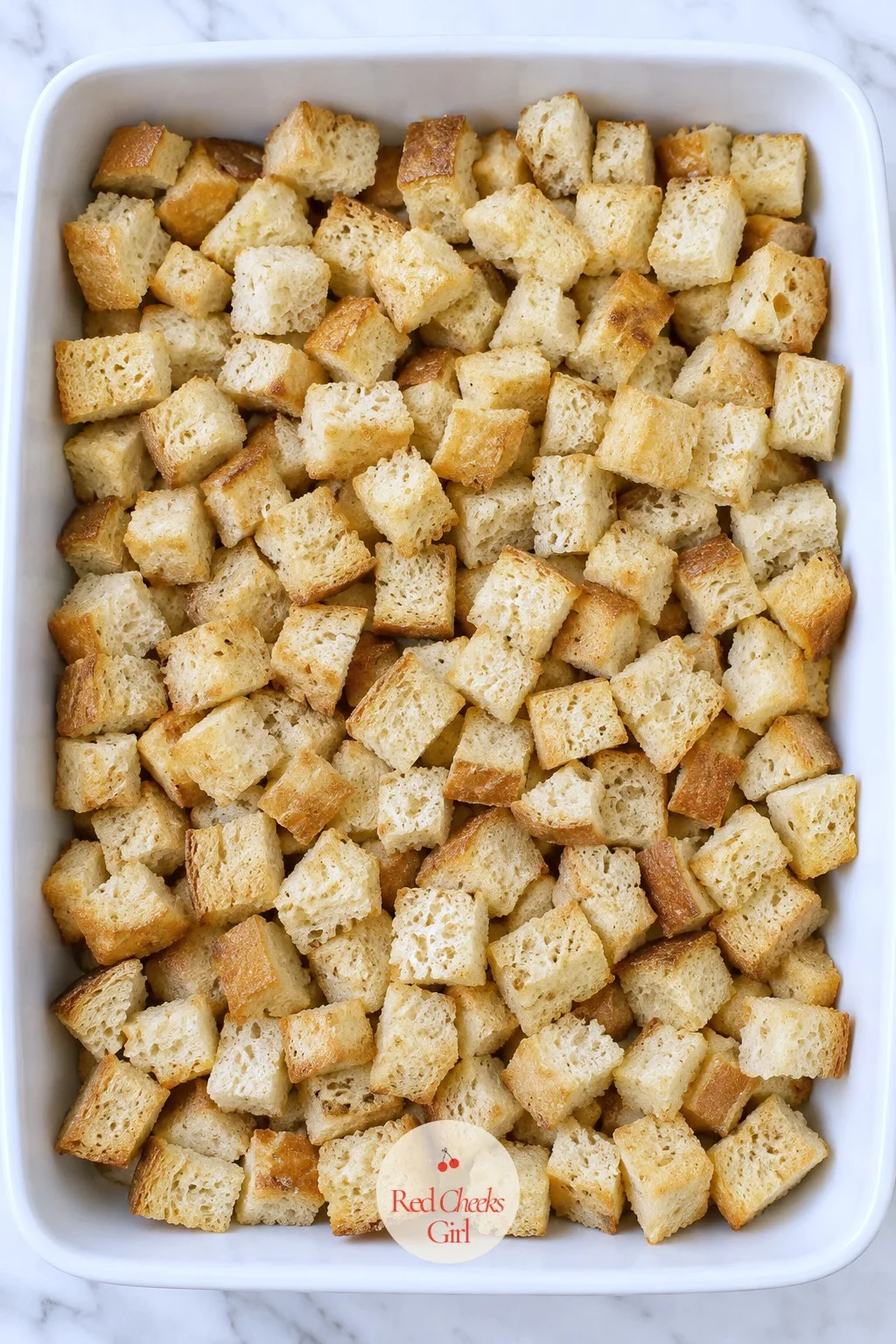
Spread the bread cubes in a single layer and give them the full bake time rather than a quick toast. They are ready when they look pale gold and sound hollow when two pieces knock together.
Brown the Sausage
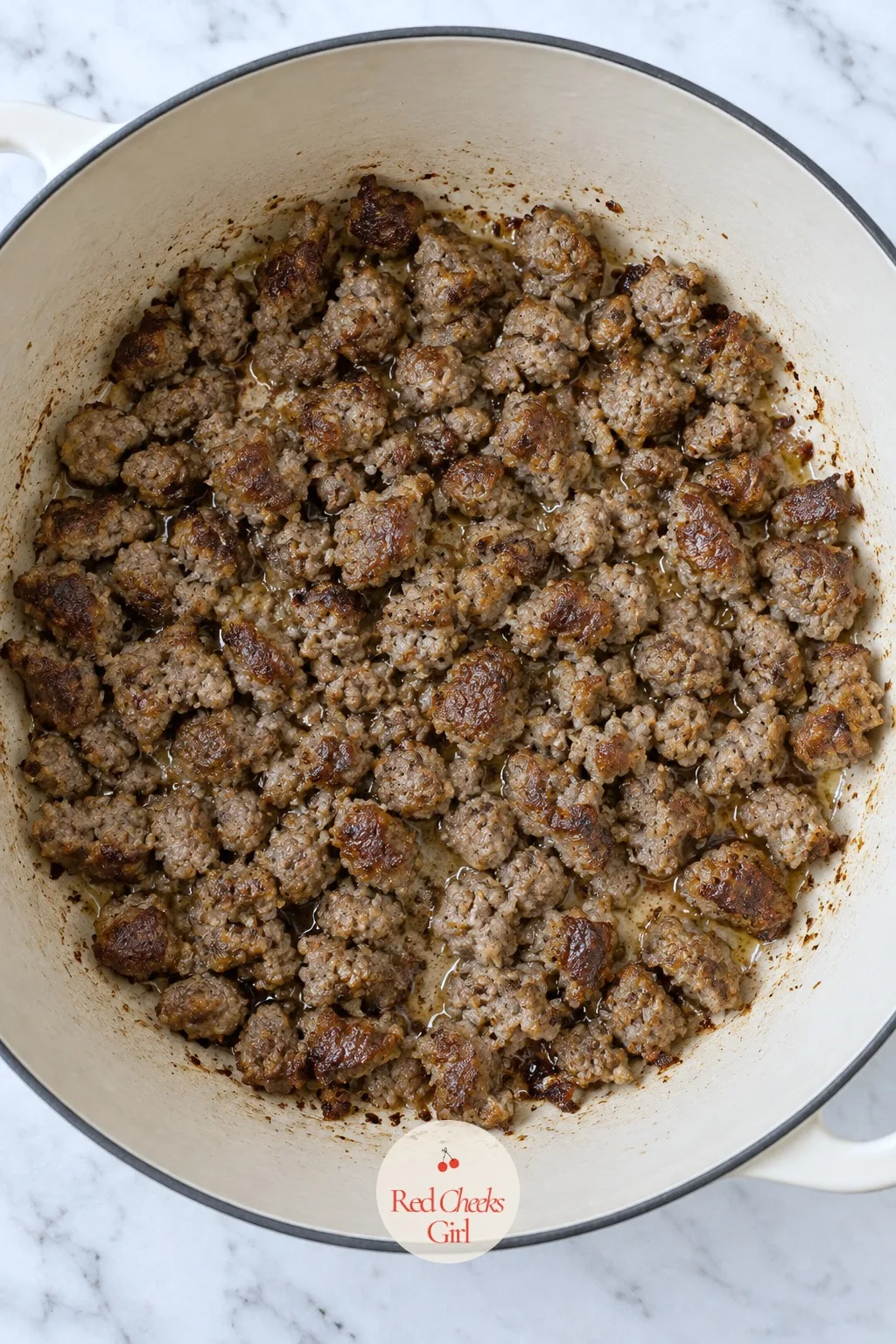
Break the sausage into small crumbles as it cooks and let the edges go properly brown rather than stopping at gray. That browning is where most of the flavor in this dish comes from.
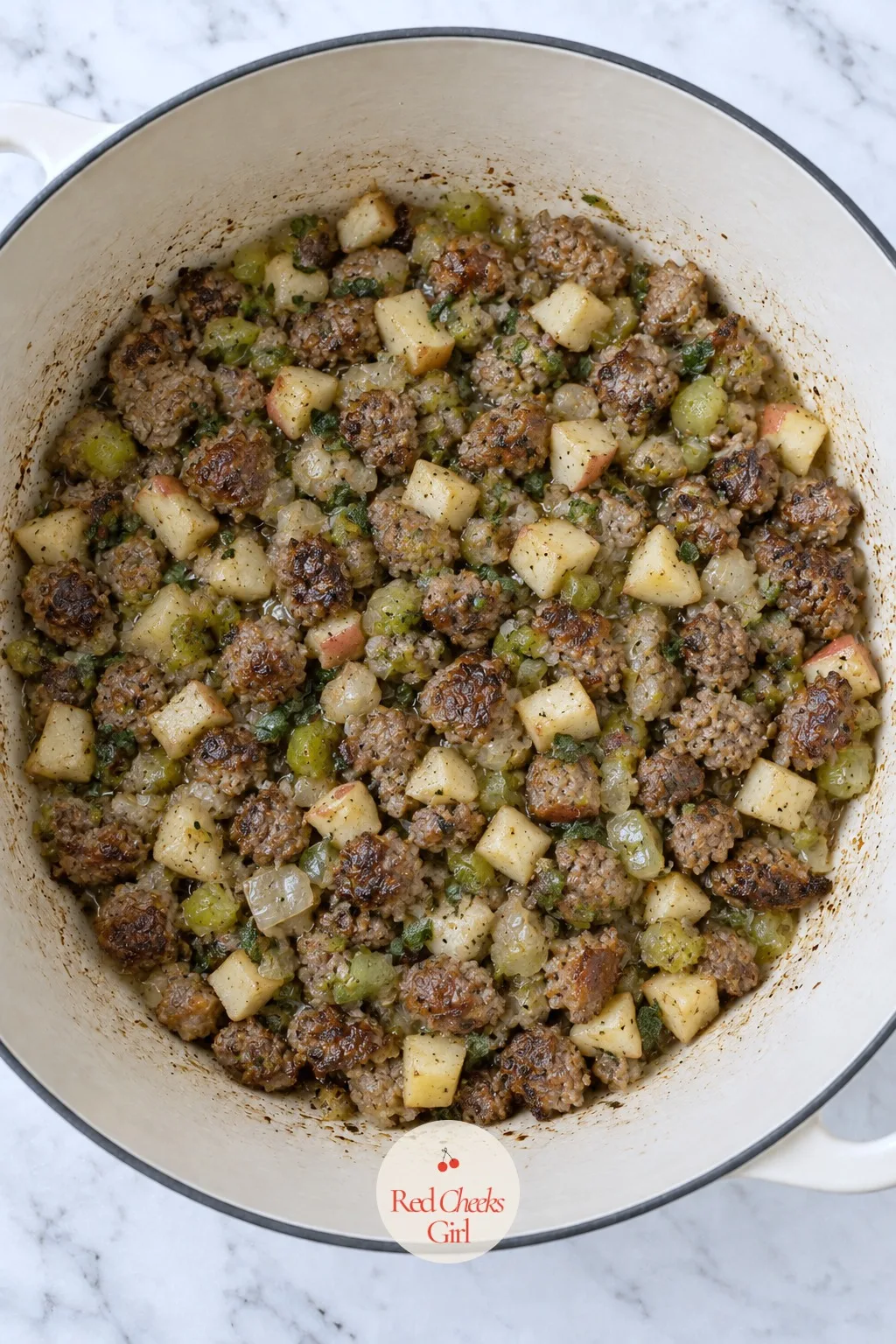
Add Apple and Sage
Stir the apple and sage into the softened onion and celery, then fold the browned sausage back in. The apple should soften only slightly at the edges and still hold its shape.
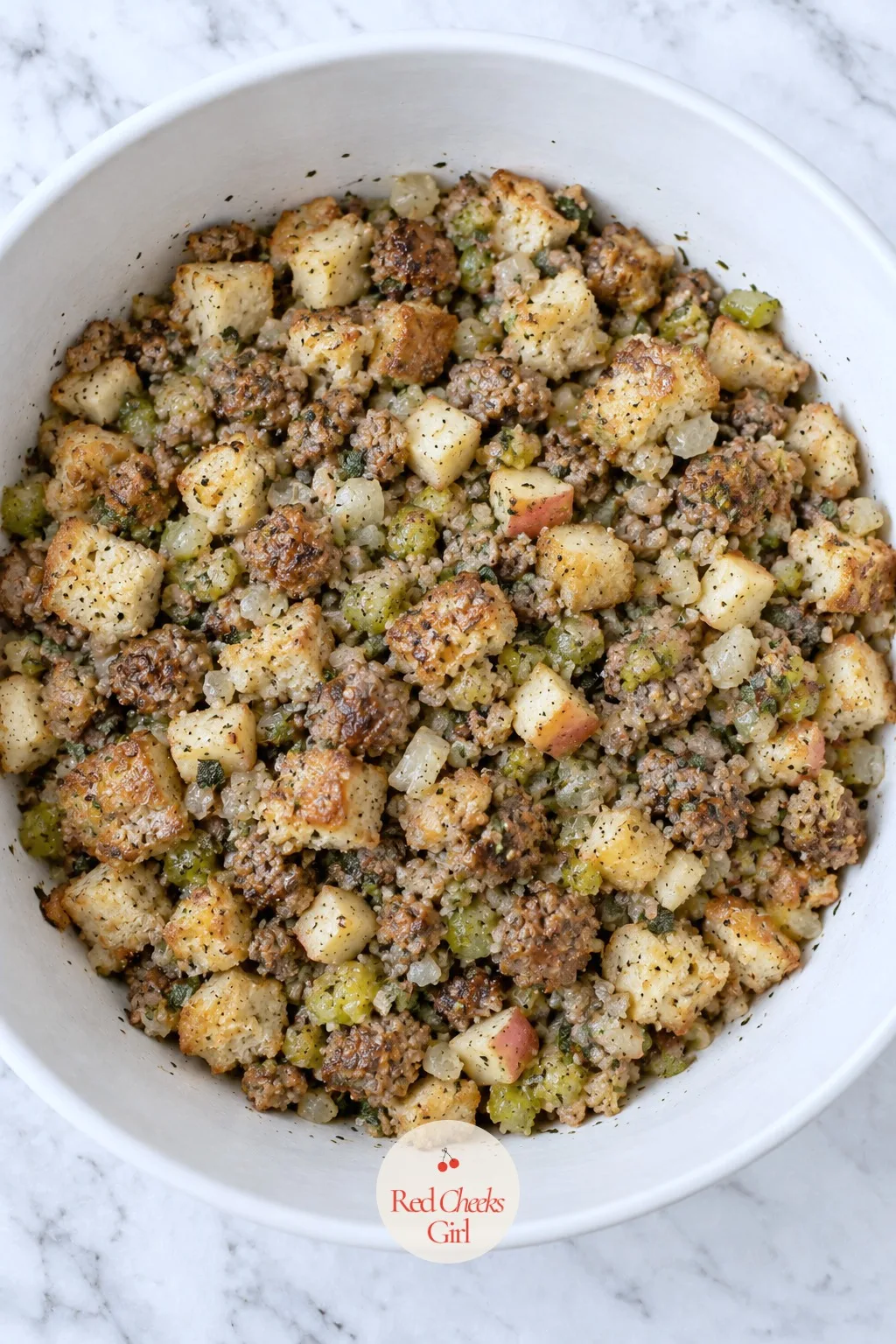
Toss Bread With the Sausage Mixture
Pour the warm sausage mixture over the dried bread cubes and toss gently so every cube picks up some sausage, onion and apple before any liquid goes in.
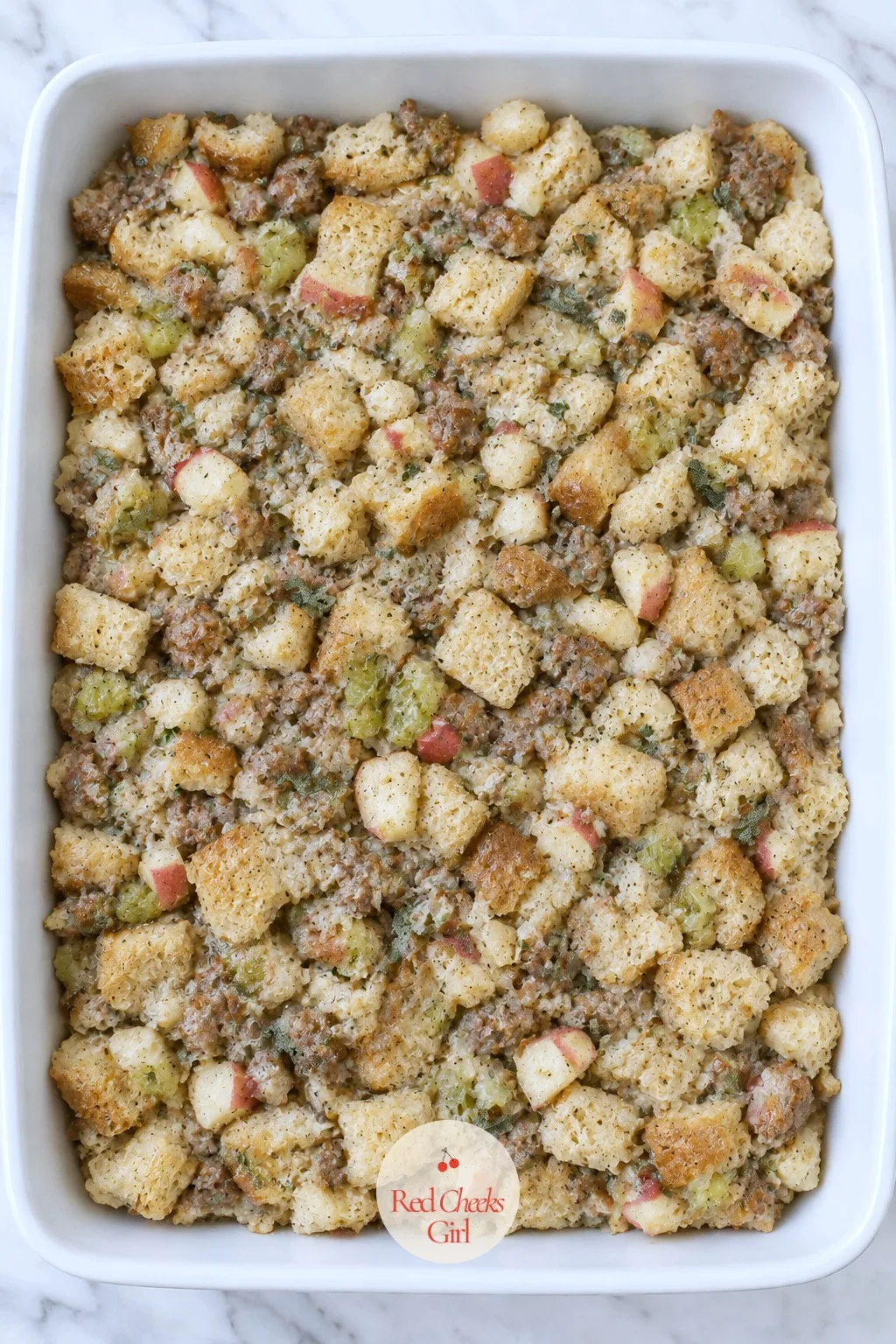
Press the Stuffing Into the Dish
Spread the moistened stuffing into the buttered dish and press it down lightly, just enough to fill the corners. It still looks raw here, matte rather than browned, ready for the oven.
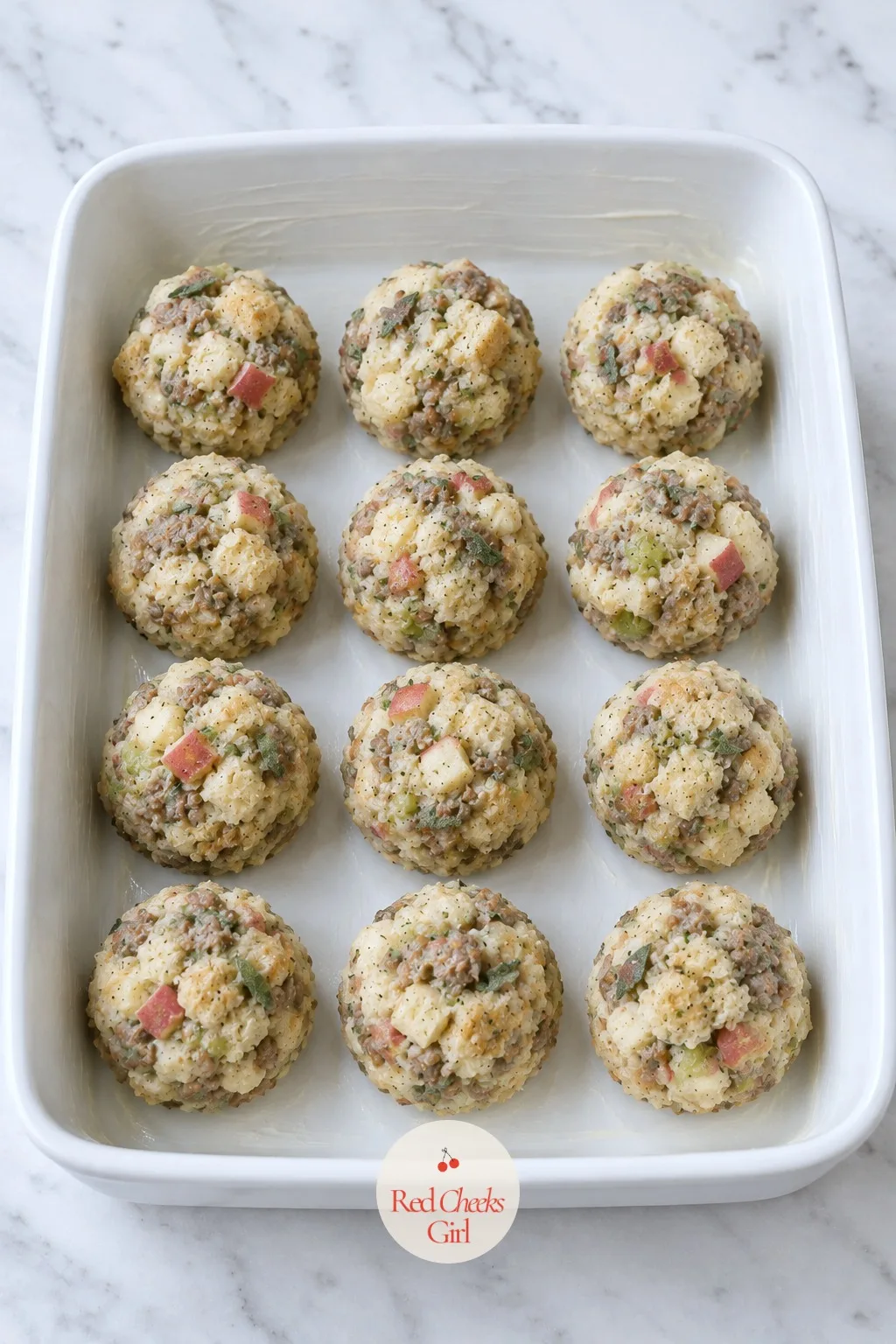
Shape the Stuffing Balls
Roll the reserved stuffing into even balls and set them in the small dish with a little space between each one. They should look round, uniform and still pale before baking.
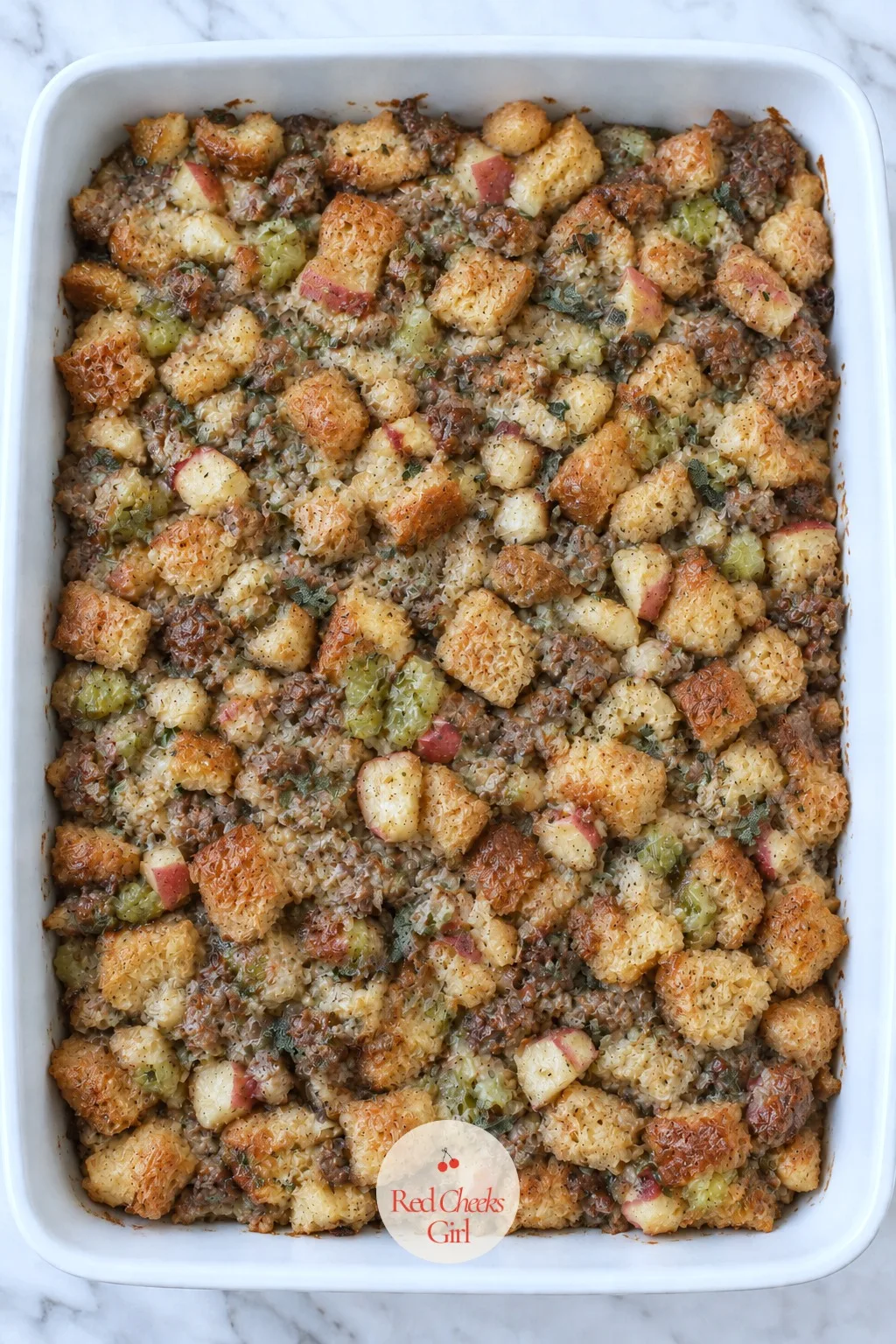
Bake Until Crisp and Golden
Once the foil comes off, watch for the top to turn deeply golden and crack slightly in places. That crisp top with a soft center underneath is exactly the texture this dish is built for.
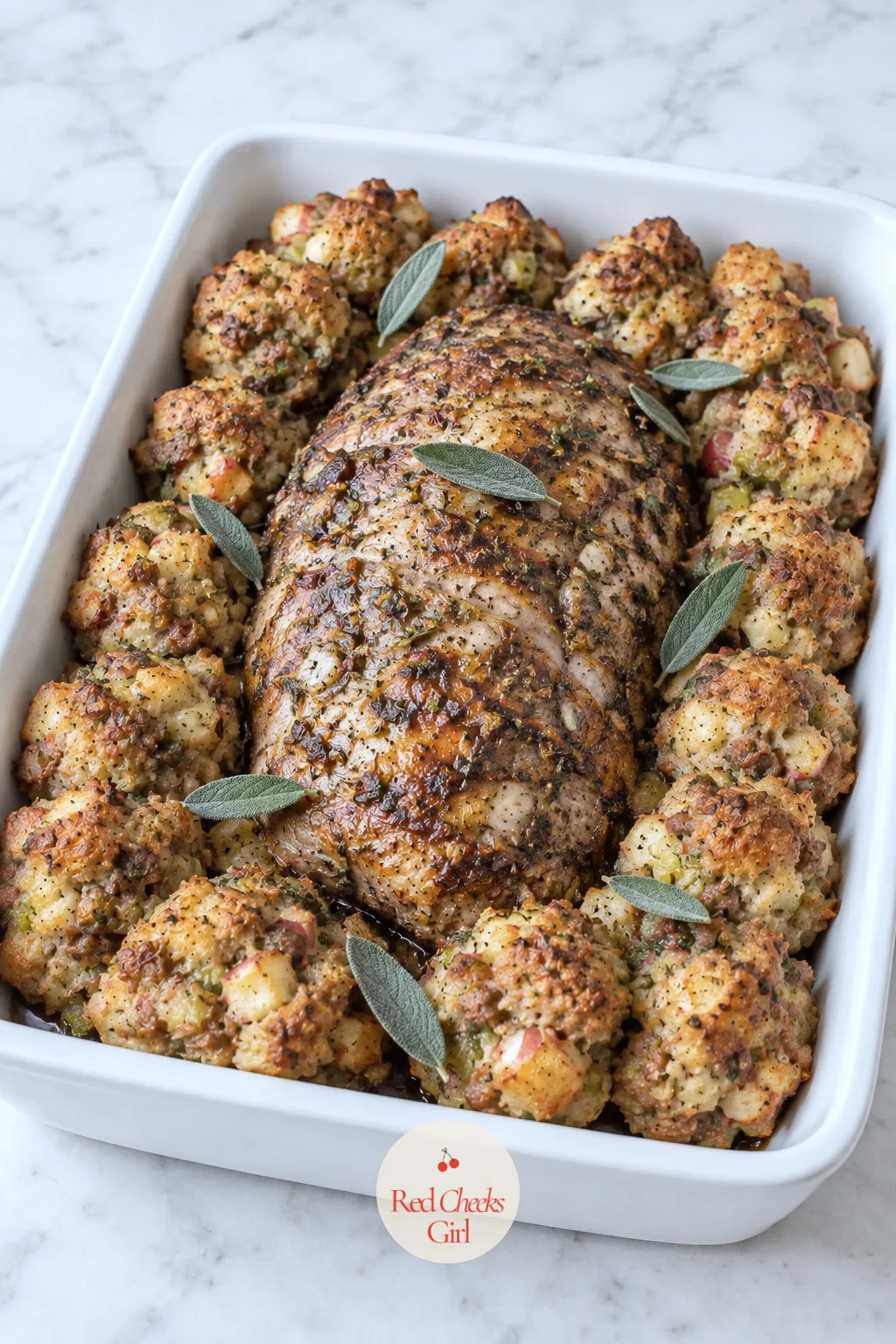
Ring the Roast With Stuffing Balls
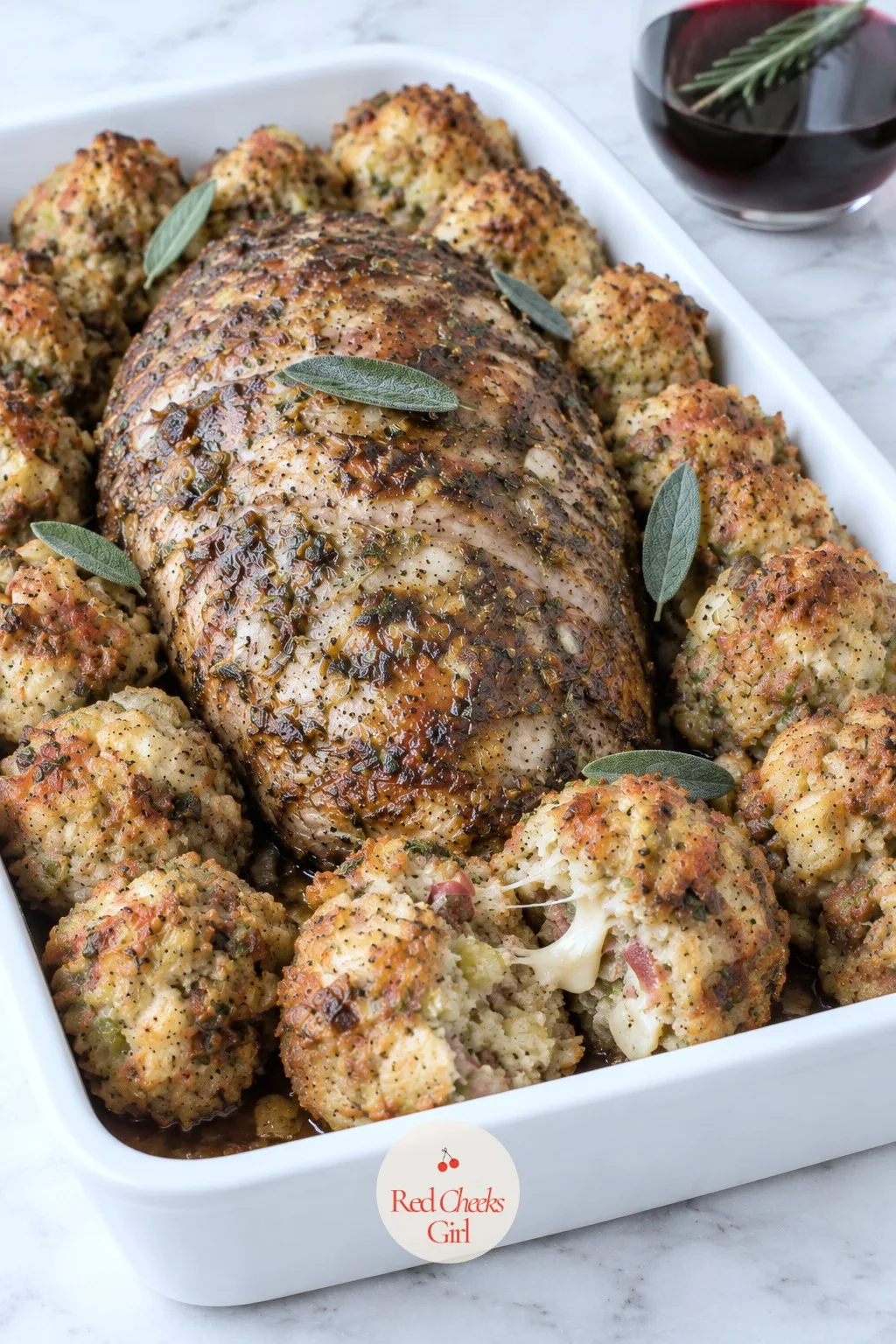
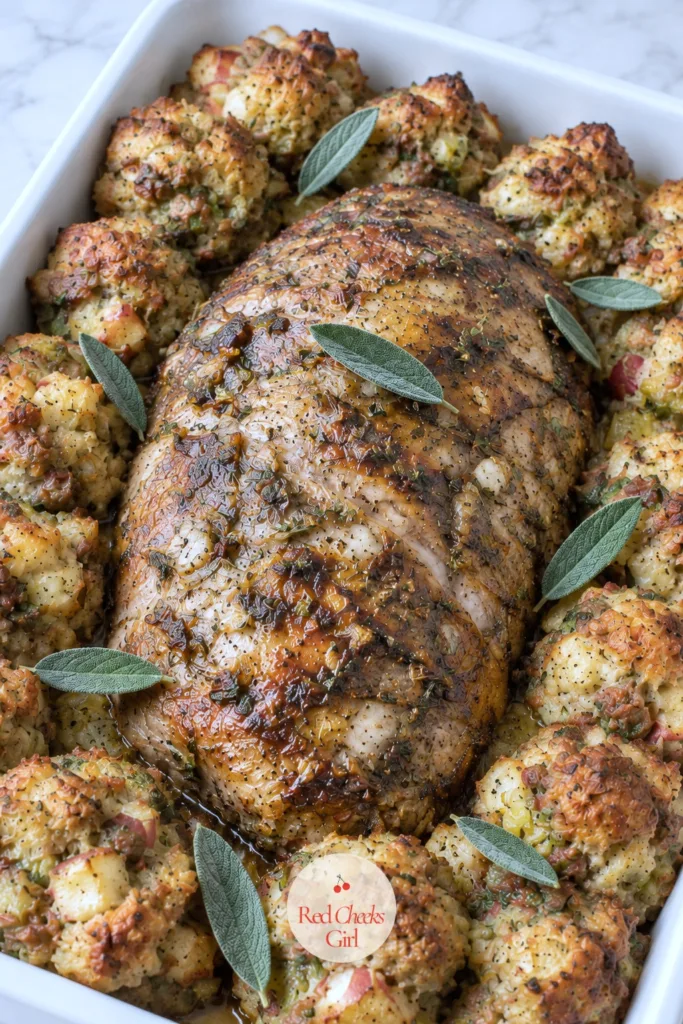
Arrange the golden stuffing balls around the roast on the platter and scatter a few whole sage leaves over everything. This is the moment the dish earns its spot as the centerpiece side.
🛍 Shopping guide
Getting It Right
Soggy stuffing has one cause nine times out of ten. so it collapsed under the liquid instead of absorbing it slowly. Give the bread the full bake time, not a quick toast.
Overmixing is the second trap. so fold with a light hand once the broth goes in rather than stirring hard.
Before anything goes in the oven, run the squeeze test.. Too wet and it steams instead of crisping; too dry and the top never browns properly.
Dry, crumbly stuffing comes from the opposite mistake: bread that was never dried in the first place, forcing it to soak up moisture too fast and bake out heavy and dense.
Do not skip the rest after baking. Ten minutes lets the eggs finish setting, so the stuffing holds a scoopable shape on the serving spoon instead of sliding apart in a wet heap.
Swaps and Substitutions
Gluten-free guests are an easy fix. dried and measured the same way.
Turkey or chicken sausage works in place of pork if you want something lighter; brown it the same way, though it releases less fat, so add an extra tablespoon of butter when the onion and celery go in. A plant-based sausage and vegetable broth turn the whole dish vegetarian without changing the method at all.
Pear stands in for apple when that is what is in the bowl, and a handful of dried cranberries or chopped toasted pecans folded in with the apple adds color and a little crunch if the table wants it. Fresh rosemary or thyme can join the sage in small amounts, though sage should stay the dominant flavor.
This dish carries common allergens worth naming out loud before a party: eggs, wheat from the bread, and pork from the sausage. Flag them on a little card by the serving dish if the guest list includes anyone who needs to know before they serve themselves.
What to Serve It With at a Party
This stuffing was built to sit next to a roast, so let it. A roast turkey, chicken or glazed ham all work, with the stuffing balls ringing the platter so the centerpiece looks finished the moment it lands on the table.
If turkey is not on the table this year, the stuffing balls still make sense next to something else entirely: browse Thanksgiving Dinner Ideas for Families Who Skipped the Turkey for a main that still wants a golden ring around it.
Round the plate out with gravy, a sharp cranberry sauce to cut the richness, and a green vegetable like roasted Brussels sprouts or green beans so the plate is not all bread and sausage.
Pour something simple for the adults at the table, a dry hard cider or a light red wine, and keep the water glasses full for anyone driving home.
Once the plates are cleared, keep people at the table a little longer with a round from Thanksgiving Table Games You Can Play Without Getting Up, and if the platter itself deserves a little more styling, there are easy ideas in Fall Dining Table Decor Ideas for the Table You Use Every Day.
Sausage Stuffing
Ingredients
- 1 large loaf country white or French bread cut into 3/4-inch cubes (about 12 cups)
- 1 1/2 pounds bulk pork breakfast sausage sage or mild
- 6 tablespoons unsalted butter divided
- 1 large yellow onion diced (about 1 1/2 cups)
- 3 celery stalks diced (about 1 1/2 cups)
- 2 medium apples such as Honeycrisp or Granny Smith, peeled, cored and diced (about 2 cups)
- 1/4 cup chopped fresh sage leaves plus a few whole leaves for serving
- 3 large eggs
- 2 1/2 to 3 cups low-sodium chicken broth
- 1 teaspoon kosher salt
- 1/2 teaspoon black pepper freshly ground
Instructions
- Heat the oven to 300°F. Spread 12 cups of bread cubes, cut about 3/4 inch, in a single layer in the white ceramic baking dish and bake for 35 to 40 minutes, stirring once halfway through, until the cubes are pale gold, firm all the way through and rattle faintly when the dish is shaken. Skip this step if your bread already sat out, uncovered, for two days and is hard enough to knock on.
- Set the cream Dutch oven over medium heat and add the bulk pork sausage, breaking it into small crumbles with a wooden spoon as it cooks. Cook for 8 to 10 minutes, until no pink remains and the edges of the crumbles have turned deep brown. Lift the sausage to a plate with a slotted spoon, leaving the fat behind in the pot.
- Add 4 tablespoons of the butter to the fat left in the Dutch oven, then stir in the diced onion and celery. Cook over medium heat for 7 to 8 minutes, stirring now and then, until the onion turns soft and translucent and the celery has lost its raw bite.
- Stir in the diced apple and the chopped fresh sage and cook for 2 to 3 minutes, just until the apple softens slightly at the edges but still holds its shape. Return the browned sausage to the pot, stir to combine, and remove the pot from the heat.
- Tip the dried bread cubes into the white mixing bowl and pour the warm sausage mixture over the top. Toss gently with a wooden spoon until the bread is evenly flecked with sausage, onion, celery and apple throughout.
- In a clear glass pitcher, whisk the eggs with 2 1/2 cups of the chicken broth, the salt and the pepper until no streaks of egg remain. Pour two thirds of this mixture over the bread and toss gently until every cube looks damp rather than wet.
- Squeeze a small handful of the stuffing in your palm: it should hold together in a loose clump without dripping, and a cube broken open should feel moist at the center rather than chalky. If it still feels dry, pour in the remaining broth mixture a little at a time, tossing between additions, until it passes the squeeze test.
- Rub 1 tablespoon of the remaining butter over the inside of the second white ceramic baking dish, then spread most of the stuffing into it in an even layer, pressing down lightly so it fills the corners without packing it tight.
- Rub the remaining 1 tablespoon of butter over the inside of a small white ceramic baking dish. Scoop the rest of the stuffing into 12 portions, about 1/3 cup each, roll each one into a ball between your palms, and arrange the balls in the dish with a little space between them.
- Cover the large dish loosely with foil and set both dishes in the oven at 375°F. Bake the covered dish for 25 minutes, then uncover and bake both dishes for a further 20 to 25 minutes, until the stuffing balls are golden all over and the top of the large dish is deeply crisp and golden brown.
- Remove both dishes from the oven and let the stuffing rest for 10 minutes before serving. This short rest lets the center finish setting, so it scoops cleanly instead of falling apart.
- Spoon the stuffing from the large dish into a serving bowl, or leave it in its baking dish, then arrange the stuffing balls in a ring around the roast on the platter. Scatter a few whole sage leaves over the top and serve warm.
Good to Know
Frequently Asked Questions
What is the difference between stuffing and dressing?
Stuffing is cooked inside the turkey, while dressing bakes separately in its own dish, which is technically what this recipe is. Most cooks use the two words interchangeably now, so call it whichever one you grew up saying.
Can you cook this stuffing inside the turkey instead of in a dish?
You can, but keep the raw mixture out of the cavity until just before roasting rather than packing it ahead of time, and check with a thermometer that the center reaches 165°F before carving.
Can you freeze sausage stuffing?
Yes, both the baked dish and the stuffing balls freeze well for up to a month once fully cooled and wrapped tightly. Thaw overnight in the refrigerator, then reheat covered until warmed through.
What is the best bread to use for sausage stuffing?
A sturdy white loaf such as French bread or sourdough works best, since its firm crumb can soak up broth slowly without falling apart. Avoid soft sandwich bread, which turns to mush almost instantly.
Why did my stuffing turn out mushy or dry?
Mushy stuffing almost always means the bread was not dried out enough before the broth and eggs went in. Dry, crumbly stuffing usually means too little broth, or too much time in the oven uncovered.

Potato latkes recipe for a crispy golden fry: grated russets squeezed dry, pan-fried hot, and served
My barista phase lasted about four months. $14 for an avocado plate and a latte, every single weekda
Easy 5-ingredient breakfast casserole with eggs, bread, cheese, milk, seasoning. Ready in 45 minutes
Leave a Reply