Sausage Stuffing
Ingredients
- 1 large loaf country white or French bread cut into 3/4-inch cubes (about 12 cups)
- 1 1/2 pounds bulk pork breakfast sausage sage or mild
- 6 tablespoons unsalted butter divided
- 1 large yellow onion diced (about 1 1/2 cups)
- 3 celery stalks diced (about 1 1/2 cups)
- 2 medium apples such as Honeycrisp or Granny Smith, peeled, cored and diced (about 2 cups)
- 1/4 cup chopped fresh sage leaves plus a few whole leaves for serving
- 3 large eggs
- 2 1/2 to 3 cups low-sodium chicken broth
- 1 teaspoon kosher salt
- 1/2 teaspoon black pepper freshly ground
Instructions
- Heat the oven to 300°F. Spread 12 cups of bread cubes, cut about 3/4 inch, in a single layer in the white ceramic baking dish and bake for 35 to 40 minutes, stirring once halfway through, until the cubes are pale gold, firm all the way through and rattle faintly when the dish is shaken. Skip this step if your bread already sat out, uncovered, for two days and is hard enough to knock on.
- Set the cream Dutch oven over medium heat and add the bulk pork sausage, breaking it into small crumbles with a wooden spoon as it cooks. Cook for 8 to 10 minutes, until no pink remains and the edges of the crumbles have turned deep brown. Lift the sausage to a plate with a slotted spoon, leaving the fat behind in the pot.
- Add 4 tablespoons of the butter to the fat left in the Dutch oven, then stir in the diced onion and celery. Cook over medium heat for 7 to 8 minutes, stirring now and then, until the onion turns soft and translucent and the celery has lost its raw bite.
- Stir in the diced apple and the chopped fresh sage and cook for 2 to 3 minutes, just until the apple softens slightly at the edges but still holds its shape. Return the browned sausage to the pot, stir to combine, and remove the pot from the heat.
- Tip the dried bread cubes into the white mixing bowl and pour the warm sausage mixture over the top. Toss gently with a wooden spoon until the bread is evenly flecked with sausage, onion, celery and apple throughout.
- In a clear glass pitcher, whisk the eggs with 2 1/2 cups of the chicken broth, the salt and the pepper until no streaks of egg remain. Pour two thirds of this mixture over the bread and toss gently until every cube looks damp rather than wet.
- Squeeze a small handful of the stuffing in your palm: it should hold together in a loose clump without dripping, and a cube broken open should feel moist at the center rather than chalky. If it still feels dry, pour in the remaining broth mixture a little at a time, tossing between additions, until it passes the squeeze test.
- Rub 1 tablespoon of the remaining butter over the inside of the second white ceramic baking dish, then spread most of the stuffing into it in an even layer, pressing down lightly so it fills the corners without packing it tight.
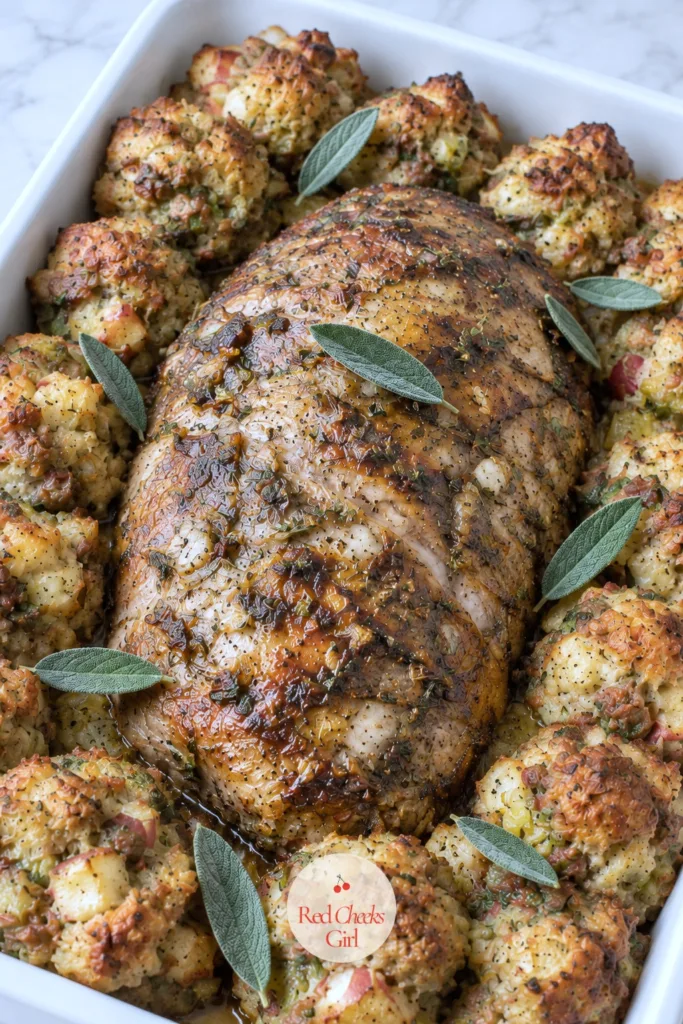
- Rub the remaining 1 tablespoon of butter over the inside of a small white ceramic baking dish. Scoop the rest of the stuffing into 12 portions, about 1/3 cup each, roll each one into a ball between your palms, and arrange the balls in the dish with a little space between them.
- Cover the large dish loosely with foil and set both dishes in the oven at 375°F. Bake the covered dish for 25 minutes, then uncover and bake both dishes for a further 20 to 25 minutes, until the stuffing balls are golden all over and the top of the large dish is deeply crisp and golden brown.
- Remove both dishes from the oven and let the stuffing rest for 10 minutes before serving. This short rest lets the center finish setting, so it scoops cleanly instead of falling apart.
- Spoon the stuffing from the large dish into a serving bowl, or leave it in its baking dish, then arrange the stuffing balls in a ring around the roast on the platter. Scatter a few whole sage leaves over the top and serve warm.
Good to Know
Squeeze a handful before it goes in the oven: a loose clump that holds without dripping is exactly the texture you want, no more broth needed.