

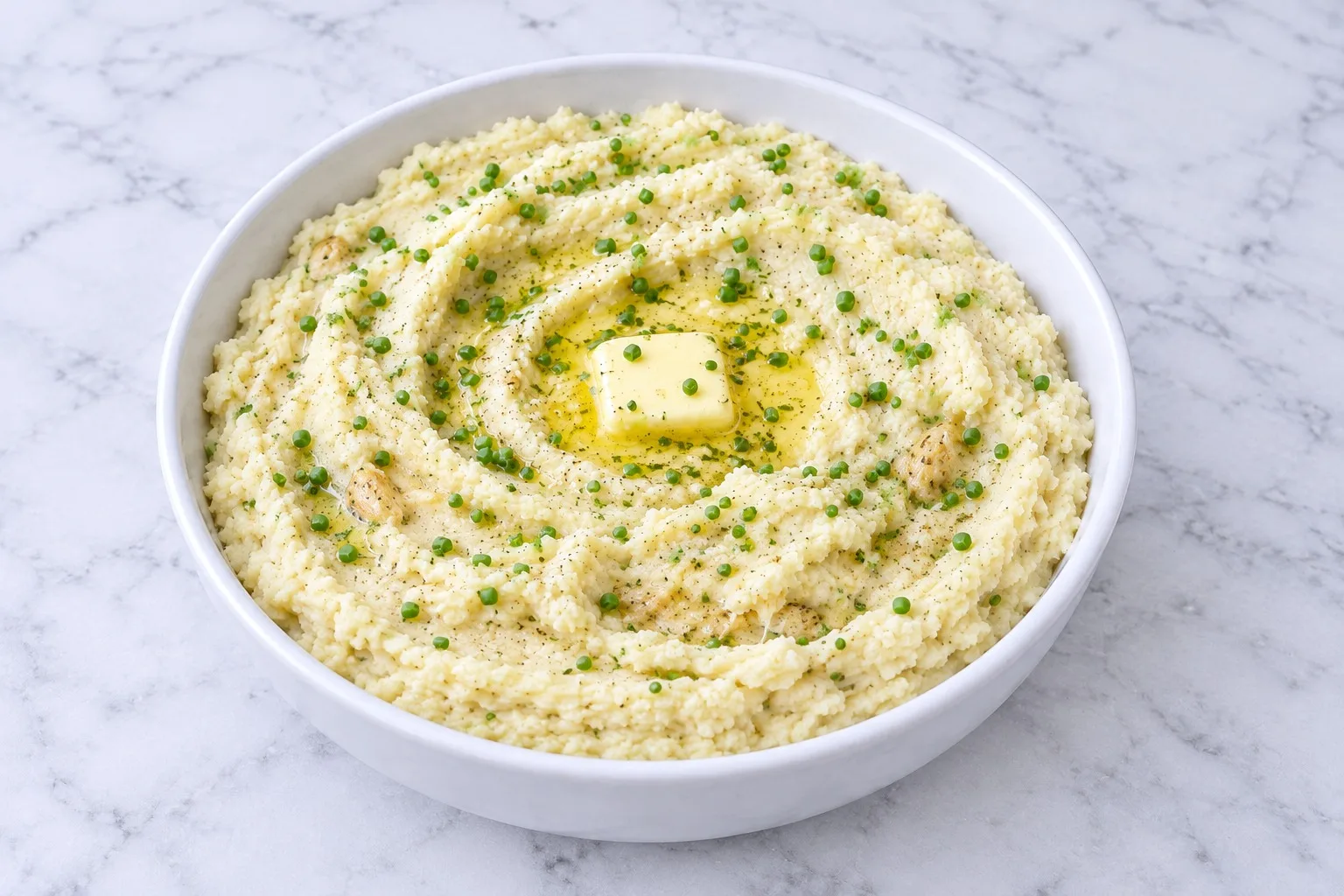
Garlic mashed potatoes are the bowl that empties first at a party, long before the roast gets touched twice.
This version boils Yukon Golds until they give no resistance, dries them for a single minute over low heat, then folds in milk warmed with garlic, butter and sour cream. A roasted garlic option sits right inside the same method, for the nights the table wants something deeper.
This post contains affiliate links. If you buy through them, I may earn a small commission at no extra cost to you.
Table of Contents
Why Garlic Mashed Potatoes Belong on a Party Table
Every party has one dish nobody argues about, and for most tables it is the potatoes. A plain mash disappears next to the main course; a garlic mash gets asked about.
This recipe scales to a crowd without turning into a chore the night before. The boiling, drying and mashing happen in the same pot, so there is one less thing to wash at eleven at night.
If the guest list runs smaller, halve everything and keep the method exactly as written: the ratios hold at any size. If it runs to eighteen, as written here, this makes enough without anyone eyeing the serving spoon for seconds they will not get.
The garlic does the quiet work. Infused into warm milk it reads as background warmth, not a bite that follows anyone home.
What Goes Into the Bowl, and Why
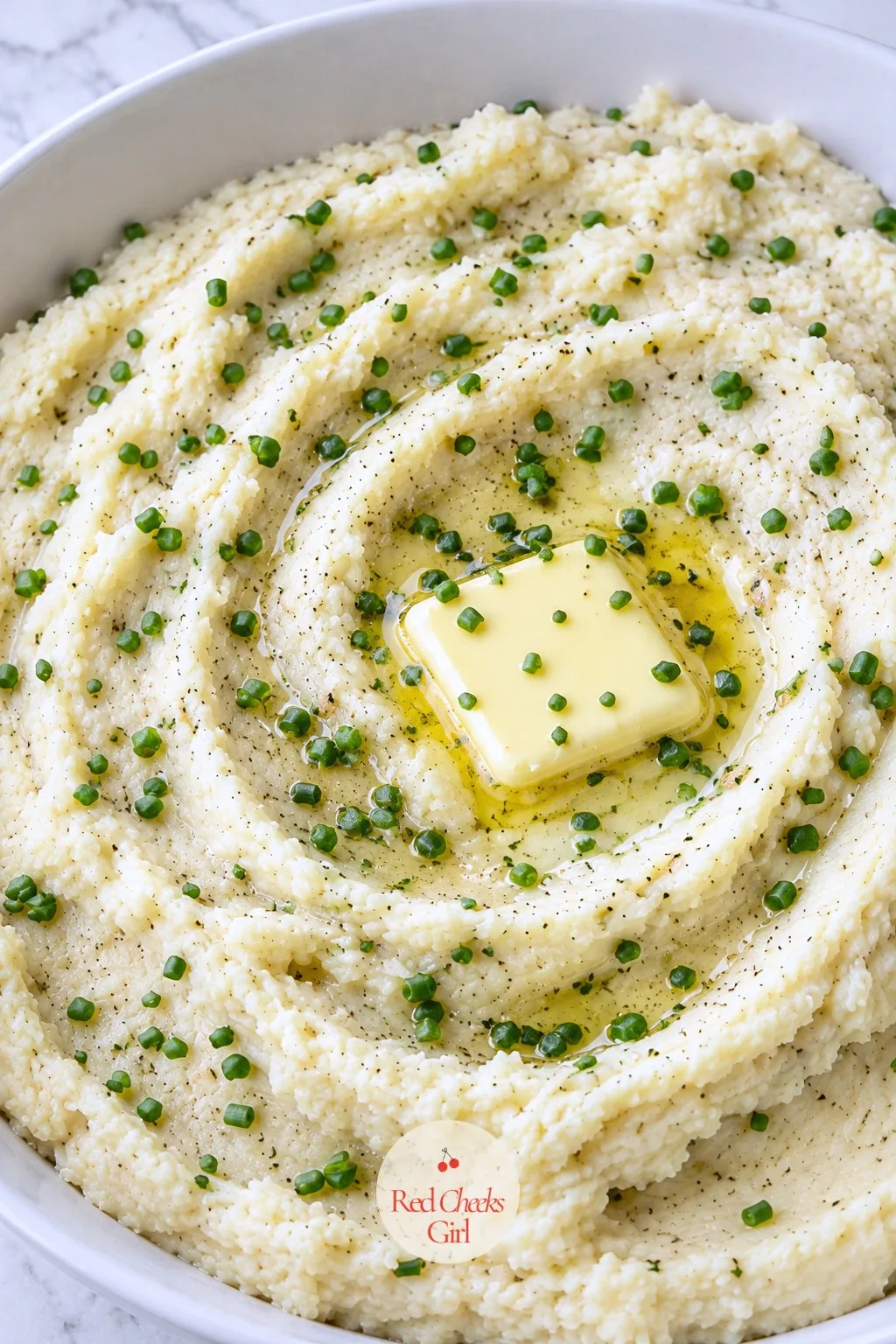
Yukon Gold potatoes sit between a waxy red potato and a dry russet, and that middle ground is exactly the point. They mash smooth without a ricer doing all the work, and they hold enough body that the dish does not turn to soup under warm milk.
Garlic shows up twice in this recipe, and the two versions taste genuinely different. Smashed raw cloves simmered gently in milk give a soft, even garlic flavor through the whole bowl; a head of roasted garlic squeezed in with the butter gives pockets of something sweeter and more caramelized, closer to roasted onion than raw garlic bite.
Whole milk, not cream and not water, keeps the potatoes rich without turning them heavy enough to sit like a brick next to the gravy. Warming it before it meets the potatoes matters more than most steps in this recipe, and the next two sections explain exactly why.
Sour cream goes in last, after the butter and milk, for tang rather than richness. It is the ingredient that keeps garlic mashed potatoes from tasting flat under all that fat, and it is also where the dairy allergy lives if anyone at the table needs to know.
How to Make It
The order here is not negotiable if smooth potatoes are the goal: boil, dry, mash, then add liquid. Skip the drying step and the potatoes hold extra water that waters down both texture and garlic flavor.
This recipe carries milk, butter and sour cream throughout, so it is not suitable as written for anyone avoiding dairy; the swaps section further down covers a dairy-free route. Nobody needs a stand mixer or a blender for this, just a sturdy pot and a masher or ricer.
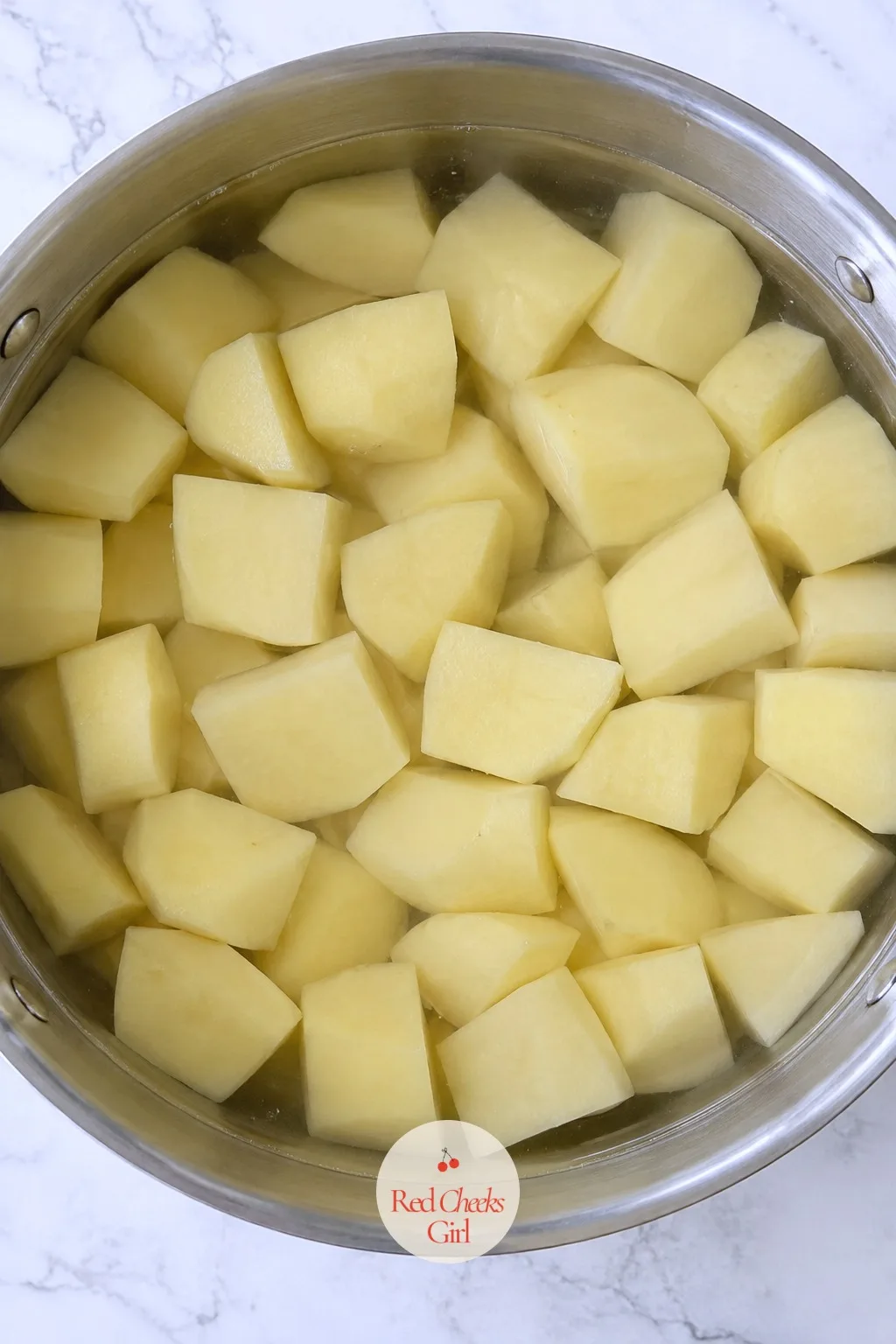
Cover the potato chunks with water
Peel and cut the potatoes into even chunks, then settle them into the pot and cover with cold water. The pieces should sit fully submerged, with the water just covering the top layer.
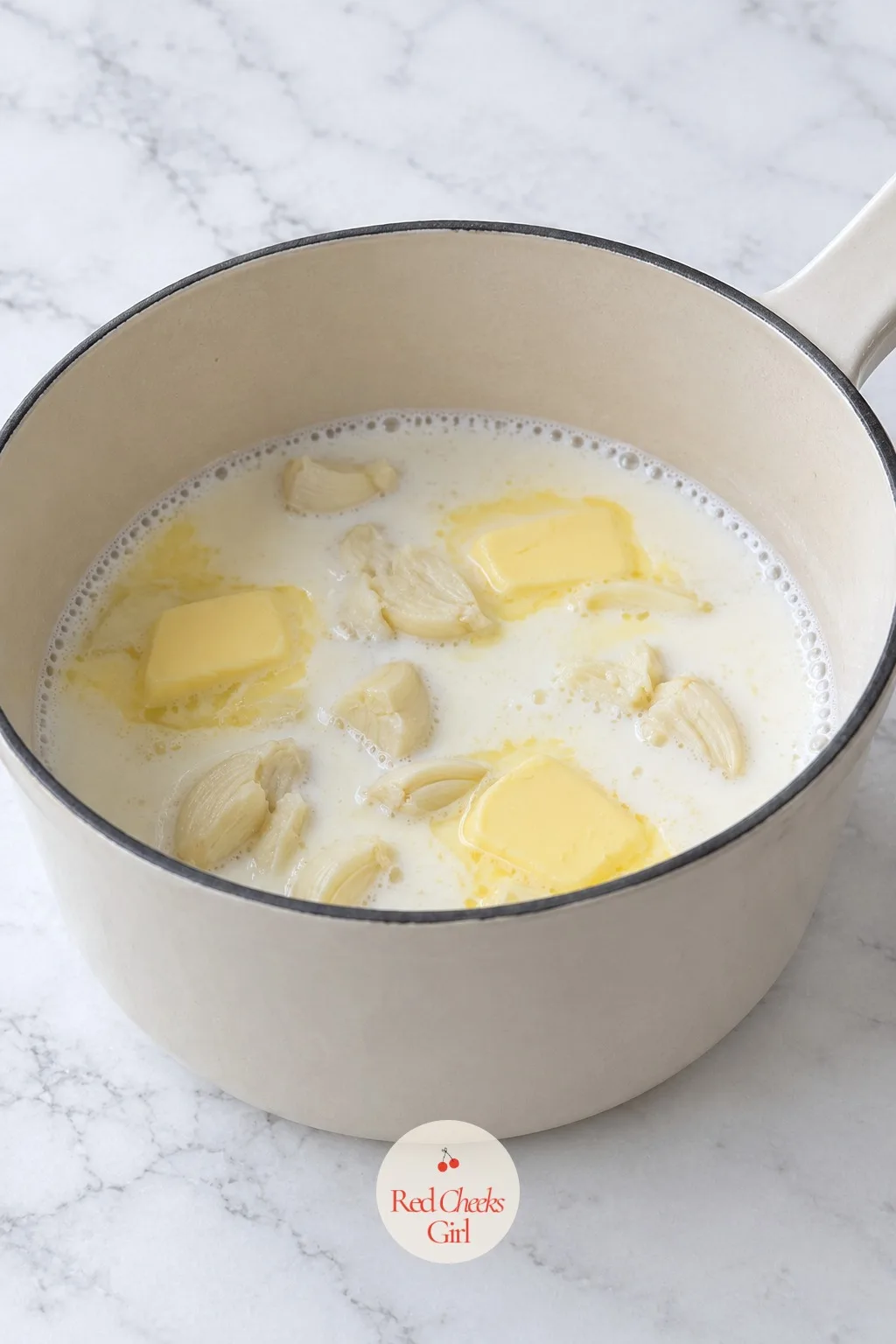
Warm the milk with garlic and butter
While the potatoes simmer, warm the milk with smashed garlic cloves and a portion of the butter. Small bubbles should ring the edge of the pan, with the garlic visibly steeping in the milk.
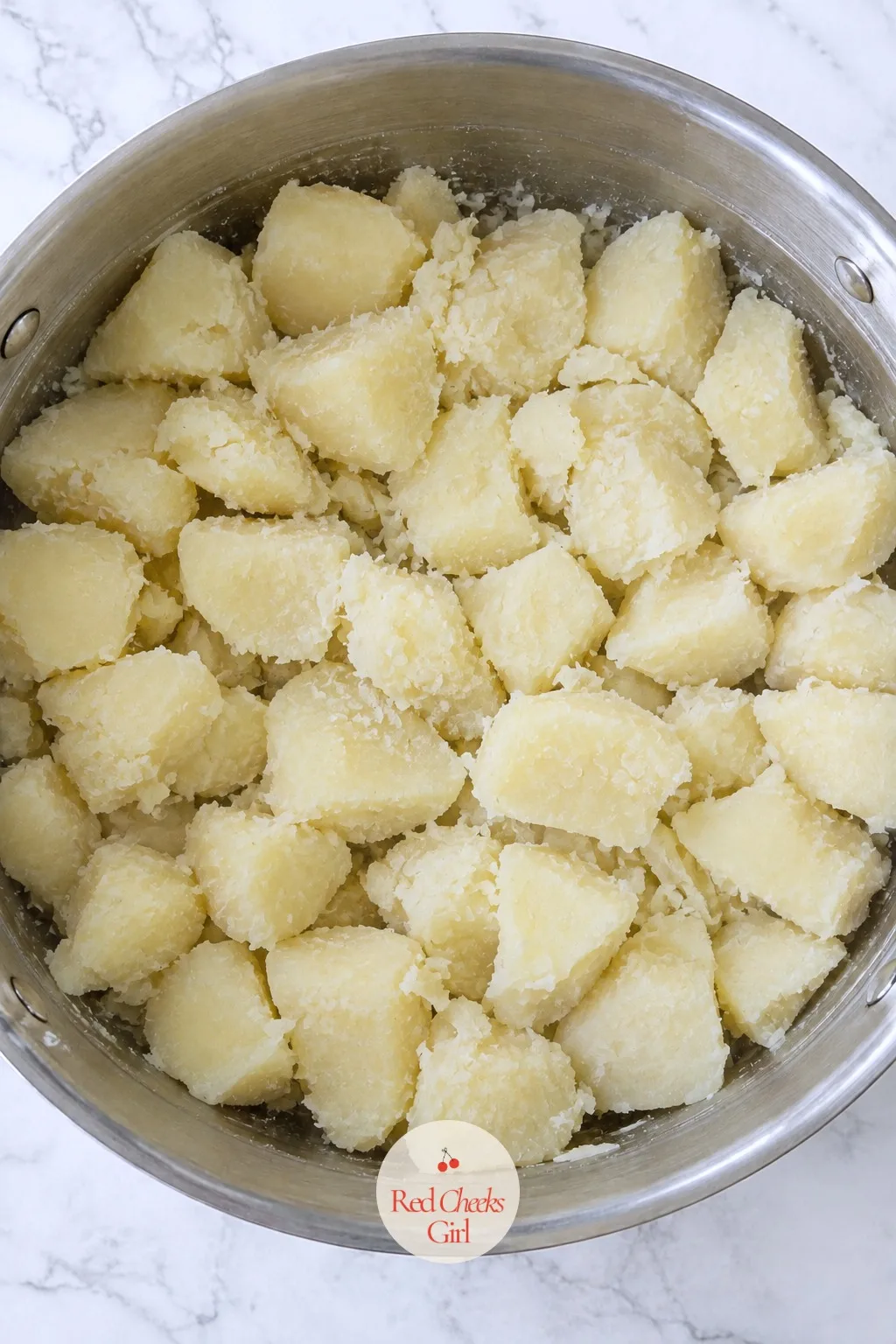
Dry the drained potatoes over low heat
Drained and returned to the hot pot, the potatoes dry out over the lowest heat for about a minute. Look for a matte, slightly chalky surface rather than anything glossy or wet.
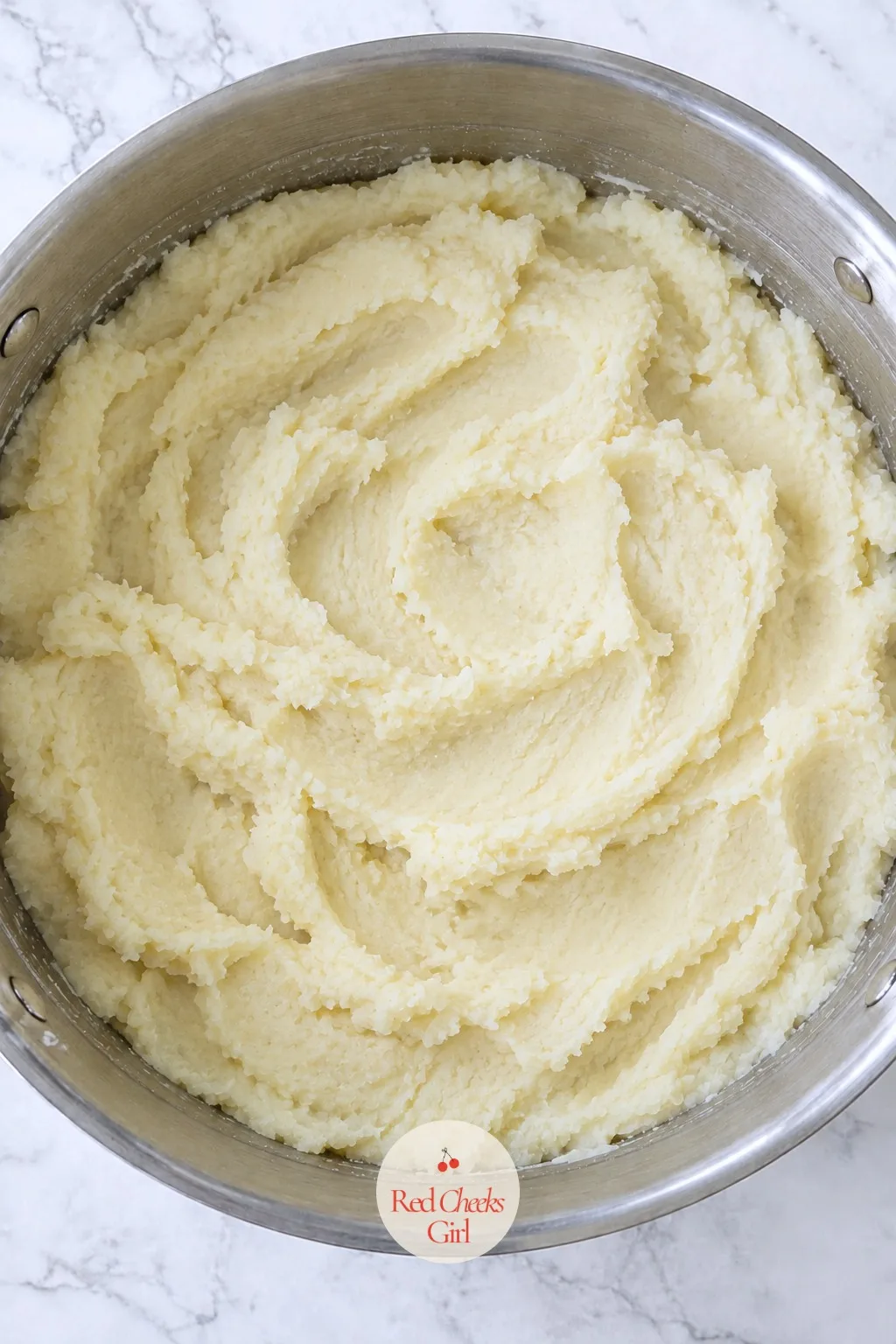
Mash the potatoes before adding dairy
Riced or mashed with a sturdy masher, the potatoes should turn soft and pale with no lump larger than a pea. Nothing wet has gone in yet, so the texture still looks dry.
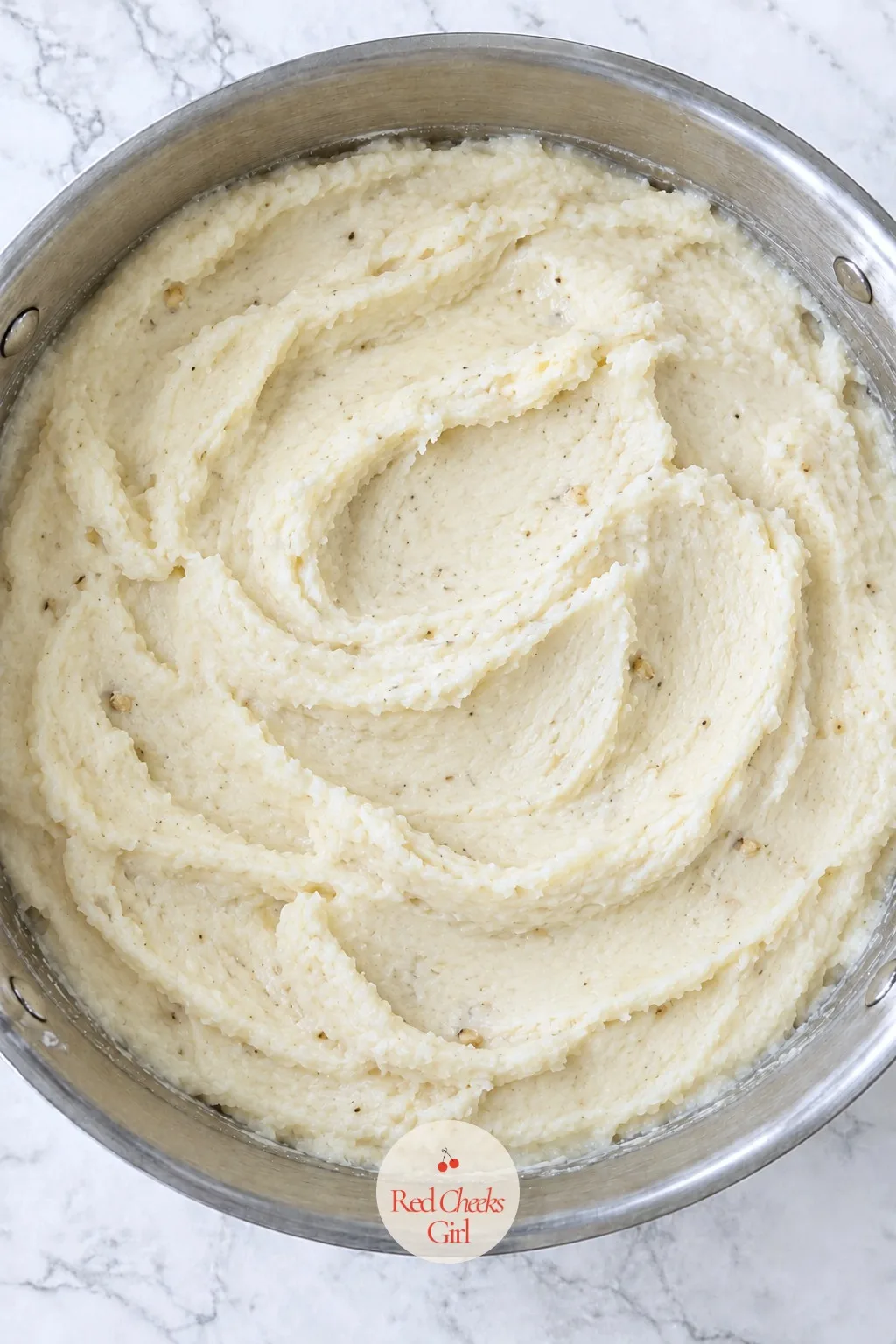
Fold in the warm milk and sour cream
Once the warm garlic milk, butter and sour cream are folded through, the potatoes turn glossy and smooth. They should hold a soft peak on the spoon rather than pooling flat.
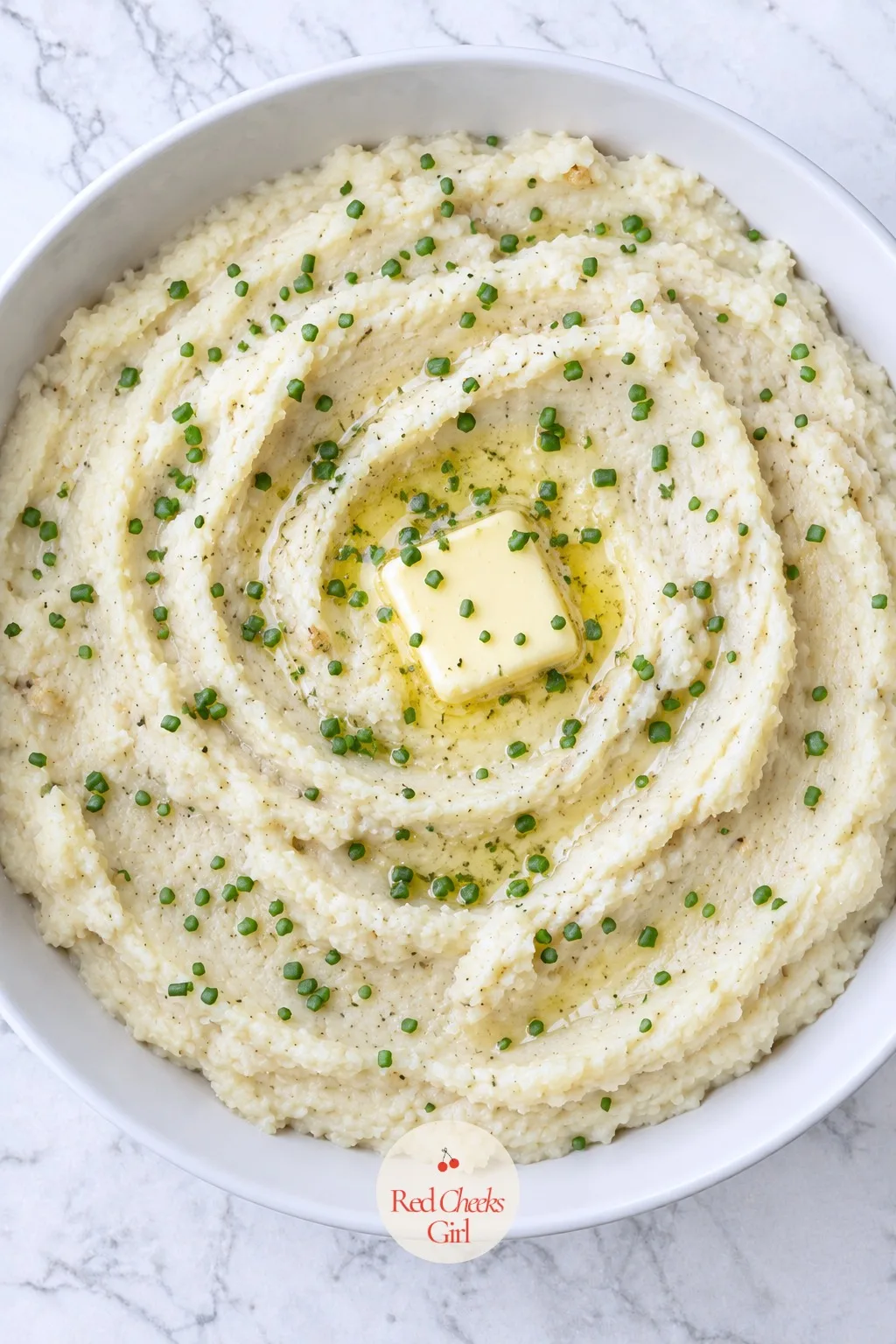
Serve the finished garlic mashed potatoes
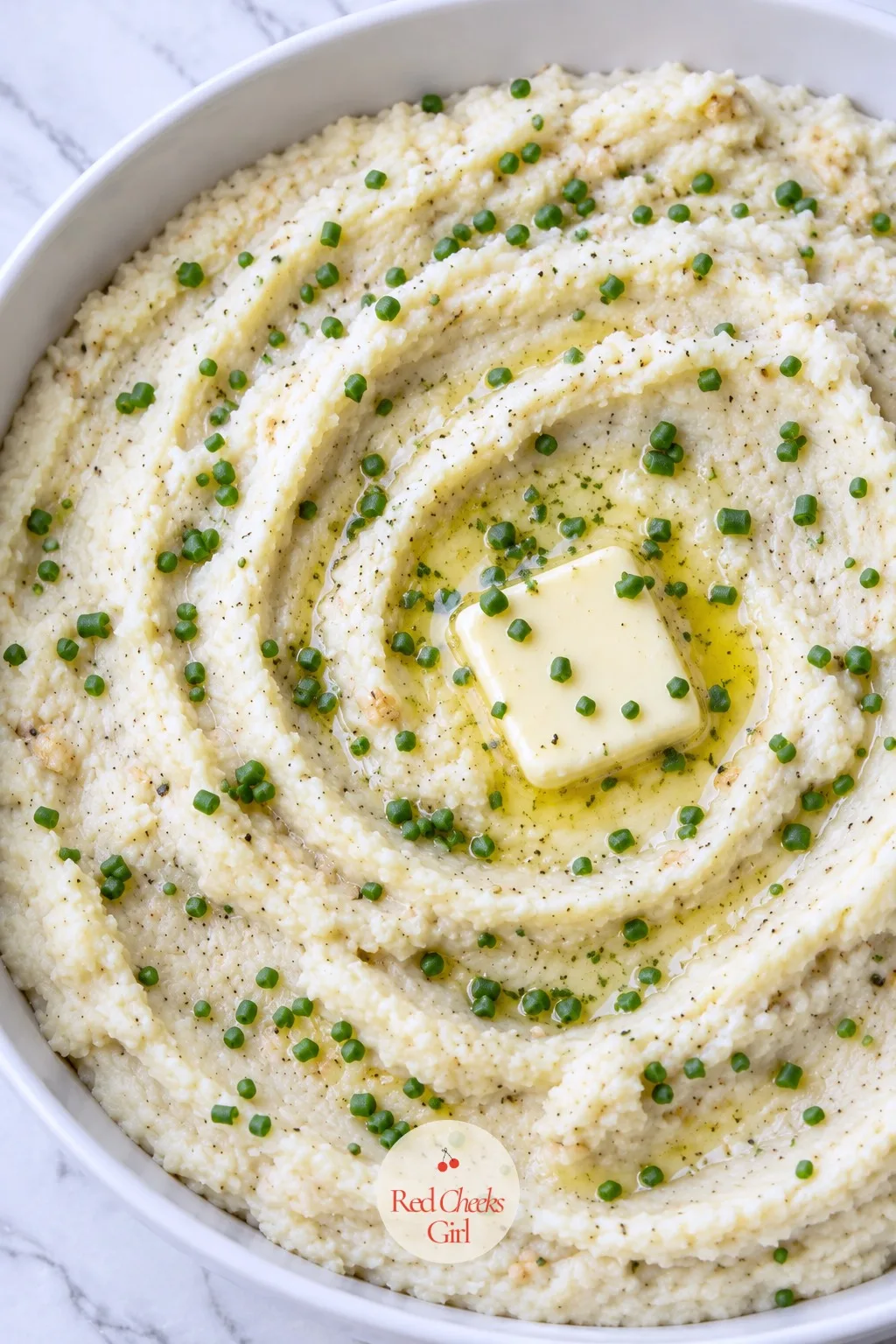
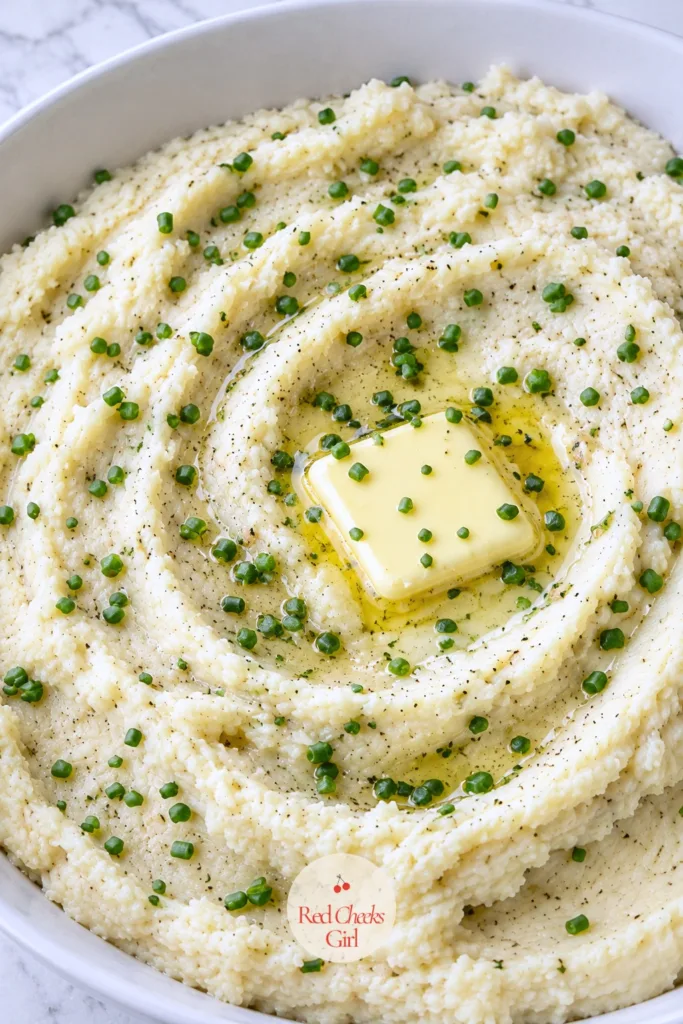
Spooned into the serving bowl and swirled on top, the potatoes get a final pat of butter and a scatter of chives. Serve immediately while everything is still warm.
Where Garlic Mashed Potatoes Go Wrong
The blender is the single most common mistake, and it is an easy one to make when eighteen servings feel like a lot of mashing by hand. Potato starch cells rupture under blades the way they never do under a masher, and the result sets up thick and sticky within minutes, no matter how good the garlic is.
Cold milk straight from the refrigerator is the second mistake, and it is less obvious because nothing looks wrong at first. which keeps the whole pot at serving temperature instead of lukewarm.
Skipping the one minute of drying over low heat is a quieter mistake, but it shows up as watery, loose potatoes once the milk goes in, since the extra moisture left on the potatoes has nowhere to go.
Salting only at the very end is the last common slip. Salt the cooking water properly from the start, then taste again after the dairy goes in: potatoes absorb less seasoning than most vegetables, and garlic mashed potatoes taste flat far more often from under-salting than from too much garlic.
Swaps and Substitutions
No sour cream in the house is not a reason to skip the tang. Plain full-fat Greek yogurt or crème fraîche both stand in at the same quantity, and cream cheese works in a pinch if it is softened first so it folds in smoothly.
Russet potatoes can replace the Yukon Golds for a fluffier, drier mash, though they need a touch more butter and milk to reach the same silkiness. Red potatoes go the other way, waxier and slightly denser, and suit a more rustic, skin-on mash better than this smooth version.
For a dairy-free table, swap the whole milk for unsweetened oat milk, the butter for a neutral plant-based block butter, and the sour cream for a plain dairy-free yogurt. The garlic infusion step works exactly the same way regardless of what the milk is made from.
If roasting a head of garlic feels like one step too many on a busy day, a tablespoon of jarred roasted garlic stirred in with the butter gets close enough that nobody at a party will ask the difference.
What to Serve It With at a Party
A bowl this rich wants something with a little acid or crunch alongside it, not another heavy side competing for the same bite. A roast, a glazed ham or a braised short rib all let the potatoes do the comfort-food work while the main course carries the drama.
For a smaller sit-down evening, the full spread of 15 Birthday Dinner Party Recipes for Eight Friends Around One Table pairs naturally, since the portions and pacing already assume a table built around courses.
The same logic works for a 33 Rehearsal Dinner Ideas for a Dinner Everyone Remembers menu, where one standout side frees up the rest of the planning.
Holiday hosting has its own rhythm, and a look at 12 New Year’s Eve Dinner Recipes for a Table Worth Staying Up For helps settle what comes before and after the potatoes land on the table.
While the bowl gets passed around, a few rounds from 17 Dinner Party Games to Play Right at the Table keep the conversation going without anyone needing to leave their seat or their plate.
Garlic Mashed Potatoes
Ingredients
- 9 pounds Yukon Gold potatoes peeled and cut into 1 1/2-inch chunks
- 1/4 cup kosher salt for the cooking water
- 2 cups whole milk
- 8 cloves garlic peeled and smashed
- 1 1/2 cups unsalted butter 3 sticks, cut into tablespoon-size pieces, divided
- 1 cup sour cream at room temperature
- 1 head roasted garlic cloves squeezed out (optional, for the roasted garlic version)
- 2 teaspoons kosher salt plus more to taste
- 1 teaspoon black pepper plus more to taste
- 2 tablespoons chopped fresh chives for serving (optional)
Instructions
- Peel 9 pounds Yukon Gold potatoes and cut them into 1 1/2-inch chunks, keeping every piece close to the same size so they finish cooking together. Place the chunks in a large pot (8 to 10 quart capacity), cover with cold water by 1 inch, and stir in 1/4 cup kosher salt.
- Set the pot over high heat and bring the water to a boil, then lower the heat so it holds a steady simmer. Cook the potatoes for 15 to 18 minutes, until a paring knife slides into a chunk with no resistance.
- While the potatoes simmer, combine 2 cups whole milk, the 8 smashed garlic cloves, and 4 tablespoons of the butter in a small saucepan. Warm over low heat for 8 to 10 minutes, until small bubbles ring the edge of the pan and the kitchen smells strongly of garlic, then take it off the heat so the cloves keep steeping in the hot milk.
- Drain the potatoes in a colander, then tip them back into the same pot and set it over the lowest burner setting. Shake the pot and toss the potatoes for about 1 minute, uncovered, until the surfaces look dry and slightly chalky: this is the moment that keeps the potatoes light instead of letting them turn gluey once the liquid goes in.
- Remove the pot from the heat. Pass the potatoes through a ricer back into the pot, or mash them with a sturdy potato masher, working in one direction until no lump larger than a pea remains. Do not reach for a blender or food processor: both knock the starch cells open and turn Yukon Golds into wallpaper paste within seconds.
- Fold in the remaining 1 1/4 cups butter, a few pieces at a time, stirring with a wooden spoon until each addition melts into the potatoes before the next goes in. For the roasted garlic version, squeeze the soft cloves from 1 roasted head of garlic into the pot now and stir them through with the butter.
- Strain the garlic out of the warm milk mixture (or leave a few cloves in for a sharper bite) and pour it over the potatoes in three additions, folding gently after each. Warm milk blends straight into hot starch without seizing it, which is why it goes in heated rather than cold from the refrigerator.
- Fold in 1 cup sour cream, 2 teaspoons kosher salt, and 1 teaspoon black pepper. Stir just until the sour cream disappears into the mash: the potatoes should look glossy and hold a soft peak on the spoon, not run flat.
- Taste from the middle of the pot, where the seasoning settles last, and add more salt if the potatoes taste flat under the garlic.
- Cover the pot and let the potatoes rest off the heat for 5 minutes: this lets the starch finish relaxing and the flavors settle before serving, and the potatoes will still be hot enough to serve straight from here.
- Spoon the mashed potatoes into a large white ceramic serving bowl, swirl the top with the back of a spoon, and set a final pat of butter in the center with a scatter of chopped chives. Serve immediately while warm.
Good to Know
Frequently Asked Questions
Can you freeze garlic mashed potatoes?
Yes, garlic mashed potatoes freeze well for up to two months in a sealed, airtight container. Thaw overnight in the refrigerator, then reheat gently with extra warm milk stirred in to restore the texture.
Do you need to peel Yukon Gold potatoes before mashing?
Peeling gives the smoothest, most classic texture, since the thin gold skins can leave small flecks through the mash. Leave a portion of the skins on if a more rustic texture is the goal.
How much mashed potatoes do you need per person for a crowd?
Plan on about two thirds of a cup of mashed potatoes per person at a sit-down meal, roughly half a pound of raw potato each. For eighteen guests, nine pounds yields about twelve cups.
Can you use a hand mixer instead of mashing by hand?
A hand mixer works only on the lowest speed for a few seconds, just to smooth the last small lumps. Longer mixing overworks the starch and turns Yukon Golds gluey almost as fast as a blender does.
Is it possible to use too much garlic in mashed potatoes?
Garlic mellows considerably once it simmers in warm milk or roasts whole, so eight cloves or a full head reads as warmth rather than heat. Raw, minced garlic stays sharper, so smaller amounts work better there.
Can you make mashed potatoes without a potato ricer?
Yes, a sturdy hand masher works fine for Yukon Golds, since the flesh is naturally creamy and breaks down easily. Just avoid food processors and blenders, which turn the released starch thick and gluey.
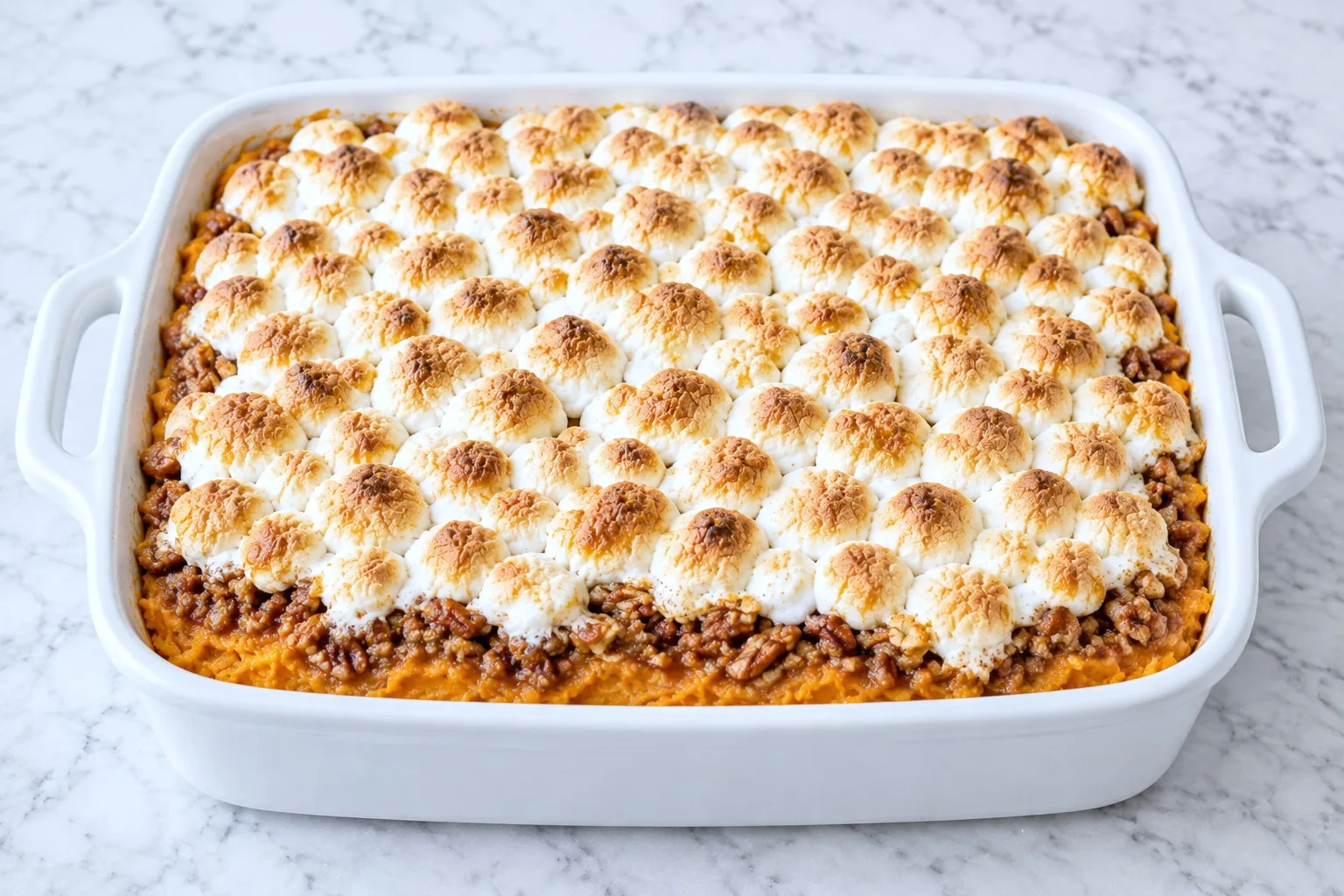
Sweet potato casserole with marshmallows gets a thin pecan streusel underneath, so every spoonful ha
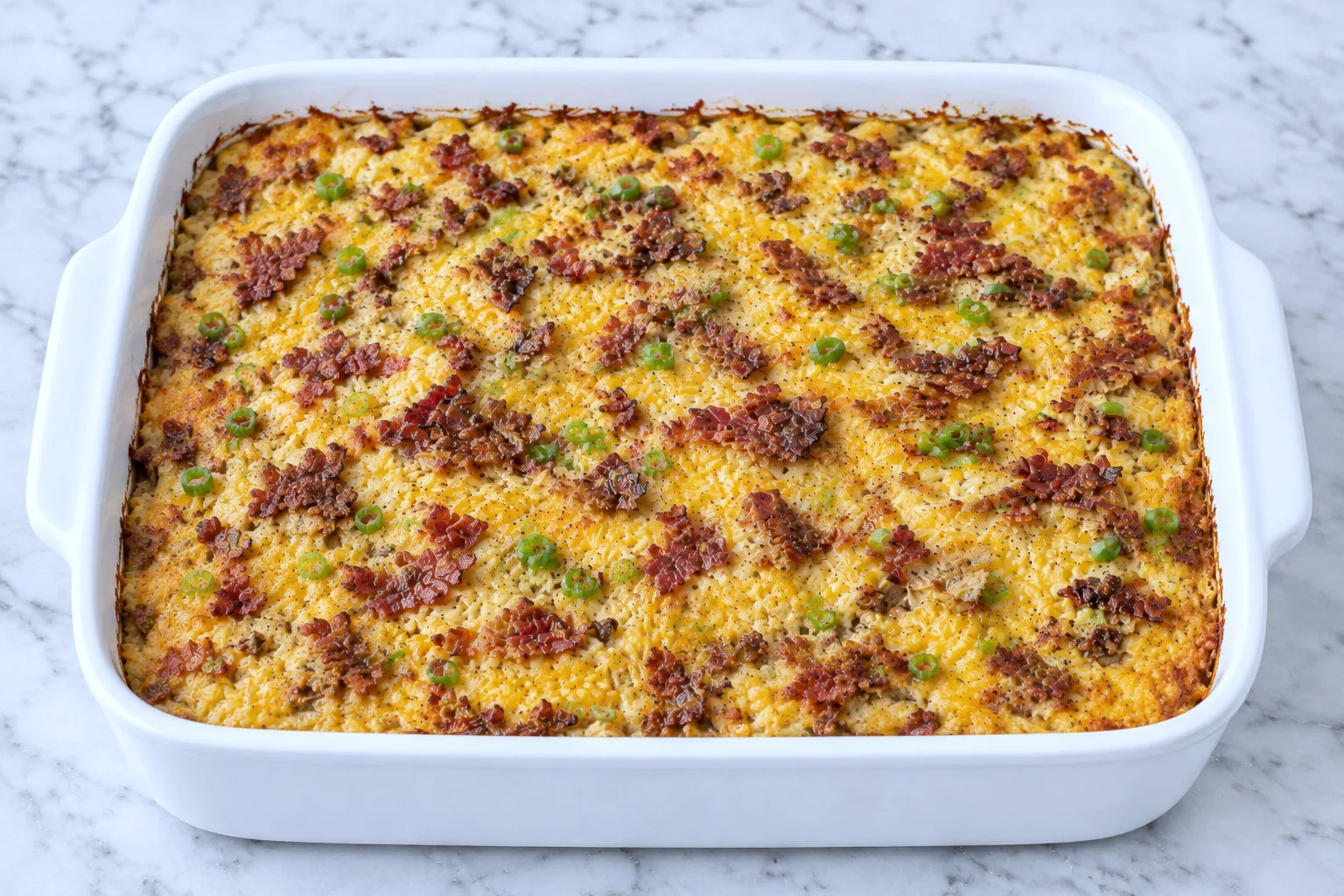
Twice baked potato casserole turns every loaded baked potato topping into one creamy, make-ahead dis
It was 3 PM on a Tuesday. My stomach was making sounds. My next meeting was in 40 minutes. The vendi
Leave a Reply