

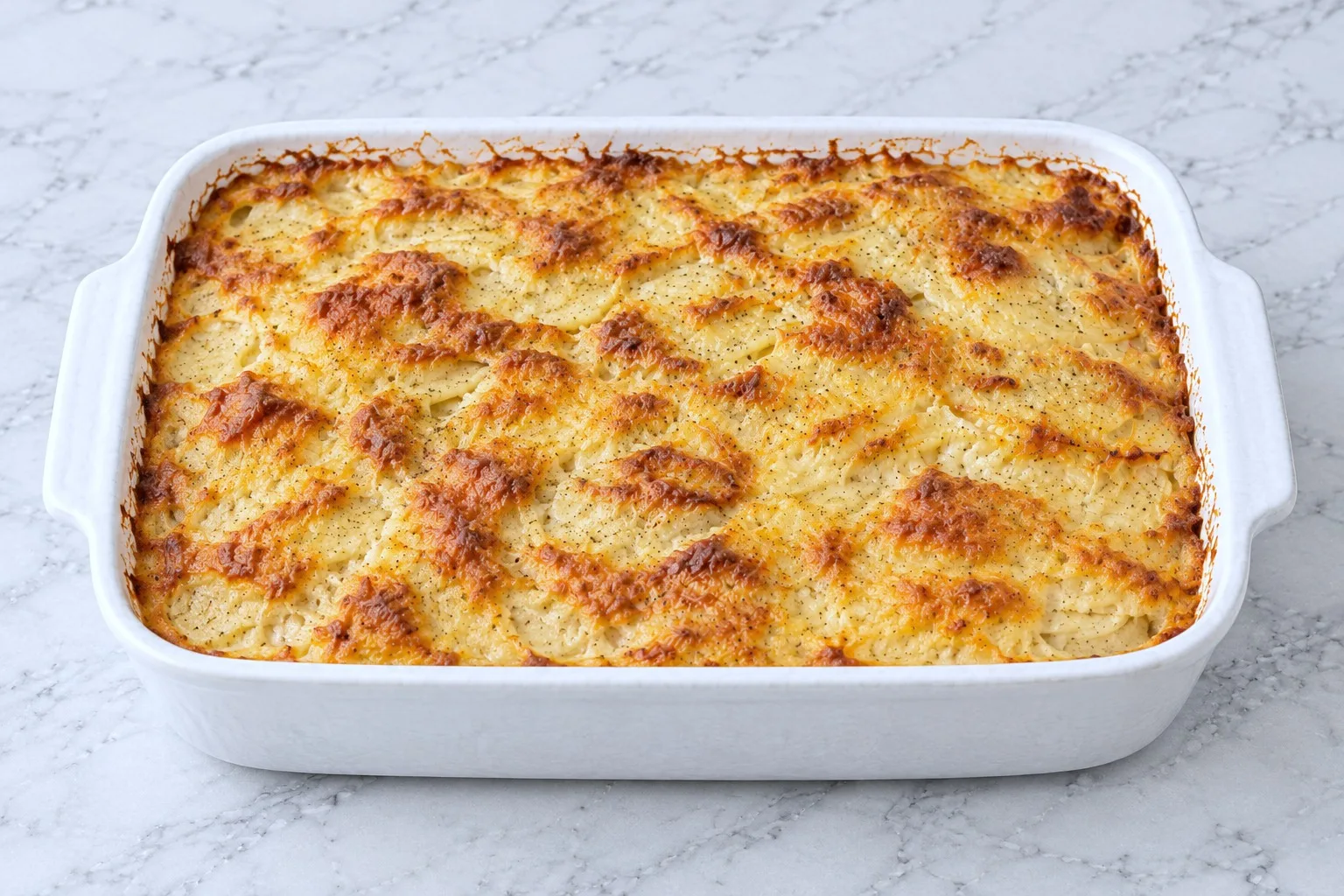
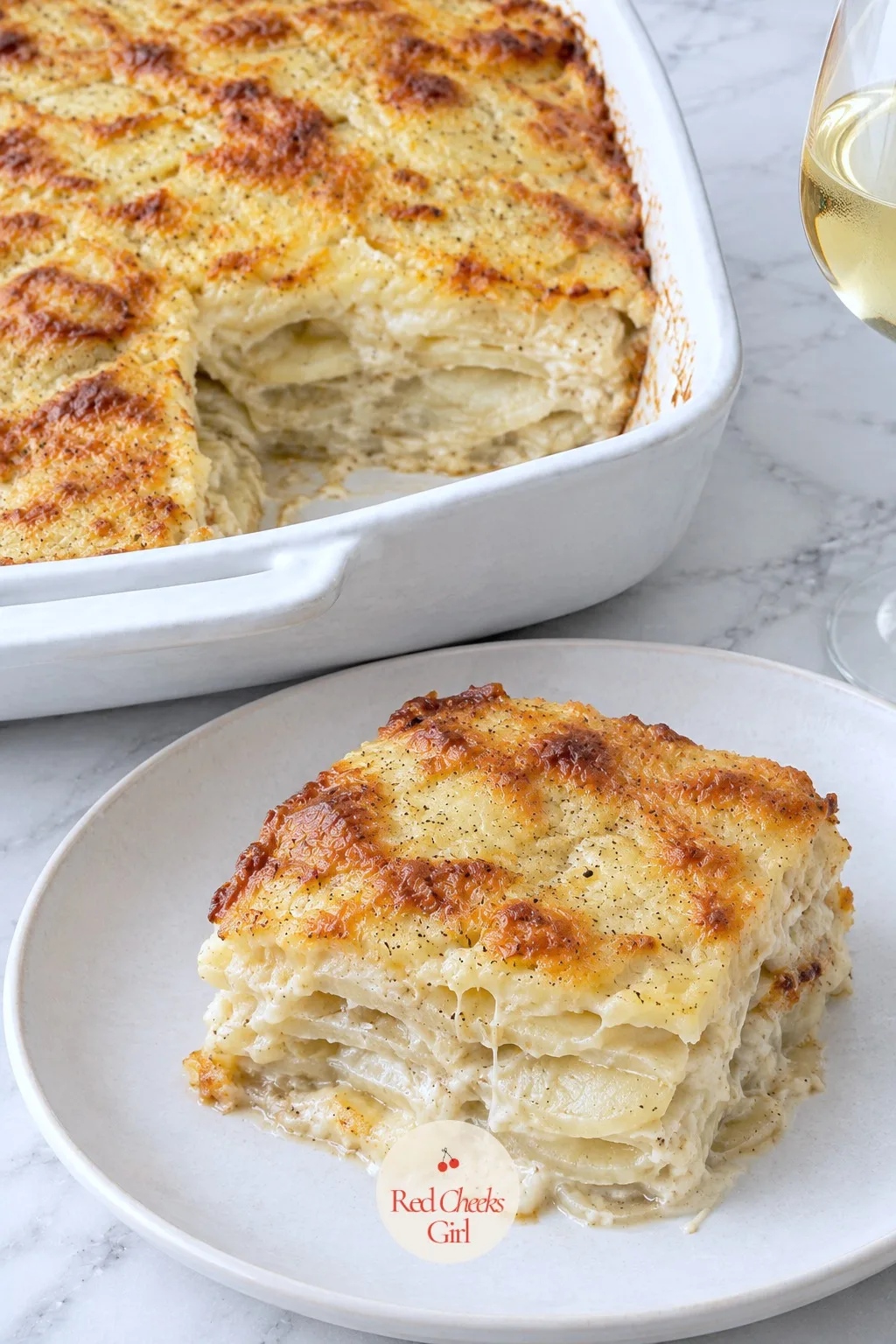
Potatoes au gratin turns a pile of sliced potatoes into the dish everyone circles back to for seconds: thin Yukon Golds, a garlic cream, and a drift of melted gruyere and sharp cheddar baked until the top goes deep gold.
It asks for time, not skill, and most of that time is the oven working while you do something else. Serve it next to anything roasted and the plate comes back clean.
This post contains affiliate links. If you buy through them, I may earn a small commission at no extra cost to you.
Table of Contents
Why This Gratin Is Worth the Oven Time
A good gratin never apologizes for taking an hour. The smell alone does half the hosting for you, and nobody at the table asks what else is coming once this one lands.
Scalloped potatoes and this dish share a baking dish and a pile of sliced potatoes, but they part ways at the cheese. The slices run thinner here too, since
Bring it to a table that already leans festive and it holds its own next to a glazed ham or a roast; if the whole evening is built around food and little else, the spread fits right alongside 20 Christmas Dishes and Hosting Finds Your Holiday Table Has Been Waiting For.
You do not need a special occasion to justify the butter. A Tuesday with nothing else planned works too, and the shortcut further down is built for exactly that.
The Ingredients That Make It Work
Yukon Golds do the heavy lifting here. holding a tender bite without turning to mush the way a baking potato can. Their pale gold flesh also bakes into a warmer color under the cheese.
The sauce is not a bechamel, it is just cream, garlic and a few aromatics simmered until it thickens on its own. Butter softens the garlic first so it never turns sharp, and a scrape of nutmeg keeps the cream from tasting flat.
Gruyere melts smooth and nutty, sharp cheddar brings the bite that gruyere alone does not. Grate both off the block rather than reaching for the bagged kind: pre-shredded cheese carries a starchy coating that keeps it from melting into the sauce the same way.
Salt goes in twice, once in the cream and once between the layers, because potatoes are bland on their own and need seasoning at every stage, not just stirred in at the end.
How to Make It
Work in this order and nothing about it feels rushed: slice the potatoes and hold them in water, build the garlic cream on the stove, then layer, bake and let it rest before anyone cuts in.
The whole dish is built on dairy, butter, cream, milk and two cheeses, so it is not one to serve to a table with a dairy allergy.
Slice the Potatoes and Hold Them in Water
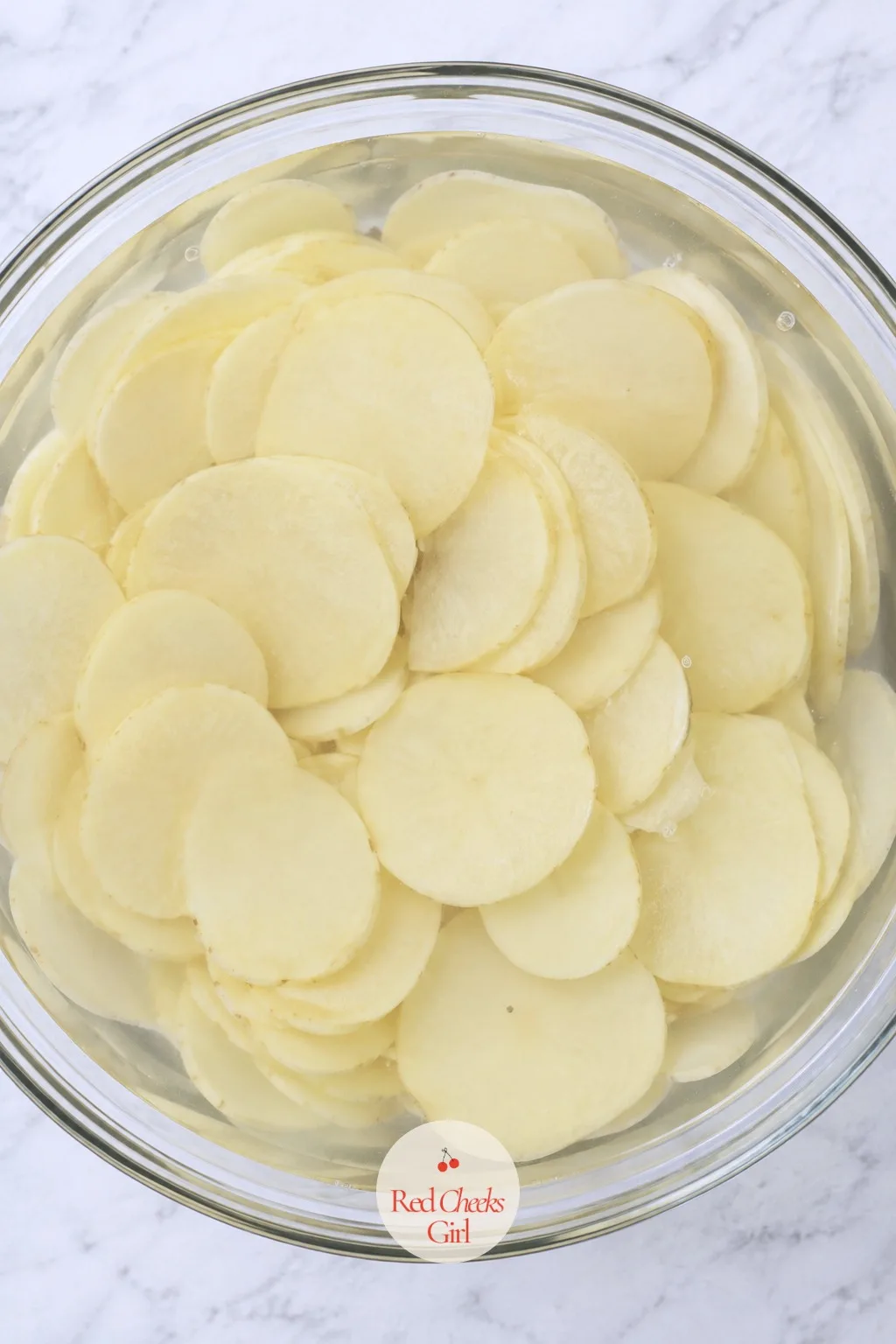
Slide the sliced rounds into cold water as soon as they come off the mandoline. The water should run slightly cloudy from the starch, and the slices should look pale and even, with no thick or ragged edges among them.
Simmer the Garlic Cream
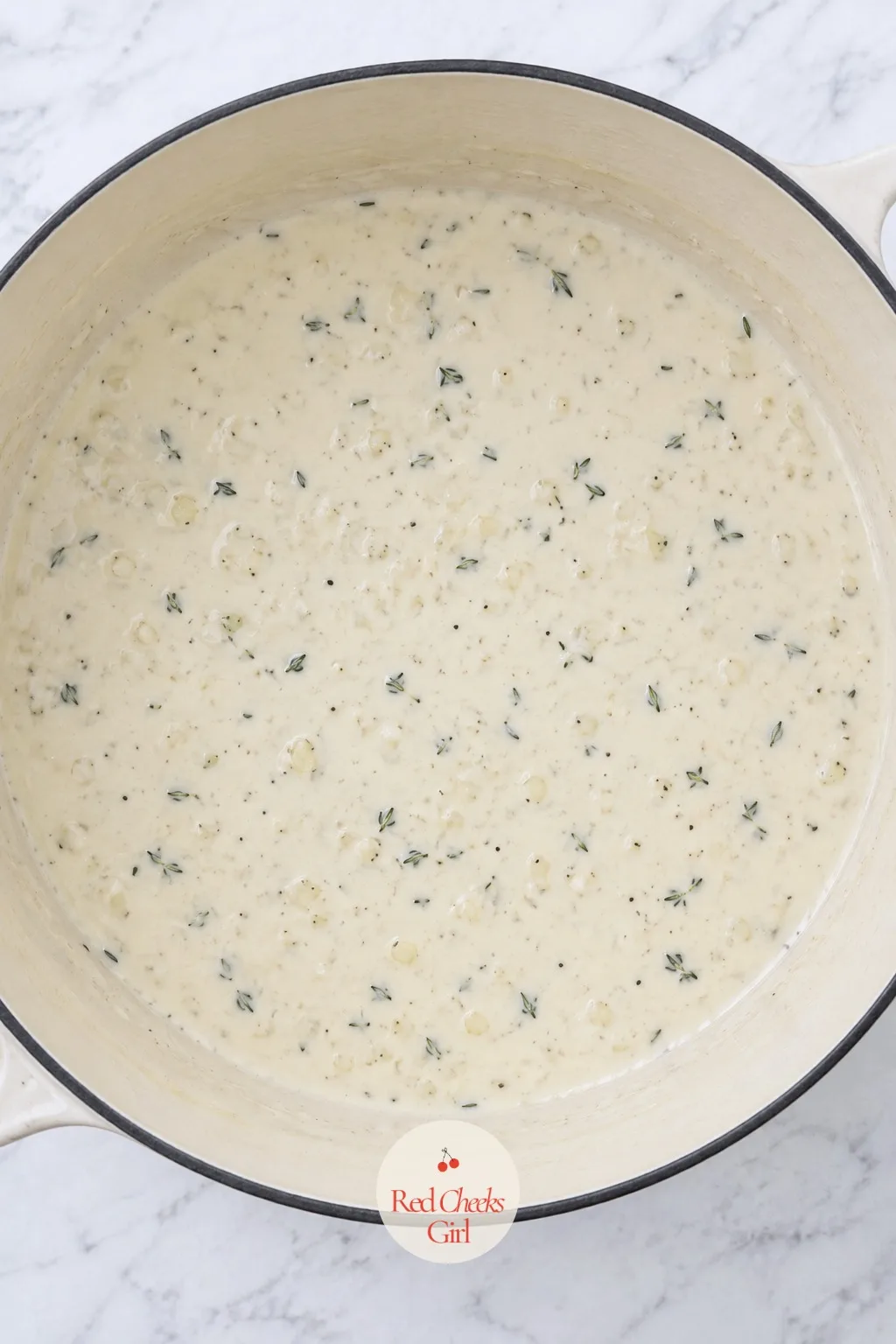
Watch the cream as it simmers; it should thicken just enough to coat the back of a spoon and leave a clean line when you run a finger through it. Flecks of thyme and garlic should be visible throughout.
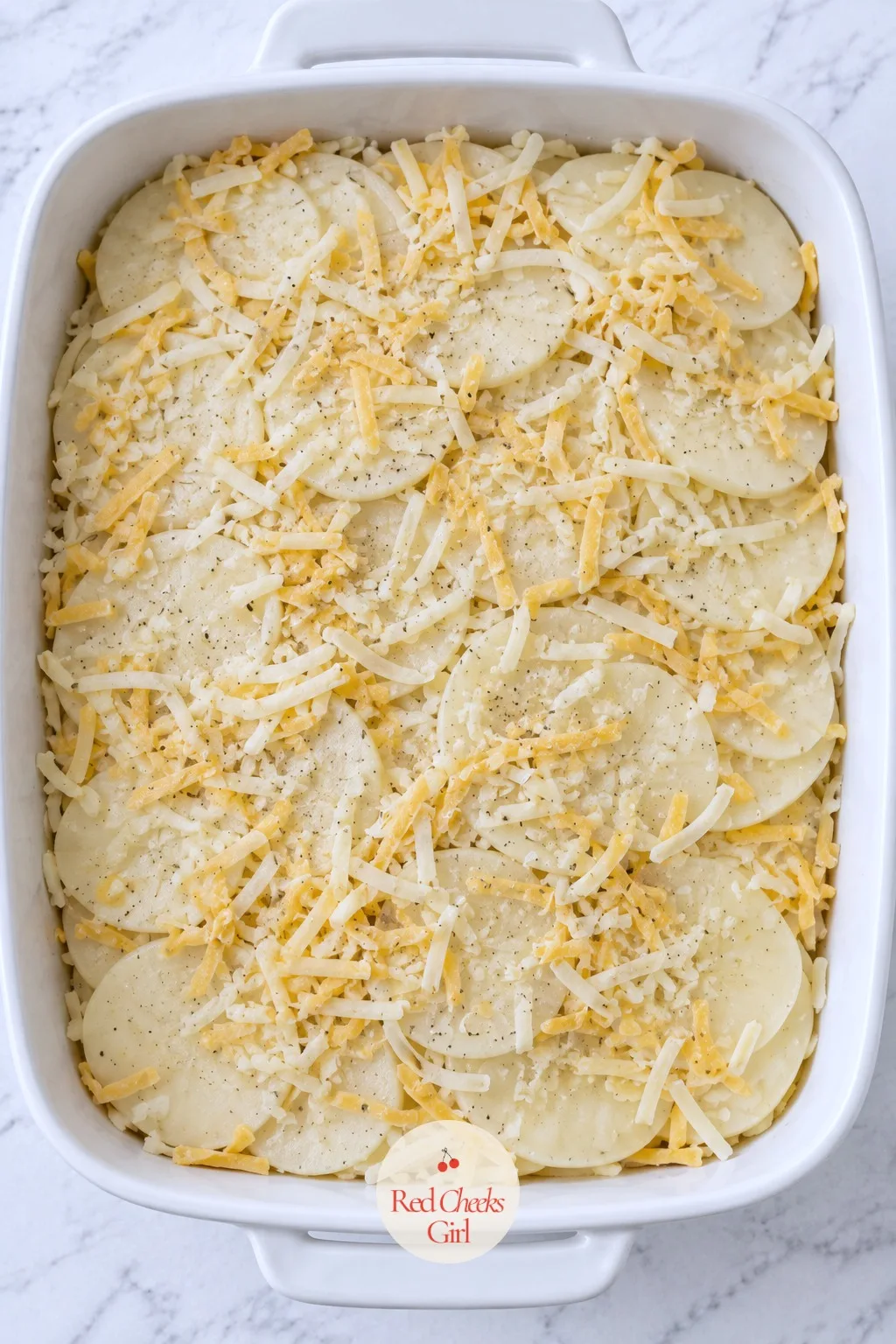
Layer the Potatoes and Cheese
Each layer should overlap like shingles with a scatter of cheese tucked between. By the final layer, the dish should be filled nearly to the rim and still dry, with no liquid pooling yet.
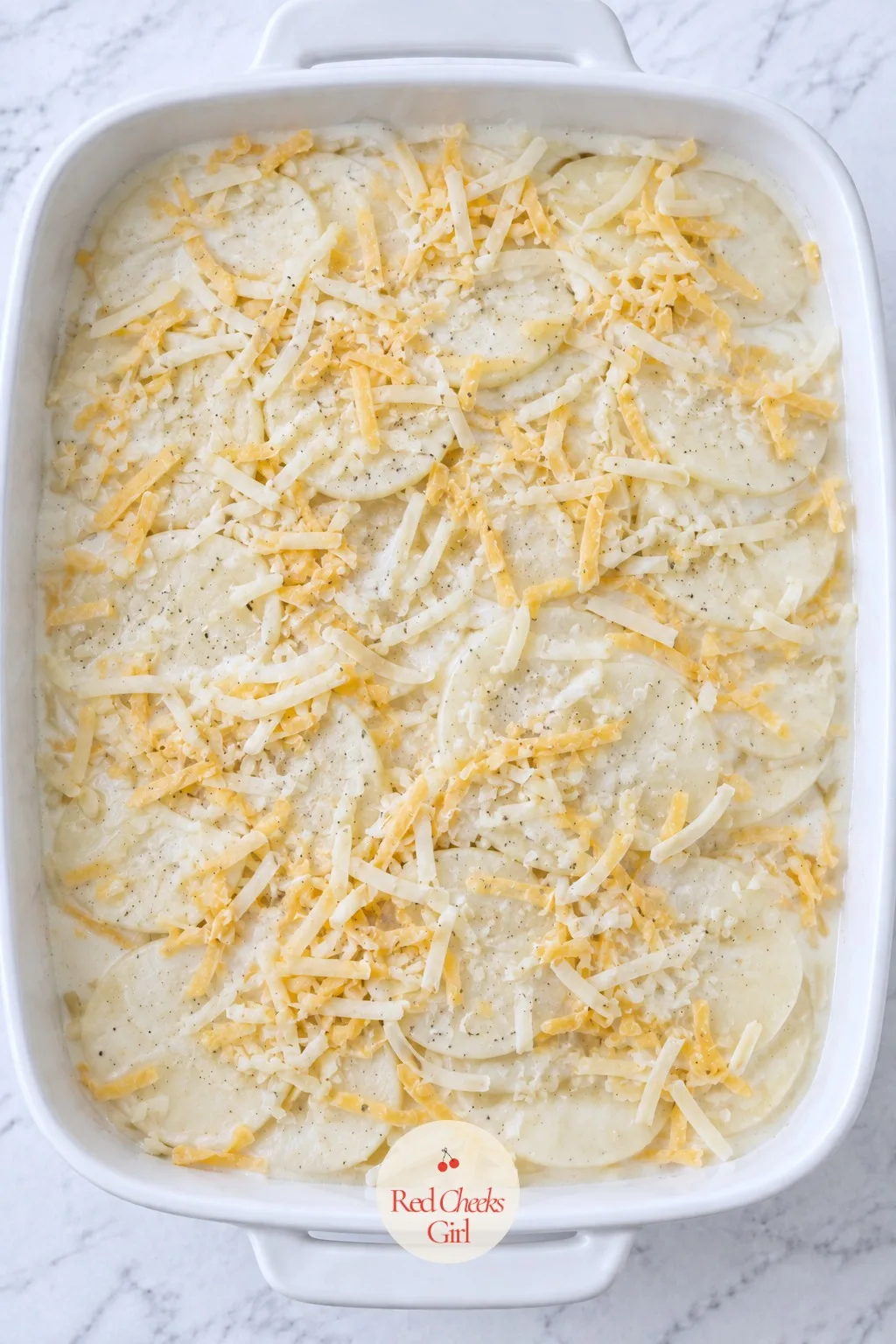
Pour the Cream Over the Layers
The cream should pool gently at the edges and settle down between the layers as you pour. The top layer of cheese should look evenly covered and slightly glossy where the cream has touched it.
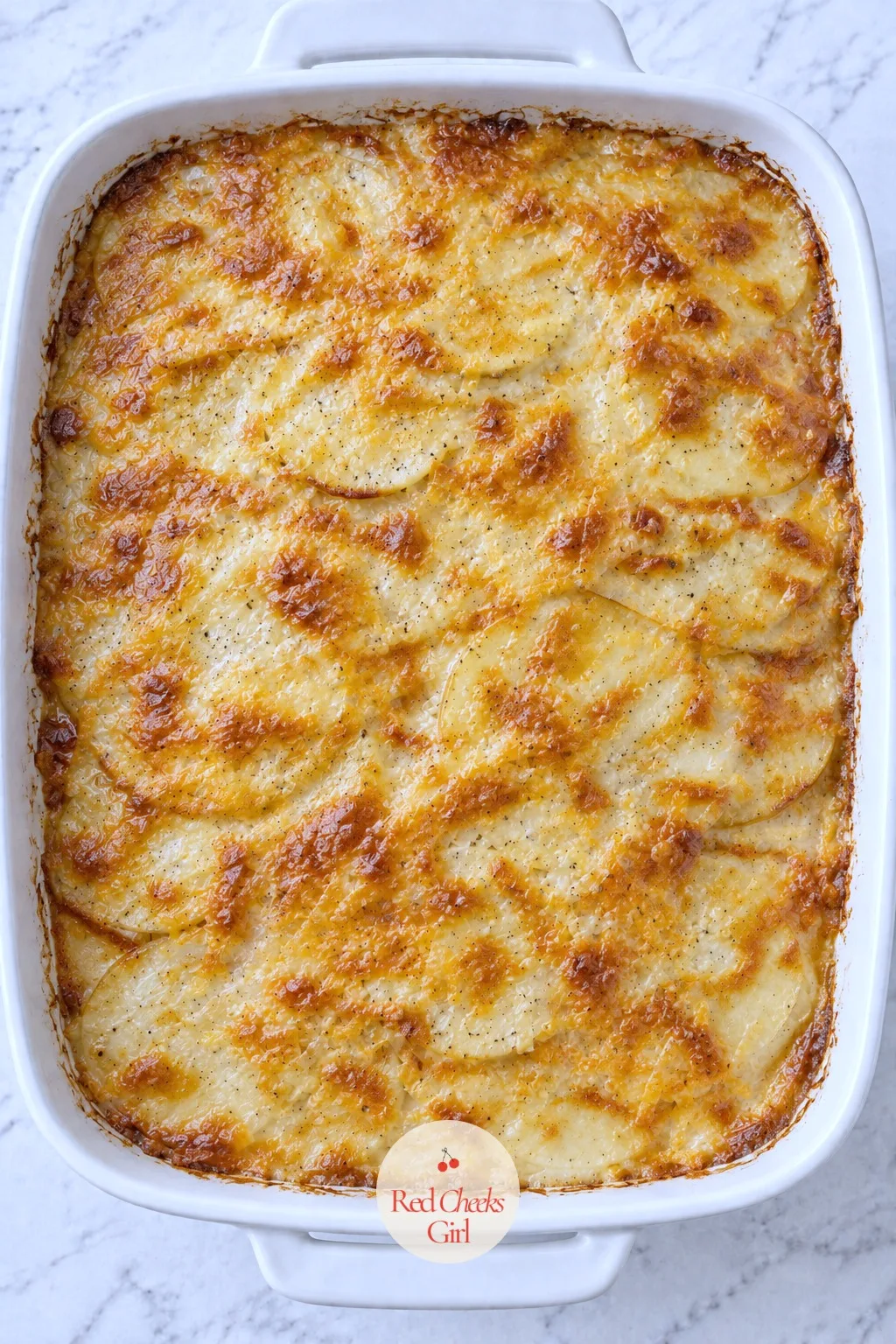
Bake Until Deep Golden
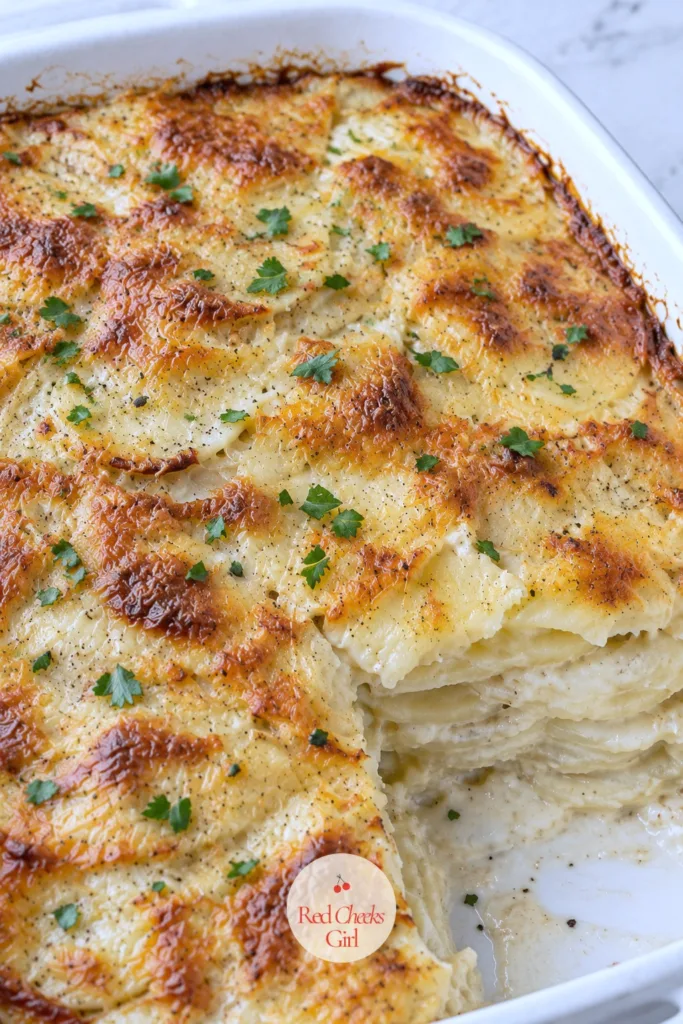
The top should look deep amber to golden brown across the whole surface, with cream bubbling gently at the edges where the dish meets the sides. It should look set, not loose.
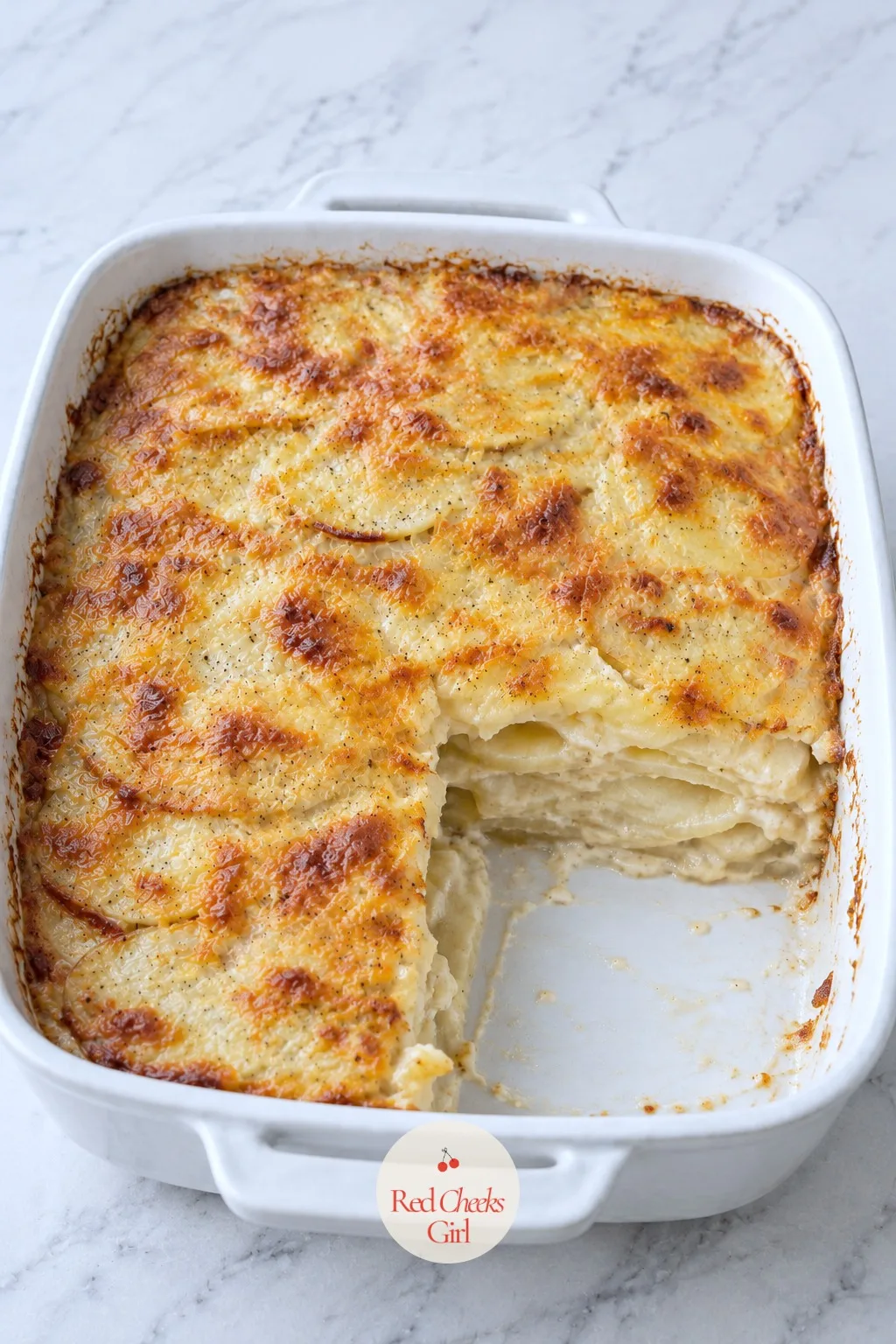
Serve a Warm Portion
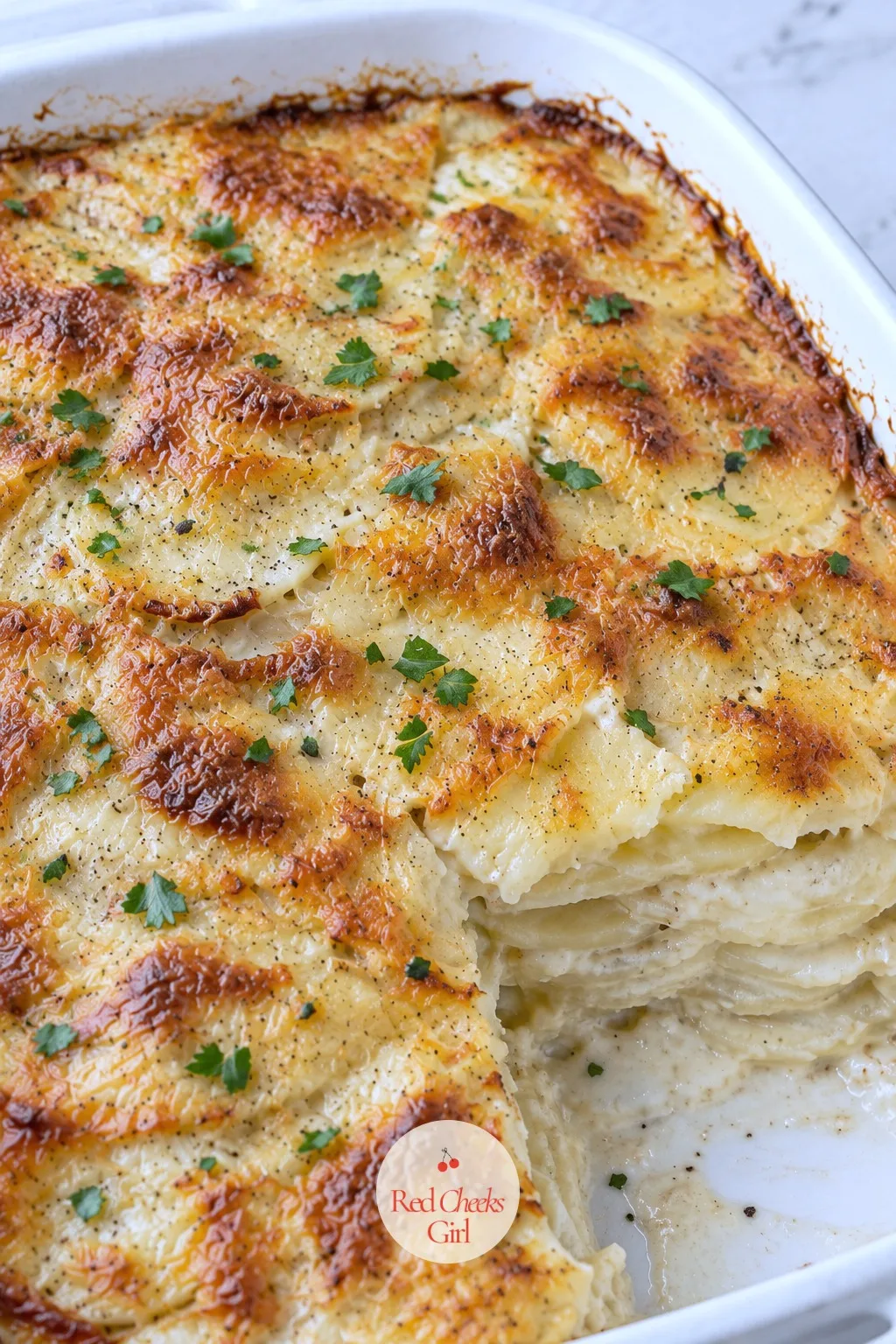
A cut square should show distinct thin layers of potato held together by the set cream, with a deep golden crust on top and a creamy pale interior underneath.
Getting It Right
A puddle at the bottom of the dish is the most common complaint, and it almost always starts with the potato, not the recipe. Keep the mandoline set to a true eighth of an inch and give it the full bake time before checking.
The second mistake is pulling the dish early because the top already looks done. Test the center with a paring knife, not the edges, since the middle always finishes last.
A grainy sauce comes from cream that boiled too hard, or cheese stirred in while the pot was still at a rolling simmer. Pull it off the heat, let it sit a minute, then add the cheese if any is going into the sauce itself.
Let the finished gratin sit before cutting into it, even though the smell makes that hard. so a slice at the fifteen-minute mark holds its layers instead of sliding into a puddle.
Swaps and the Weeknight Shortcut
Gruyere is the one splurge here, and fontina or a good Swiss makes a fair stand-in if the cheese counter prices it out of a Tuesday. Keep the cheddar as is, that sharp edge is what keeps the dish from tasting one note.
Russets work if that is what is in the pantry, they just turn a little softer and starchier than Yukon Golds. Red potatoes hold their shape even more but bring less flavor to the cream, so season a touch heavier if you swap those in.
Short on an hour and a half? Dice about 2 pounds of potatoes that are already cooked (leftover baked potatoes or ones boiled until just tender both work), and have 6 slices of bacon, 1 cup frozen peas and 1 1/2 cups shredded sharp cheddar ready.
Cook the bacon in a cream Dutch oven until crisp, remove it, then soften 2 tablespoons butter with 2 tablespoons flour in the drippings for a minute.
Whisk in 1 1/2 cups milk until smooth, add the potatoes and peas, and simmer 5 to 7 minutes until the sauce thickens and coats everything. Stir in the cheese and bacon off the heat until melted, season with salt and pepper, and it is on the table inside thirty minutes.
Both versions solve the same craving. One asks for patience, the other asks for fifteen minutes of attention after work.
What to Serve It With
This gratin sits happily next to anything that came off a grill or out of a roasting pan: a beef tenderloin, a whole roasted chicken, a glazed ham. Keep the rest of the table simple, a green salad or steamed green beans, since the potatoes are already doing the rich work.
Scaling up for a crowd? Set it alongside a few other crowd favorites pulled from Game Day Party Food: 21 Recipes and Ideas for Your Spread, so nobody ends up eating only potatoes.
For a sit-down dinner with more at stake, like the night before a wedding, it plates beautifully next to a protein with real presence; the full menu logic is laid out in 33 Rehearsal Dinner Ideas for a Dinner Everyone Remembers.
Once plates are cleared, keep the table occupied a little longer with something from 17 Dinner Party Games to Play Right at the Table, since nobody wants to be the first one reaching for their coat.
Potatoes Au Gratin
Ingredients
- 3 pounds Yukon Gold potatoes about 6 medium, peeled
- 3 tablespoons unsalted butter plus more for the dish
- 5 cloves garlic minced
- 2 cups heavy cream
- 1 cup whole milk
- 1 teaspoon fine sea salt plus more to taste
- 1/2 teaspoon black pepper
- 1/4 teaspoon freshly grated nutmeg
- 1 teaspoon fresh thyme leaves or 1/2 teaspoon dried thyme
- 8 ounces gruyere cheese grated (about 2 cups)
- 6 ounces sharp cheddar cheese grated (about 1 1/2 cups)
Instructions
- Preheat the oven to 375°F. Butter a 9x13 inch ceramic baking dish thoroughly, right into the corners.
- Peel 3 pounds Yukon Gold potatoes and slice them into rounds about 1/8 inch thick on a mandoline. Drop the slices into a large glass bowl of cold water as you go, so they do not brown.
- Drain the potato slices in a colander and pat them dry with a clean kitchen towel; wet slices thin the sauce.
- In a cream Dutch oven, melt 3 tablespoons butter over medium heat. Add 5 cloves minced garlic and cook, stirring, for 1 minute, until fragrant but not browned.
- Pour in 2 cups heavy cream and 1 cup whole milk. Stir in 1 teaspoon salt, 1/2 teaspoon pepper, 1/4 teaspoon nutmeg, and 1 teaspoon thyme leaves. Bring to a gentle simmer and cook, stirring occasionally, for 4 minutes, until the sauce coats the back of a spoon.
- In a mixing bowl, toss 2 cups grated gruyere with 1 1/2 cups grated sharp cheddar.
- Arrange a third of the potato slices in the prepared baking dish, overlapping them slightly like shingles. Season with a pinch of salt and pepper and scatter a third of the cheese mixture over the top. Repeat with two more layers of potatoes, salt, pepper and cheese, ending with the last of the cheese on top.
- Pour the warm garlic cream evenly over the layered potatoes, tilting the dish so it reaches every corner and settles between the layers.
- Cover the dish tightly with foil and bake for 45 minutes.
- Remove the foil and bake for 25 to 35 minutes more, until the top is deep golden and a paring knife slides through the center layers with no resistance.
- Let the gratin rest, uncovered, for 15 minutes before serving; this gives the sauce time to set so each portion holds its layers instead of pooling onto the plate.
- Cut into squares or scoop with a large spoon and serve warm.
Good to Know
Frequently Asked Questions
Why are my au gratin potatoes watery?
Watery gratin usually traces back to the potato, not the recipe itself. This usually means waxy potatoes, slices cut too thick to soak up the liquid, or pulling the dish from the oven too soon.
Should I boil the potatoes before baking them au gratin?
Boiling first is optional, not required, since parboiling can help the potatoes cook more quickly and evenly. With eighth-inch slices and a full covered bake, they usually cook through without it.
Are potatoes au gratin gluten free?
Yes, in most versions, since the dish is typically gluten-free as it’s held together by cream and cheese rather than a flour-based roux, unlike many classic scalloped potato recipes.
Can Yukon gold potatoes be used for au gratin?
Yes, Yukon Gold potatoes work well for au gratin because they hold their shape under a long bake while still turning fully tender.
Why does the gratin need to rest before serving?
Resting lets the sauce finish thickening instead of pooling on the plate. The sauce thickens as it stands, so a fifteen minute rest keeps each slice intact when cut.
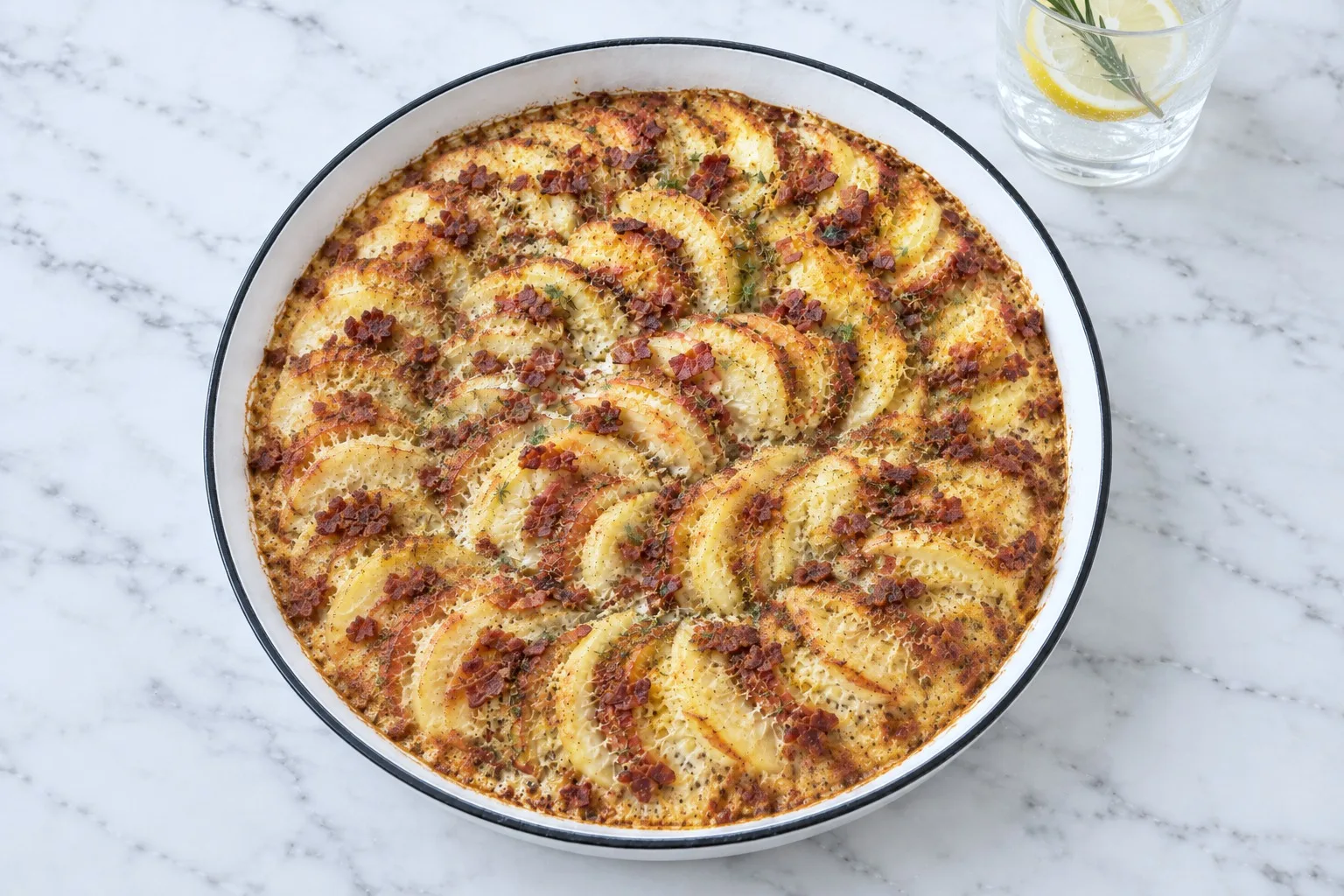
Easy scalloped potatoes with apples and bacon bake in one cast iron skillet with cream, thyme and pa
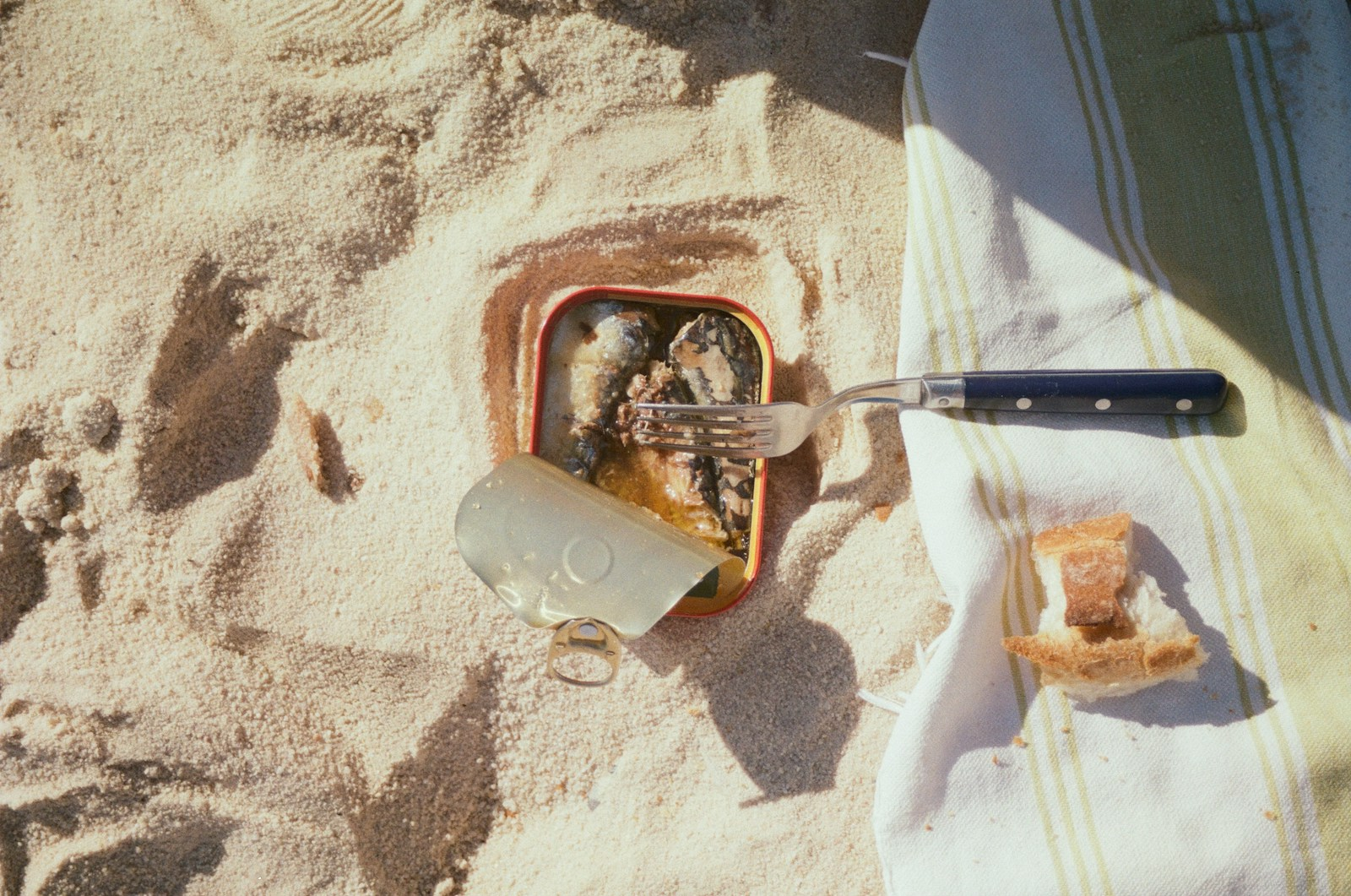
The last time I packed for a beach day, I brought a whole watermelon, three bags of chips, and a con

My stomach spent about three years being angry at me. Not dramatically sick — just tight, bloa
Leave a Reply