

Crockpot Scalloped Potatoes That Free Up the Oven for the Holidays

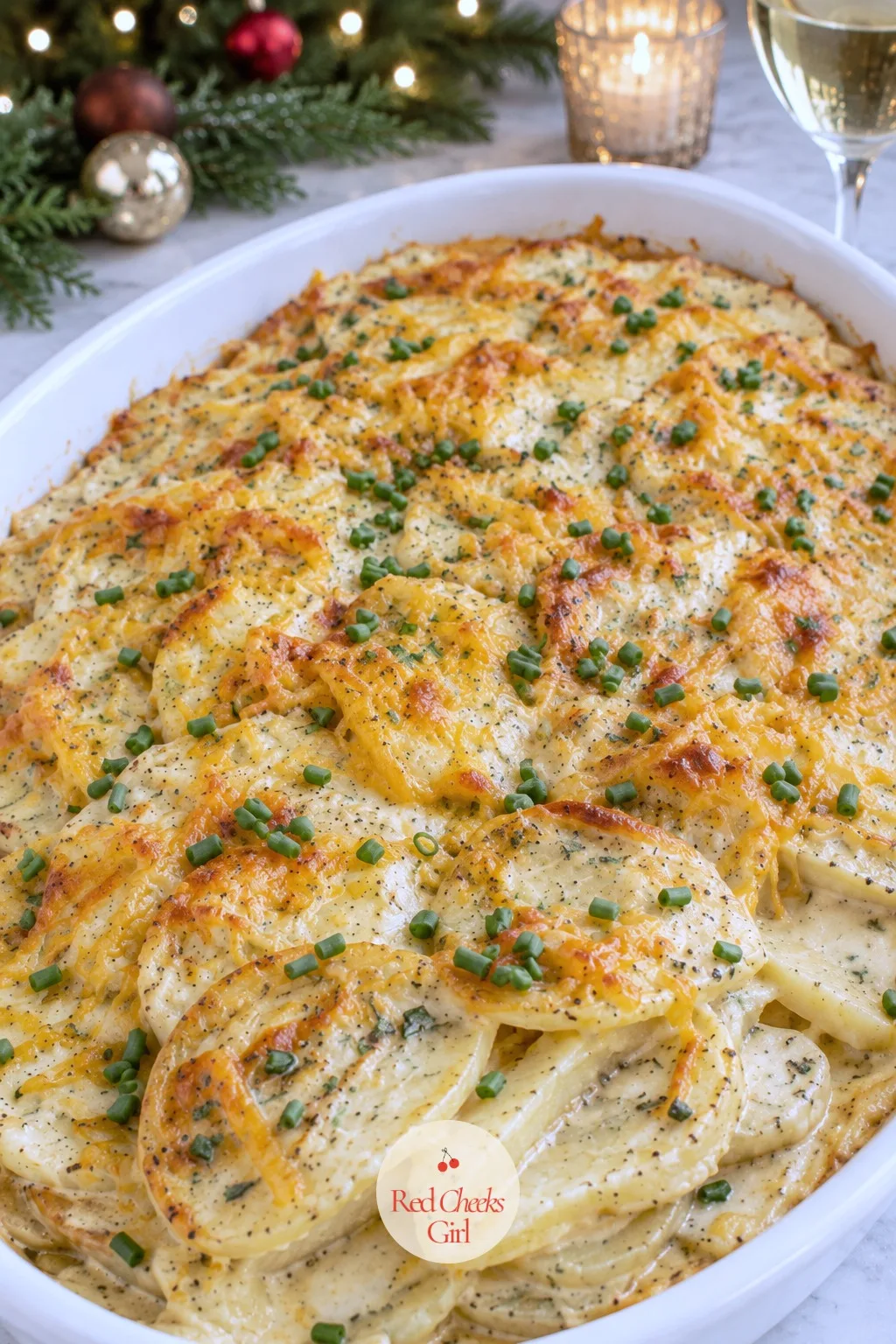
Crockpot scalloped potatoes mean thin layers of potato going tender under a blanket of sharp cheddar sauce while your oven does the actual holiday heavy lifting.
No roasting pan to wrestle out, no foil to peel back and check. Set the slow cooker on the counter, plug it in, and forget about it until the turkey needs the oven all to itself.
This post contains affiliate links. If you buy through them, I may earn a small commission at no extra cost to you.
Table of Contents
Why This Earns Its Spot on a Full Table
Thanksgiving and Christmas share the same problem: one oven, four dishes that all want to go in at 350 degrees at once. A slow cooker side dish does not ask for a shelf, a rack position or a single minute of oven time, which means the bird gets the whole appliance to itself right up until carving.
You would say a casserole dish does the same job, and it does, until you realize the oven is already holding the ham and the rolls. A countertop appliance sidesteps that fight entirely, and it sits there quietly turning raw potato slices tender and a cheddar sauce silky without anyone hovering over it.
If your kitchen only has a small 4-quart slow cooker, this recipe scales down neatly: use three pounds of potatoes instead of four, and shave half an hour off the cook time.
If you have a larger 6 or 7-quart oval insert, it is the better fit for even layers and will give you the tidiest slices once it is time to serve.
What Goes Into the Sauce
The potatoes carry most of the texture here, so the type you reach for matters more than it seems. Yukon Golds give a sauce extra body because they release more starch as they cook, while russets slice into cleaner, more defined layers that hold their shape a little longer under the lid.
Butter and flour, cooked together briefly before any milk goes in, are what keep this sauce from turning into a thin, separated puddle over a five hour cook. and that single step is the difference between a sauce that clings to the potatoes and one that pools at the bottom of the crock.
Whole milk, not a low-fat version, is doing real work in the ingredient list. so a thin roux built on whole milk sits in that same safer range skim milk does not.
Sharp cheddar, specifically, is the cheese that melts smoothly into this sauce without turning grainy. so resist the urge to reach for the stronger block even if it is what is already open in the fridge door.
How to Make It
This is the part that actually matters on the day: exact quantities, the order that keeps the sauce smooth, and the two tricks that stop the potatoes from browning on the board and scorching at the edge of the crock.
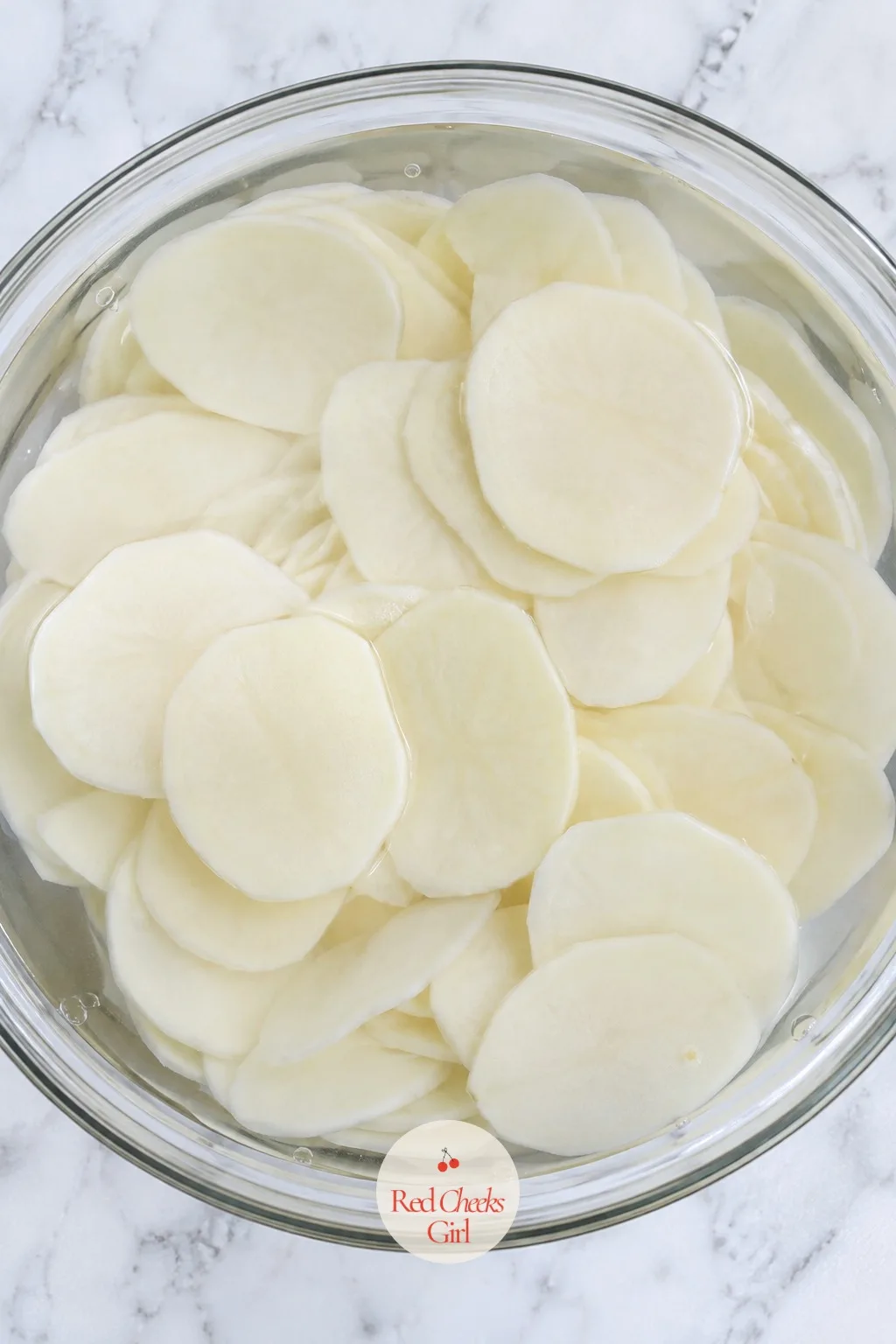
Slice the potatoes into cold water
Drop each potato slice into cold water the moment you cut it so it stays pale while you work through the rest. Look for clear water and bright white edges, not the dull gray that means a slice has already started to oxidize.
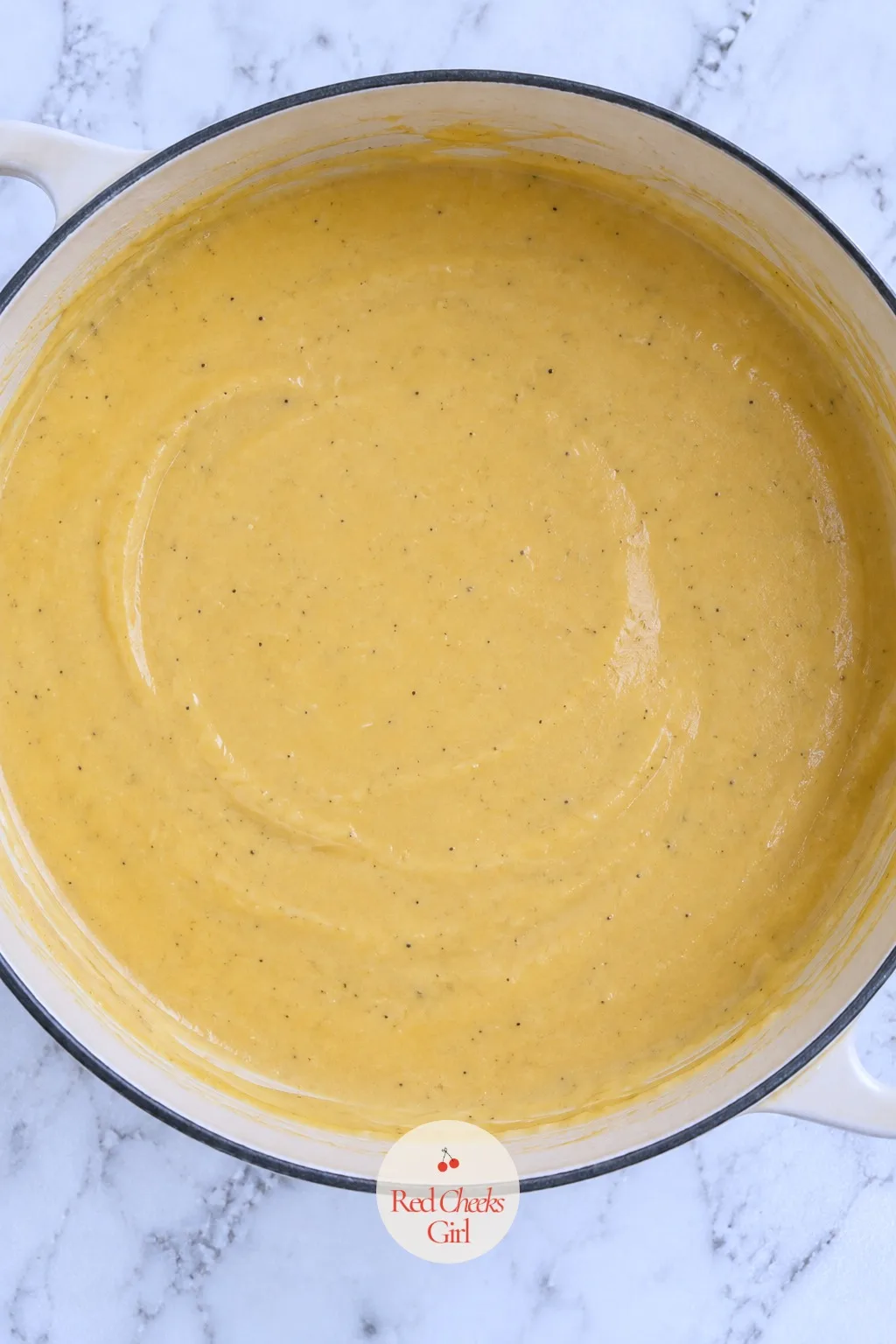
Melt the cheddar into the sauce
Whisk the cheddar into the hot roux off the heat until it melts into one smooth sauce. It should coat the back of a spoon thickly and show no oil or grain separating out at the edges.
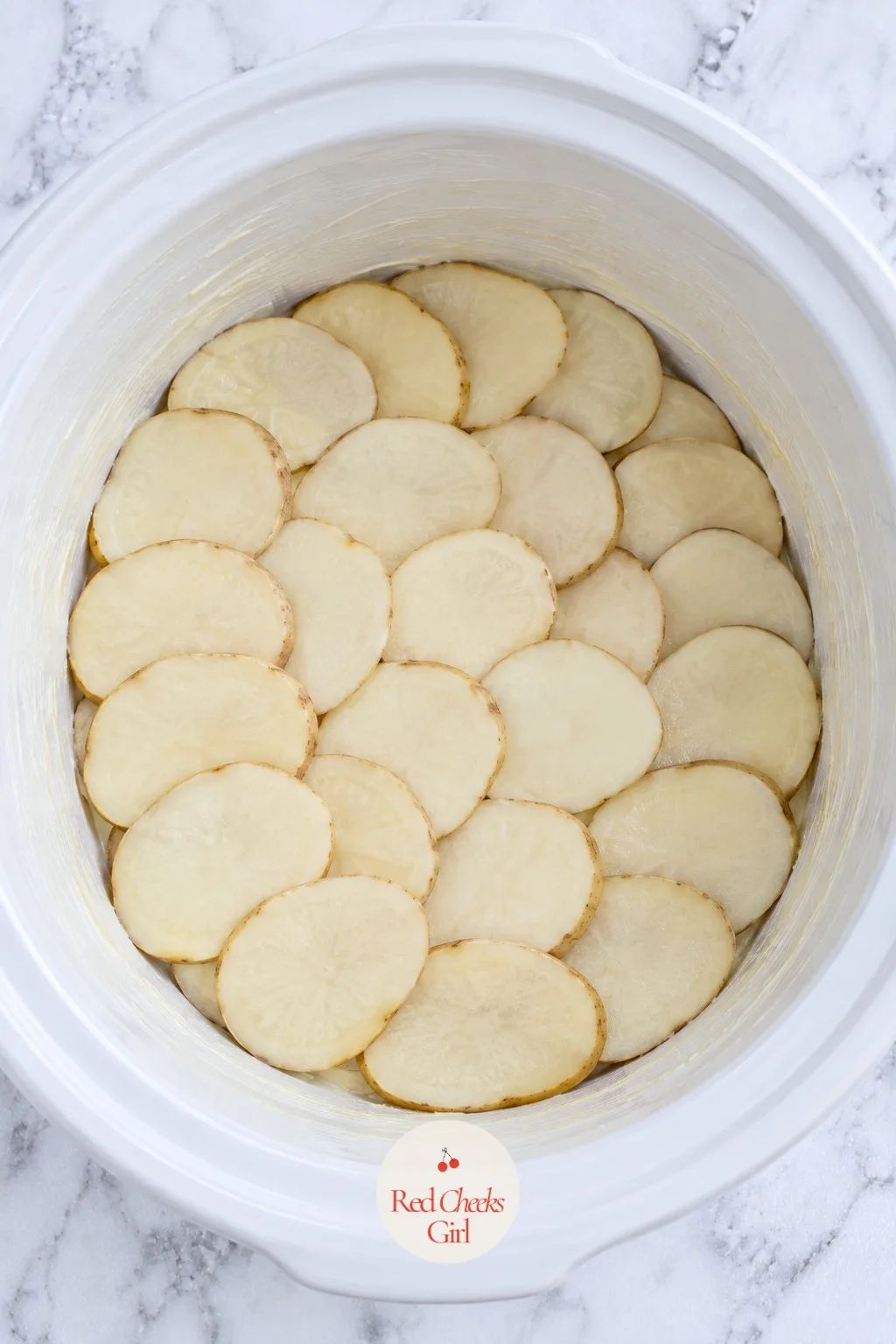
Lay the first layer of potatoes
Lay the first third of the drained, dried potato slices in overlapping rows, stopping just short of the bare crock wall. A tidy, dry layer here sets up a tidy layer once the sauce goes on top.
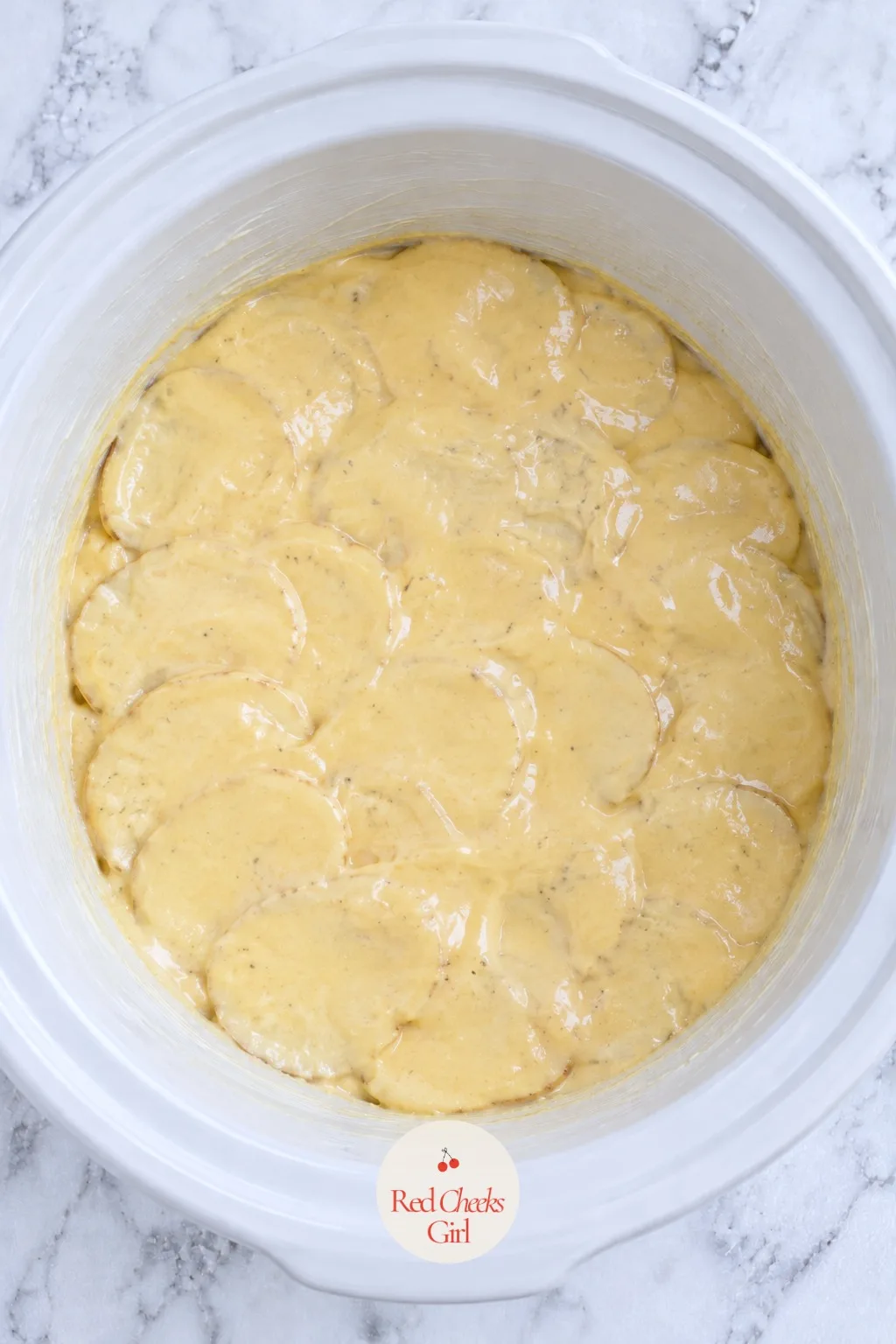
Spoon sauce over the layer
Spoon sauce over the first layer and push it right to the edges with the back of the spoon. Every slice should disappear under the sauce, since any bare edge against the hot insert is the one that scorches.
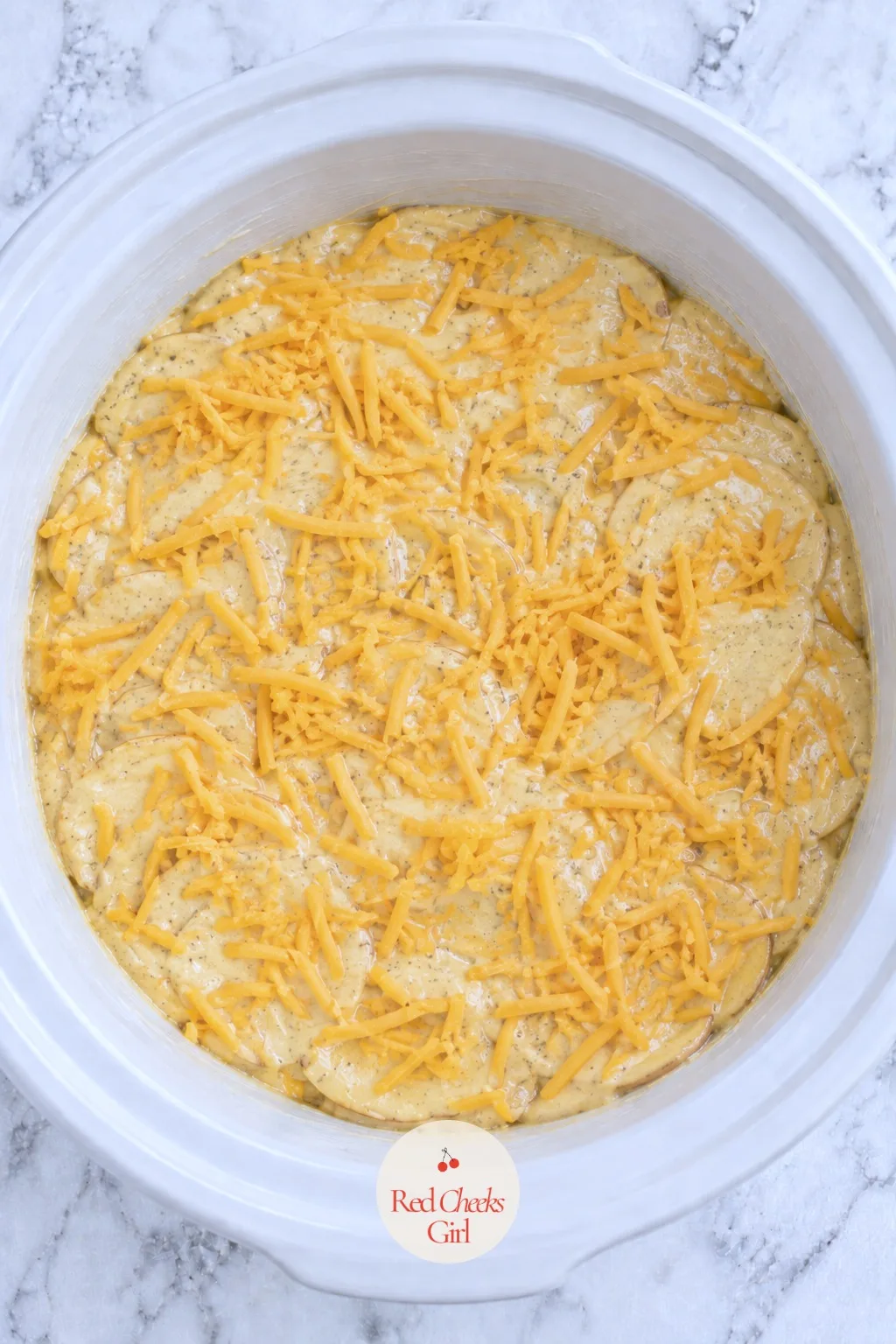
Finish the final layer before cooking
Finish the last layer of sauce and scatter the remaining cheddar evenly over the top before the lid goes on. The insert should look full but not mounded, with the top layer completely covered.

Serve the scalloped potatoes
Scoop a generous portion onto the platter so the layers show in cross-section. The potatoes should look tender enough to cut with the side of a fork, bound in a sauce that holds together rather than pooling.
Getting It Right Every Time
Browning happens the moment a cut potato meets air, and with four pounds to slice, the first ones are exposed to oxygen far longer than the last. Drop each slice into a bowl of cold water as you cut, and the starch stays sealed in rather than oxidizing into that dull gray tinge nobody wants on a holiday table.
Burnt edges are a slow cooker problem, not an oven one: the sides of the crock run hotter than the center for the entire cook. Buttering the insert generously and keeping every potato slice tucked under sauce rather than pressed bare against the wall solves most of it, and if your crock runs particularly hot.
A sauce that curdles is almost always a heat or dairy problem rather than a recipe problem. for the entire cook, and building the sauce on a roux rather than raw milk gives it the stability to survive the hours on low.
If the potatoes look black or gray once you lift the lid, the cause is almost always timing rather than the vegetable itself. so when in doubt, give the dish another 20 to 30 minutes rather than pulling it early.
Salt every layer as you go rather than only the top. A bare top layer looks pretty for the first ten minutes and then dries out under the heat, while salted layers underneath stay properly seasoned all the way through.
Swaps and Substitutions
Russets and Yukon Golds are the standard here, but if that is what is in the pantry; they hold their shape a little more firmly and give you cleaner slices once served. Sweet potatoes are not a direct swap since they cook faster and release more sugar, which changes the sauce entirely.
Sharp cheddar is the workhorse, but gruyere or Monterey Jack melt just as smoothly and shift the flavor toward something a little more grown-up for a dinner party. A mix of half cheddar, half gruyere splits the difference nicely if you want both the sharpness and the nuttiness.
For a dairy-free version, swap the butter for a plant-based stick butter and the whole milk for unsweetened oat milk, and reach for a melting dairy-free cheddar rather than a shredded cheese blend meant for pizza.
Note that this dish, as written, contains both dairy and gluten from the flour-based roux, so flag it clearly if anyone at the table needs to avoid either.
Caramelized onions, chopped cooked ham or crisped bacon all fold in well between the potato layers if you want this to read more like a main dish than a side. Add them with the second layer rather than the first, so they do not end up stuck to the bottom of the insert.
What to Serve It With
This dish is built for exactly the moment when the oven is already holding the turkey, the ham and the rolls, so lean into appetizers that need no oven time at all while it cooks.
A spread pulled from 24 Thanksgiving Appetizers You Can Put Out Without Touching the Oven keeps guests fed through the whole slow cooker window without anyone fighting over rack space.
If your oven still has one shelf free, a batch from 21 Christmas Appetizers Air Fryer Batches That Free Up the Oven runs alongside this recipe without competing for it, since the air fryer does its own thing on the counter.
On the plate itself, this sits happily next to roast turkey, a glazed ham or a simple green vegetable, since the sauce is rich enough to carry a plain protein. A green salad with some acidity cuts through the richness nicely if the rest of the table is heavy on cream and butter already.
For the serving piece, a wide white platter lets the layers show when you scoop into it, which matters more here than with most sides since the cross-section is half the appeal.
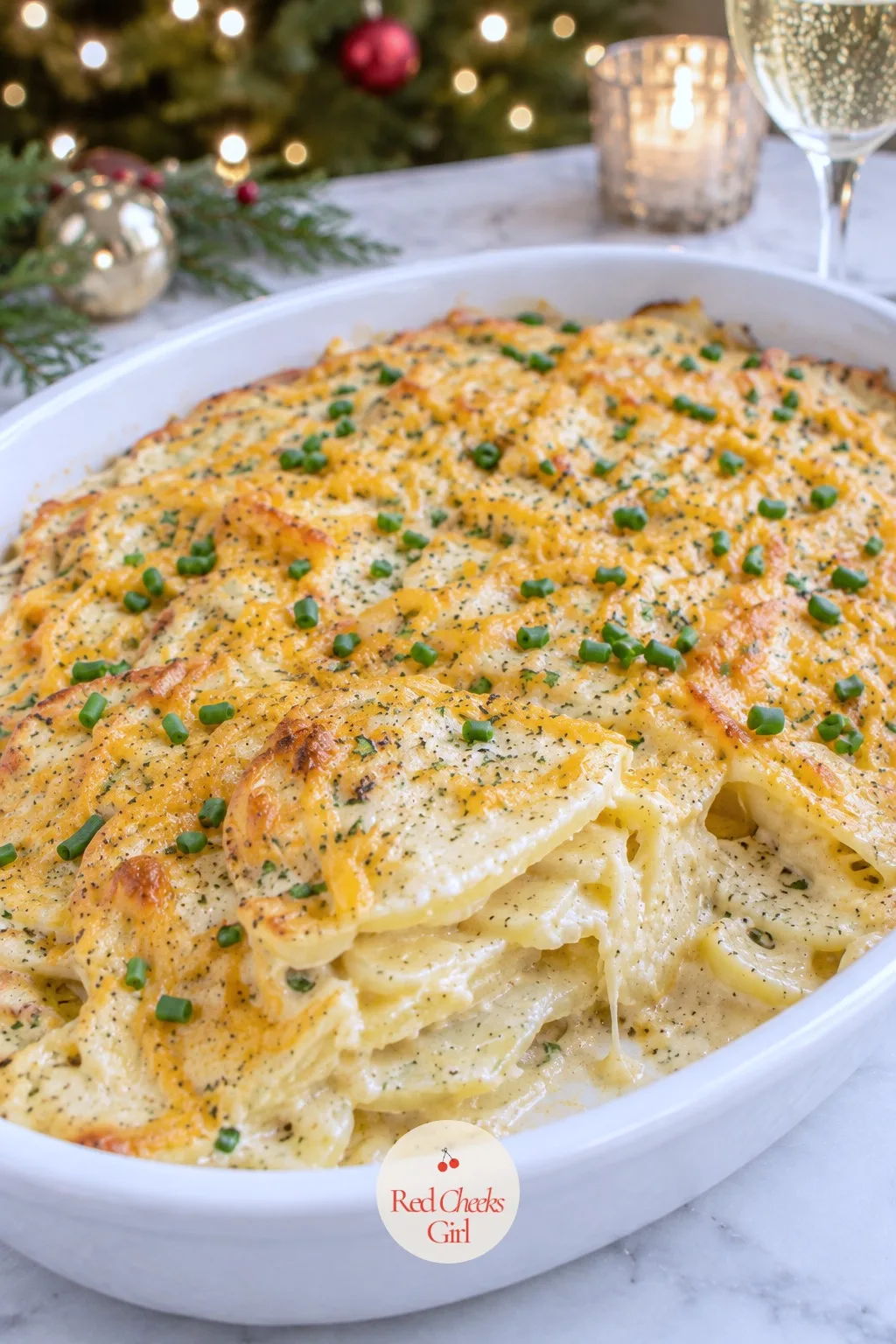
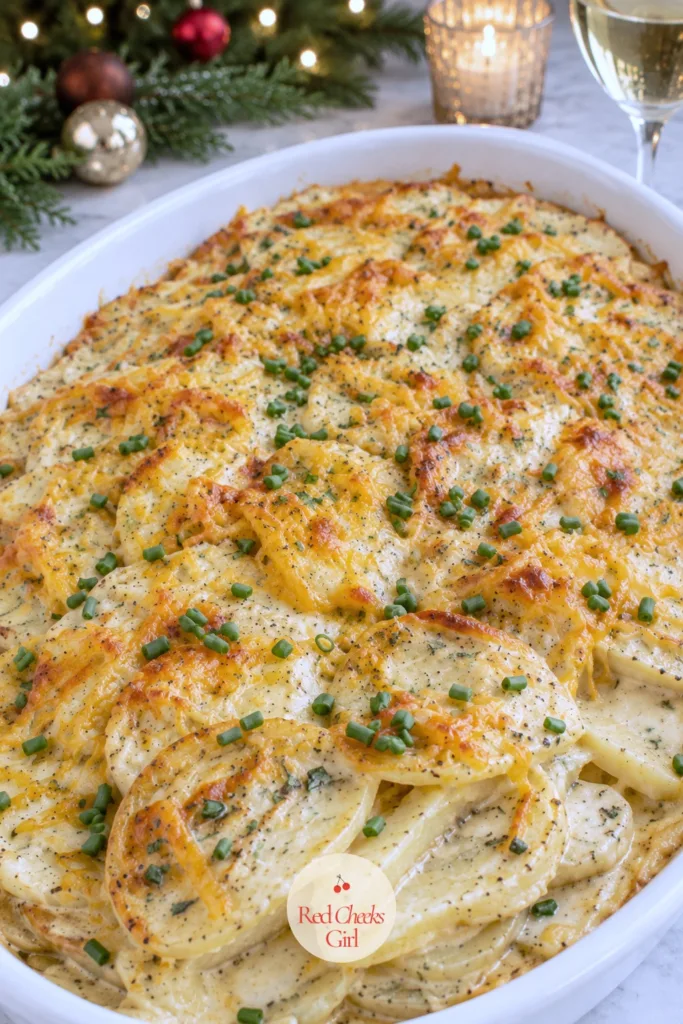
Crockpot Scalloped Potatoes
Ingredients
- 4 pounds Yukon Gold or russet potatoes peeled
- 4 tablespoons unsalted butter plus more for greasing the slow cooker
- 1/4 cup all-purpose flour
- 3 cups whole milk
- 3 cups shredded sharp cheddar cheese about 12 ounces, divided
- 1 1/2 teaspoons salt
- 1/2 teaspoon black pepper
- 1/2 teaspoon garlic powder
- 2 tablespoons chopped fresh chives for serving
Instructions
- Peel 4 pounds of potatoes and slice them about 1/8 inch thick with a sharp knife or a mandoline, dropping each slice into a large bowl of cold water as you go so the exposed flesh does not turn gray or brown before it reaches the slow cooker.
- Melt 4 tablespoons of butter in a medium saucepan over medium heat until it stops foaming.
- Add 1/4 cup of flour to the melted butter and whisk constantly for about 1 minute, until the mixture turns a shade darker and smells lightly toasted: this roux is what keeps the sauce from breaking later.
- Pour in 3 cups of whole milk in a slow, steady stream while whisking, then keep whisking over medium heat for 5 to 7 minutes, until the sauce thickens enough to coat the back of a spoon.
- Remove the saucepan from the heat and stir in 2 cups of the shredded sharp cheddar, a handful at a time, until it melts smoothly into the sauce; season with 1 1/2 teaspoons salt, 1/2 teaspoon black pepper and 1/2 teaspoon garlic powder.
- Rub softened butter over the entire inside of a 6-quart slow cooker insert, working it all the way up to the rim, since this is what keeps the starchy potato edges from welding themselves to the sides as they cook.
- Drain the potato slices and pat them completely dry with a clean towel, then arrange one third of them in slightly overlapping rows across the bottom of the insert, keeping every slice a little short of the bare rim.
- Spoon one third of the warm cheese sauce evenly over this first layer, nudging it right to the edges with the back of the spoon so no potato slice is left dry against the hot crock wall.
- Repeat the layering twice more, potatoes then sauce, finishing with the last of the sauce poured over the top layer and the remaining 1 cup of shredded cheddar scattered evenly across it.
- Lay a double layer of paper towel loosely over the top of the insert before setting the lid on top: it catches the condensation that would otherwise drip back down and turn the top layer watery.
- Cover and cook on low for 4 to 5 hours without lifting the lid, until a paring knife slides into the center of the layers with no resistance at all.
- Turn the slow cooker off and let the dish sit with the lid slightly ajar for 10 minutes, so the sauce settles and thickens just enough to hold its shape when served.
- Scatter 2 tablespoons of chopped fresh chives over the top and bring it to the table straight from the insert, or spoon it onto a platter first if it is heading to a buffet.
Good to Know
Frequently Asked Questions
What size slow cooker works best for scalloped potatoes?
A 6-quart or larger slow cooker gives the most even cooking, since a crowded smaller insert leaves the center layers undercooked while the edges overcook. A 4-quart works for a half batch.
Can I use red potatoes instead of Yukon Gold?
Yes, red potatoes work fine and hold their shape a little more firmly once sliced. The sauce will be very slightly less creamy since red potatoes release less starch than Yukon Golds.
What is the difference between scalloped potatoes and potatoes au gratin?
Classic scalloped potatoes rely on a cream-based sauce without cheese, while au gratin potatoes are layered with cheese and often a crumb topping. This recipe borrows the cheese from au gratin style, which is common in modern versions.
My cheese sauce already curdled, can I still save it?
Often yes: stirring in a splash of fresh warm cream can bring a lightly curdled sauce back together. It will not have the same silky texture, but the dish is still safe and fine to eat.
Why did my potatoes turn black or gray after cooking?
This usually means they were undercooked or sliced too thick, leaving raw spots exposed to air once the lid comes off. Give them another 20 to 30 minutes rather than serving them early.
Can I double this recipe for a bigger crowd?
Yes, doubling works well in a large oval slow cooker, though you may need to add 30 to 45 extra minutes of cook time for the thicker layers to turn tender all the way through.
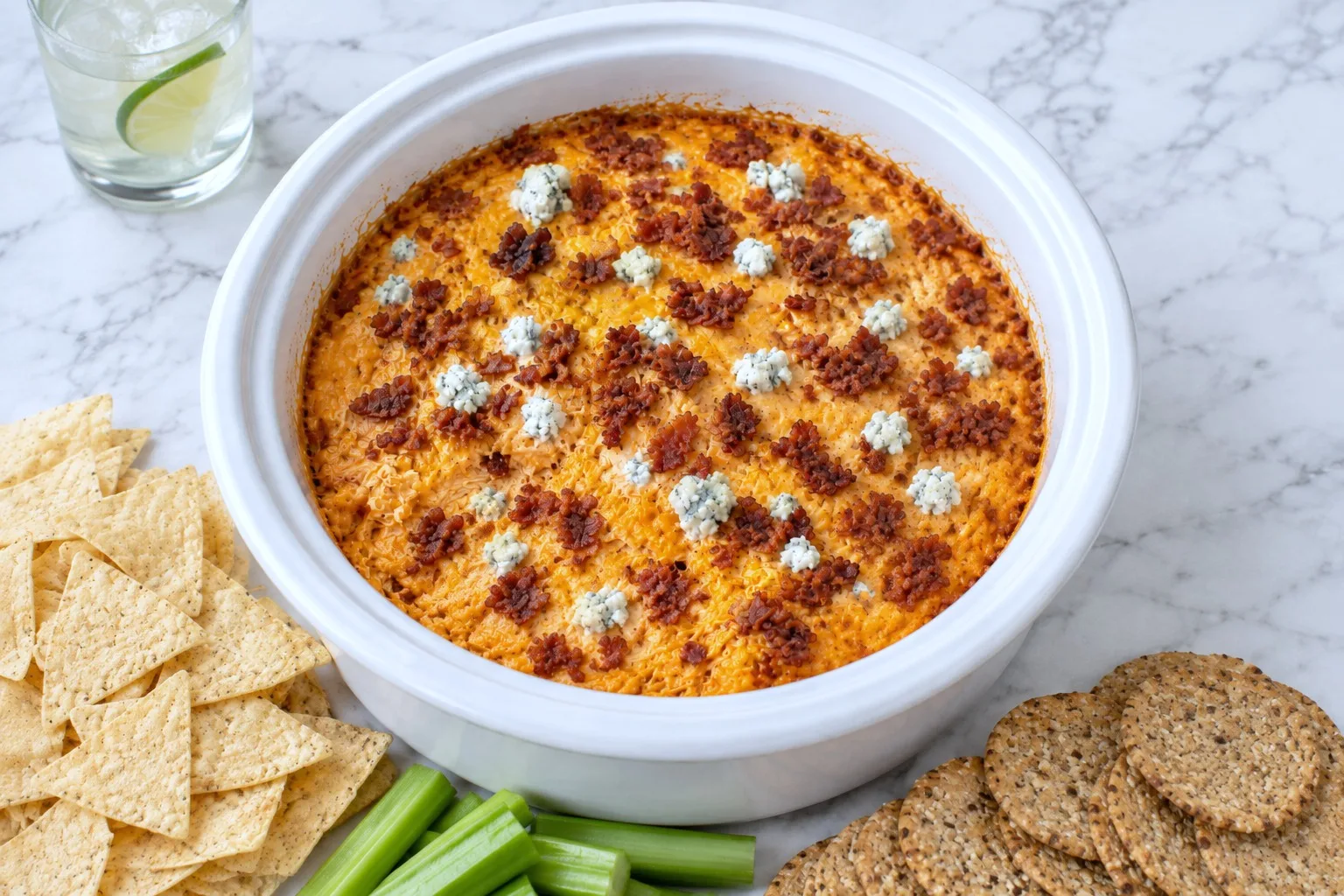
Crockpot buffalo chicken dip stays warm and scoopable the whole party: shredded chicken, cream chees
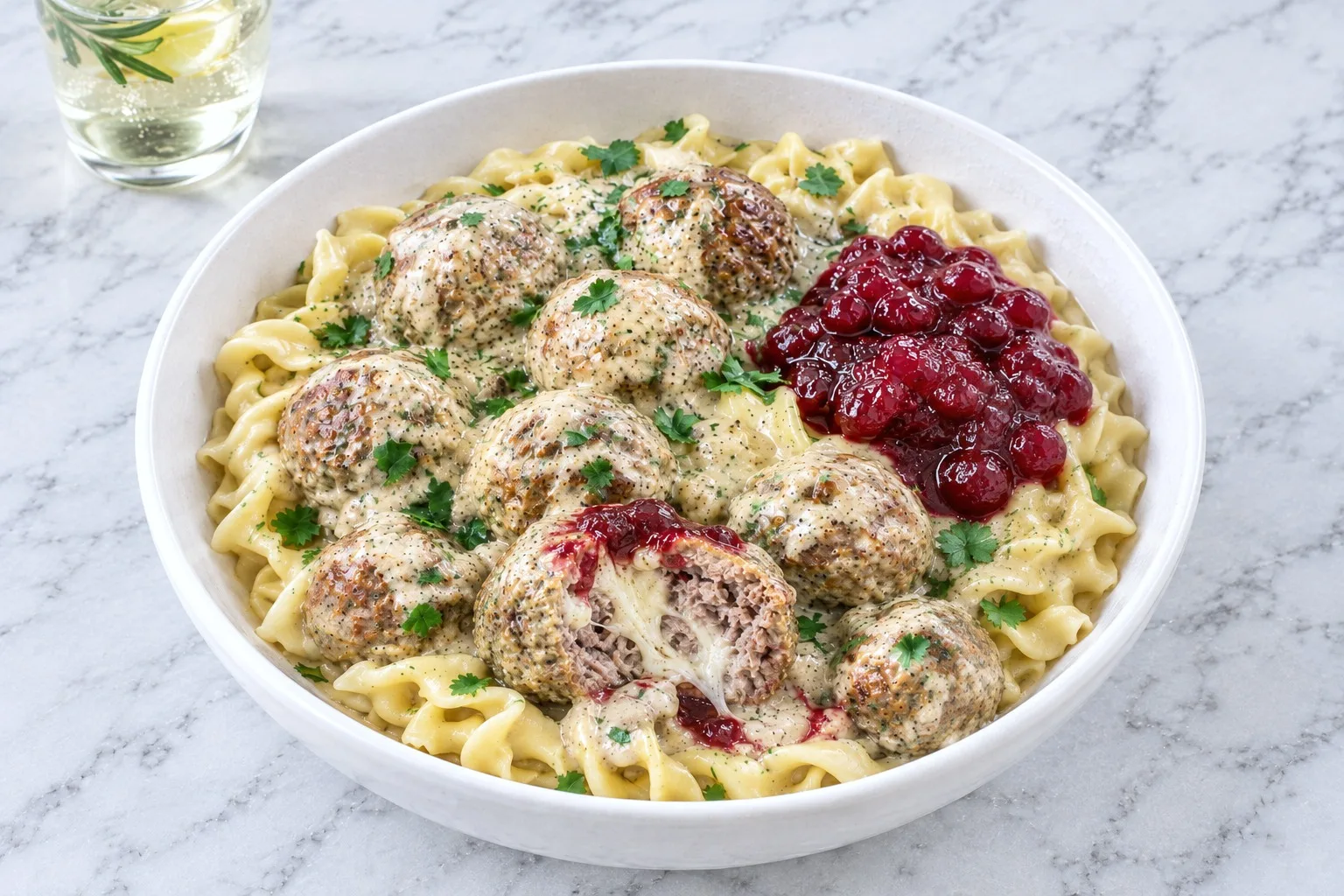
Swedish meatballs crockpot recipe with creamy gravy: beef broth, cream and Worcestershire, finished
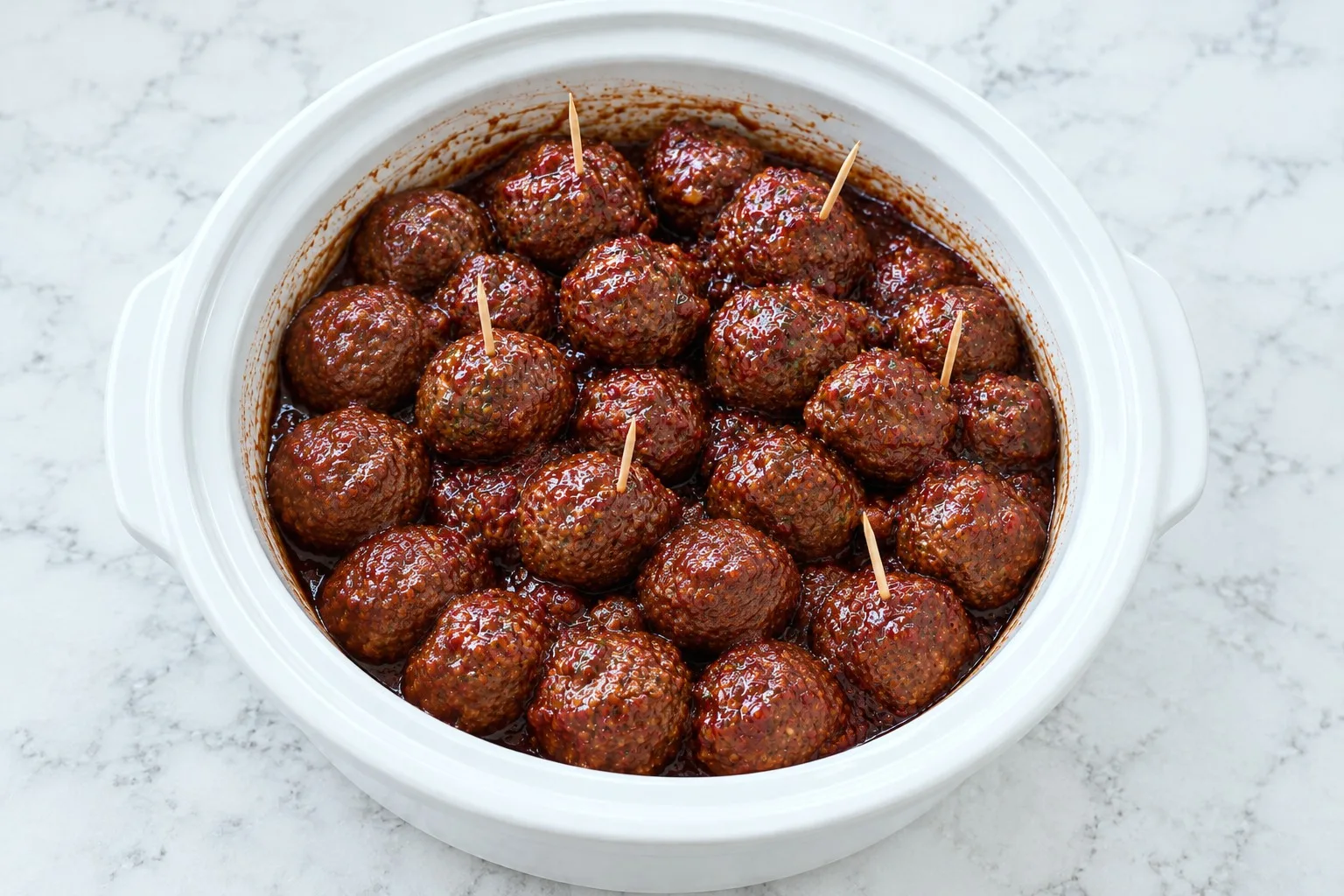
Grape jelly meatballs need just three ingredients and a slow cooker, turning glossy and sweet-tangy
Leave a Reply