


Potato latkes earn their crackle the old way: shredded, squeezed bone dry, and fried hot and fast until the edges go lacy and deep gold.
This is the version that holds together on the platter, no sad, greasy middle, no apology needed. Applesauce on one side, sour cream on the other, and a stack of napkins because nobody eats these one at a time.
This post contains affiliate links. If you buy through them, I may earn a small commission at no extra cost to you.
Table of Contents
A Latke Worth Frying For
The idea of homemade latkes can feel like more trouble than it is worth: a greasy stove, a soggy pancake that falls apart on the spatula, applesauce from a jar because there was no time left for anything else.
Done right, a latke is something else entirely. Thin, crisp, lacy at the edges, soft and almost sweet in the middle, with the kind of deep gold color that needs no filter.
Nothing here is expensive or hard to find: potatoes, an onion, an egg, flour already sitting in the cupboard. The only real cost is a few minutes standing at the stove while it fries.
Make a full batch and let people crowd around the skillet while the last ones finish. Latkes are better eaten standing up, hot, one in each hand.

What Goes Into Classic Potato Latkes
Russet potatoes do the heavy lifting here. Their high starch and low moisture content is what lets the latke hold its shape and crisp at the edges instead of turning into a flat, soggy hash brown.
Onion adds sweetness and a faint sharpness that plain potato cannot. It also carries plenty of its own water, so it goes through the same squeezing as the potato, never skipped.
One egg is the glue holding the shreds together once they hit hot oil. Flour or matzo meal does double duty, soaking up whatever moisture survived the squeezing and reinforcing that bind so the latke does not fall apart in the pan.
Salt wakes up the potato and draws out a touch more liquid while the mixture sits. A neutral oil with a high smoke point, poured generously into a heavy skillet, is what gives the finished latke its deep gold crust rather than a pale, greasy one.
How to Make It
This method follows the classic shape: shred, squeeze hard, bind with egg and flour, fry hot and fast, then drain on a rack instead of paper towels so the crisp edges survive the trip to the table.
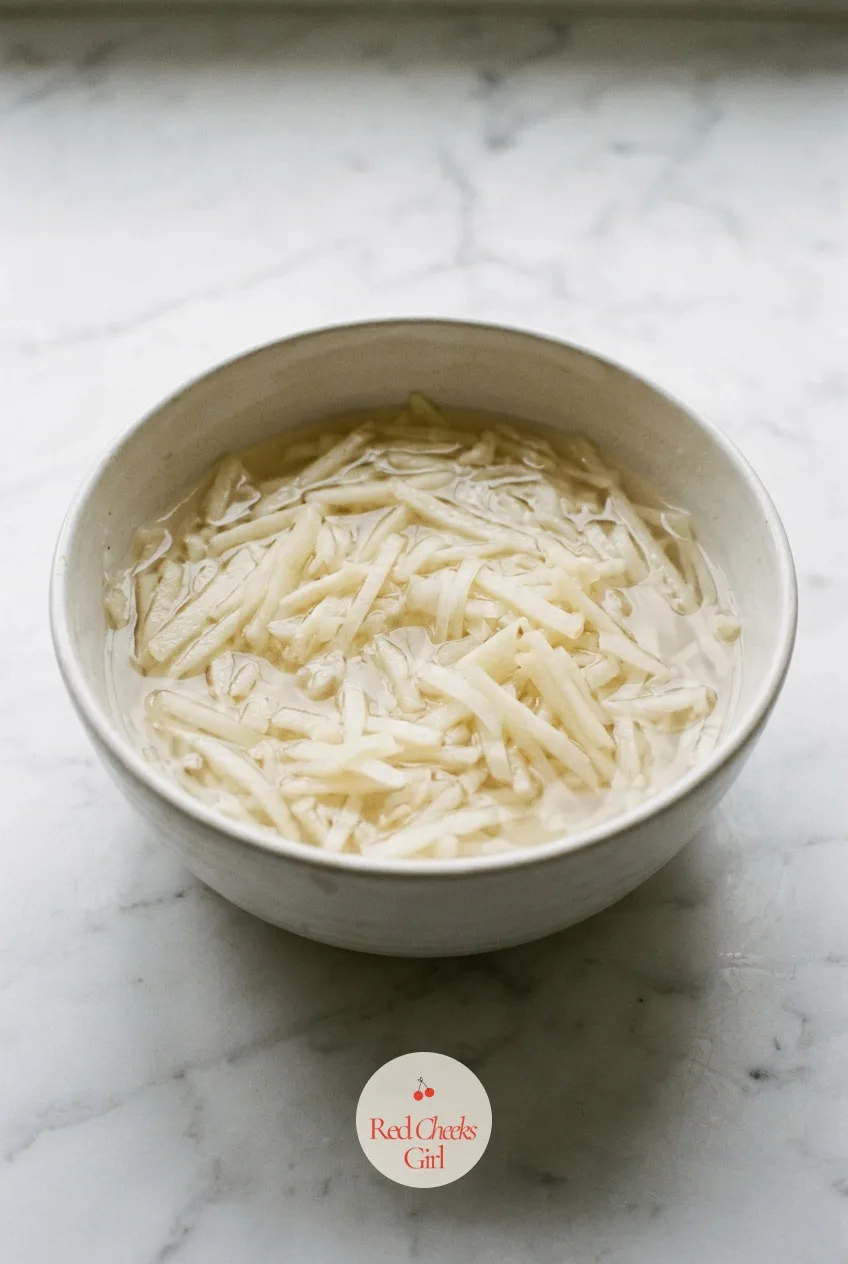
Grate the Potatoes and Onion
Grate the peeled potatoes and onion straight into a bowl of cold water. The water should look cloudy, with pale shreds settling just under the surface.
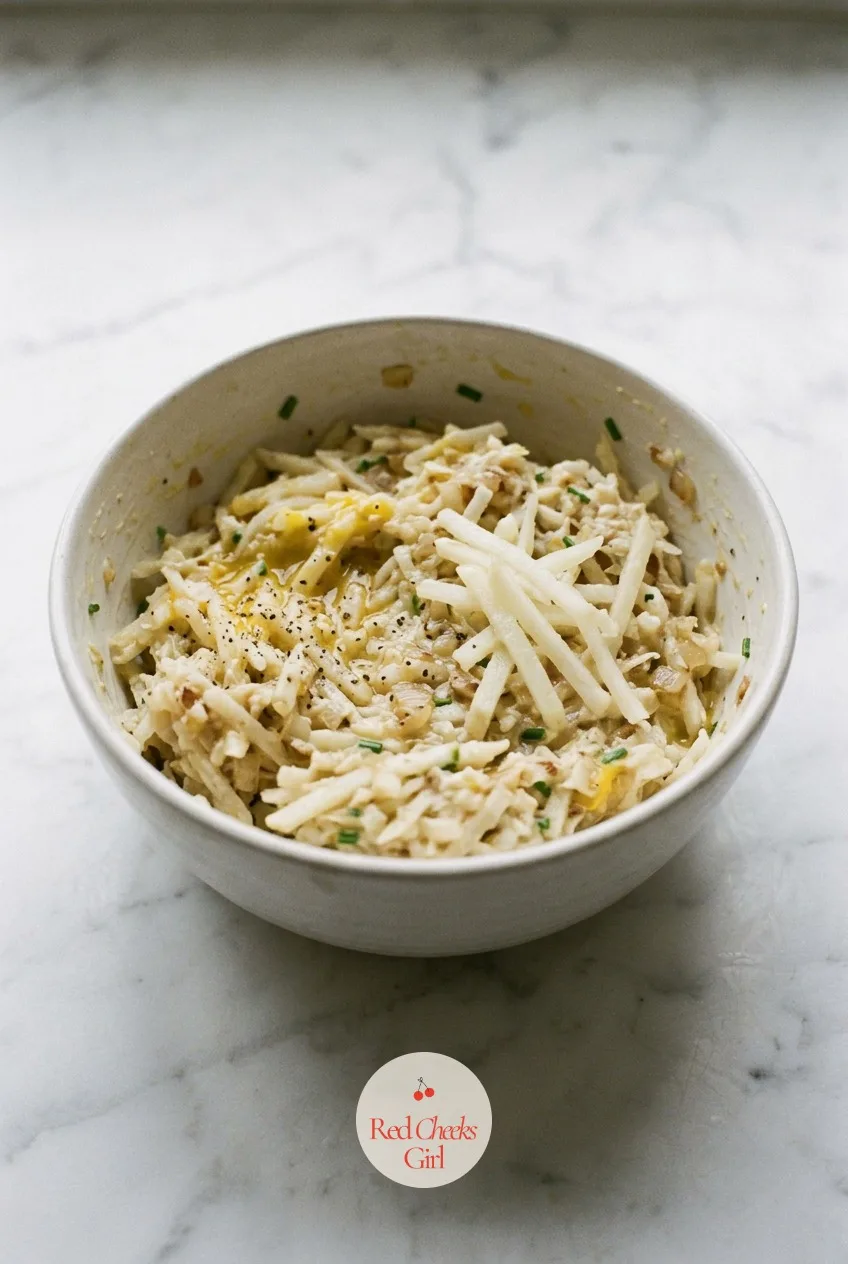
Mix the Latke Batter
Stir the egg, flour or matzo meal, salt, and pepper through the dry shreds with a fork. The mixture should look loose and shaggy, holding together only when pressed.
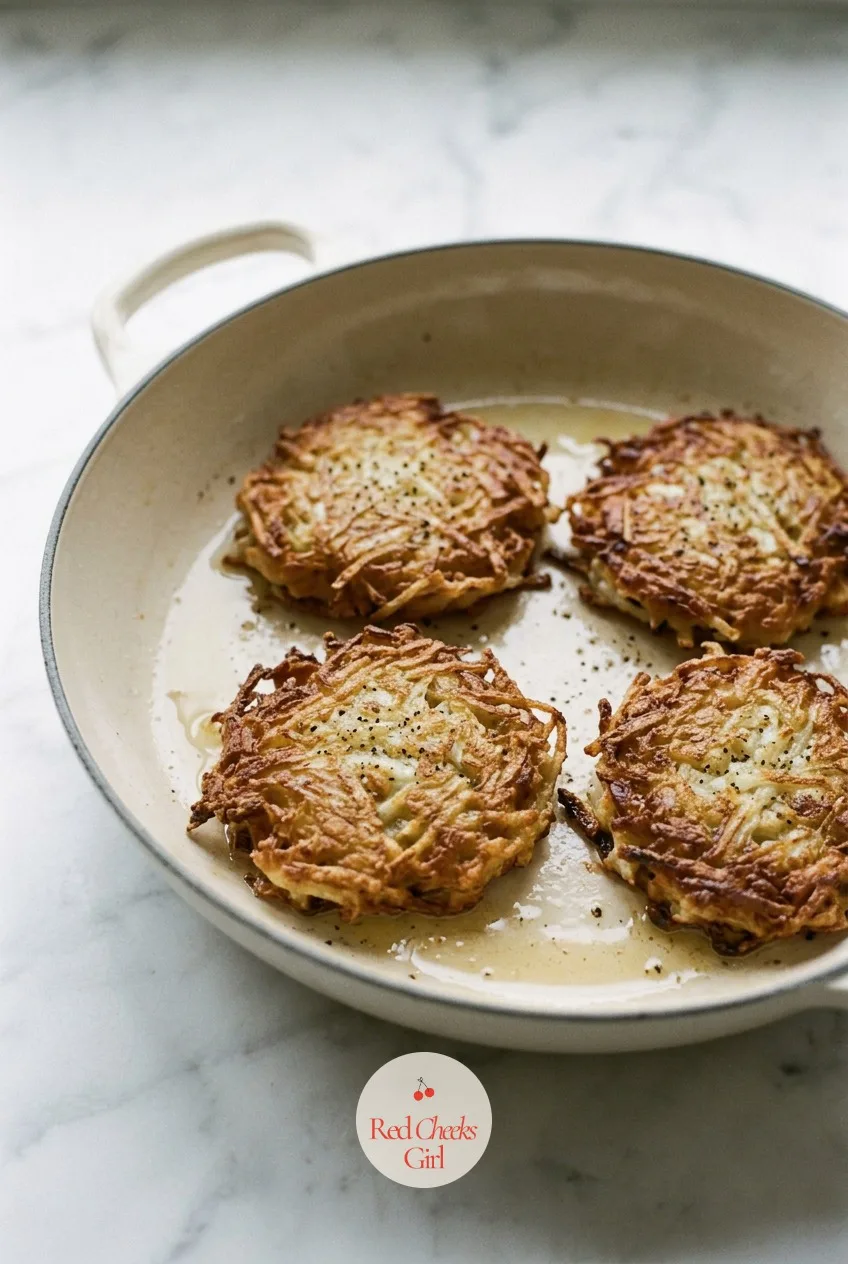
Fry Until Deep Gold
Watch the edges of each latke as they fry: they should turn lacy and deep gold within a few minutes, with the oil bubbling steadily around them.
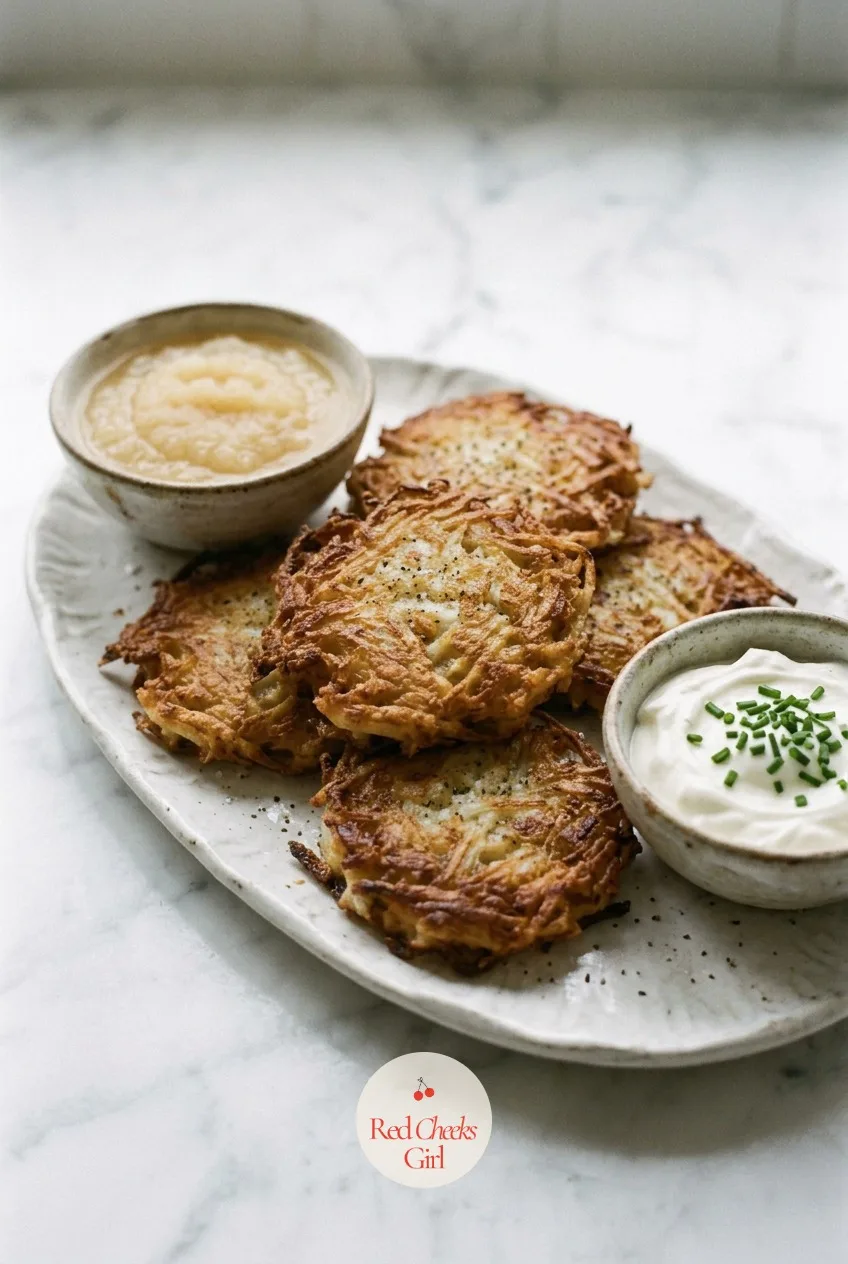
Serve With Applesauce and Sour Cream
Stack the finished latkes on a platter with small bowls of applesauce and sour cream on the side. The pile should look deep gold all over, with crisp edges still visible on top.
🛍 Shopping guide
Getting Latkes Crisp, Not Greasy or Falling Apart
Most latke disasters come down to one of three things: too much water left in the potato, oil that never got hot enough, or a skillet asked to hold too many at once.
Excess moisture is the single biggest reason a latke falls apart in the pan, since any extra liquid stops the shreds from binding and setting before they hit the oil.
Oil that sits too cool lets the latke soak up grease instead of crisping, while oil pushed too hot browns the outside before the inside has a chance to cook through.
Resist stacking finished latkes on top of each other straight out of the pan: the trapped steam softens the crisp edges within minutes.
Keep each latke close to the same size, about 3 inches across, so the whole batch finishes at the same moment instead of some burning while others stay raw in the middle.
Swaps and Substitutions
No two kitchens stock exactly the same pantry, and this latke bends more than it looks like it would.
Matzo meal and all-purpose flour are interchangeable in this batter; swap in potato starch for a gluten-free version, or use matzo meal made from gluten-free matzo. For an egg allergy, a flax egg (1 tablespoon ground flaxseed stirred into 3 tablespoons water) binds the shreds nearly as well.
If raw onion feels too sharp for the table, a shallot grates in with a milder bite, or leave it out entirely and add an extra pinch of salt.
Vegetable, canola, or peanut oil all fry well here; olive oil smokes at too low a temperature for this kind of frying, so save it for another dish.
For anyone skipping dairy, double the applesauce or swap the sour cream for a plain cashew or coconut yogurt; either keeps that same cool contrast against the hot latke.
What to Serve With Potato Latkes at a Party
Latkes rarely want to stand alone on a buffet; they want company, something cold to cut the fry and something warm to sip beside them.
Keep the classic pairing of applesauce and sour cream, but set out a small bowl of chopped chives too, for anyone who likes to dress their sour cream a little further. A simple green salad with a sharp vinegar dressing cuts through the oil nicely on the same plate.
For a winter party, a warm glass works better than anything fizzy: the Hot Toddy Recipe With Black Tea and Honey for Cold Winter Nights pours easily for a crowd and keeps hands warm between latkes.
If the latkes are only one part of a bigger spread, Christmas Appetizers: 12 Party Themes and Recipe Collections rounds out the table with more savory bites.
Finish the night on something sweet rather than fried: Christmas Treats: 10 Recipe Guides for Every Party Moment covers the dessert side of the same party.


Potato Latkes
Ingredients
- 2 pounds russet potatoes about 4 large, peeled
- 1 medium yellow onion peeled
- 2 large eggs beaten
- 1/3 cup all-purpose flour or matzo meal
- 1 1/2 teaspoons kosher salt plus more to taste
- 1/2 teaspoon black pepper
- 1 to 1 1/2 cups vegetable oil for frying
- applesauce for serving
- sour cream for serving
Instructions
- Peel the russet potatoes and onion, then grate both on the large holes of a box grater or in a food processor fitted with the shredding disk. Drop the shreds straight into a large bowl of cold water as you go so they do not turn gray.
- Drain the shreds in a colander, then pile half onto the center of a clean kitchen towel. Gather the towel into a sack and twist hard over the sink until no more liquid drips out and the shreds feel noticeably lighter; repeat with the second half.
- Let the squeezed-out liquid sit in a bowl for 2 minutes, then carefully pour off the clear water on top. A chalky layer of potato starch will be left at the bottom: scrape it back into the dry shreds (this step is optional but helps the latkes hold together).
- In a large ceramic mixing bowl, combine the potato and onion shreds with 2 large eggs, 1/3 cup flour or matzo meal, 1 1/2 teaspoons kosher salt, and 1/2 teaspoon black pepper. Mix gently with a fork just until the mixture looks like a loose, shaggy batter that clumps when pressed.
- Pour 1/2 inch of vegetable oil into a heavy skillet and set it over medium-high heat. Heat until a thermometer reads 350 to 375 degrees F, or until a small drop of the mixture sizzles the instant it touches the oil.
- Working in batches of four so the pan is never crowded, scoop 1/4 cup portions of the potato mixture into the hot oil. Flatten each one gently with the back of a spoon into a round about 3 inches wide.
- Fry the latkes for 3 to 4 minutes on the first side, until the edges turn deep golden and lacy, then flip with a slotted spatula and fry the second side for another 3 to 4 minutes. They are ready when both sides are a dark, even gold and feel firm, not soft, when pressed.
- Lift the latkes straight onto a wire rack set over a rimmed baking sheet to drain; skip paper towels, which trap steam and soften the bottom. Sprinkle with a little extra salt while they are still hot.
- Let the oil come back up to 350 degrees F between batches and skim out any loose potato bits with a slotted spoon before adding the next round. Repeat the scooping, frying, and draining with the remaining mixture, adding a little more oil to the skillet if the level drops.
- Pile the finished latkes onto a platter and serve warm, with small bowls of applesauce and sour cream alongside for spooning over each one.
Good to Know
Frequently Asked Questions
What is the difference between latkes and hash browns?
Latkes bind grated potato and onion with egg and flour or matzo meal, giving a lacy, crisp edge and a soft middle. Hash browns usually have no binder and are pressed flat for an even, solid crust.
Can I use a food processor instead of grating potatoes by hand?
Yes, a food processor fitted with the shredding disk works well and saves time on a large batch. Cut the potatoes into shorter lengths first so the shreds stay long rather than turning to mush.
Why do my grated potatoes turn gray before I can fry them?
Raw potato starts to oxidize and darken within minutes once grated, from contact with air. Dropping the shreds straight into cold water as you grate slows this down until you are ready to squeeze and fry.
Can I grate and mix the potatoes the night before frying?
It is not recommended, since raw potato releases liquid as it sits and the mixture turns watery and gray overnight even in the fridge. Grate, squeeze, and fry the same day for the crispest results.
Can I bake or air fry latkes instead of frying them in oil?
Baking will not give the crisp, lacy edges that define a latke, since there is no hot oil to set the crust quickly. An air fryer at 400 degrees F, brushed well with oil and flipped halfway, comes closer, but a skillet still gives the best texture.
This high protein breakfast casserole has 30g of protein per serving! Made with turkey sausage, eggs
It’s 90 degrees outside and I’m turning on the crockpot. I know. But here’s the th
Key Takeaways: • Omega-3 fatty acids have the strongest evidence for cortisol reduction •
Leave a Reply