

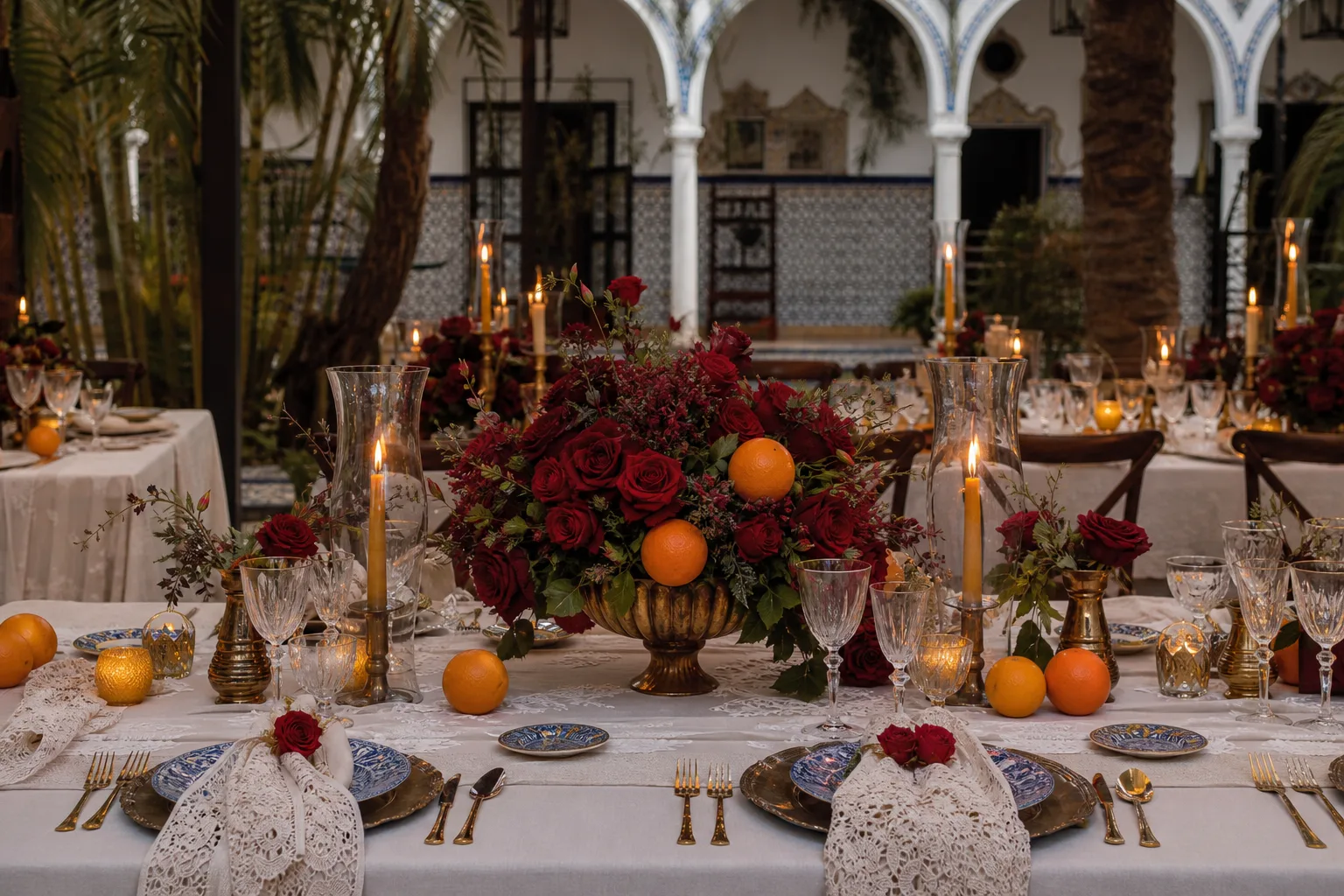
Picture a courtyard gone warm at dusk: terracotta walls, the smell of orange blossom, candle flame catching on gold rims and red petals everywhere you look. That is the feeling a Spanish wedding chases, and it does not need an actual trip to Seville to land.
The palette stays tight on purpose: cardinal red, burnt orange, ivory lace and warm antique gold, carried from the first welcome sign to the last favor box.
The motif doing the real work here is the Andalusian tile print, cobalt and ochre geometry that shows up on signage, menus and coasters the way a monogram might at a quieter wedding. Whole red roses and real oranges, some still on the branch, repeat beside it, and a lace mantilla veil ties the bride herself into the same thread.
It suits a late afternoon into midnight wedding, a courtyard, a vineyard patio or a hotel ballroom willing to take candlelight seriously. If the two of you want bold color without a full theme party, this gives you the shorthand: you only need the roses, the oranges and the tile to say it.
This post contains affiliate links. If you buy through them, I may earn a small commission at no extra cost to you.
Table of Contents
The Reception Space
This is the part guests walk into before they have found their seats, so it carries the most weight. Real or potted orange trees, tile underfoot or on a runner, and candlelight doing the job overhead lamps usually do: together they tell everyone what kind of night this is before the first course arrives.
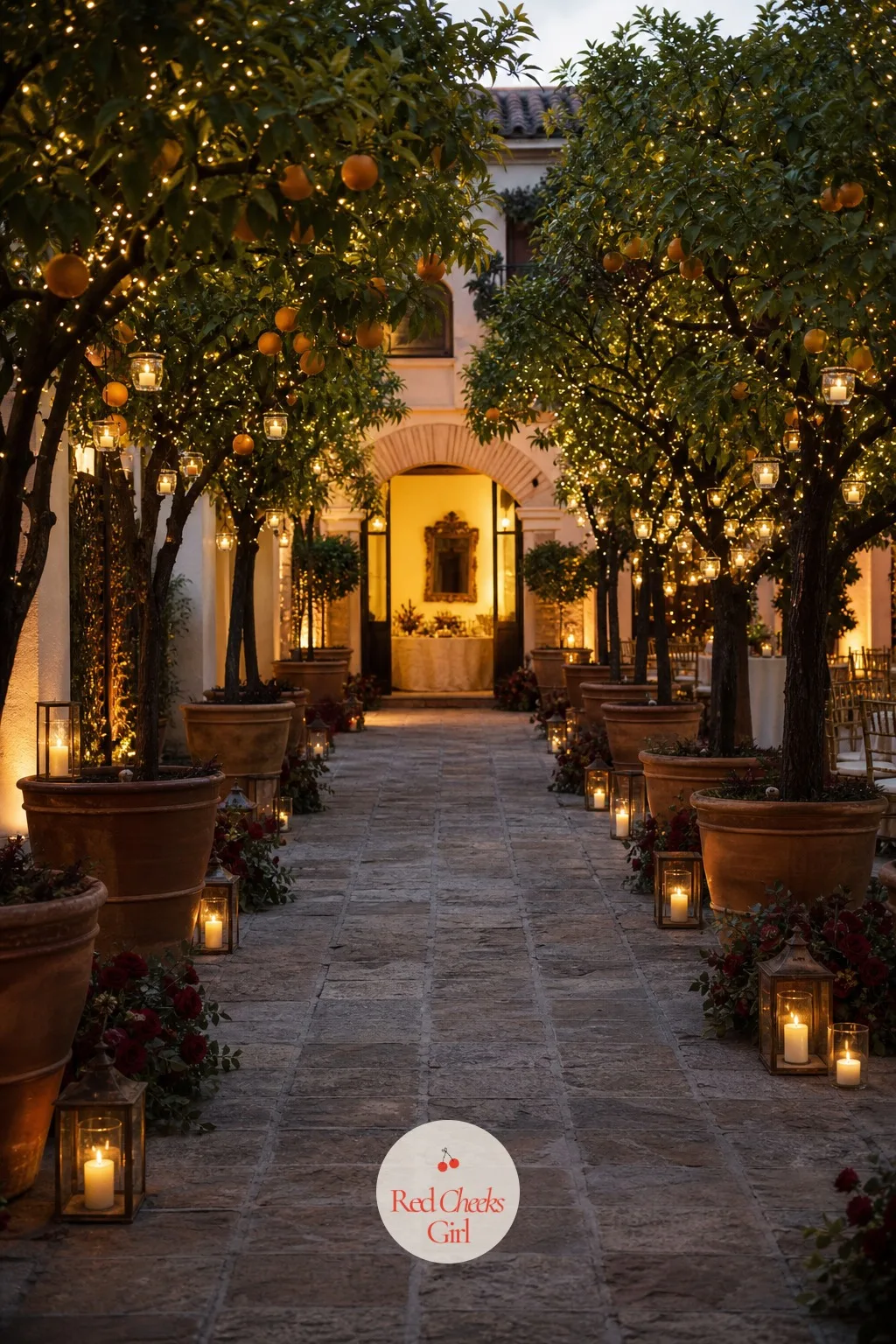
Orange Tree Lined Reception Entrance
She will worry potted trees read like a hotel lobby. They do not, once the fruit stays on the branch and the pots go terracotta instead of plastic. Guests walk between them from the car to the courtyard, and the citrus scent does half the work before anyone has said a word.
Build it from the ground up: terracotta or whitewashed planters on the floor, four to six foot faux or real orange trees inside them, small warm string lights wound through the branches last. Tell the florist or rental company you need potted orange trees, minimum four feet, with fruit left on and warm white fairy lights woven through.
Renting real trees costs more than most couples expect, so faux ones with wired-on fruit are the honest swap, and nobody will test them. If there is no aisle to line, two trees flanking the entrance door do the same job for a tenth of the trees and the budget.
🛍 Shop this look
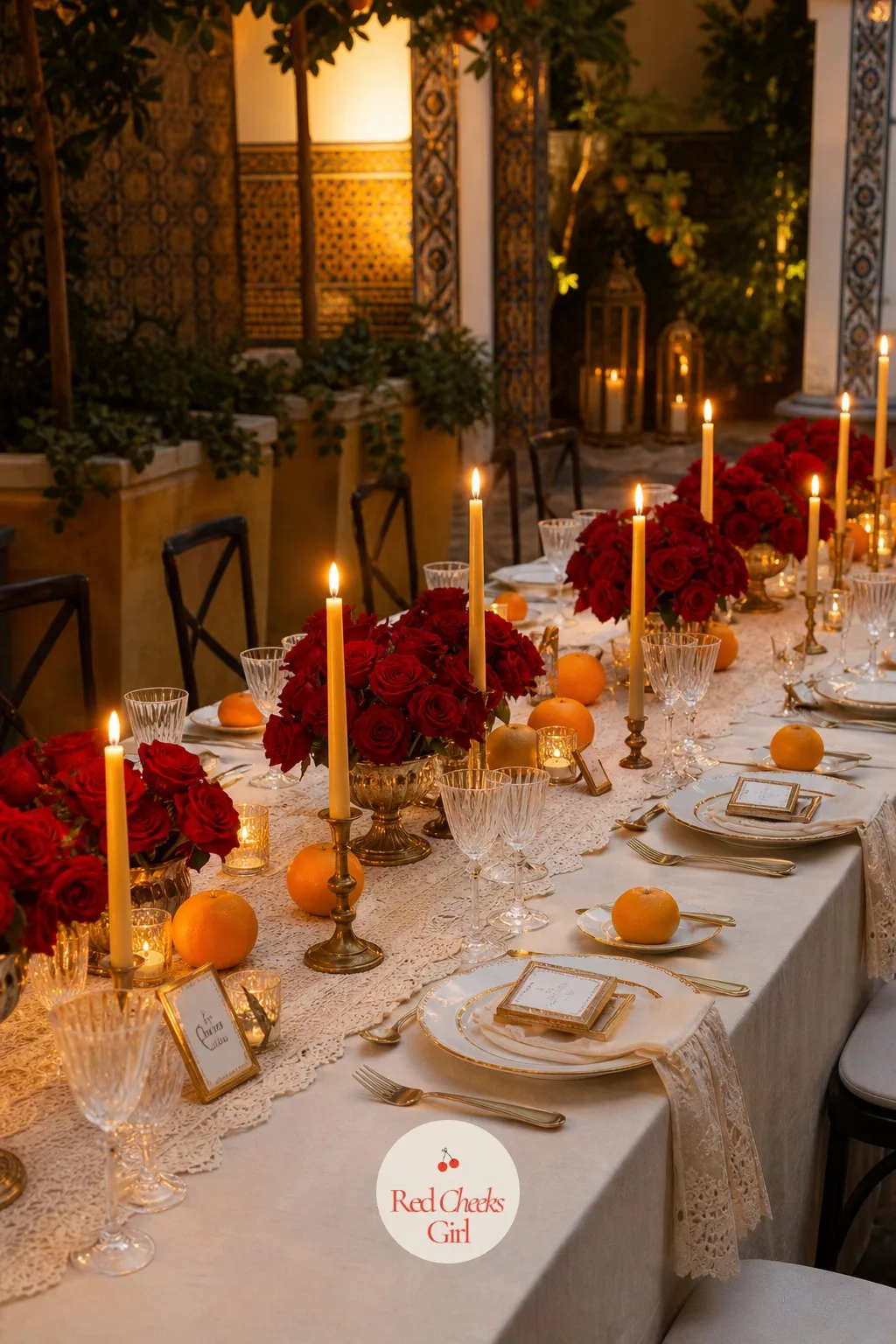
Red Rose and Candlelight Tablescape
A table lit only by overhead lights looks like a conference room no matter how good the flowers are. Candlelight fixes that instantly, and it flatters every face at the table, which nobody will say out loud but everyone will feel.
Work from the cloth up: an ivory linen runner over a plain white cloth, low clusters of fully open red roses down the center, then taper candles in gold holders set between the clusters at staggered heights.
Ask the florist for garden roses in a true red, kept low, with brass or gold taper holders from the rental company and ivory table linen beneath.
The roses are worth ordering fresh; the candle holders you can buy once and reuse at every dinner party after. If your date lands in deep winter rather than high summer, the candlelight still carries the room on its own, the way it does in 30 Winter Wedding Ideas With Candlelight, Velvet and Evergreen.
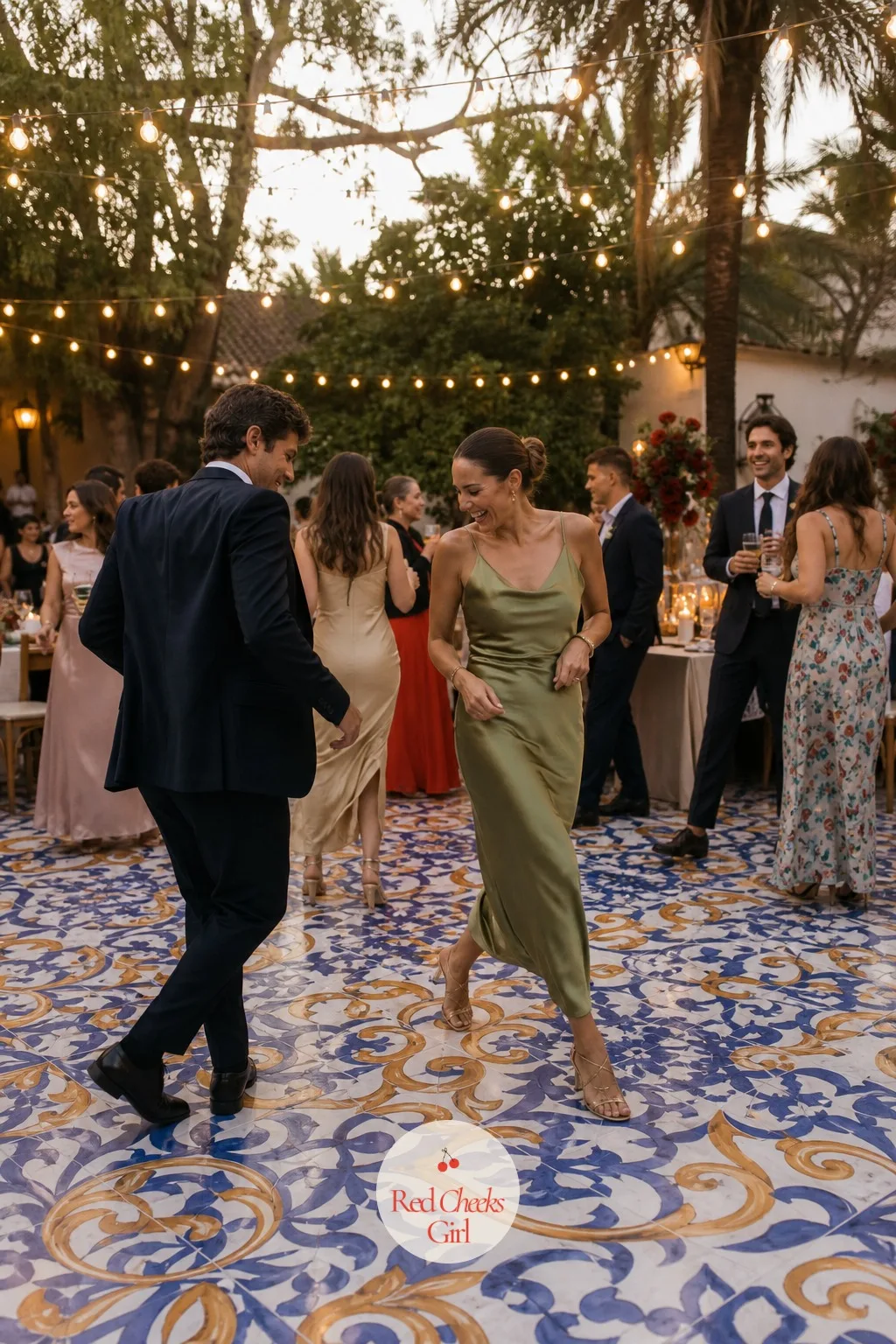
Andalusian Tile Dance Floor
A plain parquet floor under all that red and gold can feel unfinished, like the room forgot one layer. A cobalt and ochre tile pattern underfoot fixes it without anyone needing to drill or paint anything permanent.
It is built as a vinyl floor wrap laid straight over the existing dance floor, held flat with double sided tape at the seams, nothing structural beneath it. Ask the rental or printing company for a custom Andalusian tile pattern dance floor wrap, cobalt blue and ochre yellow, sized to the venue’s existing floor dimensions.
This is squarely a rental or print-shop job, not a weekend project, but it rents back out afterward so the cost is one night, not a keepsake. If the floor cannot be covered at all, a tile-print aisle runner for the ceremony carries the same motif for far less.
🛍 Shop this look
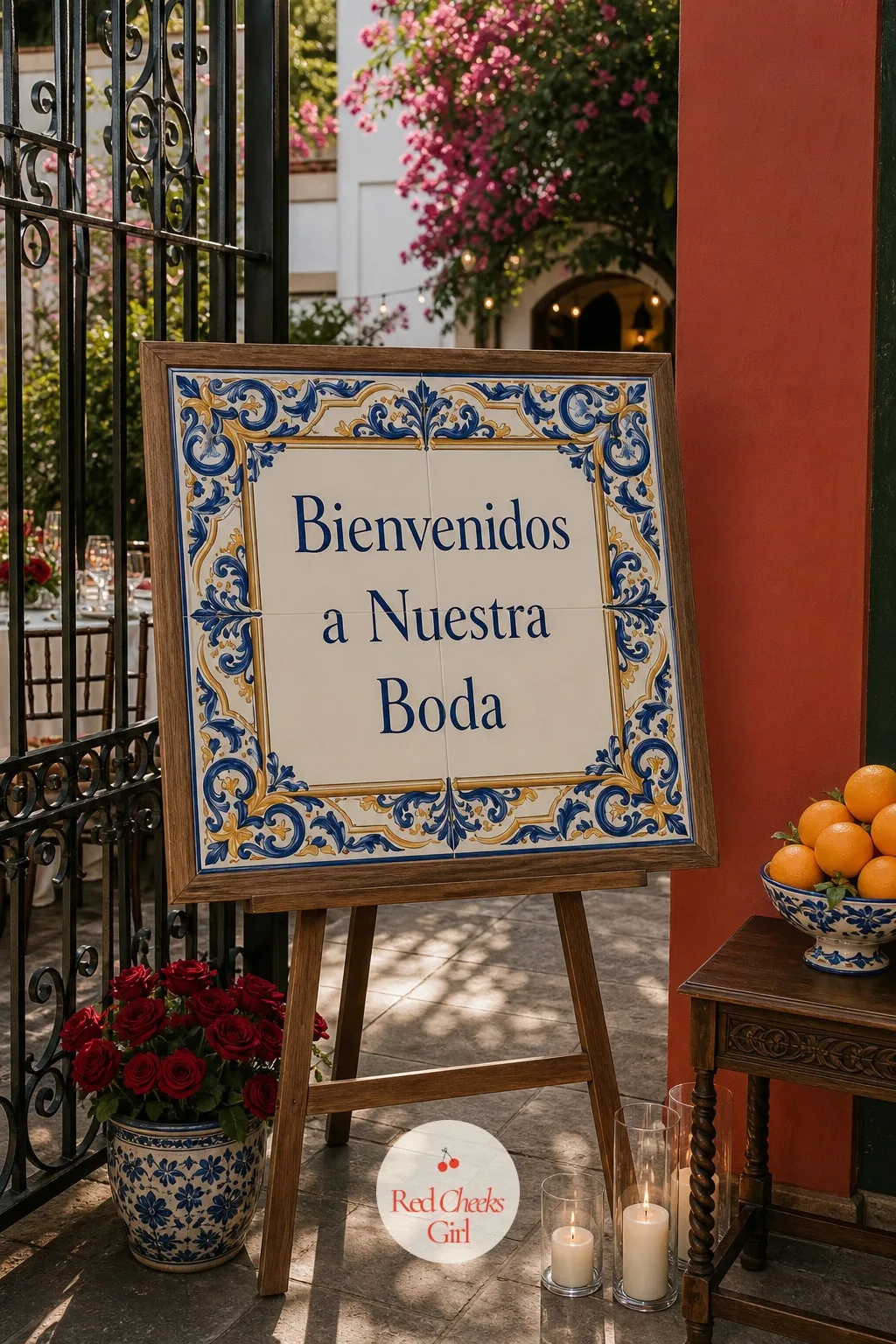
Tile-Pattern Welcome Sign
Guests read the welcome sign before they read anything else, so it sets the whole tone in four words. A cobalt and ochre tile border around simple lettering says Spanish wedding faster than a paragraph of explanation ever could.
It stands on a wooden easel near the entrance: a painted wood or acrylic board on the easel legs, the tile pattern printed or painted around the border, the wording centered in a simple serif. Give the sign maker the exact wording Bienvenidos a Nuestra Boda, with a cobalt and ochre Andalusian tile border and a white or ivory background.
A printed foam board is a fine budget swap for painted wood, and nobody standing six feet away will know the difference. This pairs naturally with the wider styling ideas in 34 Wedding Decor Ideas Couples Are Choosing for Next Season.
🛍 Shop this look
The Ceremony
Whatever the aisle looks like, the bride in her mantilla is the moment nobody is checking their phone through. The arch, the veil and the coins on the little side table all answer to the same red, gold and lace.
Red Rose Ceremony Arch
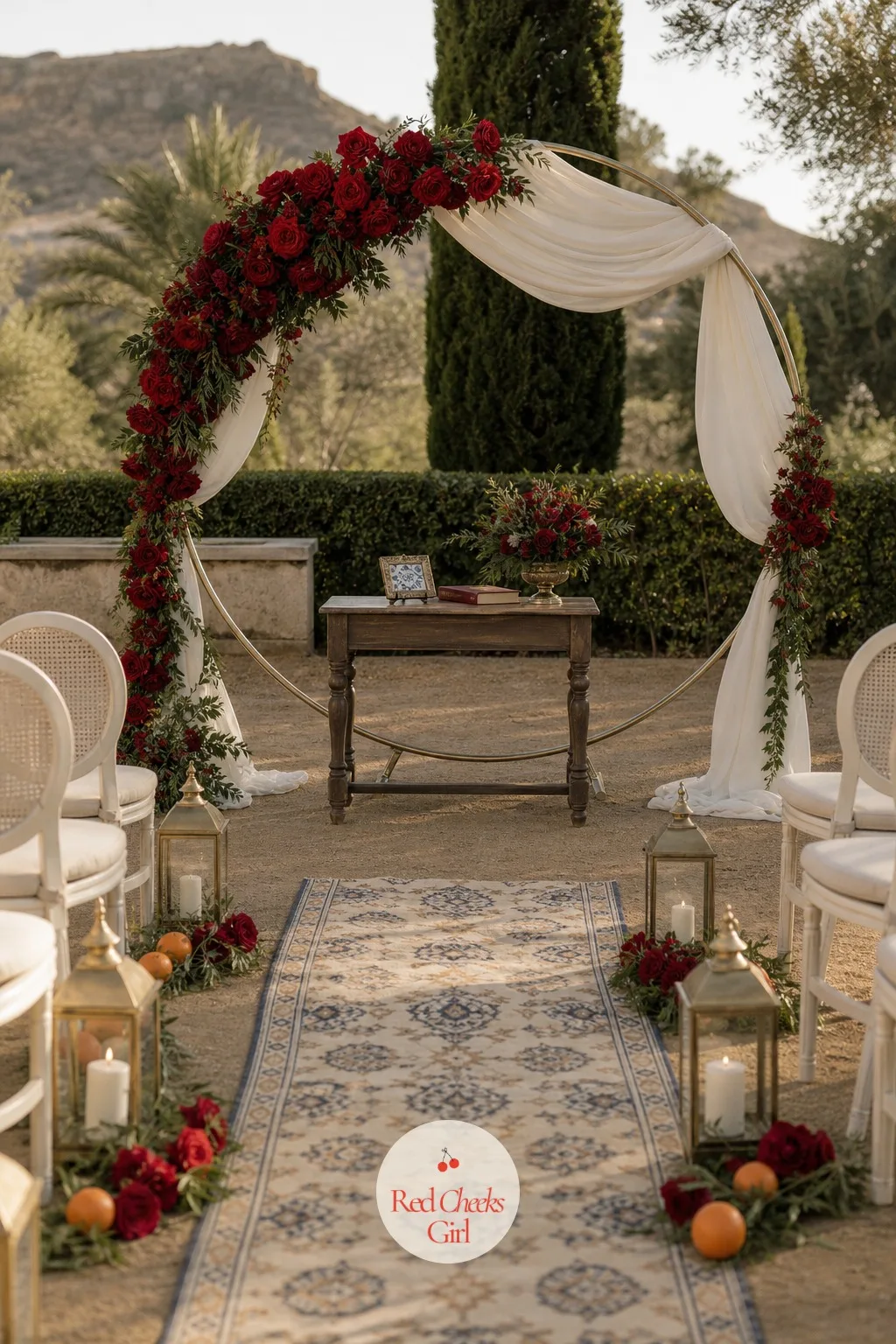
An empty arch at the front of the aisle looks like it is waiting for something to be delivered. A loose garland of red roses fixes that, framing the couple instead of a blank metal frame.
Structurally it is simple: a round or arched metal frame stands on the floor first, white or ivory draping fabric wraps the top bars, and a loose garland of red roses and greenery runs along one side or across the top.
Tell the florist a round metal arch frame, draped in ivory chiffon, with an asymmetrical garland of red garden roses and trailing greenery down one side.
Renting the frame and draping it yourself with silk roses is the honest budget version, and almost nobody can tell silk from fresh at aisle distance in photos. If an arch feels like too much structure for the space, two tall urns of red roses flanking the officiant’s spot do the same framing job.
Mantilla Veil and Peineta Comb
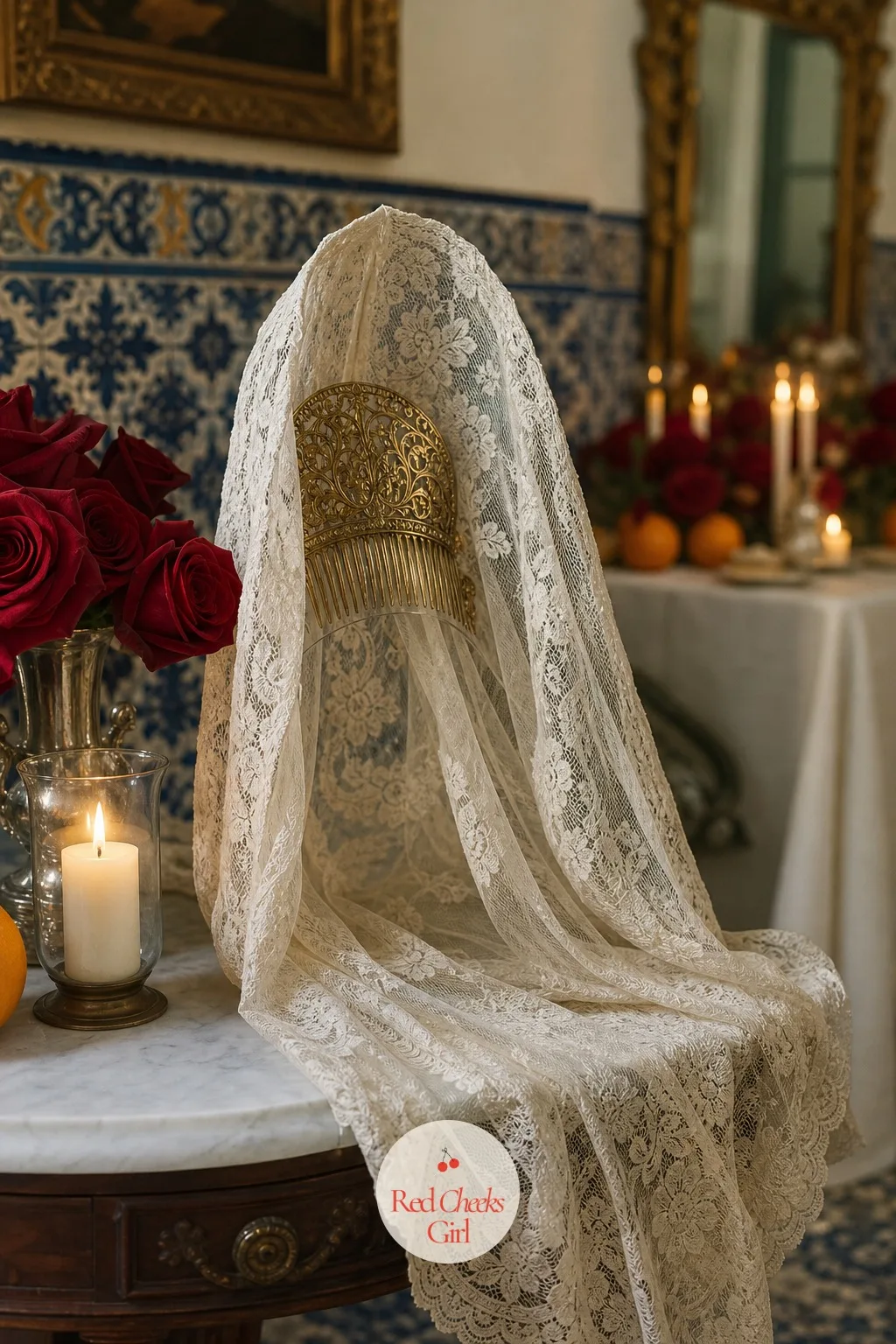
A standard veil would be lovely and say nothing in particular. A mantilla says Spain in one glance: a delicate lace or lace-trimmed veil draped over the bride’s head and shoulders, with no gathered tulle to fuss with.
It is built from the head down: a tall decorative comb called a peineta sits pinned into the hair first, and the circular lace veil drapes over it and falls along the shoulders. Often worn with a high comb called a peineta, the mantilla adds a regal frame to the bride’s face.
Order this from a bridal shop rather than attempting it at home, and match the shade to the dress: the rule of thumb is to keep your veil color close to your dress color so everything looks seamless. If full face-framing lace feels like too much, a shorter mantilla pinned at the crown alone still reads correctly.
🛍 Shop this look
Arras Unity Coin Ceremony Table
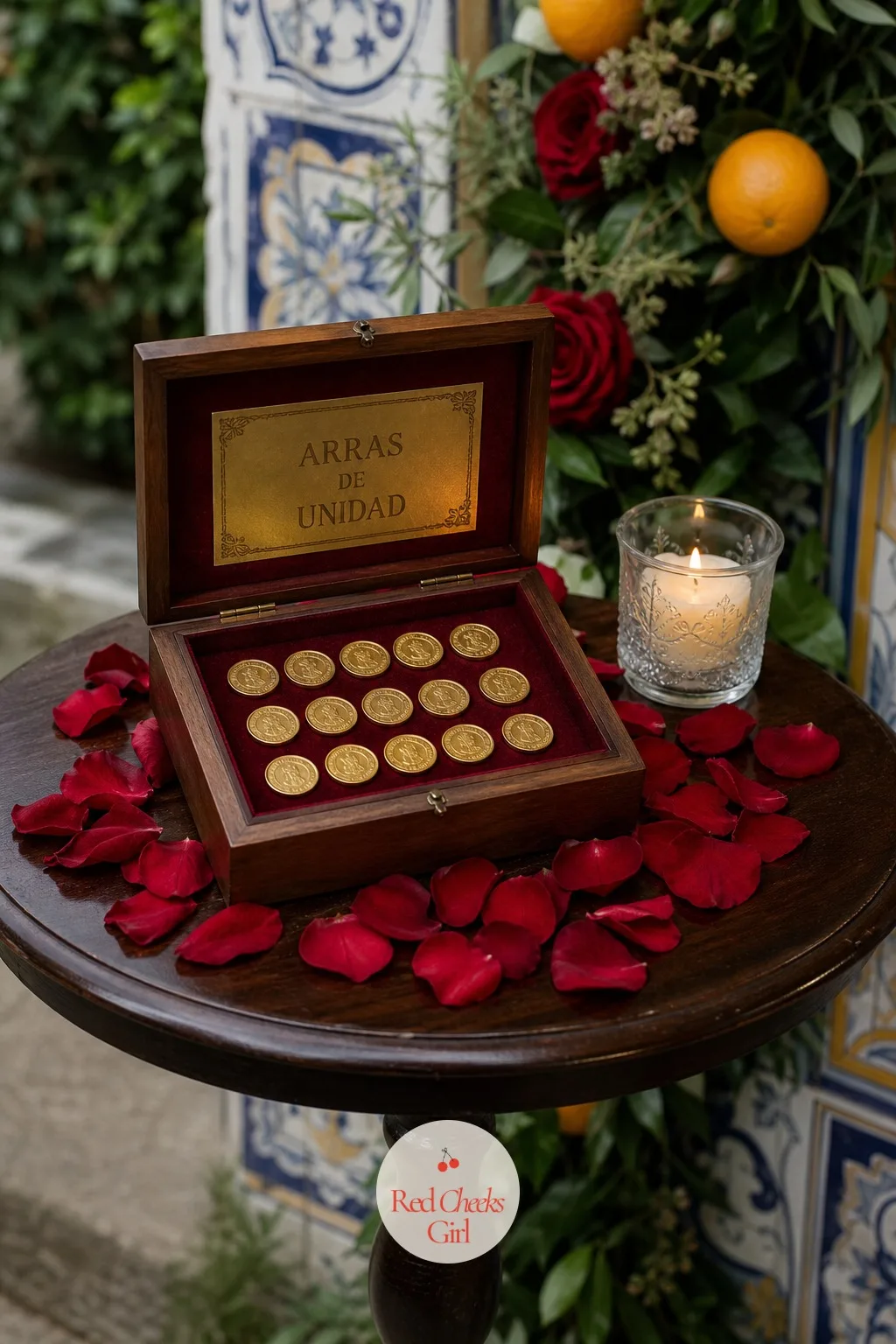
A ceremony with nothing but vows can feel short for a crowd that traveled in for the day. The arras gives it a second quiet moment: the groom gives the bride 13 gold coins as a symbol of trust and commitment to provide for their future.
It sits on a small side table near the officiant: a linen square on top, a carved wooden or velvet-lined coin box set on that, and a scatter of loose red rose petals around its base.
She then gives them back, symbolizing partnership and shared responsibility. Ask the officiant or planner for a 13 coin arras set in a wooden box on a small linen covered table beside the altar.
The coin set is worth ordering rather than improvising, since the box is often kept afterward as a keepsake. Couples skipping a religious ceremony can still do this as a standalone reading during a civil or outdoor service.
🛍 Shop this look
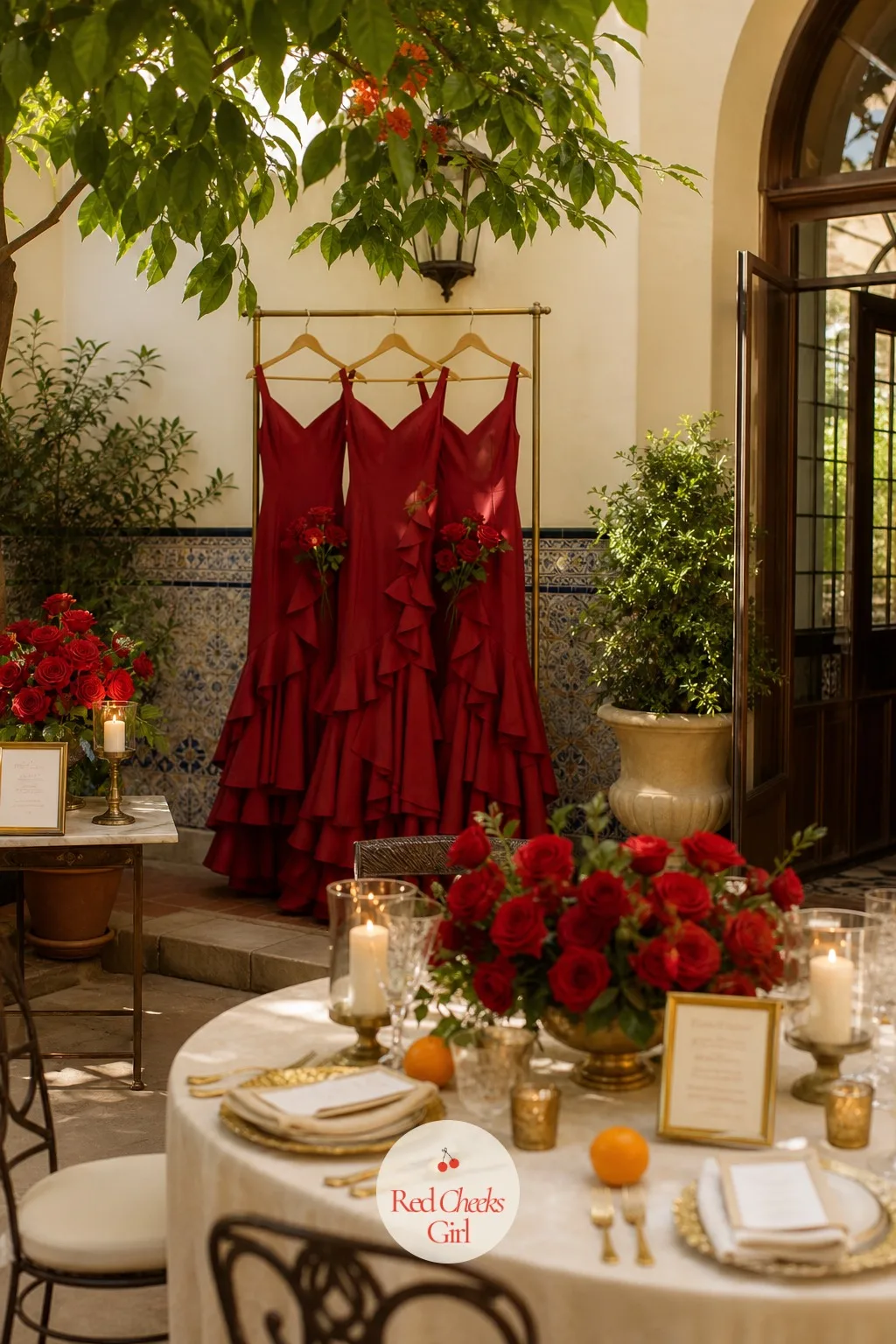
Bridesmaids in Red Ruffled Dresses
A line of pastel bridesmaid dresses would look borrowed from a different wedding entirely. Red, floor length, with a ruffled flamenco hem at the bottom few inches, keeps the whole party inside the same palette as the roses.
The dress is built in tiers: a fitted bodice and straight skirt through most of the length, with one or two ruffled tiers, called volantes, added only at the hem. Give the dressmaker or rental company a red bias-cut maxi dress with a single ruffled flamenco tier at the hem, no pattern above the knee.
This is worth ordering through a dressmaker rather than sewing at home, since the ruffle needs to sit on true bias to move correctly. If the full party will not commit to red, a red silk shawl or sash over a dress they already own carries the same note for a fraction of the cost.
🛍 Shop this look
The Tapas, Paella and Sangria
Feed people the way Spain actually feeds people: small plates passed around, one big pan everyone gathers near, a drink with fruit floating in it. It reads as generous rather than formal, and it keeps guests moving instead of pinned to assigned seats.
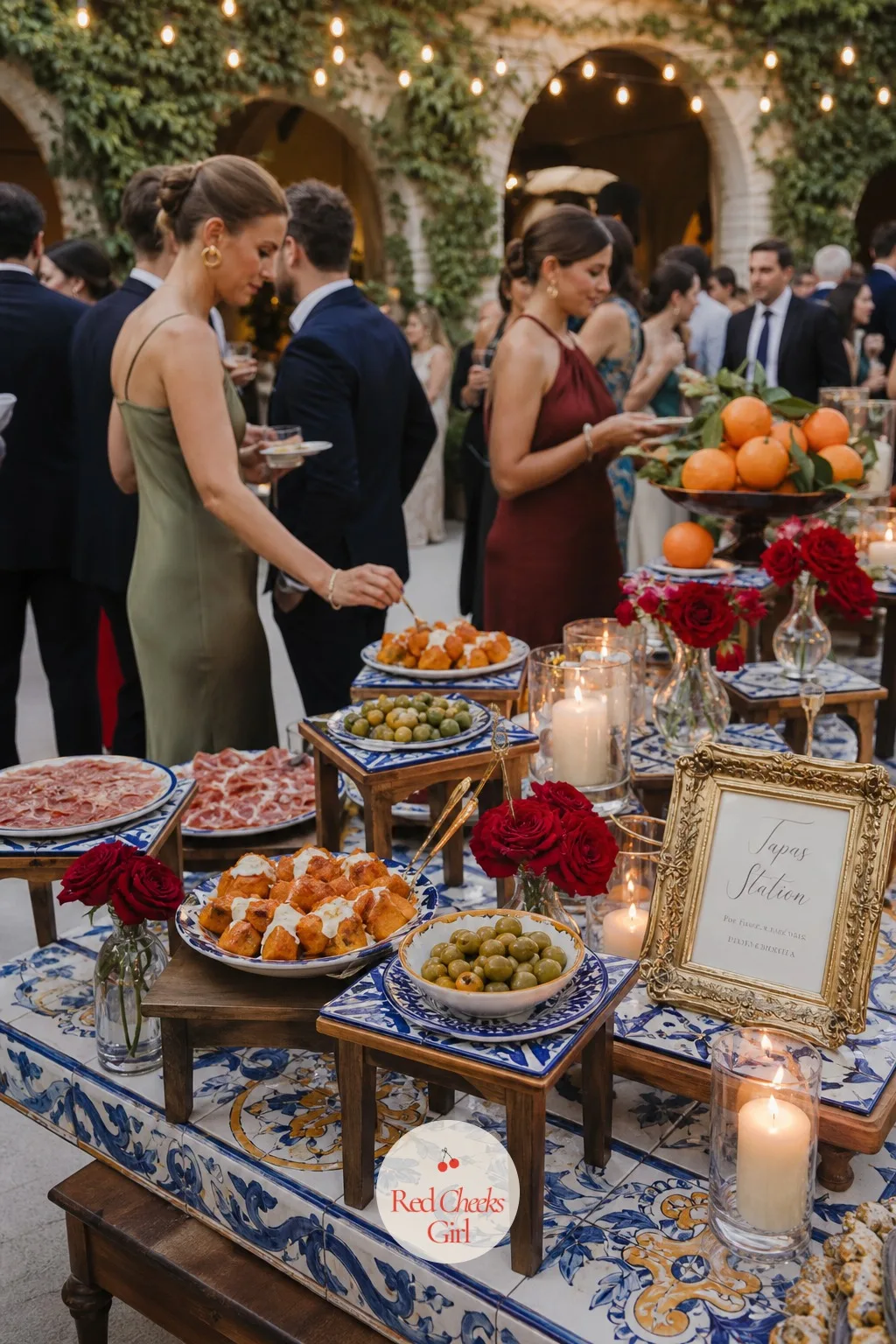
Tapas Station on Tiled Risers
A single long buffet line turns cocktail hour into a queue. Small plates set at different heights turns the same food into something guests actually linger over and talk around.
Build it in layers: a tiled runner or cloth on the table first, wooden or iron risers of varying heights on top, and small ceramic dishes of jamón, olives, patatas bravas and manchego set across them.
Tell the caterer you want a grazing-style tapas spread on tiered risers over a tile-print table runner, with small shareable dishes rather than a single platter.
The risers and runner are easy rentals or one-time buys; the food itself is squarely the caterer’s job. A smaller gathering can do this on one table with two height levels instead of a full staggered spread.
🛍 Shop this look
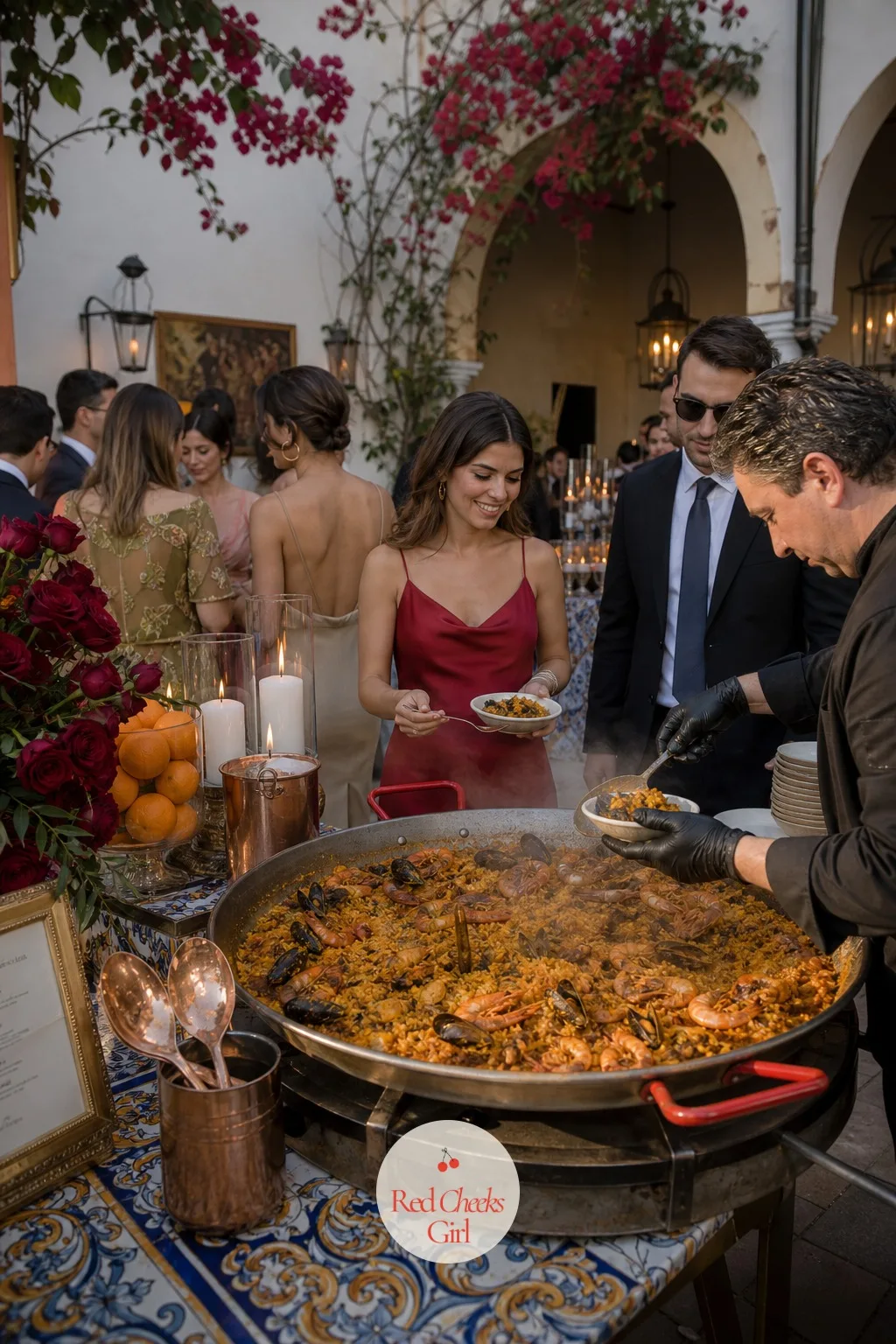
Paella Station with Copper Pans
Nothing pulls a crowd across a room faster than the smell of a paella pan actually cooking. It works as a live station rather than a chafing dish, with the pan itself doing the decorating.
It stands on its own burner stand on the floor, the wide shallow paella pan on top, saffron rice and seafood or chicken visible from a few feet away, a stack of small bowls and copper serving spoons beside it.
Ask the caterer for a live paella station with a traditional wide pan on a burner stand, served tableside in small bowls.
This is a hire-a-caterer job, not a DIY one, unless someone in the family already cooks paella for forty. For a smaller guest count, a single large pan finished in the kitchen and carried out still gets the same gasp.
🛍 Shop this look
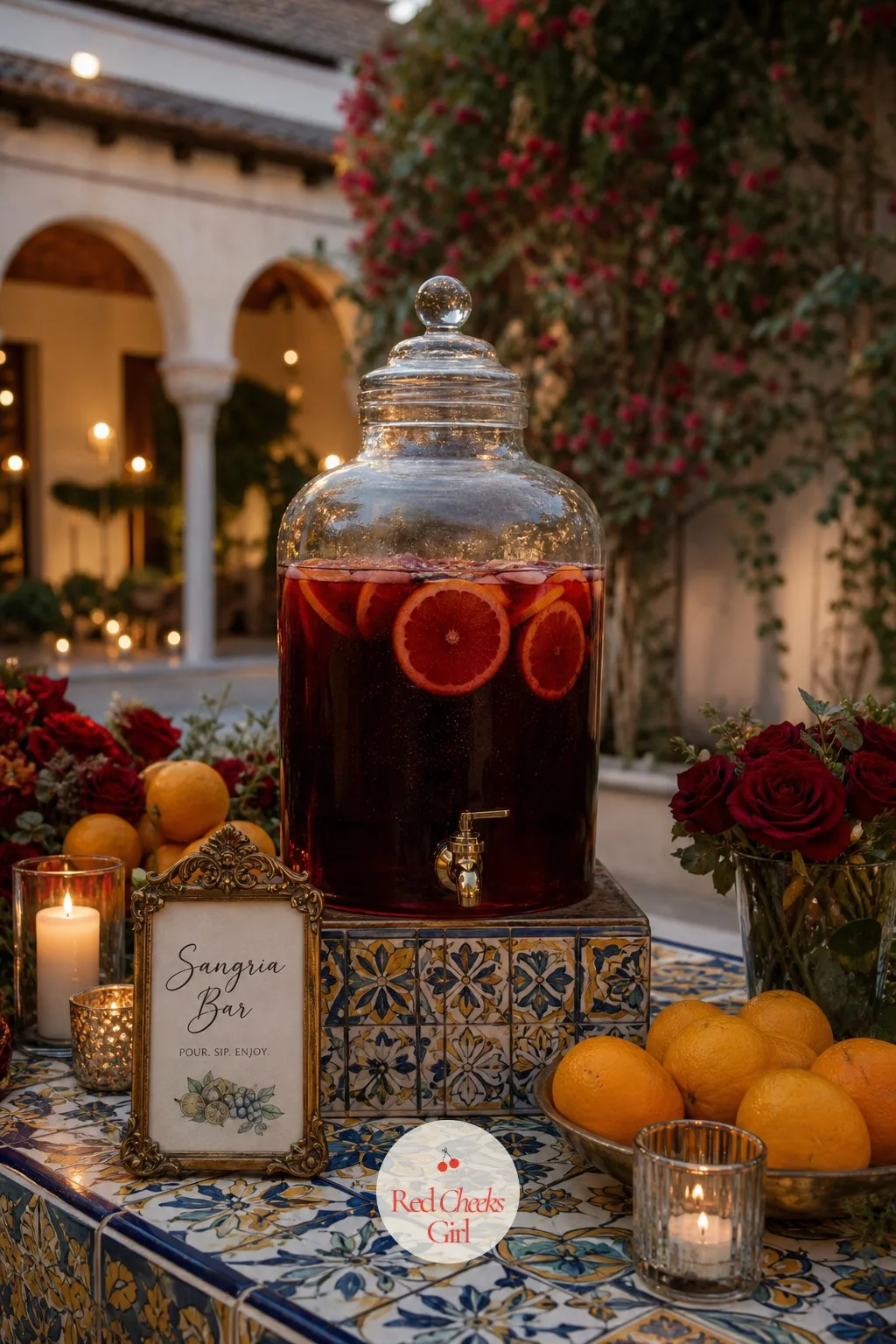
Sangria Bar with Citrus Garnish
A single signature cocktail can feel stingy at a long reception. A sangria bar solves it with one big pitcher instead of a bartender mixing drinks one at a time.
It is built around a large glass beverage dispenser on a tile-topped side table, orange and lemon slices floating visibly inside, with a small card beside it reading the name in script and a basket of extra orange wheels for garnish.
Tell the caterer or rental company you want a self-serve sangria bar in a large glass dispenser with floating citrus, set on a tile-print table.
Sangria is genuinely easy to batch at home the night before, so this is one station worth DIYing if someone is willing. Non-drinkers are covered by the same setup with a citrus and soda version poured from a second matching dispenser.
🛍 Shop this look
Tile-Pattern Menu Cards
A plain white menu card at each place setting looks borrowed from a restaurant. One printed with the same cobalt and ochre tile border as the welcome sign ties the whole table back to the entrance in one small object.
It sits flat on the napkin or plate: a card stock base, the tile pattern printed as a border only, the courses listed in a simple serif down the center. Give the printer the wording Menú along with the course list, set inside a cobalt and ochre tile border on ivory card stock.
This is an easy one to print at home on card stock if someone has a steady printer and a paper cutter. A small stationer can do the same job for a modest per-card fee if the DIY version feels fiddly.
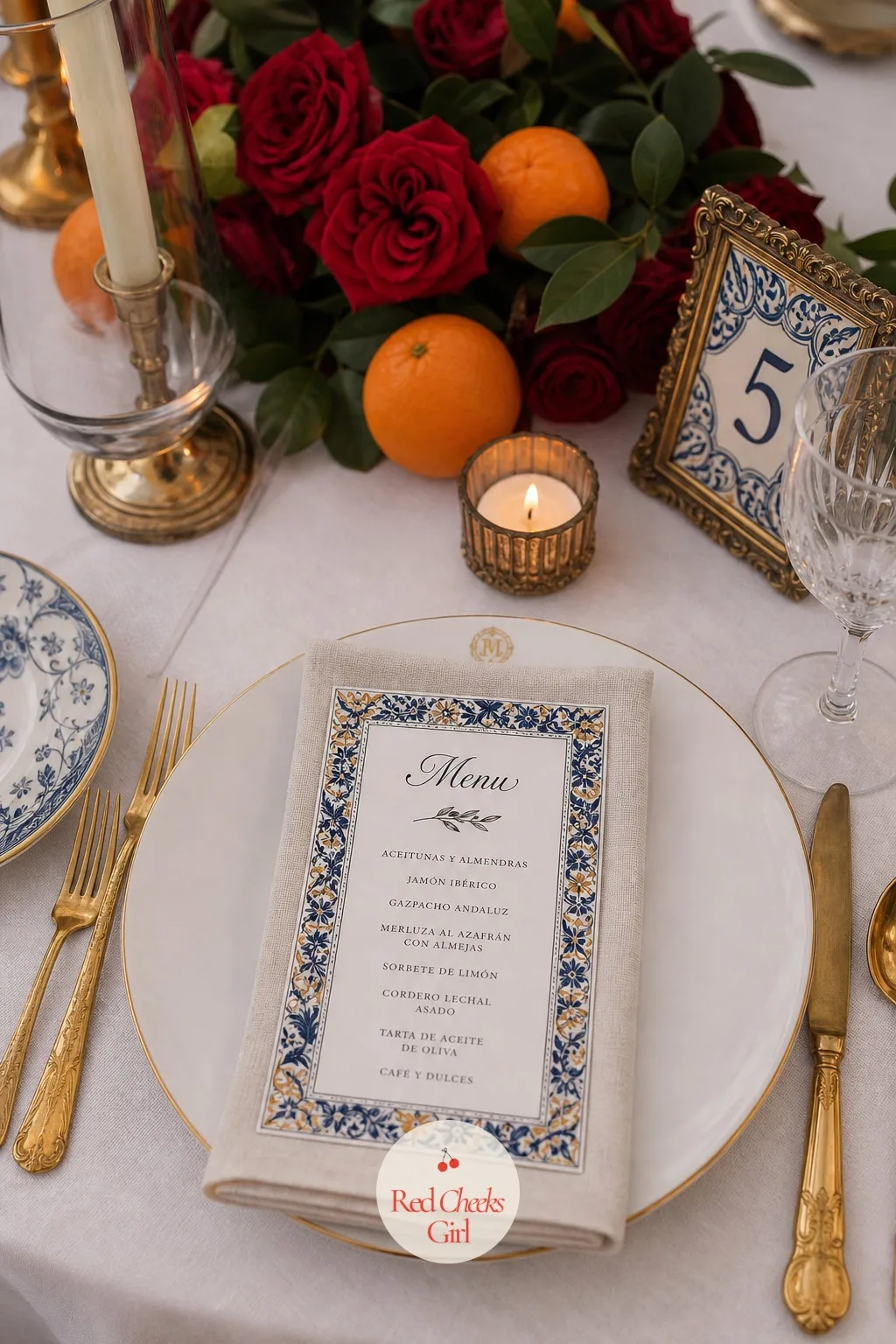
🛍 Shop this look
The Cake and Sweets Table
One cake, one spread of the almond sweets Spain actually serves at weddings. Between them they close out the formal part of the evening before the music takes over.
Red Rose Wedding Cake
An all-white cake can look like it wandered in from a different, quieter wedding. A handful of real or sugar red roses pressed into the tiers brings it back into the same story as the tables.
It stands on a gold cake stand: a simple ivory buttercream or fondant base on the bottom tiers, with a cascade of red roses, some full sugar blooms and some fresh, running down one side from top to base.
Tell the baker an ivory buttercream cake, two or three tiers, with a cascade of red sugar roses and fresh greenery down one side, on a gold stand.
Fresh roses need to be food-safe and placed by the baker, not added at home the morning of. Couples who would rather keep things closer to classic white and gold can still borrow this shape from 26 White and Gold Wedding Ideas for a Classic Reception and simply add one red bloom.
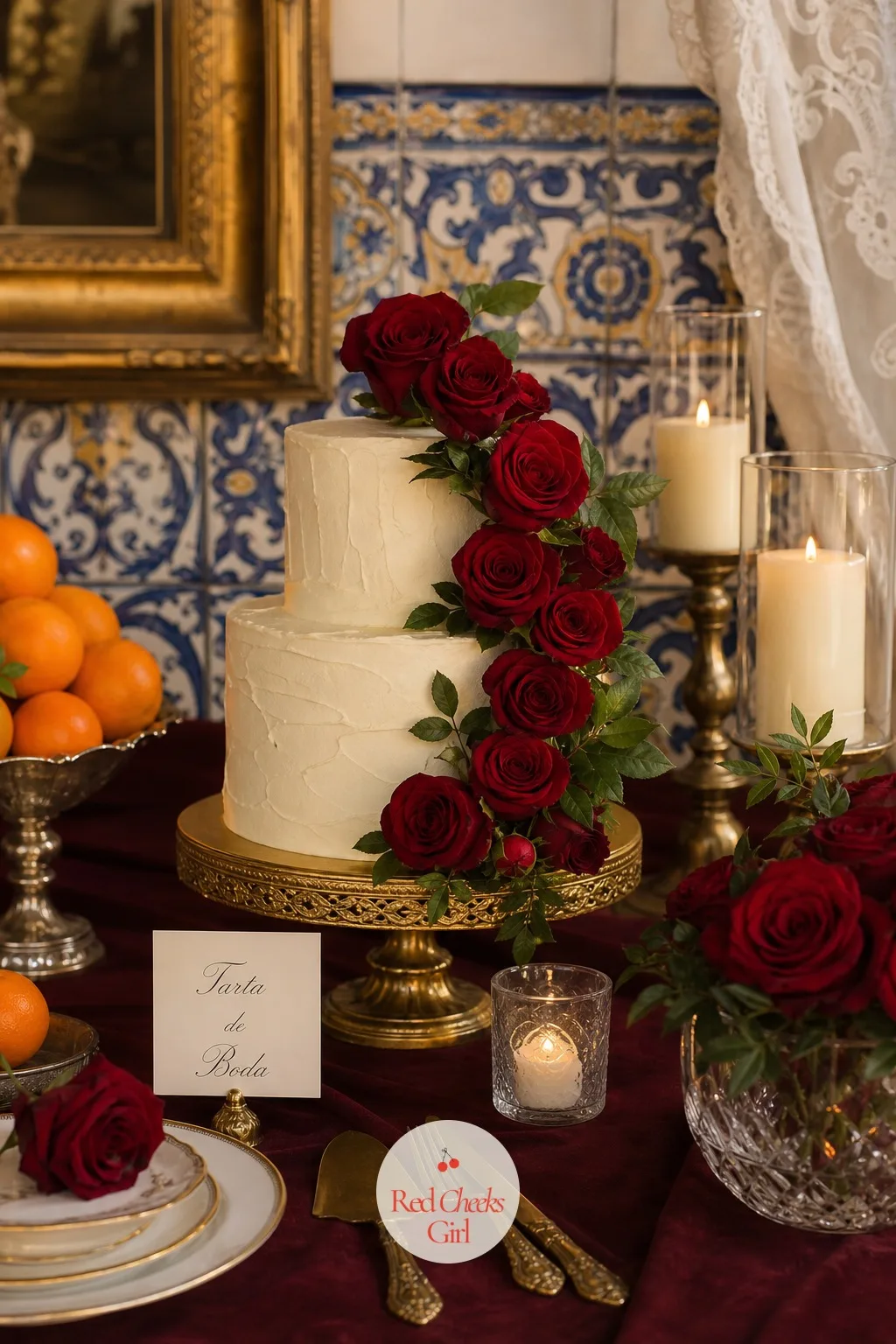
🛍 Shop this look
Orange and Almond Dessert Table
A dessert table of only cupcakes misses the chance to actually feed people something Spanish. Turrón, polvorones and small orange cakes do the same crowd-pleasing job with a stronger accent.
It is arranged on a tiered stand set on a tile-print cloth: the stand on the table first, small paper liners holding bite-size turrón and polvorones on the lower tiers, whole oranges and sprigs of greenery tucked between them as filler.
Ask the baker or caterer for an assortment of turrón, polvorones and mini orange olive oil cakes, arranged on a tiered stand with fresh oranges between.
Turrón and polvorones are easy to order from a Spanish grocer rather than bake from scratch, and nobody will mind. A smaller gathering can skip the stand entirely and serve the sweets from one large platter instead.
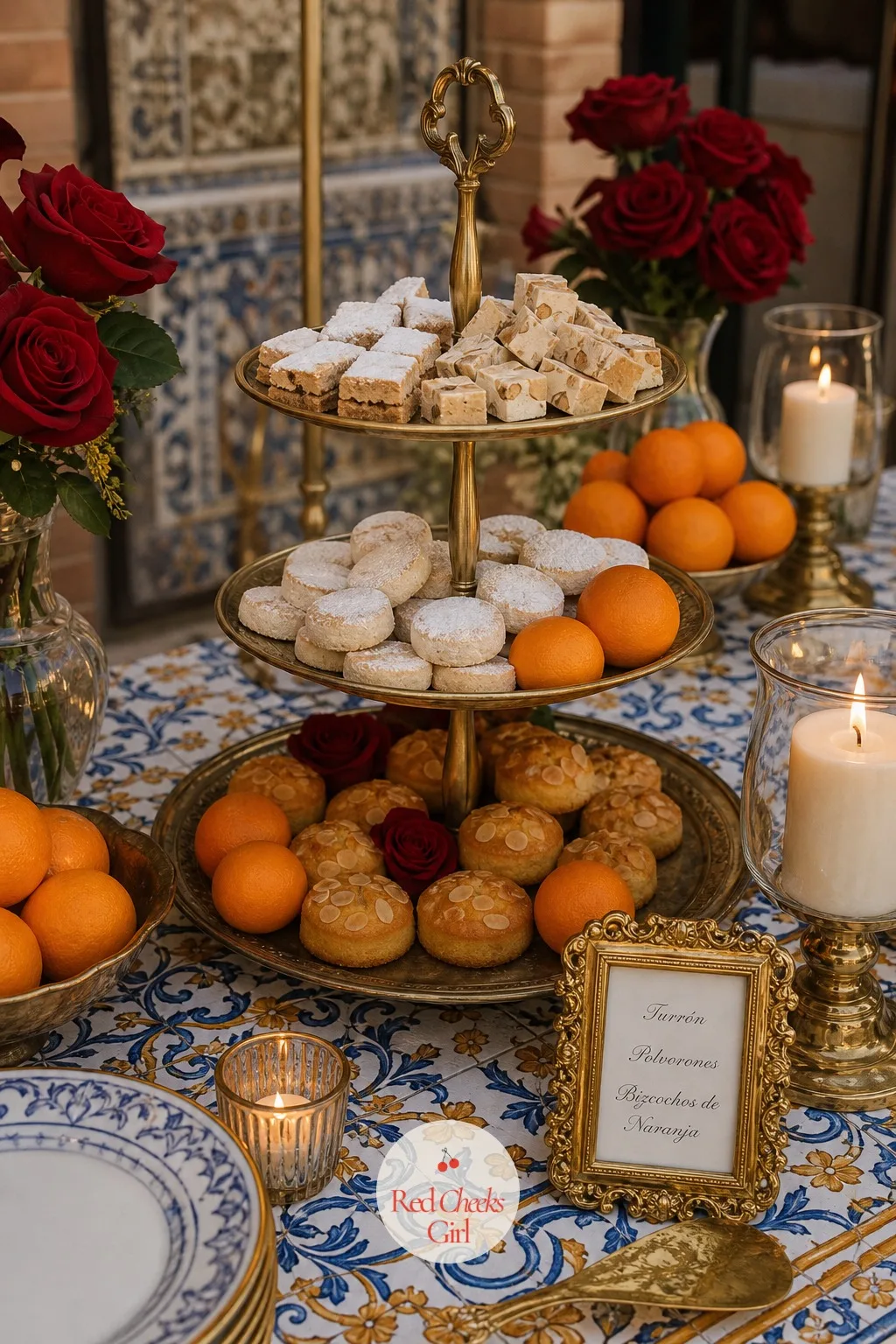
🛍 Shop this look
The Flamenco Moment
This is the part guests will mention a year later: a dancer, a guitarist, a floor that suddenly belongs to everyone. It wants a few props in the right hands and a little warning to the DJ about when to step back.
Flamenco Dance Performance
A DJ set alone can feel like any other wedding by eleven o’clock. One choreographed flamenco number, danced by a hired performer or a confident aunt, stops the room in a way a playlist cannot.
It runs for three to five minutes on the cleared dance floor: the dancer in a ruffled flamenco dress, a guitarist playing live or a backing track cued by the DJ, guests forming a loose circle around the edge.
Book a flamenco dancer through a local entertainment agency and give the DJ the exact cue song and a three minute window after the cake cutting.
This is worth hiring out rather than attempting with a willing friend, since the footwork takes real training. Some couples let the moment turn into a money dance here too, where guests line up to pay for a turn to dance with the bride or groom.
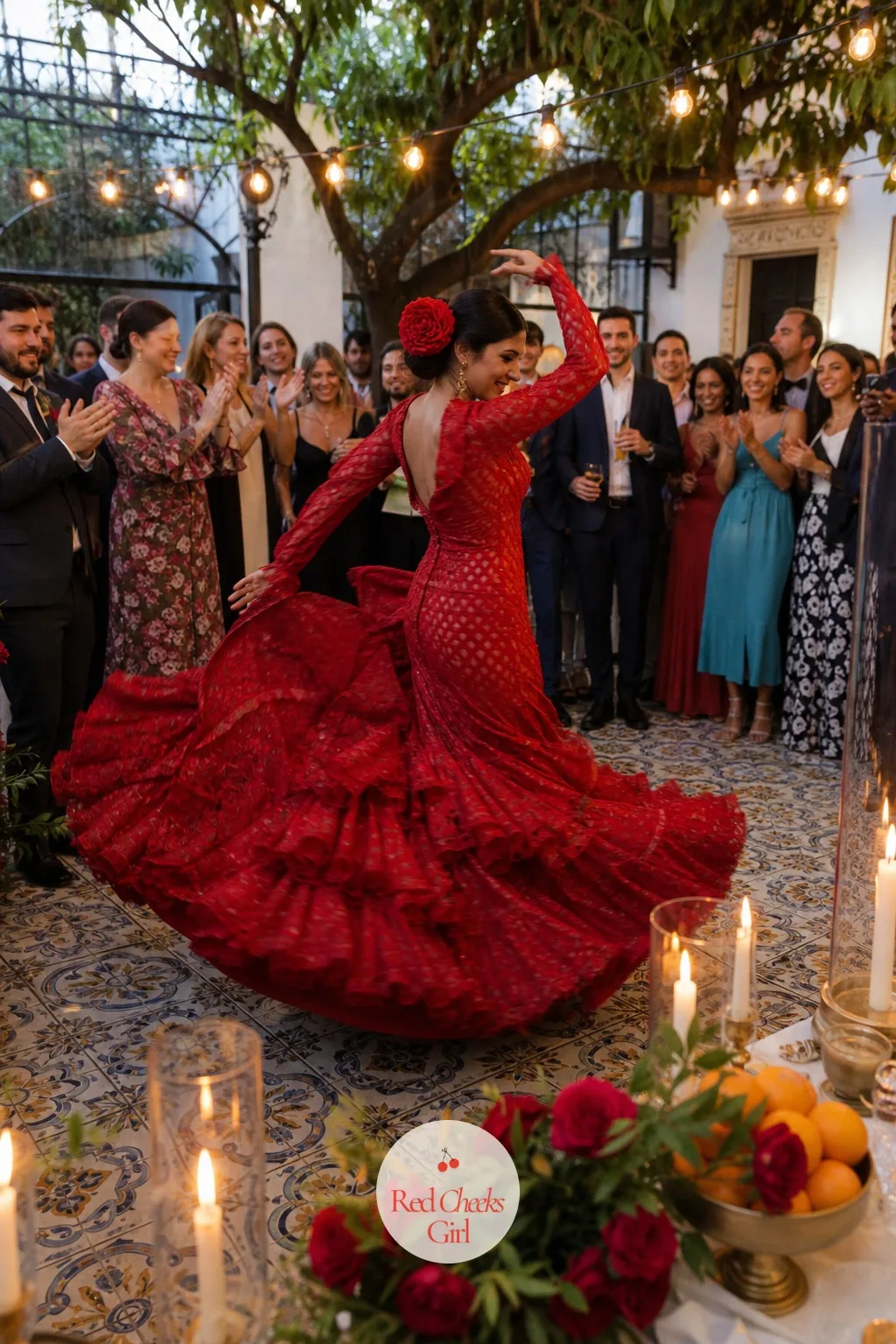
🛍 Shop this look
Live Guitar and Cajón Corner
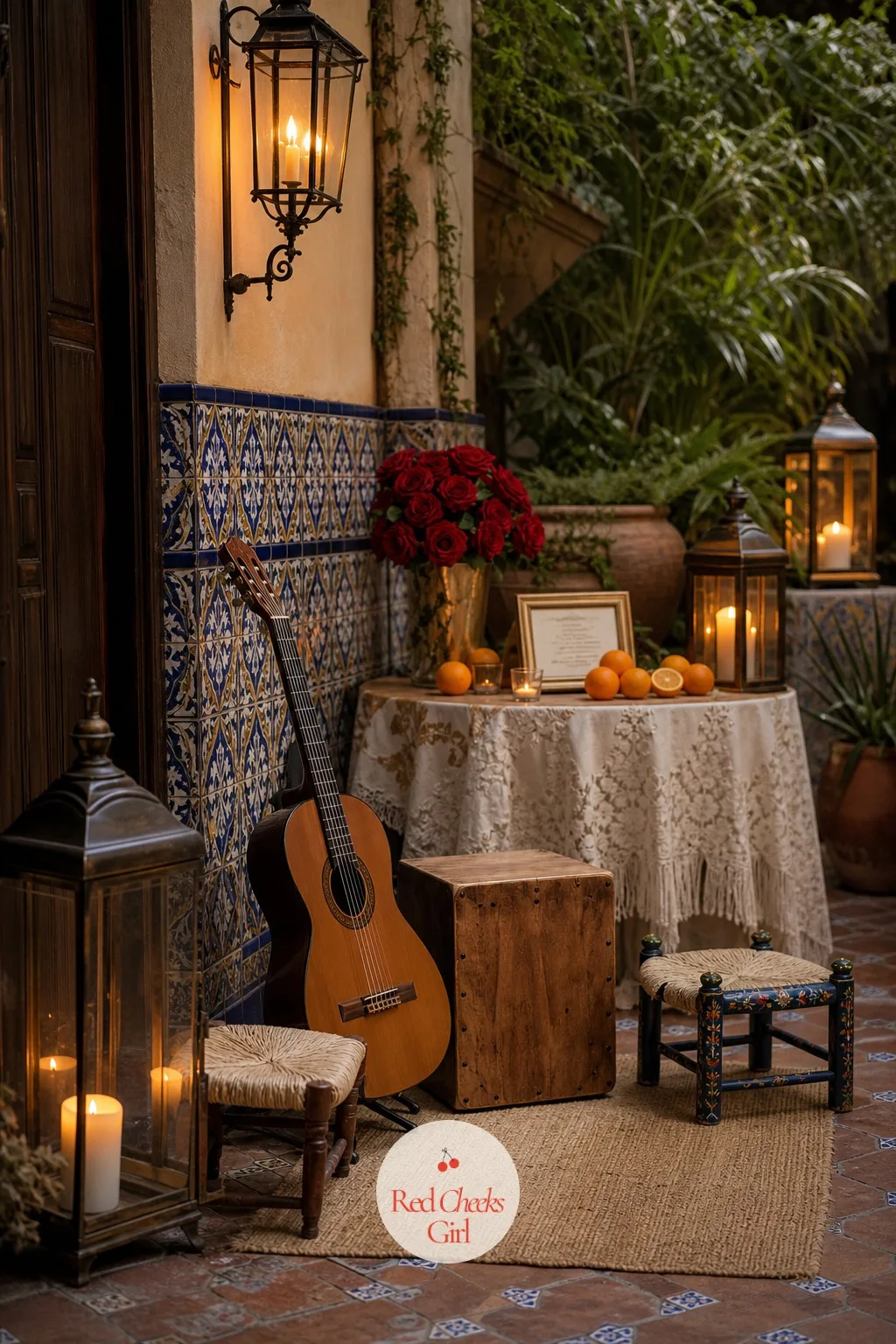
Recorded guitar through a speaker never quite fills a courtyard the way a real instrument does. A small corner with a guitarist and a cajón player gives the whole evening its soundtrack without needing a full band.
It sits in one corner of the reception: two stools on the floor, the guitarist on one, the cajón drum between the other player’s knees, a small warm light or lantern set just behind them.
Book a guitarist and cajón player as a duo for cocktail hour and the early reception, with their own small PA if the space is large.
This is a booking, not a DIY setup, unless a guest happens to play either instrument well. For a tighter budget, one guitarist alone for the quieter hours covers the same mood for roughly half the cost.
🛍 Shop this look
Hand Fans for the Dance Floor
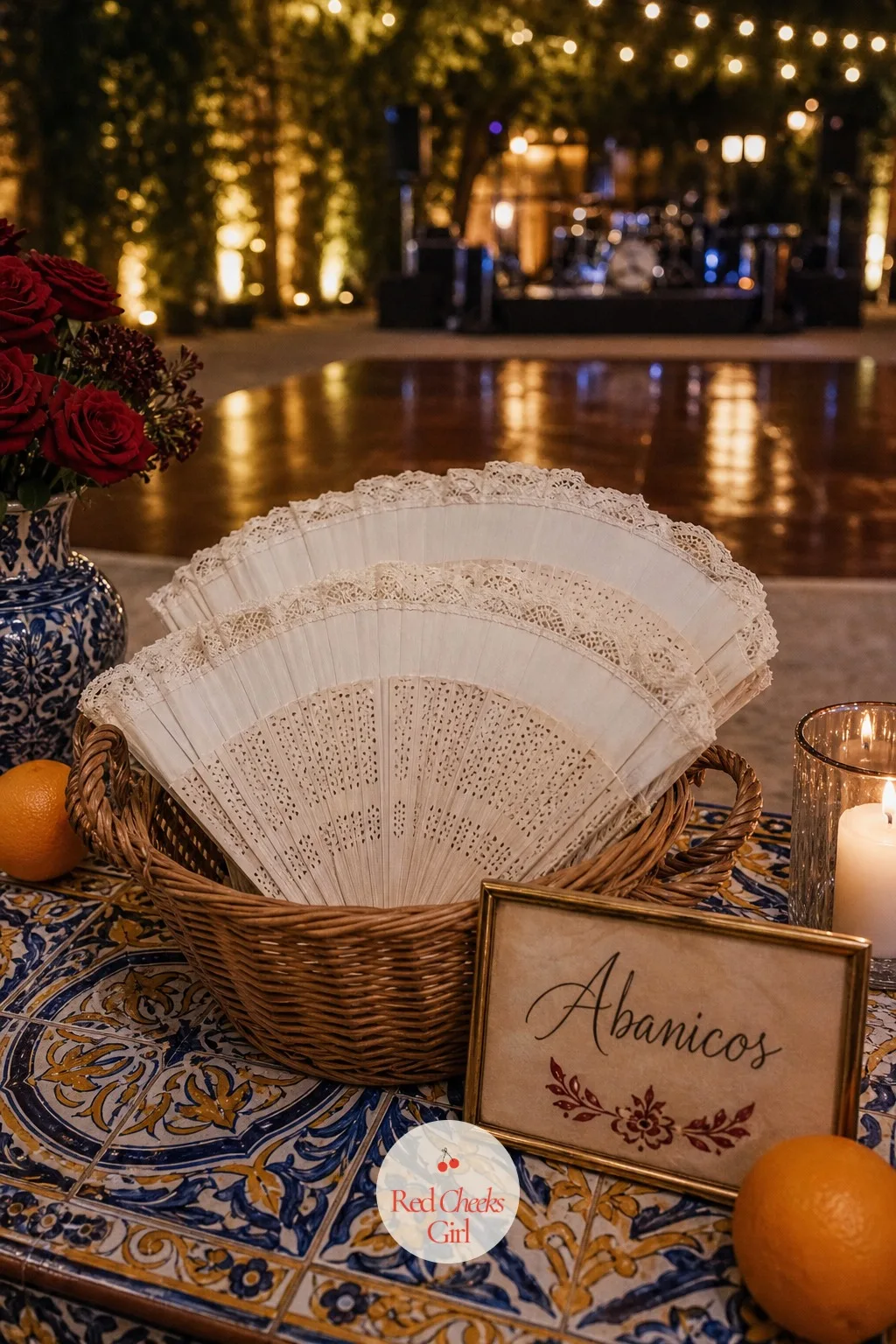
A warm courtyard past midnight gets uncomfortable fast, and a fan solves it before anyone starts fanning themselves with the menu card. Lace-edged hand fans do the job and look intentional doing it.
They live in a wicker basket near the dance floor entrance: the basket on a small side table, folding fans standing upright inside it, a small handwritten sign reading Abanicos, help yourself propped against the rim.
Order 50 to 100 lace-edged folding fans and set them in a wicker basket by the dance floor for guests to take as the night warms up.
These are genuinely cheap to buy in bulk and need zero setup beyond the basket. If budget is tight, one fan per table centerpiece rather than one per guest still reads as the same gesture.
🛍 Shop this look
Castanet Keepsake for Guests
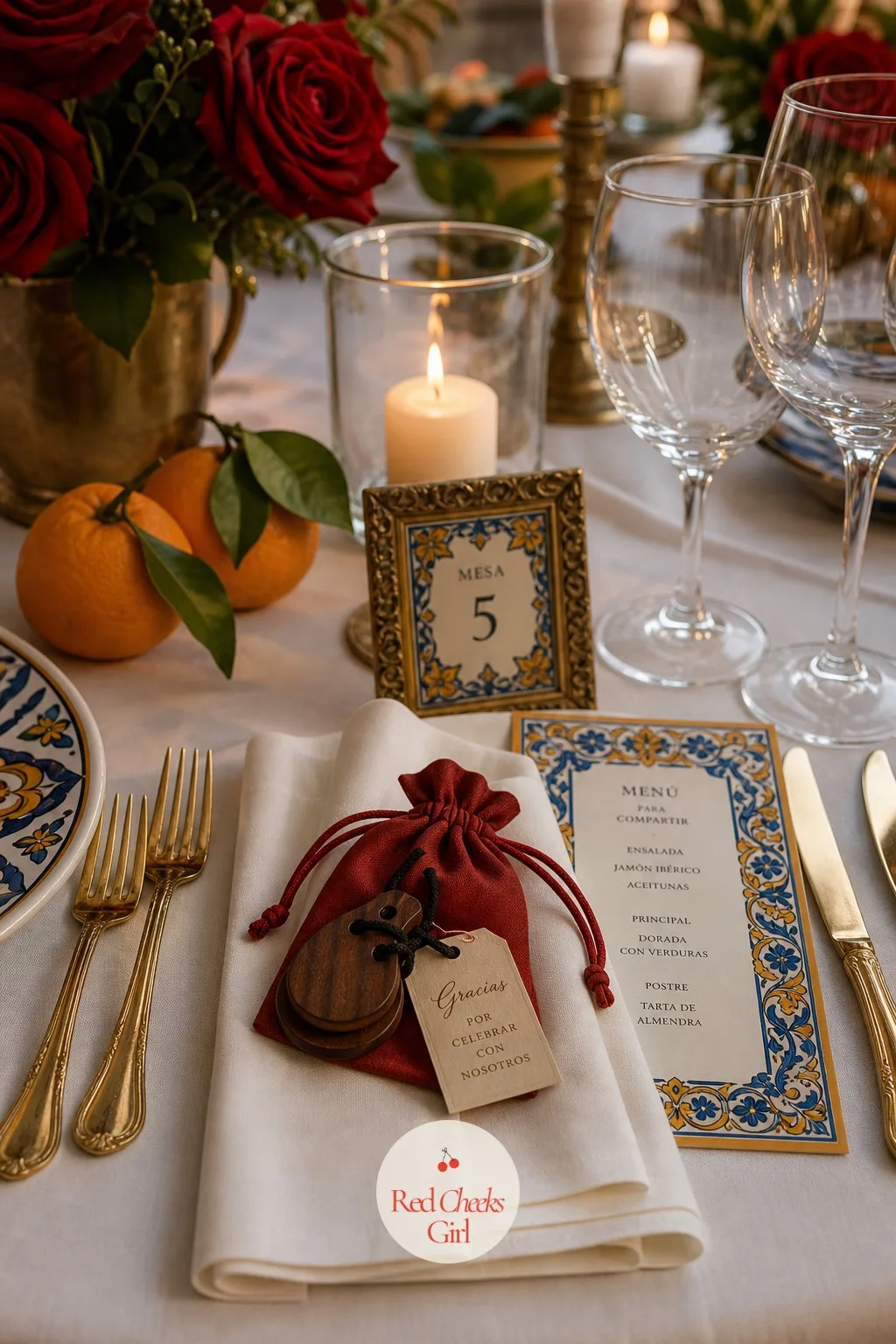
Clapping along to the flamenco number only goes so far without something in your hands. A small pair of wooden castanets at each place setting turns the audience into part of the act for thirty seconds.
They sit on the napkin at each seat: a small drawstring bag on the fold, one pair of wooden castanets tucked inside, a tiny tag reading Clap along when the music starts tied to the string. Order wooden castanet pairs in bulk and bag them individually in small red or ivory drawstring pouches before the reception.
This is simple to assemble at home the week before, bag by bag, while watching something on television. If the budget will not stretch to one pair per guest, a handful passed around the dance floor during the performance works just as well.
🛍 Shop this look
What She Takes Home
The invitation set the promise in the mailbox months earlier, and the favor is what proves the night actually happened. Keep both in the same tile and rose language as everything else.
Tile-Pattern Invitation Suite
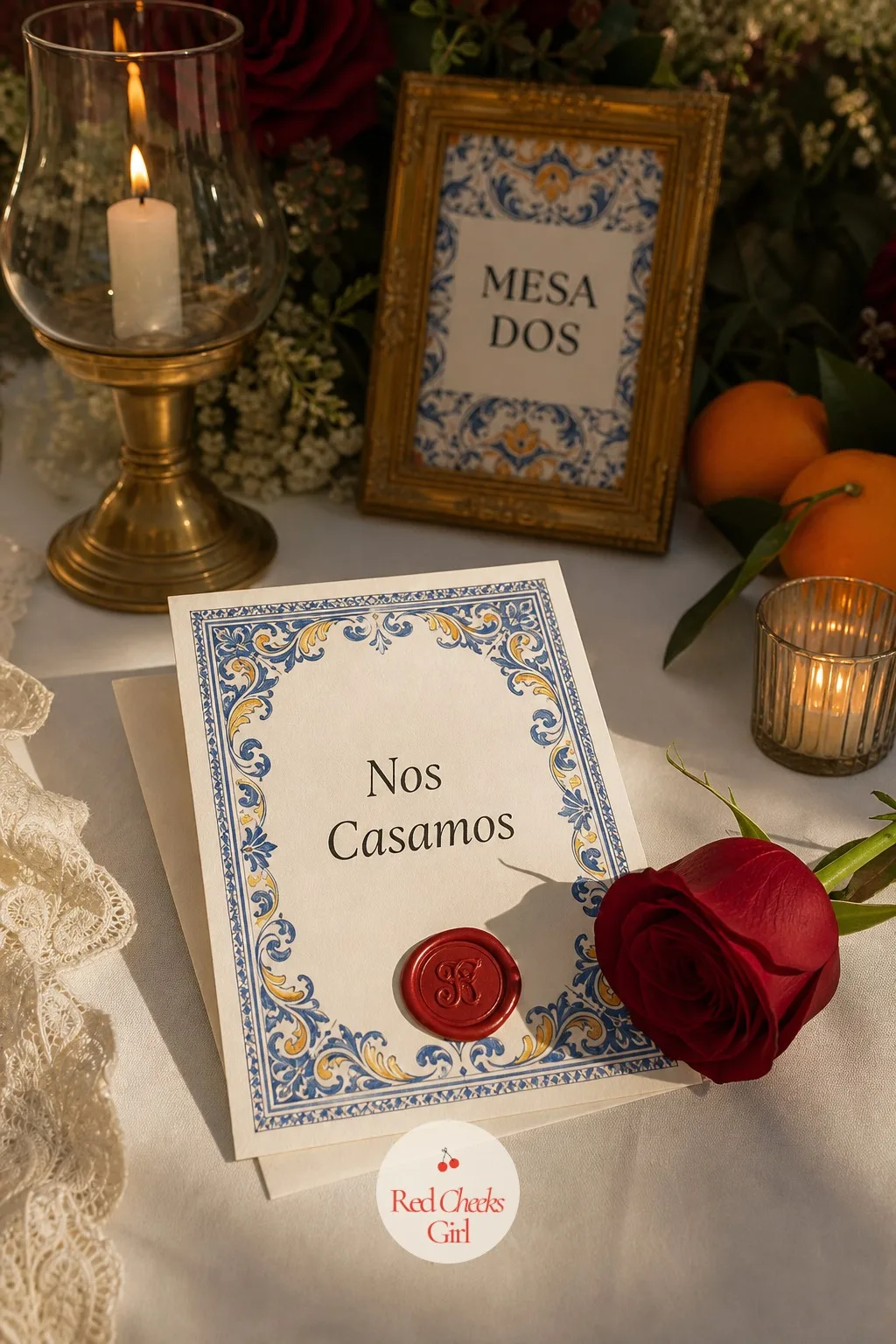
The invitation is the first thing anyone sees of the wedding, long before the courtyard or the cake. A cobalt and ochre tile border around the wording promises exactly the night that follows.
It is layered like the tables will be: a plain ivory card as the base, the tile pattern printed as a border, the wording Nos Casamos set in a simple serif at the top, with a wax seal in red closing the envelope.
Give the stationer the wording Nos Casamos with a cobalt and ochre tile border on ivory card stock, sealed with a red wax stamp.
A local stationer or an online print shop both handle this well; it is not a realistic home project unless someone owns a proper printer. Digital invitations in the same tile design are the honest swap for a guest list under fifty.
🛍 Shop this look
Orange Blossom Favor Boxes
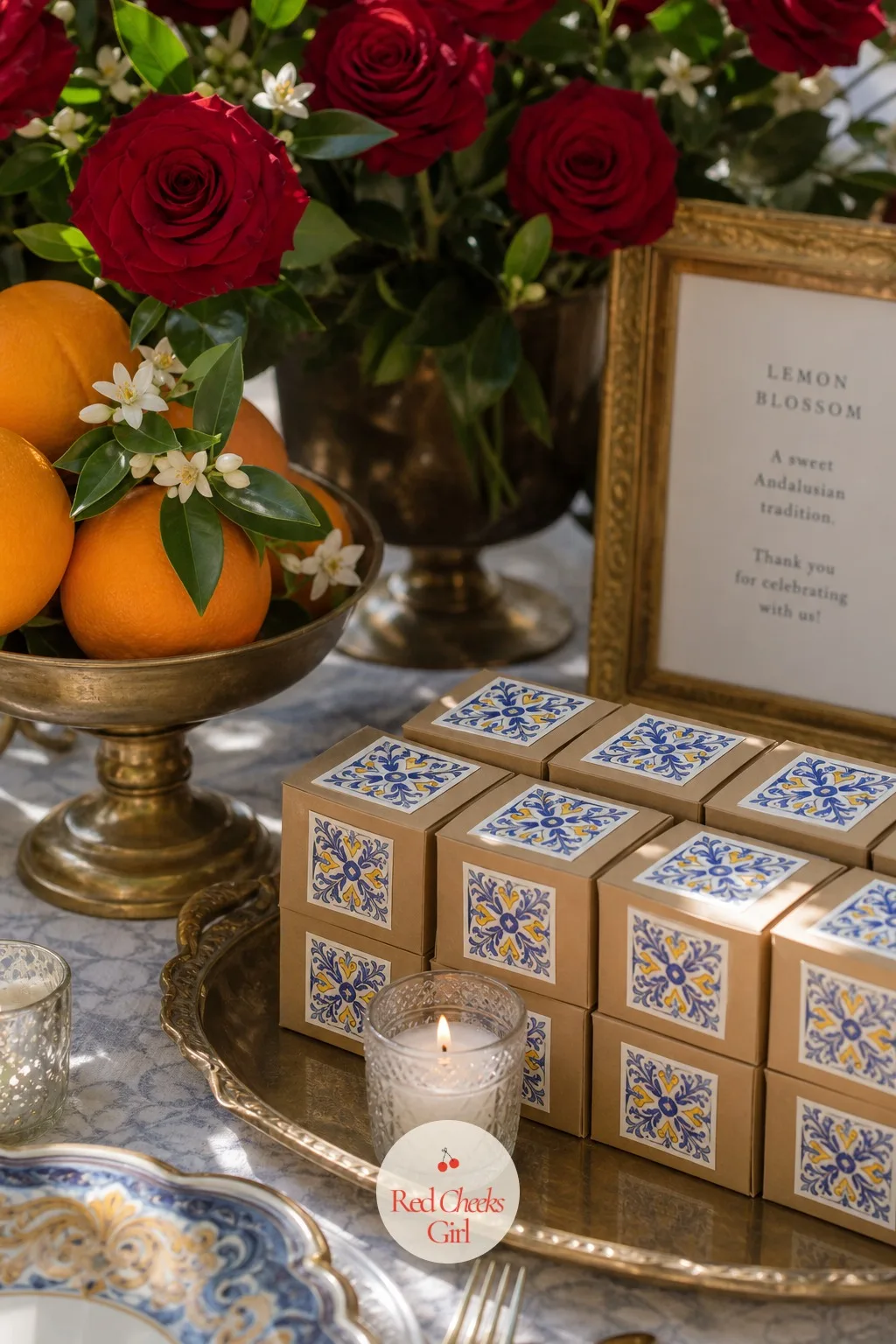
A favor nobody uses is a favor nobody remembers. An orange blossom candle, small enough to actually burn, carries the scent of the whole wedding home in guests’ bags.
It sits inside a small kraft box on the escort card table: the box on the table first, the candle nestled inside tissue paper, a tile-print sticker sealing the lid shut. Order mini orange blossom scented candles in bulk and box them individually in small kraft favor boxes with a tile-print seal sticker.
These are easy to source ready-made rather than pour at home, since scented wax takes practice to get right. A tray of loose candles with a simple sign reading Take One is the no-wrap version for a tighter budget.
🛍 Shop this look
Red Rose Soap Favors
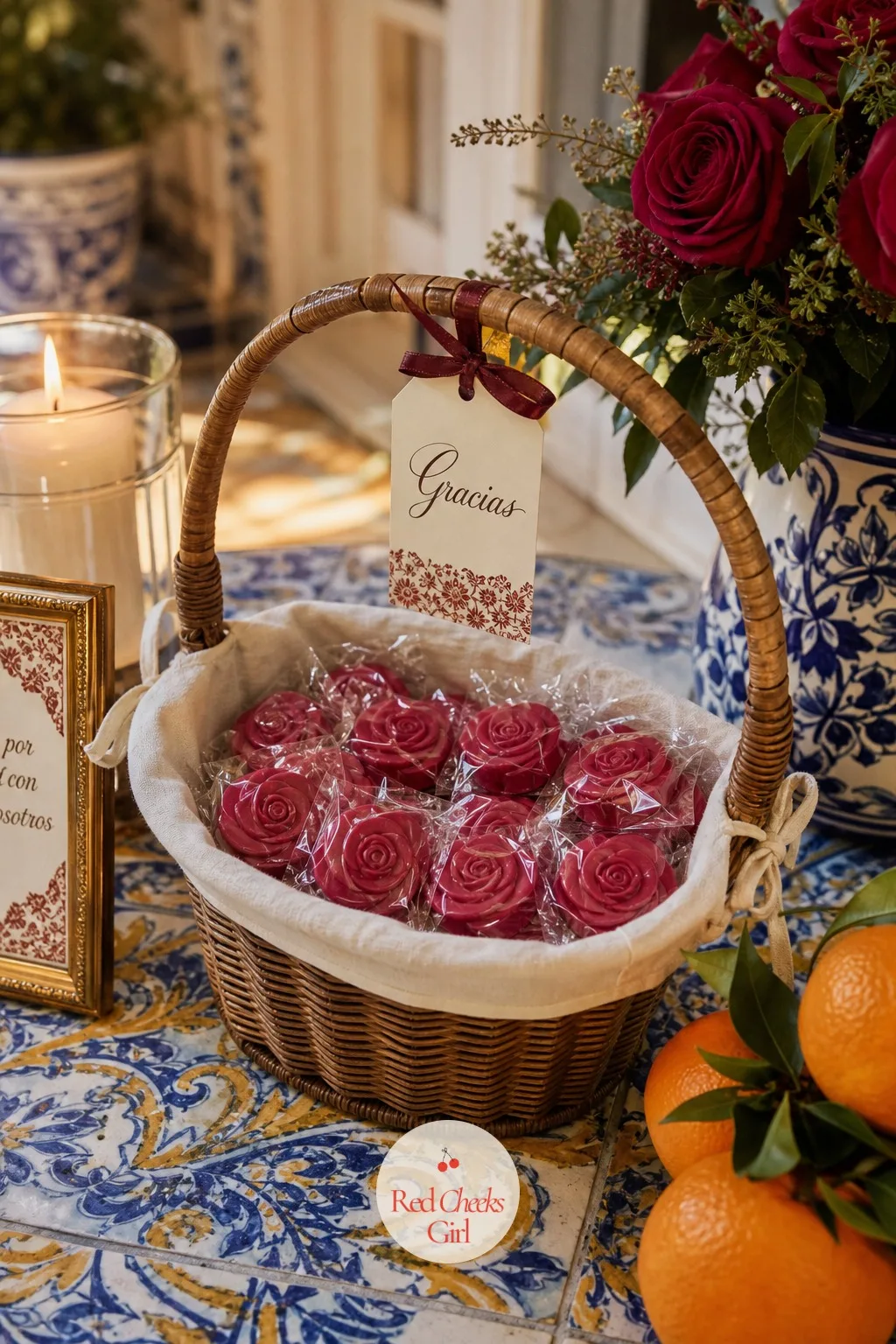
A favor that just sits in a drawer forever is a wasted budget line. A small rose-shaped soap gets used within the month, and the shape alone says which wedding it came from.
It rests in a shallow basket by the exit: the basket lined with a scrap of ivory fabric, individually wrapped rose soaps arranged in rows, a small tag reading Gracias tied to the basket handle. Order rose-shaped guest soaps individually wrapped and set them in a lined basket near the exit with a small thank you tag.
These are a straightforward bulk order rather than a craft project, since molding soap properly needs real equipment. If soap feels like too much, a single stem of dried red rose wrapped with a thank you tag is the lighter version.
🛍 Shop this look
Tile-Painted Coaster Favors
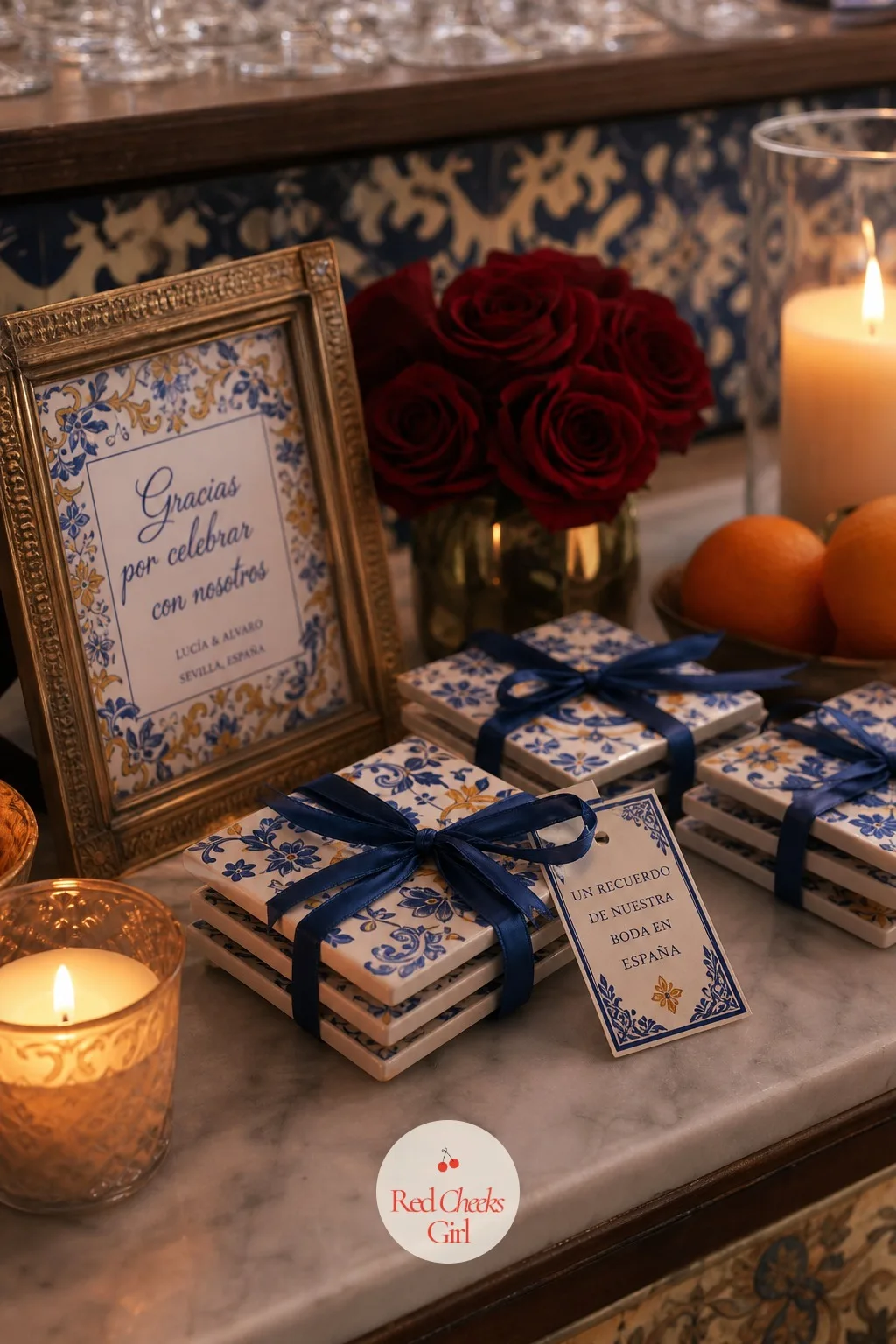
Most favors get thrown away within the week. A small tile-pattern coaster actually earns a spot on someone’s coffee table, which means the wedding keeps showing up months later.
It is stacked near the bar in pairs: a small ribbon tied around two coasters, the tile pattern printed or hand-painted on the ceramic face, a tiny printed tag naming the date tucked under the ribbon. Order ceramic coasters printed in the same cobalt and ochre tile pattern as the signage, bundled in pairs with a ribbon tie.
These are worth ordering printed rather than hand-painting a full guest list worth, unless someone genuinely enjoys ceramic painting as a hobby. A smaller wedding can hand-paint a shorter run as a lovely, slightly imperfect alternative, and that imperfection reads as charming rather than careless.
🛍 Shop this look
Frequently Asked Questions
How long does a Spanish wedding last?
A traditional Spanish wedding can last 10 to 14 hours, from the afternoon ceremony to the late-night dancing that often ends at sunrise. Plan the schedule, and the guests’ stamina, around that length rather than a typical five hour reception.
What is a mantilla veil?
A mantilla is a lace veil draped over the bride’s head and shoulders, worn flat rather than gathered. It sits over a tall decorative comb called a peineta, which frames the face in a way a standard veil does not.
Did Spanish brides really wear black wedding dresses?
Yes, it was historically a Spanish tradition for the bride to wear a black silk dress as a symbol of lifelong devotion. The custom has faded; black is now mostly reserved for very traditional families or a deliberate style statement.
What are the arras, the 13 wedding coins?
The arras are 13 coins the groom presents to the bride during the ceremony as a symbol of trust and future provision, and she gives them back to symbolize shared responsibility. Many couples now treat it simply as a promise of mutual support.
What should guests wear to a Spanish wedding?
Dress more formally than a typical wedding and skip white, ivory or cream, since those shades stay reserved for the bride. Bring comfortable shoes too, since dancing tends to run well past midnight.
What food do you serve at a Spanish wedding?
A Spanish wedding reception centers on a long banquet, usually the most important and longest part of the day, rather than a quick plated dinner. Many modern couples open the night with a tapas and paella station before the formal courses.
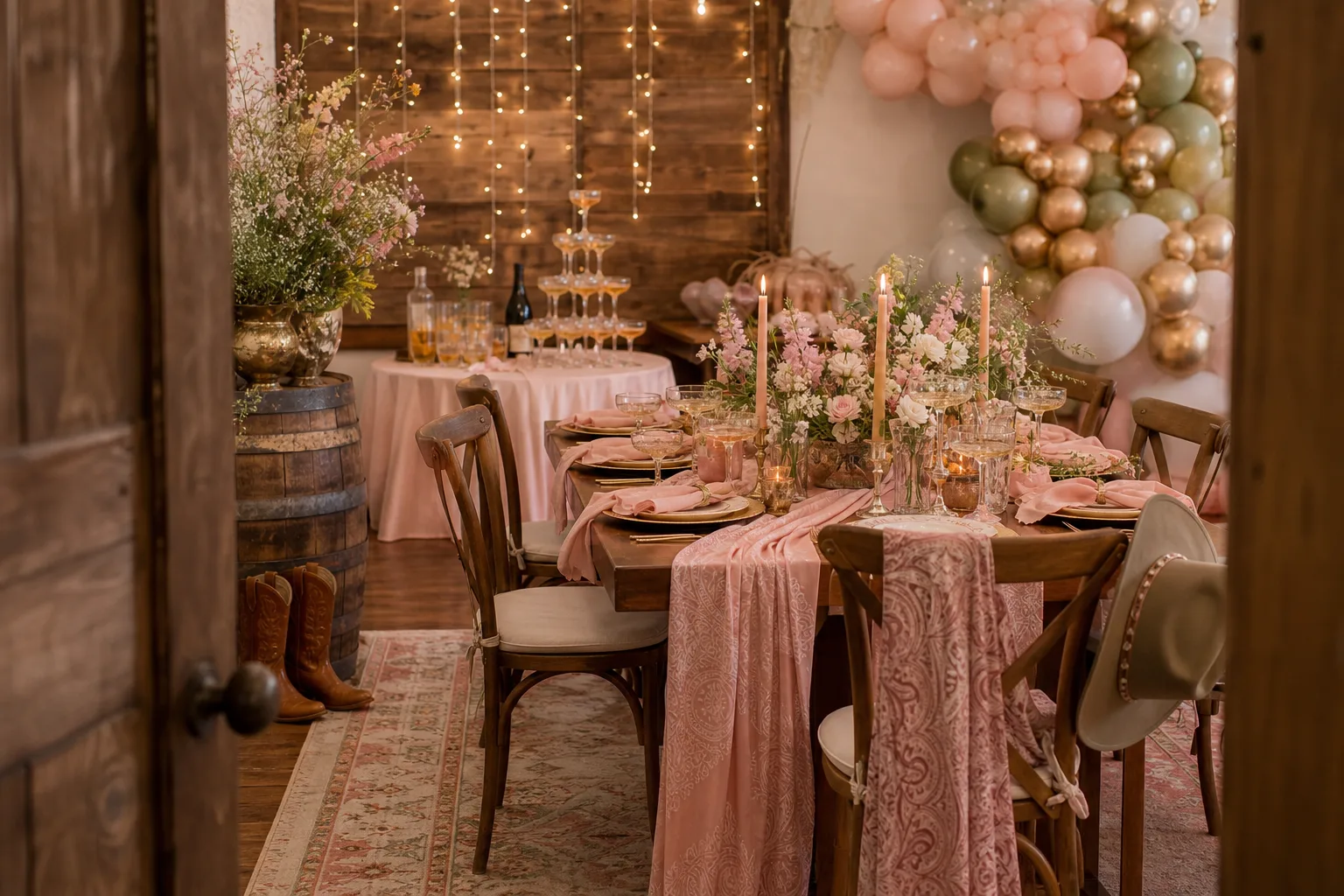
20 boots and bubbly bridal shower ideas, from a paisley arch to boot vases, favors and the invitatio
25 love is brewing bridal shower ideas for a cream, espresso and gold coffee bar party, from the bac
22 moody wedding table setting ideas in black, merlot and gold, from velvet runners to taper candle
Leave a Reply