


Forget frosty. This house runs on burnt orange, warm cream and a wash of brass, with dried orange slices as the one motif that ties every room together. Walk in from the cold and it smells like a Sunday morning with the oven on, orange peel and cinnamon instead of pine.
The slices do different jobs in different rooms. Strung on ribbon they become a garland for the windows, pressed into raffia they turn into napkin rings, cut into small discs they become the gift tags on every parcel. One bag of oranges, one Saturday afternoon with the oven on low, and the motif repeats itself for free right through the house.
This look suits a home that likes colour and does not flinch at it, the kind of house where a guest says it smells incredible before her coat is even off. It is cheap to build, forgiving to maintain, and it only gets better with age as the slices deepen in colour over the season.
This post contains affiliate links. If you buy through them, I may earn a small commission at no extra cost to you.
Arriving Home, Before the Door Even Opens
The theme has to work from the street first, while it is still dark at five o’clock and the whole point is a house that looks warm to walk towards. Two small zones do that job well, and neither needs more than an afternoon.
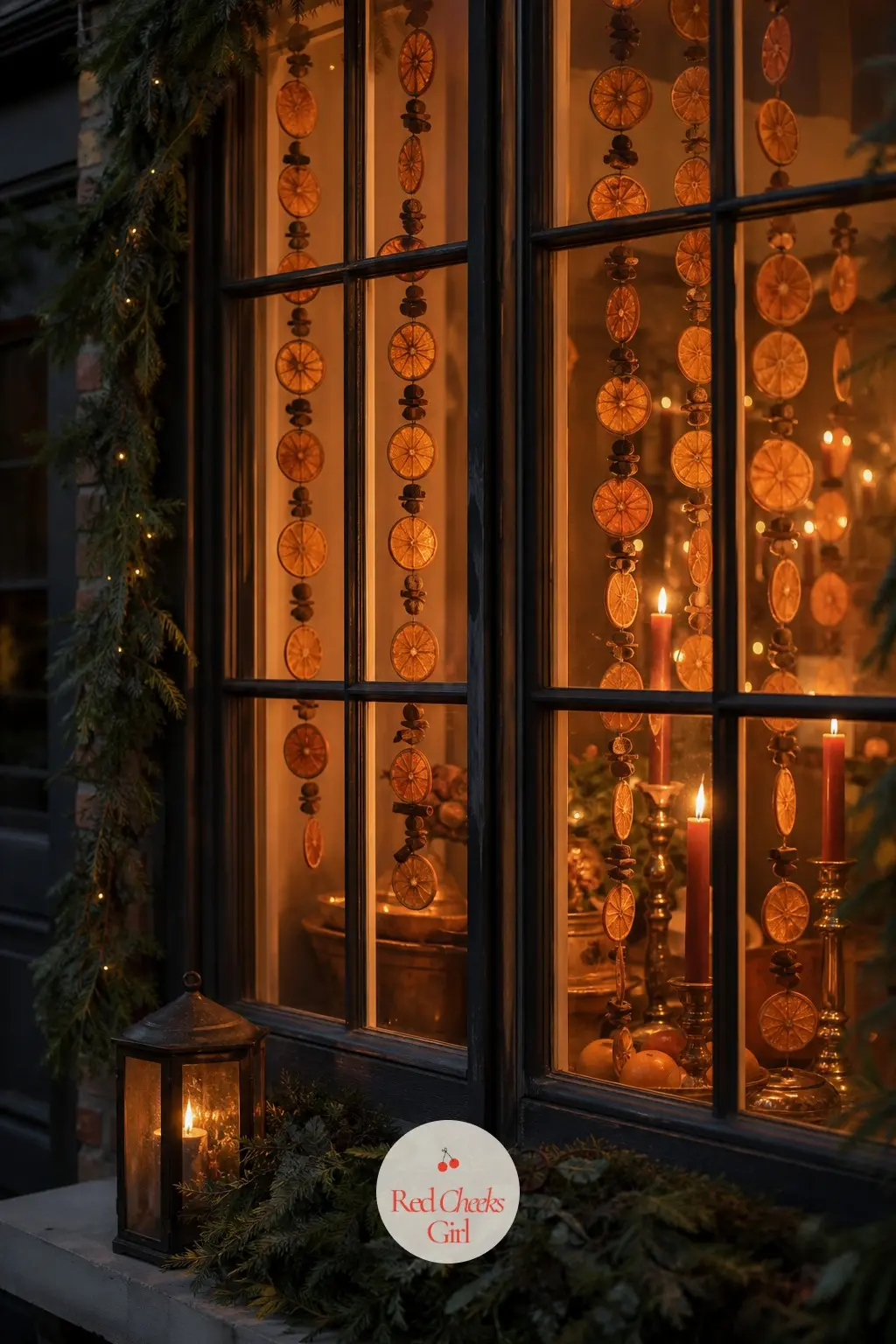
The Front Windows, Strung with Garlands of Dried Orange Slices
The front windows carry the motif straight onto the street: dried orange slices strung on fine brass wire with the panes lit gold behind them. Warm white fairy lights behind the glass do the rest of the work once the sky goes dark.
Hang one garland per window so the facade reads as a set, not a single lucky pane. The burnt orange slices glow almost amber against the glass, which is the whole point of the palette after dark.
🛍 Shop this corner
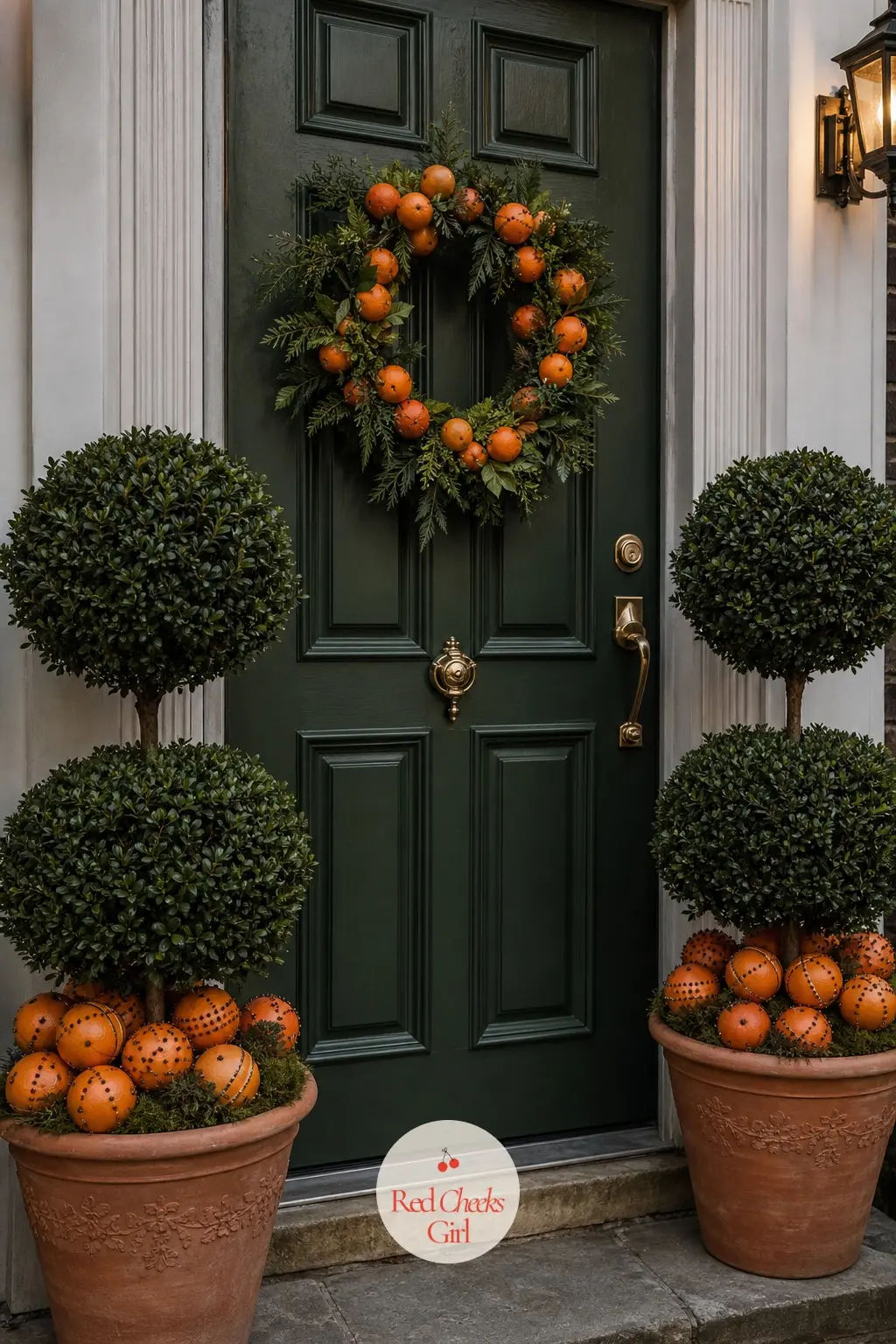
The Doorstep, Set with Clipped Bay Topiaries and Orange Pomanders
Either side of the door, a pair of bay topiaries in terracotta pots holds the shape of the whole house in miniature: green, warm clay, and a scatter of whole clove studded orange pomanders tucked into the soil.
The pomanders perfume the porch every time the door opens and pick up the burnt orange of the windows above. Weight the pots with grit so a gust off the street does not take the display out, especially if the weather turns rough overnight.
🛍 Shop this corner
The Entrance Hall, Where the Scent Starts
Once she is through the door, the hallway has about four seconds to confirm the whole house is going to smell this good all the way through. A console table and a row of coat pegs do that honestly.
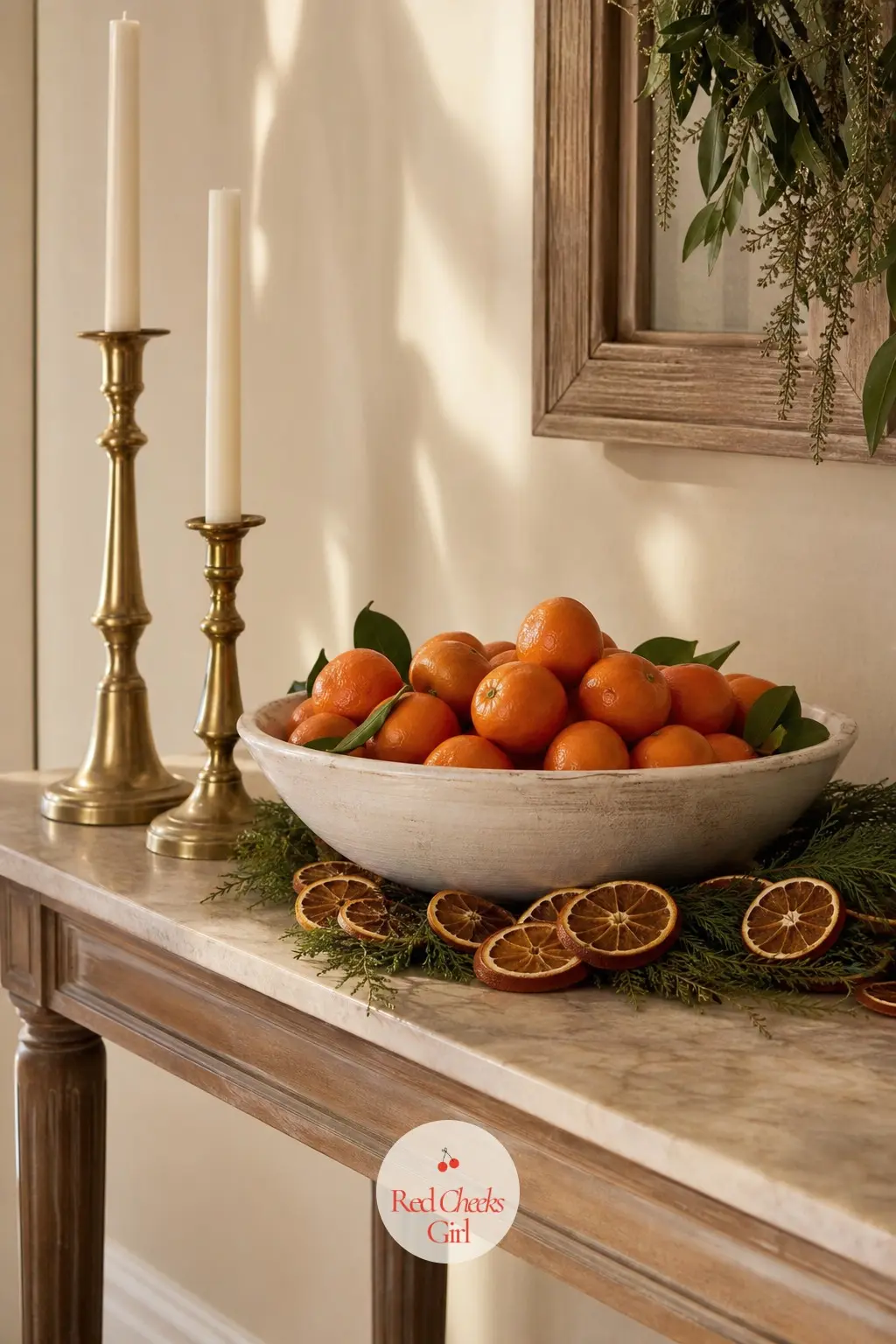
The Console Table, Styled with a Bowl of Clementines and Brass Candlesticks
A wide bowl of fresh clementines, skins left on, sits at the centre of the console with a pair of brass candlesticks either side. The fruit needs no arranging, just a tumble, which is exactly the unstudied warmth this theme wants.
Tuck a few dried orange slices flat against the bowl’s base so the eye reads the motif before it clocks the fresh fruit. Swap the clementines every few days so the hall never smells anything less than citrus.
🛍 Shop this corner
The Coat Pegs, Hung with Orange Pomander Balls on Velvet Ribbon
Each peg gets one whole dried orange pomander on a short length of burnt orange velvet ribbon, hung at coat height so a sleeve brushes past it on the way in. The scent lifts every single time.
It is the cheapest entry in the whole house and the one guests ask about first. Six pegs, six pomanders, one ribbon, done in under twenty minutes.

🛍 Shop this corner
The Living Room, Lit for the Evening
This is the room that earns the whole theme after dark: lamps low, tree lit, the one wide shot that makes a reader want to copy it this weekend. Everything else in the house is really an echo of what happens here.
The Living Room by Lamplight, Glowing Around a Tree Trimmed in Dried Citrus
By evening the room runs on lamplight and firelight rather than overheads, which is where burnt orange and brass actually earn their keep, both colours look better warm than under a flat ceiling light. The tree in the corner carries dried orange slices strung with twine among the baubles, cream ribbon looped loosely through the branches.
A throw in warm cream sits folded over the sofa arm, and a lamp with a linen shade throws the kind of light that makes burnt orange read like firelight rather than paint. For more ways to work a living room around one idea, this room by room guide is worth a look.

🛍 Shop this corner
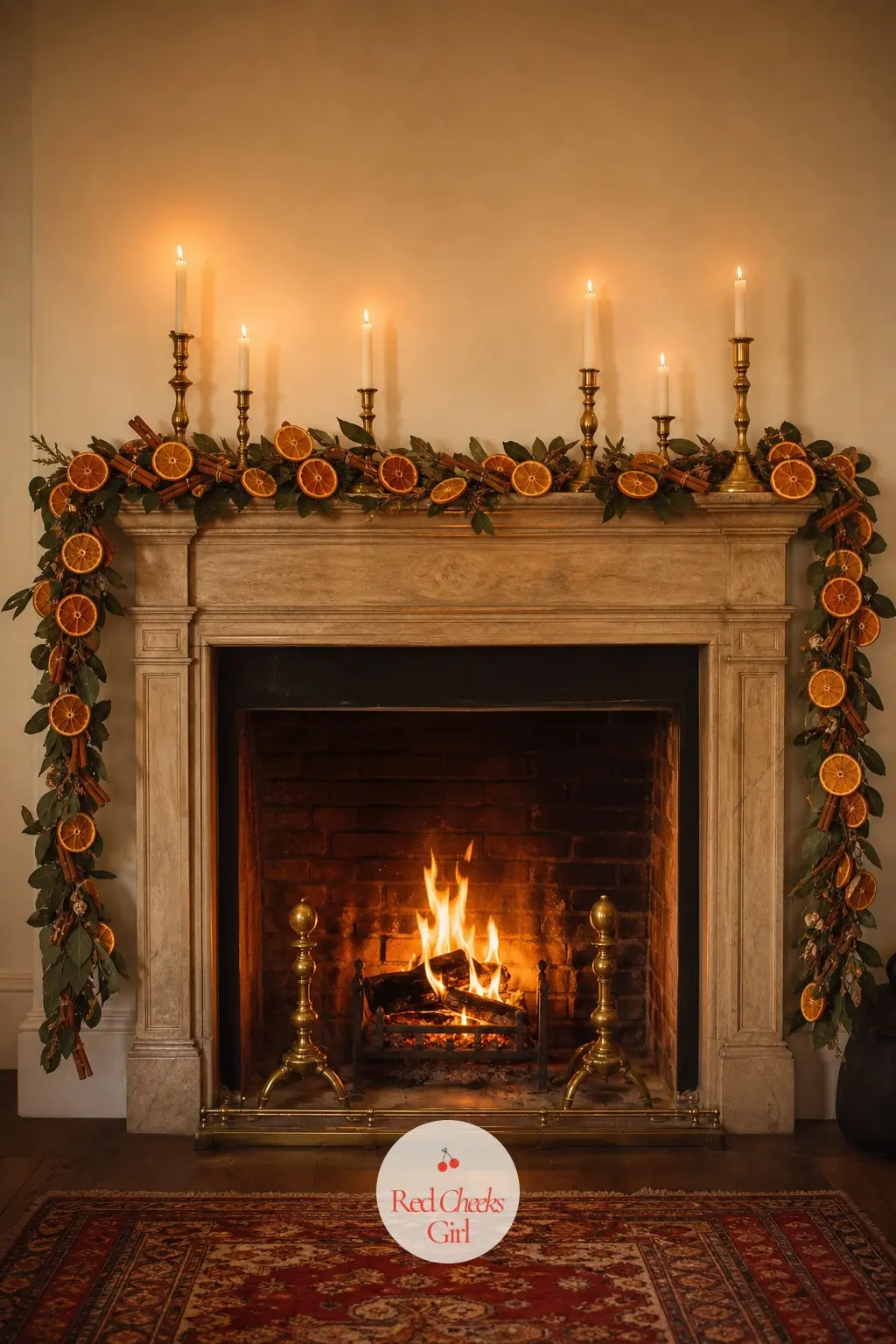
The Mantel, Lined with a Garland of Dried Orange Slices and Brass Candlesticks
The mantel carries the motif at its most concentrated: a long garland of dried orange slices threaded with cinnamon sticks and bay leaves, draped loosely rather than pinned flat. Brass candlesticks of different heights break up the line so it never reads as one flat strip.
Let the garland dip in the centre rather than pulling it taut, it should look like it grew there rather than got measured. Anyone building a mantel from scratch might want this full fireplace styling guide for the structural basics.
🛍 Shop this corner
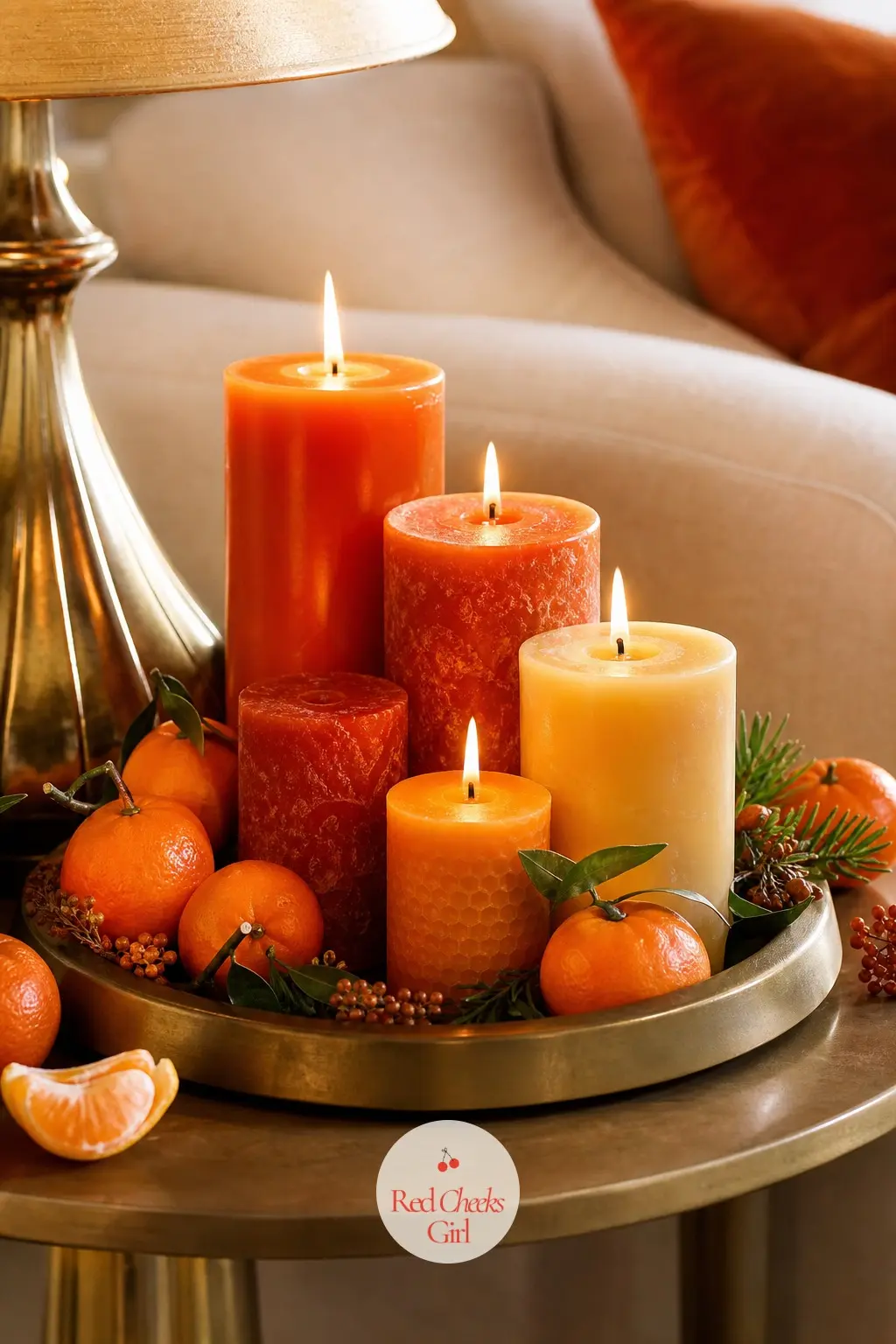
The Side Table, Set with a Cluster of Orange and Beeswax Candles
A side table beside the sofa holds a cluster of candles in two heights, one in deep burnt orange wax and one in natural beeswax, grouped on a small brass tray. A few whole clementines sit loose around the base.
Light them before anyone arrives rather than after, the room needs ten minutes for the wax scent to settle alongside the citrus. It is a small corner, but the one people linger beside with a drink in hand.
🛍 Shop this corner
The Dining Table, Set for the Whole Table
The table is where the quantity decisions actually matter, because a runner, a set of napkins and a row of chairs all need to match in number, not just in colour. Work it out before the shop, not after.
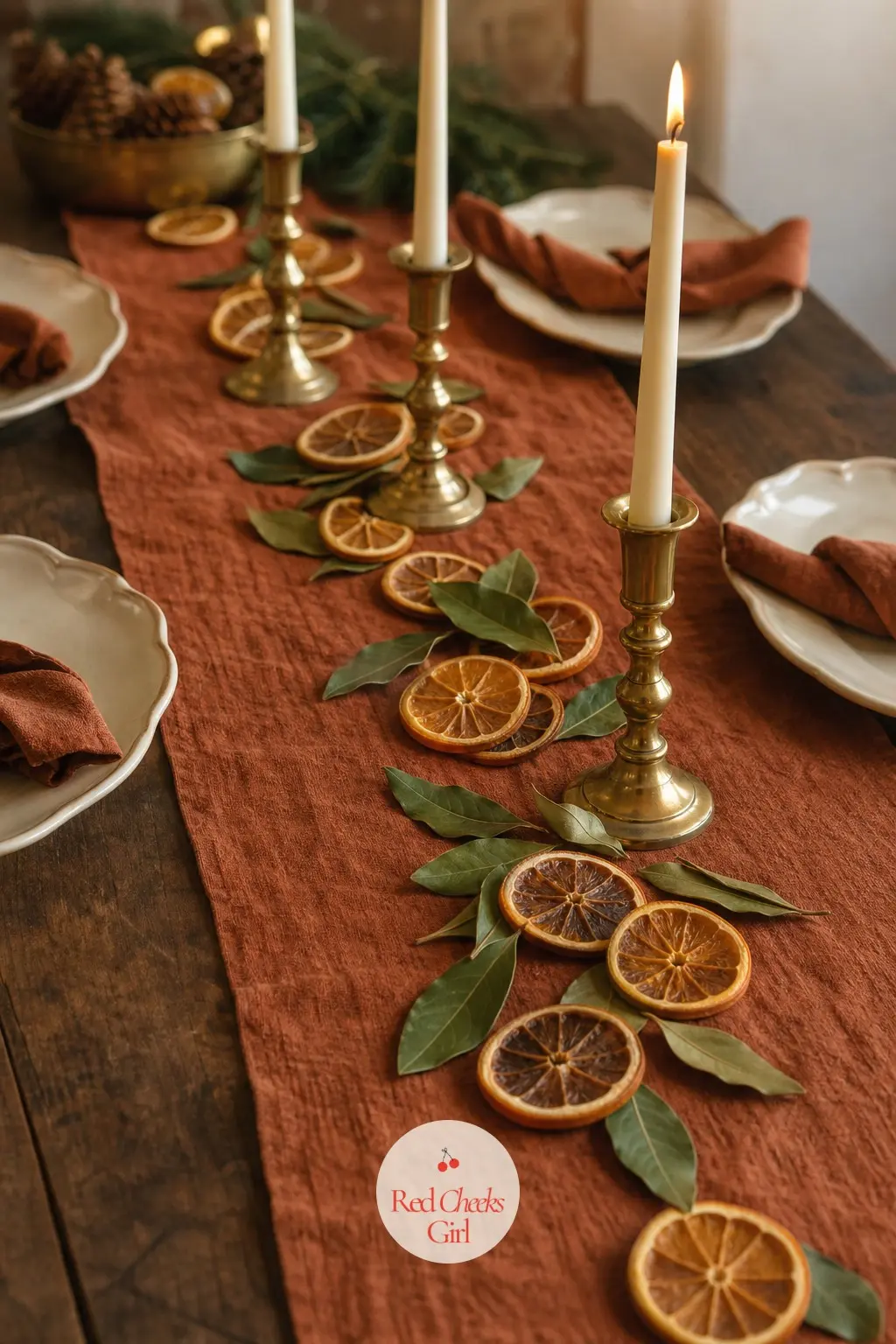
The Table Runner, Laid in Rust Linen with a Trail of Dried Orange Slices
A runner in rust linen lays the base colour down the table, with a loose trail of dried orange slices and bay leaves running along its centre rather than a tight, styled line. Brass taper candles stand at intervals along the same trail.
Leave gaps in the trail rather than packing it solid, the eye needs somewhere to rest between the fruit and the cutlery. Nine feet covers a table that seats eight comfortably with a little overhang at each end.
🛍 Shop this corner
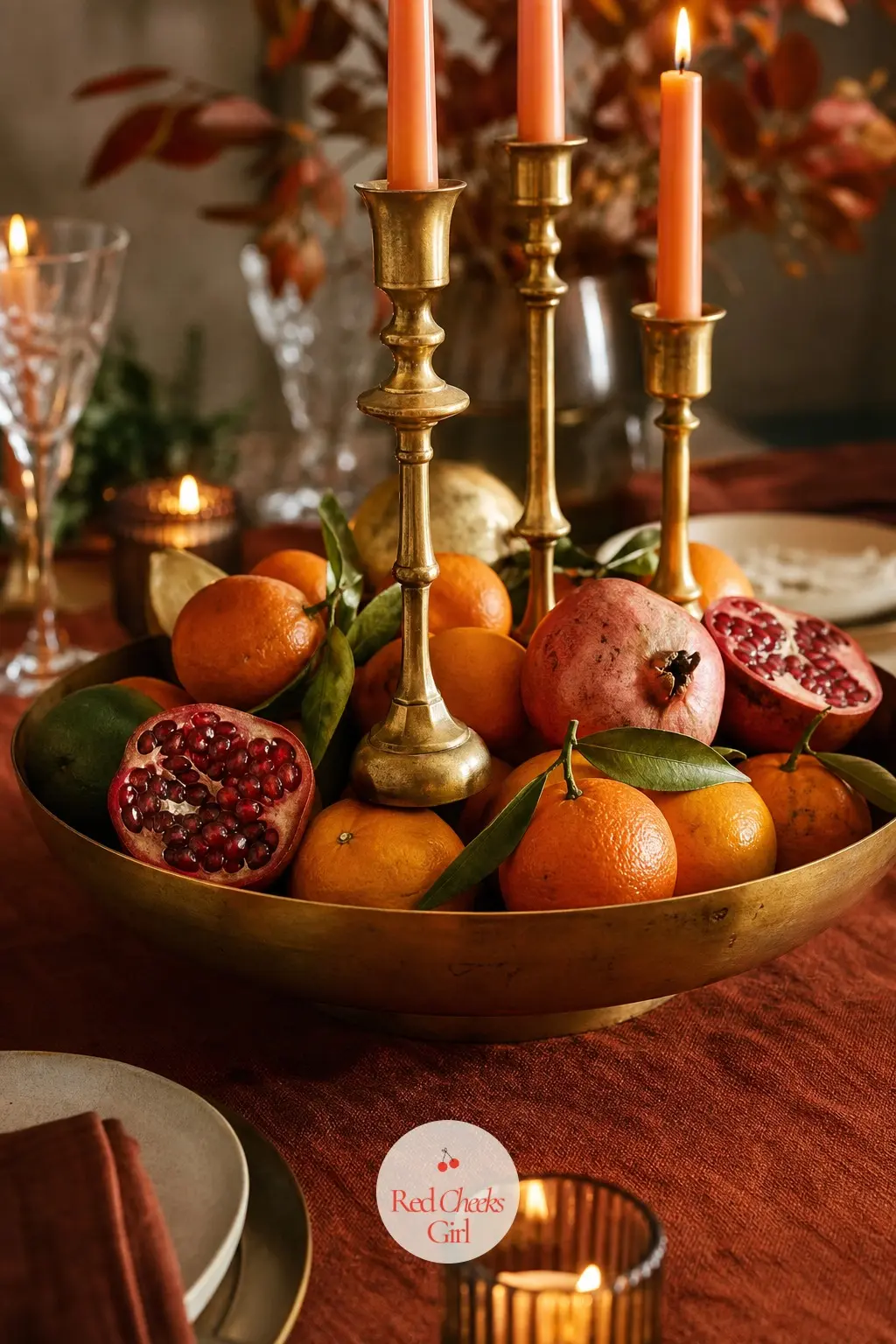
The Centerpiece, Clustered with Clementines, Pomegranates and Brass Candlesticks
At the centre, a low cluster of fresh clementines and halved pomegranates sits in a wide brass bowl, the pomegranate seeds adding the one note of deep red the palette allows itself. Brass candlesticks of mixed heights rise out of the fruit itself.
Keep the arrangement low enough that guests can see each other across the table, this is a dinner centrepiece, not a wall. The fruit can be eaten afterwards, which is more than most centrepieces can say.
🛍 Shop this corner
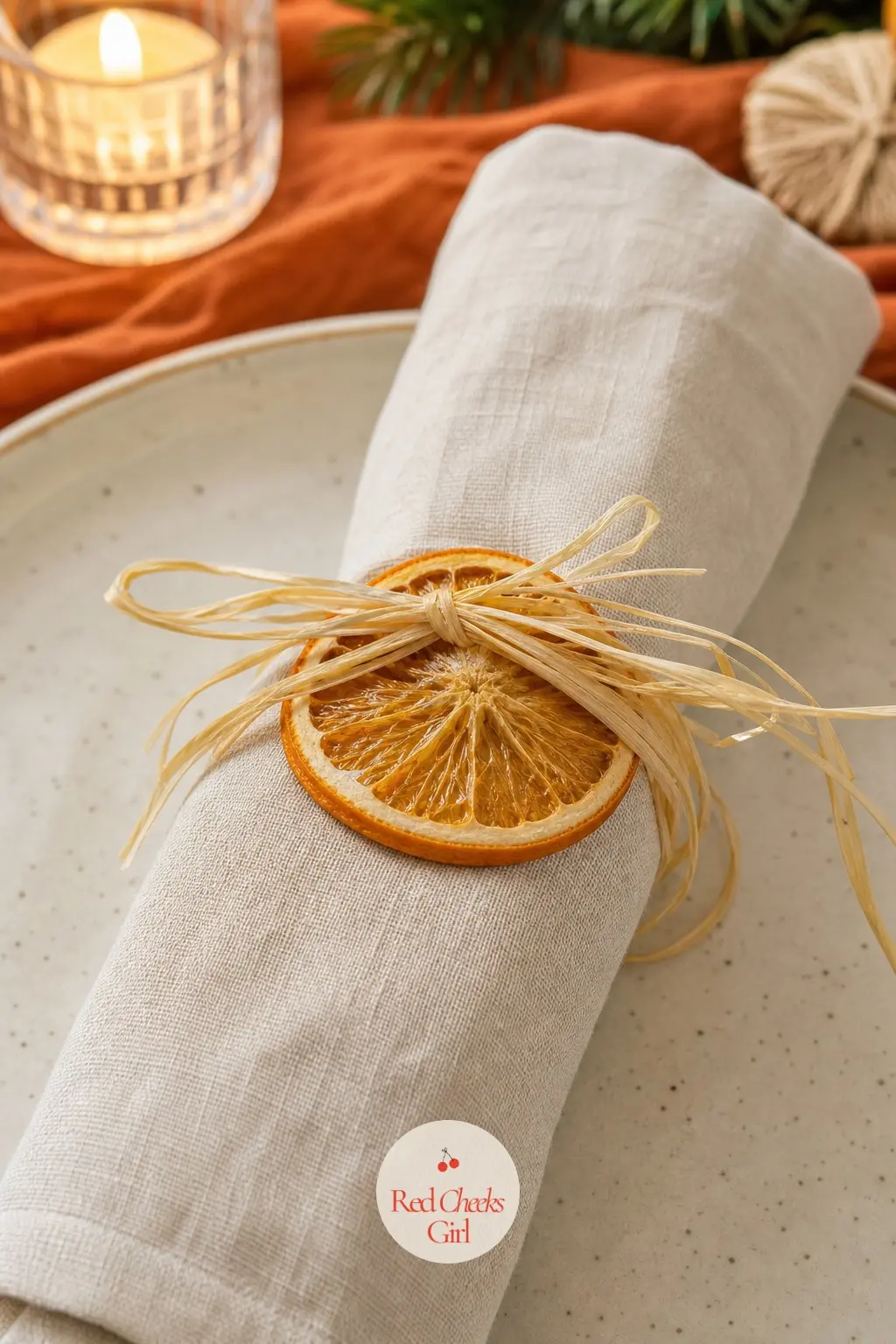
The Place Setting, Tied with Raffia and a Dried Orange Wheel
Each napkin in warm cream linen gets rolled and tied with natural raffia, with a single dried orange wheel tucked under the knot rather than a separate napkin ring. It is cheaper than a set of rings and looks more generous.
Twelve covers a table set for a full house with two to spare for anyone who needs a fresh one partway through dinner. Lay them on the plate rather than beside it, the orange wheel reads better face up.
🛍 Shop this corner
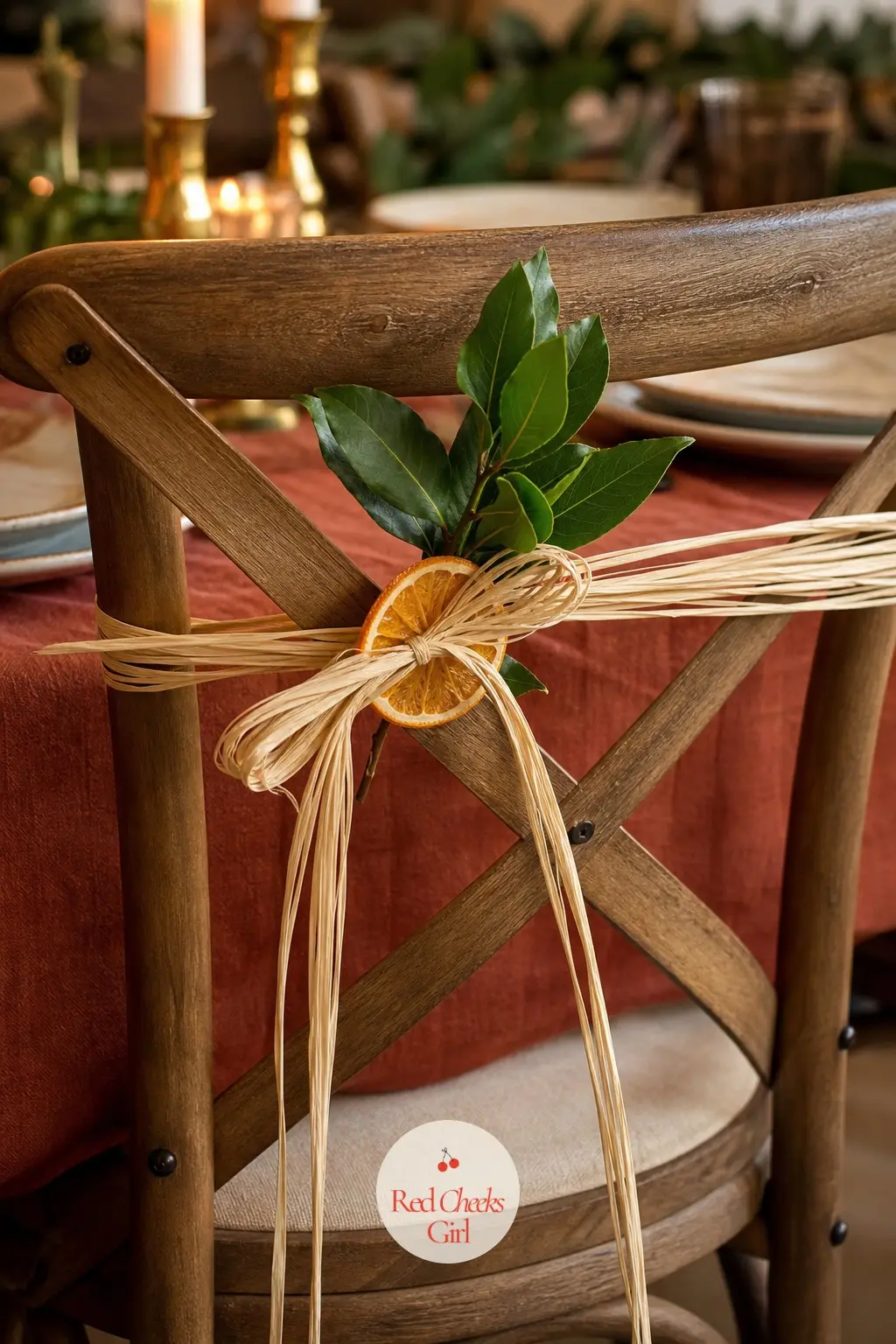
The Chair Backs, Tied with Raffia Bows and a Dried Orange Slice
Behind each chair, a raffia bow holds one dried orange slice against a sprig of fresh bay, tied directly to the chair back rather than looped through the slats. It repeats the table’s motif at standing height, where guests actually see it as they sit down.
Six bows cover the head of the table and both long sides without a second trip to the shop. Tie them loosely, a stiff bow reads as a craft project rather than a Sunday dinner.
🛍 Shop this corner
Gifts and the Kitchen, Where the Smell Lives
The kitchen is doing the real work behind this theme, since this is where the oven dries the next batch of slices while the cider gets going. The gift table borrows straight from what is already drying on the rack.
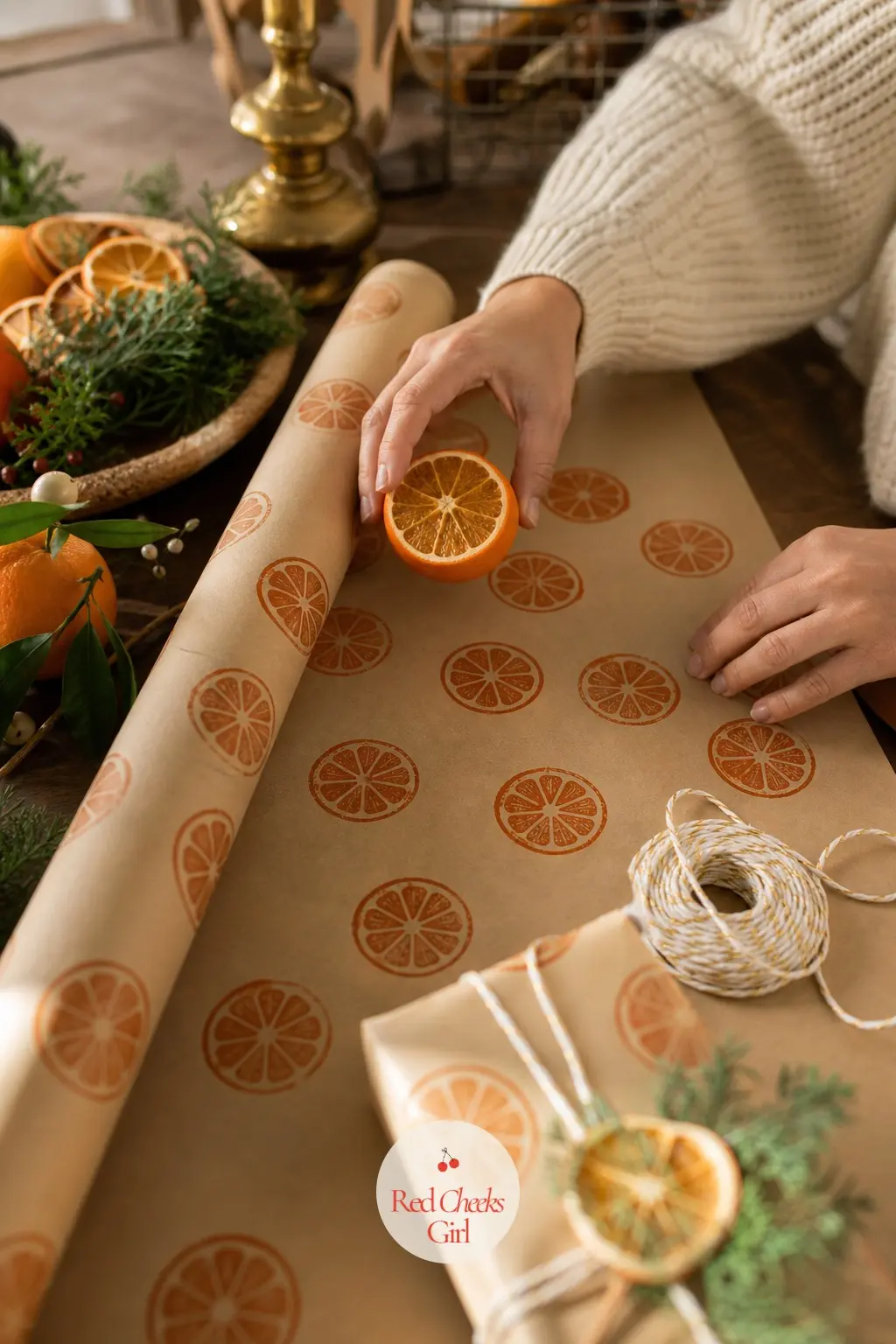
The Gift Wrapping Station, Papered in Kraft Paper and Citrus Stamps
Plain kraft paper takes a hand stamped citrus print better than anything printed, a single orange slice cut from a potato and dipped in burnt orange ink, pressed in a loose scatter rather than a grid. Cream and brass twine finishes every parcel instead of ribbon.
Two rolls wraps a full family’s worth of presents with paper left over for the awkward shaped ones. Stamp the paper flat on the kitchen table before it goes near scissors, wet ink and wrapped corners do not mix.
🛍 Shop this corner
The Gift Tags, Cut into Little Orange Slice Shapes
Scraps of the same kraft paper get cut into small circles, scored with a few lines from the centre out to mimic the segments of an orange, then written on in brass ink. It costs nothing beyond the paper already on the table, in the spirit of these grown-up crafts that still look bought.
Punch a hole at the top and thread the same cream and brass twine used on the parcels, so the tag reads as part of the gift rather than an afterthought stuck on top.

🛍 Shop this corner
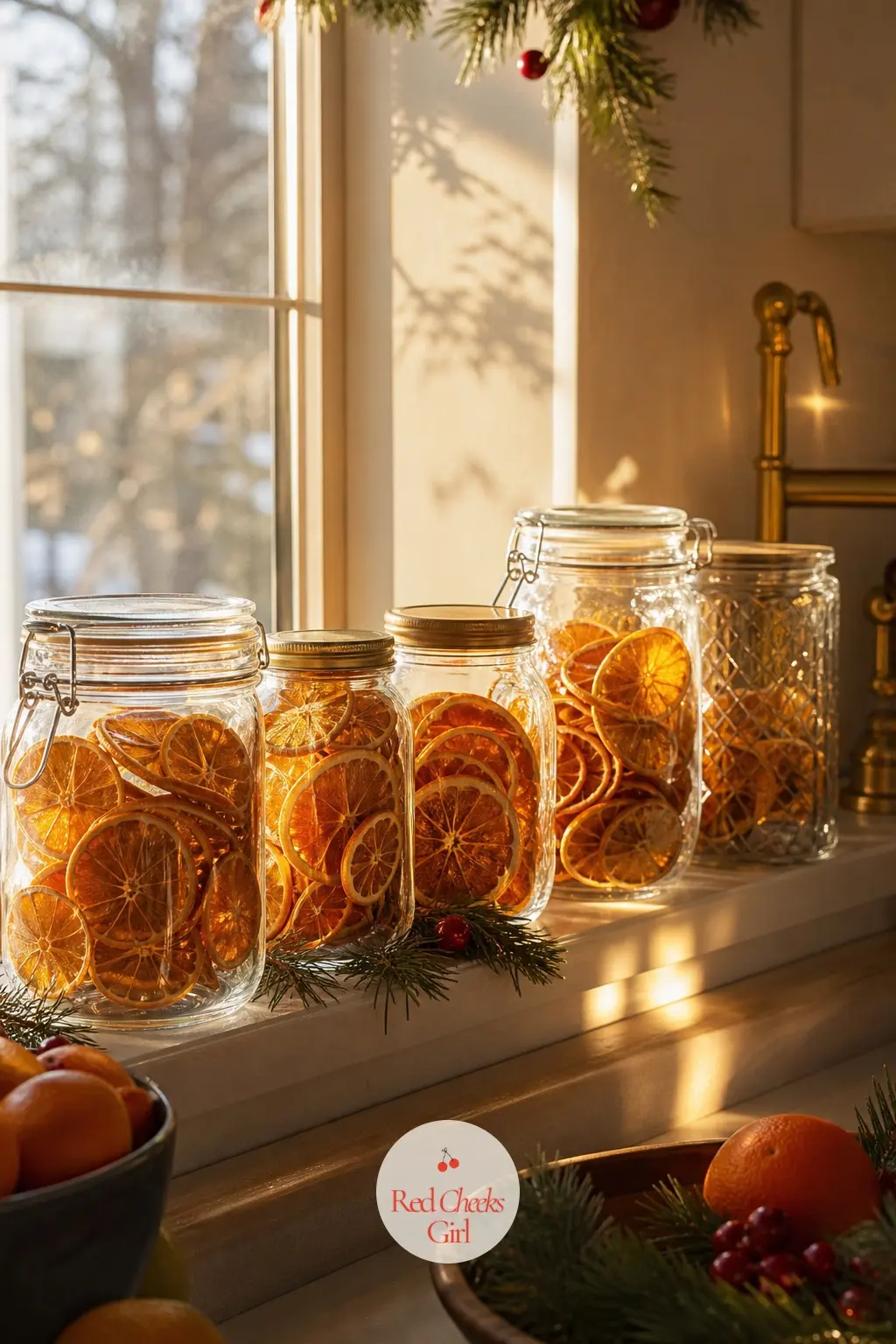
The Kitchen Window, Lined with Jars of Drying Orange Slices
The kitchen window sill holds the theme at its most honest: open jars of orange slices mid dry, a few finished ones propped against the glass to catch the low winter sun. This is the one corner of the house that is genuinely still in progress.
Group three or four jars rather than one, the repetition is what makes a windowsill of fruit look styled instead of simply left out. Low sun through dried orange is the whole mood of this article in one photograph.
🛍 Shop this corner
The Drinks Station, Poured with Spiced Orange Cider in Copper Mugs
A pan of cider simmers with orange slices, cinnamon and star anise sitting visibly in the liquid, ladled out into copper mugs lined up on a brass tray. The pan itself does more decorating than any ornament could, the whole kitchen smells of it within minutes.
Six mugs covers a small gathering without anyone waiting for a clean one, and copper is the one metal in this house that gets warmer rather than colder as the evening goes on.

🛍 Shop this corner
Upstairs, For the Guest Who Stays the Night
The theme does not need to shout upstairs, it just needs to still be true. A guest room and the corners around it should feel like the same house, only quieter.
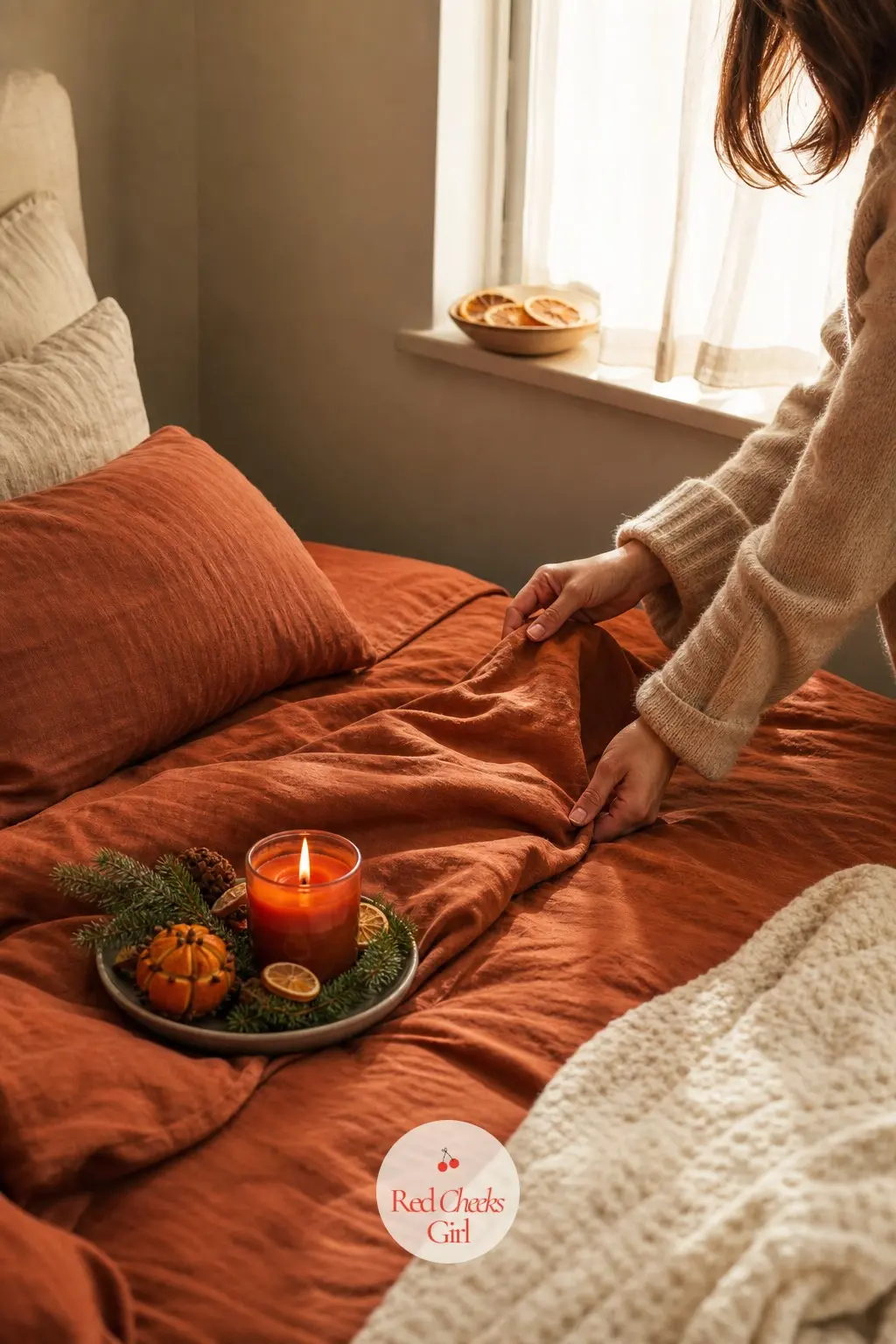
The Guest Bedroom, Dressed in Warm Terracotta Linen and a Citrus Candle
The bed takes a terracotta linen throw folded across cream sheets, with a single citrus scented candle on the chest of drawers rather than anywhere near the pillows. It is enough to carry the palette upstairs without turning the room into a showroom.
A small dish of dried orange slices on the windowsill finishes the room without adding anything a guest has to work around. This is the version of the theme built for someone staying just the one night.
🛍 Shop this corner
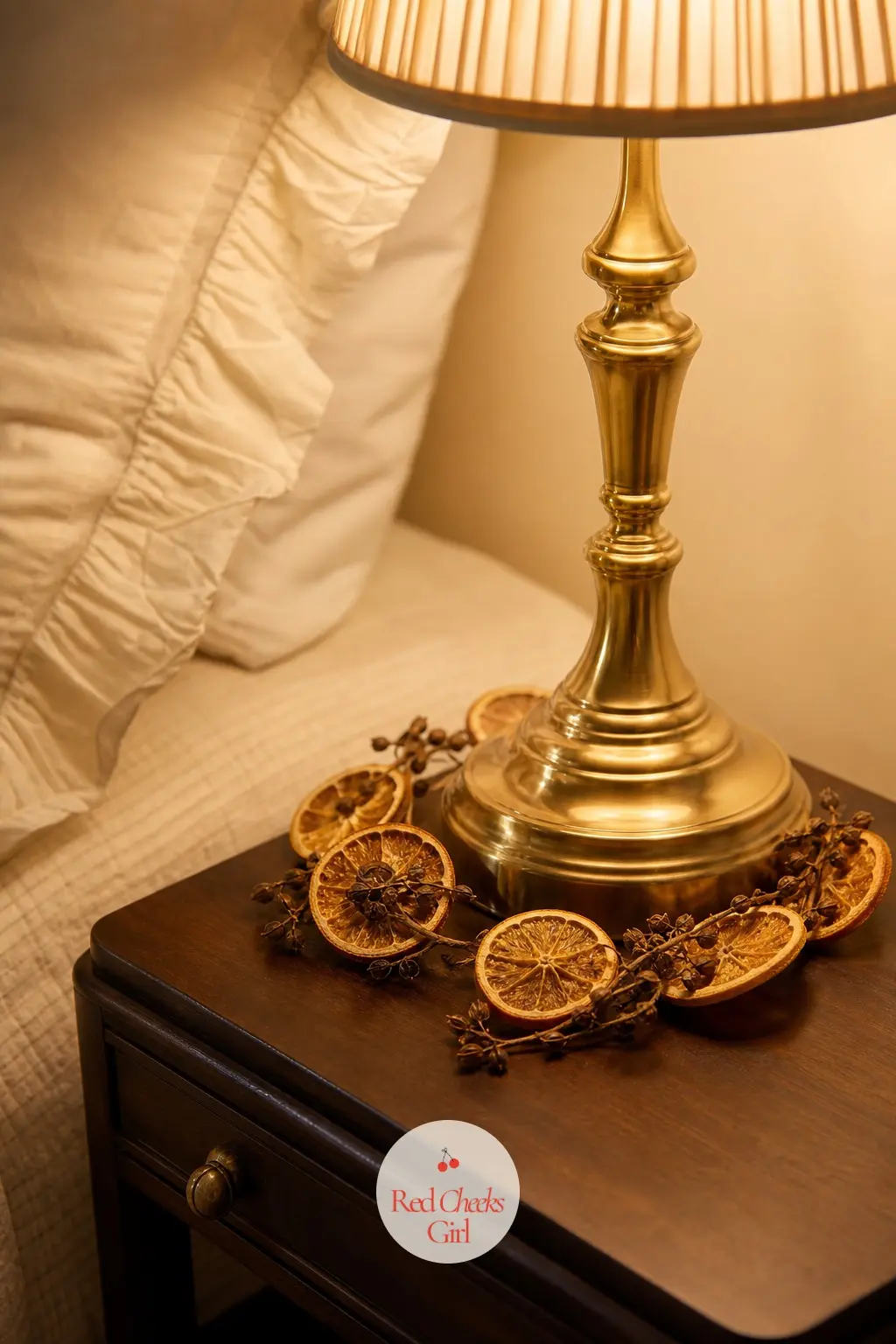
The Guest Nightstand, Set with a Dried Orange Garland and a Brass Lamp
A short length of garland loops loosely around the base of the bedside lamp rather than lying flat, so the slices catch the lamp’s own light once it is switched on. A brass lamp with a cream shade keeps the light warm rather than clinical.
Three feet is enough to loop twice without swamping a small table that also needs to hold a glass of water and a book. It is the smallest entry in the whole house and one of the warmest.
🛍 Shop this corner
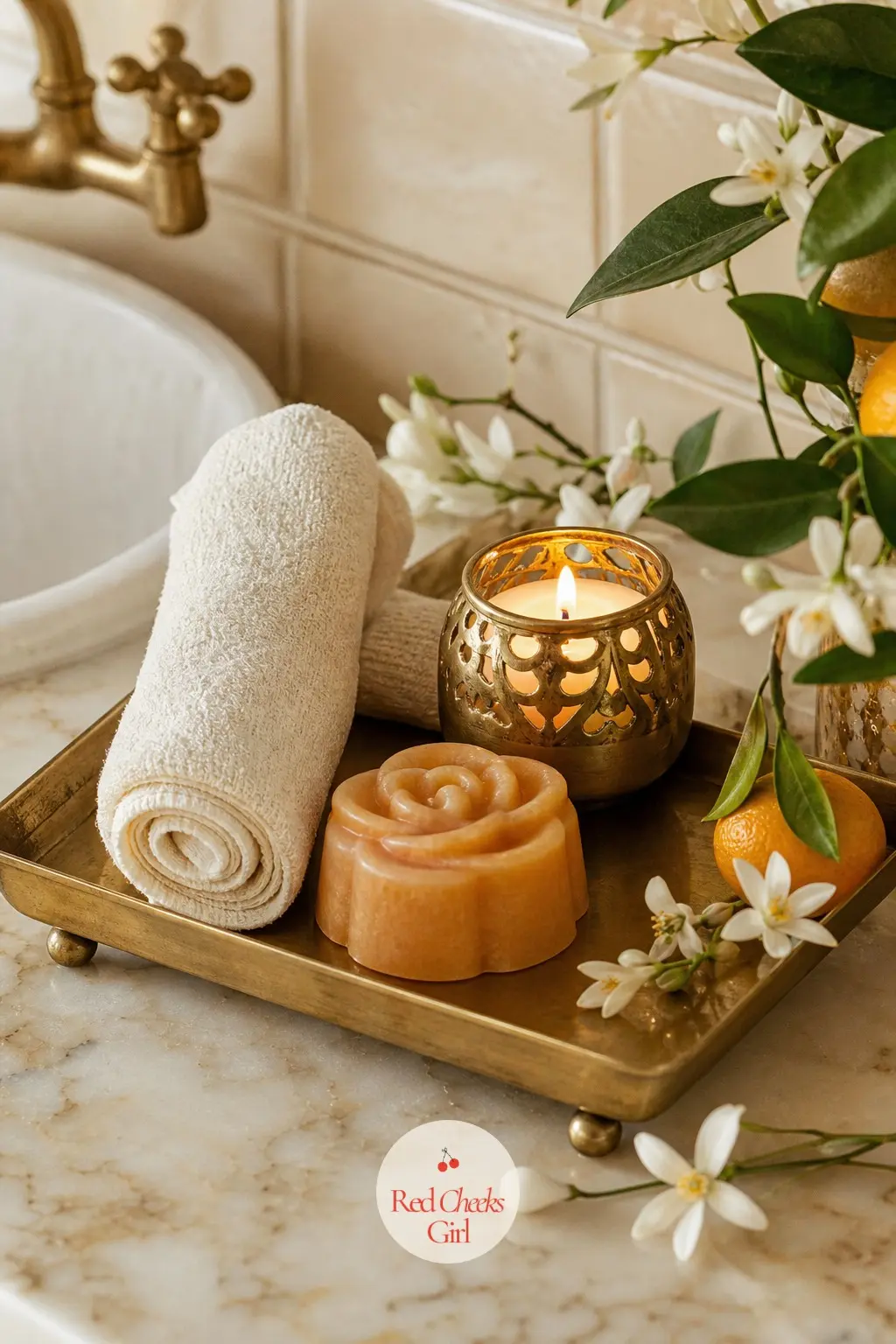
The Bathroom Tray, Set with Orange Blossom Soap and a Citrus Candle
A small brass tray on the bathroom counter holds a bar of orange blossom soap, a rolled cream hand towel and a tealight in a brass holder. It is a thirty second gesture that makes a guest bathroom feel considered rather than merely tidy.
Replace the soap before guests actually stay rather than after, a half used bar undoes the whole effort of the tray around it.
🛍 Shop this corner
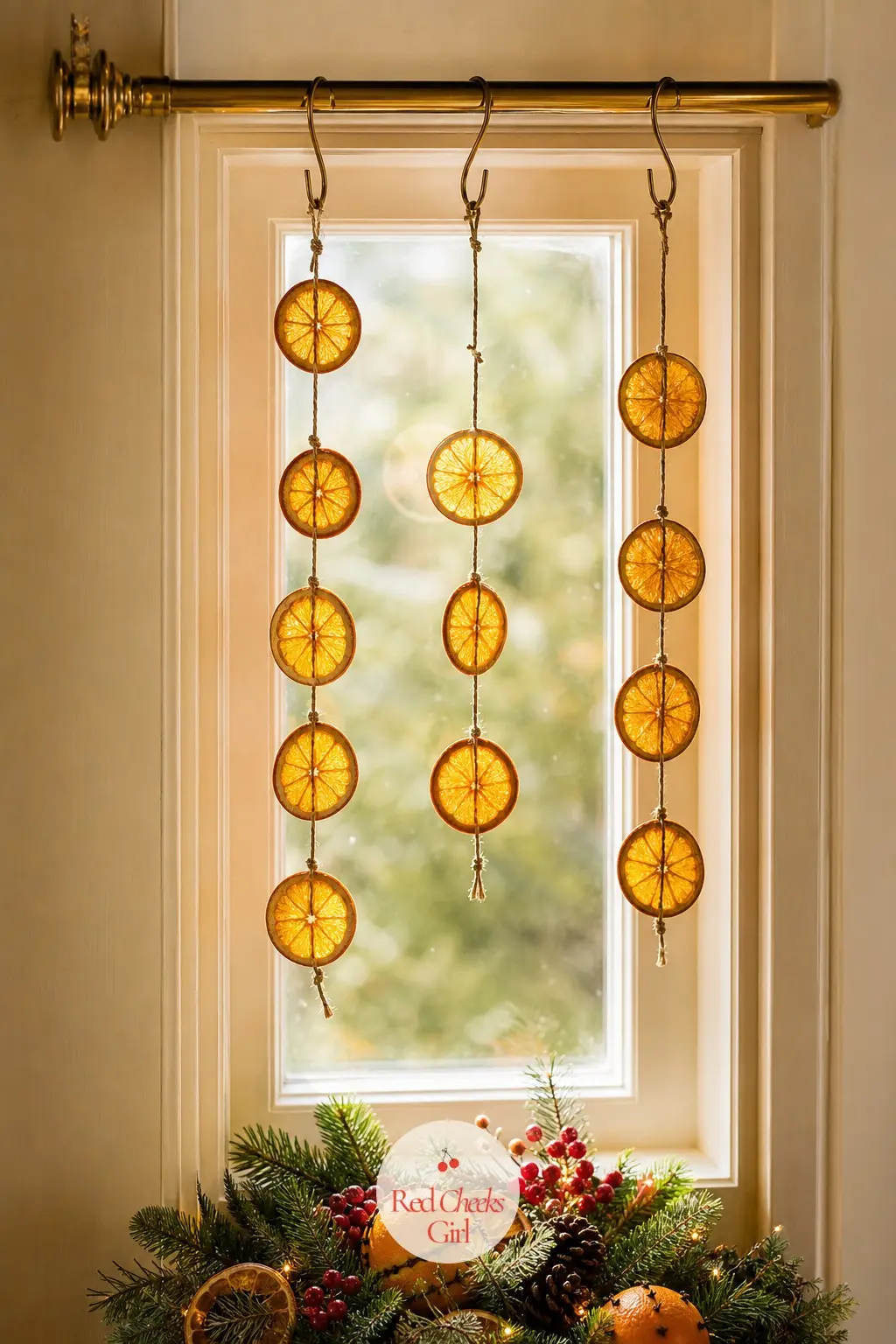
The Landing Window, Dressed with a Hanging String of Dried Orange Discs
A narrow landing window takes three short strings of dried orange discs hung at different lengths from a brass curtain rod, catching whatever light comes through during the day and turning to silhouette once the hall light goes on at night.
It costs almost nothing and takes ten minutes, which matters on a landing most people only pass through rather than sit in. Three strings at different lengths avoid the flat look of one single row.
🛍 Shop this corner
Frequently Asked Questions
How do you dry orange slices for Christmas decor so they stay bright orange, not brown?
The trick is a low oven and frequent flipping. Checking and flipping the slices every half an hour, rather than every hour, keeps them from browning and holds onto more of the orange colour. A dehydrator or a very low oven setting works better than a hot one, which browns the edges before the centre is dry.
How long do dried orange slices actually last?
Years, if stored somewhere dry and out of direct light. Dried orange slices will last a few years, if not more, when looked after well, though they do lose some of their colour over time. Older, paler slices still work well mixed into a simmer pot or a bowl of potpourri rather than thrown out.
Can you eat dried orange slices, or are they just for display?
They are genuinely edible, peel and all, so they double nicely as a garnish on a cake, a hot drink or a cocktail once the display duty is done. Nothing about the drying process makes them unsafe to eat, it simply removes the moisture.
My dried orange slices do not smell like much, what went wrong?
Plain dried slices lose most of their scent once the moisture is gone, which catches a lot of people out after all that oven time. Sprinkling the slices with a little natural orange and cinnamon oil once they are dry brings the Christmas scent back.
What do you do with dried orange slices once Christmas is over?
They keep working well past the holiday itself. Beyond garlands and wreaths, dried orange slices suit a styled dough bowl centrepiece, a simmering pot of orange and cinnamon, or a batch of orange oatmeal muffins. Store any leftovers flat in a lidded box for next year rather than composting a perfectly good batch.
How do you stop dried orange slices from going mouldy in storage?
The slices need to be fully dry before they go anywhere near a sealed container. If stored before they are completely dry, covering them with a lid traps the remaining moisture and they can mould, so they should air dry completely first. A shallow, uncovered box for the first few days solves most of the problem.

19 green and gold Christmas tree looks, real and artificial, from bottle green and antique brass to
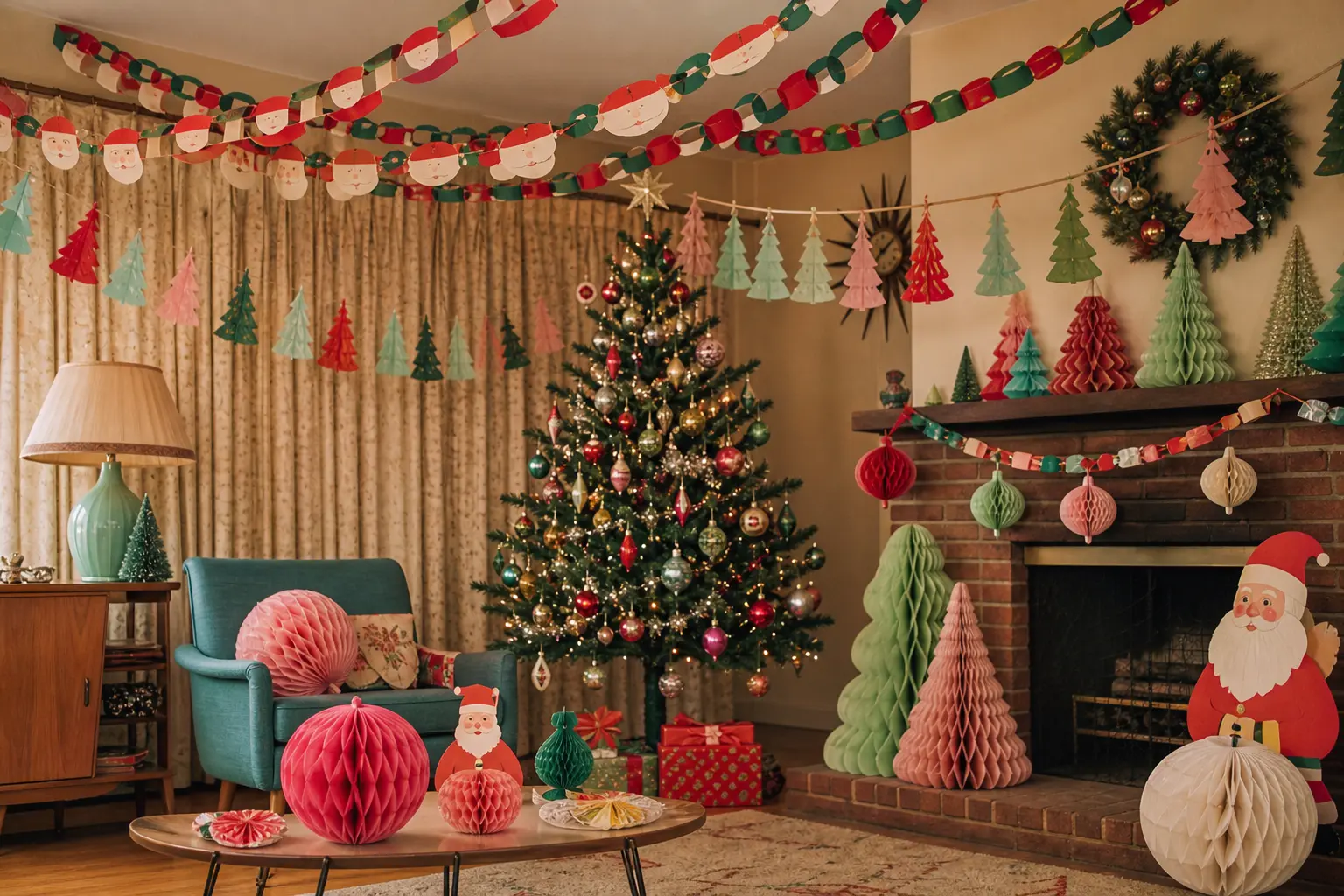
10 free printable paper christmas decorations in 1950s style: starbursts, baubles, Santas, reindeer,

22 crochet christmas wreath free pattern ideas grouped by technique: granny squares, tiny berries, c
Leave a Reply