

14 Combined Birthday Party Sibling Themes That Give Both Kids Equal Billing
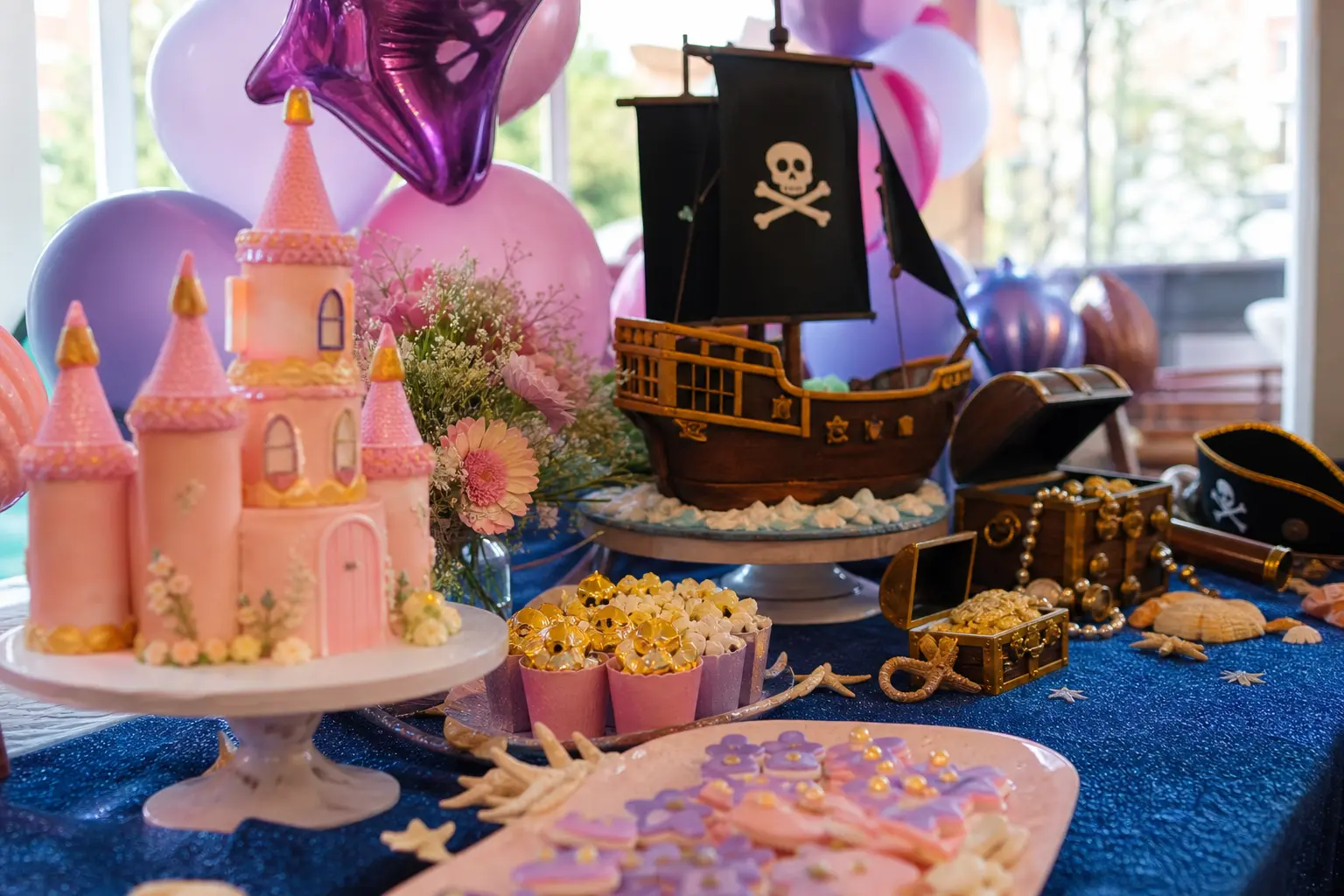
Combined birthday party sibling themes solve one specific problem: how do you share a party without one child quietly becoming the supporting act. The ideas below are not about blending two kids into a single generic celebration. Each one names a concrete way to give both children a distinct role, a distinct visual moment, or a distinct memory within one shared event.
Close birthdays are a scheduling gift that comes with a real emotional risk. Guests arrive, the cake goes out, and the younger sibling watches from a high chair while the older one blows out candles. Or the older one sulks through a theme chosen to please the baby. Neither outcome is acceptable, and none of the fourteen ideas here require it.
For related reading, the 18 First Birthday Party Themes for Girls and 18 First Birthday Party Themes for Boys articles cover the single-child version of each approach, so you can borrow the visual references and adapt them into the two-column structure below.
This post contains affiliate links. If you buy through them, I may earn a small commission at no extra cost to you.
Visual Identity
The fastest way to make a combined party feel fair is to make it look fair. When every photo clearly shows two distinct palettes, two banners, or two coordinated but different outfits, neither child disappears into a generic backdrop. These entries are about what guests see the moment they walk in.
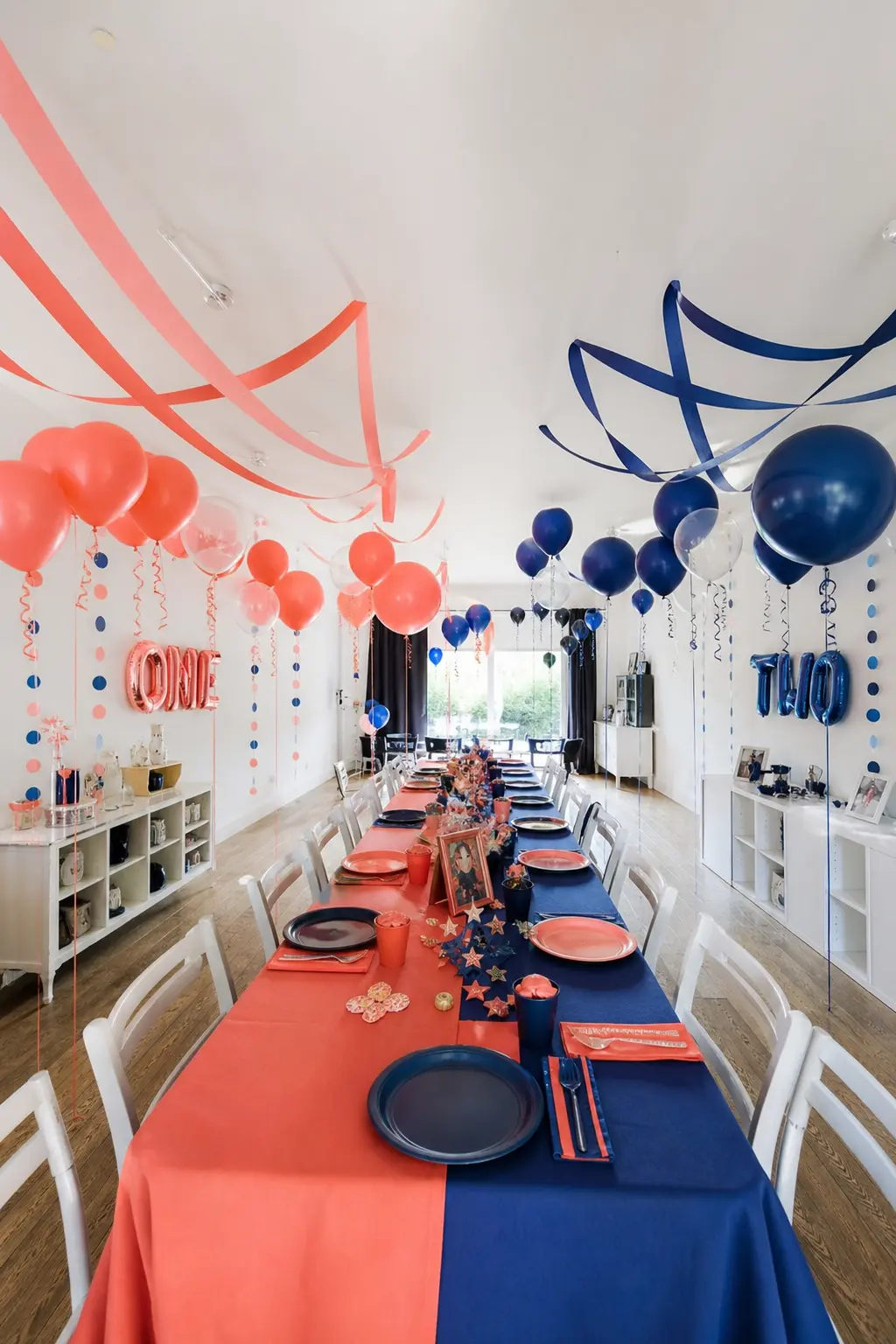
One Theme, Two Colours
Pick a theme that travels in any colour: a garden party, a circus, a space adventure. Assign each child one distinct colour within it. Every balloon, every paper plate, every ribbon belongs to one child or the other. Nothing is generic white.
In photographs, both children read as separate. Grandparents can tell at a glance whose corner is whose. The shared decor pulls it together; the individual colours pull each child out of it.
The practical rule: choose colours that look good side by side but do not blend. Coral and navy. Mint and gold. Lilac and red. If the two palettes could be mistaken for one palette from across the room, pick again.
🛍 Shopping guide
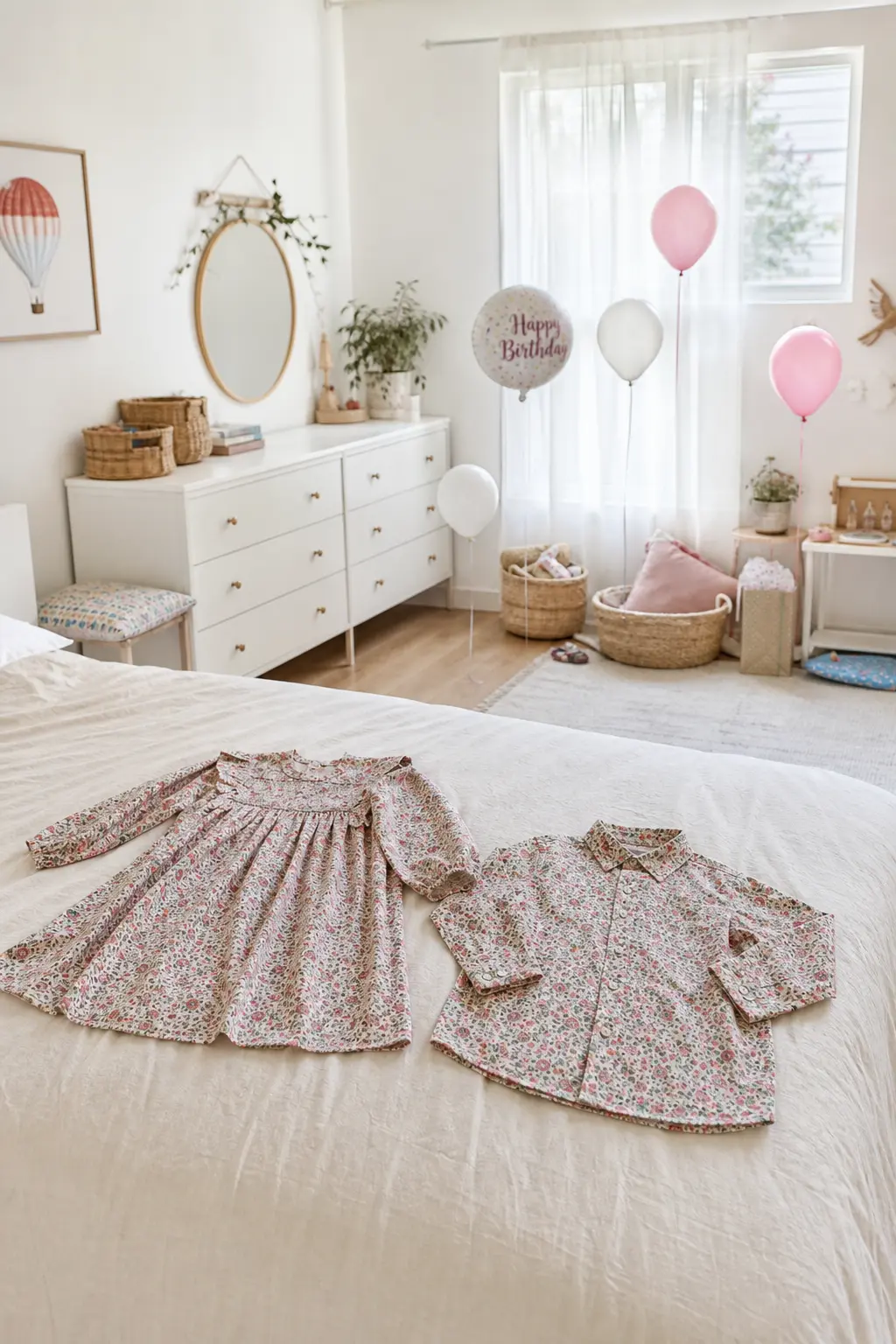
Matching but Not Identical Outfits
The twins approach works for non-twin siblings too. Both children wear something that reads as a set when they stand together, but each wears a version that reflects their own personality. Same fabric, different silhouette. Same colour family, different print scale.
This matters most in photographs. A shared party photo where both children look like individuals, rather than a matched set or two completely unrelated kids, is the visual record that makes the day feel intentional.
Matching but not identical also gives each child a decision to make: which version do they want. That small agency is worth more than the outfit itself.
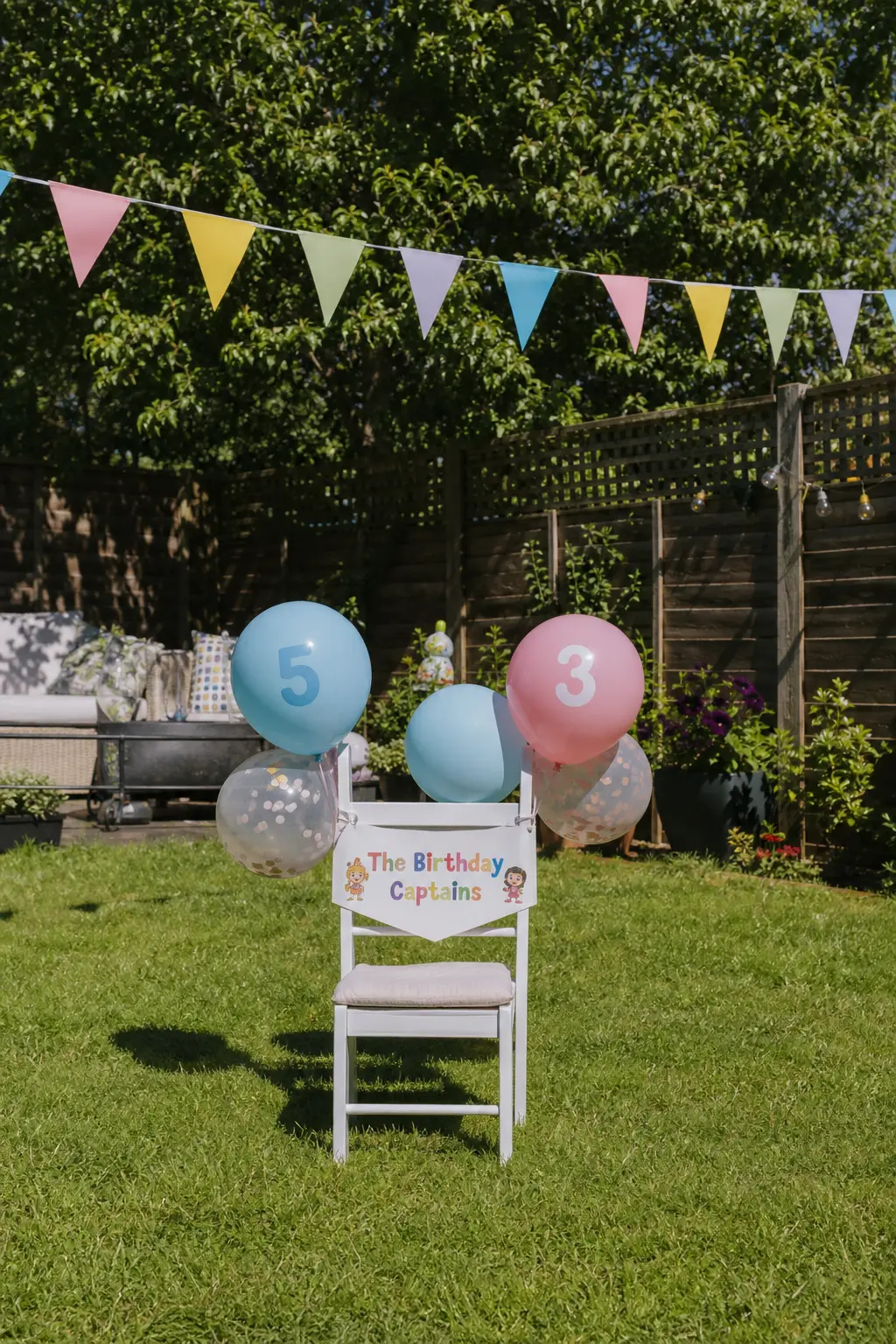
Separate Seat Banners Under One Shared Party Banner
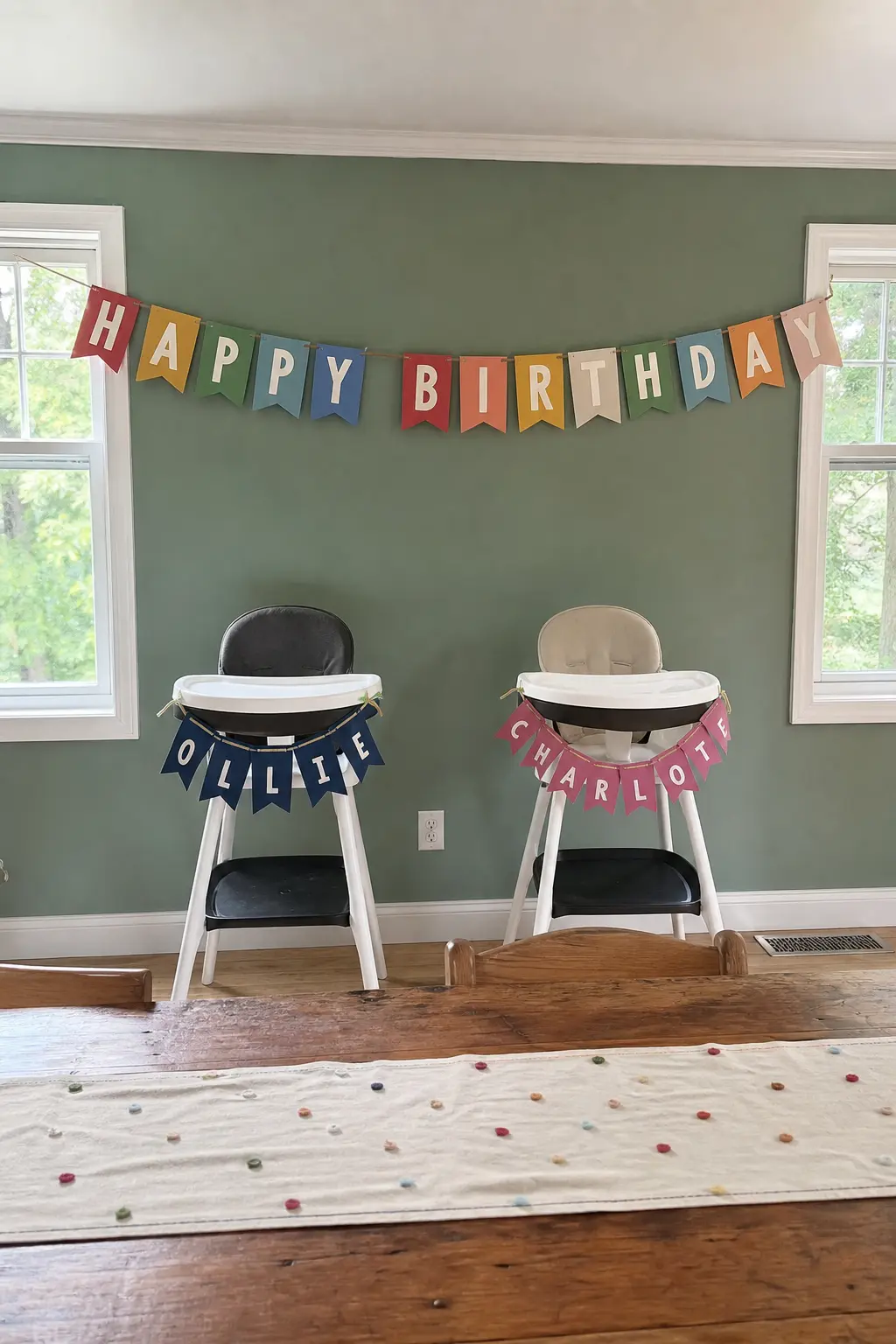
The shared banner names the occasion. The individual banners name the children. Hang the shared banner high, across the full width. Below it, each child’s chair or high chair gets a banner that says their name and their age only.
This does two things. It signals to every guest that this is a shared celebration, not one child’s party that the other child is attending. And it gives each child a physical anchor in the room that is only theirs.
The banner does not need to be elaborate. A name on a felt pennant, a card letter garland, or a length of ribbon with wooden letters works perfectly and reads clearly in photos.
🛍 Shopping guide
The Dessert Table
Two children, two dessert stations. The table is shared, the logistics are shared, but the styling belongs to each child separately. This section covers every variation, from two full smash cakes to a joint cake where the design changes at the centre line.
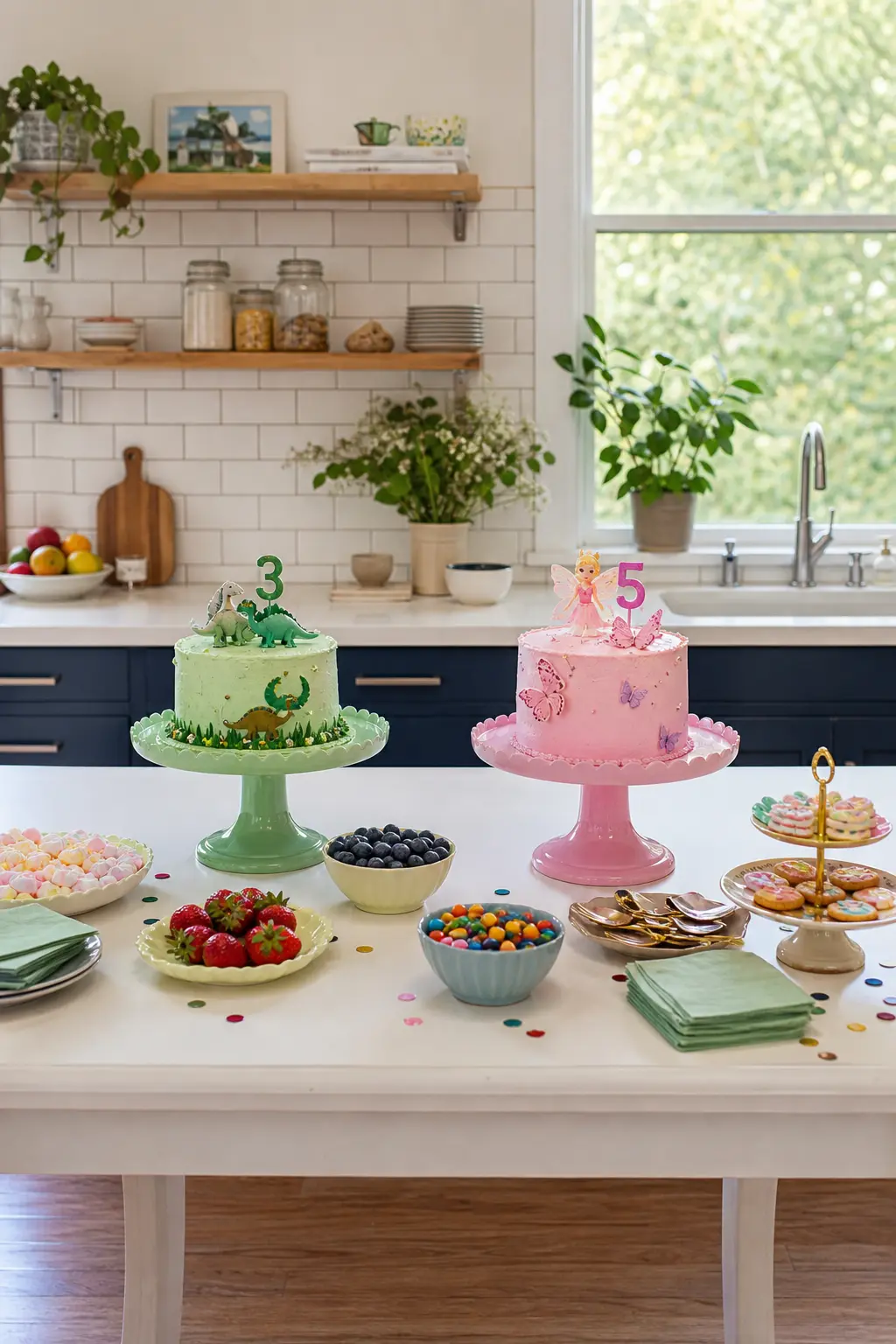
Two Smash Cakes or Two Dessert Stations
One dessert table, two stations. Each station is styled to reflect that child’s preferences: colours, flavours, decorations chosen for or by them. A shared backdrop ties the table together visually so it reads as one party, not two separate events happening at the same table.
The smash cake version works especially well when one or both children are under three. Each child gets their own cake to approach, their own moment in front of the camera, and their own mess. No sharing, no waiting, no watching the other child get the thing you wanted.
For older children, two dessert stations can mean two flavour profiles: one child likes lemon, the other likes chocolate, and the table reflects that honestly rather than defaulting to vanilla for everyone.
🛍 Shopping guide
A Joint Cake with Two Designs Meeting in the Middle
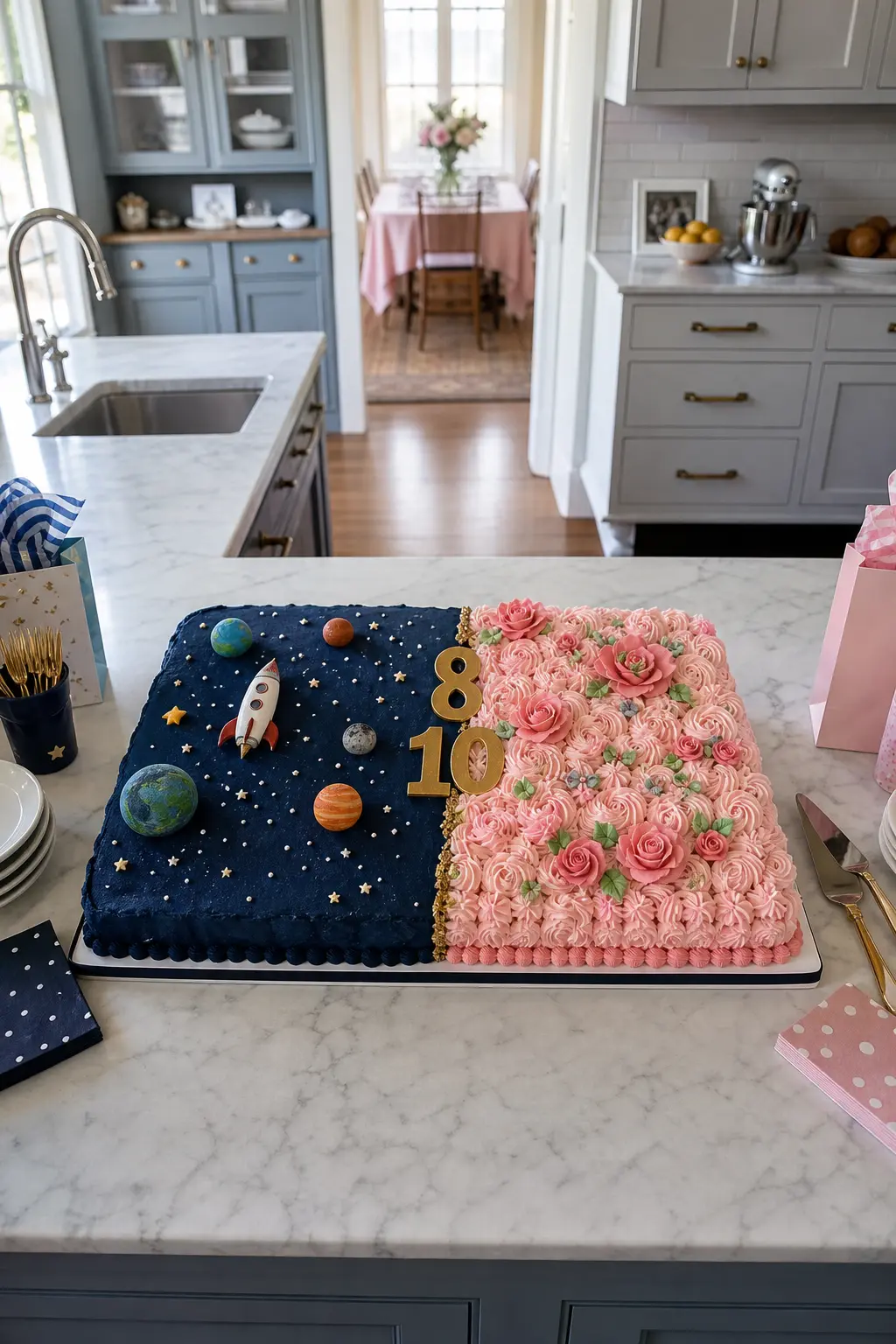
One cake, two halves. The left side reflects one child’s theme or favourite character or colour. The right side reflects the other’s. The centre line can be a shared element: a stripe, a number, a simple border that belongs to both of them equally.
This works as a sheet cake or a tiered cake. A tiered version can assign each tier to one child. A sheet cake simply splits horizontally, which is easier for a home baker or a local bakery than a complicated custom design.
The moment of cutting is built-in theatre. Each child stands at their own side. The cut goes down the centre line first. Then each child’s piece is served from their half.
The Party Schedule
Structure does more equality work than decoration. A schedule that names each child at a specific moment, rather than treating them as a unit throughout, is the simplest way to make sure neither birthday is absorbed into the other. These entries are things you plan in advance and print on a timeline.
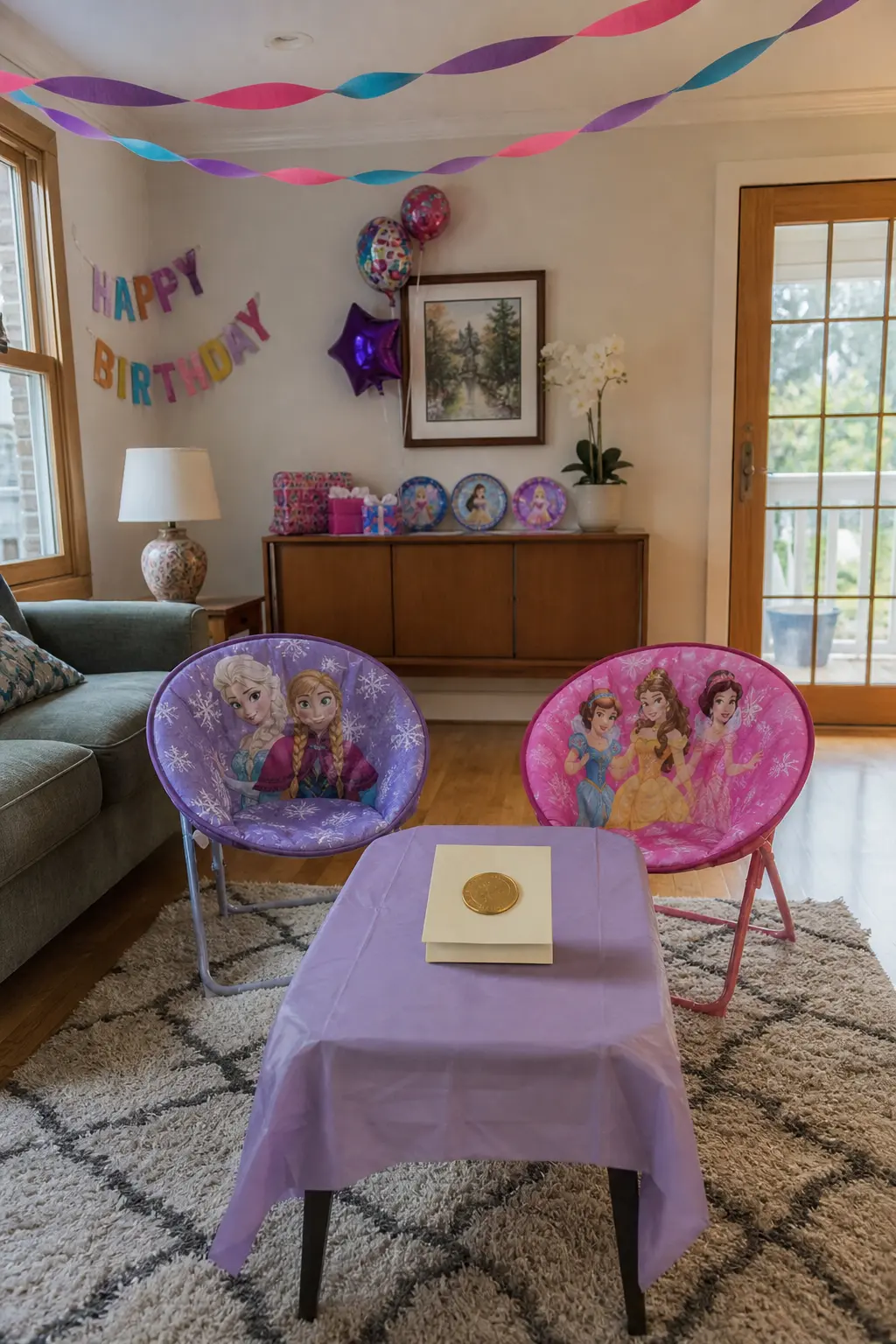
A Coin Toss Rule for Cake Cutting Order
Whoever goes first with the cake gets a moment of pure focus: all cameras, all singing, all attention. The second child waits, and that wait is long when you are four. Set a rule in advance so the decision is not made in the moment under pressure.
The simplest rule: alternate by age each year. Older child first this year, younger child first next year. Write it down somewhere so neither parent misremembers it under party stress.
The coin toss version works if neither child is old enough to track the pattern. Flip the coin before the party, note the result in the party planning doc, and present it to the children as a done deal before anyone gets excited and attached to going first.
A Split Party Schedule with One Activity Per Child
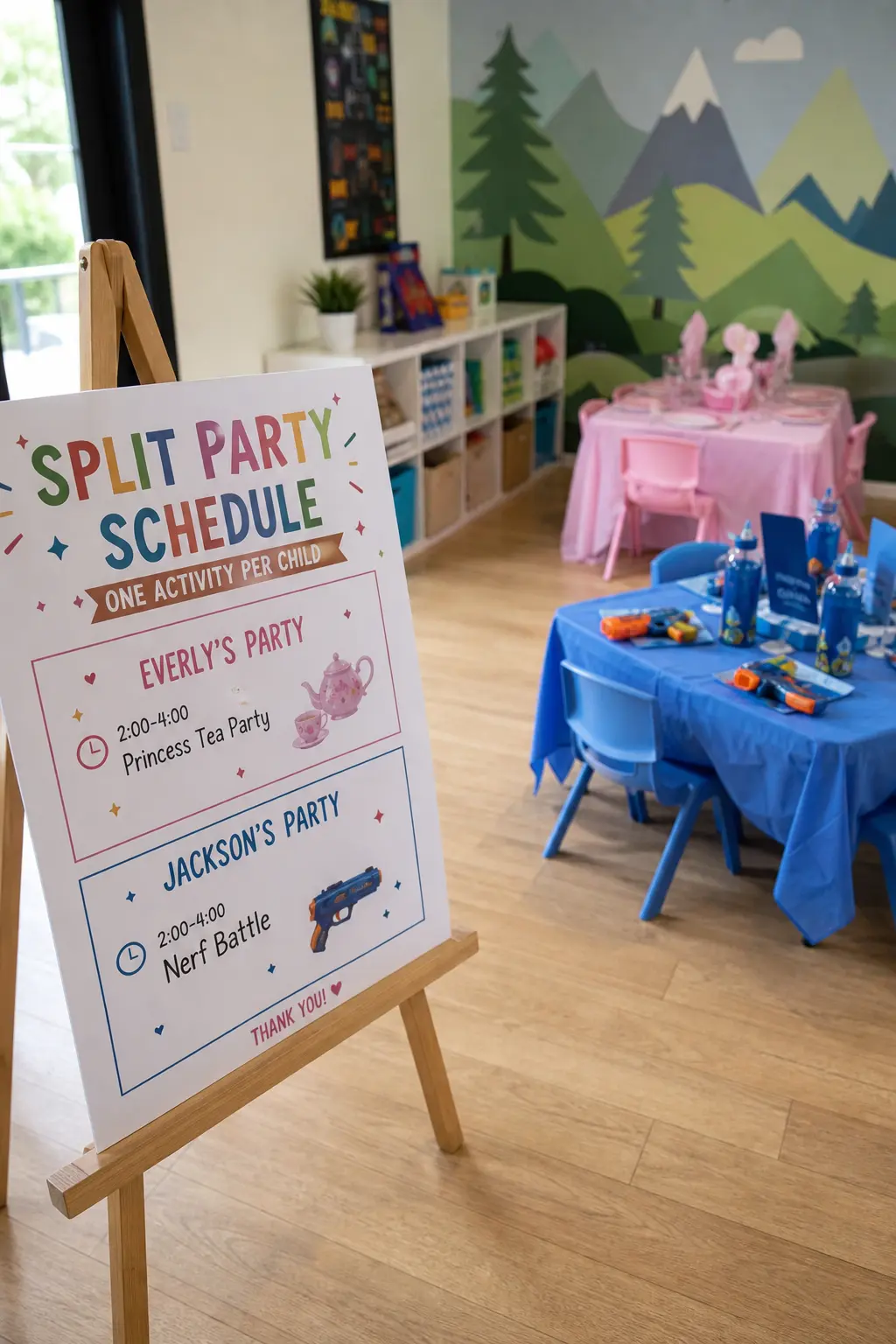
Write the schedule so each child leads or stars in at least one activity. Not ‘the children will do a craft’ but ‘Sofia’s craft station opens at 2pm’ and ‘Leo’s dance game starts at 3pm’. The names go on the printed schedule guests receive at the door.
This does more than make the day feel fair. It gives each child something to anticipate specifically, which reduces the pre-party anxiety that comes from not knowing where you fit in the plan.
Keep the activities short and the transitions fast. Two distinct moments of fifteen minutes each are more memorable than one long shared activity where the louder child naturally takes over. For activity ideas that work across ages, 16 Birthday Party Activities for Kids covers formats that are easy to split between two hosts.
🛍 Shopping guide
A Party Date Between Both Birthdays
Neither child’s actual birthday is the party date. The party falls between the two, which means neither child has to share their real birthday with a party that is also for someone else. The real birthdays stay private, celebrated at home with the family on the actual day.
This is the logistics fix that costs nothing and resolves the deepest resentment before it starts. The shared party is a bonus event, not a replacement.
Put both children’s actual birth dates on the invitation so guests understand the structure. Most adults find it charming. Children find it fair, which is all that matters.
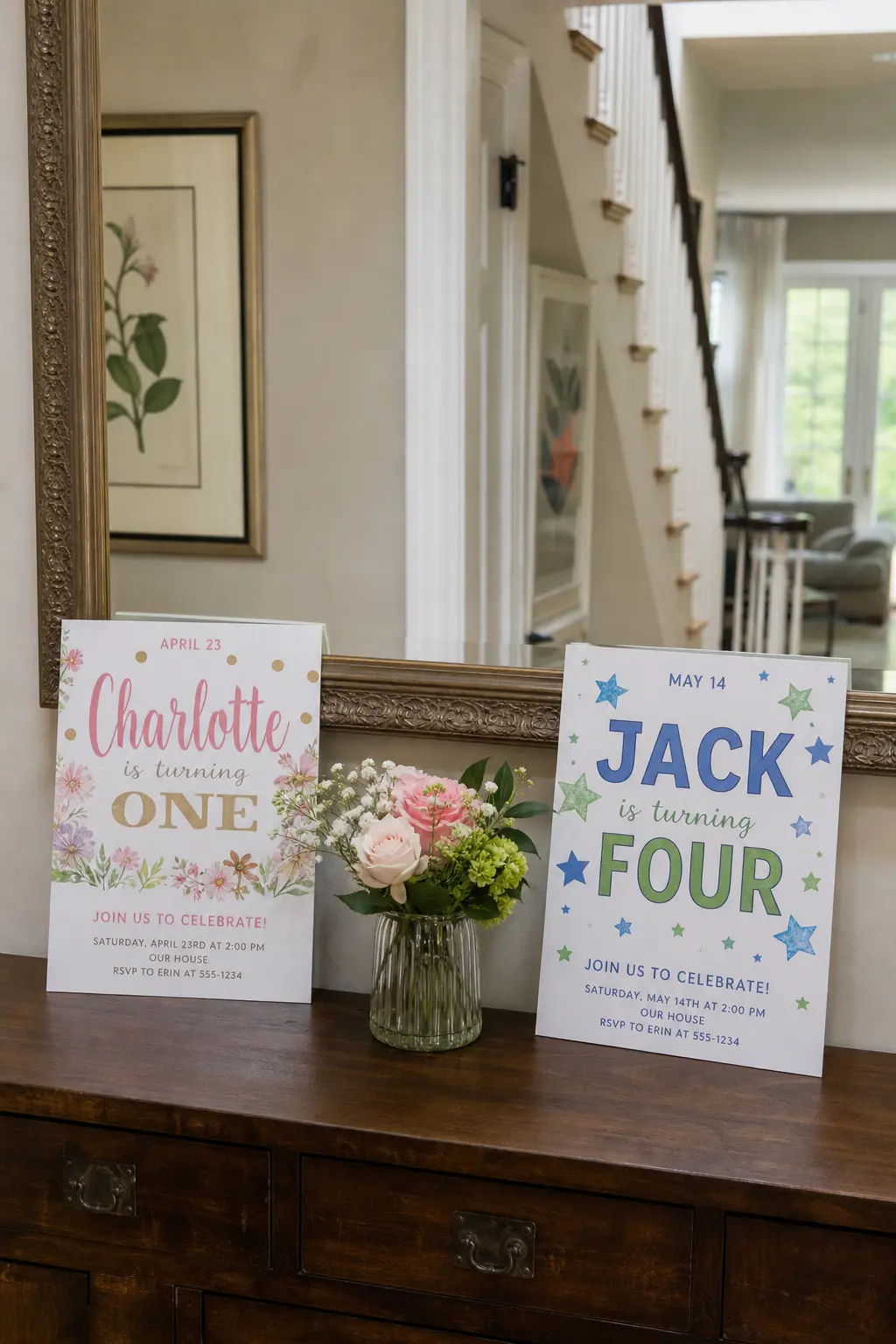
Separate Photo Moments Built into the Schedule
Every shared party produces hundreds of photos of the two children together. What is missing are the individual portraits: each child alone with their cake, their banner, their chair, their guests.
Schedule two specific moments, one per child, where the camera belongs entirely to them. Five minutes each is enough. Name the moments on the printed schedule so adults know to clear the frame. ‘Sofia’s cake photos at 2.15’ means every adult with a phone knows to step back.
These individual portraits are the ones that will go in each child’s baby book separately. They cannot be taken after the fact. Build them in before the party starts and they will happen.
The Theme Itself
Some themes are broad enough to hold two very different children without either feeling like a compromise. A carnival is not a single activity: it is a format. A garden party is not a colour: it is a backdrop. The entries here pick themes that have enough internal variety to give each child a real piece.
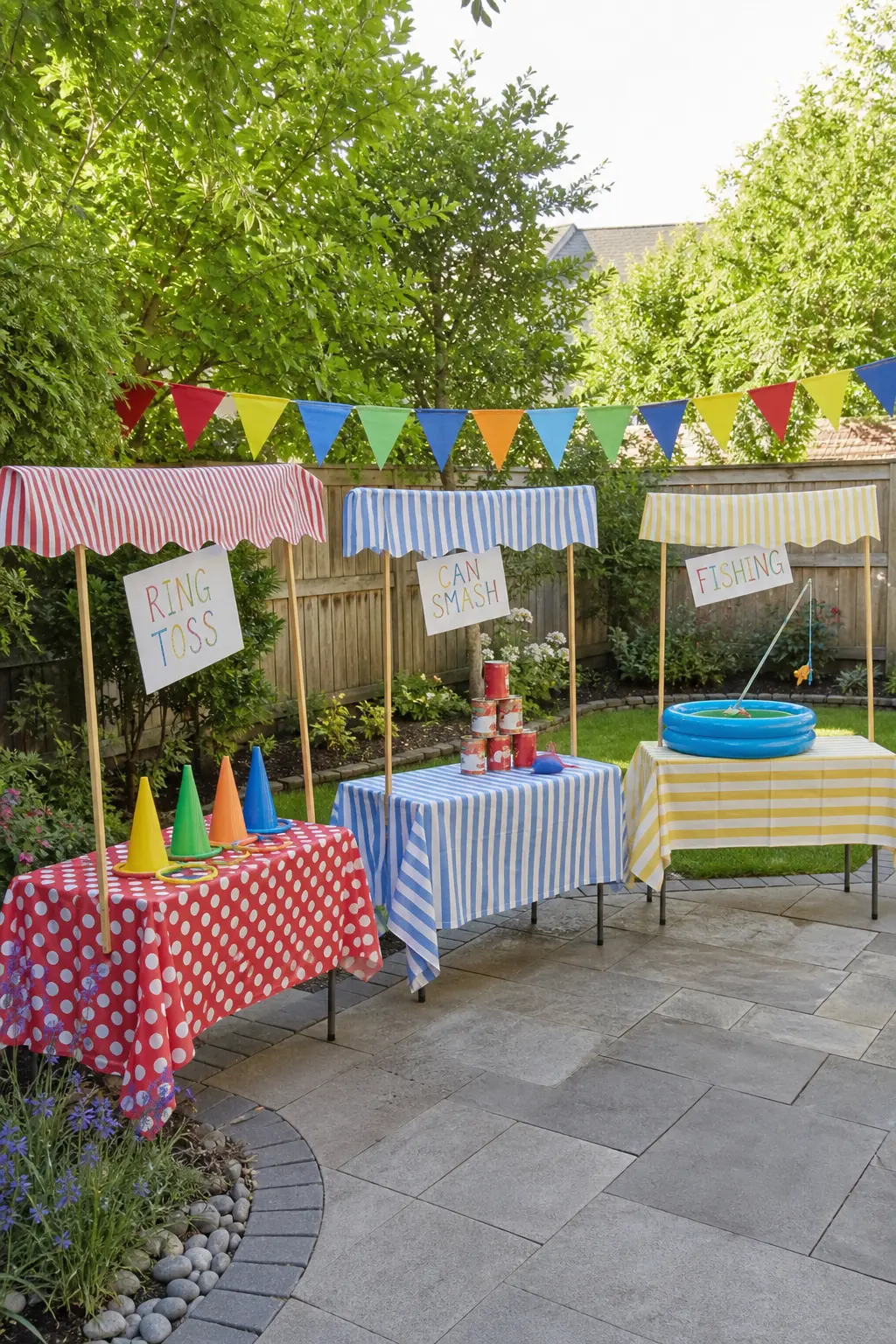
A Carnival Theme with One Game Per Child
A carnival is a collection of games and stalls, which makes it structurally perfect for two children with different interests. One child’s favourite activity becomes one stall. The other child’s favourite becomes another. The carnival format holds both without either looking forced.
A child who loves dinosaurs gets a dinosaur ring toss. A child who loves music gets a musical statues station. The shared signage uses the carnival palette; the individual stalls use each child’s colour. For more games that translate to carnival format, 25 Birthday Party Games for Kids has formats that set up in under ten minutes.
The carnival also gives children something to do between cake moments, which keeps the energy structured and prevents the flat period where one child is tired and the other is still running.
🛍 Shopping guide
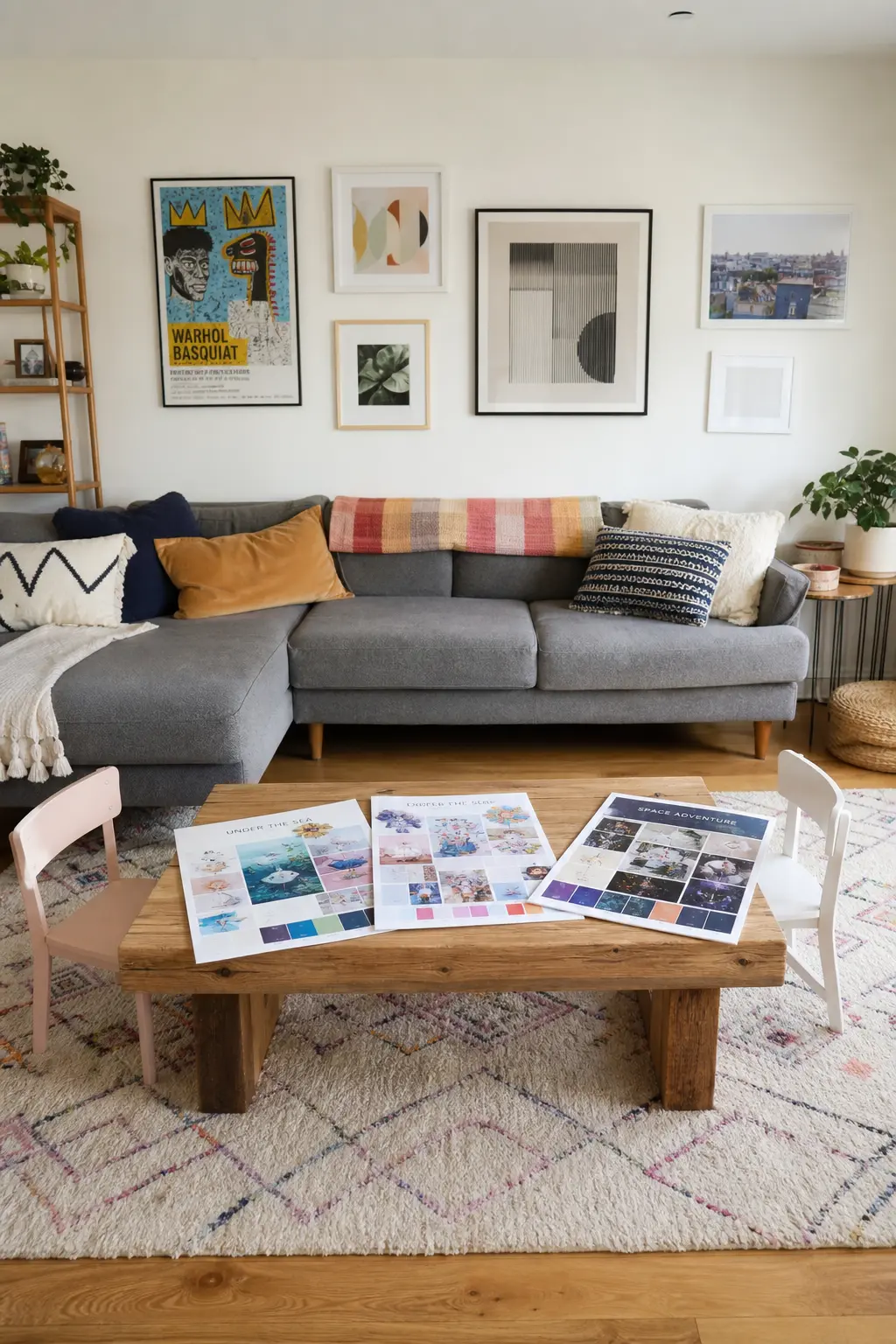
A Theme Chosen Together by Both Children
Where age allows, both children make the decision. Not a parent deciding what is fair, not one child’s theme with the other given a colour option. Both children are given a shortlist of two or three themes that work for a joint party and they choose together.
The negotiation is the point. A child who chose the theme feels ownership over the party in a way that a child who was assigned a theme does not. That ownership changes how they behave on the day: they narrate the theme to guests, they point things out, they feel pride rather than tolerance.
Keep the shortlist short and pre-filtered so every option on it genuinely works for a shared party. Offering thirty themes and asking for consensus is a route to a meltdown. Offering three themes, all of which you can execute, produces a decision in under five minutes.
Mementos and Favours
What guests take home, and what stays in the family album, matters longer than the party itself. These entries handle the individual details that tell each child this celebration was also for them specifically, not just for the pair of them collectively.
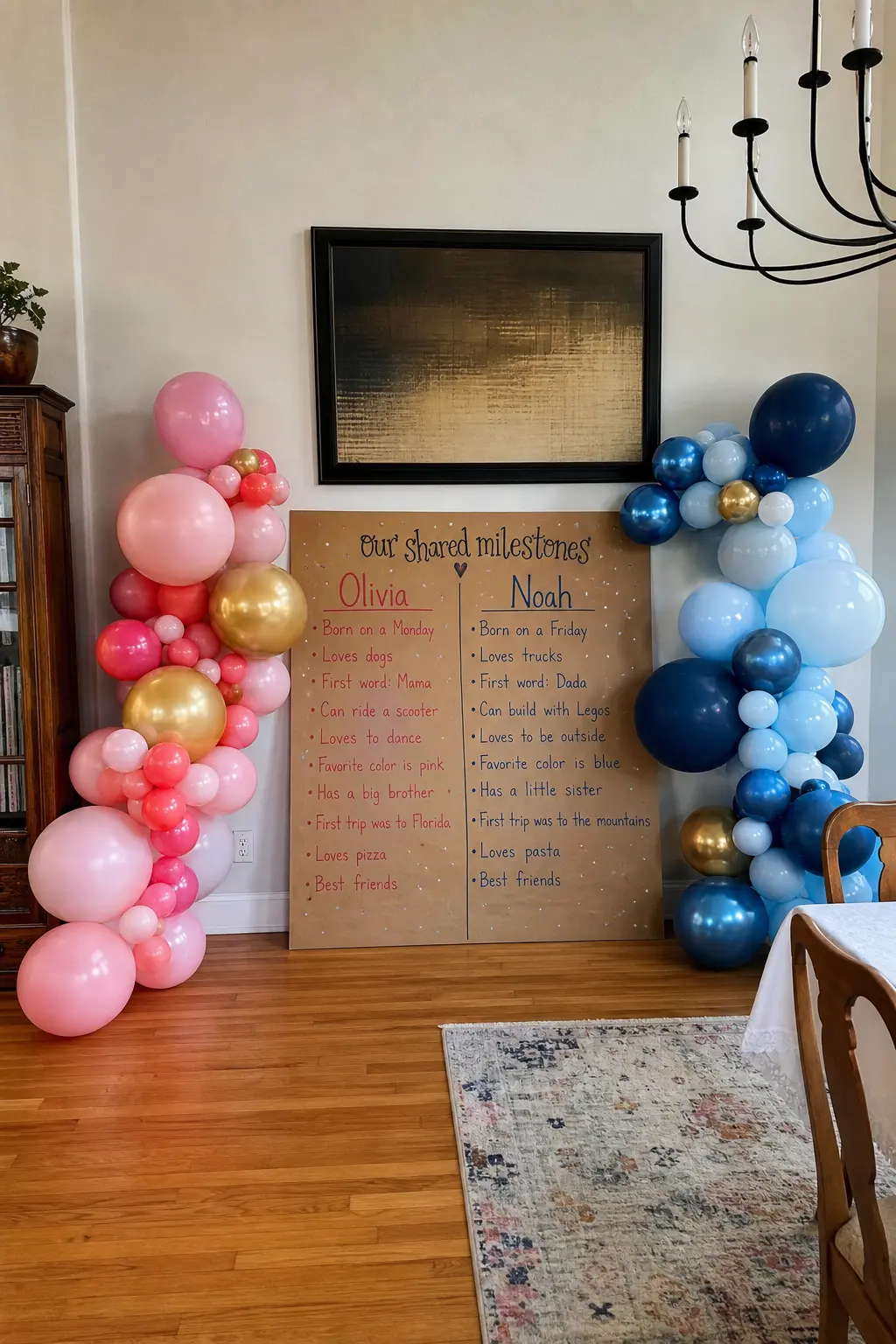
A Shared Milestone Board with Two Columns
One board, two columns. Left column: this child’s height, first word, favourite food, best friend this year. Right column: same categories for the other child. The board hangs near the entrance so guests read it on the way in and spend the first ten minutes of the party asking each child about their answers.
This is the display that does the most emotional work per square foot. It tells every guest that both children were thought about specifically. It gives each child a set of facts about themselves that are not about the other child.
Print it or write it by hand. A handwritten board on kraft paper often reads as warmer than a printed sign and takes about twenty minutes to produce.
🛍 Shopping guide
Individual Favours with No Perceived Value Gap
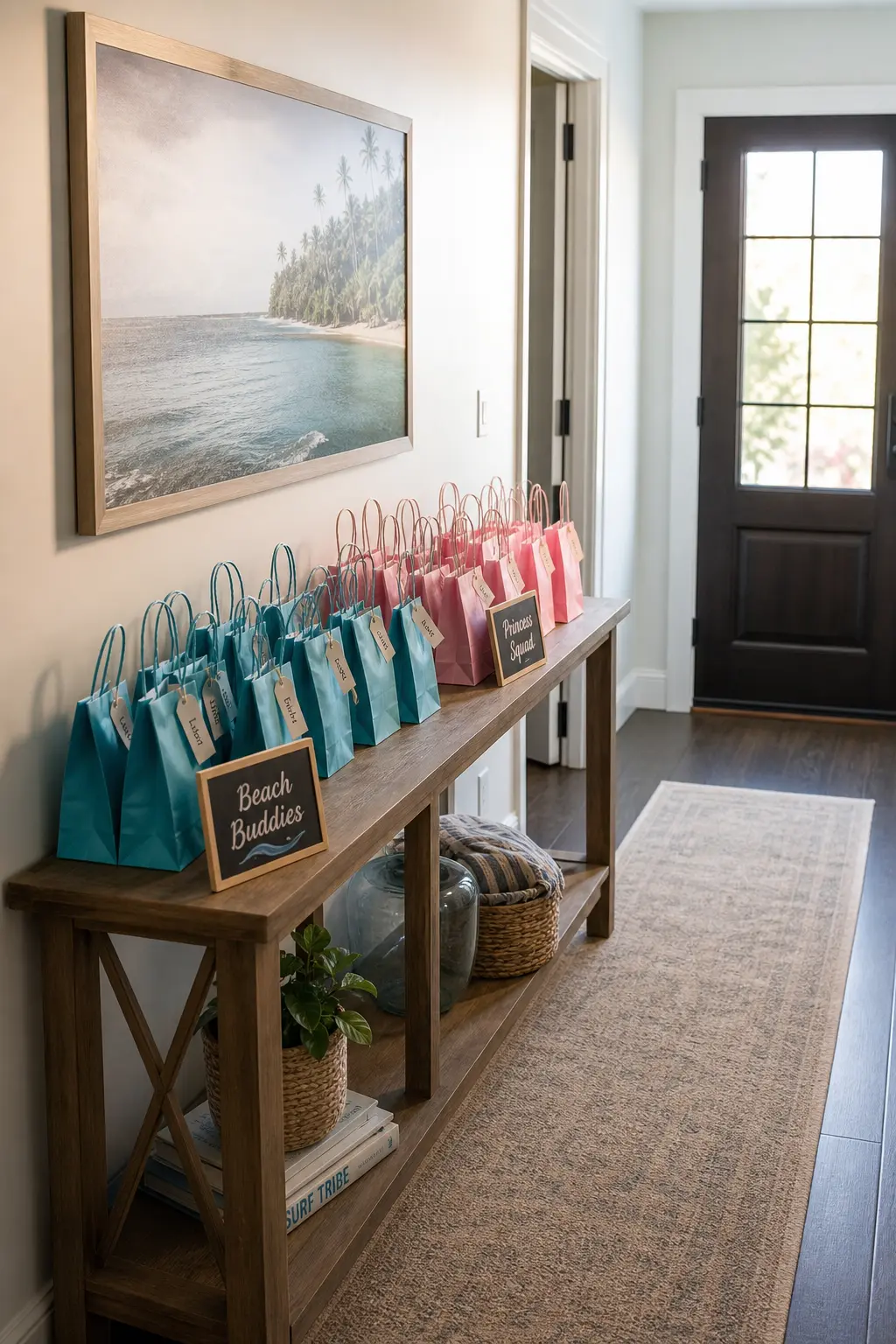
One shared guest list, one favour table, two sets of favours. Each set is themed to one child and tagged with their name. Every guest leaves with one favour from each child separately, not a combined pack that represents both.
The rule on perceived value: weigh the bags before the party. Children notice when one bag is heavier or has more in it, and so do their parents. The contents can differ completely; the quantity and rough cost should match.
Tag each set clearly at the favour table so guests pick up one from each column. A small sign per set prevents confusion and makes the gesture legible: these are two separate thank-yous from two separate children.
🛍 Shopping guide
Individual Thank You Notes from Each Child
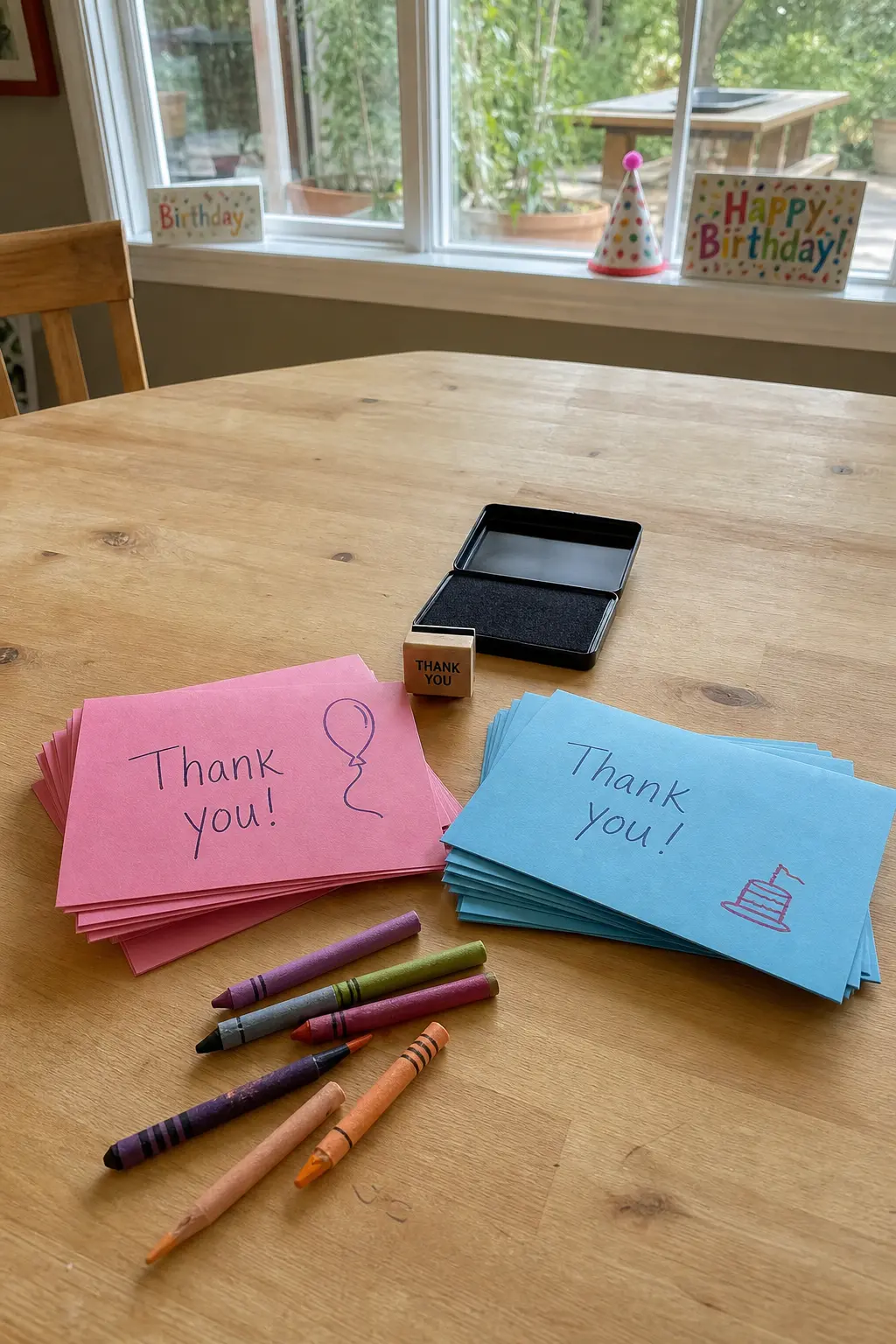
After the party, each child sends their own thank you note to their own guests. Not a joint card, not a single note signed by both. Each child’s note reflects their own party experience, their own words where age allows, and their own name only at the bottom.
For children too young to write, a handprint or a photo from their individual photo moment makes the note personal without requiring literacy. The act of sending separate notes is the final signal that two separate children had two separate birthdays at one shared event.
Print a batch of note cards in each child’s party colour before the party. Have the wording drafted. Within three days of the party, the notes go out. Past a week, the gesture loses its warmth.
🛍 Shopping guide
combined birthday party sibling themes
The fourteen ideas above share one logic: fairness is not the same as sameness. Two children do not need identical parties. They need parties where they each have a moment that is unambiguously theirs, a visual identity that is unambiguously theirs, and a memory that does not require them to share the frame entirely.
For more on building out birthday themes by age and interest, the birthday party themes for adults hub and the guides to twins birthday party themes, girls birthday party themes, boy birthday party themes, and boy 5th birthday party themes each carry the single-child version of this thinking, and every visual reference in them can be split across two columns.
Keep the planning doc simple: two columns, one per child, and a shared column for logistics. Anything that appears only in the shared column is genuinely joint. Anything that appears in a child’s column belongs to that child alone. That distinction, kept visible on paper, is what keeps the day fair when the party is actually happening and you are too busy to remember your good intentions.
Frequently Asked Questions
How do I choose a birthday party theme?
Start with what each child already loves, then look for a format broad enough to hold both interests. A theme is a format, not a single image: a carnival, a garden party, or a colour story all travel in any direction. Narrow the options to three, confirm you can source the decor and food for each, then let the children choose from the shortlist if they are old enough to do so without a standoff.
What themes work for a mixed age group of children?
Activity-based themes work best across ages because the format scales: a carnival game is playable at two and at eight, just with different levels of coordination. Colour-led themes also travel well because the visual impact does not depend on children knowing the reference. Avoid character-specific themes where the character is only meaningful to one age group, unless you assign that character exclusively to the child of the right age and give the other child their own character within the same world.
How much does a themed birthday party cost to decorate?
A cohesive themed party can look complete for under 50 to 80 dollars in decor: balloons, a banner, solid-colour tableware, and one focal-point display. The cost rises when you add custom items like personalised banners, printed backdrops, or cake toppers, but those are optional. A combined sibling party adds roughly 20 to 30 percent to the decor budget because you are doubling the individual elements, but the shared items, the backdrop, the main banner, the tableware, cover both children.
Can siblings share one birthday party theme?
Yes, and it works best when the theme is broad enough to give each child a distinct piece of it. Assigning each sibling a different colour within the same theme, or giving each child one game station or dessert station in their own style, keeps the shared theme from absorbing one child’s identity into the other’s. The goal is one party with two clearly individual celebrations inside it, not two parties merged into something that fully resembles neither child.
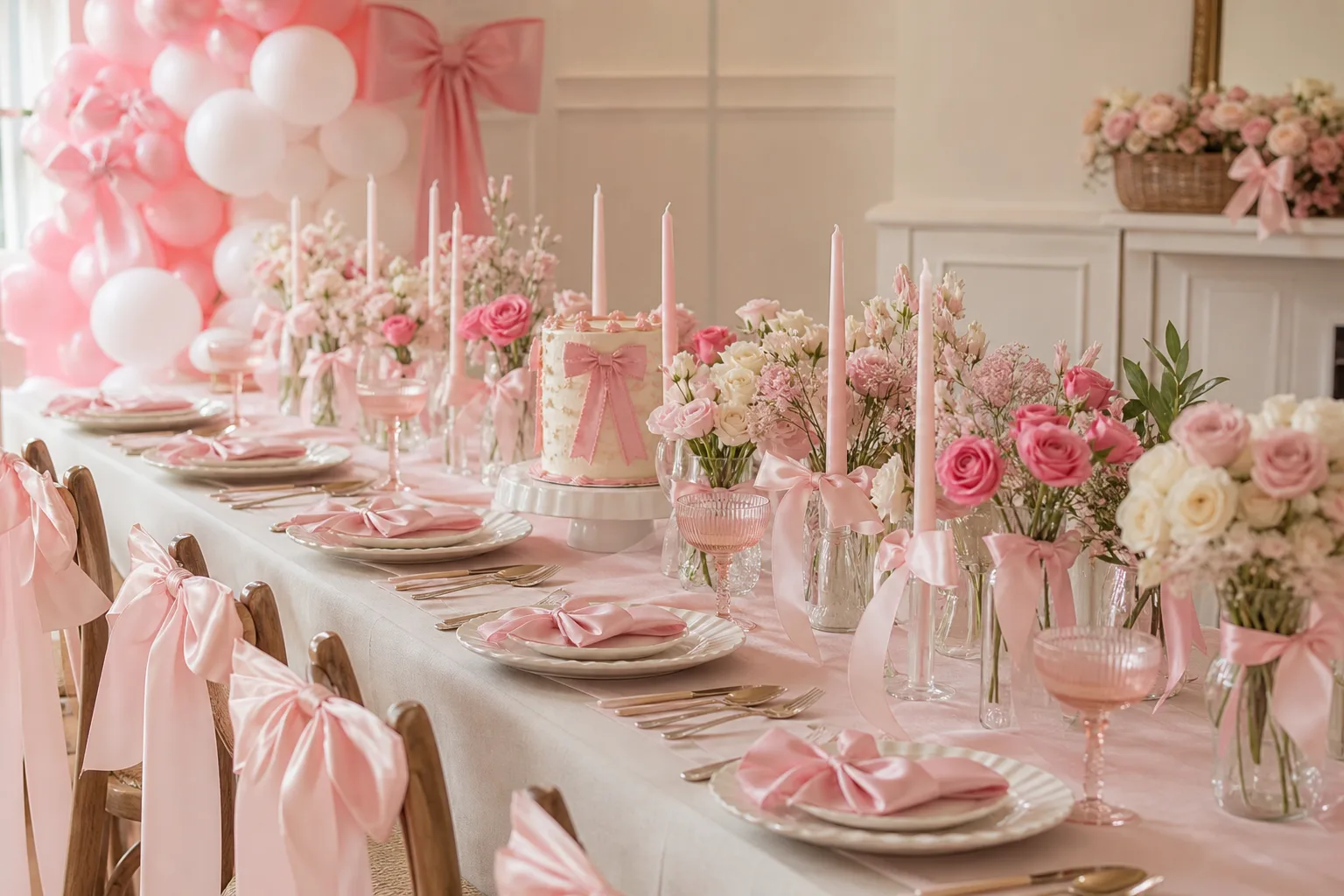
21 bow birthday party ideas in pastel pink and white, from a flower wall backdrop to bow cookies, or
Sixteen 13th birthday party ideas that actually work: cool, clean setups each built around what gues
14 pool party birthday ideas for a wet, sunny, barefoot celebration: where each setup sits, what sur
Leave a Reply