

20 Birthday Party Themes for Adults That Do Not Feel Like a Kid’s Party Scaled Up
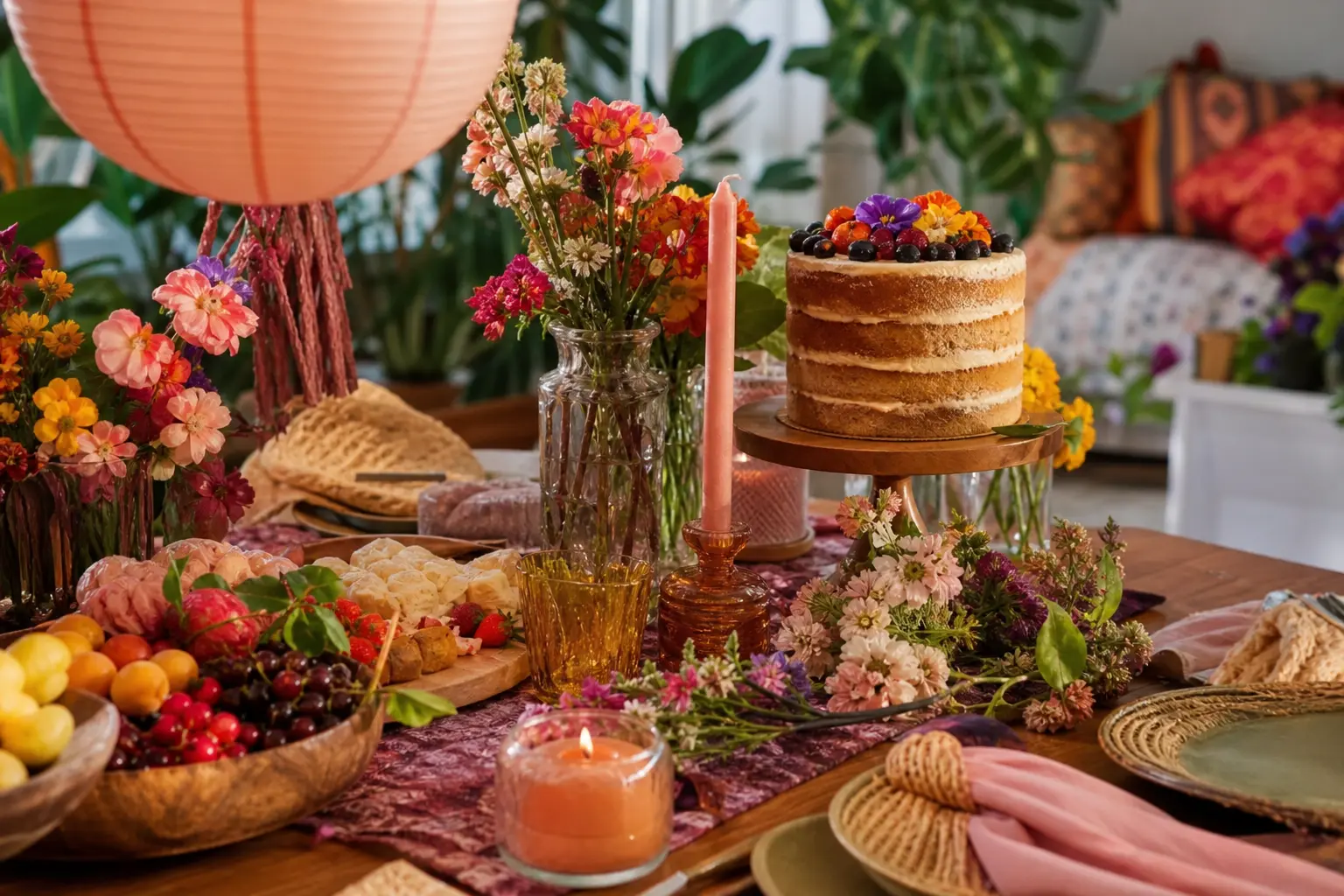
Most theme roundups aimed at adults are quietly doing the same thing: taking a children’s party concept and swapping the neon for navy. The birthday party themes for adults on this list were built differently.
Every single one starts with something a grown-up actually enjoys: a proper drink, a specific decade, a hobby, a cuisine, a dress code that means something.
The difference shows up in the details. A speakeasy has a password at the door and a black-and-gold bar. A supper club has courses and a playlist that lands between dinner and dancing. Neither of those ideas needs a balloon arch or a candy buffet to work. They work because the concept respects the room.
Each theme below arrives as a package: palette, atmosphere, what to put on the table, and what to send guests home thinking about. Pick the one that sounds like the guest of honour and build outward from there.
And if the party you are planning includes younger guests too, the articles on birthday party ideas for adults and birthday party games for adults sit alongside this one well.
This post contains affiliate links. If you buy through them, I may earn a small commission at no extra cost to you.
Speakeasy and Jazz Nights
These two themes share a DNA: low light, good music, drinks worth sipping. The difference is in the structure. A speakeasy runs on the thrill of arrival, the password, the dim bar, the sense of being somewhere slightly clandestine.
A jazz lounge puts the music first and builds everything else around it. Both feel genuinely adult because they ask guests to inhabit a world, not just attend a party.
Speakeasy Night
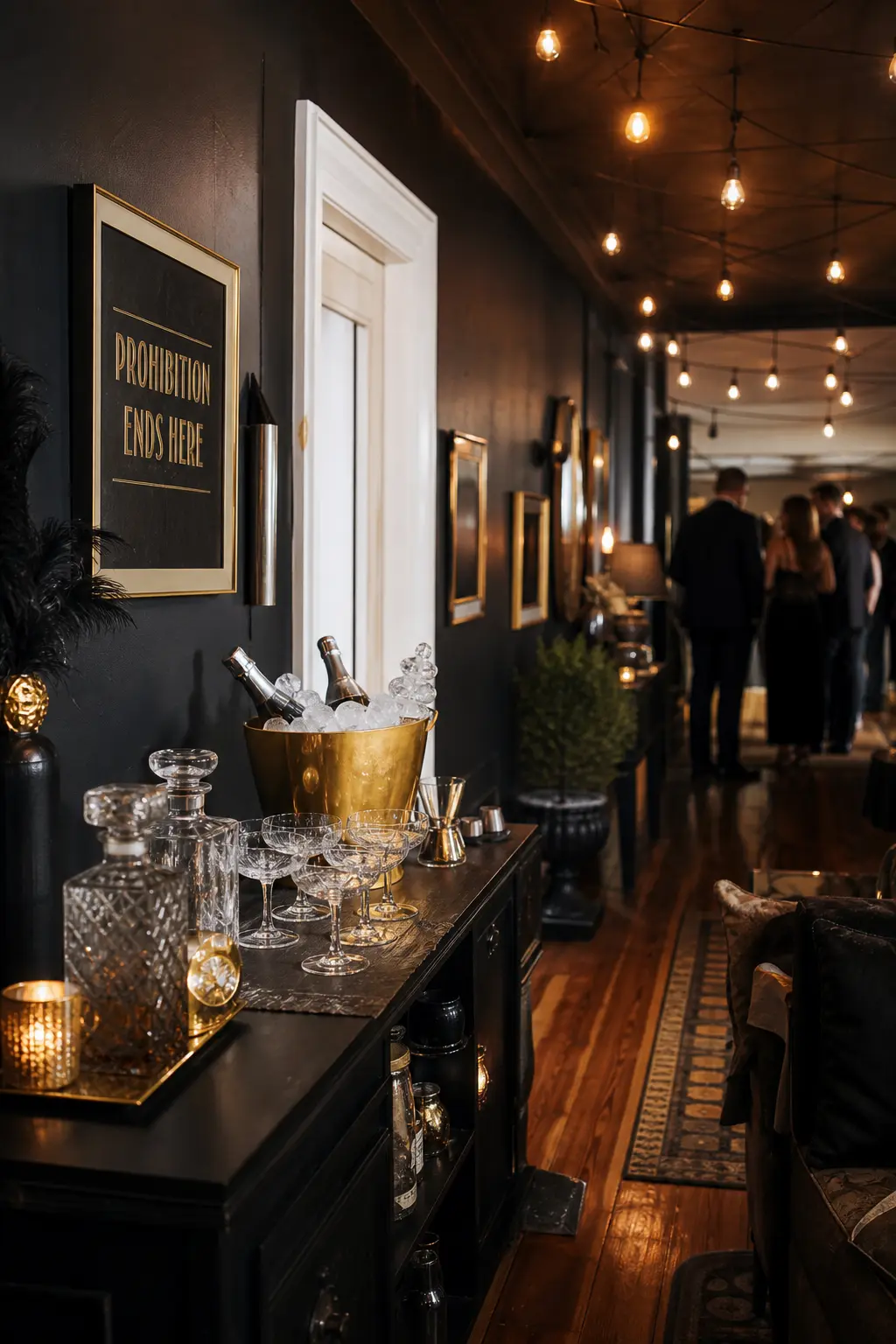
Palette: black, gold, deep burgundy. The password at the door is not a gimmick, it is the moment the evening shifts. Text it to guests in the invitation and watch how differently they arrive when they have had to earn entry.
Keep the bar simple: two signature cocktails, both named after a fictional 1920s character, plus one non-alcoholic option in the same glassware. Mismatched vintage coupes and lowball glasses do more decorative work than any centrepiece. A single string of warm Edison bulbs and one candle per table handles the rest of the lighting.
Dress code: era-optional glamour. Feathers, braces, long gloves, a fascinator: encourage it, do not require it. The guests who dress up set the tone for the whole room.
🛍 Shopping guide
Jazz Lounge Night
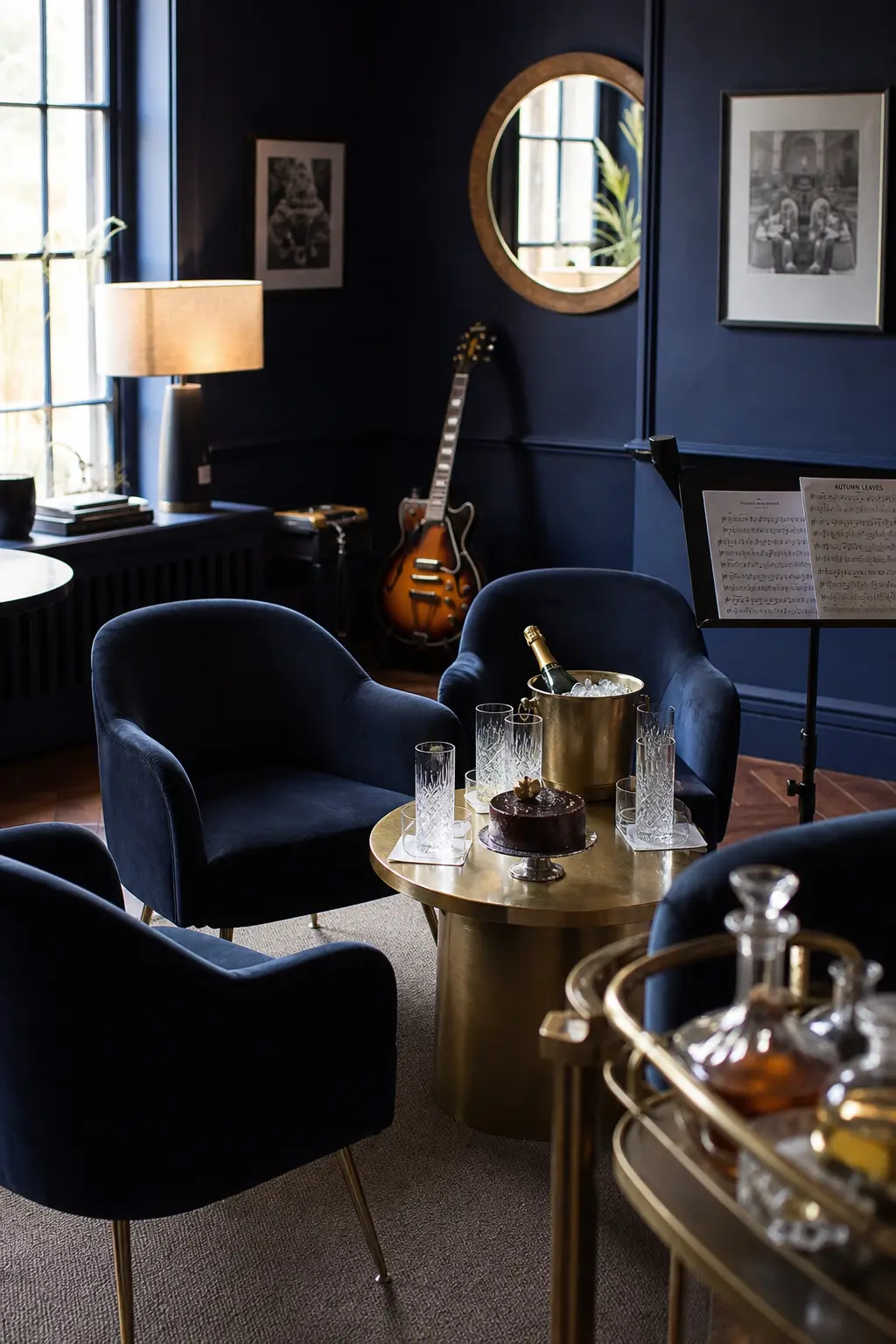
Palette: navy, brass, warm cream. The centrepiece of this evening is the music, and that means doing the playlist properly. Hire a solo musician for two hours if the budget allows: a jazz guitarist or pianist changes the entire texture of the room.
If live music is not possible, build a curated Spotify playlist that runs in eras, early Coltrane into later Kind of Blue territory, and keep the volume at conversation level.
Arrange seating in clusters rather than rows. Low armchairs, a sofa, floor cushions for those who want them. The goal is a room that looks like a private members’ club, not a living room with the furniture pushed back.
Serve drinks in tall glasses with a single large ice cube. Brass candlesticks, a navy tablecloth, and a vase of cream flowers close the look without overspending.
🛍 Shopping guide
Tasting Nights
Wine flights, whisky lineups, cocktail tasting menus: any of these turns drinking into a structured experience guests actually talk about. The key is keeping the flight to three or four pours with tasting notes cards at each place. That is it. No elaborate decoration needed when the content is interesting enough to hold the room.
Wine Tasting Flight
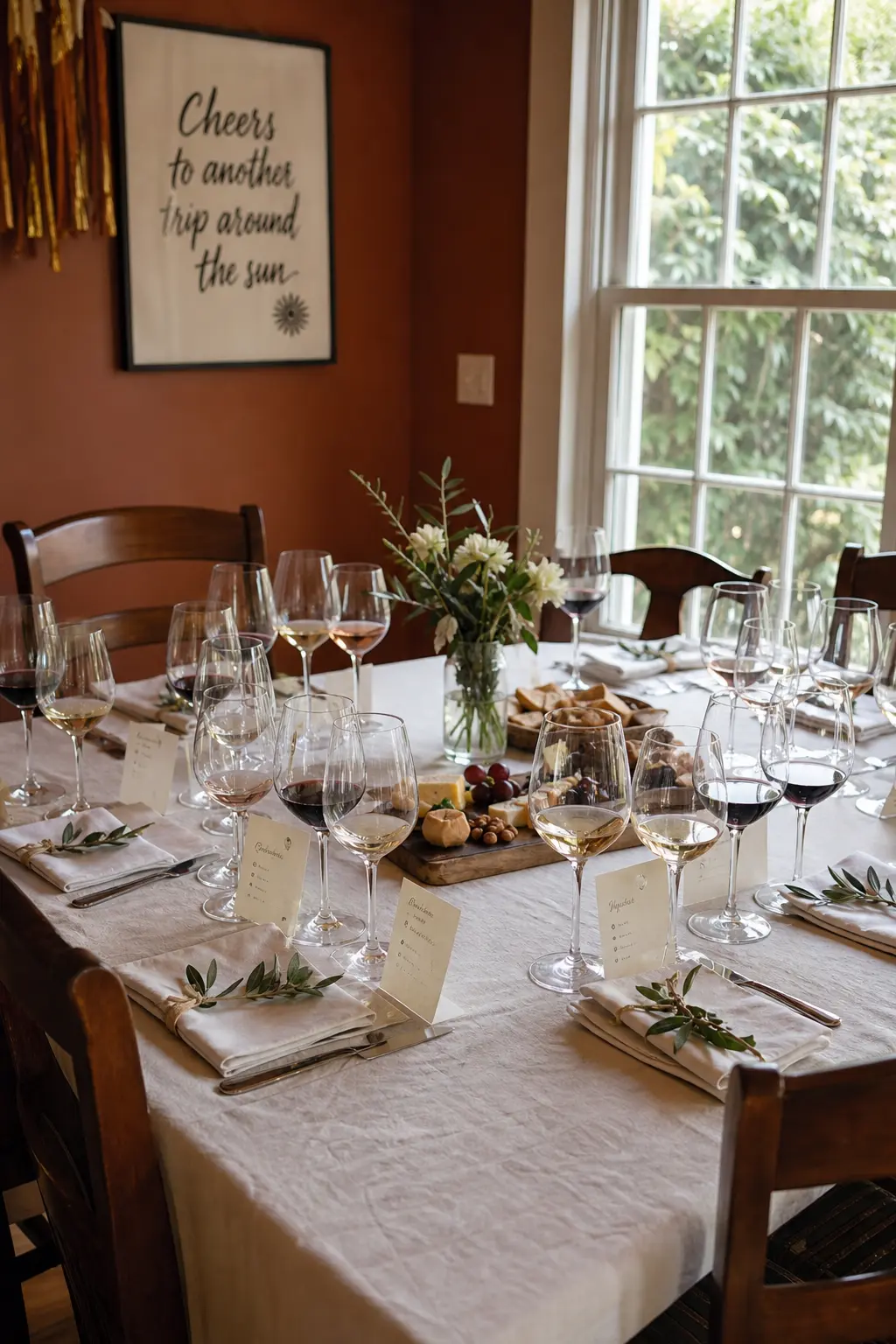
Palette: terracotta, white linen, deep green. Three wines, a tasting notes card at each place, a water glass, and a small plate of neutral palate cleansers: this is a complete event structure. The cards do not need to be elaborate. Region, grape, one tasting note you have written yourself is enough to start a conversation at every seat.
Group wines by theme rather than price: three expressions of the same grape from different regions, or three different styles from one country. Guests who know wine enjoy the comparison; guests who do not suddenly have something to discover. Both outcomes are good hosting.
Keep food simple and intentional: a cheese board with one aged, one soft and one sharp, plus good bread. The food is a pause between pours, not the main event.
🛍 Shopping guide
Whisky or Cocktail Tasting
Palette: amber, dark wood, cream. Three pours is the right number. Four works. Five becomes a chore. For whisky, choose expressions that tell a story: a lowland, a highland, and a peated island malt give guests three genuinely different things to react to.
For cocktails, build three drinks around one spirit, varying the mixer and the garnish, and let guests see the process.
A small printed card per glass with two lines of context (region, age statement for whisky; base spirit and dominant flavour for cocktails) gives guests vocabulary without lecturing them. The room does the rest.
Dark wood, leather coasters, a single candle per table. No balloons, no bunting. The bottles themselves are the decoration.
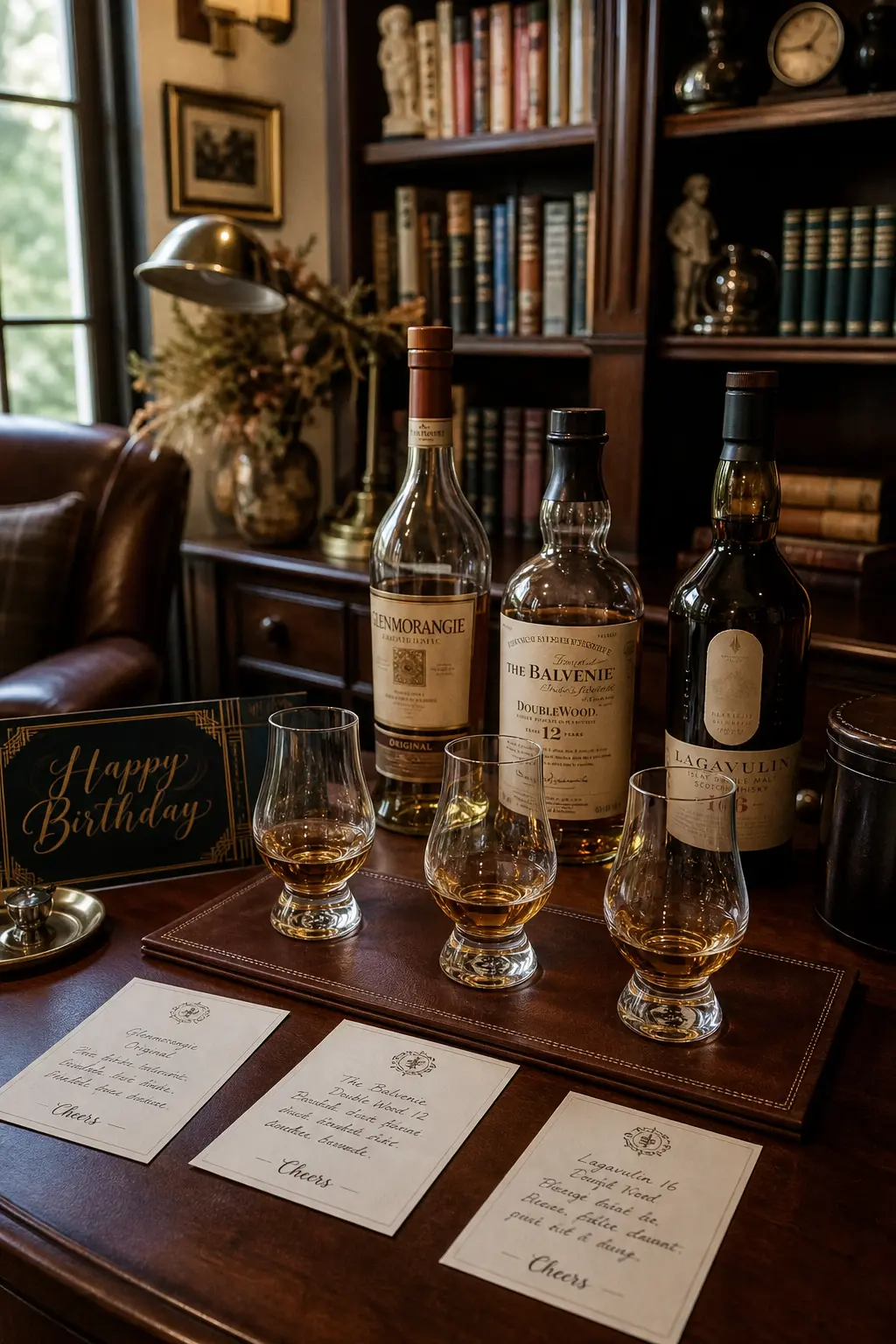
🛍 Shopping guide
Dinner and Supper Club
A set menu is a party trick that sounds hard and is not. Decide the courses in advance, plate them simply, and the evening runs itself. A supper club layers on a little more theatre: name cards, a printed menu, courses timed with music changes. Both of these themes feel expensive without being expensive, which is the goal.
Set-Menu Dinner Party
Palette: ivory, sage, warm wood. Decide three courses before a single invitation goes out. Write them on a card and put that card at each place setting. This one move transforms an ordinary dinner into an event: guests read the menu, talk about it, look forward to what is coming. The anticipation is part of the evening.
Keep cooking ambitious but manageable: one course that can be fully prepared in advance, one that needs ten minutes of attention, one that is purely assembly. A proper starter, a main that can hold in a low oven, a dessert you made the day before. The guest of honour should be at the table, not in the kitchen.
Candles at varying heights, cloth napkins, real wine glasses: these details cost almost nothing extra and do the visual work completely.
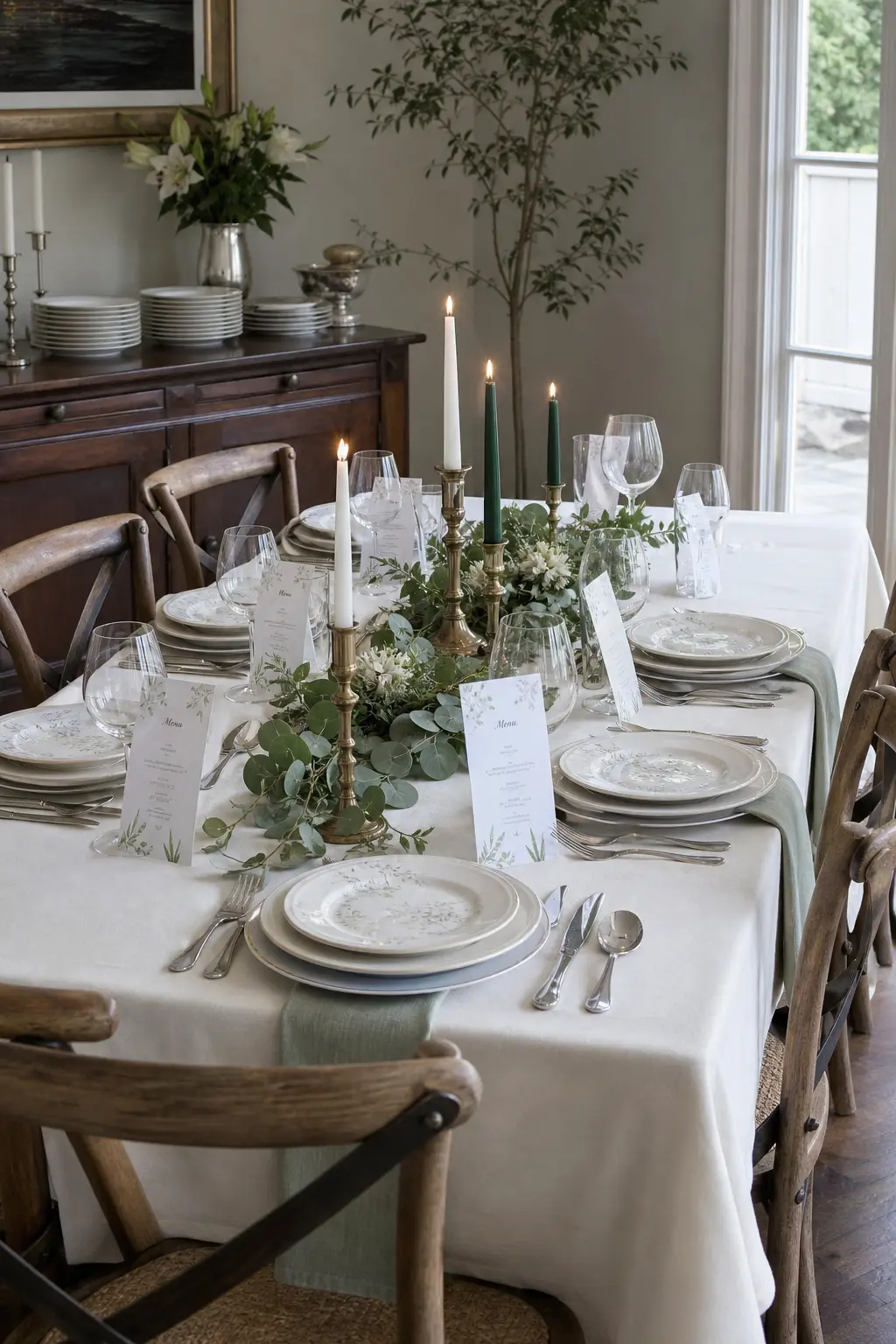
🛍 Shopping guide
Supper Club Evening
Palette: black, deep rose, candlelight gold. A supper club is a dinner party with a little more theatre. There is a printed menu. Courses arrive with a small explanation from the host.
Music changes between courses: something ambient and slow for the starter, something livelier after dessert. The guests know they are in a structured evening, and they lean into it.
Name cards at each place make guests feel properly received. A welcome drink waiting at their seat as they arrive removes the awkward first-five-minutes milling. Both of these are small logistics with an outsized effect on how the evening feels from the guest’s perspective.
The look: black tablecloth, deep rose napkins, a low floral centrepiece that does not block sightlines, brass cutlery if you have it or can borrow it. Keep the overhead lights off and rely entirely on candles and one warm lamp in the corner.
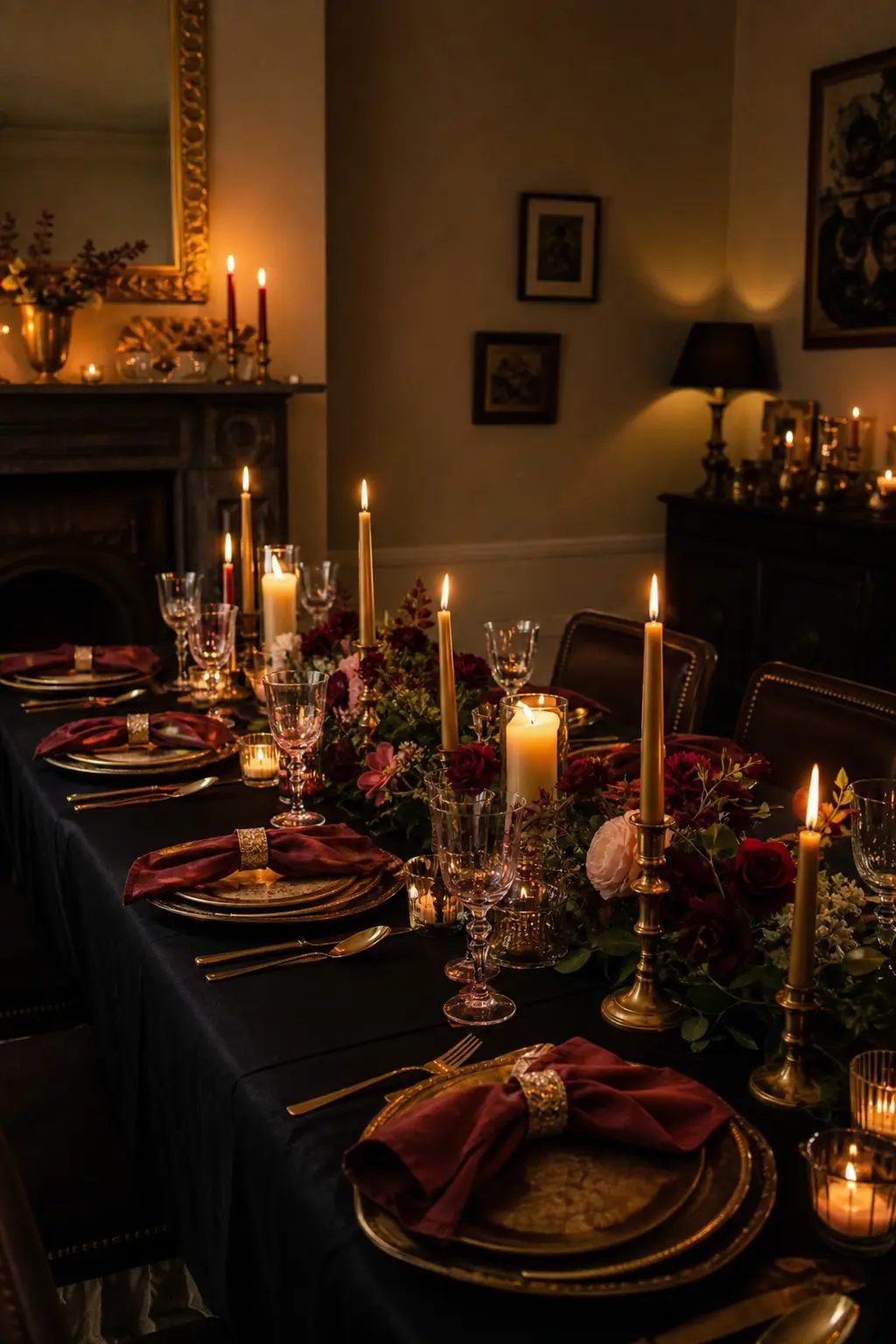
🛍 Shopping guide
Decade Themes
A decade theme works when it commits to one specific decade and actually does the research: the music, the dress code, the one or two visual cues that place you there. Vague “retro” is a children’s theme in beige. A tight “1970s dinner party in burnt orange and avocado” or “1920s prohibition night” is a completely different conversation.
The 1970s Dinner Party
Palette: burnt orange, avocado green, warm brown. This decade is specific enough to be funny and glamorous in equal measure, which is exactly what an adult theme needs. Commit to the era: a fondue set on the table, a Fleetwood Mac-to-Bowie playlist, lava lamps borrowed from someone’s loft, a dress code of wide lapels and wrap dresses.
The food does the heavy lifting here. Prawn cocktail, beef bourguignon, Black Forest gateau: every dish is a period detail. Guests who cook one course each turn this into a collaborative dinner that people talk about for years. If that feels like too much coordination, a classic 70s menu prepared by the host works just as well.
The visual cues are already in op-art print tablecloths, macrame table runners, and mismatched earthenware. Charity shops deliver the whole palette for almost nothing.
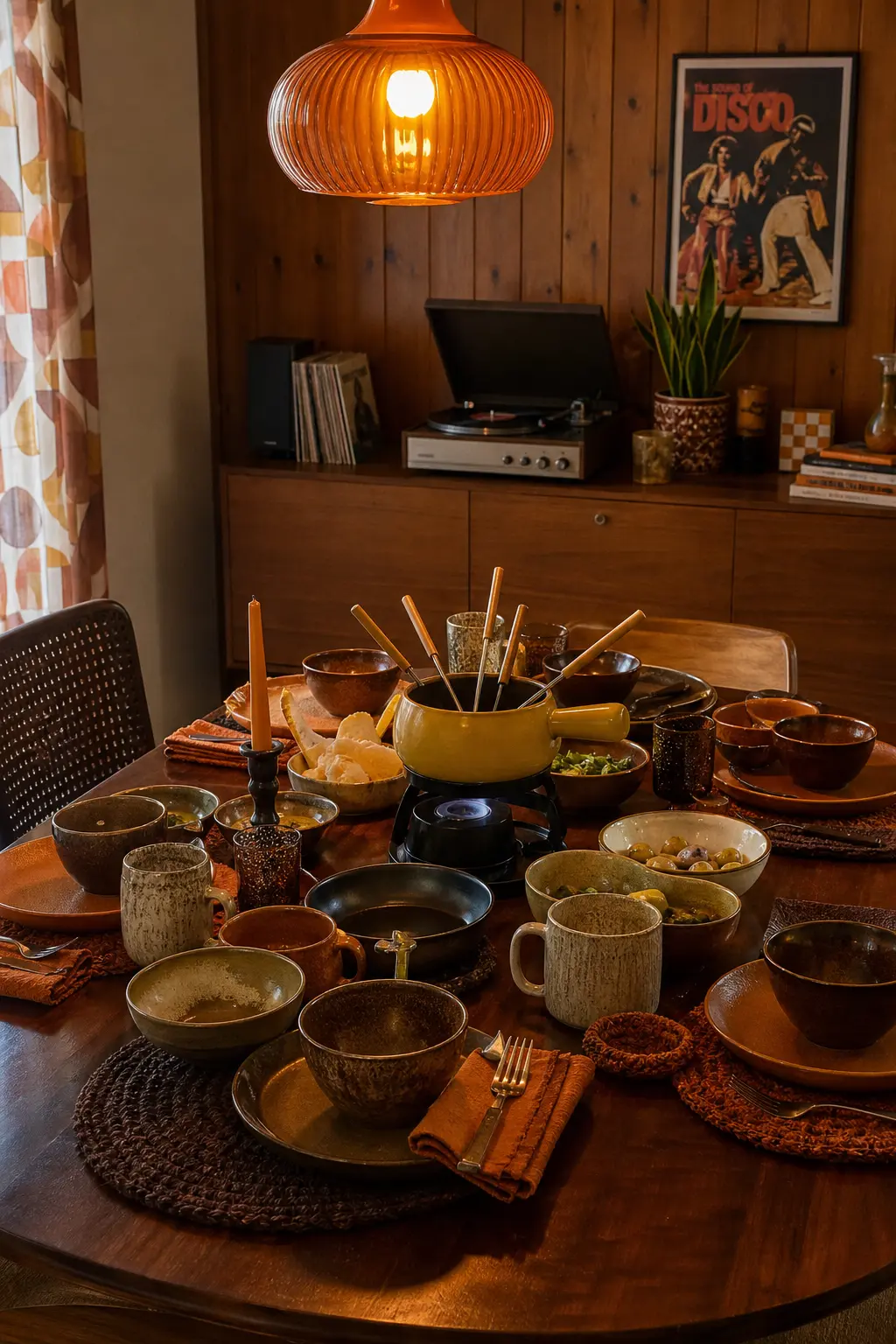
🛍 Shopping guide
The Roaring Twenties
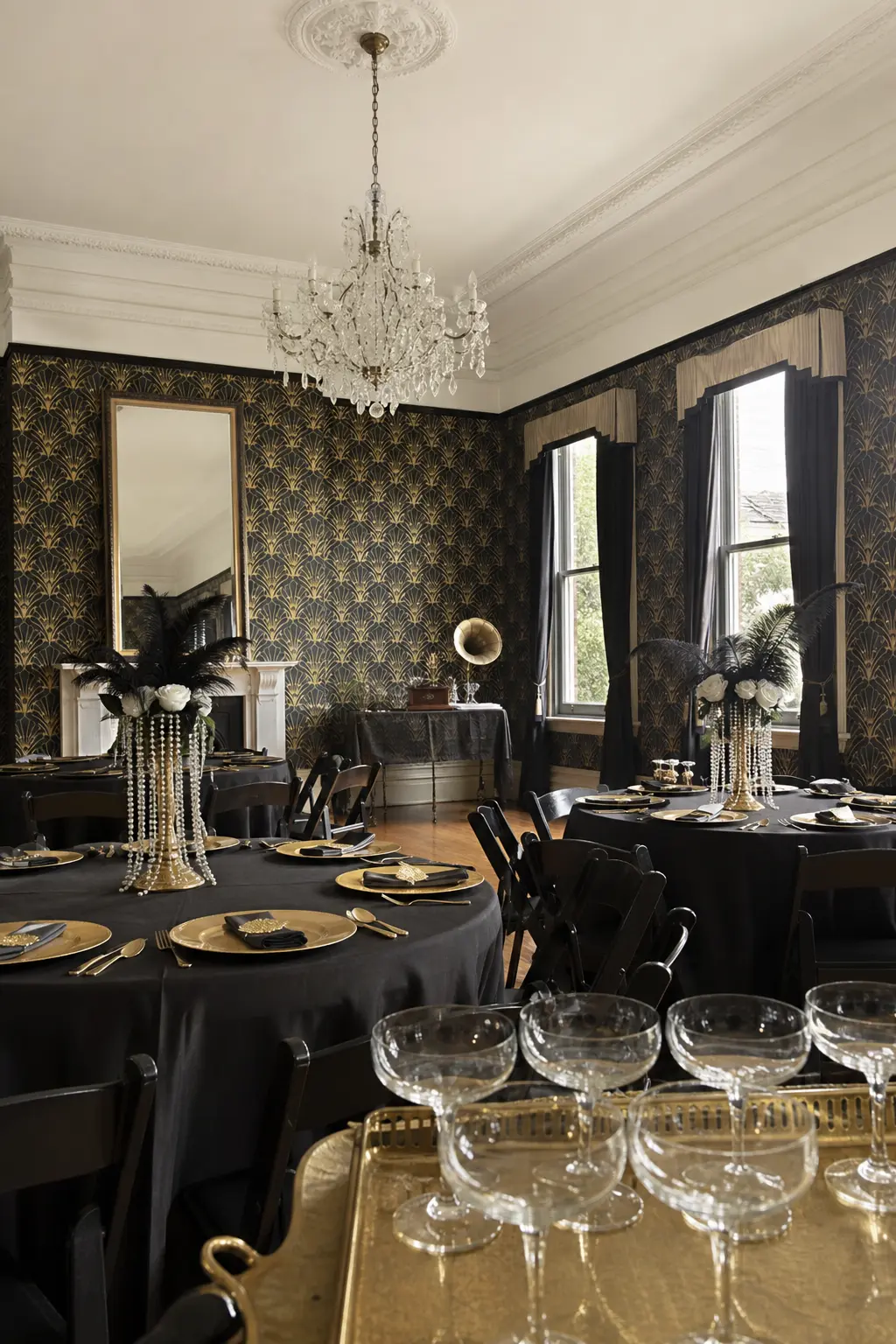
Palette: black, gold, champagne, deep red. The 1920s as a party theme earns its place because it demands commitment and rewards it. A dress code with teeth: beaded dresses, white tie, long cigarette holders as props. A Gatsby-era playlist, real or recreated.
Champagne coupes instead of flutes. A single statement prop, a gilded birdcage, a vintage gramophone, a prop newspaper from the era.
This is the decade theme that crosses over most naturally with the speakeasy concept, so use both or choose one. If you want the music and the fashion, this is the theme. If you want the password and the cocktails, the speakeasy entry handles that angle. They are distinct enough to justify their own entries.
Gold charger plates, black napkins, a string of pearls draped across the centrepiece: the look assembles quickly and photographs beautifully.
🛍 Shopping guide
Outdoor and Garden Parties
Three entries here, each one distinct. A garden cocktail party is built around a bar cart and a soft green-and-white palette. A garden party with proper china is slower, more intentional, built around the table. A rooftop or backyard sunset party is timed around golden hour and owes everything to that light. Same outdoor setting, three completely different moods.
Garden Cocktail Party
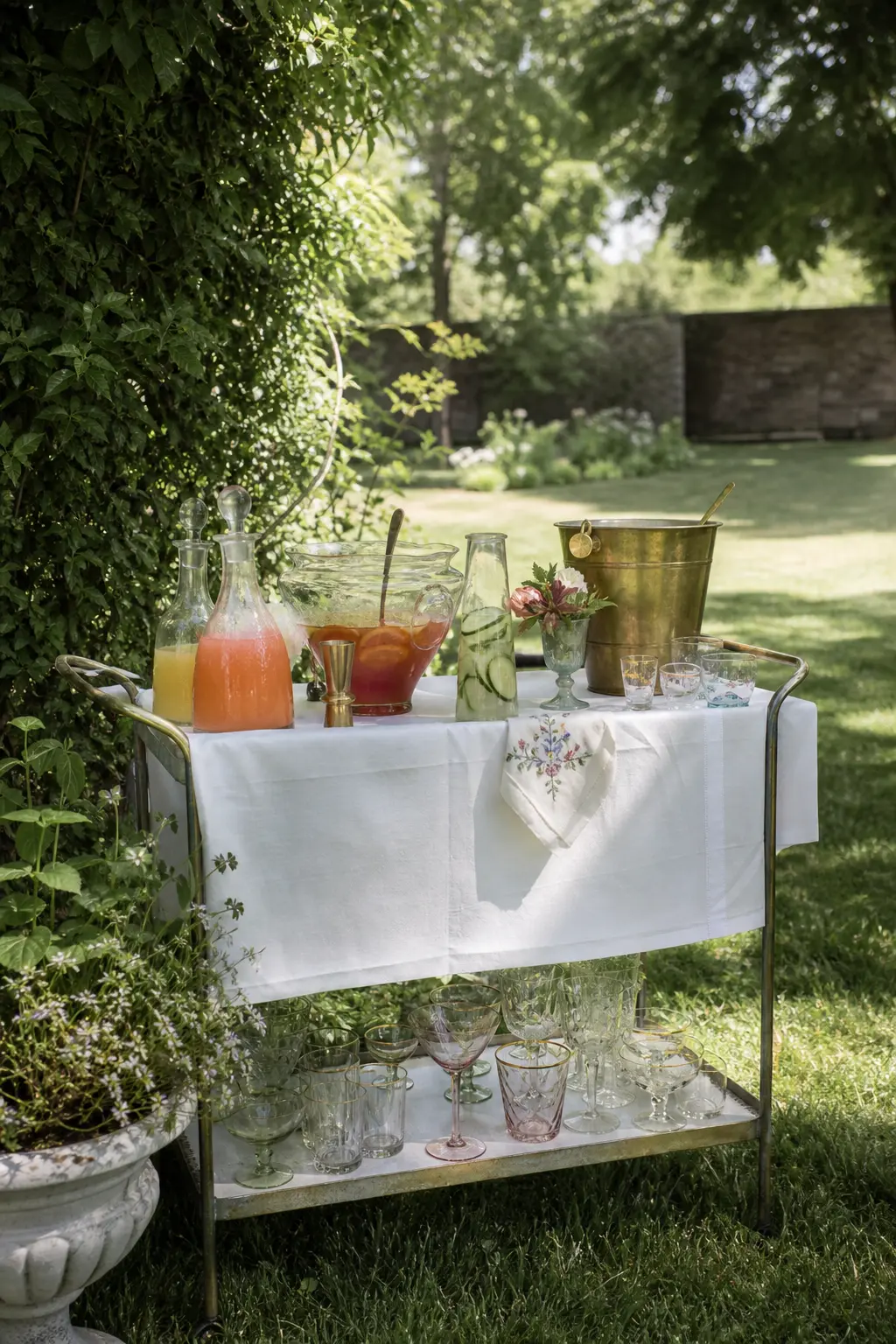
Palette: soft sage green, white, warm brass. The bar cart is the party. Set it up where guests will naturally gather: near the door to the garden if you are moving between inside and outside, or in a shaded corner of the lawn.
Stock it with two pre-batched cocktails in glass jugs, a good sparkling water, and one non-alcoholic option that looks as considered as the cocktails.
Glassware matters here more than anywhere else. Wine glasses are fine; proper cocktail glasses are better; mismatched vintage pieces from a market are best of all. White linen on the bar cart, a small herb pot (mint, rosemary) as the garnish station, and a brass ice bucket: this is the whole look.
Keep food as grazing boards placed at two or three points around the space so guests move and mingle rather than clustering at one table.
🛍 Shopping guide
Garden Party with Proper China
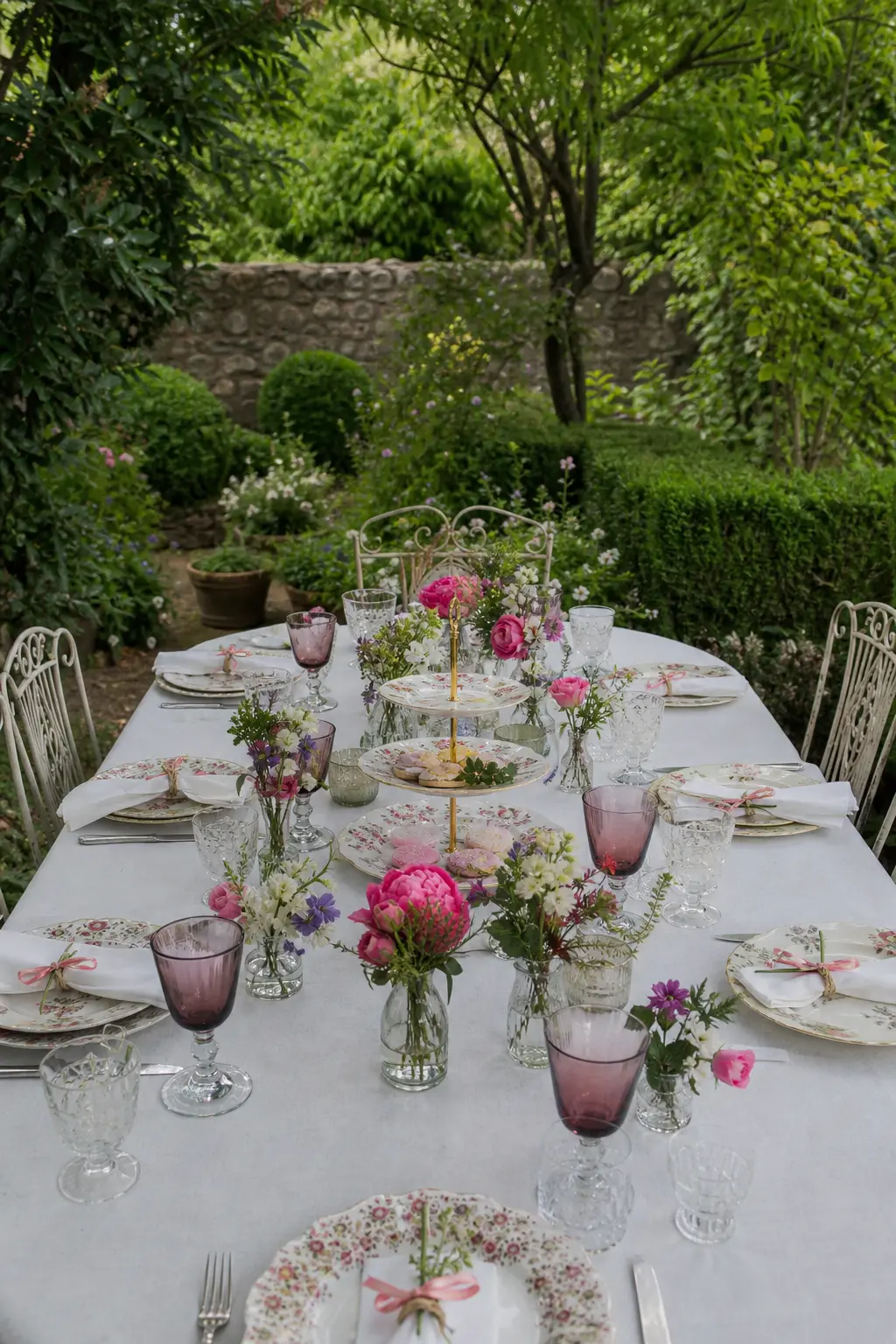
Palette: white, blush, leaf green, sky blue (the colour of mixed vintage china). The distinction between this and the cocktail party version is pace and formality. Everyone sits. There is a table, properly laid. The china is real, borrowed, mismatched and beautiful.
Floral teacups alongside dinner plates, no two pieces matching, all of them working together in the way only real china does.
Afternoon timing: 2pm to 5pm. Finger sandwiches, a proper scone with clotted cream, two or three small cakes, a pot of tea alongside a bottle of something cold and sparkling. The food is the event. The china and the garden do the rest.
Fresh flowers cut from the garden (or bought at a market) in small individual vases at each place instead of one large centrepiece: this one swap makes the table feel personal and generous at the same time.
🛍 Shopping guide
Rooftop or Backyard Sunset Party
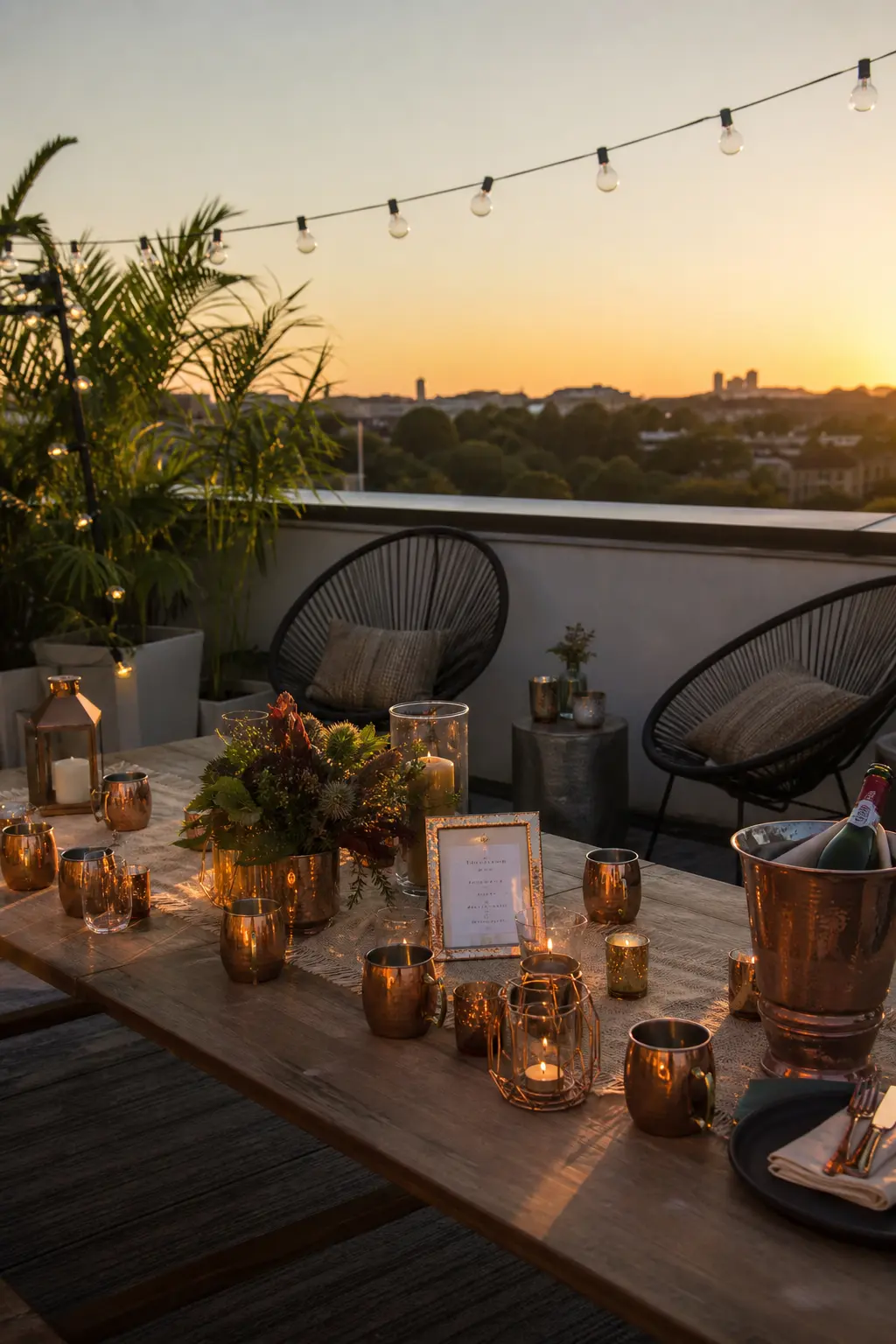
Palette: whatever golden hour gives you, copper, peach, warm white. The entire concept of this party rests on one logistical decision: check the sunset time for the date and venue and build the invitation around it. Tell guests to arrive forty minutes before golden hour. That light does more than any decoration ever could.
The food is grazing food: nothing that requires a fork, nothing that competes with the view. String lights come on as the sun goes down so the transition from daylight to evening is handled without anyone having to flip a switch mid-party. A fire pit or portable heater for after dark if the space allows it.
Copper or rose gold vessels for drinks, warm-toned textiles (a terracotta throw, a rust cushion), and candles that come into their own as the light changes. The party decorates itself between 6pm and 8pm and you are mostly just supplying the glasses.
🛍 Shopping guide
Hobby and Interest Themes
The strongest adult party themes are the ones that say something true about the guest of honour. A book club party built around their favourite novel. A chef’s table where they cook one course. A classic car afternoon. A golf or country club afternoon. These work because the honouree is already the expert, and that confidence reads in the room.
Game Night (One or Two Real Games)
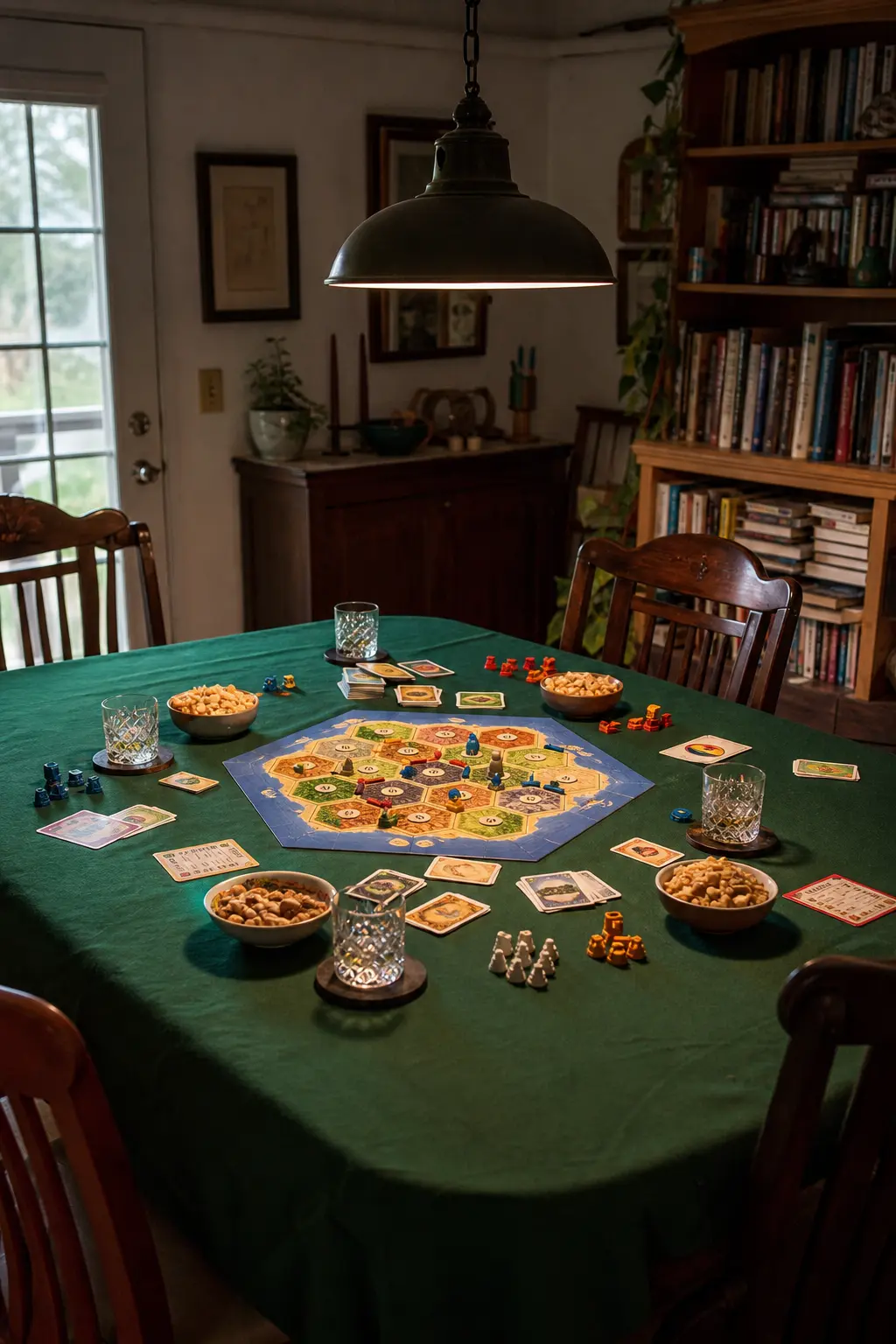
Palette: deep green, wood tones, cream. The word “game night” covers a range of experiences from children’s card games to genuinely competitive adult strategy, and the adult version needs to pick a lane.
Choose one or two games that require actual thought: a strategy game, a deduction game, a well-chosen party game built for adults. The room is set around the games, not the other way around.
Green baize or a dark tablecloth on the main table gives a proper gaming-room feel. Snacks in small bowls at each player’s elbow rather than a central spread: this keeps the table clear and the game moving. Drinks in lidded cups or low tumblers with no stems to knock over.
Keep the guest list tight: eight works better than eighteen for a game-focused evening. Announce the games in the invitation so guests can look them up. Guests who arrive knowing the rules make the evening dramatically smoother.
🛍 Shopping guide
Book Club Party
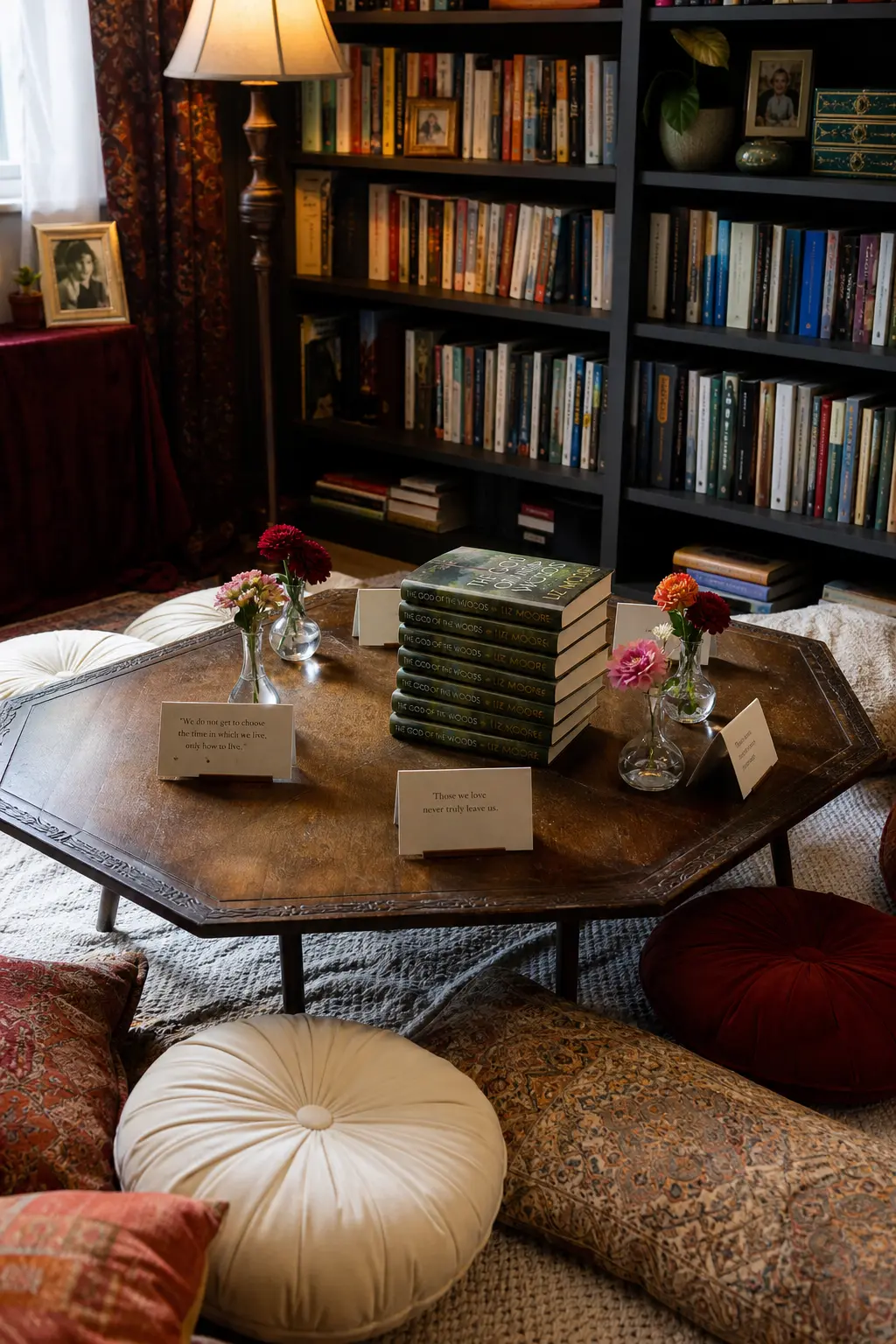
Palette: drawn from the book’s cover or setting. The theme is built around the guest of honour’s favourite book, and that specificity is what makes it work.
Set the scene in the book’s world: if it is a novel set in 1950s Paris, the palette is cafe-au-lait and midnight blue. If it is a gothic novel, dark green and black. If it is a summer novel, linen and sunflower yellow.
Ask each guest to bring one thing connected to the book: a favourite quote written out, a food mentioned in the text, a small object that appears in the story. These become the table decorations and the conversation starters simultaneously.
A stack of copies of the book at the entrance, a quote from it on a card at each place: the concept carries itself.
One discussion question per place card keeps the evening literary without forcing a formal book club structure on a birthday.
🛍 Shopping guide
Chef’s Table Night
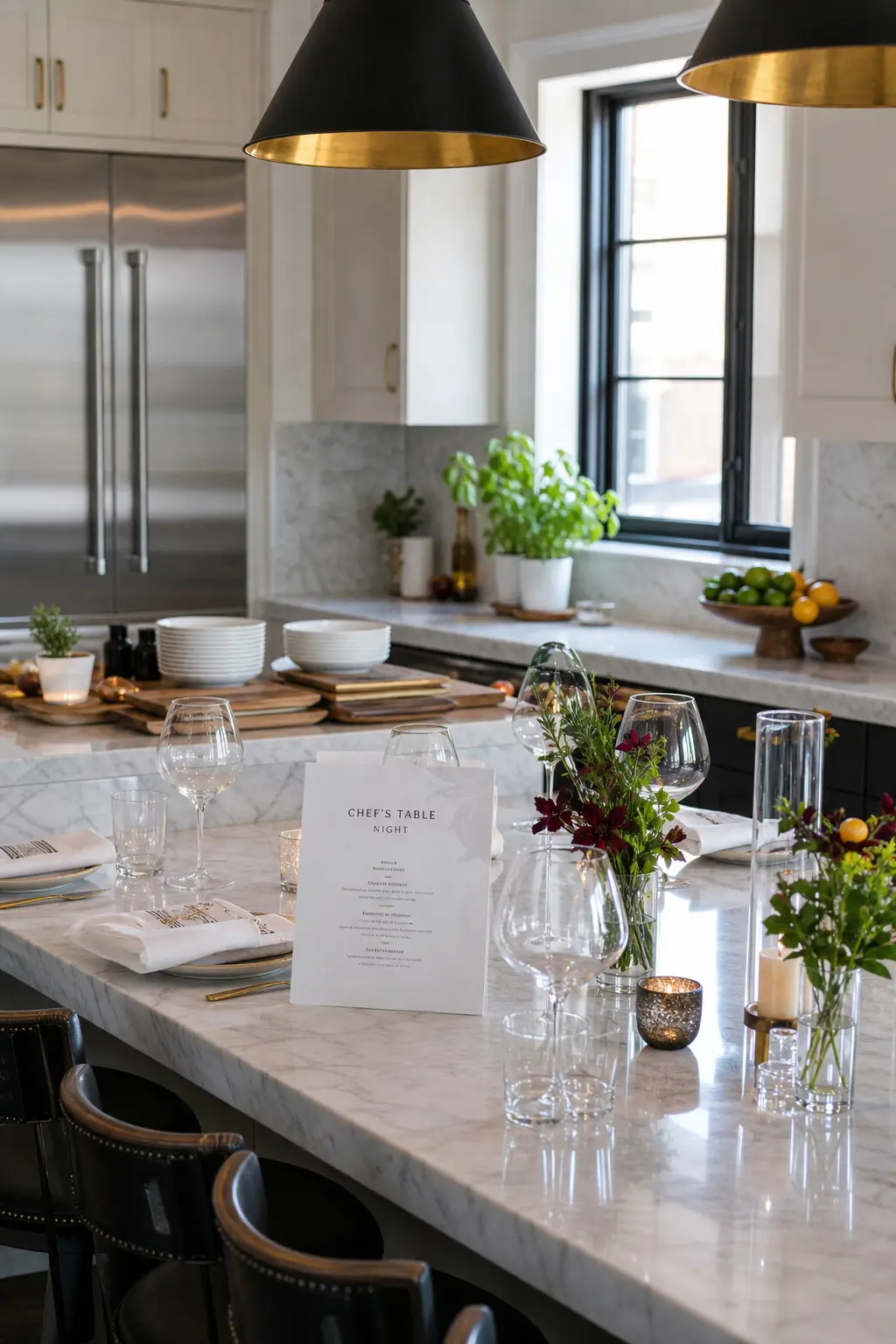
Palette: white, natural wood, steel. The premise: the guest of honour cooks one course. One. It can be the starter, the main, or the dessert. The other courses are handled by guests who each take one, or by the host.
The birthday person is not running a restaurant, they are demonstrating a skill they love, and that is an entirely different dynamic.
Set the kitchen as the theatre: bar stools at the island or counter if you have them, so guests watch the process. A simple printed menu with each contributor named against their course. A prep station that is visually tidy before guests arrive.
The look is clean and professional: white dishware, wooden boards for serving, steel or matte black kitchen tools visible as part of the scene. This theme costs almost nothing to set up because the kitchen is already the kitchen.
🛍 Shopping guide
Classic Car Afternoon
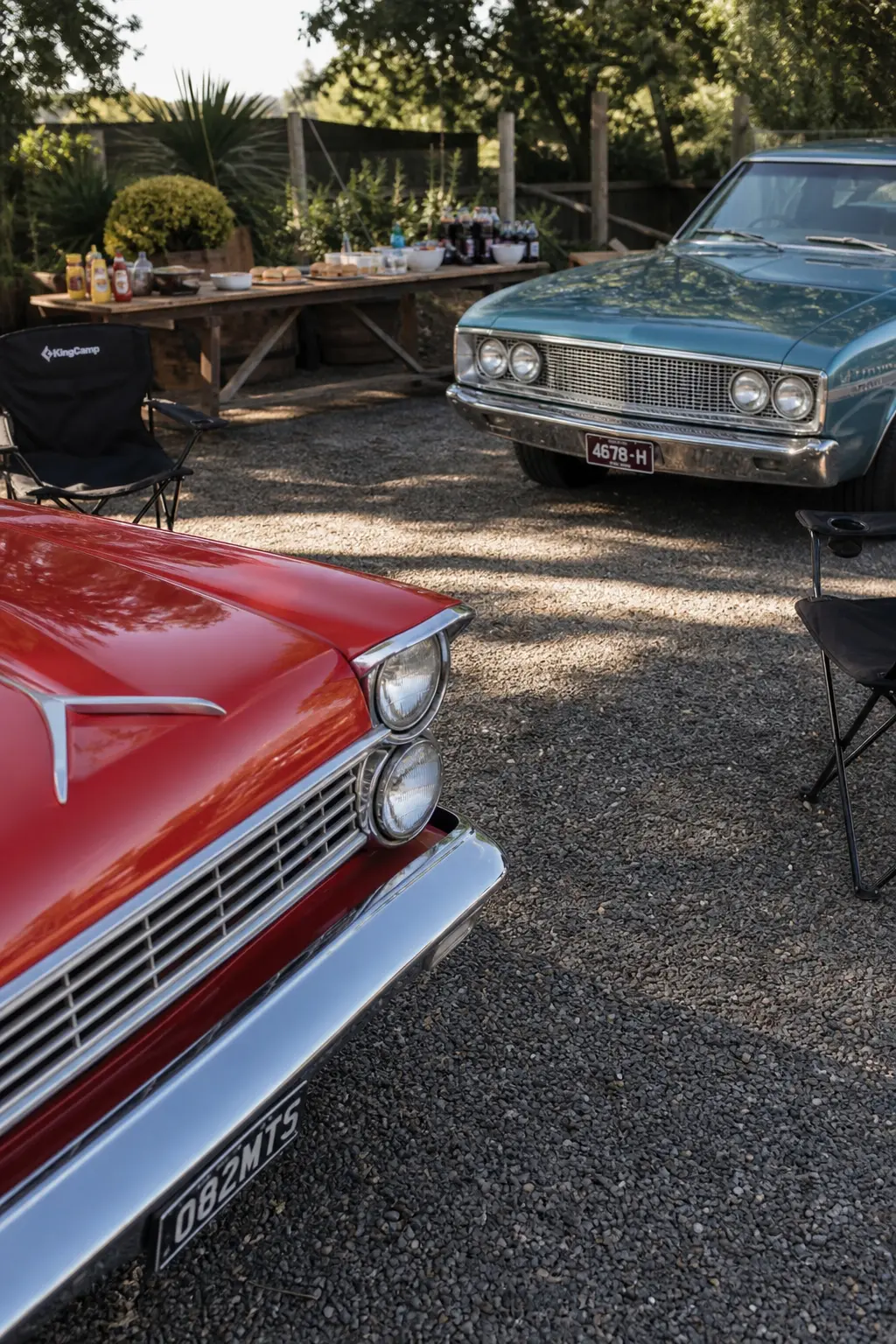
Palette: racing red, cream, black, chrome. This one works as an outdoor afternoon party structured around the cars themselves. Invite guests to arrive in a vehicle they love (it does not need to be vintage, but the guest of honour’s car is the anchor).
Set up a trestle table in the driveway or garden with drinks and food. The cars are the decoration.
Photography is the built-in activity: guests photograph each other’s cars, the details, the chrome, the interiors. Print a few on-the-day on a small photo printer and hand them out at the end as the party favour. A polaroid-style camera works too.
Keep food simple and slightly American: a proper burger, good crisps, cold beer and a lemonade option. The energy is relaxed and masculine-leaning, which suits the theme, but the photography and the drinks pull in a mixed crowd without any adjustment.
🛍 Shopping guide
Golf or Country Club Afternoon
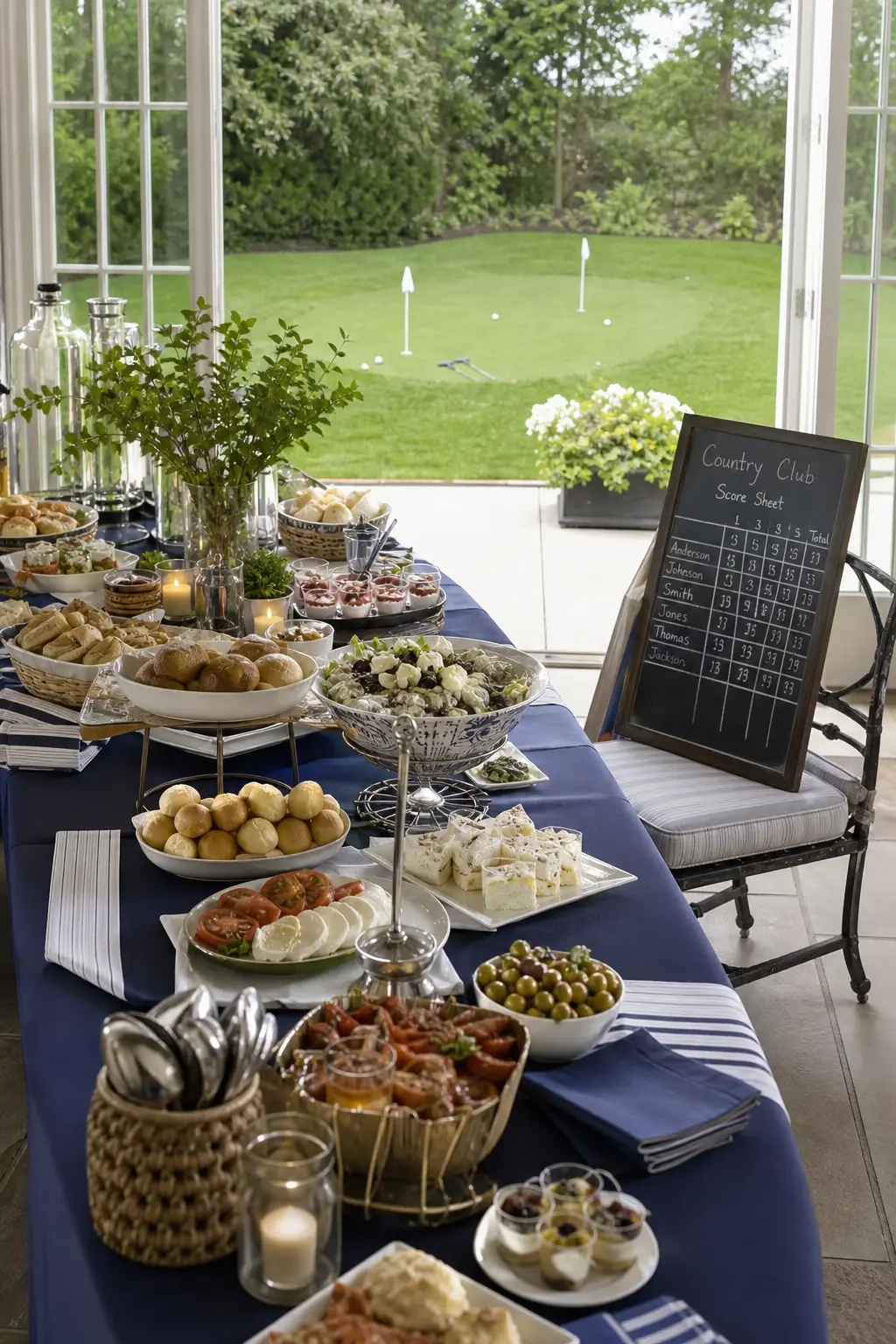
Palette: green, white, navy, tan leather. This theme works indoors or out, and neither version requires a golf course.
Indoors: a putting green mat, a drinks table set like a clubhouse bar (whisky, gin, good tonics, club soda), and a dress code of polo shirts and chinos or a summer dress and a straw hat.
Outdoors: the same bar, actual putting if the garden allows, lawn games like croquet alongside.
The food is country club: a proper cold spread. Smoked salmon, devilled eggs, club sandwiches, a cheese selection with grapes. Cold and elegant, nothing that requires a kitchen drama mid-party. A jug of Pimms alongside the spirits for those who want it.
Leaderboard for the putting competition if you run one: a chalkboard or printed sheet where scores go up after each round. Guests who have never held a golf club tend to be the most enthusiastic competitors.
🛍 Shopping guide
Dress Code and Formal Nights
Black tie optional is a mood, not a logistical nightmare. Give guests a genuine dress code and most of them rise to it. Pair it with a proper bar, a clean playlist, and a venue that can hold the aesthetic, and you have a party people photograph because it looks like something.
Black Tie Optional Evening
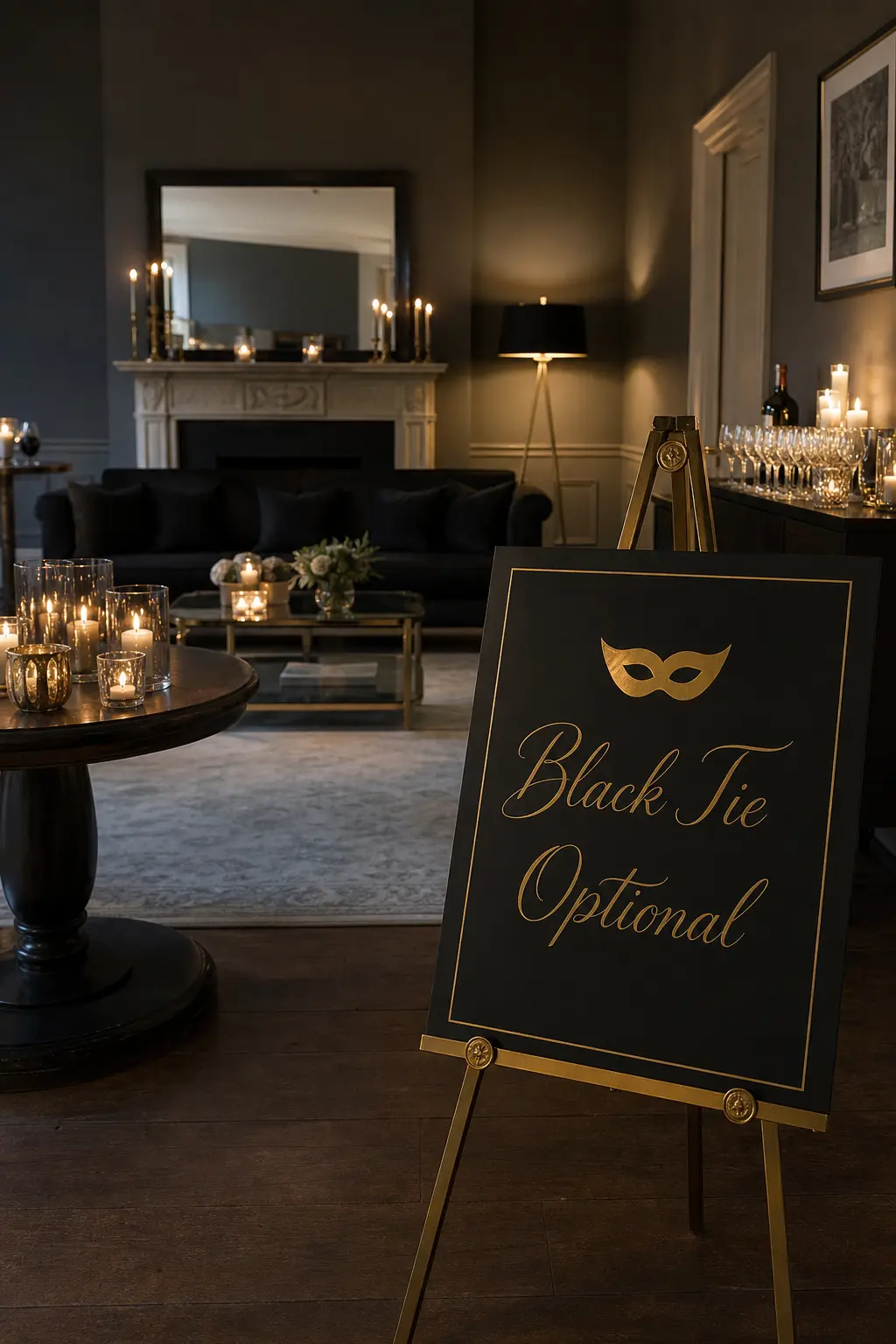
Palette: black, ivory, silver. Black tie optional is a real dress code with a specific meaning: guests can wear a black tie suit or a dark lounge suit; women can wear a floor-length gown, a cocktail dress, or a formal jumpsuit. Put this in the invitation word for word. Vague instructions produce vague outfits.
The venue has to hold the look. A living room with the right lighting and the right music can do it. Overhead lights off, floor lamps and candles on, a proper bar with a bartender (a friend who is good at it counts), a playlist that starts with something cinematic and builds slowly.
Champagne on arrival, a proper drinks menu at the bar, one substantial passed canapé per fifteen minutes for the first hour. Guests who are dressed up and fed do not need entertainment. They are the entertainment.
🛍 Shopping guide
Themed Experience Nights
Murder mystery and wine-and-paint sit in a category of their own: they are structured evenings with a beginning, a middle, and an end. Guests know what they are there to do. That structure removes the social friction of a party where nobody is quite sure what is happening, which makes both themes surprisingly easy to host.
Murder Mystery Night
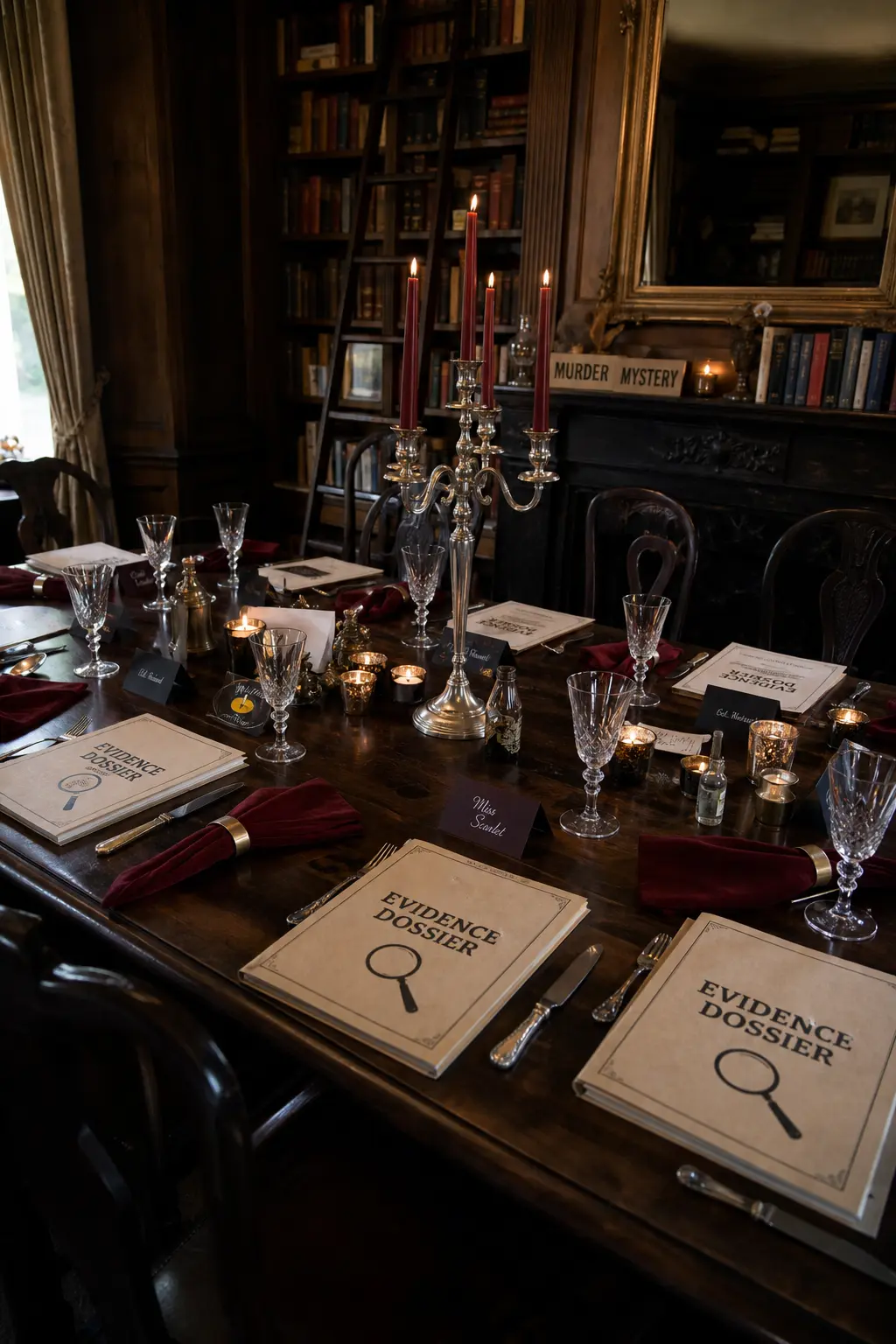
Palette: varies by era, but typically deep red, cream, and dark wood for the classic country-house format. The scripted evening is the key phrase. Buy or download a proper murder mystery kit for the right number of guests, assign roles in advance, and include character notes with the invitations so guests can arrive in costume.
The structure handles the evening so you do not have to. Guests read their roles, clues emerge over dinner, accusations happen over dessert. A printed evidence dossier at each place and a small character name card tells guests everything they need to know without a long explanation from the host.
Keep the food simple, ideally one-plate dishes served in courses so hands are free for reading clues. A three-course menu that can be largely pre-prepared is ideal: this is not the night to attempt a complicated main course.
🛍 Shopping guide
Wine and Paint Night
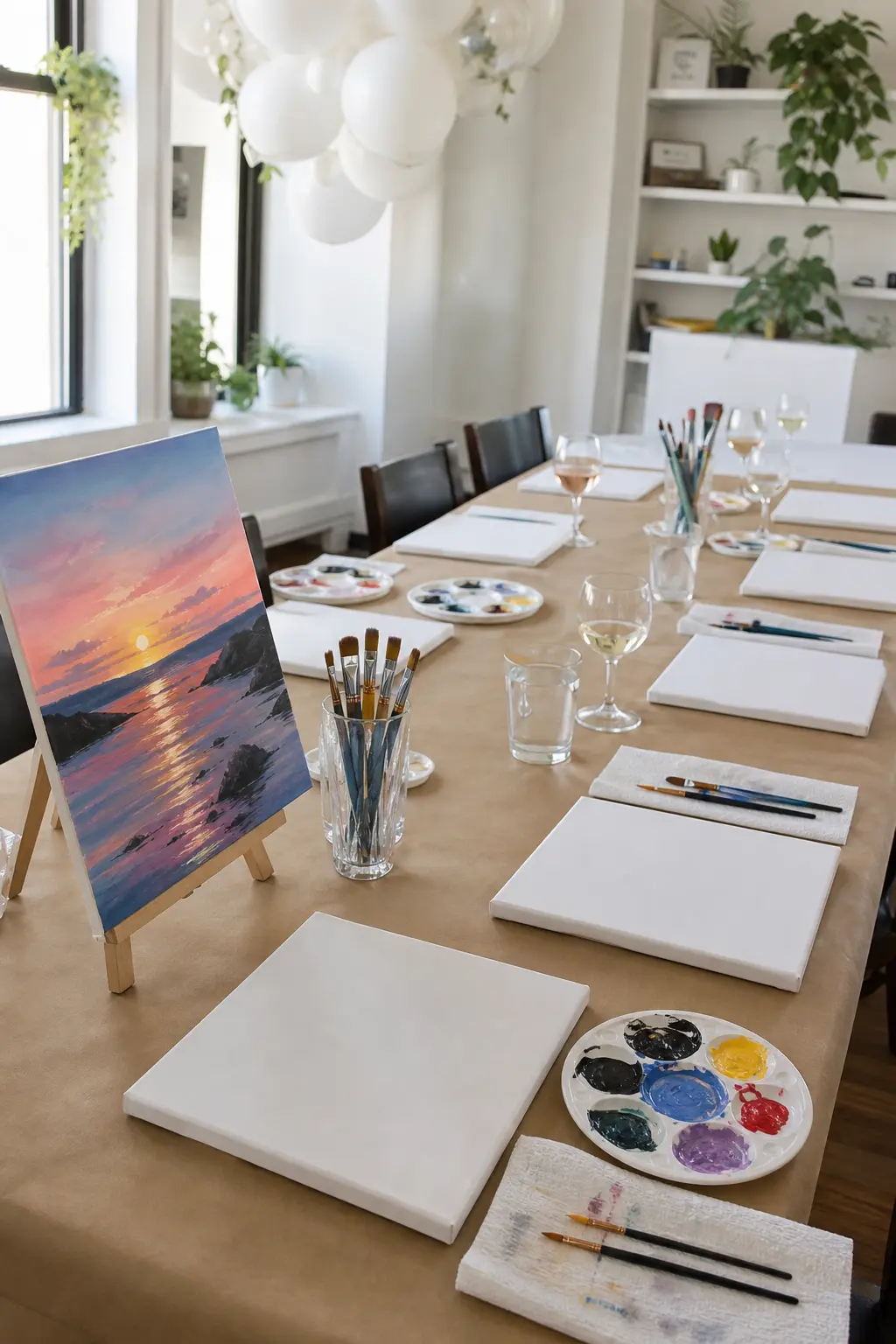
Palette: white walls, coloured paints, linen. Hire a real instructor. This is the one line that separates a wine and paint party from a craft table: a proper teacher, even a local art student, changes the experience completely. They handle the instruction so the host can be a guest for the evening, which is rare and worth paying for.
Set each place with a canvas, a palette of four or five paints, two brushes and a cup of water. Wine glass on the right, the palette on the left. A printed copy of what everyone is painting propped at the front of the table.
Aprons or old shirts in a pile by the door so guests can take care of their clothes without drama.
The work goes home with the guest who made it. That is the party favour, and it costs nothing extra.
🛍 Shopping guide
Travel-Themed Party (One Destination)
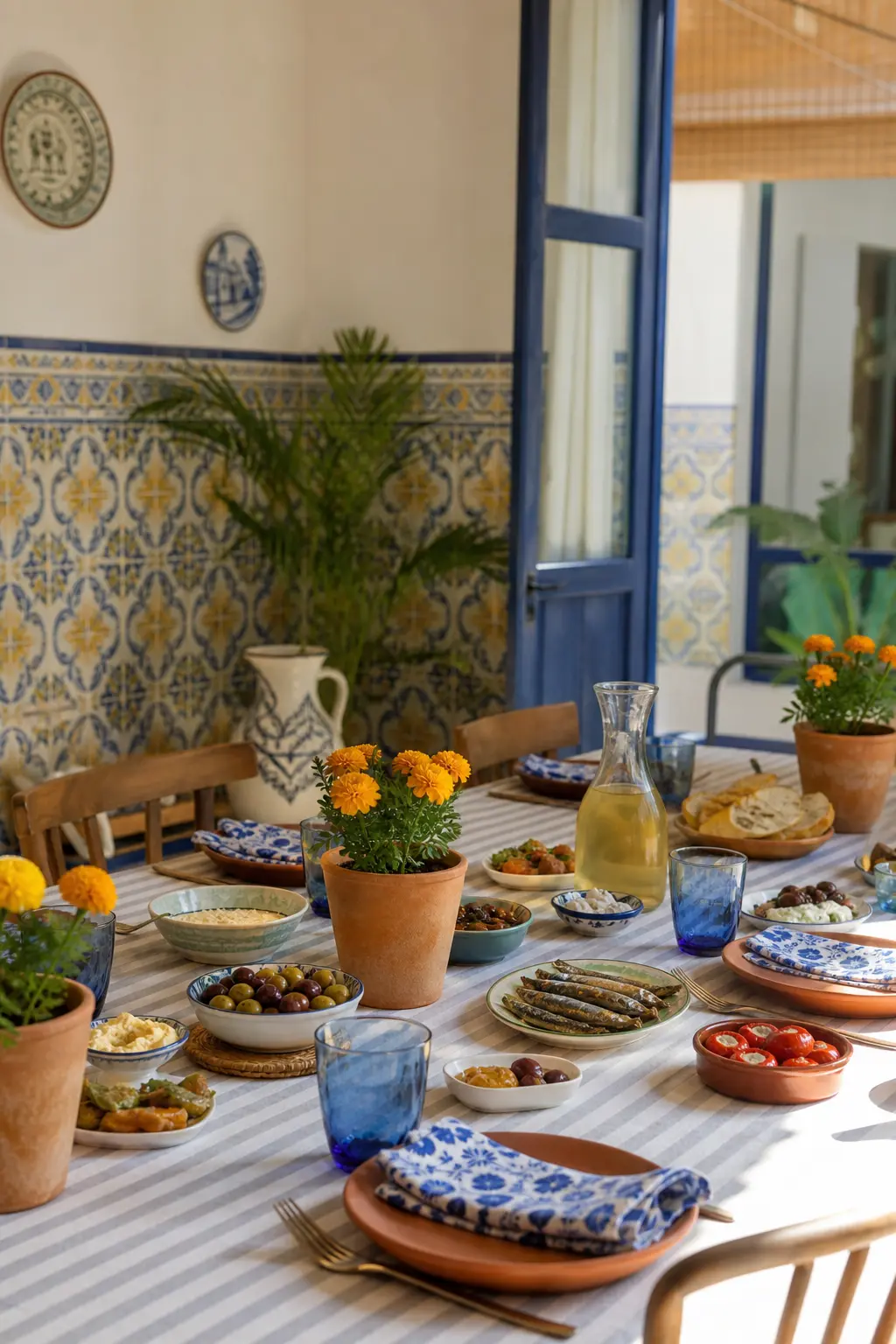
Palette: drawn from the destination. One destination only. Not “around the world” (which dilutes everything) but a specific place the guest of honour loves or has always wanted to visit. Mexico City in terracotta and cobalt. Tokyo in white, black and cherry blossom pink. Lisbon in blue tile and warm gold. Pick one and do it well.
Food, drinks, music and one visual reference from that destination: this is the complete brief. For Mexico City: mezcal negronis, tacos served in a sequence, a playlist of cumbia and modern Mexican jazz, and a display of market marigolds. For Lisbon: a spread of petiscos, vinho verde, fado in the background, and blue-and-white tile print napkins.
A printed passport-style invite sets the tone before anyone arrives, and a small souvenir from the destination (a spice, a tea, a chocolate) sent home in a paper bag closes the loop neatly.
🛍 Shopping guide
Frequently Asked Questions
How do I choose a birthday party theme?
Start with what the guest of honour actually enjoys in adult life: a favourite drink, a decade they love, a cuisine, a hobby. The theme should feel like a natural expression of their tastes, not a generic party concept dressed up.
Once you have the core interest, build a palette and a food and drinks concept around it. Everything else follows from those two decisions.
What themes work for a mixed age group of children?
For mixed-age groups of children, choose themes built around a shared activity rather than a specific character or franchise. A baking party, an art workshop, or a treasure hunt scales naturally from age five to twelve.
Avoid themes that rely on one age group knowing a reference the others will not. If adults and children are sharing the same party, a garden party or a picnic format gives each group room to do their own thing within the same space.
How much does a themed birthday party cost to decorate?
Decoration cost depends almost entirely on how focused the theme is. A tightly defined theme (one colour palette, two or three key props) costs significantly less than a loose theme that requires filling visual gaps with purchased items.
For most of the adult themes here, a tablecloth, the right glassware, candles, and one statement prop cover the decoration entirely.
Budget between thirty and eighty pounds or dollars for decoration on most of these, more if you are hiring speciality items like a bar cart or china.
Can siblings share one birthday party theme?
Yes, and the cleanest way to do it is to find the overlap in their interests rather than splitting the party down the middle. A travel theme where each sibling picks a destination and owns a section of the table works well.
A decade theme works if both siblings have a shared favourite era. For parties where the siblings’ interests genuinely do not overlap, look at the articles on combined birthday party sibling themes and twins birthday party themes for approaches built specifically for that situation.
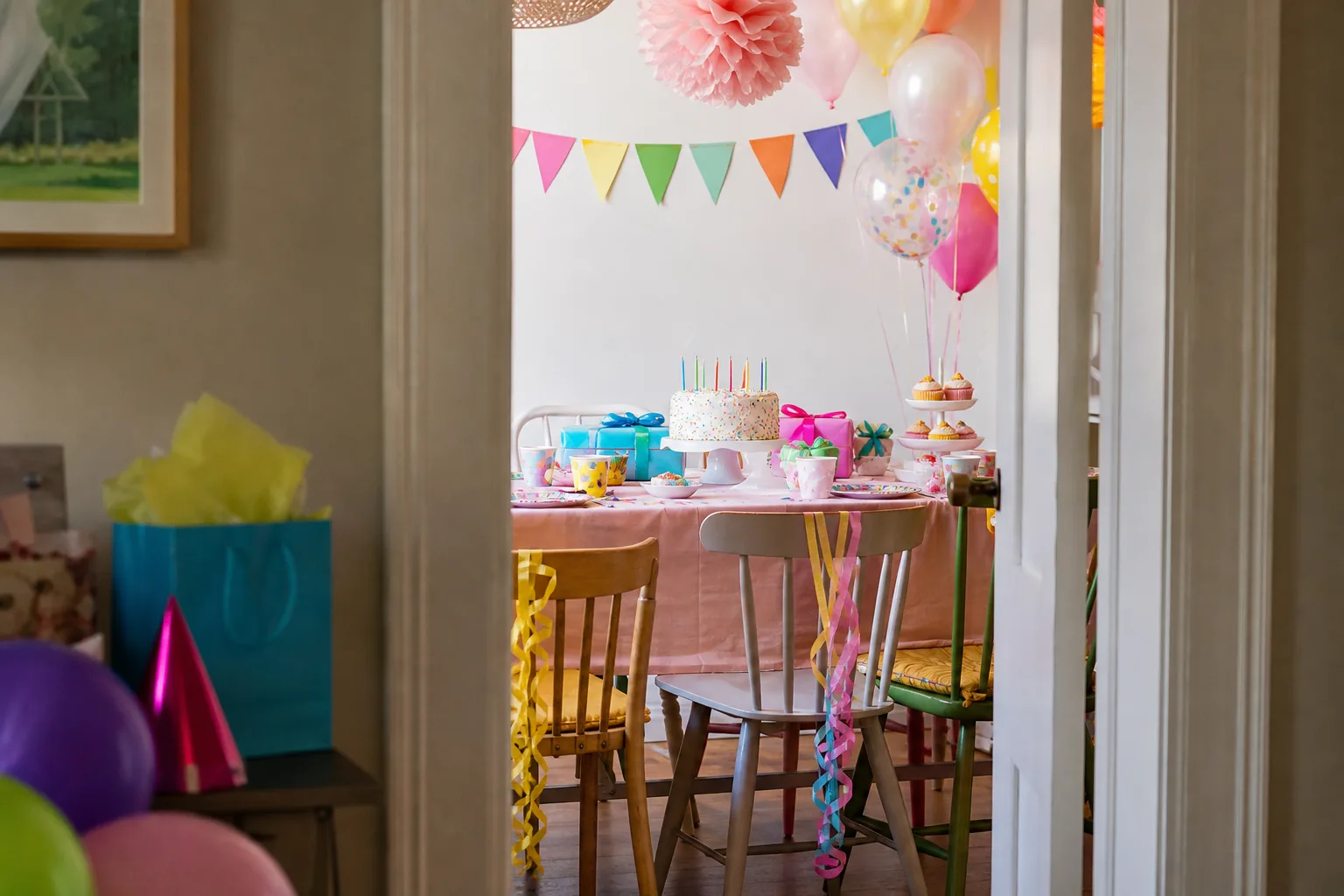
Browse 25 birthday party themes with real styling ideas for girls, boys and toddlers, so you can pic

Thirteen men's 60th birthday party ideas built around a table, real food and something to do after t
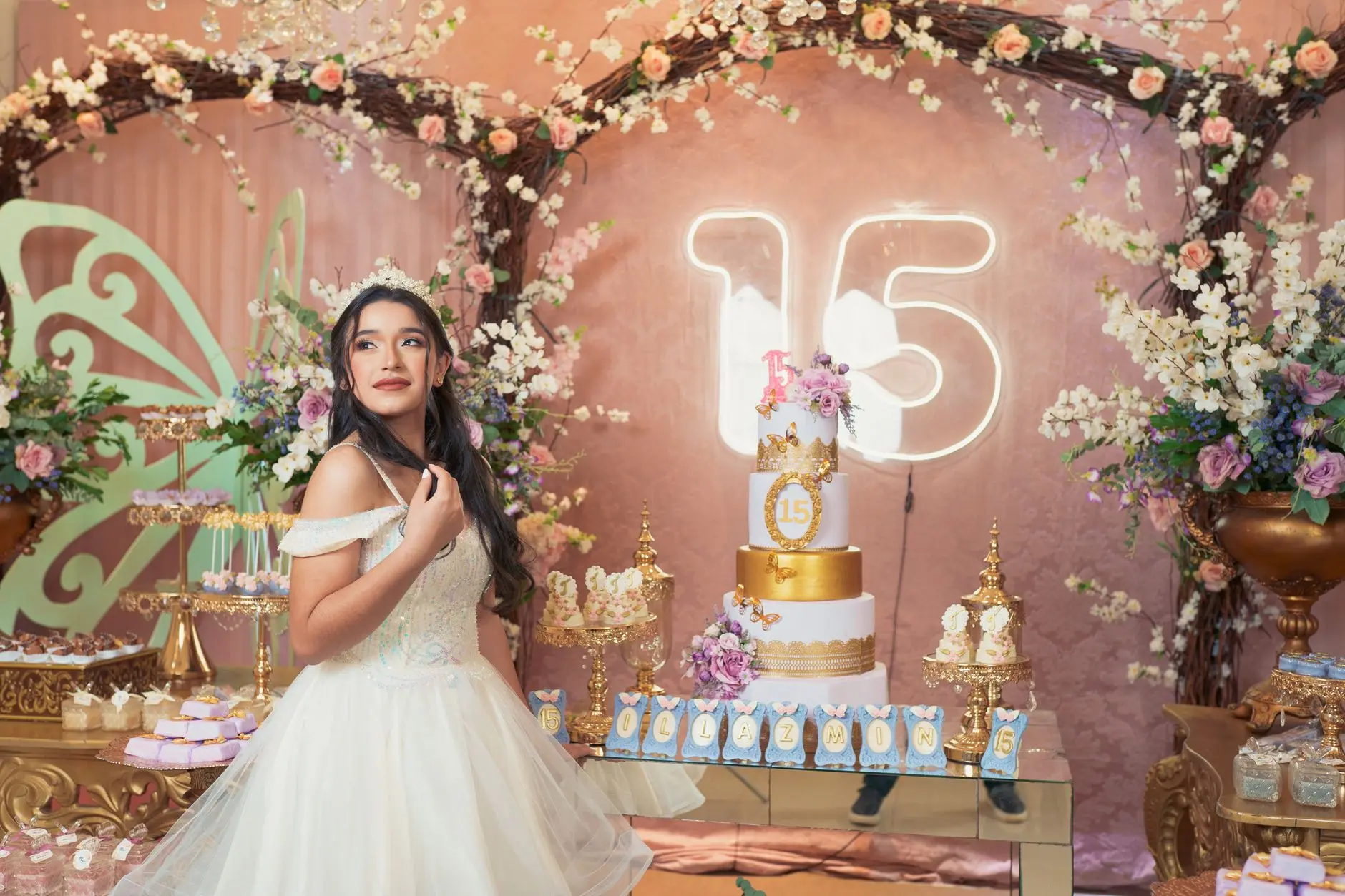
Birthday activities for teenagers who skip the party: 7 free printable keepsakes plus 7 no-print ide
Leave a Reply