

72 Family Friendly Truth or Dare Questions With Grandparents in the Room
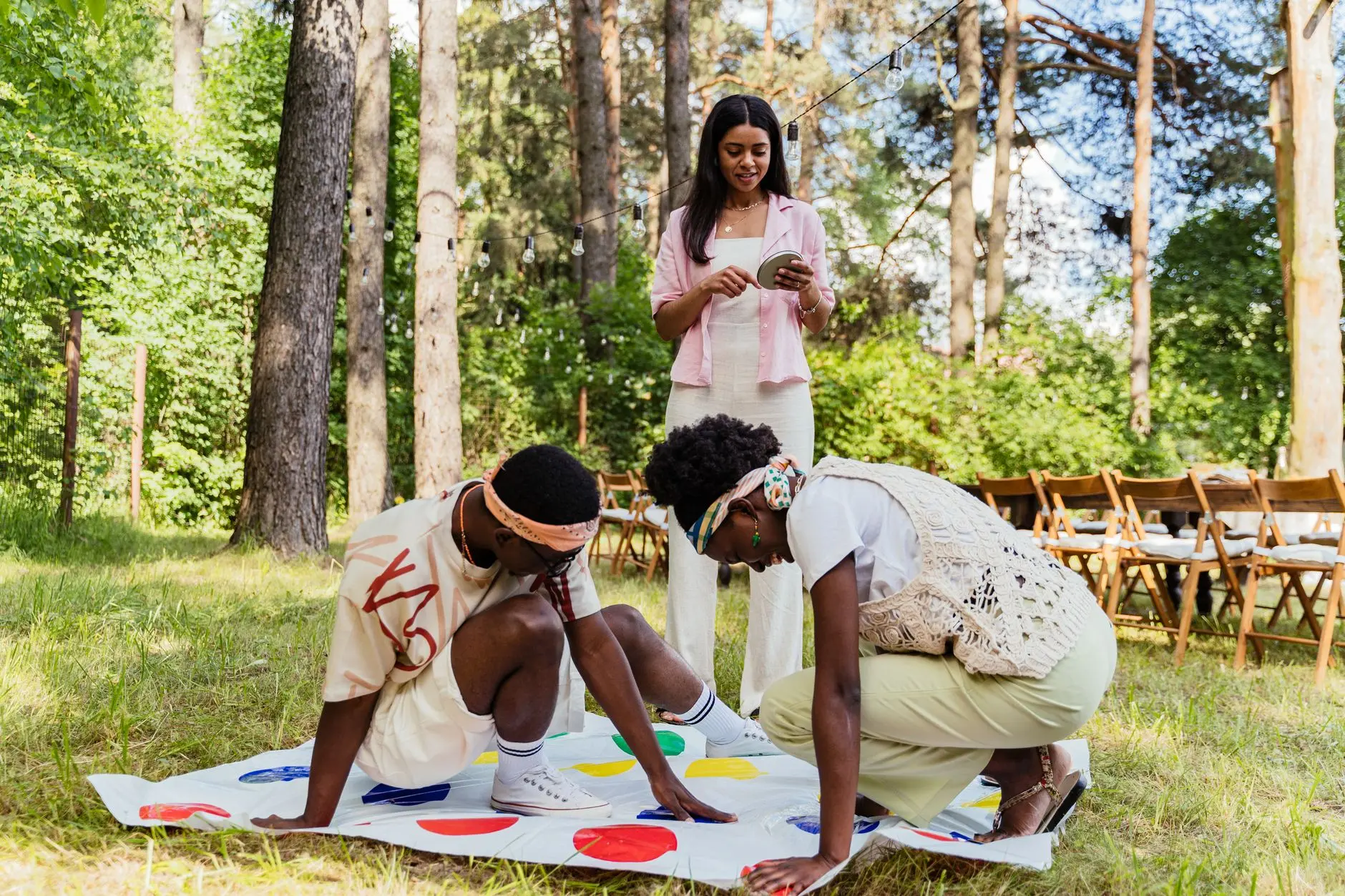
Truth or dare questions family friendly enough for grandparents, tweens and everyone in between are harder to find than they should be, so here are 72 of them sorted into six rounds that build gently from easy to warm. The game works at holiday dinners, reunions, road trips and rainy Sunday afternoons when everyone is already in the same room. No one needs to leave the table, no one needs to do anything embarrassing, and every round ends with the group feeling closer than before.
This post contains affiliate links. If you buy through them, I may earn a small commission at no extra cost to you.
- How to Play
- Round One: Questions Everyone Can Answer
- Round Two: Family History
- Round Three: Gentle Dares
- Round Four: Who in This Room Is Most Likely To
- Round Five: Stories From Before Anyone Was Born
- Round Six: The Warm Round to Finish On
- When to Stop and How to End the Game Well
- Frequently Asked Questions
How to Play
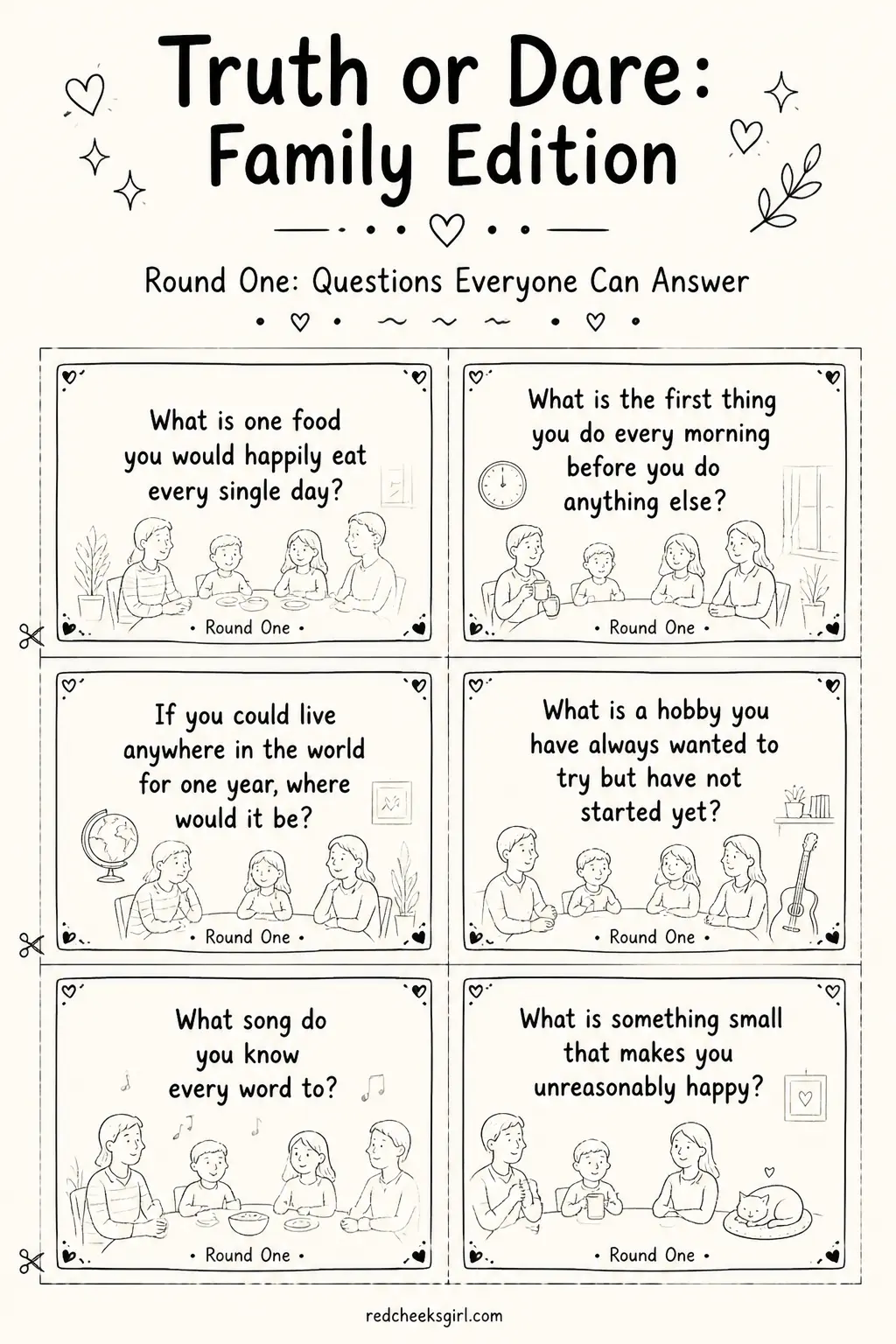
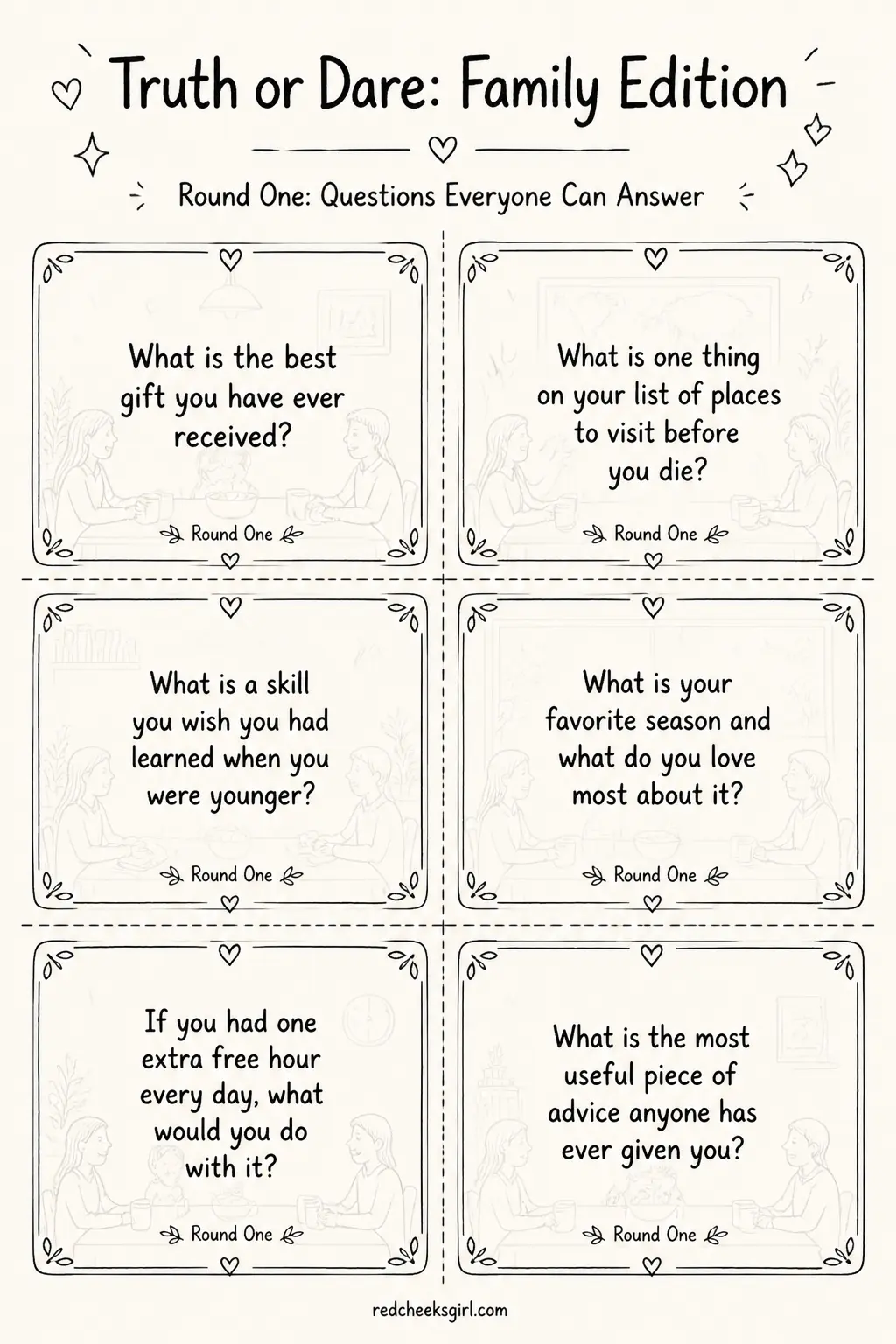
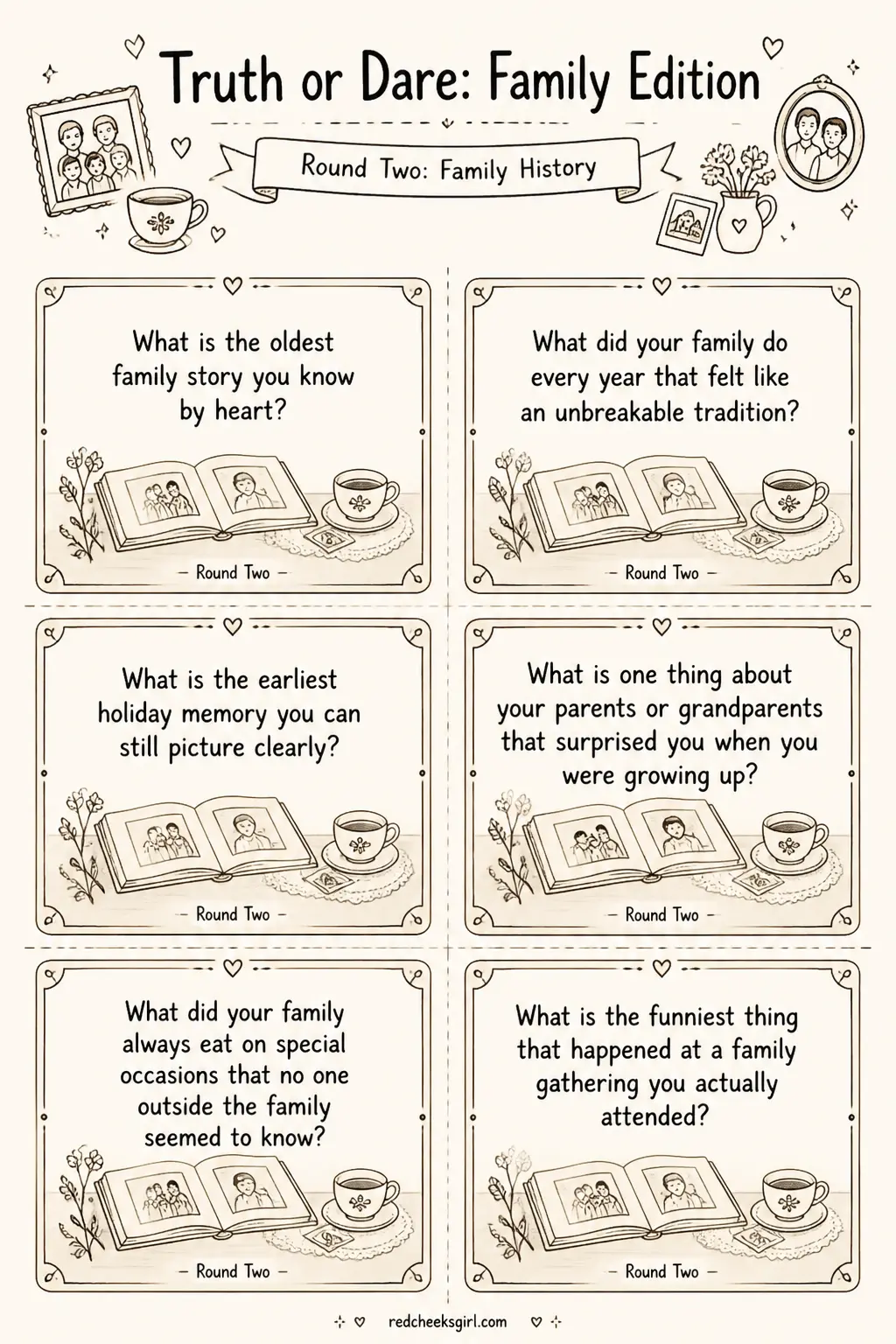
Seat everyone in a circle or around a table. The youngest player goes first and picks any person in the group to give them a truth or a dare. That person can answer the truth question honestly, attempt the dare (all dares in this game are seated or gentle, so no one needs to stand up or leave their chair), or, if they truly cannot answer, pass once per game. After they respond, play moves clockwise. Work through all six rounds in order, spending roughly five to ten minutes per round, and use the printed card decks to draw a random prompt instead of choosing from memory. Print the cards on cardstock, cut along the lines and keep each round in a small envelope or clip them with a binder ring so the sets stay separate.
Round One: Questions Everyone Can Answer
These warm-up truths are low-stakes by design, so even the shyest person at the table will find one they are happy to answer.
- What is one food you would happily eat every single day?
- What is the first thing you do every morning before you do anything else?
- If you could live anywhere in the world for one year, where would it be?
- What is a hobby you have always wanted to try but have not started yet?
- What song do you know every word to?
- What is something small that makes you unreasonably happy?
- What is the best gift you have ever received?
- What is one thing on your list of places to visit before you die?
- What is a skill you wish you had learned when you were younger?
- What is your favorite season and what do you love most about it?
- If you had one extra free hour every day, what would you do with it?
- What is the most useful piece of advice anyone has ever given you?
🛍 Shopping guide
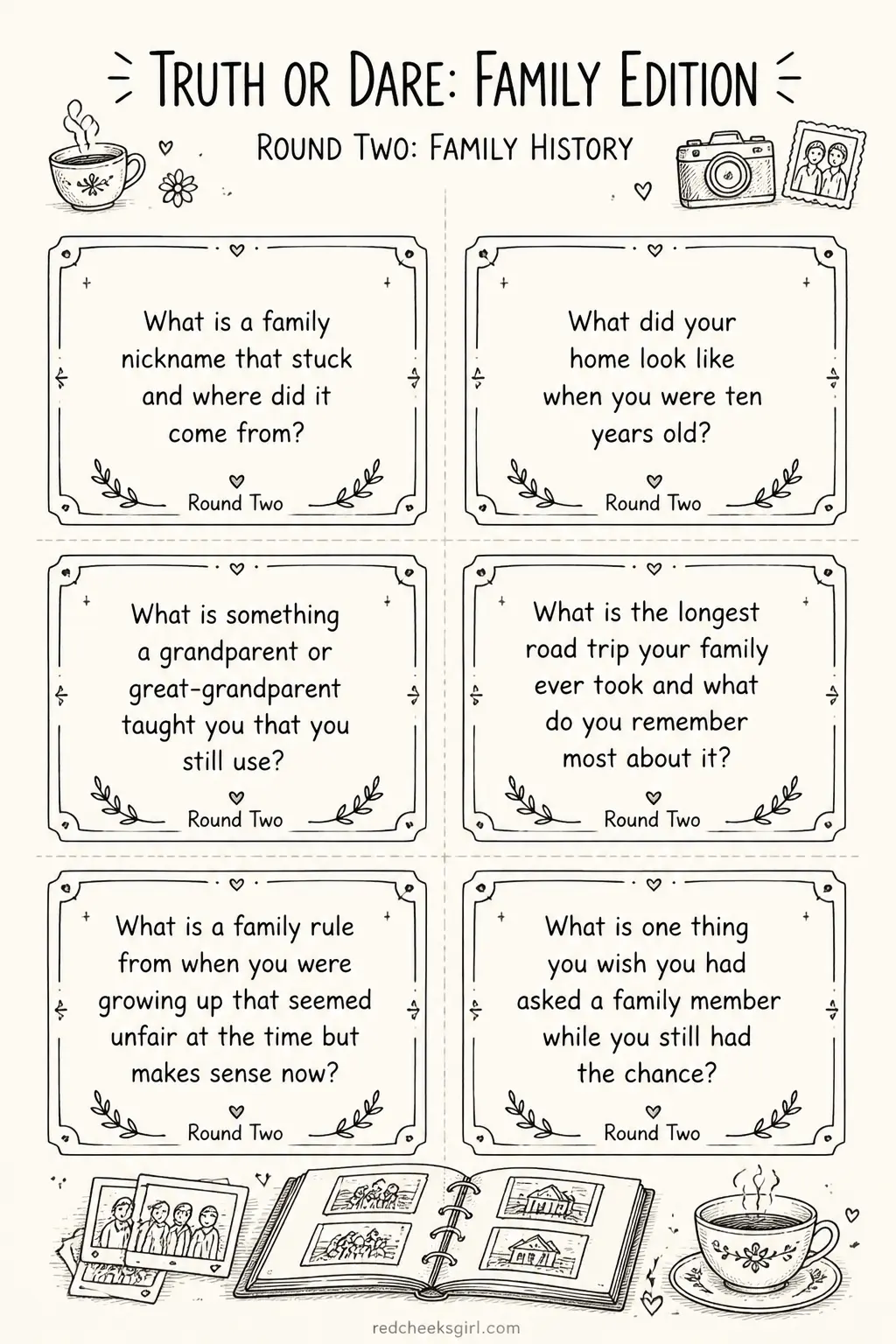
Round Two: Family History
This round turns the oldest people at the table into the most interesting ones, and the younger generation tends to lean in without prompting. For more multigenerational game ideas, this list of family party games everyone from kids to grandparents can play is worth bookmarking alongside this one.
- What is the oldest family story you know by heart?
- What did your family do every year that felt like an unbreakable tradition?
- What is the earliest holiday memory you can still picture clearly?
- What is one thing about your parents or grandparents that surprised you when you were growing up?
- What did your family always eat on special occasions that no one outside the family seemed to know?
- What is the funniest thing that happened at a family gathering you actually attended?
- What is a family nickname that stuck and where did it come from?
- What did your home look like when you were ten years old?
- What is something a grandparent or great-grandparent taught you that you still use?
- What is the longest road trip your family ever took and what do you remember most about it?
- What is a family rule from when you were growing up that seemed unfair at the time but makes sense now?
- What is one thing you wish you had asked a family member while you still had the chance?
Round Three: Gentle Dares
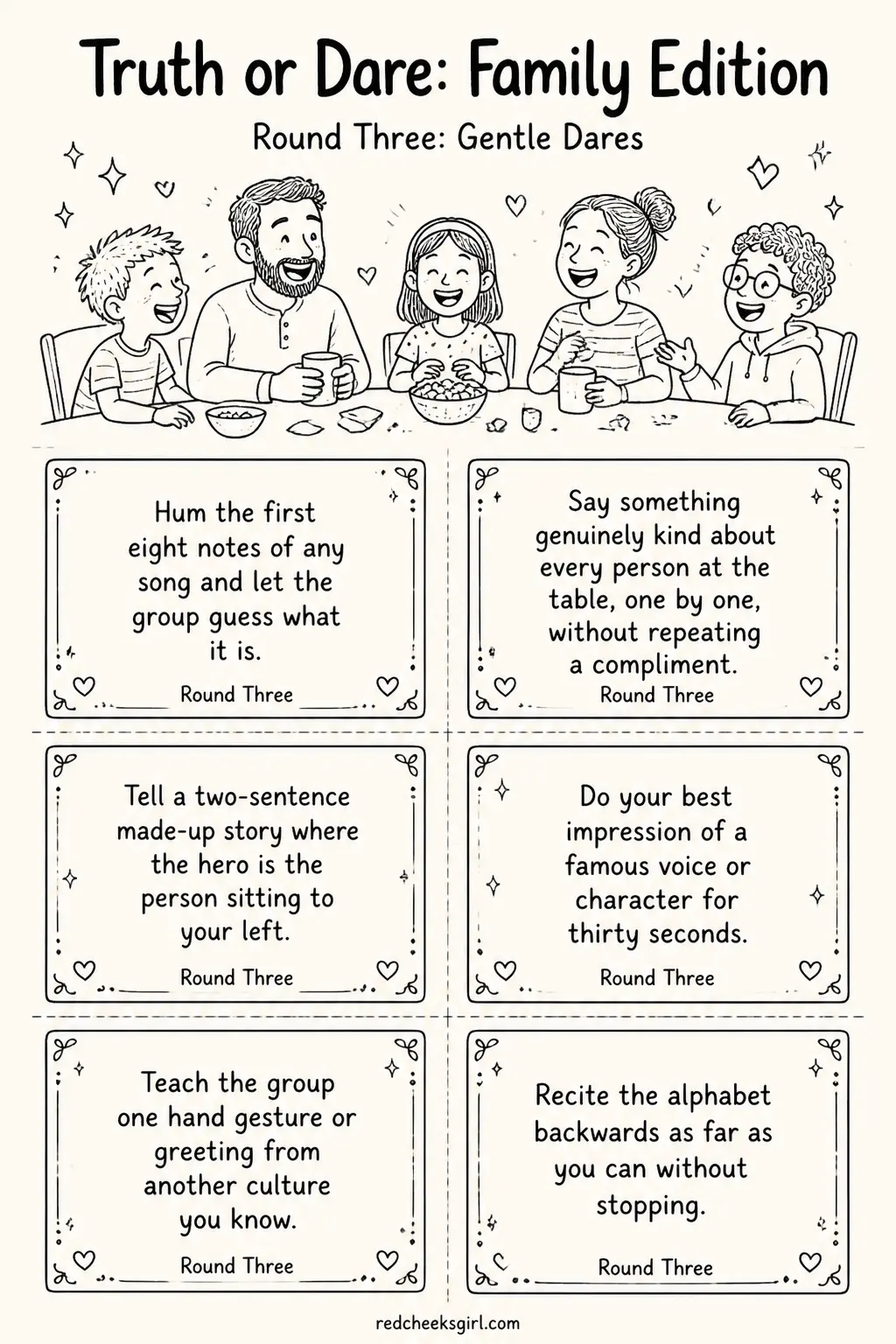
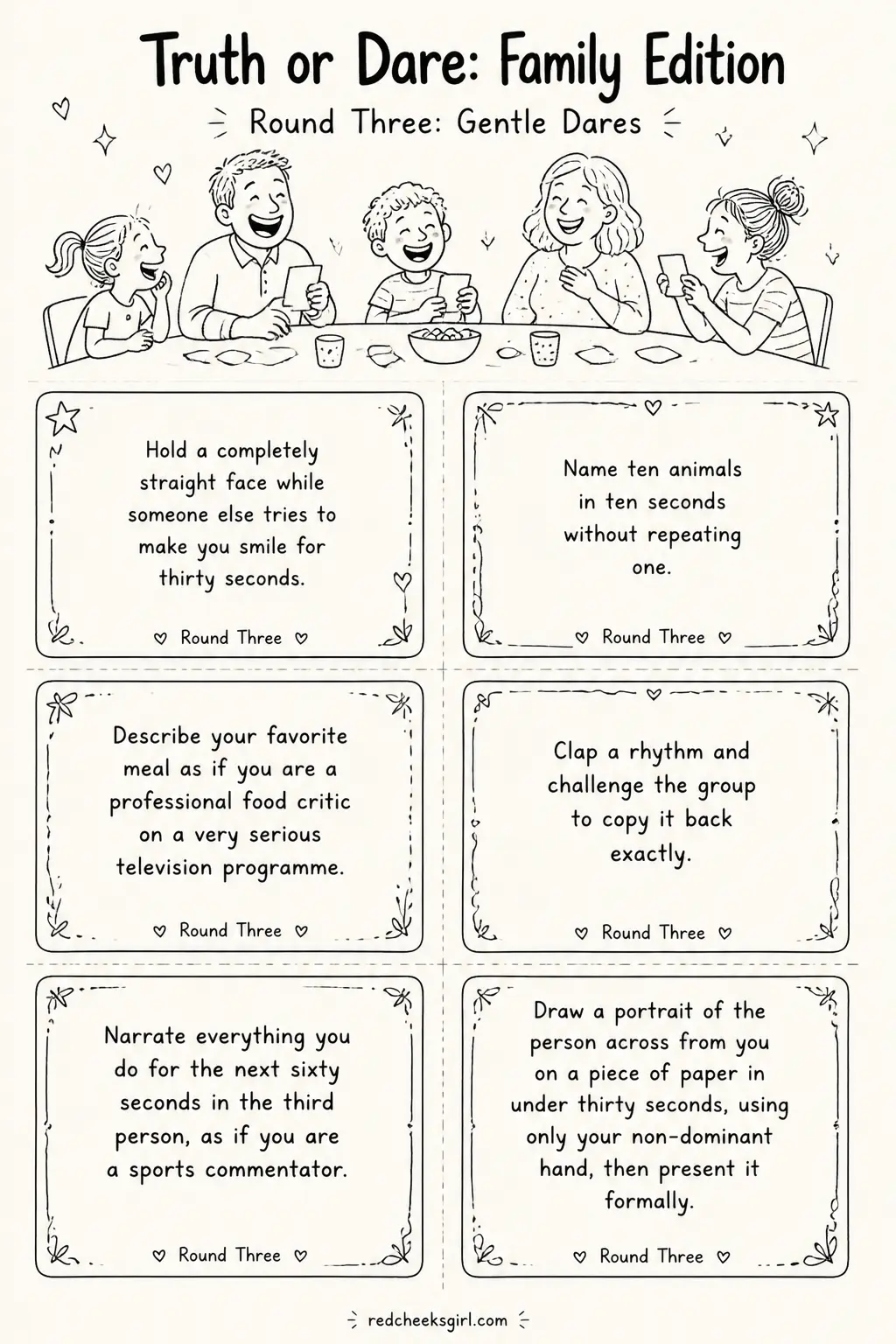
Every dare here works from a chair, needs no props and will not embarrass anyone in front of the whole room. For a bigger collection of clean dares sorted by age, the full truth or dare question bank has plenty of options to mix in.
- Hum the first eight notes of any song and let the group guess what it is.
- Say something genuinely kind about every person at the table, one by one, without repeating a compliment.
- Tell a two-sentence made-up story where the hero is the person sitting to your left.
- Do your best impression of a famous voice or character for thirty seconds.
- Teach the group one hand gesture or greeting from another culture you know.
- Recite the alphabet backwards as far as you can without stopping.
- Hold a completely straight face while someone else tries to make you smile for thirty seconds.
- Name ten animals in ten seconds without repeating one.
- Describe your favorite meal as if you are a professional food critic on a very serious television programme.
- Clap a rhythm and challenge the group to copy it back exactly.
- Narrate everything you do for the next sixty seconds in the third person, as if you are a sports commentator.
- Draw a portrait of the person across from you on a piece of paper in under thirty seconds, using only your non-dominant hand, then present it formally.
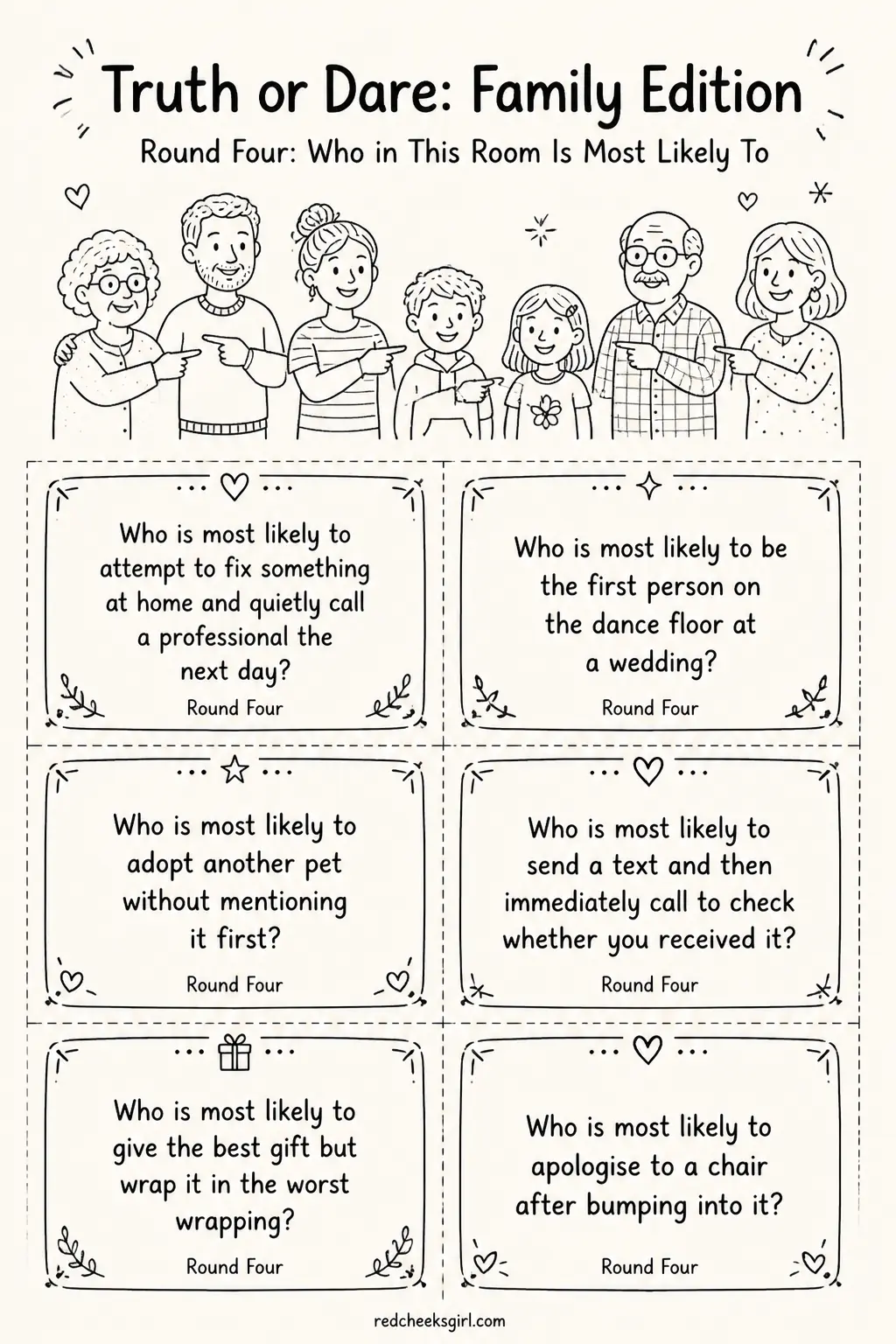
Round Four: Who in This Room Is Most Likely To
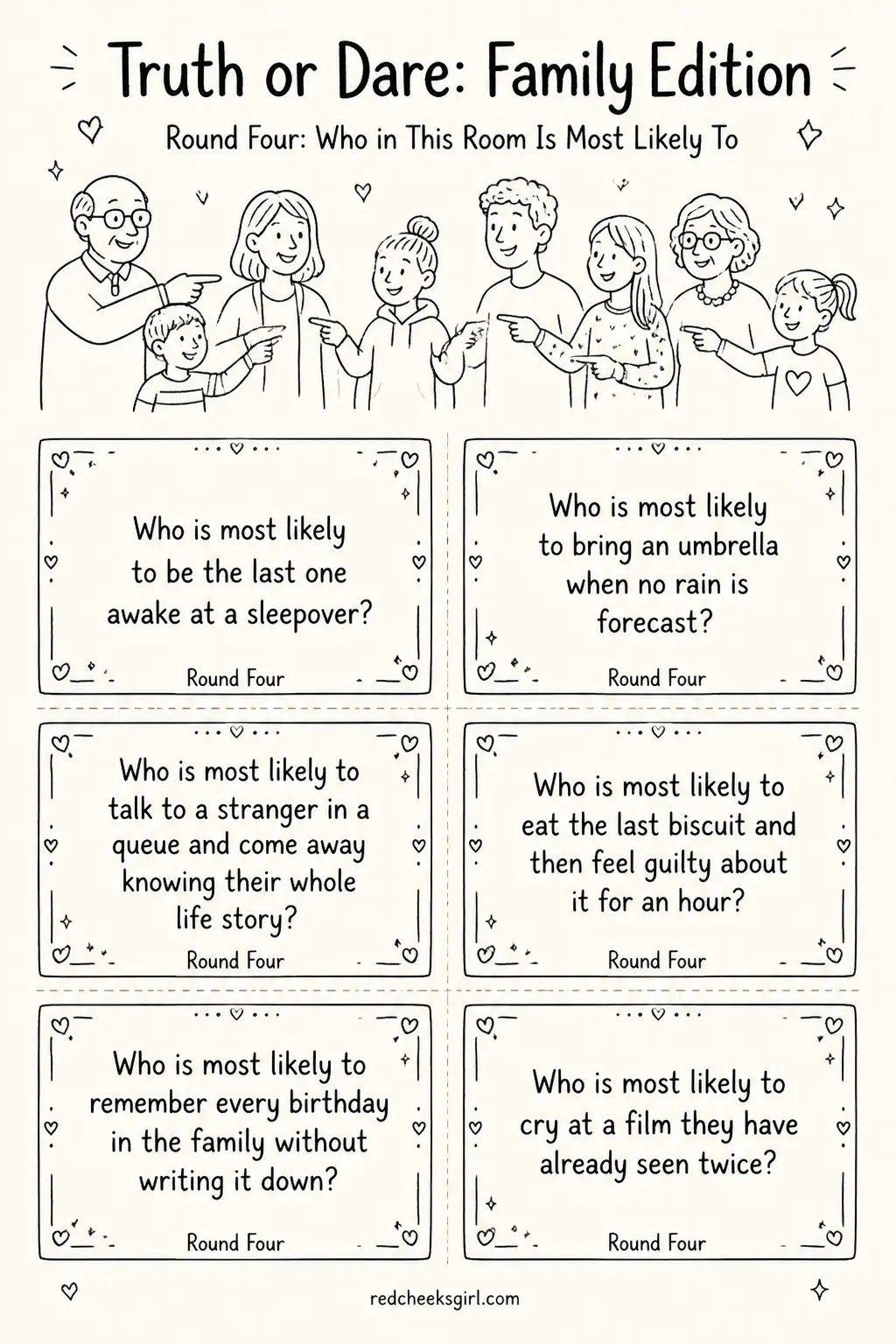
Everyone points at once, no one takes it personally and the group almost always laughs at the same moment. Keep it affectionate rather than roasting anyone.
- Who is most likely to be the last one awake at a sleepover?
- Who is most likely to bring an umbrella when no rain is forecast?
- Who is most likely to talk to a stranger in a queue and come away knowing their whole life story?
- Who is most likely to eat the last biscuit and then feel guilty about it for an hour?
- Who is most likely to remember every birthday in the family without writing it down?
- Who is most likely to cry at a film they have already seen twice?
- Who is most likely to attempt to fix something at home and quietly call a professional the next day?
- Who is most likely to be the first person on the dance floor at a wedding?
- Who is most likely to adopt another pet without mentioning it first?
- Who is most likely to send a text and then immediately call to check whether you received it?
- Who is most likely to give the best gift but wrap it in the worst wrapping?
- Who is most likely to apologise to a chair after bumping into it?
Round Five: Stories From Before Anyone Was Born
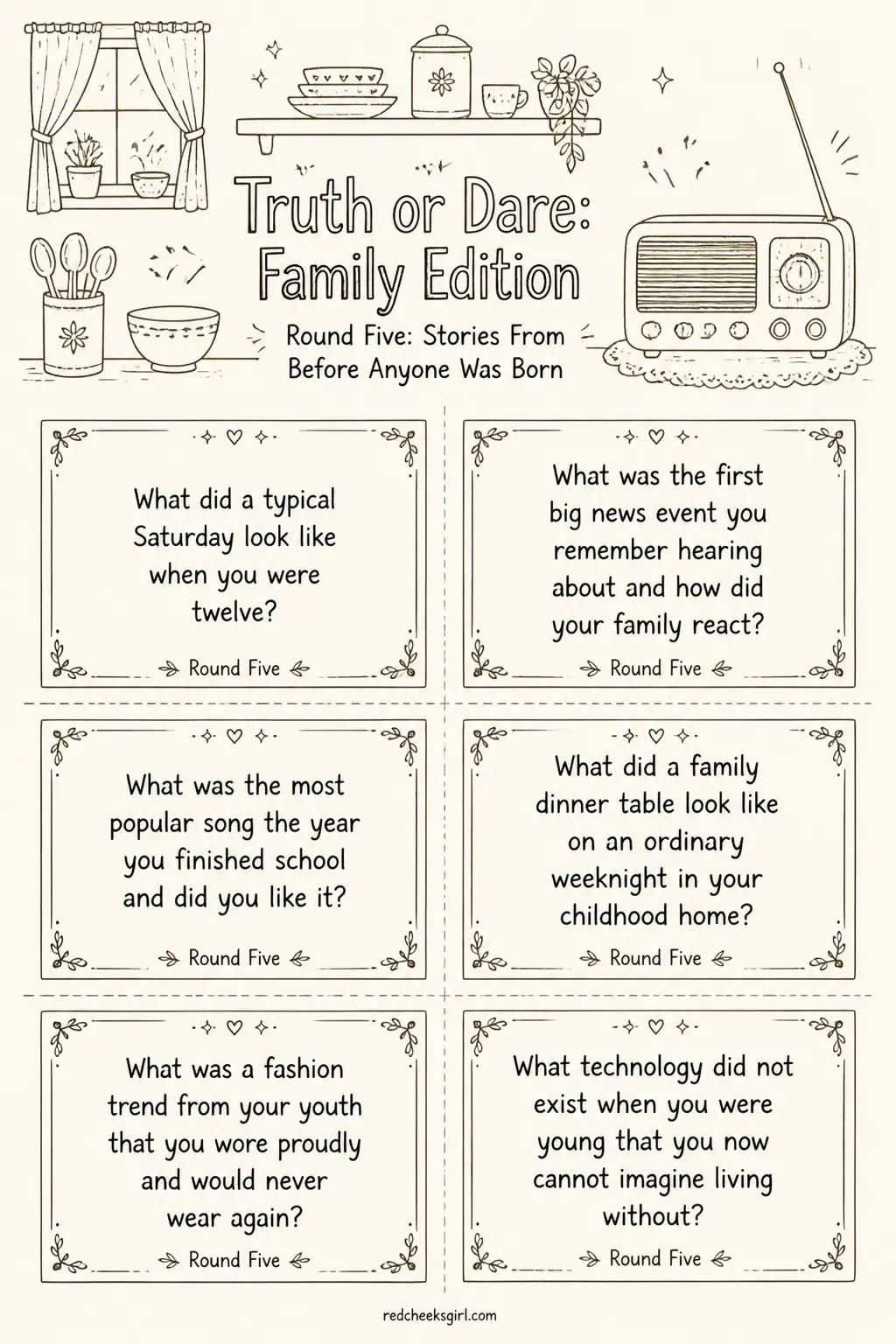
This round belongs almost entirely to the grandparents and older relatives, and the younger players will come away knowing something they never thought to ask. If your gathering is around a holiday, these Thanksgiving family games from grandma to the grandkids pair naturally with this round.
- What did a typical Saturday look like when you were twelve?
- What was the first big news event you remember hearing about and how did your family react?
- What was the most popular song the year you finished school and did you like it?
- What did a family dinner table look like on an ordinary weeknight in your childhood home?
- What was a fashion trend from your youth that you wore proudly and would never wear again?
- What technology did not exist when you were young that you now cannot imagine living without?
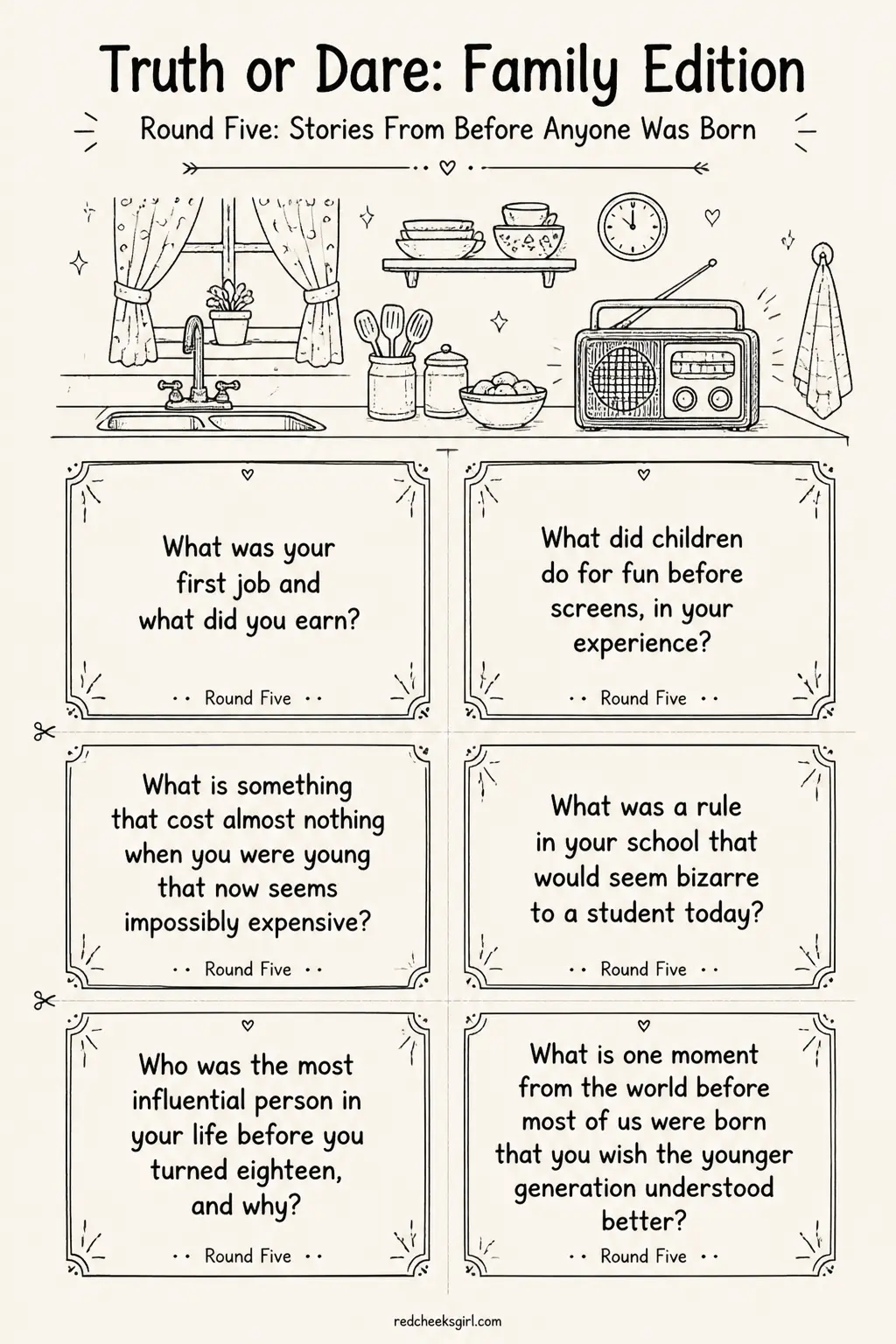
- What was your first job and what did you earn?
- What did children do for fun before screens, in your experience?
- What is something that cost almost nothing when you were young that now seems impossibly expensive?
- What was a rule in your school that would seem bizarre to a student today?
- Who was the most influential person in your life before you turned eighteen, and why?
- What is one moment from the world before most of us were born that you wish the younger generation understood better?
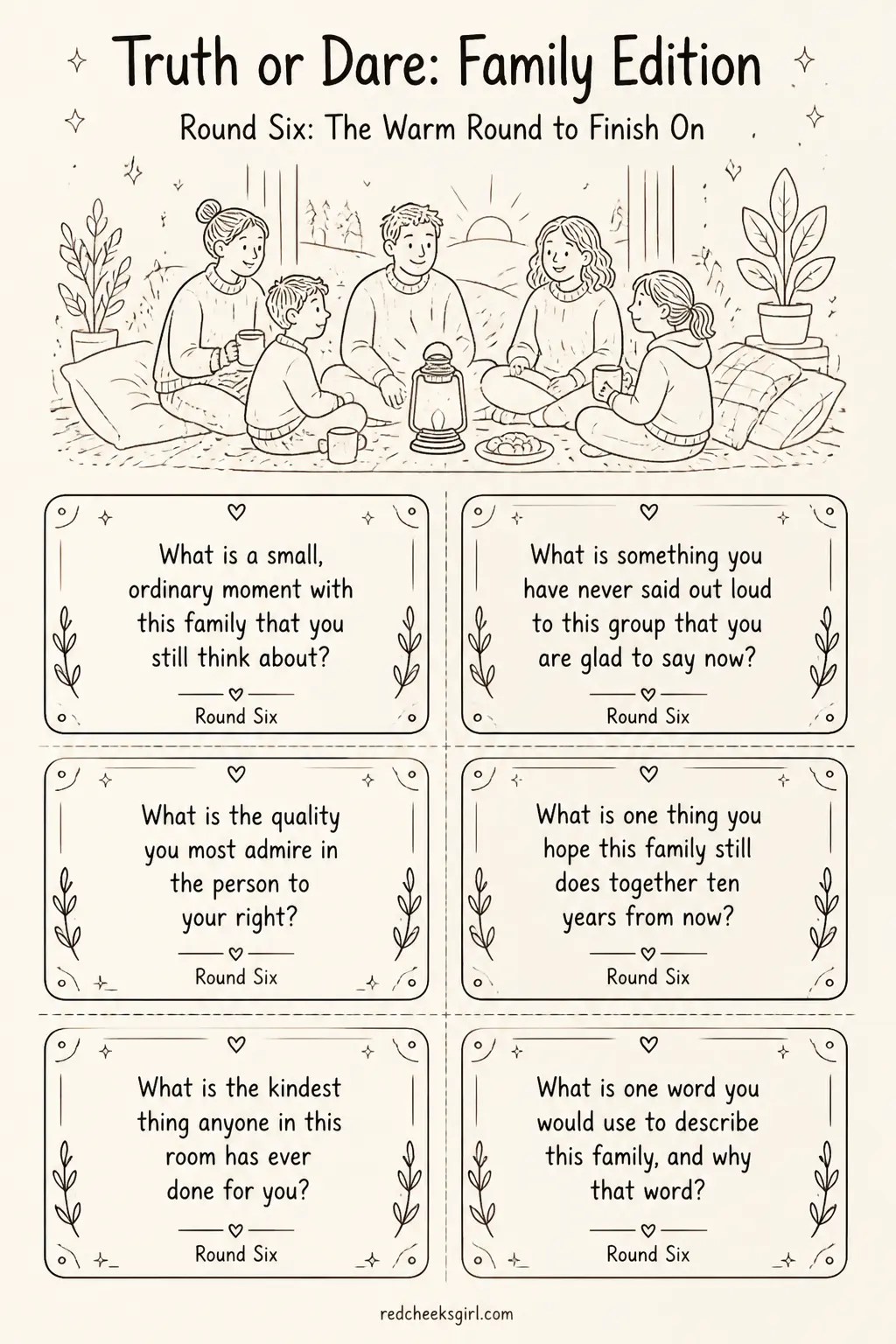
Round Six: The Warm Round to Finish On
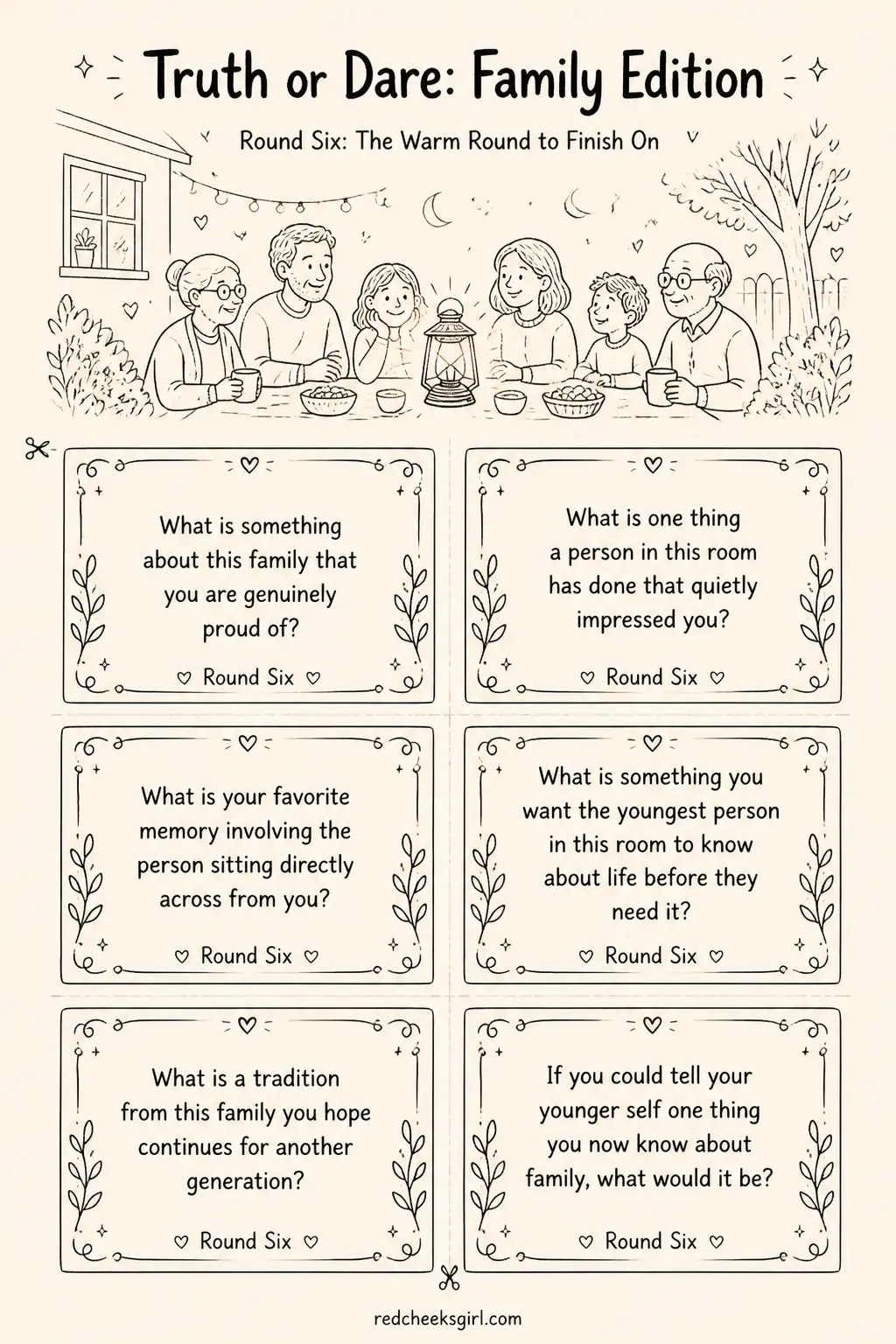
End the game here, on something that feels good, because this is the round everyone will mention on the drive home. These truth or dare questions family friendly enough for any generation also work beautifully as a standalone conversation starter at any gathering.
- What is something about this family that you are genuinely proud of?
- What is one thing a person in this room has done that quietly impressed you?
- What is your favorite memory involving the person sitting directly across from you?
- What is something you want the youngest person in this room to know about life before they need it?
- What is a tradition from this family you hope continues for another generation?
- If you could tell your younger self one thing you now know about family, what would it be?
- What is a small, ordinary moment with this family that you still think about?
- What is something you have never said out loud to this group that you are glad to say now?
- What is the quality you most admire in the person to your right?
- What is one thing you hope this family still does together ten years from now?
- What is the kindest thing anyone in this room has ever done for you?
- What is one word you would use to describe this family, and why that word?
When to Stop and How to End the Game Well
The right moment to stop is before anyone flags. With six rounds of twelve prompts each, this game runs between forty-five minutes and an hour at a comfortable pace, and the final round does the closing work for you. When the last question of Round Six lands, the room is usually quiet in a good way, not an awkward one.
Resist adding more rounds on the spot. The temptation is real, especially if the conversation has been lively, but extra rounds past the warm finish tend to flatten what came before them. Let the last answer be the last word.
If someone passes on a question, move on without comment. The rule exists precisely so no one feels cornered, and using it once does not mean the player is not engaged. The person who passes once often gives the most open answer two questions later.
Collect the cards back into their envelopes before people leave. A laminated deck stored in a small box will survive years of family gatherings, and pulling out the same set next year is its own small tradition. Print fresh cards for new players, mark which rounds a particular group has already played and pick up from there the next time.
Frequently Asked Questions
How many players do you need for this game?
It works best with four to twelve players. Fewer than four and the ‘Who in This Room’ round loses its variety; more than twelve and each round can stretch past a comfortable sitting time. Split into two groups if you have a very large gathering.
Is this game suitable for children under ten?
Most rounds work well for children from around seven or eight upward, especially Rounds One, Three and Four. Rounds Two and Five are richer with older players, but younger children enjoy listening. Skip any prompt that lands beyond a child’s experience and move to the next one.
Can players refuse a dare?
Yes. Each player can pass once during the whole game, no questions asked. The dares in Round Three are all seated and gentle, so passes are rare, but the option keeps everyone comfortable and willing to stay in the game.
How do you print and use the card decks?
Print each sheet on cardstock at home, cut along the printed lines and keep each round’s cards in a small envelope or on a binder ring. Print two sheets per round to get all twelve prompts for that round. Laminating the sheets before cutting makes the cards last for many gatherings.
Do you have to play all six rounds in one sitting?
No. The rounds are self-contained, so you can play one or two rounds at the start of a meal and pick up the rest later. The order matters because the rounds escalate from easy to warm, so try to keep them in sequence across the session.
What is the difference between this and a standard truth or dare game?
Standard truth or dare games often include prompts that feel awkward or exclusionary across generations. This version keeps every truth question answerable by anyone from a grandparent to a tween, and every dare is seated, harmless and needs no props, which makes it genuinely usable at a family table.
72 kind truth or dare questions for kids, sorted into 6 rounds for sleepovers and birthdays. Safe, s
72 camping would you rather questions sorted by round, printable cards included. Perfect for familie

72 truth or dare questions at school that stay safe, finish fast and never get anyone in trouble. Si
Leave a Reply