

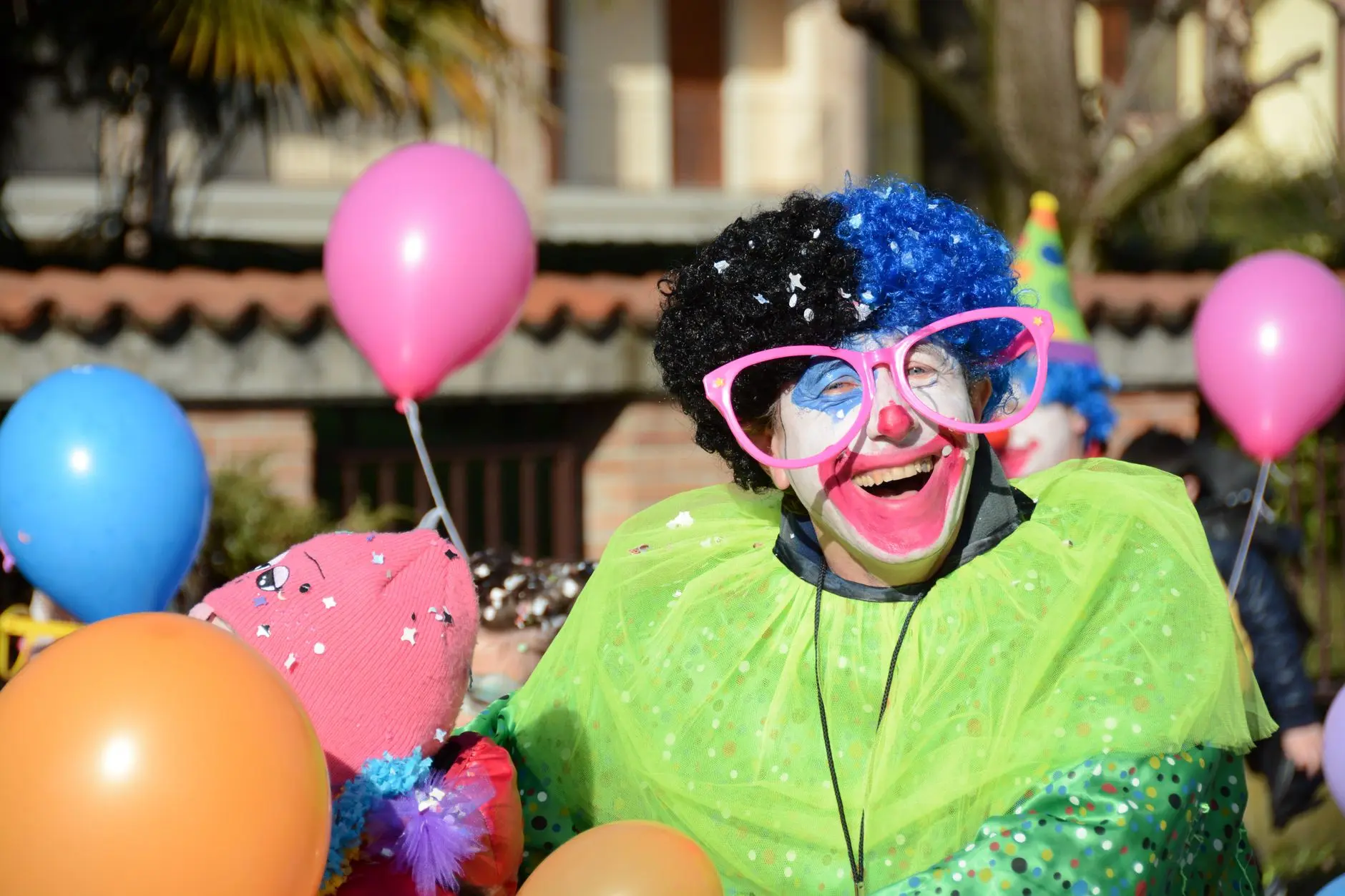
Circus activities preschool party games work best when every child is the star of the show at the same time. No one stands in a corner waiting. No one gets eliminated and has to watch.
This list is built for mixed-age groups — toddlers and school-age kids playing side by side in one open space, doing something different from whatever they did two minutes ago.
All 12 games below are tied to real circus acts: tightropes, lion tamers, jugglers, acrobats, and clowns.
If you want to go deeper into the theme beyond the games themselves, the circus birthday party ideas post has decor, food, and setup tips that pair well with this lineup.
For now — clear the floor, press play on a circus playlist, and let the show begin.
This post contains affiliate links — if you buy through them, I may earn a small commission at no extra cost to you.
1. Tightrope Walk
Tightrope Walk turns a strip of painter’s tape into the most thrilling path in the room. Lay several lengths of tape on the floor in different directions — straight, curving, even zigzag.
Every child picks a line and walks it heel-to-toe with arms stretched wide, just like a circus performer crossing high above the crowd.
Toddlers can use two parallel strips of tape a few inches apart so they walk between the lines rather than on them, while older kids can try the single line with their arms pulled in tight.
Give each child a pool noodle to hold horizontally in front of them — it works as a balance bar exactly the way a real tightrope walker uses one. Older kids who have mastered the forward walk can try going sideways or backwards.
For an extra challenge, place a soft bean bag at one point along the tape for walkers to step over without losing their footing. Since every child has their own line, the whole group walks at once with no waiting.
This is a strong opener because the physical demand scales automatically: a two-year-old who wobbles and laughs is having just as much fun as a ten-year-old who makes it look easy. Swap the pose halfway through — call out ‘arms in!’ or ‘slow motion!’
— and watch every age group respond. Keep the music going so the room feels alive even when kids pause to concentrate.
Lay one tape line per child before guests arrive so everyone can start the moment the game is announced.
🛍 Shopping guide
2. Ringmaster Says
Ringmaster Says is a printable Simon Says card game with a big-top twist. Each card shows a circus action — ‘Ringmaster Says: stomp like an elephant!’ or ‘Ringmaster Says: freeze like a statue!’ — along with a bold circus-act illustration.
One adult or older child holds the stack and reads the cards aloud, one by one. The whole group performs the action together, so there is no elimination and nobody sits out. The caller simply keeps the pace brisk.
Print the sheet on cardstock and cut along the dotted lines before the party. You will end up with around 20 cards. Shuffle them and you have a ready-to-go calling deck that lasts as long as you need it to.
Toddlers follow the big kids’ lead on the physical moves, which means they stay engaged even if they miss a word. The caller can hold up the card’s illustration as a visual cue for non-readers.
The sheet doubles as a take-home keepsake — kids love carrying their own mini deck away in a goodie bag.
If you want to run the game faster, split the group into two circles, each with their own caller, so the caller-to-crowd ratio stays low and every child hears the command clearly.
This is one of the birthday party games that works equally well indoors on a rainy day or outside on the lawn.
- Ages 2 and up
- Groups of 6 to 30
- Indoors or outdoors with a clear open space

3. Lion Tamer Freeze Dance
Lion Tamer Freeze Dance is freeze dance with a circus skin. When the music plays, all children move through the space like circus lions — prowling, leaping, shaking their manes.
When the music stops, the Lion Tamer (an adult holding a hula hoop as a prop ‘ring’) calls out a freeze pose: ‘sit!’ ‘roar and hold it!’ ‘balance on three paws!’ Every child freezes in that pose until the music starts again. Nobody is out.
The Lion Tamer just calls a new pose each time the music stops.
Keep rounds short — roughly 20 to 40 seconds of music, then a pause. Vary the tempo so kids experience both slow, creeping lion energy and fast, bounding energy. Toddlers copy whatever the children around them are doing, so they stay included naturally.
Older kids can be invited to be Lion Tamer for a round, which gives them ownership without creating any kind of competition.
The no-elimination format is the whole point here. At a mixed-age party, the last thing you want is a five-year-old watching from the sidelines while their eight-year-old cousin keeps dancing. Freeze into a silly animal pose and every child stays giggling and moving right through to the end of the song.
- A circus or carnival music playlist
- One hula hoop for the Lion Tamer prop
- Open floor space, at least 10 x 10 feet
🛍 Shopping guide
4. Tent Peek Matching
Tent Peek Matching is a printable memory-style sheet where children look at two rows of circus tents and draw a line to connect each pair that shows the same act inside.
The acts inside the tent flaps include a juggler, a tightrope walker, a clown, a roaring lion, a performing elephant, and a seal balancing a ball — twelve tents in two columns, six unique acts each side, randomly ordered so the left and right columns do not line up.
Children draw a line from each tent on the left to its match on the right.
Print one sheet per child on regular paper. Toddlers can play with a parent pointing to each image and naming it together — the matching lines become a joint activity rather than a solo puzzle.
Kids aged five and up can work independently and enjoy the quiet focus after a run of energetic games.
Hand out crayons so children can colour the matching pairs in the same colour after drawing the line, which adds a creative layer and slows the pace.
This is a natural calm-down moment mid-party. Slot it after Lion Tamer Freeze Dance or Clown Car Squeeze when the room needs five minutes of settled activity before the next active game.
Because every sheet is identical, children can compare and discuss answers with whoever is sitting next to them, which keeps the social energy going even during a quiet stretch.
For toddlers, reduce to four pairs and point to each image as you name it together out loud.

5. Clown Car Squeeze
Clown Car Squeeze is the silliest game on this list and the one that will get the biggest laughs from parents watching.
Mark out a ‘clown car’ shape on the floor with painter’s tape — a rectangle roughly four feet by three feet, like a tiny car outline. When the music plays, all the kids move freely around the space.
When the music stops, every child has to get inside the car at the same time. All of them. No one is left outside, so they have to communicate, squish together, and figure it out.
Start with a large outline so younger toddlers feel comfortable, then gradually make a second, smaller car shape nearby and see if the bigger kids can squeeze into that one.
There are no losers — if anyone is partly outside the line, the group has five seconds to pull them in. This cooperative framing means kids are helping each other rather than competing.
It also gives toddlers and preschoolers the reassurance of being surrounded by their older siblings or cousins without feeling overwhelmed.
The chaos is the fun. A group of eight children trying to fit inside a four-foot rectangle without anyone toppling makes for photographs that will get shared for years.
Keep rounds short — 30 seconds of music, then the squeeze — and run four or five rounds before moving on. Give the car a name before you start: ‘the Big Top Express’ gets kids invested before the first note plays.
Pre-tape two car outlines in different sizes so you can switch between them and keep the challenge fresh.
6. Cannon Ball Toss
Cannon Ball Toss turns soft balls into flying human cannonballs aimed at targets. Set up a row of plastic cups stacked in small pyramids at one end of the space — three cups per pyramid, four or five pyramids spread out in a line.
Every child gets three soft foam balls and stands at a throwing line marked with tape. On ‘Fire!’ all children toss their balls at the same time, aiming at any pyramid they like. The goal is simply to knock a cup down.
Everyone fires at once, so there is no waiting and no comparison.
After the first volley, reset the cups quickly and let kids retrieve their balls — this reset lap is itself part of the fun for toddlers who love to chase.
Older kids can step back to a second tape line for more of a challenge, while toddlers stay at the closer line.
You can also prop a large cardboard box on its side and cut a round ‘cannon mouth’ hole in the face so children aim through the hole for a harder shot.
Soft foam balls matter here — choose ones light enough that a two-year-old can throw them and safe enough that an accidental head shot causes only giggles.
The cooperative chaos of a dozen balls flying at once is far more exciting than a line where one child throws and eleven watch. Reset between rounds takes under a minute if you recruit two older kids as the ‘cannon crew’.
Every child throws at the same moment, so there is no pressure of being watched and no waiting for a turn.
🛍 Shopping guide
7. Juggling Scarves
Juggling Scarves gives every child two lightweight nylon scarves and a series of thirty-second challenges called out by the host.
The slow, floating fall of a juggling scarf gives toddlers enough time to track and catch it, which makes this one of the rare games where a two-year-old and a ten-year-old are genuinely on equal footing.
Start with the simplest challenge: toss one scarf up and catch it with the same hand. Then switch to tossing with the right hand and catching with the left. Then toss, clap once, and catch.
Progress the challenges across four or five minutes: toss two scarves at once, toss and spin a full circle before catching, or pass one scarf from hand to hand in a rainbow arc.
For kids aged six and up, introduce the basic three-scarf juggling pattern — right, left, right, left — using the slow descent of the scarves to give them time to keep the pattern going.
Toddlers will spend most of the time throwing scarves straight up and watching them float down, which is completely fine and just as joyful.
Scarves also work beautifully as a reset tool between higher-energy games. The floating, drifting quality of the activity naturally slows the group’s energy without stopping it, making this a smart placement between something loud like Clown Car Squeeze and something focused like Tent Peek Matching. Each child keeps their scarves as a party favour at the end of the day.
Call each challenge in a circus-announcer voice: ‘And now, the Great Juggling Act!’ — kids play along with the theatre of it.
🛍 Shopping guide
8. Plate Spinner Relay
Plate Spinner Relay gives every child a paper plate and a ping pong ball.
The challenge: carry the plate waiter-style — flat on the palm, not gripped at the edges — from a start line to a cone and back, with the ball balanced on top.
If the ball falls, the child picks it up, places it back on the plate, and keeps going from the spot where it dropped.
Since every child runs their own course at the same time, the relay is the whole group moving together rather than one team watching another.
For toddlers, hold the plate with two hands at waist level instead of one hand overhead — the lower centre of gravity makes it achievable. Older children can try holding the plate overhead or with their arm fully extended.
A variation that older kids love: run the course twice, and the second time the plate goes on their head. Introduce a slight obstacle — a zigzag line of cones — once everyone has done the straight course successfully.
The circus connection is real: plate spinning is one of the oldest big-top variety acts, and calling the children ‘plate spinners from the greatest show on earth’ before the round starts earns an immediate change in posture.
Add circus music for the run and you have a genuine performance feeling without any actual spinning required. This is one of the easiest games to reset — just swap out any crushed paper plates and you are ready for another round in thirty seconds.
Give toddlers a slightly concave plate or a plate with a rim to help keep the ball from rolling.
🛍 Shopping guide
9. Acrobat Balance Challenge
Acrobat Balance Challenge is a series of progressive balance poses that every child tries at the same time, guided by a caller who works through a list of twelve positions. Start standing: ‘balance on one foot, arms wide — hold for five counts.’
Then: ‘crouch down on both feet, arms out.’ Then: ‘tip forward with one leg behind you, like you are flying.’ Each pose lasts about ten seconds. Toddlers attempt whatever version their body can manage — even standing still with wobbly knees counts as playing.
Tape a large star shape on the floor at each child’s spot so they have a clear place to stand and work through their poses without wandering into each other.
Older kids who master a pose quickly can be given a silent challenge card — a small strip of paper with a harder version drawn on it, like ‘add a slow arm sweep’ or ‘close your eyes for three counts’ — so they stay engaged while the younger children catch up.
The pose cards are part of the Ringmaster Says printable stack if you want to keep materials unified.
Pair this with soft background circus music and a countdown for each pose: the structure keeps even wiggly toddlers focused for one more hold. It works especially well after Juggling Scarves, when children are already thinking about body control.
You do not need any equipment beyond the floor and the caller’s voice, which makes it an easy game to pull out if another one finishes faster than expected.
- Ages 2 through 12
- Indoors on a clear open floor
- Works as a calm-down segment after high-energy games
10. Clown Shoe Stomp
Clown Shoe Stomp is a balloon-stomp game where every child wears a pair of oversized ‘clown shoes’ made from two empty cereal boxes taped around their feet, then shuffles around the space trying to stomp on balloons laid on the floor while keeping their clown shoes on.
The balloon is flat on the ground — children stomp to pop it or to knock it to a partner. No tying to legs, no chasing other children’s balloons. Each child just works through the pile of balloons on the floor.
Set out one balloon per child to start — plain round balloons in bright colours work best. Once a child stomps one flat, they pick up a new one from a pile in the corner.
The cereal-box shoes force a wide, shuffling gait that is inherently funny and also levels the playing field: an eight-year-old in cardboard boxes is not that much faster than a three-year-old in the same situation.
Make the boxes before the party and secure them with a loop of masking tape around the child’s shoe so they slip on and off quickly.
Toddlers who cannot manage the boxes can simply stomp balloons in their regular shoes, which is still completely satisfying.
If balloon popping sounds are overstimulating for some children, offer them a softer version: shuffle-push a balloon to a target circle on the floor without popping it. Either format keeps children moving and laughing the whole time.
The clown connection is undeniable, and calling out ‘clown shuffle!’ in an announcer voice at the start gets the whole room into character immediately.
- Empty cereal boxes, two per child
- Masking tape to secure boxes to shoes
- Inflated balloons, at least two per child
🛍 Shopping guide
11. Fire Breather Balloon Pop
Fire Breather Balloon Pop gives every child an uninflated balloon and a challenge: blow it up as big as they can, then release it and watch it zoom across the space. After the zoom, they pick it up, blow again, and release.
The ‘fire breathing’ is the exhale — big, exaggerated, and completely safe. Toddlers who struggle to inflate a balloon get a slightly pre-stretched one so even one big breath produces a satisfying small balloon.
Older kids compete only with themselves, trying to get their balloon bigger each round.
After three or four zoom rounds, switch to the pop challenge for children aged five and up who want it: blow the balloon up fully, twist the neck closed, and sit on it to pop.
Toddlers and children who do not want to pop stay in ‘zoom mode’ for the full game — there are enough bodies and enough balloons that both groups run simultaneously without one disrupting the other.
Keep a fresh supply of pre-stretched balloons available so the game never stalls.
The fire-breathing frame is genuinely circus-linked — fire breathers are a staple circus act — and telling children they are practising ‘the great lung power needed for the fire breathing act’ gives the game a story that even two-year-olds understand.
Blow-zoom-collect is an excellent short loop that keeps toddler attention, while the sit-and-pop challenge satisfies older children who need more payoff.
Budget about three minutes for this one and then move straight into the calmer Ringmaster Says or Acrobat Balance Challenge to let the noise settle.
Pre-stretch balloons by inflating them once and letting the air out before the game — they are much easier for small lungs to blow up.
🛍 Shopping guide
12. Circus Parade Tag
Circus Parade Tag is a chase game where tagged players join a conga-line parade behind the tagger rather than sitting out. One child starts as the Ringmaster and must tag another player.
When tagged, that child joins the line behind the Ringmaster, holding the shoulders of the person in front of them. Only the front of the line — the Ringmaster — can do the tagging.
The parade grows, and the last free child wins a round of applause before becoming the next Ringmaster.
Call out animal roles as children join the line: ‘the new second person is the elephant — stomp your feet!’ ‘Third person is the seal — wave your flippers!’
Each child in the parade moves like their assigned circus animal, so the parade becomes louder and sillier the longer it grows.
Toddlers who cannot keep up with the chase can be pre-assigned ‘parade walker’ status — they start in the line from the beginning and help the parade grow without needing to run.
This is the strongest closing game on the list because it naturally gathers everyone into one moving group.
By the time the last child is tagged, you have the entire party marching around the room together — which slides straight into candles, cake, or goodie bags without any transition effort.
Put on a march-tempo circus song for the final parade lap and cue the adults to clap along. The show ends with the whole cast on stage at once, which is exactly how a real circus finishes.
Tagged children join the parade instead of sitting out, so the game ends with everyone playing together rather than one winner and a room full of spectators.
Frequently Asked Questions
What age range do these circus activities work for?
The full list is built for a mixed group of toddlers aged 1 to 3 and kids aged 6 to 12 playing together in the same space.
Each game has a built-in easier version for the youngest players, usually described in the second paragraph of the game. No game requires a child to be eliminated or to sit and watch, so every age group stays active the whole time.
How much space do I need for these circus activities preschool party games?
Most games need an open floor area of at least 15 by 20 feet — roughly the size of a living room with the furniture pushed to the walls. Games like Tightrope Walk and Circus Parade Tag benefit from a little more room.
The printable games (Ringmaster Says and Tent Peek Matching) can be played at a table or on the floor in any configuration.
Do I need a lot of supplies?
The most-used supplies across all 12 games are painter’s tape, soft foam balls, balloons, juggling scarves, pool noodles, and ping pong balls with paper plates.
Several games use things you likely already have: cereal boxes for Clown Shoe Stomp, plastic cups for Cannon Ball Toss, and just open floor space for Lion Tamer Freeze Dance and Acrobat Balance Challenge. The two printable games need only a printer and cardstock.
In what order should I run the games?
A good pattern is to alternate high-energy active games with short printable or balance activities. Start with Tightrope Walk to settle kids into circus mode, then build energy through Lion Tamer Freeze Dance and Clown Car Squeeze.
Drop in Tent Peek Matching or Ringmaster Says after a run of active games. Save Circus Parade Tag for last — it naturally gathers everyone together and leads straight into cake.
Can these circus games be played indoors?
Yes. Every game on this list works indoors on a clear floor. Games that involve balloon popping (Fire Breather Balloon Pop, Clown Shoe Stomp) are a little louder indoors, so swap those to the end or to an outdoor stretch if noise is a concern.
Tightrope Walk and Plate Spinner Relay actually work better inside where the floor surface is consistent.
How do I keep toddlers involved alongside older kids without one group feeling bored?
The key is simultaneous play — every game here runs with all children active at once rather than taking turns.
Toddlers follow the physical lead of older kids without needing to understand all the rules, and each game has a simpler version built in (wider tape lines, pre-stretched balloons, two-handed plate holding).
Older kids stay engaged because the games are genuinely physical and the circus theme gives them a performance frame that makes even simple moves feel dramatic.
Twelve fall chalkboard signs styled by mood and month, from first harvest to winter threshold, with
Discover 18 energetic party games for teenagers in large groups that break up cliques, get everyone

18 engagement party games that celebrate the couple and break the ice between both families. Fun, fr
Leave a Reply