

14 Indoor Herb Gardens to Start Right Now — What to Plant, Where to Put It and How to Keep It Alive
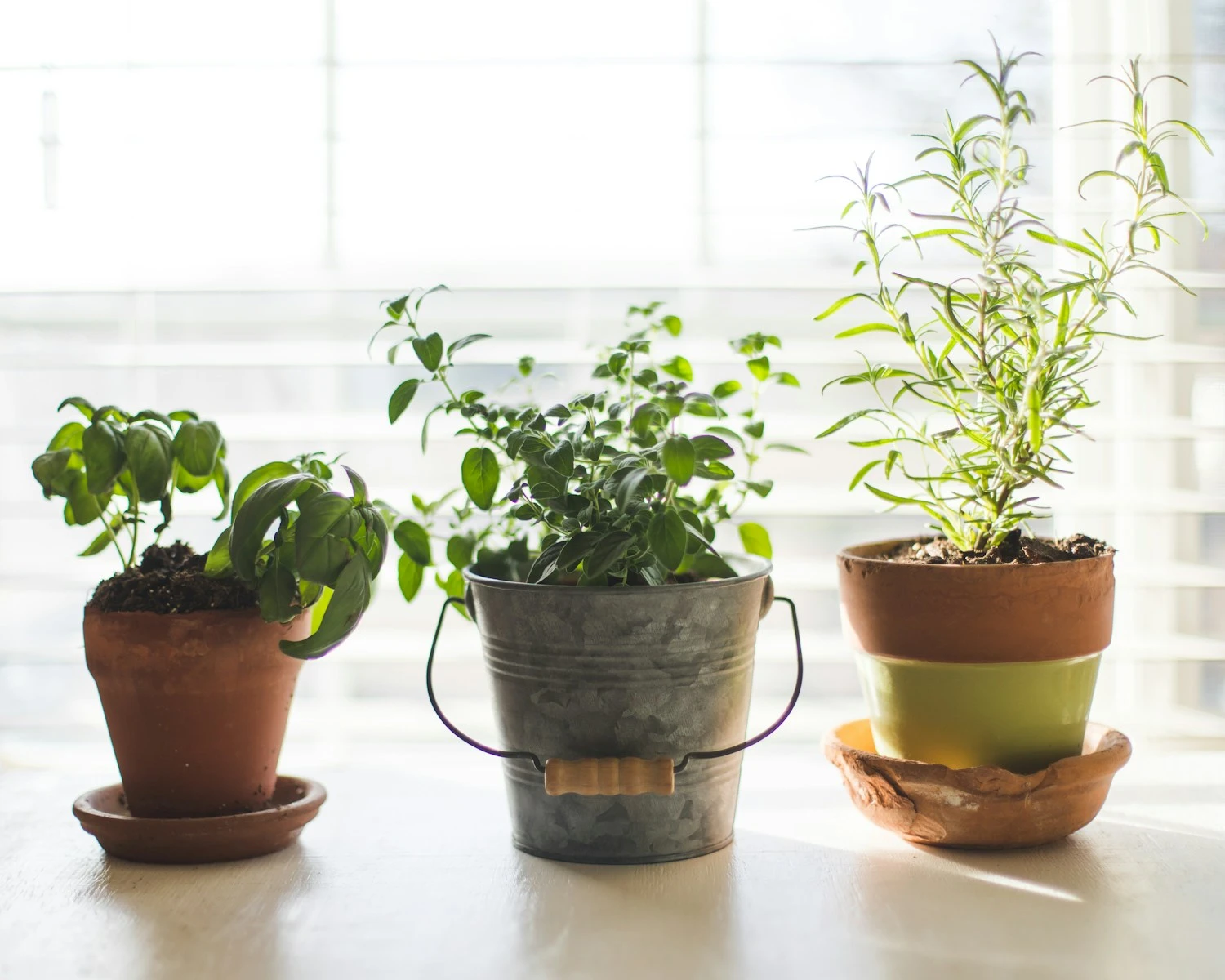
My basil plant has died four times. Not four times total — four times this winter alone.
I kept buying the $3 grocery store pot, putting it on the counter, watering it every three days, and watching it slowly collapse like it had given up on life. Turns out that basil from the supermarket is grown in cramped greenhouse conditions and basically arrives already stressed. I was buying it to watch it die.
Then I actually spent time figuring out indoor herb gardens — which ones are genuinely easy, where to put them, what they actually need — and now I have a little kitchen counter situation that’s been alive since October. Alive and actually getting used.
Here’s everything that worked.
This post contains affiliate links. If you buy something through these links, I may earn a small commission at no extra cost to you. I only recommend things I’d actually use.
The Setup Question (Where Are You Actually Putting This Thing?)
Before you pick herbs, figure out your light situation. That determines almost everything.
South or west-facing windowsill — you hit the jackpot. Basil, rosemary, thyme, anything. Full sun herbs do great here.
East-facing window or moderate indirect light — chives, mint, parsley, cilantro. Mint genuinely doesn’t care. Parsley is surprisingly forgiving.
Low light or mostly artificial light — get a grow light, or stick to mint and chives only. The rest will stretch and flop toward any light they can find and eventually give up.
If you don’t know what direction your window faces, open your weather app compass at noon. Where the sun is = south. Your window on that wall is south-facing.
14 Indoor Herb Gardens Worth Starting
1. The Classic Kitchen Counter Setup
Three terracotta pots in a row, basil in the middle, chives on one side, mint on the other. The mint needs its own pot — it will take over anything it shares with. This trio covers about 80% of everyday cooking.
The key thing nobody tells you: terracotta dries out faster than plastic. You’ll water more often, which is annoying, but the drainage is better and most herbs hate sitting in wet soil. I’ve killed more herbs from overwatering in plastic pots than from forgetting to water in terracotta.
Water when the top inch of soil is dry. Stick your finger in. That’s the whole system.
2. A Single Grow Light Station
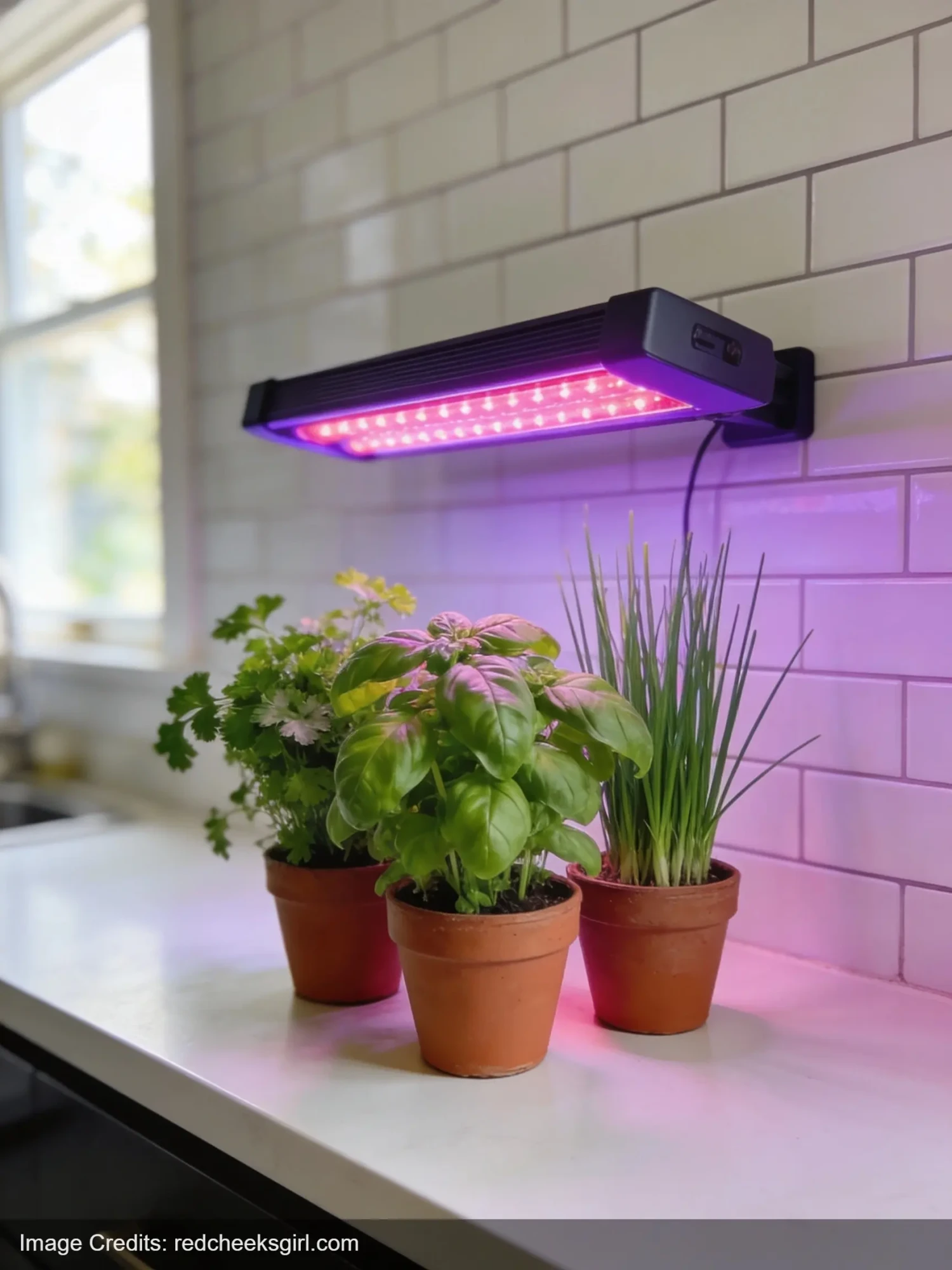
If your apartment doesn’t get much natural light, a small herb grow light is worth every penny. I resisted this for two years because it felt like overkill, and then I got one and my basil started actually growing instead of just slowly dying.
You want one that runs on a timer — 14–16 hours on, then off. Set it once and forget it. Plant whatever you want underneath it.
3. The Windowsill Rail Planter
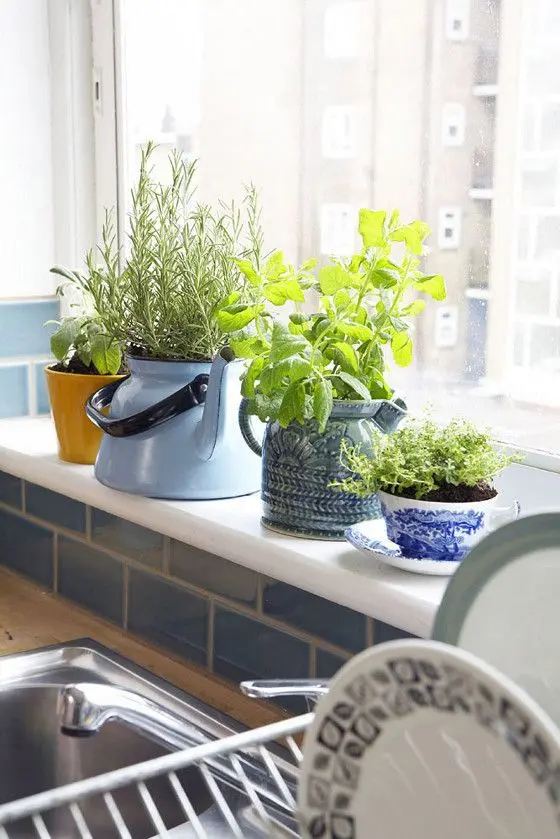
If you have a deep windowsill, a long rectangular window box planter holds 3–4 herbs in one container. Thyme, oregano, rosemary — the Mediterranean herbs that all want the same conditions and tolerate each other’s company.
Don’t mix mint in here. Again. It will consume everything. Mint is a beautiful bully.
4. Basil Only, Done Right
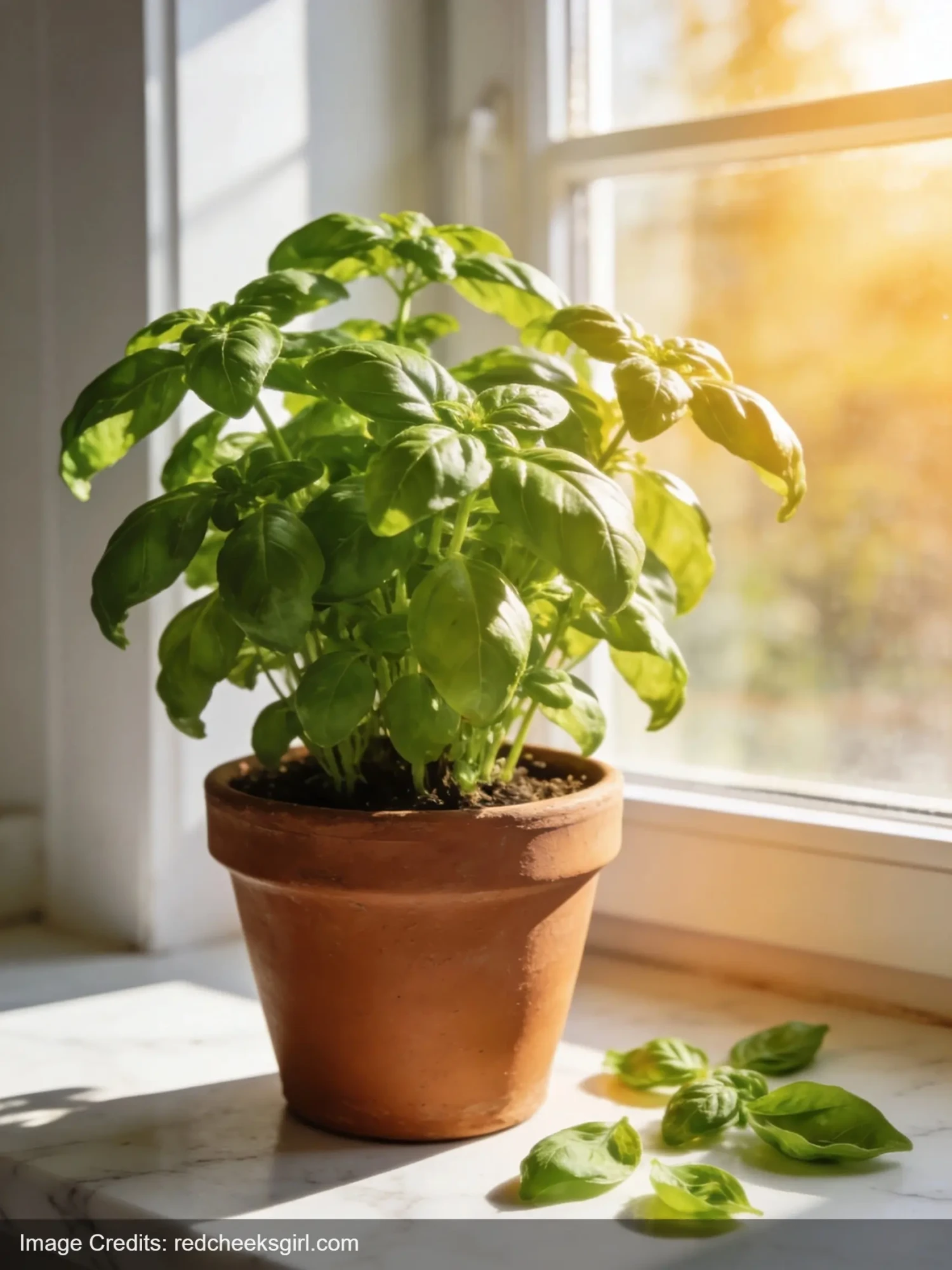
If you’ve killed basil before, here’s the fix: don’t buy the grocery store version. Buy a basil plant from an actual nursery, or start from seed. The nursery plants are grown slower and arrive healthier.
Put it in your sunniest window. Water at the base, not the leaves. Pinch off any flowers the second they appear — flowering means the plant is trying to die, basically. If you do this one thing, the basil lives dramatically longer.
5. The Mint Corner
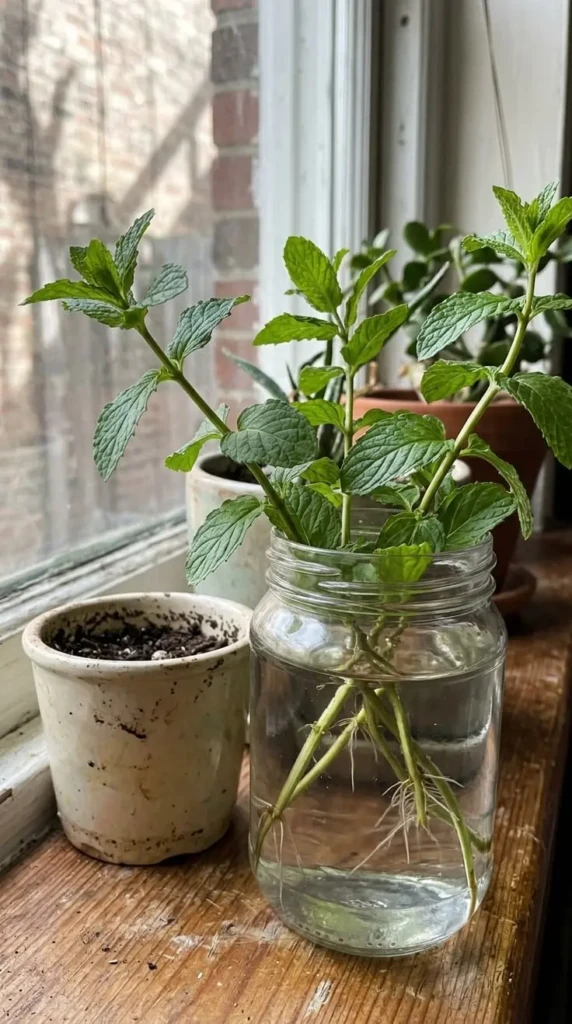
Mint is the most forgiving herb you can grow indoors. It tolerates low light, inconsistent watering, and general neglect. It also spreads aggressively, so keep it in its own pot with no ambitions of expansion.
Uses for fresh mint: cocktails, iced tea, yogurt bowls, throwing leaves into a glass of water when you need to feel like you have your life together.
6. A Chive Pot for People Who Keep Forgetting to Water
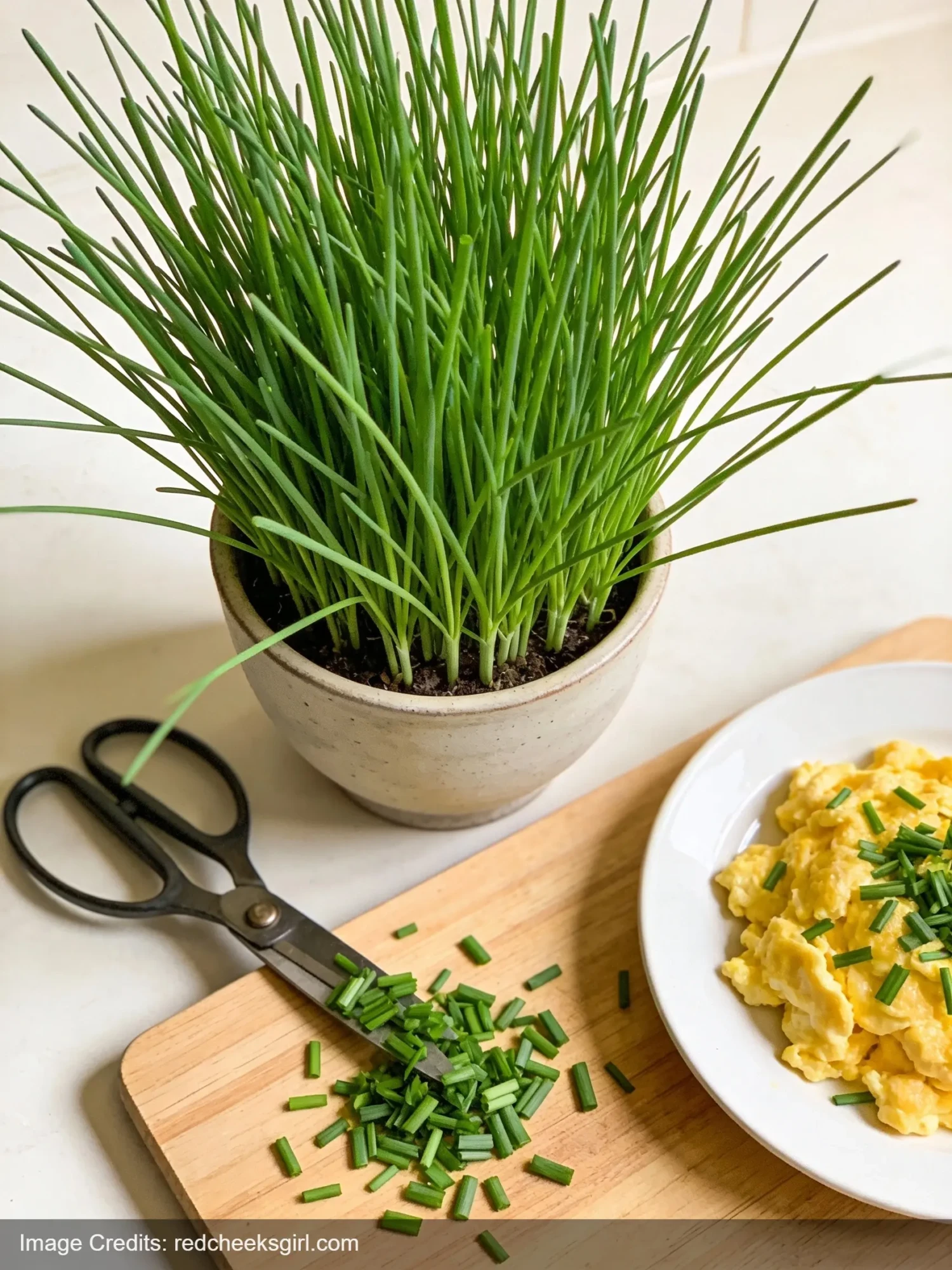
Chives are unkillable in a way that’s almost impressive. I’ve ignored mine for two weeks, come back, and they were fine. Slightly dramatic about it — drooping a little — but fine once watered.
Cut them with scissors straight into eggs, soups, anything. They grow back in days.
7. Herb Garden in a Self-Watering Planter
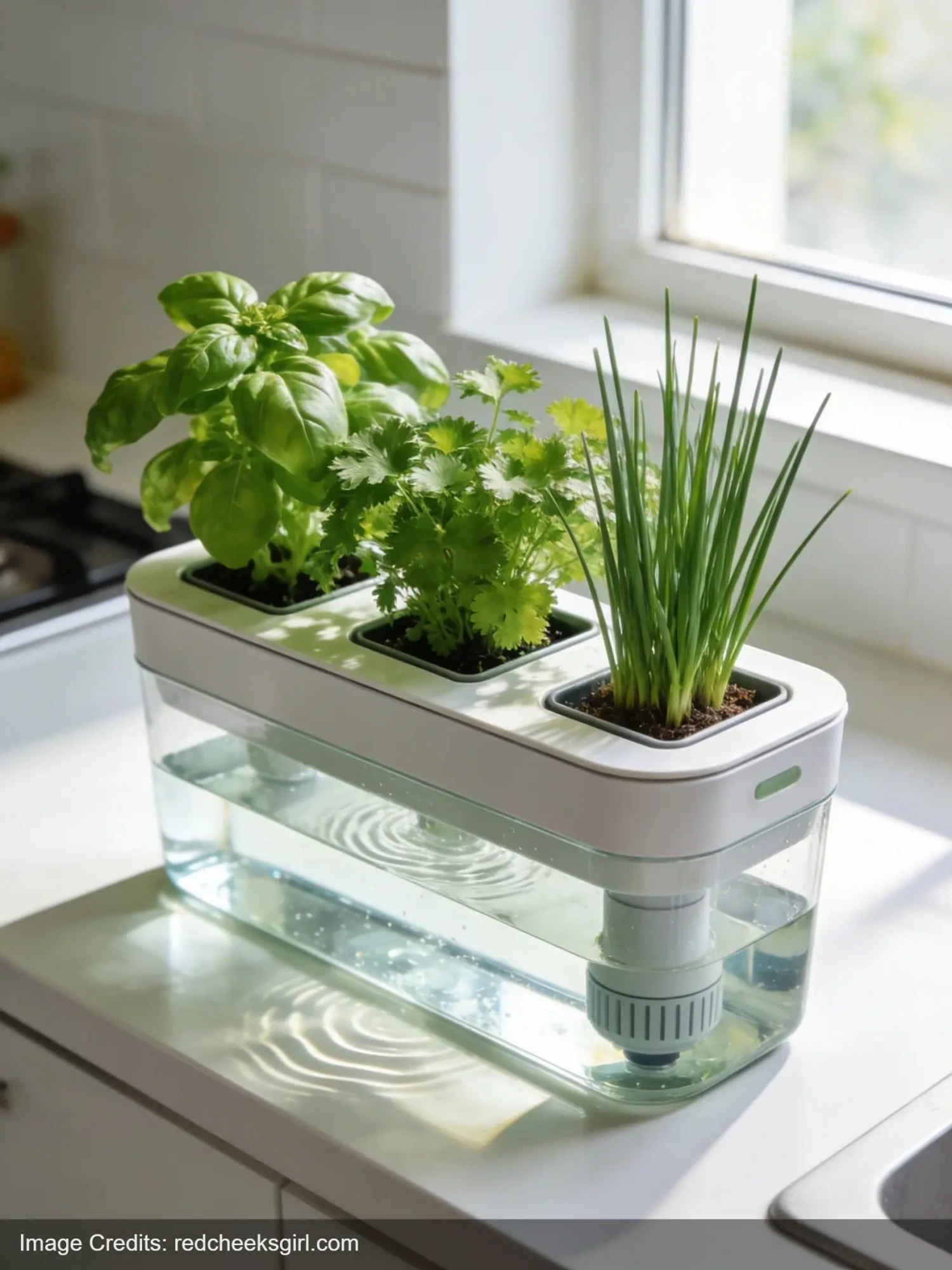
If you travel frequently or just have a bad track record, a self-watering herb planter removes the main thing that kills herbs: inconsistent watering. You fill the reservoir every week or two, and the plant drinks as needed.
Works great for basil, parsley, and chives. Rosemary still prefers to dry out a bit between waterings, so I wouldn’t self-water that one.
8. Rosemary as a Decorative Herb
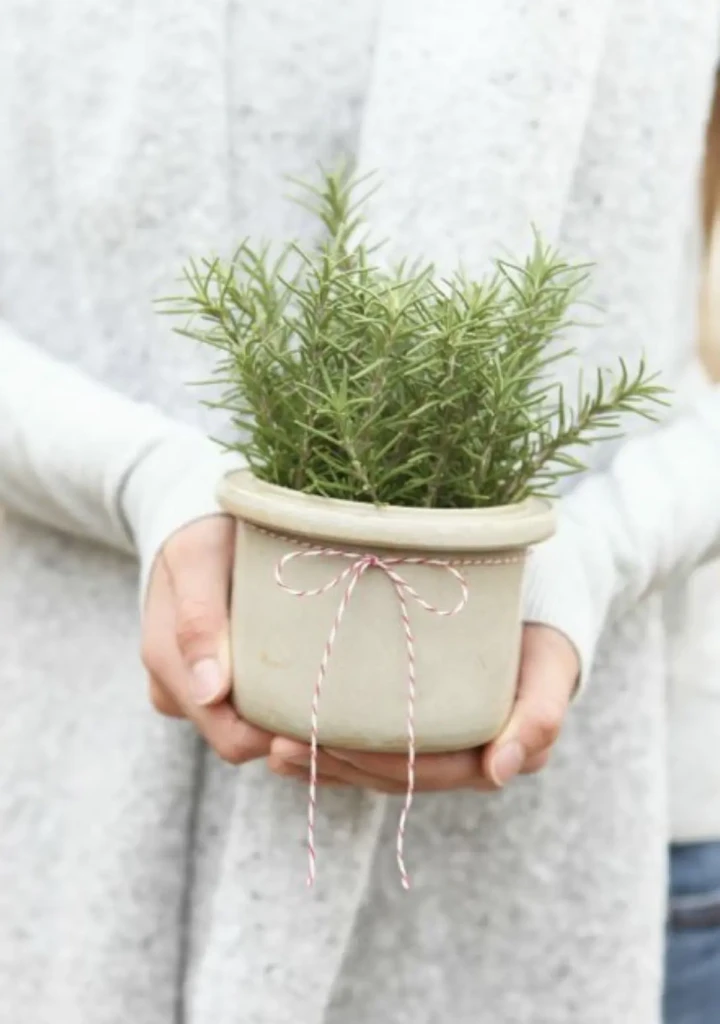
Rosemary is a woody shrub, not a soft herb. It takes longer to establish but gets bigger and lives for years once it’s happy. A medium terracotta pot on a sunny windowsill and you basically ignore it most of the time.
It needs less water than you think. Seriously, less. Water it, let it dry completely, then water again. That’s it.
It also smells incredible every time you brush past it.
9. A Small Herb Wall Planter
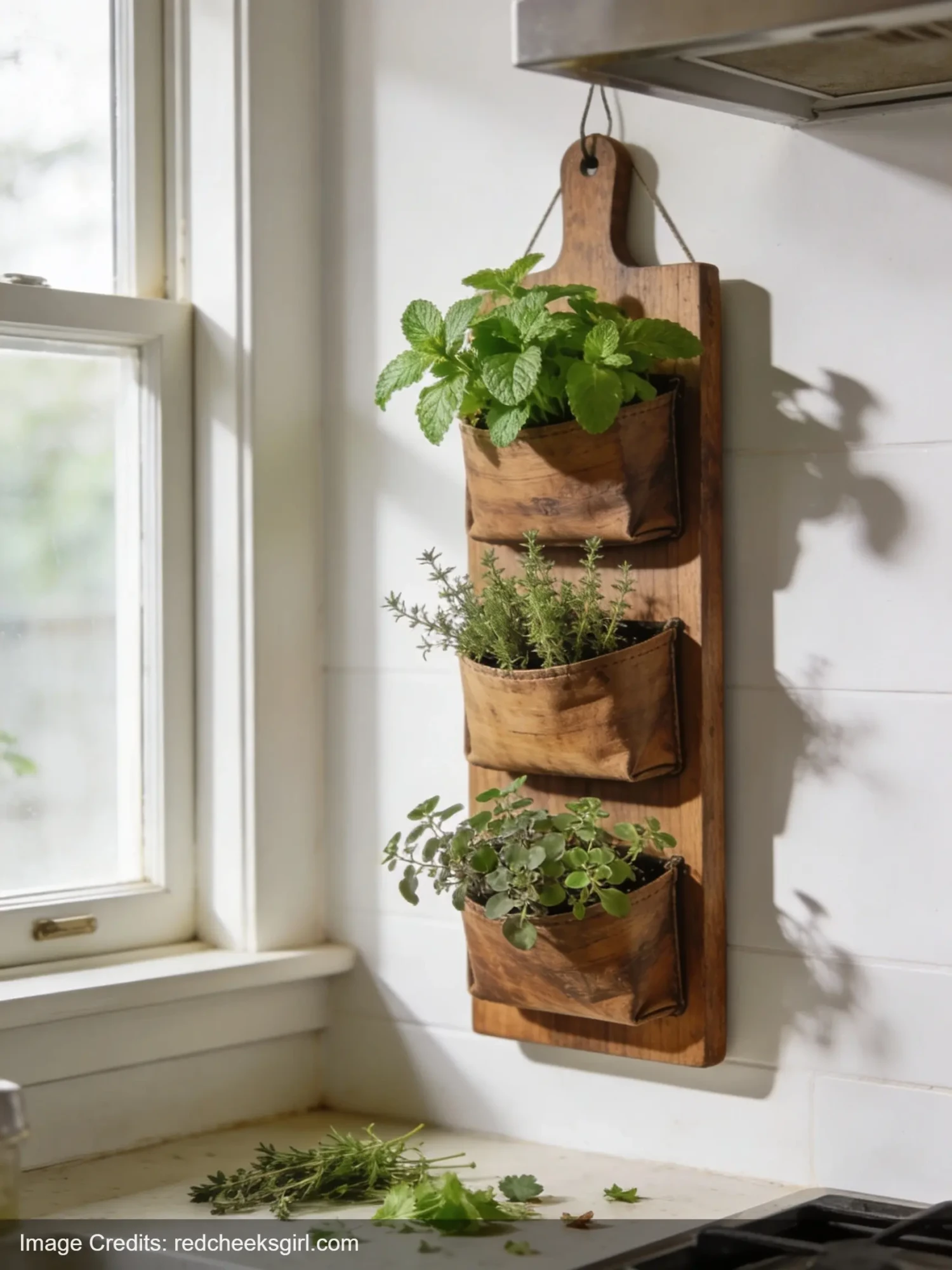
If counter space is limited, a wall-mounted herb planter near a window frees up your countertop while keeping herbs accessible. These work best with lighter herbs — chives, thyme, smaller basil plants — rather than heavy pottery.
Looks really good in kitchens where the wall near the window is otherwise just blank.
10. Growing from Seed (The Slow, Satisfying Version)
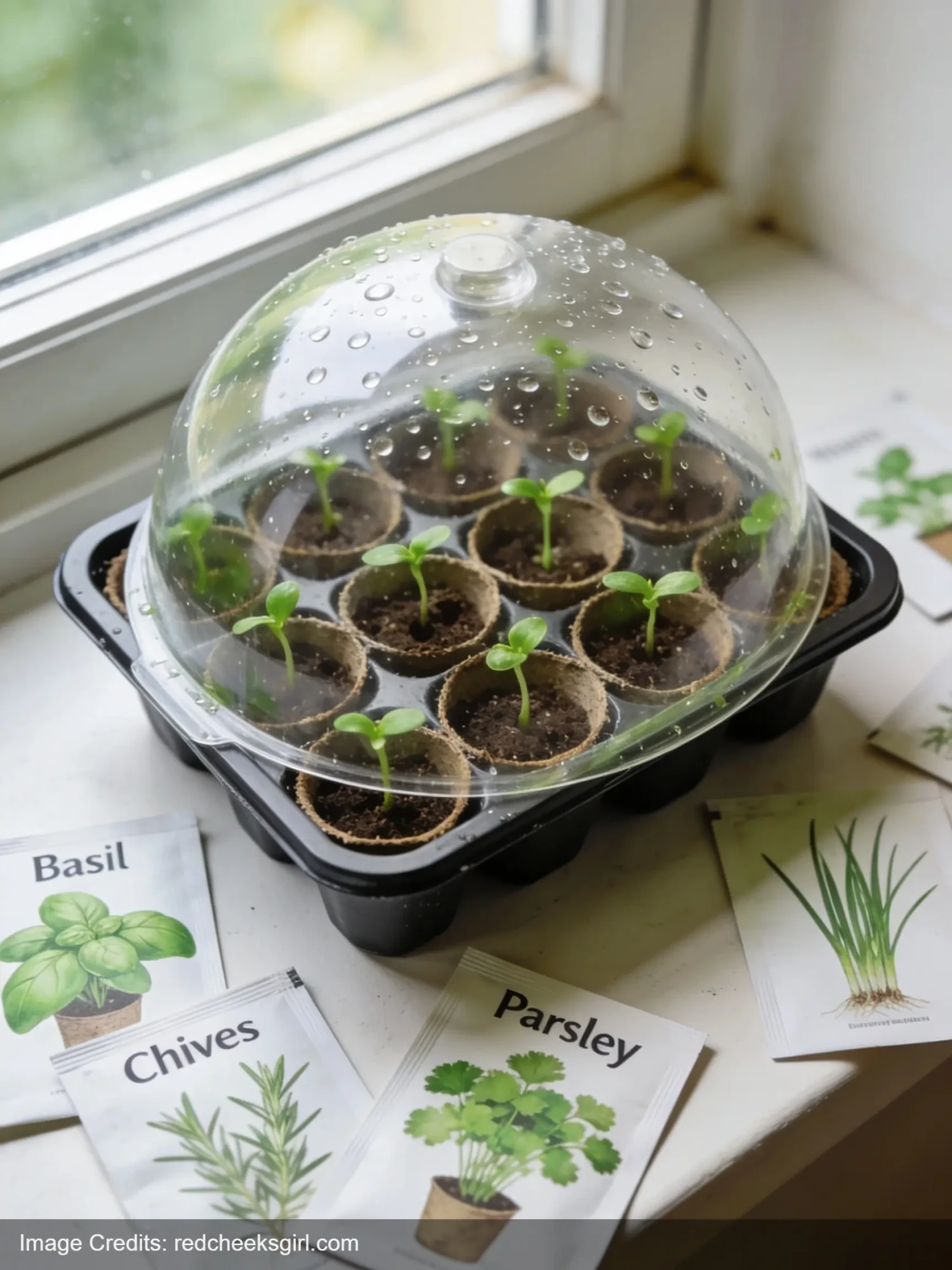
If you want the full experience, herb seed starter kits come with everything: cells, soil pods, seeds, a little dome greenhouse lid. You sow the seeds, water gently, put the dome on, wait.
Germination takes 1–3 weeks depending on the herb. Basil and chives sprout fast. Rosemary takes forever. Parsley is in the middle.
The advantage is that seedlings grown in your home from the start adapt to your conditions. They don’t go through the stress of being transplanted from a commercial greenhouse.
11. Parsley (Give It Room)
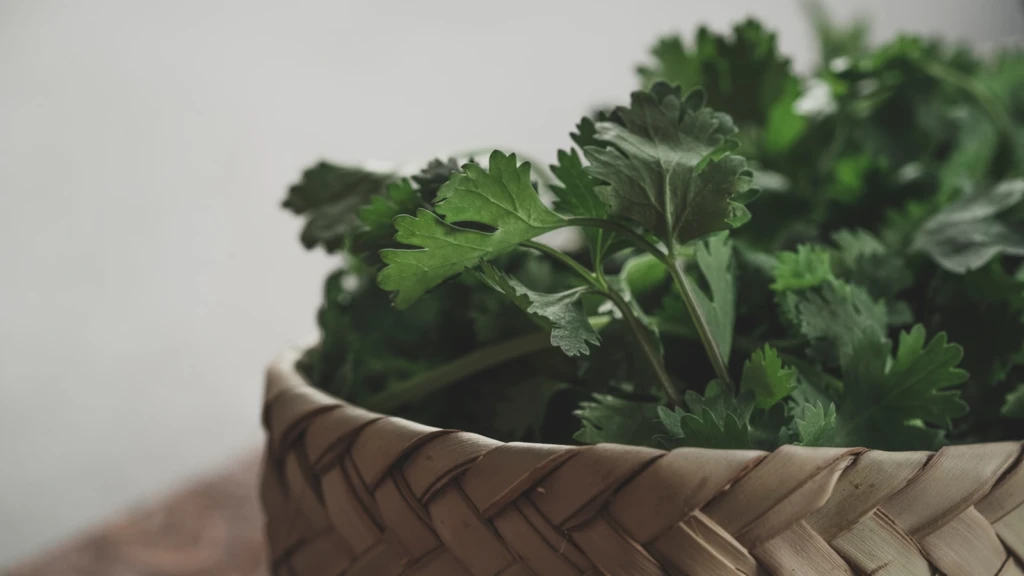
Parsley develops a taproot and doesn’t love being cramped. If you’re growing it indoors, use a deeper pot than you think you need — at least 8 inches. I grew it in a shallow pot for a whole season and it just sulked.
Deep pot, medium light, consistent watering. Flat-leaf Italian parsley is more flavorful than the curly kind and easier to use in cooking.
12. Cilantro (Appreciate It While It Lasts)
Cilantro bolts. That’s just what it does — it grows, then panics, then goes to seed. Indoors, in warmth, this happens faster than outside. You get maybe 4–6 weeks of good harvest.
The trick is to succession plant: sow a new pot every 3 weeks so there’s always some in rotation. Cilantro seeds are cheap and germinate fast, so this isn’t as annoying as it sounds once you get the rhythm.
Also: don’t buy cilantro from a grocery store to transplant. The roots are too disturbed. Start from seed for much better results.
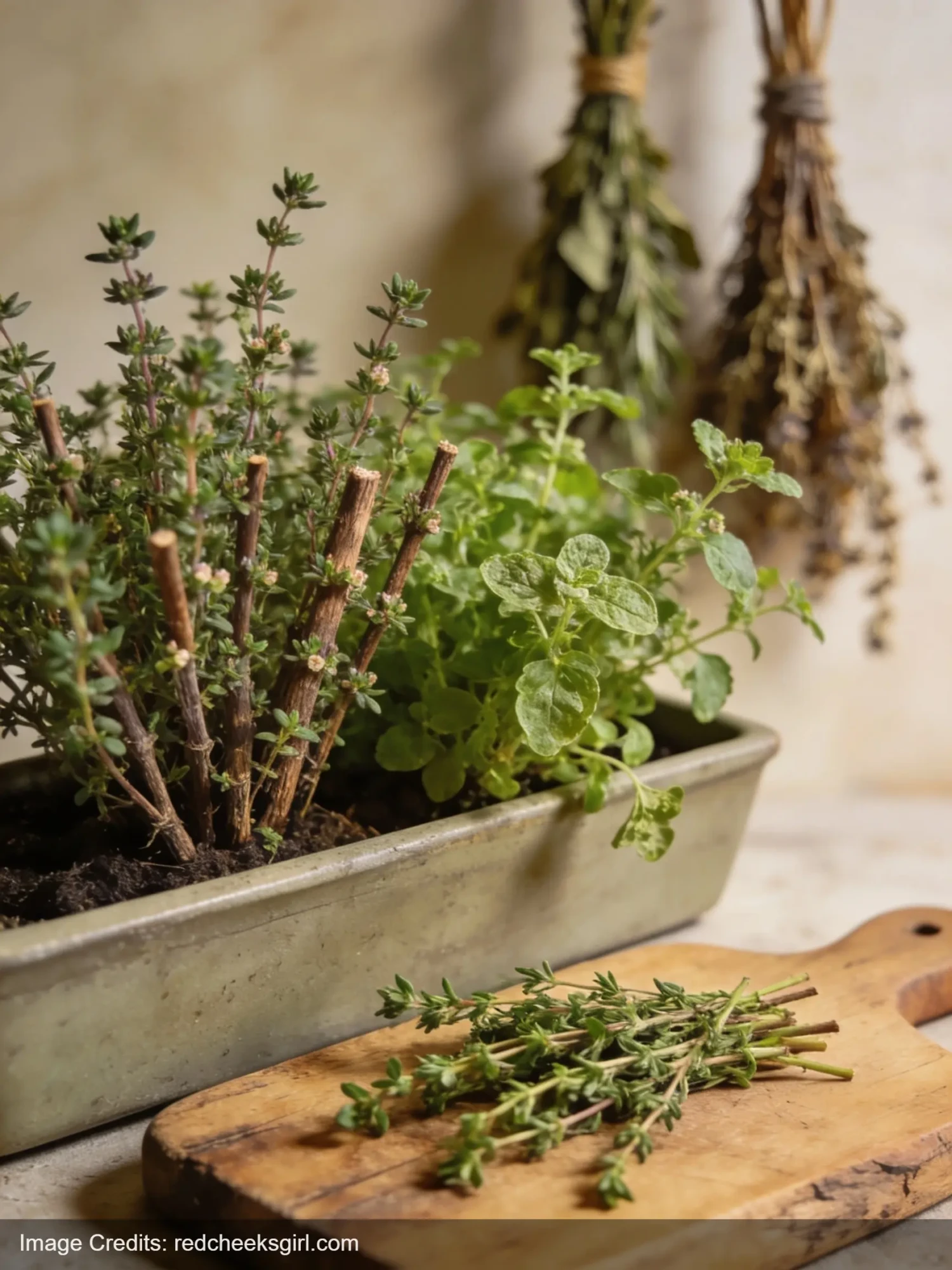
13. Thyme + Oregano Together
These two are basically the same herb in terms of care requirements: Mediterranean, drought-tolerant, wants full sun, can handle being a little rootbound. Put them in the same pot and they’ll coexist peacefully.
Thyme is the herb I use most without thinking about it — into pasta sauces, roasted vegetables, anything that needs depth. Oregano is for Italian food specifically, but a little goes a long way.
Both dry beautifully too, so even if you can’t use it all fresh, just cut a bunch and hang it upside down somewhere warm.
14. The All-in-One Herb Planter Kit
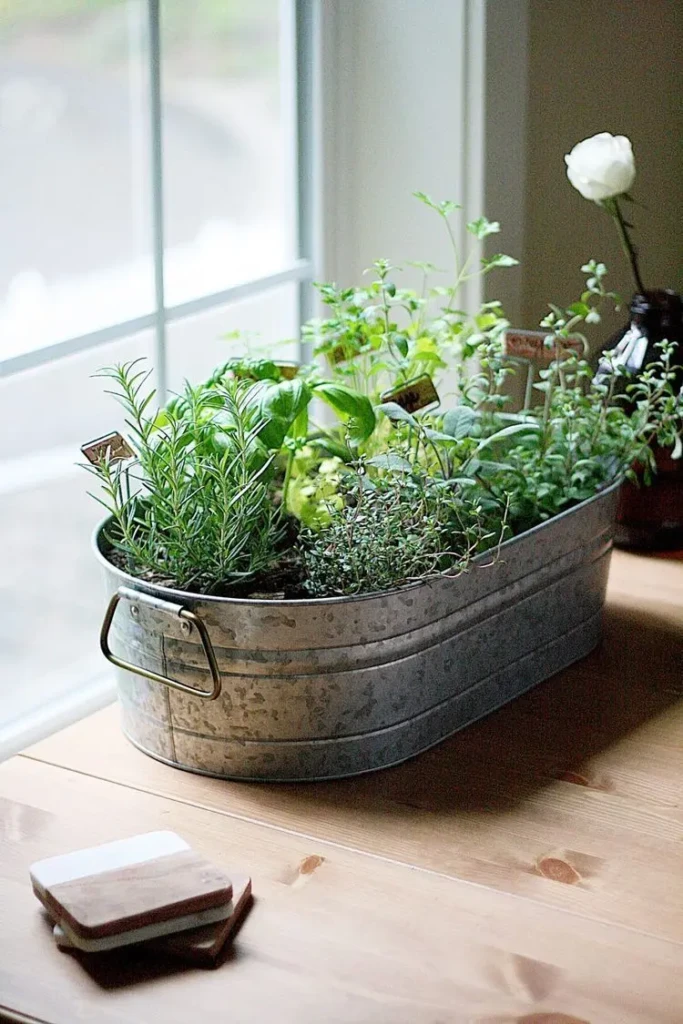
If you want to start everything at once without assembling pots and soil separately, an indoor herb garden kit comes with pots, drainage trays, markers, soil, and seeds in one box. Good for gifting too.
Most kits include basil, parsley, cilantro, and chives — a solid starter combination. Just add light.
The Most Common Mistakes (I’ve Made All of These)
Watering on a schedule instead of checking the soil. Every three days sounds logical. But whether the soil is dry depends on your pot size, your humidity, your light level. Just check. Finger in the soil. Dry? Water. Damp? Leave it.
Not harvesting enough. This sounds weird but herbs actually grow better when you use them. Regular harvesting encourages bushier growth. The worst thing you can do is buy a basil plant and only pluck two leaves off it every week because you don’t want to “use it up.” Cut a whole branch. It’ll grow back stronger.
Putting them somewhere pretty but dark. The floating shelf in the hallway doesn’t have enough light. It’ll look nice for two weeks and then quietly decline. Light comes first. Aesthetics come second.
Using regular potting soil without drainage. Most potting soil holds too much moisture for Mediterranean herbs. Mix in a handful of perlite — it’s cheap and improves drainage dramatically.
A Note on Fertilizer
Most herbs don’t need much. If your herbs are in fresh potting soil, you probably won’t need to fertilize for the first couple of months. After that, a diluted liquid herb fertilizer once a month during growing season is enough. More isn’t better — over-fertilizing makes herbs grow fast but taste bland.
This is the one case where doing less is genuinely the right answer.
Using What You Grow
The whole point is to actually use them. Fresh herbs make a real difference — not in a performative food-blogger way, but practically. Fresh thyme in scrambled eggs. A handful of basil torn into pasta. Chives on literally everything.
If you’re trying to use up more fresh food at home, the 26 kitchen frugal living tips guide has a lot of ideas for cooking with what you actually have instead of running to the store. Fresh herbs fit perfectly into that approach — they’re the detail that makes simple ingredients taste intentional.
And if you’re making a lot of teas — mint especially grows faster than you can use it for cooking — these 12 herbal teas for autumn wellness are worth bookmarking. Mint, lemon balm if you get adventurous, fresh vs. dried. There’s real overlap between a kitchen herb garden and a tea habit.
For the kitchen itself, if you’re rethinking how the whole counter looks: kitchen counter styling ideas covers how to make functional things (including plant pots) actually look good, not just tolerable.
FAQ
What’s the easiest indoor herb to grow? Chives, then mint. Both tolerate imperfect conditions, bounce back from neglect, and grow quickly. If you’ve killed herbs before, start with one of these.
Do I need a grow light? Only if your windows don’t get at least 4–6 hours of decent light a day. A south or west-facing window in most homes is enough without one. If you’re in the Pacific Northwest in November, get a light.
Can I grow herbs in the same pot? Some yes, some no. Thyme and oregano together: great. Basil and parsley together: okay. Mint in anything: no. Mint steals water and nutrients and roots aggressively. It needs its own pot, ideally in its own corner.
Why does my basil keep dying at the base? Usually overwatering, or the pot doesn’t drain well. The stems blacken at the soil line — that’s root rot. Let it dry out more between waterings and make sure there are drainage holes.
How often should I actually water herbs? When the top inch of soil is dry. Not on a schedule. Check it.
Is it worth growing herbs if I barely cook? Mint is always worth it — you can make tea with it, add it to water, give bundles away. Chives go on everything with zero effort. Past that, grow what you’ll actually use. If you never cook Italian food, don’t grow oregano just because it’s easy.
I bought my flower press at a craft fair three years ago and used it exactly once before it lived on
19 fall crafts for adults that finish as real decor: mantel-worthy pumpkins, garlands, wreaths and c
21 candle painting ideas with the exact acrylic and medium ratio and the time each design takes, for
Leave a Reply