

7 Sunroom Home Office Ideas That Make Working From Home Feel Like the Best Decision You Ever Made
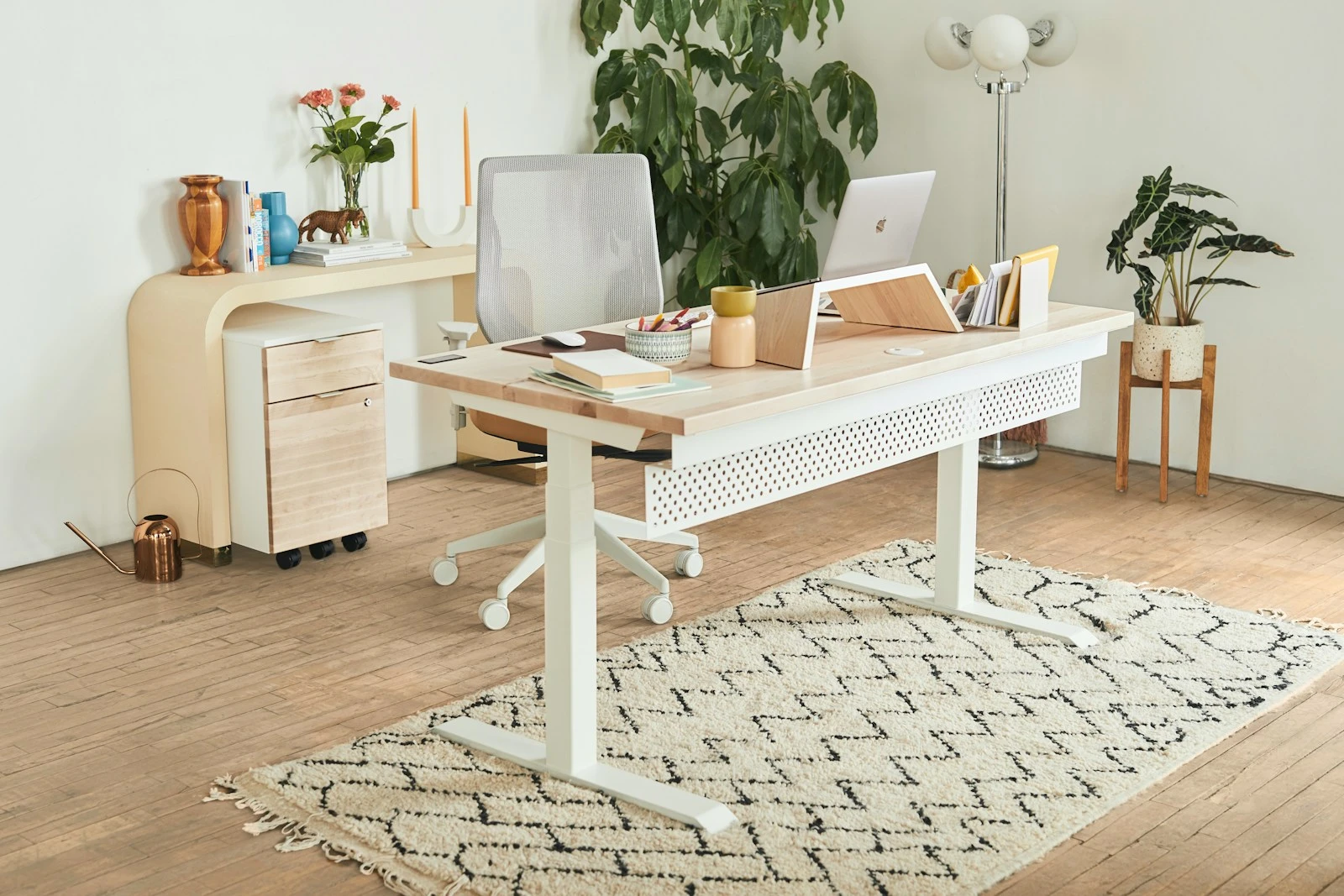
I moved my desk into the sunroom on a Tuesday in February, mostly because I was losing my mind in the spare bedroom.
That room had one small window and my husband’s old guitar collection. I kept getting headaches by noon. The sunroom was just sitting there — full of afternoon light, completely wasted on a wicker loveseat we never actually sat on.
Within a week, my whole relationship to working from home changed. Not because I bought anything fancy. Just because I was finally in the right room.
If you’ve got a sunroom and you’re not using it as your home office ideas haven’t included this option yet, let me walk you through how to actually make it work.
Make the Desk Face the Garden, Not the Door
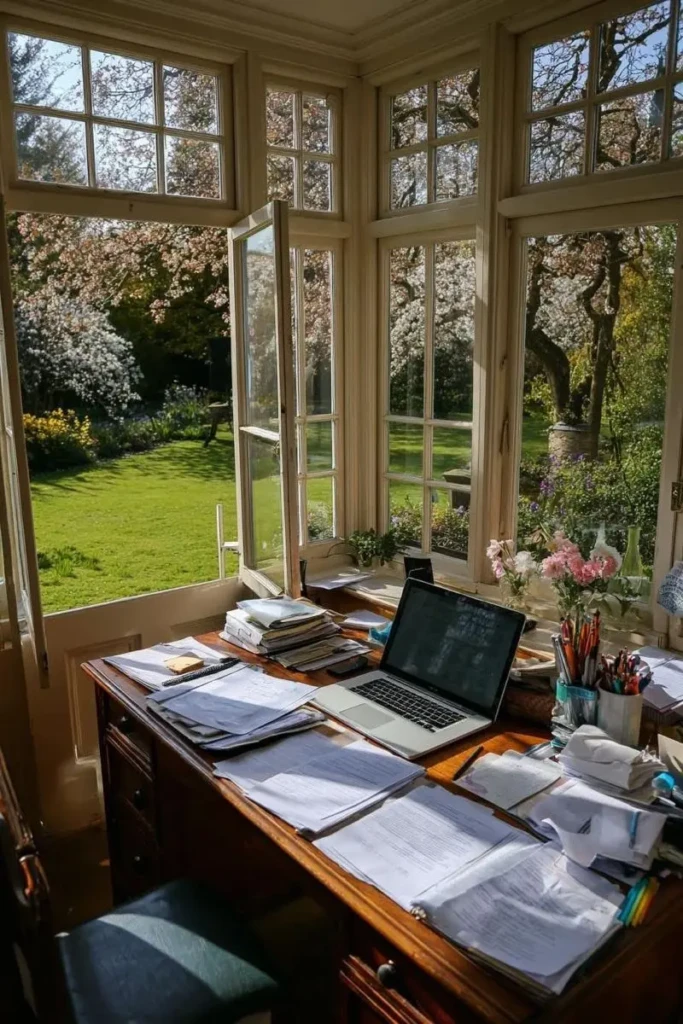
Every sunroom home office idea I’ve ever seen on Pinterest puts the desk in the center of the room or pushed against an interior wall. Both are wrong.
Face the window. Face the yard. Face the garden or the fence or whatever’s out there — even if it’s just your neighbor’s garage.
Here’s why it matters: natural light behind your monitor creates glare. Natural light in front of you means you’re looking toward it, and your brain registers that differently. You feel like you’re part of the outside while staying inside. It’s weirdly energizing in a way that’s hard to explain until you try it.
The one catch is video calls. If you’re on Zoom all day, strong backlight from a window behind you makes you look like a silhouette. Solve it with a small ring light or a lamp on your desk, angled at your face. Done.
Don’t Try to Fully Separate “Office” from “Sunroom”
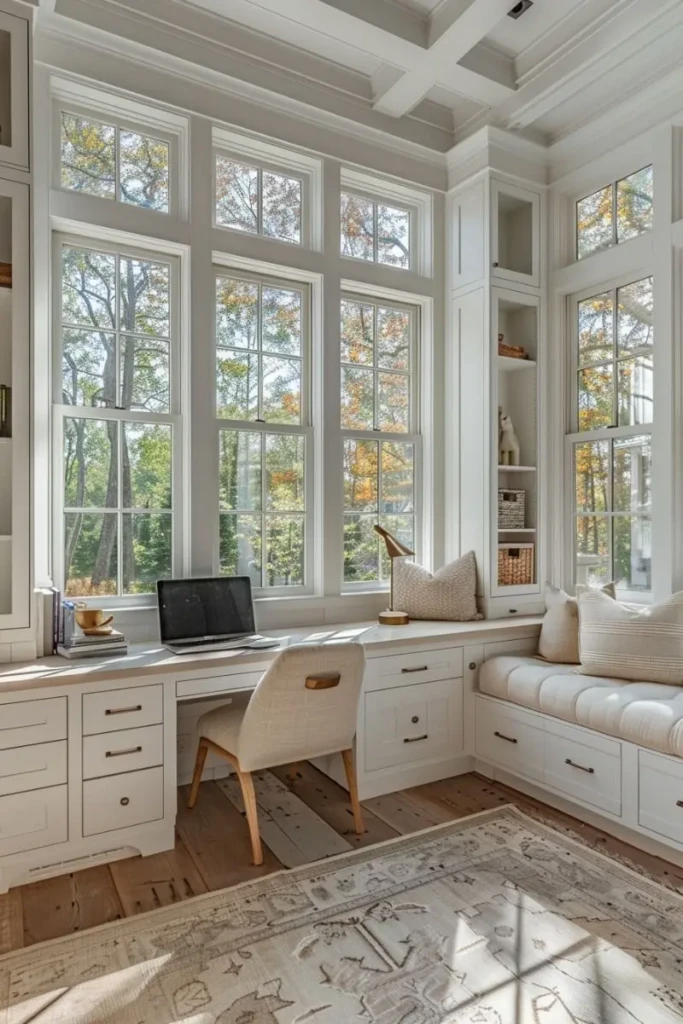
This is the mistake I almost made. I wanted it to look like a real office — clear boundaries, professional backdrop, the whole thing.
But the reason a sunroom works as a workspace is because it doesn’t feel like an office. The plants, the wicker, the mismatched throw pillows — that stuff is doing something. It’s keeping your nervous system from going into “ugh, work” mode every time you sit down.
Keep a few cozy elements in the space. One chair that has nothing to do with work. A plant or three. Something that reminds you this is still your home.
It’s a home office. The “home” half isn’t decoration.
Glass Walls Are Your Light Source — Don’t Cover Them
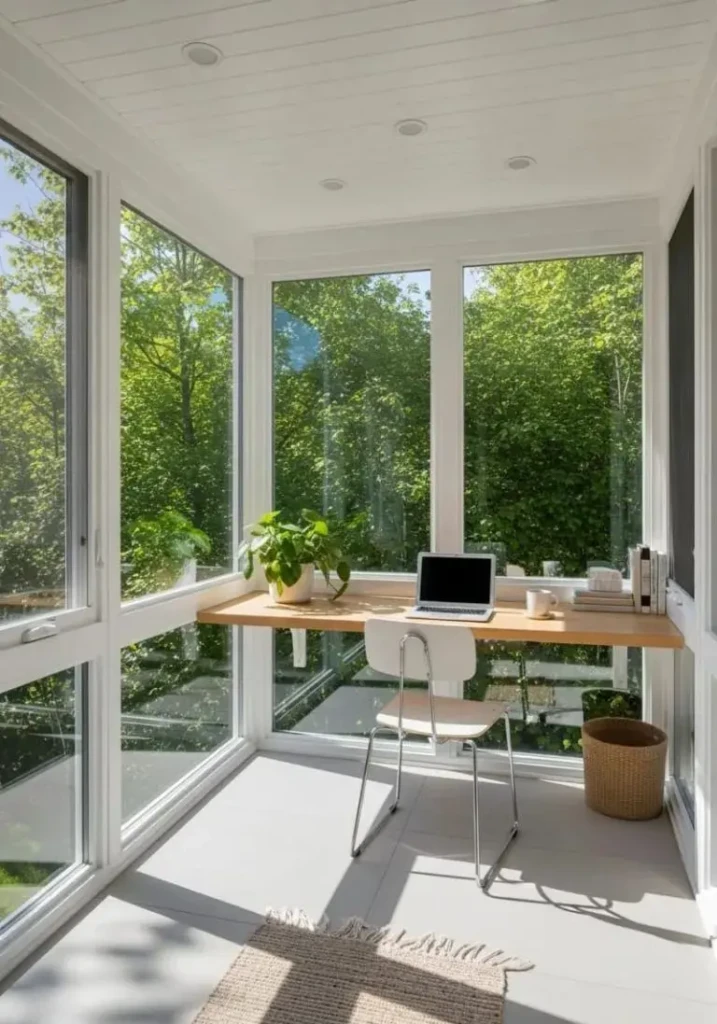
I briefly considered getting blackout curtains for the west-facing windows because summer afternoons were making my screen hard to read.
What I did instead: repositioned my monitor slightly and bought a matte screen protector for about $14.
Covering the windows defeats the whole point. Sunrooms have glass on multiple sides — that’s the entire value proposition. Work with the light, not against it.
If afternoon glare is genuinely a problem, sheer curtains on a tension rod are the minimum intervention. They diffuse without blocking. Anything heavier and you’ve just built yourself a weird, expensive closet.
Heat and Cold Management Is the Real Work
Okay, nobody wants to talk about this part but it’s the most important thing on this list.
Sunrooms are notoriously bad at regulating temperature. Mine gets to 85°F by 2pm in July without intervention. In January, I needed a sweater, fingerless gloves, and honestly still thought about quitting.
The solutions that actually helped me:
A small portable fan positioned to create cross-ventilation through two open windows worked better than anything else in summer. Not pointed at me directly — positioned so it pulls hot air out of one window. A ceiling fan does the same thing if you have one.
For winter: a small space heater under the desk, pointed at my legs. Not the room — just my legs. Rooms in glass boxes are expensive to heat. Your legs are not.
Plan for this before you commit to the room. If your sunroom has no AC vent and no ceiling fan, factor in what summer will actually feel like.
One Good Lamp Changes Everything About Evening Work
By about 4pm in winter, a sunroom turns into a fishbowl — you can see out, but all anyone outside can see is you, lit up, alone, typing.
Practical problem: the room is dark by 5pm and you’re working in whatever ambient light sneaks in.
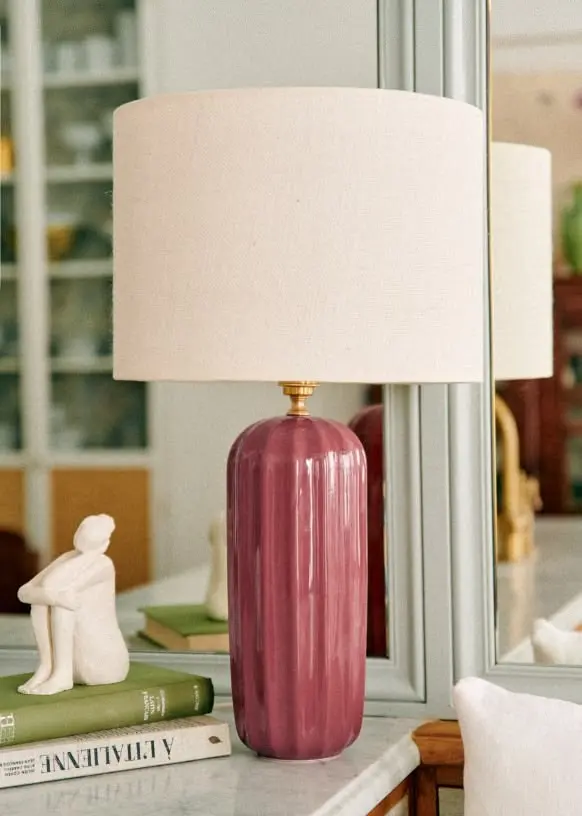
Get one real desk lamp. Not an overhead — a lamp that sits at desk height and throws warm light toward your face and your work surface. I went with a simple adjustable one that I already had in storage.
The difference between working with overhead light (cold, flat, weirdly depressing) and a warm desk lamp in a sunroom at night is genuinely big. It transforms the vibe from “interrogation room” to “cozy evening session.”
Bonus: it solves the Zoom backlight problem from idea #1 if you position it right.
Treat the Plants Like Coworkers
I’m a little serious about this.
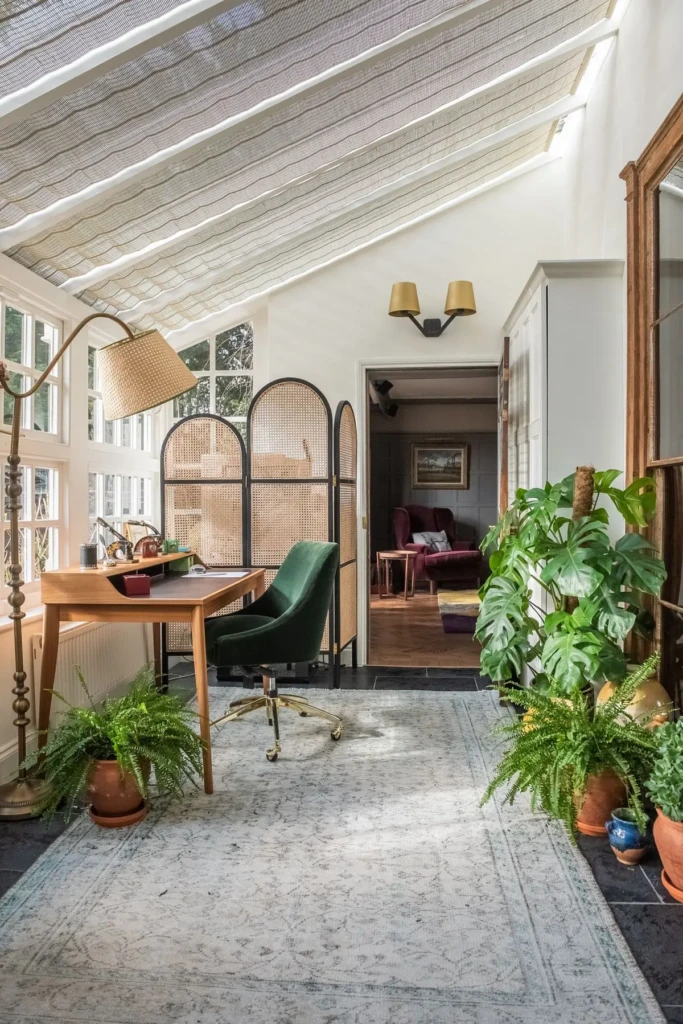
Sunrooms support plants that regular rooms can’t — succulents that need six hours of direct sun, citrus trees in pots, even herbs if you have a south-facing window. The light that makes your workday better also makes your plants happier.
What this means practically: you’ll have an actively living, growing space around you while you work. There’s research on this — plants in workspaces have been shown to reduce stress and improve concentration — but honestly you don’t need research. You just need to sit next to a lemon tree for one afternoon and you’ll understand.
Don’t overdo it to the point where you’re watering things every 20 minutes instead of working. Three to five plants, arranged so they get light without crowding your desk, is a good number to start.
The fiddle leaf fig I dragged in from the living room is now enormous and frankly thriving. I take it personally.
Keep Cables Out of the Picture (Literally)
Glass walls, natural light, beautiful plants — and then a spaghetti tangle of charger cables running across the floor to the one outlet in the corner.
If you have a sunroom, there’s a decent chance the electrical situation is not ideal. Older sunrooms often have one or two outlets, sometimes located in weird places.
A power strip with a long cord, routed neatly along the baseboard or tucked under the edge of a rug, solves this. Get one with surge protection. Label your cords if you’re the type of person who loses 20 minutes when you can’t find the right charger.
The other thing: if you’re on video calls, people can see your background. A clean sunroom with actual natural light looks incredibly professional. Loose cables running across a glass wall look like a different kind of situation entirely.
FAQs
Can any sunroom work as a home office, or does it need to be a specific kind?
Most sunrooms can work — three-season, four-season, enclosed porch, converted sun porch. The main thing is temperature. A three-season room is perfectly comfortable April through October in most climates. If you need to work year-round, a four-season room with proper insulation is the better base. Neither is a dealbreaker if you’re willing to manage it with fans, heaters, and some realistic expectations.
What if I only have one side of glass, not three?
That’s still a lot more natural light than a regular room. Even a single large window or sliding glass door is worth building the workspace around. The principles are the same — face the light, don’t block it, manage the temperature on the glass side.
My sunroom gets too hot in summer. Is it usable at all?
Yes, but you need to set it up before the first 90°F day, not during it. Cross-ventilation (two windows open on opposite sides), a fan that exhausts air rather than just circulates it, and working before noon in high summer are all real solutions. Some people also move to a different room for the two hottest months. That’s a completely reasonable strategy.
How do I make it look professional on video calls?
You almost don’t have to try. Natural light is flattering in a way ring lights have to work to replicate. Face the light, have one lamp on your desk for dark-day and evening calls, and keep the area behind you reasonably tidy. A plant or a clean shelf in the background reads as “thoughtfully designed,” not “distracted.”
Is it worth buying a new desk for the sunroom?
Depends on your sunroom’s layout. A lot of sunrooms have awkward dimensions — long and narrow, or L-shaped — and a standard rectangular desk either fits or it doesn’t. Measure before you buy anything. I used a door slab from a hardware store on two small filing cabinets for a while before I found a desk that actually fit, and honestly it worked great.
The sunroom was a weird idea that became the only place I actually want to work.
More on organizing your life and workspace: How To Organize Your Life In 1 Week — useful if your whole setup needs a reset, not just the room. And if you spend hours at a desk, 12 Stretches for Desk Workers is the kind of thing I wish I’d found earlier. Also, 17 Cozy Home Office Ideas for Women You’ll Love if you want more inspiration for the space itself, and 11 Room Updates That Boost Your Mood for the room itself.
12 Kitchen Counter Styling Ideas That’ll Make You Actually Want to Cook (Number 7 Is a Game-Changer)
Real talk: your counters can look good AND be functional. Here’s how. Okay, confession time. F

I ignored setting up a coffee corner for two years because I thought it required some fancy built-in
Turn your cluttered bathroom counter into a peaceful retreat—without spending a fortune or los
Leave a Reply