

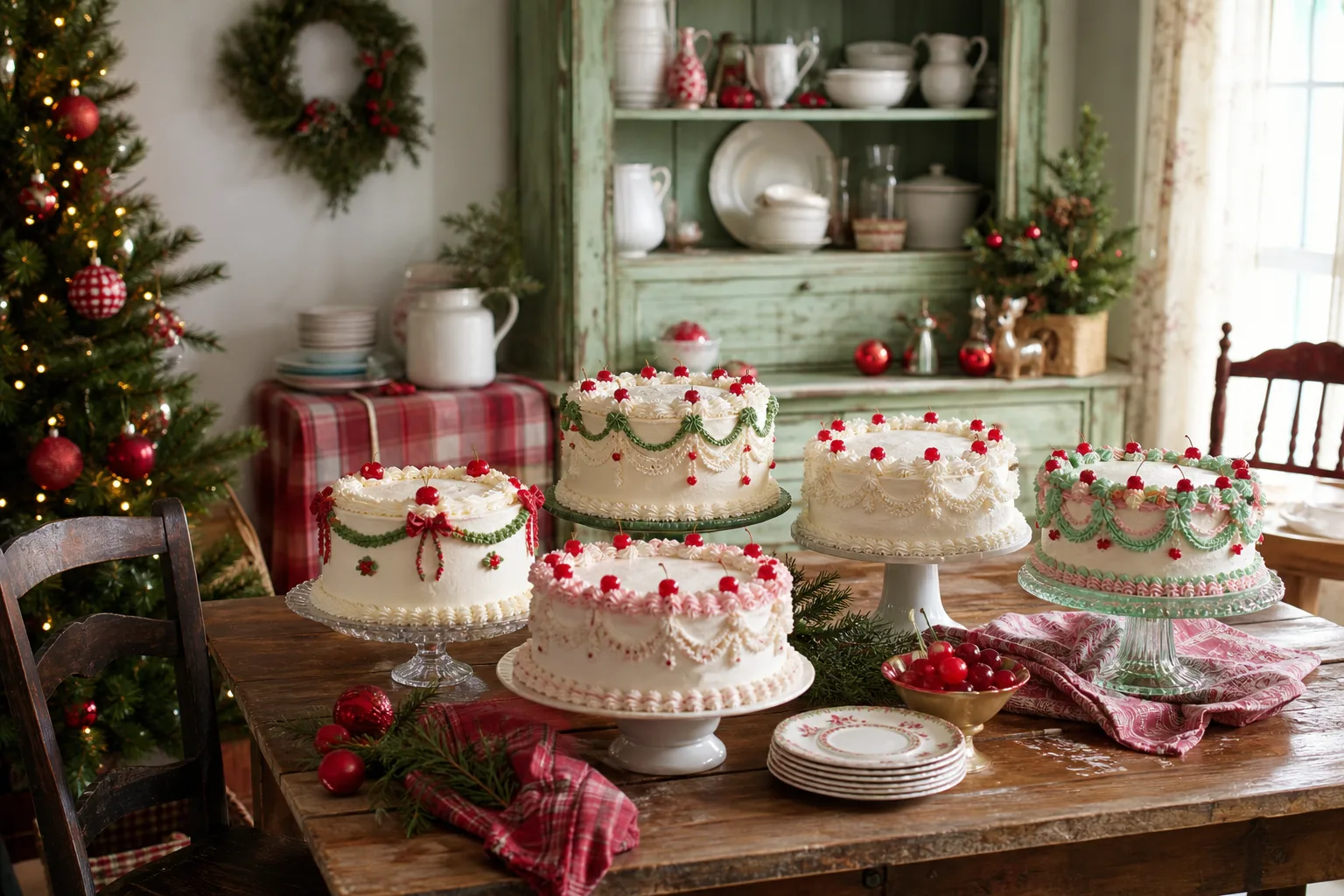
You already own the piping bags. You already know your way round a star tip and a turntable. What you want now is the Christmas version of the frilly, over iced cakes you keep saving to a board, the kind with too many rosettes and not a single clean edge in sight.
These fifteen designs borrow the shapes bakers have used for decades: shells, ruffles, swags, fat rosettes, and dress them in red, blush, cream and pine green instead of the usual pastel wedding palette. Nothing here needs an airbrush or a sugar flower course.
Pick the one that matches the time you actually have this week, not the one that photographs best on someone else’s feed. A single piped border done neatly beats five techniques done in a rush, every time.
This post contains affiliate links. If you buy through them, I may earn a small commission at no extra cost to you.
The Classic Piped Looks
Start where vintage cake decorating always starts: a shell border, a ruffle, a cluster of rosettes. These three keep the Christmas colour story simple so the piping itself gets to be the whole show.
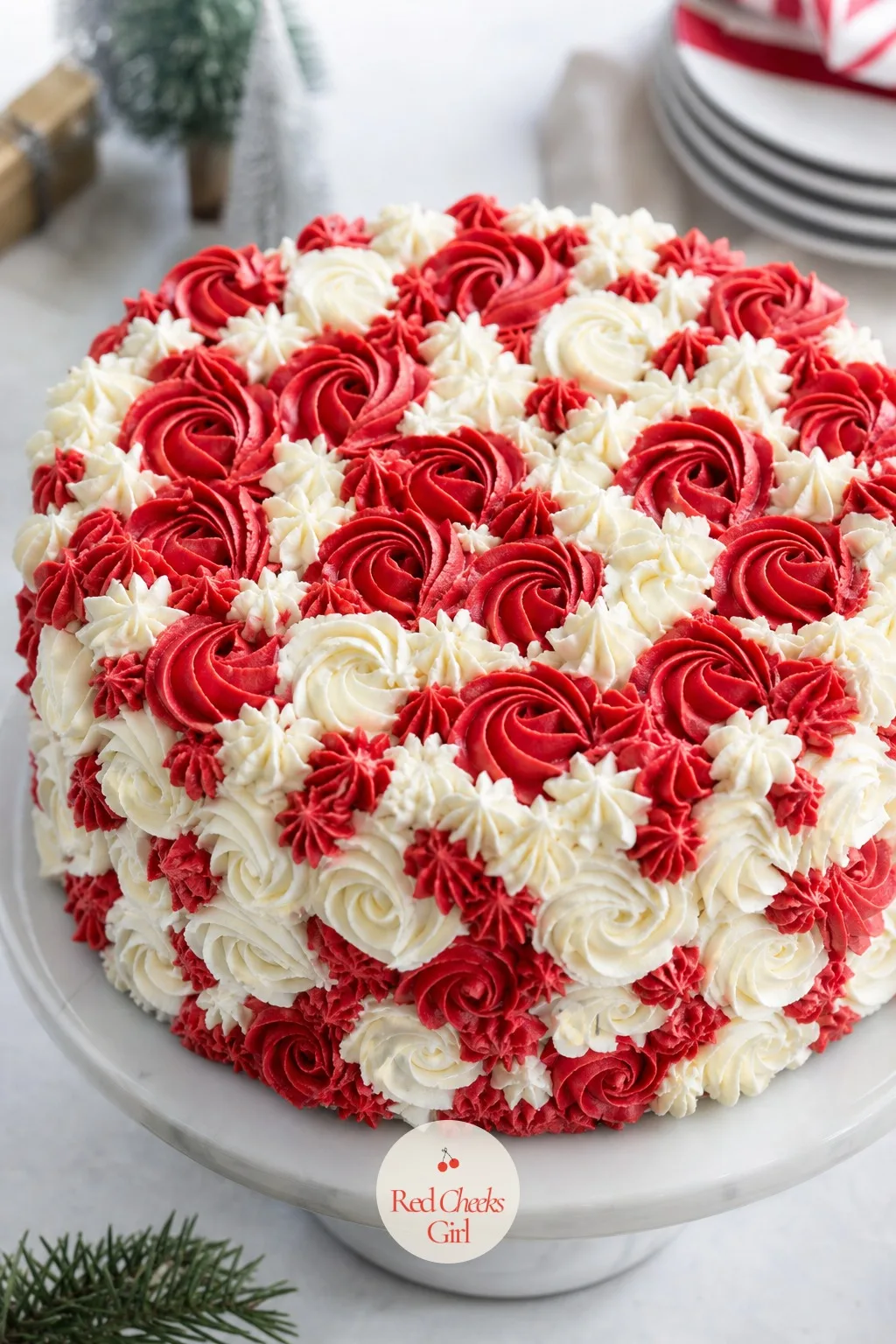
Red and White Vintage Piped Cake
This is the one you picture first when someone says vintage Christmas cake: a cream base wrapped in alternating red and white rosettes, piped close enough together that no crumb coat peeks through.
Work the red first in small clusters, then fill every gap with white so the two colours read as one busy, candy box surface. A 1M star tip does the whole cake, no second tip needed.
If your kitchen runs warm, chill the cake between colours. Soft buttercream smears the moment a rosette brushes its neighbour, and vintage piping lives or dies on clean edges.
Cherry-Topped Vintage Christmas Cake
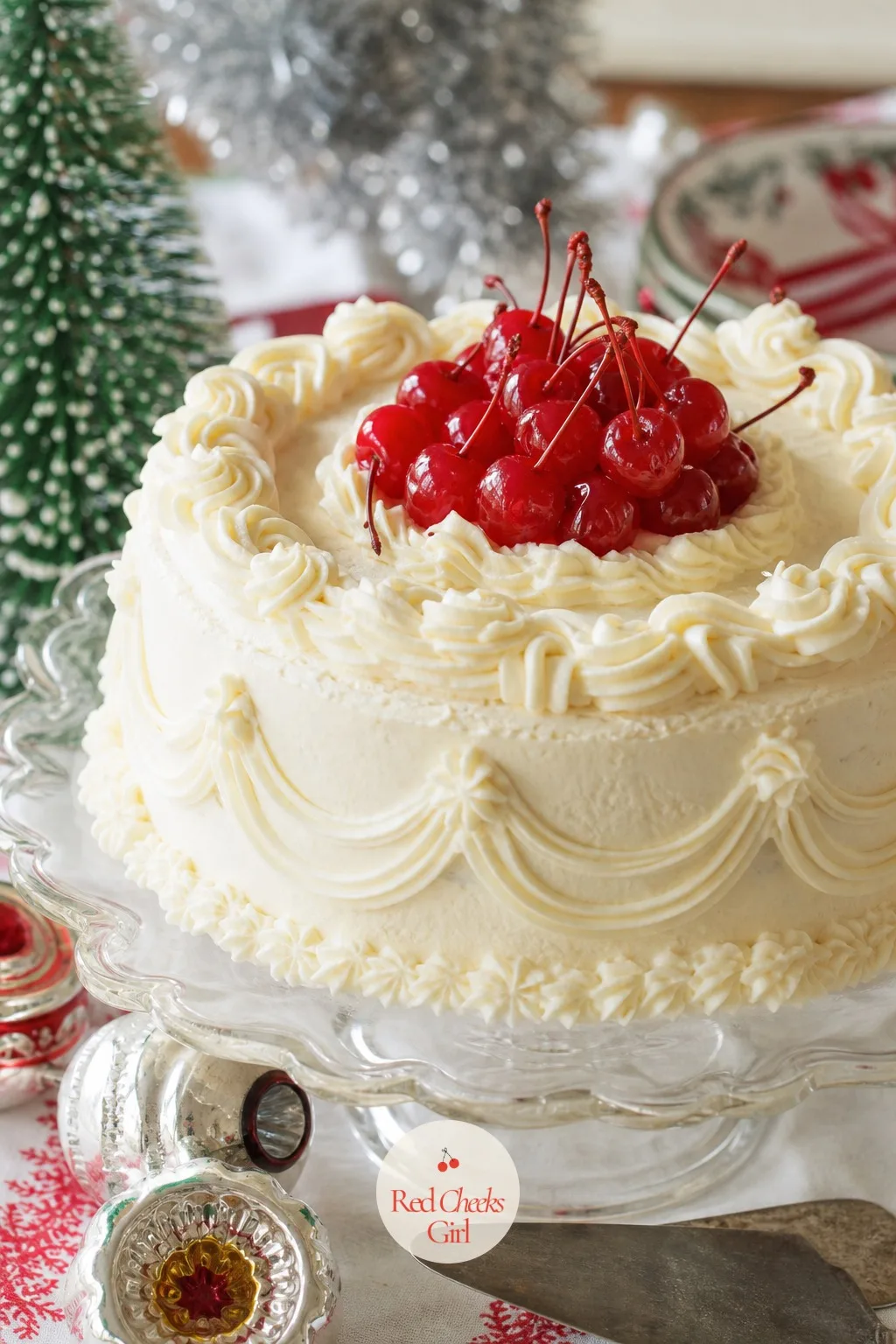
Cherries on a cake read as retro before anyone even tastes it, that glossy, slightly too-red colour that no modern garnish quite matches.
Pipe a plain cream swag border round the top edge, then pile whole maraschino cherries into the centre, stems trimmed, syrup patted dry so it does not bleed into the icing. It takes ten minutes and looks finished the moment the last cherry sits down.
If you would rather not deal with syrup at all, candied cherries halved and pressed cut-side up give the same shine with far less mess.
Heart Vintage Cake With Holly
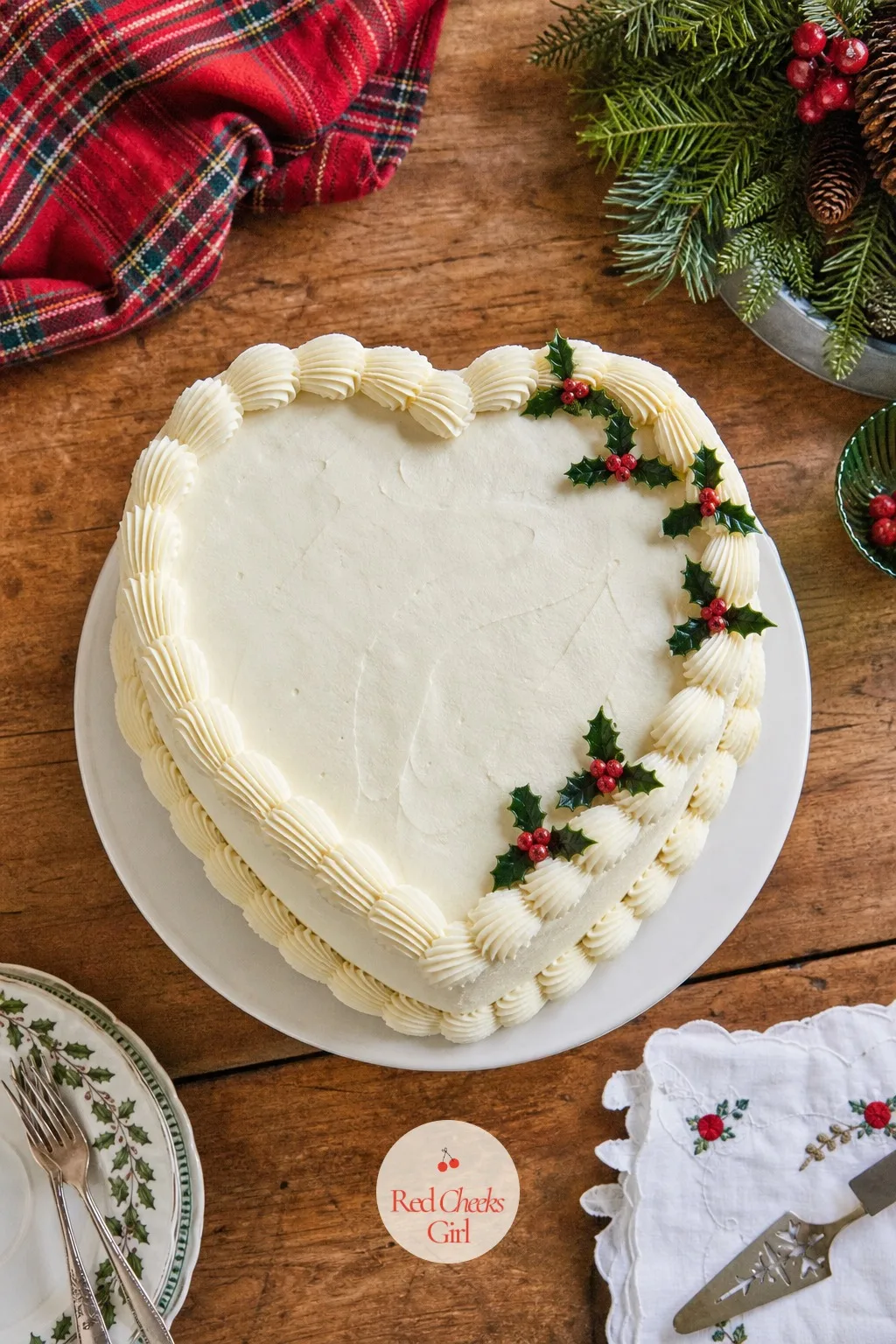
A heart tin changes everything about how a cake reads, warmer and less formal than a round one, which is exactly why this shape suits a cake meant for someone specific rather than a whole party.
Keep the base blush or cream, pipe a simple shell border round the heart’s two curves, then add a scatter of piped holly leaves with a leaf tip and three red berries per cluster.
No heart tin in the cupboard: bake a round and a square layer, cut and join them, the seam disappears under the border anyway.
🛍 Shopping guide
Soft and Pastel Finishes
Not every Christmas table wants fire engine red. These three keep things quieter: pink, pine green and white, piped the same frilly way but dressed down.
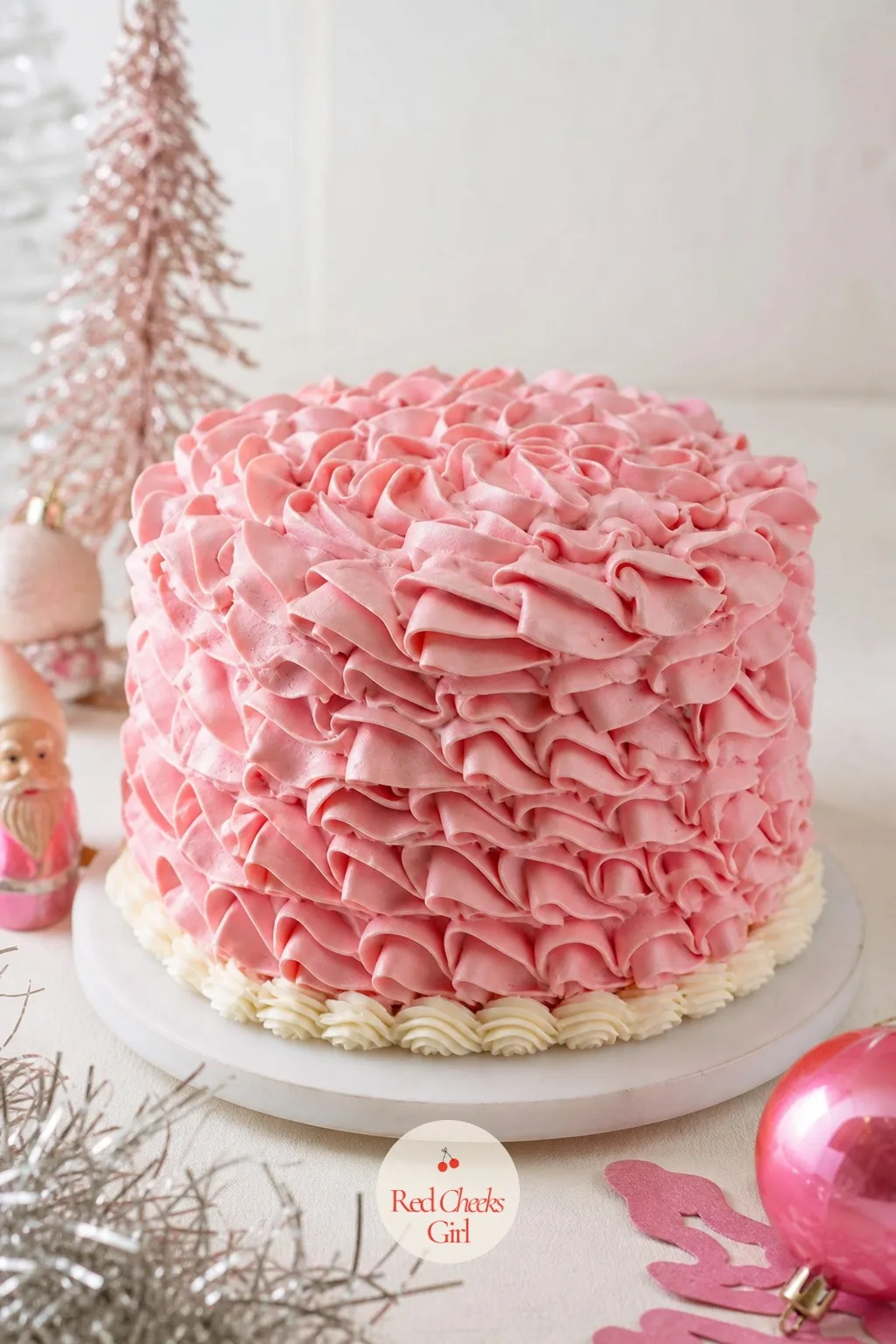
Pink Vintage Christmas Cake
Not every guest wants fire engine red on the table, and a blush cake still says Christmas the moment it sits next to a few sprigs of real holly.
Pipe soft petal ruffles in a single shade of pink from base to top, no second colour needed, then finish with a thin cream shell border where the ruffles meet the cake board. The restraint is the whole point.
Pair this one with a pink Christmas tree nearby and the whole room reads as one deliberate colour choice rather than two unrelated ideas.
🛍 Shopping guide
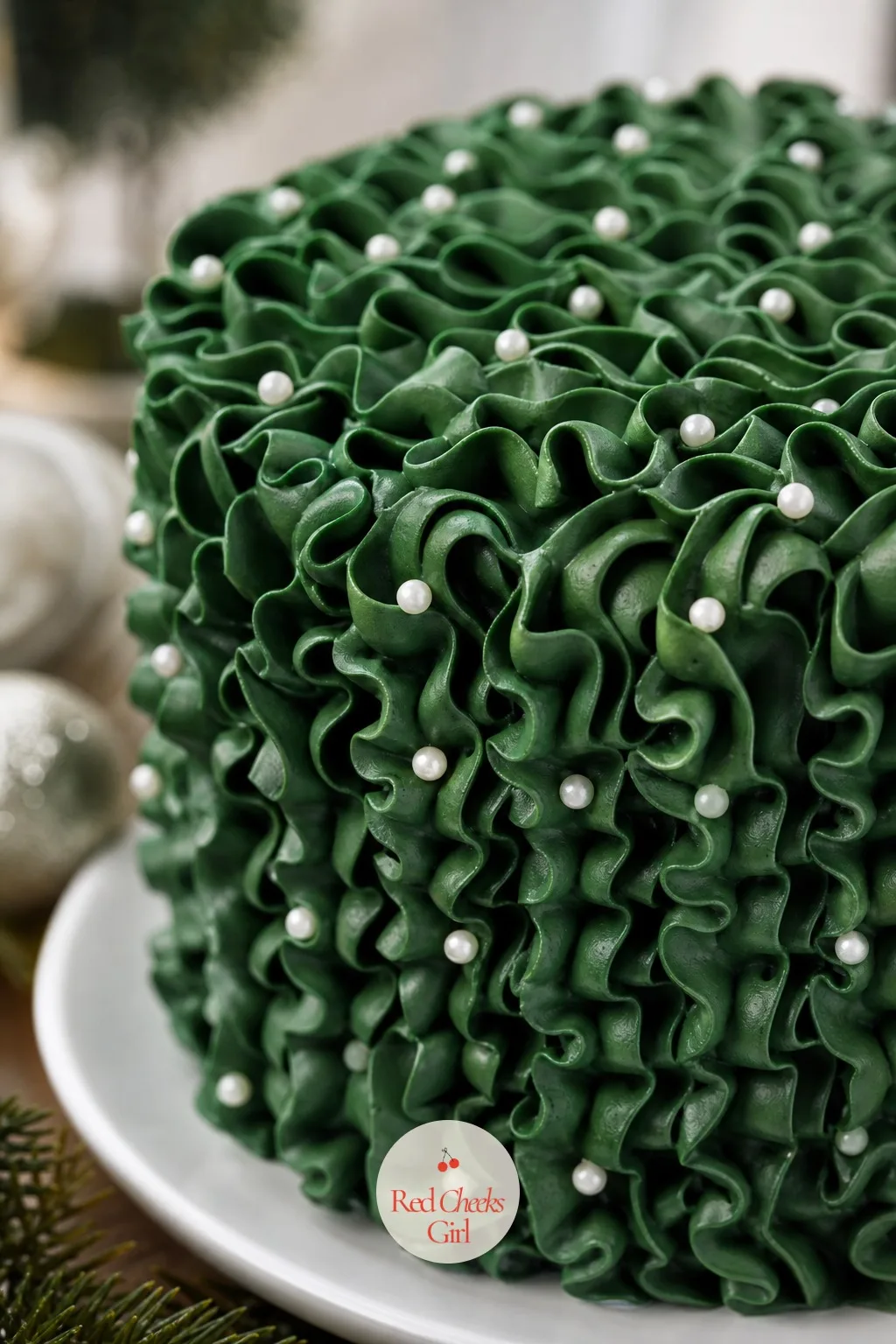
Pine Green Piped Cake With Pearls
Green is the colour most vintage cakes skip, which is exactly why it stands out on a dessert table crowded with red and white.
Cover the cake in a deep pine green ruffle, then press small white sugar pearls into the grooves between ruffles while the buttercream is still soft enough to hold them. The pearls catch light the way frost does.
If pine green feels heavy for your crowd, keep it to the bottom third of the cake and leave the top cream, the pearls do the rest of the work.
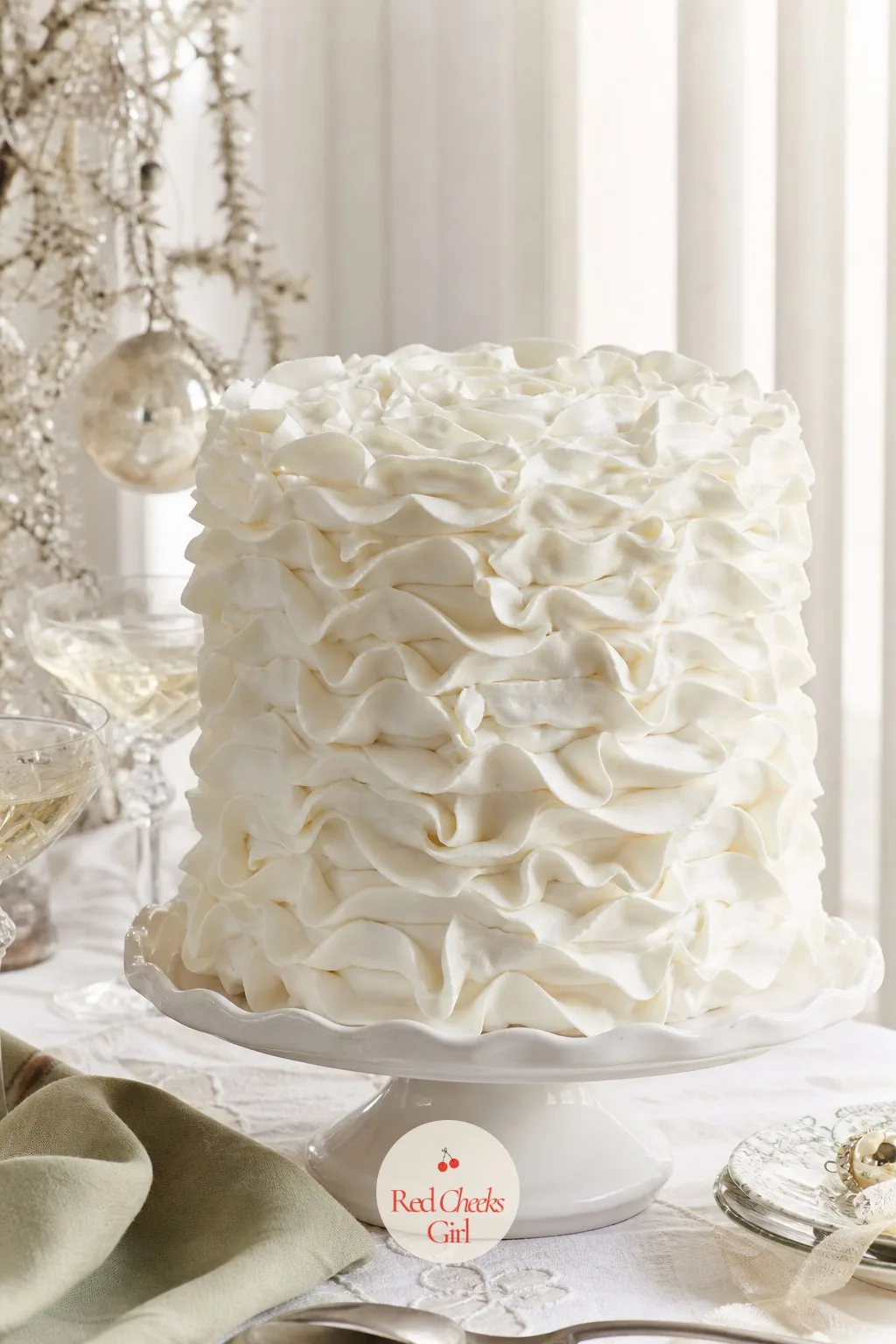
Snowy White Ruffle Cake
White on white has no colour to hide behind, so every ruffle has to be even, which makes this the cake that actually teaches you the technique.
Pipe cascading petal ruffles in plain buttercream from top to bottom, letting each row overlap the one below it slightly, the way feathers lie on a wing. No other decoration needed, the shadow between ruffles does the styling.
This one keeps in the fridge beautifully since there is no colour to fade or bleed, handy if you are baking two days ahead.
🛍 Shopping guide
Candy Counter Favourites
A little sugar shop nostalgia, the kind that smells like peppermint and warm spice before you even cut the slice.
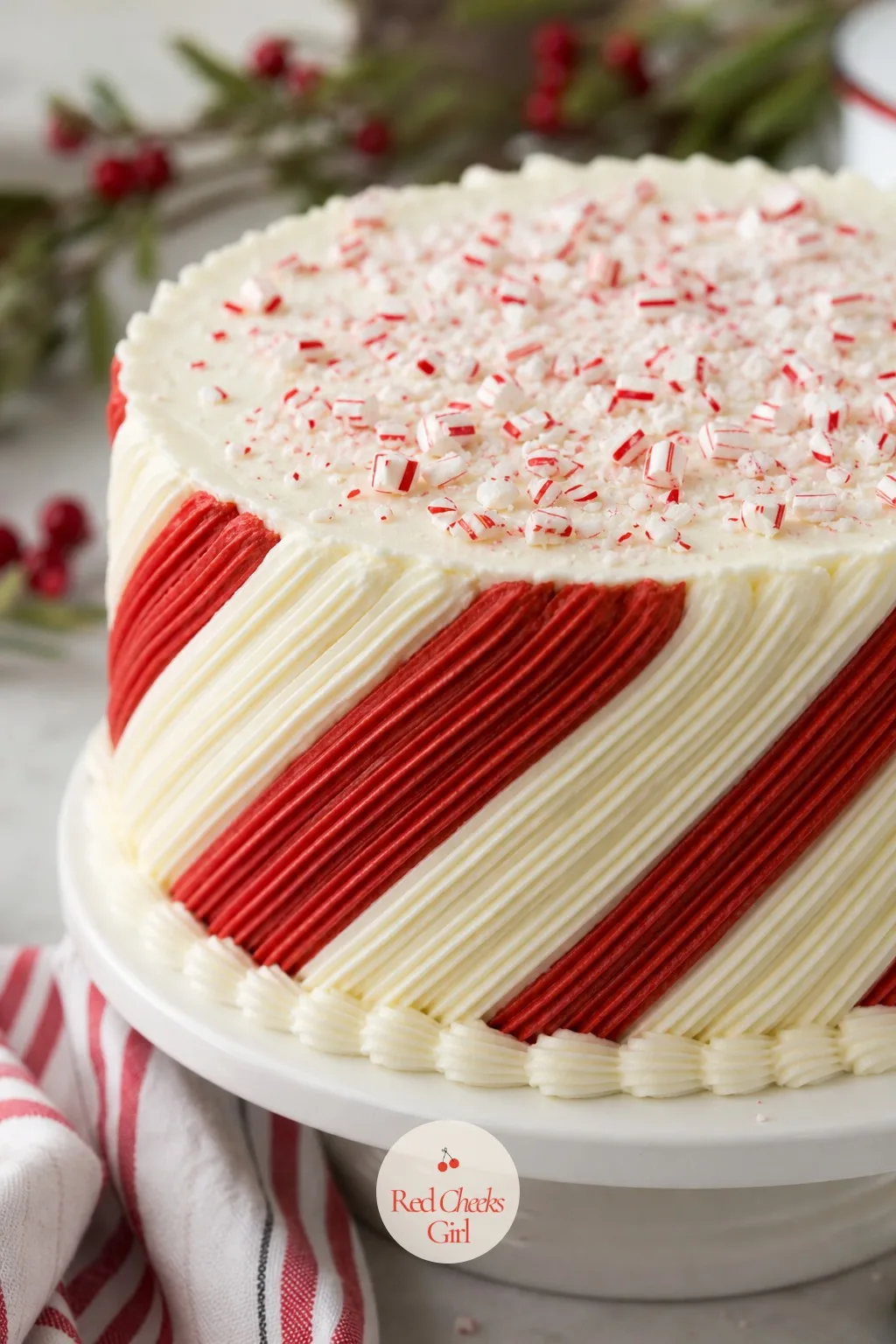
Candy Cane Vintage Cake
Peppermint belongs on a Christmas table whether or not anyone asked for it, and a candy cane cake gets the smell into the room before the first slice.
Pipe a diagonal spiral of red and white stripes round the sides using two bags held together, the way you would stripe a tube of toothpaste, then finish the top with a plain shell border and a crushed candy cane rim.
Short on time: skip the striped sides and just crush candy canes over a plain white cake, the crunch still reads as the same idea.
🛍 Shopping guide
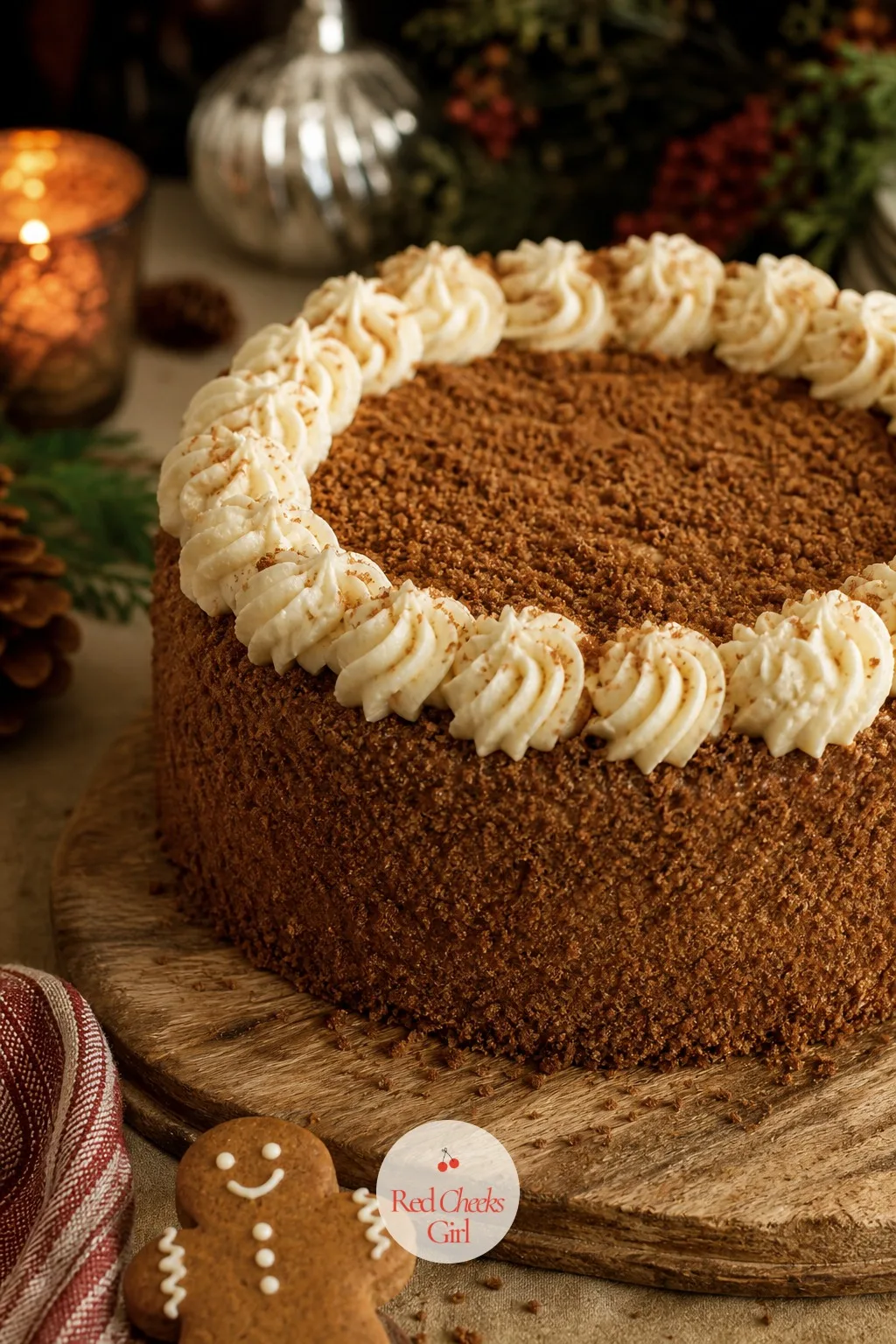
Gingerbread Vintage Cake
Warm spice and a caramel coloured crumb, this is the cake for anyone who finds red and white a bit much by the third dessert of the season.
Bake the sponge with ginger, cinnamon and a spoon of treacle, then pipe plain cream shell borders and a few small rosettes, leaving the deep brown crumb visible between them rather than covering it completely.
Pair a slice with something from the Christmas cake pops table and you have covered both the plated dessert and the grab-and-go option in one afternoon of baking.
🛍 Shopping guide
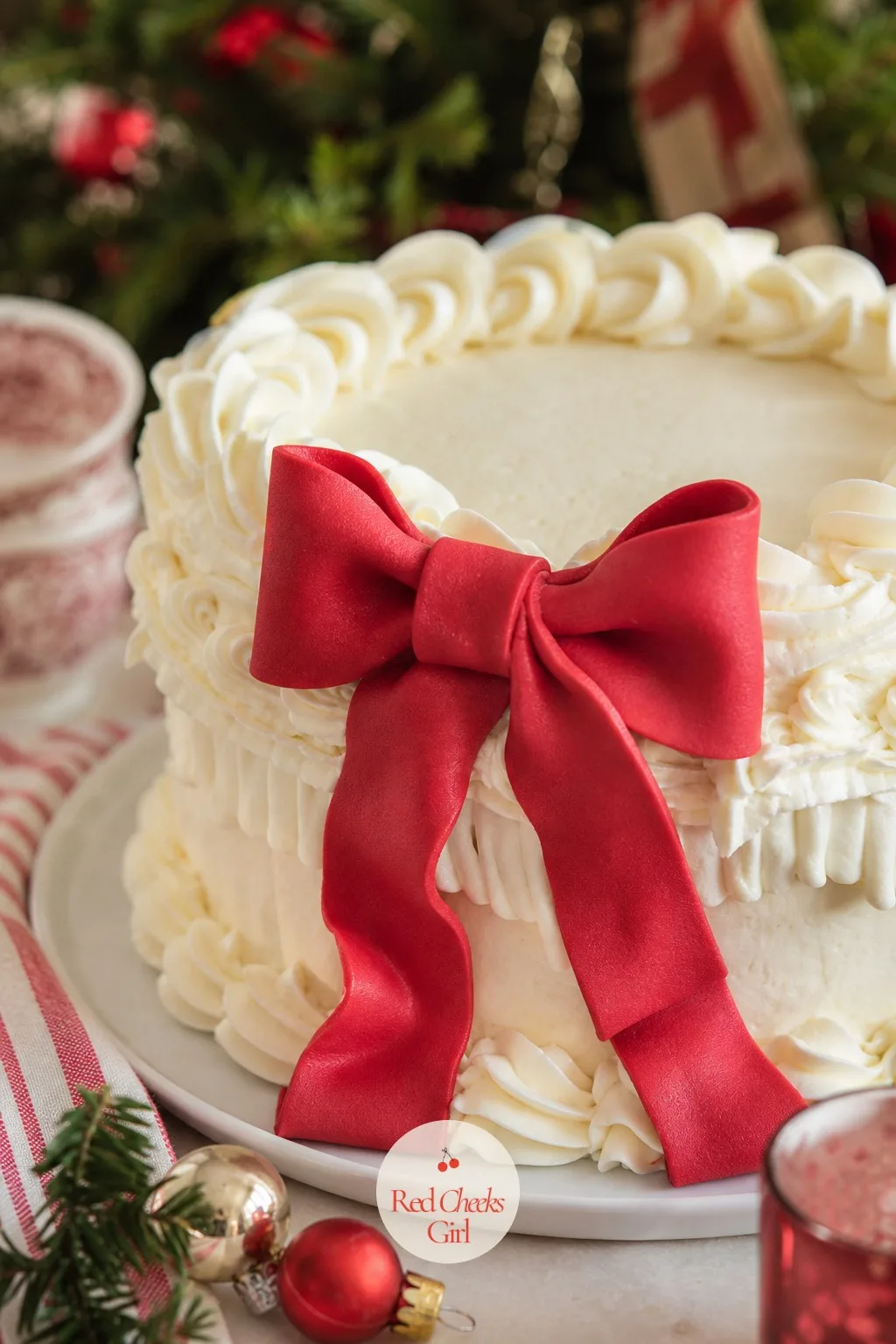
Vintage Cake With Red Bows
A bow on a cake is a small joke, the same gesture as a bow on a gift box, and it tells everyone at the table this cake is a present too.
Pipe or press two or three oversized red fondant bows onto the side of a plain cream cake, trailing a single ribbon tail down toward the board. Keep the rest of the cake undecorated so the bow stays the focus.
No fondant skills needed: a wide red satin ribbon tied round the base of the cake and finished in a bow reads almost identically in photographs.
🛍 Shopping guide
Shapes and Sizes Worth Trying
Same piping, different footprint. If a single round layer feels like the only option, these three prove otherwise.
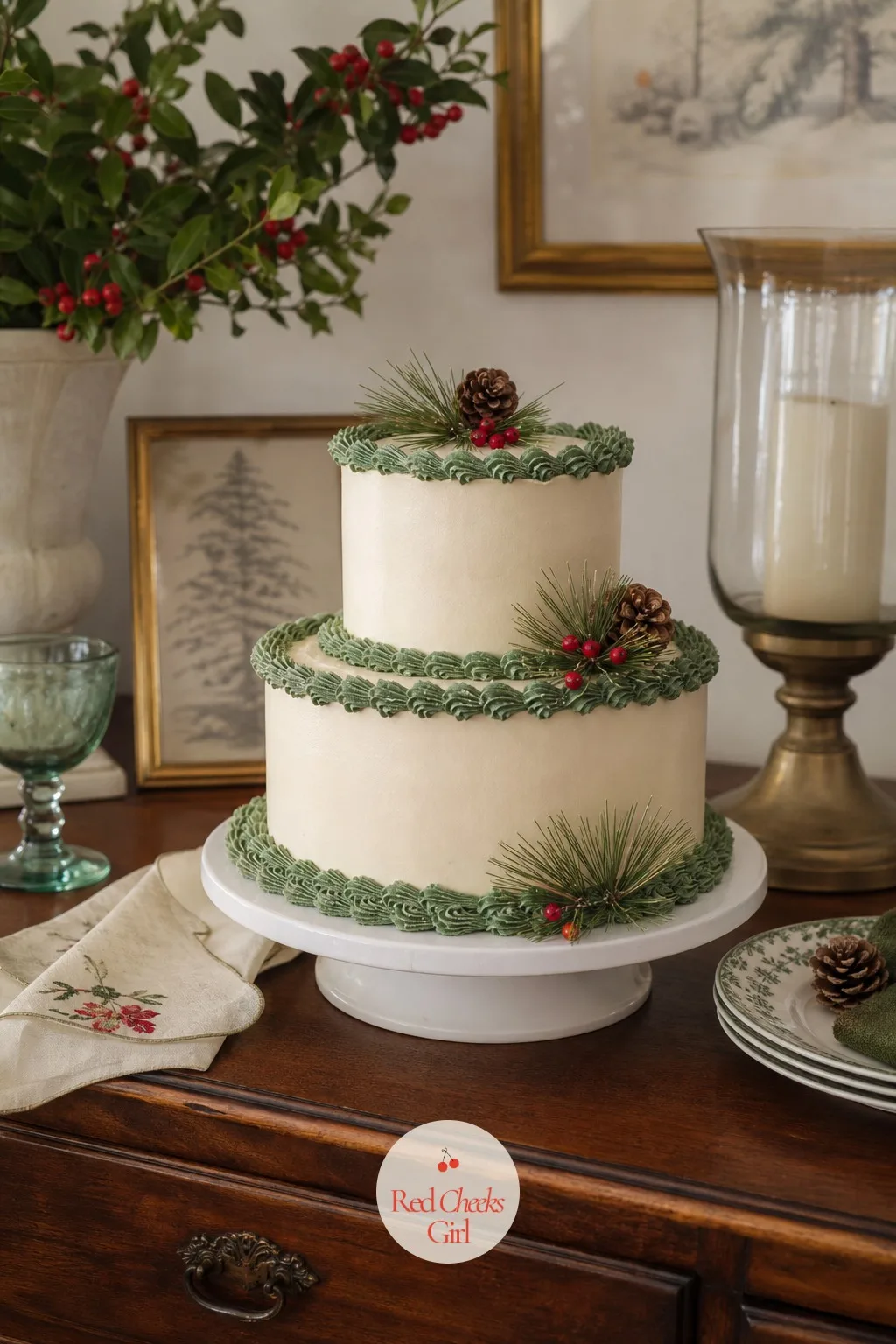
Two-Tier Vintage Christmas Cake
Two tiers signal a bigger occasion without actually taking twice the work, since the piping technique stays the same, only the surface area changes.
Stack an 8 inch base under a 6 inch top, dowel the bottom tier properly, then run the same ruffle or shell border across both so they read as one design rather than two cakes glued together.
If the fridge will not take the height fully stacked, decorate the tiers separately and assemble them at the table, just before anyone sees it, the way most proper tiered cakes actually get moved.
🛍 Shopping guide
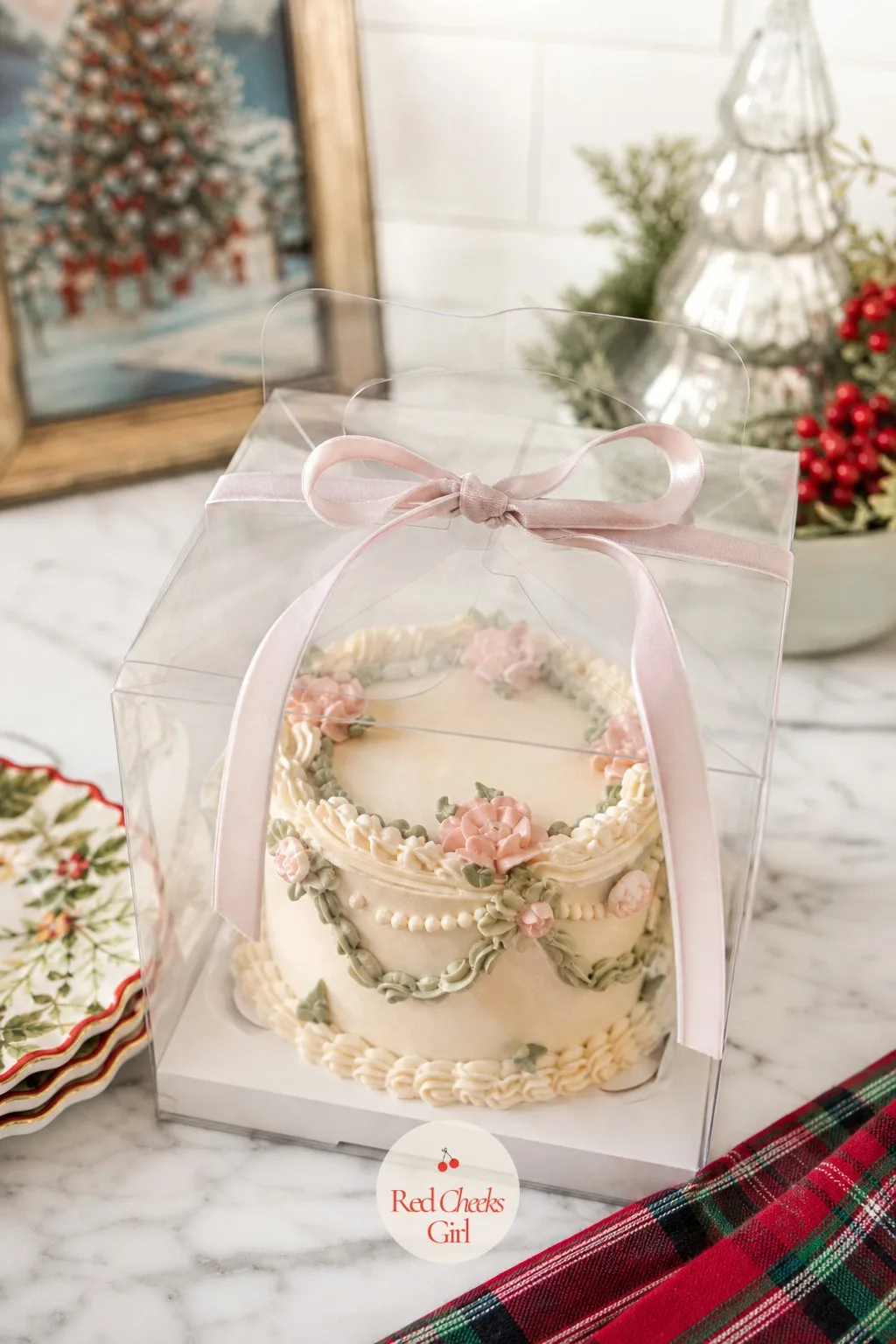
Vintage Bento Cake
A full sized cake is a commitment, a bento cake is an evening project: one small round layer, piped generously, boxed up like a tiny gift.
Keep the piping dense since there is so little surface to cover, a few fat rosettes or a single ruffled band round the top edge fills the space completely. Blush and cream suit this scale better than anything bold.
These travel well in their own box, which makes them the one entry on this list that doubles as a take-home gift rather than a table centrepiece.
🛍 Shopping guide
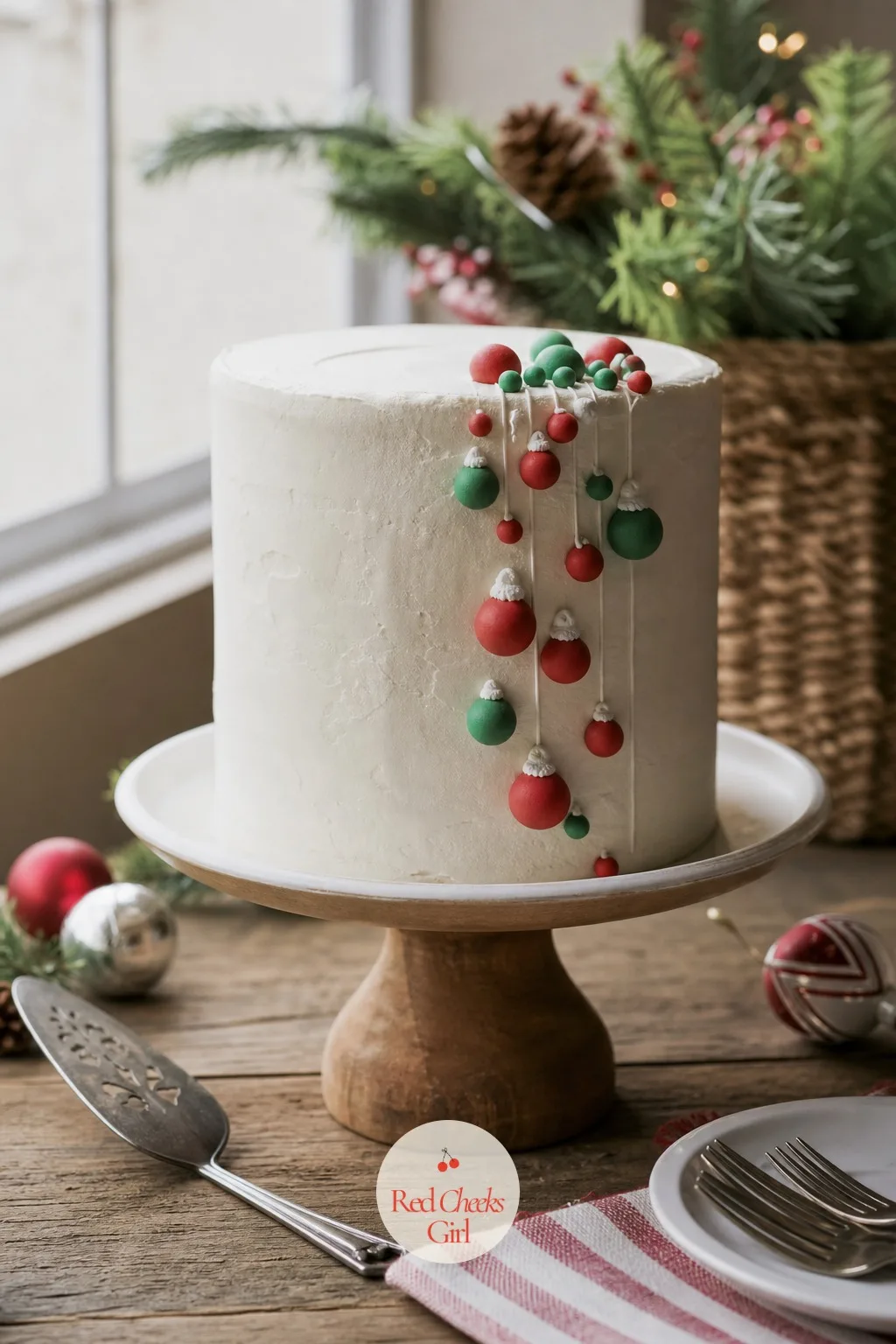
Ornament-Drop Vintage Cake
Instead of a drip, let a string of edible baubles run down the side of the cake, catching the eye the way a real ornament catches light on a branch.
Mould small spheres from tinted fondant or chocolate in red and pine green, dust lightly, then press them in a trailing line from the top edge down toward the board, largest at the top, smallest near the bottom.
If moulding feels fiddly, round gumballs pressed into soft buttercream give almost the same effect with none of the setting time.
🛍 Shopping guide
Rich and Metallic Finishes
For the end of the table, or the cake that goes out after the main dessert: deeper colour, a little shine, and one that spells out the greeting itself.
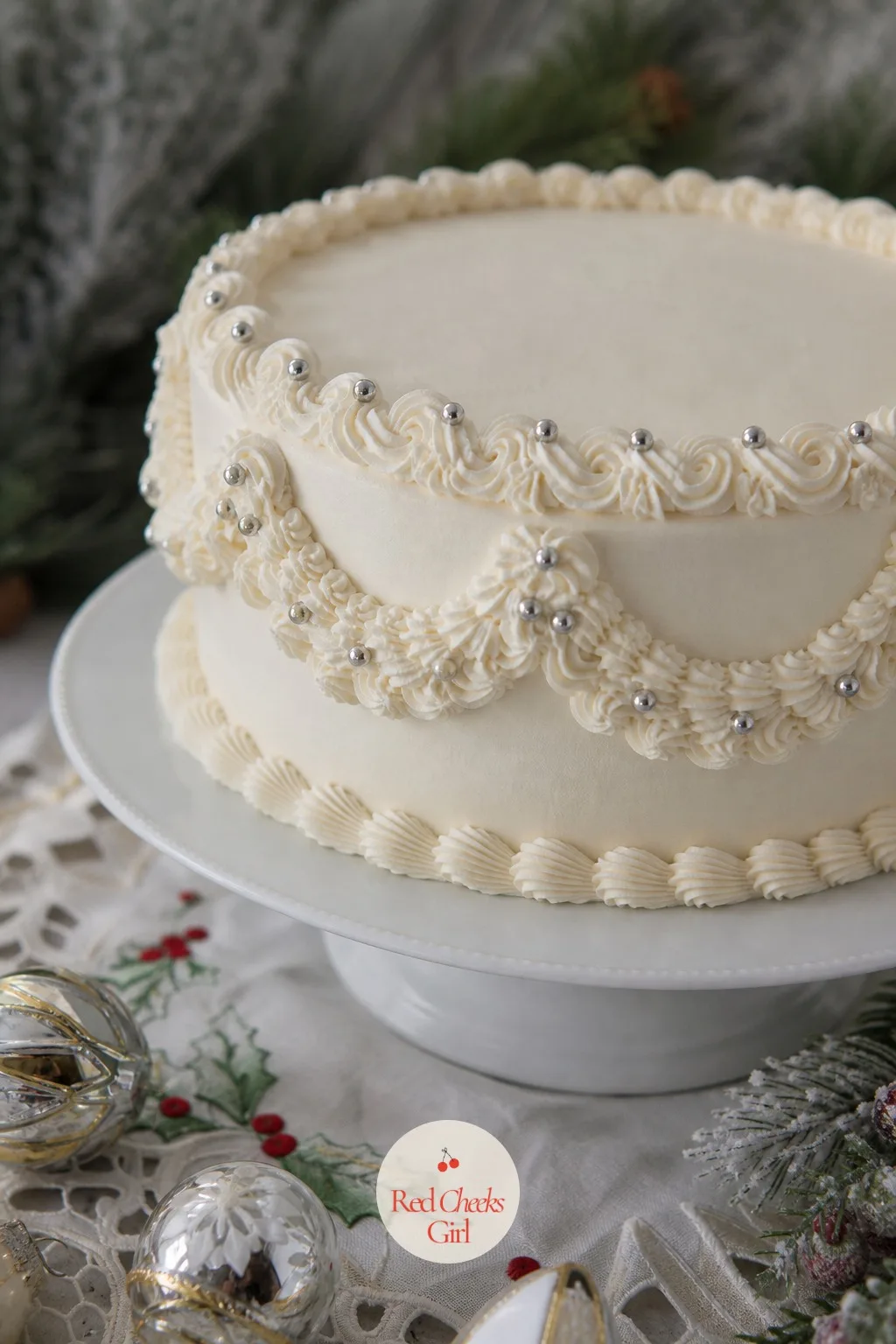
Silver Dragée Vintage Cake
Dragées belong to an older kind of cake decorating, small and hard and faintly formal, the kind of shine that reads as jewellery rather than sprinkles.
Pipe plain cream swags round the cake, then press silver dragées along the top of each swag so they sit like beading on a collar. A little goes a long way: a crowded cake looks cluttered rather than elegant.
Worth knowing before you buy a tub: dragées are hard enough to be a choking risk, so leave this one off any cake meant for small children.
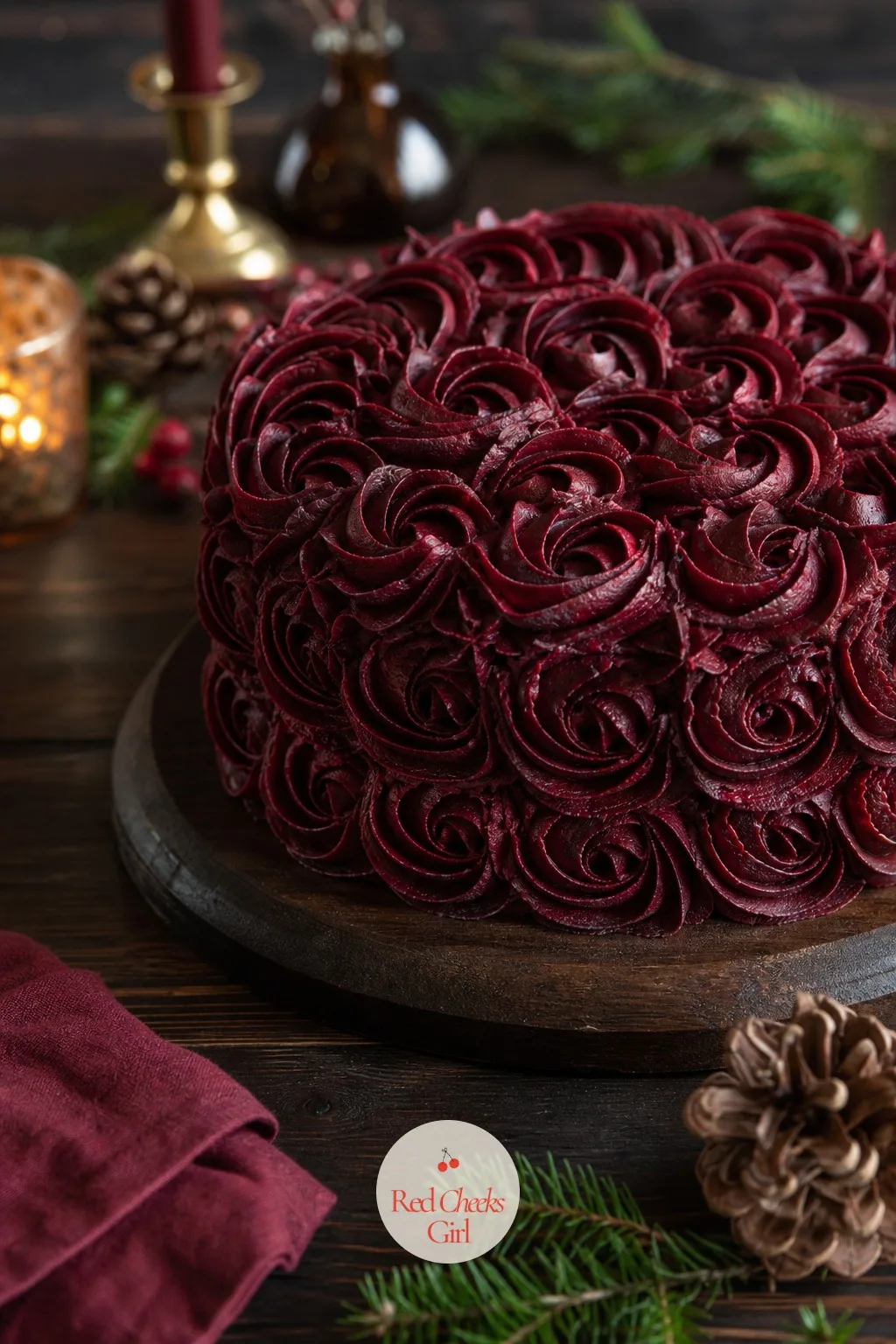
Burgundy Vintage Cake
Burgundy does the same job as red without the brightness, better suited to an evening table lit by candles than a daytime one lit by a window.
Colour the buttercream slowly, burgundy needs more gel than you expect and darkens further once chilled, so stop a shade lighter than the final colour you want. Pipe dense rosettes top to bottom for full drama.
Against pine green linens or a deep tablecloth, this cake reads richer than anything in red, and photographs better by candlelight than almost any other colour here.
🛍 Shopping guide
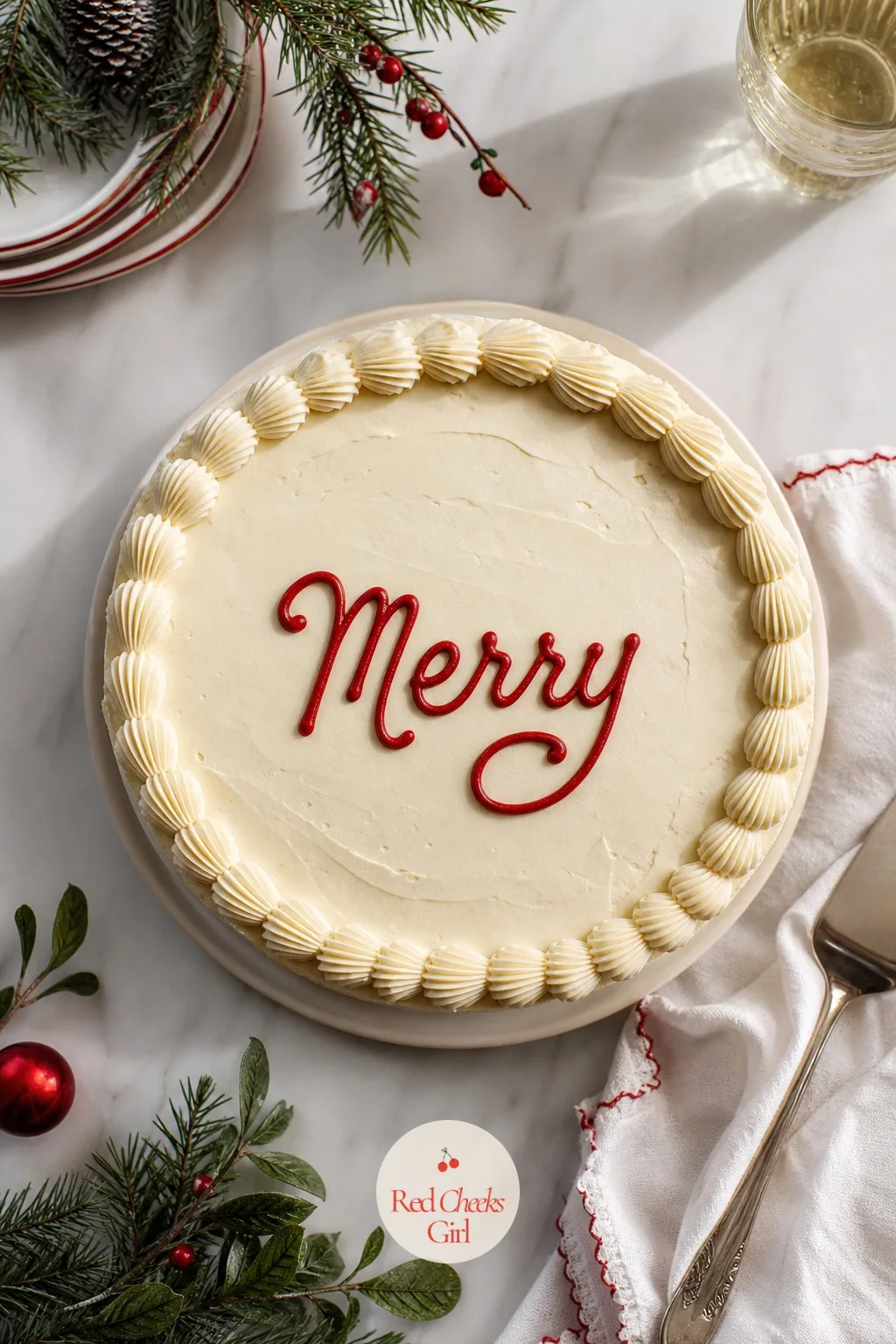
Merry Lettering Vintage Cake
Sometimes the cake needs to say the thing out loud, and a looped, old-fashioned script does it better than any topper bought from a shop.
Etch the word lightly with a toothpick first, the way bakeries always have, then go over it with a small round tip in a colour one shade darker than the base so it stays legible without shouting.
Keep the rest of the cake simple, a plain shell border is plenty, the lettering is doing all the talking already and anything busier competes with it.
🛍 Shopping guide
Frequently Asked Questions
What piping tips do I need for a vintage Christmas cake?
A star tip for rosettes and shells, a petal tip for ruffles and swags, and a small round tip for lettering cover almost every design here. Bakers building a full vintage set often reach for a handful of star sizes plus one petal tip and build outward from there.
What is the best buttercream for vintage piping?
A stiffer buttercream, Swiss meringue or Italian meringue, holds fine piped detail far better than a soft American style one because it stays stable at room temperature during decorating. Good quality butter and slightly less liquid than usual also helps the mix keep its shape under a piping tip.
Why do bakers chill the cake before piping?
A firm, chilled crumb coat stops the piping tip from dragging or denting the surface as you work, which keeps borders and rosettes crisp instead of smeared. About an hour in the fridge, or thirty minutes in the freezer, is usually enough before piping begins.
How far ahead can I decorate a vintage Christmas cake?
An iced and piped buttercream cake holds well in the fridge for a couple of days if kept in an airtight container, which makes it realistic to decorate well before the day itself. Add any fragile toppers like dragées or fondant bows on the day you serve it rather than in advance.
Can I use fondant instead of buttercream for a vintage look?
Fondant gives a smoother base and holds bows or moulded shapes cleanly, but the ruffles, shells and rosettes that define the vintage look are piped techniques that rely on buttercream’s texture. Most of the designs here use fondant only for small accents like bows or ornament shapes, with buttercream doing the piping.
How long does a decorated Christmas cake actually keep?
A well wrapped cake kept somewhere cool stays good for several days, and traditional fruit based Christmas cakes can last considerably longer if stored properly. A buttercream finished sponge is best eaten within a few days of decorating, well before the icing itself shows any sign of drying out.
24 maximalist Christmas decor ideas, room by room, in hot pink, emerald and tangerine with gold and
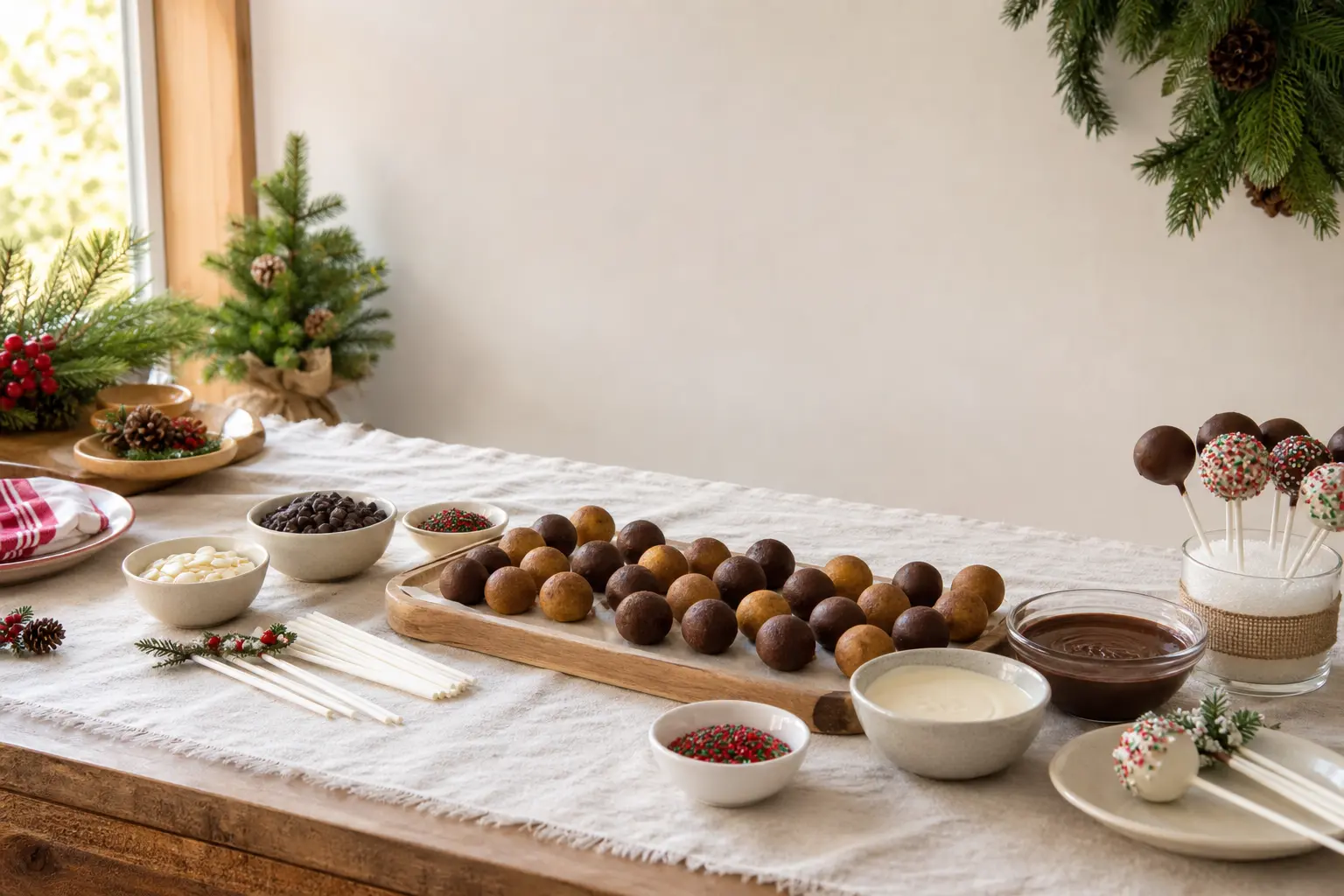
12 christmas cake pops made from bought cake or biscuits, no baking required. Every recipe names the
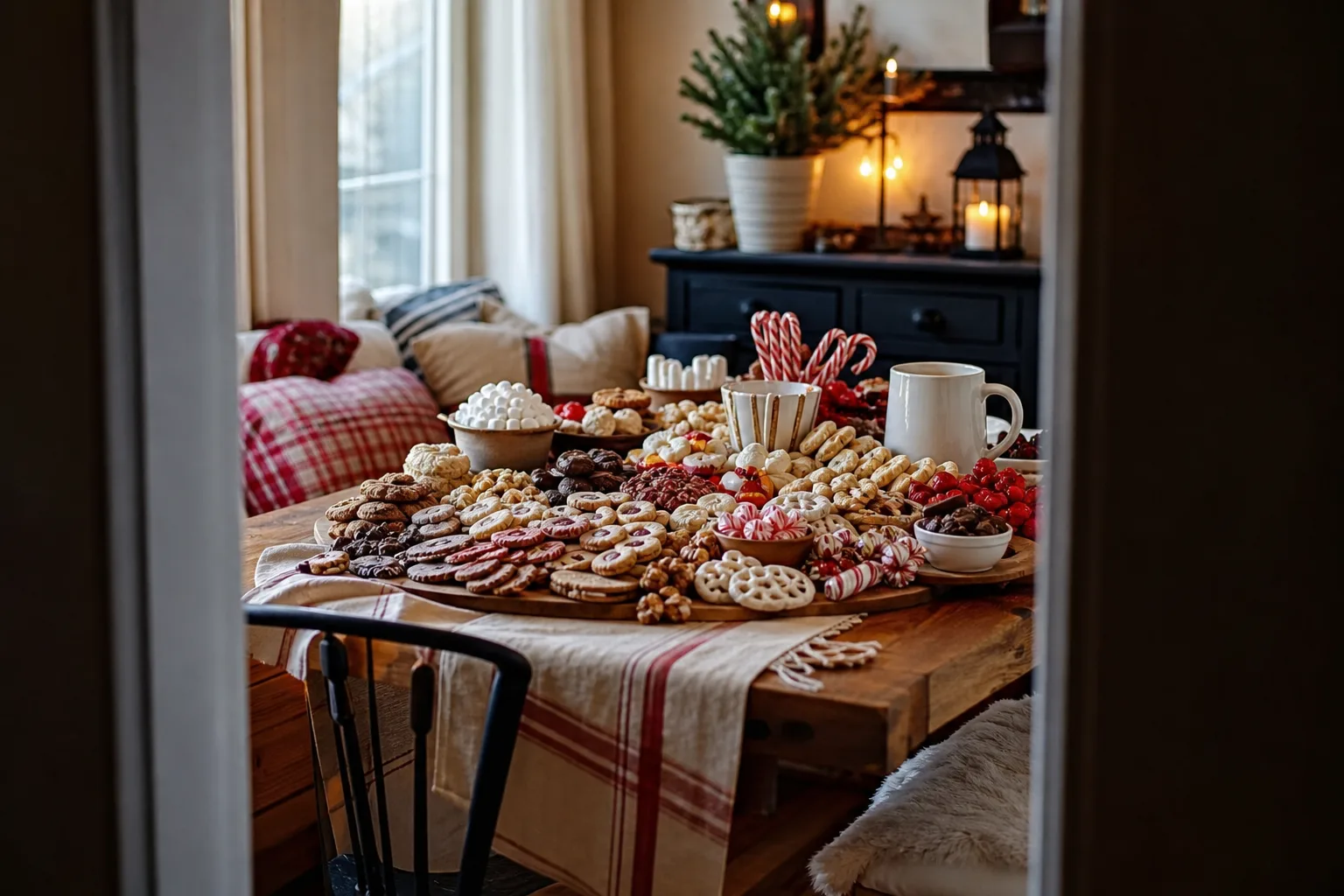
18 Christmas dessert charcuterie boards, from hot cocoa and gingerbread to cheesecake dip, each with
Leave a Reply