


If you are hunting for school Christmas party games that actually work with 20–30 wiggly kids, zero crafting supplies, and a classroom that still has to look presentable after the bell rings — you have officially found your people.
I have been in enough December classrooms (and survived enough glitter explosions, tbh) to know that the best party games are the ones a teacher can manage solo, explain in under two minutes, and clean up in under thirty seconds.
Every single game on this list checks all three boxes.
Whether you are a room parent scrambling the night before, or a teacher who just realized the party is somehow tomorrow, this lineup has you covered from K through 5 — with a mix of active whole-class games, printable activity sheets kids can work on at their desks, and a few quiet feel-good moments to balance out the chaos.
Oh, and if you are still hunting for the perfect teacher gift to go along with all this party planning, check out this 2025 Christmas Gift Guide — it is full of ideas they will actually use. Now, let’s get this party started!
- Christmas Bracket Vote
- Name That Carol Sheet
- Christmas Heads Up 7 Elves
- Christmas Word Search
- Silent Snowball (Pass and Freeze)
- Christmas Picture Bingo
- Sleigh Bell Relay
- Festive This or That
- Pass the Present (Hot Potato)
- Christmas I-Spy Count
- Reindeer Pom-Pom Relay
- Christmas Word Scramble
- Desk Ornament Pass
- Roll-a-Snowman (Dice)
- Snow Globe Shake Guess
- Color the Ornament Contest
- Christmas Math Facts Race
- Christmas Kindness Circle
- Frequently Asked Questions
1. Christmas Bracket Vote
This is the 2026 classroom trend that is taking over Pinterest for good reason — and it is probably the easiest whole-class game you will ever run.
Write 8 Christmas-themed options on the board in a March-Madness-style bracket: think holiday movies, songs, or foods (Hot Cocoa vs. Eggnog! Home Alone vs. Elf! Rudolph vs. Frosty!).
The class votes in each head-to-head round by raising hands or standing up, and you circle the winner, advancing them through the bracket until one champion is crowned. It takes about 15 minutes, generates fantastic debate, and requires exactly one dry-erase marker.
Best for grades 2–5, but even K–1 gets the hang of it fast.
Draw a simple single-elimination bracket on the whiteboard with 8 slots before the party — that is the full prep list, I promise. Announce each matchup dramatically (lean into the theatrics, your kids will love it), give 10 seconds for discussion, then call the vote.
Tally marks keep it visual. You can run a ‘Christmas Movie Bracket,’ a ‘Holiday Song Showdown,’ a ‘Best Christmas Food’ bracket, or mix categories for maximum fun.
Pro tip: let a student be the official Bracket Keeper who draws the bracket lines and circles winners — they feel incredibly important and it saves your arm.
What makes this game work so well in a classroom is the built-in discussion it generates. Kids naturally argue their case (‘Rudolph has a WHOLE story arc!’), practice respectful disagreement, and get genuinely invested in the outcome.
It also scales perfectly — you can run a quick 4-team bracket in 8 minutes or a full 16-team mega-bracket across 25 minutes if you have time.
Save the final bracket on the board and snap a photo to post outside your classroom door — parents love seeing the result!
- Whiteboard + dry-erase marker
- 8 bracket options written ahead of time
- Optional: student ‘Bracket Keeper’ helper
2. Name That Carol Sheet
This is the printable version of ‘Name That Tune’ — and it is an absolute blast to watch kids second-guess themselves on songs they sing every single year.
Each student gets a sheet with 12 sets of lyrics clues (think: first line only, or every other word blanked out) and must write the correct carol title on the blank line next to each clue.
Set a timer for 5–8 minutes and let them work independently or in pairs. When time is up, go through the answers as a class, playing 5 seconds of each song on a speaker if you want to really drive it home.
Best for grades 3–5, though you can simplify the clues for grades 1–2.
All you need is one printed sheet per student and a pencil — that is it. Before the party, pull up a free holiday music playlist on your phone or classroom speaker so you can play a quick clip during the reveal round.
You can read the clues aloud for younger students or ELL learners to keep everyone included.
If you want to add a tiny competitive edge without any stress, have kids hold up their sheets and count how many they got right — whoever scores highest gets to pick the next game or be first in the snack line.
Why does this one work so well? Because every kid thinks they know every Christmas carol — until they actually have to write the name down and suddenly ‘Chestnuts Roasting on an Open Fire’ vanishes from their brain entirely (we have all been there).
The mix of confidence and comedic failure makes for genuinely funny classroom moments. It also sneaks in reading comprehension and pattern recognition skills, which means you can justify it to literally anyone who questions your party planning choices.
- Grades 1–5 (adjust clue difficulty by grade)
- Works great as a warm-up game at the start of the party

3. Christmas Heads Up 7 Elves
This is the classroom classic ‘Heads Down, Thumbs Up’ dressed in full elf costume — and if you have never played it with a Christmas twist, you are seriously missing out. Seven students are chosen as ‘elves’ and stand at the front of the room.
Everyone else puts their heads down on their desks with one thumb pointed up. The elves quietly tiptoe around and each press down exactly one person’s thumb before returning to the front.
When the teacher calls ‘Heads Up, 7 Elves!’, the kids whose thumbs were pressed stand up and take one guess at which elf tagged them. Guess right, and you swap places and become an elf.
Best for grades K–4 — though, tbh, fifth graders will pretend they are too cool for this and then immediately beg to play again.
Setup is literally zero. No supplies, no prep, no cleanup. The only thing you need is a clear rule about quiet tiptoeing — make that expectation crystal clear before round one or it becomes a stampede (speaking from experience).
Name your seven elves dramatically by calling them ‘Santa’s Special Workshop Crew’ and watch the room immediately take the role seriously. You can adjust the number of elves up or down based on class size; for 30 kids, seven works perfectly.
Run 3–4 rounds to give more students a turn as an elf.
Here is why this game is genuinely magical for a classroom party: it requires total silence from 25 kids for a full minute, which — if you have ever managed 25 kids on the last day before winter break — is practically a Christmas miracle in itself.
It also builds suspense beautifully. The moment kids lift their heads and scan the room trying to figure out who tagged them is pure, unscripted drama. No winners, no losers, no mess. Just giggles and one very grateful teacher.
Remind elves to tiptoe quietly — make it a rule that shuffling or stomping = automatic disqualification for that round!
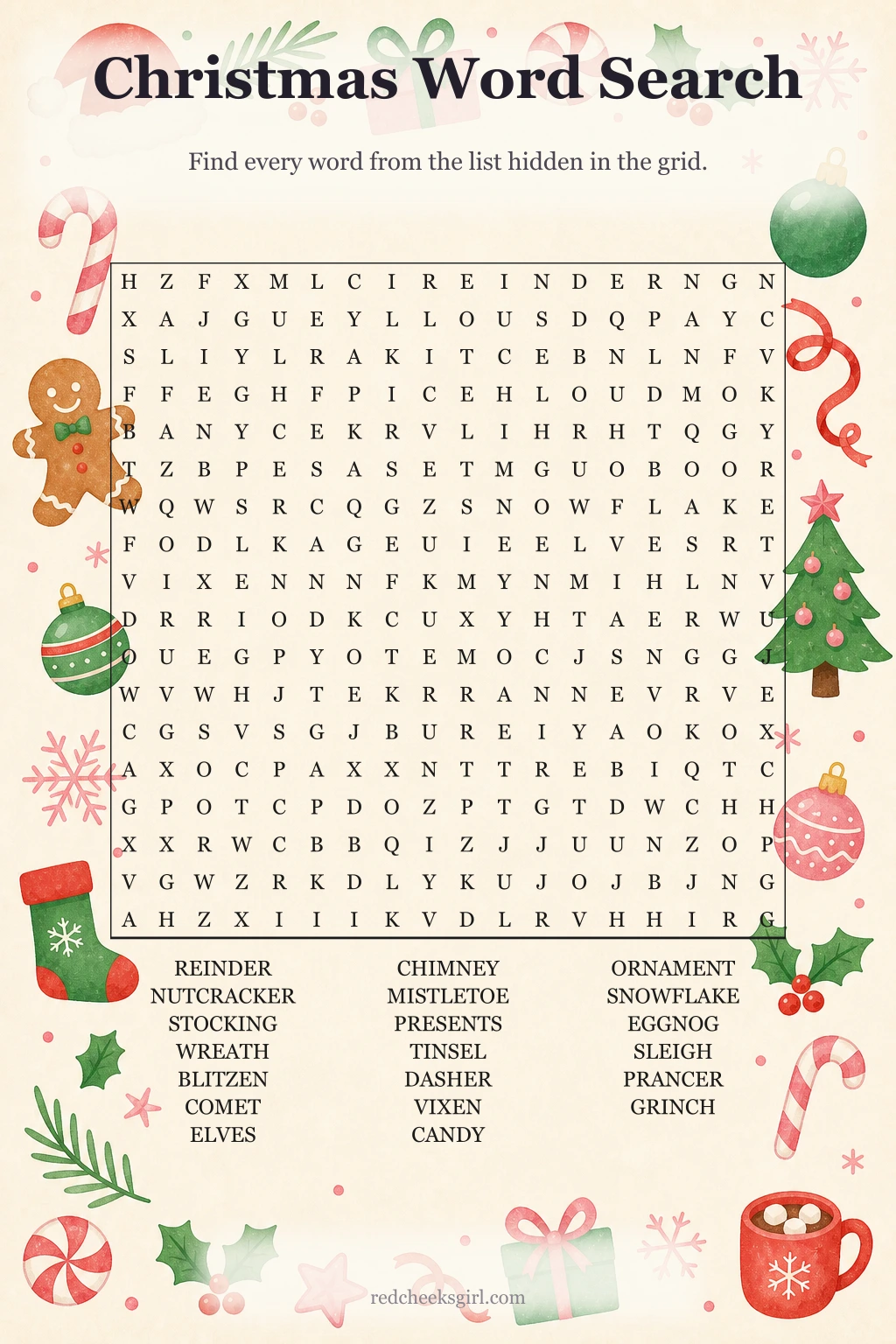
4. Christmas Word Search
Okay, I know what you are thinking: ‘A word search? Really?’ But hear me out — a well-designed Christmas word search is a genuine crowd-pleaser that works for every ability level in your class, keeps early finishers busy, and requires exactly one pencil per student.
The sheet features a 15×15 grid packed with 20 hidden Christmas vocabulary words (think: REINDEER, CHIMNEY, ORNAMENT, NUTCRACKER, MISTLETOE). Words can run across, down, and diagonal.
Students circle or cross out each word as they find it, checking the word list at the bottom of the sheet. First to find all 20 wins — or you can just let everyone finish at their own pace. Best for grades 1–5.
Print one sheet per student and hand out pencils — done. For younger grades (K–1), reduce the grid to 10×10 and use only 10 simpler words.
For early finishers or higher grades, add a bonus challenge on the sheet: ‘Use 3 of the hidden words in a Christmas sentence.’ This tiny add-on turns a two-minute activity into a five-minute one without any extra printing.
You can also make it a team game by pairing students and having them race desk-partners to find all the words first.
Word searches are secretly one of the best vocabulary reinforcement tools in the elementary teacher’s arsenal — kids are building spelling recognition and visual scanning skills while they celebrate.
They are also beautifully quiet, which makes them perfect as a transition activity between louder games or as the ‘everyone settle down’ moment after Pass the Present gets a little too enthusiastic (it always does).
Keep a few extra copies on hand; kids will ask to take them home.
- Circle the first letter of each word for K–1 students
- Use a 10×10 grid with 10 words for kindergarten
5. Silent Snowball (Pass and Freeze)
Here is an active game that sounds chaotic but is actually one of the most teacher-friendly options on this entire list — the word ‘silent’ does a lot of heavy lifting. Each student crumples a piece of scrap paper into a ball (their ‘snowball’).
When Christmas music plays, they pass their snowball to the right around a circle or row-by-row at desks. When the music suddenly stops, whoever is holding a snowball must freeze completely still like a snowman.
Frozen snowmen sit out for one round, then rejoin — because sitting out forever is never fun. The last non-frozen player wins. Best for grades K–5, and it uses up scrap paper, which feels like a bonus win for everyone.
You need scrap paper (literally any paper headed for recycling), a phone with a Christmas playlist, and 30 seconds to explain the rules. Have students crumple their paper before the game begins — that crumpling moment alone is weirdly satisfying and gets the energy up.
Set the expectation before you start: passing must be gentle, no throwing, and freezing means truly frozen (no shuffling feet or sneaky elbow moves). Stop the music at unpredictable intervals — some very short, some surprisingly long — to keep everyone on their toes.
What makes this game so special is the combination of movement, music, and suspense that keeps every single kid engaged every single second the music plays. Nobody zones out when they know the music could stop on them at any moment.
It also burns off just enough pre-party energy to make the rest of your activities go more smoothly — think of it as a pressure valve for December 23rd classroom chaos. And cleanup? Everyone un-crumples their snowball and puts it in recycling.
Done in 10 seconds.
- 1 sheet of scrap paper per student
- A Christmas playlist on any device
- Optional: Santa hat for the winner to wear next round
6. Christmas Picture Bingo
Christmas Bingo is a party classic for a reason — but picture-based bingo cards make it work for every reader and non-reader in the room, which is what bumps it from ‘fine’ to genuinely great.
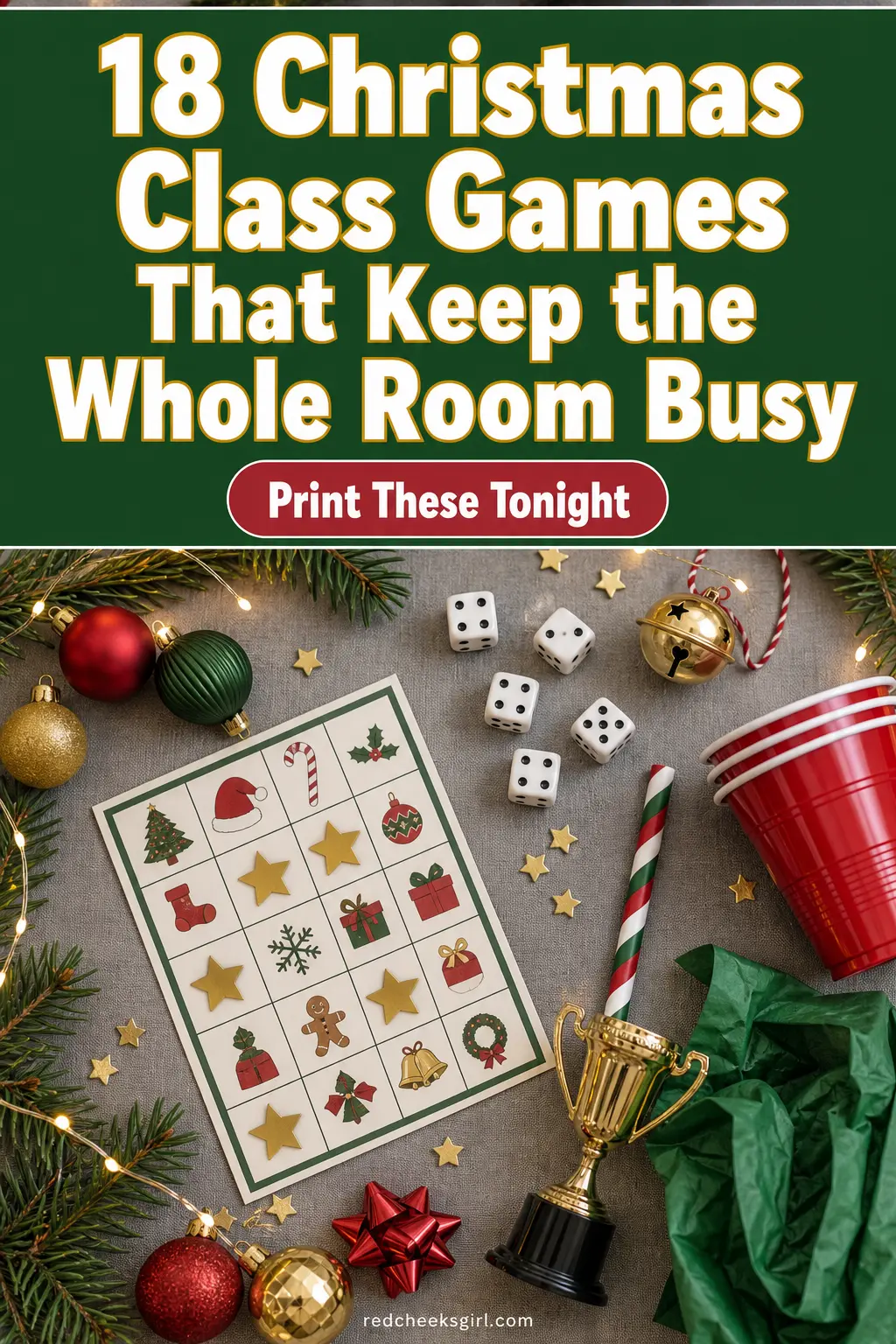
Each student gets a unique 5×5 bingo card filled with Christmas picture icons: a candy cane, a stocking, a star, an elf, a snowflake, a bell, a present, a wreath, and more.
The teacher (in a Santa hat, obviously) calls out items one by one, and students mark them off with a pencil X or a small sticker. First to get five in a row yells ‘Merry Christmas!’ and wins.
Play multiple rounds for ‘blackout bingo’ where the full card must be covered. Best for grades K–3.
Print one unique card per student — free bingo card generators online let you randomize images across 30 cards in under five minutes.
For calling cards, simply print and cut a matching set, drop them in a holiday bag, and draw them one at a time. Alternatively, call items verbally and show them on the projector.
For markers, students can use pencil X marks (zero cleanup!), small holiday stickers, or even tiny pieces of torn paper — keep it mess-free and desk-friendly. Run the game with gentle music in the background for extra festive vibes.
Picture bingo is one of those rare games that fully includes your ELL students, your youngest learners, and your students who struggle with reading — everyone sees the same image and has the same chance of winning.
For grades 3 and up, level it up by using a word bingo card instead of pictures, which sneaks in holiday vocabulary practice. Host tip: run at least three rounds so more students get a chance to call ‘Merry Christmas!’
— multiple winners = multiple joyful moments = one very good party memory.
- Print 30 unique randomized cards using a free online bingo card generator
- Use pencil X-marks instead of chips for instant zero-mess cleanup

7. Sleigh Bell Relay
This is one of those games that sounds simple and then absolutely electrifies a classroom — and all you need is one jingle bell per team and a clear aisle. Divide the class into two or three teams seated in rows.
The first player holds a jingle bell and must pass it down the row from student to student using only their elbows (hands clasped behind their back).
If the bell drops, the player who dropped it picks it up and passes it back one spot before restarting from there. The team whose bell reaches the end of the row first wins the round.
Best for grades 1–5, and the noise of the bells alone is worth every penny they cost.
Pick up a pack of jingle bells from a dollar store — a bag of 20 costs about $2 and covers any class size. Before the game, practice the elbow-pass technique with a test run so everyone understands the mechanic.
Clear the aisle between rows just slightly so no one is reaching across desks awkwardly. Run the relay three times, rotating which team goes first, so every row gets a fair shot.
For a trickier variation, have students pass the bell using only their knees, or have it travel back up the row for a return trip before the team can win.
The jingle bell relay works brilliantly because it combines physical challenge, teamwork, and built-in Christmas sound effects into one tidy, contained game.
The clinking and jingling as the bell travels down the row creates this wonderful festive soundtrack that makes the whole room feel like a party. Cleanup is simply dropping the bells back in the bag.
It is loud for approximately 90 seconds per round and then it is done — the perfect energy spike between quieter printable activities. Your students will ask to play this again next year, guaranteed.
- 1 jingle bell per team (dollar store packs work perfectly)
- Rows of seated students with a clear passing path
- Hands-behind-back rule enforced from the start
8. Festive This or That
Think of this as a holiday opinion sheet that double-dips as a class discussion starter — students circle their preference between two Christmas-themed options in each of 15 rapid-fire rounds, then compare answers with a neighbor or share whole-class.
Categories include things like: Hot Cocoa or Apple Cider? Real tree or fake tree? Santa or Rudolph? Giving gifts or receiving gifts? Snow day or school party?
There are no right or wrong answers, which means every student wins every round, and the debate that follows is always the best part.
Best for grades 2–5, though K–1 can do a spoken version where you just ask the class to stand on one side of the room for each choice.
Print one sheet per student and give them about 4 minutes to circle all 15 choices independently before the discussion begins.
Then go through each question as a class — ask for a show of hands, call on a few students to defend their choice, and watch the (friendly) debate unfold.
This game also works beautifully as an icebreaker at the very start of the party when kids are still arriving, since early arrivals can start circling immediately and there is no waiting around.
For extra fun, tally class results on the board to see which options win the majority.
What makes ‘Festive This or That’ genuinely valuable beyond the fun factor is that it builds confidence in sharing opinions and practicing respectful disagreement — skills teachers are always working on.
It also reveals funny, surprising things about your students that spark real connection (who knew half the class prefers a fake tree?!).
It is also one of the most inclusive games on this list because there is no reading comprehension challenge and no time pressure — every kid can participate fully and feel good about their answers.
- Grades 2–5 (written version)
- Grades K–1 (spoken whole-class stand-up version)
- Great as a party icebreaker while waiting for everyone to arrive

9. Pass the Present (Hot Potato)
This is the holiday upgrade to Hot Potato that every elementary class needs in their December lineup — and it is genuinely thrilling every single time. Wrap a small box (or stuff a gift bag with crumpled paper) in advance.
Students sit in a circle on the floor or pass it row-by-row at desks while Christmas music plays.
When the music stops, whoever is holding the present is ‘frozen’ and takes a step back for one round before rejoining (no one sits out for long — the goal is fun, not elimination). The last person still actively in the circle wins.
Best for grades K–4, and the wrapped present prop alone makes this feel extra special and festive.
Wrap a small empty box the night before the party — or use a holiday gift bag stuffed with newspaper. The wrapping does not need to be pretty; it just needs to look like a real present.
When the music stops, pause it dramatically and scan the room for who is holding the gift — big theatrical reactions from the teacher make this 10 times more fun.
Keep the music pauses unpredictable: stop it very quickly in the first few rounds, then let it play longer as the group gets smaller. You can also plant a small treat inside the box that the final winner gets to keep, which adds major anticipation.
The magic of Pass the Present is the way it transforms a simple mechanics game into something that feels truly holiday-special just because of the wrapped gift prop.
Kids who play Hot Potato regularly at home act completely differently when there is an actual present involved — suddenly everyone is a little more dramatic about holding it, a little more relieved when they pass it on, and 100% more invested in every music pause.
It also works beautifully as a confidence booster: there is no skill required, so every student has an equal shot at winning regardless of grade level or ability.
Put a small candy or prize inside the box — the winner gets a real surprise at the end!
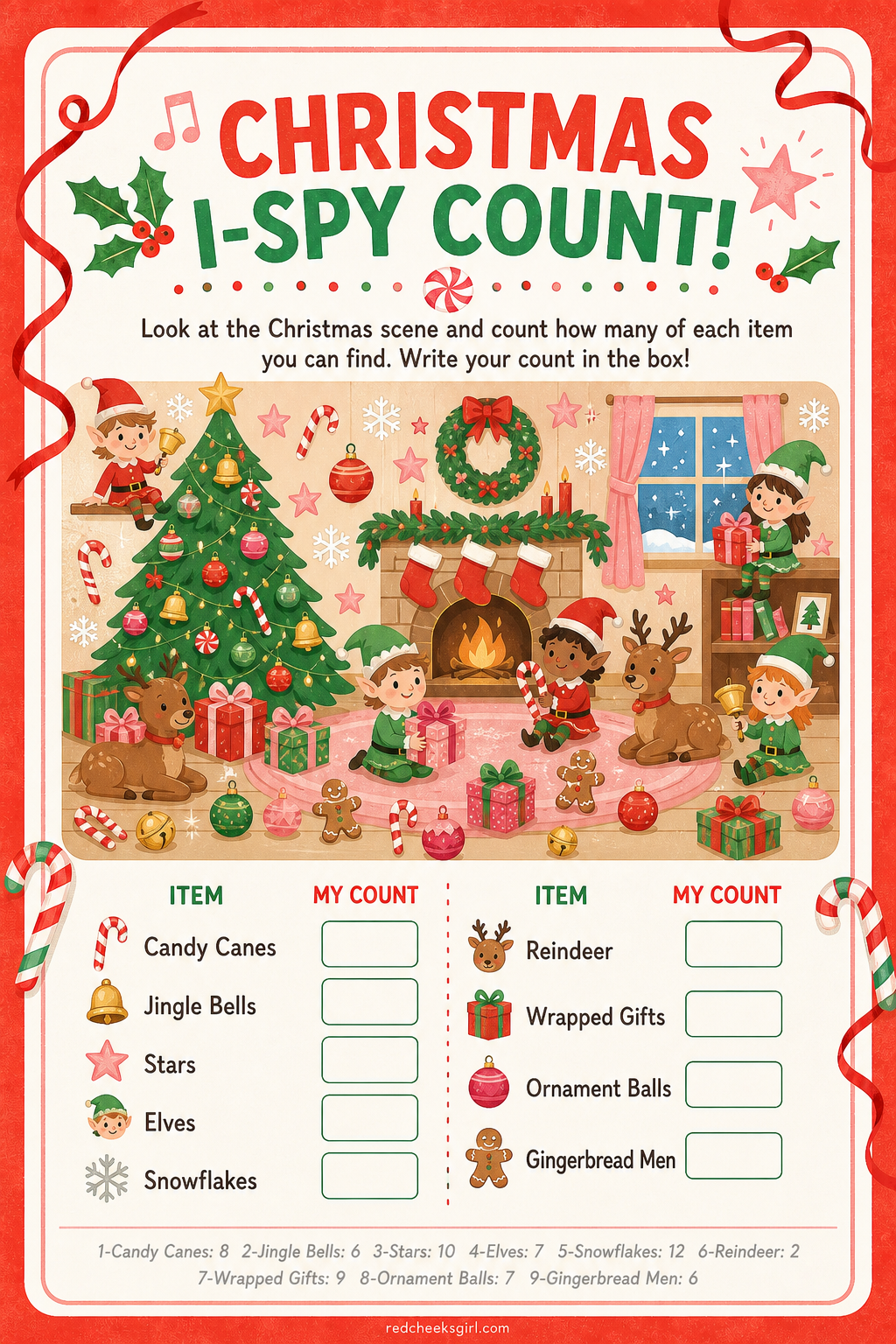
10. Christmas I-Spy Count
This is an I-Spy sheet with a counting twist — and it is one of those activities that keeps kids genuinely busy and focused for a solid 10 minutes, which during a December classroom party is basically worth its weight in gold.
The sheet features one densely packed Christmas scene illustration (think: a cozy living room on Christmas morning, or Santa’s toy workshop) crammed with repeating hidden objects. Students must find and tally how many of each object appear in the scene: How many candy canes?
How many stars? How many elves? They write their count in the blank box next to each item. The student whose totals are most accurate wins. Best for grades K–4; older grades can have stricter accuracy standards for the win.
Print one sheet per student and give pencils — that is truly all you need. For the image itself, source a free ‘Christmas I-Spy’ illustration online or sketch a simple one (stick-figure elves count, I promise).
Read each search item aloud for younger students so no one is lost on vocabulary.
Give the class 8–10 minutes, then reveal the correct counts one by one — kids love the moment of checking their tallies against the answers and finding out how close they got.
Optional: let students who finish early add up ALL their numbers for a grand total as a tie-breaker.
I-Spy Count is one of the best differentiated games in this lineup because the same sheet works for a first-grader who is thrilled to find five candy canes and a fifth-grader who is laser-focused on finding the exact right count of every single item.
It is quiet, desk-friendly, and requires zero movement or noise — perfect as the ‘calm down’ activity between bigger group games. It also works great as an early-arrival activity at the start of the party while you are still getting everyone settled and organized.
- Works for all ability levels simultaneously — every student can succeed at their own pace
- Sneaks in counting and visual scanning skills with zero ‘this feels like school’ vibes
11. Reindeer Pom-Pom Relay
This relay race has become a December classroom staple because it is endlessly funny to watch and requires almost nothing to set up — just a bag of red pom-poms and a clear path. Divide the class into two or three relay teams.
The first player on each team balances a red ‘Rudolph nose’ pom-pom on the back of their hand and walks (no running!) to a designated spot at the front of the classroom and back.
If the pom-pom falls, they must stop, pick it up, replace it on the back of their hand, and continue from where they dropped it. When they return, they hand the pom-pom to the next team member. First team to complete the full relay wins.
Best for grades K–5.
Grab a bag of red pom-poms from any dollar or craft store — they cost basically nothing and you will use them for years. Mark the turnaround point with a piece of tape on the floor or a chair at the front of the room.
Before the relay begins, have everyone practice balancing the pom-pom on the back of their hand for 10 seconds — this little preview generates instant laughter and buys you a calm 30 seconds to organize teams.
Set a clear ‘walking only’ rule and model it yourself first; kids respond well when the teacher demonstrates. For an extra-tricky variation, have the pom-pom balanced on a spoon instead of the hand.
What I love about this relay is the way it creates natural cheering sections — the kids waiting in line are rooting for their teammate, counting on each other, and genuinely invested in the outcome.
That sense of team stakes makes even the most reluctant students light up. The pom-pom also has this wonderful tendency to fall at the exact worst moment, which produces the kind of genuine laughter that you just cannot script.
Zero mess, minimal supplies, maximum holiday memory. Your students will be talking about the Reindeer Pom-Pom Relay all the way through winter break.
- 1 red pom-pom per team (dollar store craft section)
- Tape marker on the floor for the turnaround point
- Walking-only rule — no running, no rushing!
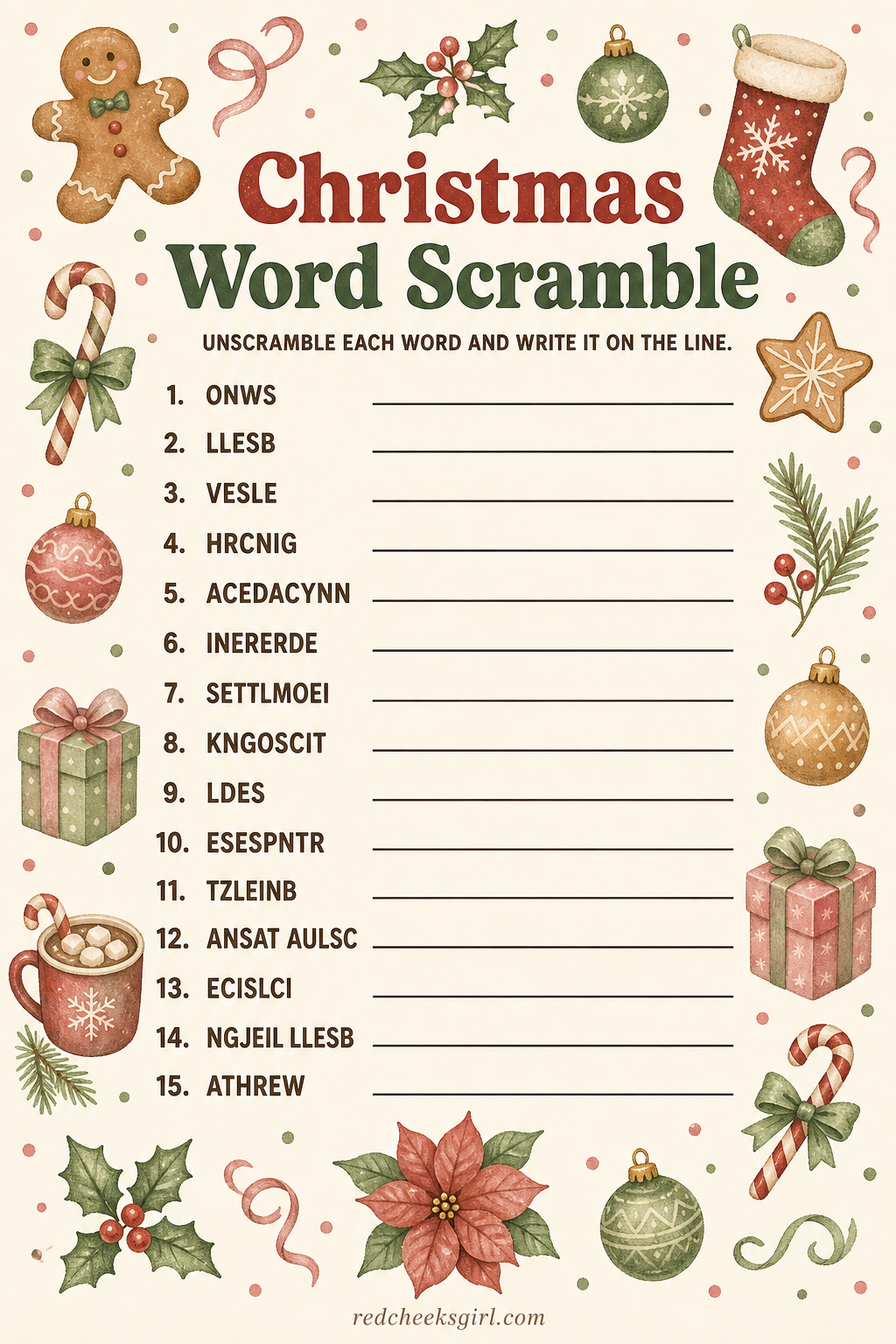
12. Christmas Word Scramble
A Christmas word scramble is one of those printable games that looks deceptively easy — and then BLITZEN catches everyone off guard every single time (it is always BLITZEN).
Students receive a sheet with 15 scrambled Christmas words and must unscramble each one, writing the correct word on the blank line provided. The scrambles range from easy (WONS = SNOW) to genuinely tricky (LISEICC = ICICLES). Set a 6-minute timer and let students race.
If you want a competitive version, the first student to finish and get all answers correct wins; for a collaborative version, pairs work together. Best for grades 2–5 — for grades K–1, use 6–8 much simpler words.
Print one sheet per student, hand out pencils, and go. That is prep done.
For the big reveal, display the answers on a projector or simply read them aloud one by one — the groan that goes through the room when you reveal a particularly sneaky scramble is genuinely one of the best sounds in teaching.
For early finishers, add a bonus challenge at the bottom of the sheet: ‘Use any 4 of the unscrambled words to write a Christmas story sentence.’
It takes seconds to add and gives fast workers something meaningful to do while the rest of the class finishes.
Word scrambles are fantastic for a classroom party because they are genuinely challenging without being frustrating — most students can solve at least half the list on their own, and the harder ones invite natural peer collaboration even when you have not officially made it a team activity.
They also quietly reinforce spelling, which makes this one of those rare party games you can feel completely good about academically. Slip this one in after a high-energy active game and watch the room shift into focused, productive quiet. It is basically magic.
- Grades 2–5 (full 15-word list)
- Grades K–1 (simplified 6-word version with picture hints)
- Pairs or individuals both work equally well
13. Desk Ornament Pass
This is a quiet-ish relay game played entirely at desks — perfect for when you want a little movement without anyone leaving their seat. Place one plastic or foam ornament on the first desk in each row. When the teacher says ‘Pass!’
students must pick up the ornament using only two pencils (like chopsticks) and lower it gently onto the next student’s desk, who then picks it up the same way and passes it forward. No hands allowed.
If the ornament falls, it must be placed back on the previous desk and re-passed. The first row to get the ornament from the front desk to the back desk wins. Best for grades 2–5 — K–1 can use the cupped-hands version instead of pencils.
Grab a pack of lightweight plastic ornaments from a dollar store — foam ornaments work even better since they bounce harmlessly if dropped. Every student needs two pencils, which they already have at their desk.
Practice the two-pencil technique for 30 seconds before the official relay begins: show kids how to squeeze the pencils together around the ornament without crushing it. This turns into a surprisingly technical skill challenge that even older students find genuinely difficult and hilarious.
For a tougher variation, try with a round ornament ball instead of a flat one.
Desk Ornament Pass is one of the best school Christmas party games for keeping the energy fun and contained at the same time.
Because students are seated, the teacher has full sight lines across the whole class, and the game plays in about three minutes per round — fast enough to run three rounds back-to-back.
It also creates wonderful spontaneous cheering as the ornament wobbles dangerously down the row. No cleanup at all beyond putting ornaments back in their bag. Perfect between bigger games to keep the energy moving without losing control of the room.
- 1 lightweight plastic or foam ornament per row
- 2 pencils per student (already on their desks!)
- Clear ‘no hands’ rule established before round one
14. Roll-a-Snowman (Dice)
This printable game is the December classroom answer to Roll-a-Monster — and it never, ever gets old.
Each student gets a sheet with a blank snowman drawing area and a numbered key: roll a 1 = draw the body, roll a 2 = add the head, roll a 3 = add a hat, roll a 4 = add a scarf, roll a 5 = add eyes and a carrot nose, roll a 6 = add stick arms and buttons.
Students take turns rolling one die and adding the matching part to their snowman, but here is the catch — you must roll a 1 first to start your body, or else your turn is skipped. First student with a fully decorated snowman wins!
Best for grades K–3; older grades can play a speed version where everyone rolls simultaneously for 5 minutes.
Print one sheet per student and grab a die per student or one per table group — that is the entire supply list.
You can use regular classroom dice or themed Christmas dice if you happen to have them (holiday dice are available at dollar stores in December).
For the simultaneous play version with older students, everyone rolls their own die at the same time and the room fills with delightful scribbling as snowmen appear piece by piece. Play background Christmas music during the drawing time for extra festive ambiance.
The sheet works best with crayons or pencils — no markers, to keep things desk-friendly.
Roll-a-Snowman is one of those genius crossover activities that doubles as a fine-motor and number-recognition exercise for younger students, making it genuinely educationally defensible while also being 100% joyful.
For older students, the strategy element of needing that 1 before anything else creates real tension — watching a kid roll five sixes in a row before finally getting their body is dramatically entertaining for everyone at the table.
The finished snowmen are also wildly varied and adorable, which makes for a cute bulletin board display after the party if you want a bonus classroom decoration out of the deal.
- 1 die per student or table group
- Pencils or crayons for drawing
- Must roll a 1 first to begin — no cheating, Santa is watching!

15. Snow Globe Shake Guess
This is a sensory guessing game that works beautifully as a small-circle activity or in a traveling station format, and kids genuinely find it magical.
Before the party, fill three or four small clear containers (mason jars or plastic bottles with lids glued shut work perfectly) with water, glitter, and a different small hidden object inside each one — a tiny ornament, a small rubber duck, a die, a key.
Shake each ‘snow globe,’ pass it around, and students must guess what is hidden inside before the glitter settles. Write guesses on a sticky note. The student who correctly identifies the most hidden objects wins.
Best for grades K–5, and the snow globe props themselves generate huge excitement before a single rule is explained.
Make the globes the night before: fill clean plastic bottles about three-quarters full with water, add a generous pour of silver or white glitter, drop in a small object, seal the lid with super glue, and shake to test.
Label each globe with a number so you can track which object goes with which answer.
For a zero-prep version, skip the water and just seal mystery objects in a small box or bag that students shake and listen to — the shaking and rattling provides the sensory clues instead of visual ones.
Pass globes in one direction around a circle, giving each student about 20 seconds to observe before passing on.
Snow Globe Shake Guess works especially well as a transition activity between desk games and bigger whole-class games because it is naturally self-pacing — students observe, think, write, and wait, all with minimal teacher management.
The handmade snow globes are also reusable year after year, which makes this a genuinely worthwhile one-time craft investment. And there is something genuinely lovely about the way a shaken glitter globe settles that captures even the most distracted students’ attention.
It is one of those small, calm, beautiful party moments among all the louder ones.
- 3-4 small clear sealed containers filled with water + glitter + hidden object
- Sticky notes for guesses
- Super glue to seal lids ahead of time — lid must NOT come off mid-game!
16. Color the Ornament Contest
This is the creative cool-down game that every party lineup needs — and it doubles as a classroom decoration after the fact, which honestly feels like cheating at how efficient it is.
Each student receives a sheet with a large uncolored ornament outline (or a set of three smaller ones in different shapes) and must decorate it as creatively as possible using crayons, colored pencils, or markers from their pencil case. Set a 10-minute timer.
When time is up, display all the sheets on a bulletin board or hold them up one at a time for a class vote on Most Festive, Most Creative, and Most Likely to Be in a Museum.
Best for grades K–5 — everyone loves to color, full stop, regardless of age.
Print one sheet per student — the only supply is whatever coloring tools kids already have in their pencil cases. No extra shopping required.
Before the timer starts, give one 30-second inspiration prompt: ‘Your ornament can be any pattern, any character, any scene — the only rule is that it has to be AMAZING.’
This little permission to go fully wild with design choices produces wildly different and creative results.
Display all the finished ornaments along a classroom window ledge or tape them to the board — the instant gallery makes the room feel festive and gives every student a moment to see their work appreciated.
The Color the Ornament Contest is one of those deceptively simple activities that provides genuine social-emotional value: every student has equal creative ability in this context, which means the kid who struggles with reading or math suddenly has the same chance of winning ‘Most Creative’ as anyone else.
The peer appreciation during the gallery walk also builds classroom community in a small but real way. And the finished sheets? Tape them to the hallway bulletin board with ‘Our Christmas Classroom’ as the header and every parent walking past will stop to look.
Win, win, and win.
- Levels the playing field — every student can shine creatively regardless of academic ability
- Finished sheets = instant festive classroom bulletin board display

17. Christmas Math Facts Race
Here is the Christmas party game that your math coach will love and your students will actually have fun playing — because speed + holiday theme + friendly competition is a surprisingly powerful combo.
Each student gets a sheet with 20 Christmas-themed math problems appropriate for their grade level: simple addition and subtraction for K–2, multiplication for grades 3–4, and mixed operations for grade 5.
Problems are wrapped in festive framing: ‘Santa has 48 ornaments and puts 6 on each tree. How many trees does he decorate?’ Set a 5-minute timer and race to see who completes all 20 correctly first. Check answers whole-class at the end for instant feedback.
Best for grades 1–5 with differentiated versions by grade.
This is also the perfect game to keep in your back pocket for the scenario where your party runs short or a game wraps up early — it fills exactly as much time as you give it.
For the whole-class version, read problems aloud one at a time instead of the full sheet so everyone works at the same pace. For a team version, divide into small groups and give each group one sheet to solve collaboratively. The Christmas story-problem framing (‘Mrs.
Claus baked 36 cookies and ate 4…’) makes even the most math-reluctant students engage without them realizing they are doing actual math. Print differentiated versions for different ability groups in your class.
Christmas Math Facts Race earns its place on this list because it is one of the only party games here that directly connects to academic content while still feeling like a genuine celebration activity.
Your students get to experience that fantastic rush of racing against a timer, the satisfaction of finishing first, and the communal ‘YES!’ moment when a tricky problem finally clicks — all in the context of a holiday party.
If a parent or administrator peeks in during this game, they see engaged, focused students doing grade-level math. That is called having your Christmas cake and eating it too.
- Print 2-3 differentiated versions (K-1, 2-3, 4-5) to match ability levels in your class
- Award a small sticker prize to the first correct finisher per version so all levels can win

18. Christmas Kindness Circle
Save this one for the final 10 minutes of the party — it is a quiet, warm, genuinely beautiful way to close out the celebration, and I promise at least one student will say something that makes you tear up a little (in the best way).
Students sit in a circle on the floor or remain at their desks in a circle arrangement. A wrapped ‘kindness gift’ (just a box with a bow — nothing inside) is passed around the circle.
When you hold the gift, you share one kind thing you noticed a classmate do this year — ‘I want to thank Maya because she always saves me a seat at lunch’ — then pass it to your right. Every student gets a turn.
The teacher goes last and shares something kind about the whole class. No prep, no supplies beyond the box, and no cleanup. Best for grades 1–5.
Set the tone before you begin by dimming the lights slightly and switching the Christmas playlist to something softer — instrumental holiday music works perfectly. Give students a 30-second think time before the box starts moving so nobody feels put on the spot.
If a student is struggling to think of something, prompt them gently: ‘What is something kind someone in this class did that made your day better?’ Most students surprise you completely with the specificity and warmth of what they remember.
Keep the pace moving gently — aim for about 15 seconds per student so the full circle takes 8–10 minutes total.
Christmas Kindness Circle is not just a filler activity — it is arguably the most valuable 10 minutes of the entire party.
Research consistently shows that explicit gratitude practices build classroom community and emotional regulation, and the end of the school year before a long break is the perfect moment to make that investment.
Students who feel seen and appreciated by their peers head into winter break with a genuinely positive emotional anchor to the school year.
It is also, quietly, one of the best school christmas party games for the teacher — because hearing 25 kids say kind things about each other is the best holiday gift you will give yourself all December.
Dim the lights and switch to soft instrumental Christmas music before you begin — it sets a genuinely magical tone that kids respond to immediately
Frequently Asked Questions
What are the best Christmas party games for a classroom?
The best school Christmas party games combine low prep, easy cleanup, and engagement for every ability level. Top picks include Christmas Picture Bingo (works for all readers), Pass the Present (instant excitement), Christmas Bracket Vote (generates real discussion), and Roll-a-Snowman (printable, no-mess, works at desks).
Aim for a mix of active, printable, and quiet games so energy levels stay balanced across the party.
What are fun Christmas party games for elementary school kids?
Elementary-aged kids love games with movement and a bit of suspense — Christmas Heads Up 7 Elves, Sleigh Bell Relay, and Reindeer Pom-Pom Relay are always crowd-pleasers.
For desk time, Christmas Word Scramble, Christmas I-Spy Count, and Color the Ornament Contest keep kids focused and having fun simultaneously. Try to alternate one active game with one printable game throughout the party so the energy flows naturally without becoming chaotic.
What Christmas games can be played in a large group at school?
Whole-class school Christmas party games work best when they require minimal passing of materials or can be done simultaneously at desks. Christmas Picture Bingo, Silent Snowball (Pass and Freeze), Christmas Bracket Vote, and Christmas Math Facts Race all work effortlessly with 20–30 students. Games like Christmas Kindness Circle and Pass the Present also work beautifully in a large circle setup.
What are easy low-prep Christmas party games for teachers?
The lowest-prep options on this list are Christmas Heads Up 7 Elves (zero supplies, just choose 7 students), Christmas Bracket Vote (one whiteboard marker), Silent Snowball — Pass and Freeze (scrap paper + a playlist), and Christmas Kindness Circle (a wrapped empty box).
For printable games, Name That Carol Sheet, Christmas Word Search, and Festive This or That are all print-and-go with zero additional materials needed.
What are good Christmas party games for middle school students?
Middle schoolers respond best to games with genuine challenge and a competitive edge. Christmas Bracket Vote (especially a 16-team holiday movie or song tournament bracket) works incredibly well with older students who enjoy debate.
Christmas Math Facts Race with harder mixed-operation problems, Name That Carol Sheet with trickier lyric clues, and Snow Globe Shake Guess all land well with grades 6–8. Heads Up 7 Elves also works despite what 6th graders claim — they always end up loving it.
What Christmas minute-to-win-it games work best for school parties?
The best classroom-friendly minute-to-win-it style games are the Reindeer Pom-Pom Relay (balance a red pom-pom on the back of your hand), Desk Ornament Pass (move an ornament using two pencils like chopsticks), and Sleigh Bell Relay (pass a jingle bell using only your elbows).
Each round takes about 60–90 seconds per team, making them perfect for tight party time slots. Set up as short-burst relay races for the most energy and engagement.
How do you organize Christmas party game stations in the classroom?
For station-based school Christmas party games, set up 4–5 tables or desk clusters, each with a different printable or quiet activity: Christmas Word Search, Roll-a-Snowman, Color the Ornament Contest, Christmas I-Spy Count, and Festive This or That all work perfectly as stations.
Rotate groups every 7–10 minutes using a soft chime or timer. Run one whole-class active game (like Sleigh Bell Relay or Pass the Present) between station rotations as a brain break. Assign a materials manager at each station to handle distribution and cleanup.
What are some Christmas party games that don’t require much supplies?
Many of the best school Christmas party games need almost nothing: Christmas Heads Up 7 Elves requires zero supplies, Christmas Bracket Vote needs only a whiteboard marker, Silent Snowball uses scrap paper headed for recycling, and Christmas Kindness Circle only needs a wrapped empty box.
For printable games, all you need is a printer and pencils — which every classroom already has.
If you are looking to keep costs under $5, a bag of jingle bells and a pack of red pom-poms from the dollar store cover the Sleigh Bell Relay and Reindeer Pom-Pom Relay for the whole class.
What are fun Christmas party games for high school students?
High schoolers are all-in for Christmas Bracket Vote (run a 16-song holiday music tournament for genuine heated debate), Name That Carol Sheet with lyric fragments from obscure or classical carols, and Snow Globe Shake Guess as a sensory team challenge.
A competitive Christmas Math Facts Race with advanced problem sets also works surprisingly well — the timer element and friendly competition make it feel like a game rather than a worksheet.
Avoid games that feel too young (like basic bingo) and lean into the strategy and debate elements.
What are Christmas party game ideas that work for all ages at school?
The most universally loved school Christmas party games are those with simple mechanics that scale easily by difficulty: Christmas Picture Bingo (adjust to word bingo for older grades), Christmas Bracket Vote (adjust the category for any age), Pass the Present (no age limit on hot potato fun), and Christmas Word Scramble (adjust word difficulty by grade).
Christmas Kindness Circle is also surprisingly powerful at every grade level from K through 12 — the format is simple enough for little ones and meaningful enough for teenagers.
There you have it — 18 low-mess, whole-class school Christmas party games that work for real classrooms, real teachers, and real kids who have been counting down to winter break since approximately October.
Whether you run all 18 across a full party block or just grab three or four for a quick celebration, I hope this list saves you serious planning time and delivers maximum holiday joy.
Pin this list now so you have it ready for next December (because we both know it sneaks up on you every single year).
And if you are still sorting out gifts for the grown-ups in your life before the big day, here is a handy guide on 7 Ways to Budget for Christmas — because party supplies and teacher gifts add up fast.
Wishing you the most joyful, glitter-free, easy-cleanup classroom party ever. You have got this! 🎄
📌 Save These for Later
Loved these? Pin your favorite image below so you can find this list again when you’re planning.

14 advent wreath ideas built around the classic four candles, fresh greenery and a quiet Sunday ritu

15 nostalgic Christmas tree looks with bubble lights, mercury glass, kugel, feather trees and spun c
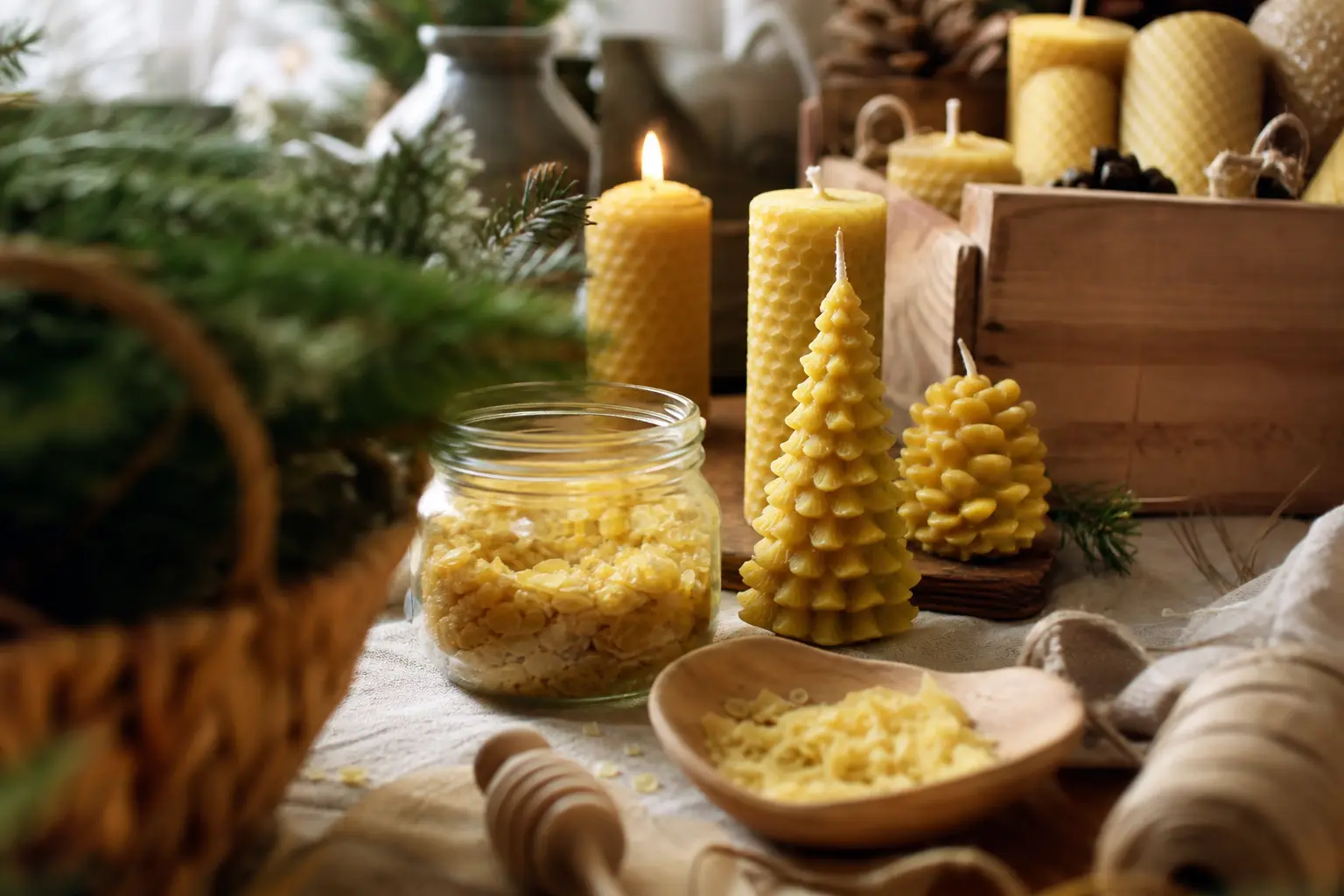
12 beeswax candles diy recipes with exact wax, wick and scent-drop counts, pour temps and cure days
Leave a Reply