

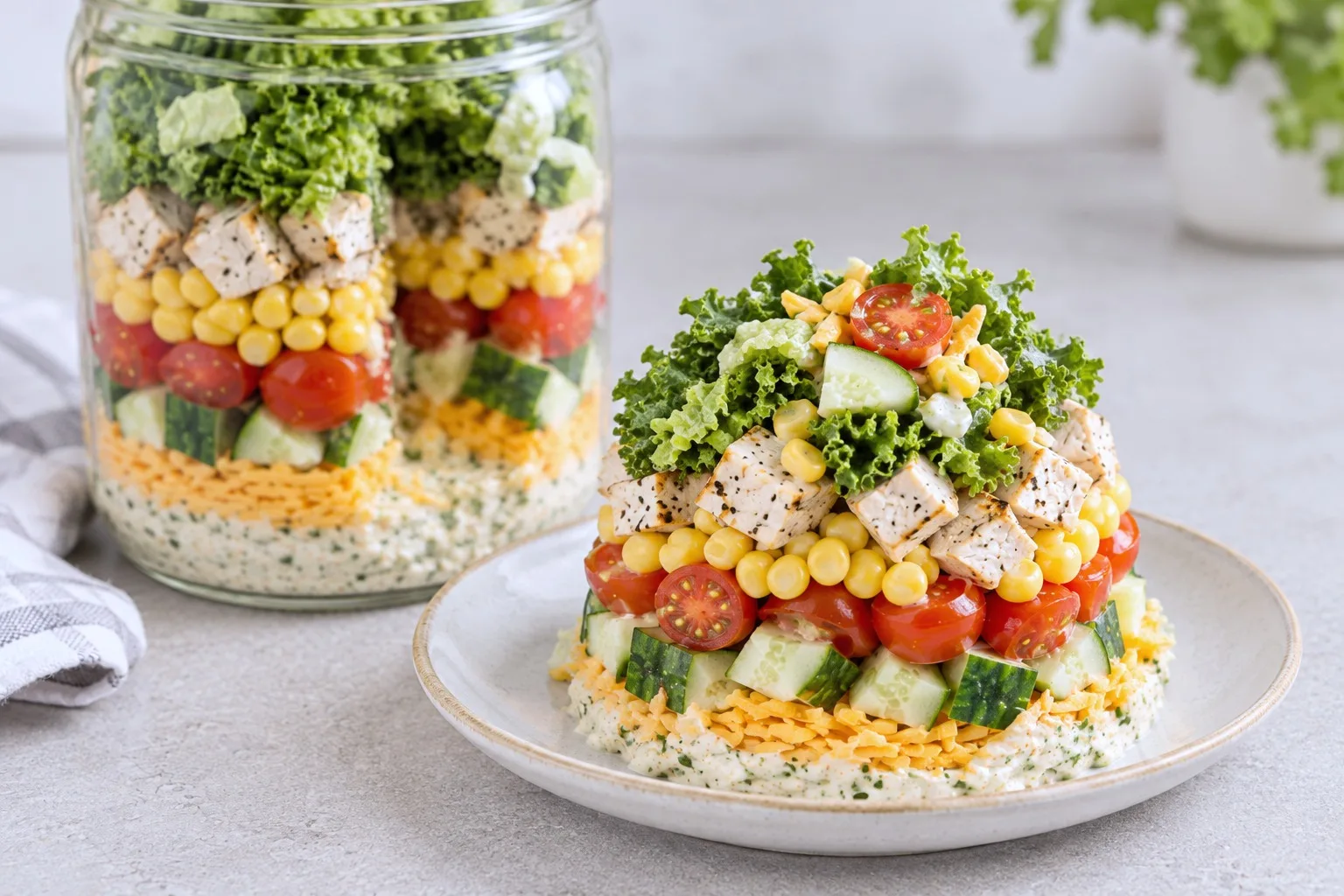
Salad in a jar turns one slightly fussy weekend hour into five ready-made lunches that still look like something, not like the bottom of a produce drawer.
Build it in the right order and the greens on top stay crisp while the chicken and cheese underneath have all week to get better acquainted with the dressing. Three versions here, Greek, Southwest and Asian sesame, all use exactly the same layering logic, so once it clicks once it clicks for good.
This post contains affiliate links. If you buy through them, I may earn a small commission at no extra cost to you.
Table of Contents
The Case for Building Lunch in a Jar
A good jar salad looks like effort from across the kitchen and costs about four dollars in produce you probably already have a use for. It solves the actual problem with meal prep, which was never the cooking, it was opening the container on day three to a gray pile of wilted spinach sitting in a puddle.
The jar fixes that by keeping the wettest thing at the bottom and the most fragile thing at the top, so gravity does the work a tossed salad never could.
Nothing here asks for a special diet or a trip to three different stores: it is chicken, vegetables, a grain or a bean, a little cheese, and whatever lettuce looked best this week.
If the week is built around a different rhythm, a batch of bowls eaten straight off a plate works the same logic without the glass, and 19 Dinner Bowl Recipes: Healthy Recipes With a Grain, a Protein and Plenty of Color covers that version.
None of this needs a vacuum sealer or a special lid. A clean mason jar and a tight-fitting lid will hold a salad fresh for most of the work week, which is the entire point of building it this way in the first place.
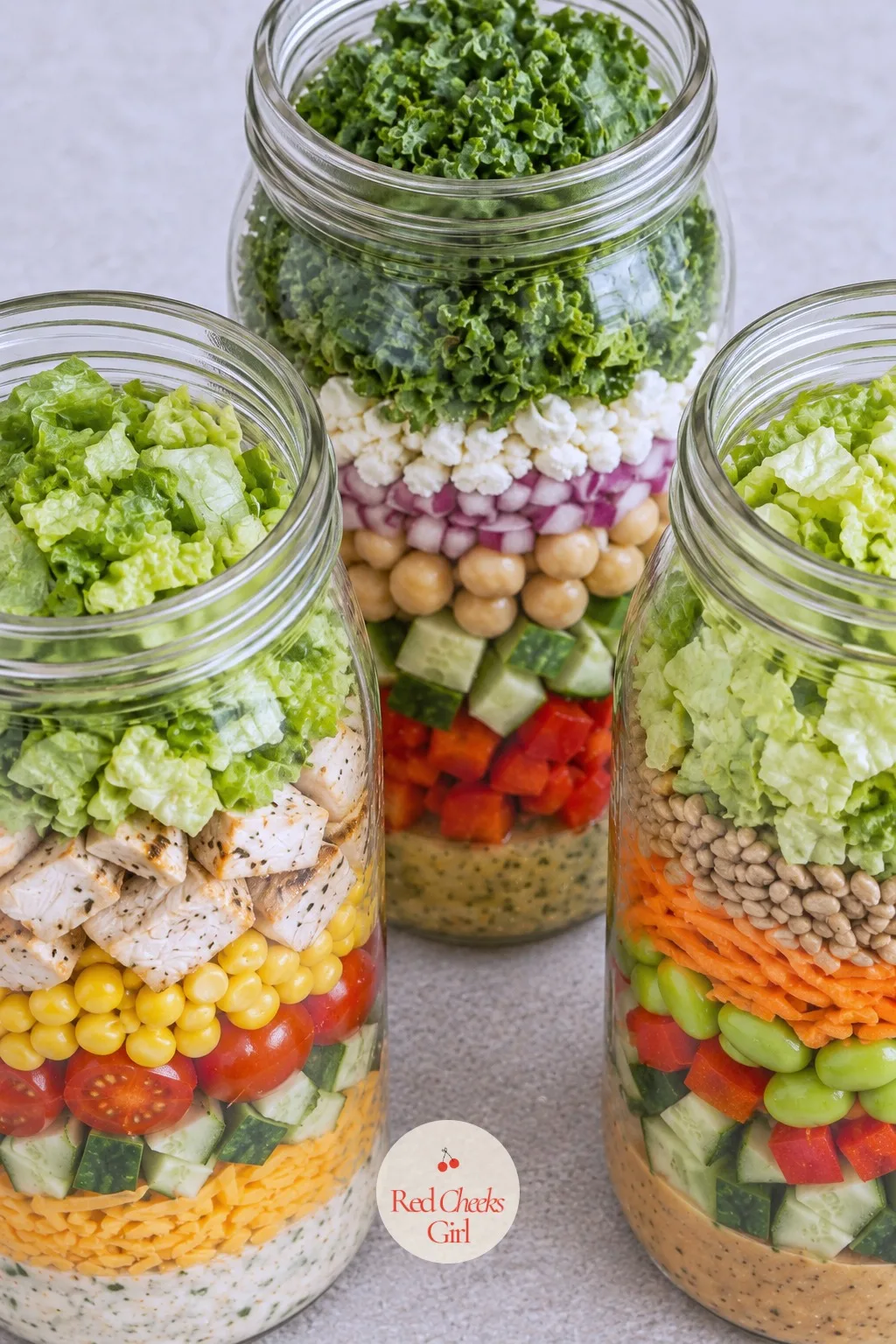
What Goes Into the Jar, and Why the Order Matters
The dressing goes in first for one reason only: it is the ingredient everything else needs to be protected from.
A lemon-oregano vinaigrette, a chipotle-lime yogurt dressing or a sesame-ginger sauce all behave the same way once they sit at the bottom of a sealed jar, quietly flavoring whatever touches them and staying well away from anything that cannot afford to get wet.
Cucumber, cherry tomatoes, bell pepper and red onion come next because they can handle direct contact with that dressing for days. Thick-skinned and low on delicate cell walls, they more or less marinate in place, turning slightly more flavorful rather than slightly more sad.
Chickpeas, black beans, edamame, shredded chicken and cooked noodles sit in the middle because they need protection from the dressing below but can shrug off a little moisture from the cheese above. This is also the layer doing the actual job of making lunch filling instead of just crunchy.
Cheese sits just under the greens, close enough to season the top layer a little but with nothing wet enough underneath it to turn it slick. Feta, cheddar or a handful of toasted sesame seeds all do the same job here: a last hit of flavor right before the fork or the shake.
Greens go in last, packed tighter than feels reasonable, because they are the layer with the least patience for moisture. If the cucumber habit is strong, the quick version in Korean Cucumber Salad With Sesame and Gochugaru shows what a little rice vinegar and gochugaru can do to the same vegetable on a different night.
How to Make It
Three jars, three dressings, one order repeated three times. Measure everything before anything goes into a jar, since layering works best as an assembly line rather than a one-jar-at-a-time project.
A note for the table: this recipe contains dairy (feta and cheddar), soy (soy sauce and edamame) and gluten if using standard soba noodles. Swap in rice noodles or tamari to work around either allergen.
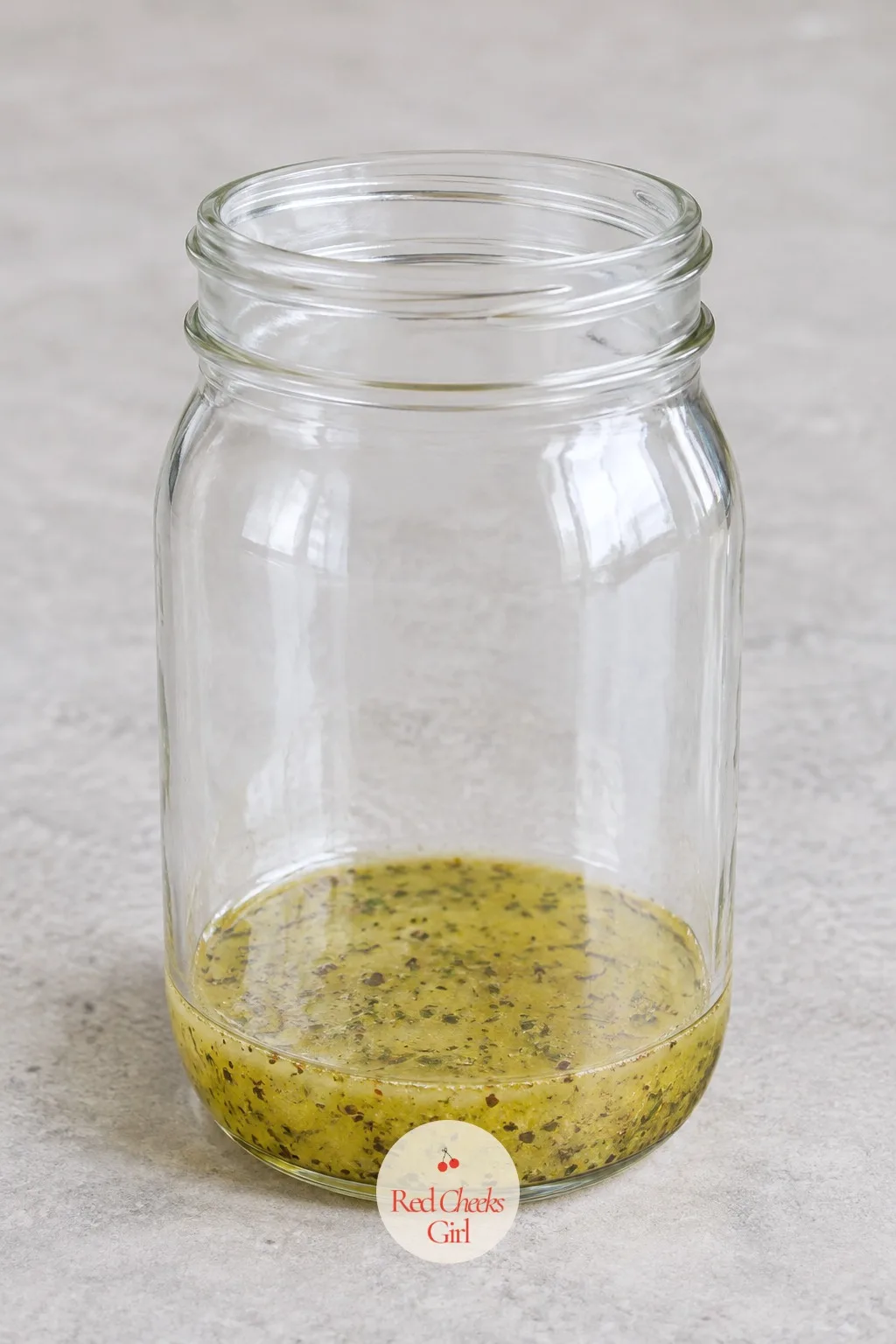
Pour the dressing first
Pour the dressing first, always. Two tablespoons is enough for a quart jar, and it should sit as a shallow pool rather than climb the sides.
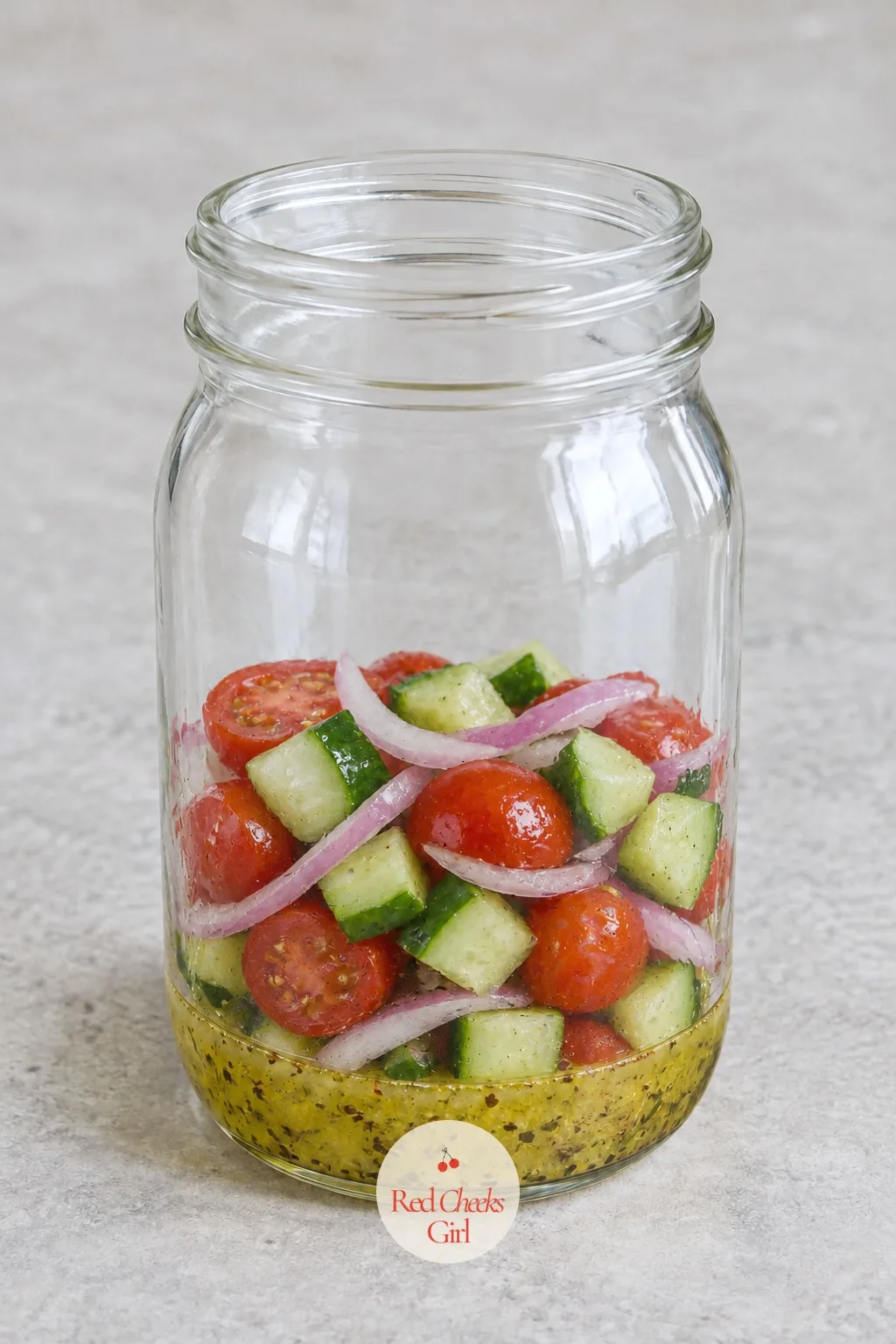
Layer the sturdy vegetables
Cucumber, tomato and red onion go in next because they can sit in dressing for days without wilting. Press them down so the layer sits flat and even.
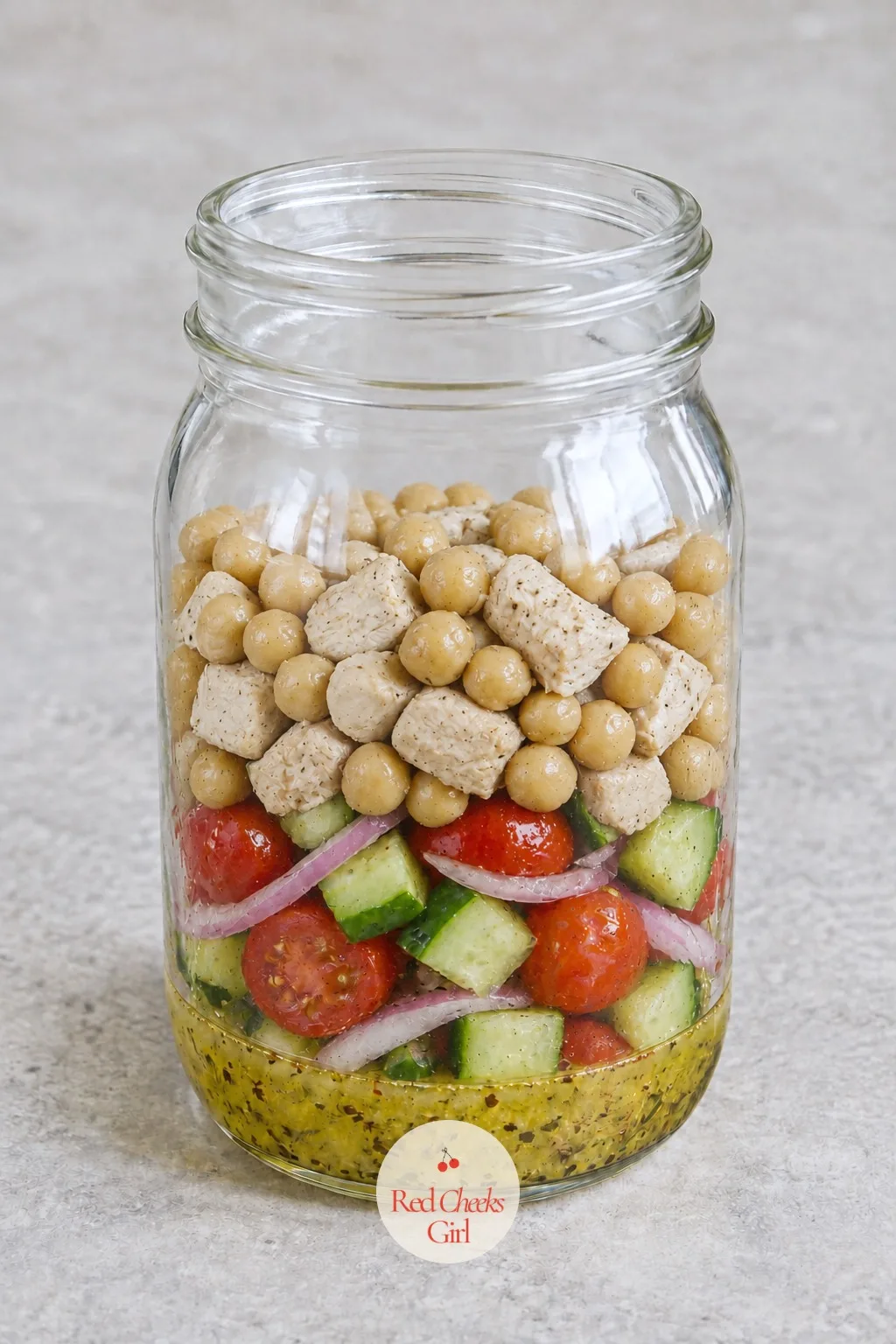
Add the chickpeas and chicken
Chickpeas and diced chicken make the jar a real lunch, not a side salad. Spread them to the edges so the next layer has something solid to rest on.
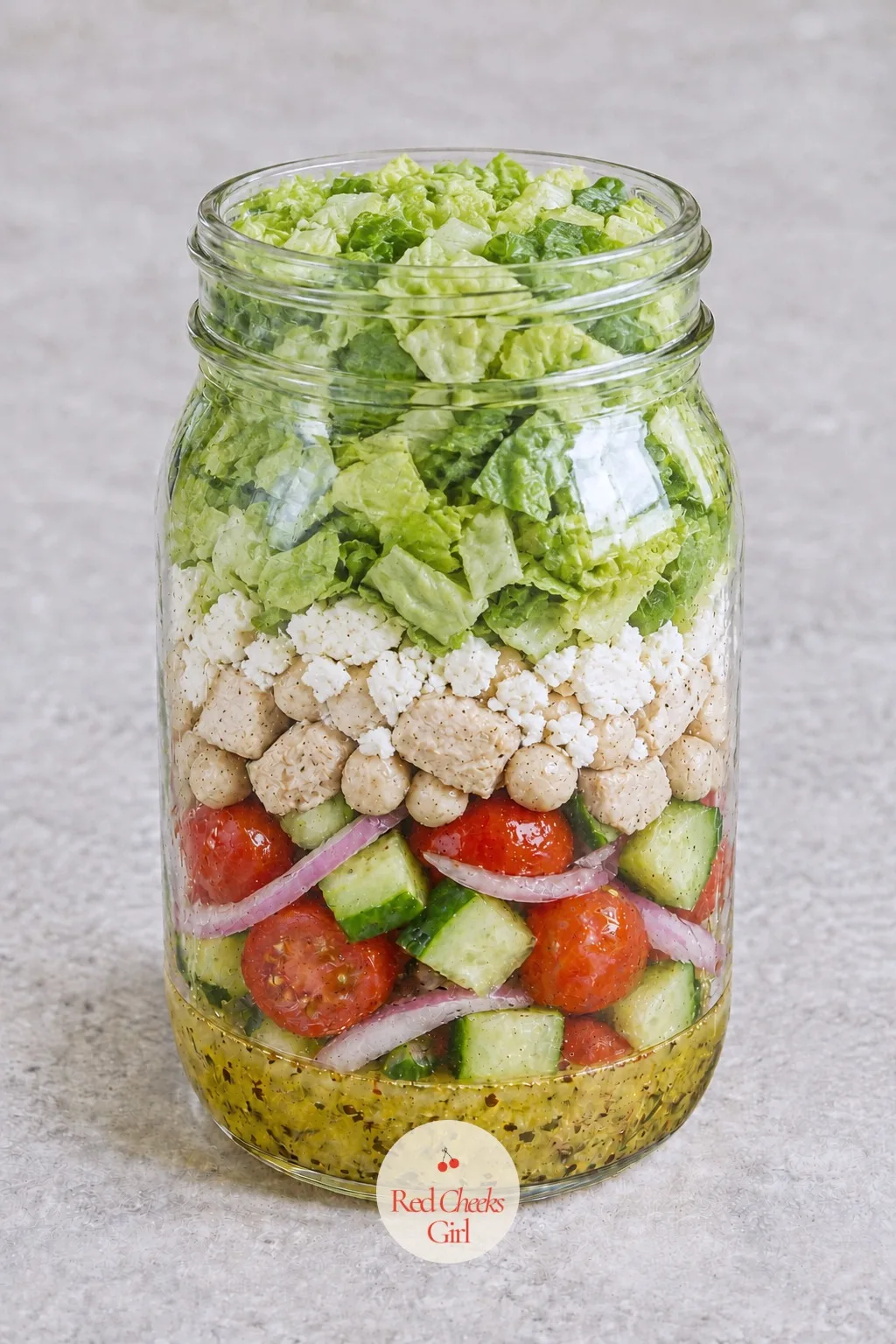
Top with feta and romaine
Feta goes on before the greens, never mixed through them, so it does not weigh the lettuce down. Pack the romaine hard enough that it holds its shape when the jar tips.
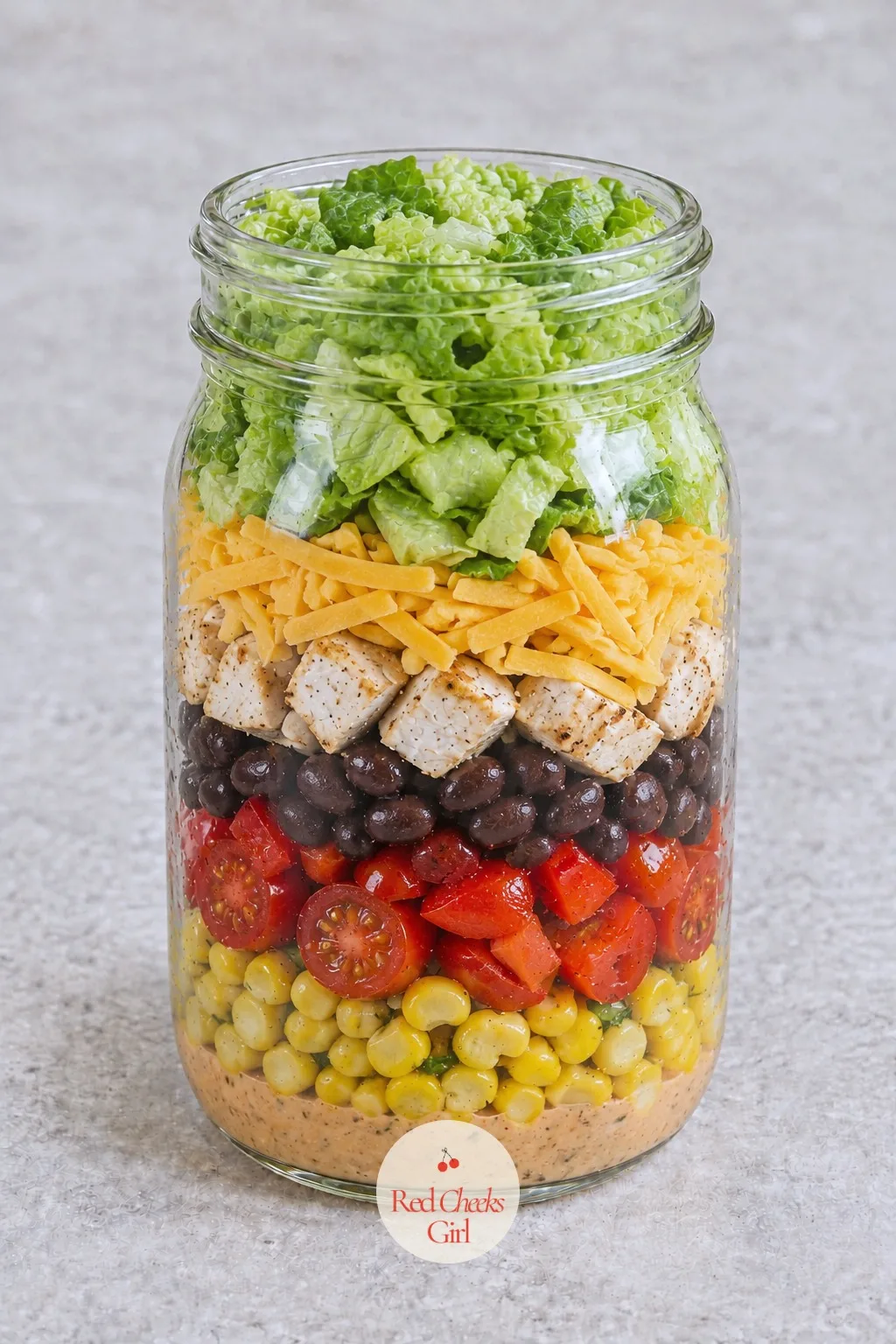
Build the Southwest jar
The Southwest jar follows the same order with corn, beans and cheddar standing in for the Greek fillings. The bands of color are the easiest way to check nothing is out of place.
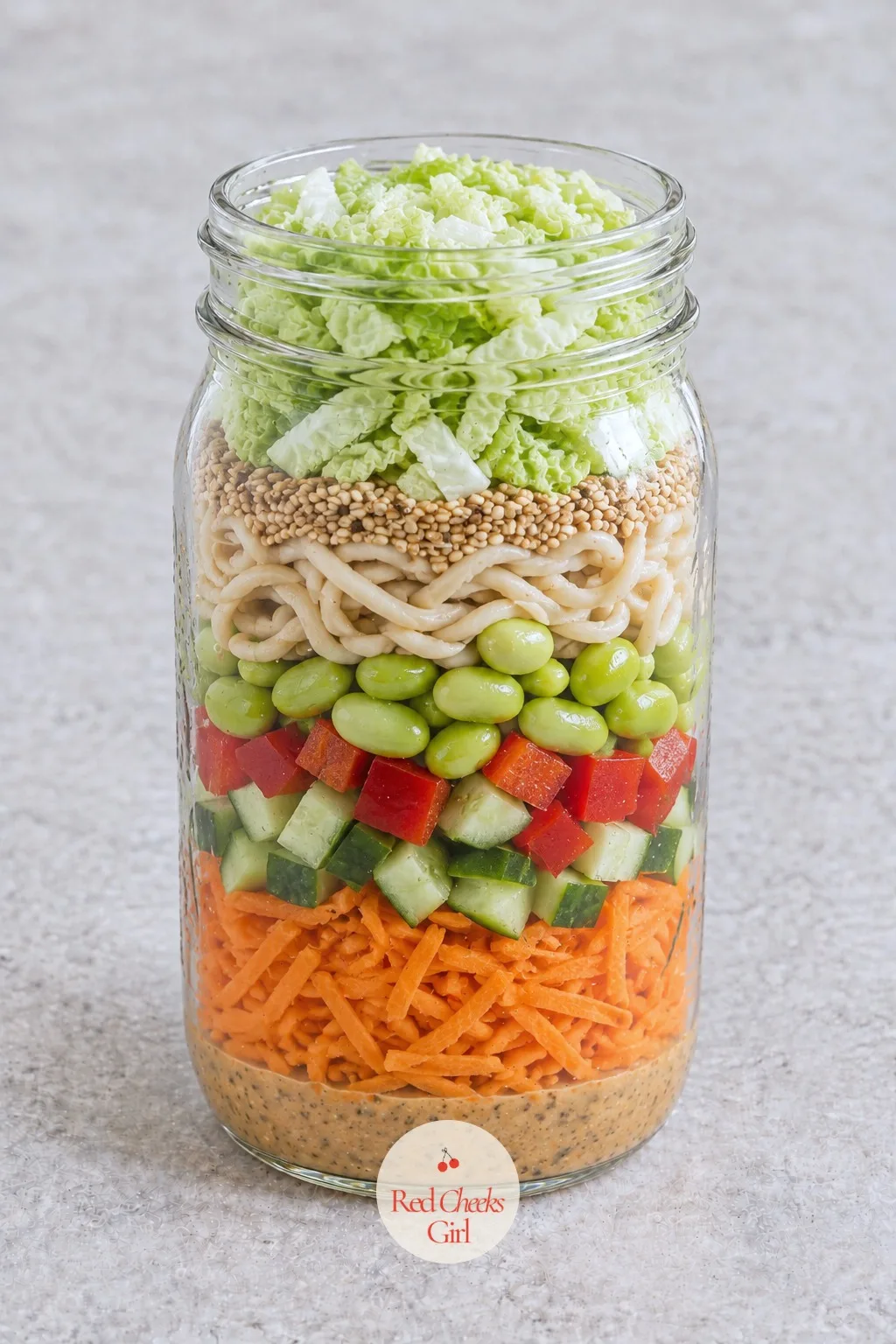
Build the Asian sesame jar
The Asian sesame jar swaps cheese for a scatter of toasted sesame seeds and leans on edamame and noodles for substance. Napa cabbage holds its crunch at the top better than a softer lettuce would.
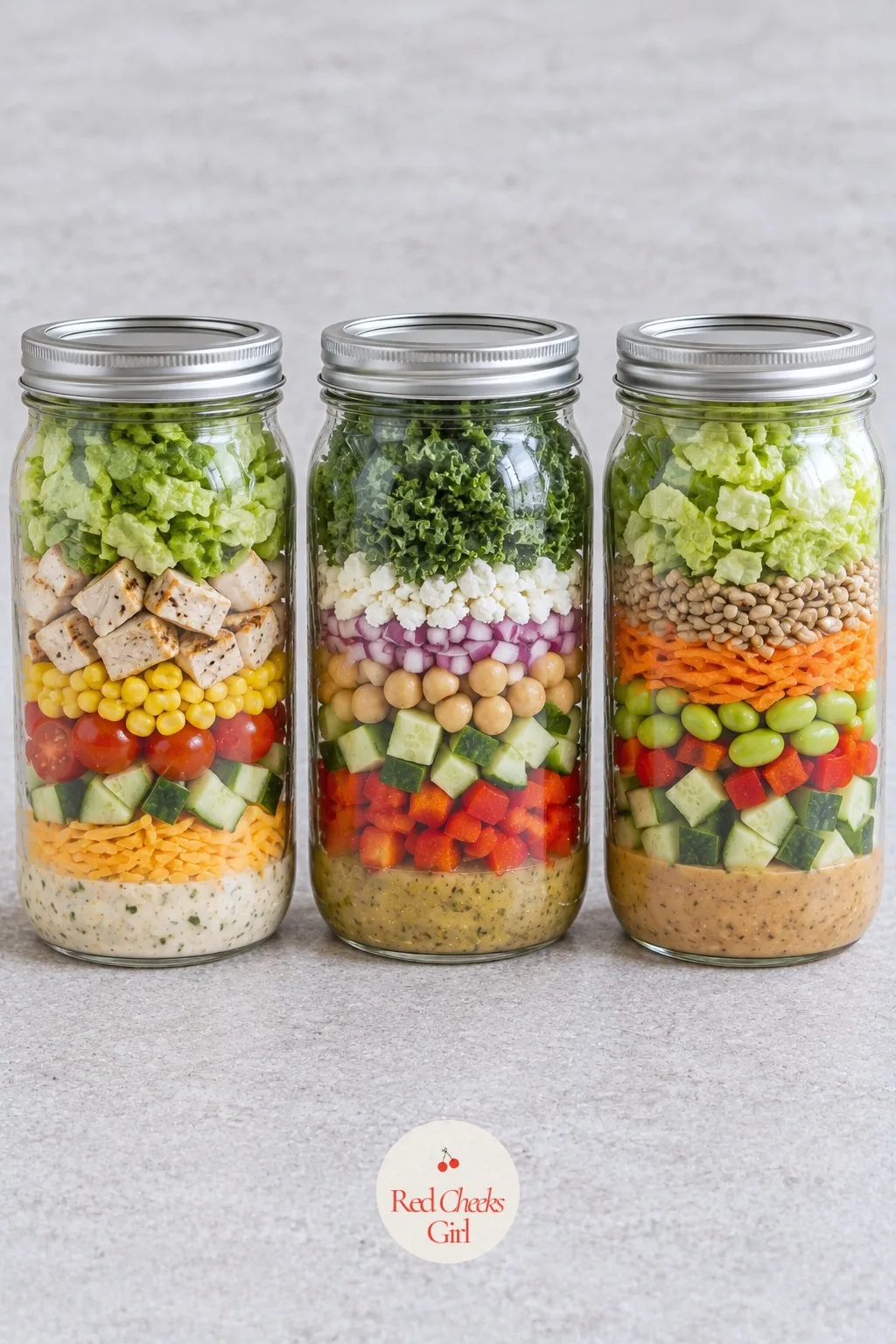
Line up the three jars
Three jars, three day counts, one shelf in the fridge. Stand them upright and the layers stay exactly where you left them until lunch.
🛍 Shopping guide
Tips for Getting It Right
The single most common mistake is skipping the salad spinner. Lettuce that goes into the jar even a little damp creates its own condensation overnight, and that moisture does the same damage the dressing was supposed to be kept away from.
Warm chicken is the second one. Chicken straight off the grill or out of a rotisserie bag still has heat trapped inside, and sealing it into a cold jar fogs the glass and softens whatever sits next to it. Let it come fully to fridge temperature first, even if that means a short wait before building.
More than two tablespoons of dressing per jar looks generous and backfires by day three, when it has had time to climb past the sturdy vegetables and into the cheese. Measure it, do not eyeball it.
The last mistake is laying jars on their side in the fridge door to save space. Even a brief tip lets the dressing wash over everything above it, so give the jars their own patch of upright shelf instead.
Swaps and Substitutions
Rotisserie chicken is the obvious stand-in for grilled, and it is genuinely the better option on a week with no time to fire up a grill pan. Canned tuna or a handful of chopped hard-boiled egg work in the Greek jar if chicken is not on hand.
The Southwest jar takes well to pinto beans instead of black, and grilled shrimp instead of chicken if that is what is thawed. A swap of pepper jack for cheddar adds heat without any extra chopping.
Soba noodles in the Asian sesame jar are easy to replace with rice noodles for a gluten-free jar, or with a second half-cup of shredded carrot and cabbage for a lower-carb version that skips the noodle step entirely.
Anyone who wants more combinations than three has 14 Chopped Salad Recipes With Every Bite Balanced to work through, built on the same sturdy-vegetables-first logic without the jar.
What to Serve It With at a Party
Set all three jars out on a tray with their lids off and a stack of wide bowls next to them, and the party does the serving itself. Guests tip their own jar, watch the layers fall in order, and toss it at the table, which is most of the fun anyway.
Something warm and savory on the side keeps the spread from feeling like diet food, and 15 Healthy Appetizers: Fresh Healthy Snacks to Start Any Party rounds out a table that is otherwise entirely cold jars.
Pita chips or warm pita wedges next to the Greek jar give people something to scoop chickpeas and feta with once the salad is in the bowl. A small dish of extra toasted sesame seeds or crushed peanuts lets anyone doctor the Asian jar to taste.
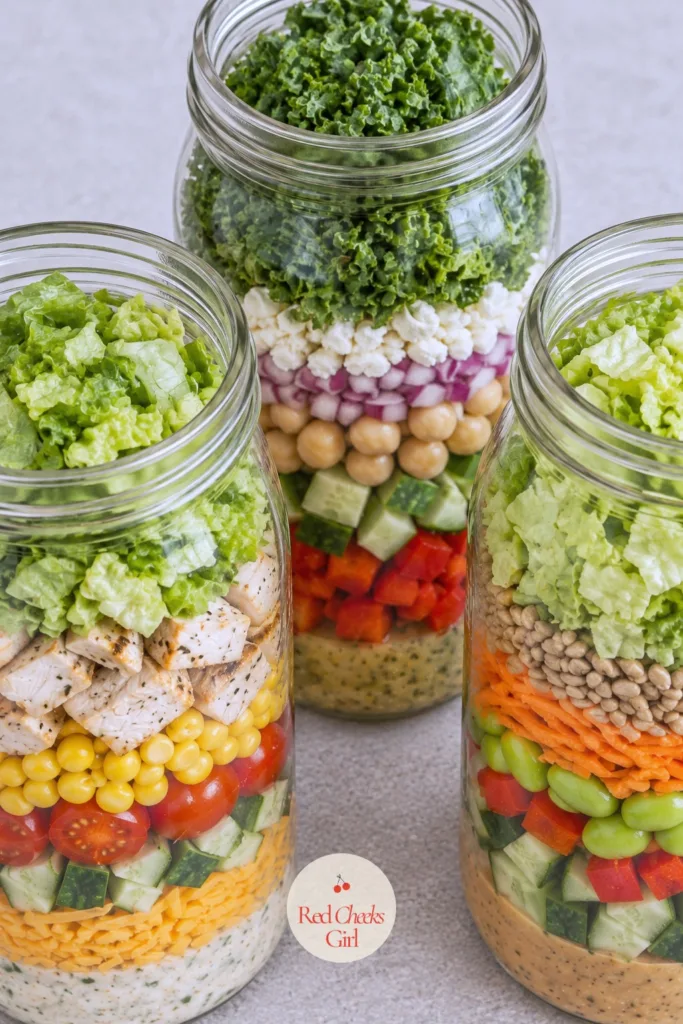
Salad In A Jar
Ingredients
- 3 tablespoons olive oil
- 1 tablespoon fresh lemon juice
- 1 teaspoon red wine vinegar
- 1/2 teaspoon dried oregano
- 1 small garlic clove minced
- Salt and black pepper a small pinch of each
- 1/2 cup cucumber diced
- 1/2 cup cherry tomatoes halved
- 2 tablespoons thinly sliced red onion
- 1/2 cup cooked chickpeas drained and rinsed
- 1/2 cup diced cooked chicken breast grilled or rotisserie
- 1/4 cup crumbled feta cheese
- 1 cup chopped romaine lettuce packed
- 3 tablespoons plain Greek yogurt
- 1 tablespoon fresh lime juice
- 1 teaspoon adobo sauce from canned chipotle peppers
- 1/4 teaspoon salt
- 1/2 cup corn kernels fresh, thawed from frozen, or grilled
- 1/4 cup diced red bell pepper
- 1/2 cup black beans drained and rinsed
- 1/4 cup shredded cheddar cheese
- 2 tablespoons rice vinegar
- 1 tablespoon toasted sesame oil
- 1 tablespoon soy sauce
- 1 teaspoon grated fresh ginger
- 1 teaspoon honey
- 1/2 cup shredded carrots
- 1/2 cup shelled edamame cooked and cooled
- 1/2 cup cooked soba or rice noodles cooled
- 1 tablespoon toasted sesame seeds
- 1 cup shredded napa cabbage or baby spinach packed
Instructions
- Whisk the three dressings separately in small bowls: for the Greek jar, combine the olive oil, lemon juice, red wine vinegar, dried oregano, garlic, salt and pepper. For the Southwest jar, stir together the Greek yogurt, lime juice, adobo sauce and salt. For the Asian sesame jar, whisk the rice vinegar, sesame oil, soy sauce, ginger and honey. Each dressing should look smooth and pourable, with no streaks of oil sitting on top.
- Pour 2 tablespoons of the lemon-oregano dressing into the bottom of a clean 1-quart wide-mouth mason jar. Tilt the jar in a slow circle so the dressing coats the bottom in an even pool rather than pooling up one side.
- Layer the diced cucumber, halved cherry tomatoes and sliced red onion directly over the dressing in the same jar, pressing them down gently with a spoon so they sit flat. These are the vegetables sturdy enough to marinate in the dressing for days without turning soft.
- Spoon the chickpeas and diced chicken breast over the vegetable layer, spreading them into one even layer that reaches the edges of the jar. This layer should look packed, not loose, with no visible gaps where dressing could seep upward later.
- Scatter the crumbled feta over the chicken, then pack the chopped romaine firmly on top until it reaches the rim of the jar. Press down with your fist until the greens sit at least an inch above the wettest layer, with no dressing visible climbing the glass.
- Build the second jar in the same order for the Southwest salad: 2 tablespoons of the chipotle-lime dressing on the bottom, then the corn, cherry tomatoes and red bell pepper, then the black beans and chicken, then the shredded cheddar, then the chopped romaine packed on top to the rim.
- Build the third jar in the same order for the Asian sesame salad: 2 tablespoons of the sesame-ginger dressing on the bottom, then the shredded carrot, cucumber and red bell pepper, then the edamame and cooled noodles, then the toasted sesame seeds, then the shredded napa cabbage packed on top to the rim.
- Screw the lids on tightly while all three jars are still cold from the fridge, then stand them upright on a shelf rather than laying them on their side. A jar that tips even briefly lets the dressing climb into the layers above it.
- Refrigerate all three jars upright for at least 1 hour before the first one is opened, and keep them there for the number of days listed for each salad below. The chill firms the chicken, settles the dressing and keeps the greens from wilting against the glass.
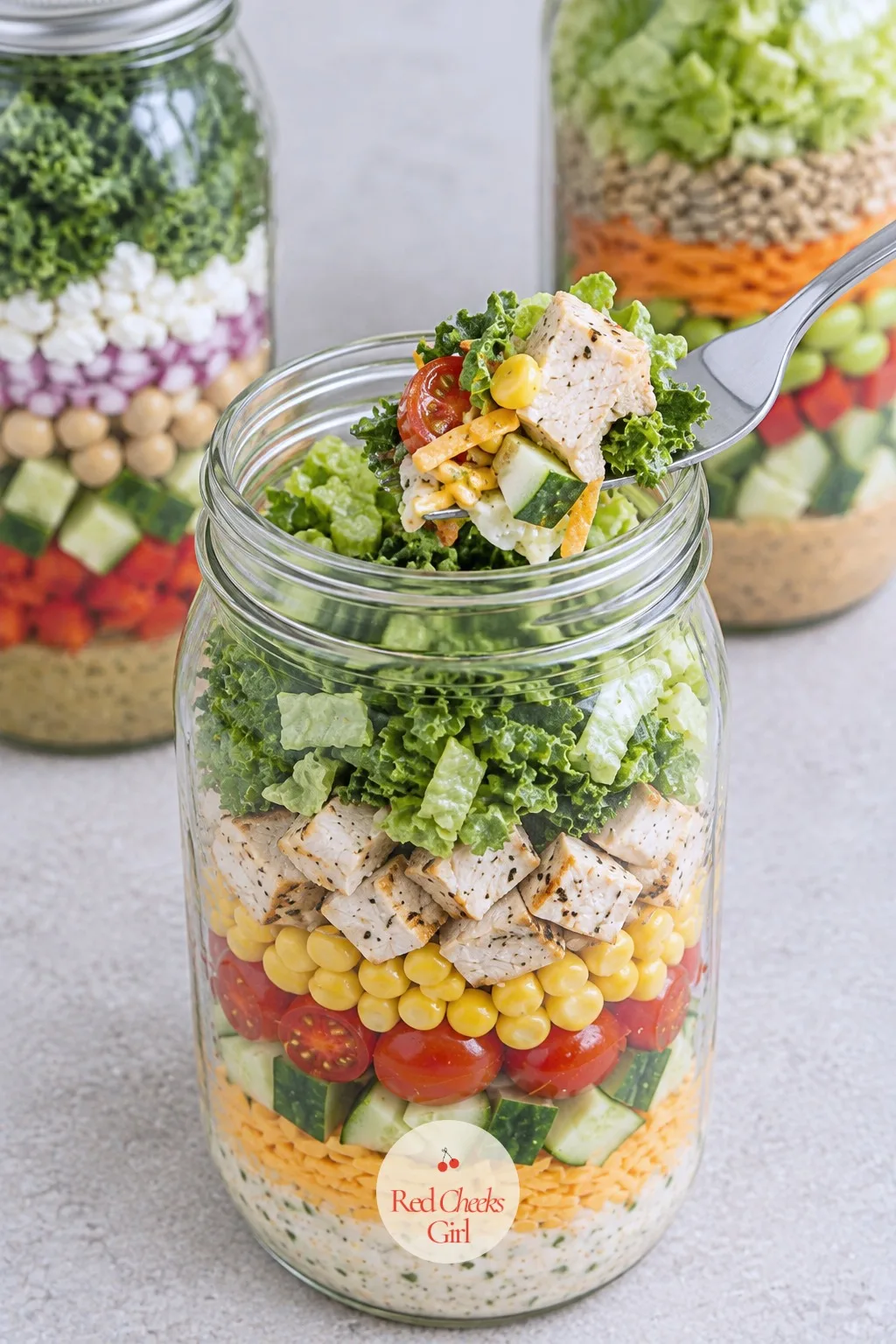
- To serve, unscrew the lid and tip the jar upside down over a wide bowl so the greens fall out first and the dressing lands last on top, then toss once with tongs. Line the three finished jars up on a tray so everyone at the table can see which one is theirs before it gets mixed.
Good to Know
Frequently Asked Questions
What size jar should I use for salad in a jar?
A 1-quart wide-mouth mason jar fits a full lunch portion with room to pack the greens tight. A pint jar works for a lighter side salad or a smaller appetite.
Do you eat salad in a jar straight from the jar, or tip it into a bowl?
Tipping it into a bowl works best. Turn the jar upside down over a wide bowl so the greens fall first and the dressing lands last on top, then toss once.
Can I use a regular container instead of a mason jar?
Any container with a tight, leak-proof lid works, though straight sides matter more than the glass. Choose one tall enough to stack five layers without crushing the greens on top.
Can I freeze salad in a jar?
No, freezing ruins the texture of raw cucumber, tomato and lettuce once thawed. Freeze only the cooked chicken or grains ahead of time, then build the jar fresh within the week.
Does the type of dressing matter for layering?
Thicker dressings like the yogurt-based chipotle-lime version cling to the bottom better during transport than a thin vinaigrette. Either works as long as the jar stays upright and the greens never touch it until serving.
Can I pack the dressing in a separate container instead of the jar’s bottom?
Yes, and it is safer if the jar travels in a bag or sits past three days. Pack the dressing in a small lidded container, then pour it on just before eating.
18 iron rich foods for kids with plain reasons why and easy, choking-safe ways to serve them, plus a
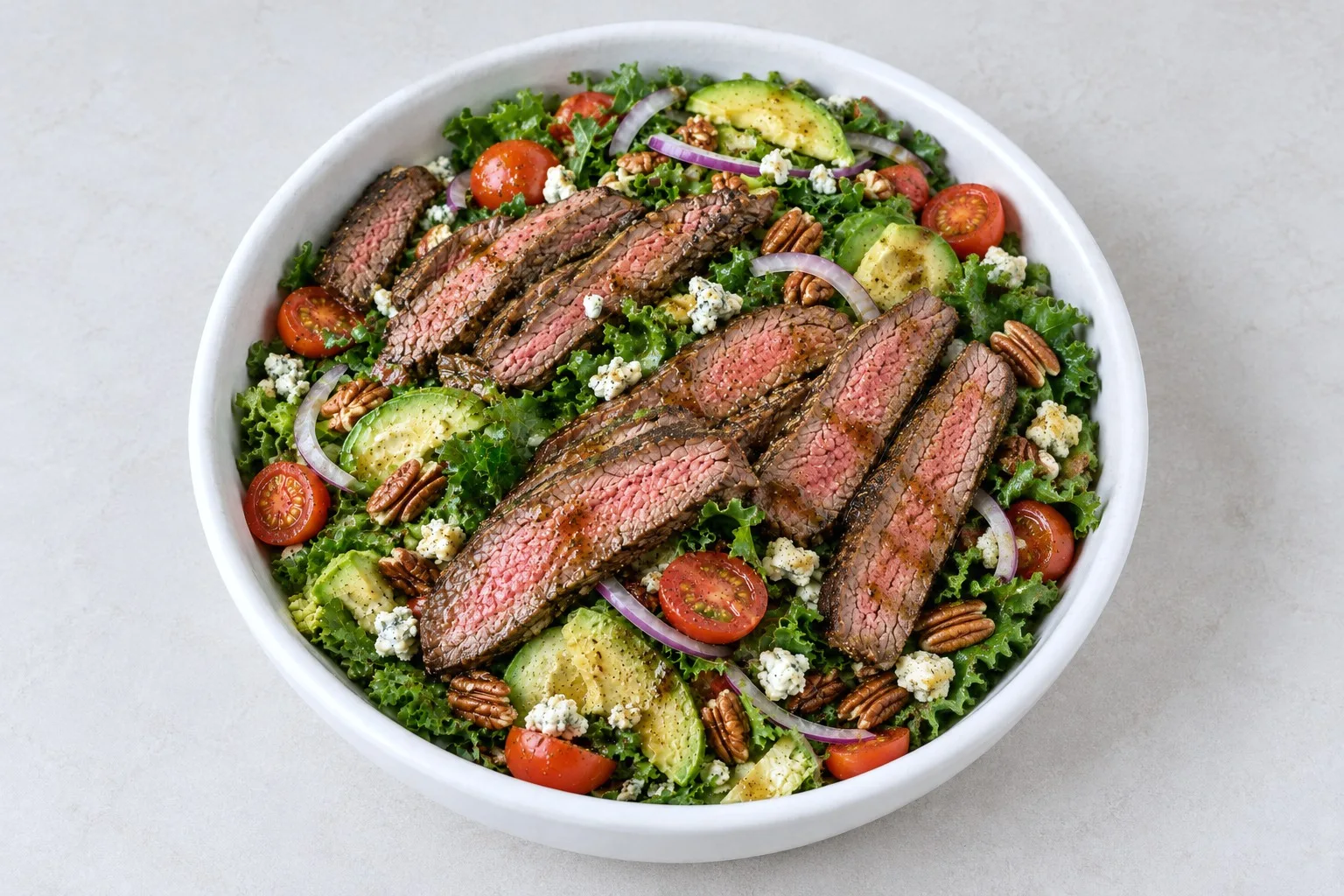
Steak salad recipe with seared flank steak, blue cheese, cherry tomatoes and a balsamic vinaigrette:
My stomach spent about three years being angry at me. Not dramatically sick — just tight, bloa
Leave a Reply