

Panna Cotta Recipe: An Easy Dessert With a Raspberry Layer, Set in Glasses
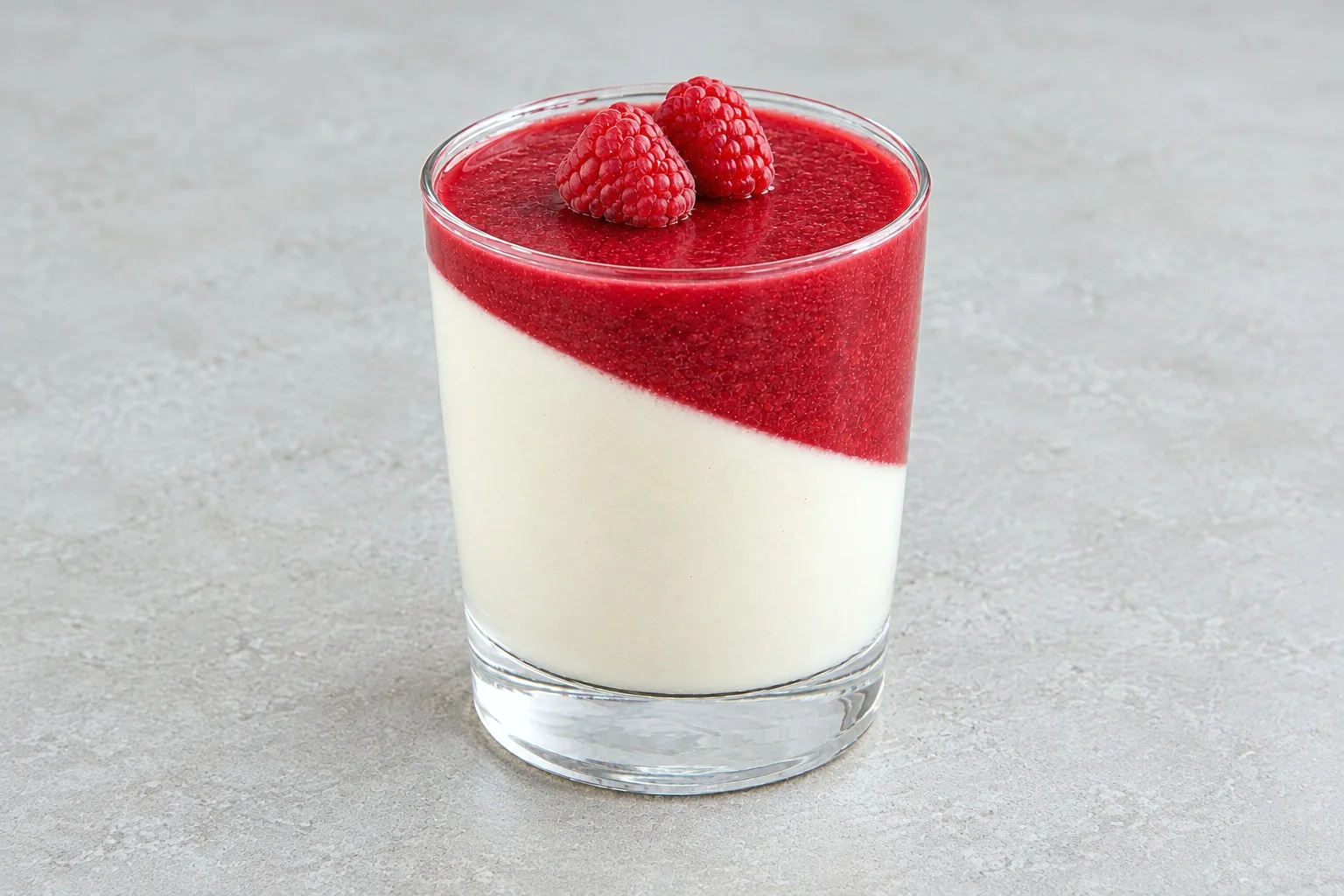
A panna cotta recipe is the one dessert that looks like a pastry chef made it, but asks only for patience and a measuring spoon.
Vanilla bean flecks suspend in a milky white cream, and a bold raspberry layer slides in at an angle instead of sitting flat and ordinary. Every bit of the active work happens the day before the party, which is the whole point.
This post contains affiliate links. If you buy through them, I may earn a small commission at no extra cost to you.
Table of Contents
The Key Ingredients, and Why Each One Matters
Cream alone sets heavy and almost waxy, and milk alone never holds its shape, so this recipe leans on both. The split keeps the panna cotta rich enough to coat a spoon but soft enough to collapse the moment it meets a tongue, not a stiff, bouncy wall of it.
Sugar here is doing less than you would think. A third of a cup rounds off the dairy without turning the dessert into a spoon pudding, and it leaves room for the raspberry layer to taste genuinely tart against it.
Plain powdered gelatin, not the flavored kind from a box, is what gives this its wobble instead of a jello-firm bounce. It needs to bloom in cold liquid first so it dissolves evenly into the warm cream, with no grainy specks left behind.
Use a real vanilla bean if the budget allows it: the seeds scattered through a pale cream look expensive for almost no extra work, and a spoon of vanilla bean paste gets you most of the way there if a whole pod feels like too much.
Fresh raspberries make the brightest gel, though frozen ones, thawed, work almost as well once they are strained smooth.
How to Make It
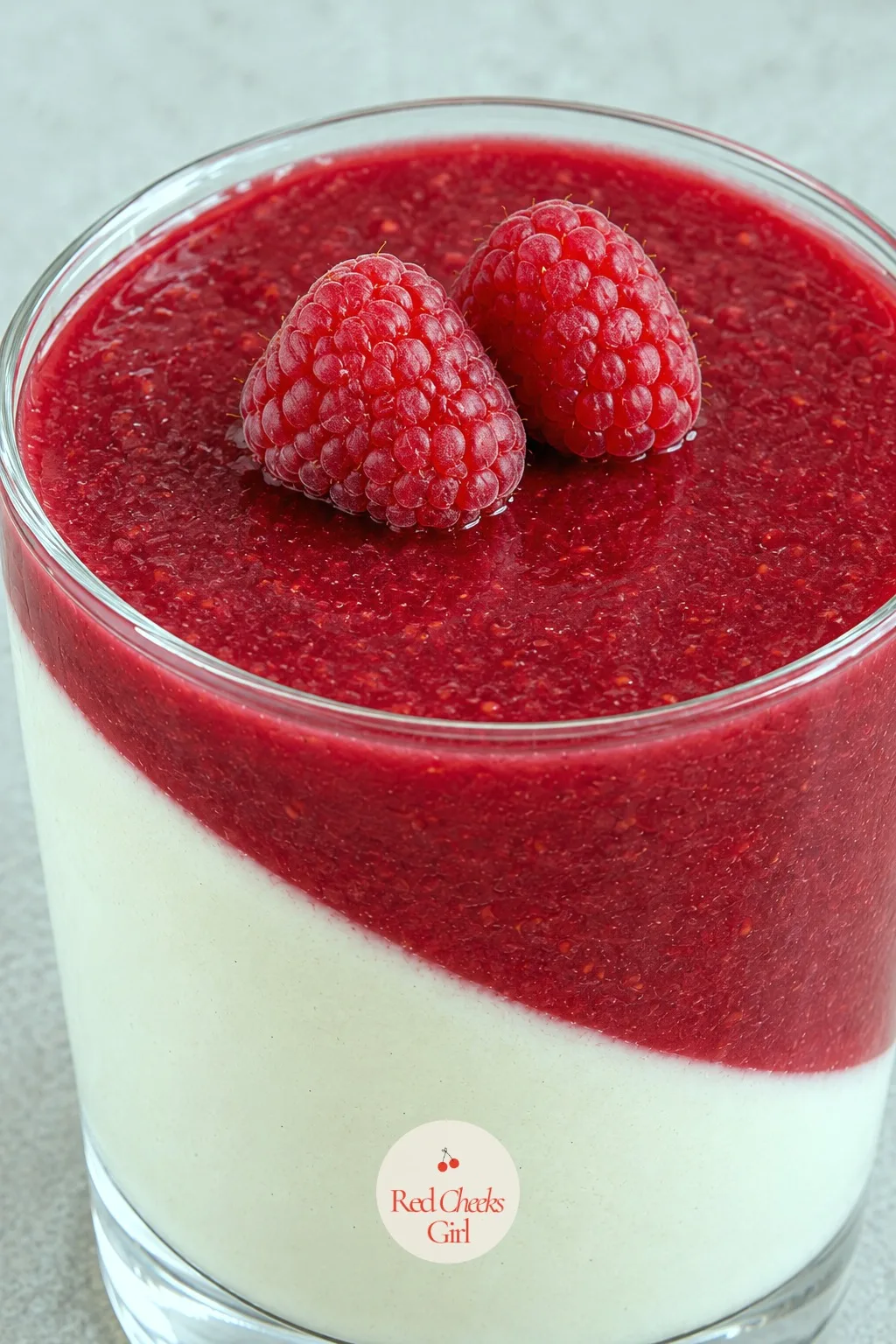
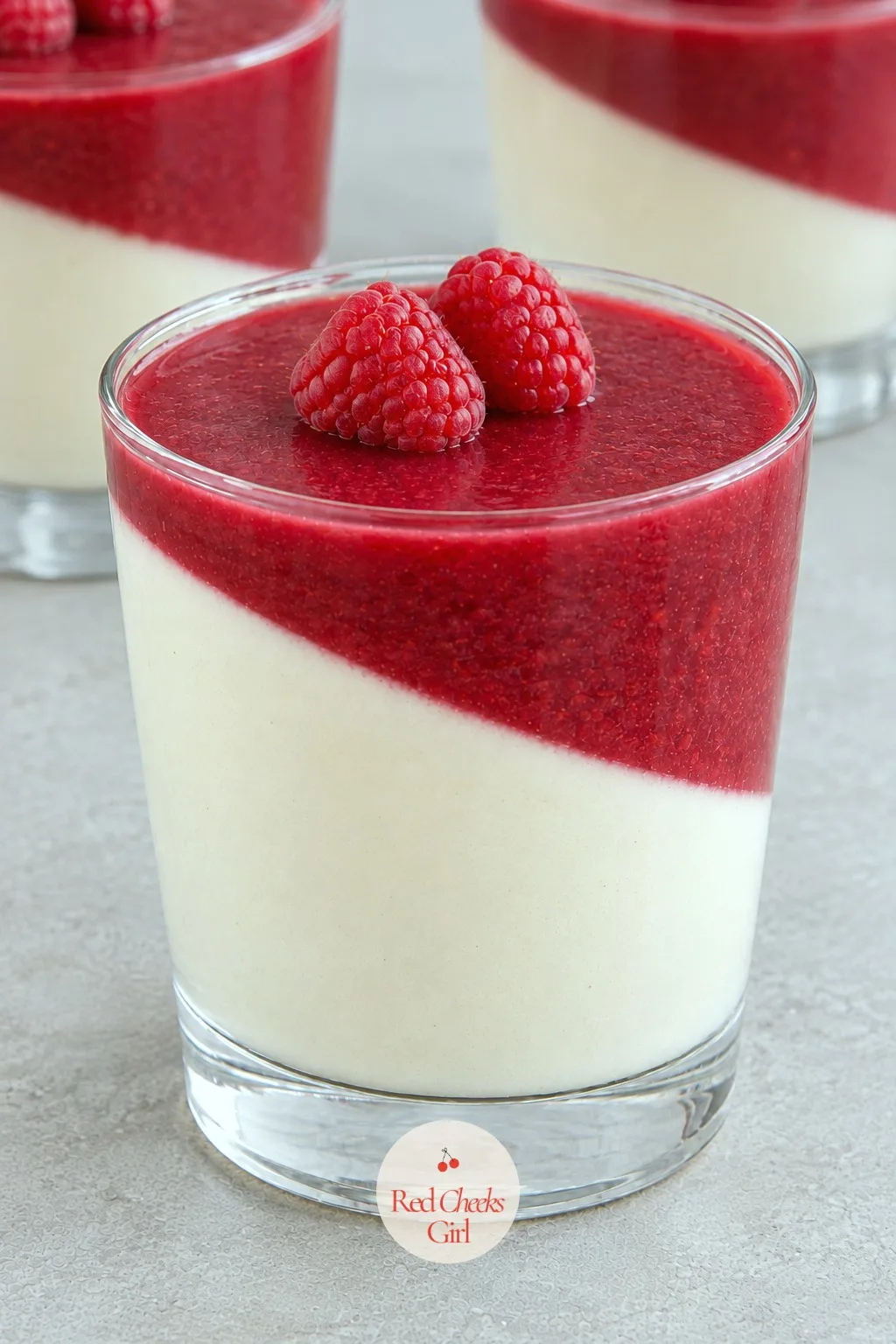
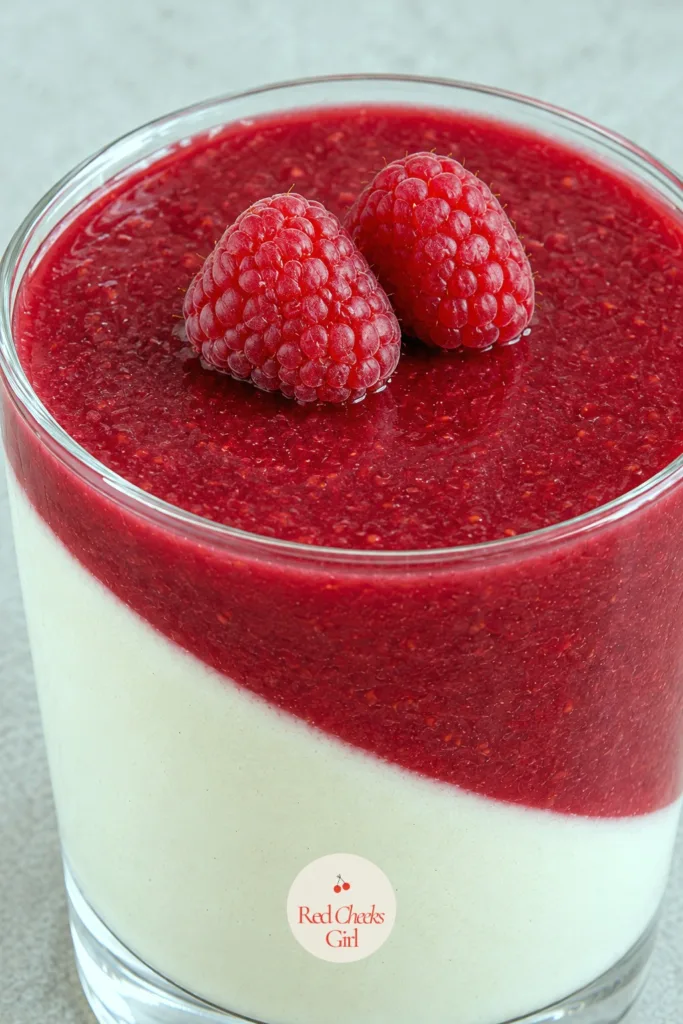
This version sets flat in small glasses first, then gets its raspberry layer poured in while the glass leans at an angle, so the finished line crosses the top on a diagonal instead of sitting flush.
If that feels like one trick too many for a weeknight, skip the tilt and spoon the gel on straight: it still tastes exactly the same.
Warm the Cream and Vanilla
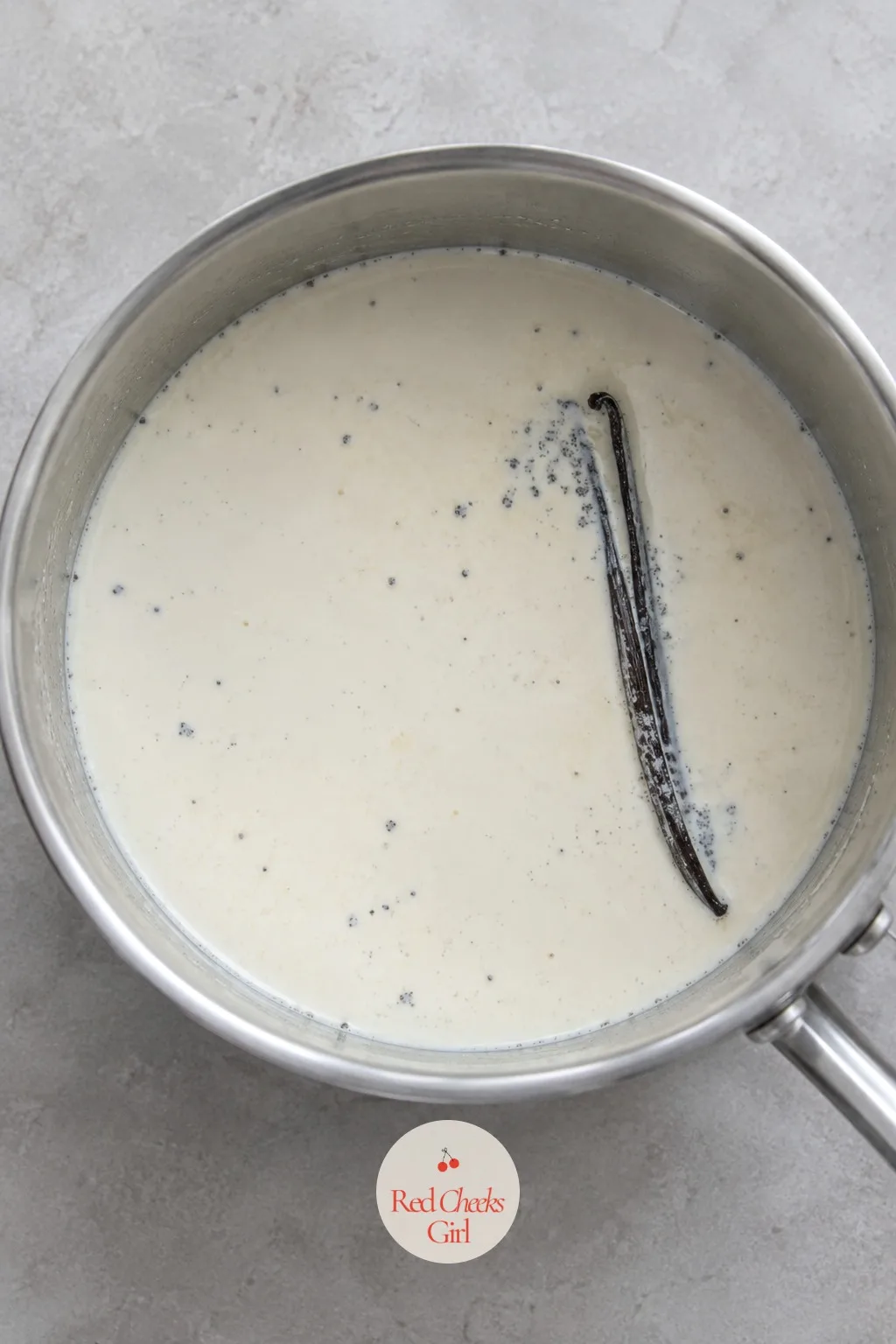
Warm the cream, milk, sugar and split vanilla bean together until steaming, never boiling. Tiny black vanilla seeds should be visible, swirled through the pale liquid.
Pour the Panna Cotta
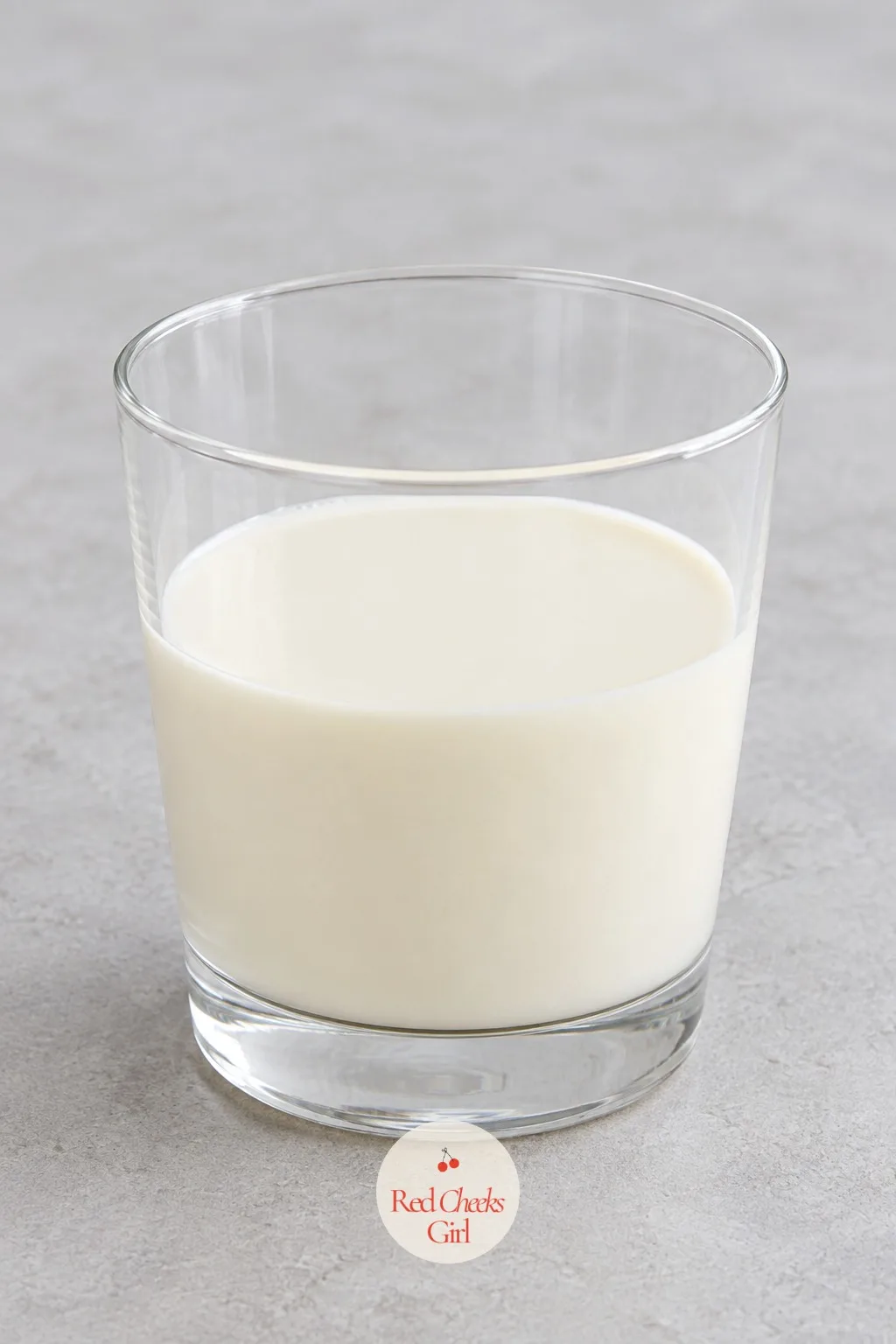
Divide the strained cream among the glasses and stand them level on a tray. Chill until the surface feels firm and barely wobbles when nudged.
Simmer the Raspberries
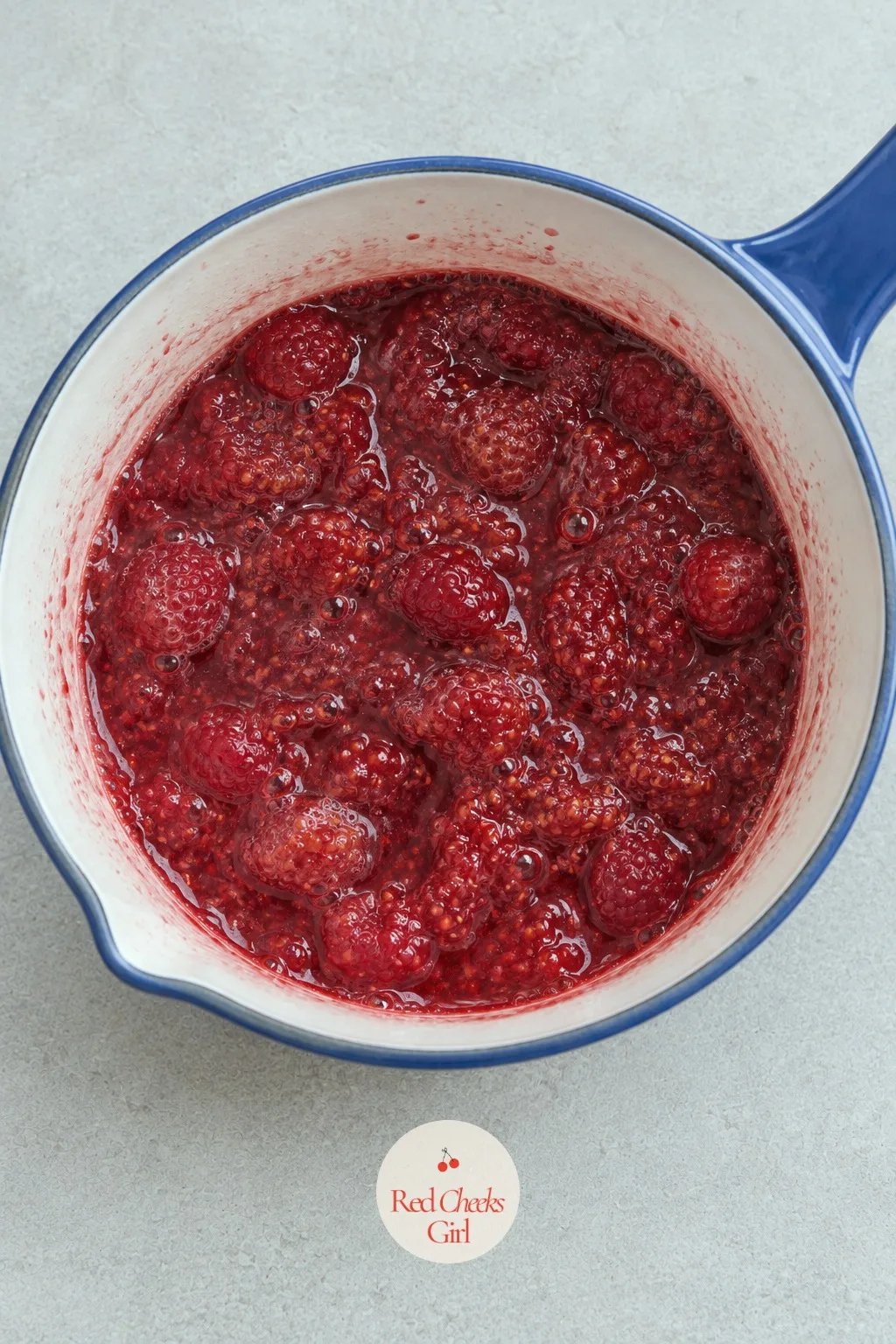
Simmer the raspberries with sugar, water and lemon juice until they collapse into a glossy, syrupy mass. The color should deepen as the berries break down.
Strain the Raspberry Puree
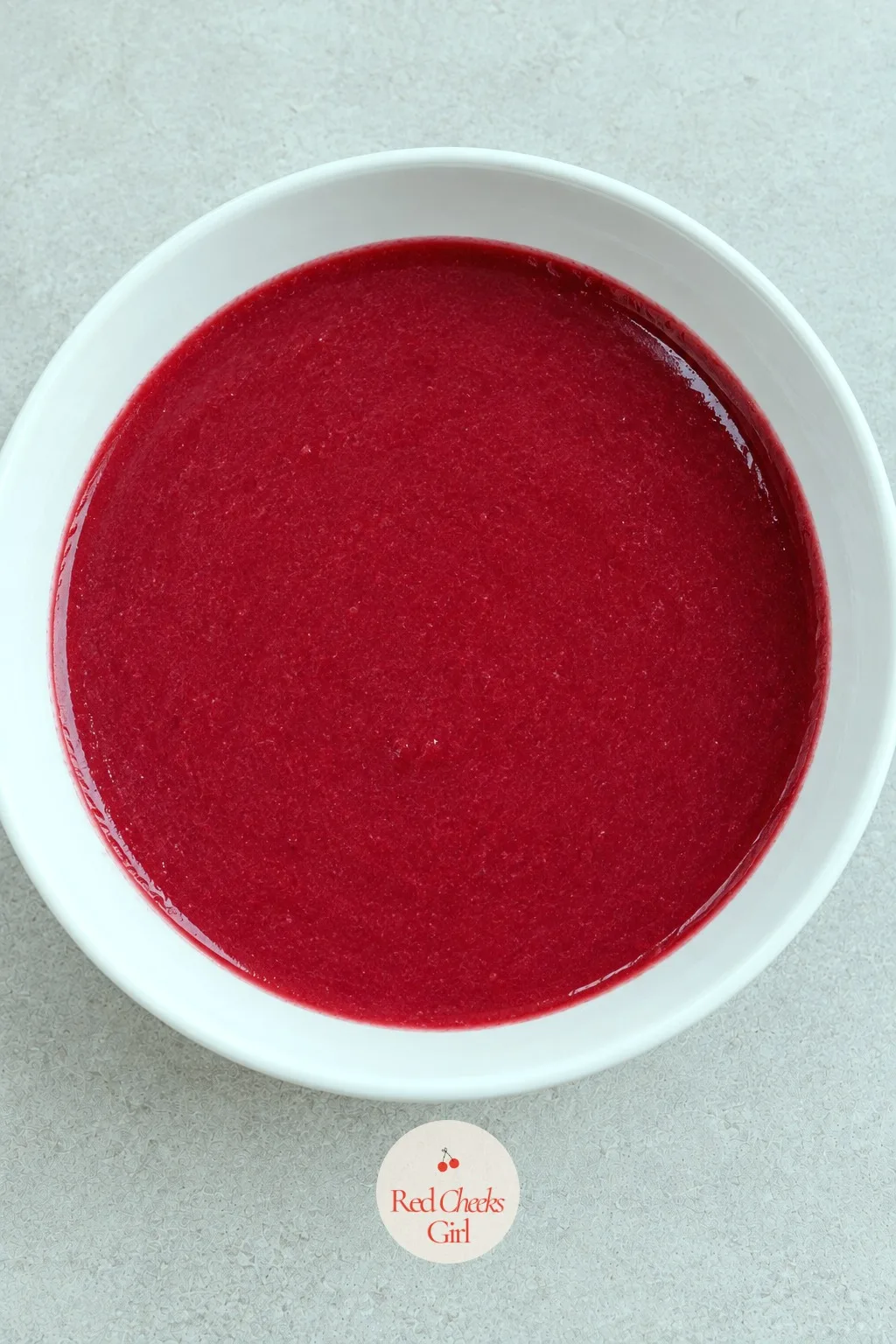
Press the cooked raspberries through a fine sieve into a bowl, leaving the seeds behind. The puree should look smooth, glossy and seedless.
Pour the Raspberry Layer
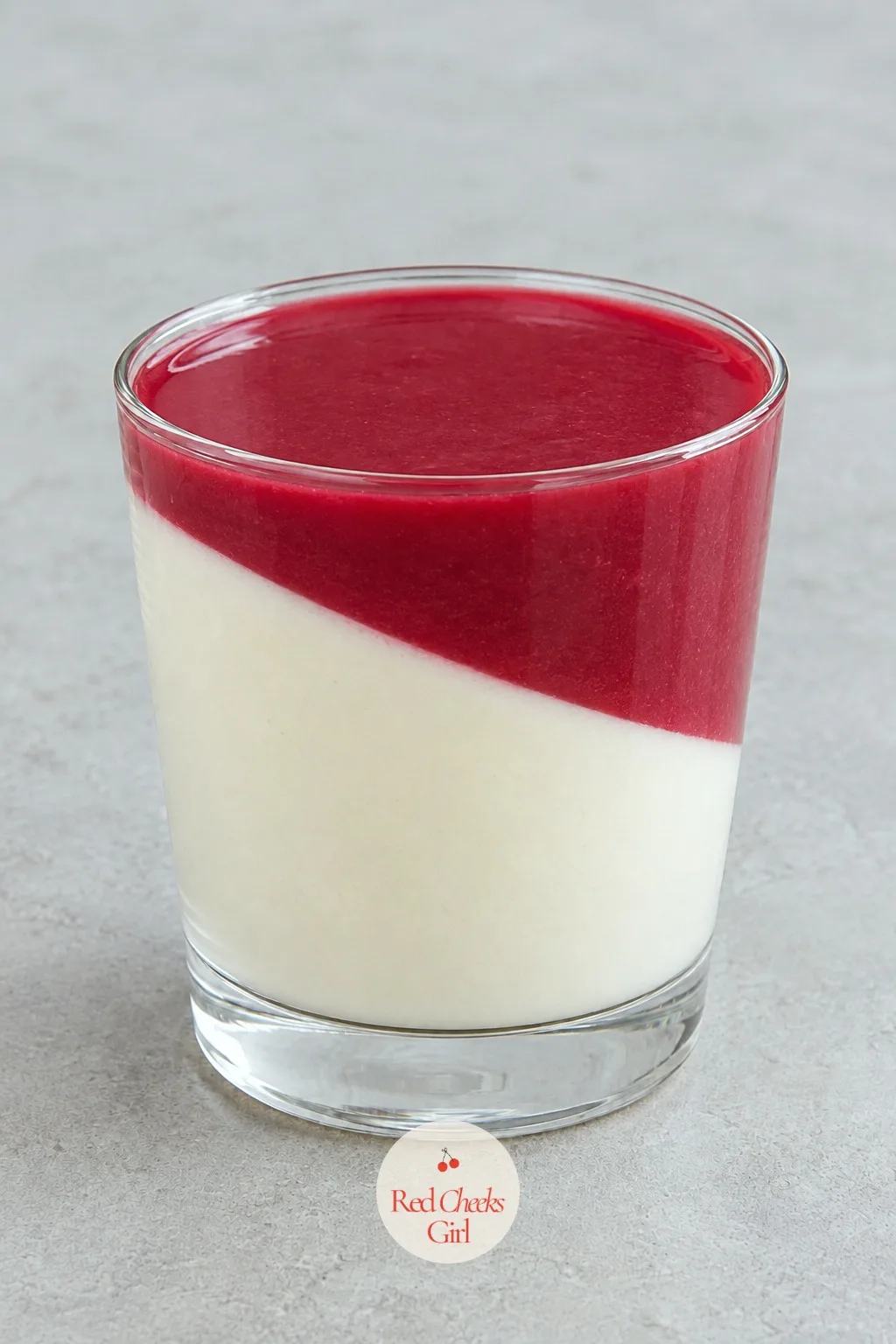
Prop the set glass at an angle and pour the cooled raspberry gel over the cream to the rim. The red layer should pool along the tilted top edge.
Serve the Panna Cotta
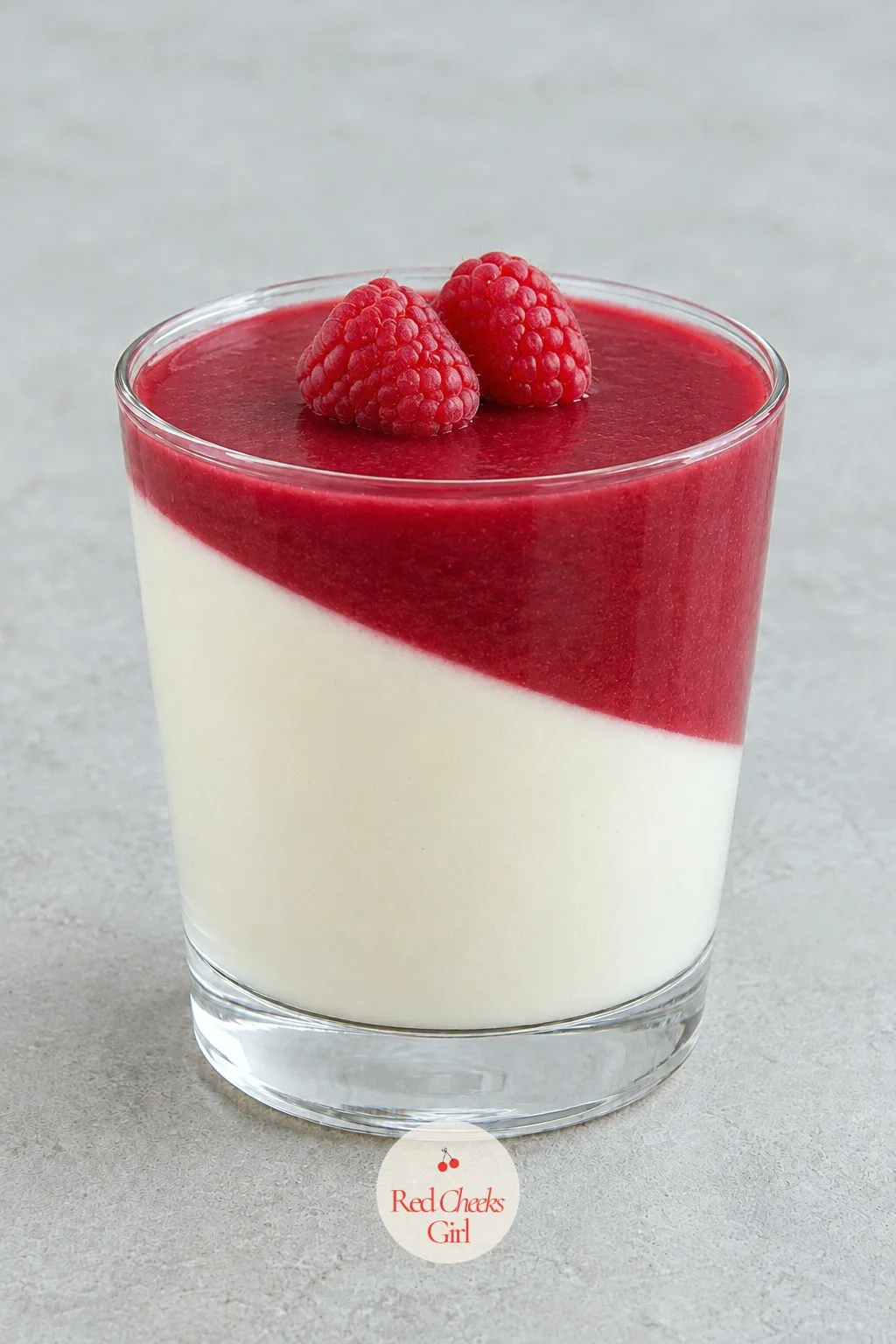
Stand the glasses upright and wipe any drips from the rim. The diagonal raspberry line should now cross the top at a clean angle, finished with a few fresh raspberries.
🛍 Shopping guide
Where This Panna Cotta Recipe Goes Wrong, and How to Fix It
Boiling the cream after the gelatin goes in is the single most common accident here. Gelatin’s setting power breaks down under high heat, so once it is whisked in, the mixture only needs to stay warm enough to dissolve it, never bubble.
, closer to a firm jello shot than a spoonable dessert, so resist the urge to add extra for insurance. The amount in this recipe is already the least that will hold its shape in a glass.
Skipping the bloom step causes little gritty flecks that never fully dissolve.
If you plan to unmold onto a plate instead of serving in the glass, leave almost no headroom between the cream and the rim of the mold. A deep drop when you invert it is what cracks the edge, not the recipe itself.
Skip the raspberry sauce straining step and you will taste every seed in every bite. A quick press through a fine sieve is thirty seconds of extra work for a sauce that looks and eats like something from a restaurant kitchen.
Swaps and Substitutions
If you would rather not fuss with a vanilla bean, two teaspoons of good vanilla extract does the job, just without the visible flecks through the cream. Vanilla bean paste splits the difference: speckled, but no pod to split and scrape.
For a lighter panna cotta, swap half the heavy cream for more whole milk; the set stays the same since the gelatin amount does not change, but the dessert eats thinner and less rich. Avoid coconut milk in place of dairy here, since it tends to turn the texture slightly grainy rather than silky.
Agar agar replaces the gelatin for a vegetarian version, though it sets firmer and sturdier than gelatin does, so the soft wobble turns into a cleaner, cuttable slice instead. Follow the ratio on the package rather than swapping it teaspoon for teaspoon.
For an adult dinner party, a tablespoon of dark rum or orange liqueur stirred into the warm cream before straining adds a grown-up note without unbalancing the set. Pour it only for guests who are drinking that night, and keep the plain vanilla version on the table for anyone driving home or not drinking.
Prefer the classic plated look over the tilted glass. Lightly oil six ramekins before filling, chill as directed, then dip the base of each one in warm water for ten seconds and invert onto a plate, spooning the raspberry sauce around the base instead of on top.
What to Serve It With at a Party
Keep the rest of the table light, since this dessert already carries the richness. A plate of fresh fruit or something citrus-forward is enough, and the raspberry color pairs beautifully if the rest of the dessert spread leans pink and red, the way it does in 14 Valentines Dessert Recipes in Red, Pink and Chocolate.
Serving a full spread before dessert, not just this one dish? Something cold and make-ahead on the savory side takes the pressure off the kitchen earlier in the night, and 16 Cold Appetizers for a Party You Can Make Ahead the Night Before covers that end of the table.
If this is one dessert among several on a bigger table, it holds its own next to heavier bakes without competing, the way it would alongside 12 Birthday Party Treats to Fill a Dessert Table.
Once plates are cleared, the evening still needs somewhere to go. 17 Dinner Party Games to Play Right at the Table keeps everyone seated a little longer with coffee and the last of the raspberries.
Panna Cotta Recipe
Ingredients
- 2 1/4 teaspoons unflavored powdered gelatin one standard envelope
- 1/4 cup whole milk cold, for blooming
- 1 cup whole milk
- 1 3/4 cups heavy cream
- 1/3 cup granulated sugar
- 1 vanilla bean split lengthwise and seeds scraped (or 2 teaspoons pure vanilla extract)
- pinch of fine sea salt
- 12 ounces fresh or frozen raspberries about 2 1/2 cups, thawed if frozen
- 1/4 cup granulated sugar for the raspberry layer
- 2 tablespoons water
- 1 tablespoon fresh lemon juice
- 1 teaspoon unflavored powdered gelatin for the raspberry layer
- 1 tablespoon cold water for blooming the raspberry gelatin
- a small handful of fresh raspberries for garnish
Instructions
- Sprinkle 2 1/4 teaspoons unflavored gelatin over the 1/4 cup cold milk in a small bowl. Let it sit undisturbed for 5 to 10 minutes, until it looks spongy and has soaked up all the liquid.
- Pour the heavy cream, remaining 1 cup milk, sugar, split vanilla bean and its scraped seeds, and the pinch of salt into a medium saucepan. Warm over medium-low heat, stirring now and then, until the sugar dissolves and the mixture is steaming but not boiling, about 5 minutes.
- Take the pan off the heat. Whisk in the bloomed gelatin until it disappears completely into the warm cream, with no streaks or flecks left.
- Strain the mixture through a fine-mesh sieve into a glass pitcher, pressing out the vanilla pod and any gelatin bits. You should be left with a smooth, pale cream with no lumps.
- Divide the cream evenly among six 6-ounce glasses, standing them upright and level on a tray. Chill, uncovered, until completely set, at least 3 hours or up to overnight: the surface should feel firm and barely move when you nudge the glass.
- Combine the raspberries, 1/4 cup sugar, 2 tablespoons water and lemon juice in a small saucepan. Simmer over medium heat, stirring occasionally and breaking up the berries with a spoon, until the fruit collapses and the mixture turns glossy and syrupy, about 5 minutes.
- Strain the raspberry mixture through a fine-mesh sieve into a bowl, pressing with the back of a spoon to push through all the puree. Discard the seeds left in the sieve; the puree should look smooth and deep pink-red.
- Sprinkle the 1 teaspoon gelatin over 1 tablespoon cold water in a small dish and let it bloom for 5 minutes. Whisk it into the still-warm raspberry puree until fully dissolved.
- Let the raspberry gel cool at room temperature for about 15 minutes, stirring once or twice, until it is no warmer than body temperature but still pourable. It should not be setting yet when you tilt the bowl.
- Set each chilled, set glass at an angle inside a muffin tin, propping it with a twist of foil so it leans without tipping over. Pour the cooled raspberry gel over the panna cotta, filling to the rim of the tilted glass.
- Chill the tilted glasses, still propped at their angle, until the raspberry layer is fully set, at least 2 hours.
- Stand the glasses upright on a tray and wipe any drips from the rim. Serve cold, topped with a few fresh raspberries: the cream should sit level again with a bold diagonal red line crossing the top.
Good to Know
Frequently Asked Questions
Can you freeze panna cotta?
Freezing is not recommended, since the gelatin network breaks down as it thaws, leaving a grainy, watery texture instead of a smooth wobble. Keep it in the fridge and plan to serve within a few days instead.
Can I use sheet gelatin instead of powdered gelatin?
Yes:. Soak the sheets in cold water until soft, squeeze out the excess, then whisk them into the warm cream in place of the bloomed powder.
Is panna cotta the same as pudding or jello?
No. and pudding usually thickens with egg or starch instead.
How do I know when panna cotta has finished setting?
It is ready when the surface feels firm to a light touch and the whole thing jiggles gently without any liquid sloshing underneath. Give it the full chilling time in the recipe before checking, since smaller or larger glasses can set at slightly different speeds.
Can I double this panna cotta recipe for a crowd?
Yes, it scales cleanly: double every ingredient, including the gelatin, so the ratio of gelatin to liquid stays exactly the same. Pour from a larger pitcher to keep the straining and filling just as easy.
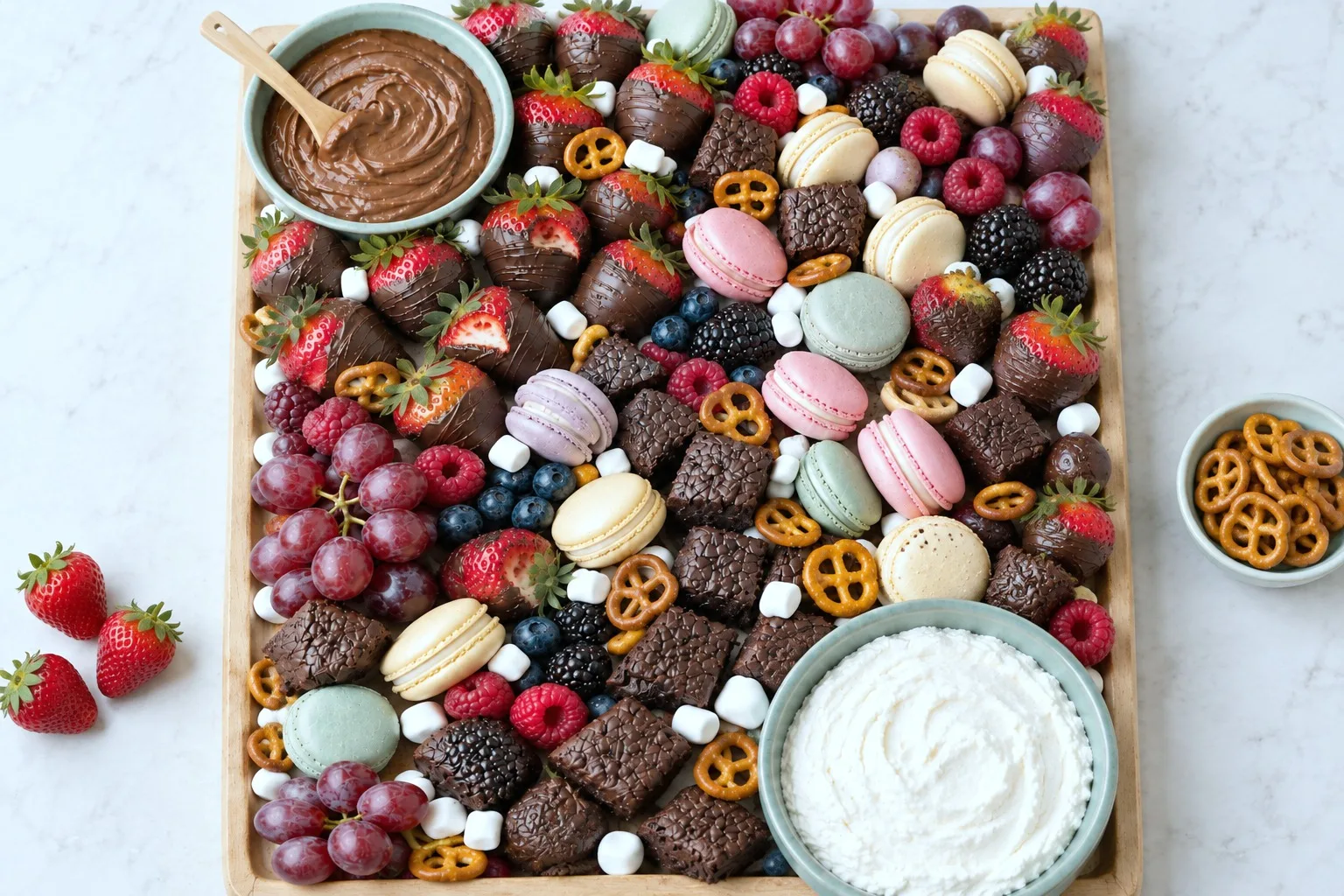
Dessert charcuterie board ideas for a party: chocolate strawberries, macarons and brownie bites, wit
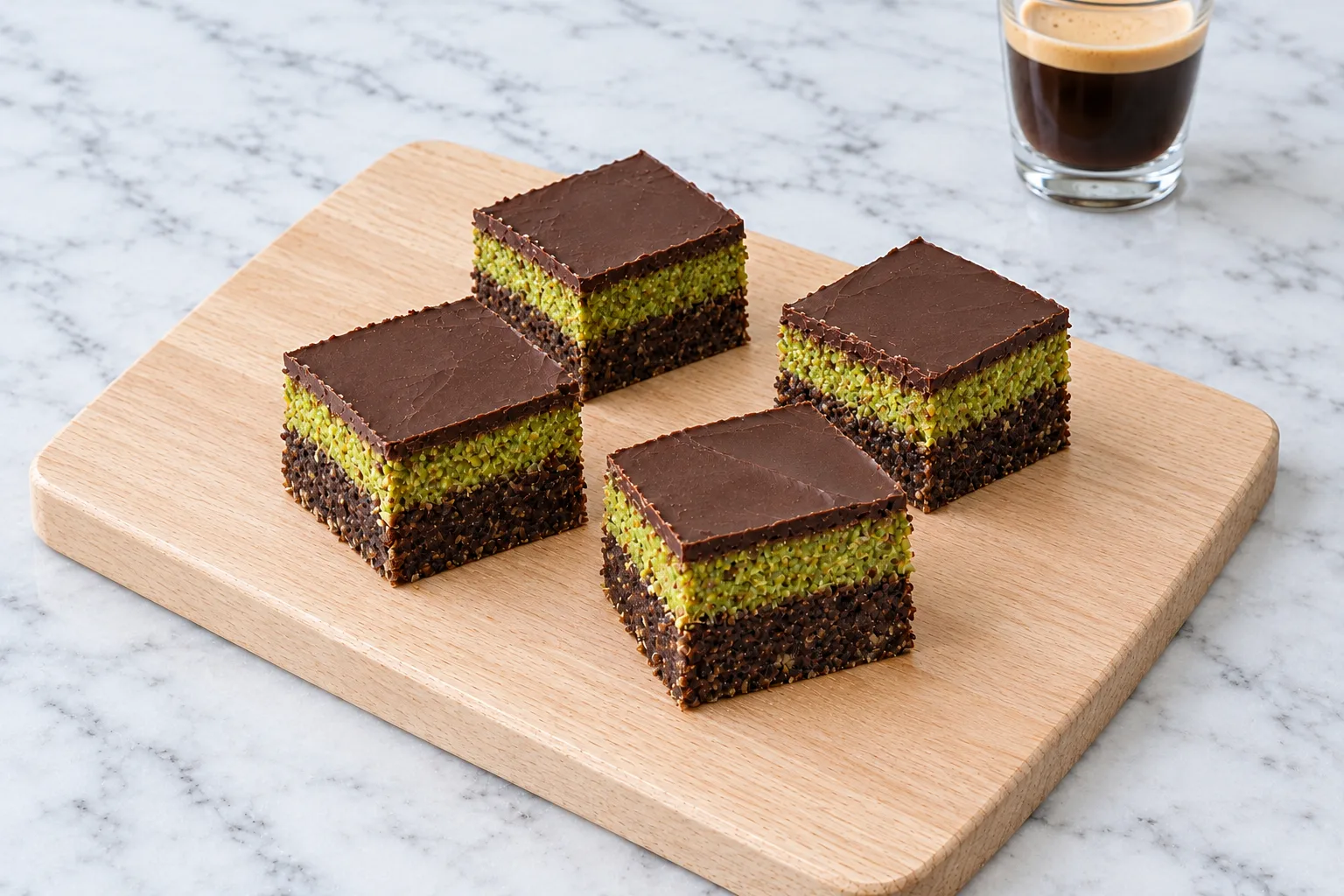
Dubai chocolate brownies layer pistachio cream and toasted phyllo under a chocolate shell for a part
Christmas puppy chow comes together in 30 minutes, no oven, with M&Ms, pretzels and sprinkles for gi
Leave a Reply