

The difference between a stripe and a fade is about four balloons. That is not a guess: it is what you will see when you lay the whole thing on the floor before you mount it.
Every entry below shows a finished arch at a real occasion: the colour run, the placement, the detail that makes it look deliberate. The first twenty-four are inspiration by party type. The last four are method, and they are the ones to read first.
This post contains affiliate links. If you buy through them, I may earn a small commission at no extra cost to you.
Birthday Party Arches
Birthdays give you the clearest brief: match the palette to the guest of honour and let the arch do the announcing. The entries here cover girls’ parties, boys’ first birthdays, hen parties and everything in between. Placement shifts each time, which is half the design decision.
A low garland along a table reads differently from a full arch over a doorway. Both work. Choose by how much wall you have and how close guests will stand to it.
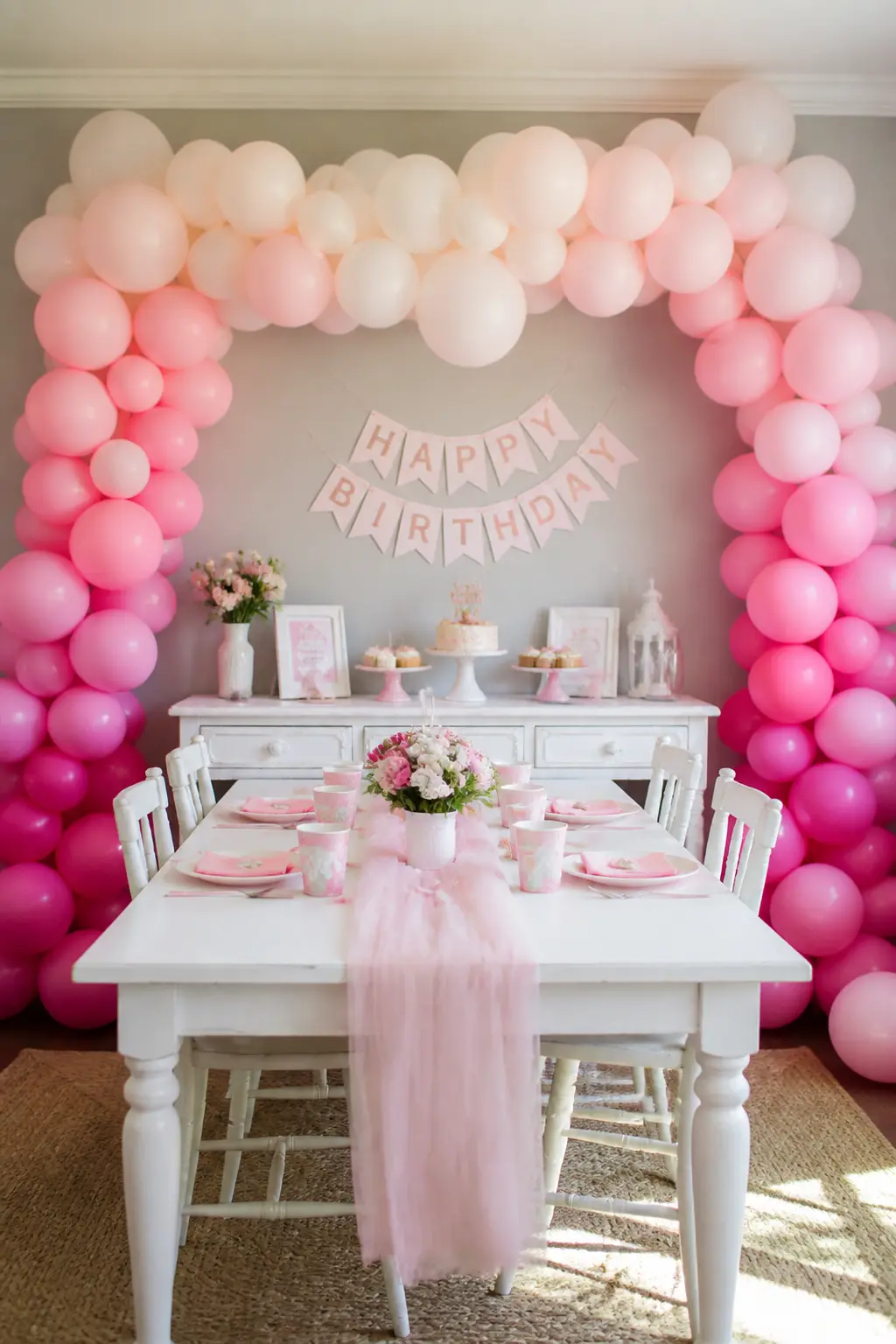
Blush to Fuchsia Over a Girls’ Birthday Table
The arch starts at the ceiling in the palest blush and deepens as it sweeps down each leg, landing in full fuchsia at the floor on both sides. Darkest at the base means the table sits inside a frame that gets lighter as your eye travels up, which draws attention to the cake without competing with it.
Use five shades across this range: blush, pale pink, mid pink, hot pink, fuchsia. That spacing gives you four transition zones instead of two, and four zones are what stop the colour reading as blocks.
🛍 Shopping guide
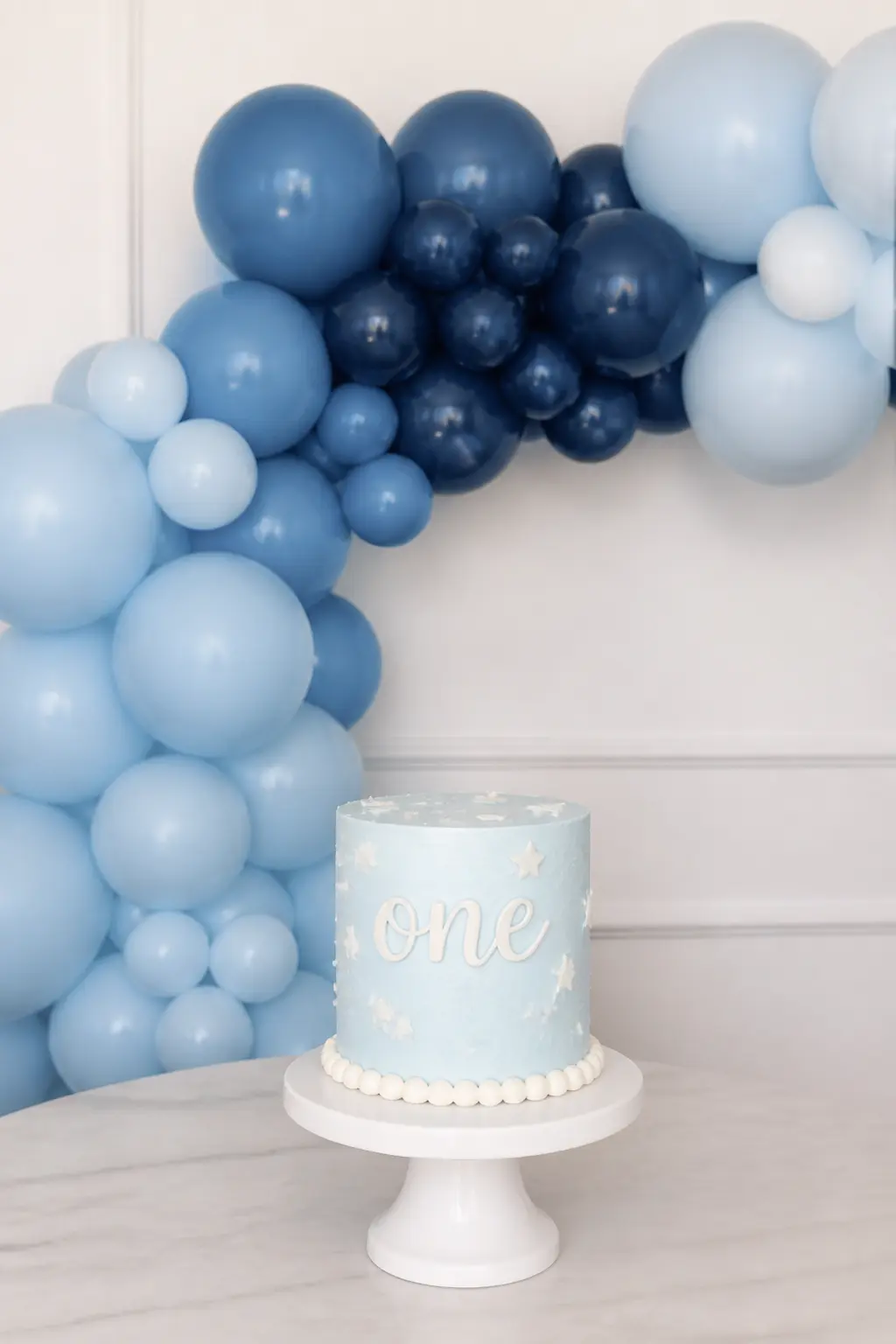
Powder Blue to Navy Behind a First Birthday Cake
A garland rather than a full arch works better behind a small cake table: it stays in frame without dominating the shot. This one runs in a wide curve across the wall, lightest at the outer edges and deepest navy in the centre where it sits directly behind the cake stand.
Powder blue, sky blue, cornflower, cobalt, navy: five steps, each one overlapping the next. The centre cluster of navy balloons anchors the whole composition and gives the number-one balloon somewhere to live.
🛍 Shopping guide
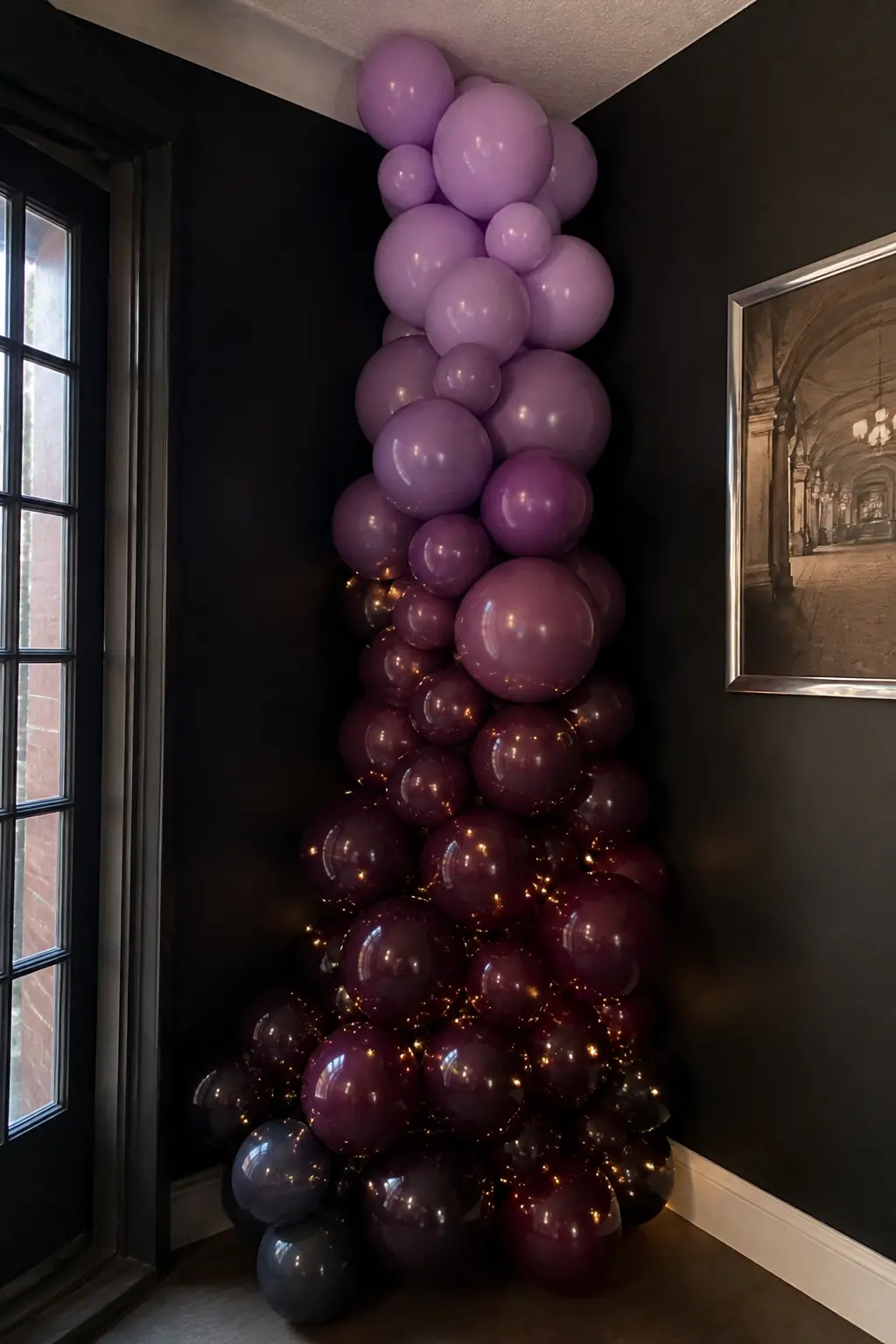
Lavender to Aubergine Cascade Down a Corner
An evening party calls for depth. This cascade starts at the ceiling in lavender and spills down a corner of the room, ending in dense aubergine clusters near the floor. The corner placement means it reads from two directions, so every angle of the room gets the benefit.
Draping fairy lights through the lower, darker section adds warmth without adding colour. The aubergine absorbs light in a way that pale tones do not, so the lights give that section texture rather than glare.
🛍 Shopping guide
Hot Pink to Blush Low Garland Down a Hen Party Table
This garland runs along the centre of a long table at low height, not up a wall. It starts deep hot pink at one end and fades to the palest blush at the other. Because it sits on the table rather than behind it, guests interact with it all evening, which means it works harder than a backdrop.
Keep the balloons undersized here: 5-inch balloons let the garland sit between glasses and bottles without blocking sightlines across the table. Tuck in a few dried rose heads in the transition zones to soften the joins.
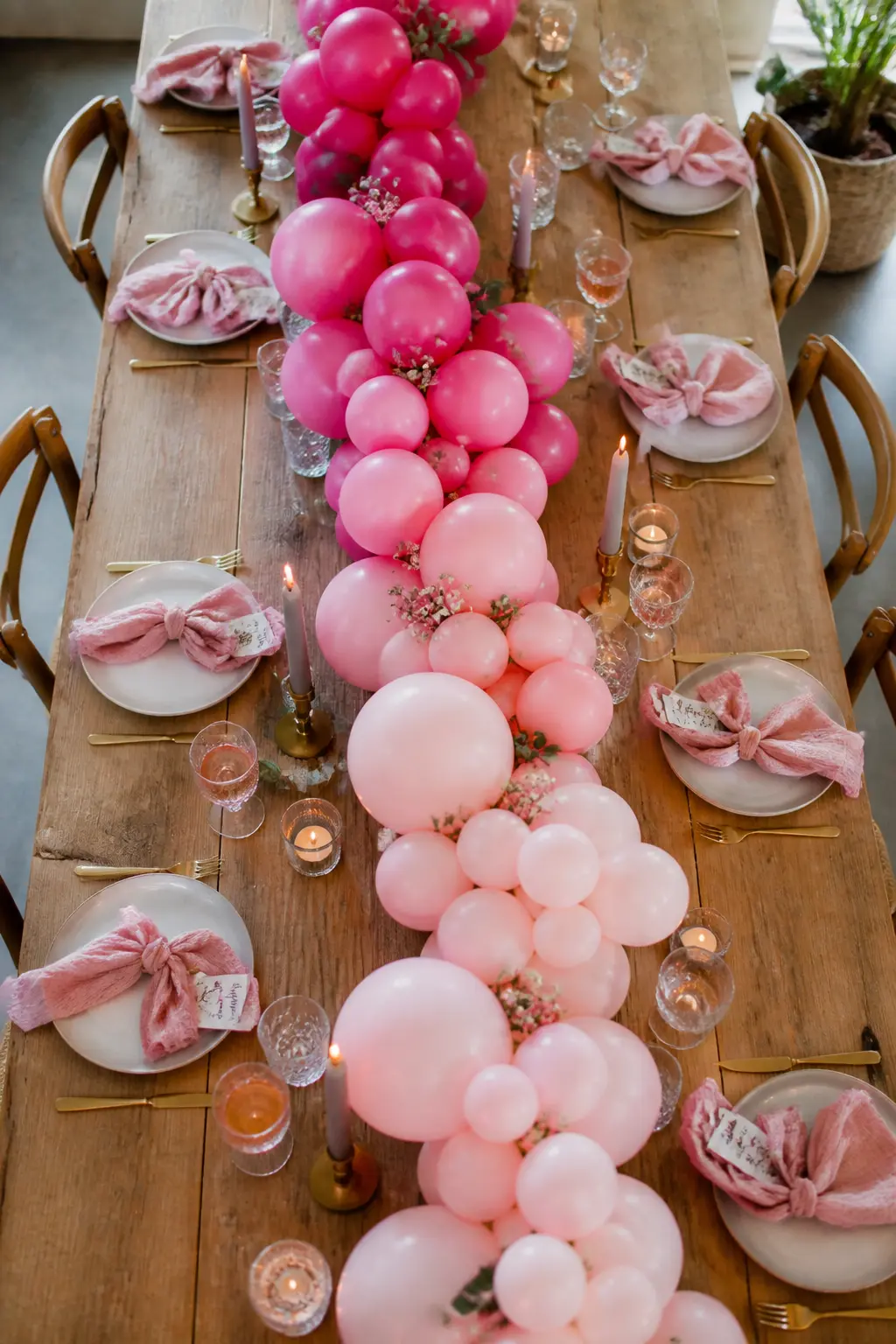
🛍 Shopping guide
Baby Shower and Christening Arches
Neutral palettes and soft curves suit this category well. The arches here lean into dried botanicals, pale tones and compact formats that fit a living room without overwhelming it. For more ways to keep guests busy while the arch does its work, these interactive baby shower games run alongside any backdrop without needing extra floor space.
White to Sand to Brown at a Neutral Baby Shower
This arch frames a gift table at a baby shower where the brief was gender-neutral and grown-up. White at the crown, sand in the middle, warm brown at the legs: three named colours but five actual shades, with an off-white and a tan slotted into the transition zones.
Bunches of dried pampas and bleached grasses tuck into the arch at intervals, which echoes the palette and fills the gaps that always appear when balloon sizes are mixed. The result looks more curated than inflated.
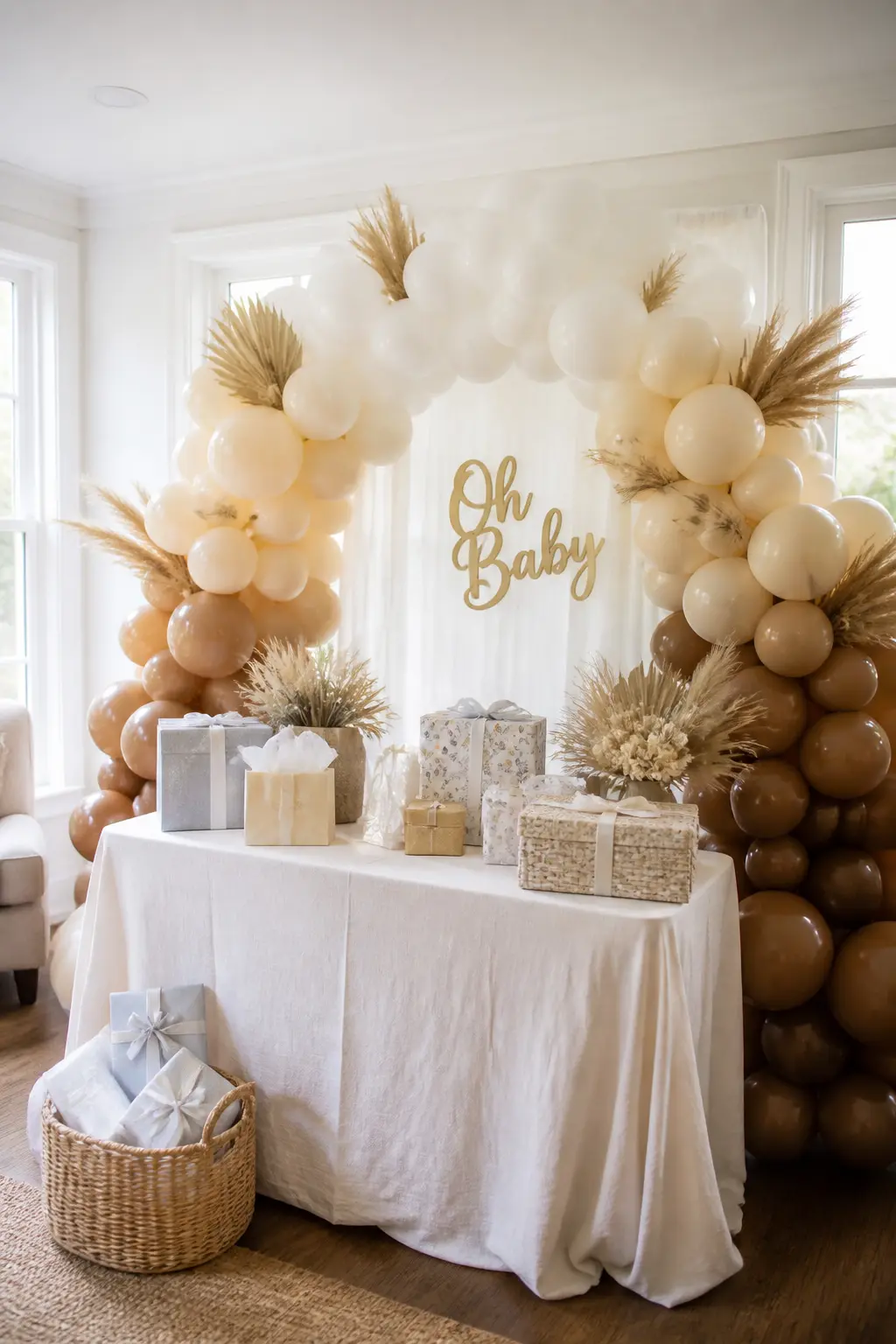
🛍 Shopping guide
Pale Blue to White Circle Above a Christening Cake
A balloon circle, sometimes called a hoop arch, sits above the cake table on a single stand and takes up almost no floor space. This one fades from pale blue at the base of the circle through sky blue to white at the top, so the lightest point is the highest point.
The circle format suits a christening because it reads as a frame rather than a party decoration. Keep the balloons small (5-inch) and the hoop itself simple. A gold metal hoop stand disappears inside the balloons once they are attached.
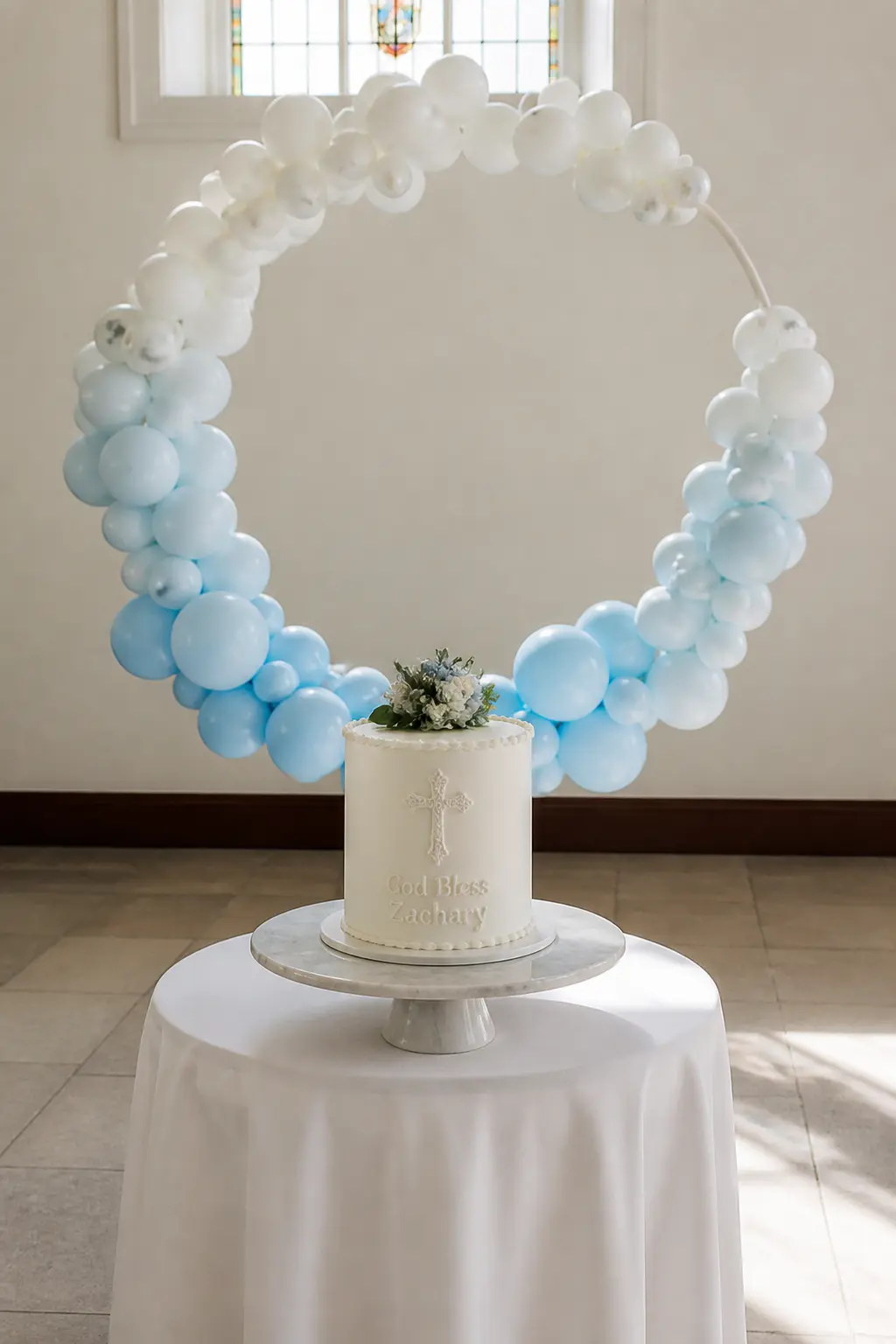
🛍 Shopping guide
Grey to White Garland Behind a Modern Baby Shower Cake
This garland is the quietest entry in the article. Charcoal at the outer edges, mid-grey in the body, white at the centre behind the cake: the palette disappears into a modern interior and lets the cake and flowers do the talking.
Use matte-finish balloons only. Glossy grey reads as silver and breaks the monochrome calm. Mix 5-inch and 11-inch throughout so the texture is visible even when the colour shift is subtle.
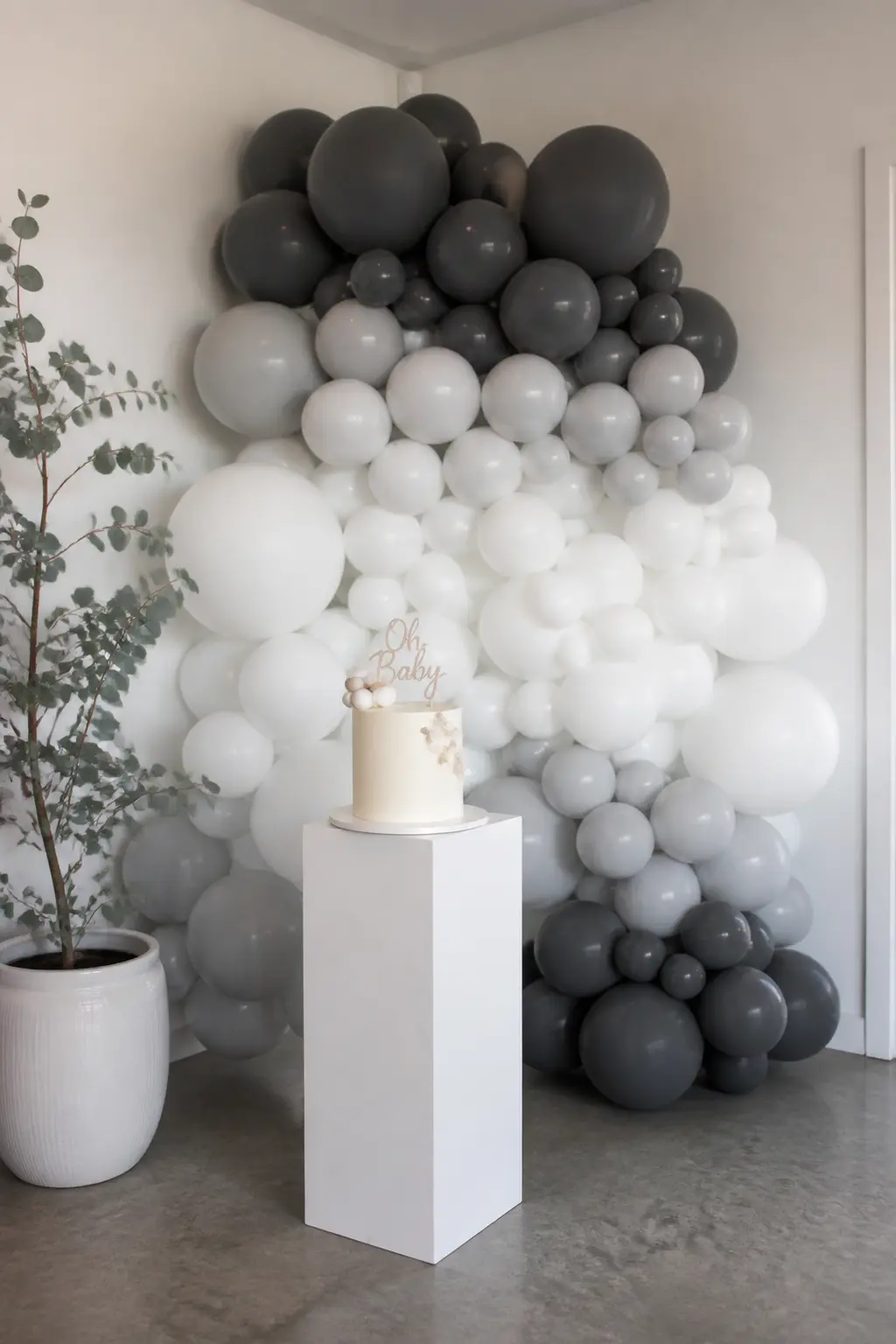
🛍 Shopping guide
Bridal Shower and Wedding Arches
Wedding-adjacent events demand a cleaner finish. Metallics, blush and white all read well on camera, which matters because every guest will photograph the arch. Keep the fade gentle here: a dramatic colour jump reads as informal, and informal is not always what the bride asked for.
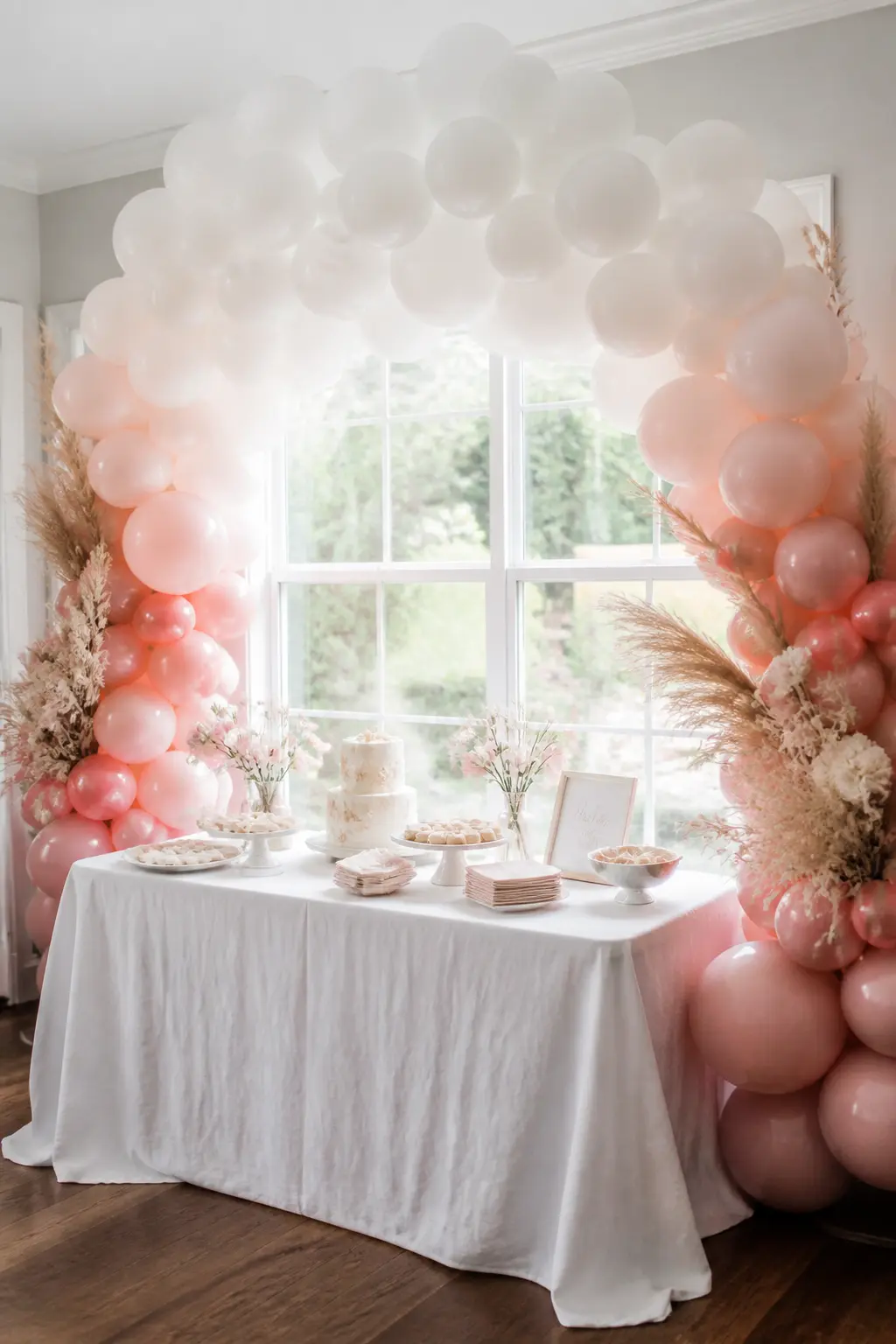
Blush Fading into White Over a Bridal Shower Table
The fade runs from blush at the legs to white at the crown, so the arch appears to dissolve into the ceiling. This direction is the reverse of the birthday arch above, and it reads as more refined: lighter at the top suggests the colour is lifting away rather than grounding itself.
Press dried flowers into the garland at the blush end only. Keeping the floral detail in the coloured zone and leaving the white section clean exaggerates the fade without adding more balloons.
🛍 Shopping guide
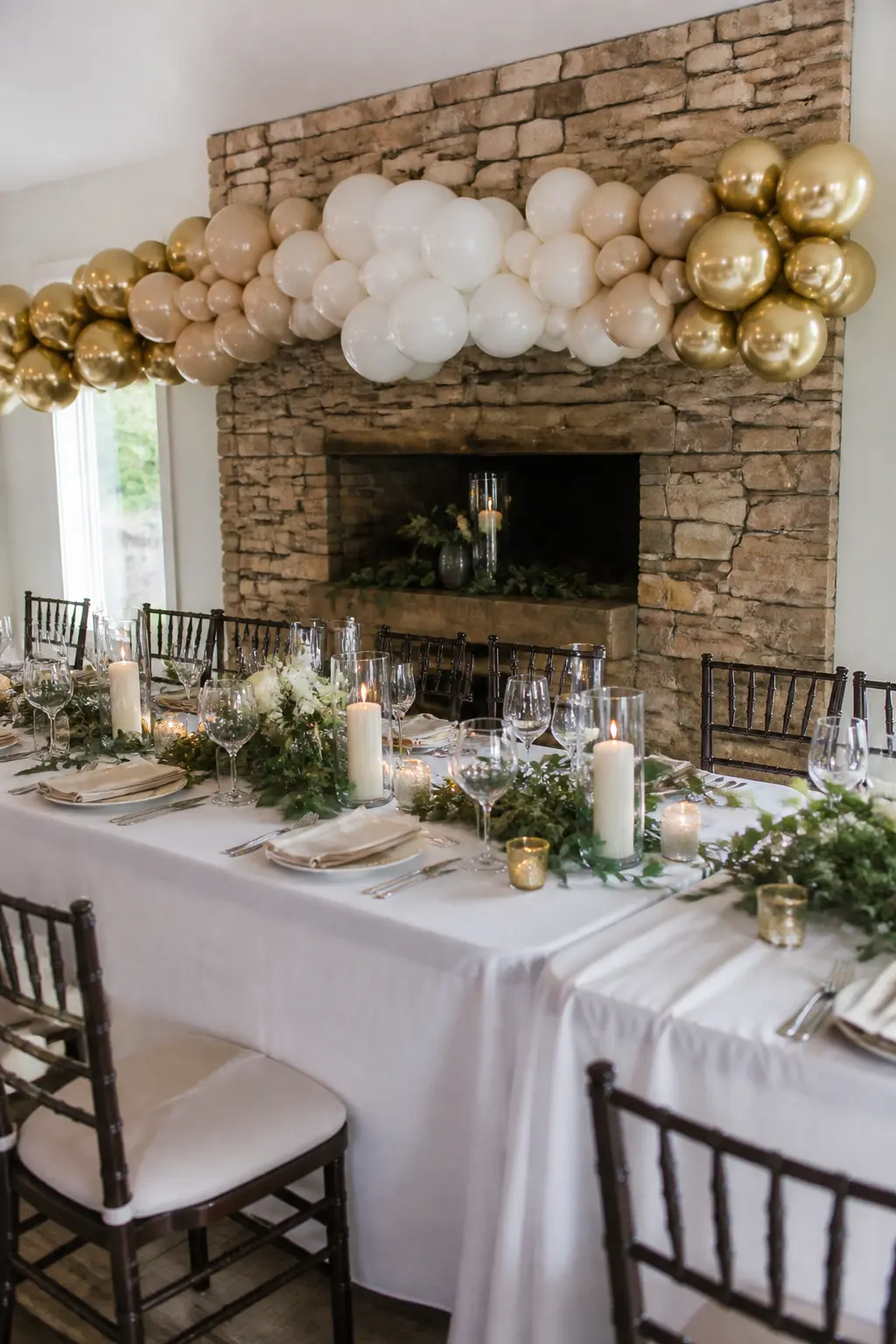
Gold Fading into White Along a Wedding Top Table
This garland runs horizontally behind the top table rather than arching over it. Gold at the outer ends fades through champagne and ivory to white at the centre, directly behind the couple. The pale centre keeps faces visible in photographs, which a dark backdrop never does.
Use chrome-gold balloons at the ends, matte champagne in the middle, and matte white at the centre. Mixing finishes (chrome to matte) adds depth to what might otherwise look flat across a long horizontal run.
🛍 Shopping guide
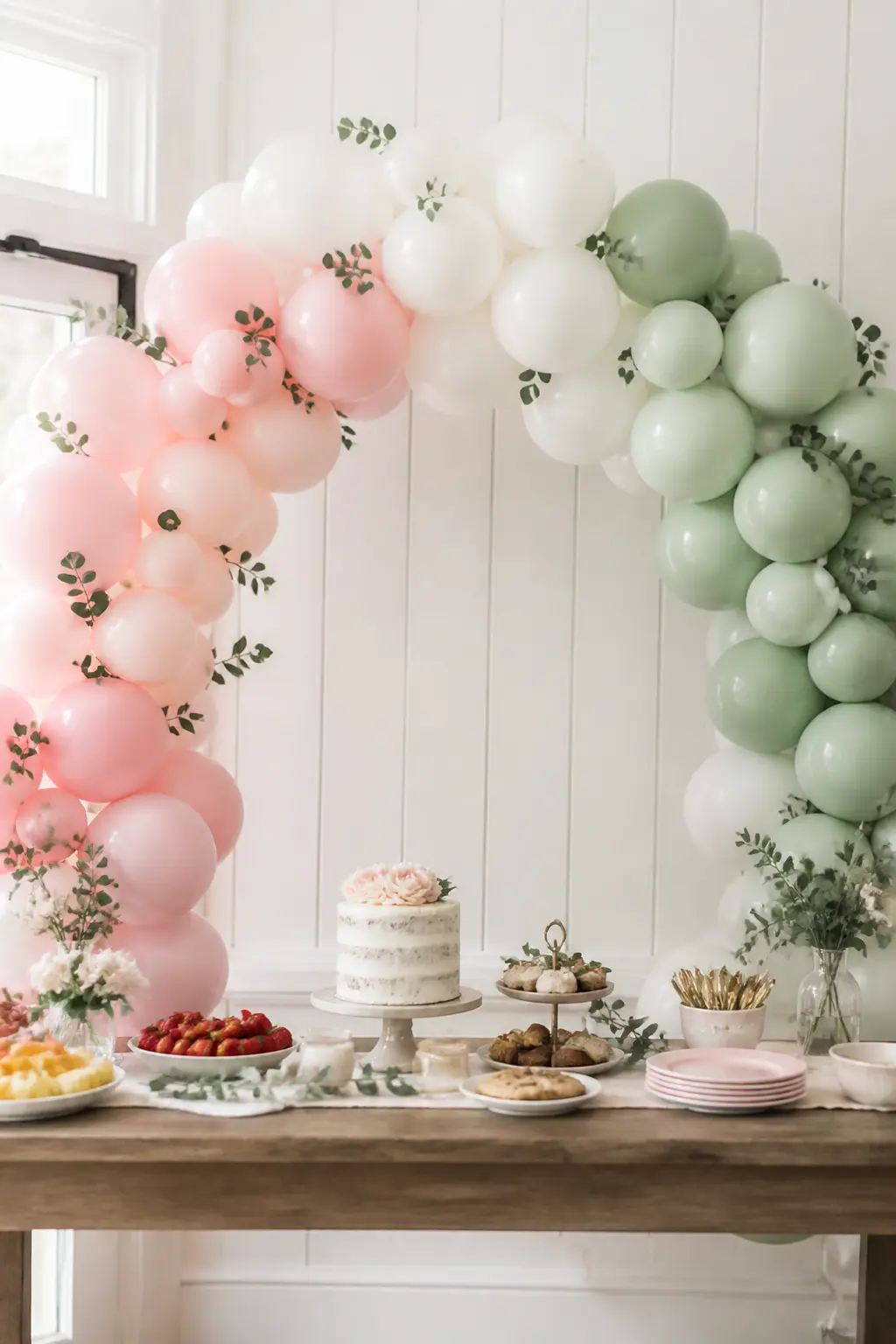
Blush and Sage Meeting in the Middle at a Spring Shower
Two colour families running toward each other, both fading to white at the point where they meet. Blush on the left leg, sage on the right, with white at the crown where they converge. This is the only arch in the article that runs two separate fades in opposite directions, and it is the trickiest to execute cleanly.
The secret is the white middle section. Make it generous: at least a quarter of the total arch length. A thin white join looks like a gap. A wide white section looks intentional, and it gives both fades room to breathe before they meet.
🛍 Shopping guide
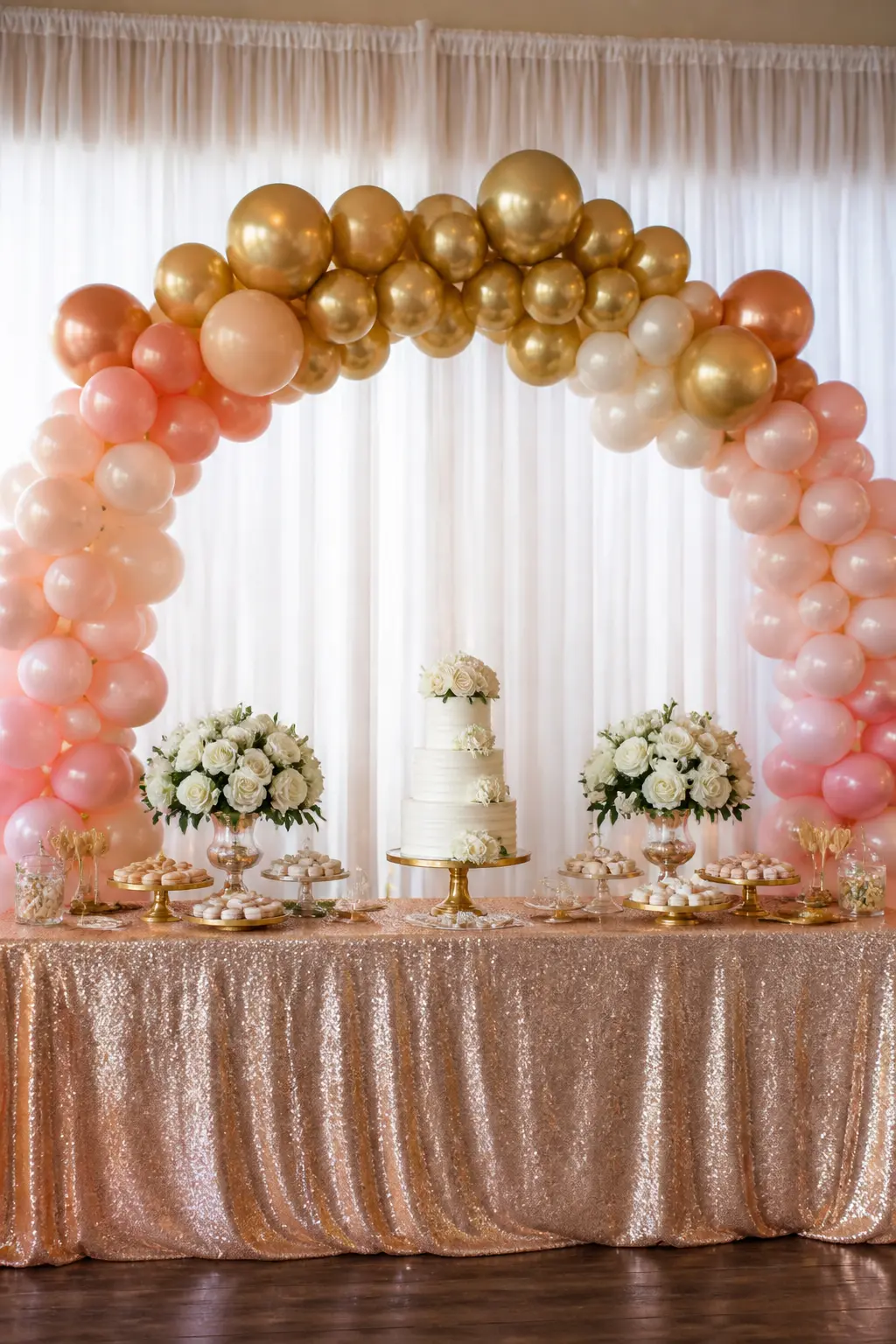
Blush to Gold Over a Wedding Dessert Table with White Roses
Blush at the legs, chrome gold at the crown, with three steps between: dusty rose, champagne blush, and pale gold. The arch frames a dessert table dressed with white roses in low vases, and the gold crown catches the venue’s warm lighting without reading as brash.
White roses tuck into the arch at the leg bases, where the blush balloons are densest. Keep flowers out of the gold section: the chrome finish reflects the room already and does not need botanical support.
🛍 Shopping guide
Garden and Outdoor Party Arches
Outdoor arches compete with natural light and whatever is growing behind them. High-contrast fades, botanical additions and frame-style placements over gates or paths all help the arch hold its own. Weight the base well: a balloon garland in a breeze is a problem you want to solve before guests arrive.
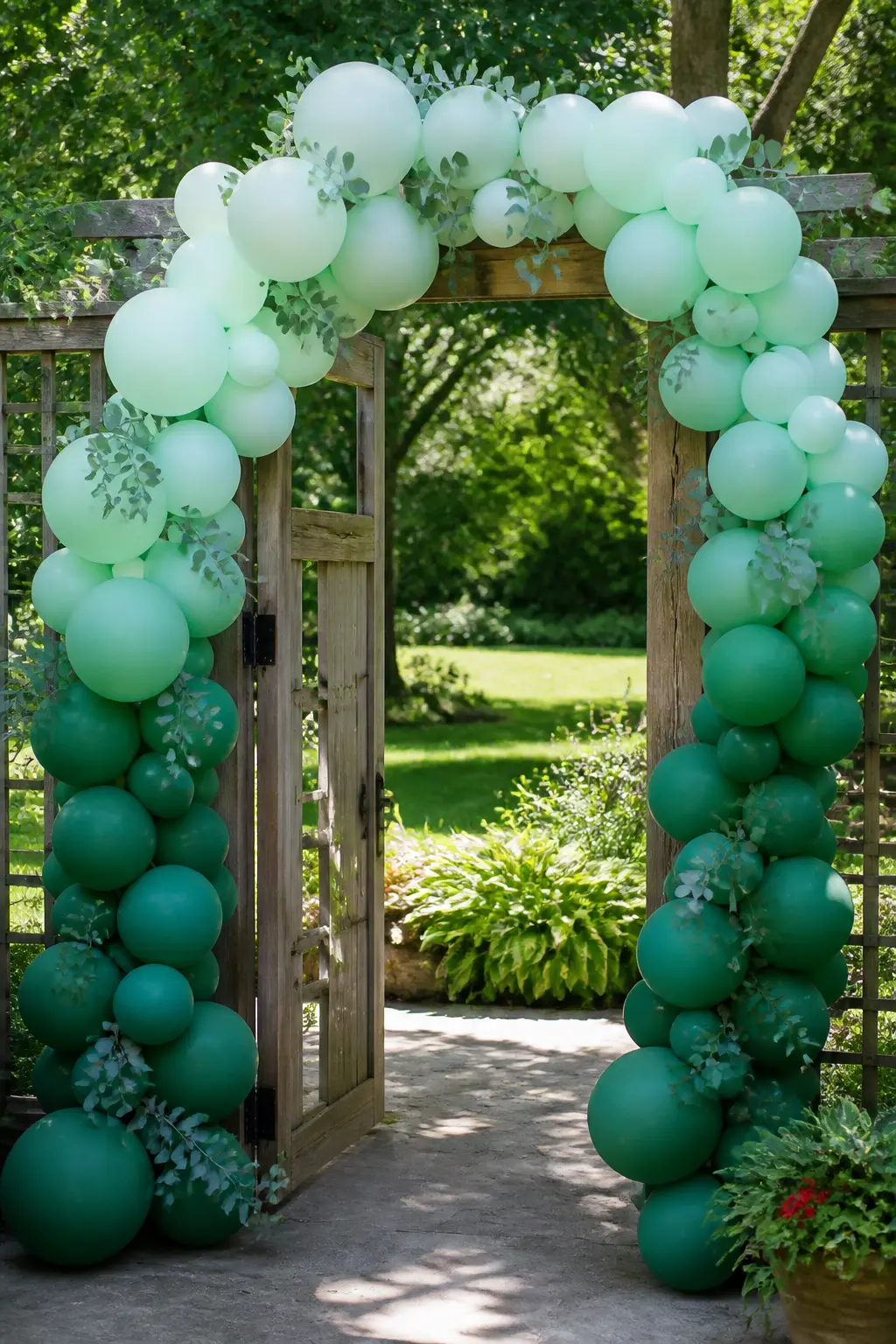
Mint to Forest Green Over a Garden Party Gate
An arch over a gate is a welcome gesture: it tells guests they are in the right place before anyone opens the door. This one fades from mint at the crown to forest green at the base of each leg, so the arch darkens as it meets the ground and the gate frame beneath it.
Eucalyptus stems thread through the forest green section and spill outward. The foliage and the balloons share a colour family, which makes the transition from balloon to leaf look considered rather than accidental.
🛍 Shopping guide
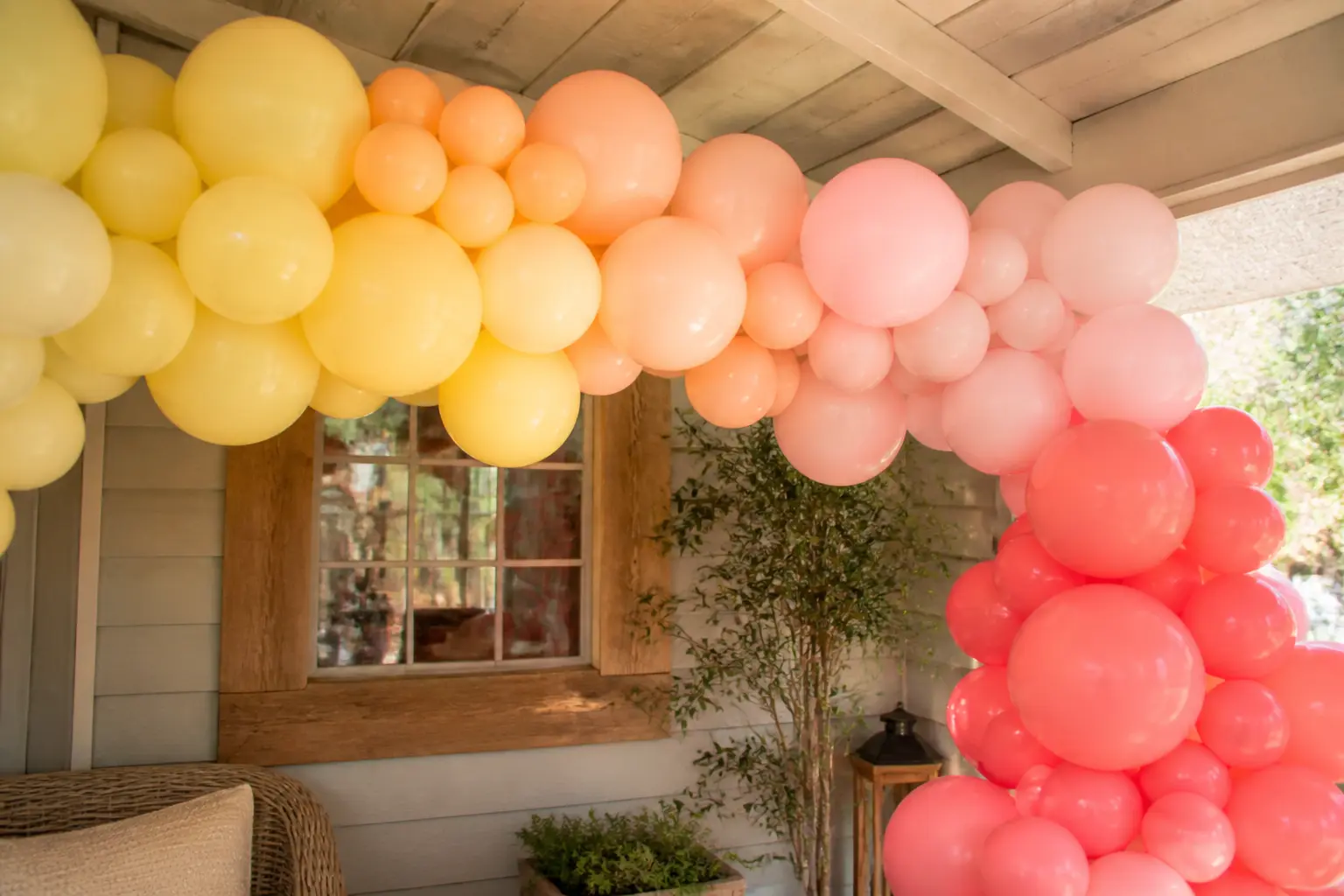
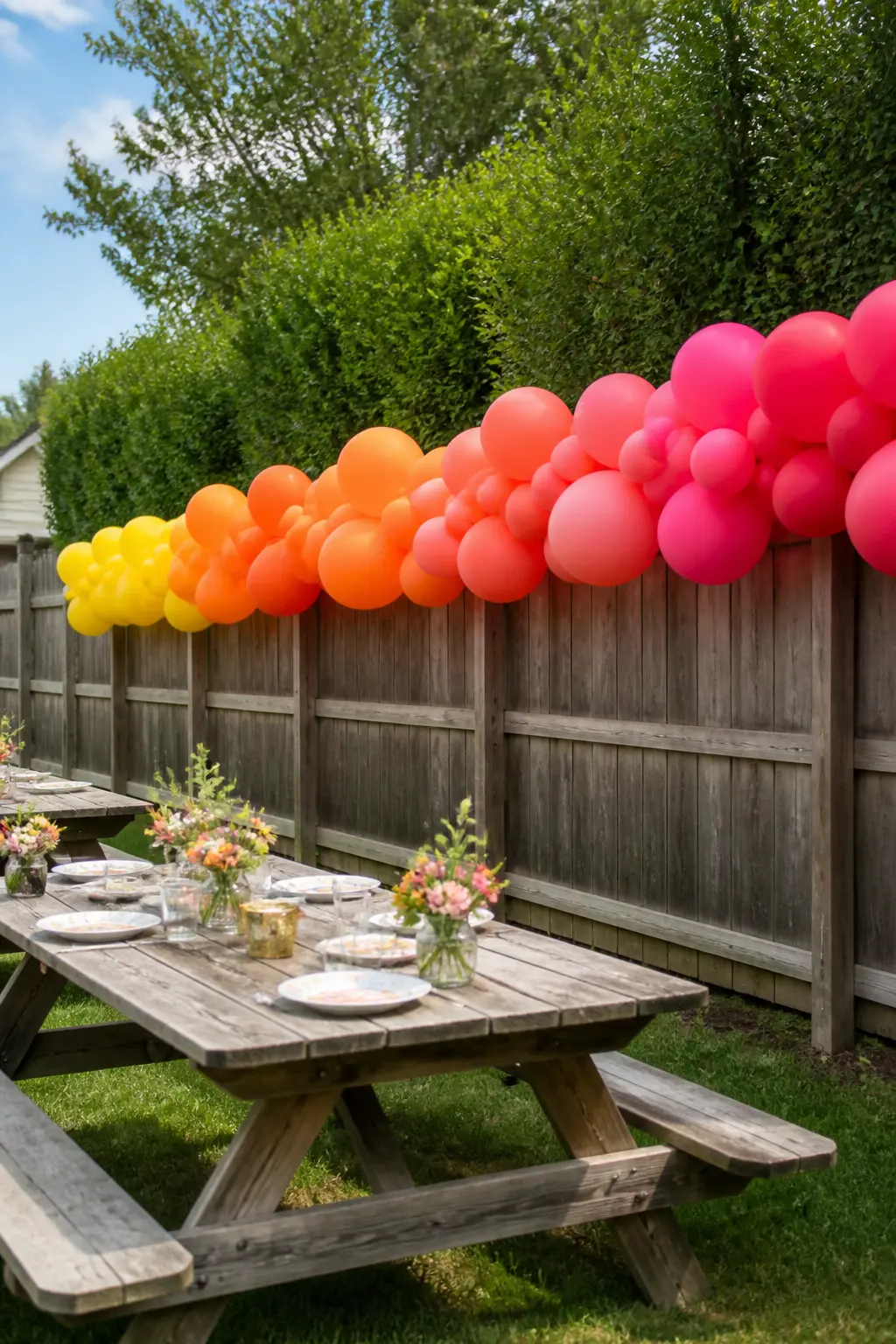
Yellow Through Orange to Pink Sunset Garland Along a Fence
A fence garland works like a horizontal painting: it runs the length of the party space and gives every table a backdrop without blocking any sightlines. This sunset palette, yellow to orange to coral to hot pink, is the most complex fade in the article: four named colours and ideally seven actual shades.
Run it in one direction only, left to right, so the fade reads as a story rather than a pattern. Anchor it to the fence at every third balloon using garden wire so it does not sag in the middle by the time the main course arrives.
🛍 Shopping guide
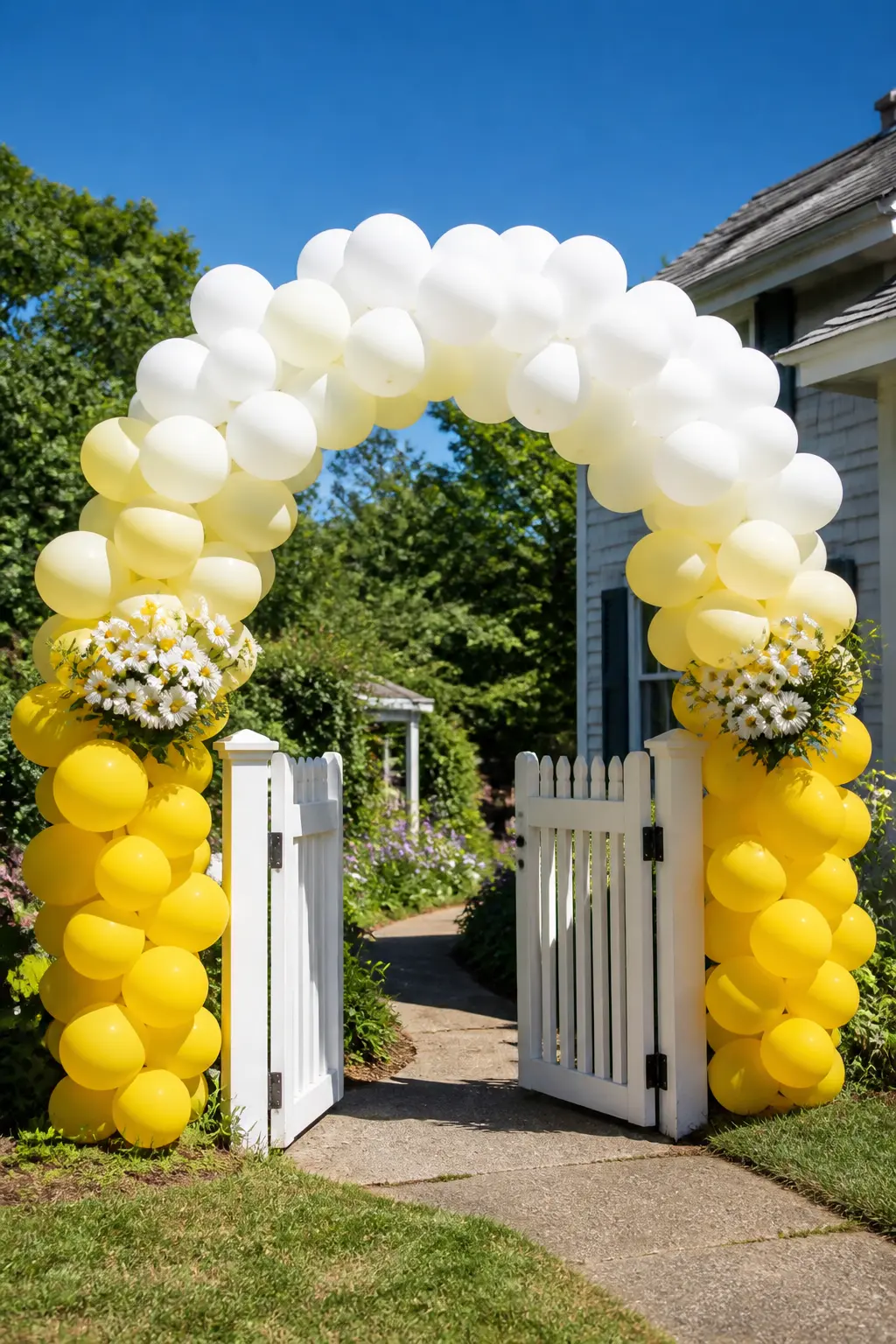
Yellow to White Over a Summer Garden Gate with Daisies
A two-colour fade is harder to make smooth than a multi-colour one, precisely because there is nowhere to hide the join. This arch uses five shades from deep yellow through lemon, cream yellow, off-white and white, so the eye never pinpoints where yellow stops and white begins.
Bunches of fresh daisies wire into the cream and off-white section, the transition zone. Their yellow centres echo the starting colour and carry the eye across the join, which is a botanical sleight of hand that costs almost nothing.
🛍 Shopping guide
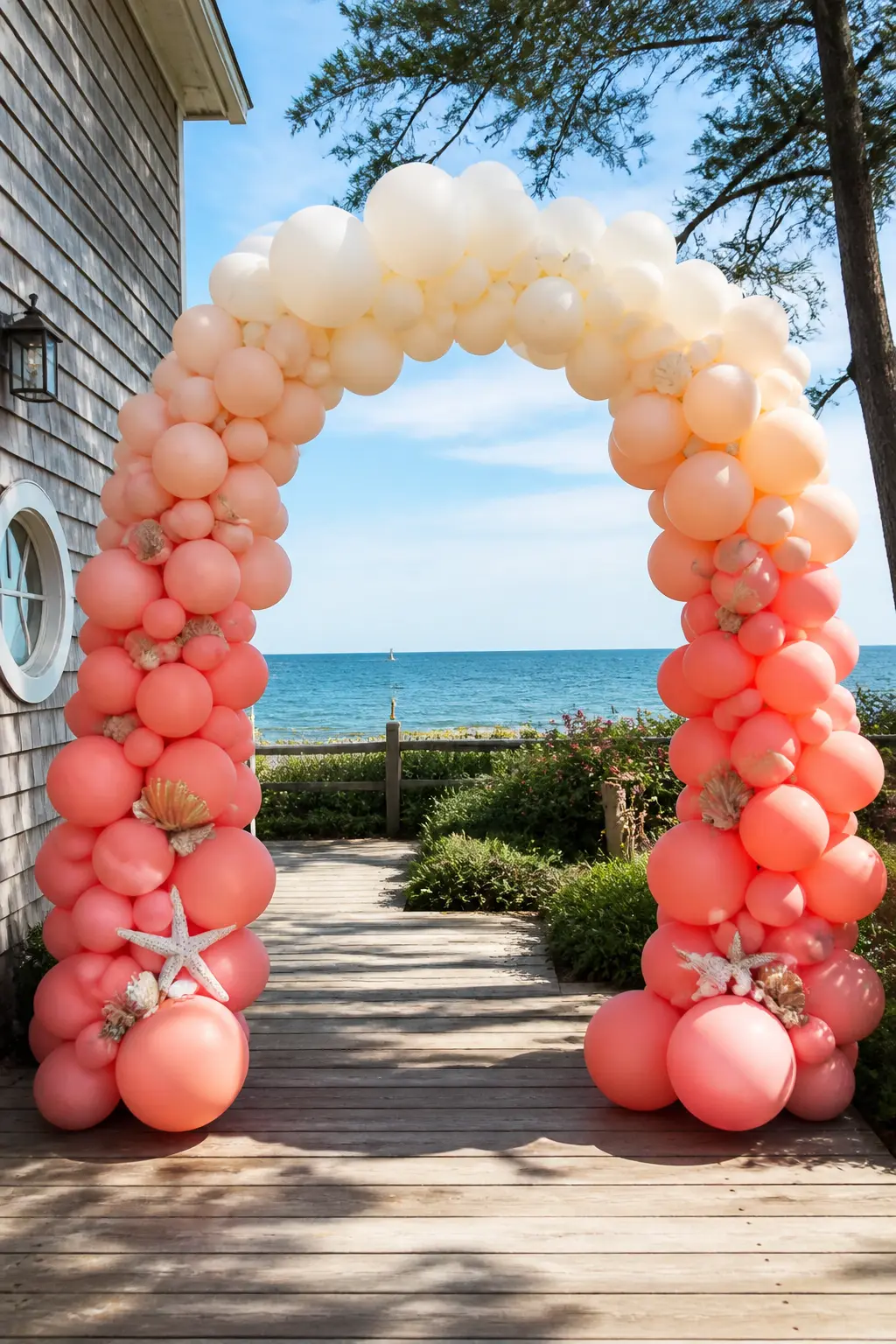
Coral to Cream at a Beach Party Entrance with Shells
A beach party entrance arch needs to survive heat and salt air while looking effortless. This one fades from coral at the legs to cream at the crown, with shells and starfish wired into the lower sections. The coral is close enough to the sand palette that the arch looks like it belongs to the location.
Blow balloons slightly under-full if you are outdoors in direct sun: heat expands latex and an over-inflated balloon pops before the party is halfway through. Under-inflated balloons also cluster more organically, which helps the fade.
🛍 Shopping guide
Seasonal and Holiday Arches
Seasonal colour stories are the easiest brief to work with because the palette is already decided. Autumn gives you rust and caramel. Valentine’s gives you red and blush. New Year gives you green and gold. The entries here show how those palettes translate into a fade rather than a colour-block.
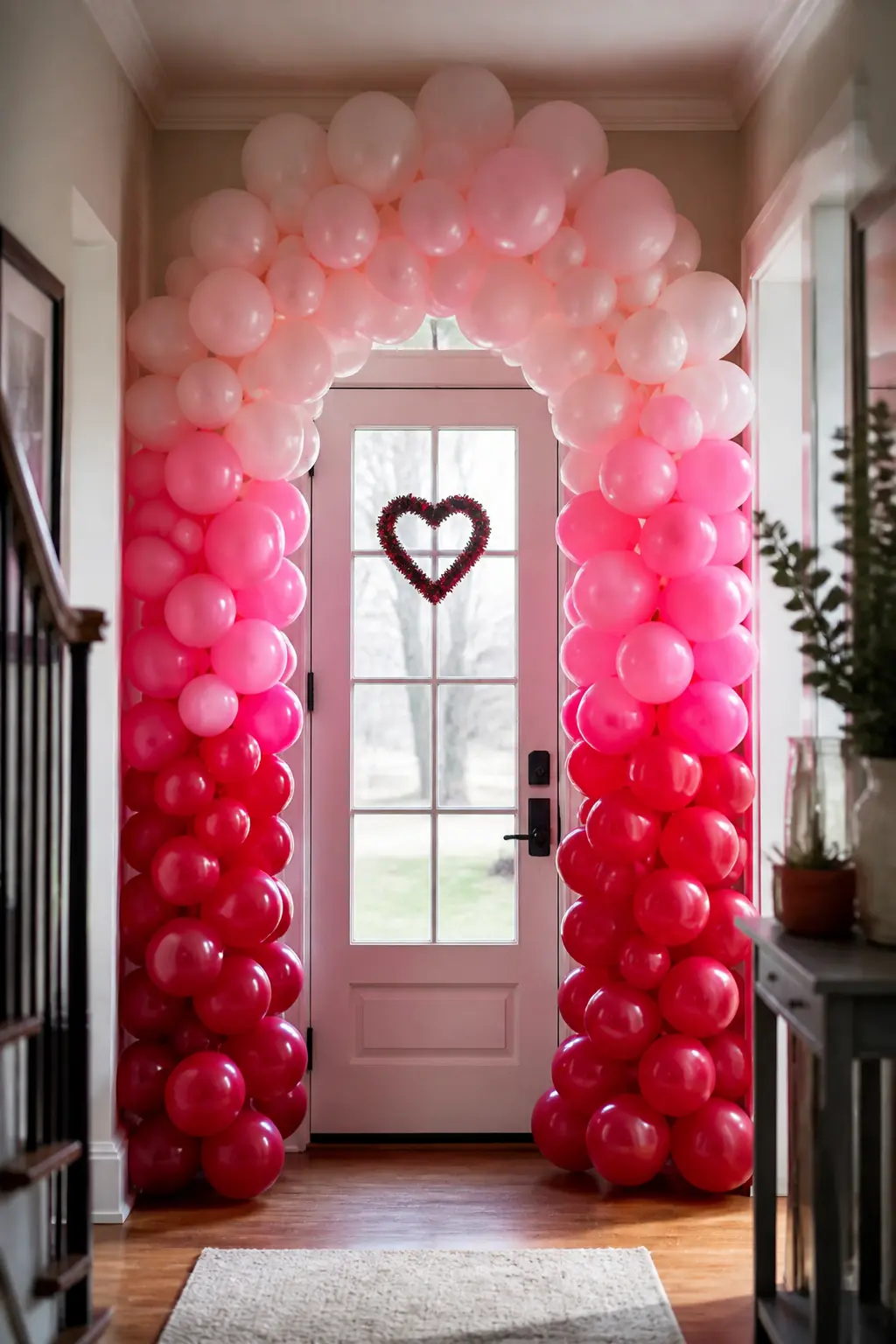
Pink to Deep Red Over a Valentine’s Party Doorway
Red and pink is the obvious Valentine’s palette, but pink-to-red as a stripe is a cliche. As a fade, with blush at the crown and deep burgundy red at the doorstep, it reads as romantic rather than commercial. The key is using pale blush rather than bright pink at the top: bright pink and red are close in saturation and resist fading into each other.
Five shades: blush, candy pink, mid pink, deep rose, burgundy red. The doorway frame means you do not need a stand, which makes this one of the faster builds in the article.
🛍 Shopping guide
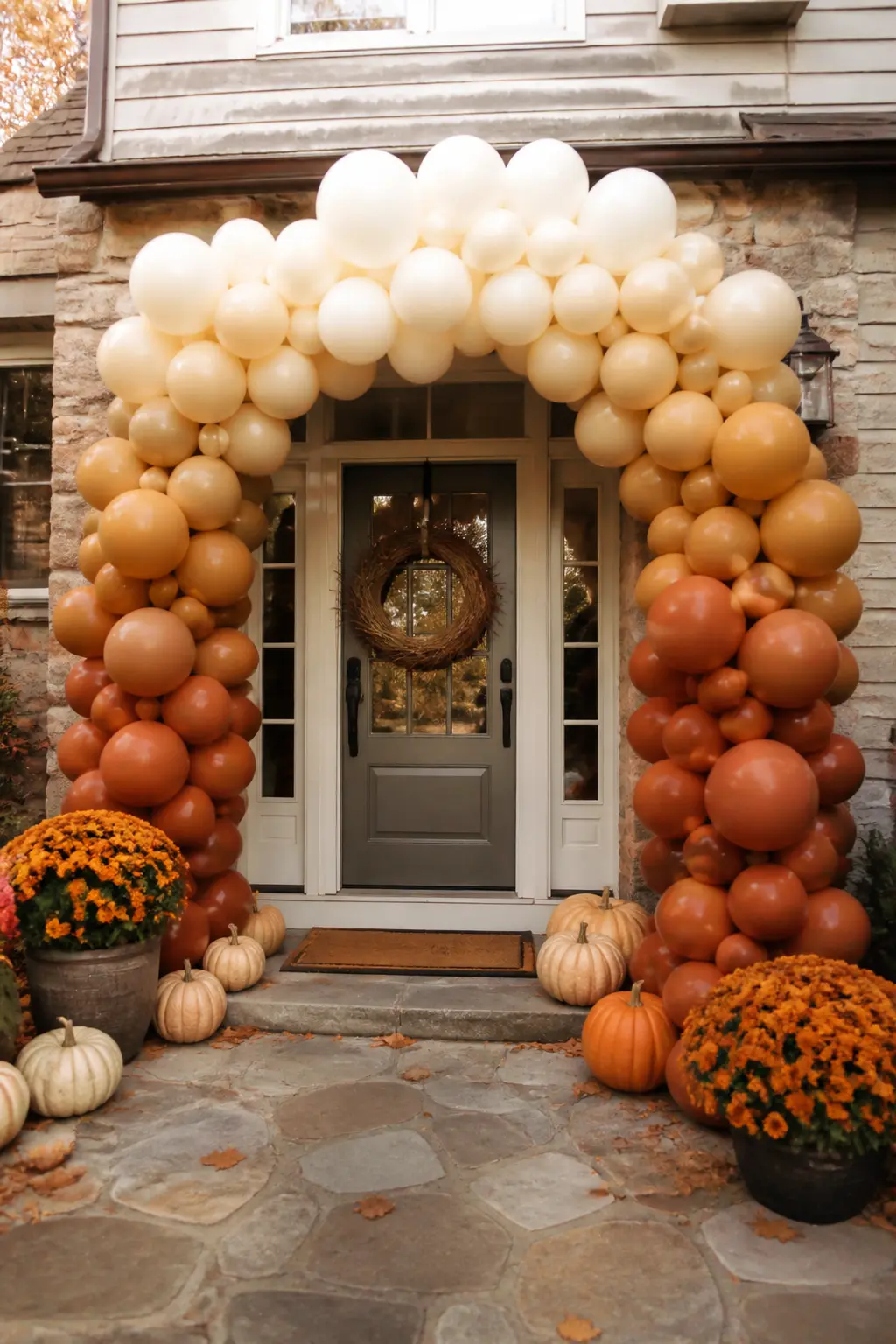
Cream to Caramel to Rust at an Autumn Birthday Entrance
An entrance arch has one job: make people feel they have arrived somewhere. This autumn palette, cream at the crown, warm caramel in the body, rust at the base, does that without a single leaf or pumpkin prop. The colours carry the season on their own.
Matte-finish balloons only: rust in glossy latex reads as orange and loses the earthy quality that makes this palette work. Source the rust shade specifically rather than substituting with orange, because the difference is significant in person even if it looks similar on a screen.
🛍 Shopping guide
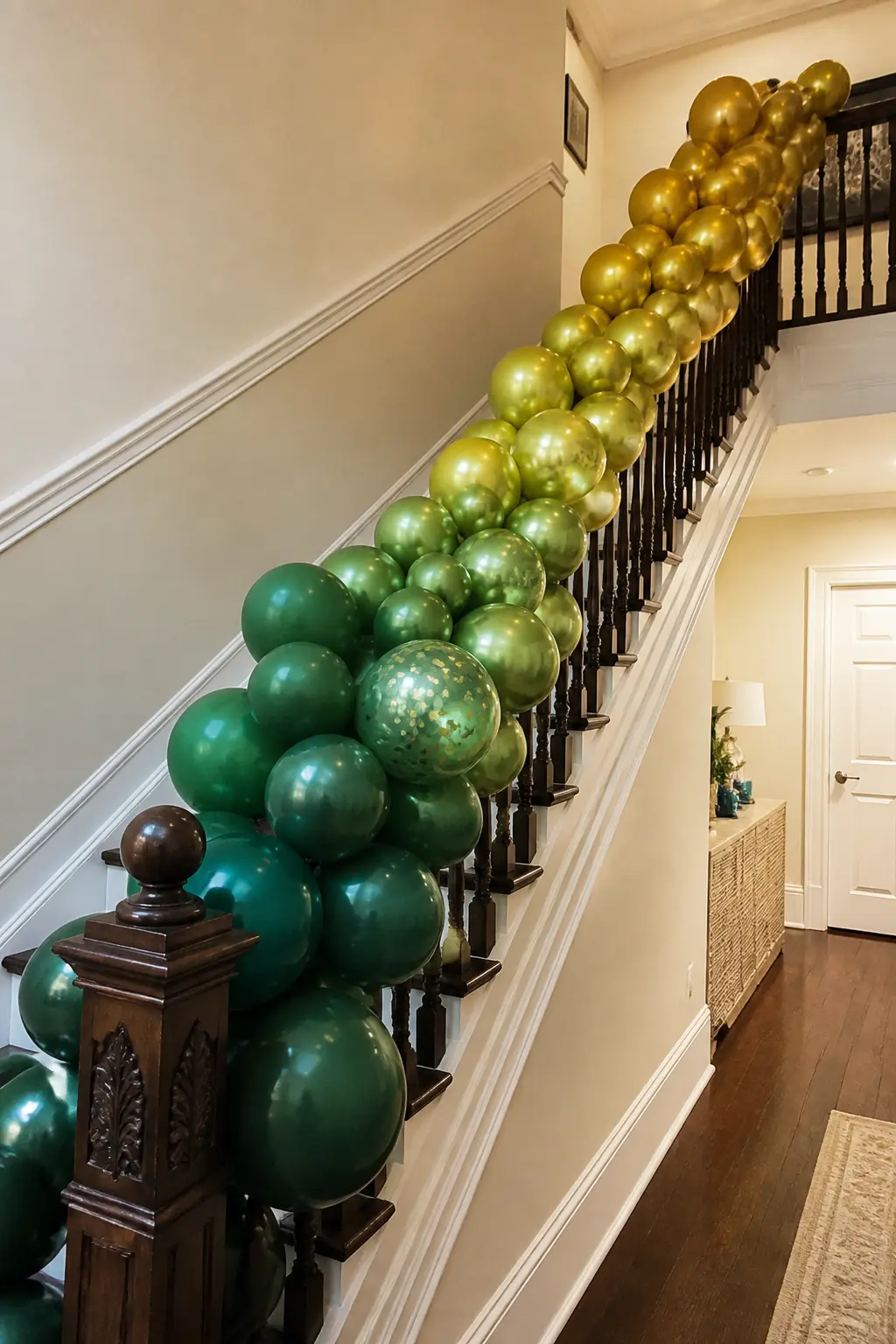
Green to Gold Along a Stair Banister for a New Year Party
A stair banister is a natural balloon garland rail and needs no additional frame. This New Year garland runs bottle green at the bottom stair through emerald and olive to chrome gold at the top landing. Guests walk up through the fade, which is a small theatrical effect that costs nothing extra.
Chrome gold at the top catches the hallway light and signals the party level of the house. Keep the green section matte so the gold at the top has contrast to land against. A full chrome garland from bottom to top reads as glittery rather than elegant.
🛍 Shopping guide
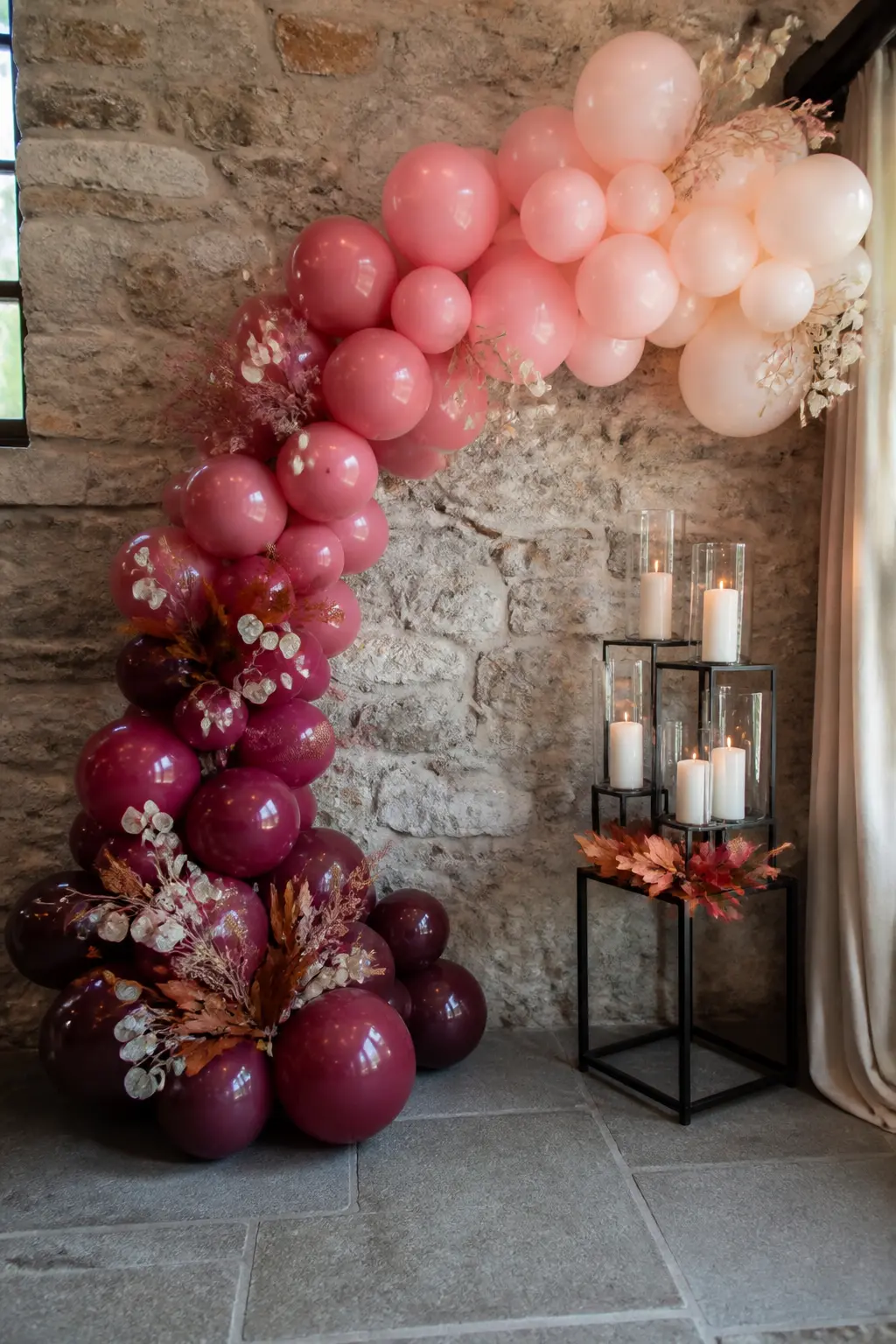
Burgundy to Blush at an Autumn Wedding Photo Corner
A photo corner is a backdrop that earns its space by being used: every guest stands in front of it at some point. This arch fades from burgundy at the base on both legs through berry, rose and dusky pink to blush at the crown. The dark base grounds the composition so people standing in front of it are framed rather than washed out.
Dried lunaria (honesty) and preserved magnolia leaves wire into the burgundy section for texture. Both are available in autumn tones and last through a long day without wilting.
🛍 Shopping guide
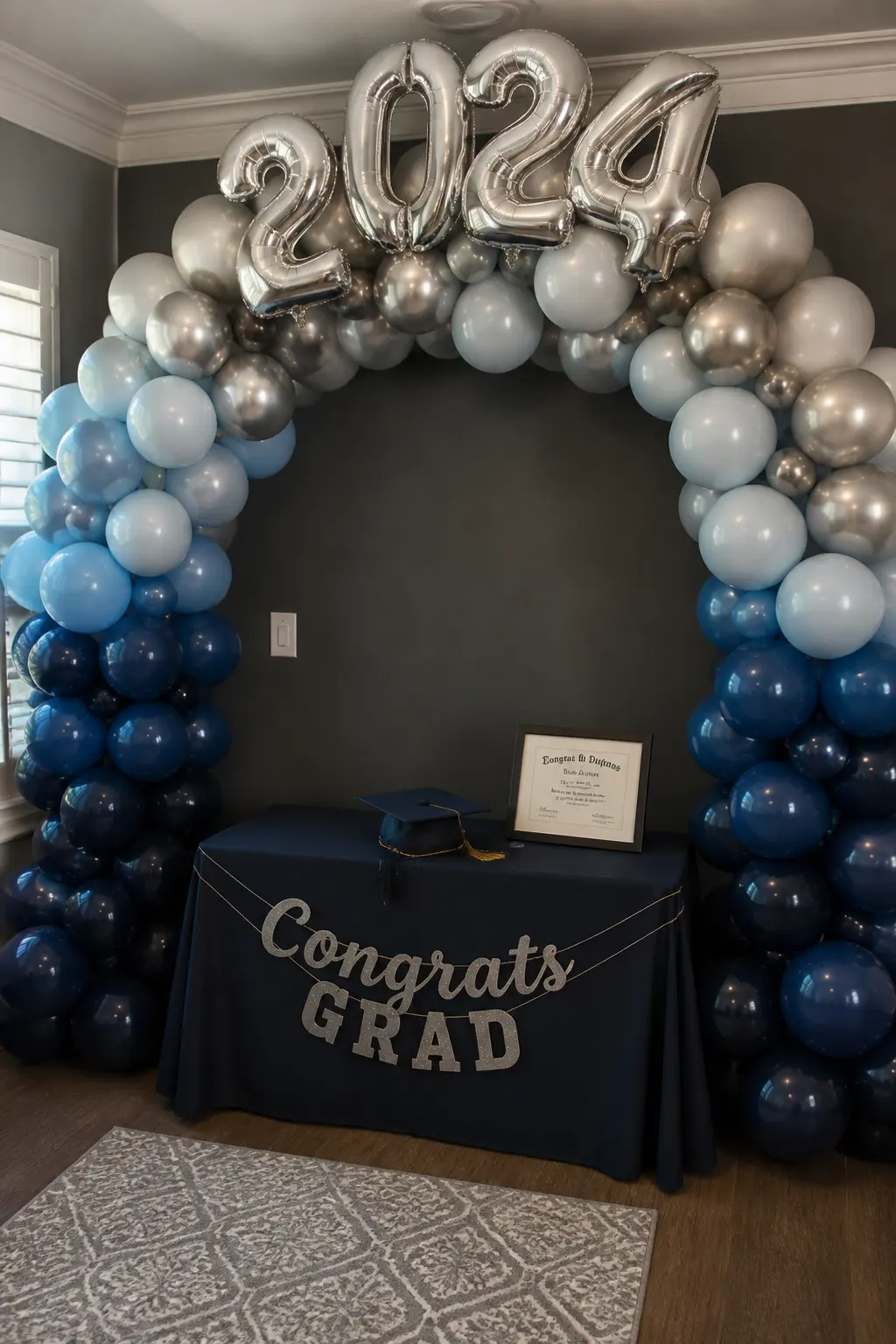
Navy to Silver at a Graduation with Number Balloons
A graduation arch needs to hold number balloons without the numbers looking bolted on. This one fades from navy at the legs to chrome silver at the crown, and large chrome foil number balloons sit inside the silver section at the top where they belong to the colour rather than interrupting it.
Navy, royal blue, cornflower, pale silver-blue, chrome silver: five steps. The number balloons go in last, pressed into the topmost silver cluster. Because the foil and the chrome latex share a finish, the numbers read as part of the arch rather than additions to it.
🛍 Shopping guide
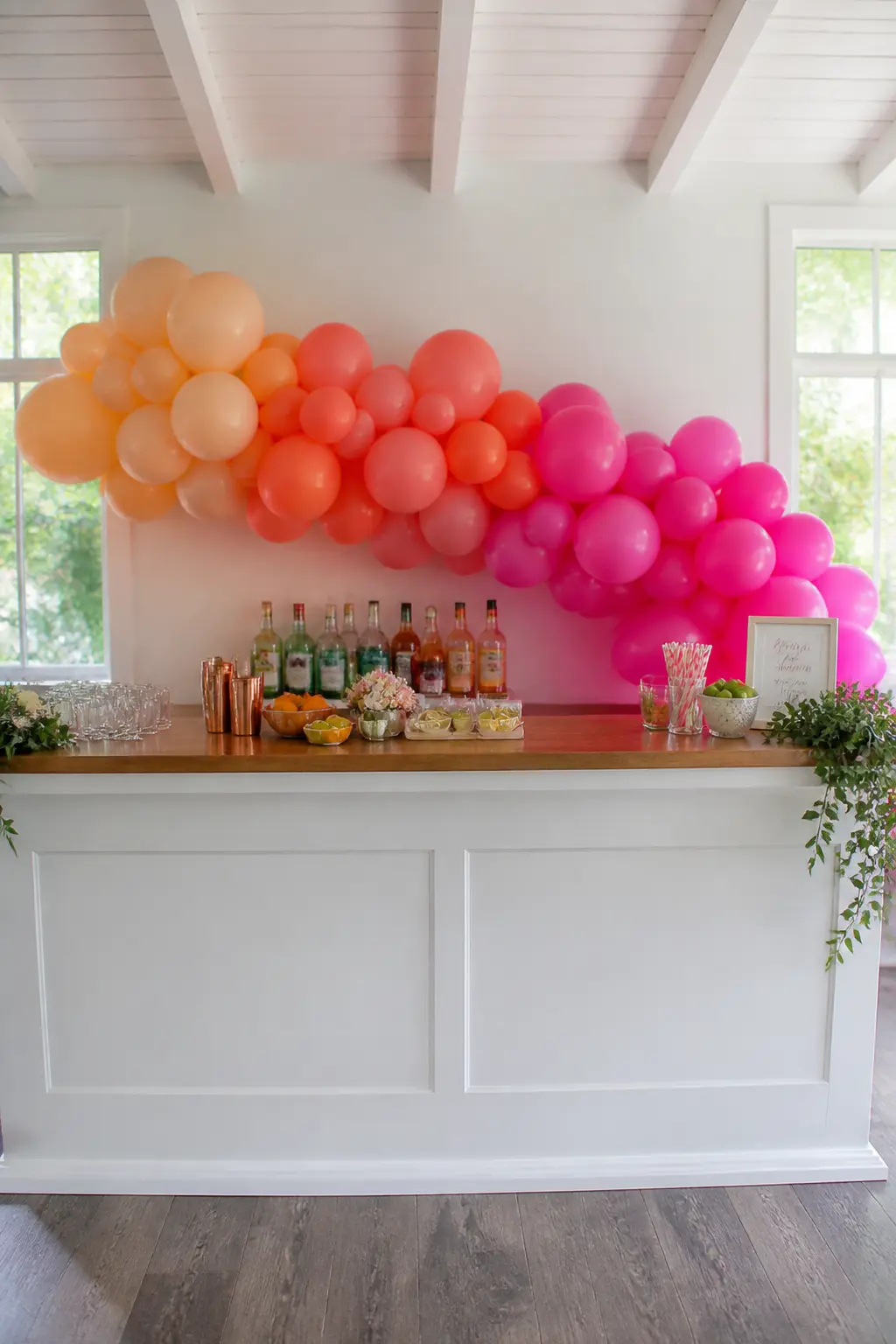
Peach to Coral to Hot Pink Behind a Summer Bar
A bar backdrop works differently from a table backdrop: people stand in front of it for extended periods while drinks are poured, so it gets a lot of camera time from a lot of angles. This garland runs full width behind the bar, peach at the left, coral in the centre, hot pink at the right, and it photographs well from both ends of the bar and from straight on.
The fade runs left to right in one direction rather than symmetrically, which means the photo angle determines which colour reads as dominant. That is useful when you cannot predict where most guests will stand.
🛍 Shopping guide
Modern and Monochrome Arches
A fade within a single hue family is harder to execute but quieter on the eye. White to charcoal, grey to white, cream to caramel: these palettes photograph beautifully in modern interiors and do not clash with existing decor. They also forgive imperfect blending better than saturated colours do.
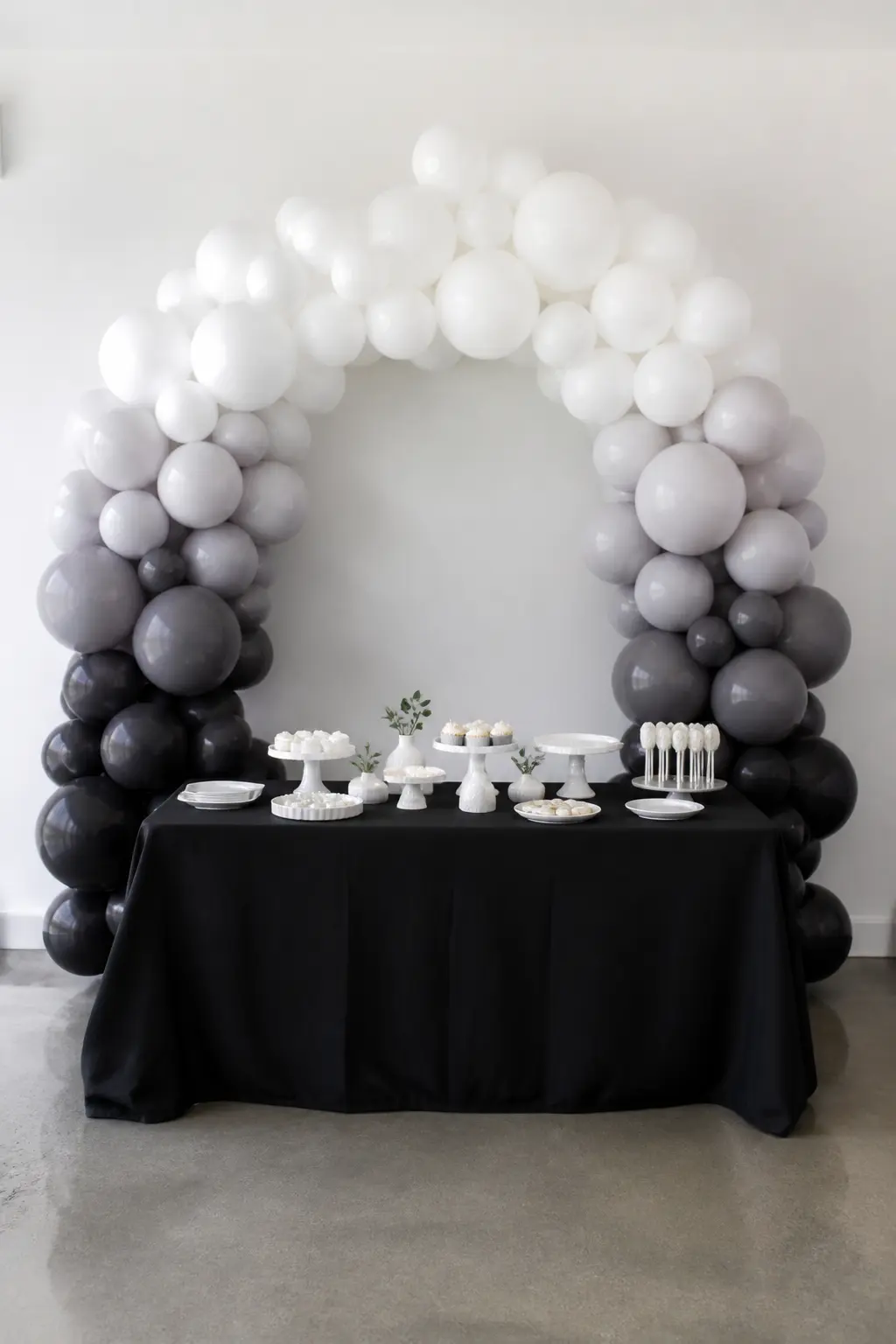
White to Charcoal Behind a Modern Flat’s Dessert Table
This arch is for the host whose flat has concrete floors and white walls and does not want anything that looks like a party shop. White at the crown, pale grey in the body, mid-grey at the transition, charcoal at the base: the arch reads as architectural rather than festive from across the room.
Use matte finish throughout. The dessert table below is dressed in black linen with white ceramic plates, so the arch and the table share the same tonal palette and the whole setup reads as one composed image. See also this edit of Halloween balloon arch ideas for more monochrome setups that suit a modern interior.
🛍 Shopping guide
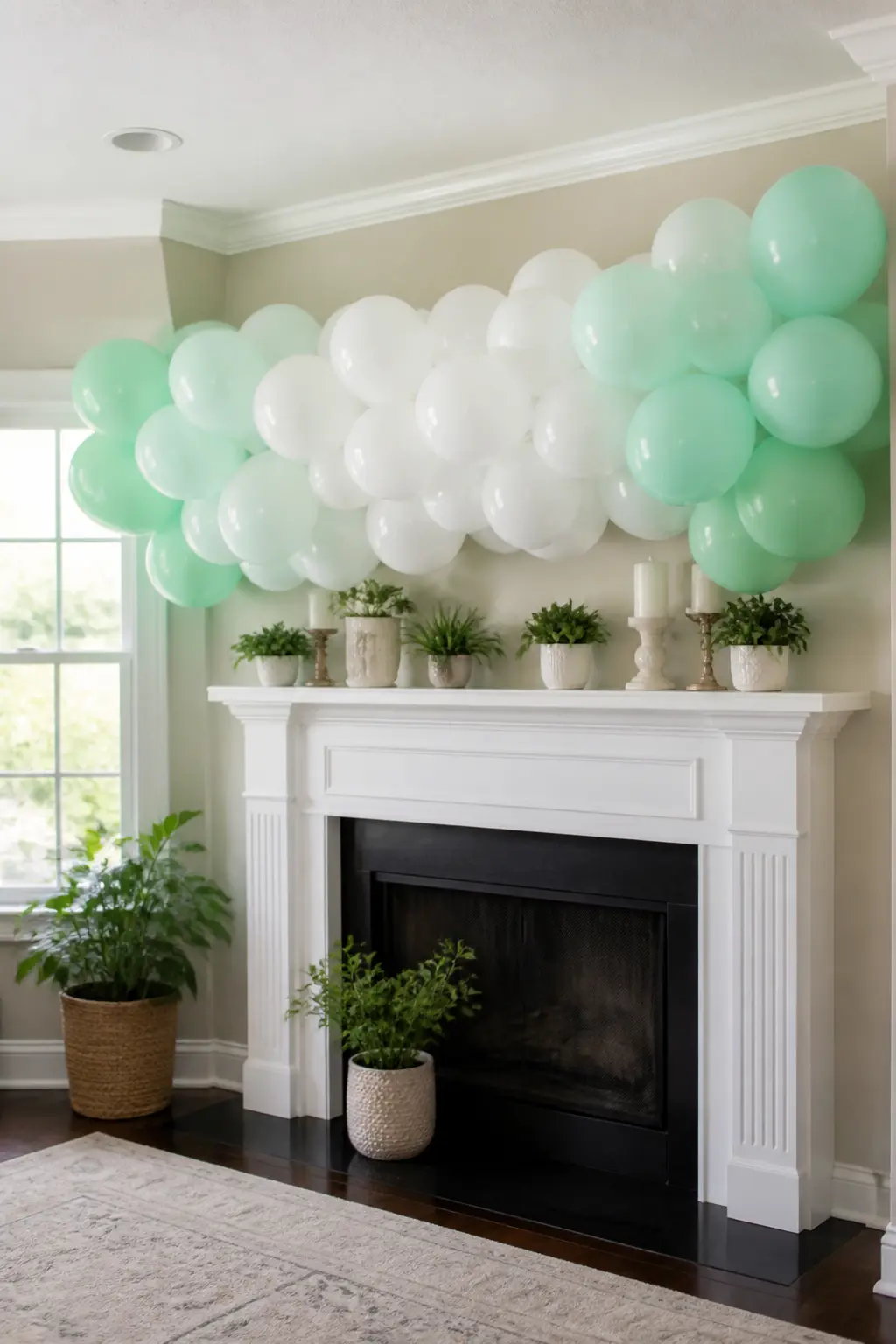
Mint to White Along a Mantel for a Spring Party
A mantel garland is a compact build that works in any living room without requiring a stand or a frame. This one starts in mint at the outer ends and fades to white at the centre, directly above the fireplace opening. The white centre reflects the firelight if the grate is lit, which adds warmth to what might otherwise feel like a cool palette.
Use 5-inch balloons throughout so the garland sits within the mantel depth rather than projecting out into the room. Tuck a few sprigs of white wax flower into the mint sections to bridge the gap between the balloons and any existing mantel plants.
🛍 Shopping guide
Lilac to White Cascade Beside a Nursery Door
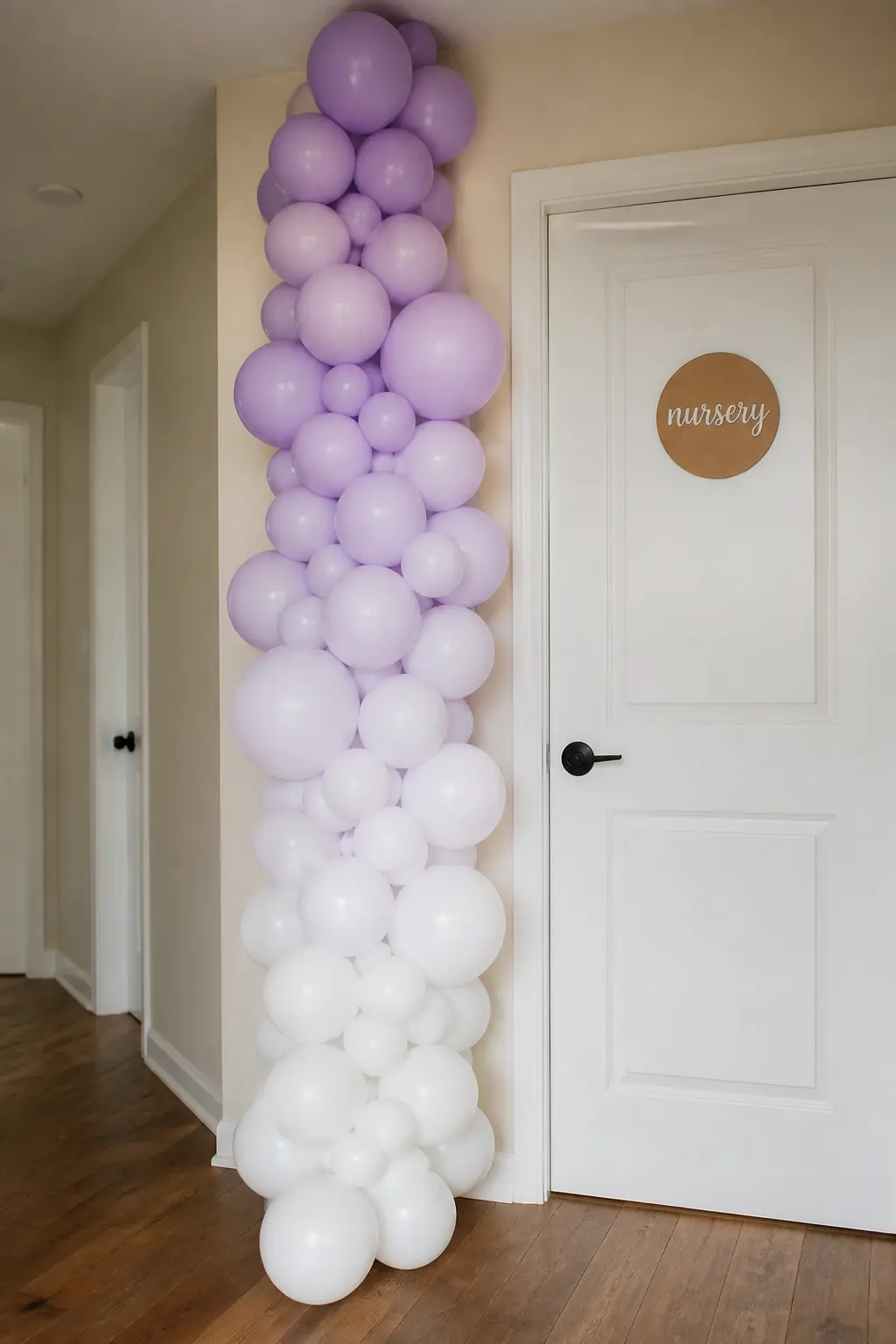
This cascade is not a full arch: it is a one-sided column that runs from ceiling to floor beside a door frame. Lilac at the top fades through pale lavender and barely-there blush-purple to white at the floor. It marks the nursery door as the destination for a welcome-home party without attaching anything to the door itself.
Column builds are faster than full arches because you only build one leg. They also cause less wall damage because you need fewer anchor points. A single ceiling hook and a small floor weight are enough to hold a 6-foot column in place for an evening.
🛍 Shopping guide
How to Make the Fade Actually Work
These four entries are the ones to read before you inflate a single balloon. Each one addresses a specific reason a fade turns into a stripe. Together they form a checklist you run through once, on the floor, before anything goes on the wall.
The method is not complicated. It is just more steps than most tutorials show, and the steps happen in a particular order. Start with entry 25 and work forward.
Method: Use Five Shades, Not Three
Three shades gives you two transition zones. Five shades gives you four. That doubled number of transition zones is the entire reason a fade reads as a fade and not as a stripe. This is not a stylistic preference: it is arithmetic.
When you plan the arch, name all five shades before you buy anything. Write them in order and count the zones between them. If you cannot name five distinct shades, the colour range you have chosen may be too narrow: either widen the palette or add a white or cream as a buffer at one end.
Ordering test: lay the five balloons in a line on a white floor. If you can see a clear boundary between any two adjacent balloons without looking for it, those two shades are too far apart and you need an intermediate shade between them. Do this test before you build anything.

🛍 Shopping guide
Method: Overlap Two Shades in Each Transition Zone
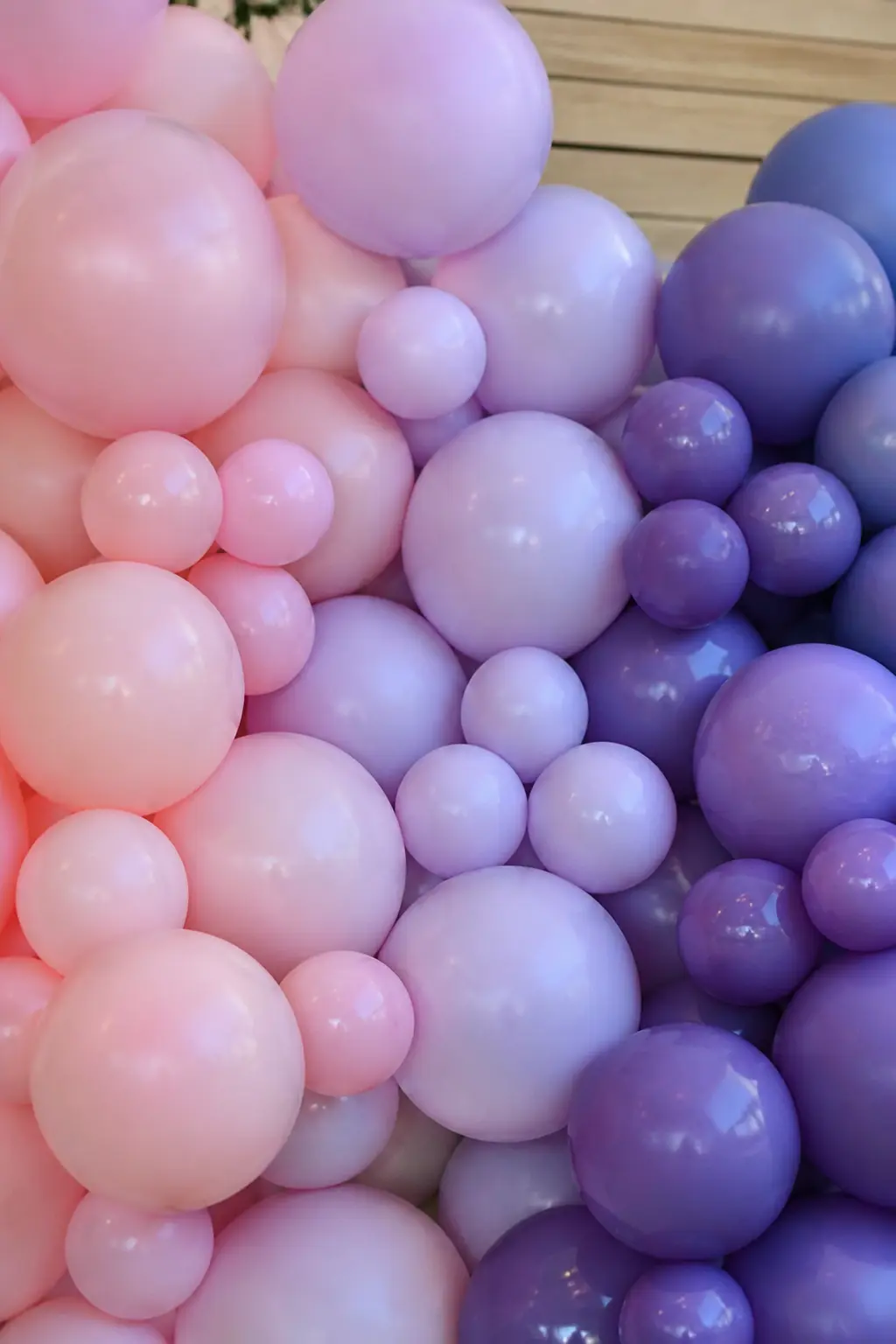
A transition zone is the stretch of garland where shade A hands off to shade B. The error most first-time builders make is ending shade A completely before starting shade B. The zones then read as edges rather than gradients.
The fix: in every transition zone, use both shades simultaneously. If your zone is ten balloons wide, the first three are all shade A, the next four alternate A and B, and the last three are all shade B. That alternating middle section is what produces the blur. Add more balloons in the transition zone than at the solid-colour ends: density softens boundaries in the same way blur softens a photograph.
You will use more balloons than the packet count on most garland kits suggests. Budget for roughly twenty percent more across the transition zones and do not cut that budget: the extra balloons are the actual product you are buying.
🛍 Shopping guide
Method: Mix Balloon Sizes Within Each Shade
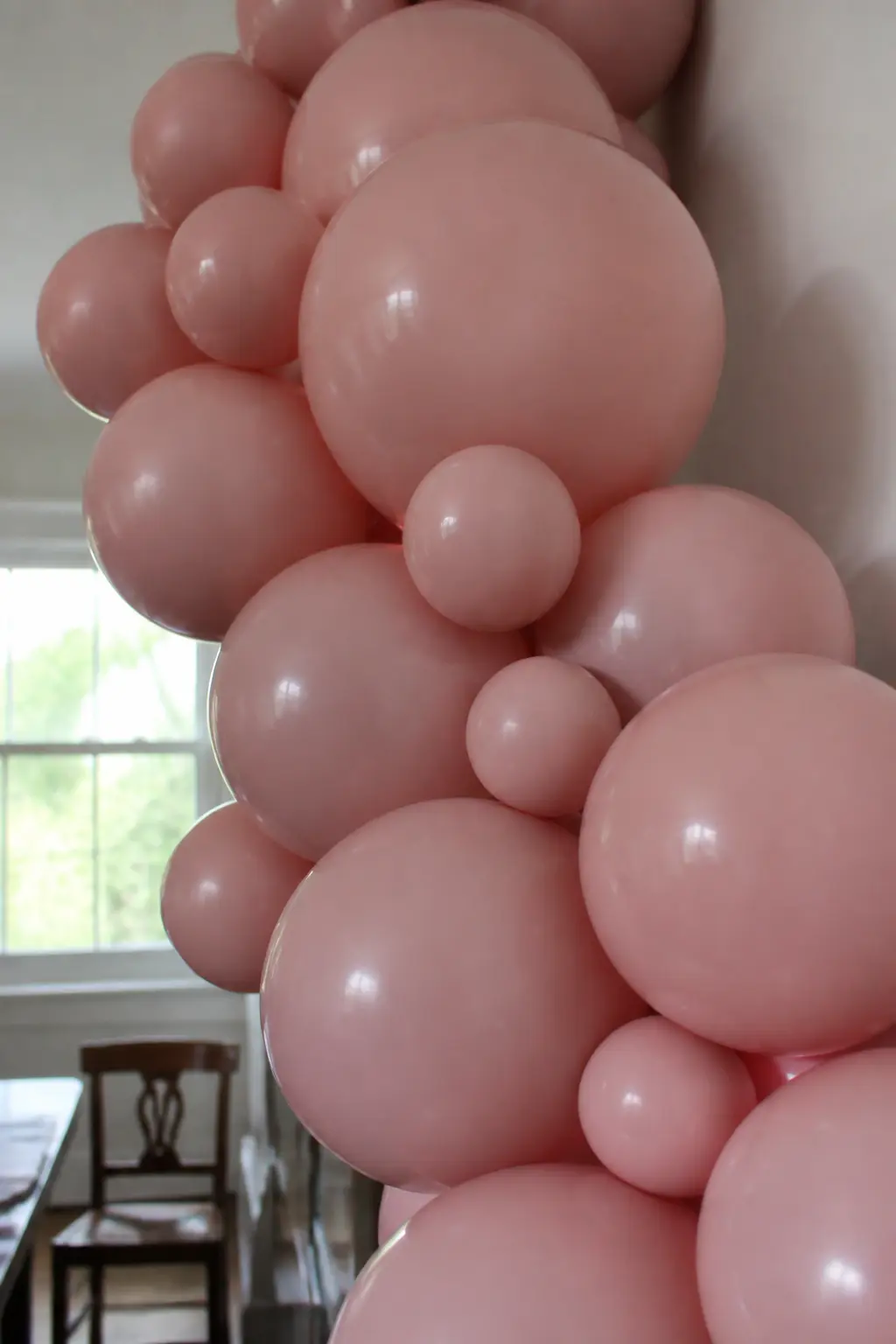
A garland built from balloons of a single size looks machine-made. More importantly for the fade, uniform sizing means every balloon edge is visible, and visible edges read as stripes. Size variation softens those edges because the smaller balloons tuck between the larger ones and break the row structure.
Use three sizes: 5-inch, 11-inch, and 16-inch. Attach the 16-inch balloons first as anchors, then fill with 11-inch, then push 5-inch balloons into the gaps. The result is an organic surface rather than a grid. In the transition zones, use the smallest balloons (5-inch) most heavily: their reduced surface area makes the colour shift less abrupt and blurs the edge between shades more than a large balloon can.
This sizing approach also reduces the total number of large balloons needed, which cuts cost without reducing visual mass. Fewer expensive 16-inch balloons, more inexpensive 5-inch in the transitions: the arch looks fuller and the fade looks smoother at the same time.
🛍 Shopping guide
Method: Lay It on the Floor and Photograph It Before Mounting
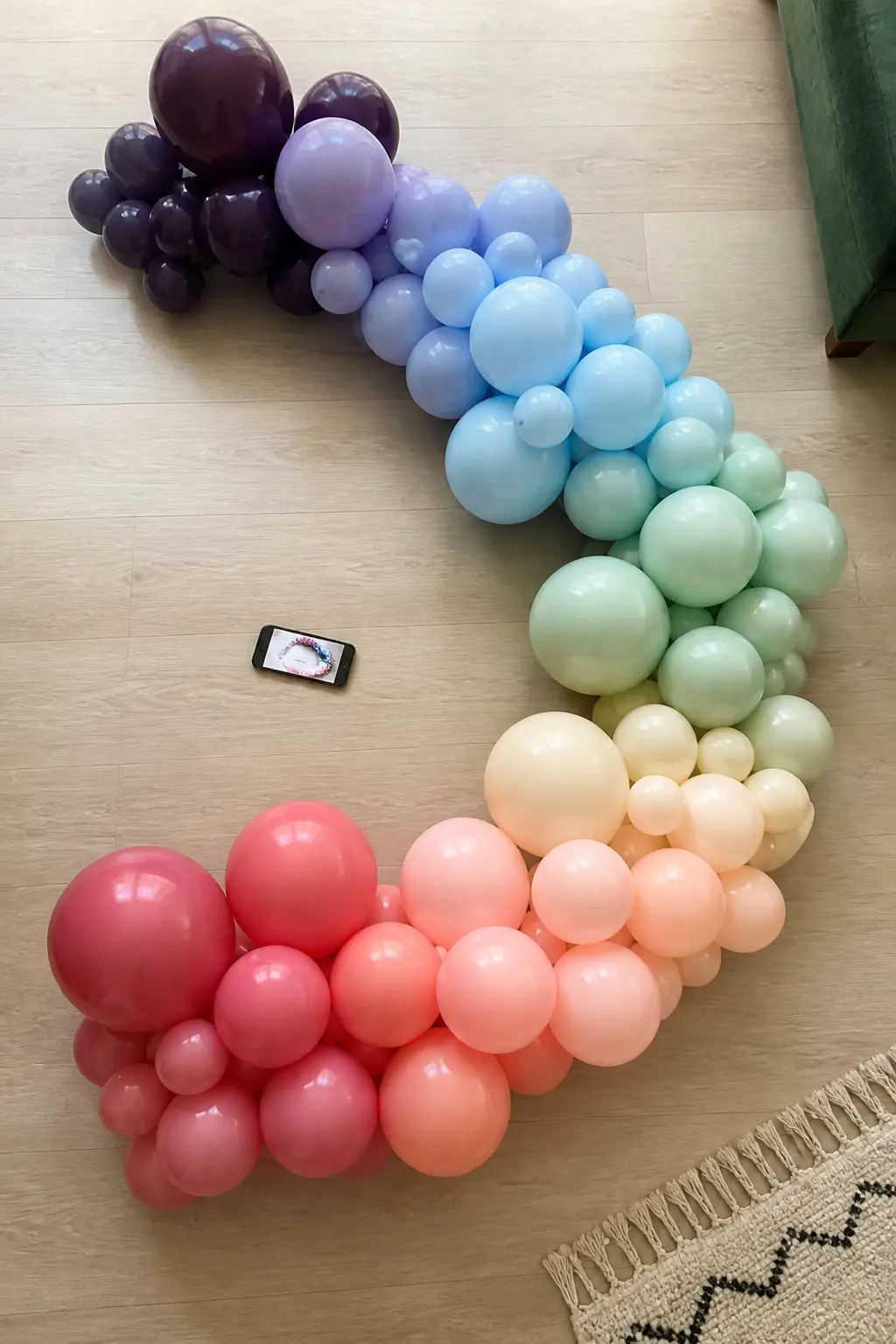
Build the entire garland on the floor before a single balloon goes on a wall. Lay it in the shape it will take when mounted: curved if it will arch, straight if it will run along a mantel or fence. Step back and photograph it on a phone from above.
The phone camera compresses colour faster than the human eye does. If the fade looks smooth in the photograph, it will look smooth on the wall. If stripes are visible in the photograph, they are there, and moving balloons now takes thirty seconds per cluster. Moving them after mounting takes ten minutes and causes three to pop.
Check three things in the photograph: the transition zones (do the colours blur or cut), the density (are the transition zones fuller than the ends), and the size variation (can you see the smaller balloons filling the gaps). Fix anything that fails those three checks on the floor, not on the wall. That single step, photographing before mounting, is what separates an arch that looks professional from one that looked better in the inspiration photo.
🛍 Shopping guide
Frequently Asked Questions
Why does my ombre balloon arch look like stripes?
The most common cause is using too few shades. Three colours give you two transition zones, which read as edges rather than a gradient. Use five shades, overlap two shades simultaneously in each transition zone, and add more balloons in those zones than at the solid-colour ends. Lay the finished garland on the floor and photograph it on a phone before mounting: stripes that are visible in the photo will be visible on the wall.
How many shades do you need for a smooth ombre balloon arch?
Five is the practical minimum for a fade that reads as smooth rather than striped. More than seven shades across a short arch can create its own problem: the sections become too thin to register. For a standard arch of around 8-10 feet, five to seven shades gives enough space for each colour to appear without the zones collapsing into each other.
What balloon sizes should you mix for an ombre arch?
Three sizes work best: 16-inch for anchors, 11-inch for fill, and 5-inch for gaps and transition zones. The small balloons are the most important: their reduced surface area means their colour reads less sharply and blurs the boundary between shades. Use the 5-inch size most heavily in the transition zones and least heavily in the solid-colour sections at each end.
Can you make an ombre balloon arch without helium?
Yes. Helium is not required for any garland or arch that is attached to a surface. Air-filled balloons also last significantly longer than helium ones, which matters when you are building an arch the day before an event.
How do you add florals or greenery to a balloon arch?
Wire stems into the garland using thin floral wire looped around the balloon knots. Fresh flowers go in within two hours of setup so they do not wilt before guests arrive. Dried botanicals such as pampas, lunaria or eucalyptus can go in the day before. Keep florals in the transition zones and the solid-colour ends, not spread evenly: concentrated botanical detail in one zone draws the eye there and can help mask an imperfect colour blend.
How long does an air-filled balloon arch last?
Indoors, an air-filled latex balloon garland typically holds its shape for three to five days. Outdoors in direct sun or heat, reduce that estimate significantly: heat expands latex and can cause balloons to pop. For outdoor arches, inflate to about eighty percent of maximum capacity and set up as close to the party start time as is practical.

24 football theme party ideas for watch parties, tailgates and championship nights. Décor, table st
20 house party games for a packed crowd — quick rules, no big space, easy to jump into mid-party.
31 rainbow balloon arch ideas from dusty adult palettes to bright kids' doorways, each one a finishe
Leave a Reply