

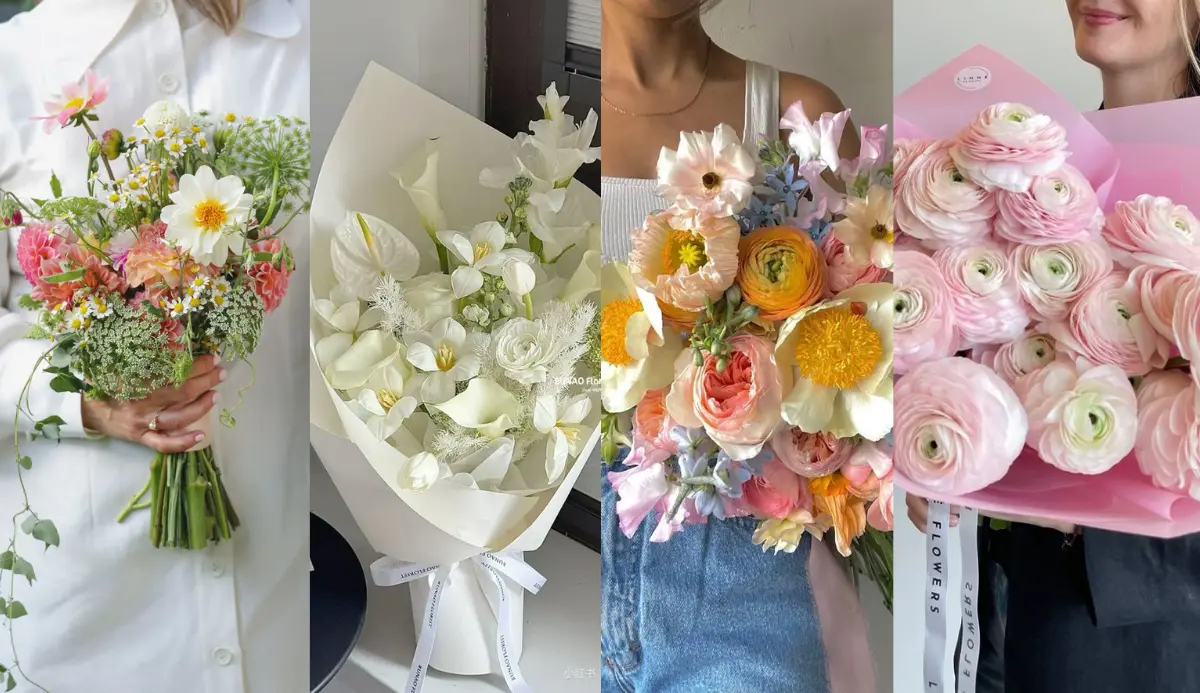
There’s a particular kind of panic that sets in around the second week of April, when you suddenly remember that Mother’s Day exists and you haven’t planned anything. Again. You could do brunch—but then you’d have to make reservations, which are probably already booked. A gift card feels impersonal. Jewelry seems like you’re trying too hard. Which leaves flowers.
Except flowers have their own reputation problem. The last-minute grocery store carnations wrapped in crinkly cellophane. The cookie-cutter arrangements that look identical whether they’re for Mother’s Day, Valentine’s Day, or a corporate apology. The bouquets that arrive looking nothing like the website photo, half-dead and listing to one side.
But here’s the thing about flowers: when they’re done right, nothing else comes close. A truly beautiful bouquet—one that feels personal, seasonal, alive—can stop a conversation mid-sentence. It transforms a kitchen counter into something worth photographing. It makes someone feel seen in a way that even the most expensive gift card cannot.
This year, the floral world has shifted toward arrangements that feel less like floral shop formality and more like you raided a particularly gorgeous garden on a spring morning. The stiff, symmetrical designs of the ’90s have given way to looser, more organic compositions. Flowers cascade and curve. Stems cross at interesting angles. The whole thing looks like it might sway if you opened a window.
So whether you’re calling a florist or rolling up your sleeves to try this yourself, here’s what actually works for Mother’s Day 2026—and why it matters.
Affiliate Disclosure
This post contains affiliate links. If you make a purchase through these links, I may earn a small commission at no extra cost to you. I only recommend products I genuinely use and love.
The New Language of Flowers
Walk into any trendy florist right now and you’ll notice something: the arrangements don’t look “arranged” anymore. They look gathered. Collected. As if someone wandered through a meadow with very good taste and came back with an armful of the best blooms.
This isn’t accidental. It’s a deliberate rejection of the overly manicured look that dominated floral design for decades. No more flowers standing at attention like well-behaved soldiers. No more perfectly spherical bouquets that look like they’ve been constructed with a protractor.
The contemporary aesthetic embraces movement and texture. A rose doesn’t sit primly in the center—it leans. Tilts. Mingles with ranunculus and sweet peas in a way that feels natural rather than engineered. Foliage isn’t just filler; it’s architecture. Silver eucalyptus trails over the edge. Jasmine vine weaves through the stems. Even simple greenery like rosemary or sage adds fragrance and character.
What makes this approach work is the element of surprise. You expect roses, and you get them—but paired with unexpected rust-colored ranunculus or chocolate cosmos. You anticipate pink, and it’s there—but in five different shades from blush to burgundy, creating depth instead of monotony.
This is flowers for adults who’ve developed actual taste. No baby’s breath unless it’s used ironically and sparingly. No dyed carnations in unnatural colors. Nothing that looks like it was assembled by someone following a diagram.
When to Call in the Professionals
Let’s start with the easier route: ordering from someone who does this for a living.
A good florist is worth their weight in peonies, particularly for Mother’s Day when expectations run high and flower prices run higher. They have access to wholesale markets where you’ll never shop. They know which roses will actually open and which will stay stubbornly closed. They can tell you whether peonies will be available on May 11th or whether you’re two weeks too early.
But here’s what many people get wrong when ordering: they’re too vague or too specific, with no middle ground.
Too vague sounds like: “I want something pretty for my mom.”
That tells the florist nothing. Your mom could love bold modern design or cottage garden romance. She might prefer all white or need maximum color. “Pretty” could mean a $40 grocery store mixed bunch or a $200 statement arrangement.
Too specific sounds like: “I need exactly this bouquet”—while showing a Pinterest image of something a celebrity florist created with $500 worth of imported Icelandic poppies.
The florist will either tell you it’s impossible (correct but unhelpful) or try to approximate it with completely different materials (disappointing for everyone).
The sweet spot sounds like: “I’m looking for a loose, garden-style arrangement with soft romantic colors—thinking blush, cream, maybe some peach. My mom loves roses but I’d like some interesting texture too, not just a standard rose bouquet. Budget is around $100.”
That gives the florist a mood, a direction, a price point, and enough flexibility to work with what’s actually available and beautiful right now.
The Garden Romance
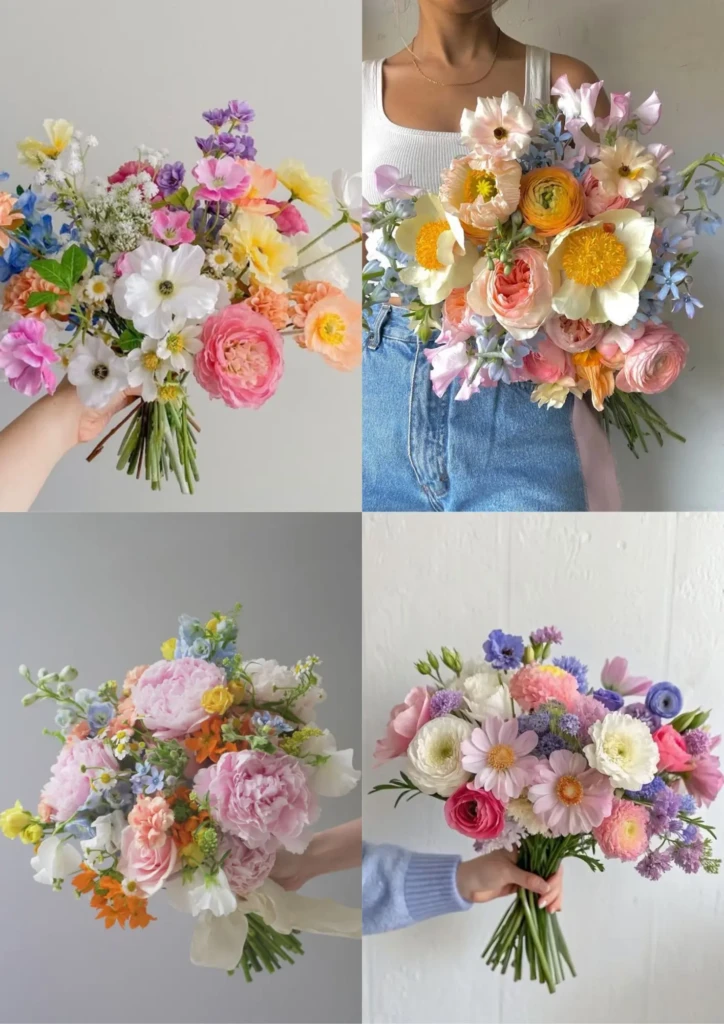
If you could only master one bouquet style, this is the one. It’s flattering to every interior design aesthetic from farmhouse to modern. It photographs beautifully. It feels expensive without necessarily being expensive. And crucially, it appeals to both mothers who claim they “don’t care about flowers” and those who definitely do.
The defining characteristic is abundance without chaos. Lots of flowers, but they’re not fighting each other. Colors relate rather than clash. Different textures create visual interest: the solid mass of a rose against the delicate frills of a ranunculus, the architectural quality of a tulip next to the softness of sweet peas.
If you’re ordering this: Ask for “garden-style” or “naturally arranged” and specify you want movement and texture, not symmetry. Request garden roses or spray roses rather than the standard long-stem commercial variety—they have more personality and fragrance. Ask what seasonal elements they recommend adding.
Good florists love this question because it lets them showcase whatever just arrived that’s exceptional. Maybe it’s flowering quince branches. Maybe it’s the first peonies of the season. Maybe it’s an unusual variety of tulip they’re excited about.
Expect to pay $75-150 depending on size and location. In major cities, add another $30-50 for the real estate premium.
If you’re making this yourself: Start at Trader Joe’s on a Wednesday or Thursday when they restock. Buy three different types of flowers—say roses, ranunculus, and tulips. Grab eucalyptus or any interesting greenery. Get more than you think you need; you can always save extras for a smaller arrangement.
The technique is simpler than you’d expect: hold flowers in your hand while you build the bouquet, adding stems at slight angles and rotating as you work. This creates a spiral that makes everything naturally round. Strip leaves that would sit in water. Secure with floral tape, cover with pretty ribbon, trim stems to the same length.
Your first attempt will probably be either too tight (making it look stiff) or too loose (making it fall apart). This is normal. Make one for yourself first as practice. Use grocery store flowers. Accept imperfection.
The total cost is usually $30-50, and it takes about 45 minutes once you understand the basic technique.
The Power of One
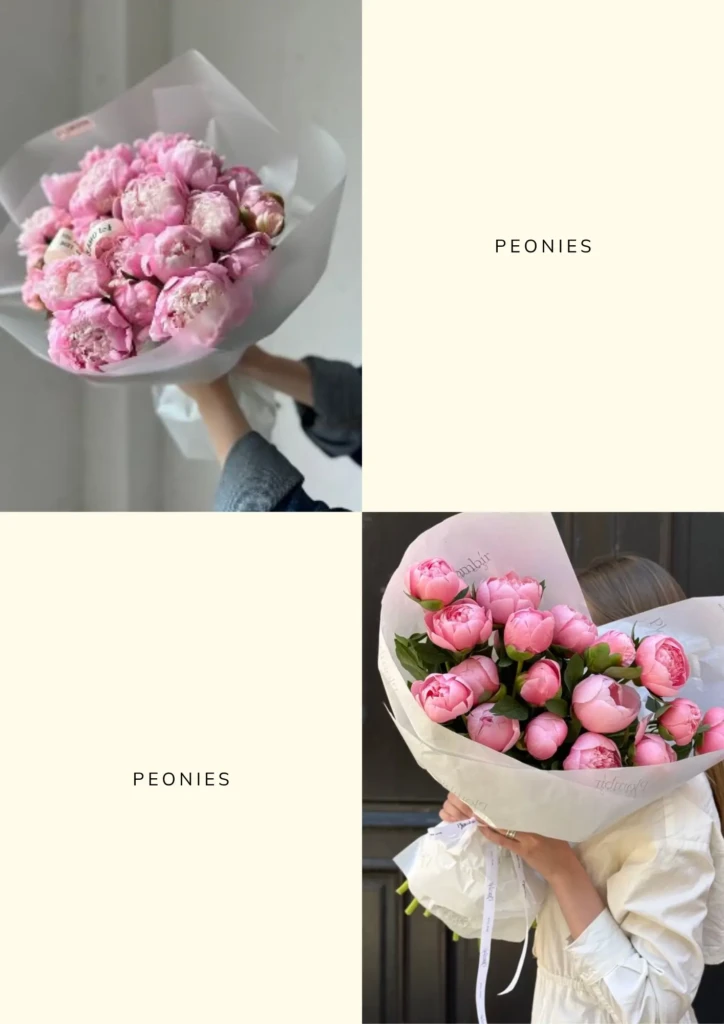
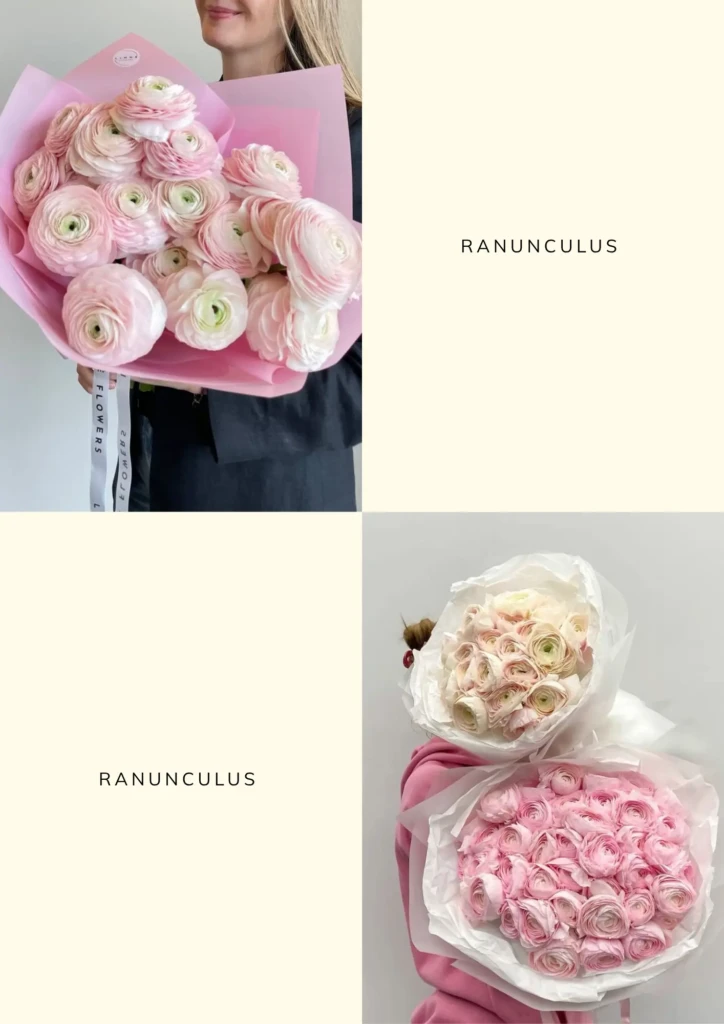
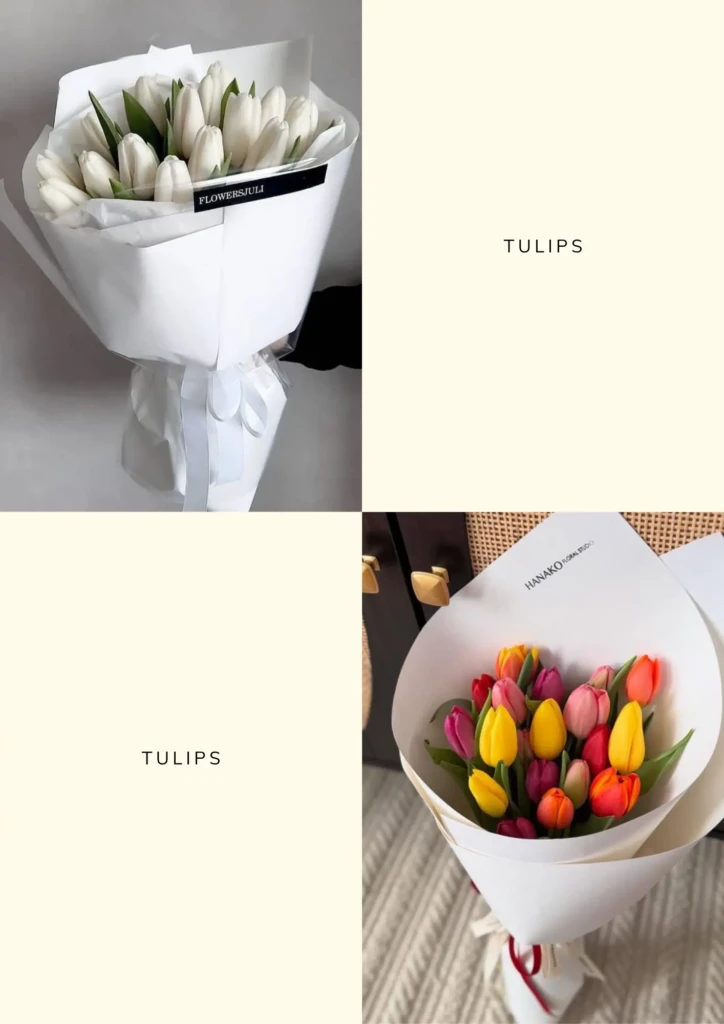
Here’s something counterintuitive: sometimes one perfect thing beats a dozen pretty good things.
The monobotanical arrangement—where you use just one type of flower, massed together—creates impact through sheer repetition. Twenty-five tulips. Fifteen garden roses. Thirty ranunculus. The power comes from seeing one beautiful thing multiplied until it becomes something else entirely.
This approach has become increasingly popular because it’s both dramatic and surprisingly simple. No worrying about whether colors work together. No complicated balance of different elements. Just: this flower is beautiful, so here’s a lot of it.
The best candidates for this treatment:
Peonies, if you can get them and afford them. One peony is lovely; fifteen peonies is an event. They’re only available for about six weeks in late spring, which makes them feel special rather than generic.
Ranunculus work beautifully because their layers of petals create incredible texture when you see them en masse. They come in virtually every color, so you can customize to your mother’s preferences.
Tulips are the budget-friendly option here. Costco sells tulips in bulk—buy five bunches in coordinating shades, put them all in a low, wide vase, and suddenly you have something that looks like it cost three times what it did.
If you’re ordering this: Be clear that you want a monobotanical arrangement and specify the flower. “I’d like all peonies—no filler flowers, just peonies and minimal greenery for about $150.” Order at least a week ahead, particularly for peonies which have limited availability.
If you’re making this: This only works with bulk purchasing. Five ranunculus don’t create impact; twenty-five do. Shop wholesale flower markets if your city has one (many open to the public on weekends), or buy multiple bunches from Costco or Trader Joe’s.
The arrangement technique is actually simpler than mixed bouquets. Cut all stems to the same length, remove excess foliage, and place them tightly together in a vase. The impact comes from density—flowers should touch each other, creating one unified mass of color and texture.
Cost ranges from $40 (tulips) to $150+ (peonies), depending on flower choice and quantity.
The Wildflower Moment
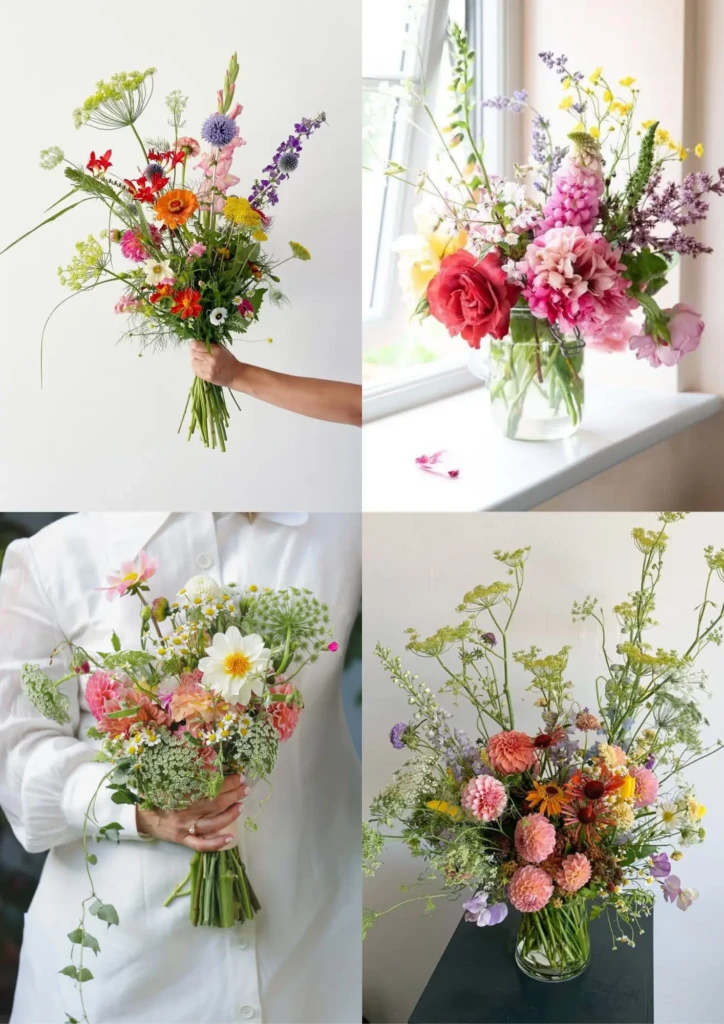
If your mother’s aesthetic runs more “farmhouse table” than “formal dining room,” this is your answer. The wildflower arrangement celebrates whatever’s actually blooming right now, with an emphasis on seasonal and local.
What makes this style work is its deliberate informality. It’s not trying to be perfect. Stems curve naturally. Heights vary. Some flowers face forward, others to the side, a few look slightly away as if they have somewhere more interesting to be. The whole thing has the energy of something just gathered, still carrying the outdoors inside.
For spring Mother’s Day, that typically means:
Tulips, but not the standard grocery store variety. French tulips with their elongated stems. Parrot tulips with their ruffled, striped petals. Any tulip variety that makes you stop and look twice.
Flowering branches—cherry, dogwood, quince, even apple blossoms if you can get them. These provide height and structure while instantly making any arrangement feel more expensive than it is.
Ranunculus, which are having a prolonged moment because they photograph beautifully and last surprisingly well in the vase.
Any true wildflowers if you have access—just make certain they’re legal to pick and not protected species. Not everything pretty is available for cutting.
If you’re ordering this: Ask for a seasonal arrangement using locally-sourced materials. Use the term “slow flowers” if you want to signal you care about sustainability and seasonal appropriateness. Request flowering branches if available. Specify you want a loose, meadow-inspired look.
If you’re making this: This is actually the easiest approach because it works with whatever you can find. Visit a farmer’s market and buy a few bunches of whatever looks good. Supplement with grocery store flowers if needed. Raid your own garden or a friend’s (with permission).
Start with the largest elements—flowering branches create your framework. Add focal flowers loosely throughout. Fill in with smaller blooms and interesting foliage. The goal is abundance that still feels natural, not manicured.
This is nearly impossible to do wrong because imperfection is built into the aesthetic. If it looks like you gathered it during a walk, you’ve succeeded.
Cost: $10-30 if supplementing garden flowers with a few purchased stems, or $60-100 if ordering from a florist.
The Sophisticated Neutral
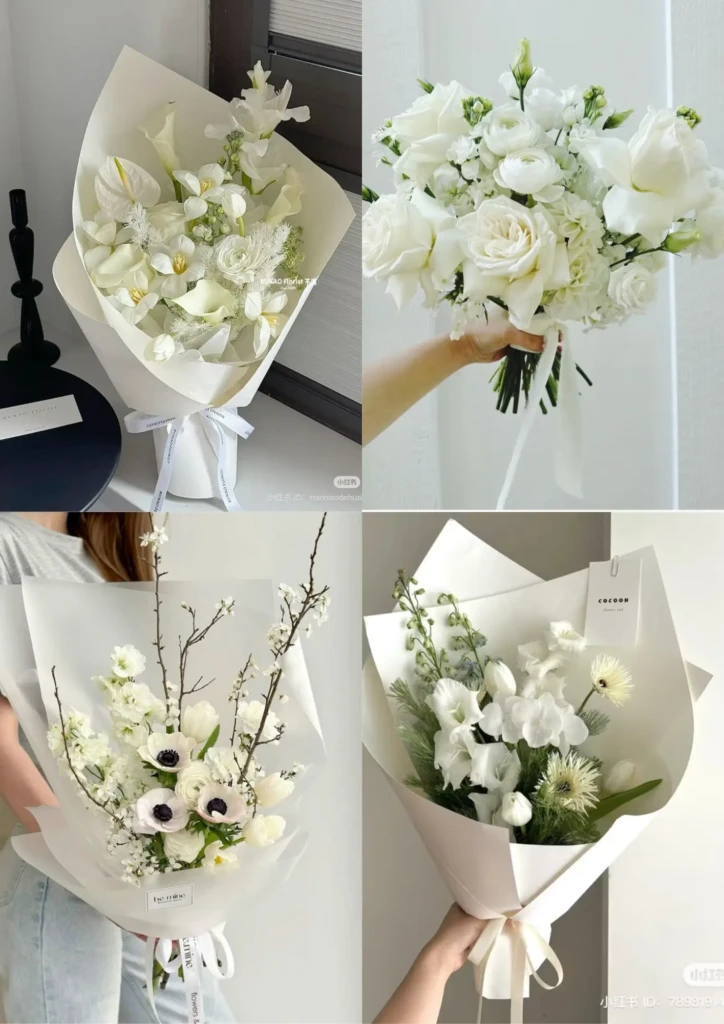
For mothers with minimalist taste—those whose homes feature white walls, natural wood, and carefully curated spaces—a monochromatic arrangement often resonates more than colorful abundance.
All white. Or varying shades of cream and ivory. Or a gradient from pale pink through rose to deep burgundy. The discipline of working within one color family forces you to appreciate subtle variations in tone and texture.
White flowers possess particular elegance: garden roses, ranunculus, lisianthus, parrot tulips, combined with either dark green foliage for drama or grey eucalyptus for softness. The result feels expensive, intentional, and deeply sophisticated.
If you’re ordering: Request a monochromatic palette and specify your color family. Emphasize you want varied textures and forms—smooth petals with spiky elements, large blooms contrasted with delicate clusters. Ask for interesting foliage that complements rather than generic green filler.
If you’re making this: The challenge is that monochromatic arrangements require more flowers to achieve impact since you can’t rely on color contrast. Budget accordingly.
Choose one color family, then shop what’s available in that range rather than hunting for specific flowers. Trader Joe’s wrapped tulips, Whole Foods roses, and Costco mixed bunches in the same color family can create stunning results.
The technique differs from garden-style: these arrangements should be more compact and uniform in silhouette. Think hemisphere or dome rather than loosely gathered wildflowers. Work in spirals—hold your first stem, add the second at a slight angle, continue spiraling as you add flowers. This creates natural roundness.
Time: 30-45 minutes once you understand the spiral technique. Cost: $40-60 depending on flower selection.
When Simple is Enough
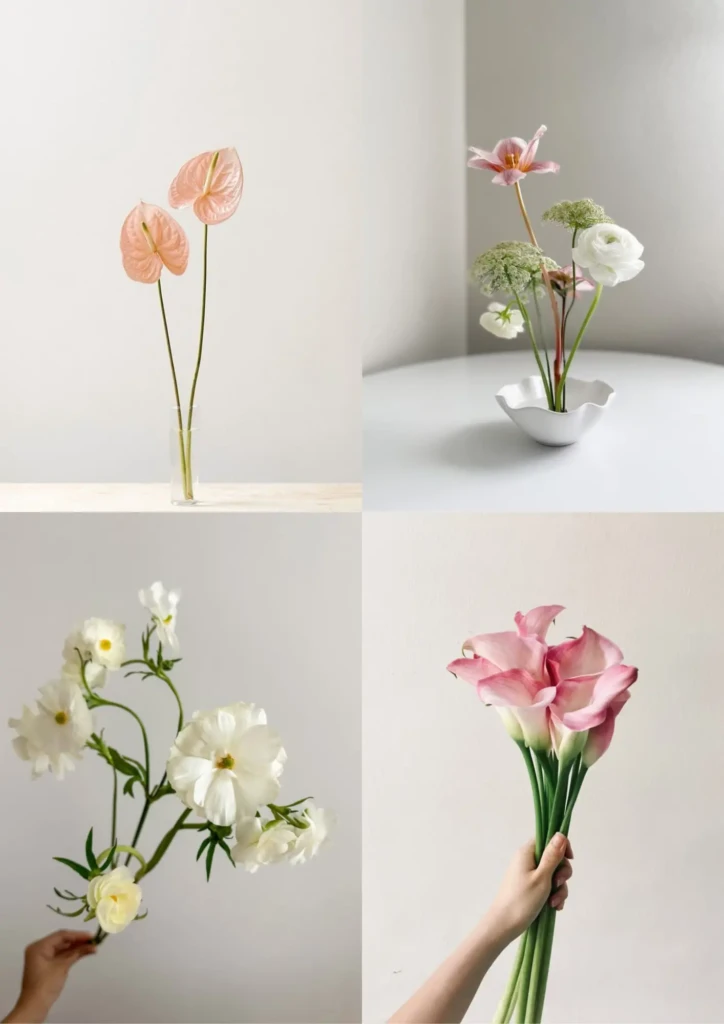
There’s something to be said for radical simplicity: three perfect stems in a narrow vase.
This approach is Japanese ikebana-influenced without being strictly traditional. It’s about celebrating each individual flower rather than creating abundance. One flawless garden rose. A single architectural protea. Three calla lilies with their sculptural curves.
If you’re ordering: Specify you want minimal stems—perhaps three to five—and that you’re interested in a minimalist presentation highlighting each flower’s individual beauty. Expect to pay $30-60, but understand you’re paying for perfect specimens and expert placement, not quantity.
If you’re making this: This is the most affordable approach if you accept that less can genuinely be more. Buy three extraordinary stems rather than a dozen mediocre ones.
Strip stems completely—no leaves, no thorns. The stem itself becomes part of the aesthetic. Cut to precise length (stems should be 1.5-2 times vase height). Place with intention.
The entire process takes maybe ten minutes, but learning to appreciate restraint takes longer.
The Practical Considerations
Let’s address the parts that nobody talks about until you’re already confused and frustrated.
Timing matters enormously. Mother’s Day is to florists what tax season is to accountants. They’re completely booked. Prices increase. Selection narrows. If you’re ordering a custom arrangement, place your order at least two weeks ahead. Three is better.
Last-minute alternatives: If you’ve waited until Thursday and hope to order for Sunday delivery, you’ll get whatever’s left. Consider ordering for Friday or Saturday delivery instead—you’ll have better selection and often pay less.
Or embrace the DIY route, which operates on a different timeline. You can shop for flowers on Saturday and arrange them Saturday evening or Sunday morning.
Price transparency: A $50 grocery store bouquet and a $150 florist arrangement use different quality flowers and represent vastly different time investments. Neither is wrong. They’re simply different products at different price points.
Mother’s Day upcharges are real—expect 20-40% higher prices than typical. This is supply and demand, not price gouging. Roses cost more when everyone wants them simultaneously.
Flower longevity varies significantly. Roses can last up to two weeks with proper care. Tulips are beautiful but shorter-lived—often just five to seven days. Peonies fall somewhere in the middle. Ranunculus last surprisingly well if you change water daily.
Proper care extends flower life: recut stems at an angle every few days, change water daily, keep arrangement away from direct sun and heat, remove any flowers that start to decline before they affect others.
The DIY Learning Curve
A confession: your first DIY bouquet probably won’t look like the pictures in your head. This is completely normal.
Professional florists have arranged thousands of bouquets. They know intuitively how stems behave, which flowers pair well, how to create structure that holds. You’re starting from scratch.
Common beginner mistakes include: handling flowers too much (your hands warm petals and accelerate decay), using regular scissors instead of proper floral shears (crushing stems prevents water uptake), forgetting to remove leaves that will sit below the water line (causes bacterial growth), making arrangements too tight or too perfect (paradoxically looks amateurish), and not hydrating flowers properly before arranging.
The good news: quality materials forgive technique errors. Start with beautiful flowers and you’re already halfway there.
Practice runs help tremendously. Make arrangements for yourself before attempting a Mother’s Day bouquet. Experiment with cheap grocery store flowers. Watch florists work—many post tutorials on Instagram or YouTube.
Each attempt improves. Your third bouquet will be noticeably better than your first. By your fifth, you’ll have developed muscle memory for how to hold stems, how tightly to bind them, how much greenery creates the right balance.
When DIY Makes Sense
Make the arrangement yourself if: you enjoy the creative process, your mother values handmade efforts over perfection, budget is the primary concern, you want to customize beyond what florists typically offer, or you’re willing to accept a learning curve.
Order from a florist if: you want guaranteed professional results, your mother has specific high expectations, you’re short on time or confidence, the arrangement is extremely important with no room for error, or you need specific premium flowers arranged perfectly.
The hybrid approach often works beautifully: order a professional arrangement but add personal touches. Write a note explaining why you chose these specific flowers. Include the vase in the gift rather than asking for it back. Add elements you’ve gathered yourself—perhaps herbs from your garden or a few stems of something you know she particularly loves.
What Actually Matters
Here’s what all the florists I consulted agreed on: the perfect Mother’s Day bouquet isn’t about the most expensive flowers or the most complex arrangement.
It’s about attention. To her specific taste. To what’s blooming and available right now. To how much thought you were willing to invest in creating or selecting something meant specifically for her.
Flowers remain powerful gifts precisely because they’re temporary. They force a moment of appreciation because they won’t last. Unlike objects that accumulate and require storage, flowers exist beautifully and then compost. Their impermanence is their value.
The best bouquet demonstrates that you see her as a person beyond her role as mother. That you know whether she prefers bold modern design or cottage garden romance. That you notice she gravitates toward pink or loves the smell of eucalyptus. That you remember she mentioned once, months ago, how much she loves peonies even though they’re expensive and seasonal.
This is flowers as a language. The specific varieties you choose, the colors you select, whether you go abundant or minimal, loose or structured—these communicate as clearly as words. Perhaps more clearly, because they require paying attention over time rather than googling “what to get mom” on Saturday night.
The Unconventional Alternatives
Not every mother wants a traditional bouquet. Consider variations:
A potted orchid lasts for months and can rebloom with proper care. A blooming hydrangea can be planted in the garden after enjoying it indoors. A kitchen herb garden combines beauty with function.
A flower subscription extends the gift throughout the year—she receives new stems monthly, each arrangement a small reminder.
A single dramatic flowering branch—cherry blossom or quince—in a tall vase creates impact with minimal effort and cost.
Taking a floral arranging workshop together transforms the gift from object to experience. You learn together, laugh at mutual failures, and she leaves with both flowers and memories.
The Underlying Philosophy
The reason flowers endure as gifts, despite their impracticality and brief lifespan, is precisely that impracticality and brevity.
They serve no function beyond beauty. They require tending—fresh water, trimmed stems, proper light. They demand attention. And then they fade, forcing you to either accept their passing or replace them with new blooms.
This makes them the opposite of practical gifts. You can’t store flowers for later. Can’t return them if they’re the wrong color. Can’t use them to solve a problem or fill a need.
Which is exactly why they work for Mother’s Day.
Most mothers spend their lives being practical. Managing schedules. Solving problems. Meeting needs. Making things work when they shouldn’t have to. The practical gifts—the appliances, the organizers, the useful items—reinforce this identity as family manager and chief problem-solver.
Flowers do something different. They acknowledge that underneath all that practicality lives someone who deserves beauty for its own sake. Someone who’s allowed to have preferences about color and scent and aesthetic. Someone whose pleasure matters even when it serves no purpose.
A truly beautiful bouquet—whether you’ve ordered it from the most talented florist in town or assembled it yourself from grocery store stems and backyard clippings—says: I see you. Not just as a mother, but as a person with taste and interests and the right to small luxuries.
Which is perhaps all any gift should say, regardless of the occasion. But on Mother’s Day, it matters more than most.
Quick Reference Guide
Best Flowers for Mother’s Day Bouquets:
- Peonies (if available and budget allows)
- Garden roses (more fragrant than standard)
- Ranunculus (amazing texture, long-lasting)
- Tulips (look for unusual varieties)
- Sweet peas (fragrant, delicate)
Best Places to Buy Fresh Flowers:
- Trader Joe’s (best budget option, restocks Wednesday/Thursday)
- Whole Foods (good variety and quality)
- Costco (excellent for bulk quantities)
- Local farmer’s markets (seasonal, often local)
- Wholesale flower markets (if your city has one)
Essential DIY Supplies:
- Professional floral shears (not regular scissors)
- Floral tape
- Beautiful ribbon (silk or velvet)
- Simple vase
More Mother’s Day Ideas:
15 Mother’s Day Gift Crafts Kids Can Make
Easy Mother's Day craft ideas for kids ages 2-11. From fingerprint art to clay flower mirrors, these
The art of gift basket making has been somewhat lost in our age of one-click shopping and two-day de
Leave a Reply