

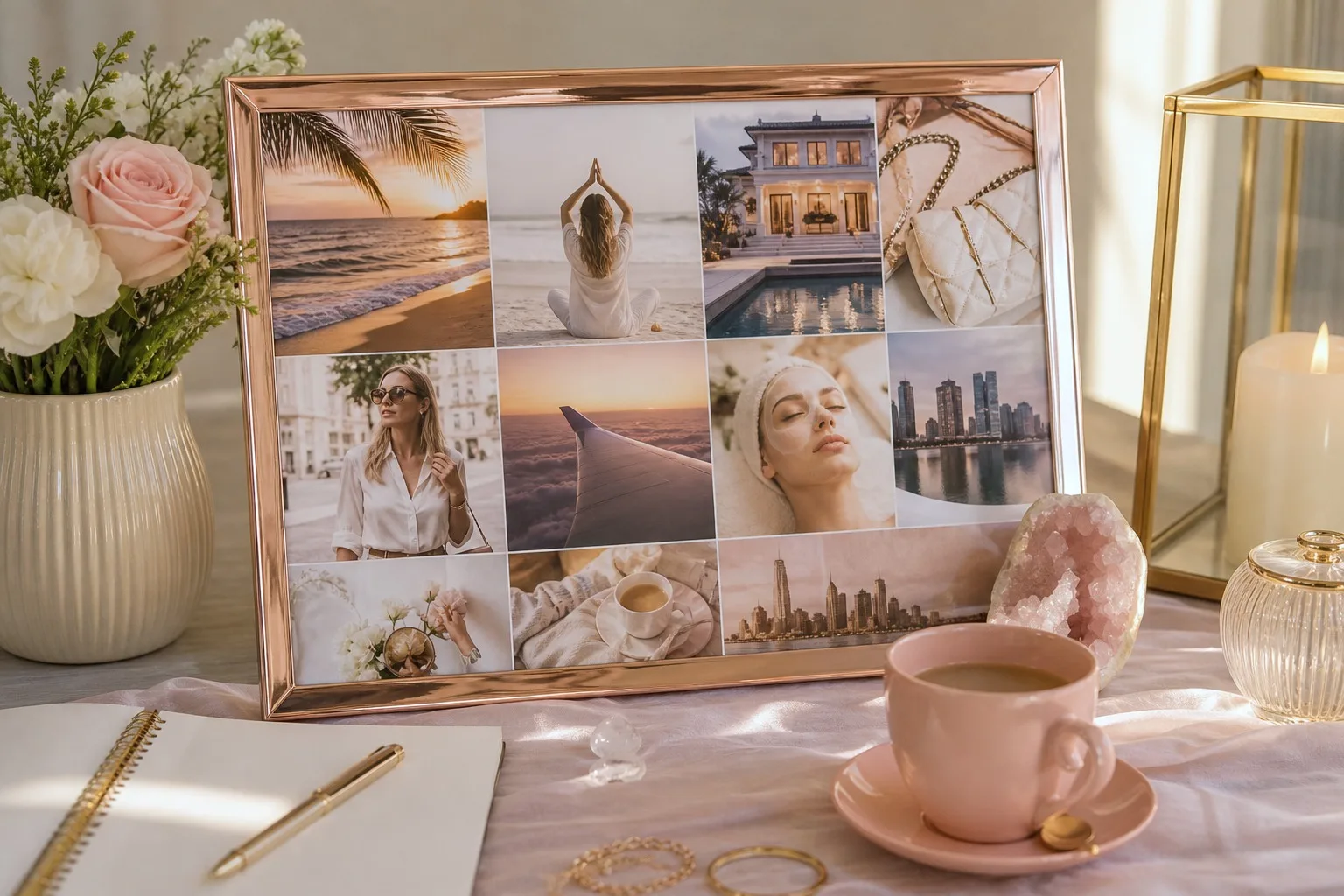
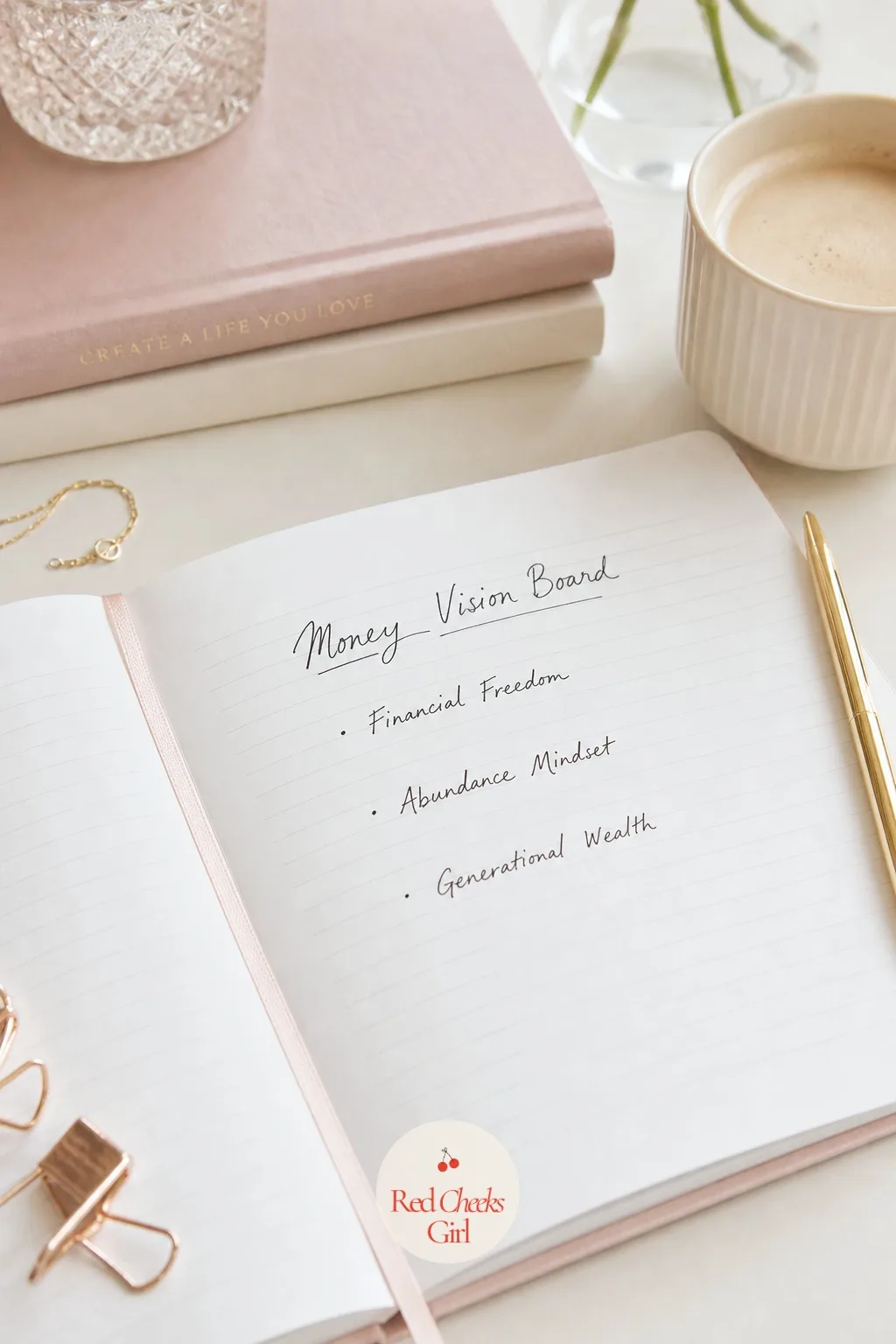
A money vision board full of piled up cash and a yacht never once made anyone save faster. What actually moves the needle is seeing your own ordinary life, a little steadier: the envelope with this month’s savings in it, the laptop open at the kitchen table, the car in the driveway with nothing owed on it.
Each idea below is one photograph you could genuinely pin, the kind a stylish, grounded woman would save because it looks like a Tuesday she wants, not a lottery win. Every entry comes with a short affirmation to say to yourself when you look at it, and one small, doable step you can actually take this year.
Keep the affirmation off the picture itself. Write it underneath, or in your own planner, so the photo stays calm and the words stay yours.
This post contains affiliate links. If you buy through them, I may earn a small commission at no extra cost to you.
Table of Contents
Savings You Can See
A number in an app is honest, but it does not feel like anything. These four pictures give your saving a shape: an envelope that gets a little heavier, a jar you can watch fill, a binder that proves you are not guessing anymore.
If envelopes and jars are not your style, the same feeling works as a screenshot of a savings account balance climbing, saved straight to your phone’s photo album next to these.
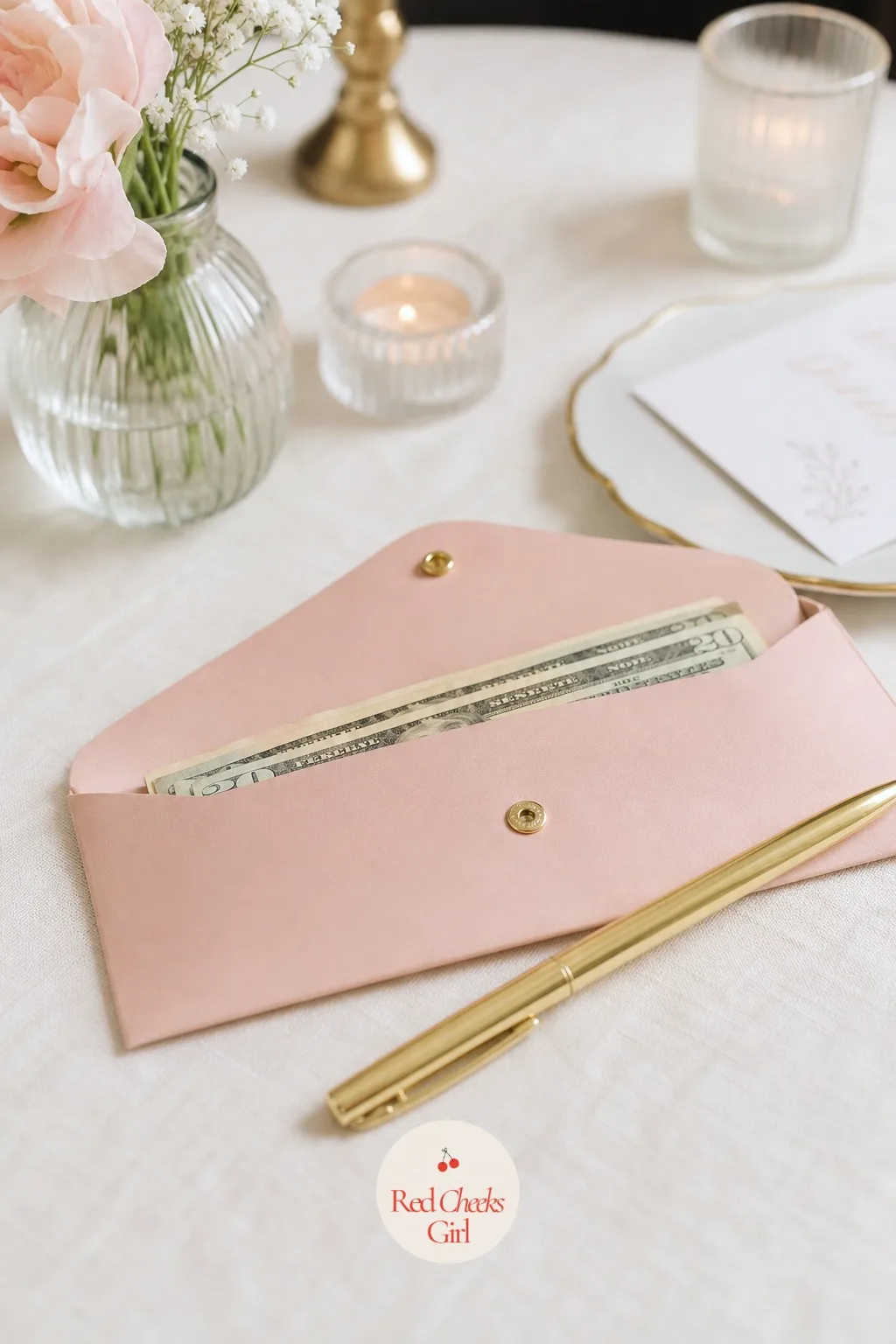
Fill a Blush Pink Envelope With This Month’s Savings
A stack of folded cash in a drawer feels like hoarding. The same cash, tucked into a labeled envelope, feels like a plan, and that difference is almost entirely in the labeling.
Buy or make a set of cash envelopes, write one goal on the front in your own handwriting, and drop whatever you can into it each payday, even if that is ten dollars. If you would rather not handle paper cash at all, open a named savings sub account and screenshot the balance instead, same feeling, zero coins.
Say to yourself: I am someone who finishes what she starts saving for. The first step this year is simply buying the envelope, today, before the feeling passes.
🛍 Shopping guide
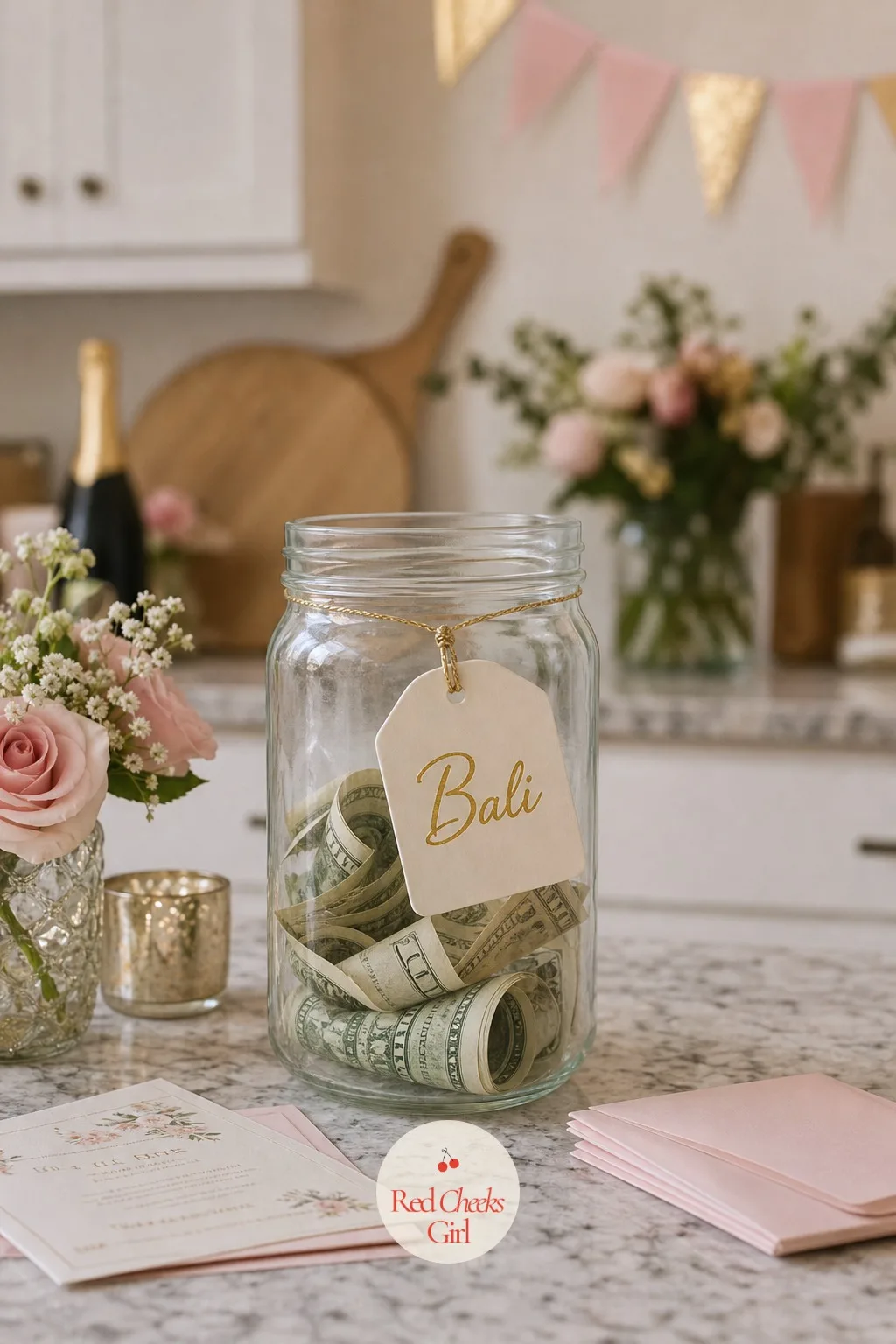
Watch a Travel Fund Jar Fill Up on the Counter
A trip that lives only in your head is easy to postpone forever. A jar on the counter with a little cash in it already is much harder to ignore, because you walk past the goal every single morning.
Use a clear glass jar, write the destination on a cream tag tied around the neck, and add whatever is left over after groceries. This works just as well with coins if notes feel like too much to leave sitting out, and it costs nothing beyond a jar you likely already own.
Say: this trip is already happening, slowly, every week. The step this year is picking the actual place and writing the date on the tag, not just “somewhere warm.”
🛍 Shopping guide
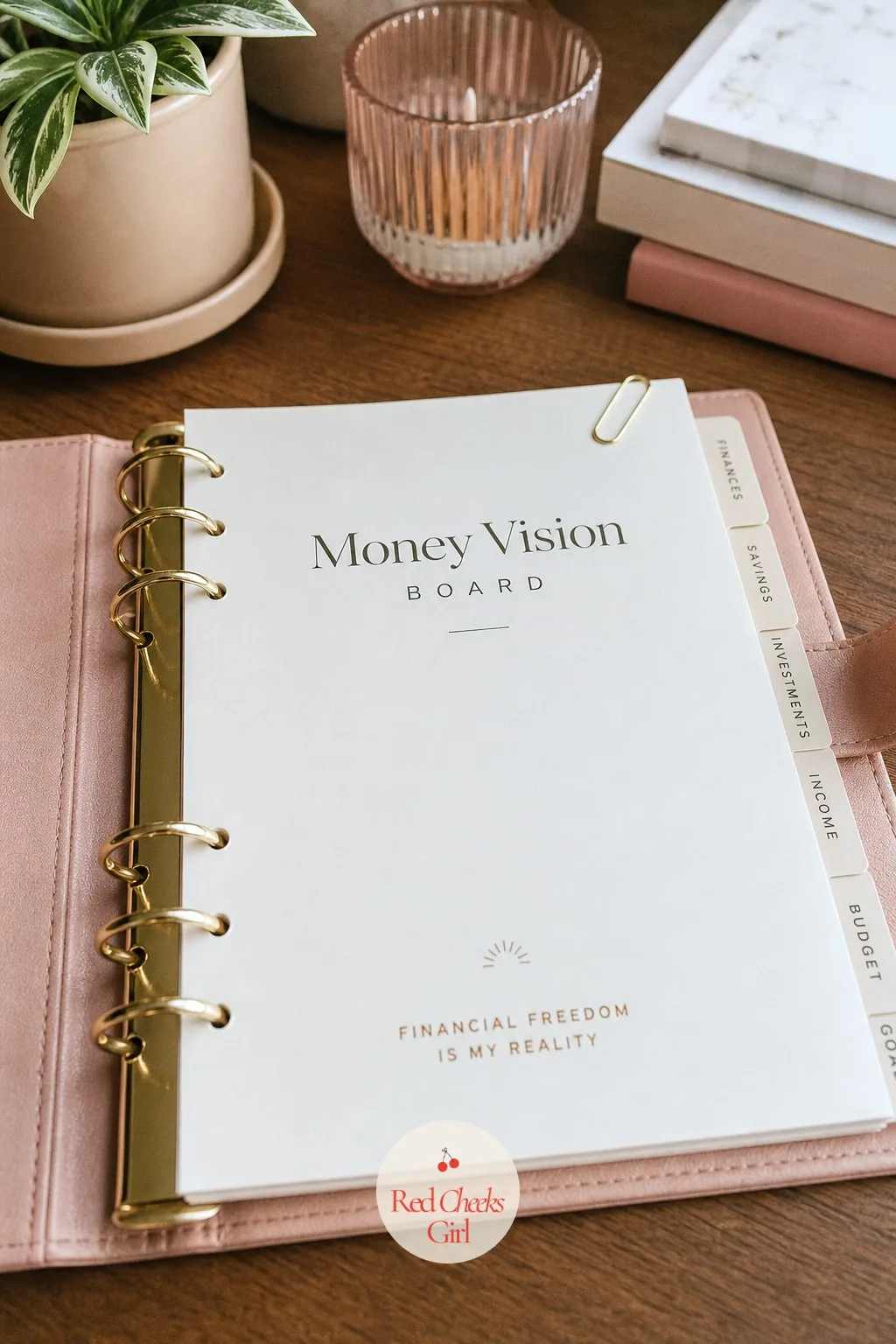
Watch an Emergency Fund Binder Fill Up on a Tidy Desk
Nothing about an emergency fund is exciting, which is exactly why it keeps getting pushed to next month. A binder you can actually see on the desk fixes that, because progress you can touch is progress you keep coming back to.
Use a slim ring binder, add one tab per month, and clip a printed bank statement or a handwritten total behind each tab as the number grows. If a whole binder feels like overkill, a single page taped inside a kitchen cupboard works just as well.
Say: future me already has a cushion to land on. The step this year is picking one number, even just five hundred dollars, and starting the first tab.
🛍 Shopping guide
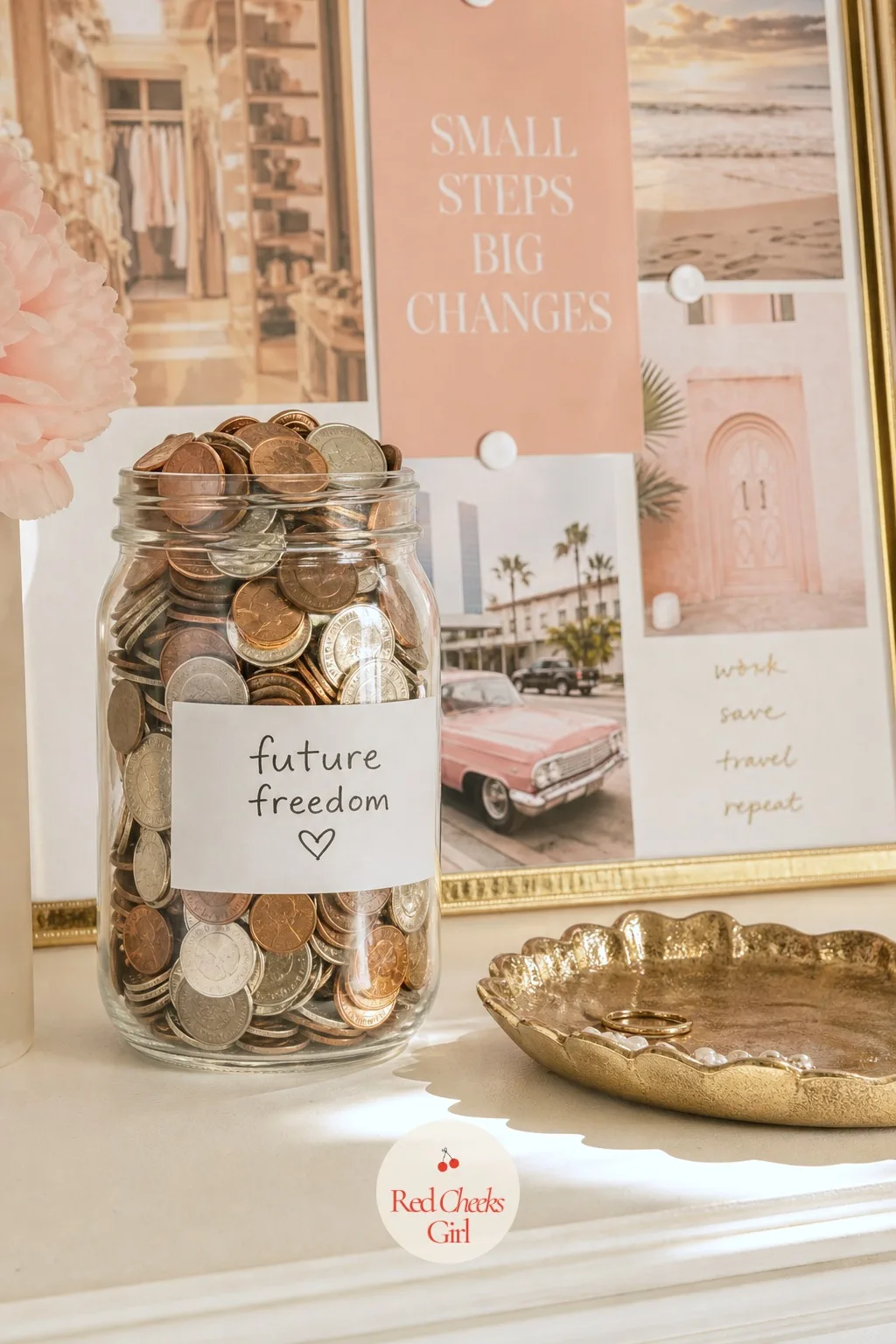
Snap a Coin Jar the Day It Finally Overflows
Coins feel like nothing, one at a time, which is exactly what makes the full jar so satisfying: it is proof that nothing, added up for long enough, becomes something real.
Keep a jar by the door or on a dresser, empty your pockets and purse into it every evening, and cash it in once it is genuinely full rather than the moment it gets annoying. A coin counting app at the bank makes the trip quick if you would rather not roll them yourself.
Say: small amounts still count. The step this year is putting the jar somewhere you will actually see it daily, not in a closet.
🛍 Shopping guide
Earning More, On Your Own Terms
Saving harder has a ceiling. Earning a bit more does not, and these pictures are about the quiet, unglamorous start of that: the first payment, the first order packed, the notes before a hard conversation.
None of this needs a business plan pinned to the board. It needs a kitchen table and twenty minutes you already have.
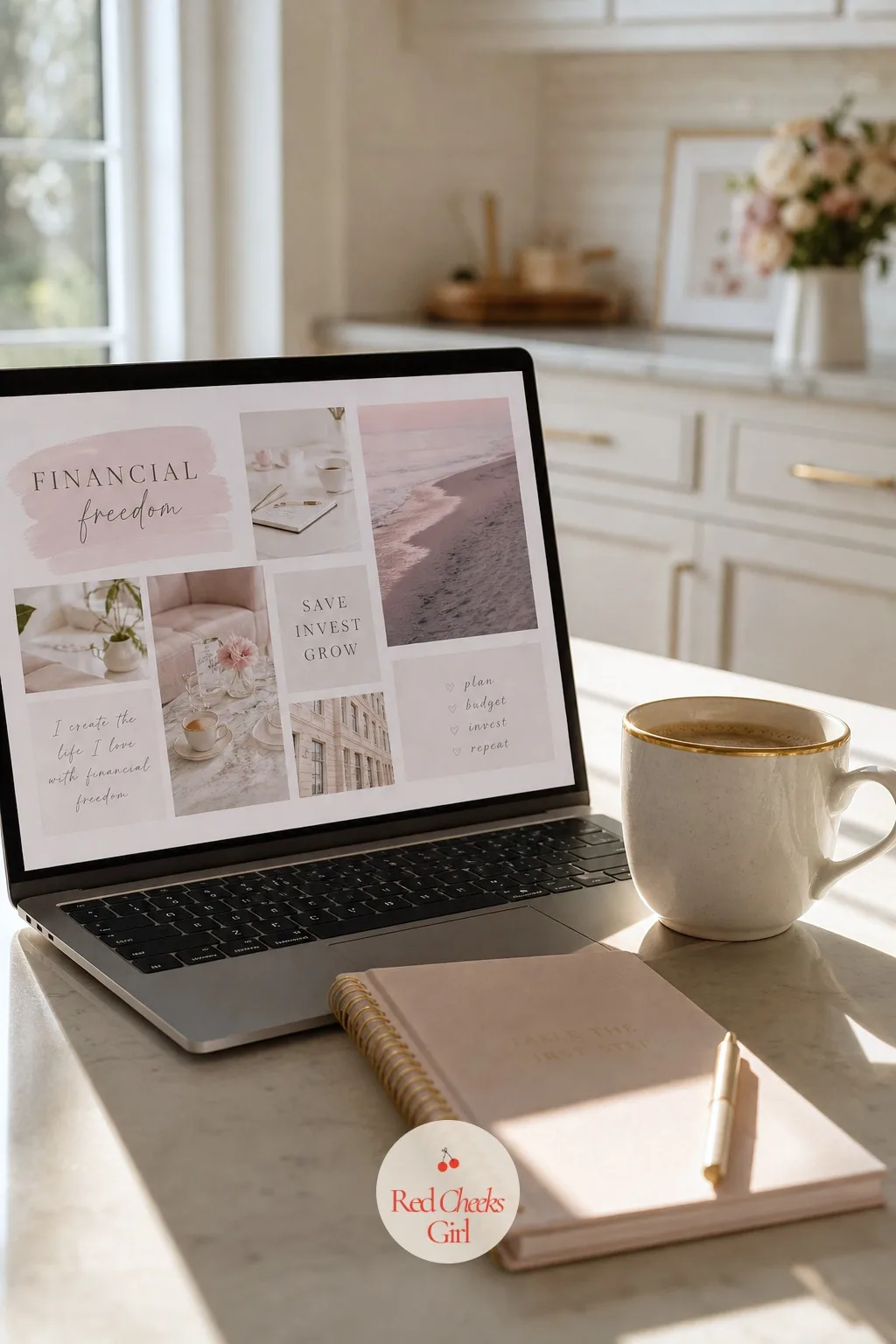
Set Up a Laptop and Coffee for the Side Hustle at the Kitchen Table
A side income that only exists as an idea in your head will stay an idea. The kitchen table set up for an hour, every week, at the same time, is what actually turns it into money.
Clear one corner, open the laptop, make the coffee properly instead of grabbing it on the way past, and treat that hour as a standing appointment with yourself. This works in a studio apartment exactly the way it works in a full kitchen, the table is the only requirement.
Say: I am building a second stream, one hour at a time. The step this year is picking the weekly hour and putting it in the calendar before anything else can take it.
🛍 Shopping guide
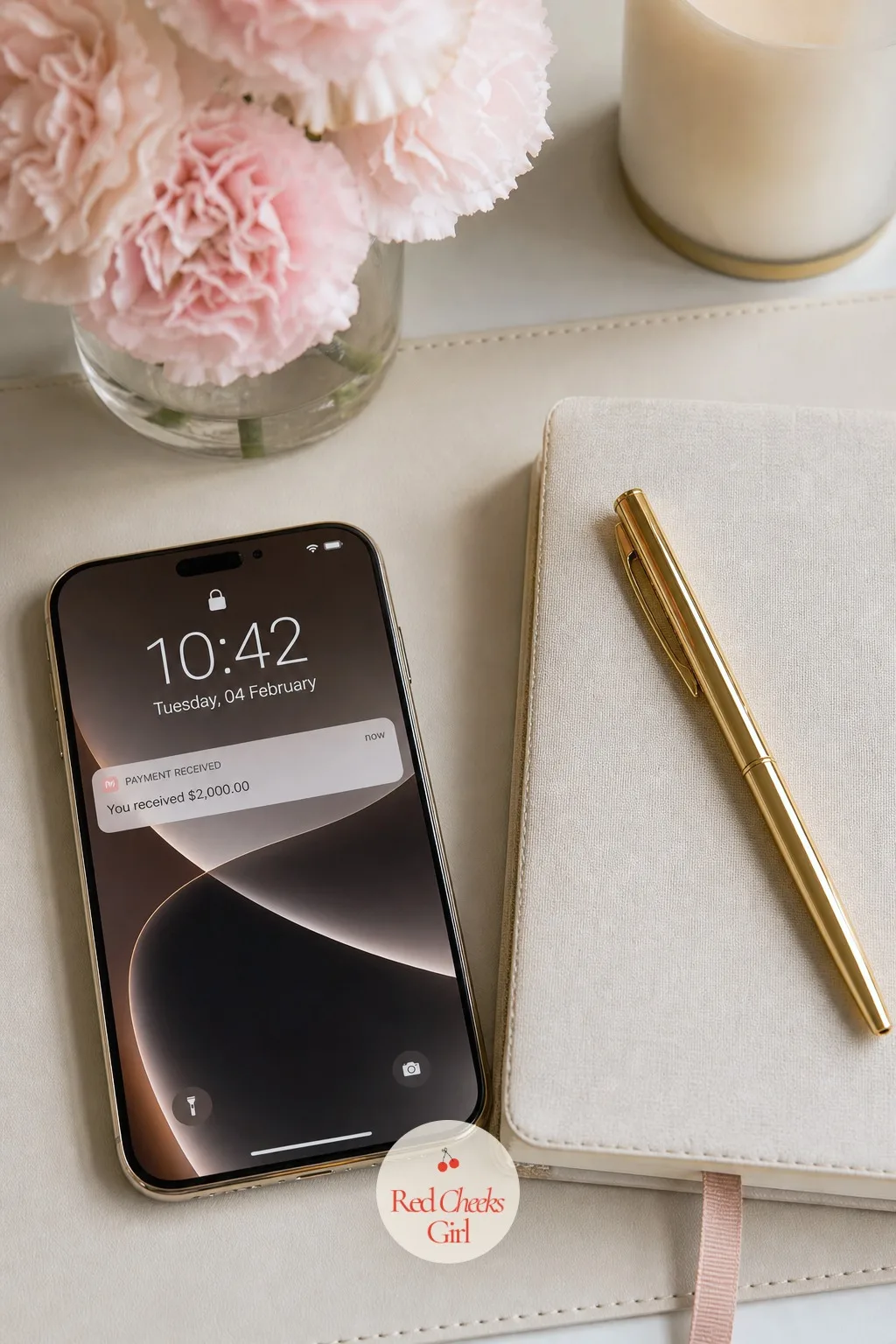
Photograph the First Payment Notification From a Client
The first payment for work you did on your own terms hits differently than a regular paycheck, and it deserves more than a glance before the notification disappears.
Take an actual screenshot of that first payment, crop out any identifying numbers, and print it small for the board. If you do not have a first client yet, a screenshot of a listed service or a finished portfolio piece holds the same place until the real one arrives.
Say: people already pay me for what I know. The step this year is listing one skill somewhere, even a single freelance profile, so there is something to accept payment through.
🛍 Shopping guide
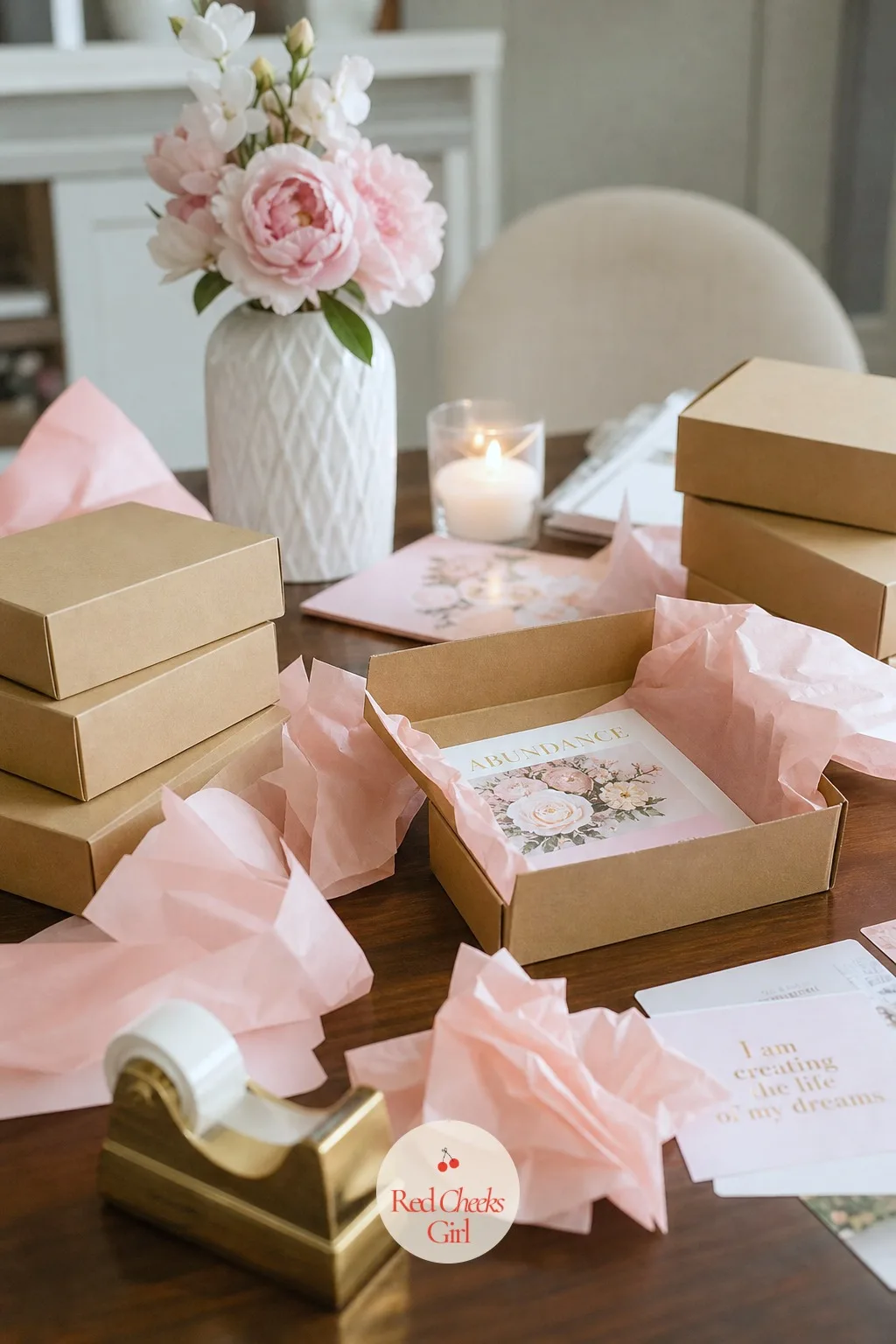
Pack the First Order for an Online Shop on the Dining Table
An online shop with zero sales still feels like a real business the moment the first box gets packed, tape and all, on your own table instead of a warehouse.
Lay out kraft boxes, tissue paper in your brand colors, and a roll of tape, then photograph the table mid pack rather than the finished parcel. This scales down perfectly to a single item and a padded envelope if a whole product line is not where you are starting.
Say: I turn what I make into something someone else wants. The step this year is listing one single item for sale, anywhere, this month.
🛍 Shopping guide
Write Three Talking Points Before Asking for a Raise
Asking for more money feels enormous right up until it is three bullet points on a page, which is really all a good case for a raise ever needs to be.
Sit at a clear desk with one notebook, write the three strongest things you have done this year, and leave the page open on the board exactly as written, unposed. A sticky note on a laptop lid does the same job if a whole notebook feels like too much ceremony.
Say: my work has a number attached to it, and I am allowed to say it out loud. The step this year is booking the actual meeting, not just writing the notes.
🛍 Shopping guide
The Life This Money Buys
This is the part most money boards skip, and it is the part that actually keeps you motivated: not the number itself, but what having it feels like in your body, on an ordinary Tuesday.
Dinner without doing math, a cart you do not flinch at, a Saturday with nothing owed anywhere. Pin the feeling, not the price tag.
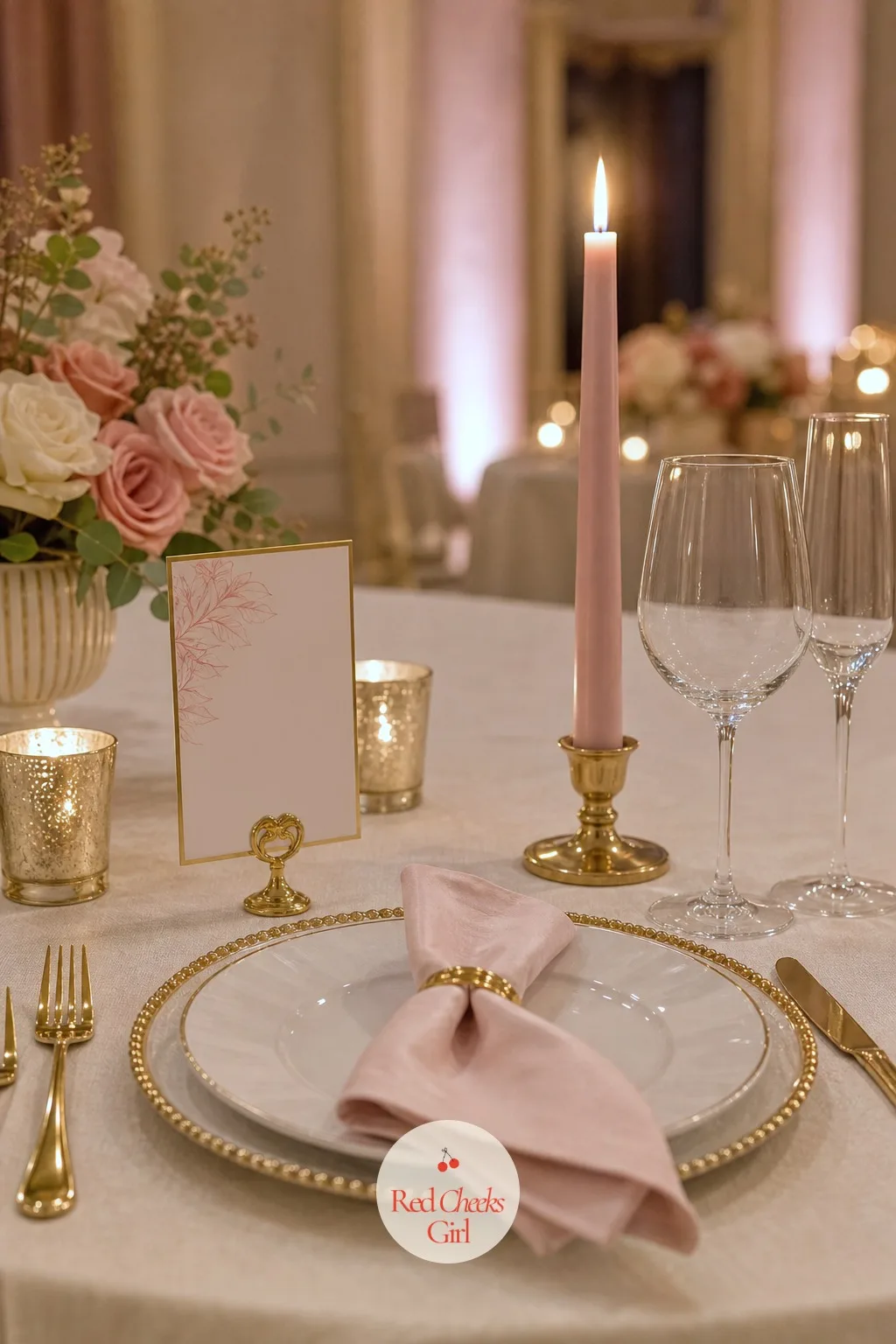
Order Dinner Out Without Turning Over the Menu Price Side
Checking the right hand column before you let yourself want anything is exhausting in a way that has nothing to do with the food itself.
Set a table for one restaurant evening at home instead, with the nice glasses and the candle, and let it stand in for the version where you order without doing that math. If an actual dinner out is in budget this month, book the table and simply photograph the setting before the plates arrive.
Say: I can want the thing on the left side of the menu. The step this year is picking one dinner, soon, where you decide not to look.
🛍 Shopping guide
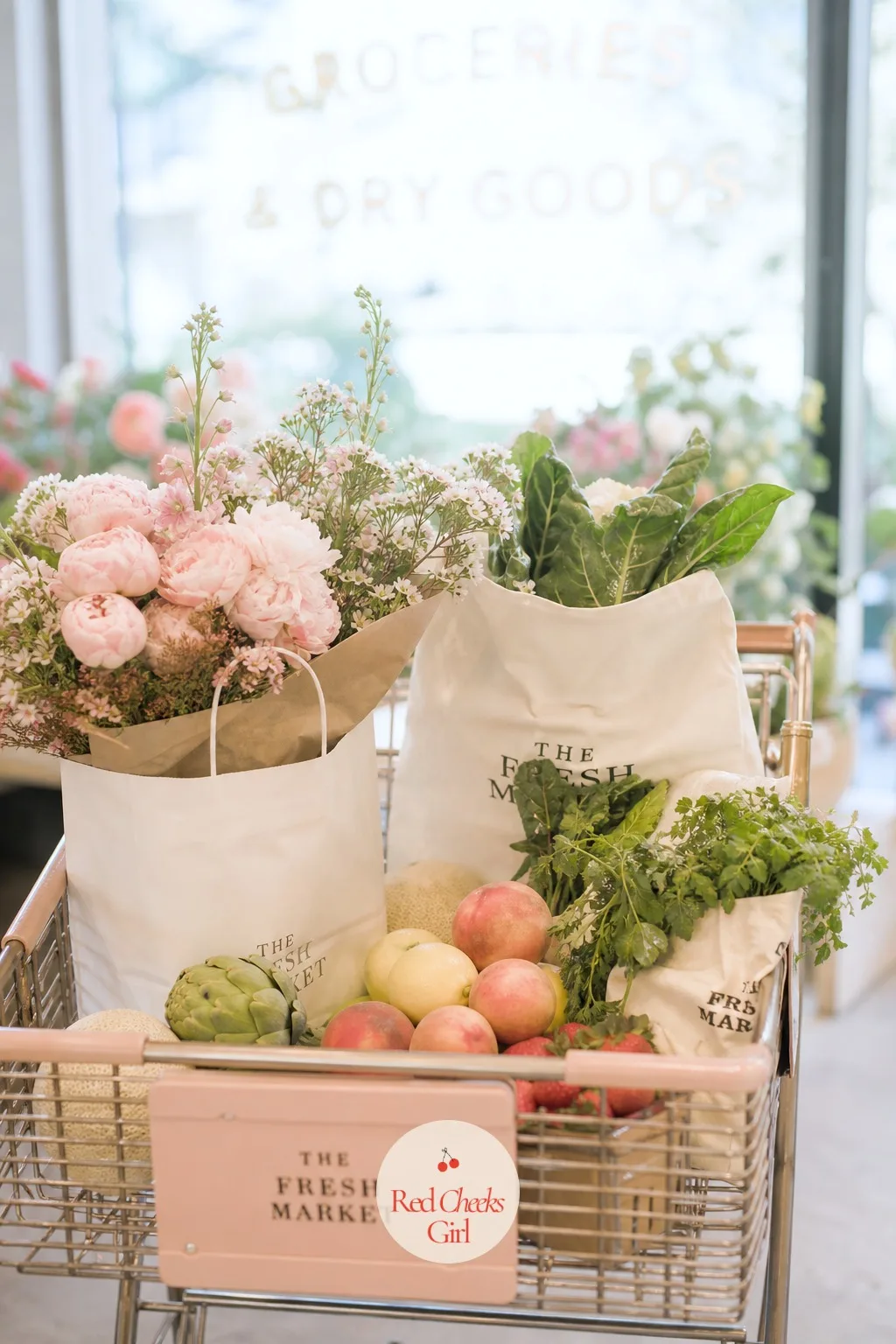
Push a Full Grocery Cart Without Doing Mental Math
There is a specific kind of calm that comes from putting things in a cart and not running a running total in your head the whole way down the aisle.
Photograph the cart itself, properly full, fresh produce and a few things that are not strictly necessary mixed in. This photographs just as well from a weekly farmers market haul if a supermarket cart feels too plain.
Say: groceries are not a math problem anymore. The step this year is building one real buffer into the monthly budget just for food, so this stops being a once in a while treat.
🛍 Shopping guide
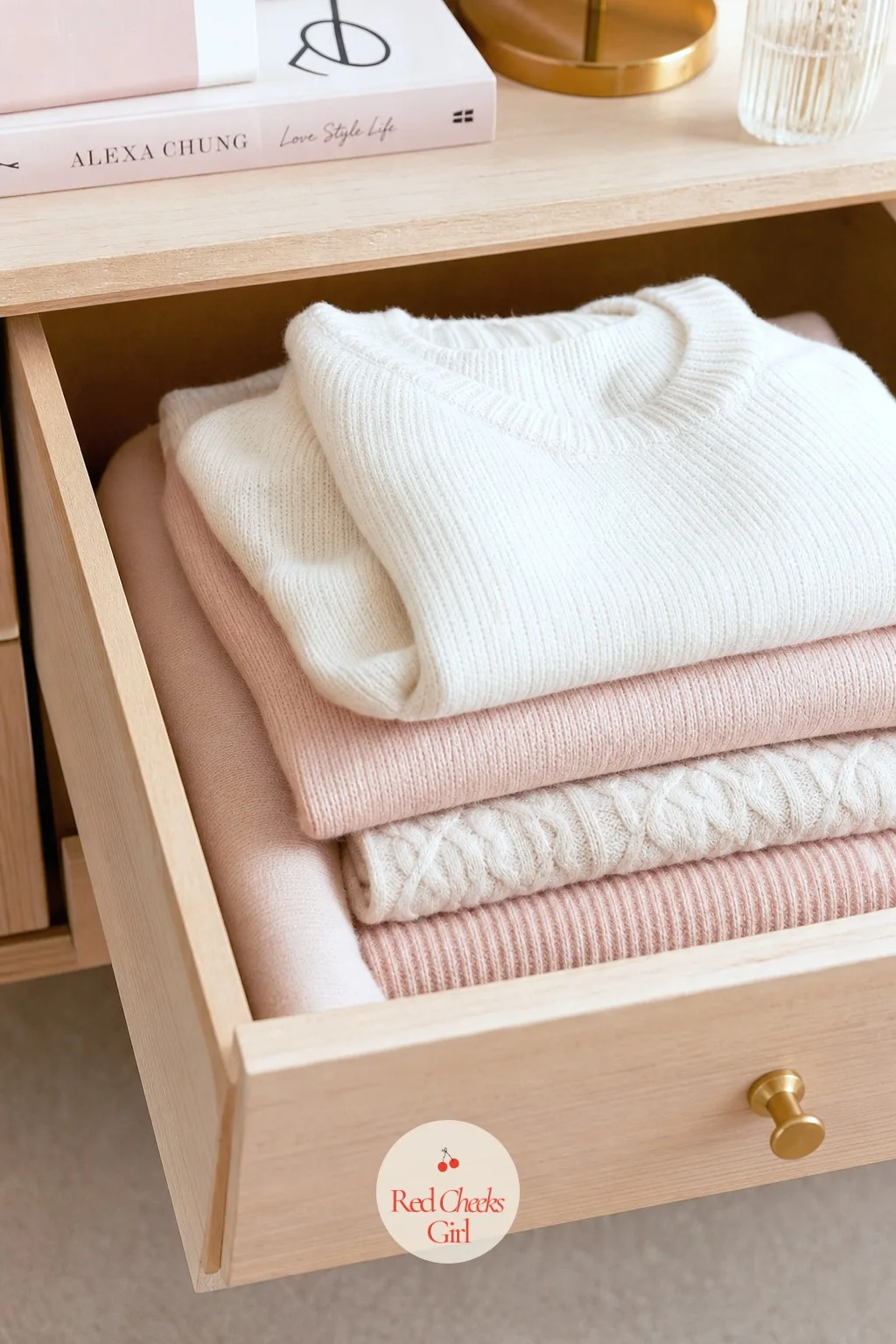
Fold a Stack of Good Basics Into a Closet That Finally Fits You
A closet full of fast fashion that pills after one wash is its own kind of money leak, and replacing it slowly with things that last is a financial goal in its own right.
Fold a neat stack of simple, well made basics, cream and blush tones, into an open drawer or shelf rather than piling the whole wardrobe in. This works with a single shelf of thrifted finds exactly as well as it does with anything bought new.
Say: I buy fewer things and keep them longer. The step this year is replacing one worn out basic with one genuinely good one, not ten at once.
🛍 Shopping guide
Spend a Whole Saturday With Nowhere to Be and Nothing Owed
A Saturday with no errands tied to overdue bills is rarer than it should be, and it is one of the clearest signals that the money plan is actually working.
Set the scene with a soft blanket, a book, and tea rather than a phone in sight, on a couch by a window with good light. This needs no budget at all, which makes it one of the easiest pictures on the whole board to actually recreate this weekend.
Say: rest is not something I have to earn first. The step this year is blocking one Saturday a month on the calendar before anything else can claim it.

🛍 Shopping guide
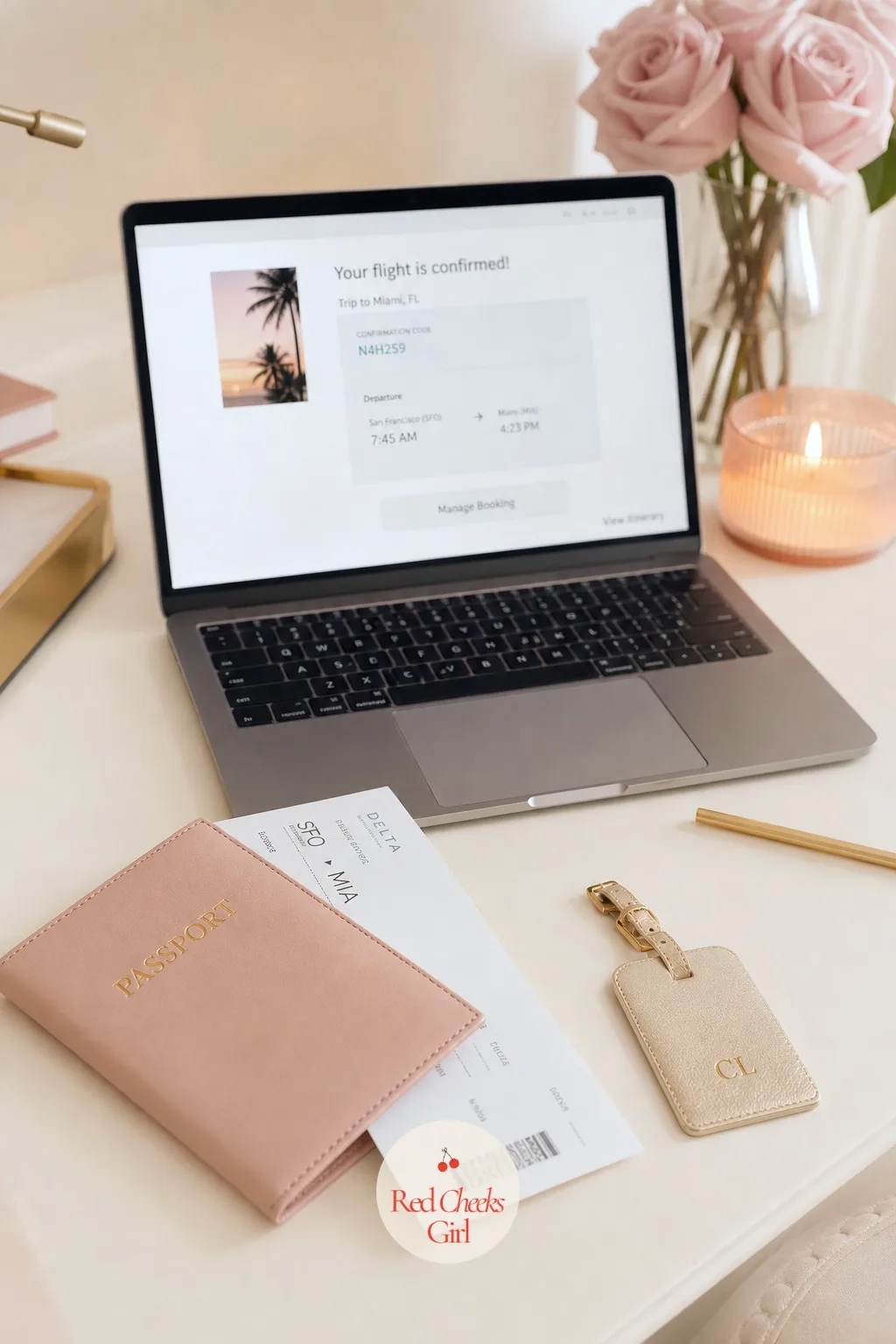
Book the Flight Without Checking the Savings Account First
Booking a flight and then quietly panicking about it for three days is not the same thing as actually affording a trip, and the board should picture the second one, not the first.
Photograph a laptop open to a flight confirmation page beside a passport and boarding pass, the booking already done and already paid for. If flying is not on the cards this year, the same scene works with a train ticket or a road trip map instead.
Say: this trip is already paid for, not borrowed against next month. The step this year is opening a dedicated travel fund so the next booking starts from money that is already there.
🛍 Shopping guide
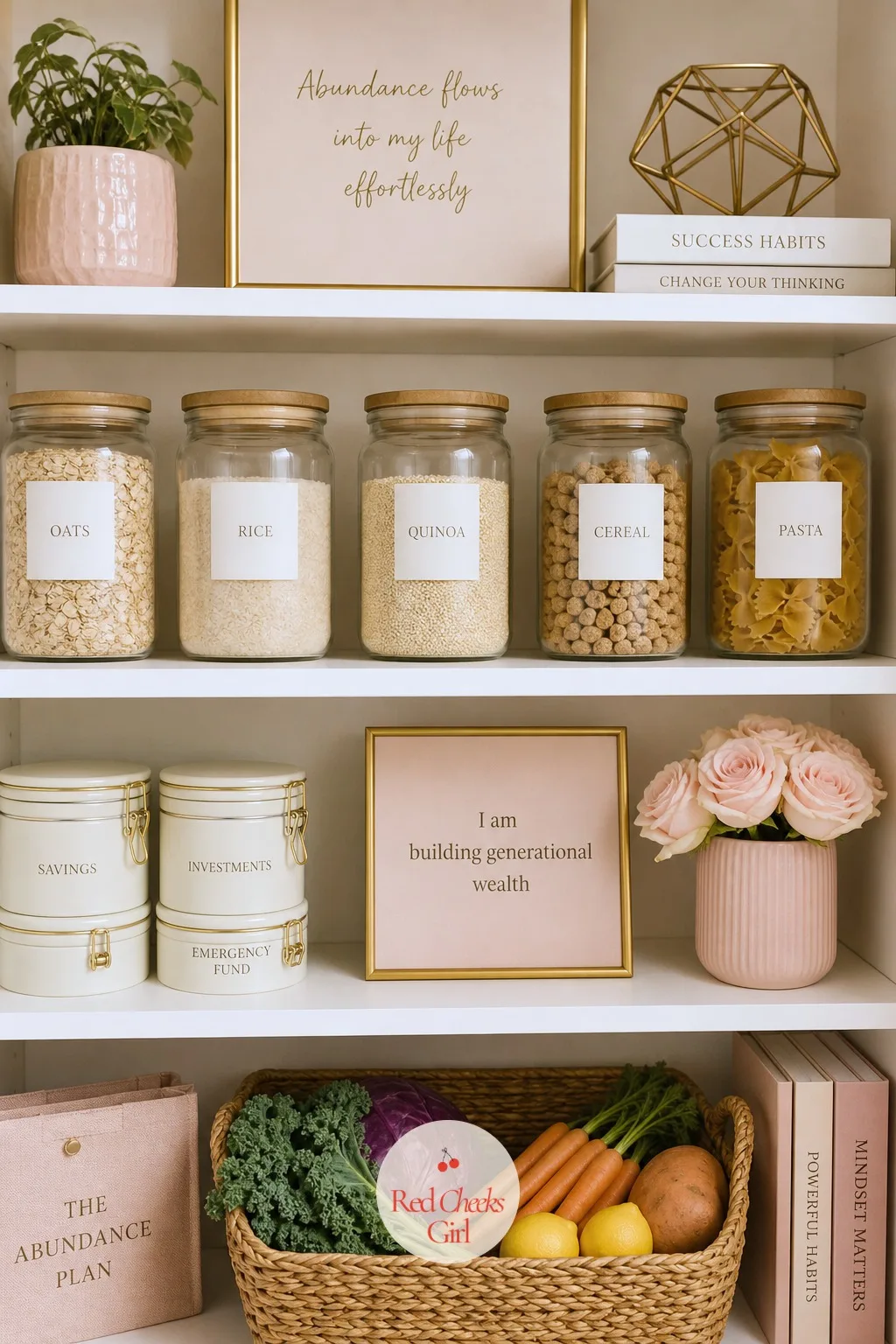
Sit Down to a Stocked Fridge and a Pantry That Isn’t Bare
Financial stability rarely looks dramatic. Most of the time it looks exactly like this: a fridge that has fresh food in it on a Tuesday, not just condiments and hope.
Open the fridge or pantry door and let the shelves do the talking, organized in matching containers if that feels satisfying, or simply full if it does not. This is one of the cheapest goals on the board to actually live inside, it only needs one proper grocery trip.
Say: there is always enough in this kitchen. The step this year is building a small buffer into the food budget so a stocked fridge stops depending on a good week.
🛍 Shopping guide
Big Goals You’re Building Toward
These are the slower ones, the goals that take a year or five rather than a month, and they earn their place near the top of the board precisely because they are not quick.
A set of keys, a paid off car, a statement that finally reads zero: each one is proof that the smaller pictures around it are working.
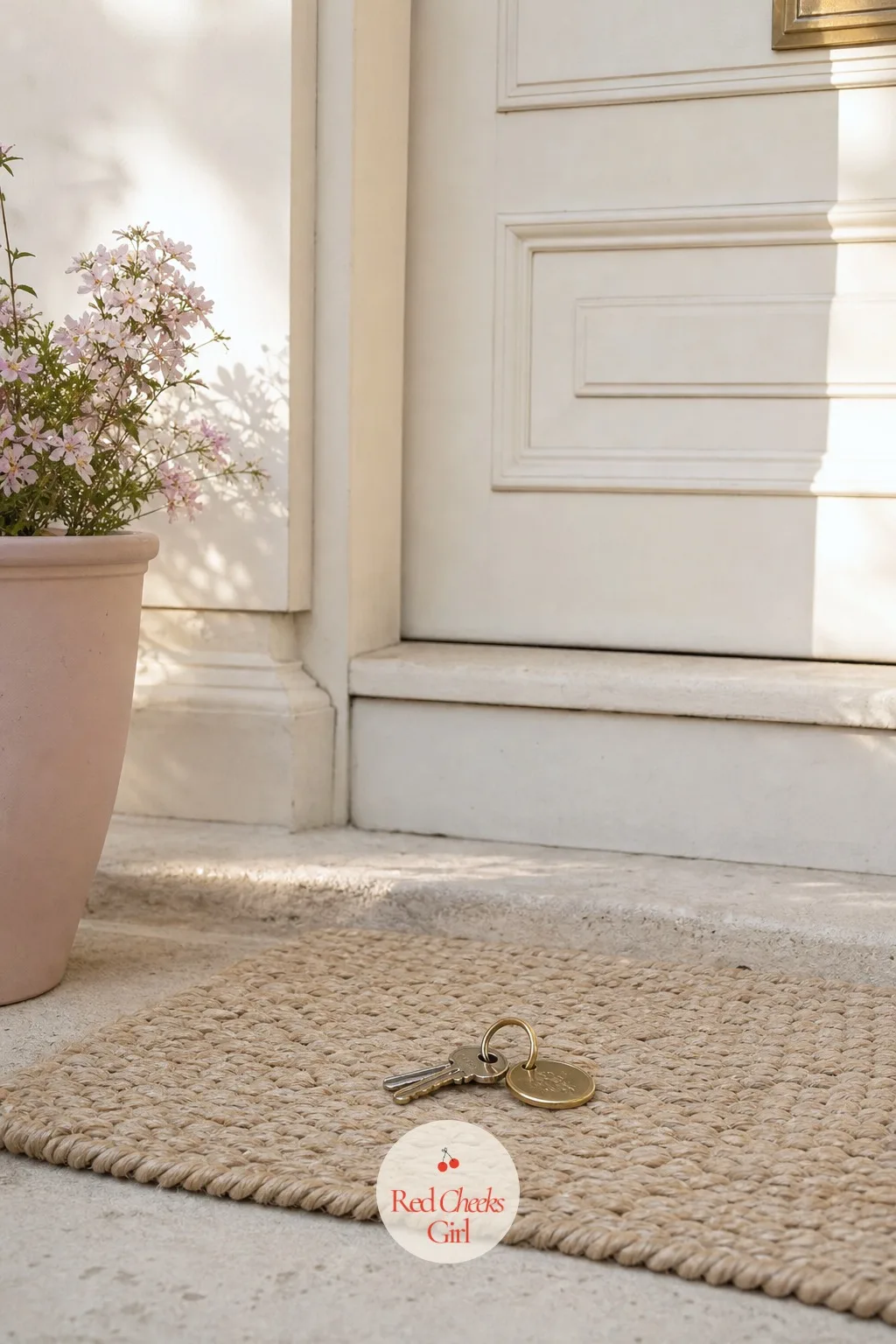
Hold the Keys to a First Home on the Porch Step
A set of keys in your own hand on your own porch step is the single clearest picture a money board can hold, which is exactly why it sits near the top of this list.
Photograph a small set of keys resting on a doormat or porch step, the front door just visible behind. If buying is years away, the same picture works just as well shot at an apartment you are saving to move into sooner.
Say: this door is going to be mine. The step this year is finding out the exact down payment number for a realistic price range, so the goal stops being vague.
🛍 Shopping guide
Park a Paid Off Car in the Driveway, No Payment Due
A car that is finally, fully yours stops being a monthly bill and starts being just a car again, and that shift is worth pinning on its own.
Photograph the car parked in a driveway or quiet street, nothing posed about it, just the vehicle sitting there owing nothing to anyone. This works for a used car exactly as well as new, the picture is about the zero balance, not the badge.
Say: this is mine outright, no envelope going to a lender next month. The step this year is checking the exact payoff date on the loan and circling it on the calendar.

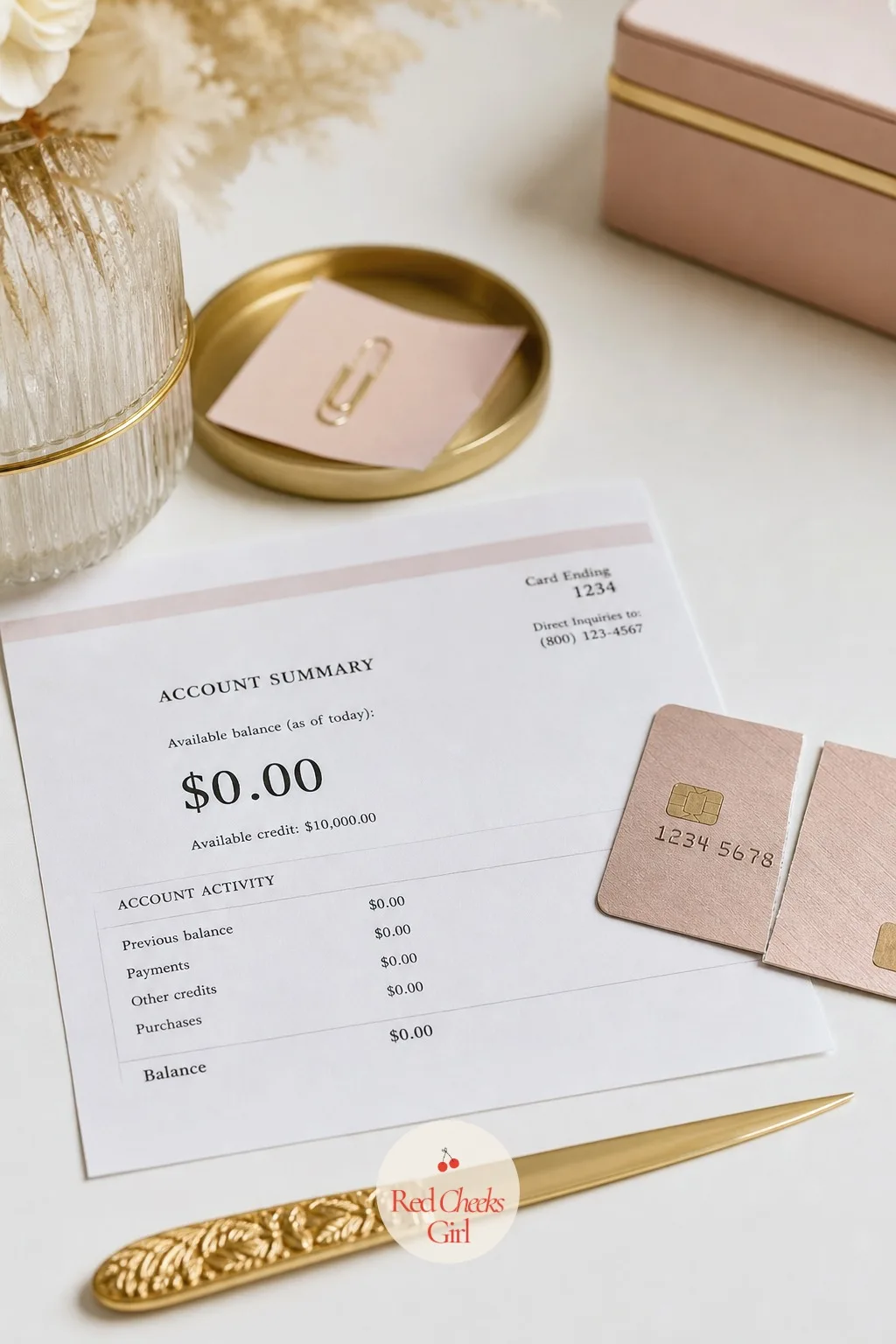
Watch a Credit Card Statement Finally Read Zero
The moment a statement balance reads zero after months of chipping away at it deserves more than a quick relief and a scroll past.
Photograph a printed or screenshotted statement showing a zero balance beside a cut up card, laid flat on a clean surface. If the card stays active for emergencies, simply cover the number and photograph the zero line instead.
Say: nothing from last year is still following me into this one. The step this year is picking the smallest balance to clear first, so there is a zero to photograph sooner rather than later.
Label the Last Moving Box for a Place That’s Really Yours
The last box, taped shut and labeled, is a strangely perfect picture for a money goal: it means every box before it already made it somewhere new.
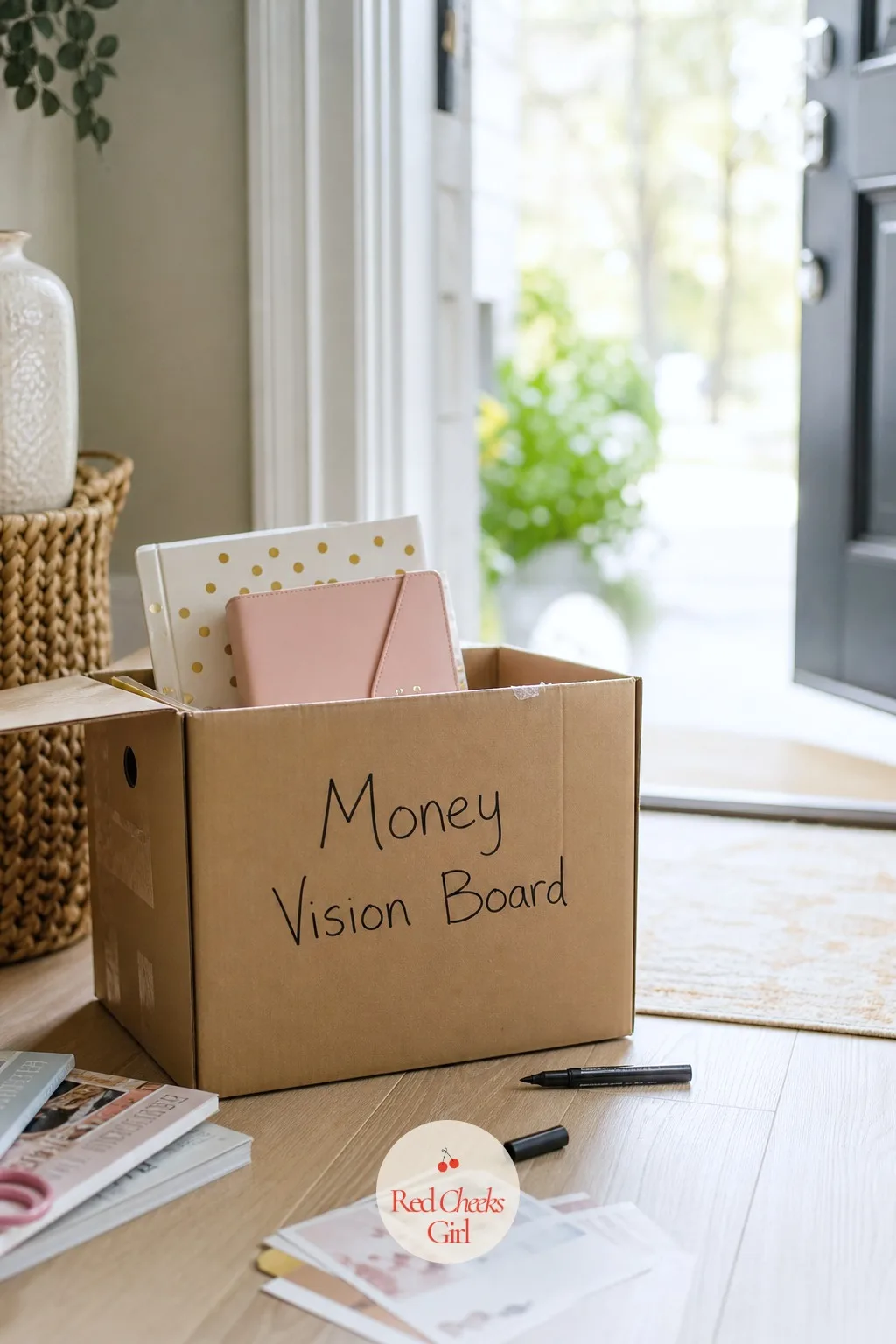
Photograph a single labeled moving box by a doorway, marker still uncapped beside it, as if the move is nearly done. This works equally well for a first apartment, a first house, or simply a room finally set up the way you want it.
Say: I am building a place that is actually mine to keep. The step this year is setting a moving or renovation fund, even a small one, so the next box is paid for before it is packed.
🛍 Shopping guide
Calm Money Mornings
The last four pictures are not goals at all. They are the habit that gets you to every goal above: a planner at breakfast, a calendar with bills checked off, a notebook you actually open.
These are the cheapest entries on the whole board, and often the ones that change the most.
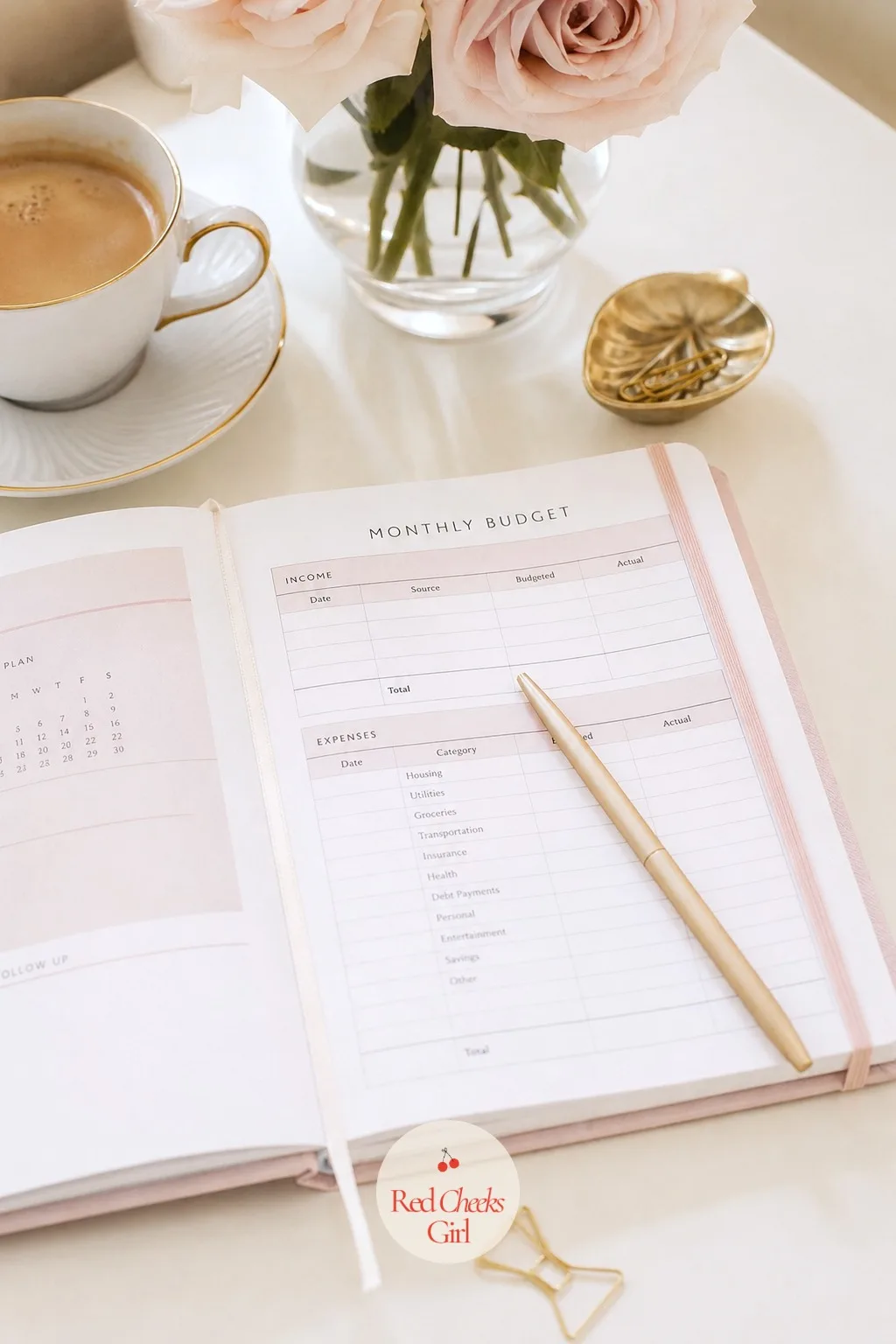
Start the Morning With a Planner, Coffee and a Clear Budget
A budget you actually glance at over coffee does more good than a spreadsheet you open once a year in a panic.
Lay a planner open to a budget page beside a coffee cup, pen resting across the page where you last wrote. Five minutes with this most mornings, even just checking one number, is the whole habit.
Say: I know where my money is going this month. The step this year is picking one morning a week to actually sit down with it, calendar reminder and all.
🛍 Shopping guide
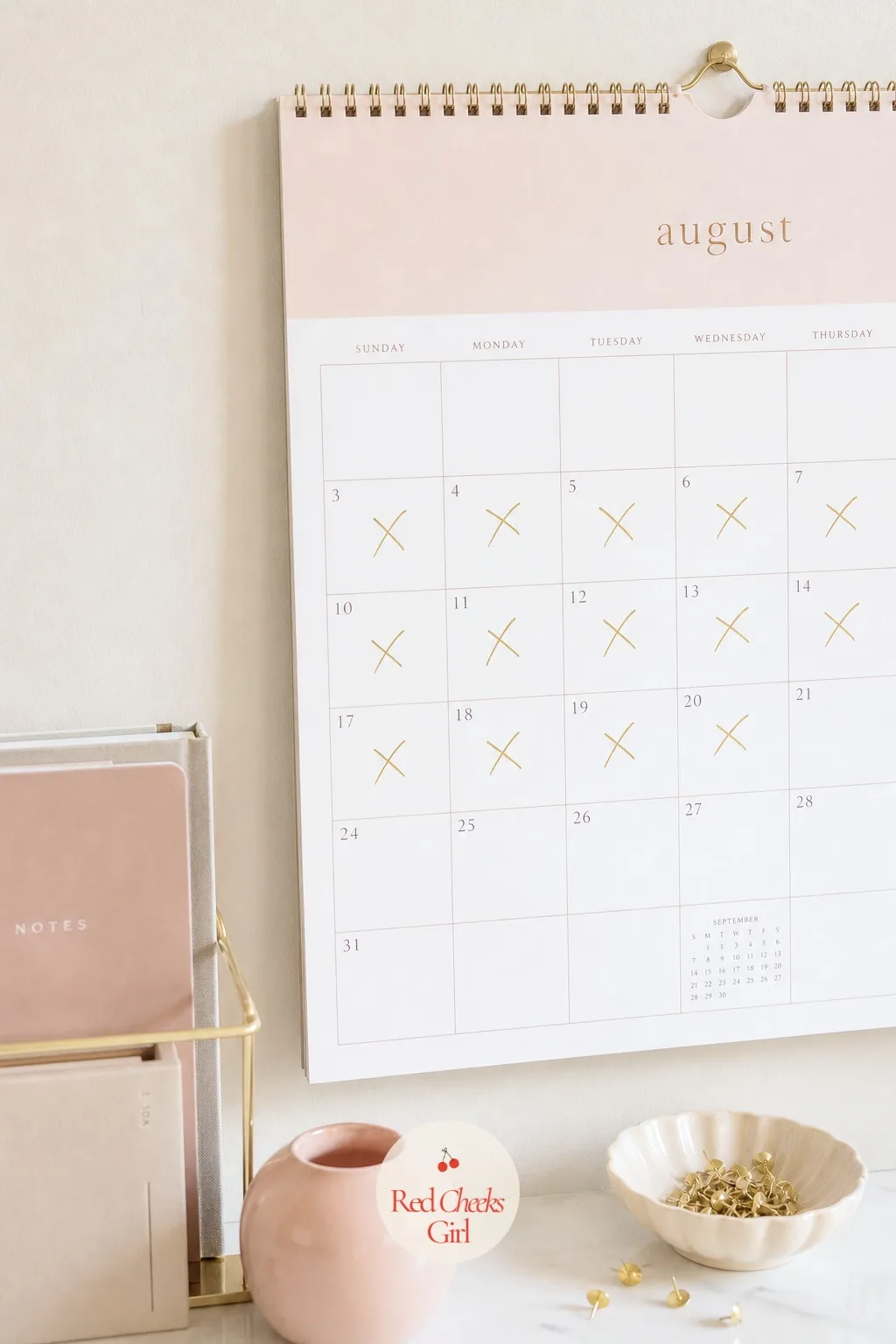
Mark Every Bill Paid on the Calendar Before the Month Ends
There is real relief in a calendar where every bill has a tidy line through it before the due date, instead of discovering one three days late.
Hang a simple wall calendar and cross off each bill in the same color pen as it clears. This costs the price of a calendar and takes less time each month than scrolling your phone before bed does.
Say: nothing is quietly overdue in the background. The step this year is writing every single due date onto one calendar at the start of the month, in one sitting.
🛍 Shopping guide
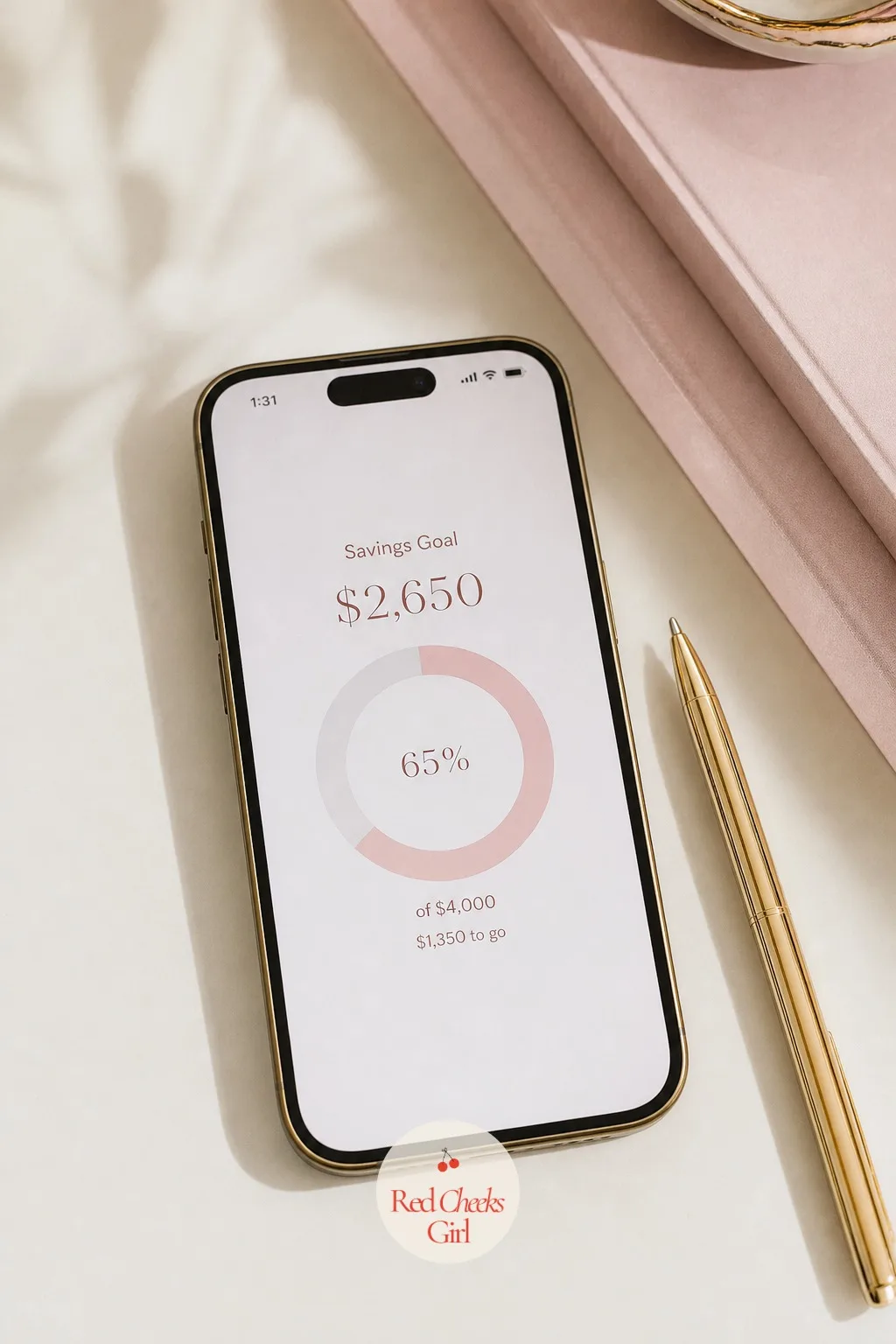
Check a Savings Goal Ring That’s Actually Filling In on the Banking App
Watching a little progress ring creep toward full inside a banking app is a small, almost silly thing to find satisfying, and it works anyway.
Photograph a phone screen showing a savings goal ring partway filled, resting on a clean surface rather than held up. If your bank does not do rings, a simple progress bar or percentage screen does exactly the same job.
Say: this goal gets a little closer every single week, even on quiet weeks. The step this year is naming the goal inside the app itself, so the ring has a reason behind it.
Close Out the Week With a Notebook Where Every Dollar Is Accounted For
A week where you can actually say where the money went, line by line, feels nothing like restriction. It feels like finally being able to see the whole picture at once.
Keep a small notebook by the bed and jot every purchase into it each evening, nothing fancy, just the number and what it was for. This replaces an app perfectly well for anyone who thinks better with a pen in hand.
Say: every dollar I spend had a reason, even the small ones. The step this year is doing this for one full week, start to finish, before deciding whether to keep going.
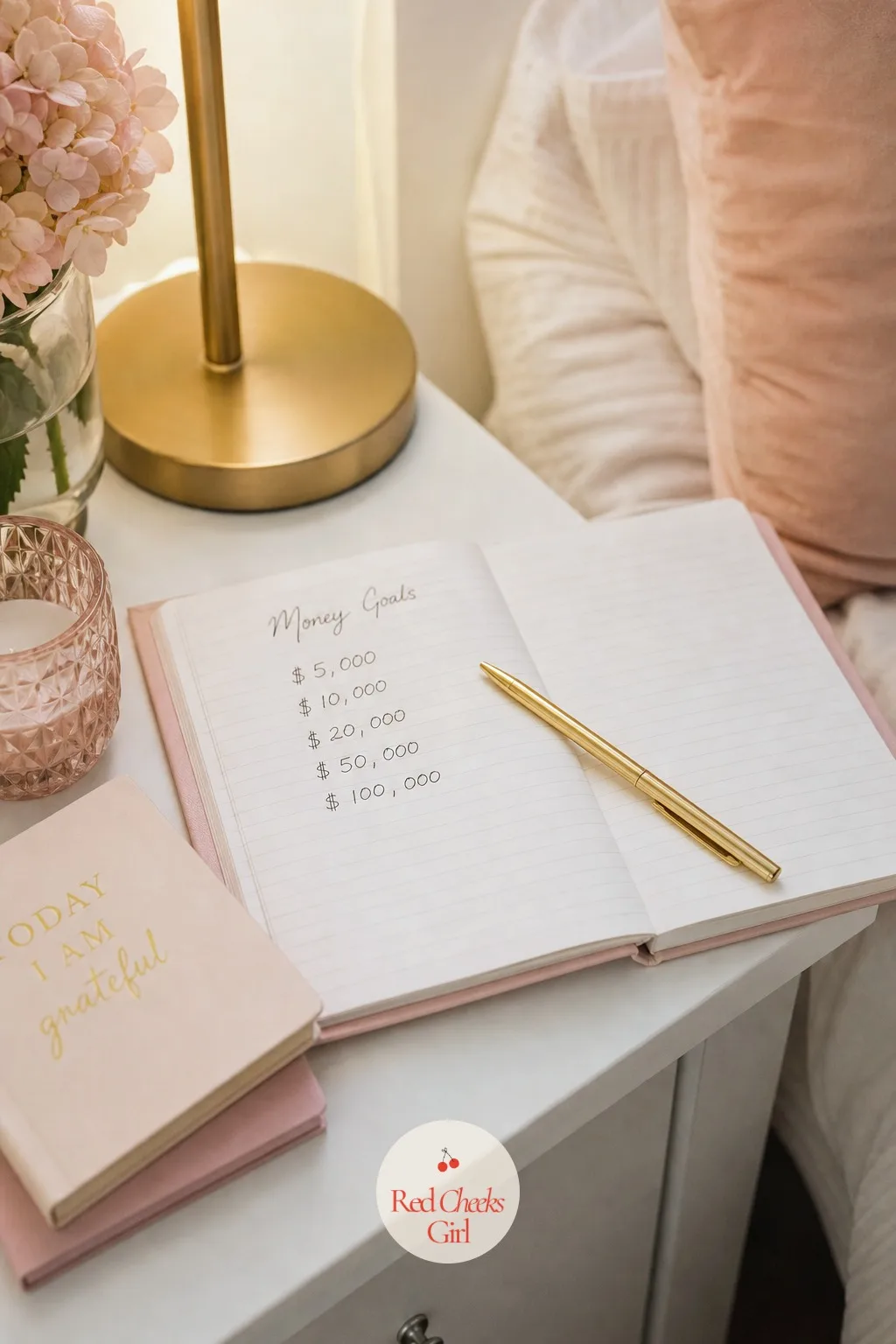
🛍 Shopping guide
Frequently Asked Questions
What should I put on a money vision board?
Put pictures of the life your money will fund, not piles of cash: a stocked fridge, a paid off car, a travel jar filling up, and a short affirmation under each one.
Does a money vision board actually work?
A vision board works when it is paired with real numbers and dates, not on its own; seeing the goal daily makes you far more likely to actually act on it.
How do I make a vision board for money?
Pick two or three real financial goals with dollar amounts and dates, find or take a photo for each, then arrange them on a board somewhere you will see them daily.
What are good affirmations for a money vision board?
Short, present tense and specific works best, such as ‘I know where my money goes each month’ or ‘this goal gets closer every week,’ written under the image rather than on it.
Where should I keep a money vision board so it actually works?
Keep it somewhere you already look every day without trying, like beside the coffee maker or inside a desk drawer you open each morning, not tucked away in a closet.
How often should I update a financial vision board?
Refresh it every few months or whenever a goal changes, since a board built for debt payoff will not fit the same life once that goal is actually met.

Here are twelve captivating fall reads that celebrate women's voices and will make you abandon your
Natural energy alternatives await you - discover 9 powerful superfoods that eliminate afternoon cras

Skip boring holiday gatherings and discover 15 Christmas and New Year's games that instantly unite a
Leave a Reply