

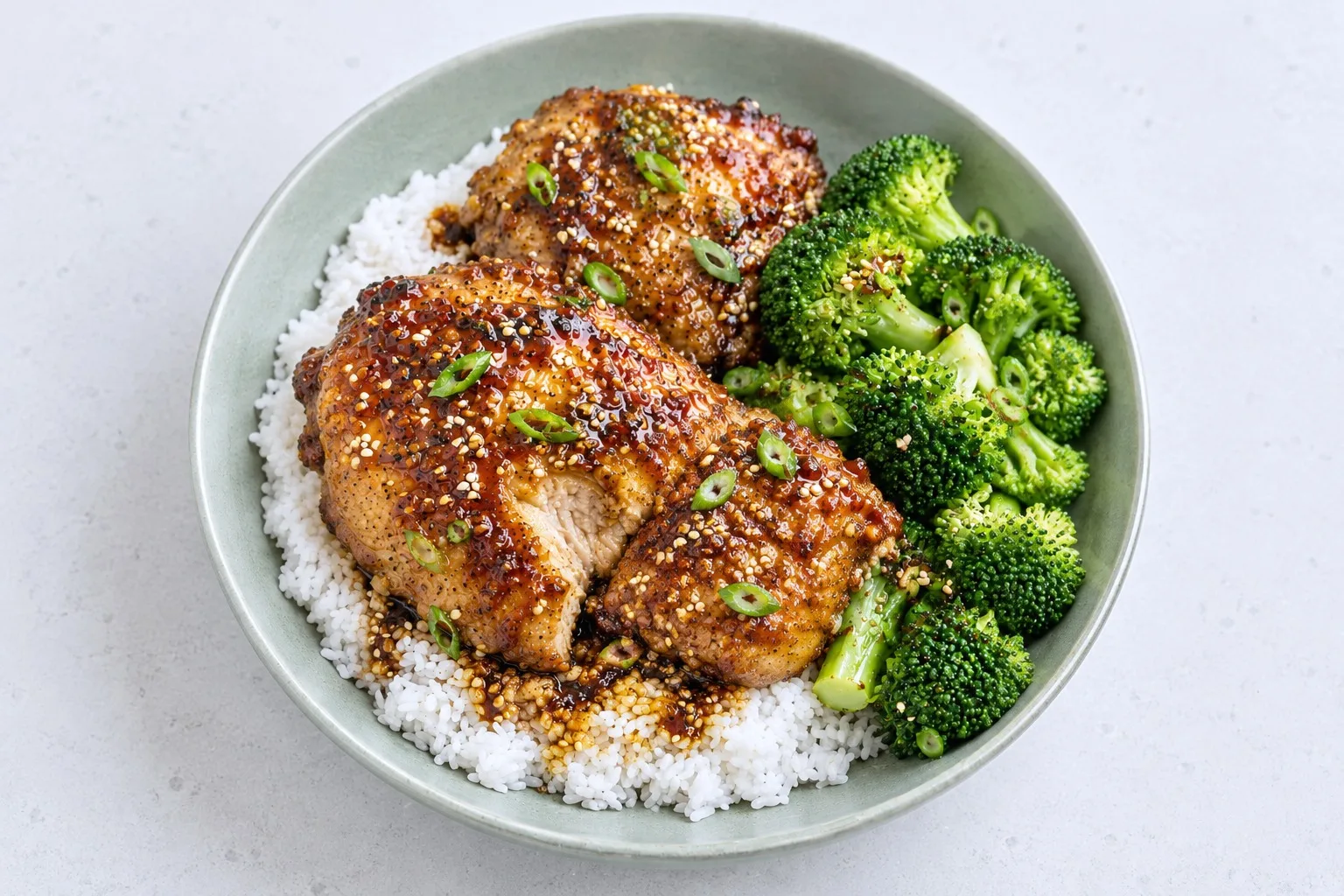
Honey garlic chicken thighs earn their spot on a weeknight table because the whole dish lives in one skillet, start to glossy finish. Thighs sear fast, the sauce reduces while you set the table, and nothing here asks for a marinating window you do not have. Twenty minutes, one pan, and dinner looks like you tried harder than you did.
This post contains affiliate links. If you buy through them, I may earn a small commission at no extra cost to you.
Table of Contents
Why This Dinner Works When You Need It To
Some nights call for a dish that looks considered without asking much of you. This is that dish: a skillet, a short ingredient list, and a glaze that does the visual heavy lifting while you do almost nothing.
Chicken thighs are the quiet hero here, not the breast you reach for out of habit. They hold fat between the muscle fibers that chicken breast simply does not have, which means the glaze has something to cling to and the meat has something to protect it from drying out in a hot pan.
If you are cooking for a small gathering rather than just your own table, the ratio stretches without fuss: double the sauce, keep the thighs in a single layer across two pans, and nobody waits long for a plate.
The whole thing reads as effort on a plate. It asks for about twenty minutes of actual attention.
The Ingredients That Actually Matter
Boneless, skinless chicken thighs are the backbone, and they are worth seeking out over breast meat for this exact reason: the extra fat keeps them juicy even after several minutes simmering in a sweet, salty glaze, where leaner meat would seize up and turn stringy.
Honey is the sauce’s whole personality, but it is also the one ingredient that will ruin the pan if you treat it carelessly.
It scorches fast once it hits direct high heat, which is why the glaze comes together over a simmer, never a hard boil, with other liquids diluting it enough to keep the pan below the point where sugar turns to char.
Soy sauce brings the salt that honey alone cannot, and a splash of rice vinegar cuts through the sweetness so the glaze tastes bright instead of cloying. Garlic goes in only after the chicken comes out of the pan; thrown in too early over high heat, it burns in seconds and turns the whole glaze bitter.
Butter, stirred in off the heat at the very end, is what turns a sticky sauce into a glossy one. It is a small move with a disproportionate payoff: the sheen is what makes the photograph work.
How to Make It
This is the exact method, start to finished plate, with nothing skipped. Read it once before you start the oil heating, since the glaze moves fast once the chicken goes back in.
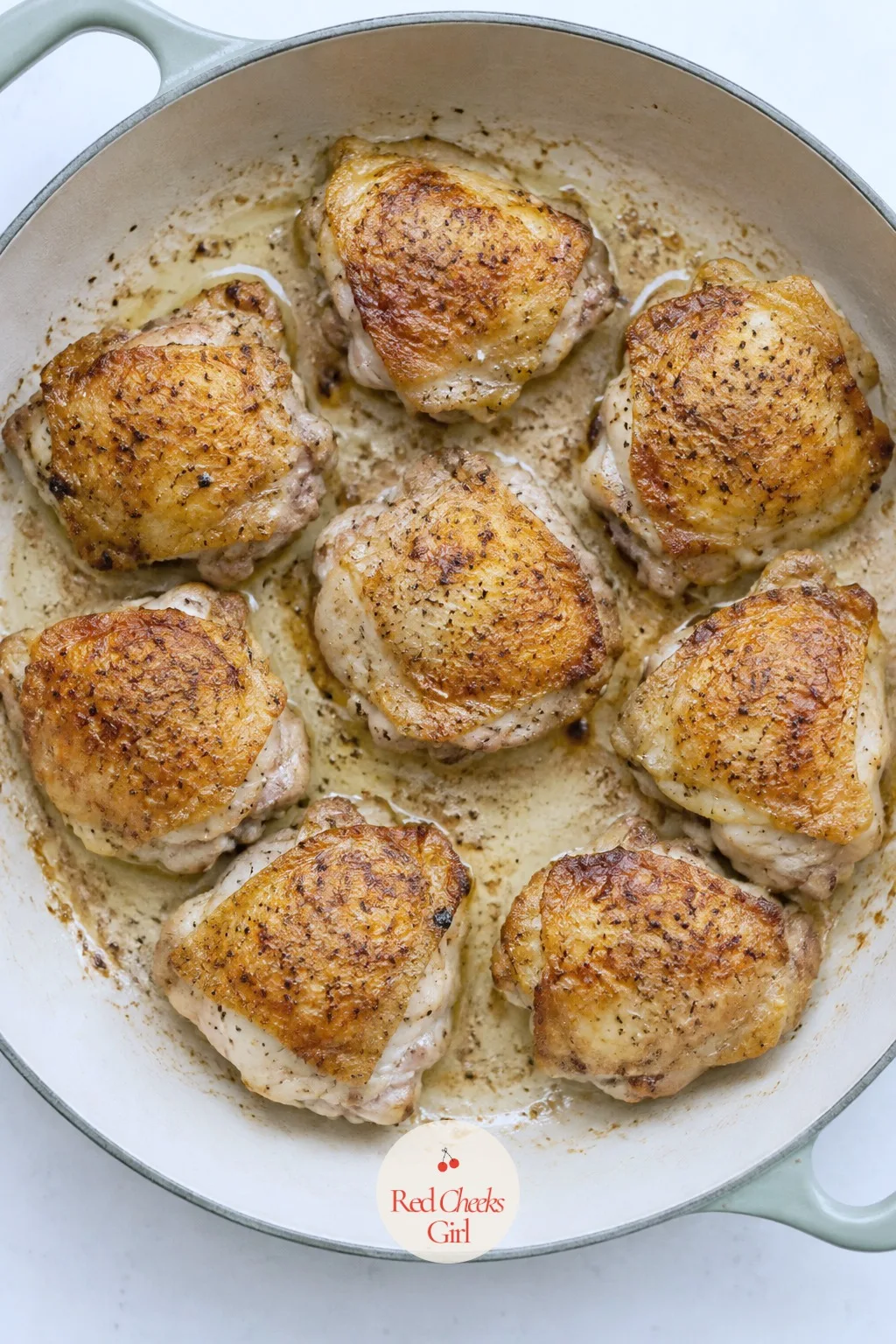
Sear the chicken thighs
Lay the seasoned thighs in the hot skillet and leave them alone until the underside turns deep golden brown. Flip once, sear the second side, and pull them as soon as the crust sets.
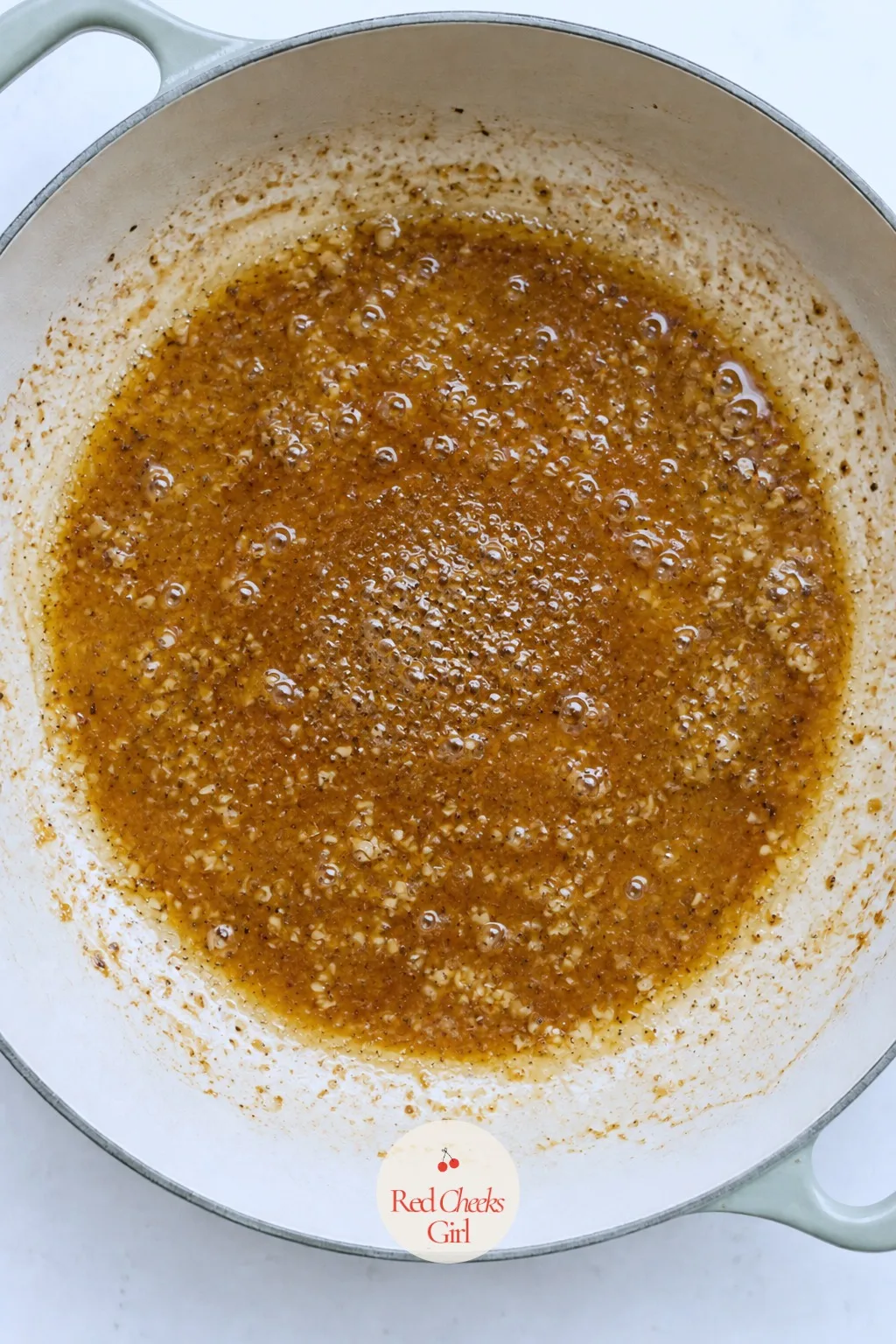
Simmer the honey garlic sauce
Whisk the honey, soy sauce, vinegar and water into the same skillet and let it come to a gentle simmer. Watch for small, steady bubbles, never a hard boil, as it starts to reduce.
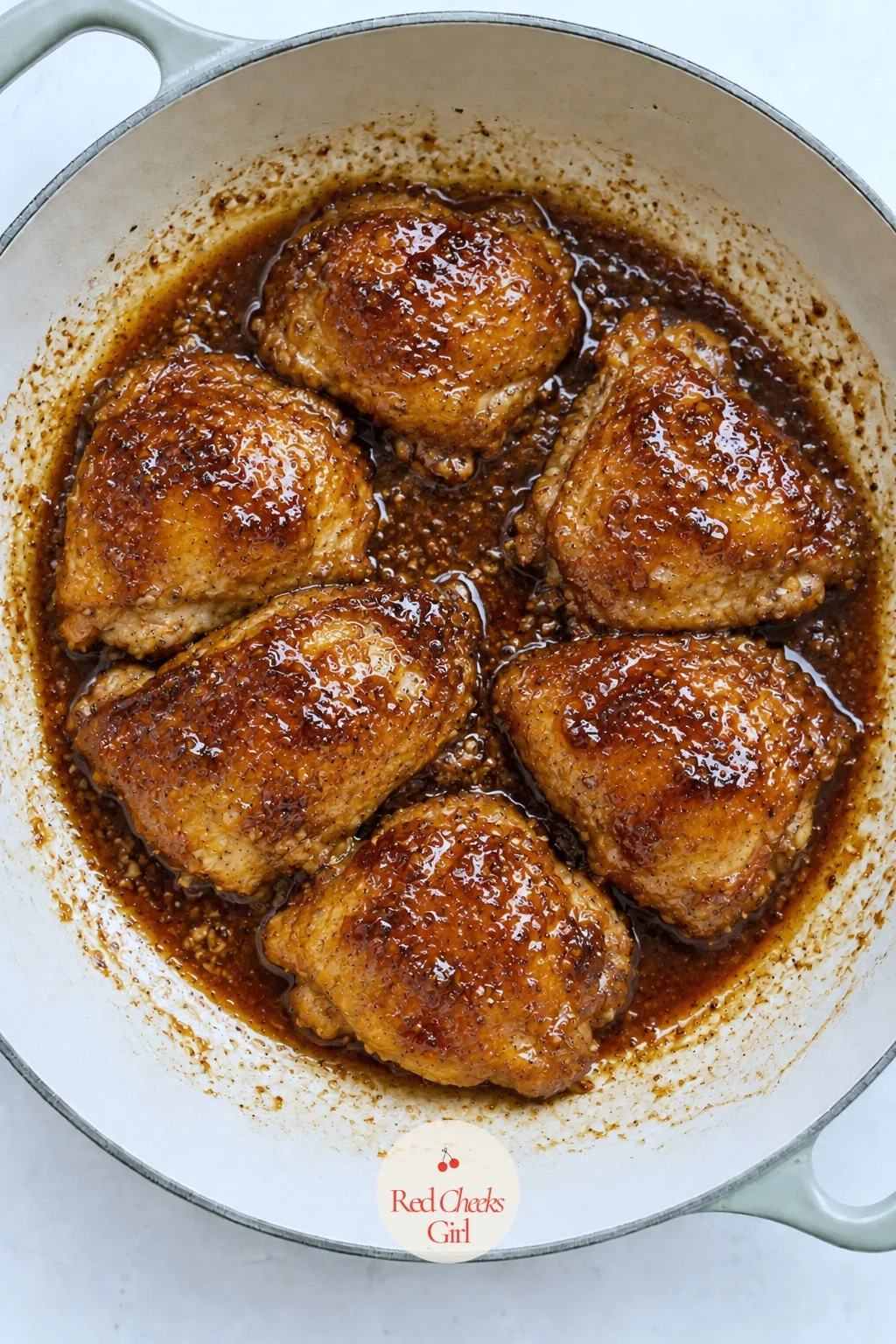
Glaze the chicken
Return the seared thighs to the skillet and spoon the sauce over each piece as it simmers. Keep basting until the glaze thickens enough to coat the back of a spoon.
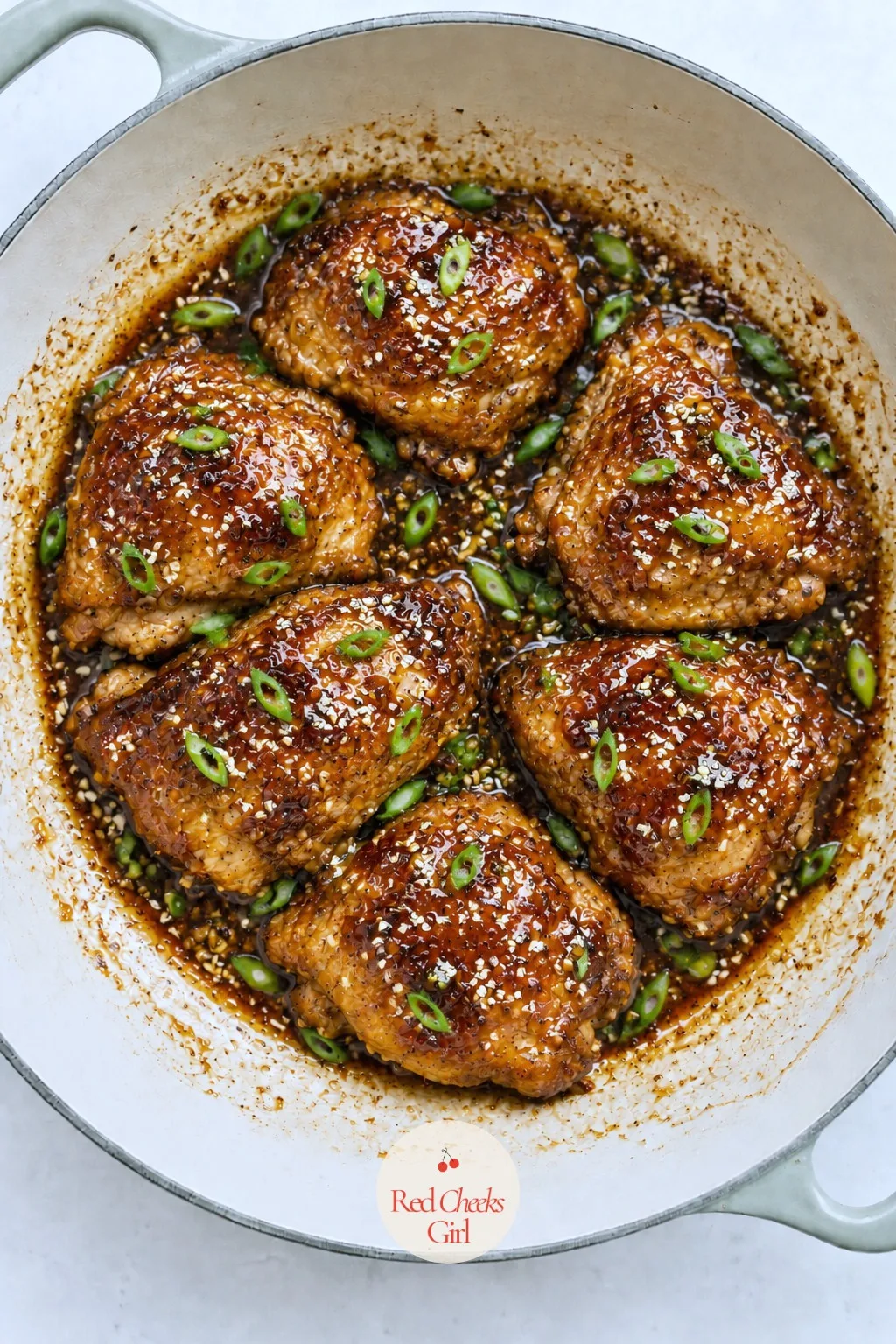
Scatter the sesame seeds and green onion
Sprinkle the sesame seeds and sliced green onion over the glazed chicken while it still sits in the skillet. The color should stand out sharply against the dark glaze.
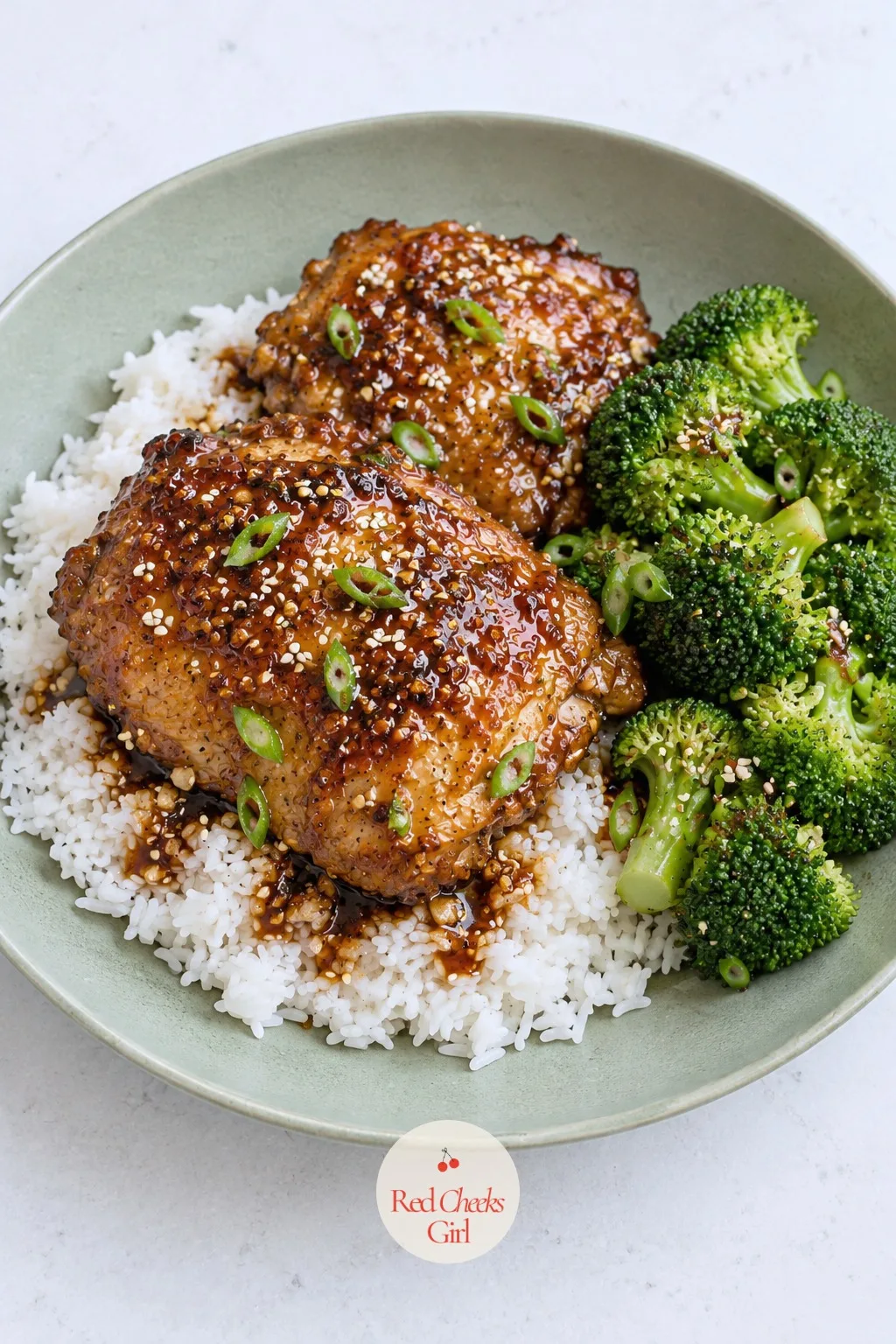
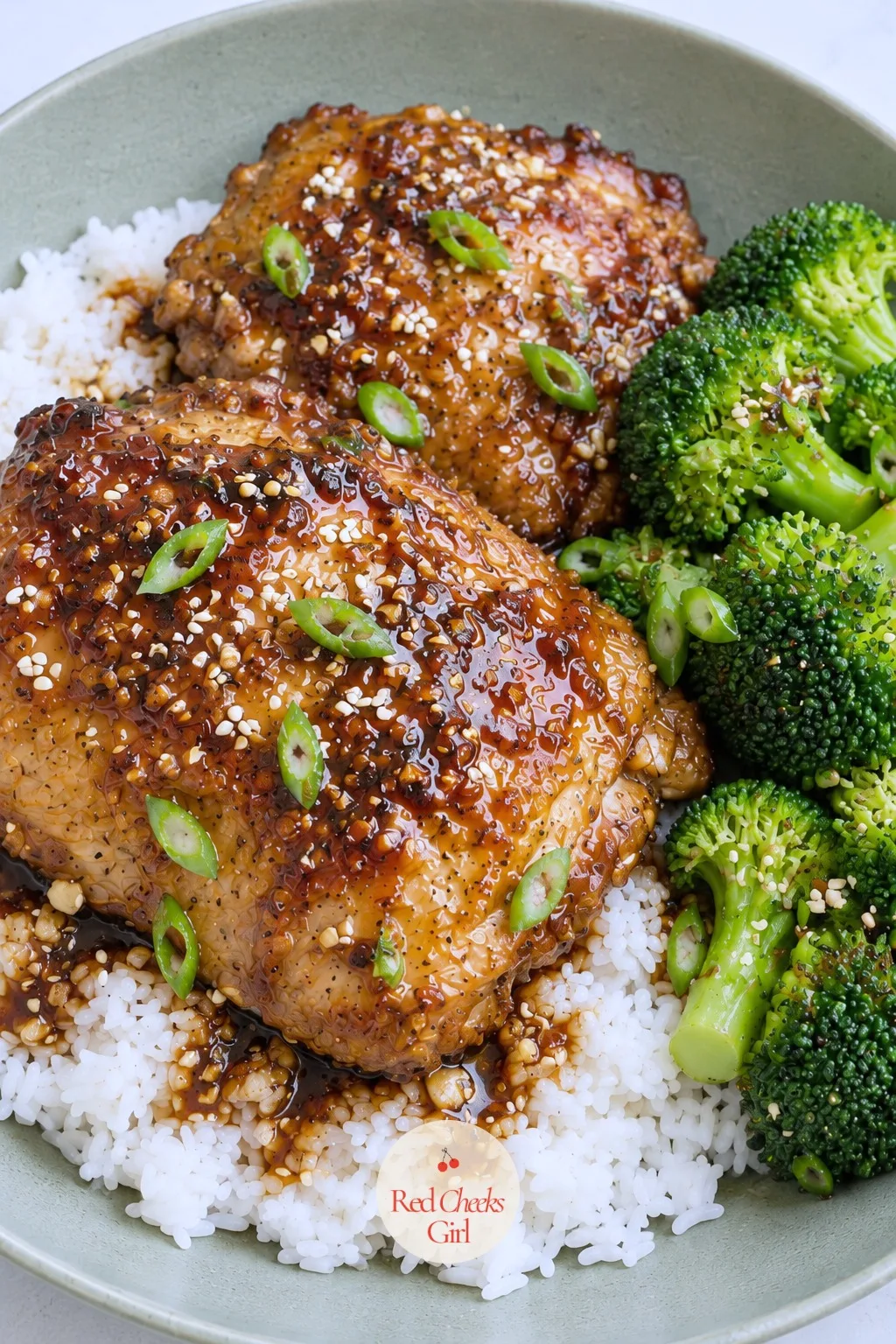
Plate with rice and broccoli
Set the glazed thighs over rice with steamed broccoli on the side, then spoon any extra glaze from the skillet over the top. Serve while the glaze still shines.
🛍 Shopping guide
How to Keep the Glaze Glossy, Not Burnt
The one mistake that ruins this dish every time is rushing the glaze over high heat the way you rushed the sear. Honey behaves nothing like oil: it scorches in seconds once the pan runs hot and dry, and a burnt glaze tastes bitter in a way no amount of extra honey fixes.
Keep the sauce at a gentle simmer once the honey, soy sauce and vinegar hit the pan, not a rolling boil. The water in the mix helps cap the temperature so the sugars reduce slowly into something glossy instead of flashing to black flecks at the pan’s edge.
Garlic is just as fragile. Added to a screaming hot, dry pan it burns in under a minute and turns sharp and acrid, so it goes in only after the chicken comes out and the heat drops to medium.
Crowding the skillet is the other common slip. Thighs packed too close steam instead of sear, and a pale, soft surface will not hold the glaze the way a properly browned crust does.
Easy Swaps If Your Pantry Looks Different
No rice vinegar in the cupboard? White wine vinegar or apple cider vinegar does the same job of cutting the sweetness, just use a little less since both taste sharper than rice vinegar.
Chicken breast can stand in if thighs are not what you have, though it dries out faster in the same glaze; pull it from the heat the moment it reaches 165°F rather than letting it simmer the full time the thighs need.
Bone-in, skin-on thighs work beautifully too if you would rather have crisp skin under the glaze, just know they need a longer sear and a few extra minutes simmering to reach the same internal temperature.
For a gluten free version, swap the soy sauce for tamari or coconut aminos; the glaze comes out just as glossy and nobody at the table will notice the difference.
What to Put Next to It on the Table
Plain white rice is the obvious partner because it soaks up the extra glaze pooling on the plate, but if you want more color on the table, a dinner bowl recipe with a grain and a vegetable already worked out makes the whole plate look deliberate.
Steamed broccoli keeps things simple and lets the glaze do the talking, but a pull from 18 easy side dishes that make any dinner feel complete rounds things out if you want a second vegetable on the table.
Serving a bigger crowd for the evening rather than just dinner for the house? These thighs slide easily onto a spread built for a crowd, right alongside the picks in game day party food: 21 recipes and ideas for your spread.
If the honey glaze is the flavor everyone keeps asking about, the same sweet heat shows up in hot honey chicken sliders on buttery rolls, worth keeping in the back pocket for a different kind of gathering.
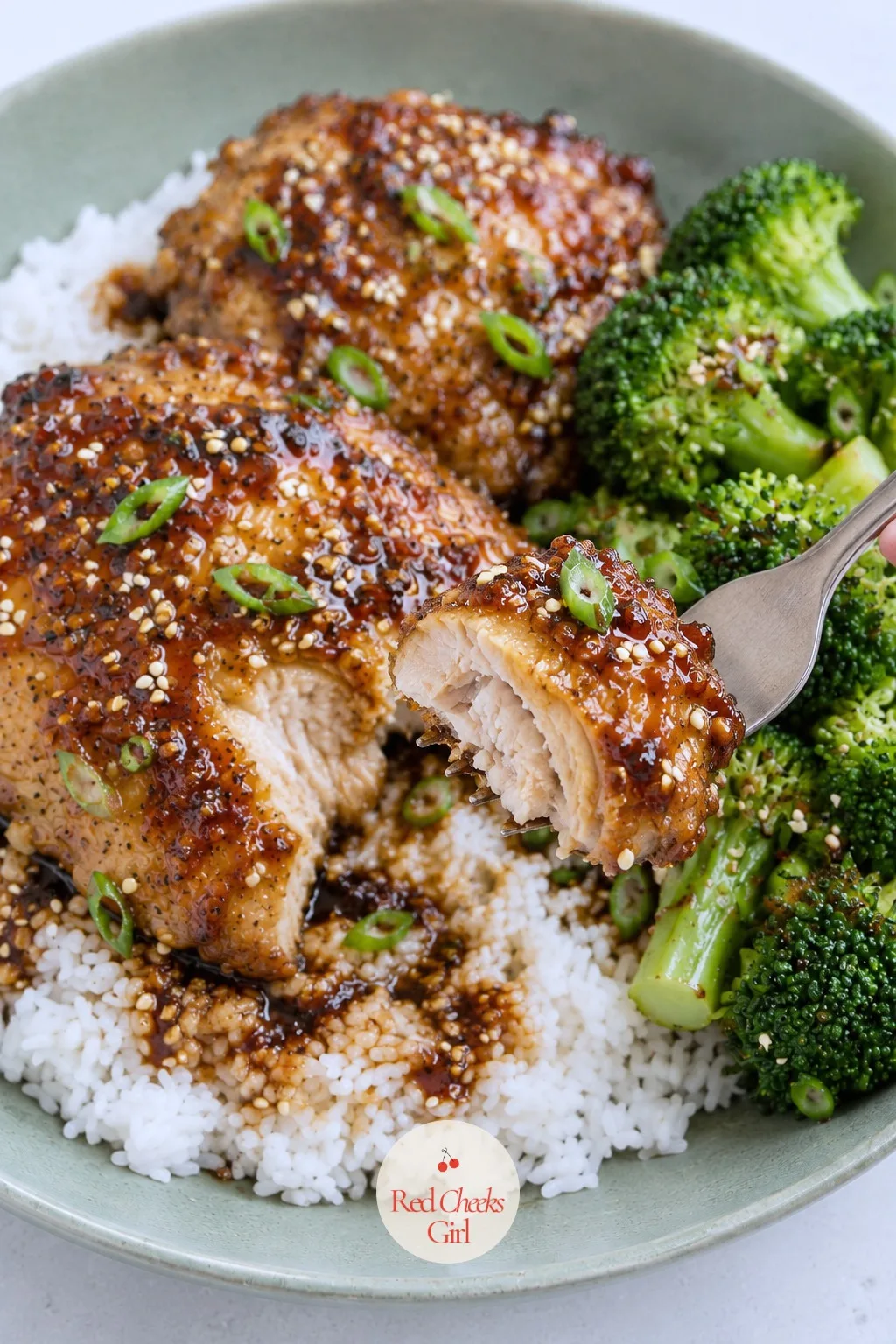
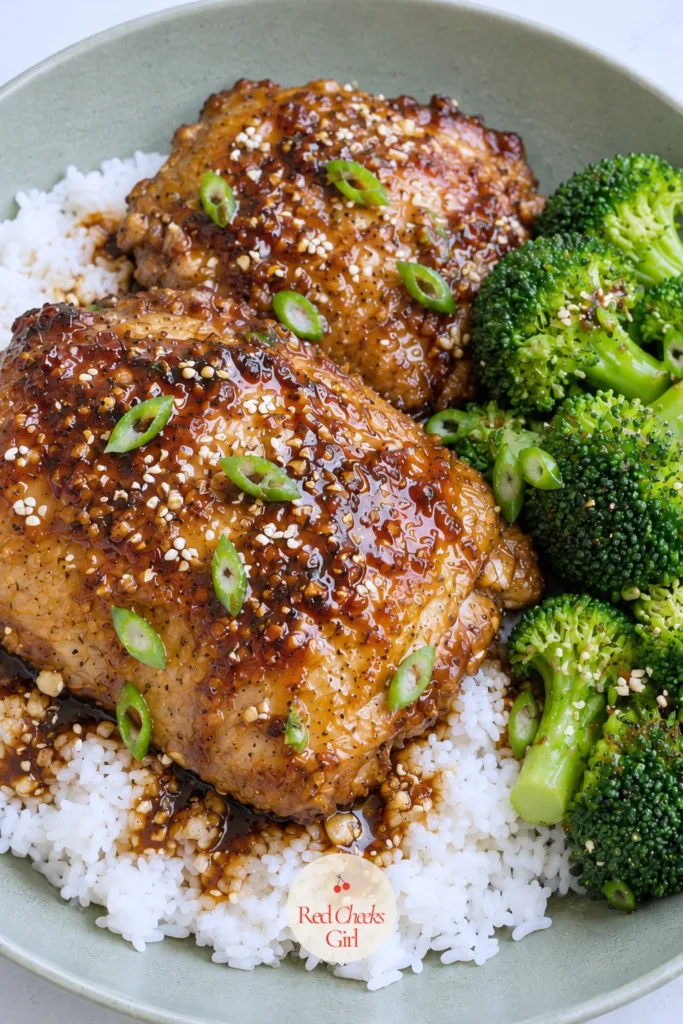
Honey Garlic Chicken Thighs
Ingredients
- 8 boneless skinless chicken thighs (about 2 pounds), trimmed of excess fat
- 1 teaspoon kosher salt
- 1/2 teaspoon black pepper
- 1 tablespoon vegetable oil
- 2 tablespoons unsalted butter divided
- 4 cloves garlic minced
- 1/2 cup honey
- 1/4 cup low sodium soy sauce
- 1 tablespoon rice vinegar
- 2 tablespoons water
- 2 tablespoons sesame seeds
- 3 green onions thinly sliced
- cooked white rice for serving
- steamed broccoli for serving
Instructions
- Pat the 8 chicken thighs dry with paper towels, then season both sides evenly with 1 teaspoon kosher salt and 1/2 teaspoon black pepper.
- Heat 1 tablespoon vegetable oil in a large skillet over medium high heat until it shimmers, then lay the thighs in the pan in a single layer with space between each piece.
- Sear undisturbed for 5 to 6 minutes, until a deep golden crust forms on the underside, then flip and sear the second side for 4 to 5 minutes; an instant read thermometer should read about 145°F to 150°F. Transfer the chicken to a plate.
- Lower the heat to medium, melt 1 tablespoon of the butter in the same skillet, and add the 4 cloves minced garlic. Cook for 30 seconds, stirring constantly, until fragrant but not browned; garlic that darkens turns the whole glaze bitter.
- Pour in 1/2 cup honey, 1/4 cup soy sauce, 1 tablespoon rice vinegar and 2 tablespoons water, whisking to combine. Bring the mixture to a gentle simmer, never a hard boil, so the sugar reduces slowly instead of scorching against the hot pan.
- Return the chicken thighs and any juices on the plate to the skillet, spooning sauce over each piece. Simmer for 4 to 6 minutes, turning and basting every minute, until the glaze thickens enough to coat the back of a spoon.
- Check the internal temperature at the thickest part of a thigh with an instant read thermometer: it must read at least 165°F for safety, and thighs stay noticeably juicier closer to 175°F, since dark meat tolerates the extra few minutes without drying out the way breast meat would.
- Remove the skillet from the heat and stir in the remaining 1 tablespoon butter until the glaze turns glossy and clings to the chicken rather than pooling thin at the bottom of the pan.
- Let the chicken rest in the glaze, off the heat, for 5 minutes. This pulls the last of the sauce into the meat so the first cut does not run thin across the plate.
- Scatter 2 tablespoons sesame seeds and the 3 sliced green onions over the chicken while it still sits in the skillet.
- Transfer the thighs to plates over cooked rice with steamed broccoli alongside, spooning any extra glaze from the skillet over both the chicken and the rice.
Good to Know
Frequently Asked Questions
Can I bake honey garlic chicken thighs instead of cooking them on the stovetop?
Yes: sear the thighs in an oven safe skillet, spoon the glaze over, and finish them in a 400°F oven for 10 to 15 minutes until they hit 165°F internally.
Can I use bone-in chicken thighs for this recipe?
Yes, bone-in thighs work well and crisp nicely under the glaze, but they need a longer sear and several extra minutes simmering to reach the same safe internal temperature as boneless.
Is honey garlic chicken thighs gluten free?
Not as written, since regular soy sauce contains wheat; swap in tamari or coconut aminos in the same amount and the glaze turns out just as glossy.
Can I make the honey garlic sauce ahead of time?
Yes, whisk the honey, soy sauce, vinegar and water together up to a day ahead and store it in the refrigerator, then warm it in the skillet before searing the chicken.
How many chicken thighs should I plan per person for a party platter?
Plan on 2 boneless thighs per person for a main course serving, or 1 per person if the platter sits alongside several other dishes on a party spread.
Can I double this recipe for a crowd?
Yes, double every ingredient but sear the thighs in batches or across two skillets, since crowding the pan stops the chicken from browning and the glaze from thickening properly.
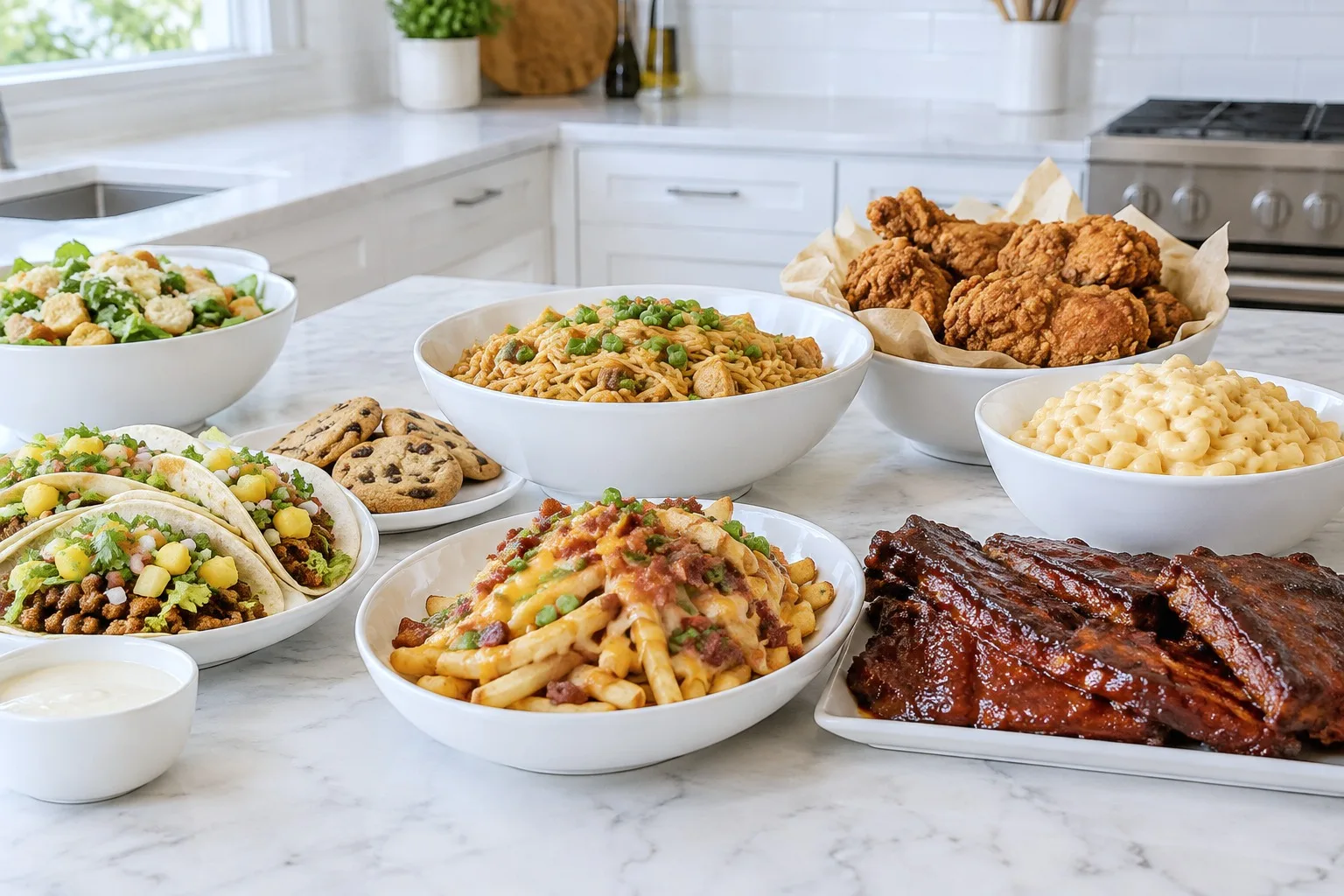
15 copycat restaurant recipes inspired by Olive Garden, Chipotle, Chick-fil-A and more, baked, saute
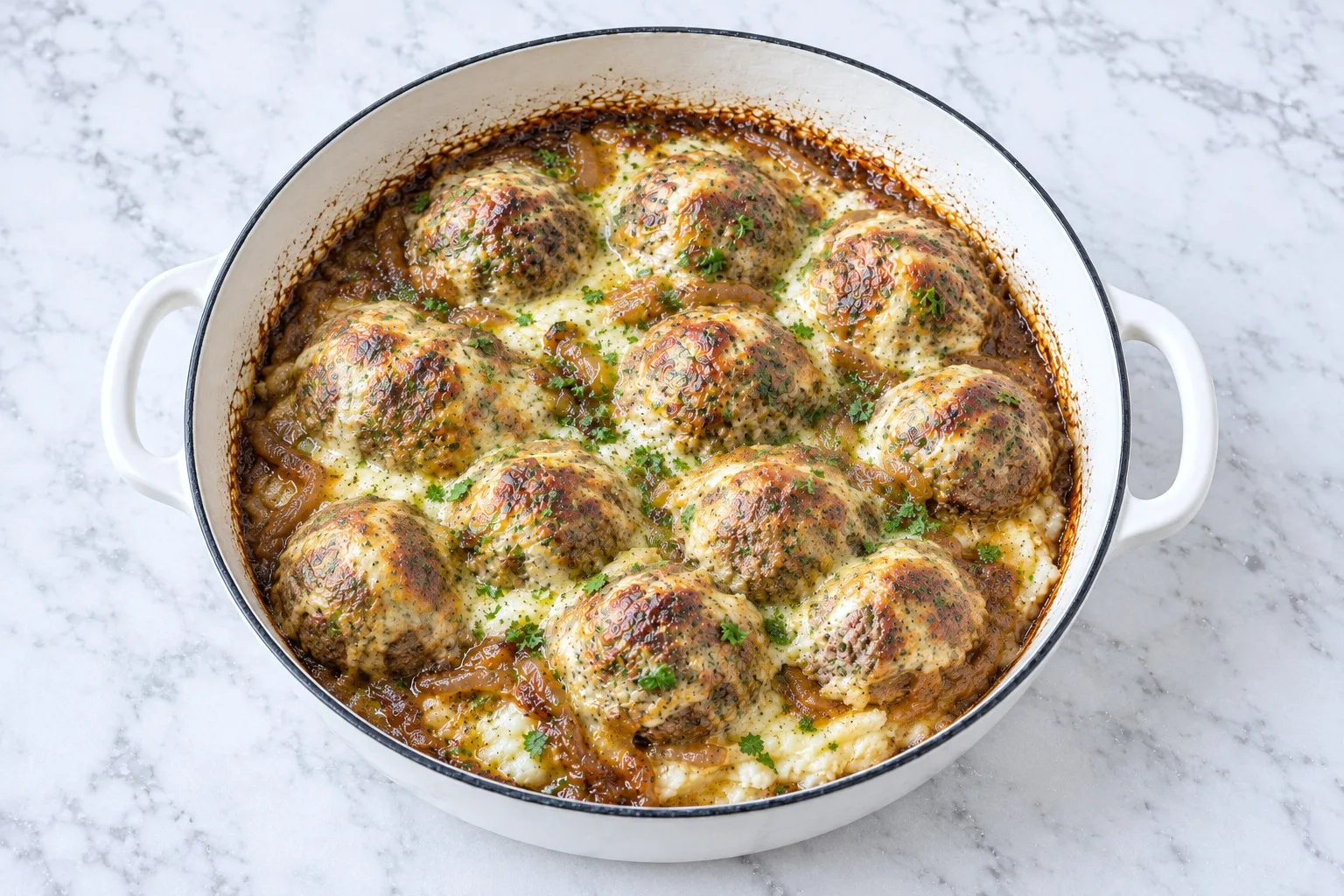
French onion meatballs bring caramelized onion, beef broth and melted Gruyere together in one skille

12 Christmas dinner party menus with starter, main, side and dessert, plus a day-of timeline, for ho
Leave a Reply