

Handmade Advent Calendars: 12 Crochet, Felt and Fabric Countdowns to Treasure for Years
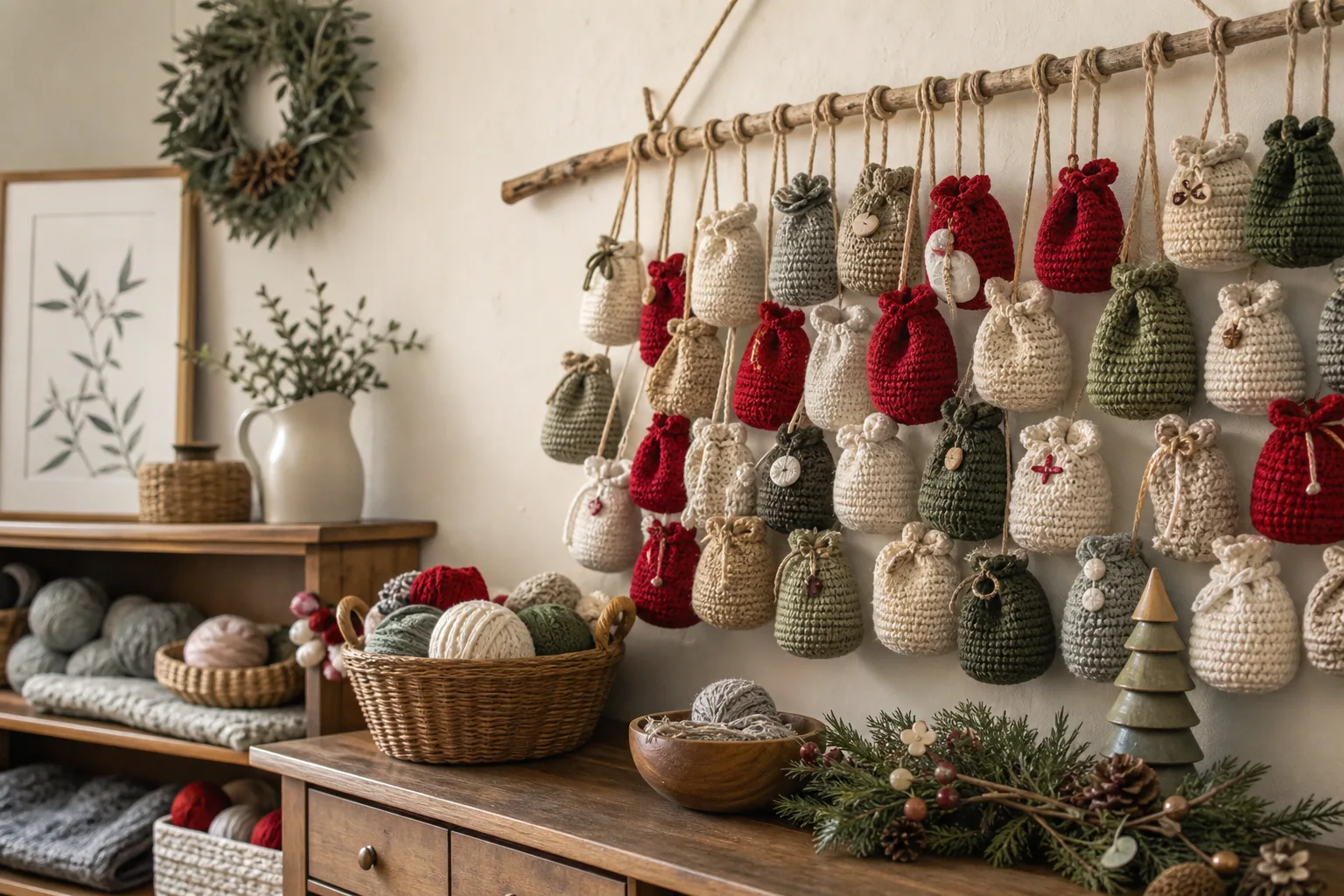
Paper doors are fine until the third of December, when half of them refuse to close again and the whole thing looks a little sad propped against the mantel. A handmade advent calendar skips that problem completely: it holds its shape, it survives being folded into a box in January, and it looks better with age rather than worse.
None of what follows needs a sewing machine with opinions of its own. Some are a single evening with a hook and a ball of yarn, others ask for an afternoon of cutting felt at the kitchen table, and a couple want real fabric and a free Saturday. All twelve go back in the same drawer every year and come out looking like they belong there.
Pick the one that already matches how your house looks, not the one that photographs best on somebody else’s mantel.
This post contains affiliate links. If you buy through them, I may earn a small commission at no extra cost to you.
Crochet Advent Calendars
Yarn forgives more than fabric ever does. A wonky stitch disappears into the texture, a dropped loop just reads as rustic, and the whole piece can live folded in a drawer for eleven months without a single crease needing an iron. If odd balls of wool are already sitting in a basket from other projects, 15 Cute Easy Crochet Ideas for Beginners is a good place to see what else they are good for.
These four read as a set even though no two share a stitch count or a colour story, so choose on instinct rather than working through all four. For the rest of the crochet cupboard once this one is on the wall, 25 DIY Christmas Decorations Crochet Beginners Can Finish in One Sitting covers what to make next.
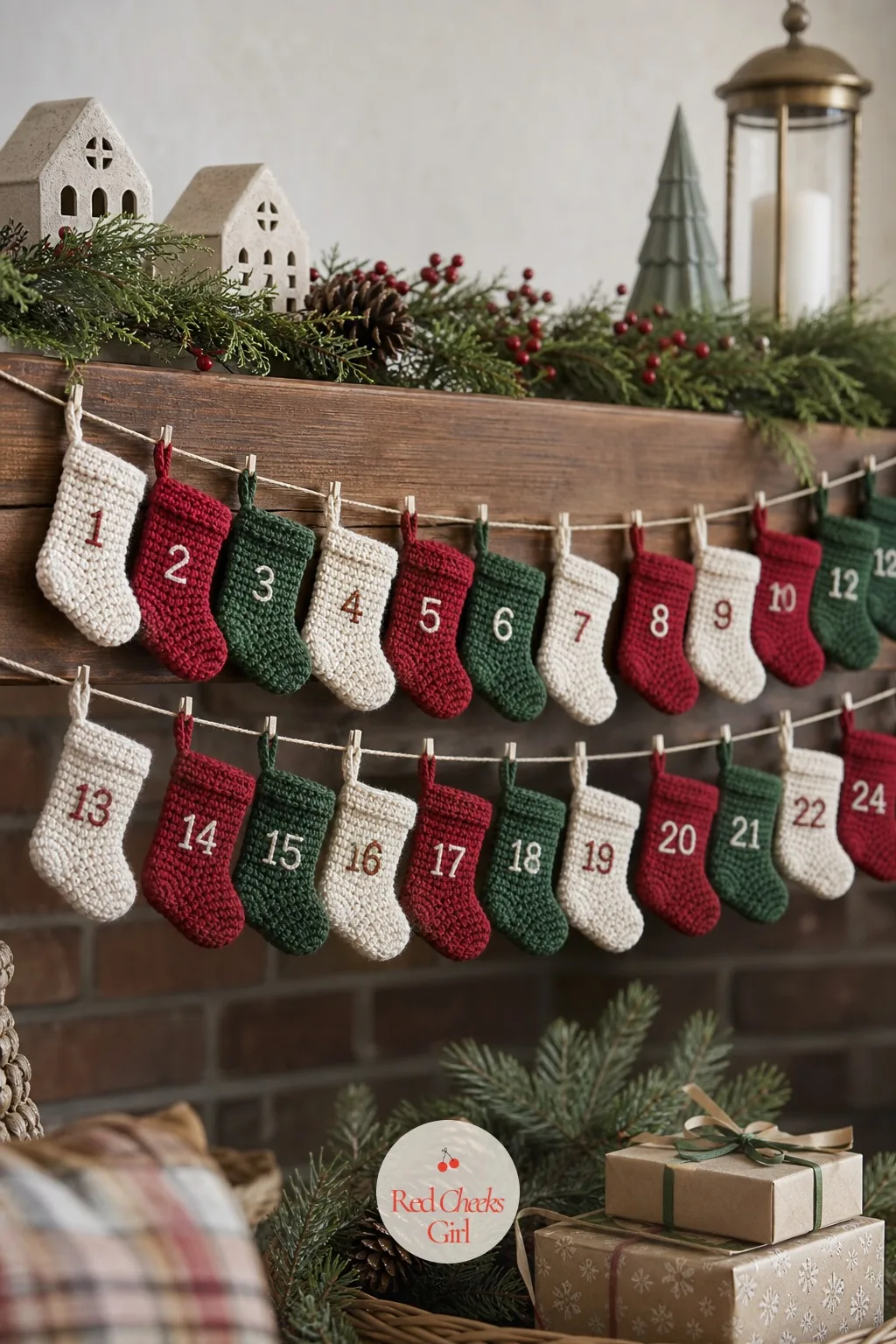
Crochet Mini Stocking Garland Advent Calendar
A string of actual doors is a lot of work for something that lives on a mantel for three weeks. Twenty four tiny crocheted stockings, each barely bigger than a thumb, do the same counting job and look like they came down from the loft rather than off a craft store shelf.
Work each stocking in a different stripe order from the same three balls of wool so none of them match exactly, then sew a small loop at the top and thread the whole row onto plain twine. A folded note or a single wrapped sweet fits inside each cuff.
Pin the garland along the mantel shelf with the cuffs facing out so the embroidered numbers stay visible. With no mantel in the house, the same garland clips just as well along a bookshelf edge with mini wooden pegs.
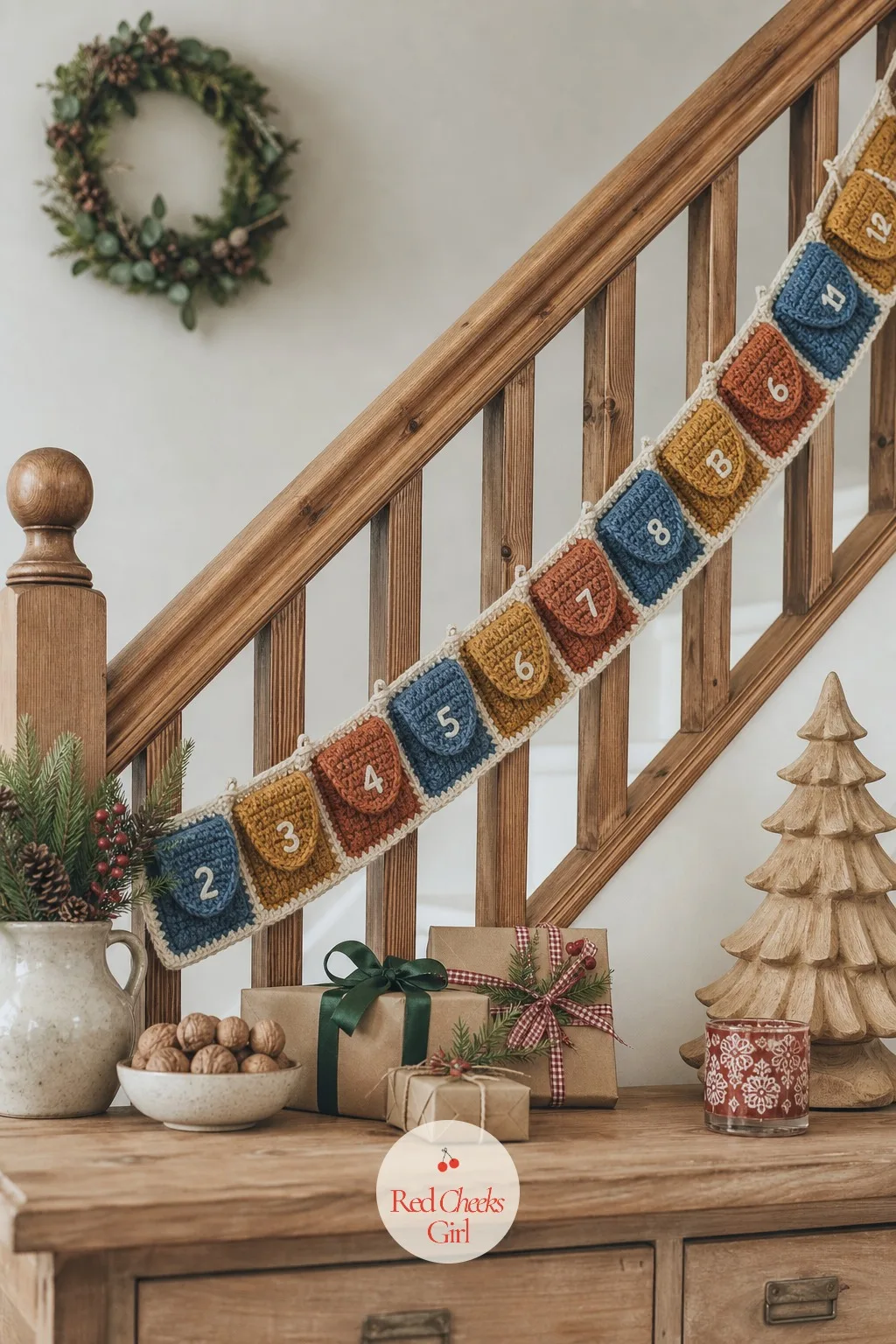
Crochet Granny Square Pocket Advent Calendar
A flat granny square calendar looks like a blanket that gave up halfway through, until two dozen squares each get folded diagonally and stitched down both sides, turning a flat motif into a small triangular pouch with a folded top edge.
Work the squares in rust orange, mustard yellow and denim blue in no particular order, since the whole point of granny squares is that the colours clash a little on purpose. Add a small crocheted number badge to each pocket front before sewing it closed.
Lace the finished row through a length of ribbon and loop it round the staircase bannister, pocket openings facing up so nothing tips out on the way past. A narrow picture rail carries the same row just as well where there is no staircase to use.
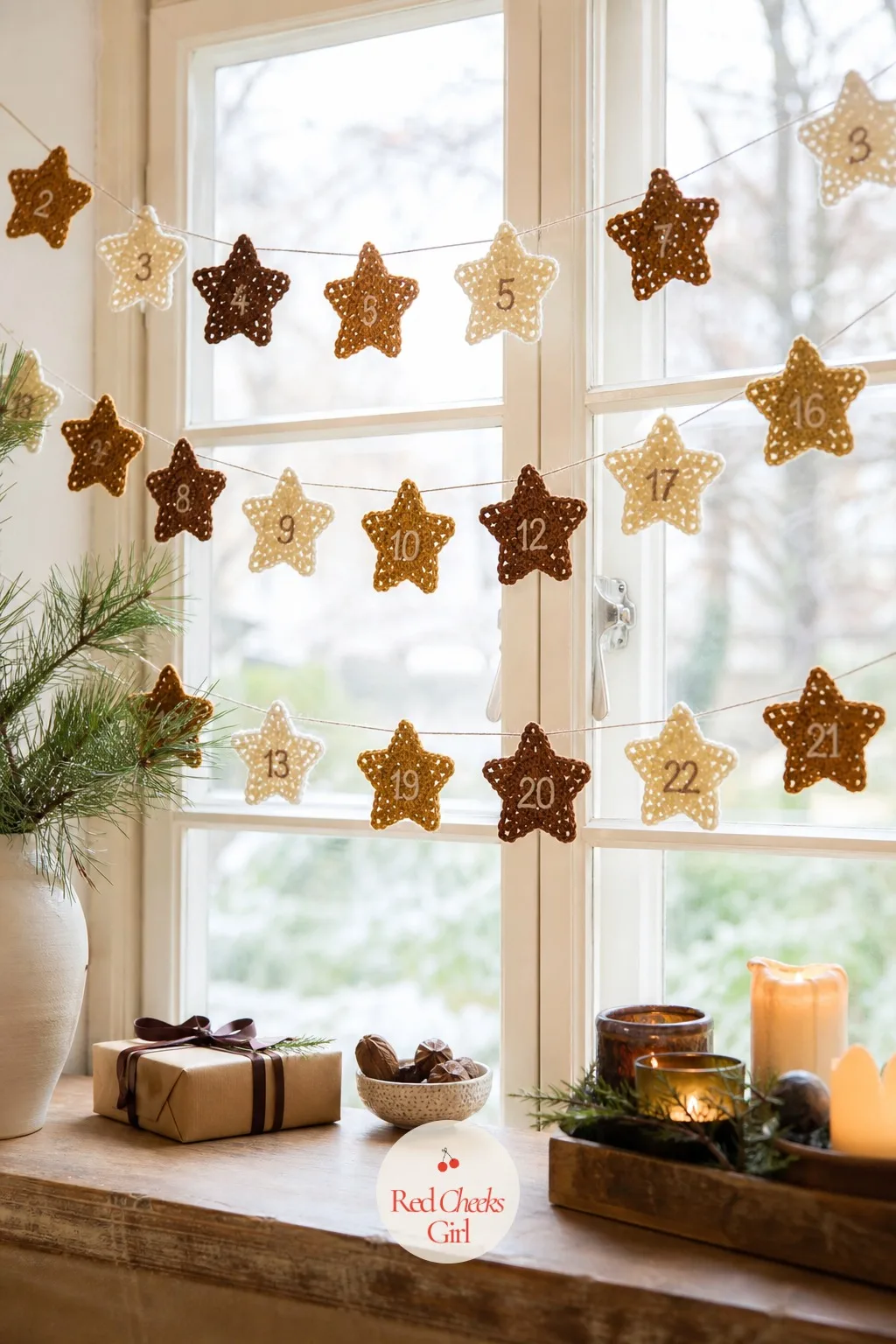
Crochet Star Garland Advent Countdown
Not every countdown needs a pocket. A row of crocheted stars catches window light in a way fabric never quite manages, and there is nothing to fill each day beyond turning the matching star to face outward.
Work each five pointed star flat in ivory cotton, then work every fourth or fifth star in metallic gold thread so the sequence has a rhythm rather than reading as one long strip. A single chestnut brown star marks Christmas Eve at the end of the line.
String the stars on clear thread and hang the garland across a front window using small suction hooks, so the whole thing reads as floating rather than pinned to anything. A mirror frame holds the same garland in a room with no suitable window.
Crochet Basket Advent Calendar on a Shelf
Pockets and stockings both ask to be unpicked and refilled from scratch each year. A row of tiny crocheted baskets stays open on a shelf instead, so whatever goes inside can change without touching the stitching at all.
Work each basket in a stiff cotton yarn so it holds its shape without stuffing, then line up all twenty four in heather grey, holly green and brass thread along a floating shelf in the hallway. Number each one with a small wooden tag tucked inside rather than stitched on, since baskets get rearranged more easily than garlands.
This is the slowest of the four crochet pieces here but the only one with no finishing seams to sew and no loops to attach. If a whole shelf of baskets feels like too much, five grouped together still read as a countdown once the rest of the month is marked another way.
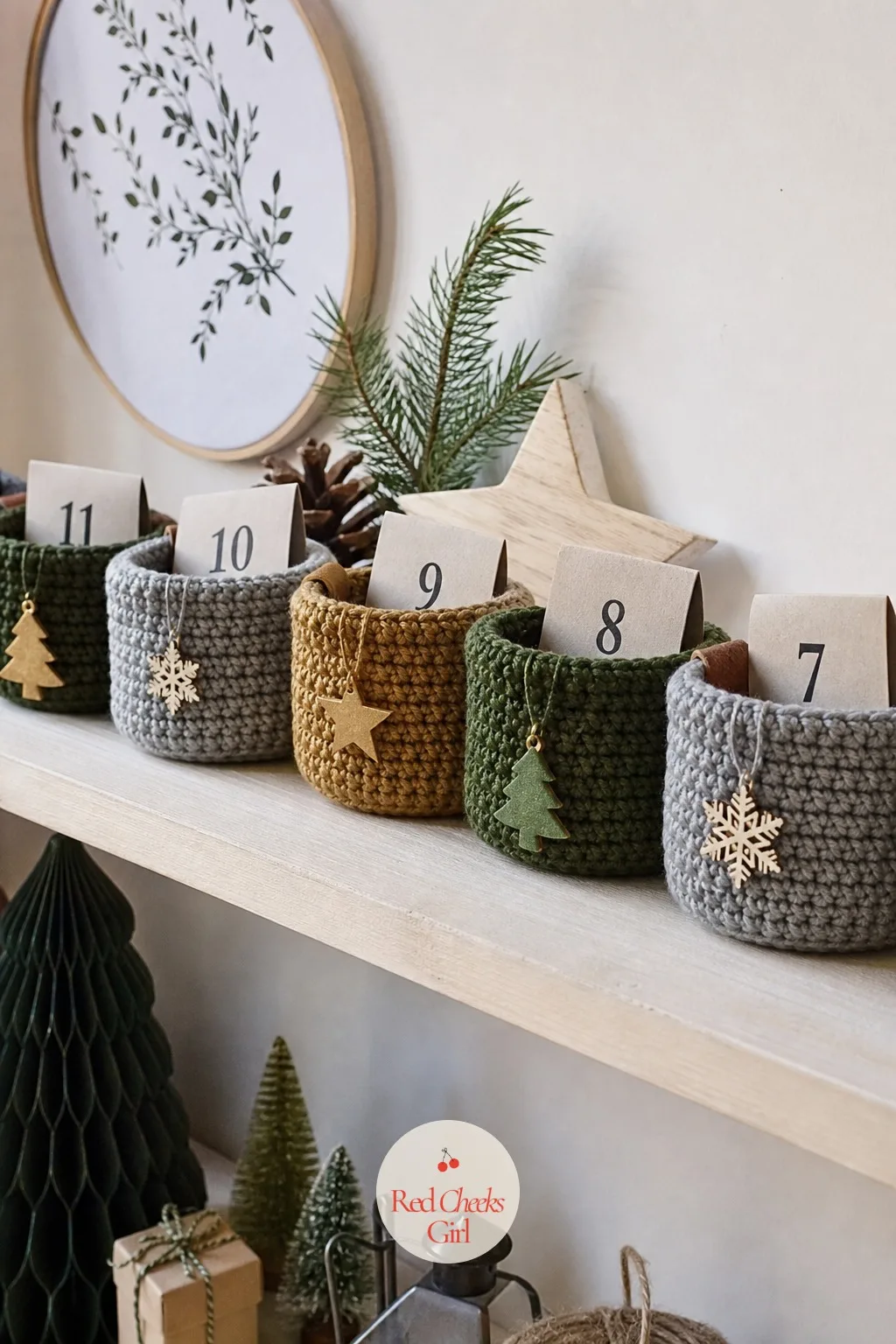
Felt Advent Calendars
Felt does not fray, which means every edge stays raw and still looks finished the moment it comes off the scissors. That single fact is why felt countdowns survive being pawed at by cold fingers every morning for three and a half weeks without ever looking tired around the edges.
None of the four below is the shape sitting in a craft kit already. For small ornaments cut from whatever felt is left once the calendar comes down, 28 Felt Christmas Ornaments Shaped Like Things That Are Not Usually Felt uses up exactly those scraps.
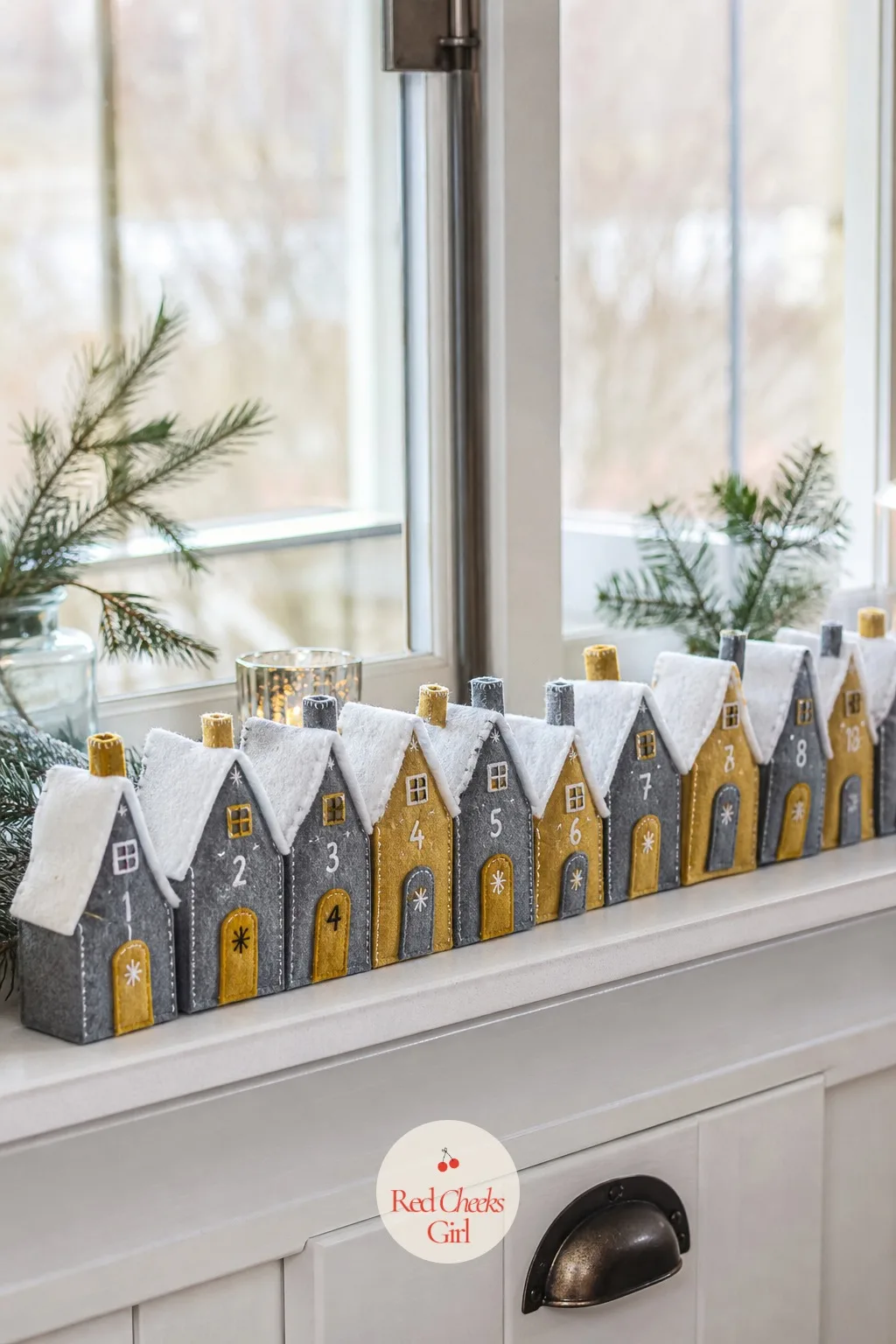
Felt Scandinavian House Village Advent Row
A straight line of houses reads as a street rather than a calendar, which is exactly the point. Each little felt house gets its own door that lifts on a single stitch, or a pocket sewn behind the facade for something smaller to hide in.
Cut the houses from slate grey and mustard yellow felt with white felt snow along each roofline, varying the roof pitch and chimney placement so no two houses on the row match exactly. A single number tag sits above each door in plain cross stitch.
Stand the row along a kitchen windowsill where morning light catches the white felt snow caps. A plain shelf anywhere else in the house carries the same village just as happily.
🛍 Shopping guide
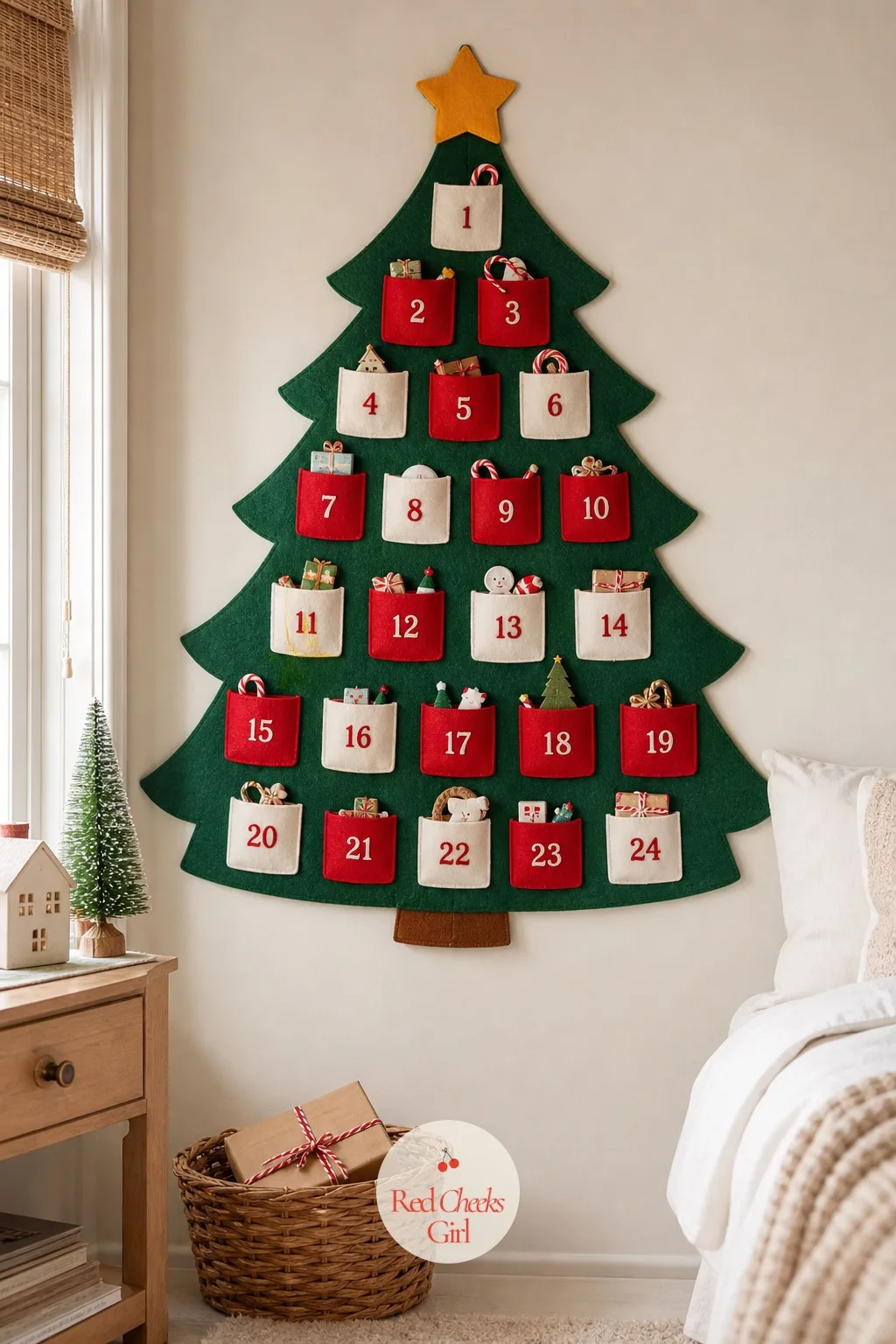
Felt Tree Pocket Advent Wall Hanging
This is the shape most people picture when someone says felt advent calendar, and it earns the reputation honestly. A single large felt tree hangs flat against the wall, studded with twenty four small pockets stitched directly onto the branches.
Cut the tree itself from emerald green felt and back each pocket in ivory or cherry red so the numbers stand out against the dark background. A felt star finishes the top, reserved for Christmas morning rather than counted as one of the days.
Hang the whole tree on a single nail against a bedroom wall, where it stays flat enough not to catch on anything during the daily hunt for the right pocket. A dowel sewn into a fabric sleeve at the top keeps a tree this size from sagging in the middle.
🛍 Shopping guide
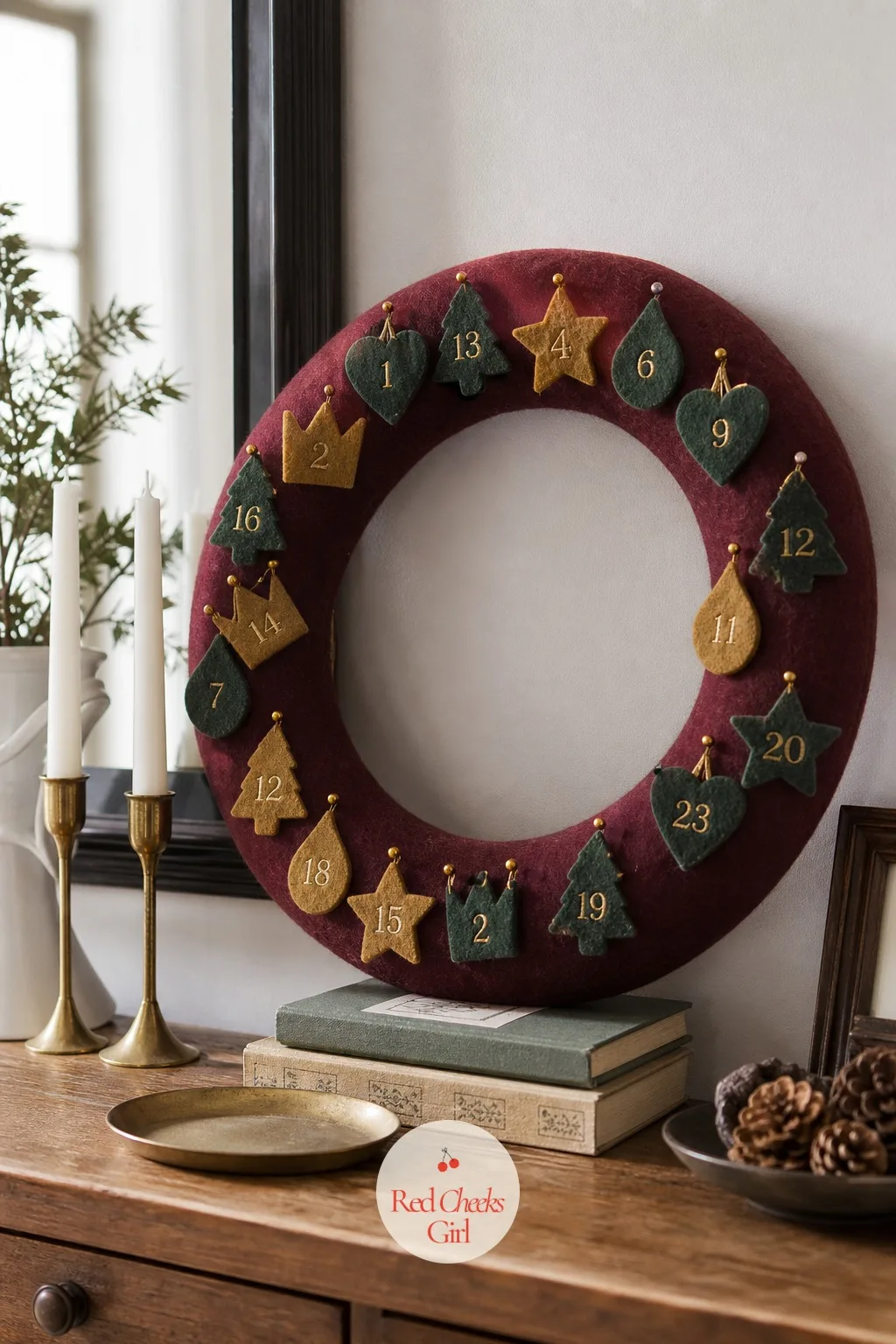
Felt Wreath Advent Calendar with Pinned Ornaments
A wreath that goes up once and comes down on New Year’s Day feels like a missed opportunity. This one works twice as hard: a plain circle of felt stays bare until the first of December, then fills in one tiny ornament at a time.
Cut a ring base from stiffened burgundy felt and twenty four miniature ornament shapes from forest green and antique gold felt, each backed with a small loop of thread. Pin a new ornament onto the ring every morning until the whole wreath is finally full on Christmas Eve.
Prop the half finished wreath against the wall on an entryway console table rather than hanging it, so the ornaments stay easy to reach without anyone standing on a chair. The same idea shrinks nicely onto a wreath form propped on a single bedside table.
🛍 Shopping guide
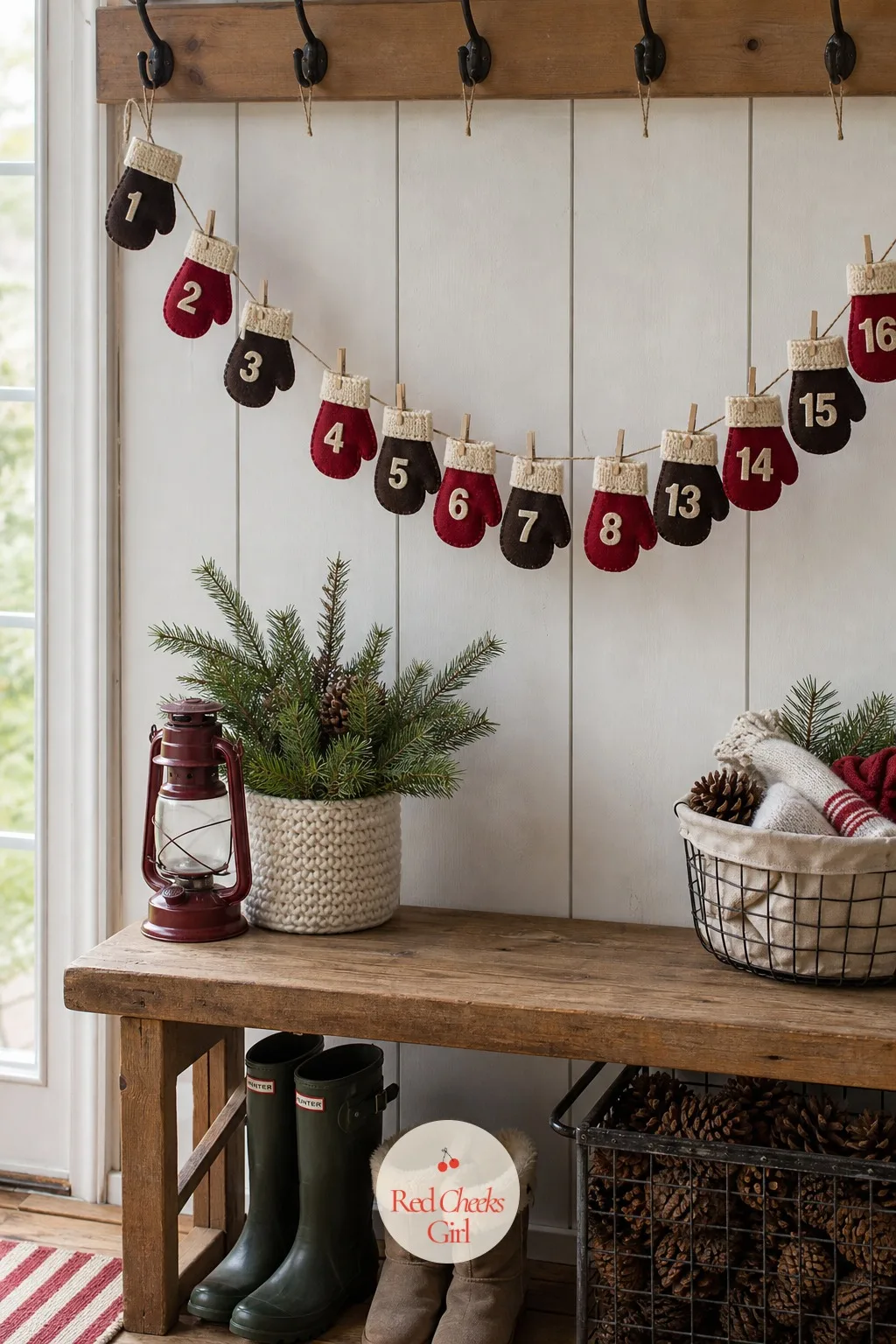
Felt Mitten Garland Advent Calendar
Pockets and houses both ask for patience with a needle. A row of felt mittens asks for considerably less: two matching shapes, a line of blanket stitch round the edge, and a gap left open at the wrist for whatever goes inside.
Cut the mittens from cherry red and chocolate brown felt with a cream cuff on every single one, so the row reads as a set even as the numbers climb from one to twenty four. A small wooden peg holds each mitten to a length of twine once the number is stitched on.
Hang the line along a mudroom hook rail by the back door, where mittens already live for most of the winter anyway. The same row works clipped to a cabinet edge in a house without a mudroom.
Fabric Advent Calendars
Fabric earns its place last because it asks for the most commitment: a sewing machine, an actual pattern, and material that costs more per yard than felt or yarn ever will. In exchange it looks like it came from a shop that closed down decades ago, in the best possible way.
Fat quarters bought for a single quilt usually leave enough scraps to start one of these without a fresh trip to the fabric counter.
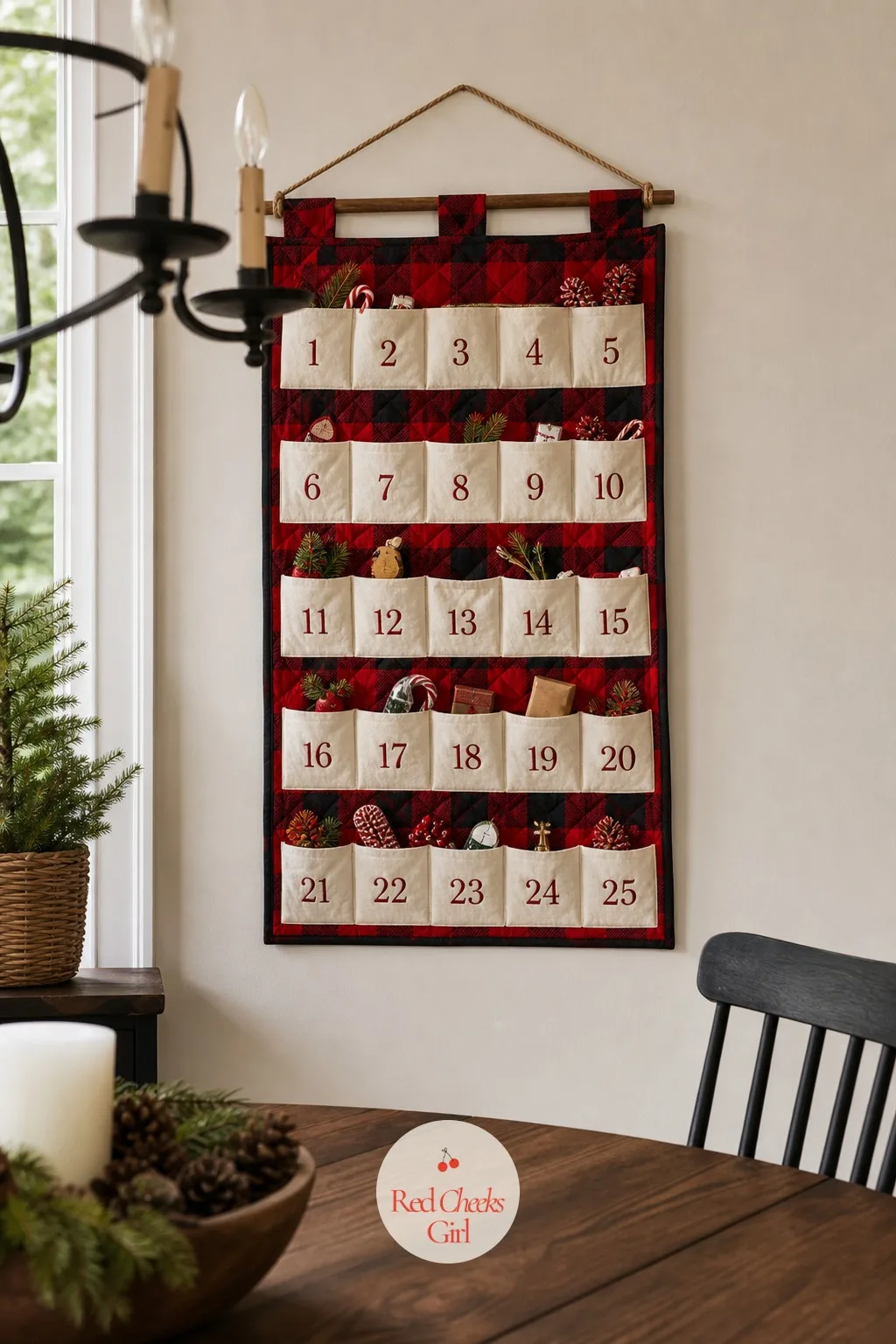
Quilted Fabric Pocket Advent Banner
A banner reads as decoration first and calendar second, which suits a dining room better than a playroom. Twenty four small pockets sewn in rows down a length of backing fabric do the counting quietly, without ever looking like a craft project left unfinished.
Cut the pockets from a buffalo check in red and black, backed on plain cream cotton, and quilt the whole banner lightly so it hangs with some weight rather than curling at the edges. Numbers get stitched directly onto each pocket in cream thread before they go on.
Hang the finished banner against a dining room wall using a slim wooden dowel through a fabric sleeve at the top. The same banner rolls flat for storage, which matters once December is over and the box needs to shut again.
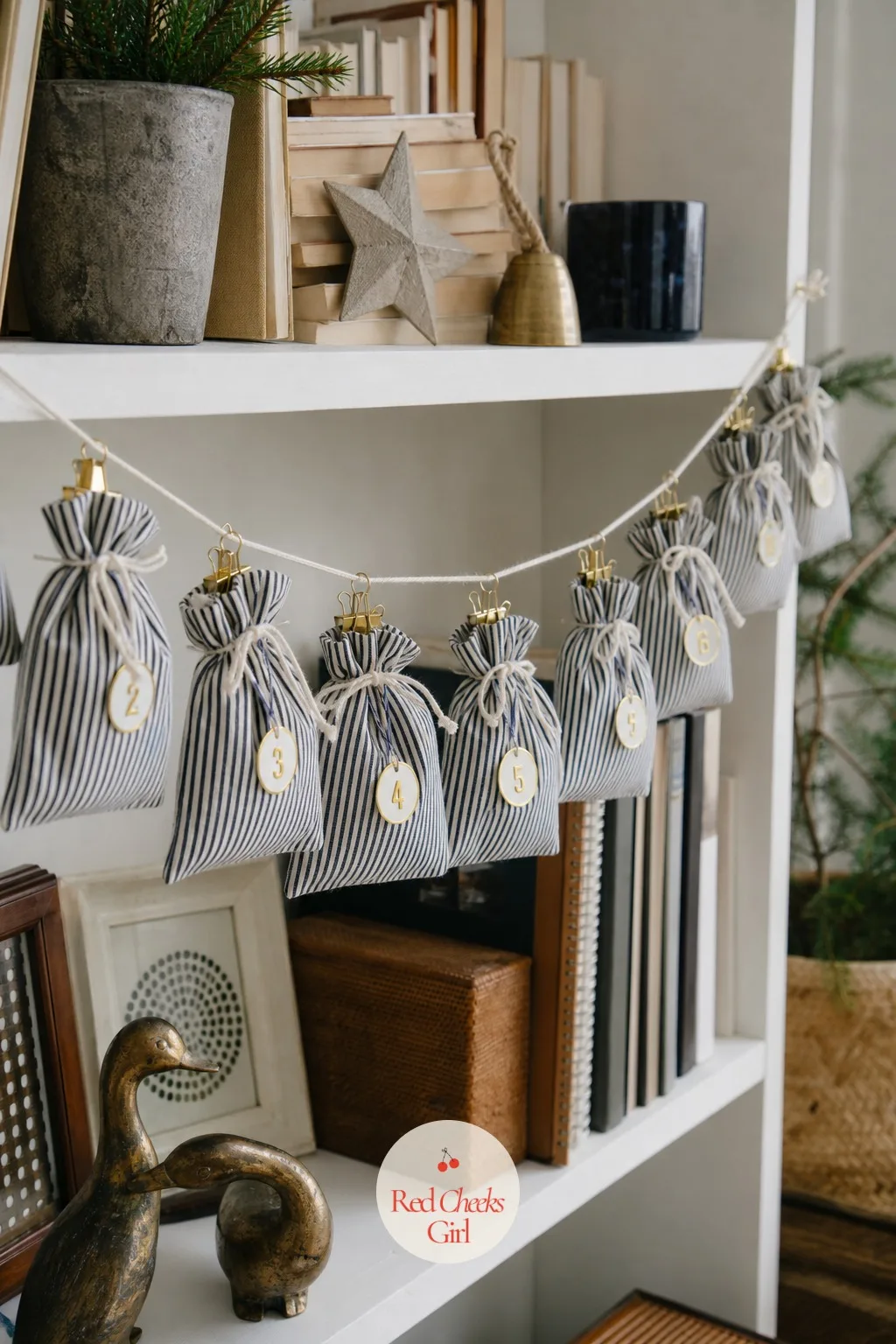
Fabric Drawstring Bag Advent Garland
Not every fabric calendar needs a sewing machine with a free afternoon attached. Twenty four tiny drawstring bags, each one two seams and a casing for the cord, come together fast enough to finish while something else is in the oven.
Cut the bags from a navy ticking stripe and a warm gold cotton in alternating pairs, then thread ivory cord through the casing on every single one. A loop at the top of each bag clips straight onto twine with small brass clips.
Clip the whole garland along the edge of a home office bookshelf, where the bags sit low enough to reach without disturbing whatever books live behind them. A curtain rod across any window works just as well if the shelf is already full.
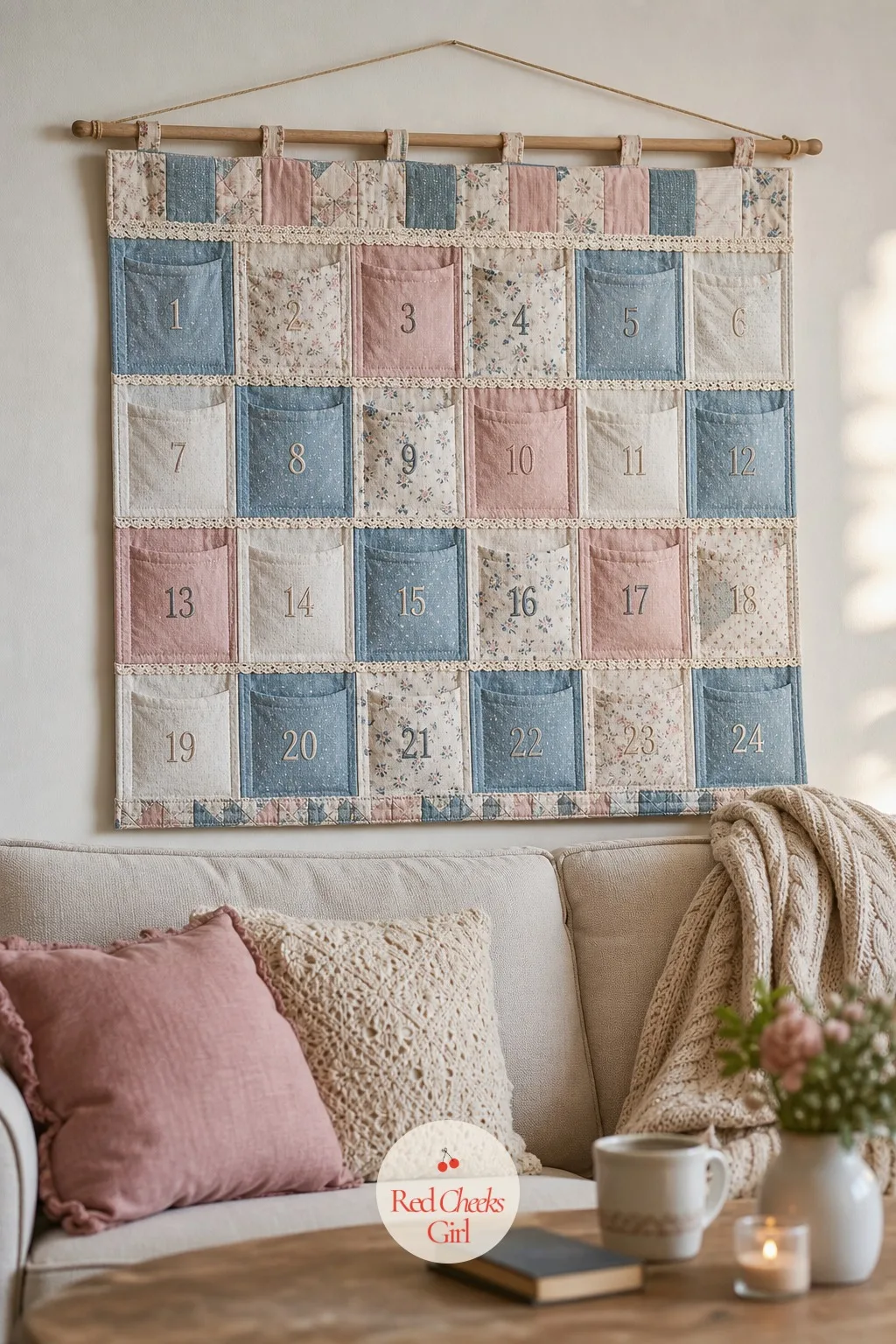
Patchwork Advent Wall Hanging Above the Sofa
A patchwork calendar looks like it has already survived a few Christmases even in its first year, which is the appeal for anyone who finds brand new decorations a little cold. Small squares of leftover quilting cotton piece together into a backing, with pockets sewn on top in the same offcuts.
Work the patchwork in dusty blue, blush pink and white, keeping the pocket fabrics slightly different from the background squares so the numbers do not disappear into the pattern. A line of simple straight quilting holds the layers together without asking for anything fancy.
Hang the finished piece above the sofa in the family room, where it gets seen every evening rather than only in passing. A smaller version, twelve pockets rather than twenty four, fits neatly above a single armchair instead.
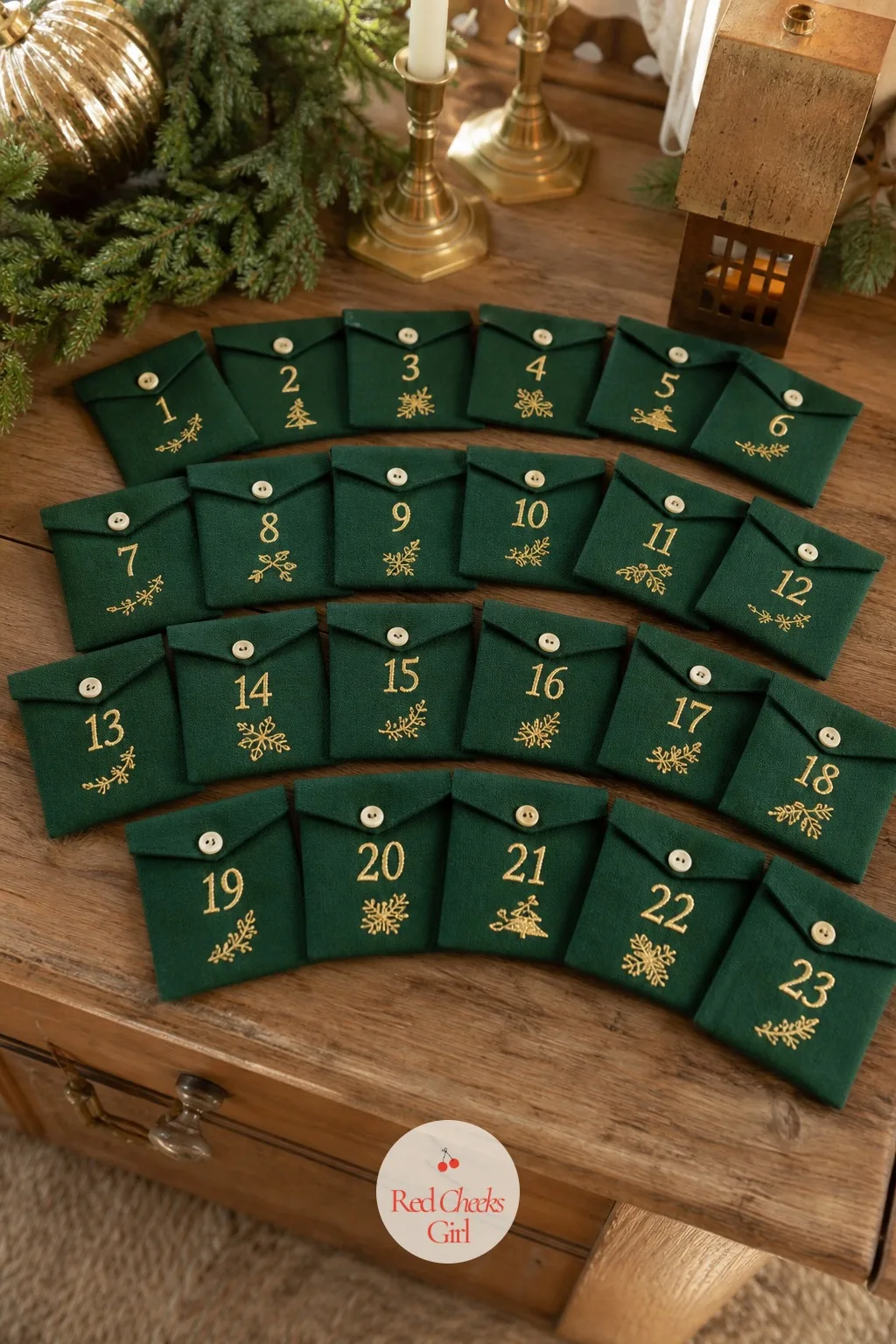
Embroidered Fabric Envelope Advent Calendar
Pockets and bags both hide what is inside until the last second. A row of small fabric envelopes does the opposite: each one lies flat enough to show the shape of whatever is tucked inside, which suits a calendar filled with notes rather than sweets.
Cut the envelopes from a dyed bottle green cotton and embroider each flap number in gold thread before folding and stitching the sides closed. A cream button and loop closure keeps each envelope shut until the right morning arrives.
Lay the finished set in a loose fan across a dresser top in the guest room, rather than hanging them, so the embroidered numbers all stay visible at once. The same envelopes tuck into a shallow wooden box for anyone short on dresser space.
Frequently Asked Questions
When do you start a handmade advent calendar?
Traditionally an advent calendar begins on December 1 and runs to December 24, which is also why most are built to be reusable every year. Build the pockets or doors around that date and the calendar will line up again next December without any adjusting.
Do you open the first door or the last one first?
Opinion genuinely splits on this one. Some people start with the highest number and count down to one, while others begin at one and count up toward the highest number. Either works for a handmade version, so pick whichever direction matches how the numbers were already stitched on.
How many days should a handmade advent calendar have, 24 or 25?
Either is correct. Advent calendars generally range between 22 and 28 days, depending on which day of the week Christmas falls on that year. Twenty four pockets ending Christmas Eve is the most common choice, with a twenty fifth added only by households that like a door on Christmas morning itself.
What do you put inside an advent calendar made for adults?
Small jewellery, miniature bottles, tea bags, tiny notes with a memory or a compliment written on them, or nothing at all beyond a number to reveal. A handmade calendar with open pockets or baskets works especially well here, since the contents can change completely from one year to the next.
Can a handmade advent calendar be reused every year?
That is the whole point of making one by hand rather than buying a paper version. Many reusable advent calendars made of paper or wood are designed to begin again each year on December 1. A crochet, felt or fabric calendar simply gets refilled and rehung each season.
What about a shorter twelve day version?
A twelve day calendar usually starts around the thirteenth of December and ends on Christmas Eve, or a day later if it includes a final door numbered twenty five. Any of the garland style calendars here shorten easily to twelve pockets instead of twenty four, with no change to the construction.
20 easy kids Christmas ornaments that hang next to the good glass ones. Each uses a classic kid tech

18 white and gold Christmas decor ideas for every room, from the living room to the gift wrap table,

You’re staring at your gift list again, aren’t you? That best friend who literally owns
Leave a Reply