

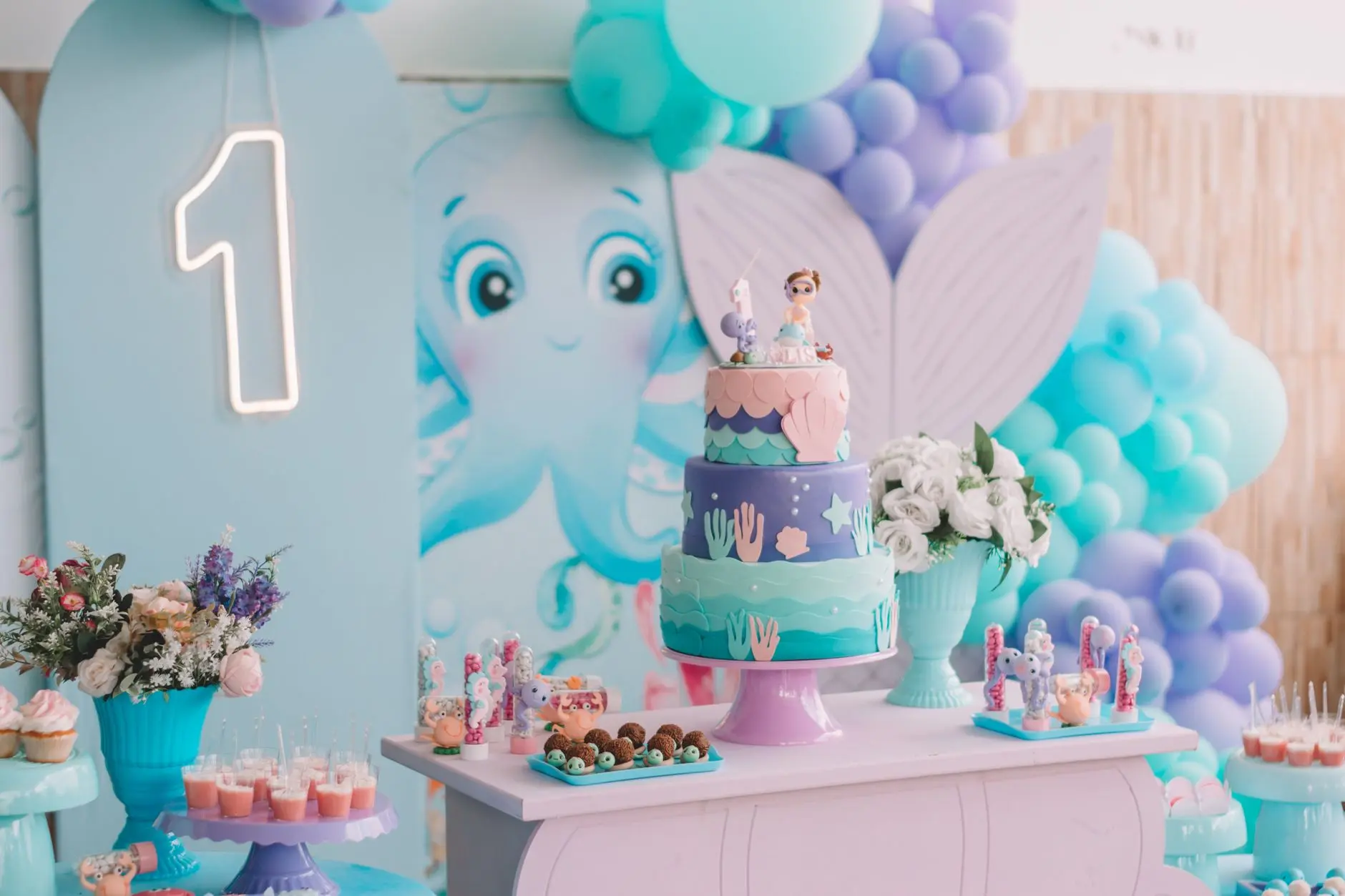
The birthday star will spend most of the party bewildered by wrapping paper and smearing cake on their face — and honestly, that’s perfect.
But the adults who drove across town, wrapped a gift, and showed up with love deserve more than a handful of crisps and a corner to stand in.
First birthday party games designed for grown-up guests turn a standard afternoon into something everyone actually remembers, and they give family members who’ve never met a reason to talk to each other beyond “she’s gotten so big.”
The 18 games below cover every corner of the party — icebreakers for when guests first arrive, noisy group rounds for the main event, and quiet keepsake activities that the parents will treasure long after the balloons have deflated.
Twelve of them come with printable sheets you can prepare in advance, so setup is minimal and you can actually enjoy the party yourself.
Mix and match to suit your crowd, set up a few stations around the room, and let the games do the heavy lifting.
This post contains affiliate links — if you buy through them, I may earn a small commission at no extra cost to you.
Table of Contents
- Guess the Baby Photo
- Predictions for the Year Ahead
- Advice for the Parents Cards
- Wishes for Baby Time Capsule
- Baby Trivia About the First Year
- Guess the Baby Food
- First Birthday Bingo
- Milestone Guessing Game
- Photo Timeline Match
- Nappy Change Speed Round
- Message for Their 18th Birthday
- Family Memory Round
- Baby’s First Year: A Mad Libs Story
- Baby Emoji Decode
- Pin the Dummy on the Baby
- Baby Photo Booth with Prop Challenge
- Two Truths and a Baby Lie
- Pass the Parcel with Dares
1. Guess the Baby Photo
Before the party, ask every guest (or at least one person per family unit) to send you a baby photo of themselves.
Print them out or display them in a numbered grid on a poster board, then hand each guest a printable answer sheet with numbered blank spaces.
Their job is to match each mystery baby face to the correct adult in the room — which is much harder than it sounds, especially with older relatives whose haircuts have changed considerably since the 1970s.
This game works beautifully as an arrival activity because guests can pick up a sheet as they walk in and work on it quietly between greetings. It naturally sparks conversations — “Wait, is that one Grandma Joan?
The ears look right” — which breaks the ice faster than any formal introduction. Aim for 10 to 20 photos for the best balance of challenge and fun. Award a small prize to whoever gets the most correct at the end of the party.
Group size is unlimited; timing is self-paced over 20 to 30 minutes.
Host tip: Collect photos at least a week before the party and double-check that each one shows only the person in question — group shots where you’ve cropped someone out still leave telltale clues in the background. Number the photos on the back before you display them so you can check answers quickly without shuffling through a pile.

🛍 Shopping guide
2. Predictions for the Year Ahead
Hand every guest a printable prediction card as they settle in and ask them to fill in their best guesses about what the birthday child’s second year of life will look like.
Prompts include things like “First full sentence,” “Favourite food in 12 months,” “Most used word,” “What they’ll want to be when they grow up,” and “Best friend will be…” Guests write their name on the card, seal it into an envelope, and the parents keep the collection to open on the child’s second birthday.
This is a wonderfully low-pressure activity that gives quieter guests something to do without requiring them to perform in front of a crowd.
It’s also genuinely useful — the parents end up with a time capsule of exactly how the people who love their child imagined their future at this specific moment.
The printable sheet is the game; you just need pens and a decorative box or envelope to collect them. Works for any group size; each card takes around five minutes to complete.
Host tip: Read a couple of cards aloud before you seal them away — it gets the whole room laughing at the wildly optimistic predictions from the grandparents (“Nobel Prize by age three”) and creates a shared moment that ties the activity to the celebration rather than leaving it as a silent paperwork exercise.

🛍 Shopping guide
3. Advice for the Parents Cards
Every adult in the room has survived at least one year of something — parenthood, childhood, or both — and this game invites them to share their hard-won wisdom.
The printable card has prompts like “The best thing about year two is…,” “Don’t bother with…,” “Stock up on…,” and “The one thing nobody tells you is…” Guests complete their card anonymously or with their name, then drop it into a basket.
At a designated moment, the host reads a selection aloud to the group.
Reading the advice cards aloud is where the game really comes alive. Contrast the veteran grandparent who writes “Sleep whenever the baby sleeps” with the childless university friend who earnestly suggests “Consider a live-in robot” and you have instant, genuine comedy.
The parents take the full collection home as a keepsake. No supplies needed beyond the printed cards and pens. Any group size; five minutes to fill in, ten minutes to read aloud.
Host tip: Seed the basket with one obviously ridiculous card written in advance — “Buy shares in a wet-wipe company” works well — so that even if the first few cards read aloud are sincere, the room already expects a joke. It loosens everyone up and encourages the funnier guests to be bolder on their own cards.

4. Wishes for Baby Time Capsule
This printable sheet asks each guest to write a wish, a piece of advice, a favourite memory of the baby’s first year, and a prediction about the world when the child turns 18.
Completed sheets are collected, placed in a large envelope or tube, and sealed with a handwritten note on the outside: “Open on [child’s name]’s 18th birthday.” The result is a genuine time capsule that grows more meaningful with every year it sits in a drawer.
Unlike the Predictions for the Year Ahead activity (which focuses on year two), this one asks guests to think in an entirely different timeframe — nearly two decades into the future — and the shift in perspective produces surprisingly moving responses alongside the funny ones.
Some guests will write a joke; others will write something that makes the parents tear up on the spot. Both are welcome. Works for any group size; allow about ten minutes for guests to write thoughtfully.
Host tip: Provide a handful of coloured pens rather than only black ballpoint pens. Guests are more likely to illustrate their wishes, draw small pictures, or add personality to the sheet when they have options, which makes the capsule far more interesting to open in 17 years.

🛍 Shopping guide
5. Baby Trivia About the First Year
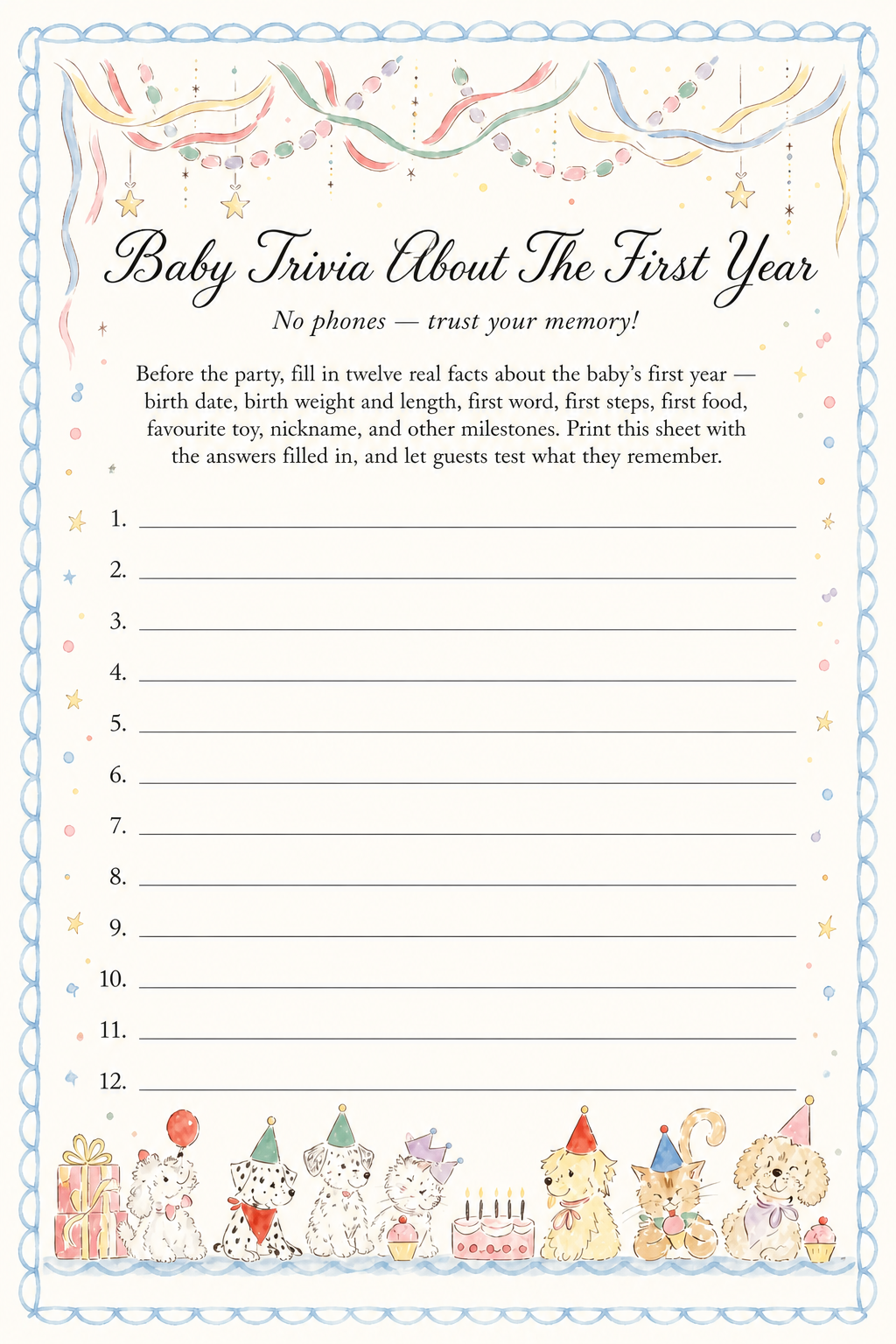
The host prepares a printable trivia sheet — or reads questions aloud for a livelier group-game format — covering facts and milestones from the baby’s actual first year.
Questions might include: “How much did [baby] weigh at birth?”, “What was her first solid food?”, “How old was she when she first slept through the night?”, “What song did the parents play most in month one?”, and “What was the first word?”
The parents supply all the answers in advance, so the host just needs to score sheets at the end.
This game rewards the people who’ve been closely involved and gently humbles those who haven’t been around as much — in the nicest possible way.
It also gives the parents a chance to share details that might not come up in normal conversation, turning the scoring moment into a series of little stories about the year that just passed.
Play individually or in teams at tables; ten to fifteen questions works well. Allow about ten minutes plus five minutes for a read-through of the answers.
Host tip: Ask the parents to write down the answers at least a week before the party, then keep the list somewhere you won’t accidentally share. The single most common mistake with this game is the host texting a question to the parents on the day and accidentally revealing the answer in a group chat.
🛍 Shopping guide
6. Guess the Baby Food
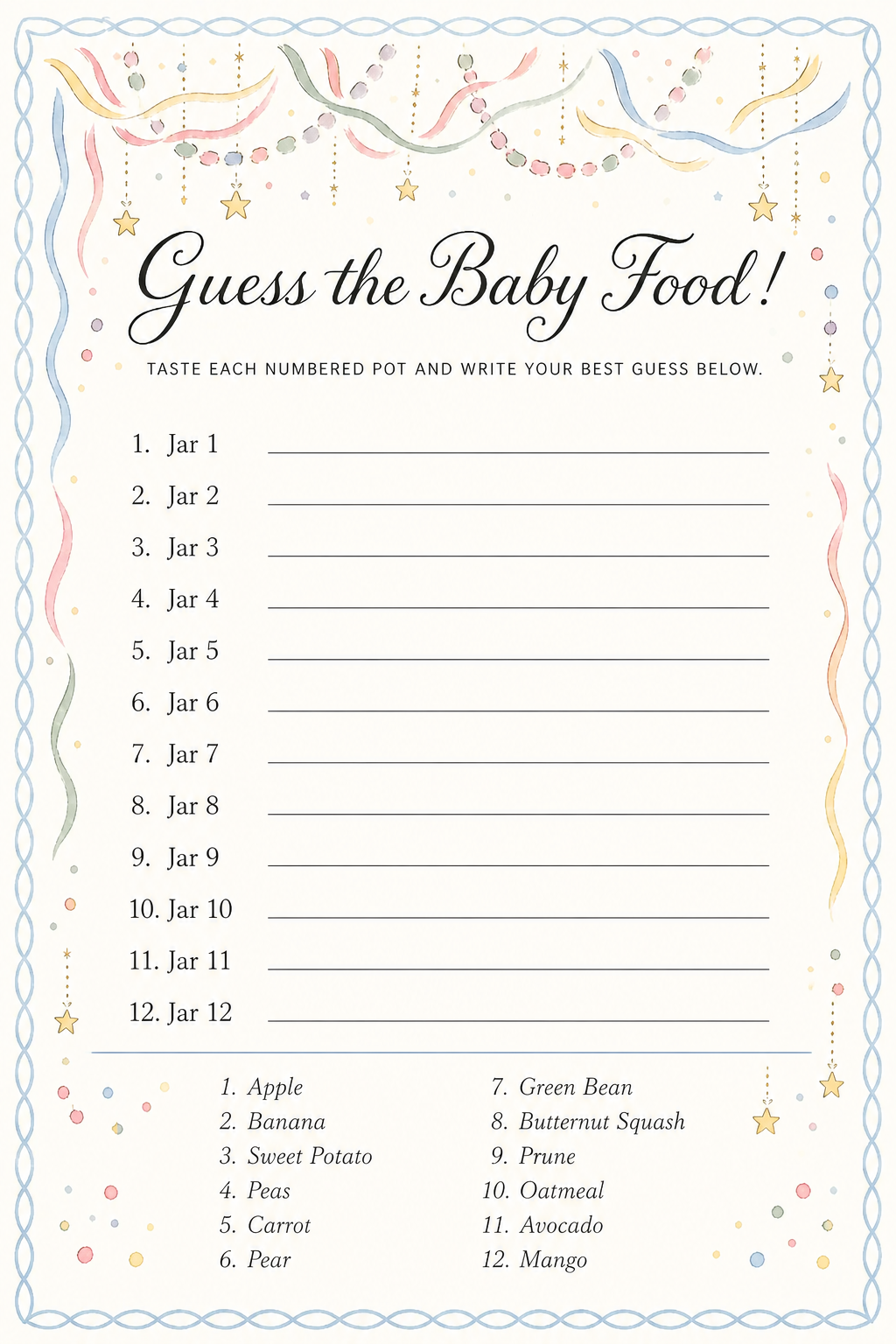
Set up a row of small bowls or jars, each containing a different unlabelled baby food purée — think butternut squash, banana, pea and pear, apple and mango, broccoli, sweet potato, and so on. Number each bowl.
Hand guests a printable answer sheet with numbered blanks and ask them to taste and guess the flavour of each one. No peeking at labels allowed.
This is consistently one of the loudest, most interactive games at a first birthday, because the faces adults pull while tasting pureed vegetables are immediately, universally funny. It works well in the middle of the party when energy needs a lift.
You’ll need small disposable spoons, ideally one per person per bowl, or a cup of water for rinsing between tastes. Groups of up to 20 work easily; the game takes around 15 minutes including the reveal.
Award a prize to the guest with the most correct guesses.
Host tip: Include at least one flavour that sounds disgusting on paper but tastes fine — broccoli and apple is a reliable trick — and one that sounds appealing but is actually unpleasant cold, like a plain rice porridge. The contrast between expectation and reality is what generates the best reactions in the room.
🛍 Shopping guide
7. First Birthday Bingo
Each guest receives a printable bingo card filled with things that typically happen at a first birthday party — “baby ignores a toy and plays with the box,” “someone cries (not the baby),” “cake goes directly into hair,” “relative gives a gift that’s clearly for a five-year-old,” “someone says ‘they grow up so fast’ at least twice,” and so on.
Guests mark off squares as events occur naturally throughout the party. The first person to complete a row calls out “Bingo!” and wins a prize.
The genius of this format is that it gives guests a gentle, ongoing reason to pay attention and laugh together throughout the whole event rather than just during a dedicated game slot.
It turns the background chaos of a toddler party into the actual content of the game. Cards should all have the same squares but in randomised grid positions so multiple people don’t win simultaneously.
Any group size works; the game plays out over 30 to 60 minutes depending on how eventful the party is.
Host tip: Plant one square that is guaranteed to happen — “baby attempts to eat wrapping paper” or “someone’s phone goes off mid-singing” — and position it in the centre free-square spot. It means every card gets one automatic mark and guests feel progress early, which keeps them engaged instead of forgetting they’re playing.

8. Milestone Guessing Game
The parents complete the printable answer sheet in advance, filling in the exact ages (in weeks or months) at which their baby hit key milestones — first smile, first laugh, first roll, first time sitting up, first tooth, first word, first steps.
During the party, guests receive a copy of the sheet with the milestones listed but the ages left blank, and they write in their best guess for each one. Closest answer on each milestone earns a point.
This format rewards people who’ve been paying close attention to the baby’s development and produces a lovely parallel conversation — as answers are revealed, relatives start telling their own stories about when their children hit the same milestones, which often becomes the most animated part of the party.
Works for any group size; allow ten minutes for guessing and five minutes for the reveal. The printable sheet does all the heavy lifting; you just need pens and the parents’ completed answer key.
Host tip: Include one milestone that happened unusually early or unusually late for a deliberate surprise — if the baby didn’t sleep through the night until ten months, for example, that revelation will land with knowing laughter from every parent in the room and genuine sympathy for the family.

9. Photo Timeline Match
Gather ten to fifteen photos of the baby taken across the first twelve months, print them out or display them numbered on a board, and give guests a printable answer sheet asking them to write the month in which each photo was taken.
The challenge is harder than it looks — babies change fast in year one, and the difference between month two and month four is genuinely difficult to call from a photo alone.
This game works equally well as a table activity or a standalone station.
It sparks great conversation as guests debate with each other — “Look at the hair, it must be later than March” — and gives grandparents and close family an enjoyable advantage over friends who haven’t seen the baby as regularly.
Any group size; allow 15 minutes for the activity and five minutes for the reveal, during which the host can share a little story or context for each photo.
Host tip: Sequence the photos on your board in a randomised, non-chronological order, and avoid displaying any photos that include birthday decorations, seasonal clues like Christmas trees, or clothing with visible seasonal weight — guests will use any environmental hint they can find.

🛍 Shopping guide
10. Nappy Change Speed Round
Set up a station with a baby doll, a stack of open nappies, a changing mat, and a wipes box.
Contestants take turns racing to remove the doll’s existing nappy, clean with a wipe, fold the dirty nappy away, and fasten a fresh one — as fast as possible while keeping everything tidy.
Someone with a stopwatch times each attempt, and the fastest clean change wins. Run eliminations if the group is large, or let everyone have one go and record times on a whiteboard.
This game is riotously funny because the gap between people who have done this a thousand times and people who have never touched a nappy in their life is enormous and immediately obvious.
Seasoned parents will finish in under 30 seconds; genuinely baffled uncles will still be trying to work out which way around the nappy goes at the two-minute mark.
You need a baby doll, a changing mat, a pack of nappies in an appropriate size for the doll, and a box of wipes. Groups of any size; each turn takes one to three minutes.
Award extra points for a “blowout” round where contestants must deal with a smeared amount of chocolate spread inside the nappy.
Host tip: Use a cheap plastic baby doll for this, not a realistic weighted one — the floppy limbs of a basic toy doll make the task just awkward enough to be funny without being genuinely difficult, which is exactly the balance you want for a party game rather than a parenting class.
🛍 Shopping guide
11. Message for Their 18th Birthday
The printable sheet for this activity prompts each guest to write a letter directly to the baby — to be read when they turn 18.
Prompts guide guests through sections: what the world was like today, what they hope for the child’s future, a piece of advice they wish someone had given them at 18, and a memory or feeling from this very party.
The completed letters are collected by the parents and stored safely alongside the time capsule from the Wishes activity.
What makes this different from the time capsule activity is the intimacy of the direct address — guests are writing to the child, not about them, which changes the tone entirely and often produces the most heartfelt writing of the day.
Even guests who are not naturally sentimental tend to rise to the occasion when they imagine a teenager reading their words in 17 years. Works for any group size; allow ten to fifteen minutes.
The parents will thank you for running this game years from now.
Host tip: Provide extra sheets. Guests frequently want to start again because their first draft felt too casual, or because they realised halfway through that they had more to say than they expected. Running out of paper for this particular activity is the one supply mistake that genuinely can’t be recovered on the day.

12. Family Memory Round
The printable sheet lists prompts asking guests to write down specific shared memories involving the birthday child’s family — “Describe the moment you first heard the baby was on the way,” “Write one thing you remember about [parent’s name] as a child,” “What’s the funniest thing that happened in this family in the past year?”
Completed sheets are collected and then read aloud, with guests trying to guess who wrote each answer.
This works brilliantly for a mixed group where immediate family knows each other well but friends don’t know the relatives and vice versa — the guessing element creates connection across the two groups.
It also produces a lovely informal oral history of the family in the year around the birth. Any group size works, though 8 to 20 people gives the best guessing dynamic. Allow ten minutes to write and 15 minutes to read aloud and guess.
The printable sheet guides guests through the prompts so the host doesn’t need to manage the writing phase at all.
Host tip: Read the cards in a shuffled random order rather than going around the room in a predictable sequence. If guests can rule out the people who’ve already been read, guessing becomes too easy too quickly — shuffling keeps the game alive all the way to the final card.

13. Baby’s First Year: A Mad Libs Story
The printable sheet for this activity presents a short story about a baby’s first year with key words removed and replaced by blanks labelled with their word type — a noise, an adjective, a family member’s name, a food, an action, and so on.
Guests call out words without knowing the context, and the host fills them in on a master sheet, then reads the complete story aloud to the group. The resulting narrative about baby’s first year is invariably chaotic, tender, and hilarious.
This game works best as a whole-group moment with the host leading, since the comedy relies on everyone hearing the final story together at the same time.
Ask for words from different guests around the room to keep everyone involved — point to someone for the animal noise, someone else for the adjective, someone at the back for a vegetable.
The printable sheet is the only thing you need; allow about five minutes for word collection and three minutes for the dramatic reading. Works for any group size and needs no materials beyond the sheet and a pen.
Host tip: Lean into your delivery when you read the finished story. Pause before the funniest substitutions, raise an eyebrow at the incongruous choices, and address the people whose words appear — “Janet, I cannot believe you said ‘sprouts'” — because the host’s performance doubles the laughs the story generates on its own.

14. Baby Emoji Decode
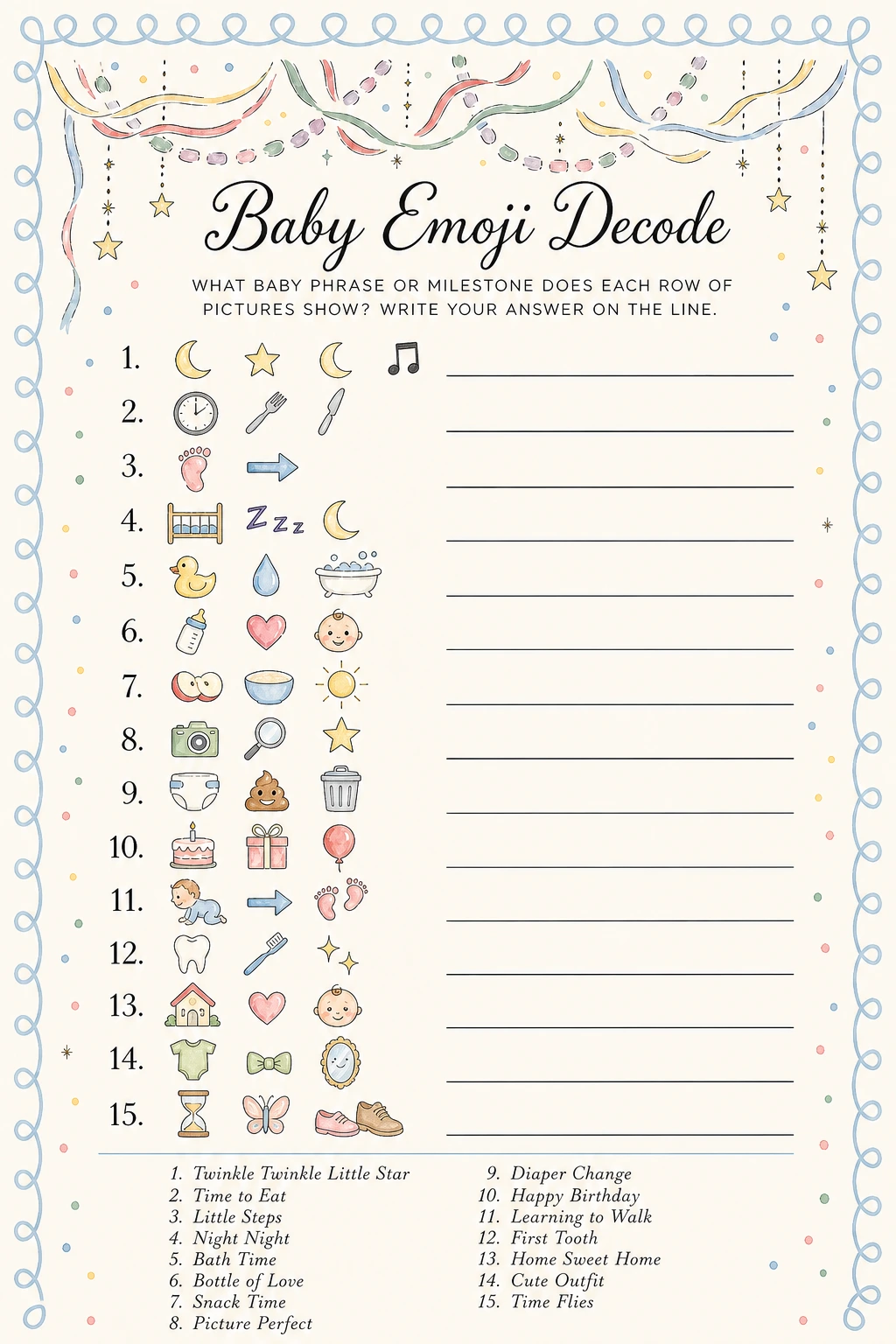
The printable sheet presents a series of short sequences of emoji images — each sequence represents a common parenting phrase, baby product, nursery rhyme, or well-known saying about babies and childhood.
Guests work individually or in pairs to decode each sequence and write the answer in the blank beside it. Examples might include a moon and stars representing “Twinkle Twinkle Little Star,” or a bottle plus a clock representing “feeding schedule.”
The guest with the most correct answers at the end wins.
This is a satisfying pen-and-paper activity that works well as a table game while guests are seated for food, since it’s quiet, self-contained, and requires no host involvement once sheets are handed out.
The printable does all the work — just distribute sheets and pens, set a ten-minute timer, then go through the answers aloud with the group.
Any group size works; pairs or small table teams of two to four players add a collaborative element if you prefer.
Host tip: Keep every sequence unambiguous by testing the sheet yourself with a friend before the party. If a single sequence could reasonably decode to two different correct answers, rewrite it — disagreements over what “counts” during the answer reveal kill the energy of the game faster than anything else.
15. Pin the Dummy on the Baby
Draw or print a large, simple illustration of a baby’s face — a round head, big eyes, rosy cheeks, and an open mouth — and mount it on a wall at adult eye level.
Cut out a number of dummy (pacifier) shapes from cardstock, one per player, each labelled with a guest’s name.
Players are blindfolded one at a time, spun gently three times, and guided toward the poster to stick their dummy as close to the baby’s mouth as possible using a small piece of reusable adhesive on the back.
Mark where each dummy lands with a dot and the guest’s name, and the closest placement wins.
This is the first-birthday equivalent of a classic party game, updated so the theme fits the occasion perfectly. It’s visual, competitive, and physically funny — watching a grown adult walk confidently in entirely the wrong direction never gets old.
You need the poster, the cardstock dummies, a blindfold, and reusable adhesive putty. Groups of 4 to 20 work well; each turn takes about 90 seconds.
Play one elimination round if you have a large group, or let everyone take one turn and judge by proximity to the mouth.
Host tip: Mount the poster slightly higher than feels natural — at around nose height for the average adult — so the dummy-placement zone is at the right level even after the blindfold disorients the player’s spatial sense. Posters mounted too low result in everyone landing on the forehead rather than near the mouth, which reduces the comedy spread.
16. Baby Photo Booth with Prop Challenge
Set up a small photo station in one corner of the party — a plain or decorated backdrop, a basket of silly props (oversized glasses, fake moustaches, a crown, a tiny graduation cap, a “World’s Best Sleep Deprived Parent” sign), and a polaroid-style or instant camera, or simply a phone on a stand with a self-timer.
The challenge element: each group of guests must recreate a specific posed scenario — one person acts as the “baby,” one as the “exhausted parent,” and one as the “unsolicited advice relative.”
The role-play brief is what elevates this above a standard photo booth.
Guests have to actively decide who plays what role, which sparks laughter before the photo is even taken, and the resulting images are far more interesting to look at than posed smiling group shots.
Offer instant printing if possible so guests can take a copy home; the parents keep a copy of everything. Works for any group size; allow 20 to 30 minutes as an open station. No host involvement needed once the station is set up.
Host tip: Write the three roles on a small card propped next to the props basket rather than announcing them verbally — guests who arrive at the station when the party is in full swing won’t have heard your instructions, and the card means they self-direct without needing you to come over and explain every few minutes.
🛍 Shopping guide
17. Two Truths and a Baby Lie
This is a first-birthday twist on the classic “Two Truths and a Lie” format. Each guest takes a turn sharing three statements about the birthday baby or about the baby’s parents — two of which are true and one of which is made up.
The rest of the group votes on which statement is the lie. Points go to the person whose lie fools the most guests, and also to anyone who correctly identifies the lie.
Keep score on a whiteboard or a piece of paper and award a small prize to the overall winner.
The baby-specific framing gives the game a clear focus and prevents the vague personal-life statements that tend to derail the adult version.
Statements like “She once ate an entire fistful of sand at the beach and seemed fine” or “He said ‘dada’ three days before ‘mama’ and the parents have never agreed on whether it counted” work perfectly.
This is a purely verbal game — no materials needed beyond a scoring sheet. Best with 6 to 16 players; each round takes about two minutes per person, so plan for 20 to 30 minutes total.
Host tip: Brief the parents beforehand and ask them to prepare two or three genuinely surprising true facts about their baby’s first year — things most guests won’t know. Feeding these into the mix as “the parents’ turn” usually produces the biggest moment of collective disbelief in the whole game.
18. Pass the Parcel with Dares
Wrap a small gift in multiple layers of paper, tucking a slip of paper between each layer.
Instead of sweets, each slip contains a dare or a task themed around babies and parenting — “sing a lullaby of your own invention,” “demonstrate how you’d burp a baby using the person to your left,” “spend the next two minutes speaking only in baby talk,” “do your best impression of a teething baby.”
Guests sit in a circle and pass the parcel while music plays; when the music stops, the person holding the parcel unwraps one layer and completes the dare before play resumes.
This format works for almost any size of adult group and requires almost no setup beyond the wrapped parcel and a music player.
The baby-themed dares keep the activity firmly in the spirit of the party rather than drifting into generic territory, and because every layer produces a different dare, the game stays unpredictable from the first round to the last.
The person who unwraps the final layer wins the prize inside. Prepare 15 to 20 layers for a group of 10 to 15 guests; the game runs for about 15 to 20 minutes.
Host tip: Control the music yourself rather than delegating it to a guest.
If you can see who is holding the parcel, you can time the stops to make sure a few specific people — the very shy guest who needs to be brought out, or the guest who will commit hardest to a dare — get their moment.
It makes the game feel more dynamic and fair, even though you’re engineering it slightly.
🛍 Shopping guide
Frequently Asked Questions
What are the best first birthday party games for adults?
The best first birthday party games for adults are ones that celebrate the baby and the past year while giving grown-up guests something genuinely fun to do.
Printable activities like Guess the Baby Photo, Baby Trivia, and the Milestone Guessing Game work well as arrival activities. Louder, sillier games like the Nappy Change Speed Round and Pass the Parcel with Dares are perfect for the main party.
Mix quiet keepsake activities with interactive group games to cover different personality types in the room.
How do I keep guests entertained at a first birthday party?
Set up two or three activity stations around the room for guests to drift between, rather than running every game as a formal group event. This suits parties where guests arrive at different times and removes the pressure of gathering everyone together repeatedly.
Reserve one or two group games — trivia, bingo, or Two Truths and a Baby Lie — for a specific slot when most guests have arrived and energy is high.
Having something for guests to do the moment they walk in, like Guess the Baby Photo, prevents the awkward standing-around phase at the start.
Do I need to buy anything for first birthday party games?
A handful of games require a small purchase — the Guess the Baby Food game needs jars of baby food and tasting spoons, the Nappy Change Speed Round needs a doll and nappies, and Pass the Parcel needs a small gift and wrapping paper.
Everything else can be run for free or nearly free. Budget for printing costs and a few small prizes for winners, and you’re covered.
How many games should I plan for a first birthday party?
Three to five games is plenty for a two-to-three-hour party.
Choose a mix of one arrival activity (something guests can join at their own pace), one or two group games for the peak of the party, and one keepsake activity that gives guests something meaningful to take home or contribute to.
Having too many games can make the party feel like a schedule rather than a celebration — leave room for guests to simply enjoy each other’s company and watch the birthday child investigate their cake.
Can children join in any of these games?
Several games work well for older children or teenagers who are attending the party alongside the adults. First Birthday Bingo, Baby’s First Year Mad Libs, and Pass the Parcel with Dares are all inclusive enough for mixed ages.
Baby Trivia and the Milestone Guessing Game can include older children on adult teams. Activities like the Nappy Change Speed Round are often even funnier when a determined ten-year-old enters the competition — don’t discourage it.
📌 Save These for Later
Loved these? Pin your favorite image below so you can find this list again when you’re planning.



He said no party. These 16 50th birthday party ideas for men range from zero fuss to a room full of

Venue quotes too high? These 15 sixteenth birthday party ideas turn your house and garden into somet
Find teen birthday ideas sorted by age and budget, from small home parties to parties for forty teen
Leave a Reply