

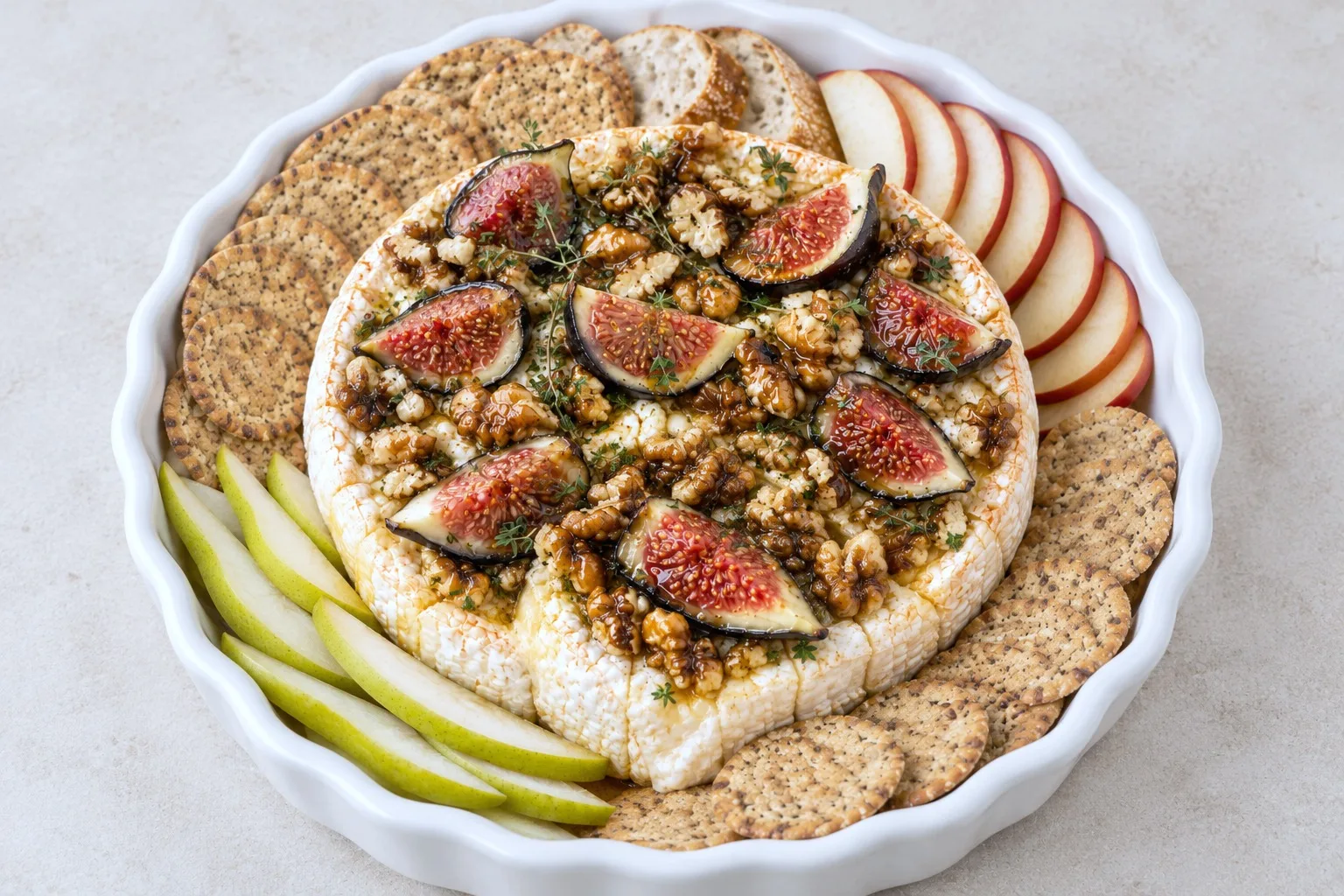
Baked brie appetizer is the fastest route from a cold wedge of cheese to the one dish guests circle before dinner even starts. Ten to twelve minutes in the oven turns a firm wheel into something that pours, and honey, toasted walnuts and fresh figs on top make it look like you tried a lot harder than you did.
This post contains affiliate links. If you buy through them, I may earn a small commission at no extra cost to you.
Table of Contents
Why This Baked Brie Appetizer Works the Room
A cold wedge of brie sitting out on a cheese board looks elegant for about four minutes, then the surface turns waxy and nobody wants to be the one who cuts in first.
Heat solves that problem completely. Ten to twelve minutes in a hot oven is long enough for the inside to turn soft and pourable while the rind stays exactly where it belongs, holding its shape instead of collapsing into a puddle on the dish.
It costs less effort than almost anything else on a party table: one wheel of cheese, a scattering of pantry toppings, and a single dish that goes from oven to table with nothing left to plate at the last minute.
Set it beside a few more party appetizers for every kind of gathering and you have the start of a spread that needs almost no cooking from you at all.
The Ingredients Worth Choosing With Care
Reach for a wheel between 13 and 16 ounces, the size that fits a small baking dish without crowding. A double or triple cream brie bakes softer and pours more generously than a thinner, younger wheel.
Skip the clear supermarket honey if you can. A raw or wildflower honey carries a little more floral weight, and it does the heaviest lifting against the cheese’s saltiness.
Toast the walnuts before they ever touch the cheese. Raw walnuts taste flat and faintly bitter next to warm brie, while a few minutes in a dry skillet brings out both the oil and the color.
Fresh figs in late summer bring a jammy softness that needs nothing else; dried figs, sliced thin, work just as well the rest of the year. Fresh thyme, not dried, keeps the whole thing from tasting only sweet.
How to Make It
This version bakes the brie open, in its own dish, so the center stays visible the whole time and there is no pastry to hide whether it is ready. Everything else, the walnuts, the figs, the honey, goes on after the cheese comes out of the oven.
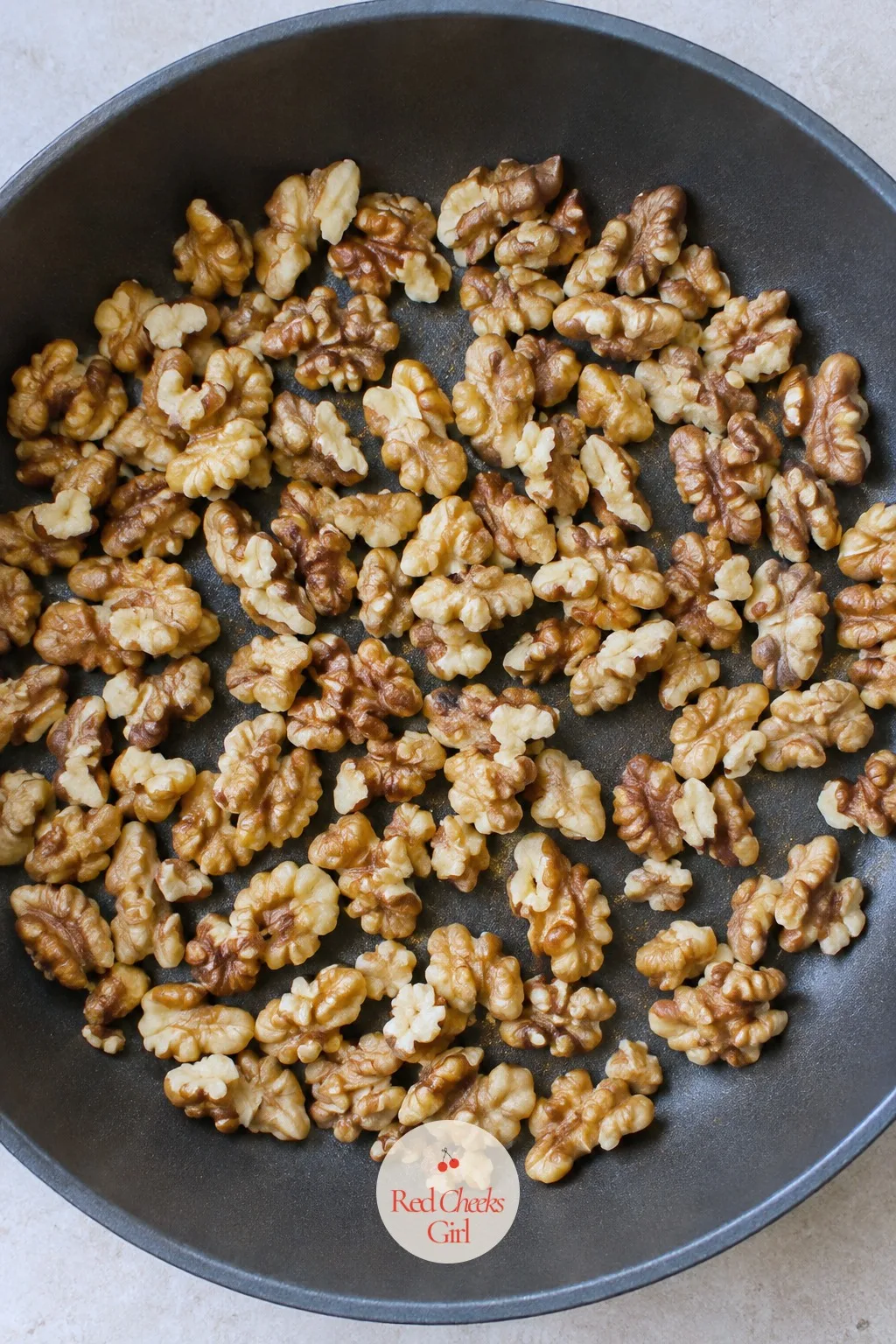
Toast the walnuts
Set walnut halves in a small skillet over medium heat and stir often. Give them three to four minutes, just until they smell toasted and pick up color at the edges, then tip them onto a plate to cool.
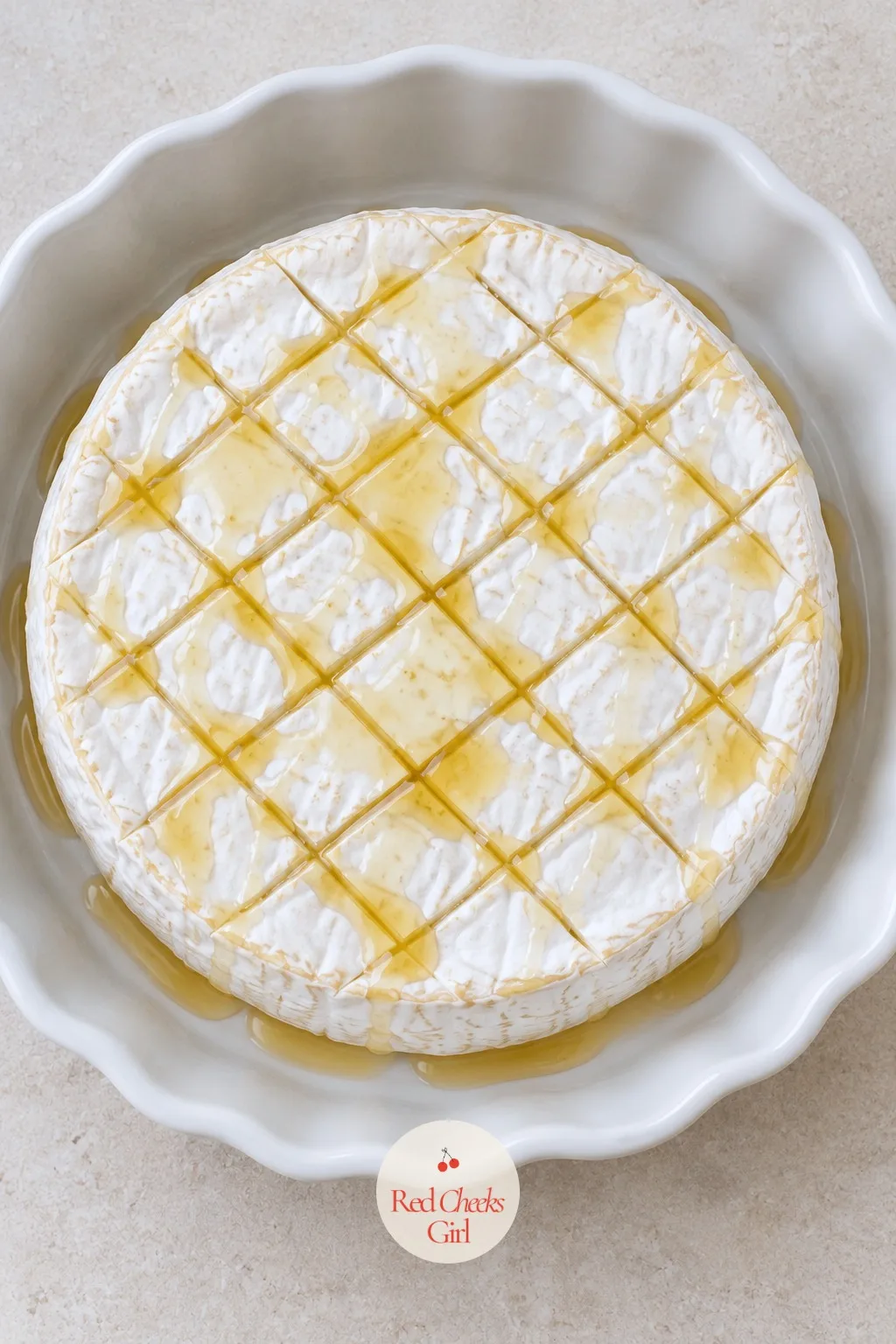
Score the brie and drizzle with honey
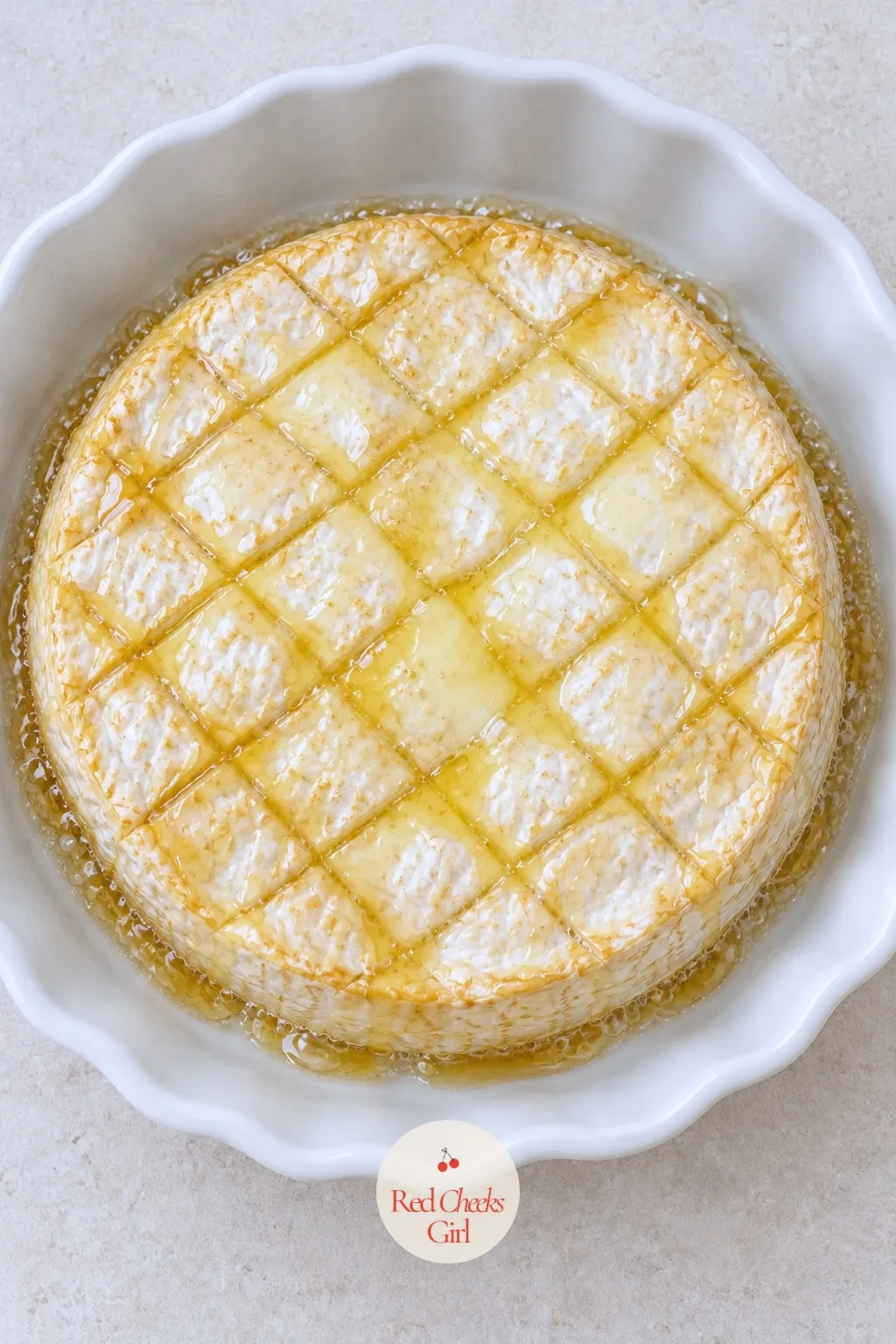
Set the whole wheel rind side up in its baking dish and cut a tight crosshatch through the top rind only. Drizzle with honey and let it pool into the cuts before the dish goes into the oven.
Bake until the center turns soft
Slide the dish into the oven and bake ten to twelve minutes. The rind should look glossy and slightly rounded, and the dish should feel warm and loose when you nudge it, not stiff.
Pile on the walnuts, figs and thyme
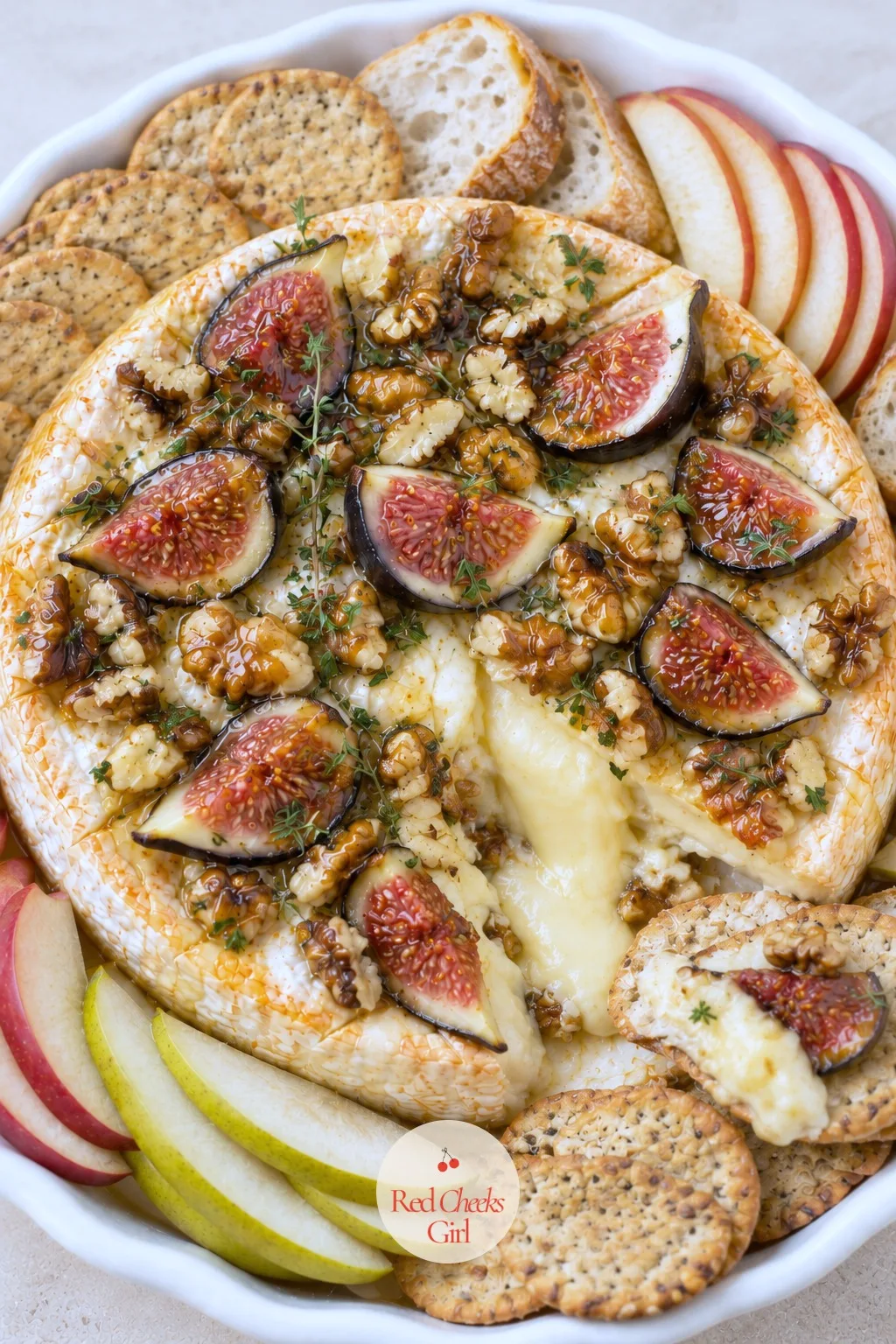
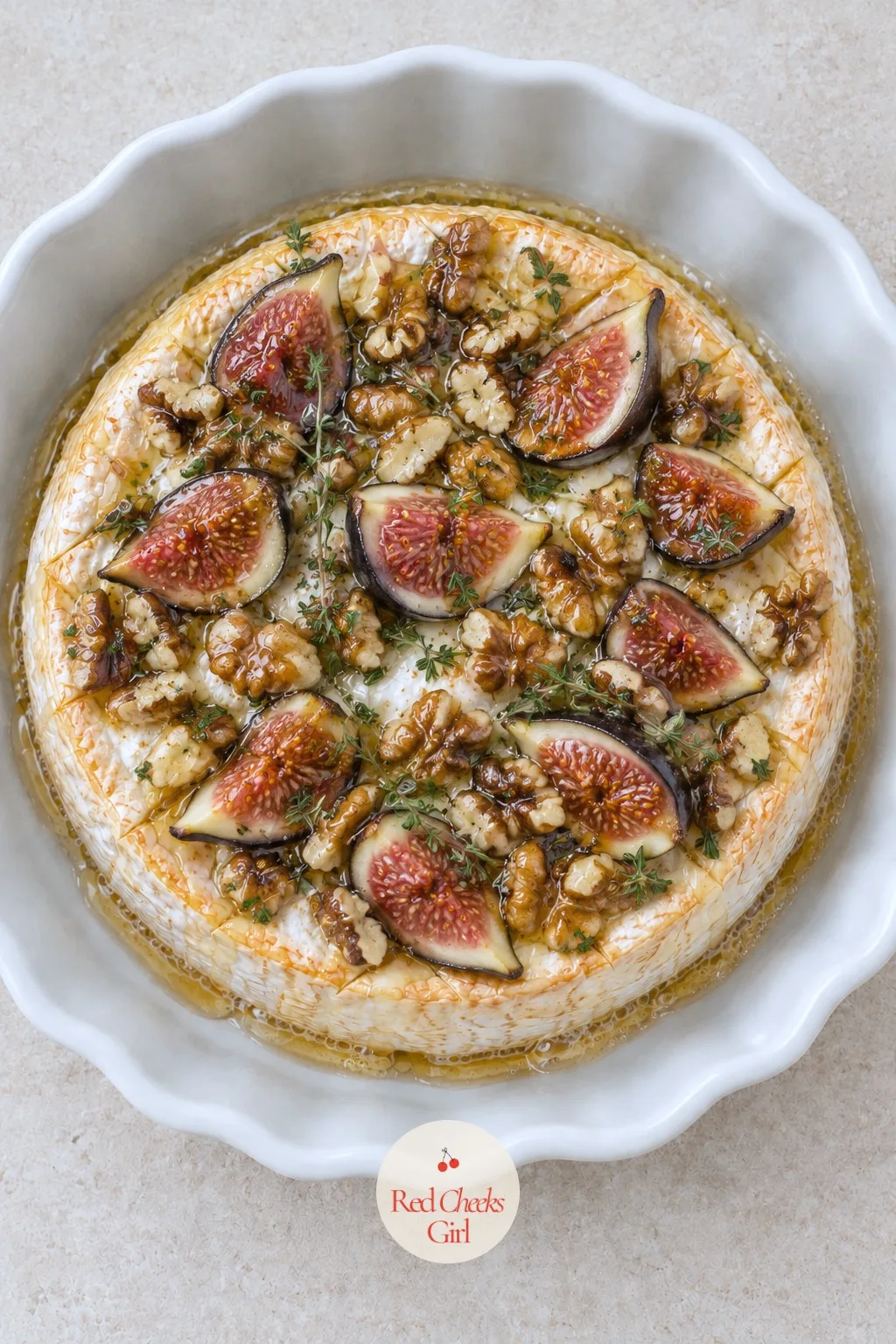
While the brie is still hot, scatter the toasted walnuts, quartered figs and thyme leaves over the top, then drizzle with the remaining honey. Let everything settle into the warm cheese for a minute.
Serve it warm, straight from the oven
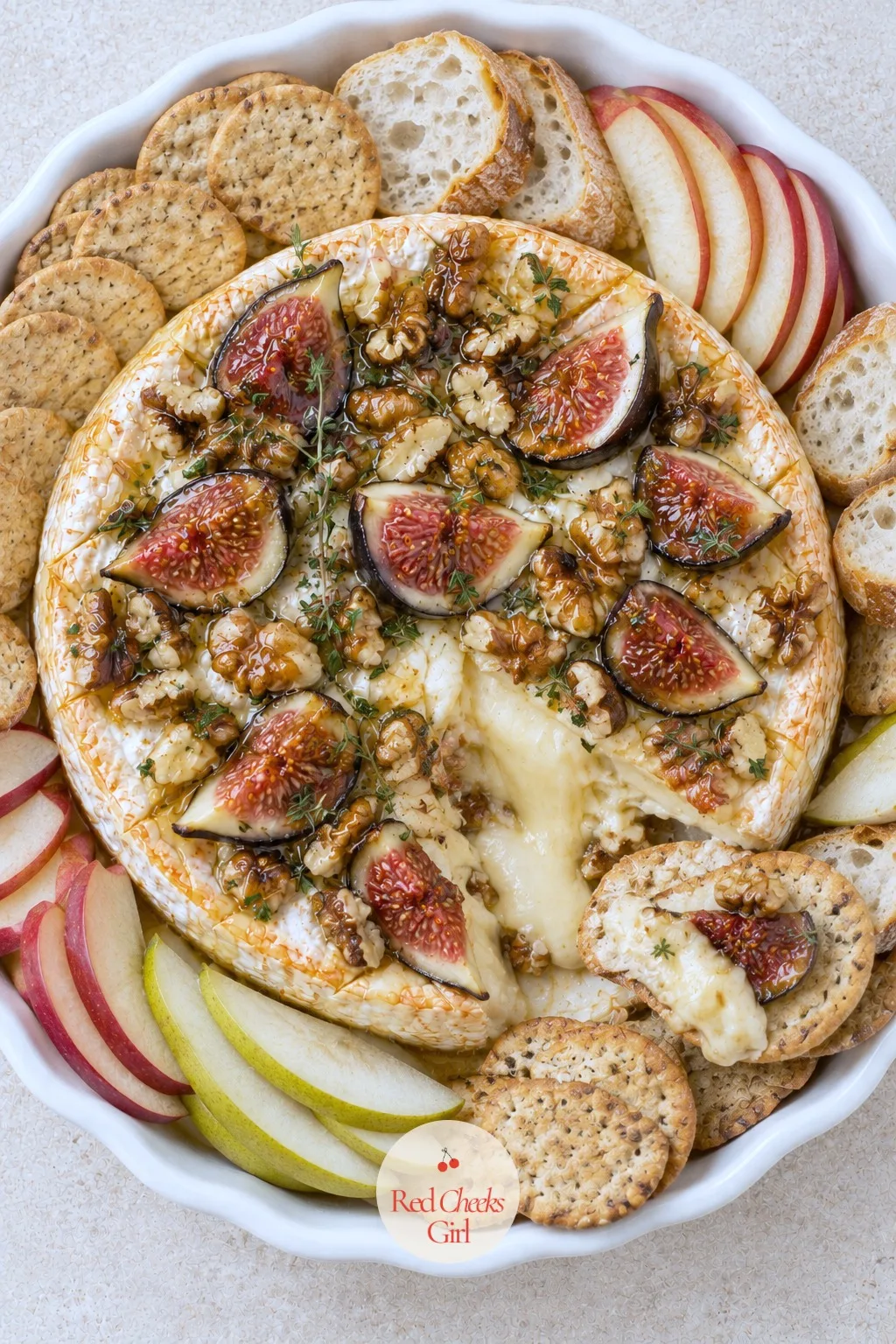
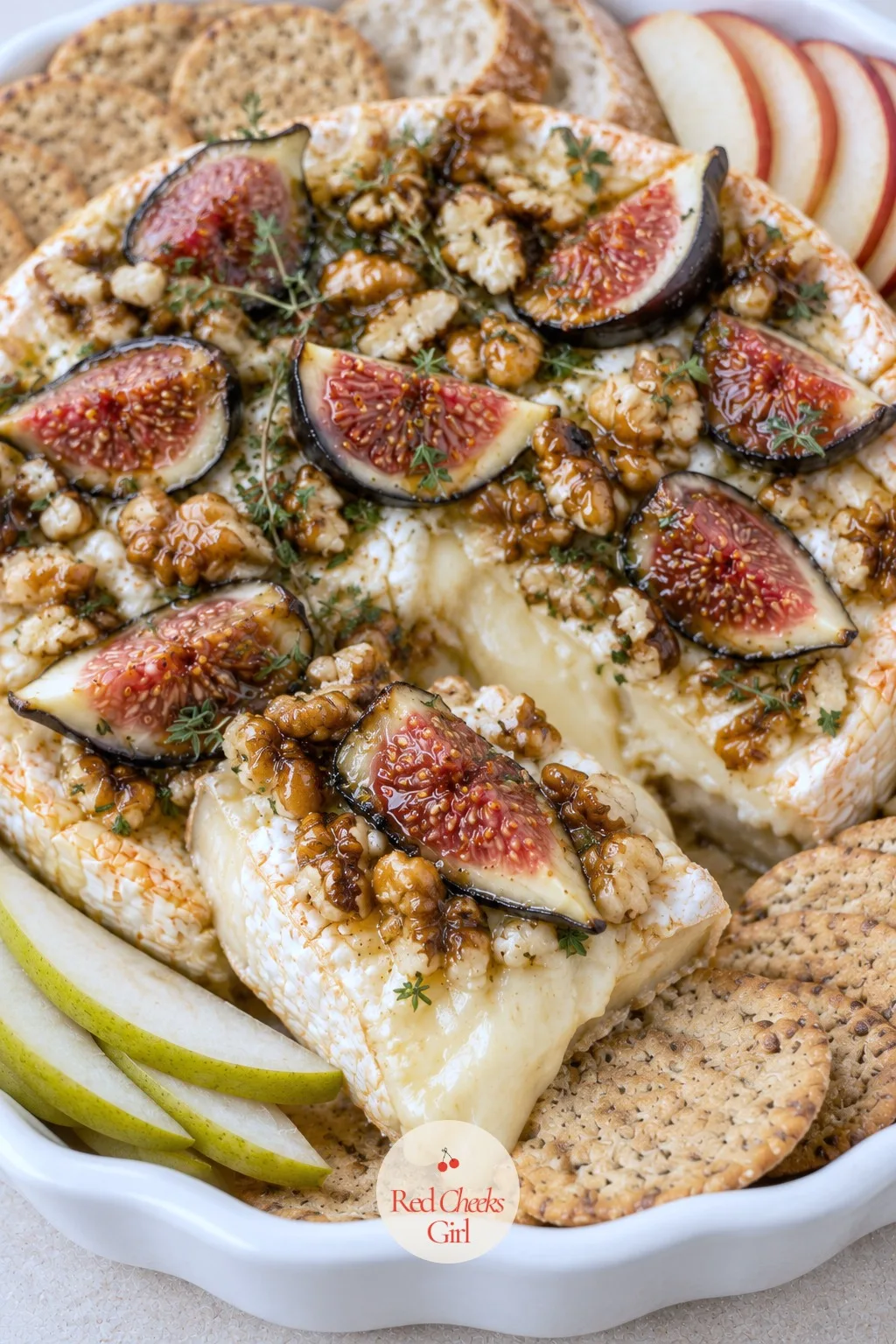
Set the dish on a board with crackers, baguette slices, apple and pear fanned around the edge. Serve right away, while the center still flows when a cracker cuts into it.
🛍 Shopping guide
How to Keep the Center Flowing, Not Split
The single biggest mistake is leaving the brie in too long. Past twelve or thirteen minutes the rind can split open and the center runs flat before anyone gets a cracker near it.
A dish that is too shallow or too wide is the second mistake: the cheese spreads sideways instead of staying tall, and it cools fast once it is out of the oven. A dish close to the size of the wheel keeps the shape intact.
Cold cheese straight from the fridge fights you too. Let the wheel sit at room temperature for about twenty minutes before it goes in, so the center has less distance to travel from cold to molten.
Score through the rind only, not into the cheese beneath it. Cut too deep and the center has nowhere to go but out, through the cracks, before it has even finished melting.
Swaps and Substitutions
For a version with a crust, wrap the scored wheel in a sheet of thawed puff pastry before it bakes: and it turns the same filling into something closer to a warm hand pie.
Raspberry jam and sliced almonds swap in neatly for the honey, walnuts and figs, spread over the scored rind before baking and left to bubble alongside the cheese instead of sitting on top of it.
Hot honey and chopped pistachios turn the same base savory sweet with a little heat; drizzle it on right at the end so the chile does not scorch in the oven.
The whipped feta dip with hot honey and chili crunch on this site uses the same bottle, if you want it to carry across two dishes on the same table.
Camembert stands in for brie with almost no change to the method:. Either one bakes on the same timeline.
For a nut-free table, toast pepitas the same way as the walnuts for the same crunch without the allergy risk, and swap in maple syrup for the honey if that is what is already open in the kitchen.
What to Serve It With at a Party
Plain, sturdy crackers and a baguette sliced thin and lightly toasted are the two things the cheese actually needs: something crisp enough to hold its weight once it is loaded with warm brie.
Apple and pear, sliced just before guests arrive so they do not brown, add the crunch and acidity the rest of the board is missing. Grapes work too, left whole, if that is what is already in the bowl.
If this is one dish among several, it sits well next to a chips and dip charcuterie board built around the center of the table, or alongside a couple of the cream cheese dip recipes for game day and every party after for guests who want something cooler.
A dry sparkling wine or a light red cuts through the richness better than anything sweet. Pour for the adults in the room, keep the soft drinks within reach for everyone else, and remind anyone driving to pace themselves.
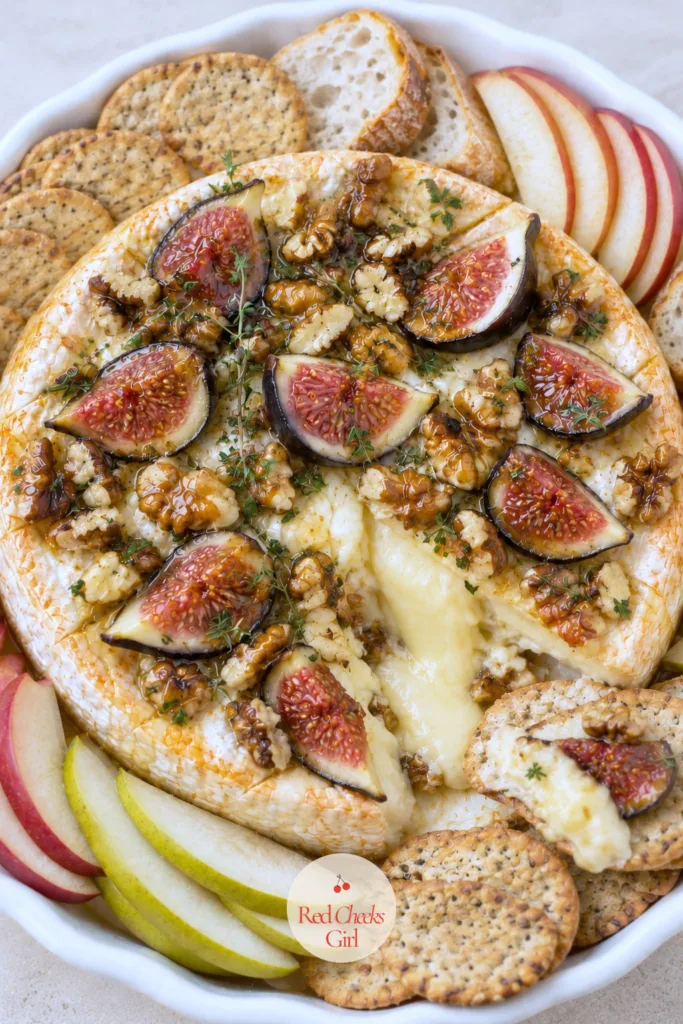
Baked Brie Appetizer
Ingredients
- 1 wheel of brie cheese 13 to 16 ounces, rind left on
- 1/3 cup walnut halves
- 3 tablespoons honey divided
- 1 tablespoon fresh thyme leaves plus a few whole sprigs for garnish
- 4 fresh figs quartered (or 6 dried figs, thinly sliced)
- crackers for serving
- 1 baguette sliced and lightly toasted
- 1 apple cored and thinly sliced
- 1 pear cored and thinly sliced
Instructions
- Preheat the oven to 350°F and set a rack in the middle position.
- Set the walnut halves in a small skillet over medium heat. Toast for 3 to 4 minutes, stirring often, until fragrant and lightly browned in spots, then tip them onto a plate to cool and roughly chop.
- Unwrap the brie and set it rind side up in a round baking dish close to its own size. Using a paring knife, cut a tight crosshatch pattern across the top, slicing only through the rind and not into the cheese underneath.
- Drizzle 1 tablespoon of the honey over the scored top, letting it pool into the cuts.
- Bake the brie for 10 to 12 minutes, until the center feels soft and yields when you gently nudge the dish and the rind looks glossy and rounded, not split or sunken.
- Remove the dish from the oven and let the brie rest, undisturbed, for 2 minutes: this lets the center finish loosening without running flat the moment you cut in.
- Scatter the toasted walnuts, quartered figs and fresh thyme leaves over the top, then drizzle with the remaining 2 tablespoons of honey.
- Transfer the dish to a serving board and surround it with crackers, baguette slices, apple slices and pear slices. Serve immediately, while the center still flows when a cracker cuts into it.
Good to Know
Frequently Asked Questions
Do you take the rind off brie before baking?
Leave the rind on before baking. The rind helps hold in the melty, gooey cheese, so it stays contained instead of spreading across the dish as it melts.
Can you eat the rind on baked brie?
Yes, the rind is completely edible. The Brie’s rind is fully edible, with a soft, faintly tangy texture that only gets milder once it has baked.
Can you reheat baked brie the next day?
Yes, though the texture is never quite as soft as fresh from the oven. Warm it gently at 300°F for about ten minutes, just until the center loosens again.
Why did my baked brie turn rubbery instead of gooey?
Rubbery brie usually means it baked too long or at too high a heat, which tightens the proteins once the center passes soft and gooey. Pull it the moment it feels loose, not firm.
Can you freeze baked brie?
Freezing is not recommended once it is baked, since the texture turns grainy and weeps liquid as it thaws. Freeze the plain, unbaked wheel instead, then thaw overnight before scoring and baking.

18 Hanukkah food ideas for a crowd: latkes with new toppings, brisket sliders, sufganiyot, a dairy b

18 Super Bowl dips, hot and cold, each with its own dippers: crab rangoon, smoked queso, whipped fet
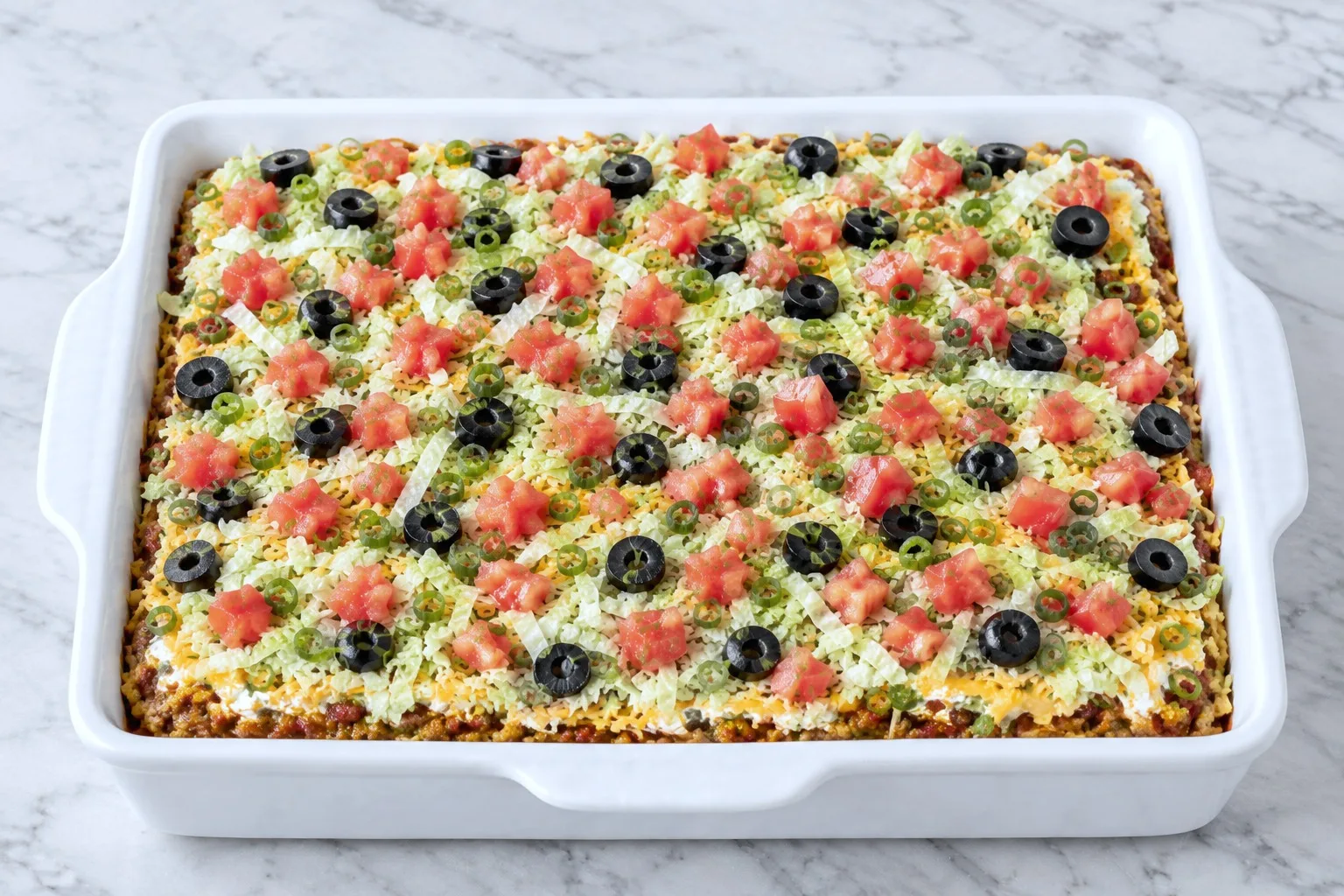
Taco dip with cream cheese layers cold on a platter in ten minutes, with a make-ahead base and a tri
Leave a Reply