

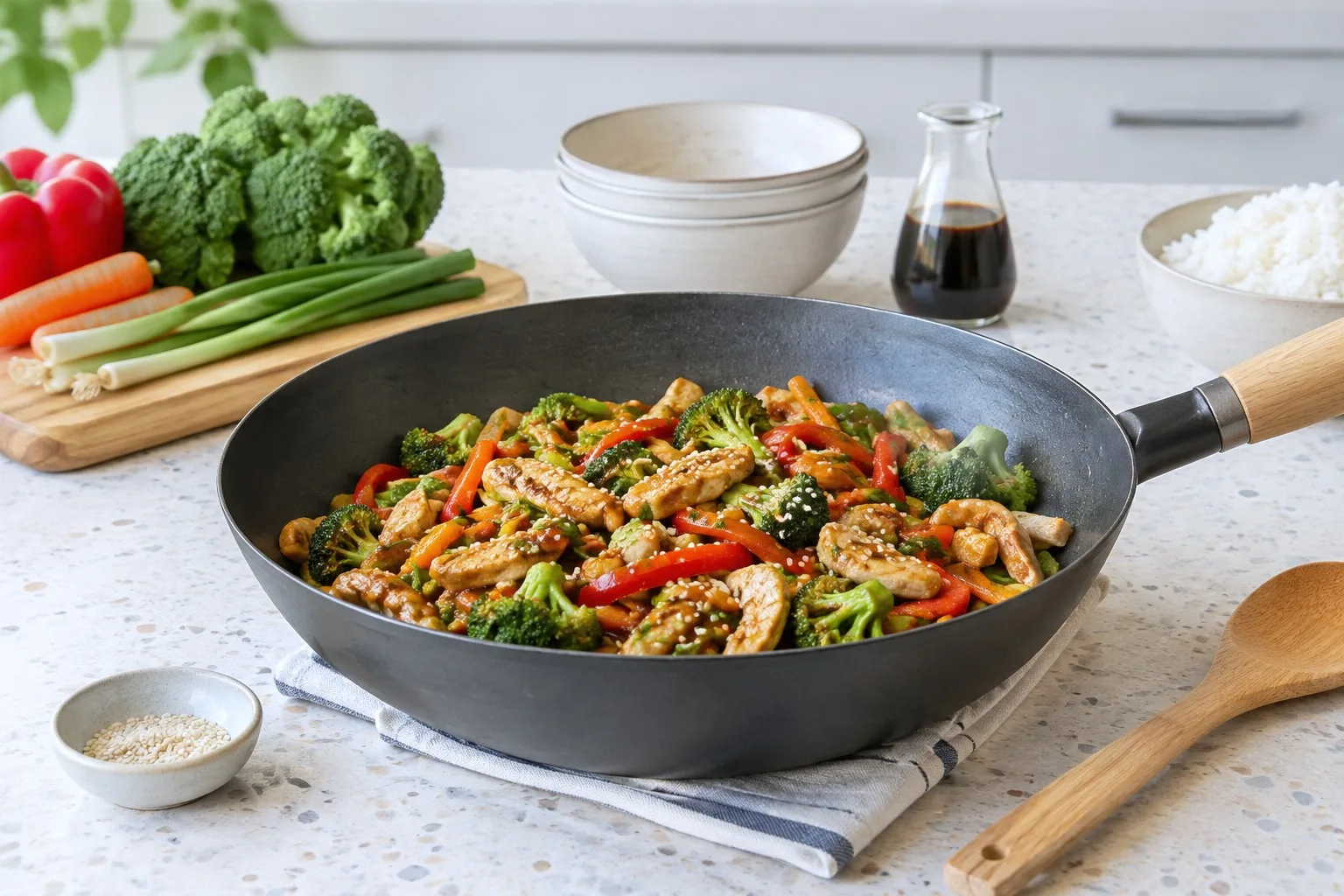
The takeout app is already open on her phone. That is the real competition here, not some chef in a white coat: a hot pan, ten minutes, and dinner that tastes like it came from somewhere else entirely.
Stir frying is less a recipe than a sequence, and once the sequence is right, almost anything in the crisper drawer behaves.
These fourteen main dishes share one basic sauce formula: whisk a quarter cup of soy sauce with a tablespoon each of rice vinegar and brown sugar, a teaspoon of cornstarch, and a half cup of broth or water, then pour it in only at the very end so it glazes instead of simmers everything into stew.
The order of the vegetables matters just as much. Garlic and ginger go into hot oil first for thirty seconds, then the dense, slow ones (carrots, broccoli, bell pepper) for two to three minutes, then the quick ones (snap peas, snow peas, mushrooms) for another minute, and anything leafy or already cooked goes in last, just long enough to heat through.
Skip that order and the pan floods with vegetable water and everything steams instead of sears.
A few of these recipes carry peanuts, sesame, soy and wheat (the noodles and most soy sauces), so swap tamari and rice noodles if gluten is the concern and leave out the peanuts where nuts are not welcome at the table.
None of it needs a torch or a special burner, just a pan hot enough to make a drop of water skate and vanish. If the night calls for a full Asian-style spread rather than one dish, the copycat restaurant recipes for a takeout night made at home round out the rest of the table.
This post contains affiliate links. If you buy through them, I may earn a small commission at no extra cost to you.
Table of Contents
- Thai Basil Chicken
- Mongolian Beef
- Kung Pao Chicken
- Lemongrass Beef with Herbs
- Cashew Chicken
- Sesame Chicken with Peppers
- Rainbow Vegetable Stir Fry with Tofu
- Chicken Lo Mein
- Garlic Noodles with Vegetables
- Teriyaki Chicken Stir Fry
- Ginger Pork with Snap Peas
- Chicken and Broccoli
- Beef and Snow Peas
- Tomato and Egg Stir Fry
- Egg Roll in a Bowl
- Frequently Asked Questions
Thai Basil Chicken
This is the one that smells like a restaurant kitchen the second the basil hits the pan, all fish sauce and chile and that distinctive licorice-sharp basil note that regular sweet basil simply will not give you.
Track down actual Thai basil at an Asian grocery if there is one nearby; it holds its shape and punch far better under heat than the kind from the garden center.
The sauce is barely a sauce at all, just soy, oyster and fish sauce loosened with a little sugar, which is why the dish depends on the ground chicken picking up real color in the pan rather than steaming pale.
A fried egg with a runny yolk on top turns it from stir fry into something that looks plated on purpose.
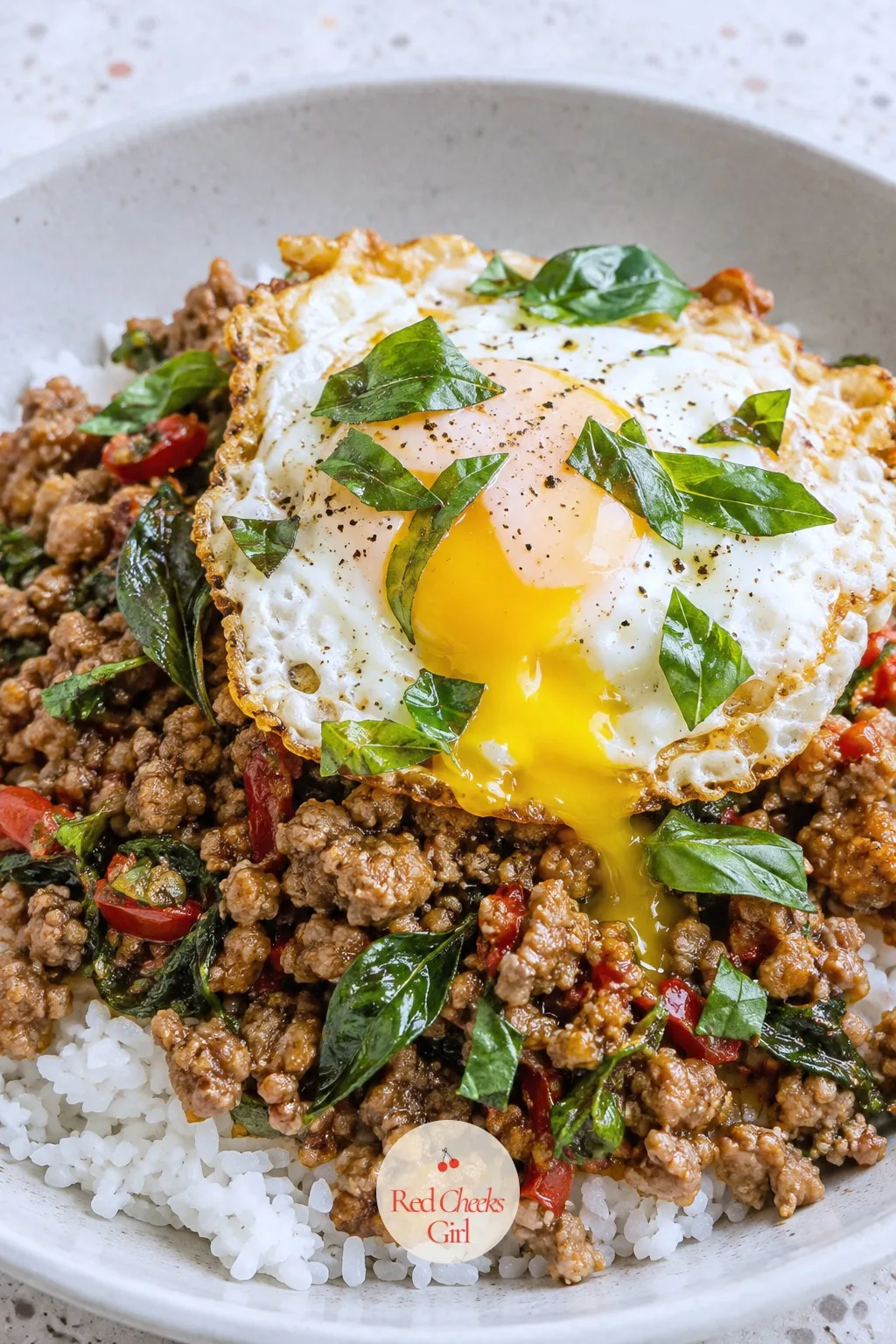
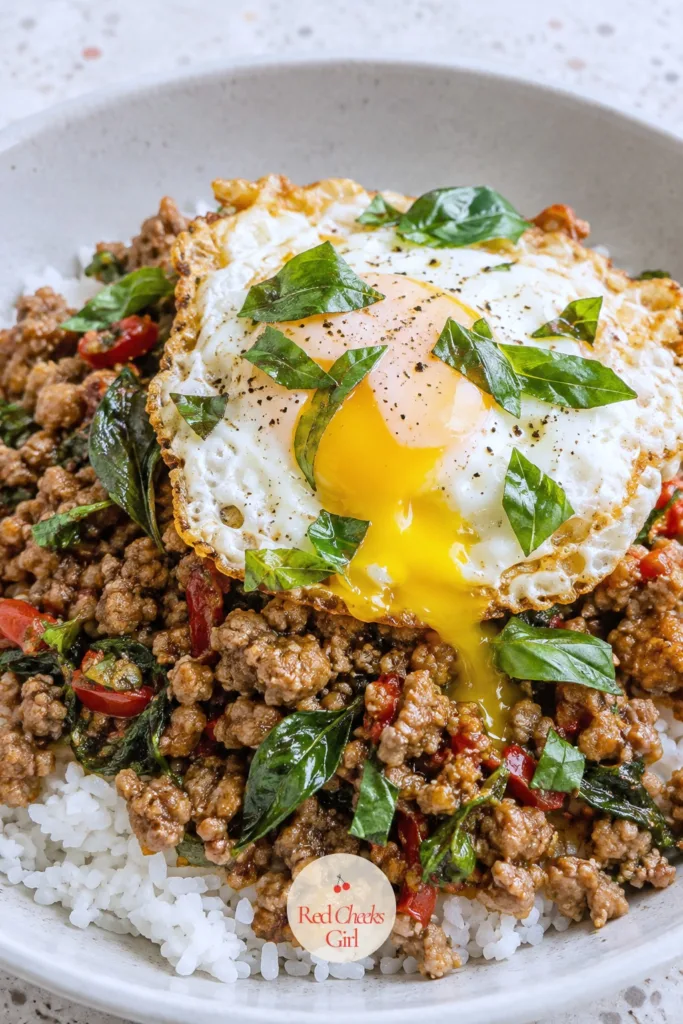
Thai Basil Chicken
Ingredients
- 1 pound ground chicken
- 4 cloves garlic minced
- 3 Thai chiles or 1 jalapeno thinly sliced
- 1 small shallot thinly sliced
- 2 tablespoons vegetable oil
- 2 tablespoons soy sauce
- 1 tablespoon oyster sauce
- 1 tablespoon fish sauce
- 1 teaspoon sugar
- 1 cup fresh Thai basil leaves packed
- 4 fried eggs for serving (optional)
- cooked jasmine rice for serving
Instructions
- Heat 2 tablespoons vegetable oil in a wok or large skillet over high heat until it shimmers and a drop of water flicked into it crackles immediately.
- Add the garlic, chiles, and shallot, and stir fry for 20 seconds until fragrant but not browned.
- Add the ground chicken, breaking it up with a spatula, and stir fry for 4 to 5 minutes until no pink remains and the edges catch a little color.
- Push the chicken to one side, pour in the soy sauce, oyster sauce, fish sauce, and sugar, then stir everything together so the meat is evenly glazed.
- Cook for 1 more minute until the sauce clings to the chicken rather than pooling in the bottom of the pan.
- Turn off the heat and fold in the basil leaves, stirring just until they wilt and turn deep green, about 15 seconds.
- Fry the eggs separately in a nonstick pan until the whites are set and the yolks stay runny, about 3 minutes.
- Spoon the chicken over bowls of jasmine rice and top each with a fried egg.
Good to Know
Mongolian Beef
Say the name and most people picture the takeout container, that dark glossy sauce clinging to every slice of beef. The trick nobody tells you: the cornstarch coating is doing more work than the sauce, crisping the edges of the meat so it holds up against the glaze instead of going limp in it.
Flank steak sliced thin against the grain is worth the extra two minutes with a sharp knife; it is cheaper than ribeye and just as tender once it hits a hot pan for under a minute a side. Serve it straight over rice, because the sauce wants somewhere to pool.
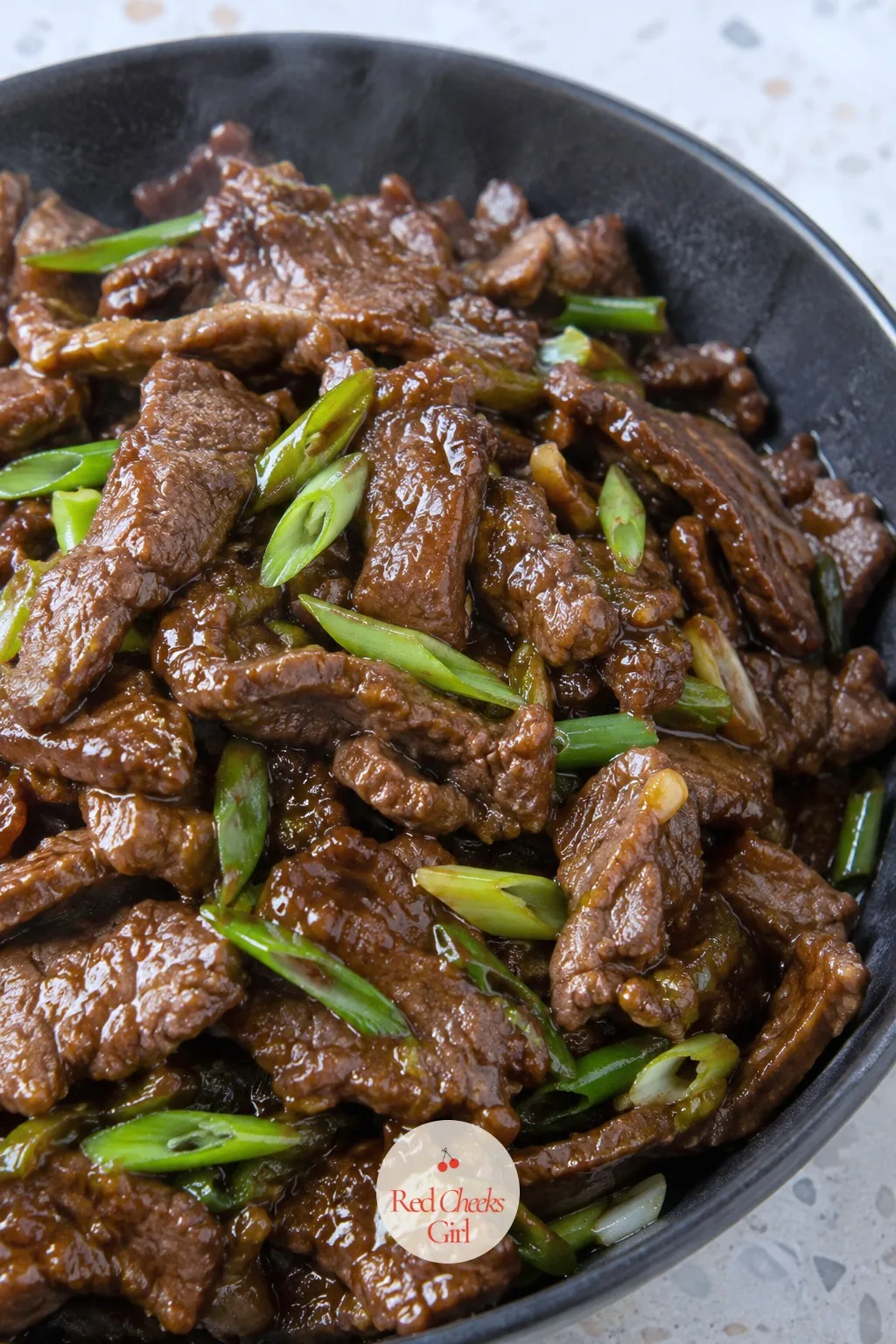
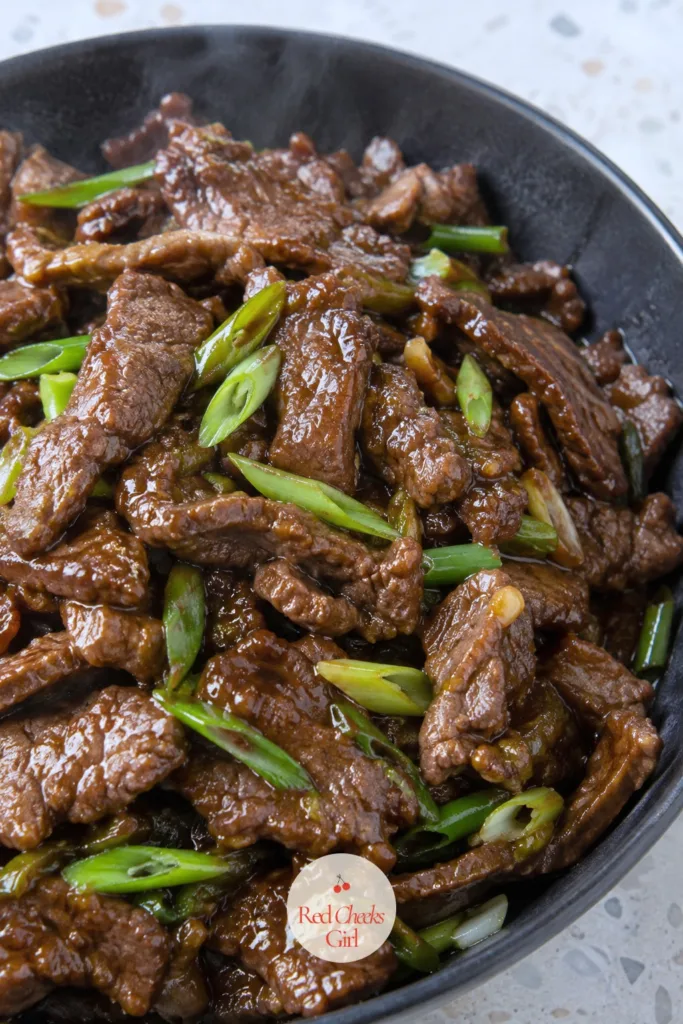
Mongolian Beef
Ingredients
- 1 pound flank steak thinly sliced against the grain
- 1/4 cup cornstarch
- 3 tablespoons vegetable oil divided
- 1 tablespoon minced garlic
- 1 tablespoon minced fresh ginger
- 1/2 cup low sodium soy sauce
- 1/2 cup water
- 1/2 cup packed brown sugar
- 4 scallions cut into 2 inch pieces, plus more sliced for garnish
Instructions
- Toss the sliced flank steak with the cornstarch in a bowl until every piece is coated, then let it sit for 10 minutes so the starch forms a thin paste.
- Heat 2 tablespoons of the oil in a wok over high heat until it shimmers, then add the beef in a single layer and sear for 2 minutes per side until deep brown and crisp at the edges, working in two batches if the pan is crowded, and remove the beef to a plate.
- Add the remaining 1 tablespoon oil, the garlic and ginger, and stir fry for 20 seconds until fragrant.
- Pour in the soy sauce, water, and brown sugar, scraping up any browned bits, and bring to a simmer.
- Simmer the sauce for 2 to 3 minutes until it thickens enough to coat the back of a spoon.
- Return the beef to the pan along with the 2 inch scallion pieces, tossing to coat everything in the glossy sauce.
- Cook for 1 more minute until the scallions turn bright green and soften slightly.
- Scatter with sliced scallions and serve over rice.
Good to Know
Kung Pao Chicken
Half the appeal of kung pao is the gamble: dried chiles you are not meant to eat whole, scattered through the dish like little landmines. Leave them in for the look and the smoky oil they leave behind, and just warn whoever is eating around the chile pods themselves.
Peanuts go in at the very end, off the simmer, so they stay crunchy against the glossy chicken instead of turning soft in the sauce. If the household runs nut-free, sunflower seeds or crushed water chestnuts give back some of that texture without the allergen.
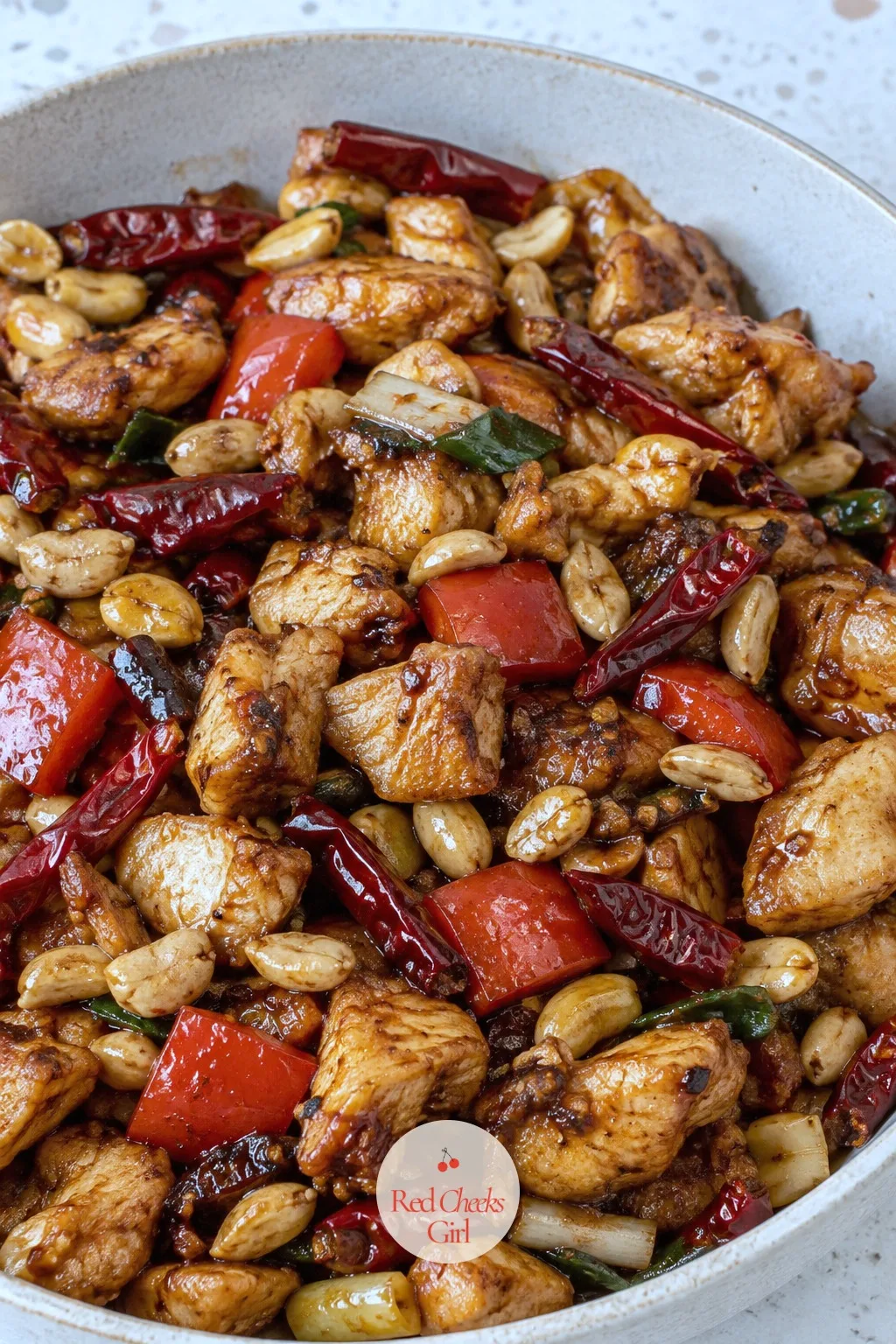
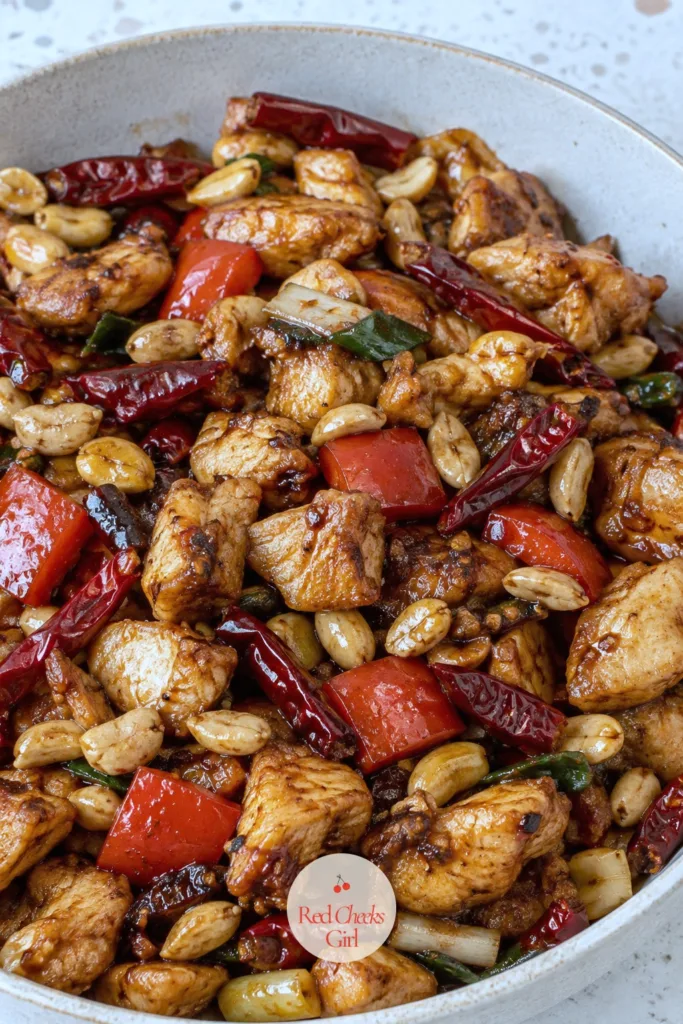
Kung Pao Chicken
Ingredients
- 1 pound boneless skinless chicken thighs cut into 1 inch pieces
- 1 tablespoon soy sauce for marinade
- 1 tablespoon Shaoxing wine or dry sherry
- 1 teaspoon cornstarch for marinade
- 2 tablespoons peanut oil
- 8 to 10 dried red chiles stems trimmed
- 1 teaspoon Sichuan peppercorns lightly crushed (optional)
- 3 cloves garlic sliced
- 1 tablespoon minced fresh ginger
- 1 red bell pepper cut into 1 inch squares
- 1/2 cup roasted unsalted peanuts
- 3 scallions cut into 1 inch pieces
- 2 tablespoons soy sauce for sauce
- 1 tablespoon black vinegar or rice vinegar
- 1 tablespoon sugar
- 1 teaspoon cornstarch for sauce
- 2 tablespoons water
Instructions
- Toss the chicken with 1 tablespoon soy sauce, the Shaoxing wine, and 1 teaspoon cornstarch, and let marinate for 10 minutes while you prep the vegetables.
- Whisk together the soy sauce, vinegar, sugar, cornstarch, and water for the sauce in a small bowl and set aside.
- Heat the peanut oil in a wok over high heat, add the dried chiles and Sichuan peppercorns, and stir fry for 30 seconds until the oil turns fragrant and faintly red, watching closely so they do not scorch.
- Add the chicken in a single layer and sear for 3 minutes, stirring occasionally, until the outside is golden and only a trace of pink remains in the thickest piece.
- Add the garlic and ginger and stir fry for 20 seconds, then add the bell pepper and stir fry for 1 to 2 minutes until just crisp tender.
- Give the sauce a final stir, pour it into the pan, and toss everything for 1 minute until it turns glossy and clings to the chicken.
- Stir in the peanuts and scallions and cook for 30 seconds more, just to warm the peanuts through.
- Serve immediately so the peanuts keep their crunch.
Good to Know
Lemongrass Beef with Herbs
This one reads as a restaurant special, all citrus and char and a fistful of fresh herbs dropped in at the end. The lemongrass needs the tough outer layers peeled away first; only the pale, tender core down near the root actually minces fine enough to eat.
Searing the beef without touching it for ninety seconds is the single move that makes it look expensive: a real crust, not gray simmered meat. Then the herbs go in off the heat, so the mint and basil wilt from residual warmth instead of turning dark and bitter.
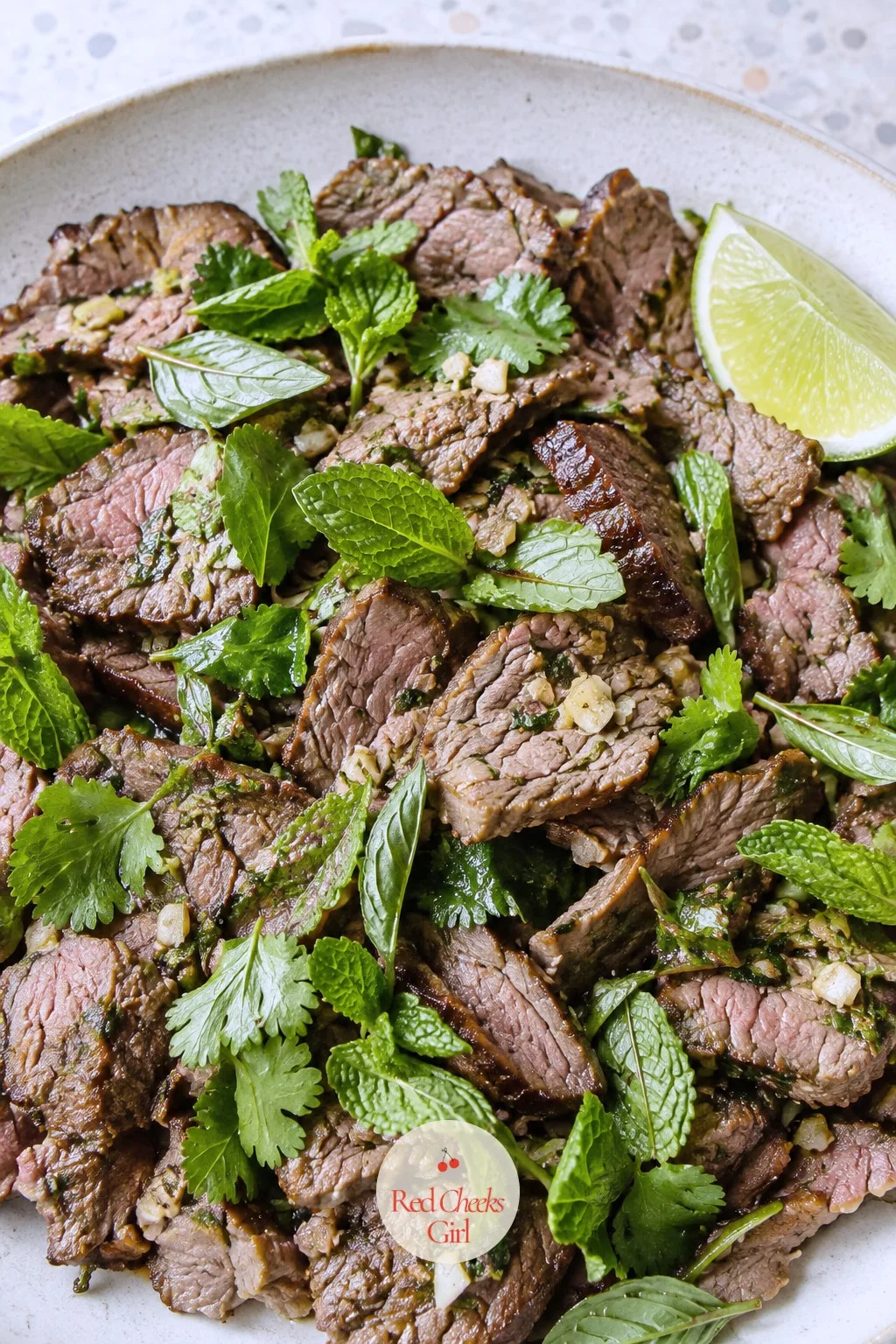
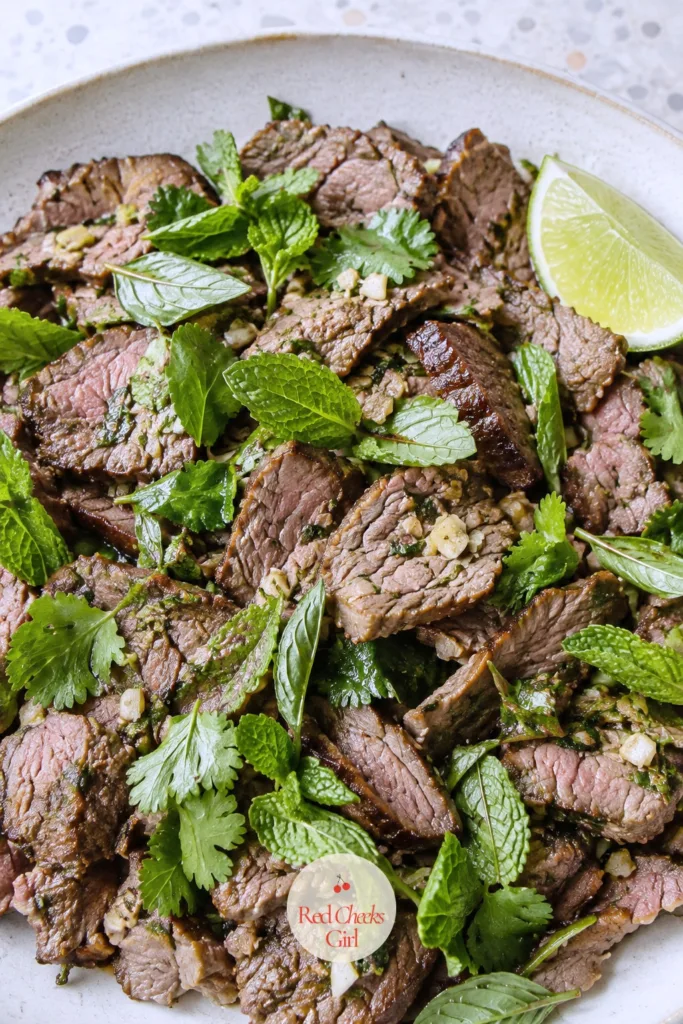
Lemongrass Beef with Herbs
Ingredients
- 1 pound sirloin steak thinly sliced against the grain
- 2 stalks lemongrass tender inner part only, minced
- 3 cloves garlic minced, divided
- 1 tablespoon fish sauce
- 1 tablespoon soy sauce
- 1 tablespoon brown sugar
- 2 tablespoons vegetable oil divided
- 1 small red onion sliced
- 1 red chile thinly sliced
- 1/2 cup fresh mint leaves
- 1/2 cup fresh cilantro leaves
- 1/4 cup fresh Thai basil leaves
- lime wedges for serving
Instructions
- Combine the beef with the lemongrass, half the garlic, fish sauce, soy sauce, and brown sugar in a bowl, then let it marinate at room temperature for 20 minutes.
- Heat 1 tablespoon of the oil in a wok over high heat until nearly smoking, add the beef in a single layer, and sear for 90 seconds without stirring to build a crust.
- Flip the beef and cook for 1 more minute until just barely pink in the center, then remove to a plate.
- Add the remaining oil, the red onion, chile, and remaining garlic, and stir fry for 2 minutes until the onion turns translucent at the edges.
- Return the beef and any collected juices to the pan and toss for 30 seconds to combine.
- Remove the pan from the heat and fold in the mint, cilantro, and basil so the herbs wilt gently from the residual heat rather than cook through.
- Squeeze a lime wedge over the top and serve immediately with extra wedges alongside.
Good to Know
🛍 Shopping guide
Cashew Chicken
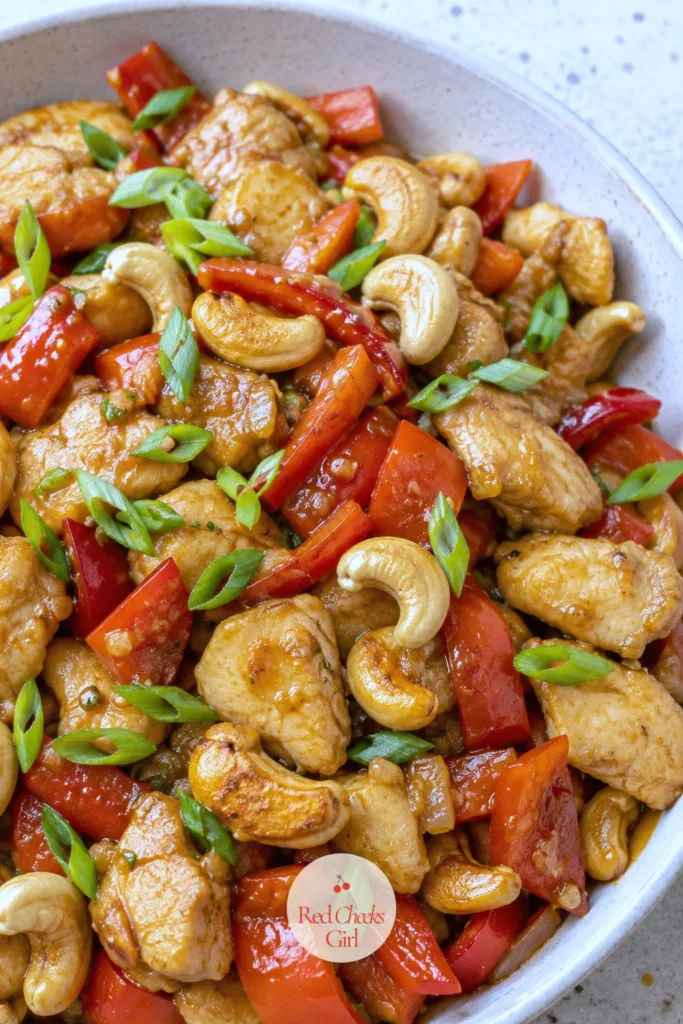
Cashew chicken is the safe order for the one at the table who thinks they do not like spicy food; nothing here brings heat, just sweet-salty sauce and nuts gone a little toasty. Toast the cashews in the same oil you will cook everything else in, a minute is all it takes to turn them from bland to genuinely nutty.
Zucchini alongside the bell pepper keeps the dish from being all one note of sweetness, and it cooks fast enough that it never gets the chance to turn mushy. This one reheats well enough for lunch the next day, though the cashews lose some crunch by then.
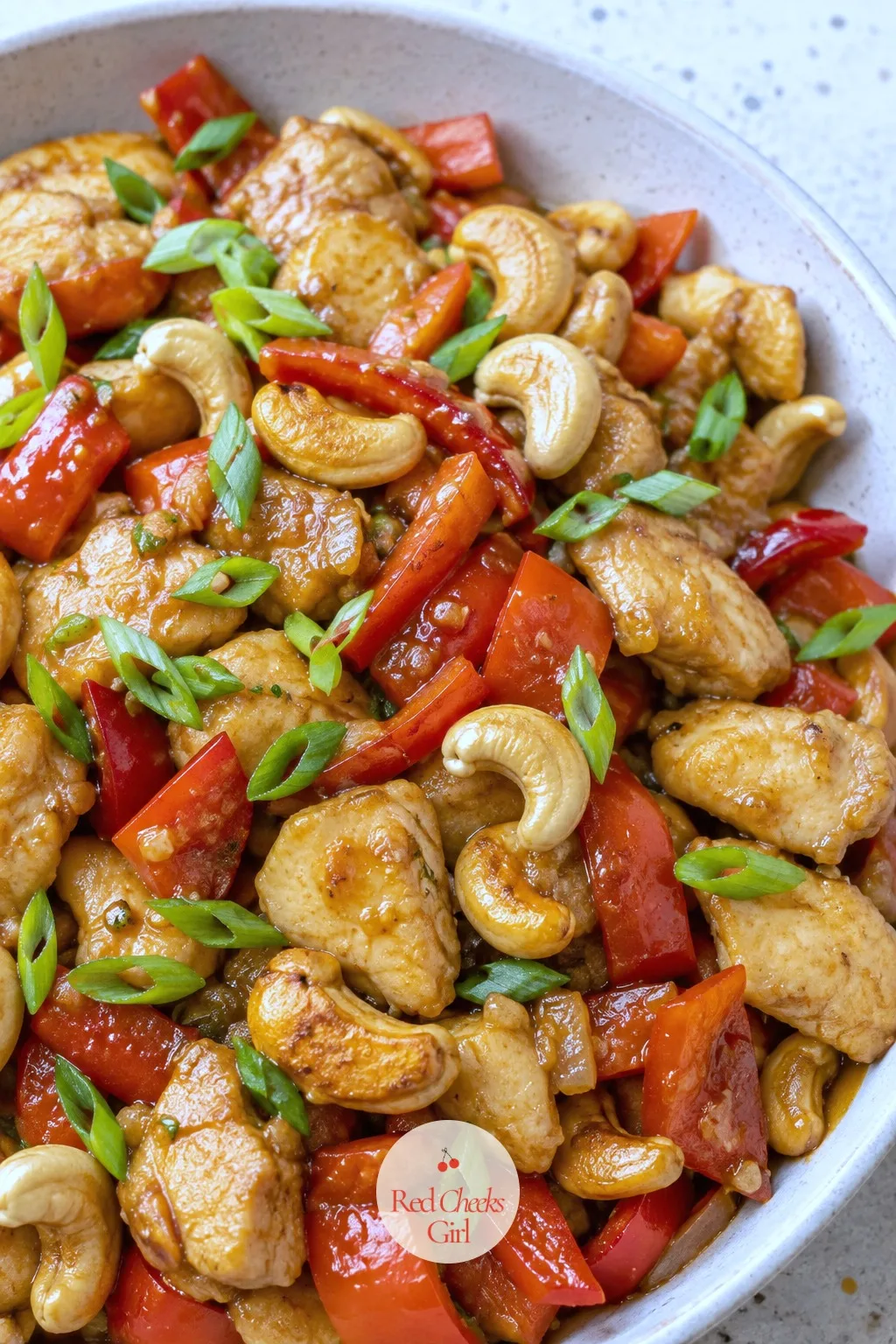
Cashew Chicken
Ingredients
- 1 pound boneless skinless chicken breast cut into 1 inch cubes
- 2 tablespoons cornstarch
- 3 tablespoons vegetable oil divided
- 3/4 cup roasted unsalted cashews
- 1 red bell pepper cut into 1 inch pieces
- 1 small zucchini sliced into half moons
- 3 cloves garlic minced
- 1 tablespoon minced fresh ginger
- 1/4 cup soy sauce
- 2 tablespoons oyster sauce
- 1 tablespoon rice vinegar
- 1 tablespoon brown sugar
- 1/2 cup chicken broth
- 2 scallions sliced, for garnish
Instructions
- Toss the chicken cubes with the cornstarch until lightly coated, shaking off any excess.
- Heat 2 tablespoons oil in a wok over high heat, add the chicken in a single layer, and sear for 3 to 4 minutes, turning once, until golden outside and cooked through, then remove to a plate.
- Add the remaining oil and the cashews, toasting for 1 minute until they smell nutty and pick up a little color, then scoop them out next to the chicken.
- Add the bell pepper and zucchini to the pan and stir fry for 2 minutes until the edges soften but the centers stay crisp.
- Add the garlic and ginger and stir fry for 20 seconds until fragrant.
- Whisk together the soy sauce, oyster sauce, rice vinegar, brown sugar, and chicken broth, pour into the pan, and bring to a simmer.
- Return the chicken and cashews to the pan and toss for 1 to 2 minutes until the sauce thickens and coats everything in a light sheen.
- Scatter with scallions and serve hot, while the cashews are still crisp.
Good to Know
🛍 Shopping guide
Sesame Chicken with Peppers
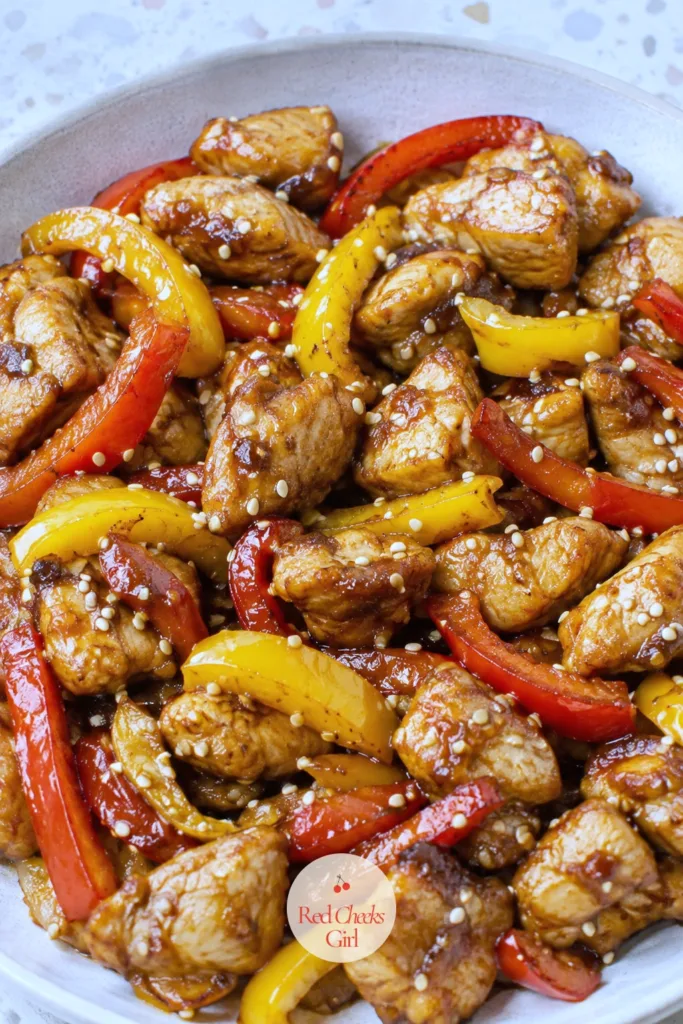
Sticky, shiny, faintly sweet: this is the stir fry that looks the most like the takeout box, minus the deep fryer. The chicken still gets a cornstarch coat for a crisp edge, it just never sees oil deeper than a quarter inch in the pan.
Two colors of bell pepper do a lot of the visual work here, so do not skip the yellow one just because red is cheaper that week. Toasted sesame seeds go on at the very last second, scattered rather than stirred in, so they stay visible against the glaze instead of disappearing into it.
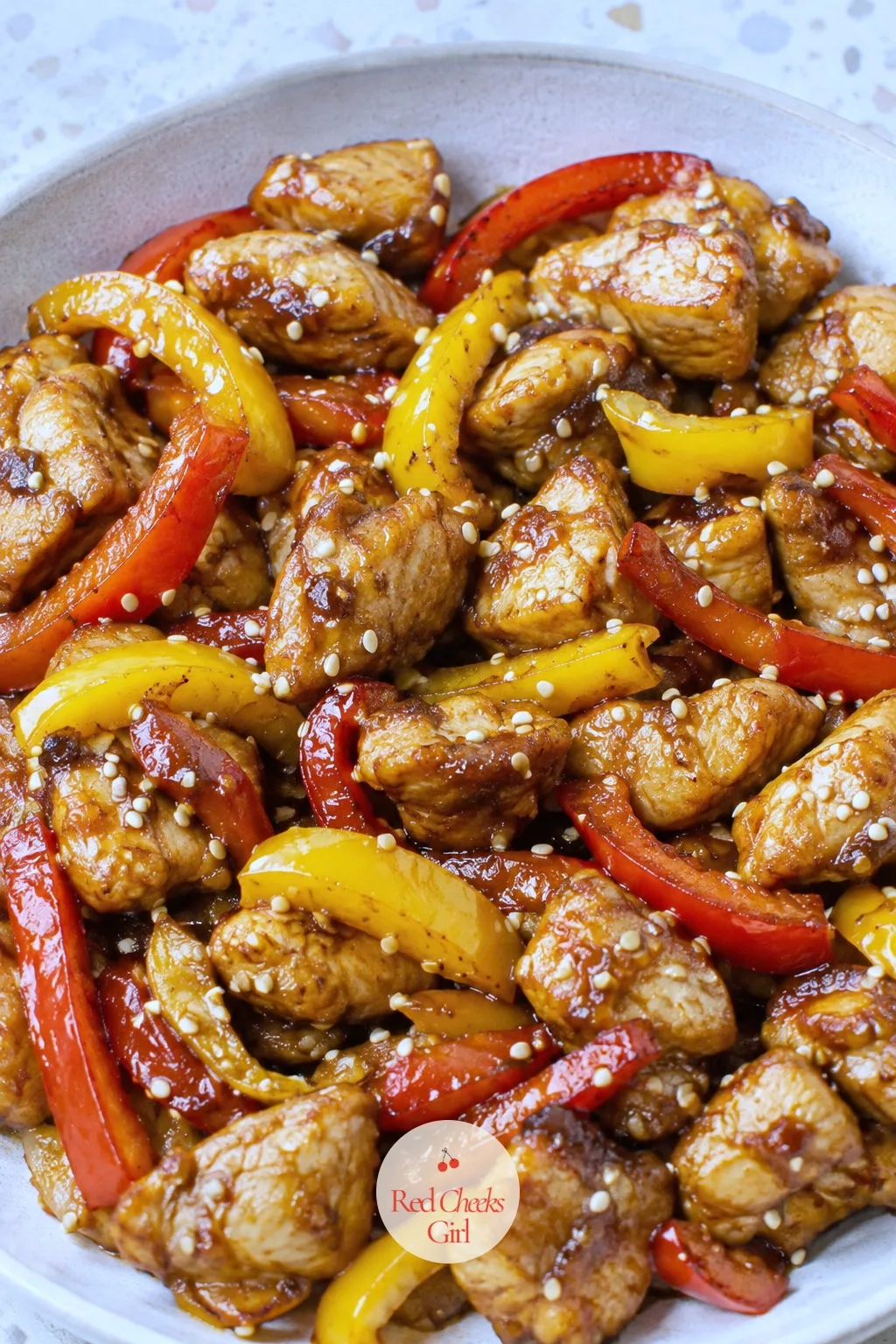
Sesame Chicken with Peppers
Ingredients
- 1 pound boneless skinless chicken thighs cut into bite size strips
- 3 tablespoons cornstarch divided
- 3 tablespoons vegetable oil divided
- 1 red bell pepper sliced
- 1 yellow bell pepper sliced
- 1 small onion sliced
- 1/4 cup soy sauce
- 2 tablespoons honey
- 1 tablespoon rice vinegar
- 1 teaspoon toasted sesame oil
- 1/2 cup water
- 2 tablespoons toasted sesame seeds
Instructions
- Toss the chicken strips with 2 tablespoons of the cornstarch until evenly coated.
- Heat 2 tablespoons oil in a wok over high heat, add the chicken, and sear for 4 minutes, turning occasionally, until golden and cooked through, then transfer to a plate.
- Add the remaining oil, then the peppers and onion, and stir fry for 2 to 3 minutes until the peppers are just starting to soften but still hold their color.
- Whisk the soy sauce, honey, rice vinegar, sesame oil, water, and remaining 1 tablespoon cornstarch together in a small bowl until smooth.
- Pour the sauce into the pan and bring to a simmer, stirring constantly, until it thickens enough to leave a trail on the bottom of the pan, about 1 minute.
- Return the chicken to the pan and toss for 1 to 2 minutes until every piece is glazed.
- Sprinkle with toasted sesame seeds and serve right away so the peppers keep their snap.
Good to Know
🛍 Shopping guide
Rainbow Vegetable Stir Fry with Tofu
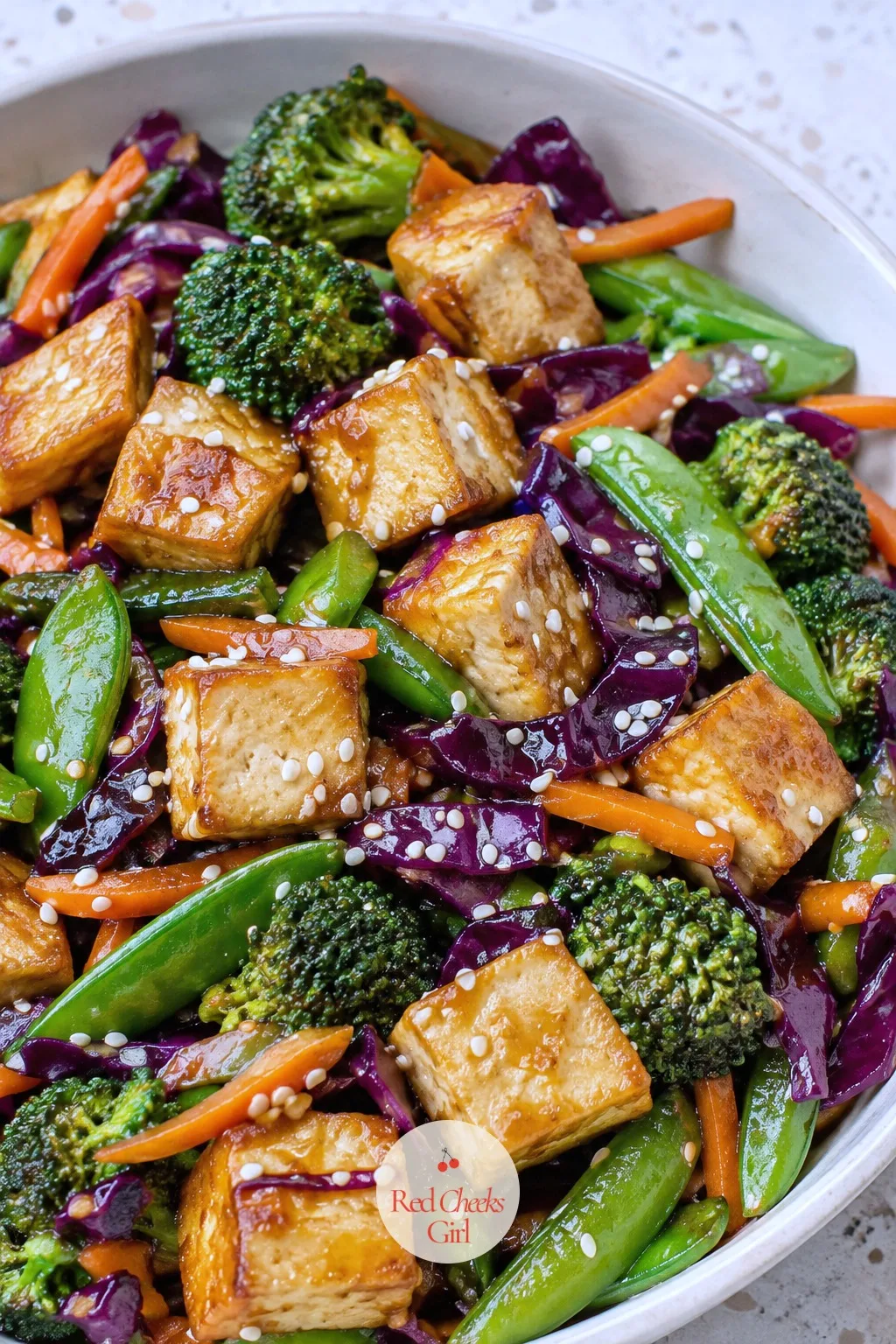
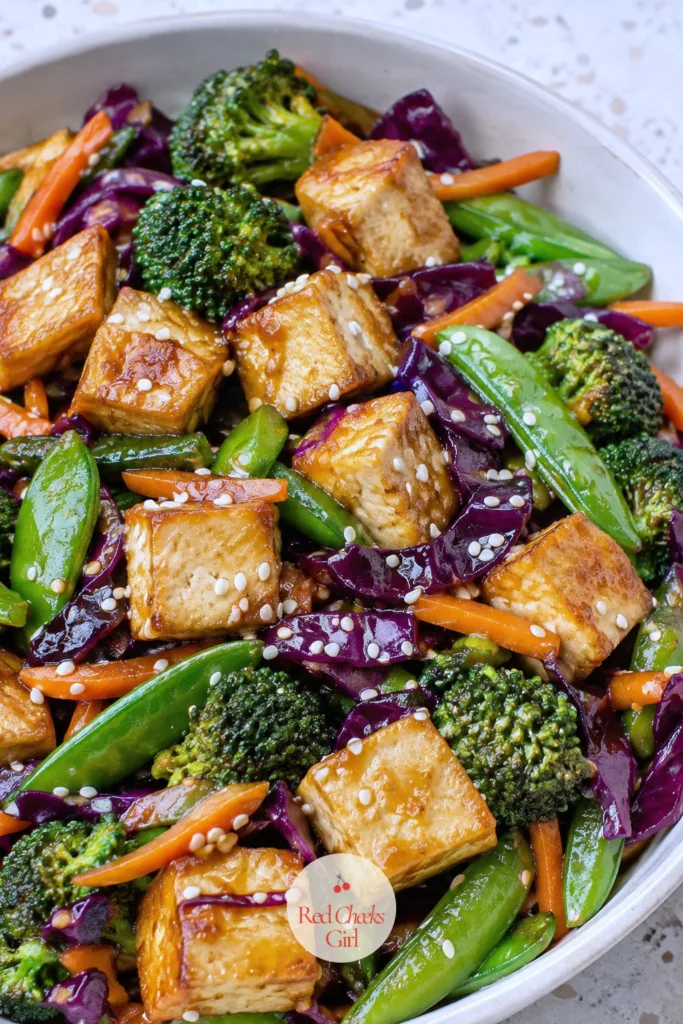
No meat, no apology needed: pressed and fried right, tofu holds a crust as good as any cutlet. Ten minutes under paper towels and something heavy on top is the one step worth not skipping, since wet tofu never crisps, it just steams in its own cornstarch coat.
Purple cabbage earns its spot here for the color alone, but it also wilts in under a minute, so it goes in dead last alongside the garlic and ginger. If weeknight health is the actual goal tonight, the low calorie dinner recipes: healthy dinners full of flavor and color cover plenty of other meals in the same spirit.
Rainbow Vegetable Stir Fry with Tofu
Ingredients
- 14 ounce block extra firm tofu pressed and cubed
- 2 tablespoons cornstarch
- 3 tablespoons vegetable oil divided
- 1 cup broccoli florets
- 1 carrot thinly sliced on the diagonal
- 1 red bell pepper sliced
- 1 cup snap peas trimmed
- 1 cup shredded purple cabbage
- 3 cloves garlic minced
- 1 tablespoon minced fresh ginger
- 3 tablespoons soy sauce
- 1 tablespoon rice vinegar
- 1 tablespoon maple syrup or brown sugar
- 1/2 cup vegetable broth
- 1 teaspoon cornstarch for sauce
- sesame seeds for garnish
Instructions
- Press the tofu between paper towels for 10 minutes to draw out excess water, then cut into 1 inch cubes and toss with the cornstarch.
- Heat 2 tablespoons oil in a wok over high heat, add the tofu in a single layer, and fry for 3 to 4 minutes, turning occasionally, until golden and crisp on most sides, then remove to a plate.
- Add the remaining oil, then the carrot and broccoli, the two vegetables that take longest, and stir fry for 2 minutes until the broccoli turns bright green.
- Add the bell pepper and snap peas and stir fry for 1 to 2 minutes until crisp tender.
- Add the cabbage, garlic, and ginger last, since cabbage wilts fast, and stir fry for 1 minute until just softened.
- Whisk the soy sauce, rice vinegar, maple syrup, vegetable broth, and cornstarch together, pour into the pan, and simmer for 1 minute until it coats the vegetables in a light glaze.
- Return the tofu to the pan and toss gently so it does not break apart.
- Finish with a scatter of sesame seeds and serve immediately while the vegetables are still bright.
Good to Know
🛍 Shopping guide
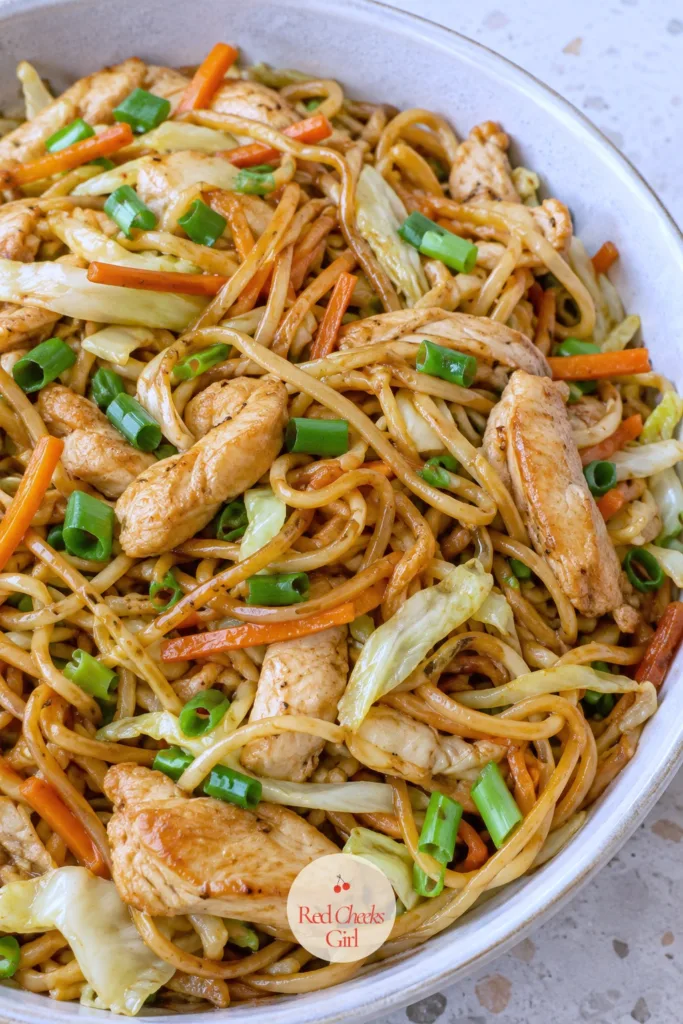
Chicken Lo Mein
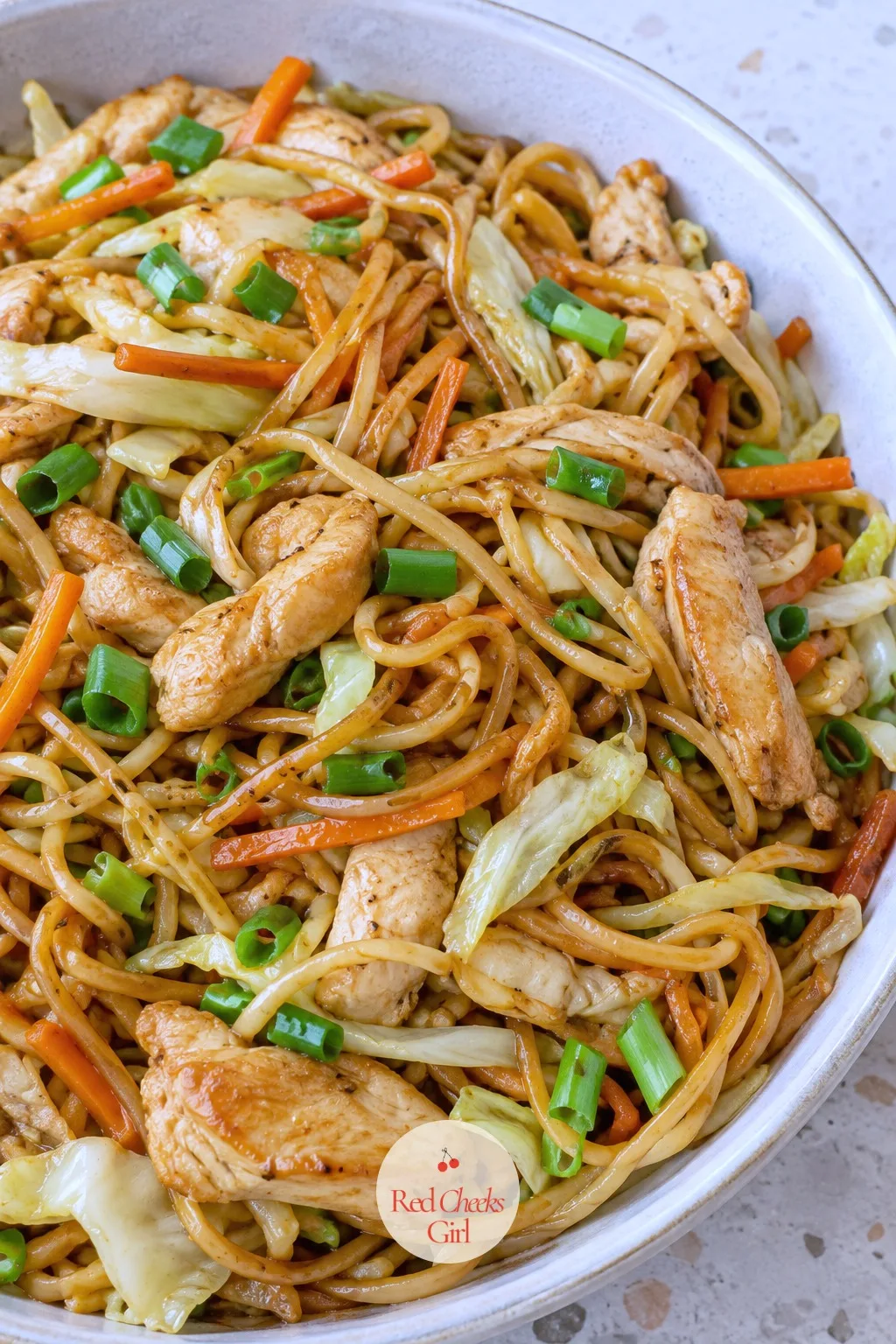
This is the dish that makes a single pot feel like it fed the whole week, noodles tangled through with just enough sauce that nothing sticks together by the time it hits the table. Cook the noodles first and toss them with a little oil the moment they drain, before they have the chance to clump into one solid brick.
Cabbage and carrot go in early since they are the vegetables that would otherwise stay raw and crunchy where you do not want it; the noodles themselves only need a minute or two in the sauce to turn glossy.
If shrimp is more her speed than chicken tonight, the shrimp fried rice recipe in one hot pan with peas, carrots and egg uses the same one-pan logic.
Chicken Lo Mein
Ingredients
- 8 ounces lo mein noodles or spaghetti
- 1 pound boneless skinless chicken breast thinly sliced
- 1 tablespoon soy sauce for marinade
- 1 teaspoon cornstarch
- 3 tablespoons vegetable oil divided
- 2 cups shredded cabbage
- 1 carrot julienned
- 1 red bell pepper sliced
- 3 scallions cut into 2 inch pieces
- 3 cloves garlic minced
- 1/4 cup soy sauce
- 2 tablespoons oyster sauce
- 1 tablespoon toasted sesame oil
- 1 tablespoon brown sugar
Instructions
- Cook the noodles in a large pot of boiling water according to package directions until just tender, then drain and toss with 1 teaspoon of the oil so they do not clump while you prep everything else.
- Toss the chicken with 1 tablespoon soy sauce and the cornstarch and let sit for 5 minutes.
- Heat 2 tablespoons oil in a wok over high heat, add the chicken, and stir fry for 3 to 4 minutes until lightly browned and cooked through, then remove to a plate.
- Add the remaining oil, the carrot and cabbage, the firmer vegetables, and stir fry for 2 minutes until the cabbage wilts slightly but keeps some bite.
- Add the bell pepper and scallions and stir fry for 1 minute, then add the garlic and stir fry for 20 seconds more.
- Whisk the soy sauce, oyster sauce, sesame oil, and brown sugar together, add it to the pan along with the noodles and the chicken.
- Toss everything with tongs for 1 to 2 minutes until the noodles turn glossy and every strand picks up some sauce.
- Serve straight from the pan while it is still steaming.
Good to Know
🛍 Shopping guide
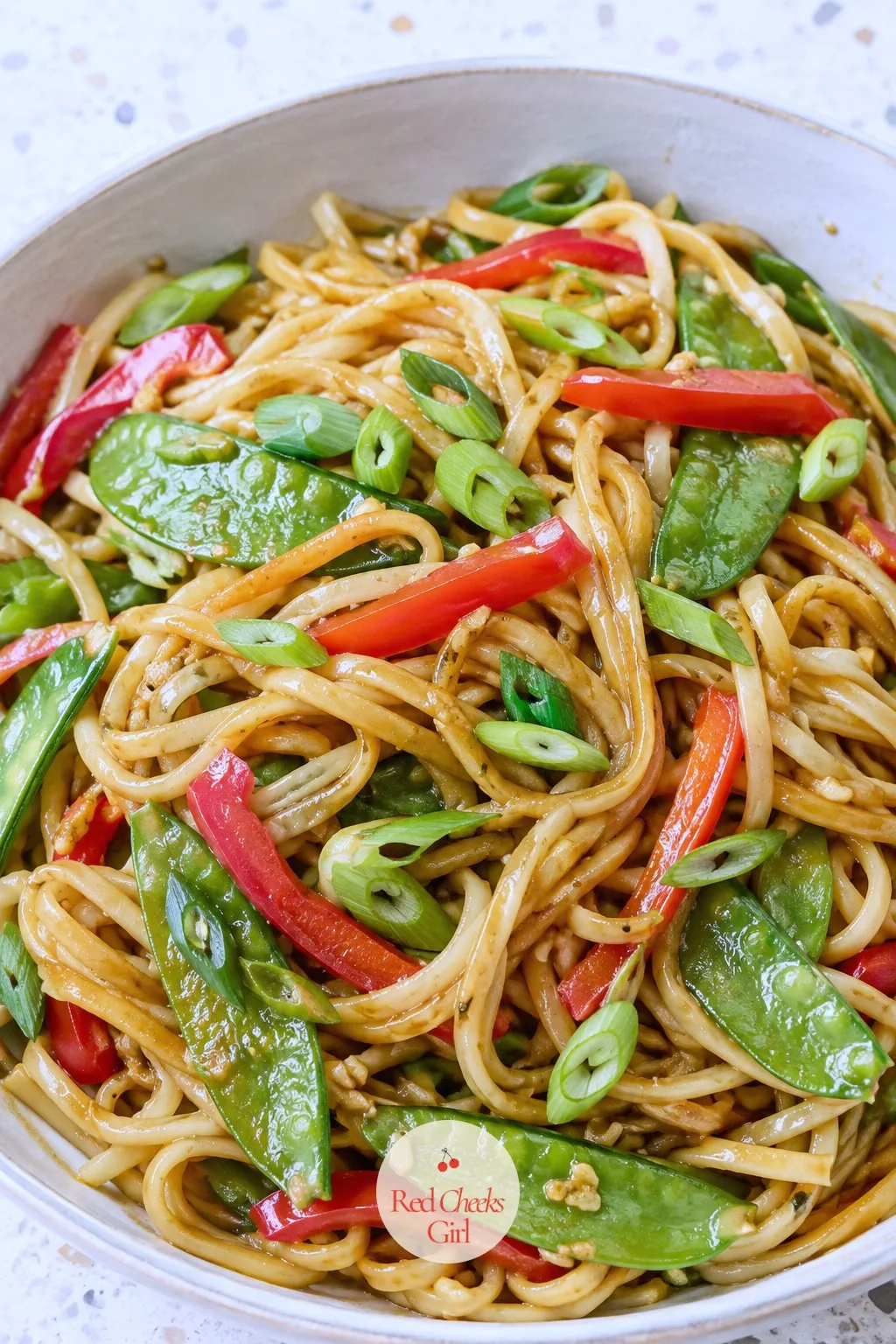
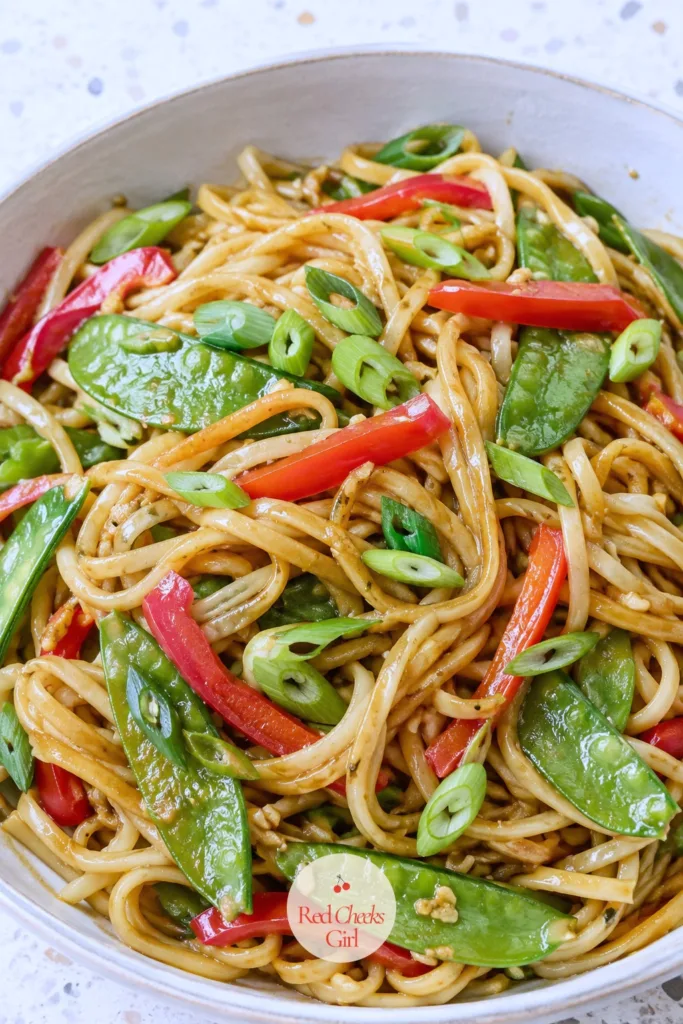
Garlic Noodles with Vegetables
This is the twenty-minute rescue plan for the night nothing was planned and the fridge offers one red pepper and half a bag of carrots. Butter melted with garlic over medium heat, not high, is the whole secret: burnt garlic turns bitter in seconds and there is no saving it once it happens.
A splash of the starchy pasta water, added gradually while tossing, is what makes the sauce cling instead of sliding to the bottom of the bowl. Parmesan on top is optional and not remotely traditional, but a reader after the Viet-Cajun garlic noodle version will recognize it immediately.
Garlic Noodles with Vegetables
Ingredients
- 8 ounces spaghetti or lo mein noodles
- 3 tablespoons unsalted butter
- 2 tablespoons vegetable oil
- 8 cloves garlic minced
- 1 cup snow peas trimmed
- 1 red bell pepper thinly sliced
- 1 cup shredded carrots
- 3 tablespoons soy sauce
- 1 tablespoon oyster sauce
- 1 tablespoon fish sauce
- 1 teaspoon sugar
- 1/4 cup grated Parmesan optional
- sliced scallions for garnish
Instructions
- Cook the noodles in salted boiling water until just tender, then drain, reserving 1/4 cup of the starchy cooking water.
- Melt the butter with the oil in a wok over medium high heat, add the garlic, and stir fry for 30 seconds until fragrant but not browned, since burnt garlic turns bitter fast.
- Raise the heat to high, add the snow peas, bell pepper, and carrots, and stir fry for 2 minutes until just crisp tender.
- Whisk together the soy sauce, oyster sauce, fish sauce, and sugar in a small bowl, then pour into the pan and bring to a simmer.
- Add the drained noodles and toss with tongs for 1 to 2 minutes, splashing in the reserved pasta water a little at a time until every strand is glossy and coated.
- Sprinkle with Parmesan if using and toss once more to melt it slightly into the noodles.
- Top with sliced scallions and serve right away, while the noodles are hot enough to keep the sauce clinging.
Good to Know
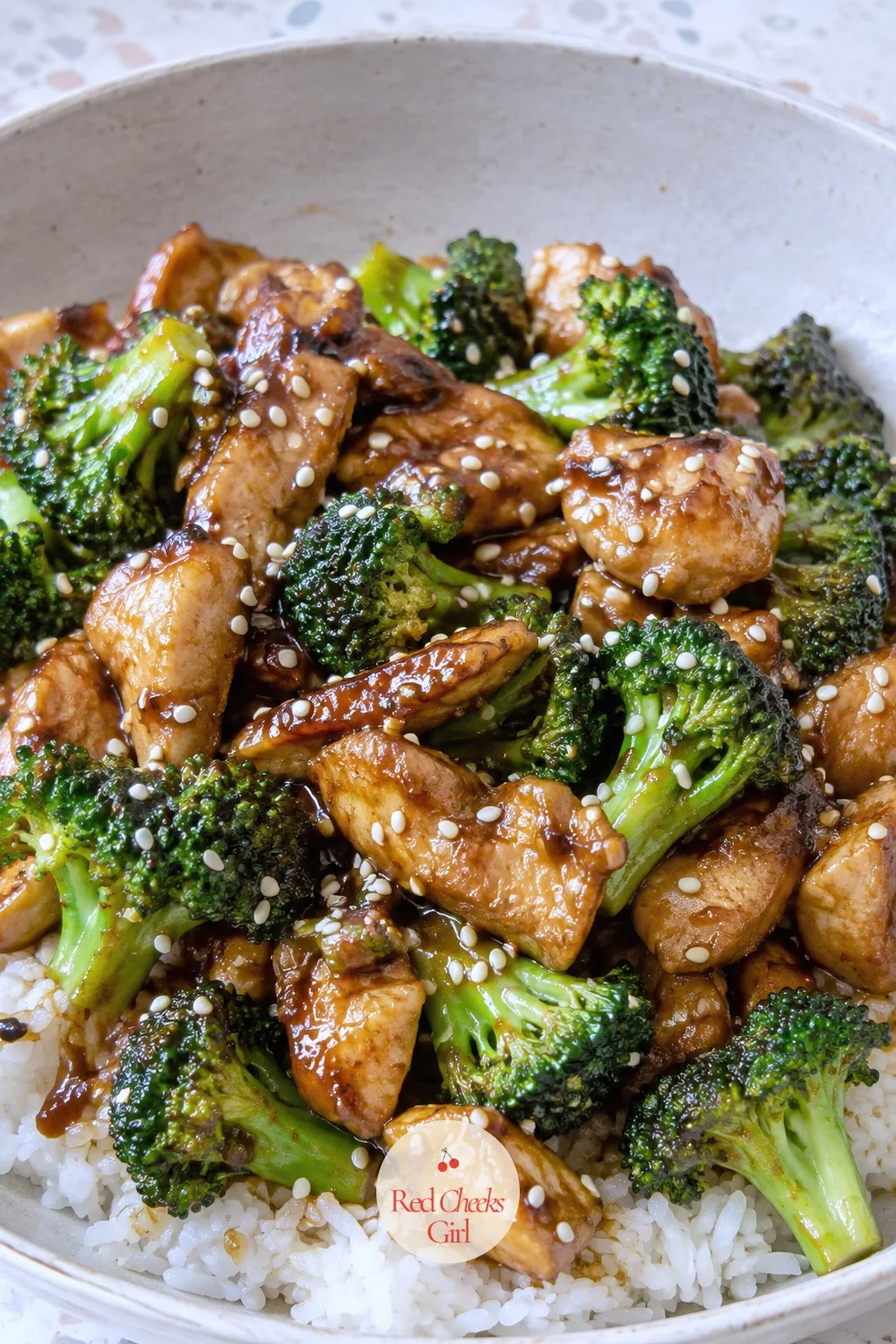
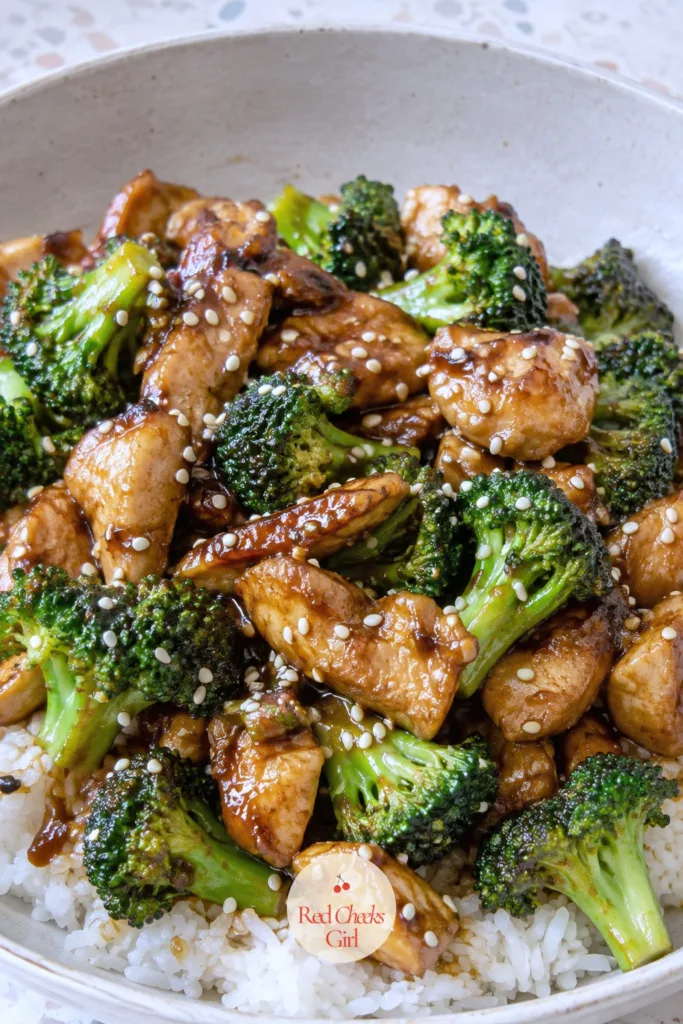
Teriyaki Chicken Stir Fry
Bottled teriyaki sauce tastes like a shortcut because it is one; the homemade version here takes four pantry staples and about the same amount of effort. It is also the entry the kids at the table will actually eat without negotiation, since nothing in it reads as spicy or unfamiliar.
Broccoli and carrot go in before the pepper because they need the extra minute, a detail that is easy to skip and the one that decides whether the broccoli ends up tender or still a little raw in the middle.
Serving it in a bowl over rice rather than on a flat plate keeps the sauce from running everywhere, the same logic behind the dinner bowl recipes built around a grain, a protein and plenty of color.
Teriyaki Chicken Stir Fry
Ingredients
- 1 pound boneless skinless chicken thighs cut into bite size pieces
- 2 tablespoons vegetable oil divided
- 1 broccoli crown cut into florets
- 1 carrot sliced on the diagonal
- 1 red bell pepper sliced
- 3 cloves garlic minced
- 1 tablespoon minced fresh ginger
- 1/3 cup soy sauce
- 1/4 cup water
- 3 tablespoons brown sugar
- 1 tablespoon rice vinegar
- 1 teaspoon cornstarch mixed with 1 tablespoon water
- sesame seeds for garnish
Instructions
- Heat 1 tablespoon oil in a wok over high heat, add the chicken, and stir fry for 4 to 5 minutes until browned on the outside and cooked through, then remove to a plate.
- Add the remaining oil, then the broccoli and carrot, the vegetables that need the longest cooking, and stir fry for 2 minutes until the broccoli turns bright green.
- Add the bell pepper and stir fry for 1 minute until just softened at the edges.
- Add the garlic and ginger and stir fry for 20 seconds until fragrant.
- Whisk the soy sauce, water, brown sugar, and rice vinegar together in a small bowl, pour into the pan, and bring to a simmer.
- Stir in the cornstarch slurry and cook for 1 minute, stirring constantly, until the sauce thickens enough to coat the back of a spoon.
- Return the chicken to the pan and toss for 1 minute until every piece is glazed.
- Sprinkle with sesame seeds and serve over rice while the vegetables still have their crunch.
Good to Know
🛍 Shopping guide
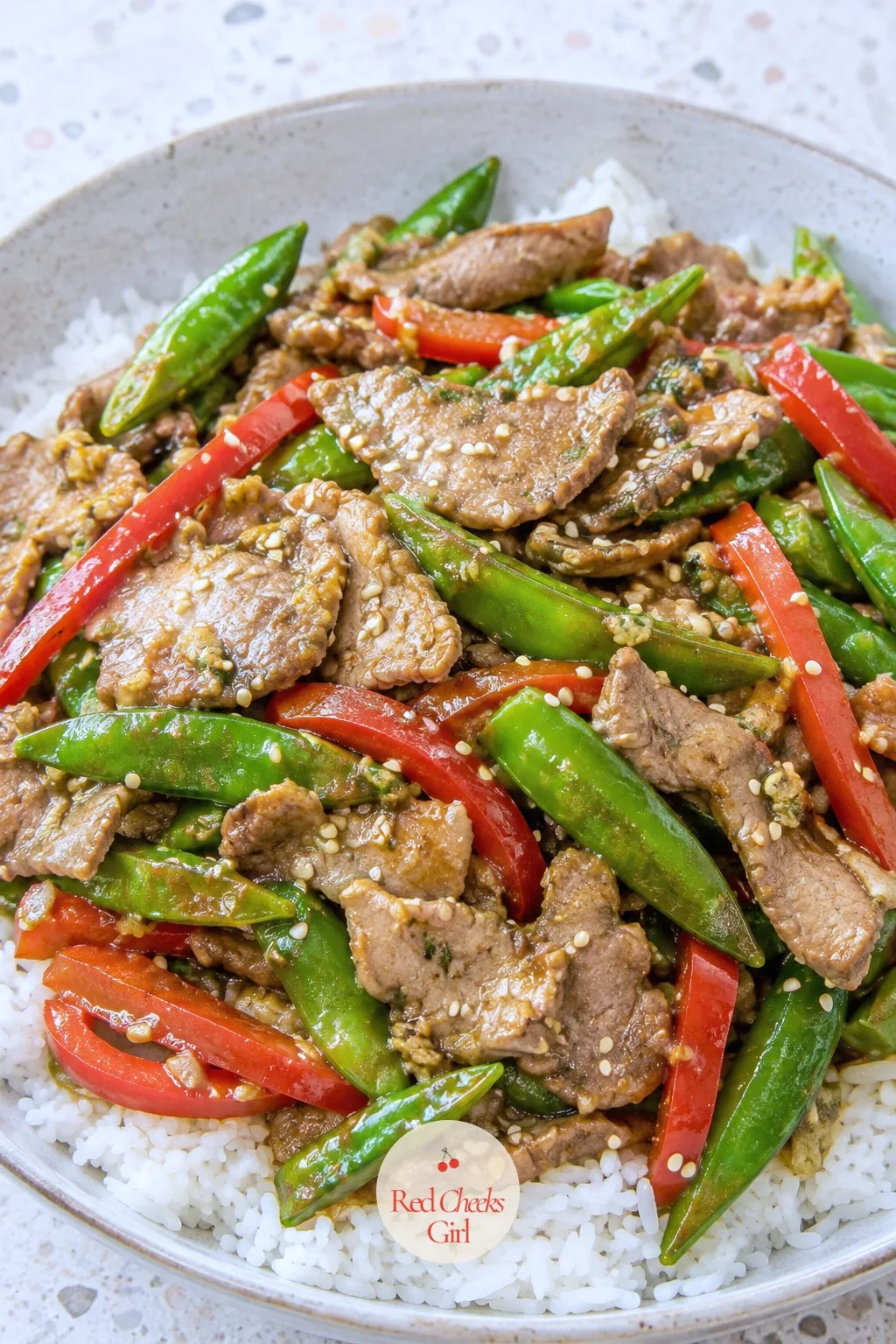
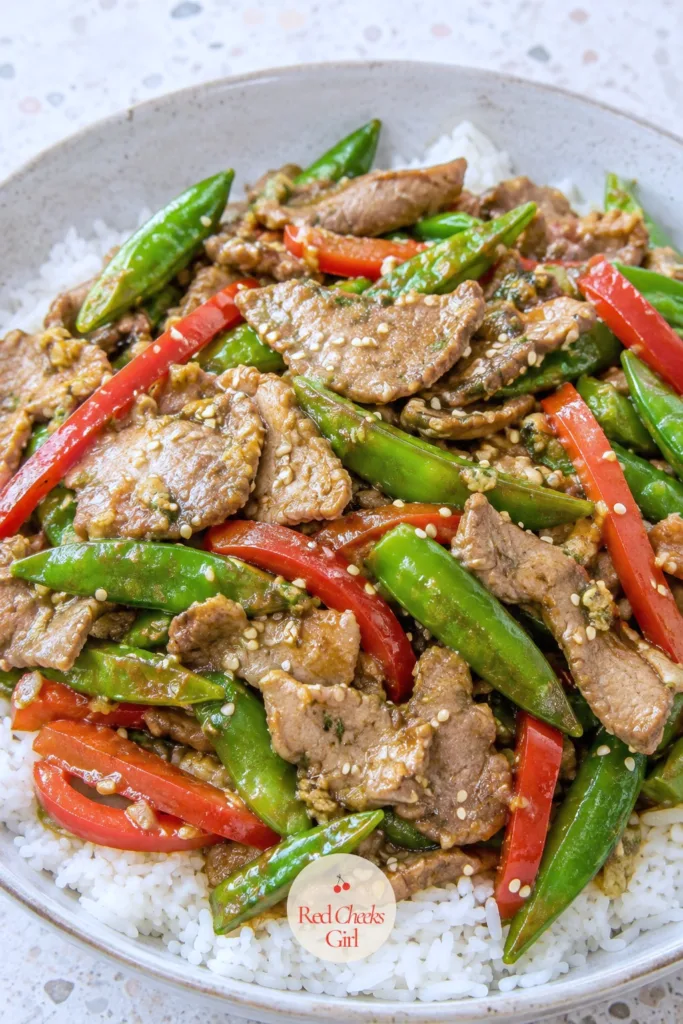
Ginger Pork with Snap Peas
Pork tenderloin is the cut worth reaching for here, lean enough to sear fast and forgiving enough that a stray extra minute in the pan does not ruin it. Snap peas go in whole, pods and all, and the point is never to let them cook long enough to lose their squeak.
Fresh ginger does the heavy lifting on flavor, grated on a microplane rather than minced with a knife so it melts into the sauce instead of sitting in stringy bits. This is the kind of weeknight plate that costs less than the delivery fee alone would.
Ginger Pork with Snap Peas
Ingredients
- 1 pound pork tenderloin thinly sliced against the grain
- 1 tablespoon soy sauce for marinade
- 1 teaspoon cornstarch
- 2 tablespoons vegetable oil divided
- 2 tablespoons minced fresh ginger
- 3 cloves garlic minced
- 2 cups snap peas trimmed
- 1 red bell pepper sliced
- 3 tablespoons soy sauce
- 1 tablespoon rice vinegar
- 1 tablespoon honey
- 1/4 cup chicken broth
Instructions
- Toss the pork with 1 tablespoon soy sauce and the cornstarch and let marinate for 10 minutes.
- Heat 1 tablespoon oil in a wok over high heat, add the pork in a single layer, and sear for 2 to 3 minutes until just cooked through with a little color at the edges, then remove to a plate.
- Add the remaining oil, the ginger, and garlic, and stir fry for 20 seconds until fragrant but not browned.
- Add the bell pepper first since it takes a little longer, stir fry for 1 minute, then add the snap peas and stir fry for 1 more minute until both are crisp tender and bright.
- Whisk the soy sauce, rice vinegar, honey, and chicken broth together, pour into the pan, and bring to a simmer.
- Return the pork to the pan and toss for 1 minute until the sauce turns glossy and clings to everything.
- Serve immediately over rice so the snap peas keep their snap.
Good to Know
🛍 Shopping guide
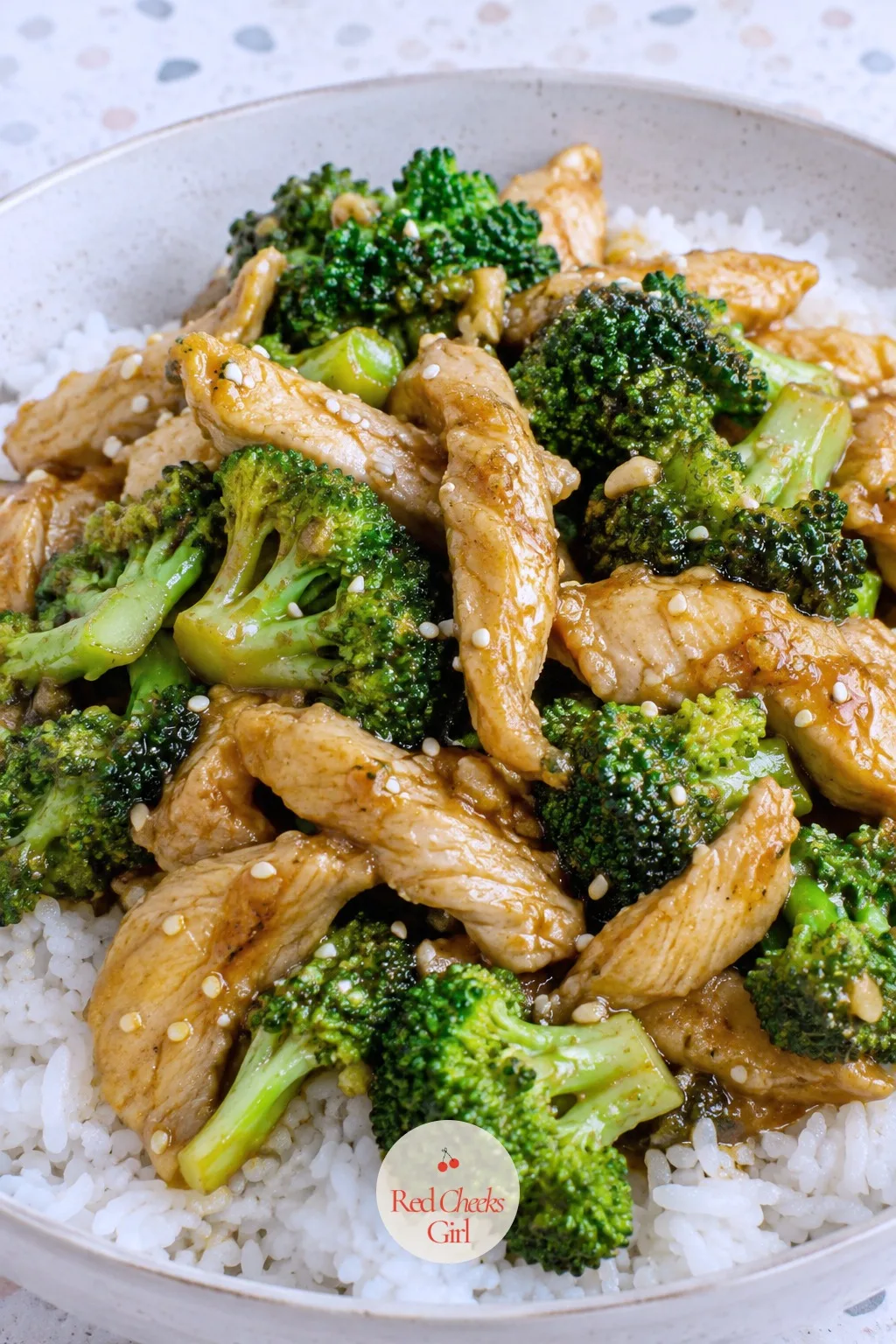
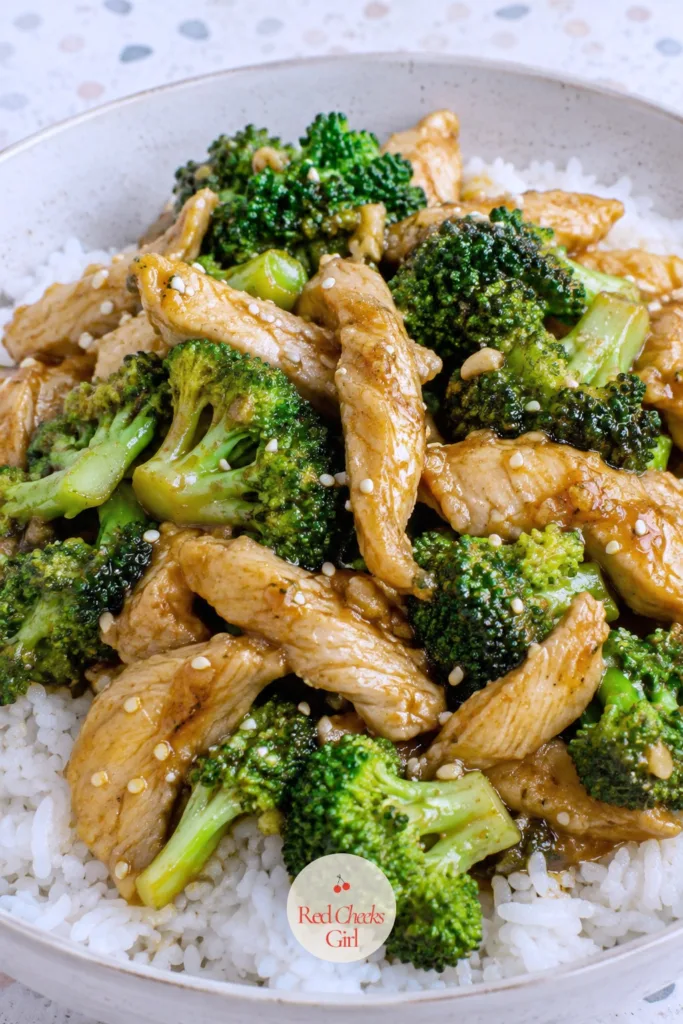
Chicken and Broccoli
The plainest order on the takeout menu, and still the one people come back to, because it never overreaches. A splash of water and a lid for one minute does more for the broccoli than any amount of stirring: it steams just enough to turn tender without ever going gray.
Chicken breast works here precisely because the sauce is doing the flavoring; there is nowhere for a dry piece to hide, so keep the pieces thin and do not walk away from the pan. This is the one to make when nobody has decided what they actually want.
Chicken and Broccoli
Ingredients
- 1 pound boneless skinless chicken breast sliced into thin strips
- 1 tablespoon soy sauce for marinade
- 1 teaspoon cornstarch for marinade
- 2 tablespoons vegetable oil divided
- 1 large head broccoli cut into florets
- 3 cloves garlic minced
- 1 tablespoon minced fresh ginger
- 1/3 cup chicken broth
- 3 tablespoons oyster sauce
- 1 tablespoon soy sauce for sauce
- 1 teaspoon cornstarch mixed with 1 tablespoon water
Instructions
- Toss the chicken with 1 tablespoon soy sauce and 1 teaspoon cornstarch and let it sit for 10 minutes.
- Heat 1 tablespoon oil in a wok over high heat, add the chicken, and stir fry for 3 to 4 minutes until lightly browned and cooked through, then remove to a plate.
- Add the remaining oil and the broccoli, the hardest vegetable here, and stir fry for 2 minutes, then add 2 tablespoons water and cover for 1 minute so the florets steam just enough to turn bright green and tender crisp.
- Uncover, add the garlic and ginger, and stir fry for 20 seconds until fragrant.
- Pour in the chicken broth, oyster sauce, and soy sauce, and bring to a simmer.
- Stir in the cornstarch slurry and cook for 1 minute, stirring, until the sauce thickens enough to coat the broccoli in a light sheen.
- Return the chicken to the pan and toss for 1 minute to warm through and coat evenly.
- Serve hot over rice, while the broccoli still has some bite.
Good to Know
🛍 Shopping guide
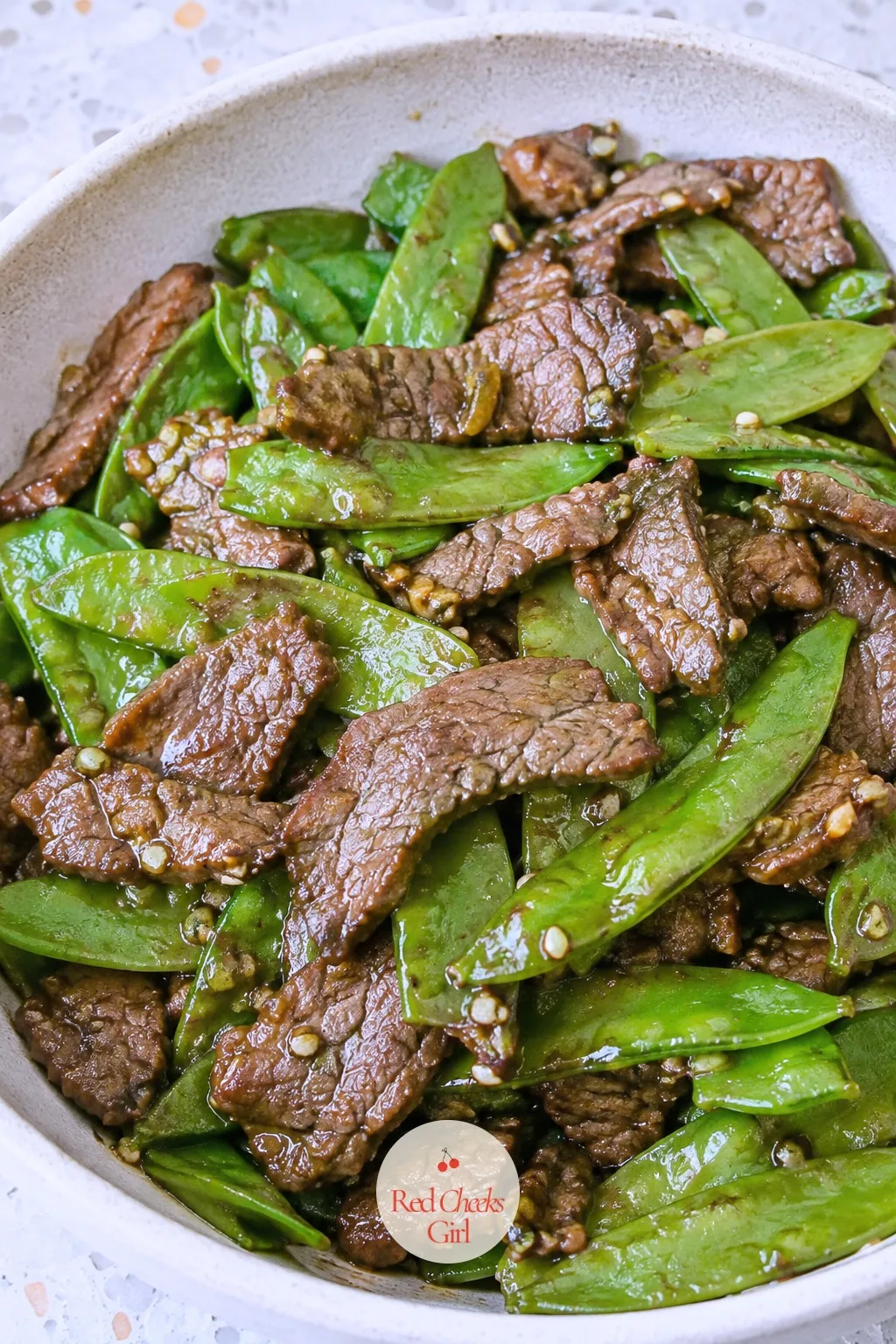
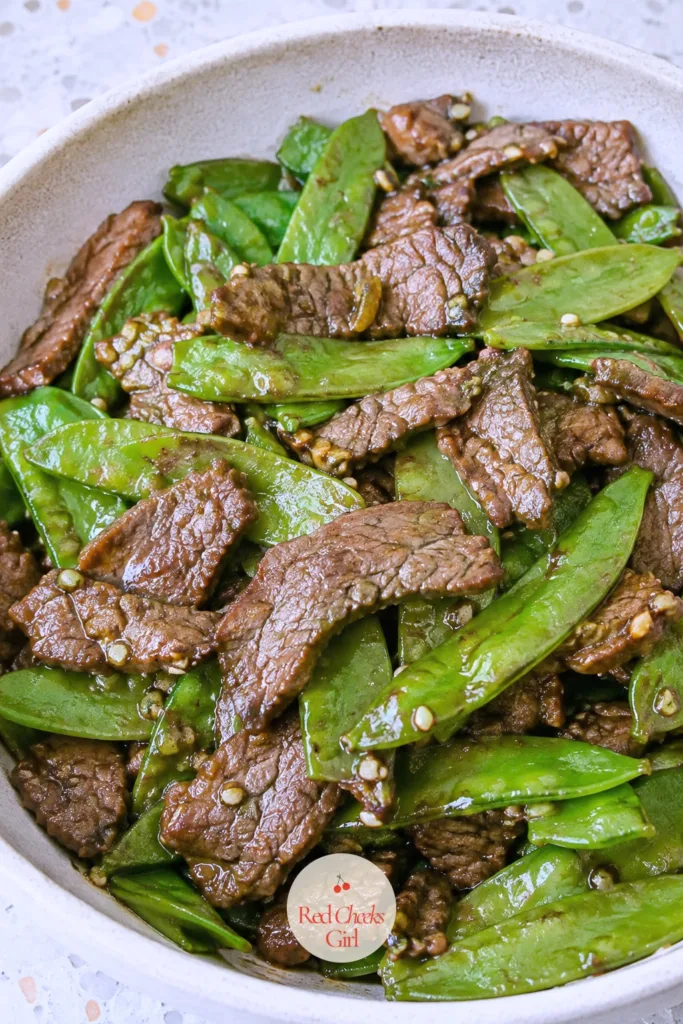
Beef and Snow Peas
Snow peas stay flat and crisp even after cooking, which is exactly why they belong here instead of the rounder, sweeter snap pea. They need barely ninety seconds in the pan, just enough to turn a shade brighter without losing that raw-vegetable crunch.
The beef gets the same treatment as most stir fried steak: thin slices, a quick cornstarch coat, and a pan hot enough that it sears rather than simmers. This one comes together fast enough to make on a night that started later than planned.
Beef and Snow Peas
Ingredients
- 1 pound flank steak thinly sliced against the grain
- 1 tablespoon soy sauce for marinade
- 1 teaspoon cornstarch for marinade
- 2 tablespoons vegetable oil divided
- 2 cups snow peas trimmed
- 3 cloves garlic minced
- 1 tablespoon minced fresh ginger
- 1/4 cup beef broth
- 2 tablespoons oyster sauce
- 1 tablespoon soy sauce for sauce
- 1 teaspoon cornstarch mixed with 1 tablespoon water
Instructions
- Toss the beef with 1 tablespoon soy sauce and 1 teaspoon cornstarch and let it sit for 10 minutes while you trim the snow peas.
- Heat 1 tablespoon oil in a wok over high heat until nearly smoking, add the beef in a single layer, and sear for 90 seconds per side until browned but still pink in the center, then remove to a plate.
- Add the remaining oil and the snow peas and stir fry for 1 to 2 minutes until they turn bright green and just tender, still crisp when bitten.
- Add the garlic and ginger and stir fry for 20 seconds until fragrant.
- Pour in the beef broth, oyster sauce, and soy sauce, and bring to a simmer.
- Stir in the cornstarch slurry and cook for 1 minute until the sauce thickens enough to coat the back of a spoon.
- Return the beef and any juices on the plate to the pan and toss for 30 seconds to finish cooking and glaze everything.
- Serve right away so the snow peas keep their crunch.
Good to Know
🛍 Shopping guide
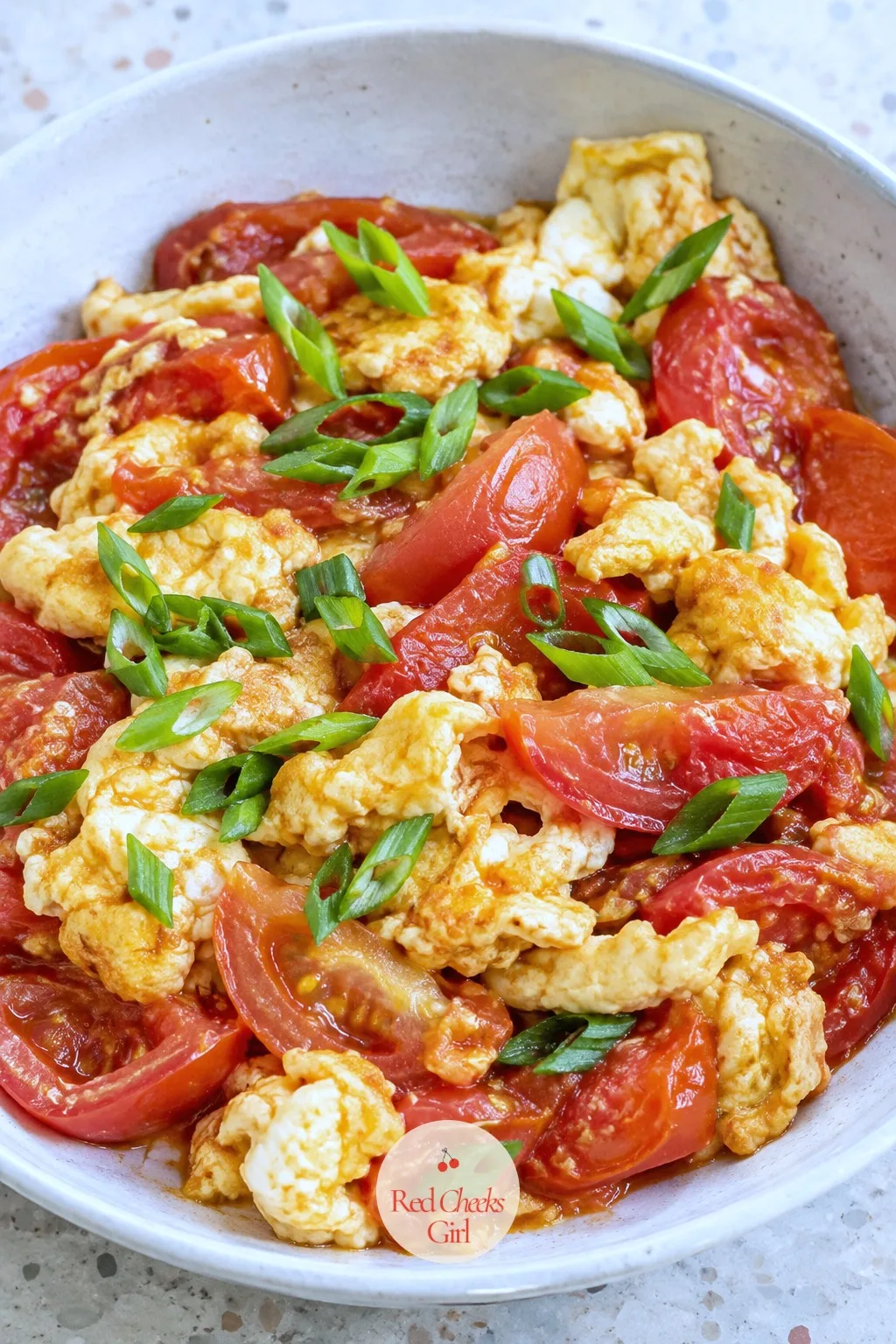
Tomato and Egg Stir Fry
Two ingredients most people already have, and somehow still a dish that tastes like it took more thought than it did. Set the eggs half cooked and pull them early, since they finish the rest of the way once folded back in with the tomatoes at the end.
Ripe, slightly soft tomatoes work better than firm ones here; they collapse into the pan and make their own sauce rather than sitting there like a garnish. This is dinner for one on a night nobody feels like cooking, in under twenty minutes.
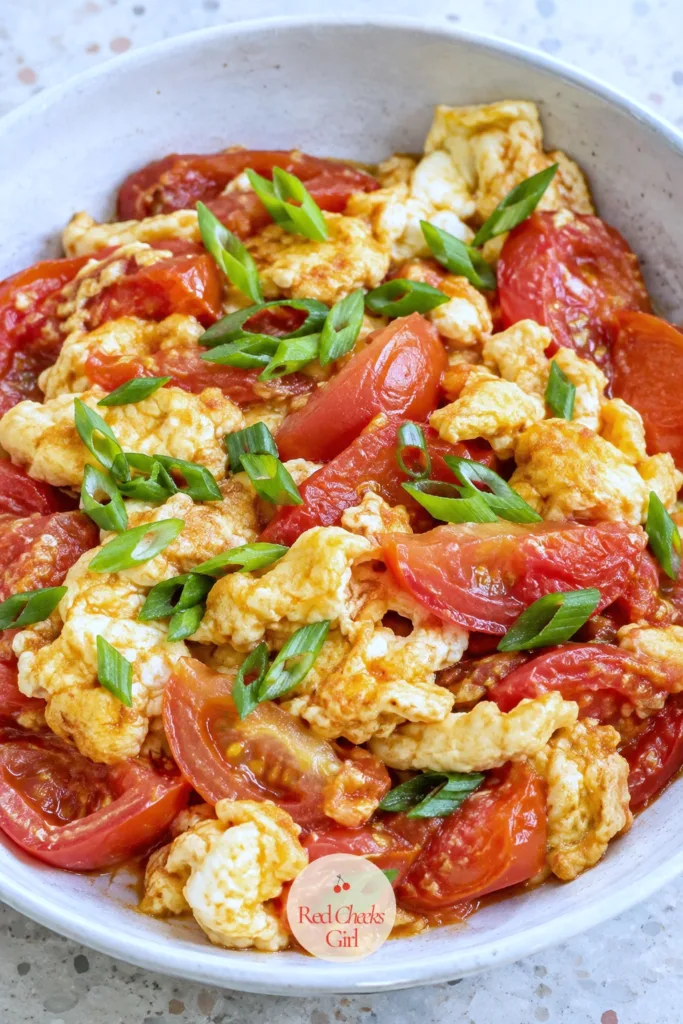
Tomato and Egg Stir Fry
Ingredients
- 4 large eggs
- 1/4 teaspoon salt
- 3 tablespoons vegetable oil divided
- 4 ripe tomatoes cut into wedges
- 2 cloves garlic minced
- 2 scallions sliced, white and green parts separated
- 1 tablespoon soy sauce
- 1 teaspoon sugar
- 1/4 teaspoon white pepper
Instructions
- Whisk the eggs with 1/4 teaspoon salt in a bowl until no streaks of white remain.
- Heat 2 tablespoons oil in a wok over medium high heat, pour in the eggs, and let them set for 10 seconds before scrambling into soft, large curds, about 1 minute, then remove to a plate.
- Add the remaining oil and the tomato wedges and stir fry for 2 to 3 minutes, pressing gently, until they soften and release their juices into the pan.
- Add the garlic and the white parts of the scallions and stir fry for 20 seconds until fragrant.
- Stir in the soy sauce, sugar, and white pepper, and simmer for 1 minute until the juices thicken slightly into a light sauce.
- Return the eggs to the pan and fold gently so the curds soak up the tomato sauce without breaking apart too much.
- Scatter the green scallion tops over the top and serve immediately with rice.
Good to Know
🛍 Shopping guide
Egg Roll in a Bowl
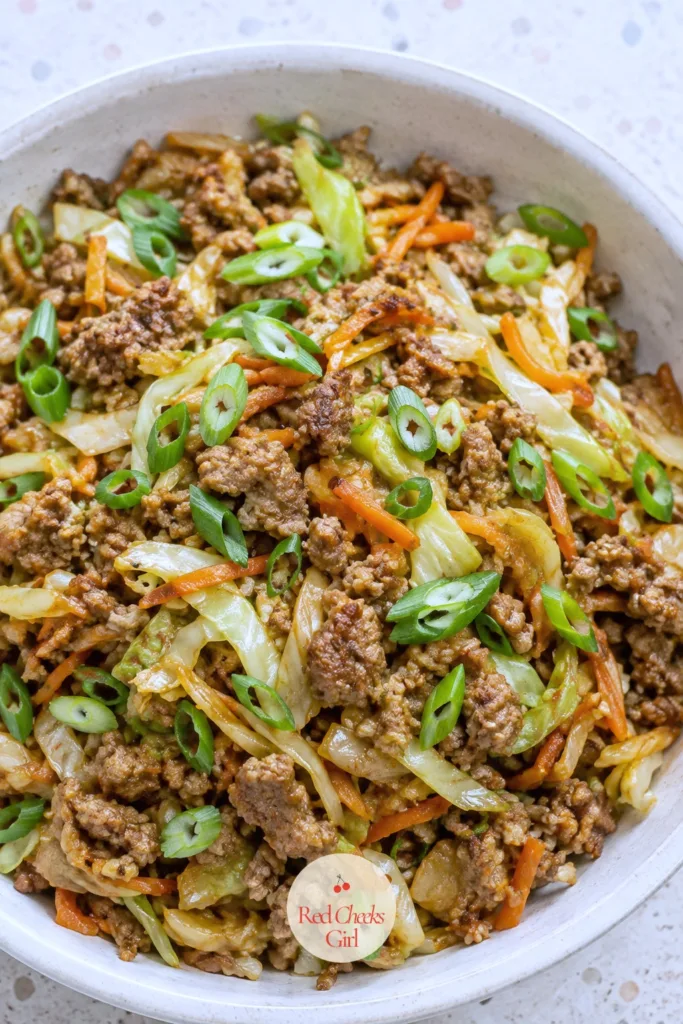
All the filling of an egg roll, none of the wrapper, none of the oil splatter from frying. A bag of pre-shredded coleslaw mix does the vegetable chopping that would otherwise take the longest part of the night.
Ground pork browns fast and the cabbage wilts even faster, so the whole thing is realistically a fifteen minute dinner once the pan is hot. Finish with the sesame oil off the heat, never while it is still sizzling, since high heat turns that particular oil bitter instead of fragrant.
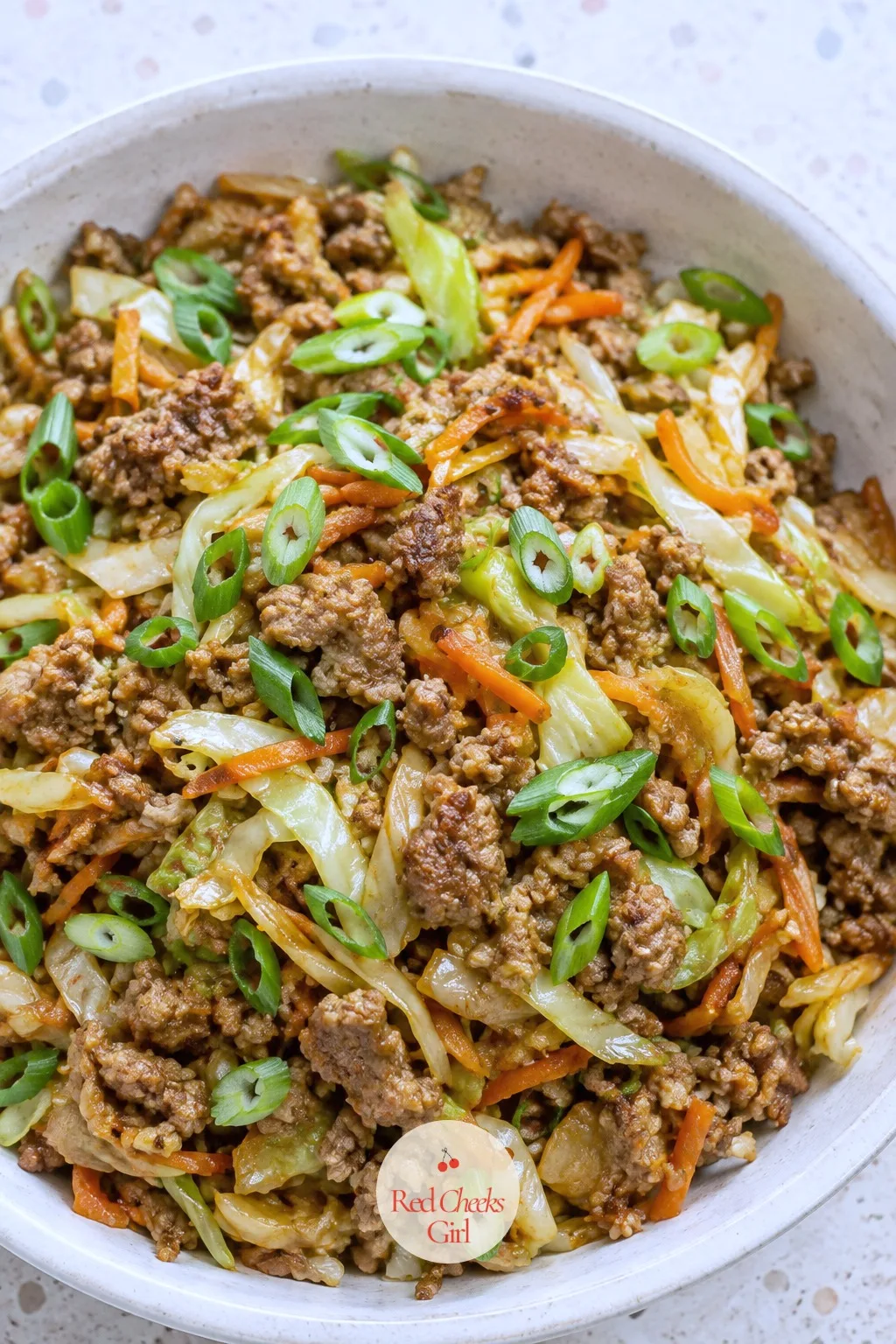
Egg Roll in a Bowl
Ingredients
- 1 pound ground pork or ground turkey
- 1 tablespoon vegetable oil
- 1 small onion thinly sliced
- 3 cloves garlic minced
- 1 tablespoon minced fresh ginger
- 1 bag 14 ounce coleslaw mix, shredded cabbage and carrots
- 3 tablespoons soy sauce
- 1 tablespoon rice vinegar
- 1 teaspoon toasted sesame oil
- 2 scallions sliced, for garnish
Instructions
- Heat the oil in a wok or large skillet over high heat, add the ground pork, and stir fry for 4 to 5 minutes, breaking it into crumbles, until no pink remains.
- Push the pork to one side, add the onion, and stir fry for 1 minute until it starts to soften.
- Add the garlic and ginger and stir fry for 20 seconds until fragrant.
- Add the coleslaw mix all at once and stir fry for 2 to 3 minutes, tossing constantly, until the cabbage wilts but still keeps some crunch at the ribs.
- Pour in the soy sauce and rice vinegar and toss for 1 minute until everything is evenly coated.
- Drizzle with sesame oil and toss once more off the heat, since high heat turns toasted sesame oil bitter.
- Scatter with scallions and serve hot in bowls.
Good to Know
Frequently Asked Questions
Why does my stir fry always turn out soggy?
It is almost always an overcrowded or lukewarm pan: the vegetables release water and steam instead of sear. Cook in a wide, very hot pan, and work in batches rather than dumping everything in at once.
Do I need a wok, or does a regular skillet work?
A wok is not required; a large, heavy-bottomed skillet works fine as long as it can hold high heat and give the food room to spread out. A 12 to 14 inch pan is the right size for most of these recipes.
What is the best oil for stir frying?
A neutral oil with a high smoke point works best, such as peanut, vegetable, canola or avocado oil. Save toasted sesame oil for a drizzle at the end, since its lower smoke point makes it burn and turn bitter over high heat.
Can I use frozen vegetables in a stir fry?
Frozen vegetables work, but thaw them and pat them completely dry first so excess water does not hit the hot oil. Skipping this step is the most common reason a stir fry turns watery instead of seared.
Can I make stir fry ahead of time for the week?
Stir fry tastes best fresh, since reheating softens the vegetables, but the prep work holds up well. Slice the protein, chop the vegetables, and mix the sauce up to a day ahead, then cook everything in minutes at dinnertime.
What ratio of meat to vegetables should a stir fry have?
A roughly equal, 1:1 ratio of protein to vegetables keeps a stir fry balanced over rice. If noodles or rice are stirred directly into the pan, aim for closer to equal parts protein, vegetables and starch.
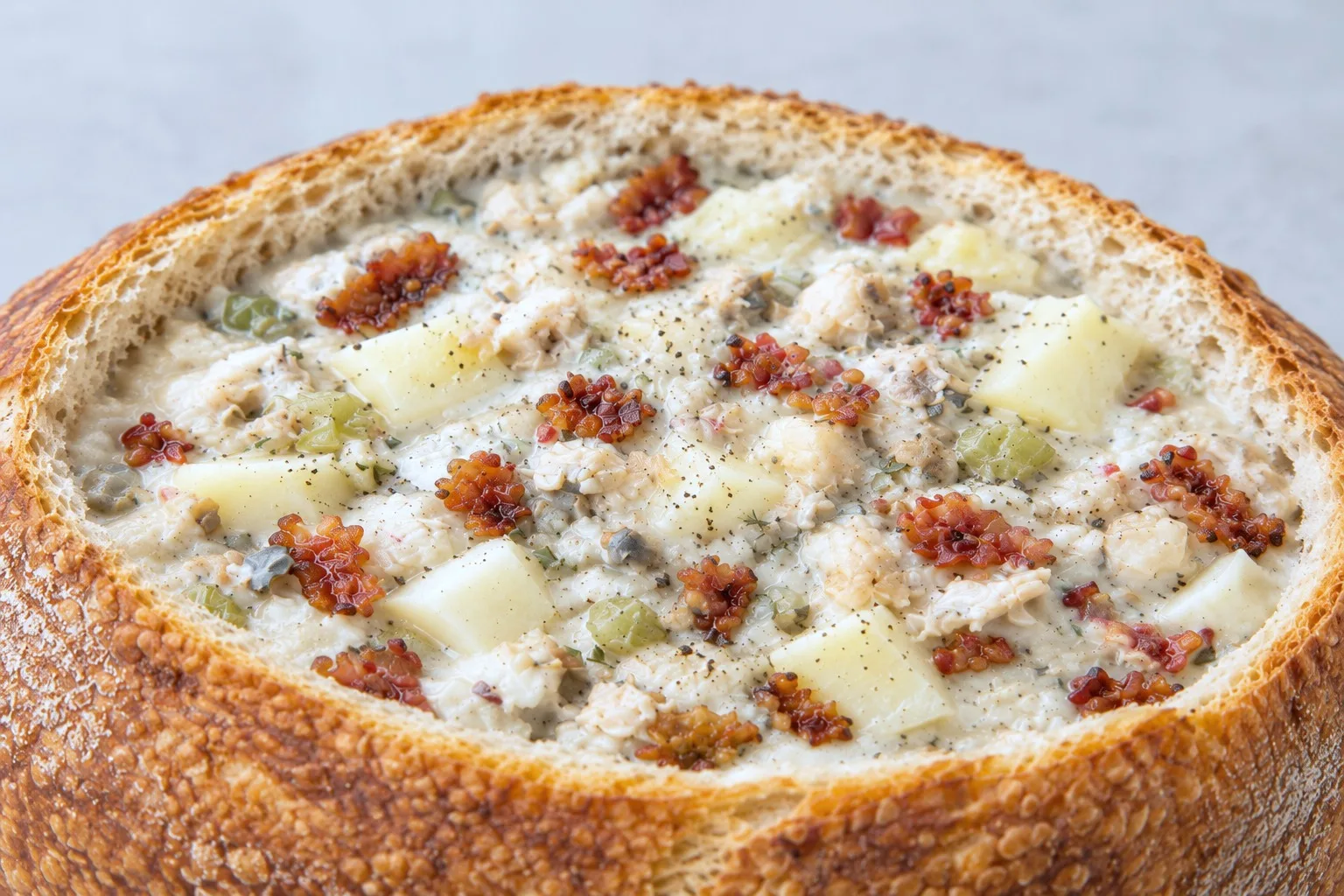
Clam chowder recipe New England style with bacon, potatoes and canned clams, simmered thick and crea
13 Sunday dinner ideas, from prime rib to glazed meat loaf, each with a side that fits and a method
Salisbury steak meatballs simmer in onion and mushroom gravy for a cozy dinner over mashed potatoes,
Leave a Reply