

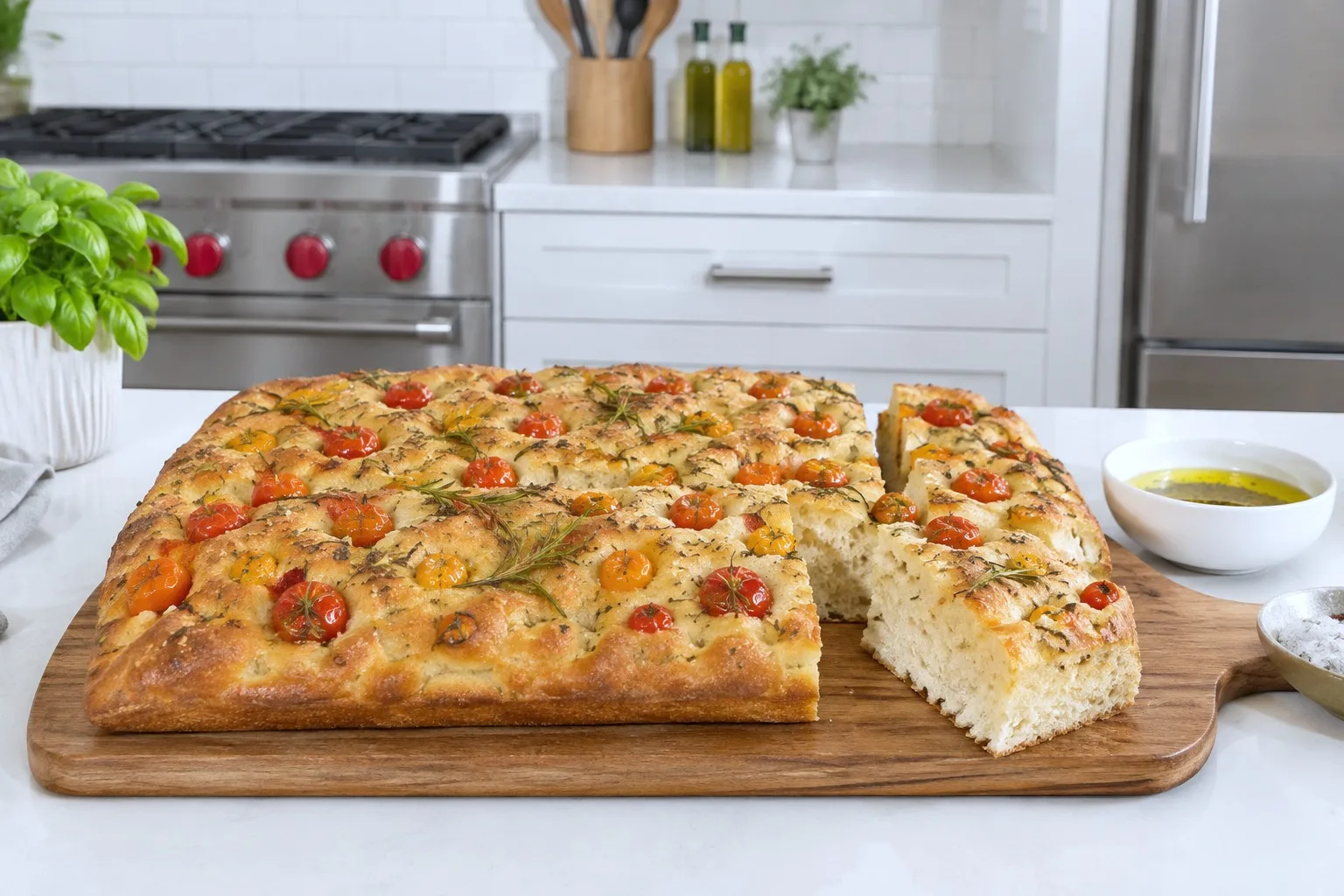
Focaccia asks for patience, not skill. The dough looks like thick batter long before it ever looks like bread, and that stretch of not quite believing it is where every bit of character comes from: deep craters that catch the olive oil, salt that actually dissolves instead of sitting on top.
All twelve loaves below start from the same forgiving base dough, so whatever you learn on the first one carries straight through to the last.
Each one works cut into squares on a party table, or sliced thick next to a bowl of something warm, and a bowl of 10 Tortellini Soup Recipes Ready Before the Bread Is Warm covers the rest of that dinner without a second trip to the store.
Every dough here contains wheat, and several toppings add dairy, pork or sesame, so scan the ingredient list on whichever one you’re making before it goes in front of a guest who needs to know.
Every dough can rise two ways. On the counter it’s ready in about three hours; in the fridge, covered, it takes twelve to sixteen hours and tastes a little deeper for the wait. Treat the overnight version as the lazy option, not the hard one, since the fridge does the work while you sleep.
If the bread itself needs to be the whole meal rather than a side, slice a baked loaf in half and build it into a Giant Focaccia Sandwich for a Party, Sliced Into Squares, or set one down next to 14 Pull Apart Bread Recipes for the Center of a Party Table if the table wants more than one kind of dough to tear into.
This post contains affiliate links. If you buy through them, I may earn a small commission at no extra cost to you.
Table of Contents
- Focaccia Garden Art with Vegetables
- Fig and Prosciutto Focaccia
- Pesto and Mozzarella Focaccia
- Cherry Tomato and Olive Focaccia
- Caramelized Onion Focaccia
- Everything Bagel Focaccia
- Garlic Parmesan Focaccia
- Chipotle with Garlic and Onion Focaccia
- Potato and Rosemary Focaccia
- Sweet Grape Focaccia
- Sourdough Discard Focaccia
- Classic Rosemary and Sea Salt Focaccia
- Frequently Asked Questions
Focaccia Garden Art with Vegetables
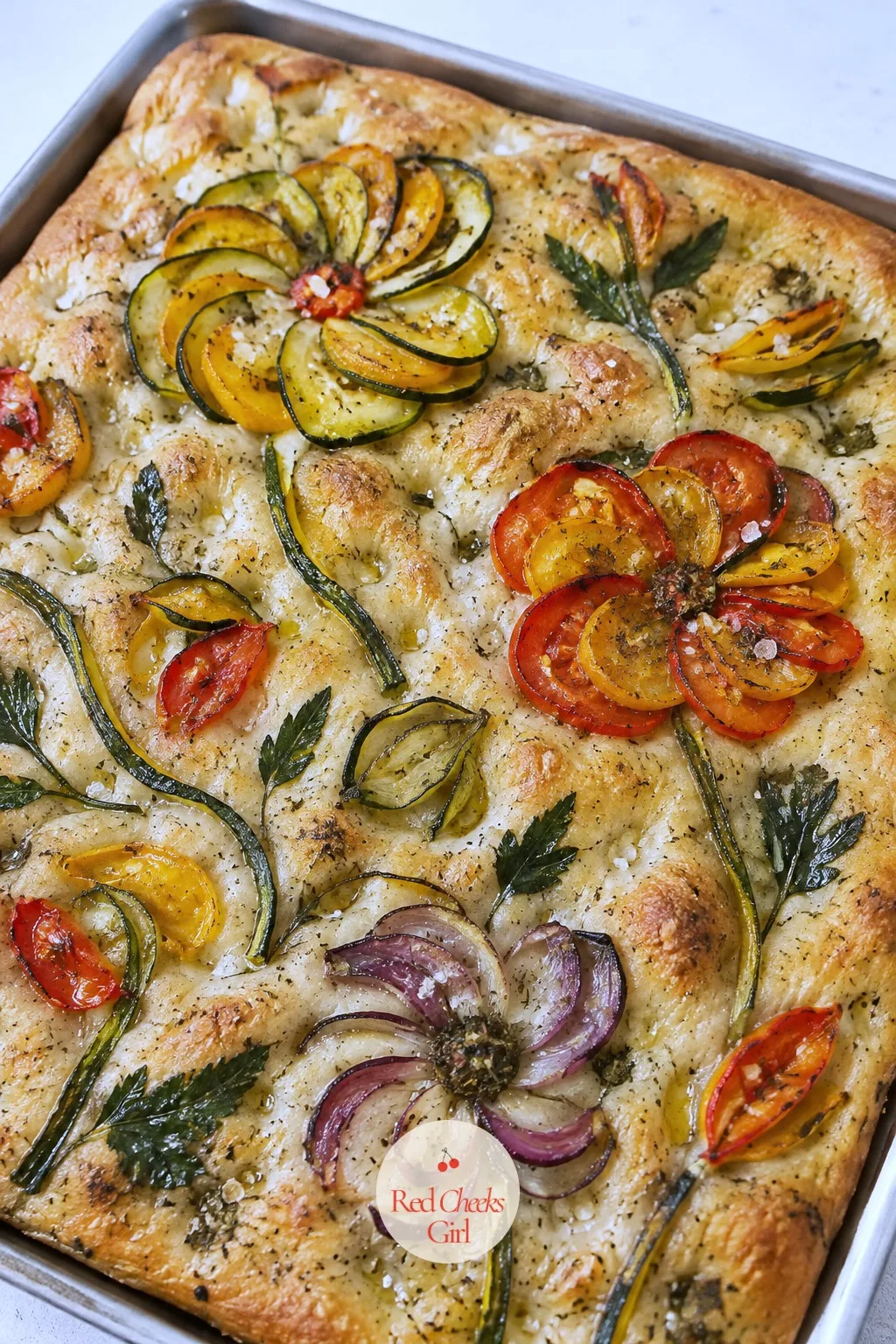
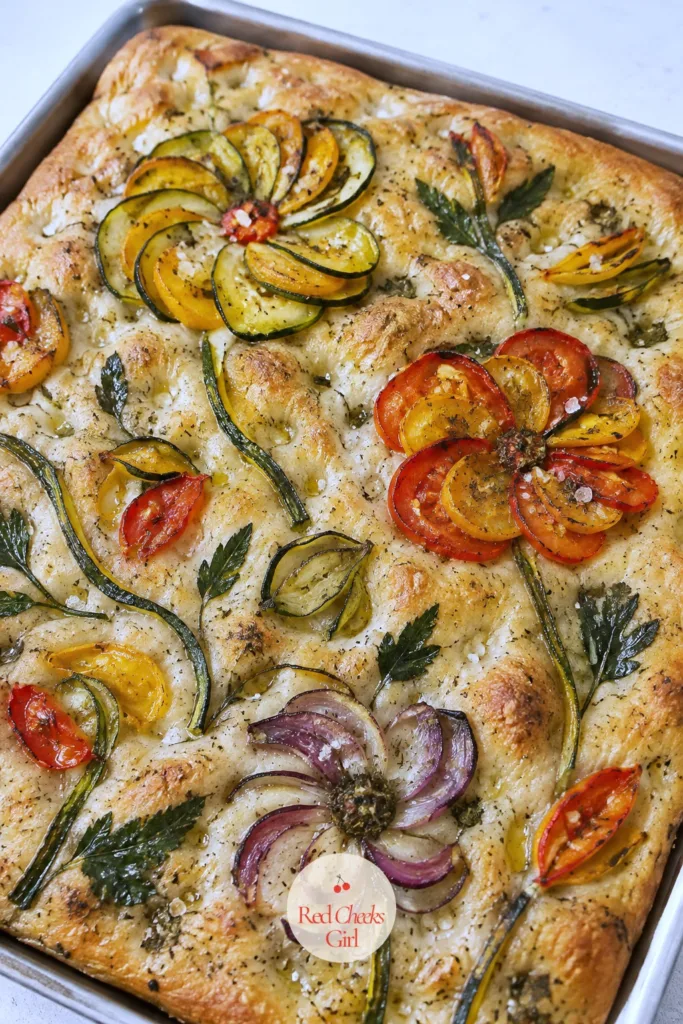
This is the one that gets photographed before anyone cuts into it. A sheet of dough turned into an actual garden, zucchini ribbons curled into petals, pepper strips standing in for stems, sounds like it needs a culinary degree. It does not: a sharp knife and twenty quiet minutes while the dough does its second rise is the whole trick.
The vegetables cook down right into the dimples, so nothing sits raw or rubbery on top, and the olive oil pools underneath each petal instead of running off. Set it down whole on the table before you cut it, so everyone sees the design before it becomes squares, it earns the reaction, then it behaves like ordinary bread.
If a full sheet feels like a lot for a smaller table, halve the recipe and bake it in a 9×13-inch pan instead, you will just have fewer flowers to arrange. Set it beside 18 Deviled Eggs Recipes Guests Reach for Before Anything Else so the table has something else to eat while people admire the bread.
Focaccia Garden Art with Vegetables
Ingredients
- 6 cups bread flour
- 2 2/3 cups warm water about 110°F
- 1 tablespoon active dry yeast
- 1 1/2 teaspoons granulated sugar
- 1 tablespoon fine sea salt
- 1/2 cup extra-virgin olive oil divided, plus more for the pan
- 1 small zucchini sliced paper-thin lengthwise
- 1 small yellow summer squash sliced paper-thin lengthwise
- 1 small red bell pepper very thinly sliced into strips
- 1/2 small red onion thinly sliced into rings
- 10 cherry tomatoes halved
- 12 pitted kalamata olives halved
- a small handful of fresh flat-leaf parsley and chive stems
- 2 teaspoons flaky sea salt
Instructions
- In a large bowl, whisk the warm water, sugar and yeast together; let the mixture stand 5 to 8 minutes until the surface turns foamy, a sign the yeast is active.
- Add the flour, fine sea salt and 3 tablespoons of the olive oil to the yeast mixture; stir with a wooden spoon until a shaggy, very sticky dough comes together, closer to a thick batter than bread dough.
- Knead by hand in the bowl for about 1 minute just to bring it together, then do 4 sets of stretch-and-folds (pull one side up and over the center) at 10-minute intervals over the next 40 minutes, instead of traditional kneading.
- Cover the bowl tightly and let the dough rise at room temperature for 2 to 2 1/2 hours, until it has doubled in size and the surface is dotted with visible bubbles (for an overnight option, refrigerate covered for 12 to 16 hours instead, then let it sit at room temperature for 30 minutes before continuing).
- Coat a 13x18-inch half sheet pan generously with 2 tablespoons of olive oil, turn the dough out into it, and use oiled hands to gently stretch it toward the corners, letting it rest 10 minutes and stretching again if it springs back.
- Cover loosely and let the dough rise in the pan for 45 minutes to 1 hour, until puffy and almost doubled again.
- While the dough rises, slice all the vegetables paper-thin with a sharp knife or mandoline, so they lie flat and bend easily into shapes.
- Preheat the oven to 425°F with a rack in the center. Press your fingertips straight down through the dough, all the way to the pan, in rows across the entire surface, to create the deep dimples that are focaccia's signature.
- Arrange the vegetable slices into a garden scene across the dough, curling zucchini and squash ribbons into flower shapes, using pepper strips as stems, olive halves as centers, and tomato halves and herb leaves to fill in the rest; press each piece gently into a dimple so it won't slide during baking.
- Drizzle the remaining olive oil evenly over the top and scatter with the flaky sea salt, then bake for 22 to 25 minutes, until the dough between the vegetables is deep golden brown and the edges have pulled slightly away from the pan.
- Let the focaccia cool in the pan for 10 minutes before lifting it out onto a rack to cool another 10 minutes; slice into squares that keep a piece of the vegetable design in each one.
Good to Know
🛍 Shopping guide
Fig and Prosciutto Focaccia
Fig and prosciutto on bread sounds like a restaurant appetizer pretending to be effort, and that is exactly the effect you want without the bill. The dough does the heavy lifting, the fruit and the cured meat just finish it, so nobody needs to know how little hands-on time this actually took.
Lay the prosciutto on after the bread comes out of the oven, not before: baked prosciutto turns leathery, warm prosciutto stays silky and drapes properly over the figs. The honey pools into the dimples and the balsamic glaze gives it the dark thread running through every slice.
No fresh figs in the market this week, dried figs soaked in warm water for ten minutes work almost as well, just tear them instead of quartering. This one reads elegant for almost no extra work, which makes it a safe choice when you want one loaf to look effortlessly finished.
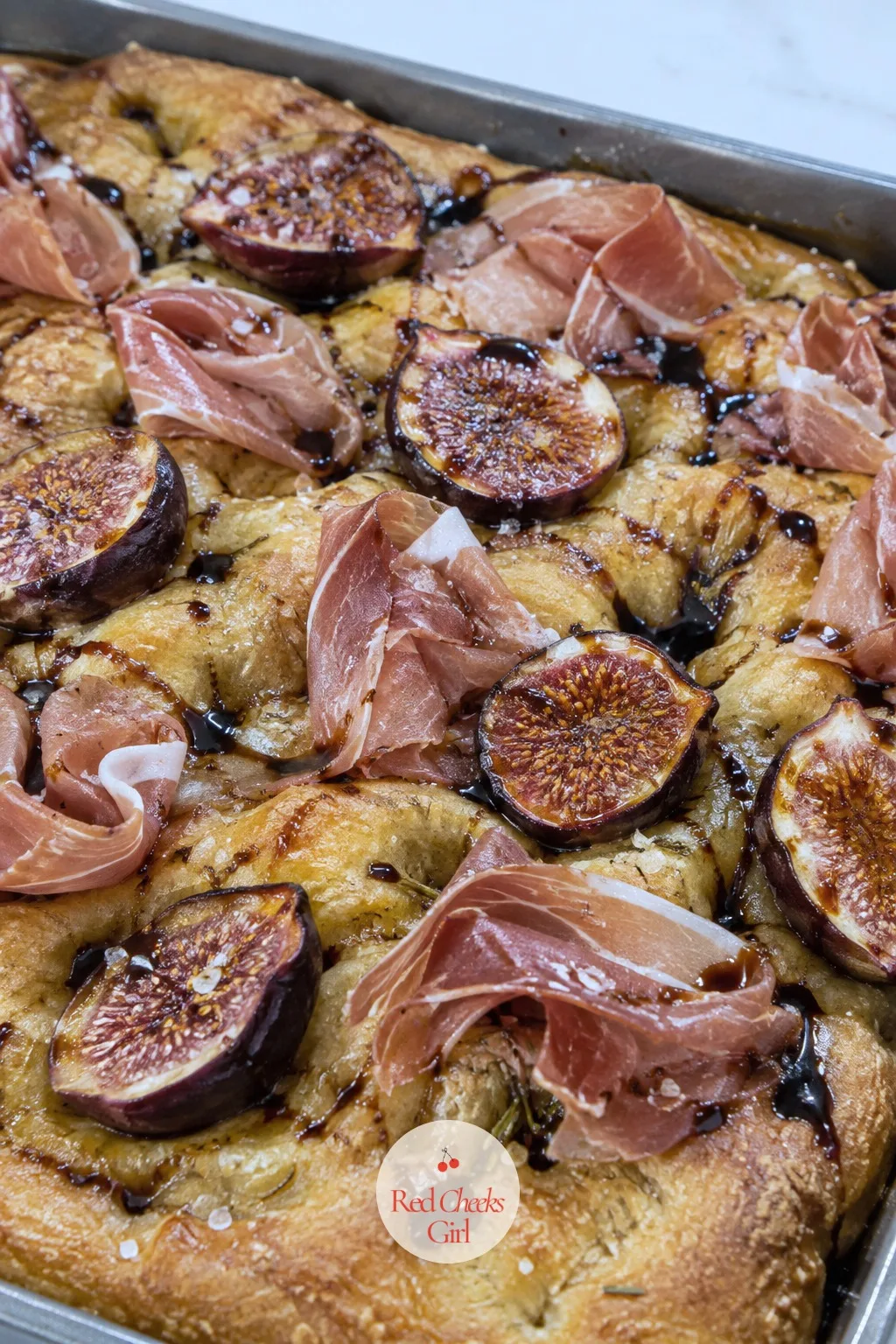
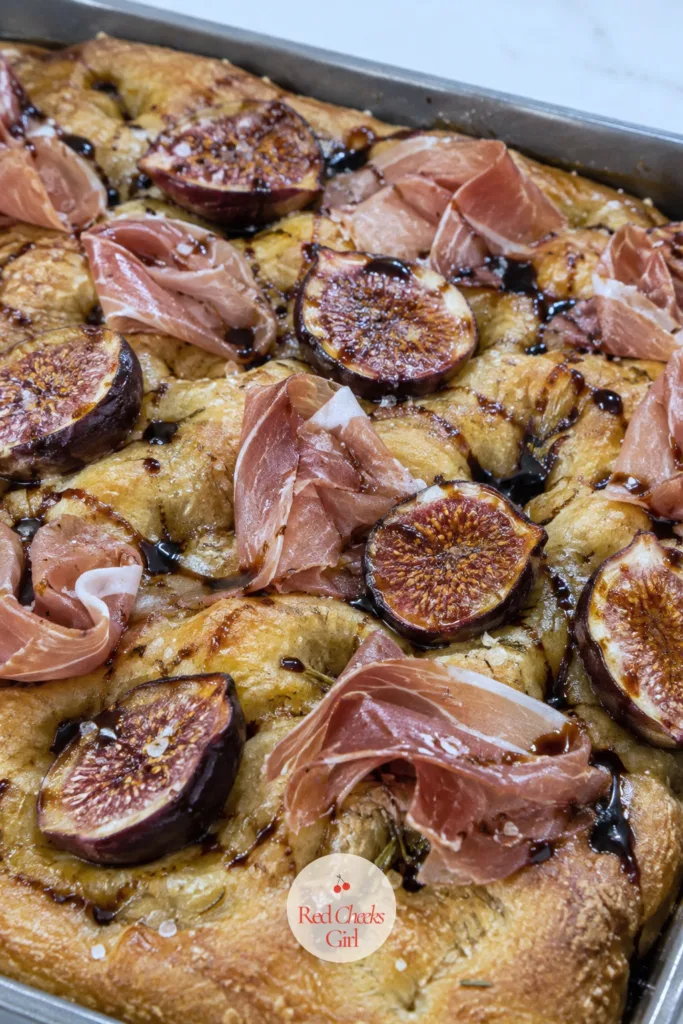
Fig and Prosciutto Focaccia
Ingredients
- 4 cups bread flour
- 1 3/4 cups warm water about 110°F
- 2 1/4 teaspoons active dry yeast one packet
- 1 teaspoon granulated sugar
- 2 teaspoons fine sea salt
- 1/3 cup extra-virgin olive oil divided, plus more for the pan
- 4 fresh figs quartered
- 4 ounces thinly sliced prosciutto
- 2 tablespoons honey
- 1 tablespoon balsamic glaze
- 1 teaspoon flaky sea salt
- a few sprigs fresh thyme leaves only
Instructions
- Whisk the warm water, sugar and yeast together in a large bowl; let stand 5 to 8 minutes until foamy on top.
- Add the flour, fine sea salt and 2 tablespoons of the olive oil; stir to a shaggy, very sticky dough.
- Do 4 sets of stretch-and-folds in the bowl at 10-minute intervals over 40 minutes, instead of kneading.
- Cover and let rise at room temperature 2 to 2 1/2 hours, until doubled and bubbly (or refrigerate covered 12 to 16 hours, then rest 30 minutes at room temperature before continuing).
- Coat a 9x13-inch pan with 1 tablespoon olive oil, turn the dough in, and stretch it gently toward the corners, resting and stretching again if it springs back.
- Cover loosely and let rise in the pan 45 minutes to 1 hour, until puffy.
- Preheat the oven to 425°F and press fingertips straight down through the dough to the pan, all over, to make deep dimples.
- Tuck the fig quarters into half the dimples, drizzle the remaining olive oil over the top, and bake 20 to 22 minutes, until deep golden and the figs have started to caramelize at the edges.
- Cool in the pan 10 minutes, then drape the prosciutto loosely over the warm bread, the residual heat warms it without cooking it rubbery, and drizzle with honey and balsamic glaze.
- Scatter fresh thyme leaves over the top, slice, and serve while still warm and the prosciutto is just barely softened.
Good to Know
Pesto and Mozzarella Focaccia
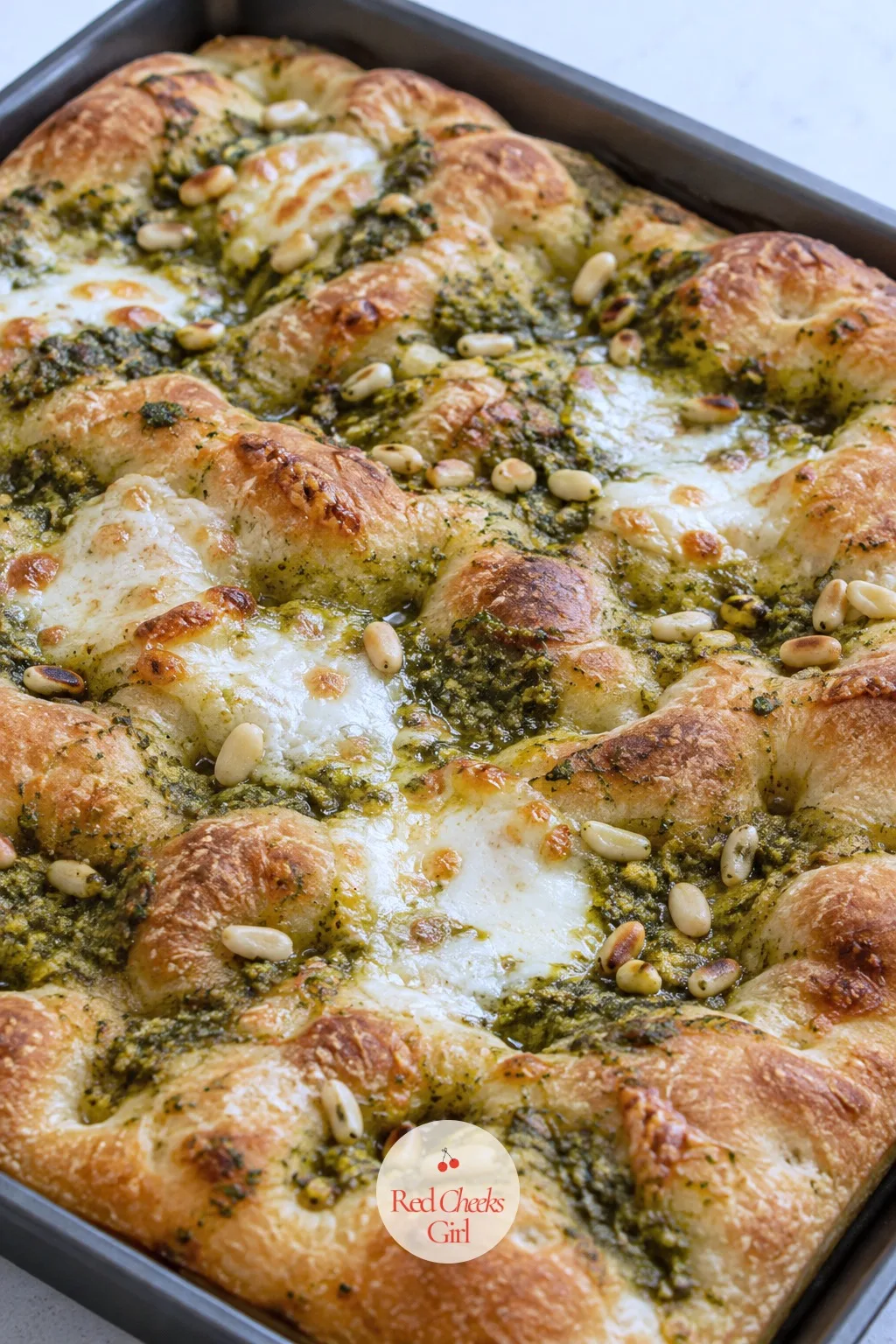
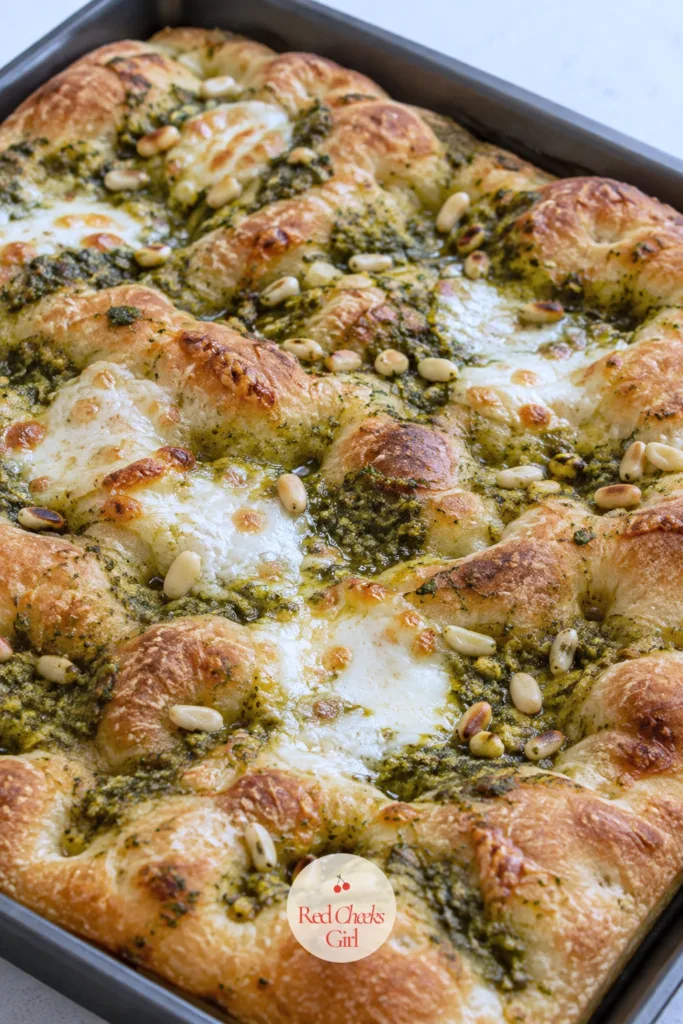
Pesto and mozzarella together read as a cheat code: everyone already knows that combination works, which means this one never needs explaining at the table. The only job is not letting the cheese dry out, so it goes on halfway through baking, not at the start.
The pesto swirls instead of spreading flat, which is what gives every square a different amount of green once you cut it, more interesting than one even coat. Pull it from the oven the moment the cheese is molten and just starting to brown; a minute past that and it turns rubbery.
Jarred pesto is completely fine here and nobody at the party is going to ask whether you made it from scratch. Keep this one as the centerpiece and let something like a Burrata Appetizer With Roasted Tomatoes, Basil and Crostini cover the rest of the cheese course.
Pesto and Mozzarella Focaccia
Ingredients
- 4 cups bread flour
- 1 3/4 cups warm water about 110°F
- 2 1/4 teaspoons active dry yeast
- 1 teaspoon granulated sugar
- 2 teaspoons fine sea salt
- 1/3 cup extra-virgin olive oil divided, plus more for the pan
- 1/2 cup prepared basil pesto
- 8 ounces fresh mozzarella pearls drained
- 2 tablespoons pine nuts
- 1/4 cup grated parmesan
- fresh basil leaves for serving
Instructions
- Whisk the warm water, sugar and yeast; let stand 5 to 8 minutes until foamy.
- Add the flour, fine sea salt and 2 tablespoons of the olive oil; mix to a shaggy, sticky dough.
- Do 4 sets of stretch-and-folds at 10-minute intervals over 40 minutes, instead of kneading.
- Cover and let rise at room temperature 2 to 2 1/2 hours, until doubled and bubbly (or refrigerate covered 12 to 16 hours, then rest 30 minutes before continuing).
- Oil a 9x13-inch pan, turn the dough in, and stretch toward the corners, resting and stretching again if it resists.
- Cover loosely and let rise in the pan 45 minutes to 1 hour, until puffy.
- Preheat the oven to 425°F and press deep dimples all over the dough with your fingertips.
- Dollop the pesto over the surface and swirl lightly with the back of a spoon so it marbles rather than coats evenly; scatter parmesan and pine nuts, then drizzle the remaining olive oil.
- Bake 18 minutes, then pull the pan out, dot the mozzarella pearls into the dimples, and return to the oven 5 to 7 more minutes, until the cheese is melted and the edges are golden brown.
- Cool in the pan 10 minutes, scatter fresh basil leaves, slice and serve warm while the cheese is still soft.
Good to Know
Cherry Tomato and Olive Focaccia
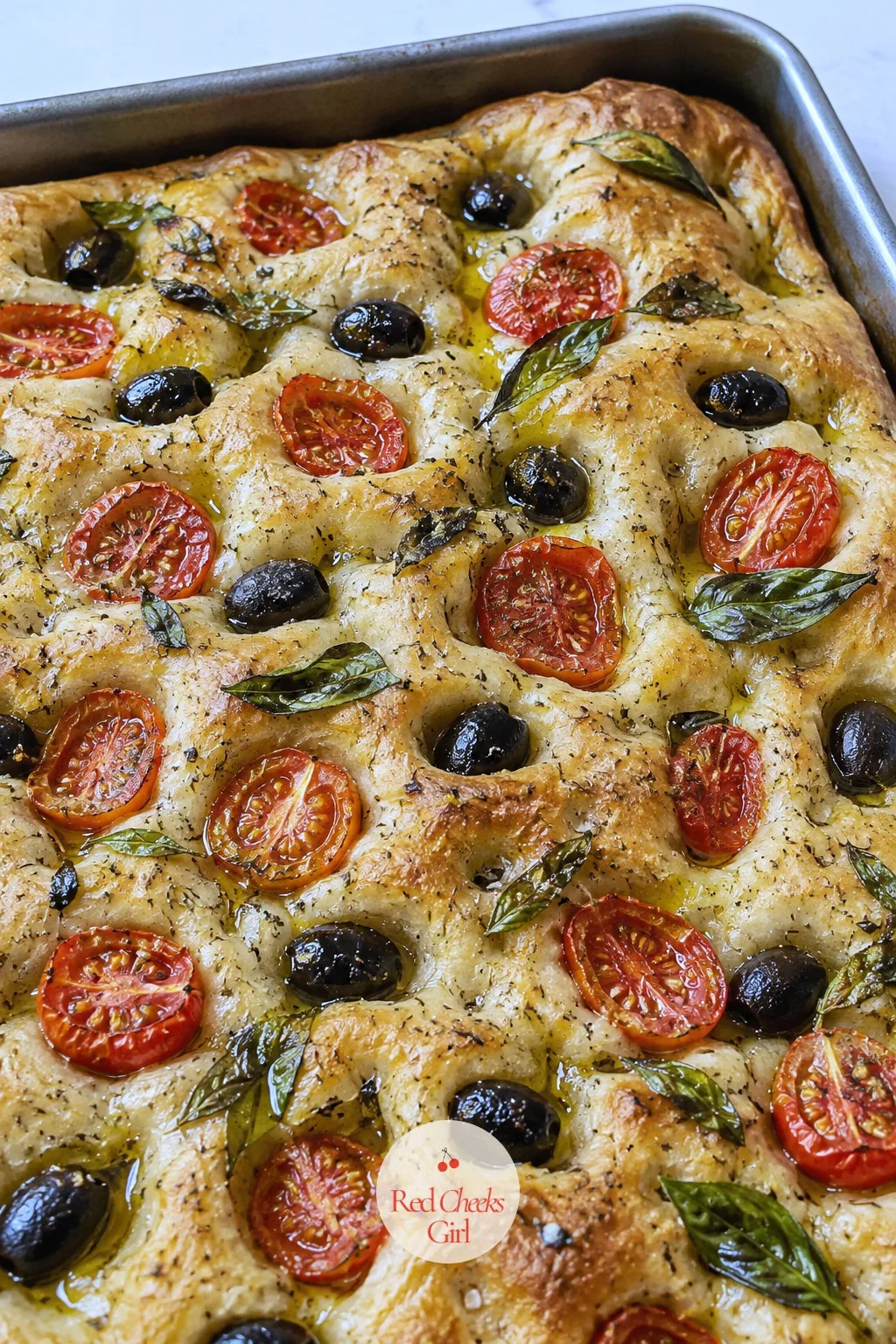
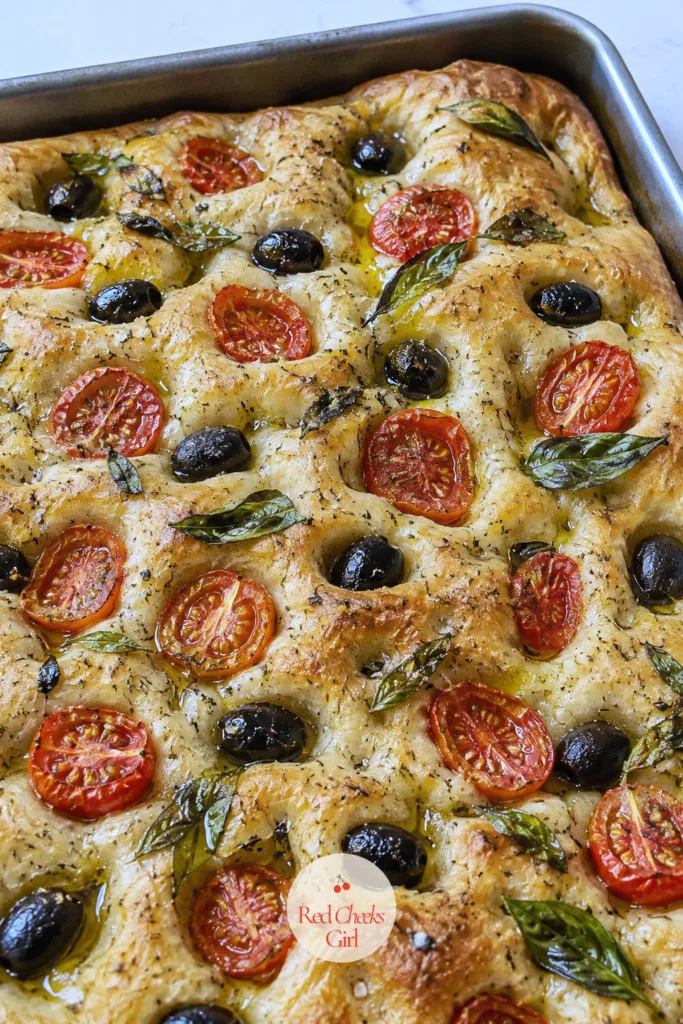
This is the one that tastes like somewhere with better weather than wherever you actually are. The tomatoes blister and give up their juice straight into the dough, so the bottom of every piece is faintly sweet in a way plain focaccia never manages.
Pack the tomatoes in tighter than looks reasonable, they shrink by almost half in the oven, and a sparse top looks bald once they’ve cooked down. Use two kinds of olive if you have them, one briny and one meatier, the contrast matters more than it sounds like it should.
Out of season tomatoes taste of nothing, so reach for the smallest, sweetest ones you can find rather than anything labeled on the vine. It sits well on a table that already has soup planned, no extra project required.
Cherry Tomato and Olive Focaccia
Ingredients
- 4 cups bread flour
- 1 3/4 cups warm water about 110°F
- 2 1/4 teaspoons active dry yeast
- 1 teaspoon granulated sugar
- 2 teaspoons fine sea salt
- 1/3 cup extra-virgin olive oil divided, plus more for the pan
- 1 1/2 cups cherry tomatoes halved
- 1/2 cup pitted kalamata and green olives halved
- 2 tablespoons fresh oregano or basil leaves
- 1 teaspoon flaky sea salt
Instructions
- Whisk the warm water, sugar and yeast; let stand 5 to 8 minutes until foamy.
- Add the flour, fine sea salt and 2 tablespoons olive oil; stir to a shaggy, sticky dough.
- Do 4 sets of stretch-and-folds at 10-minute intervals over 40 minutes, instead of kneading.
- Cover and let rise at room temperature 2 to 2 1/2 hours, until doubled and bubbly (or refrigerate covered 12 to 16 hours, then rest 30 minutes before continuing).
- Oil a 9x13-inch pan, turn the dough in, and stretch toward the corners, resting and stretching again if it resists.
- Cover loosely and let rise in the pan 45 minutes to 1 hour, until puffy.
- Preheat the oven to 425°F and press deep dimples all over the dough with your fingertips.
- Press the tomato halves, cut-side up, and olive halves into the dimples across the entire surface, packing them close since they shrink as they roast.
- Drizzle with the remaining olive oil, scatter the flaky salt, and bake 24 to 26 minutes, until the tomatoes have blistered and the dough around them is deep golden.
- Cool in the pan 10 minutes, scatter fresh oregano or basil, slice and serve.
Good to Know
Caramelized Onion Focaccia
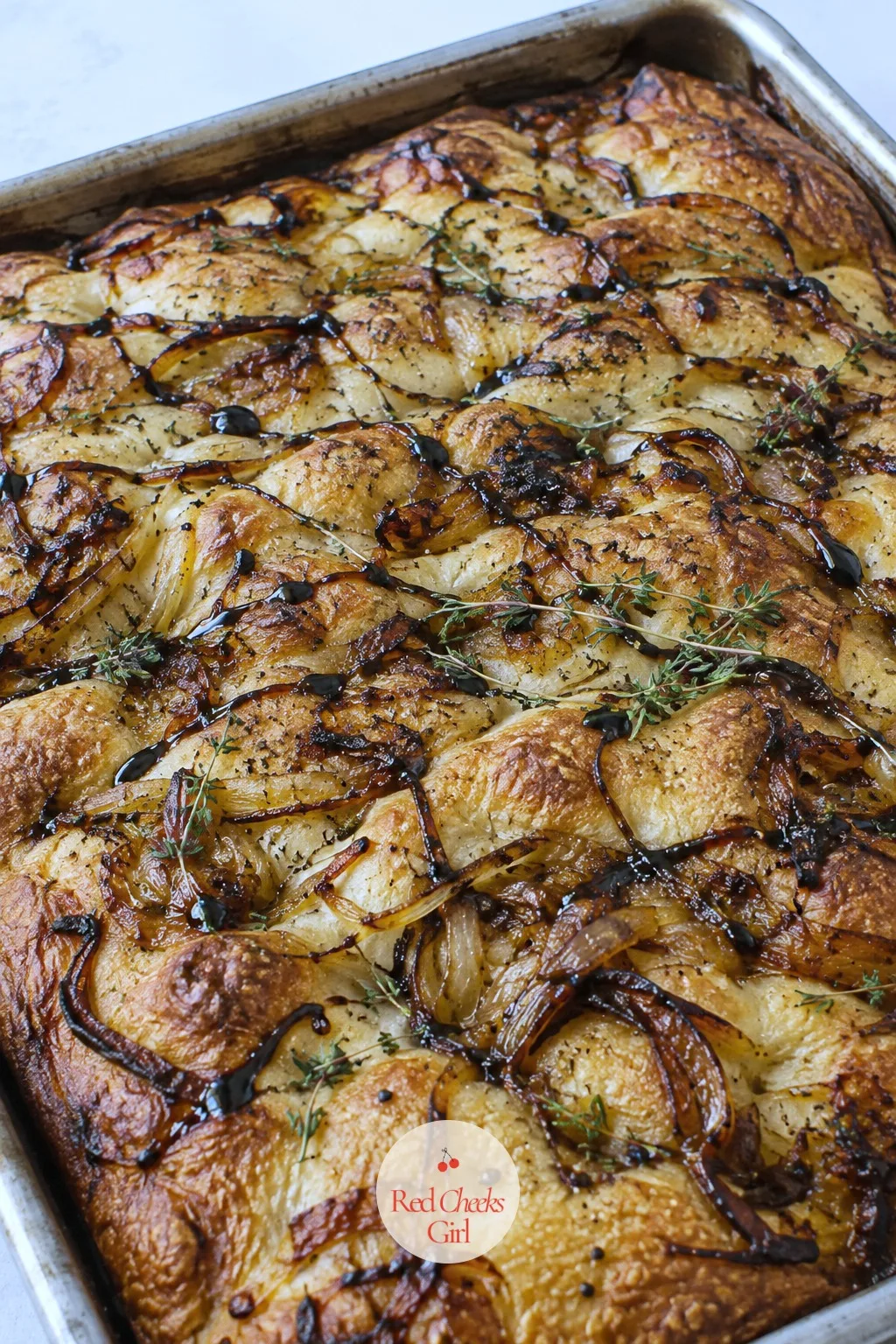
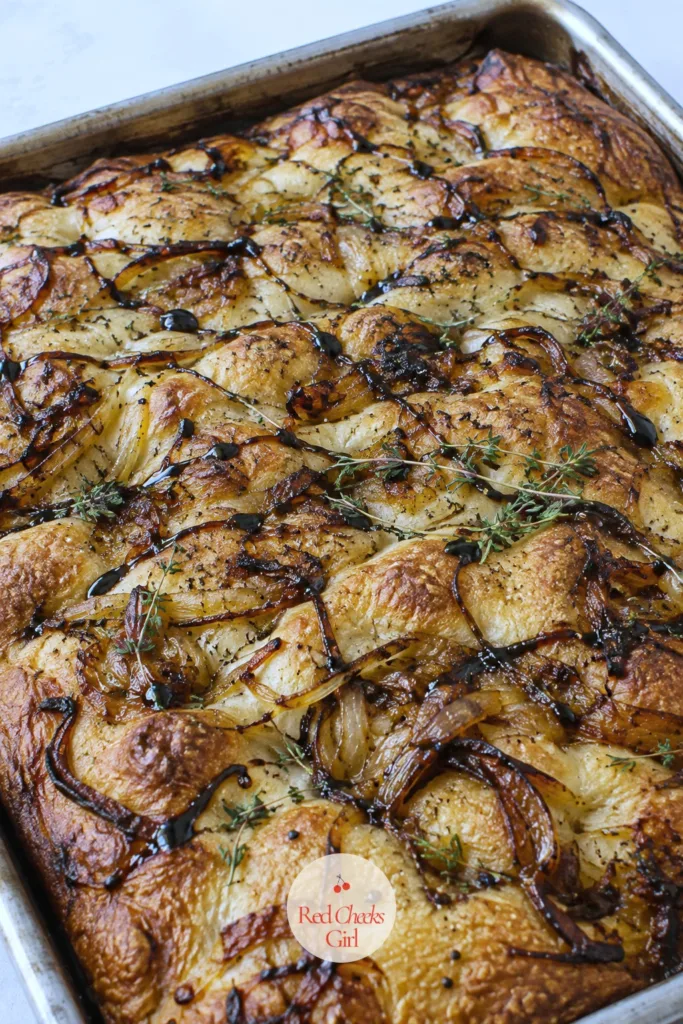
Caramelized onion focaccia smells like somewhere is already celebrating before anyone’s arrived, which buys you a very cheap win. The onions take the only real patience in this whole collection, everything else is just waiting on the dough.
Low heat and a long cook are non-negotiable here: rush it with high heat and the onions catch and taste bitter instead of sweet. Thirty slow minutes gets you jammy, deep amber onions, taste one to check, it should taste sweet with no raw bite left.
Caramelize a double batch while you’re at it and keep half in the fridge for a week, onions this good deserve a second life on eggs or a sandwich. This one holds up at room temperature for hours, a genuinely good choice for a buffet that sits out a while.
Caramelized Onion Focaccia
Ingredients
- 4 cups bread flour
- 1 3/4 cups warm water about 110°F
- 2 1/4 teaspoons active dry yeast
- 1 teaspoon granulated sugar
- 2 teaspoons fine sea salt
- 1/3 cup extra-virgin olive oil divided, plus more for the pan
- 3 large yellow onions thinly sliced
- 2 tablespoons butter or olive oil for caramelizing
- 2 tablespoons balsamic vinegar
- fresh thyme leaves from a few sprigs
- 1/4 cup grated parmesan
- flaky sea salt to finish
Instructions
- Whisk the warm water, sugar and yeast; let stand 5 to 8 minutes until foamy.
- Add the flour, fine sea salt and 2 tablespoons olive oil; stir to a shaggy, sticky dough, then do 4 sets of stretch-and-folds at 10-minute intervals over 40 minutes.
- Cover and let rise at room temperature 2 to 2 1/2 hours, until doubled and bubbly (or refrigerate covered 12 to 16 hours, then rest 30 minutes before continuing).
- While the dough rises, melt the butter in a large skillet over medium-low heat, add the onions and a pinch of salt, and cook, stirring occasionally, for 25 to 30 minutes, until deep amber and jammy; stir in the balsamic vinegar in the last 2 minutes and set aside to cool slightly.
- Oil a 9x13-inch pan, turn the dough in, and stretch toward the corners.
- Cover loosely and let rise in the pan 45 minutes to 1 hour, until puffy.
- Preheat the oven to 425°F and press deep dimples all over the dough with your fingertips.
- Spread the caramelized onions evenly over the surface, pressing some into the dimples, then scatter the thyme leaves and parmesan over the top.
- Drizzle with the remaining olive oil and bake 22 to 25 minutes, until the edges are deep golden and the onions have started to catch slightly at the edges.
- Cool in the pan 10 minutes, scatter flaky salt, slice, and serve warm.
Good to Know
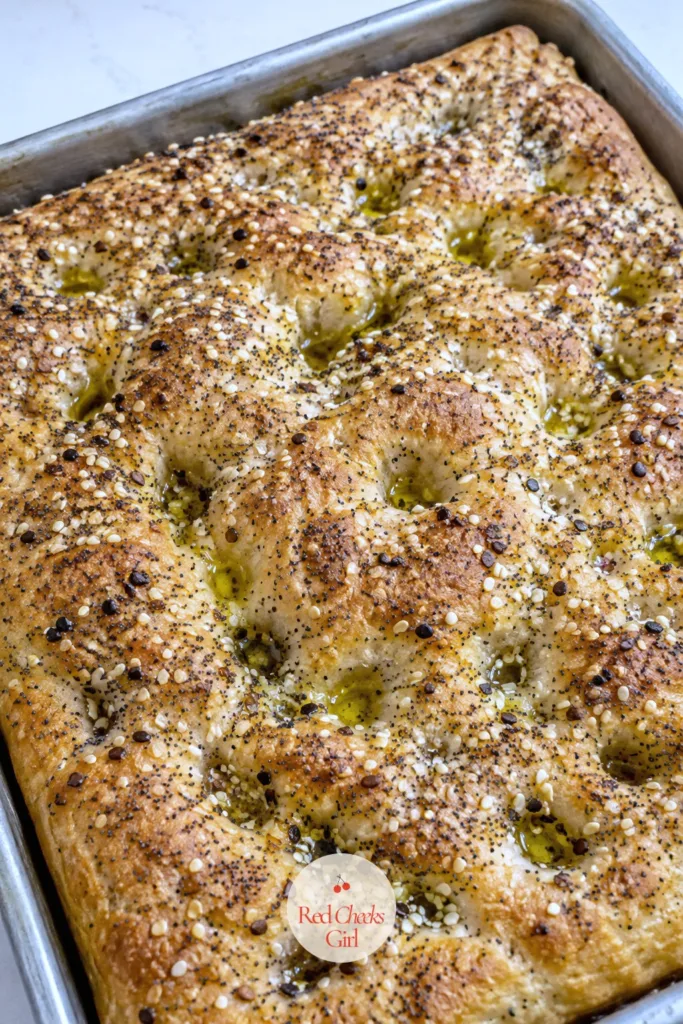
Everything Bagel Focaccia
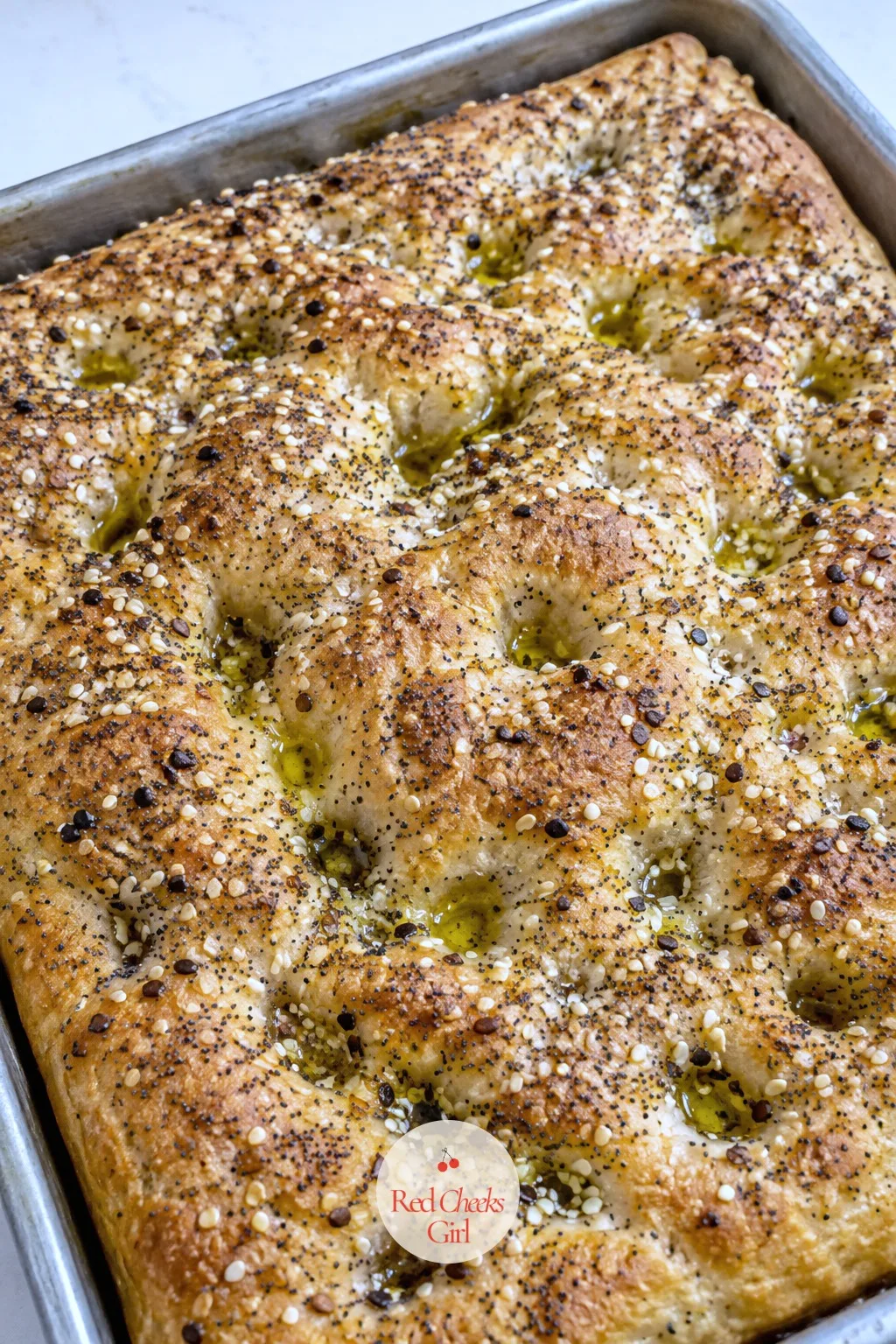
This is the one for the person who orders a bagel with everything and regrets nothing. Pressing the seasoning straight into oiled dough means it toasts instead of just sitting there, so every bite gets a little char from the garlic and onion flakes.
Watch the oven in the last few minutes, sesame and poppy seeds go from toasted to burnt fast, and burnt tastes bitter on top of a basic salty bread you worked hard on. Pull it the moment it’s deep gold, not a shade darker.
A thin cream cheese drizzle after baking turns this from bread into something closer to the bagel itself, entirely optional, skip it if you’d rather keep things simple. It travels well cold the next morning, cut it the night before if breakfast needs to be fast.
Everything Bagel Focaccia
Ingredients
- 4 cups bread flour
- 1 3/4 cups warm water about 110°F
- 2 1/4 teaspoons active dry yeast
- 1 teaspoon granulated sugar
- 2 teaspoons fine sea salt
- 1/3 cup extra-virgin olive oil divided, plus more for the pan
- 3 tablespoons everything bagel seasoning
- 1 tablespoon sesame seeds extra if desired
- 2 ounces cream cheese thinned with 1 tablespoon milk, optional for drizzling
Instructions
- Whisk the warm water, sugar and yeast; let stand 5 to 8 minutes until foamy.
- Add the flour, fine sea salt and 2 tablespoons olive oil; stir to a shaggy, sticky dough, then do 4 sets of stretch-and-folds at 10-minute intervals over 40 minutes.
- Cover and let rise at room temperature 2 to 2 1/2 hours, until doubled and bubbly (or refrigerate covered 12 to 16 hours, then rest 30 minutes before continuing).
- Oil a 9x13-inch pan, turn the dough in, and stretch toward the corners.
- Cover loosely and let rise in the pan 45 minutes to 1 hour, until puffy.
- Preheat the oven to 425°F and press deep dimples all over the dough with your fingertips, then drizzle the remaining olive oil into the dimples.
- Scatter the everything bagel seasoning and extra sesame seeds generously and evenly across the entire surface, pressing lightly so it sticks to the oiled dough.
- Bake 20 to 22 minutes, watching closely after 18 minutes since the seeds can scorch quickly, until the top is deep golden and the seasoning is toasted, not burnt.
- Cool in the pan 10 minutes; if using, drizzle the thinned cream cheese in lines over the top, then slice and serve.
Good to Know
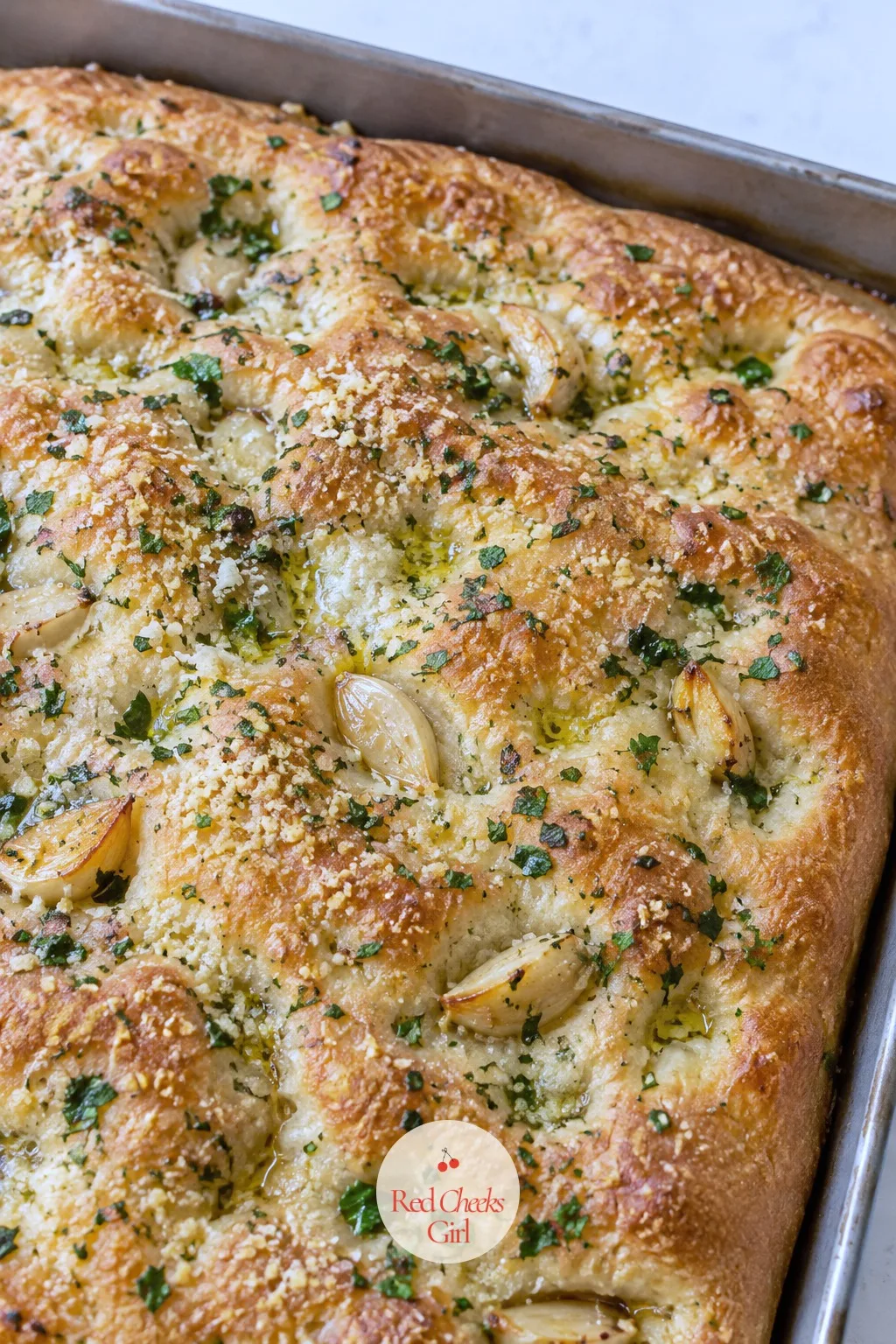
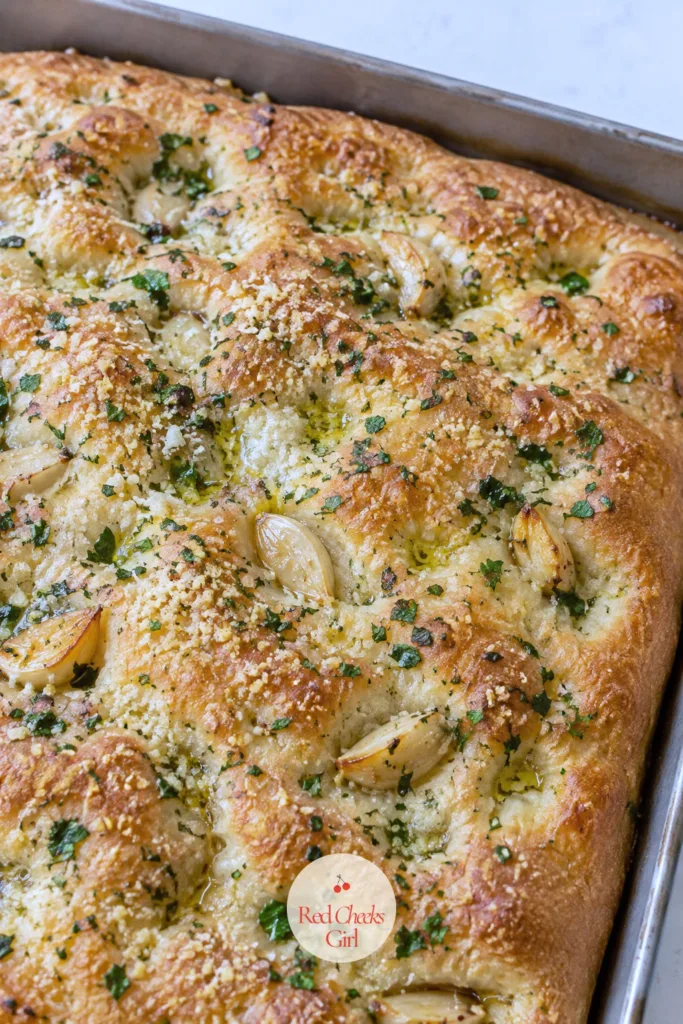
Garlic Parmesan Focaccia
Garlic parmesan sounds like garlic bread’s more serious older sibling, and it mostly is. Roasting the head whole instead of mincing it raw means you get sweetness and none of the sharp bite that can take over a whole pan.
Roast the garlic whenever suits you, the day before is fine, it keeps in the fridge for a week and only gets better. Mash it into a rough paste before it goes on the dough, a whole clove left intact just burns in one spot.
Parmesan on top of dough this wet melts into a thin, savory crust instead of a gooey layer, so this one slices cleanly even while still warm. It’s the loaf that tends to pull people into the kitchen before anything is officially ready.
Garlic Parmesan Focaccia
Ingredients
- 4 cups bread flour
- 1 3/4 cups warm water about 110°F
- 2 1/4 teaspoons active dry yeast
- 1 teaspoon granulated sugar
- 2 teaspoons fine sea salt
- 1/3 cup extra-virgin olive oil divided, plus more for the pan
- 1 whole head garlic
- 1/2 cup grated parmesan
- 2 tablespoons fresh parsley chopped
- flaky sea salt to finish
Instructions
- Whisk the warm water, sugar and yeast; let stand 5 to 8 minutes until foamy.
- Add the flour, fine sea salt and 2 tablespoons olive oil; stir to a shaggy, sticky dough, then do 4 sets of stretch-and-folds at 10-minute intervals over 40 minutes.
- While the dough has its first rise, slice the top off the garlic head, drizzle with 1 teaspoon olive oil, wrap in foil, and roast at 400°F for 40 to 45 minutes, until the cloves are soft enough to squeeze out with a spoon; cool, then mash into a rough paste.
- Let the dough rise at room temperature 2 to 2 1/2 hours total, until doubled and bubbly (or refrigerate covered 12 to 16 hours, then rest 30 minutes before continuing).
- Oil a 9x13-inch pan, turn the dough in, and stretch toward the corners.
- Cover loosely and let rise in the pan 45 minutes to 1 hour, until puffy.
- Preheat the oven to 425°F and press deep dimples all over the dough with your fingertips.
- Dot the roasted garlic paste into the dimples, scatter the parmesan over the top, and drizzle the remaining olive oil.
- Bake 22 to 24 minutes, until deep golden brown and the cheese has melted into a light crust.
- Cool in the pan 10 minutes, scatter parsley and flaky salt, slice and serve warm.
Good to Know
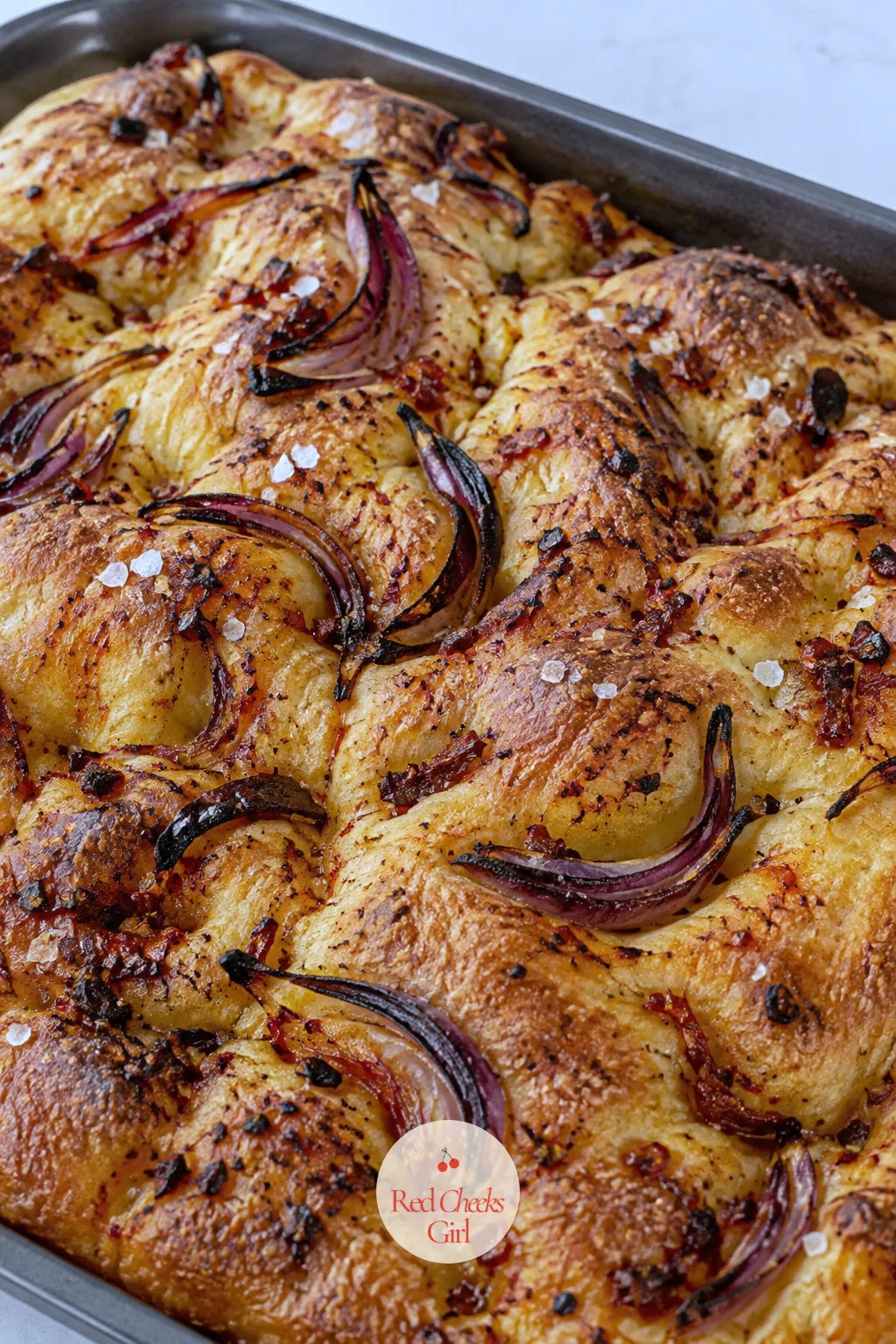
Chipotle with Garlic and Onion Focaccia
This is the loaf for a table that wants a little heat without turning the whole spread spicy. The chipotle oil carries smoke and a slow warmth, the raw red onion on top adds a sharp bite that keeps every piece from going one-note.
Steep the chipotle, garlic and paprika in the oil while the dough rises, ten minutes is enough for the flavor to bloom properly instead of tasting flat. Go easy with the adobo sauce itself, it carries more salt and vinegar than you’d guess from a spoonful.
For a mixed crowd, use just one chipotle instead of two and leave the onion raw rather than charred, it tones the heat down without losing the smoke. Good matched against something cooling on the side, a simple yogurt dip does the job.
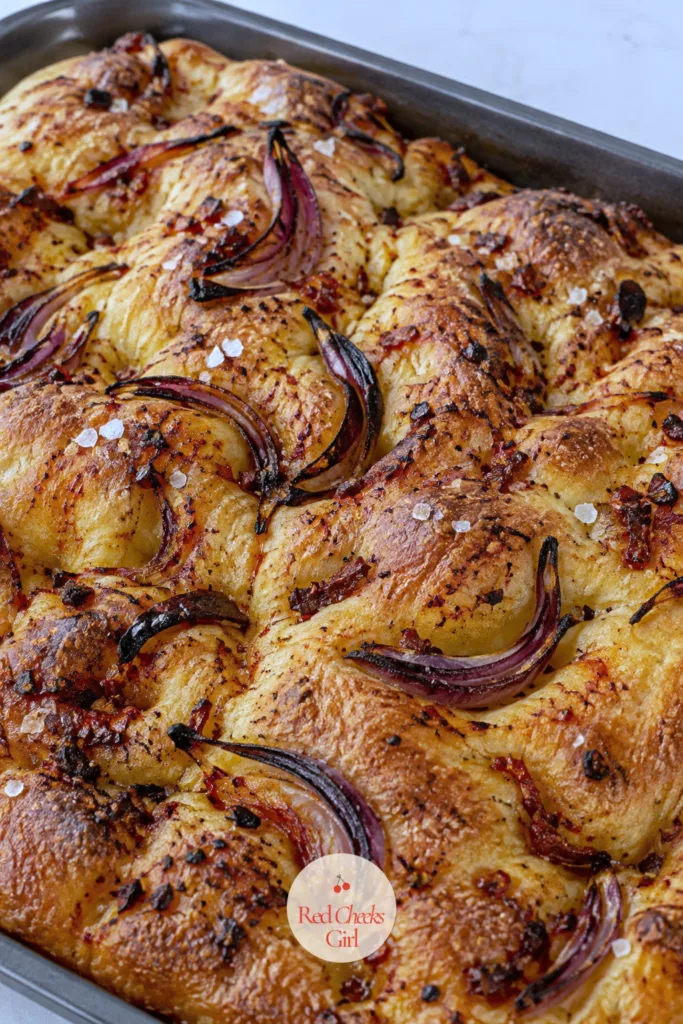
Chipotle with Garlic and Onion Focaccia
Ingredients
- 4 cups bread flour
- 1 3/4 cups warm water about 110°F
- 2 1/4 teaspoons active dry yeast
- 1 teaspoon granulated sugar
- 2 teaspoons fine sea salt
- 1/3 cup extra-virgin olive oil divided, plus more for the pan
- 2 chipotle peppers in adobo minced, plus 1 tablespoon adobo sauce
- 3 cloves garlic minced
- 1/2 small red onion thinly sliced
- 1 teaspoon smoked paprika
- flaky sea salt to finish
Instructions
- Whisk the warm water, sugar and yeast; let stand 5 to 8 minutes until foamy.
- Add the flour, fine sea salt and 2 tablespoons olive oil; stir to a shaggy, sticky dough, then do 4 sets of stretch-and-folds at 10-minute intervals over 40 minutes.
- Stir the minced chipotle, adobo sauce, minced garlic and smoked paprika into 2 tablespoons of the olive oil; set aside to steep while the dough rises.
- Cover the dough and let rise at room temperature 2 to 2 1/2 hours, until doubled and bubbly (or refrigerate covered 12 to 16 hours, then rest 30 minutes before continuing).
- Oil a 9x13-inch pan, turn the dough in, and stretch toward the corners.
- Cover loosely and let rise in the pan 45 minutes to 1 hour, until puffy.
- Preheat the oven to 425°F and press deep dimples all over the dough with your fingertips.
- Brush the chipotle oil evenly over the surface, working it into the dimples, then scatter the sliced red onion across the top.
- Bake 22 to 24 minutes, until deep red-gold and the onion edges have started to char slightly.
- Cool in the pan 10 minutes, scatter flaky salt, slice and serve warm.
Good to Know
Potato and Rosemary Focaccia
Potato on bread sounds redundant until you taste what a thin, crisp slice does sitting directly on top of something pillowy. The contrast is the entire point, crunchy potato, soft dough underneath, rosemary cutting through both.
Slice the potatoes thin enough to see light through them, thick slices stay raw in the middle by the time the bread is done. A quick soak in cold water rinses off the starch that would otherwise make them gluey instead of crisp.
If a 9×13 pan feels too square for this one, a 12-inch round cake pan gives it more of a rustic, tart-like look without changing a single measurement. Good next to a bowl of something warm on a cold night, this is sturdy enough to mop up the last of a soup.
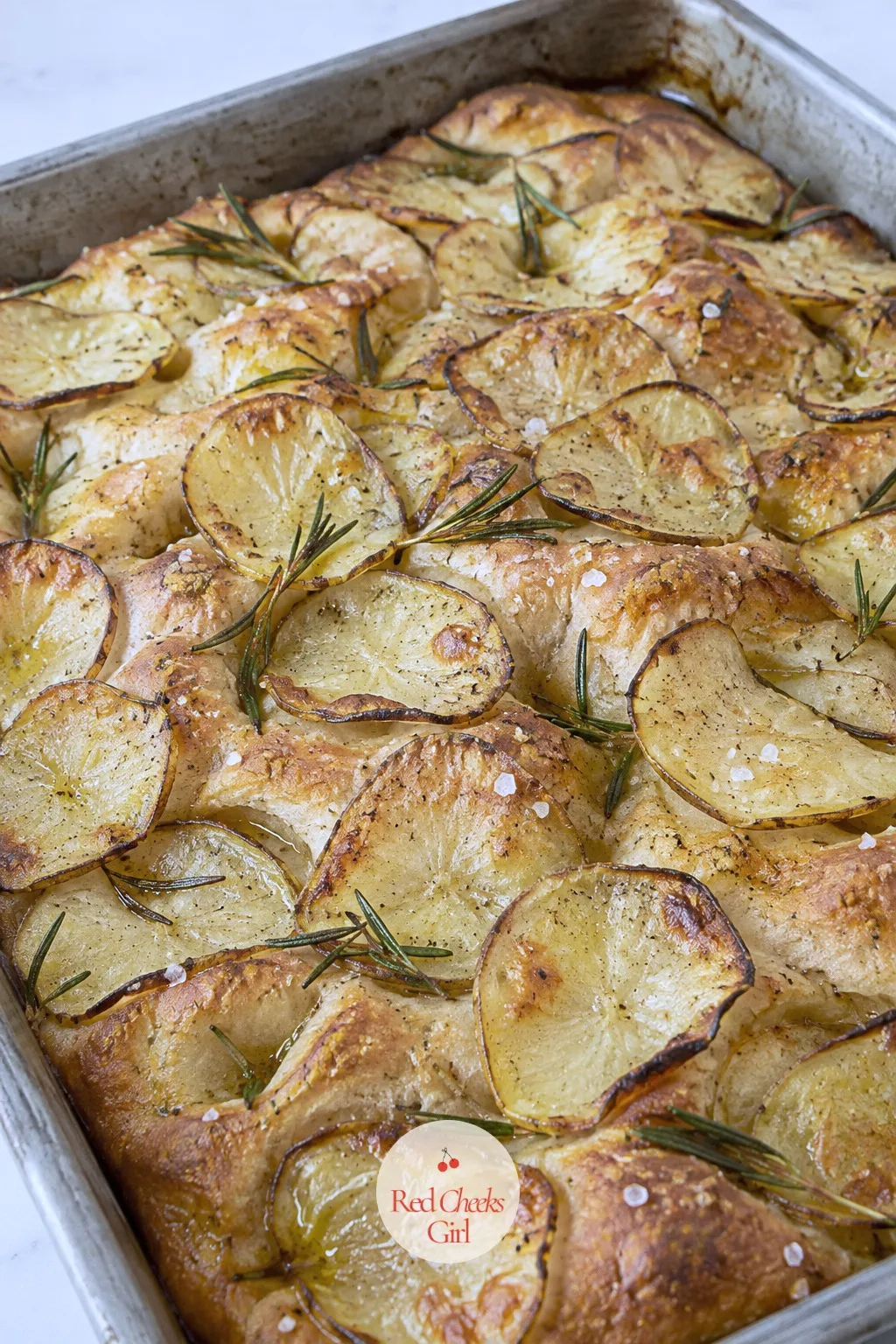
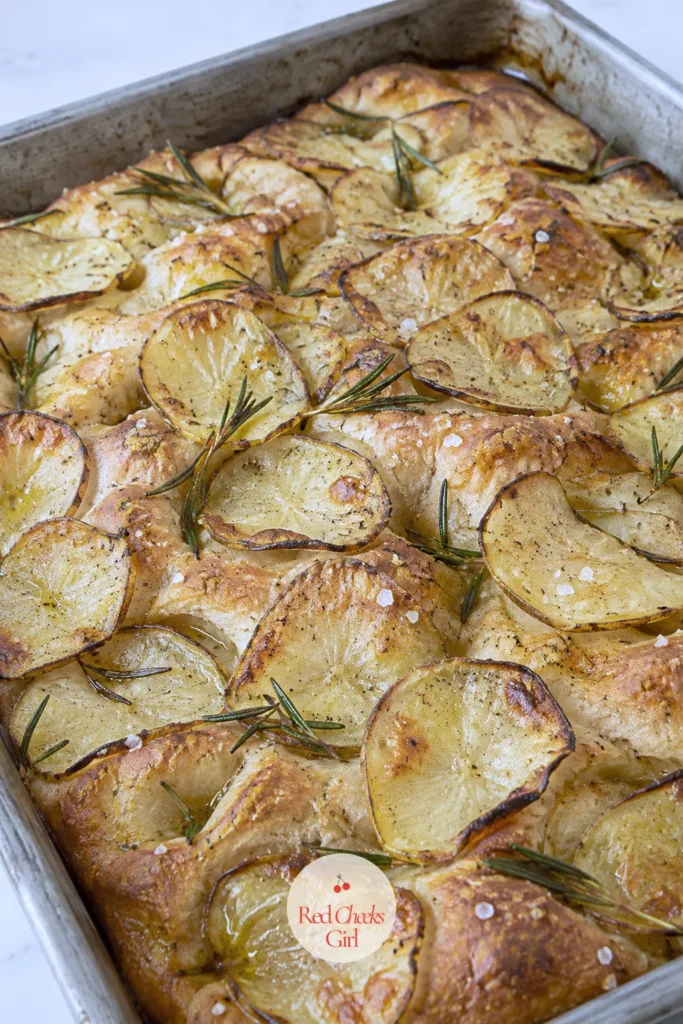
Potato and Rosemary Focaccia
Ingredients
- 4 cups bread flour
- 1 3/4 cups warm water about 110°F
- 2 1/4 teaspoons active dry yeast
- 1 teaspoon granulated sugar
- 2 teaspoons fine sea salt
- 1/3 cup extra-virgin olive oil divided, plus more for the pan
- 2 small Yukon gold potatoes sliced paper-thin
- 2 tablespoons fresh rosemary leaves
- flaky sea salt to finish
Instructions
- Whisk the warm water, sugar and yeast; let stand 5 to 8 minutes until foamy.
- Add the flour, fine sea salt and 2 tablespoons olive oil; stir to a shaggy, sticky dough, then do 4 sets of stretch-and-folds at 10-minute intervals over 40 minutes.
- Cover and let rise at room temperature 2 to 2 1/2 hours, until doubled and bubbly (or refrigerate covered 12 to 16 hours, then rest 30 minutes before continuing).
- Slice the potatoes paper-thin with a mandoline or sharp knife, then soak in a bowl of cold water 10 minutes to rinse off excess starch; drain and pat completely dry.
- Oil a 9x13-inch pan, turn the dough in, and stretch toward the corners.
- Cover loosely and let rise in the pan 45 minutes to 1 hour, until puffy.
- Preheat the oven to 425°F and press deep dimples all over the dough with your fingertips.
- Shingle the potato slices over the surface in overlapping rows, pressing them gently into the dimples so they lie flat, then brush with the remaining olive oil and scatter rosemary and flaky salt.
- Bake 26 to 28 minutes, until the potato edges are deep golden and crisp and the bread underneath has pulled from the pan.
- Cool in the pan 10 minutes, slice and serve warm so the potato stays crisp.
Good to Know
Sweet Grape Focaccia
Sweet focaccia reads strange on paper and then disappears fastest off the tray every single time. Grapes burst and turn jammy in the oven, sugar and salt do the actual work of making a plain bread dough taste like dessert without becoming one.
Halve the grapes and pack them in tight, they shrink by nearly a third as they roast and a sparse top looks bare rather than rustic. A light hand with the sugar is enough, the grapes are already sweet; overdo it and this tips into cake territory.
Serve it plain with coffee in the morning, or with a small bowl of mascarpone alongside if this is going out after dinner instead. It’s the one dessert-adjacent bread on this table, and it earns its spot even next to an actual cake.
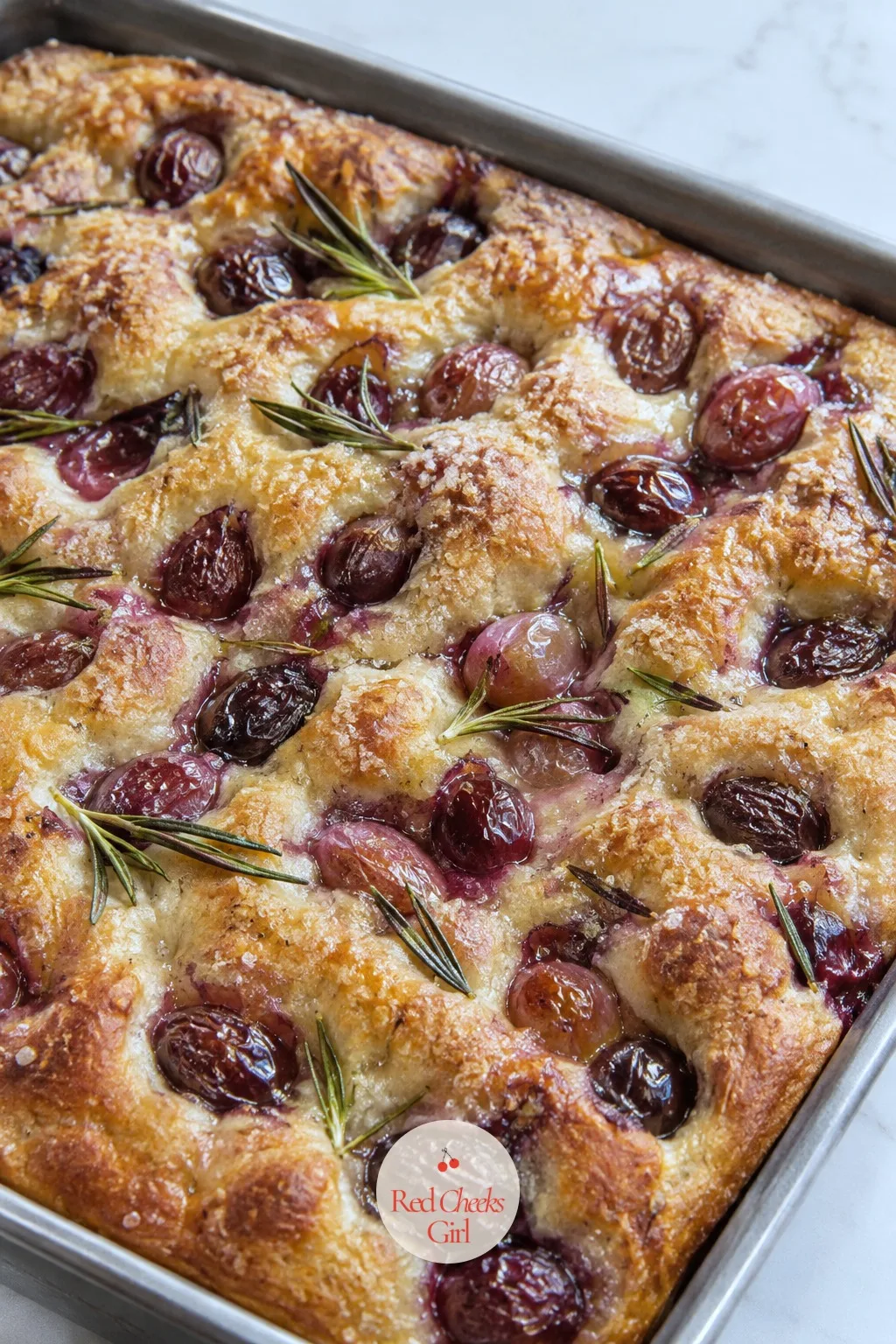
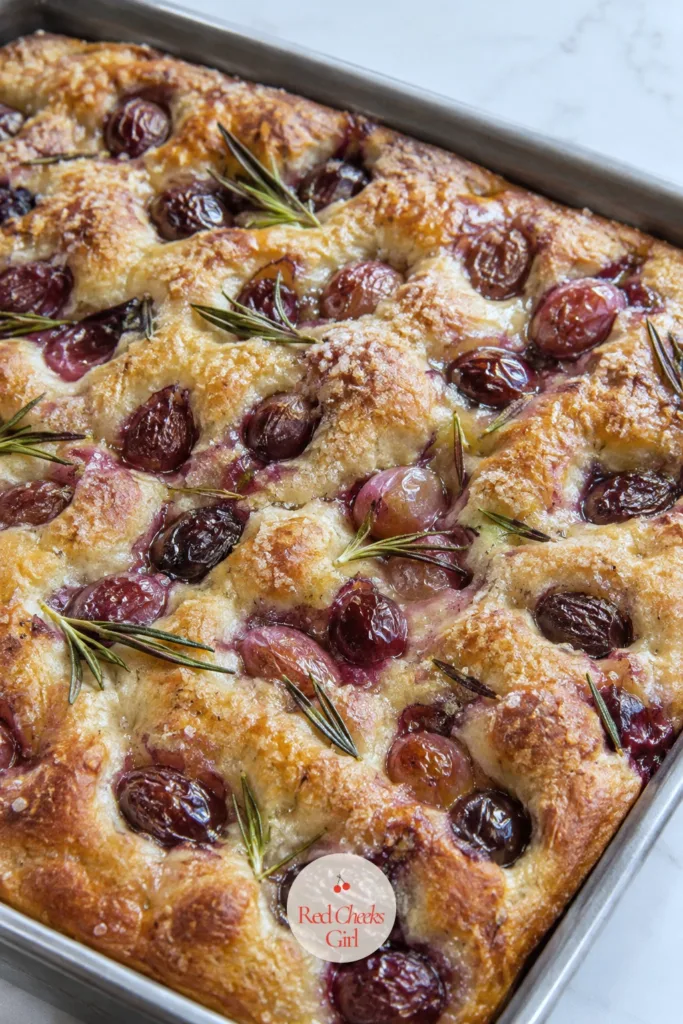
Sweet Grape Focaccia
Ingredients
- 4 cups bread flour
- 1 3/4 cups warm water about 110°F
- 2 1/4 teaspoons active dry yeast
- 1 teaspoon granulated sugar plus 2 tablespoons turbinado sugar for the top
- 2 teaspoons fine sea salt
- 1/3 cup extra-virgin olive oil divided, plus more for the pan
- 1 1/2 cups seedless red or black grapes halved
- 1 tablespoon fresh rosemary leaves
- flaky sea salt a light pinch
- 1/4 cup mascarpone optional, for serving
Instructions
- Whisk the warm water, 1 teaspoon sugar and yeast; let stand 5 to 8 minutes until foamy.
- Add the flour, fine sea salt and 2 tablespoons olive oil; stir to a shaggy, sticky dough, then do 4 sets of stretch-and-folds at 10-minute intervals over 40 minutes.
- Cover and let rise at room temperature 2 to 2 1/2 hours, until doubled and bubbly (or refrigerate covered 12 to 16 hours, then rest 30 minutes before continuing).
- Oil a 9x13-inch pan, turn the dough in, and stretch toward the corners.
- Cover loosely and let rise in the pan 45 minutes to 1 hour, until puffy.
- Preheat the oven to 425°F and press deep dimples all over the dough with your fingertips.
- Press the grape halves, cut-side up, into the dimples across the entire surface, packing them close since they shrink and release juice as they bake.
- Drizzle with the remaining olive oil, scatter the turbinado sugar, rosemary and a light pinch of flaky salt, then bake 24 to 26 minutes, until the grapes have burst and caramelized at the edges and the dough is deep golden.
- Cool in the pan 10 minutes, slice and serve as is or with a small dish of mascarpone for spreading.
Good to Know
Sourdough Discard Focaccia
This is the bread that finally gives sourdough discard somewhere useful to go instead of the bin. It needs almost none of the fuss a sourdough loaf does, no scoring, no banneton, just the discard folded straight into a focaccia dough that forgives a lot.
Discard dough runs a little slower than one made with yeast alone, so give the rises extra time rather than watching the clock; it’s ready when it looks doubled and feels light, not at a fixed hour. The overnight fridge option suits this one especially well, since the long cold rise mellows the tang instead of sharpening it.
No starter going spare right now, skip this one and make the classic rosemary version instead, the two share almost the same method. Keep this loaf plain, rosemary and salt let the slight sourness actually come through instead of hiding under a heavier topping.
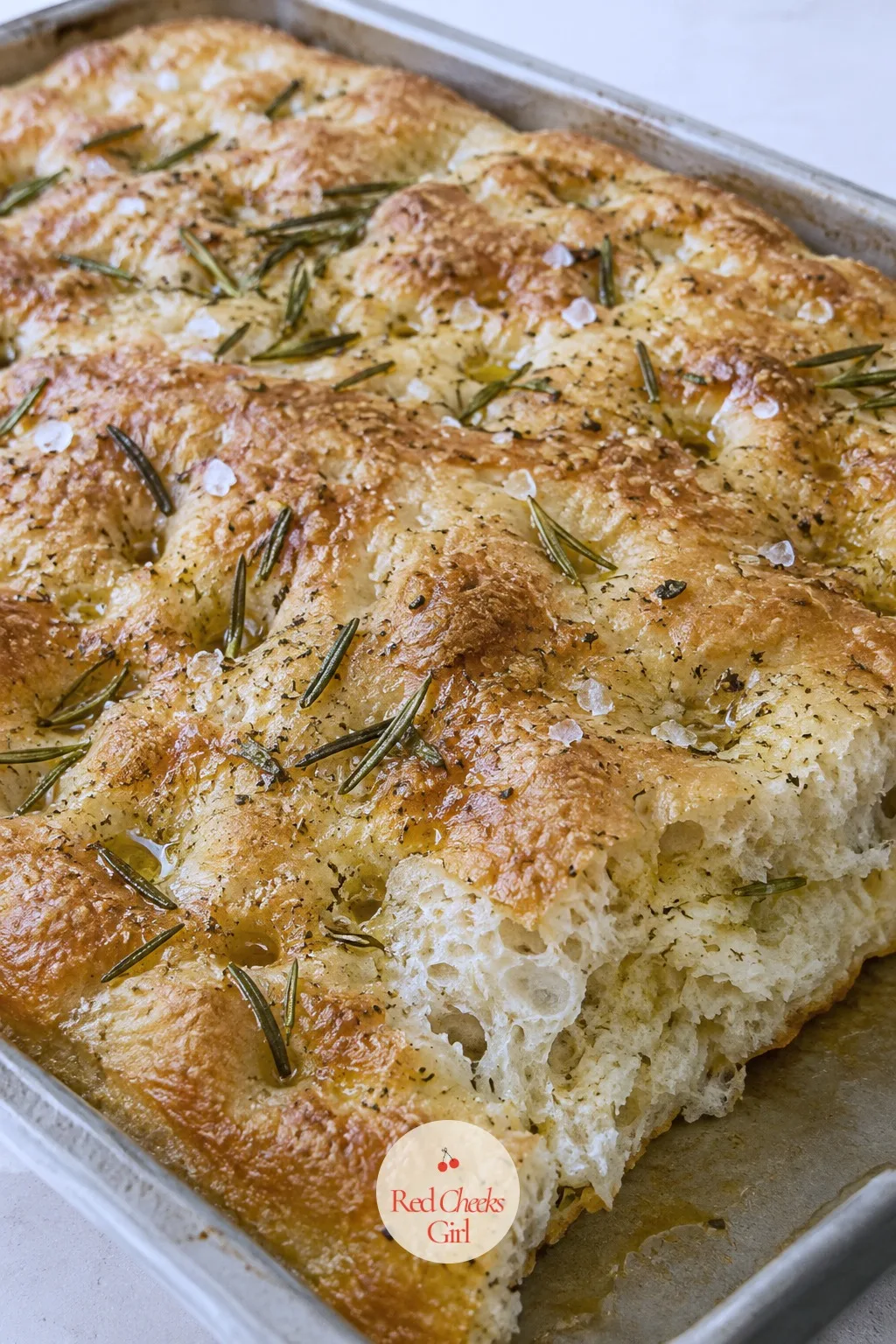
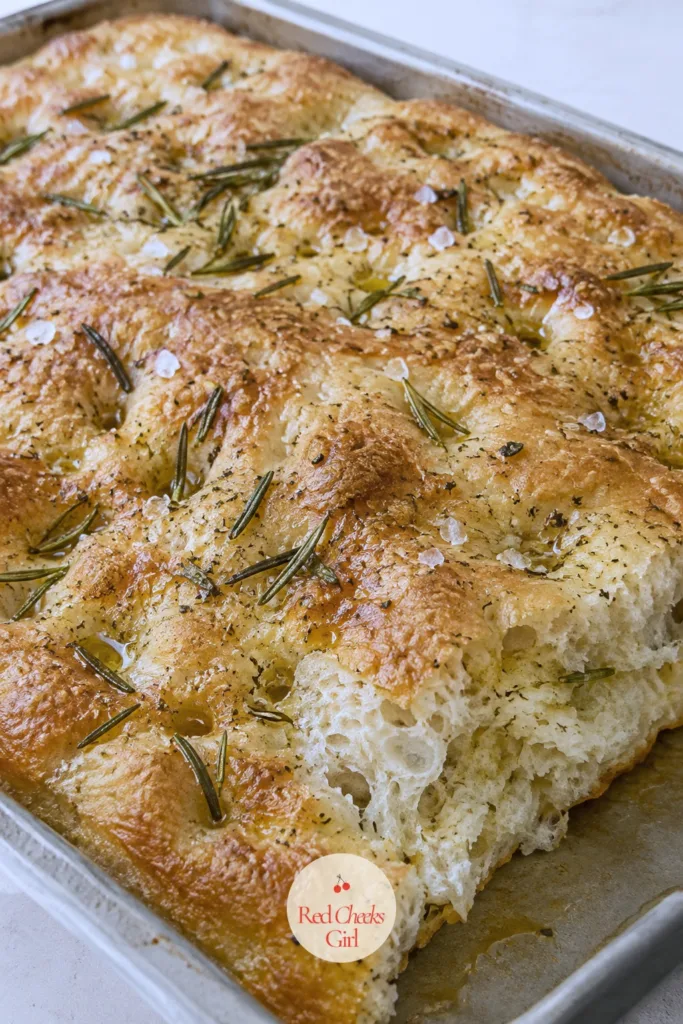
Sourdough Discard Focaccia
Ingredients
- 1 cup sourdough starter discard unfed, straight from the fridge
- 3 1/2 cups bread flour
- 1 1/4 cups warm water about 110°F
- 1 teaspoon active dry yeast
- 2 teaspoons fine sea salt
- 1/3 cup extra-virgin olive oil divided, plus more for the pan
- fresh rosemary leaves from a few sprigs
- flaky sea salt to finish
Instructions
- In a large bowl, whisk the warm water, yeast and sourdough discard together until the discard breaks up and the mixture looks cloudy.
- Add the flour, fine sea salt and 2 tablespoons olive oil; mix into a shaggy, sticky dough.
- Do 4 sets of stretch-and-folds at 10-minute intervals over 40 minutes, instead of kneading (discard adds enough acidity that the dough can feel slightly looser than a standard batch, that's expected).
- Cover and let rise at room temperature 4 to 6 hours, or refrigerate covered overnight for 12 to 16 hours for a milder tang and easier scheduling, until doubled and visibly bubbly.
- Oil a 9x13-inch pan, turn the dough in, and stretch toward the corners.
- Cover loosely and let rise in the pan 1 to 1 1/2 hours, giving it the extra time discard dough needs, until puffy.
- Preheat the oven to 425°F and press deep dimples all over the dough with your fingertips.
- Drizzle with the remaining olive oil and scatter rosemary and flaky salt.
- Bake 24 to 26 minutes, until deep golden, the edges have pulled from the pan, and the bottom sounds hollow when tapped.
- Cool in the pan 10 minutes, slice and serve.
Good to Know
Classic Rosemary and Sea Salt Focaccia
Start here if focaccia is new territory, or if tonight just needs bread and nothing else. Rosemary and sea salt is the version every other loaf in this collection is actually built from, so get comfortable with this one and the rest stop feeling like separate recipes.
The dough will look wrong at first, too wet, too loose, more batter than bread, and that is correct, not a mistake to fix with extra flour. Let your fingers do the work pressing dimples all the way down, that’s what traps the olive oil and makes the craters everyone reaches for first!
Mix it the night before if dinner is the priority tomorrow: cover and refrigerate for 12 to 16 hours, then pick up at the pan-stretching step once it’s had thirty minutes to warm slightly. Either way it is cheap, four pantry staples and an hour of mostly waiting.
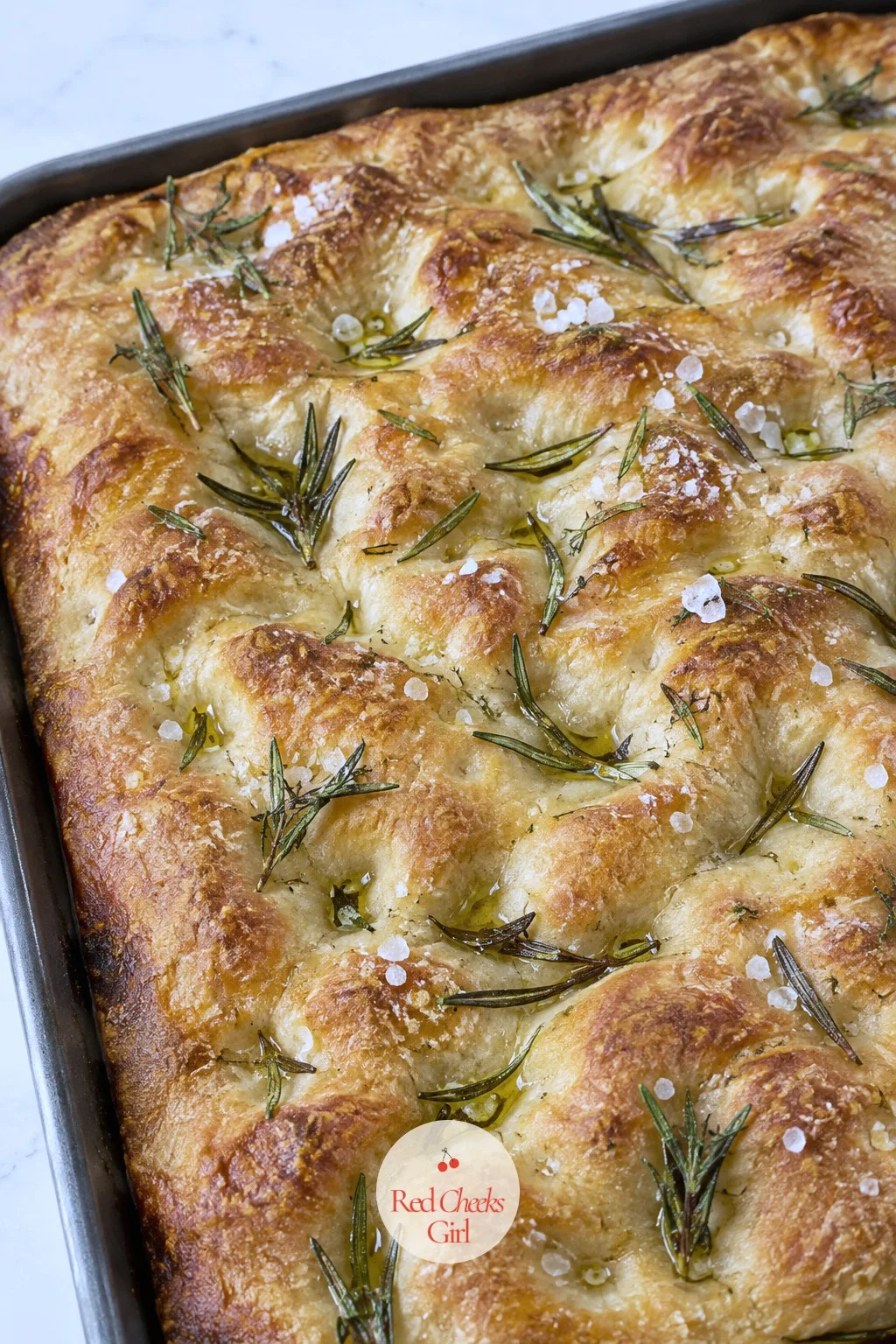
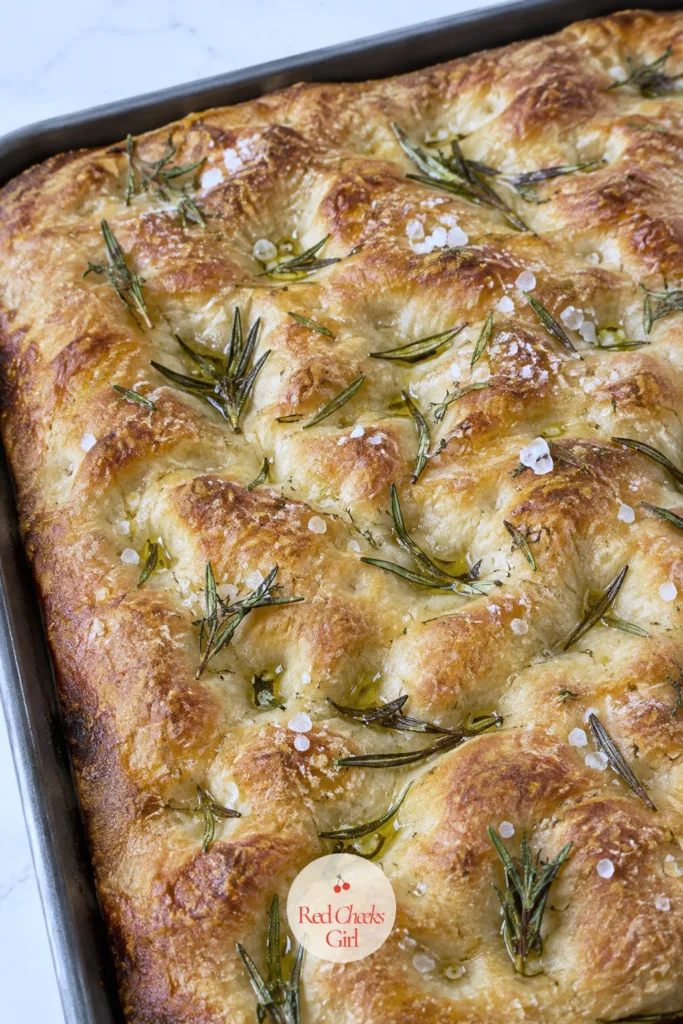
Classic Rosemary and Sea Salt Focaccia
Ingredients
- 4 cups bread flour
- 1 3/4 cups warm water about 110°F
- 2 1/4 teaspoons active dry yeast
- 1 teaspoon granulated sugar
- 2 teaspoons fine sea salt
- 1/3 cup extra-virgin olive oil divided, plus more for the pan
- 2 tablespoons fresh rosemary leaves
- 1 1/2 teaspoons flaky sea salt
Instructions
- Whisk the warm water, sugar and yeast together; let stand 5 to 8 minutes until the surface turns foamy, a sign the yeast is active.
- Add the flour, fine sea salt and 2 tablespoons of the olive oil; mix to a shaggy, sticky dough.
- Do 4 sets of stretch-and-folds (pull one side up and over the center) at 10-minute intervals over the next 40 minutes, instead of kneading.
- Cover and let rise 2 to 2 1/2 hours at room temperature until doubled and bubbly, or refrigerate covered overnight 12 to 16 hours for a deeper flavor, then let it sit at room temperature 30 minutes before continuing.
- Oil a 9x13-inch pan, stretch the dough into the corners, resting and stretching again if it resists.
- Cover loosely and let rise in the pan 45 minutes to 1 hour, until puffy.
- Preheat the oven to 425°F and press fingertips straight down through the dough, all the way to the pan, to make deep dimples; drizzle the remaining olive oil into them and scatter rosemary leaves and flaky salt.
- Bake 22 to 24 minutes, until deep golden brown and the edges have pulled from the pan; cool in the pan 10 minutes, slice, and serve warm.
Good to Know
🛍 Shopping guide
Frequently Asked Questions
Why is my focaccia dense instead of light and bubbly?
Dense focaccia usually means the dough never built enough gas, or lost it before baking. The two repeat offenders are underproofing and too little water, so give it the full rise and resist adding extra flour when it feels sticky.
Should focaccia dough really be that sticky, or am I doing something wrong?
Yes, focaccia dough is supposed to be wet, closer to a thick batter than a typical bread dough. Resist working in extra flour to make it tidier, since that is one of the fastest ways to end up with a dense loaf.
Can I let focaccia dough rise overnight instead of the same day?
Yes, and many bakers prefer it. An overnight rise of twelve to sixteen hours in the fridge, compared with two to three hours same day, gives the dough the best fluffy texture and fits around a busy schedule.
How long does homemade focaccia stay fresh, and what’s the best way to store it?
Leftover focaccia keeps for 3 to 4 days in an airtight container, though reheating is what really brings it back to life. Warm it in a hot oven a few minutes rather than the microwave, so the crust crisps again.
Can I use all-purpose flour instead of bread flour for focaccia?
Yes, all-purpose flour works fine and makes a slightly softer, less chewy crumb. Bread flour has a higher protein content, which helps form a stronger gluten structure, so swap it in only if you want more chew and bigger bubbles.
Last July I showed up to a backyard potluck with a bag of chips and a store-bought container of past
13 cabbage salad recipes for tacos, grilled meats and potlucks, from Asian sesame slaw to vinegar co
Easy scalloped potatoes with apples and bacon bake in one cast iron skillet with cream, thyme and pa
Leave a Reply