

Easy Creme Brulee Recipe: A French Dessert With a Crackling Sugar Top
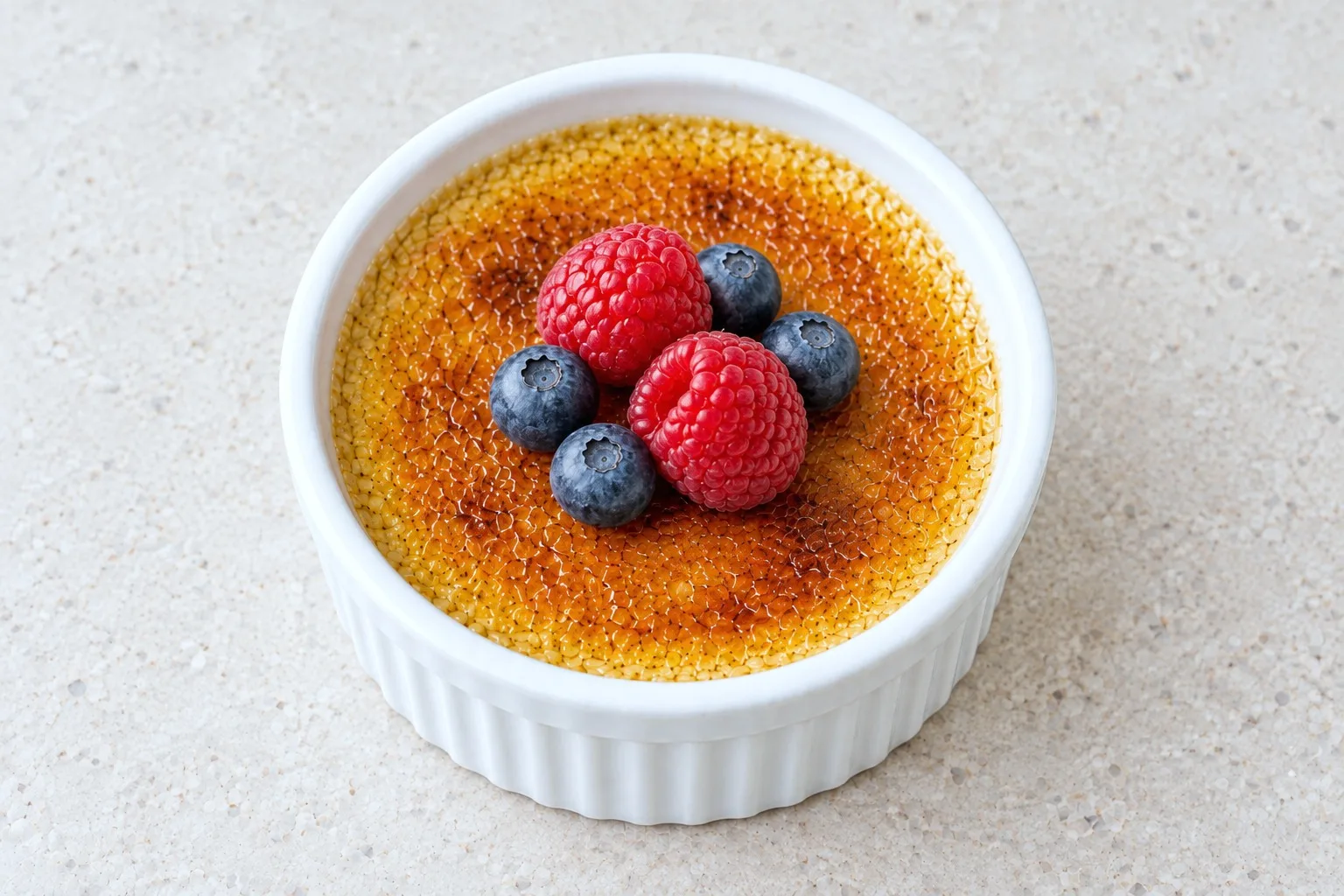
This easy creme brulee recipe turns five pantry basics into the kind of dessert that makes a dinner party feel finished. Vanilla custard bakes low and slow in a water bath until it barely holds its shape, then chills until firm enough to crack under a spoon.
All that stands between you and that crackling sugar top is a kitchen torch and a few quiet hours in the fridge.
This post contains affiliate links. If you buy through them, I may earn a small commission at no extra cost to you.
Table of Contents
The Case For Baking Your Own Creme Brulee
A water bath sounds like the kind of fussy French technique that belongs to restaurant kitchens, not a Tuesday night. It is not. Once the ramekins sit in their pan of hot water, the oven does the slow, gentle work and all that is left for you to do is wait.
Restaurant creme brulee can run ten or twelve dollars a ramekin for something that costs closer to two dollars to make at home, mostly in egg yolks and cream. You also control the sweetness, which restaurant versions often overdo under that thick crust of sugar.
There is something about ending a dinner with a dessert this unhurried that fits right alongside the small rituals in 12 Habits That Create That Effortless French Girl Vibe: nothing rushed, nothing fussy to look at, just done properly.
The active work takes under half an hour. Everything after that is the fridge doing the job for you, which makes this the rare dinner party dessert you can finish two days before anyone rings the doorbell.
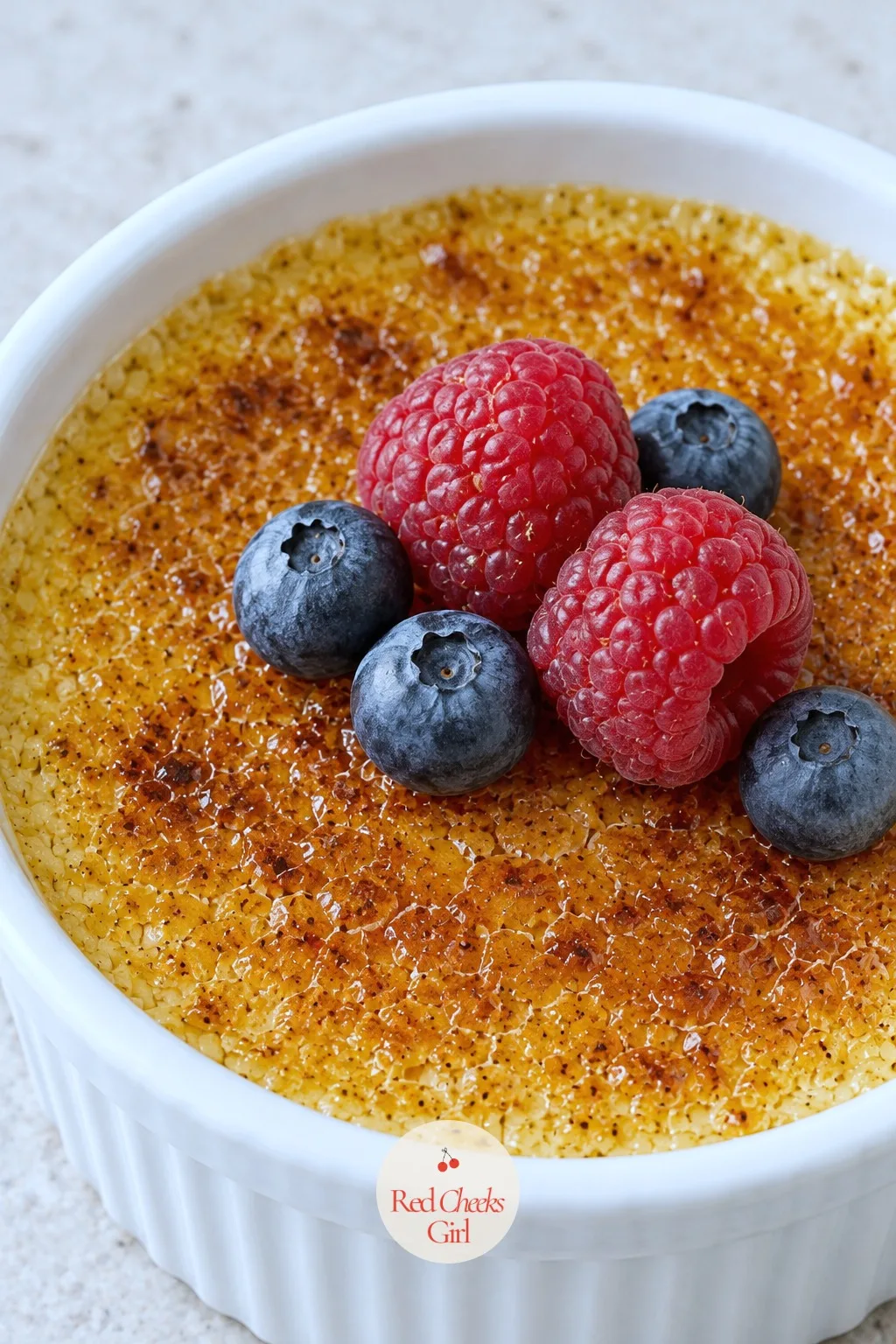
The Ingredients That Matter
Heavy cream, not half and half, is what gives the custard its weight on a spoon. Anything lighter bakes thinner and never quite sets to that same spoon-coating texture.
Yolks alone do the setting here. Whites would add air and a looser, more eggy set, which is why no real creme brulee recipe reaches for a whole egg.
A real vanilla bean earns its cost in this dish: the seeds speckle the custard and photograph beautifully, and the pod itself perfumes the cream as it steeps. Vanilla bean paste is a fair stand-in if the pods at the store look dry and sad.
Granulated sugar caramelizes just fine, but superfine sugar melts into a thinner, more even shell under the torch because the smaller grains heat through faster.
This dessert carries egg and dairy from top to bottom, so it is not the one to serve without warning at a mixed-allergy table.
How to Make It
This recipe makes six individual creme brulees, each baked in its own shallow ramekin so every guest gets a whole sugar crust to crack, not a shared corner of one. Follow the water bath and the chill time exactly; everything else about this custard is forgiving.
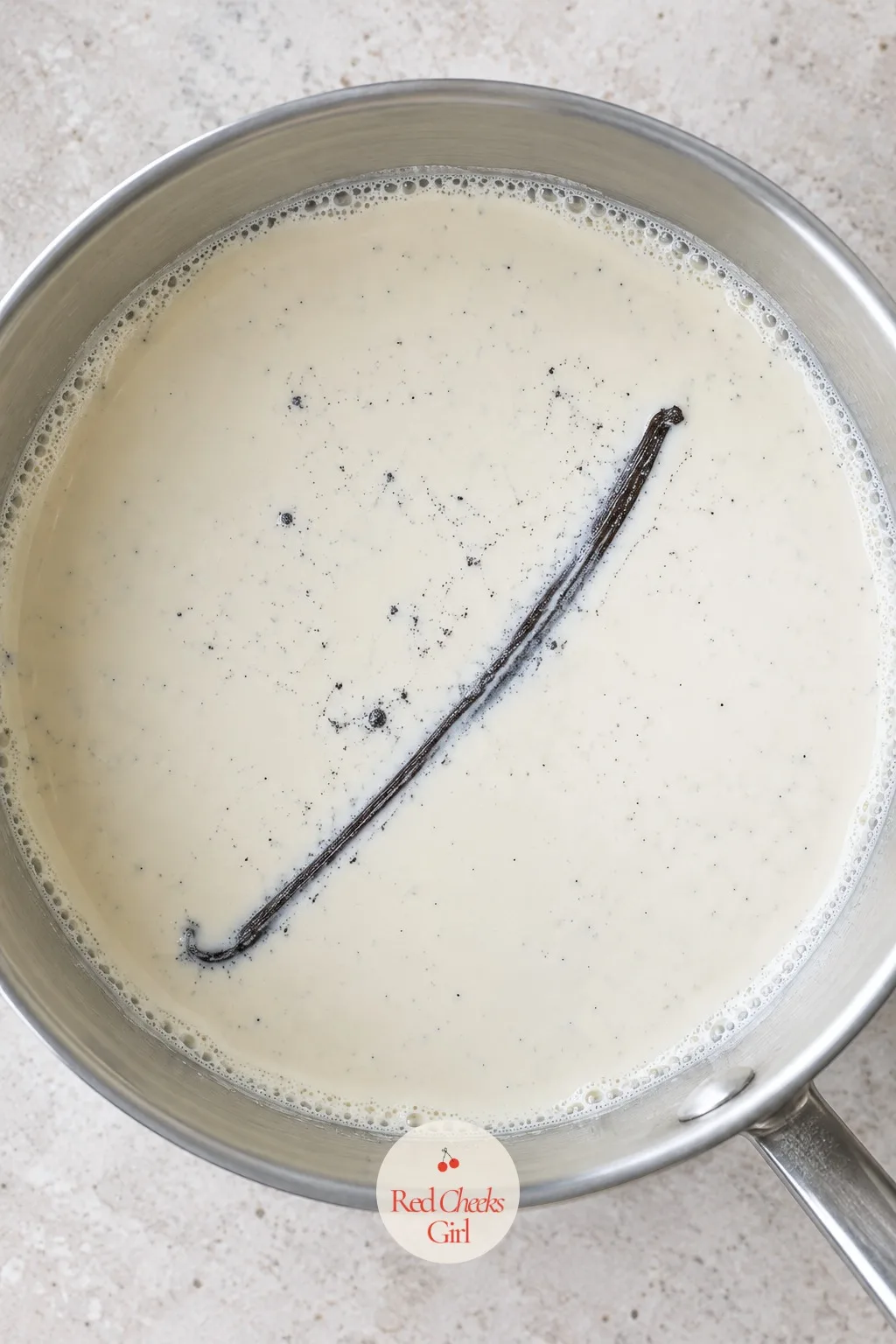
Warm the cream with vanilla
Watch for steam and tiny bubbles at the edge of the pan, not a full boil. The cream should look pale and faintly speckled once the vanilla seeds are stirred through.
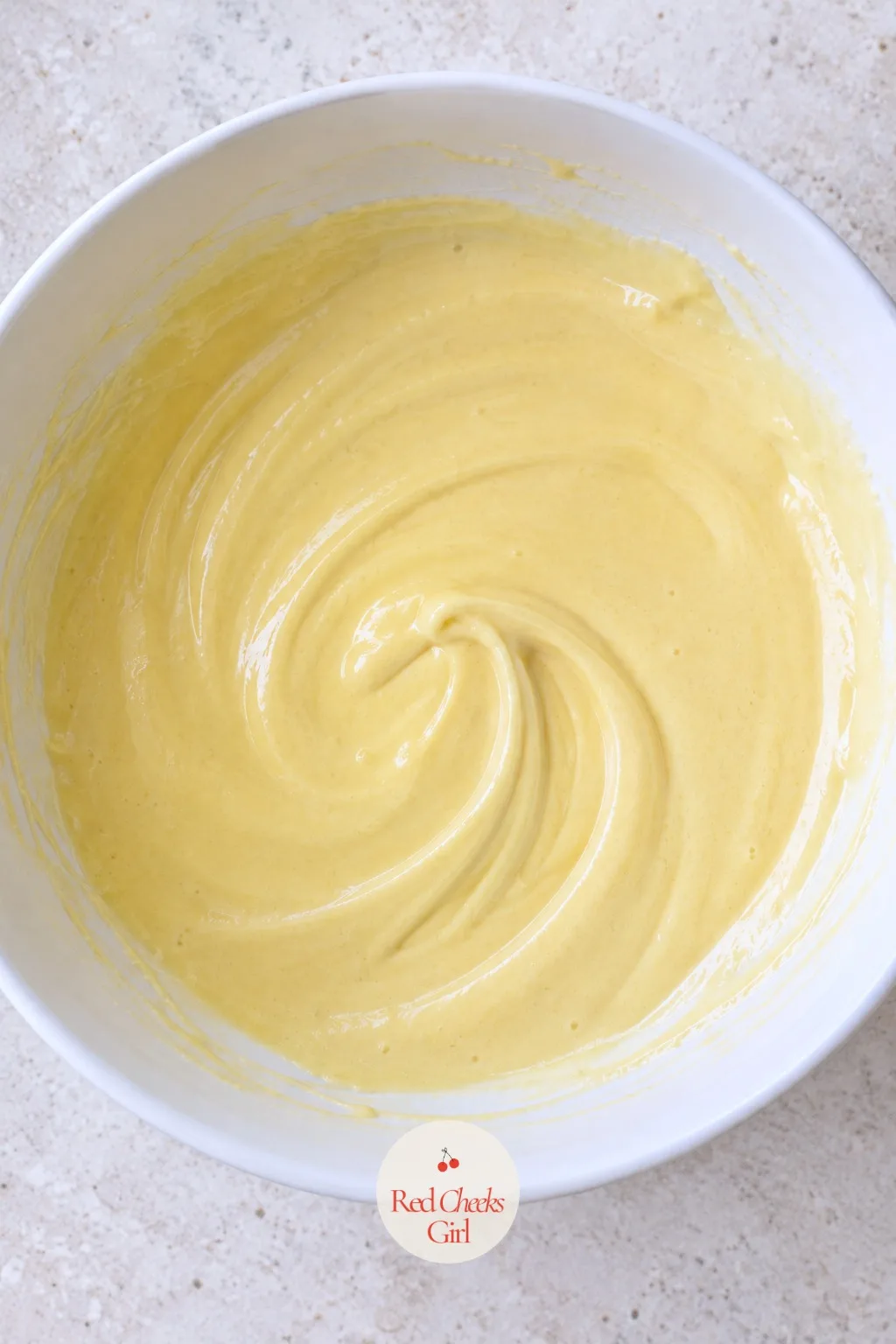
Whisk the yolks and sugar
Keep whisking until the mixture lightens from deep yellow to pale and falls off the whisk in a ribbon. No sugar granules should remain visible.
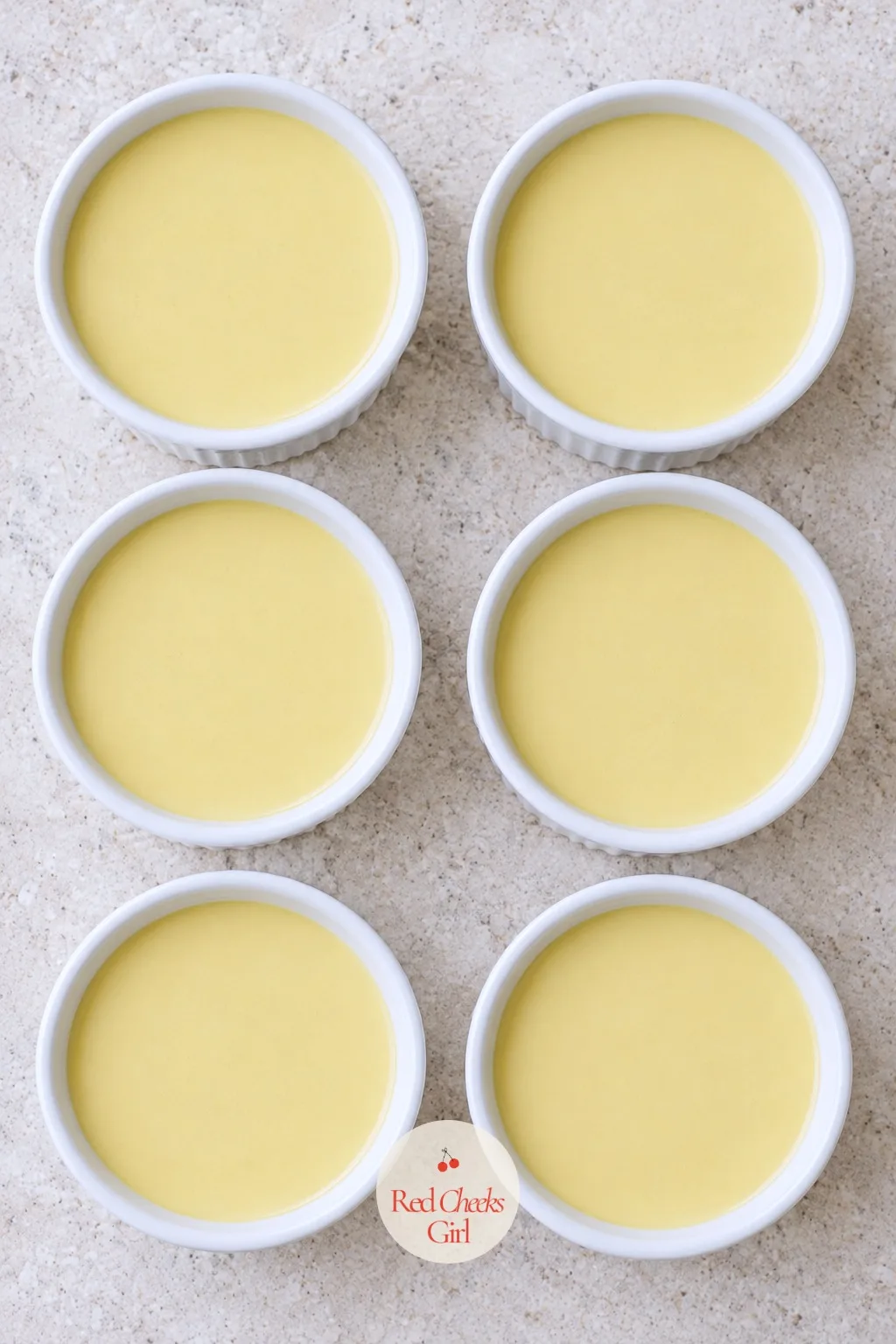
Fill the ramekins with custard
Pour slowly so the custard fills each ramekin almost to the rim without spilling over. The surface should sit flat and glassy before it goes anywhere near the oven.
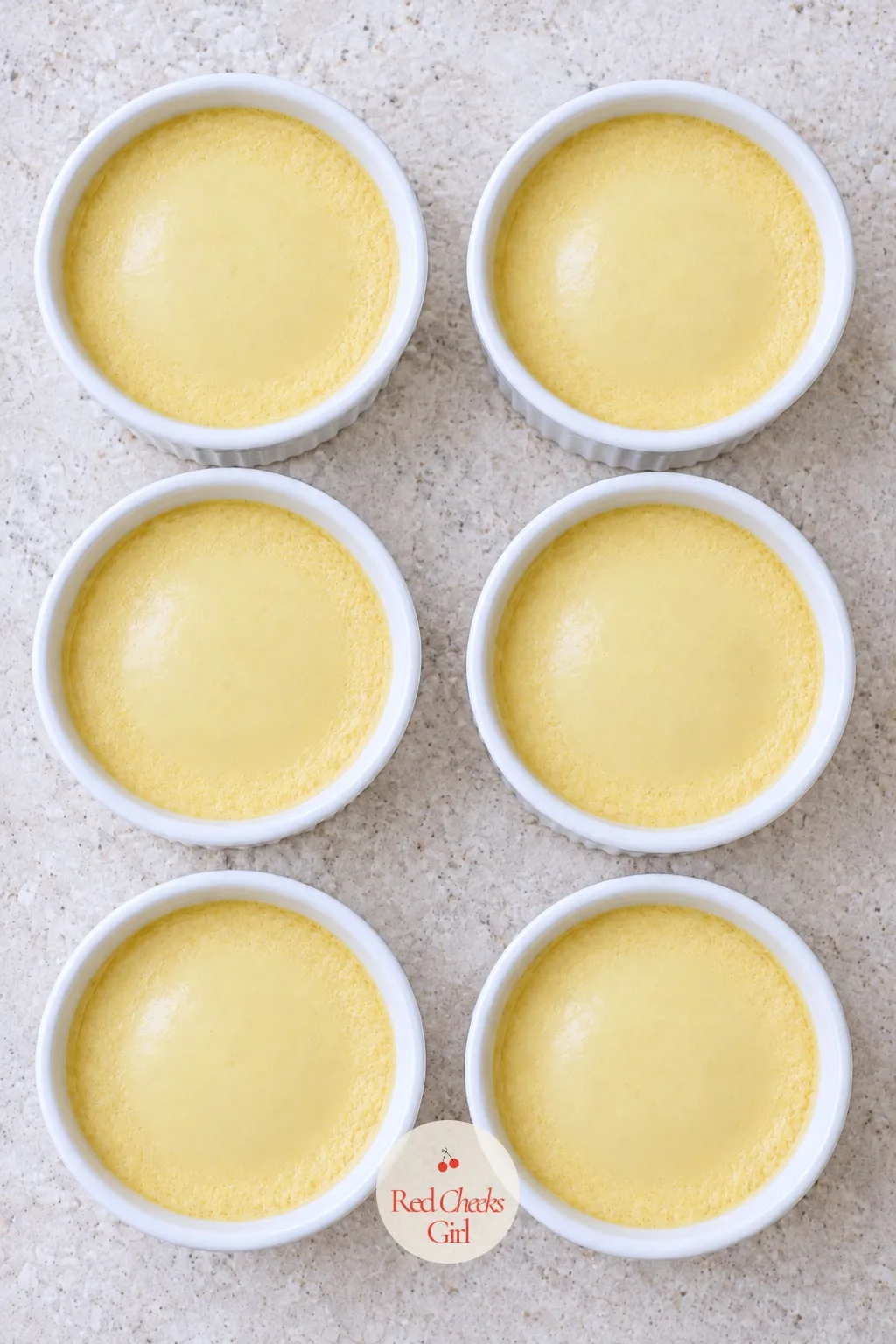
Bake until barely set
The edges should look matte and set while the center still has a soft wobble when the pan is nudged. Pull them the moment that wobble looks controlled, not liquid.
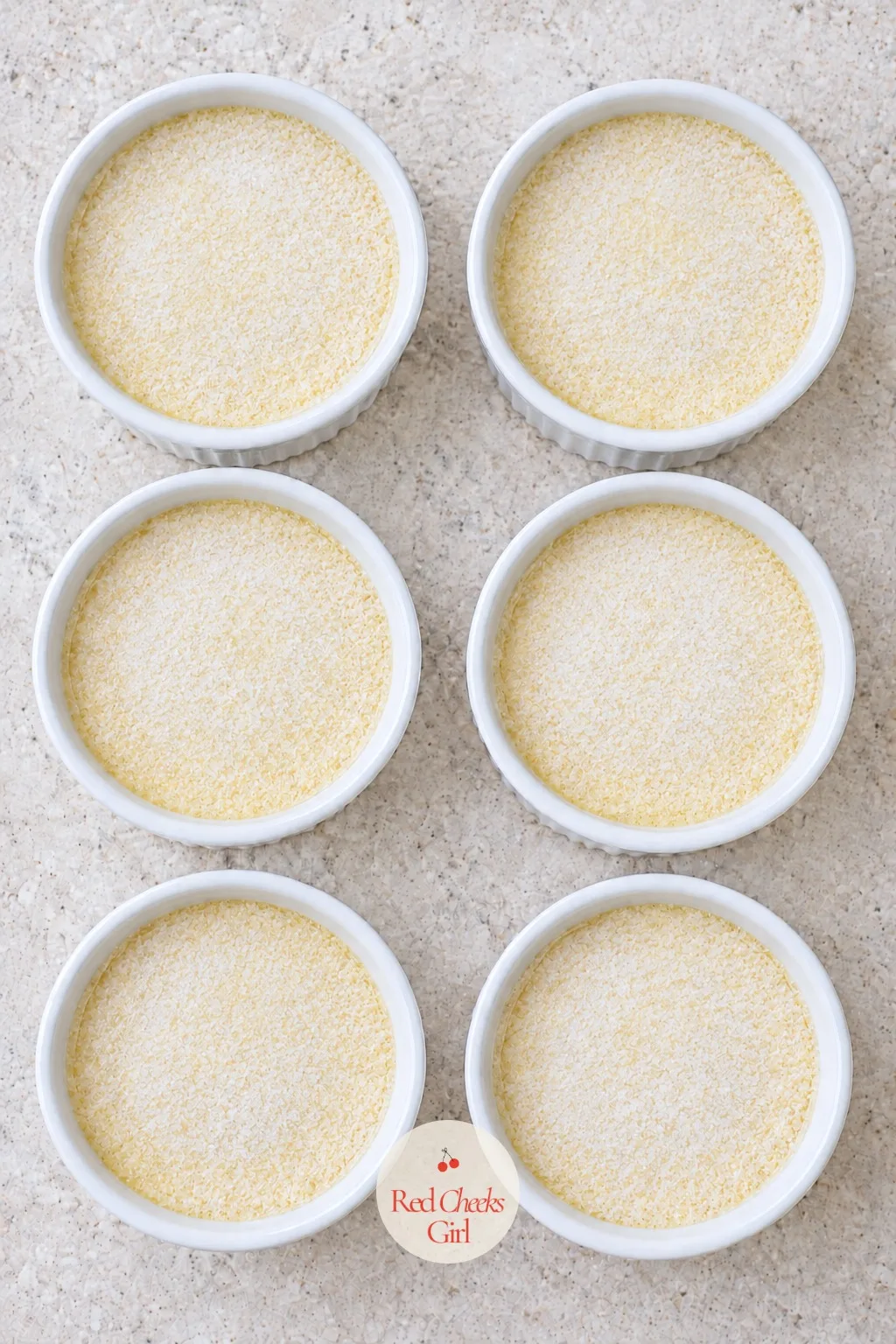
Sugar the tops
Tilt each ramekin as you sprinkle so the sugar settles into an even layer, corner to corner. Tap out anything that pools too thick in one spot.
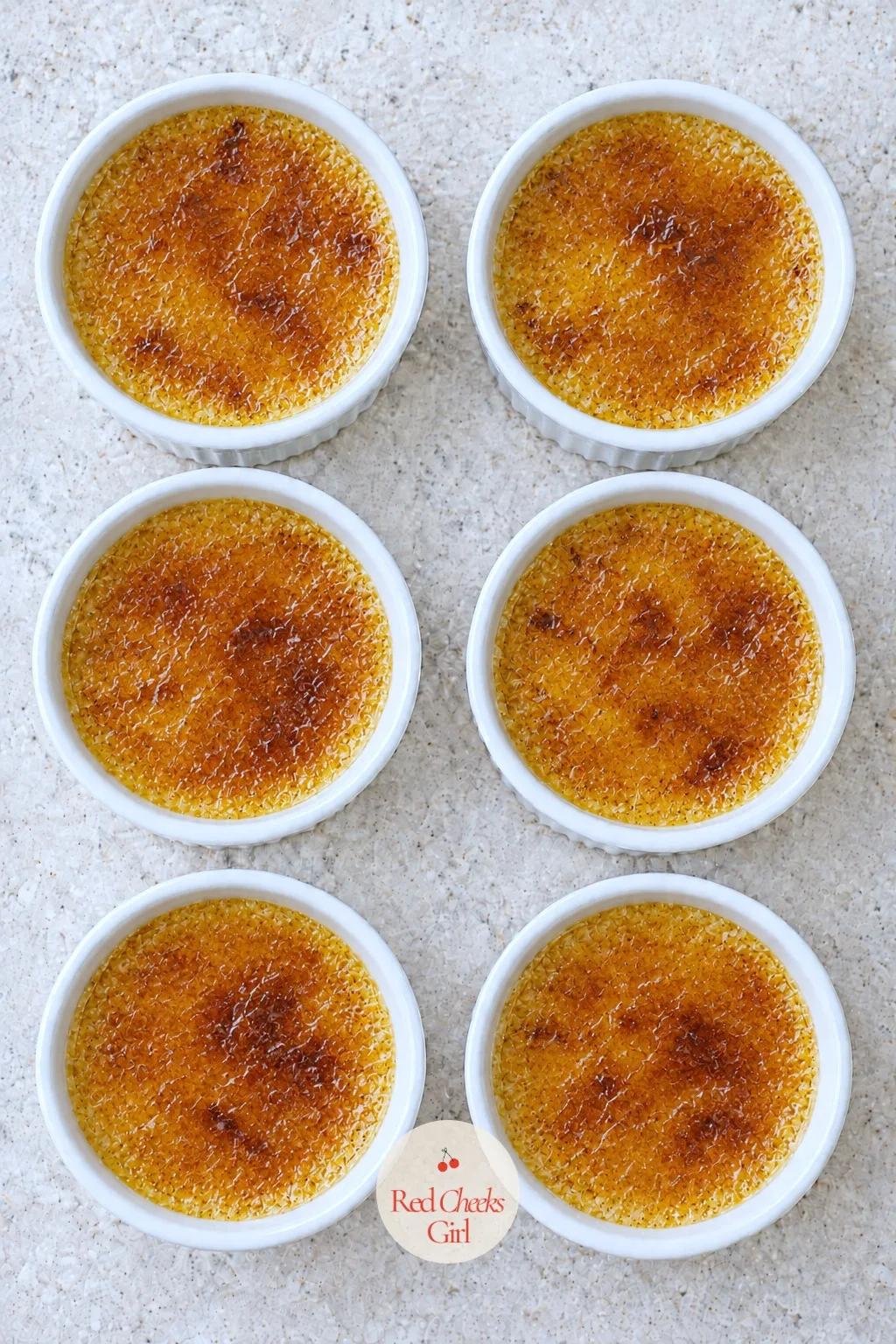
Torch the sugar
Move the flame in slow circles until the sugar melts, bubbles, and settles into a glassy amber shell. Fine cracks across the surface mean it is ready.
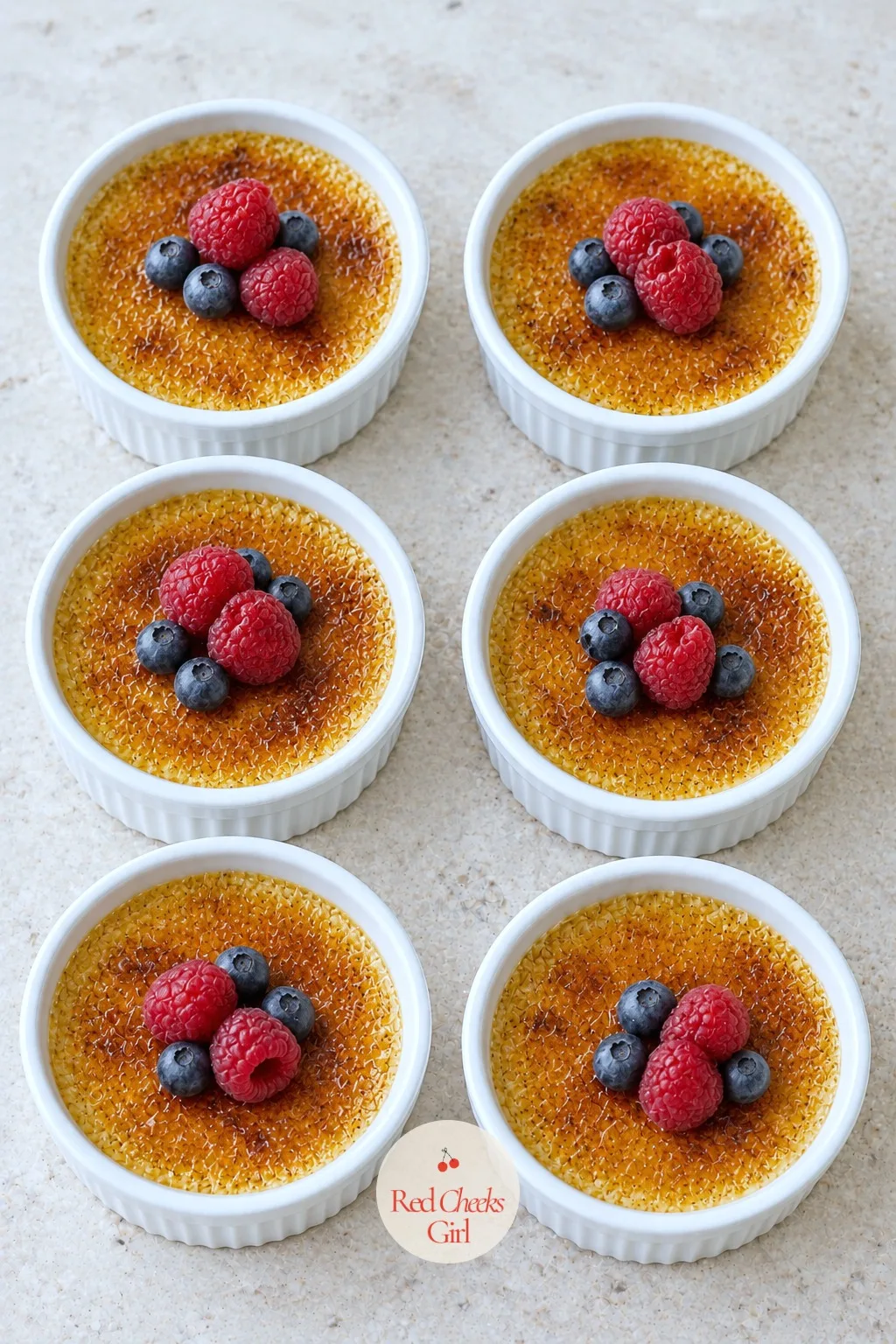
Finish with berries and serve
Set a few berries on top just before carrying the ramekins to the table, while the sugar is still warm and glossy. This is the moment to serve, not to wait.
🛍 Shopping guide
Tips For Getting Creme Brulee Right
Curdled, grainy custard is the most common failure, and it almost always comes down to heat. so keep the oven at the temperature this recipe calls for and resist the urge to turn it up to save time.
Trust the jiggle over the clock. so a center that sloshes like liquid needs more time, and one that does not move at all has already gone too far.
Pouring hot cream into the yolks too quickly scrambles them before they ever see the oven. Add it slowly, in a thin stream, whisking the whole time, and the eggs warm instead of cook.
A thick or clumpy sugar layer burns in spots before it melts evenly elsewhere. Sprinkle it thin, tilt the ramekin to spread it into every corner, and keep the torch moving instead of holding it still over one point.
Keep the torch for the last few minutes. since sugar left under refrigeration softens into syrup within the hour and loses its crack.
Swaps And Substitutions
For a coffee creme brulee, stir 2 tablespoons of finely ground espresso beans or 1 tablespoon of instant espresso powder into the cream while it steeps with the vanilla, then strain it out along with the pod; the custard turns a pale beige and tastes like an elegant tiramisu filling.
No vanilla bean on hand: 2 teaspoons of vanilla bean paste or pure vanilla extract, stirred into the cream after it comes off the heat, gets you most of the way there, just without the visible flecks.
A splash of orange liqueur or bourbon, about a tablespoon stirred into the strained custard, turns this into a dessert for the adults at the table only; pour and serve any alcohol with a light hand and only to guests who are of legal drinking age.
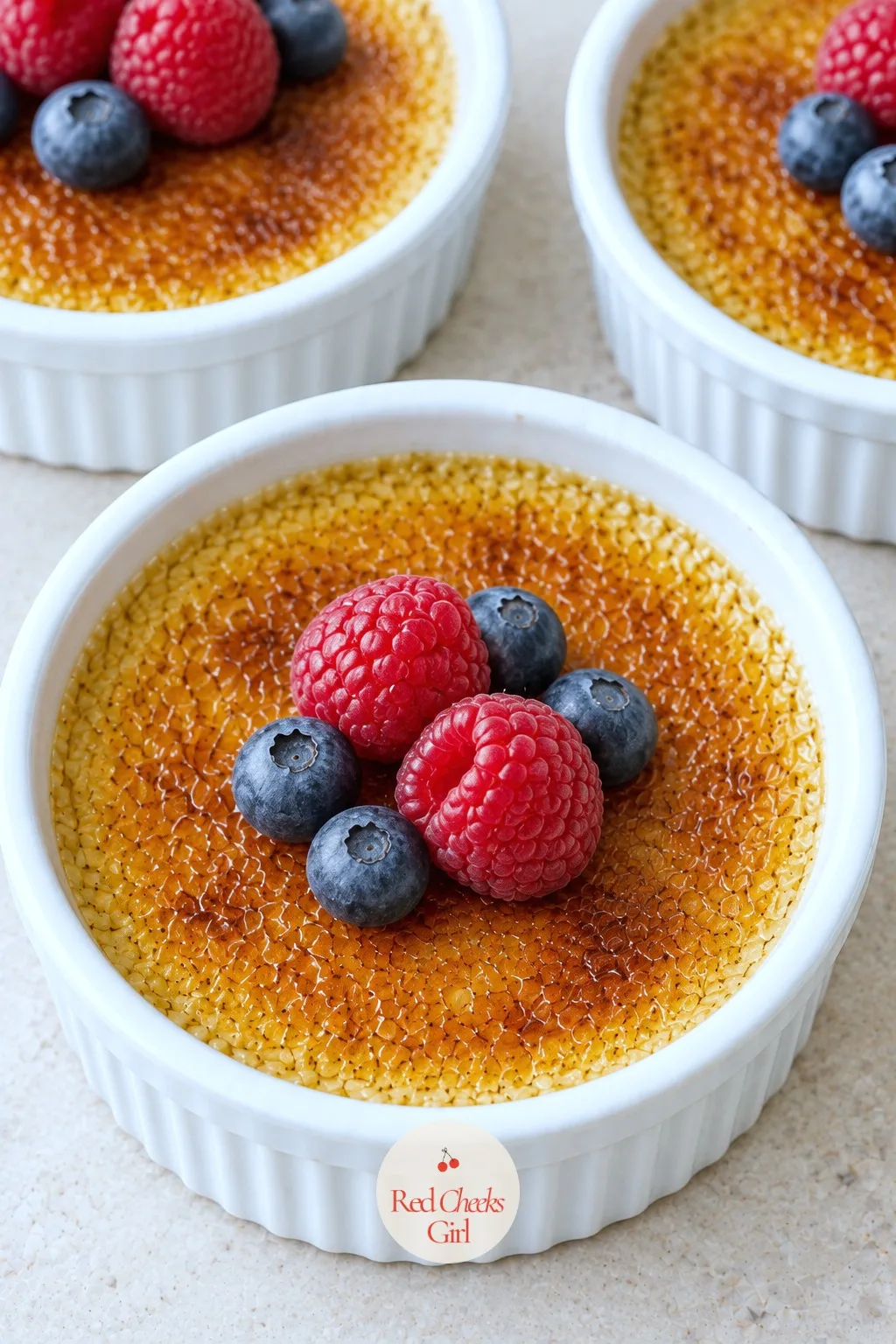
Half and half saves some richness, but the custard sets thinner and less velvety, so it is a compromise, not an upgrade. Raspberries and blueberries look prettiest against the amber crust, but sliced strawberries or a few pomegranate seeds work just as well depending on the season.
No kitchen torch: a very hot broiler will caramelize the sugar too, though less evenly. Set the chilled ramekins on a sheet pan filled with ice to keep the custard cold, and broil on the top rack for one to two minutes, watching constantly so the sugar colors instead of burning.
What To Serve It With At A Party
Creme brulee wants something bitter alongside it to cut the cream, which is why a small espresso or a strong pour-over does more for the course than another sweet thing on the table.
For an adult dinner party, pour a round of the French 75 Cocktail Recipe for a New Year’s Eve Toast before the custards come out; its citrus and bubbles reset the palate between the main course and dessert.
Creme brulee plates beautifully one at a time, which makes it a natural pick for a seated dinner. It fits the same spirit behind 33 Rehearsal Dinner Ideas for a Dinner Everyone Remembers, where a dessert that can be made two days ahead is worth its weight in gold.
Closing out the year with people who love a little sparkle: it fits right into 14 New Year’s Eve Dessert Recipes That Sparkle on the Midnight Table, where its cracked sugar top sits well between the champagne and the countdown.
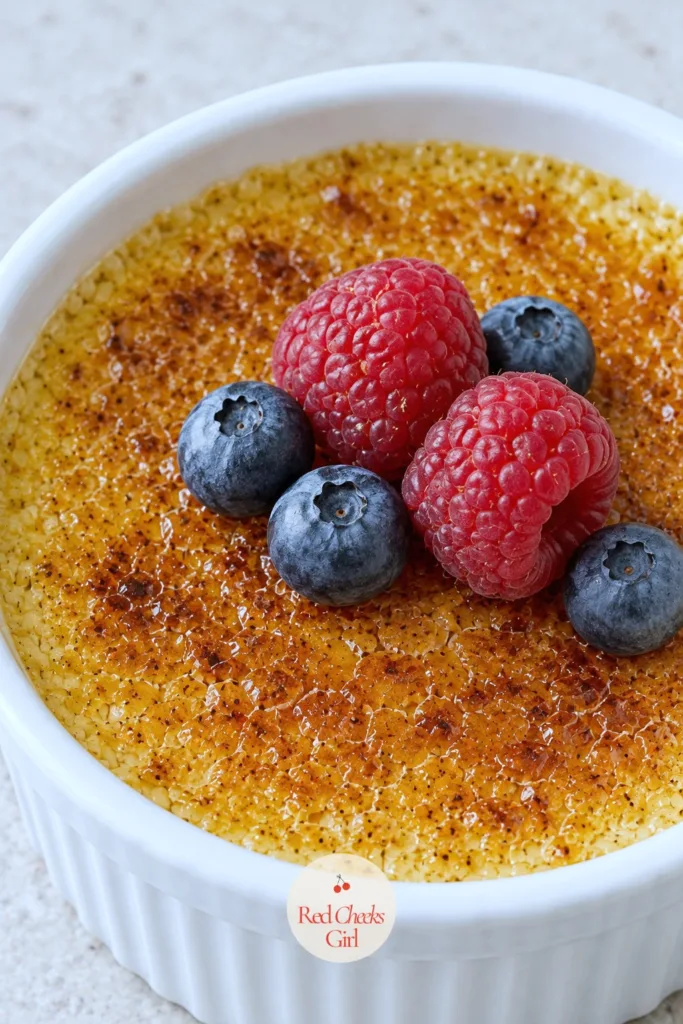
Easy Creme Brulee Recipe
Ingredients
- 2 cups heavy cream
- 1 vanilla bean split lengthwise (or 2 teaspoons vanilla bean paste)
- 5 large egg yolks
- 1/3 cup granulated sugar plus 6 teaspoons for the sugar tops
- 1/8 teaspoon fine salt
- 1/2 cup fresh raspberries or blueberries for garnish
Instructions
- Heat the oven to 325°F. Arrange six shallow 5-ounce ramekins, about 4 1/2 inches wide, inside a large roasting pan, leaving space between them so hot water can reach all sides.
- Pour 2 cups heavy cream into a medium saucepan. Split 1 vanilla bean lengthwise, scrape the seeds into the cream, then add the pod. Warm over medium heat until steam rises and small bubbles form at the edge, about 5 minutes; do not let it boil. Remove from the heat, cover, and let the vanilla steep for 15 minutes.
- In a mixing bowl, whisk 5 large egg yolks with 1/3 cup granulated sugar and 1/8 teaspoon salt until the mixture turns pale yellow and falls off the whisk in a thick ribbon, about 1 minute.
- Lift the vanilla pod out of the cream. Pour the warm cream into the egg mixture in a thin, steady stream while whisking constantly, so the eggs warm gradually instead of scrambling.
- Pour the custard through a fine-mesh strainer into a measuring cup or pitcher, pressing gently to catch any bits of cooked egg or vanilla pod, until it runs smooth.
- Divide the strained custard evenly among the six ramekins, filling each to about 1/4 inch below the rim.
- Slide the roasting pan onto the oven rack, then carefully pour boiling water into the pan around the ramekins until it reaches halfway up their sides. Keep the water out of the custard itself.
- Bake for 30 to 35 minutes, until the edges of the custards look matte and set but the centers still jiggle gently, like soft gelatin, when you nudge the pan. An instant-read thermometer inserted in the center should read about 170°F.
- Lift the ramekins out of the water bath with tongs and set them on a wire rack. Let them cool to room temperature, about 30 minutes.
- Cover each ramekin with plastic wrap and refrigerate until fully chilled and firm, at least 4 hours and up to 3 days.
- Just before serving, uncover the custards and blot away any surface moisture with a paper towel. Sprinkle 1 teaspoon granulated sugar evenly over each one, tilting the ramekin so it coats the whole surface in a thin, even layer.
- Hold a kitchen torch about 2 inches above one ramekin and move the flame in slow circles until the sugar melts and turns deep amber and crackled, 1 to 2 minutes per ramekin. Let the sugar harden for about 1 minute before serving.
- Top each creme brulee with a few fresh raspberries or blueberries and serve right away, while the sugar crust is still crackling.
Good to Know
Frequently Asked Questions
Why is my creme brulee runny?
Runny custard is almost always undercooked or under-chilled, not a doomed batch. Underbaked, or not chilled long enough, with four hours as the minimum, are the usual culprits. Give it more oven time next round, or a longer chill before judging it.
Can I use whole eggs instead of just egg yolks?
Whole eggs set a creme brulee firmer and more like a baked custard pudding, losing the dense, spoon-coating richness yolks alone give it. Stick with yolks only if the silky, custardy texture is the whole point.
What is the difference between creme brulee and creme caramel?
Creme brulee and creme caramel share the same egg yolk and cream base, but creme brulee bakes in its own ramekin under a torched sugar crust. Creme caramel is unmolded onto a plate under a pool of soft caramel sauce instead.
How long does creme brulee last once the sugar top is torched?
A torched creme brulee is best eaten within an hour, while the sugar is still glassy and crackling. After a day in the fridge the crust softens into syrup, though the custard underneath stays perfectly good to eat.
Can I brulee the sugar ahead of time and keep it crunchy?
Not for long. Sugar is hygroscopic, so it pulls moisture from the fridge and the custard beneath it, turning from a crisp shell into a sticky, melted layer within about an hour of torching.
Can I bake creme brulee in one big dish instead of ramekins?
Technically yes, but a shared dish bakes unevenly, with the edges overcooking long before the deep center sets. Individual ramekins bake more evenly and give every guest their own crust to crack.
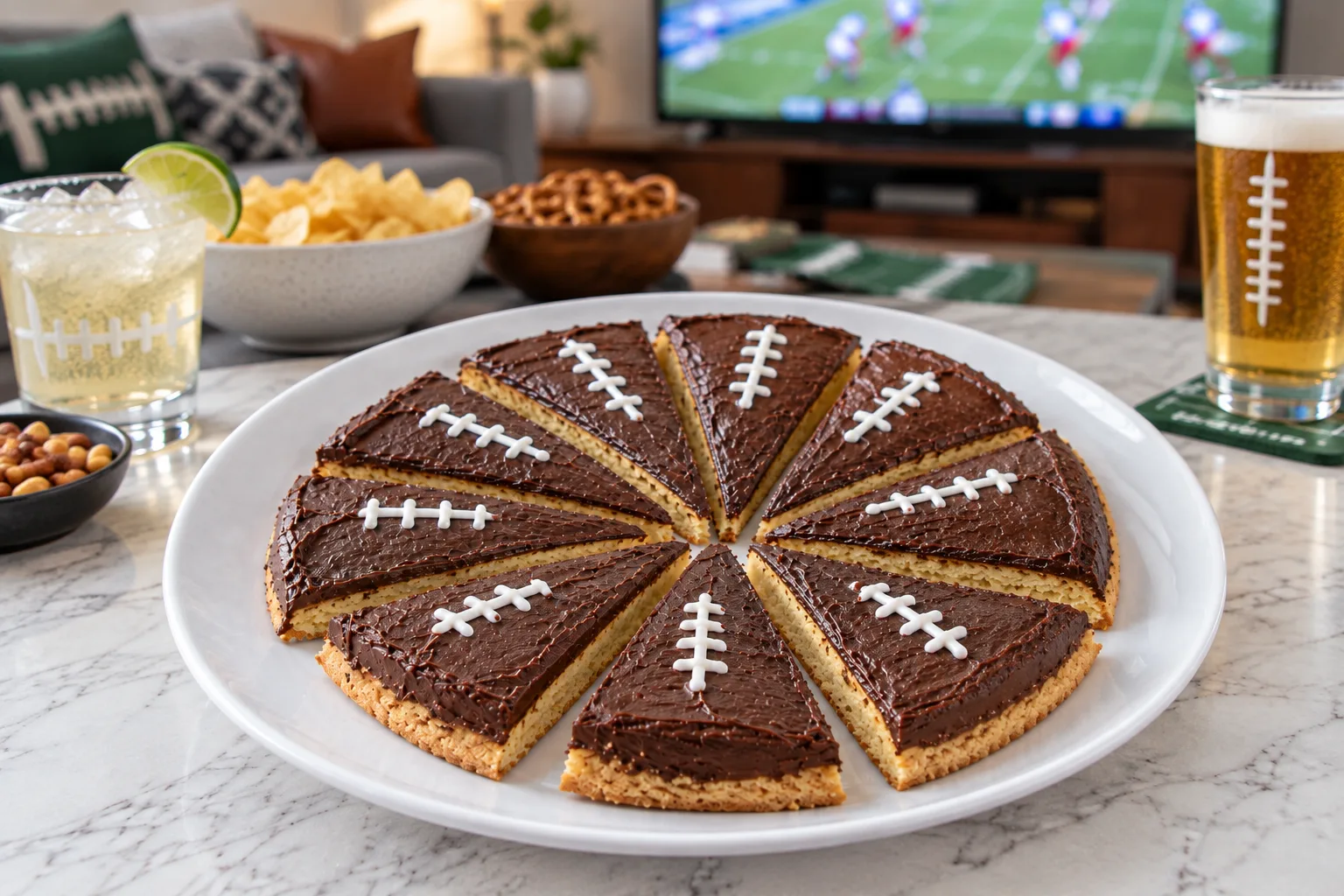
Football cookie cake turns chocolate chip cookie dough into a laced football shape, cut into wedges
My grandmother never measured anything. She’d squeeze a lemon directly over the bowl, catch wh
18 super bowl desserts built to eat standing up: Dubai chocolate strawberry cups, dirt cake, footbal
Leave a Reply