

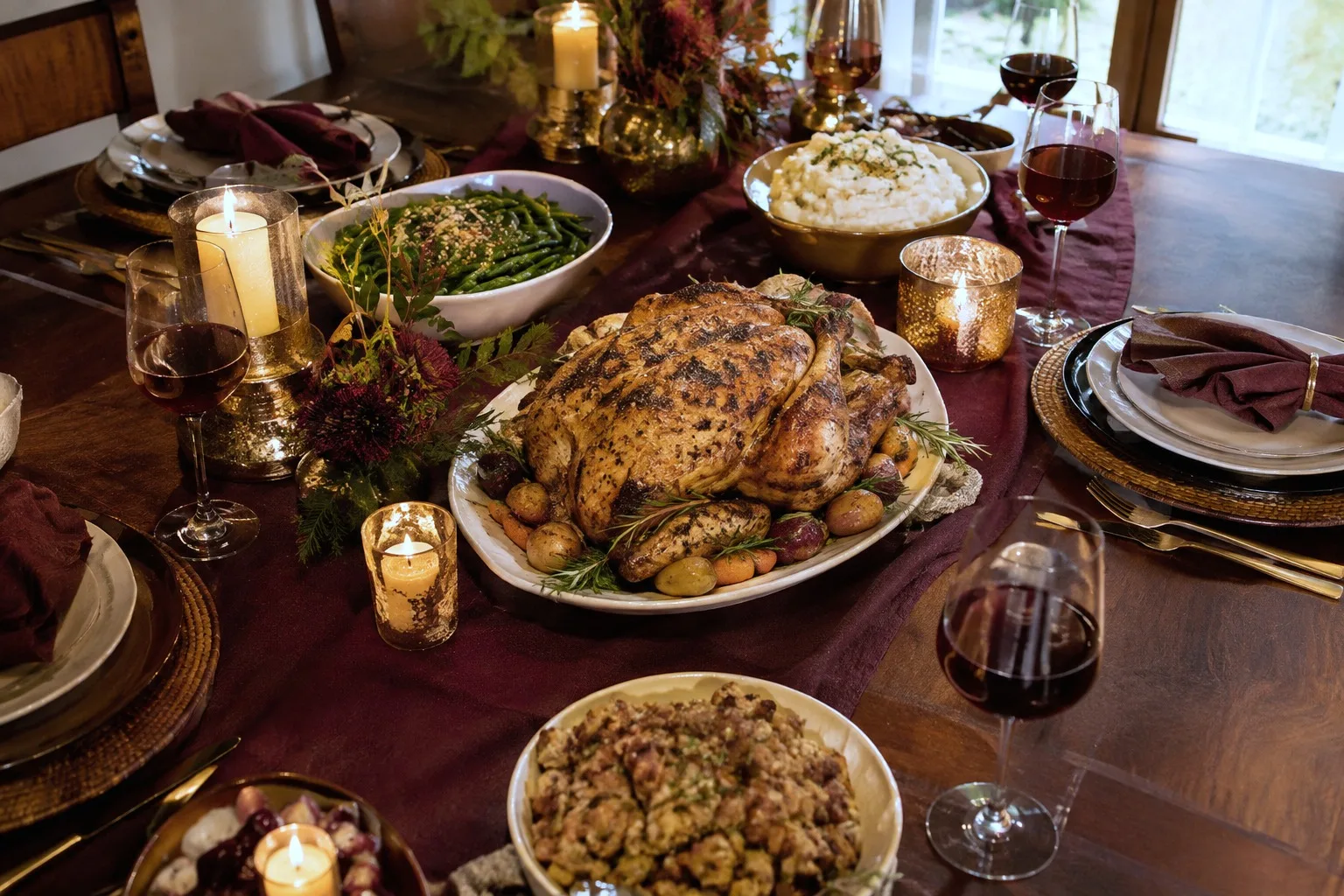
Some Sundays want a roast that takes the whole afternoon and perfumes the whole house. Some want a tray you built the night before and forgot about until the oven timer rang. Both count, and both end the same way: everyone still sitting at the table twenty minutes after the plates are empty.
What follows runs from the dish that makes people put their phones down to the one you can make with your eyes half closed, each with the one side that actually earns its place next to it.
Several of these sauces lean on a glass of red wine more than the glass does, so this lineup is written for adult tables, and it is worth keeping an eye on who is pouring their own glass if teenagers are around.
A quick allergy note before anyone reaches for a fork: dairy shows up in the mash and the gratin, gluten in the flour thickened sauces and the lasagna sheets, and the wild rice stuffing carries pecans.
Once the plates are scraped clean, a few rounds of 17 Dinner Party Games to Play Right at the Table keep people in their seats a little longer instead of reaching for their coats.
This post contains affiliate links. If you buy through them, I may earn a small commission at no extra cost to you.
Table of Contents
- Prime Rib Roast with Horseradish Cream
- Beef Bourguignon
- Roast Leg of Lamb with Rosemary
- Beef Tenderloin Roast with Garlic Herb Butter
- Braised Short Ribs over Creamy Mashed Potatoes
- Baked Ham with Pineapple Glaze
- Slow Roasted Pork Shoulder with Crackling
- Cornish Hens with Wild Rice Stuffing
- Classic Pot Roast
- Pork Roast with Apples and Dijon
- Herb Roasted Chicken with Vegetables in the Pan
- Big Pan of Lasagna
- Glazed Meat Loaf
- Frequently Asked Questions
Prime Rib Roast with Horseradish Cream
Prime rib is the dish that makes people put their phones down mid-sentence. It also sounds like the one recipe you hand off to a restaurant rather than your own oven, and that is exactly the objection worth arguing with: a thermometer does the hard thinking here, not a clock.
Pull the roast out an hour before it goes in so the center is not fighting a cold core, then sear it hot and finish it low. The crust comes from a blast at the top of the oven; the pink, even center comes from pulling it the moment the thermometer hits temperature, not a minute later.
Rest it under foil for a full twenty minutes before the knife touches it, or the juices end up on the board instead of in the slice. Garlicky green beans with toasted almonds cut through the richness without competing with it.
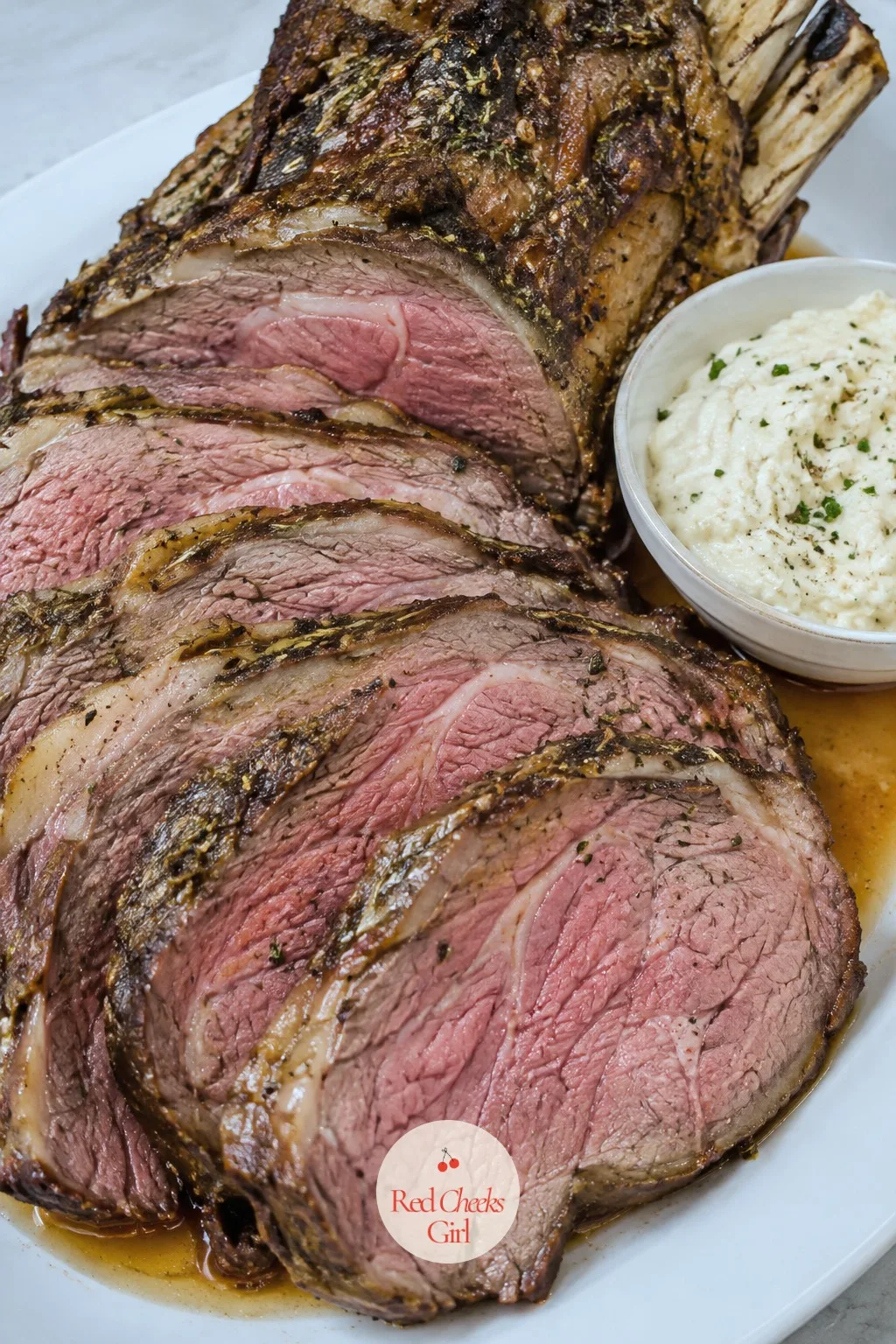
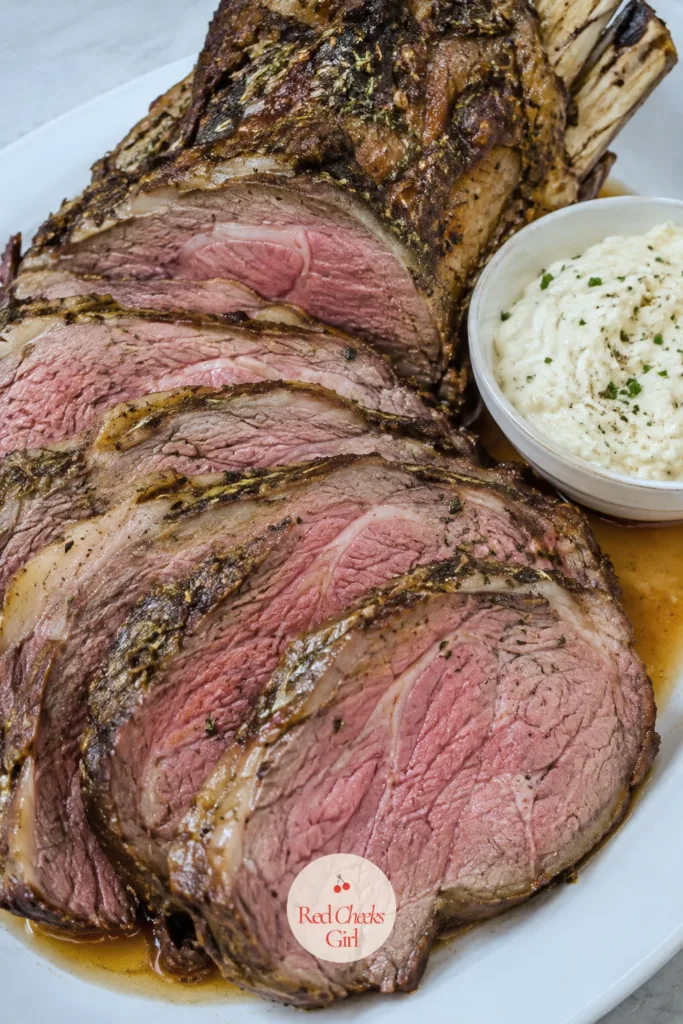
Prime Rib Roast with Horseradish Cream
Ingredients
- 1 bone-in prime rib roast 5 to 6 pounds, about 3 ribs
- 3 tablespoons olive oil
- 6 cloves garlic minced
- 2 tablespoons fresh rosemary finely chopped
- 2 tablespoons fresh thyme leaves
- 1 tablespoon plus 1 teaspoon kosher salt divided
- 2 teaspoons coarse black pepper
- 1 cup sour cream
- 1/3 cup prepared horseradish drained
- 1 tablespoon fresh lemon juice
- 1 tablespoon fresh chives finely chopped
Instructions
- Set the roast on the counter for 1 hour to take the chill off, then pat it completely dry with paper towels.
- Preheat the oven to 500 degrees F and set a rack in a roasting pan.
- Stir the olive oil, garlic, rosemary, thyme, 1 tablespoon salt and the pepper into a thick paste and rub it over every surface of the roast.
- Set the roast bone-side down on the rack and insert an oven-safe meat thermometer into the thickest part, away from bone.
- Roast at 500 degrees F for 15 minutes, until the surface is deeply browned and crackling at the edges.
- Lower the oven to 325 degrees F without opening the door, and continue roasting about 13 to 15 minutes per pound, until the thermometer reads 120 degrees F for rare or 125 degrees F for medium-rare.
- Lift the roast onto a cutting board, tent loosely with foil, and let it rest 20 to 25 minutes; the temperature will climb another 5 to 10 degrees as it sits.
- While it rests, whisk the sour cream, horseradish, lemon juice, remaining 1 teaspoon salt and chives together and chill until serving.
- Carve against the grain into slices about 3/4 inch thick, cutting the bones away first to make straight cuts easier.
- Arrange the slices on a warm platter and serve the horseradish cream alongside, not poured over.
Good to Know
🛍 Shopping guide
Beef Bourguignon
This is the dish that turns the kitchen into a French bistro for three hours straight, and it is worth every one of them. Nothing about it is fast, but almost none of it needs watching once the pot goes into the oven.
Work the beef in small batches and resist the urge to crowd the pot; too much meat at once steams instead of browning, and that crust is where half the flavor lives. The braise is done when a fork slides into the beef with no resistance at all, not on a timer.
It actually improves overnight, so if a Sunday feels tight, build it Saturday and reheat gently before serving. Buttered egg noodles underneath soak up the sauce better than rice ever could.
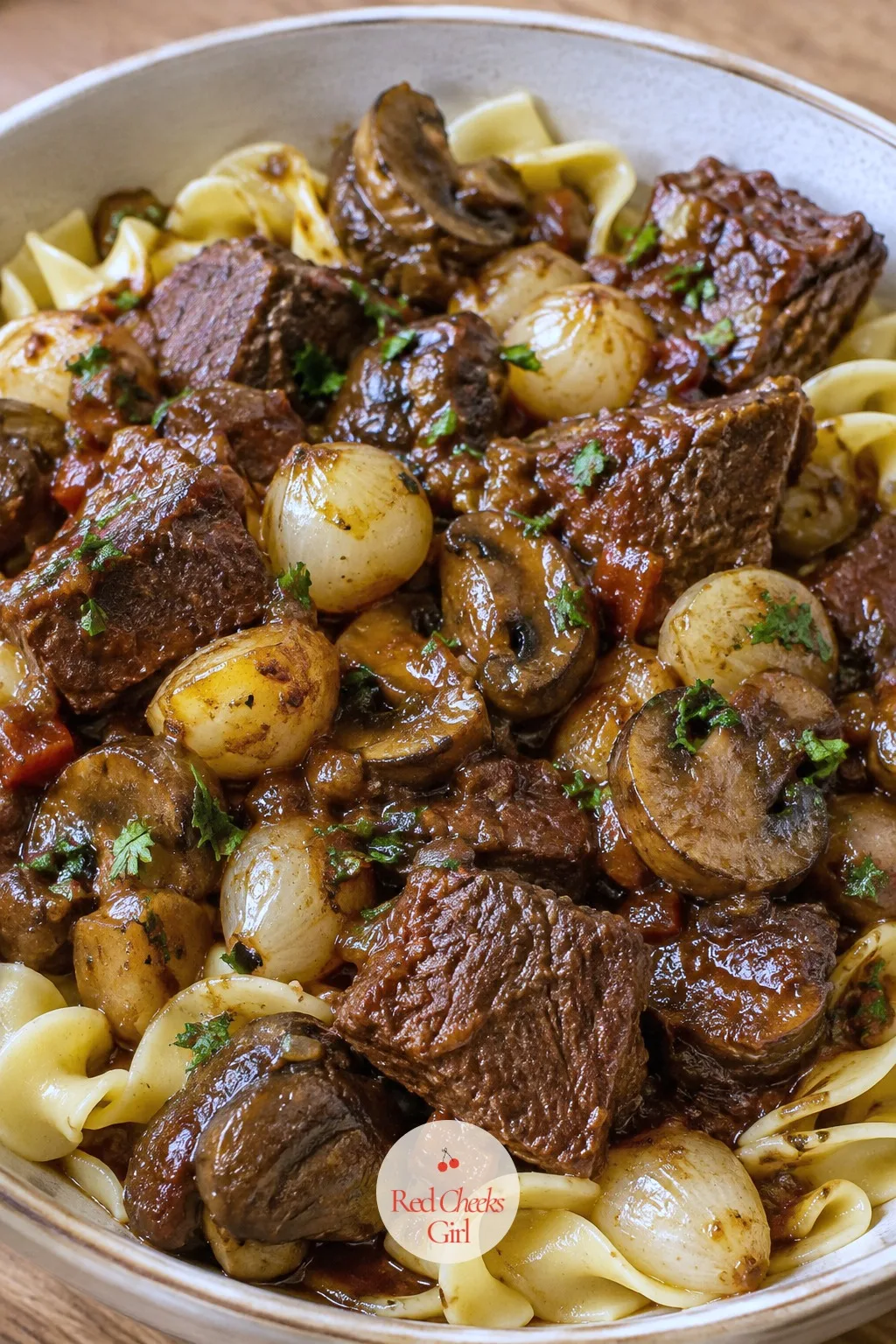
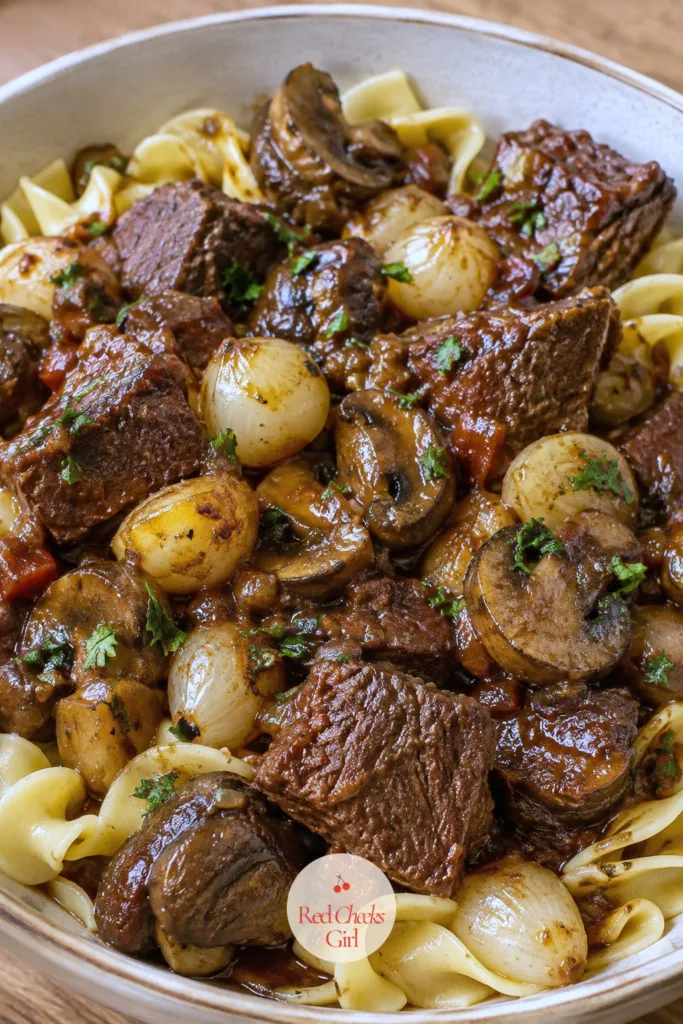
Beef Bourguignon
Ingredients
- 3 pounds beef chuck roast cut into 2-inch cubes
- 6 slices bacon chopped
- 1 large onion chopped
- 2 carrots sliced into coins
- 3 cloves garlic minced
- 2 tablespoons tomato paste
- 3 tablespoons all-purpose flour
- 3 cups dry red wine such as Burgundy or Pinot Noir
- 2 cups beef broth
- 1 bay leaf
- 4 sprigs fresh thyme
- 1 pound cremini mushrooms quartered
- 1 tablespoon butter
- 12 pearl onions peeled
- Salt and black pepper to season
- 2 tablespoons chopped fresh parsley for garnish
- 1 pound egg noodles cooked and buttered, for serving
Instructions
- Pat the beef cubes dry and season with 1 teaspoon salt and 1/2 teaspoon pepper.
- In a large Dutch oven over medium heat, cook the bacon until crisp, about 6 minutes, then remove with a slotted spoon and leave the fat behind.
- Working in two or three batches, sear the beef in the bacon fat until a deep brown crust forms on all sides, about 3 minutes per side; set the beef aside with the bacon.
- Add the chopped onion and carrots to the pot and cook 5 minutes, until softened and lightly golden.
- Stir in the garlic and tomato paste and cook 1 minute, until fragrant.
- Sprinkle the flour over the vegetables and stir constantly for 1 minute to coat.
- Pour in the wine, scraping up any browned bits from the bottom, then add the broth, bay leaf, thyme, and the reserved beef and bacon.
- Bring to a simmer, cover, and transfer to a 325 degree F oven (or keep on the lowest stovetop simmer) for 2 1/2 hours, until the beef shreds easily with a fork.
- Meanwhile, melt the butter in a skillet and saute the pearl onions and mushrooms until golden, about 8 minutes.
- Stir the mushroom mixture into the pot for the final 20 minutes of cooking.
- Discard the bay leaf and thyme stems, then taste and adjust salt and pepper.
- Ladle over the buttered egg noodles and scatter with parsley.
Good to Know
🛍 Shopping guide
Roast Leg of Lamb with Rosemary
Lamb intimidates more home cooks than it should, mostly because of the carving. If the thought of a whole bone-in leg puts you off, ask the butcher to debone and tie it: a five-minute job for them that costs nothing extra and makes the slicing foolproof.
The garlic and rosemary paste wants to sit against the meat, under the netting if it is tied, so every slice carries flavor and not just the surface. A hot start builds the crust; the long rest after is what keeps the center rosy instead of gray.
Pull it at 130 degrees F for medium-rare and let it climb the rest of the way on the board. A bowl of minted pea puree alongside does what mint jelly used to do, with better texture.
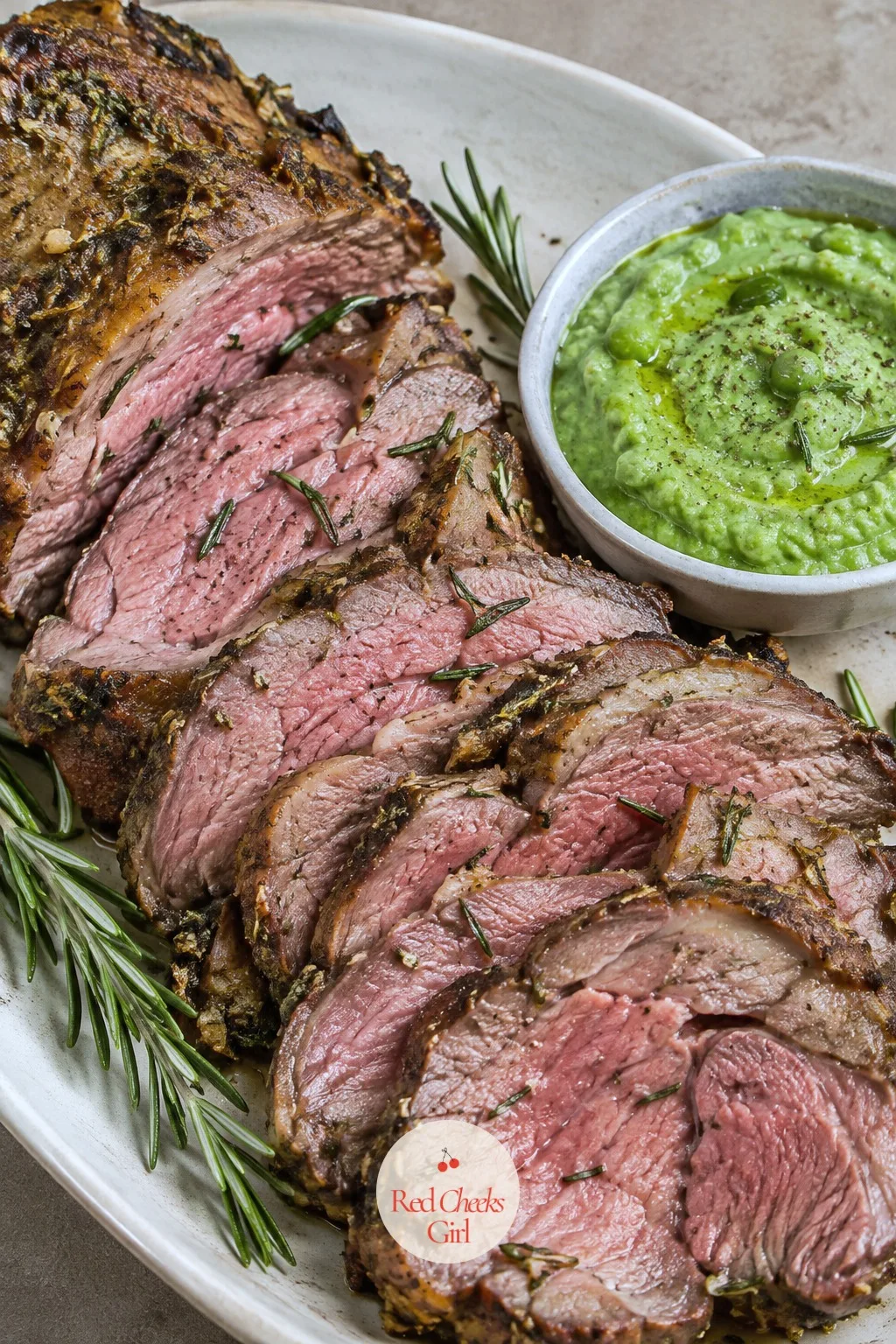
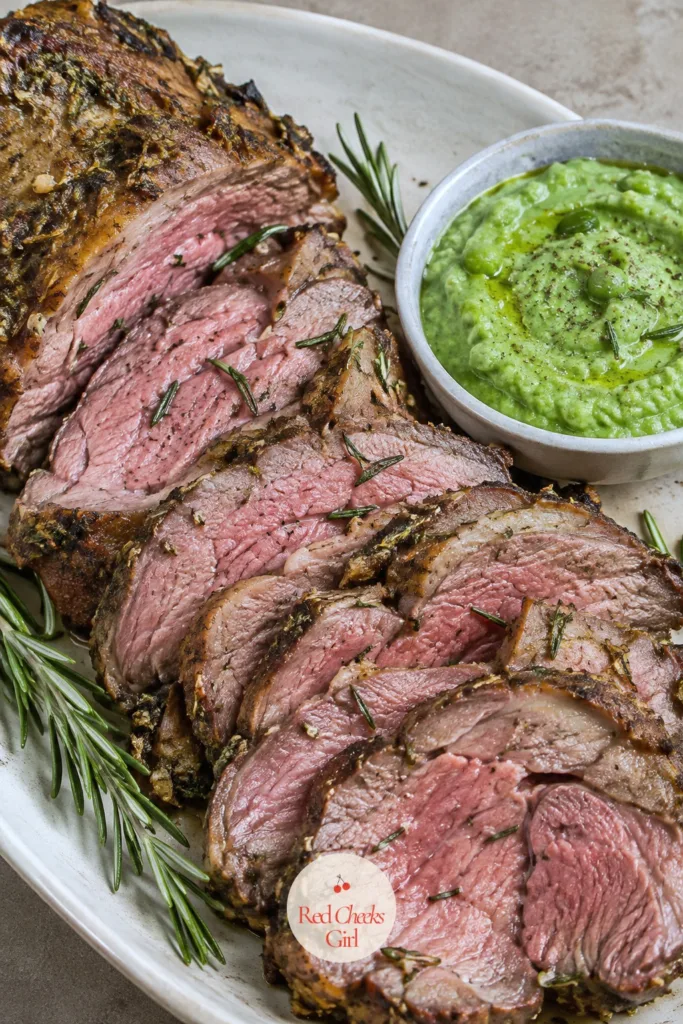
Roast Leg of Lamb with Rosemary
Ingredients
- 1 boneless leg of lamb netted or tied (5 to 6 pounds)
- 1/4 cup olive oil
- 8 cloves garlic minced
- 3 tablespoons fresh rosemary finely chopped
- 2 tablespoons fresh lemon juice
- 1 tablespoon lemon zest
- 2 teaspoons kosher salt
- 1 teaspoon black pepper
- 1 cup chicken or beef broth for the pan
Instructions
- Remove the lamb from the fridge 45 minutes before roasting so it loses the deep chill.
- Preheat the oven to 450 degrees F.
- Stir together the olive oil, garlic, rosemary, lemon juice, lemon zest, salt and pepper into a paste.
- Rub the paste all over the lamb, working it under the netting where you can reach.
- Set the lamb in a roasting pan and pour the broth into the bottom of the pan, not over the meat.
- Roast at 450 degrees F for 20 minutes, until the surface is well browned.
- Lower the oven to 325 degrees F and continue roasting 50 to 60 minutes, until an instant read thermometer in the thickest part reads 130 degrees F for medium-rare.
- Transfer the lamb to a cutting board, tent with foil, and rest 15 minutes; the temperature will rise to about 135 to 140 degrees F.
- Snip away the netting or twine and slice against the grain into 1/2-inch slices.
- Spoon the pan juices over the slices before serving.
Good to Know
🛍 Shopping guide
Beef Tenderloin Roast with Garlic Herb Butter
Of everything on this table, tenderloin is the most forgiving version of fancy. It cooks fast, there is no bone to work around, and the butter does most of the flavor work while you deal with everything else.
Tying the roast at intervals keeps it an even thickness so the ends do not overcook before the center catches up. Sear it hard first, then let the oven finish the job gently; the compound butter goes on right as it comes out, so it melts into every slice as it rests.
A dish of potato gratin underneath does the quiet, heavy lifting a meal like this needs. If a whole tenderloin feels like too much for the table, a half roast (2 pounds) at the same temperatures works fine, just start checking the thermometer ten minutes earlier.
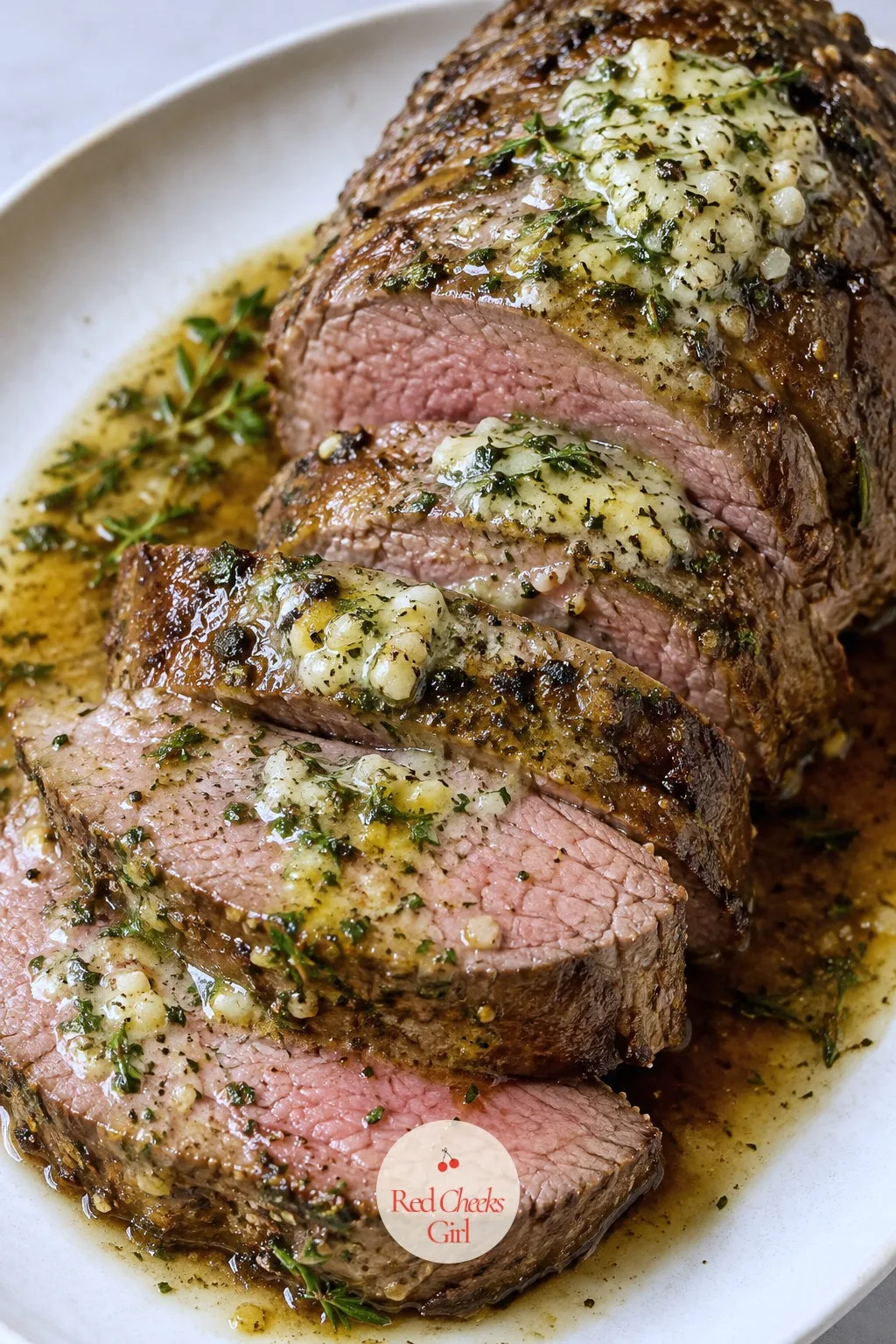
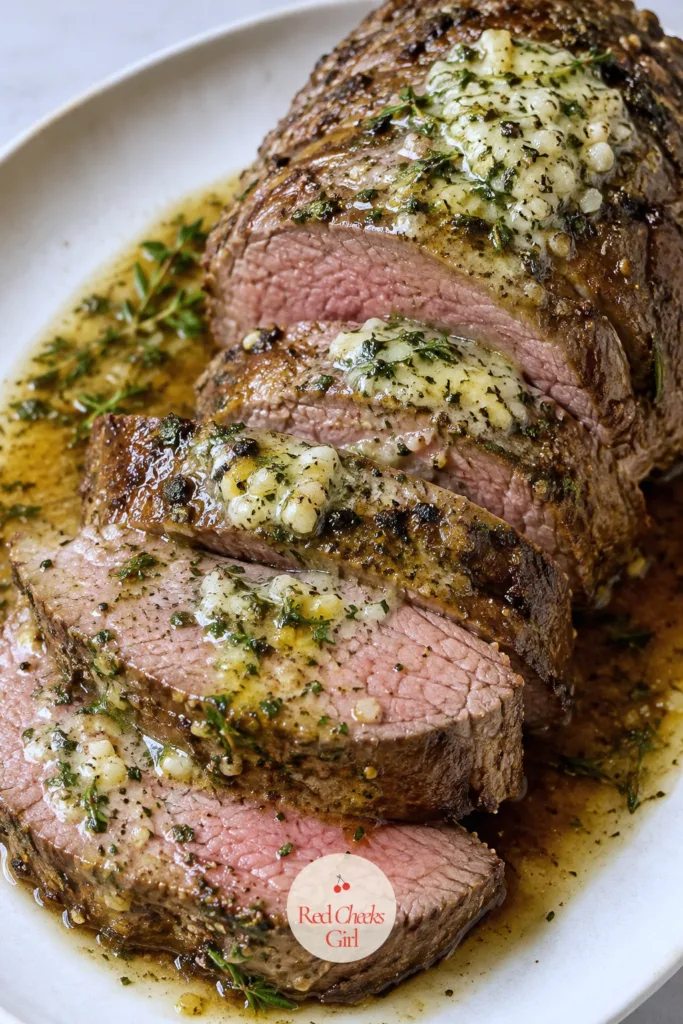
Beef Tenderloin Roast with Garlic Herb Butter
Ingredients
- 1 whole beef tenderloin trimmed and tied (4 pounds)
- 2 tablespoons olive oil
- 1 1/2 teaspoons kosher salt
- 1 teaspoon black pepper
- 1/2 cup unsalted butter softened
- 4 cloves garlic minced
- 2 tablespoons fresh parsley finely chopped
- 1 tablespoon fresh thyme leaves
- 1/2 teaspoon flaky sea salt for the butter
Instructions
- Let the tenderloin sit at room temperature for 30 minutes, then pat it completely dry.
- Preheat the oven to 425 degrees F.
- Rub the roast all over with olive oil, kosher salt and pepper.
- Heat a large oven-safe skillet over high heat until it just starts to smoke, then sear the tenderloin on all sides, about 2 minutes per side, until deeply browned.
- Transfer the skillet directly to the oven and roast 20 to 25 minutes, until an instant read thermometer reads 125 degrees F for medium-rare.
- While it roasts, mash the softened butter with the garlic, parsley, thyme and flaky salt into a rough paste.
- Remove the roast from the oven, spread half the garlic herb butter over the top, and tent loosely with foil.
- Rest 15 minutes; the temperature will climb to about 130 to 135 degrees F.
- Snip the twine, slice into 1-inch rounds, and top each slice with a spoonful of the remaining butter.
Good to Know
🛍 Shopping guide
Braised Short Ribs over Creamy Mashed Potatoes
This is the dish people ask for by name months later, the one that photographs itself: a deep pile of mash, a short rib collapsing into it, sauce pooling at the edge. It earns that reputation honestly, mostly through time rather than skill.
Sear the ribs bone-in and well browned before anything else touches the pot; that crust is the base of the whole sauce. From there it is a long, quiet braise, low enough that the liquid barely moves, until the meat gives way at the gentlest push of a fork.
The mash underneath wants real cream and real butter, nothing lighter, because it has to hold its own against the sauce. Glazed carrots on the side add color without asking for more oven space.
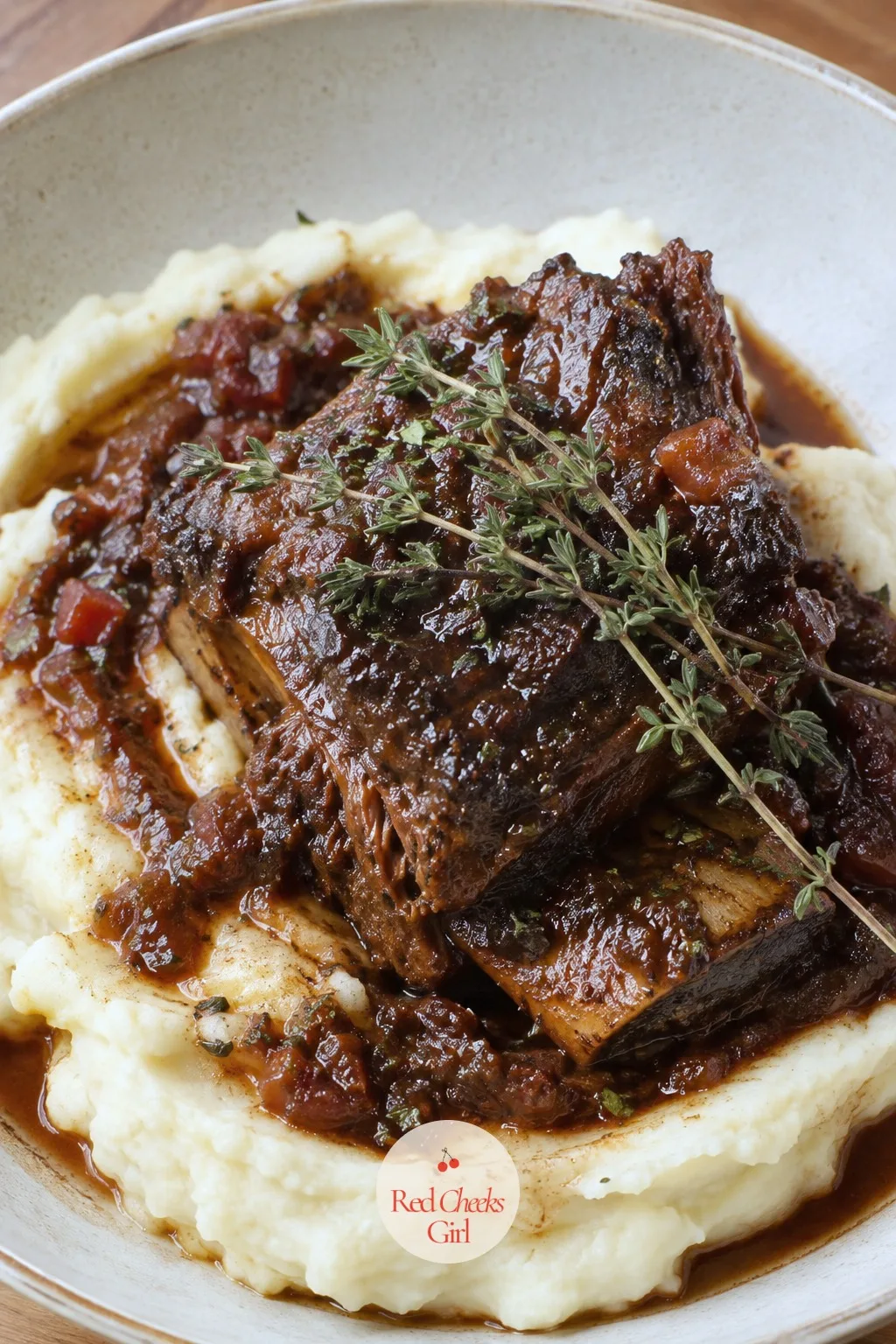
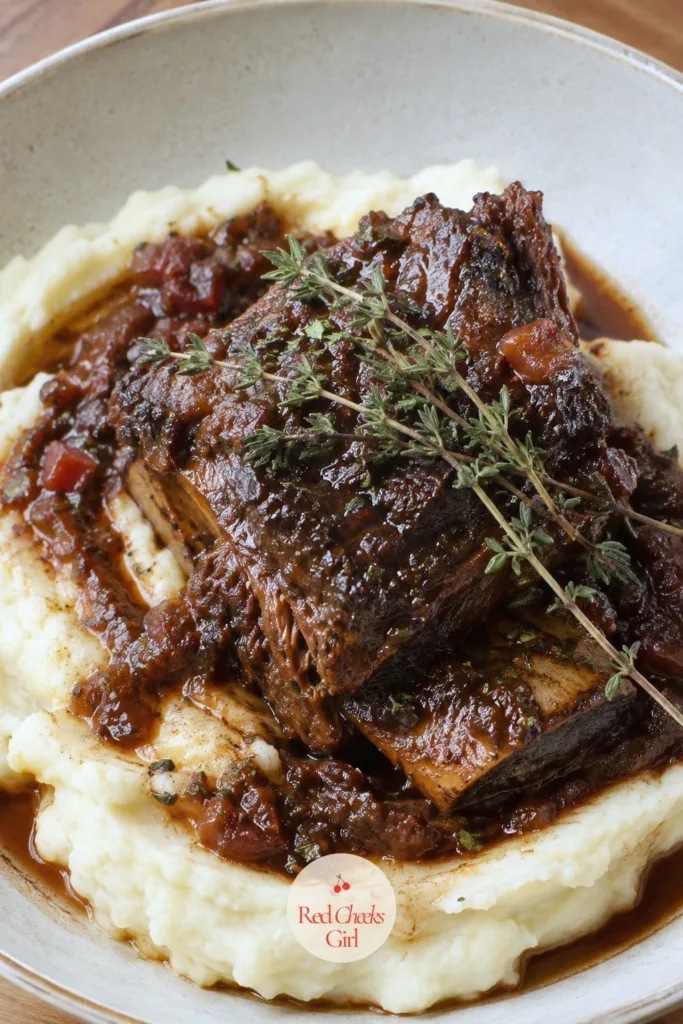
Braised Short Ribs over Creamy Mashed Potatoes
Ingredients
- 4 pounds bone-in beef short ribs
- 2 teaspoons kosher salt plus more to taste
- 1 teaspoon black pepper
- 2 tablespoons olive oil
- 1 onion chopped
- 2 carrots chopped
- 2 celery stalks chopped
- 4 cloves garlic minced
- 2 tablespoons tomato paste
- 2 cups dry red wine
- 2 cups beef broth
- 2 sprigs fresh rosemary
- 3 pounds russet potatoes peeled and quartered
- 1/2 cup heavy cream
- 6 tablespoons butter divided
Instructions
- Pat the short ribs dry and season all over with 2 teaspoons salt and the pepper.
- Heat the olive oil in a large Dutch oven over medium-high heat and sear the ribs on all sides until deeply browned, about 10 minutes total; remove and set aside.
- Add the onion, carrots and celery to the pot and cook 6 minutes, until softened.
- Stir in the garlic and tomato paste and cook 1 minute, until fragrant.
- Pour in the wine, scraping up the browned bits, and simmer 3 minutes to cook off the raw alcohol smell.
- Return the ribs to the pot, add the broth and rosemary, and bring to a simmer.
- Cover and transfer to a 300 degree F oven for 2 3/4 to 3 hours, until the meat pulls away from the bone with no resistance.
- About 30 minutes before the ribs are done, boil the potatoes in salted water until a knife slides in with no resistance, 15 to 18 minutes; drain.
- Mash the potatoes with the cream, 4 tablespoons butter and 1 teaspoon salt until smooth.
- Lift the ribs out, strain the sauce, discard the vegetables, and simmer the liquid 10 minutes until it coats the back of a spoon; swirl in the remaining 2 tablespoons butter.
- Spoon mashed potatoes into shallow bowls, top with a short rib, and ladle the sauce over both.
Good to Know
🛍 Shopping guide
Baked Ham with Pineapple Glaze
A ham is the Sunday main that needs almost nothing from you once it is glazed, which matters on a weekend that also has to include laundry. If pineapple feels like a look from another decade, the glaze still works; it just needs a sharp edge of mustard and clove so it never reads as only sweet.
Buy it spiral cut and already cooked, score the surface if it is not already scored, and glaze in stages so the sugar has time to set into a shine instead of sliding off in the oven.
The same glazed ham does double duty if a spring table is coming up too, and 18 Easter Dinner Ideas for a Family Table From Ham to Spring Sides has the rest of that menu waiting. Scalloped potatoes baked in the same oven window round the plate out.
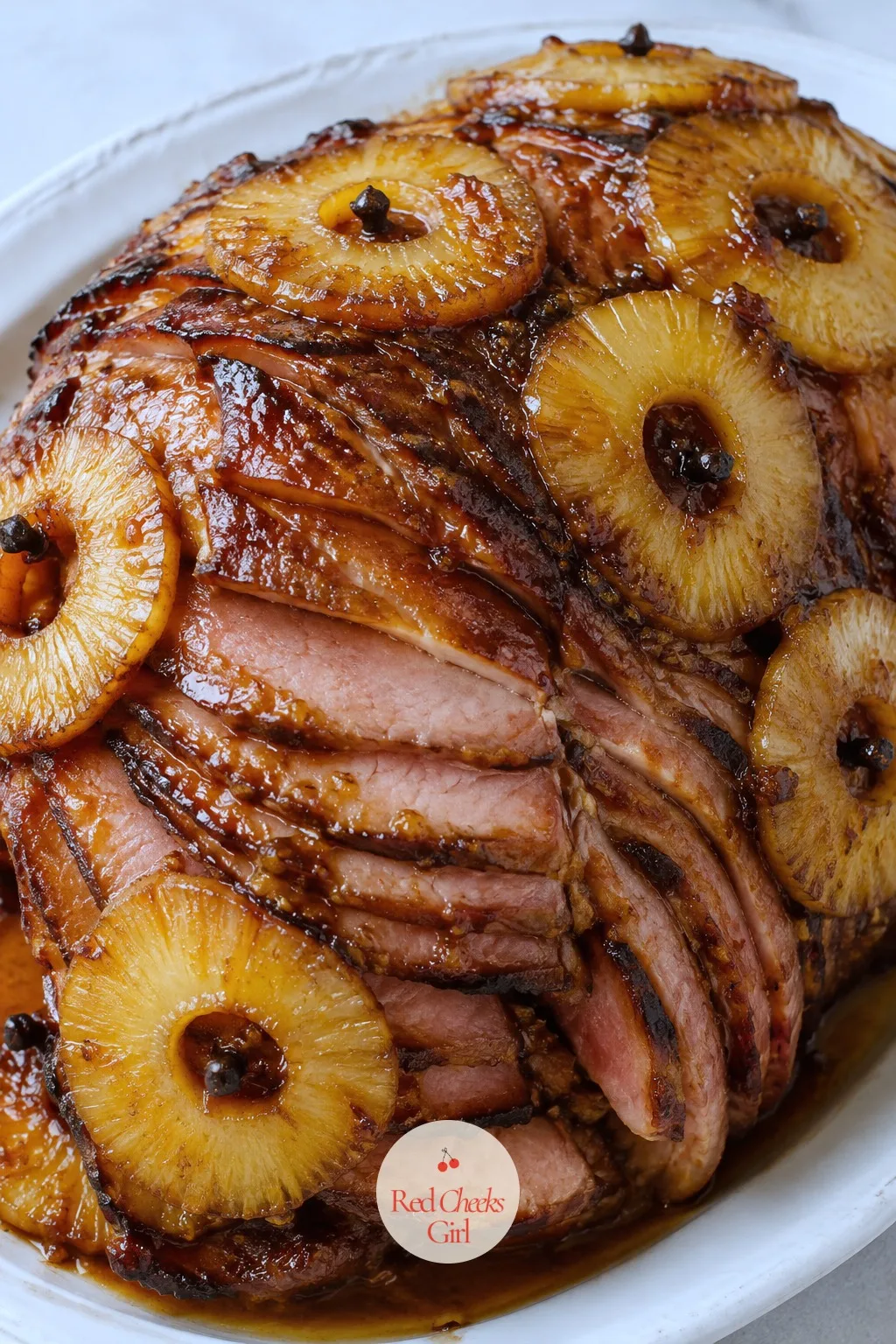
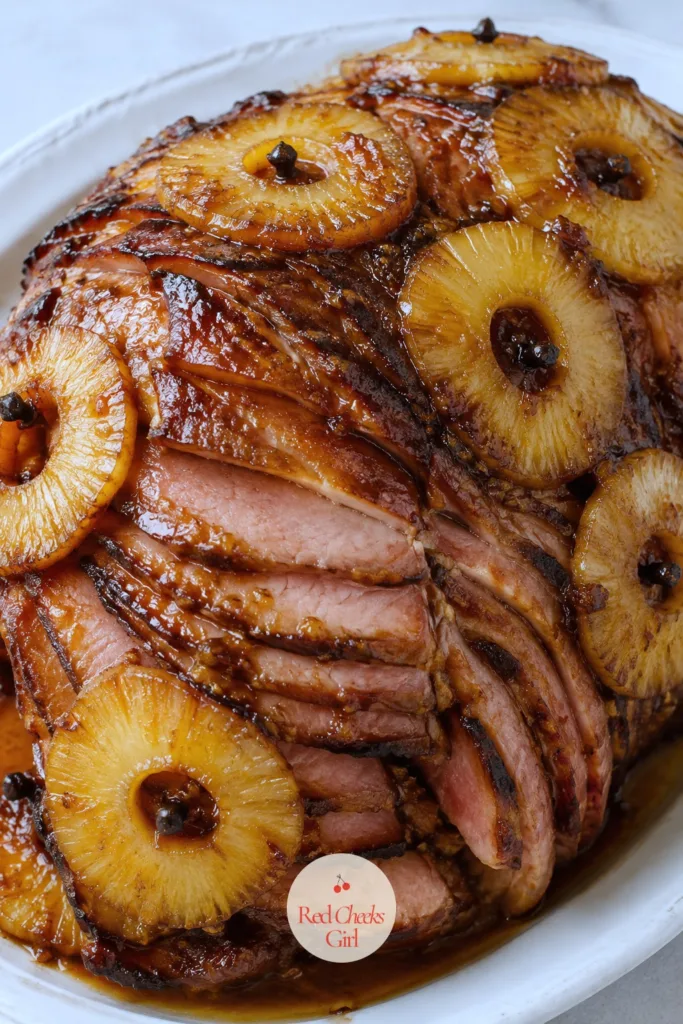
Baked Ham with Pineapple Glaze
Ingredients
- 1 spiral cut bone-in ham fully cooked (8 to 10 pounds)
- 1 can 20 ounces pineapple rings, juice reserved
- 1 cup packed brown sugar
- 1/4 cup Dijon mustard
- 1/4 cup reserved pineapple juice
- 1/4 teaspoon ground cloves
- Whole cloves for studding (about 20)
- Maraschino cherries for garnish (optional)
Instructions
- Preheat the oven to 325 degrees F and set the ham cut-side down in a roasting pan.
- Pour 1/2 cup water into the bottom of the pan and cover the ham tightly with foil.
- Bake 1 hour, until warmed through to 100 degrees F at the center.
- Meanwhile, whisk the brown sugar, Dijon mustard, pineapple juice and ground cloves into a thick glaze.
- Remove the foil, arrange pineapple rings over the surface and secure each with a whole clove.
- Brush half the glaze over the ham and pineapple, return uncovered to the oven, and bake 20 minutes.
- Brush with the remaining glaze and bake another 20 to 25 minutes, until the surface is deeply caramelized and the internal temperature reads 140 degrees F.
- Tent loosely with foil and rest 10 minutes before slicing along the spiral cuts.
Good to Know
🛍 Shopping guide
Slow Roasted Pork Shoulder with Crackling
Pork shoulder is the cheapest cut on this whole table and it eats like the most expensive one. Crackling sounds like a restaurant trick, but it is just dry skin, salt and a blast of high heat at the very end, nothing more technical than that.
Score the skin in a tight diamond pattern before it goes anywhere near the oven, and let it sit uncovered in the fridge overnight if there is time; a dry surface is what turns into shatter instead of chew.
Hours of low, slow heat break the shoulder down until it pulls apart on its own, and the final high-heat blast is only there for the skin. Apple and fennel slaw, sharp and crunchy, is the one side this dish genuinely needs.
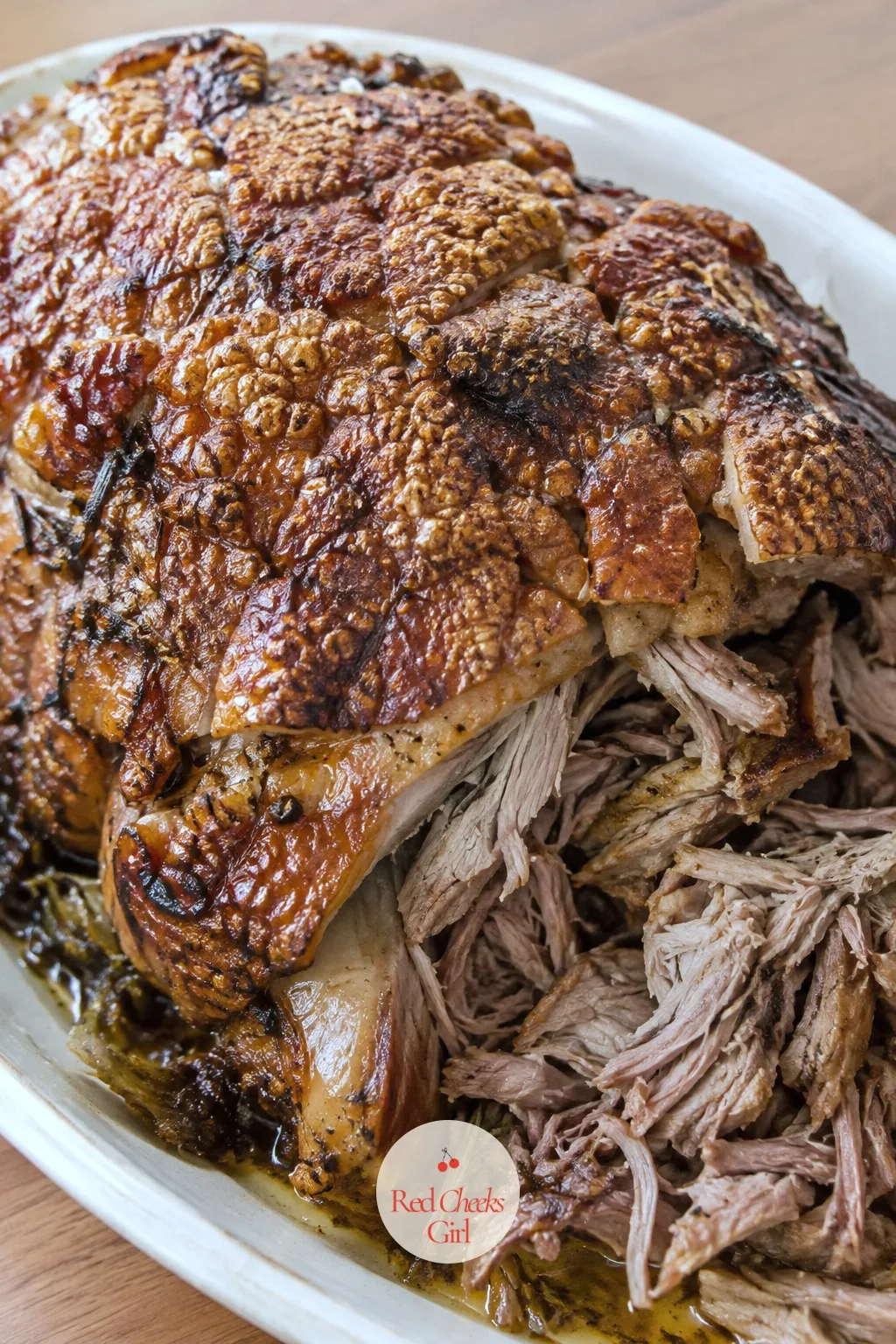
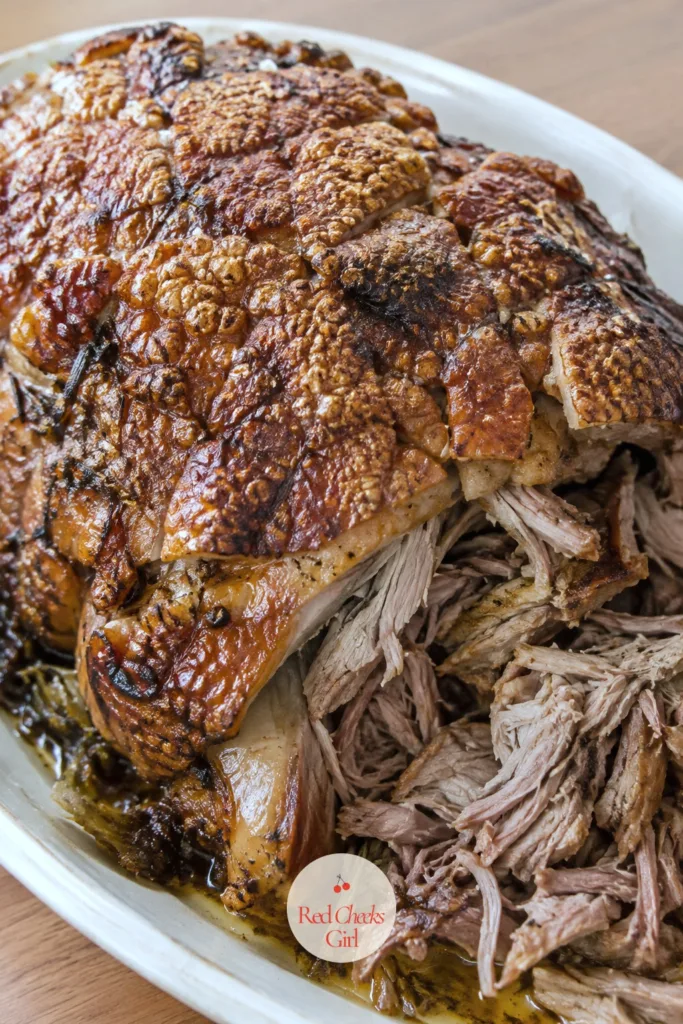
Slow Roasted Pork Shoulder with Crackling
Ingredients
- 1 bone-in skin-on pork shoulder (6 to 7 pounds)
- 2 tablespoons kosher salt divided
- 1 tablespoon fennel seeds crushed
- 1 tablespoon smoked paprika
- 4 cloves garlic minced
- 2 tablespoons olive oil
- 1 teaspoon black pepper
- 1 cup chicken broth for the pan
Instructions
- Score the skin in a tight diamond pattern, cutting through the fat but not into the meat.
- Rub 1 tablespoon salt all over the skin and refrigerate uncovered for at least 4 hours, or overnight for the crispest result.
- Pat the skin completely dry and preheat the oven to 300 degrees F.
- Mix the fennel seeds, smoked paprika, garlic, olive oil, remaining 1 tablespoon salt and the pepper into a paste and rub it over the meat underneath the skin, avoiding the skin itself.
- Set the shoulder skin-side up in a roasting pan and pour the broth into the bottom of the pan.
- Roast at 300 degrees F for 3 1/2 to 4 hours, until a fork twists easily into the meat with no resistance.
- Raise the oven temperature to 475 degrees F and roast uncovered 15 to 20 minutes more, until the skin blisters and crackles across the whole surface.
- Rest 15 minutes, then pull the skin off in one piece and break it into shards.
- Shred or slice the meat and scatter the crackling shards over the top before serving.
Good to Know
🛍 Shopping guide
Cornish Hens with Wild Rice Stuffing
Cornish hens give everyone their own bird instead of a scoop from a shared platter, which makes a smaller table feel just as generous as a big one. They also cook in a fraction of the time a whole turkey or chicken needs.
Stuff them loosely, never packed tight, so the hot air can still move through the cavity and cook the rice evenly; a tightly packed stuffing is the one thing that leaves the center undercooked while the skin is already done.
Truss the legs together with string so they roast evenly and look tidy on the platter. If the wild rice needs company on the plate, 20 Christmas Dinner Sides That Share the Oven With the Roast has more that will fit in the same oven window; roasted butternut squash is the easiest match here.
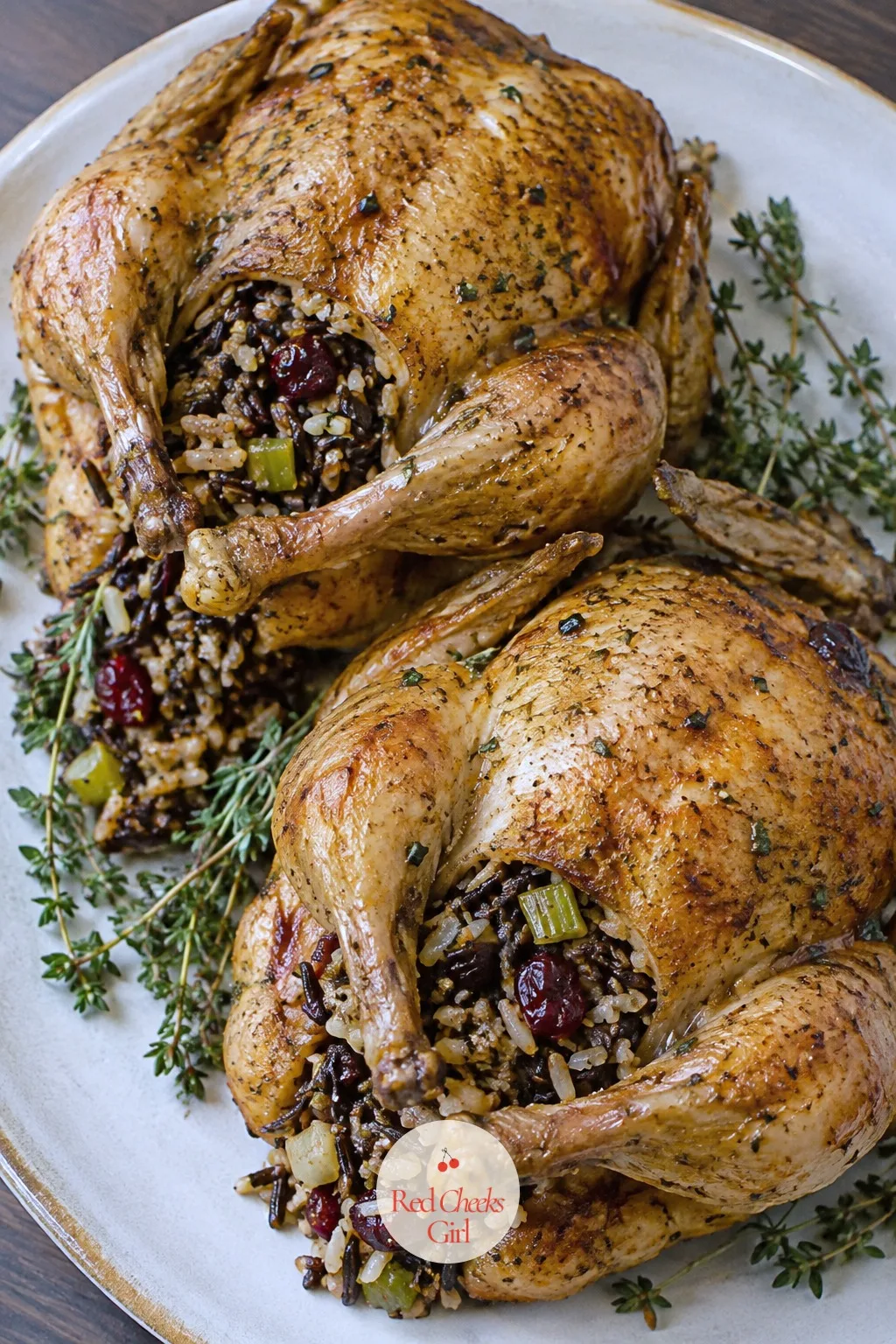
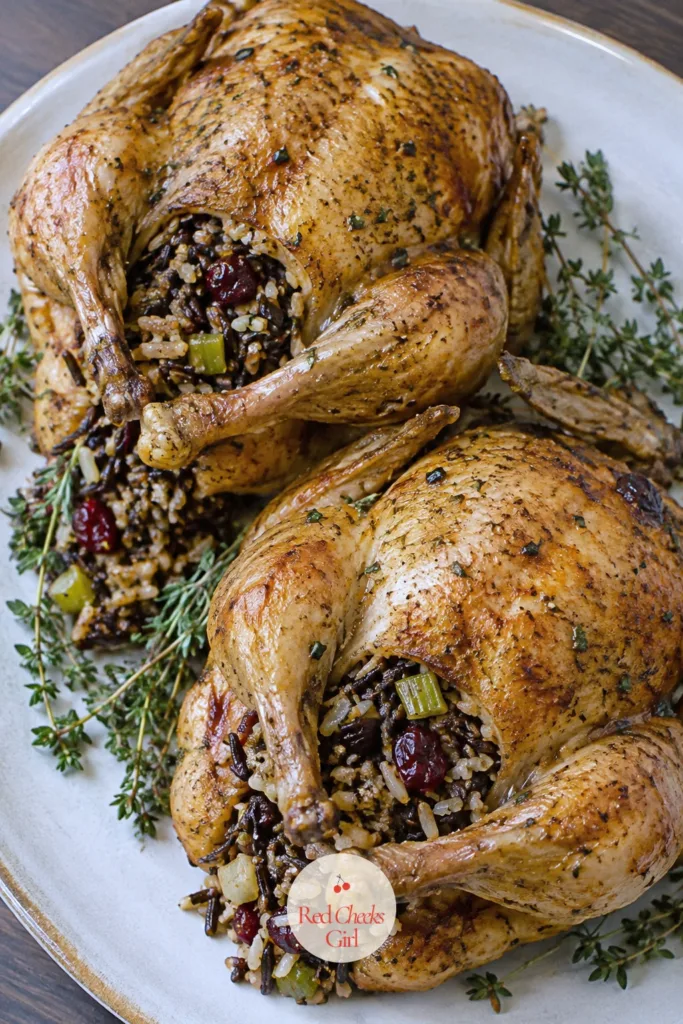
Cornish Hens with Wild Rice Stuffing
Ingredients
- 4 Cornish hens about 1 1/2 pounds each
- 3 tablespoons butter melted, plus 2 tablespoons for the rice
- 2 teaspoons kosher salt divided
- 1 teaspoon black pepper divided
- 1 cup wild rice blend
- 2 cups chicken broth
- 1/2 cup celery finely chopped
- 1/2 cup onion finely chopped
- 1/3 cup dried cranberries
- 1/3 cup chopped pecans
- 1 tablespoon fresh thyme leaves
Instructions
- Cook the wild rice blend in the chicken broth according to package directions, about 35 to 40 minutes, until tender; set aside.
- Melt 2 tablespoons butter in a skillet and cook the celery and onion 5 minutes, until softened.
- Stir the celery and onion into the cooked rice along with the cranberries, pecans, thyme and 1/2 teaspoon each salt and pepper.
- Preheat the oven to 425 degrees F.
- Pat the hens dry and season the cavities and skin with the remaining salt and pepper.
- Loosely spoon the wild rice mixture into each cavity, filling about three-quarters full; do not pack it tight.
- Tie the legs of each hen together with kitchen twine and brush all over with the melted butter.
- Set the hens breast-side up in a roasting pan, spacing them apart so hot air circulates.
- Roast 50 to 60 minutes, until the skin is golden and a thermometer in the thigh reads 165 degrees F.
- Rest 10 minutes before serving one hen per plate, with any extra stuffing warmed on the side.
Good to Know
🛍 Shopping guide
Classic Pot Roast
This is the dinner you already half know how to make from memory, the one with no new technique to learn and no real way to get it wrong. It is comfort first, impressiveness a distant second, and that is the whole point of it.
Sear the roast hard before anything else goes in the pot; a gray, unseared pot roast tastes thinner no matter how long it braises. The carrots, potatoes and onions go right into the braising liquid partway through, so they finish tender at the same moment as the meat.
The same braised beef and vegetables resurface well past Sunday too, and 16 Christmas Dinner Ideas for Main Dishes That Anchor the Table has more mains built the same slow way for the holiday table. Crusty bread on the side is there purely to mop up the gravy.
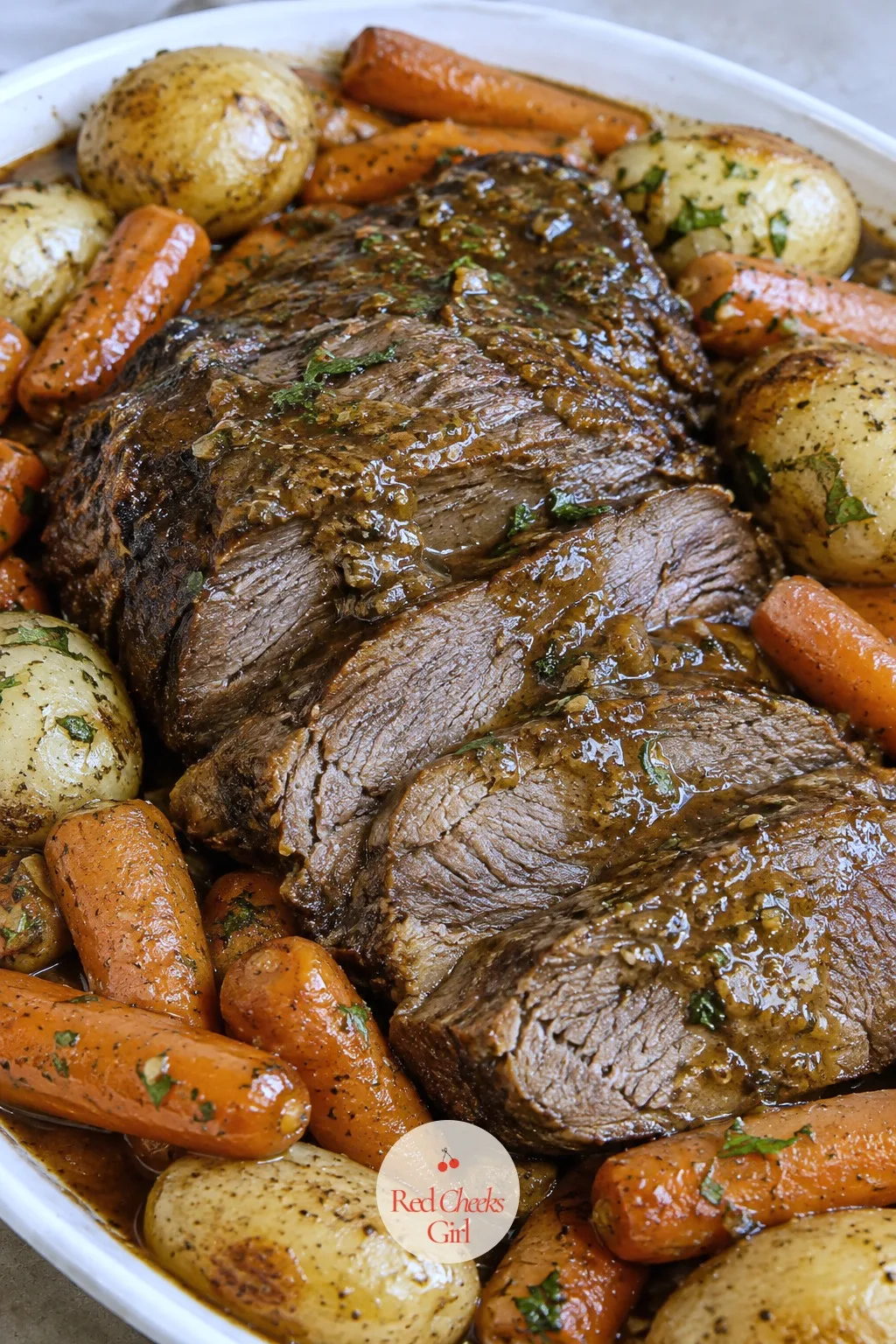
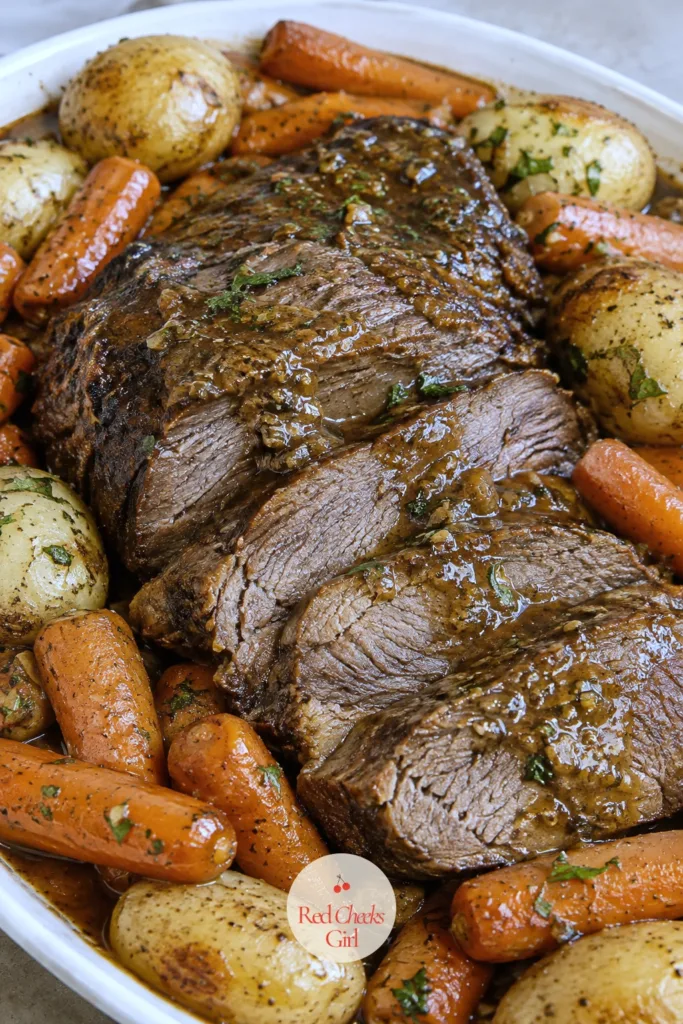
Classic Pot Roast
Ingredients
- 1 chuck roast 3 1/2 to 4 pounds
- 2 teaspoons kosher salt
- 1 teaspoon black pepper
- 2 tablespoons vegetable oil
- 1 onion quartered
- 4 cloves garlic minced
- 2 tablespoons tomato paste
- 2 tablespoons Worcestershire sauce
- 3 cups beef broth
- 1 bay leaf
- 1 pound baby potatoes halved
- 4 carrots cut into 2-inch pieces
- 2 tablespoons all-purpose flour mixed with 2 tablespoons cold water for the gravy
Instructions
- Pat the roast dry and season all over with the salt and pepper.
- Heat the oil in a Dutch oven over medium-high heat and sear the roast 4 to 5 minutes per side, until deeply browned; remove and set aside.
- Add the onion to the pot and cook 4 minutes, until softened, then stir in the garlic and tomato paste and cook 1 minute.
- Stir in the Worcestershire sauce, broth and bay leaf, scraping up any browned bits.
- Return the roast to the pot, bring to a simmer, cover, and transfer to a 300 degree F oven for 2 hours.
- Add the potatoes and carrots around the roast, cover, and continue cooking 45 minutes to 1 hour, until the meat shreds easily and the vegetables are tender.
- Lift the roast and vegetables onto a platter and tent with foil.
- Bring the pot liquid to a simmer on the stove, whisk in the flour and water mixture, and simmer 3 to 4 minutes, until the gravy thickens enough to coat the back of a spoon.
- Slice or shred the roast, spoon the gravy over the meat and vegetables, and serve with crusty bread.
Good to Know
🛍 Shopping guide
Pork Roast with Apples and Dijon
This is the one that smells like a kitchen in autumn no matter what the calendar says, sweet apples against a sharp mustard crust. The balance is the whole trick: too much sugar and it tips into dessert, too little and the Dijon takes over.
Sear the roast first for color, then let the apples roast right alongside it so they soften into the pan juices instead of staying firm and separate. A splash of cider deglazes the pan into a sauce with almost no extra effort.
Pull the pork at 140 degrees F; it will climb to a safe 145 degrees F as it rests, and any higher turns the loin dry before it even reaches the table. Braised red cabbage, a little sweet and a little sharp, sits well next to it.
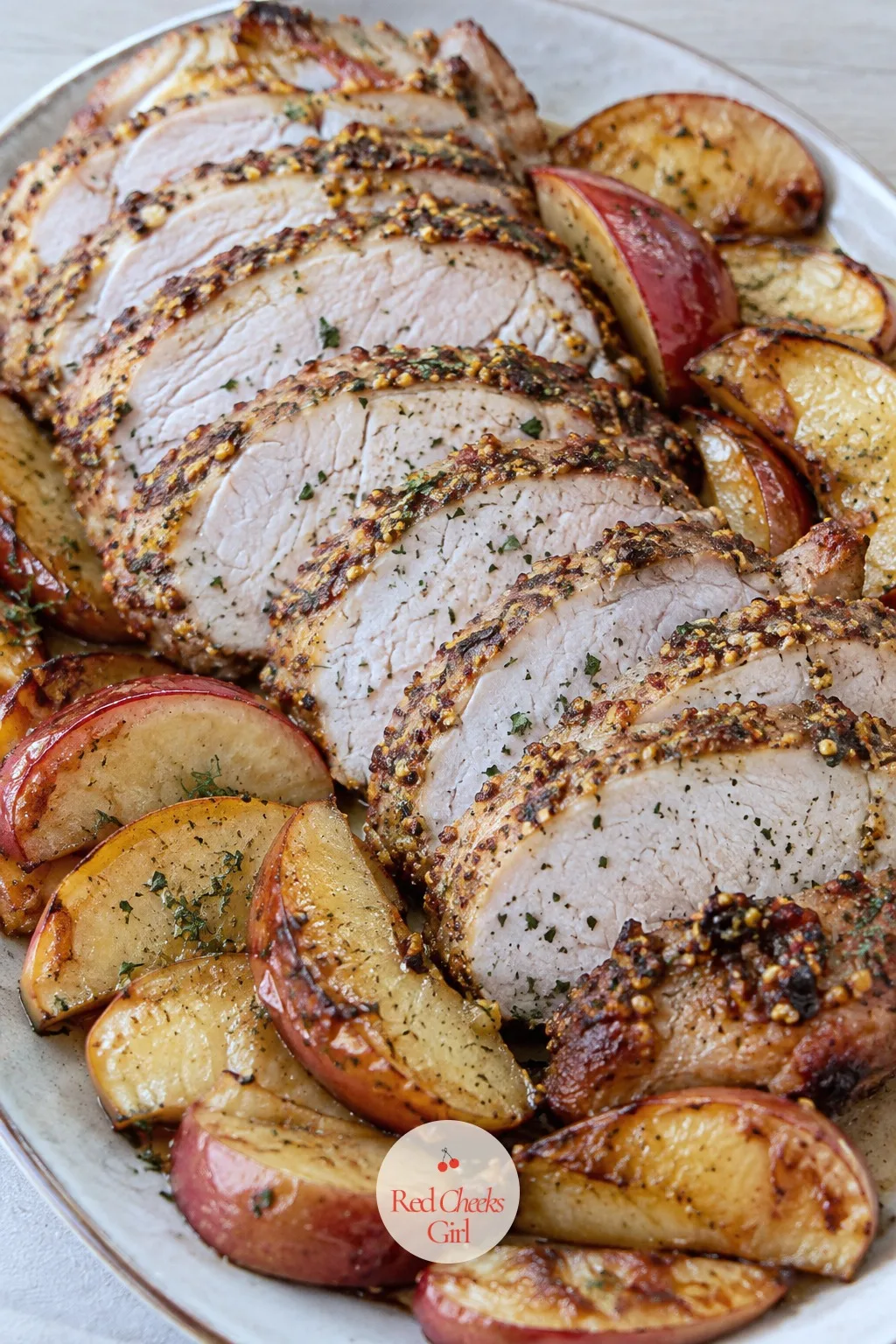
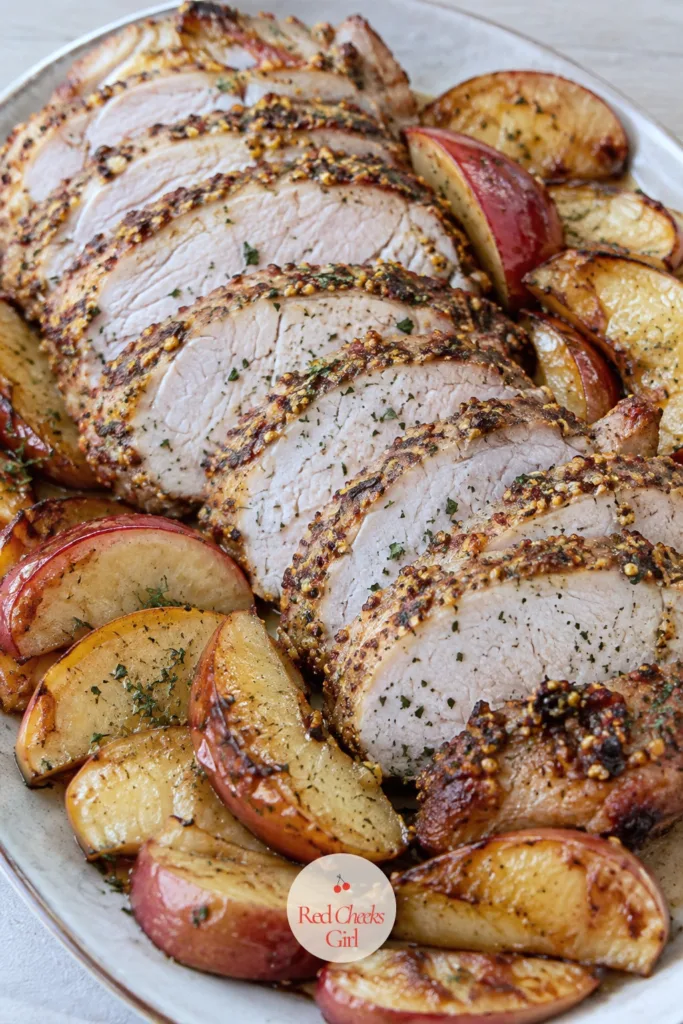
Pork Roast with Apples and Dijon
Ingredients
- 1 boneless pork loin roast 3 pounds
- 2 tablespoons olive oil
- 1 1/2 teaspoons kosher salt
- 1 teaspoon black pepper
- 1/3 cup Dijon mustard
- 2 tablespoons honey
- 2 teaspoons fresh thyme leaves
- 3 apples cored and cut into wedges
- 1 onion sliced
- 3/4 cup apple cider
- 1 tablespoon butter
Instructions
- Preheat the oven to 400 degrees F.
- Pat the pork dry and season with the salt and pepper.
- Heat the olive oil in an oven-safe skillet over medium-high heat and sear the roast on all sides, about 2 minutes per side, until browned; remove from the skillet.
- Whisk the Dijon mustard, honey and thyme together and brush a thick layer over the top and sides of the roast.
- Scatter the apple wedges and onion slices in the skillet and set the roast on top.
- Roast 35 to 40 minutes, until an instant read thermometer in the center reads 140 degrees F.
- Transfer the roast and apples to a platter and tent loosely with foil; rest 10 minutes, until the temperature reaches 145 degrees F.
- Set the skillet over medium heat on the stove, pour in the cider, and scrape up any browned bits; simmer 4 minutes, until slightly reduced.
- Whisk in the butter until the sauce is glossy.
- Slice the pork, arrange with the roasted apples, and spoon the cider sauce over both.
Good to Know
🛍 Shopping guide
Herb Roasted Chicken with Vegetables in the Pan
This is the Sunday dinner you can make on a tired week and still feel like you tried, because one pan does everything and the cleanup matches the effort. The chicken and the vegetables finish together, so there is no juggling two dishes at once.
Loosen the skin before the butter goes in; rubbing herb butter straight under the skin instead of just over it is what makes the meat taste seasoned all the way through, not just on the surface.
Cut the potatoes and carrots to roughly the same size so nothing sits underdone while the chicken is already resting. A simple green salad, dressed at the last minute, is the only side this one actually needs.
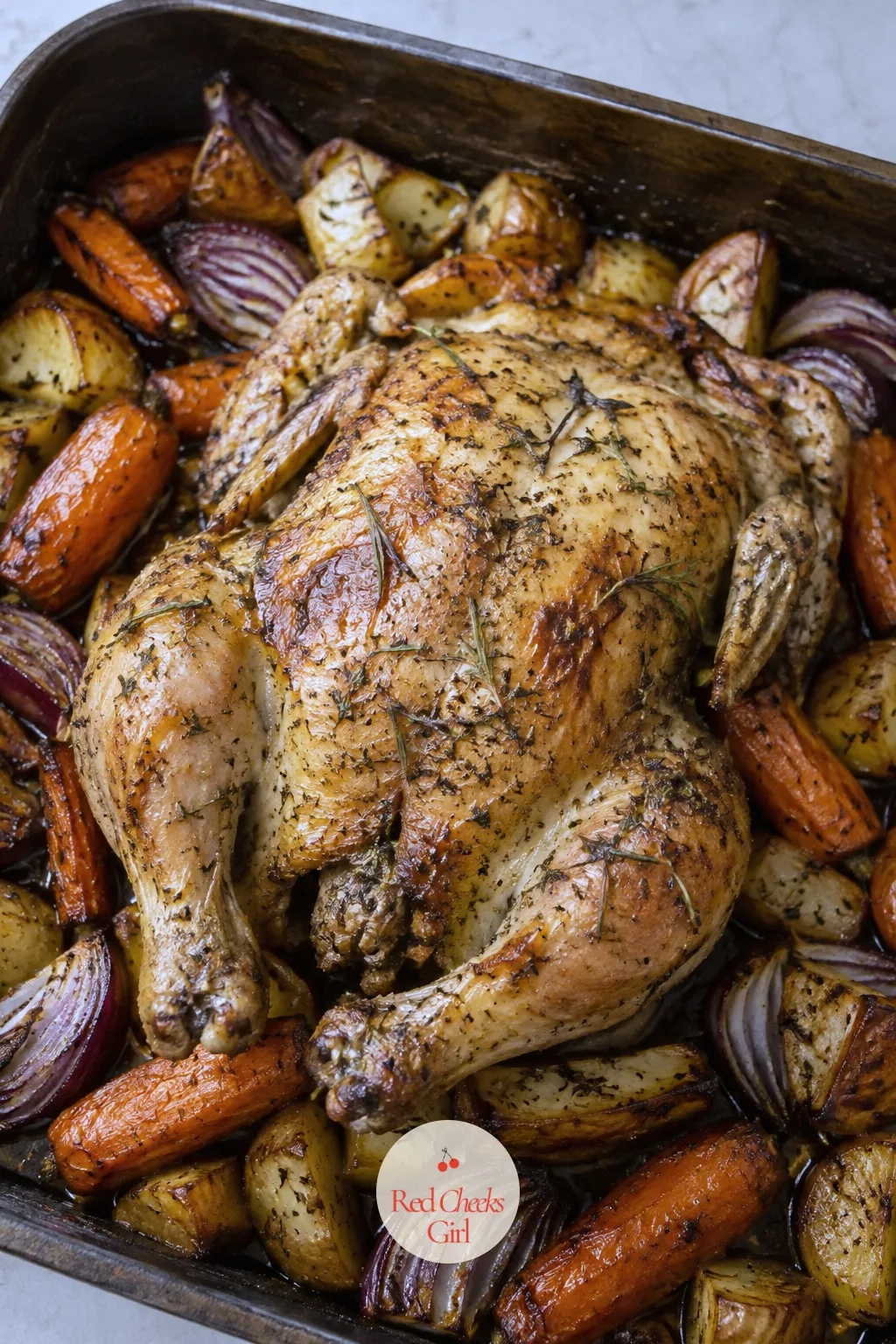
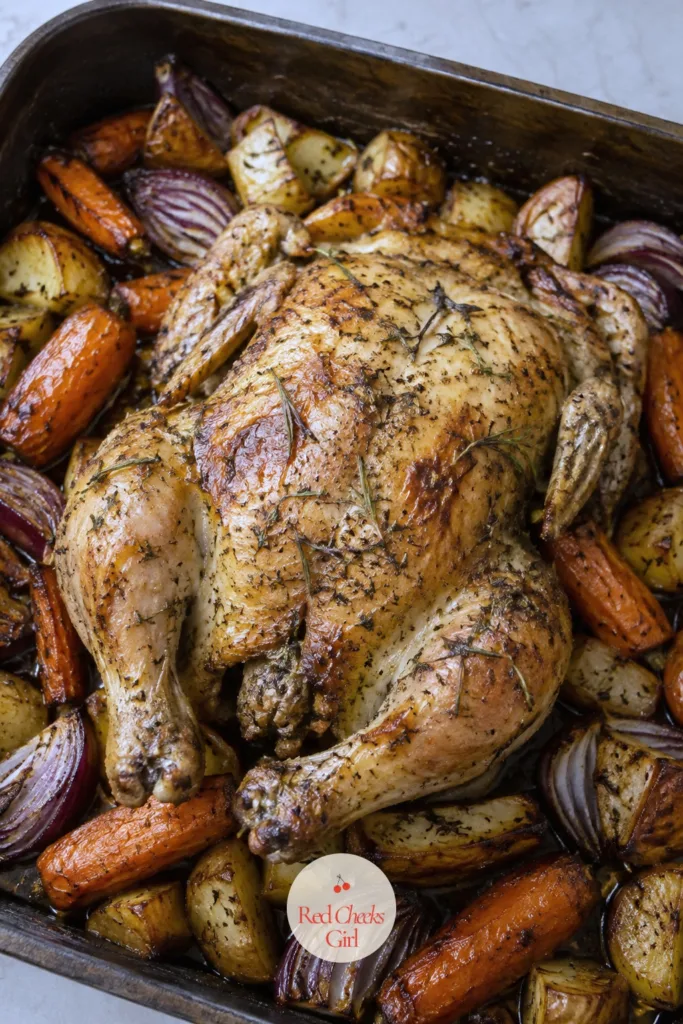
Herb Roasted Chicken with Vegetables in the Pan
Ingredients
- 1 whole chicken 4 to 5 pounds
- 4 tablespoons butter softened
- 3 cloves garlic minced
- 1 tablespoon fresh rosemary chopped
- 1 tablespoon fresh thyme leaves
- 2 teaspoons kosher salt divided
- 1 teaspoon black pepper divided
- 1 pound baby potatoes halved
- 4 carrots cut into 2-inch pieces
- 1 onion cut into wedges
- 2 tablespoons olive oil
- 1 lemon halved
Instructions
- Preheat the oven to 425 degrees F.
- Pat the chicken dry inside and out with paper towels.
- Mash the butter with the garlic, rosemary, thyme, 1 teaspoon salt and 1/2 teaspoon pepper.
- Gently loosen the skin over the breast and thighs with your fingers and push the herb butter underneath, spreading it as evenly as you can.
- Season the cavity with salt and pepper and tuck the lemon halves inside.
- Toss the potatoes, carrots and onion with the olive oil and remaining salt and pepper, and spread them around a large roasting pan.
- Set the chicken on top of the vegetables, tying the legs together with kitchen twine.
- Roast 1 hour 10 minutes to 1 hour 15 minutes, until the juices run clear and a thermometer in the thigh reads 165 degrees F.
- If the vegetables need more time once the chicken is done, lift the chicken onto a platter to rest and return the pan to the oven for 10 more minutes.
- Rest the chicken 10 minutes before carving and serve directly from the pan alongside it.
Good to Know
🛍 Shopping guide
Big Pan of Lasagna
Lasagna is the dish that feeds the whole extended crew without anyone counting plates, and it is genuinely better built the night before. Assemble it Saturday, cover it, and all that is left Sunday is the oven.
Layer with restraint rather than piling everything as high as possible; too much filling between too few noodles makes it slide apart on the plate instead of holding a clean slice.
Bake covered first so the noodles finish cooking through, then uncover for the last stretch so the top actually browns instead of staying pale and soft. A tray of garlic bread and a sharp Caesar salad are the only sides it needs.
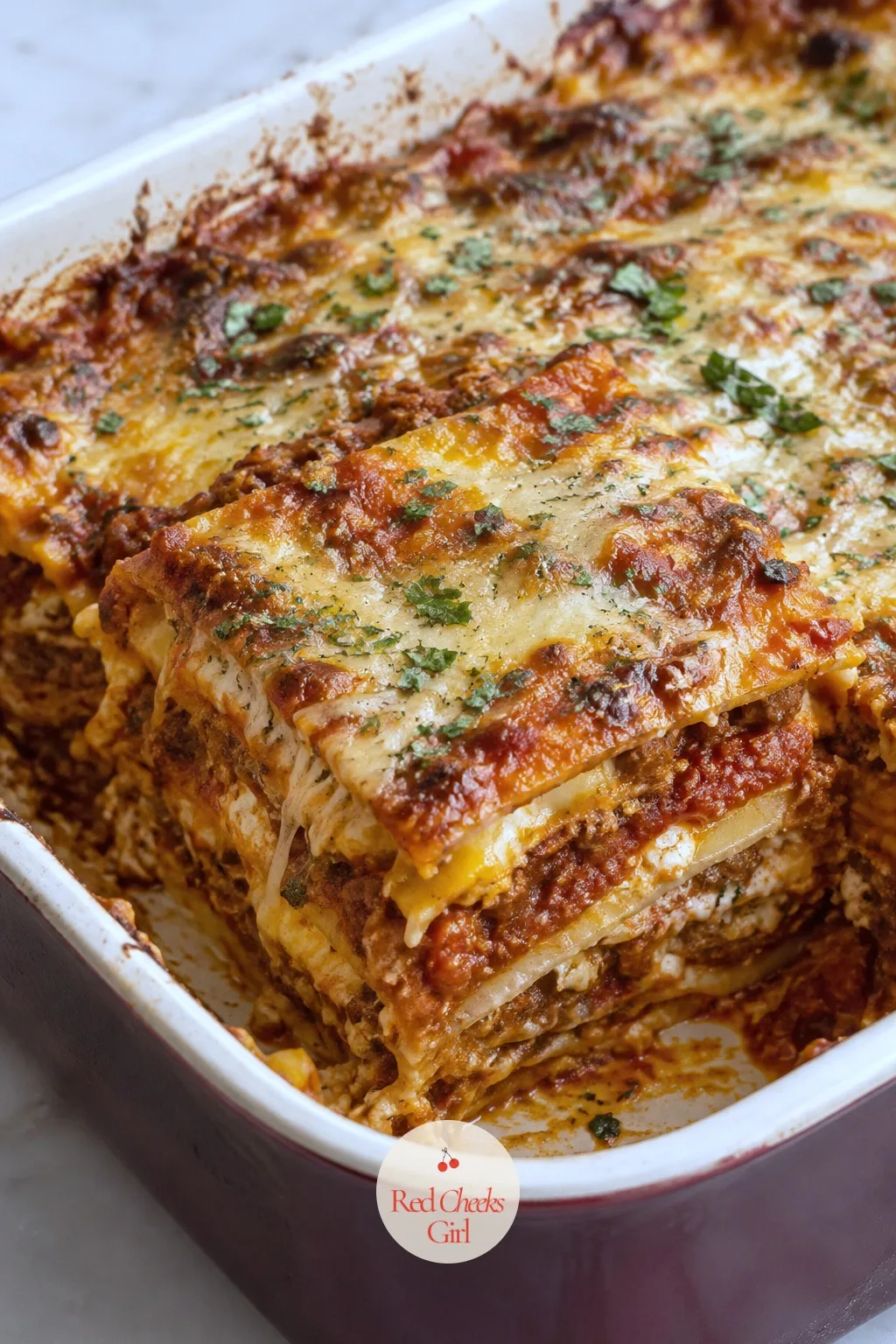
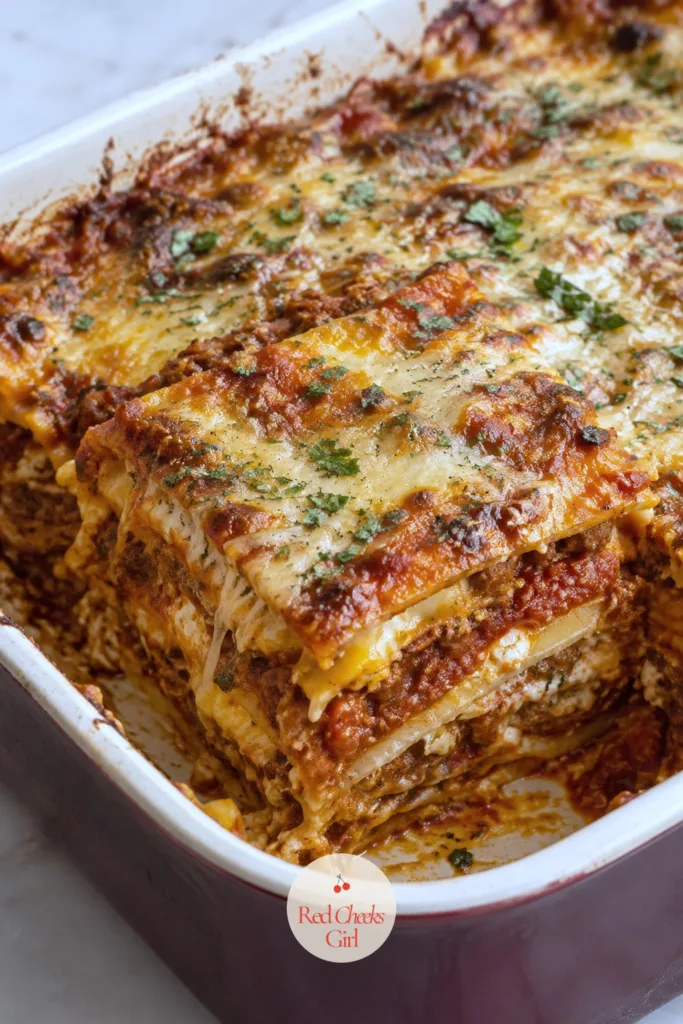
Big Pan of Lasagna
Ingredients
- 1 pound lasagna noodles
- 1 pound ground beef
- 1/2 pound Italian sausage casings removed
- 1 onion finely chopped
- 4 cloves garlic minced
- 2 jars 24 ounces each marinara sauce
- 1 teaspoon dried oregano
- 1 1/2 teaspoons kosher salt divided
- 1/2 teaspoon black pepper
- 15 ounces ricotta cheese
- 1 egg
- 1/4 cup fresh parsley chopped
- 4 cups shredded mozzarella cheese
- 1 cup grated Parmesan cheese
Instructions
- Cook the lasagna noodles in salted boiling water until just pliable, about 2 minutes short of package directions, then drain and lay flat so they do not stick.
- In a large skillet over medium-high heat, cook the ground beef, Italian sausage and onion together, breaking up the meat, until browned and no pink remains, about 8 minutes; drain excess fat.
- Stir in the garlic and cook 1 minute, then add the marinara sauce, oregano, 1/2 teaspoon salt and the pepper; simmer 10 minutes, until slightly thickened.
- In a bowl, stir the ricotta, egg, parsley and remaining 1 teaspoon salt together.
- Preheat the oven to 375 degrees F.
- Spread 1 cup of meat sauce in the bottom of a 9x13-inch baking dish, then layer noodles, a third of the ricotta mixture, a third of the remaining meat sauce and 1 cup mozzarella.
- Repeat the layers two more times, ending with a final layer of noodles, the remaining meat sauce, and the remaining mozzarella and Parmesan on top.
- Cover tightly with foil, tenting it slightly so the cheese does not stick, and bake 35 minutes.
- Uncover and bake 20 to 25 minutes more, until the sauce bubbles at the edges and the cheese is golden in spots.
- Rest 15 minutes before cutting, so the layers set and hold their shape when sliced.
Good to Know
🛍 Shopping guide
Glazed Meat Loaf
Meat loaf is the simplest dish on this whole table and it does not need an apology for that. It is cheap, it is quick by the standards of everything above it, and it is still the dish some people will quietly pick as their favorite.
Shape it free-form on a sheet pan rather than packing it into a loaf pan; the sides brown and the glaze caramelizes all the way around instead of just on top, which is most of the flavor advantage right there.
Mix gently and stop as soon as everything is combined. Overworking the meat is what makes a loaf dense instead of tender. Buttery mashed potatoes underneath are the side that never needs explaining.
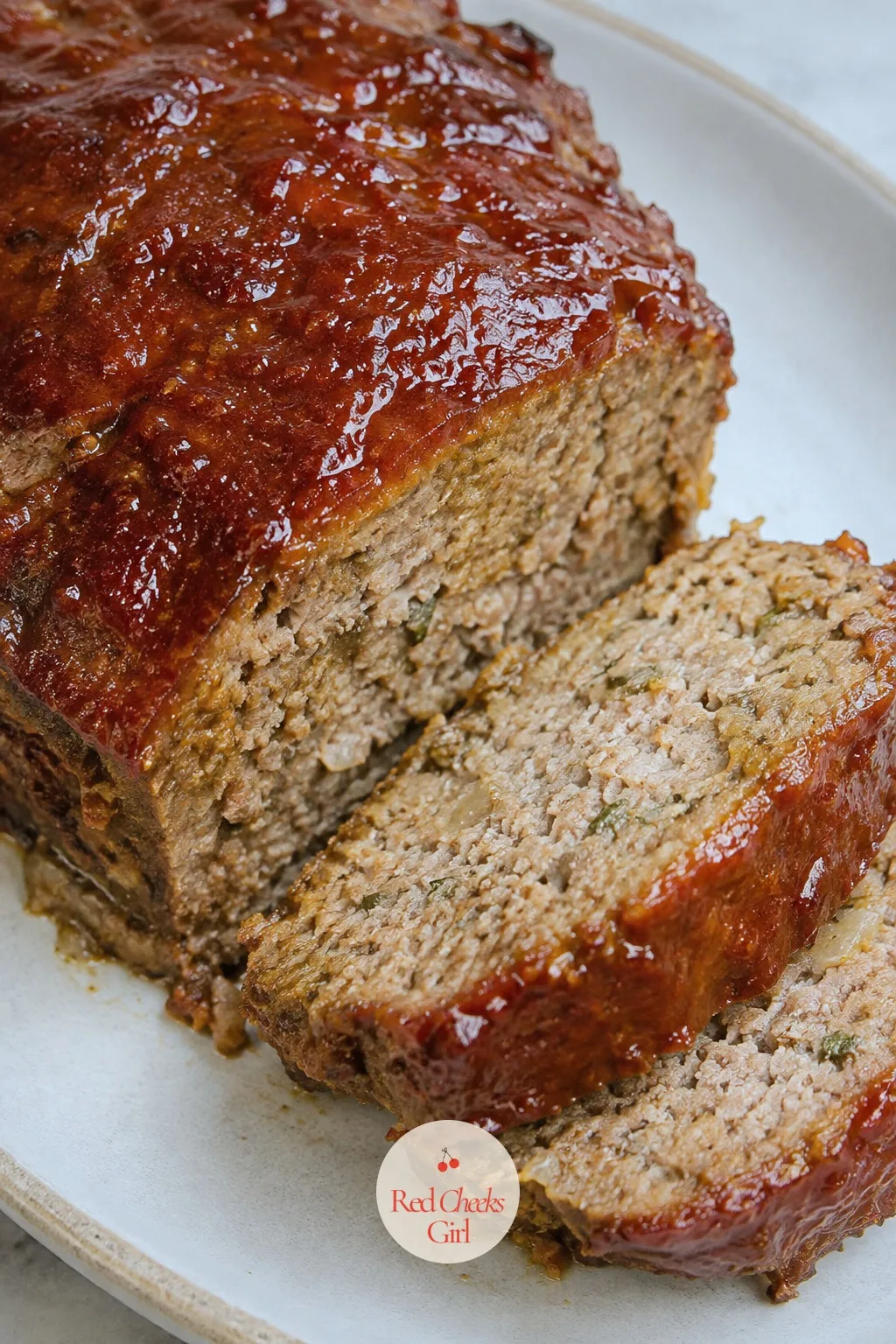
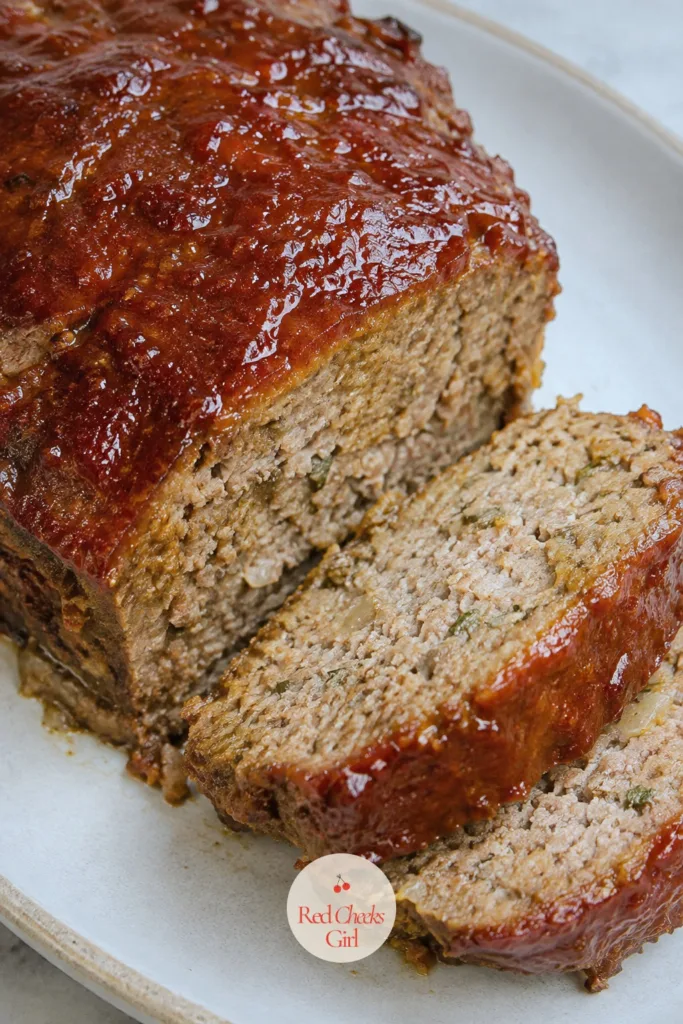
Glazed Meat Loaf
Ingredients
- 2 pounds ground beef 80/20
- 1 cup breadcrumbs
- 2 eggs
- 1/2 cup milk
- 1 onion finely chopped
- 2 cloves garlic minced
- 1/4 cup fresh parsley chopped
- 1 1/2 teaspoons kosher salt
- 1/2 teaspoon black pepper
- 2/3 cup ketchup divided
- 1 tablespoon Worcestershire sauce
- 3 tablespoons brown sugar
- 1 tablespoon yellow mustard
Instructions
- Preheat the oven to 375 degrees F and line a sheet pan with foil.
- In a large bowl, combine the ground beef, breadcrumbs, eggs, milk, onion, garlic, parsley, salt and pepper.
- Mix gently with your hands just until everything is evenly combined; stop as soon as no dry streaks remain.
- Shape the mixture into a free-form loaf about 9 inches long and 4 inches wide on the lined sheet pan.
- Whisk 1/3 cup ketchup with the Worcestershire sauce, brown sugar and mustard for the glaze.
- Brush half the glaze over the top and sides of the loaf.
- Bake 35 minutes, then brush with the remaining glaze and the reserved 1/3 cup plain ketchup.
- Continue baking 15 to 20 minutes more, until an instant read thermometer in the center reads 160 degrees F.
- Rest 10 minutes before slicing, so the juices settle and the slices hold together.
Good to Know
🛍 Shopping guide
Frequently Asked Questions
What is a traditional Sunday dinner?
A traditional Sunday dinner is a slow-cooked roast meat, like beef, chicken, lamb or pork, served with potatoes, vegetables and gravy, eaten as a shared, unhurried meal.
Is Sunday dinner a British tradition?
The Sunday roast as we know it traces back to British custom, traditionally eaten after church, though nearly every culture has its own version of a big weekly family meal.
How many people should I plan Sunday dinner for?
Most home cooks find five to ten people the easiest range to manage weekly; a smaller, consistent core group that can expand for guests tends to work better than a huge table every time.
How far ahead can I prep a Sunday roast?
Braises like pot roast and bourguignon can be fully cooked a day ahead and reheated gently; roasts like prime rib or lamb are best seasoned the day before but cooked fresh for texture.
What can I serve besides mashed potatoes at Sunday dinner?
Potato gratin, braised red cabbage, glazed carrots, a simple green salad or crusty bread all work as a change from mash, depending on how rich the main dish already is.
What is an easy Sunday dinner when there is no time to cook all day?
A one-pan herb roasted chicken with vegetables or a glazed meat loaf both deliver a proper Sunday dinner in under 90 minutes with minimal hands-on work.
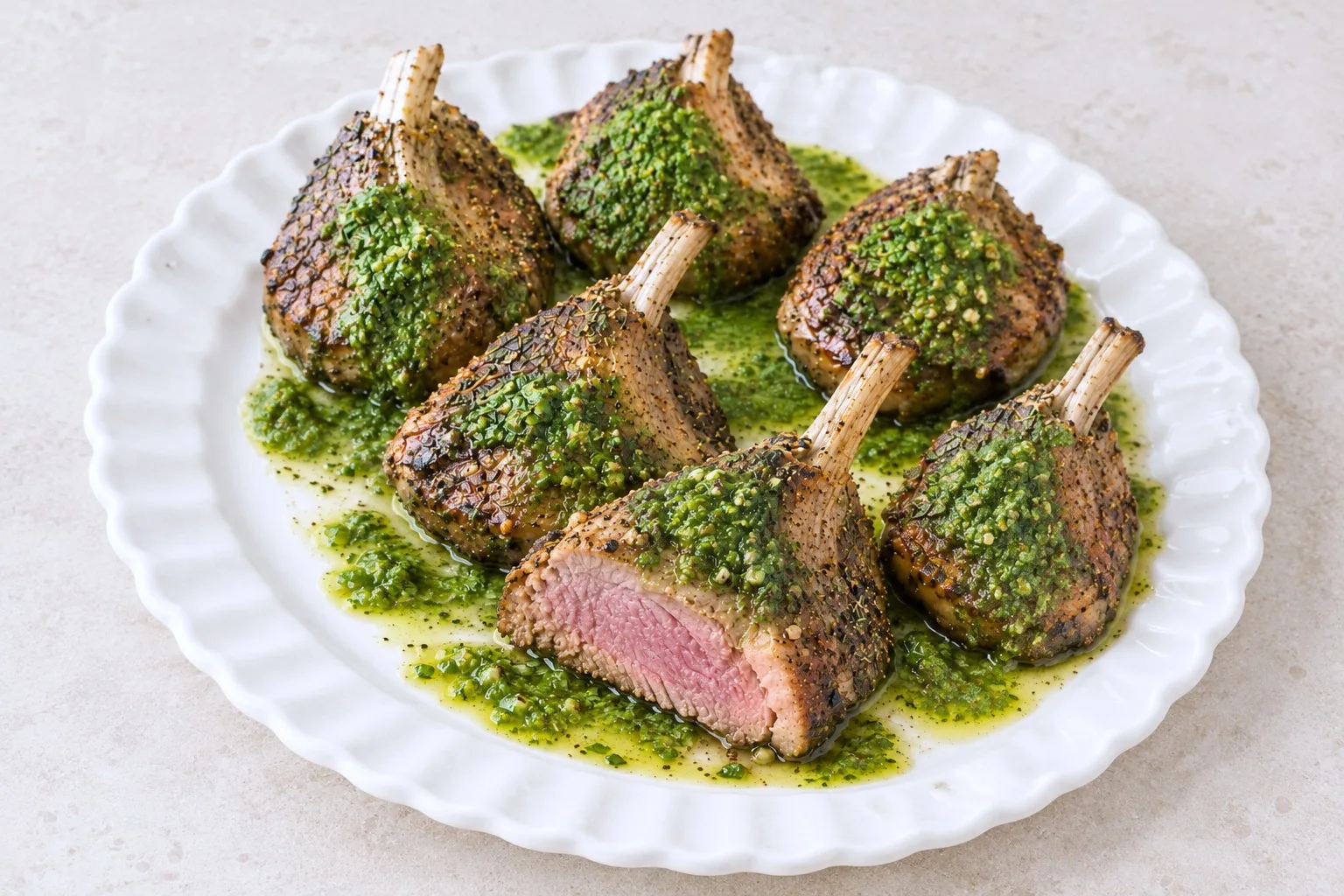
Lamb chops recipe with a garlic rosemary marinade, seared in cast iron and finished with a bright mi
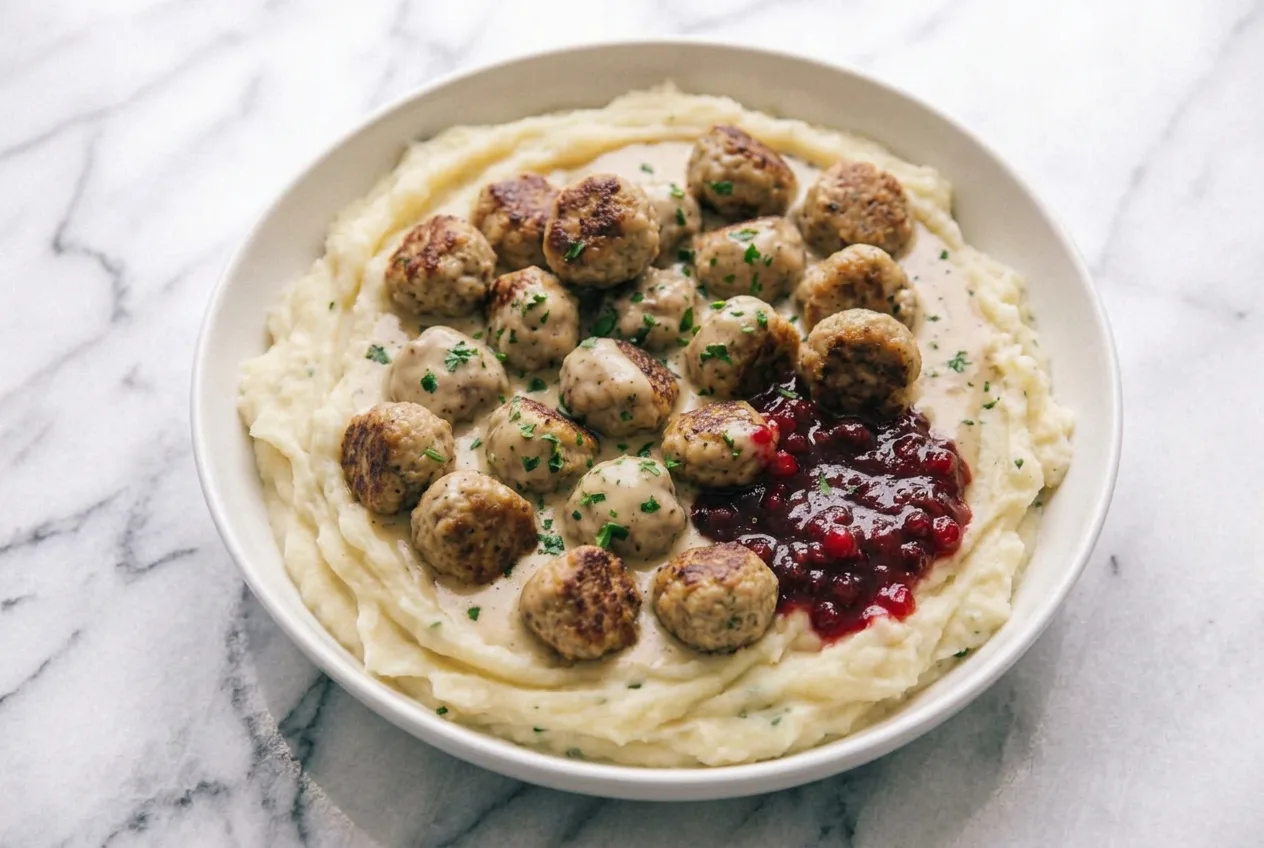
Swedish meatballs simmer in creamy gravy, served over buttery mashed potatoes with lingonberry sauce
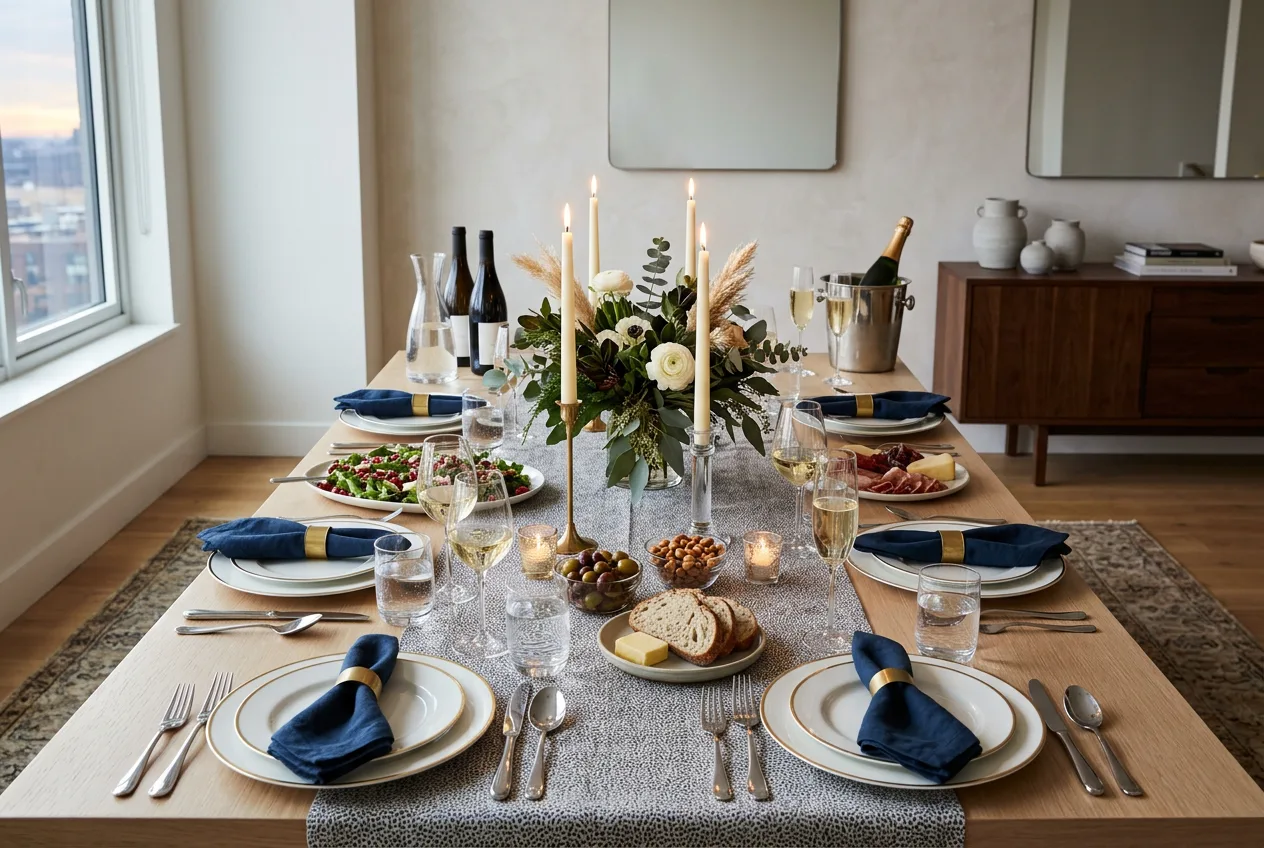
12 New Year's Eve dinner recipes for six to eight, each one partly made ahead so the host actually s
Leave a Reply