

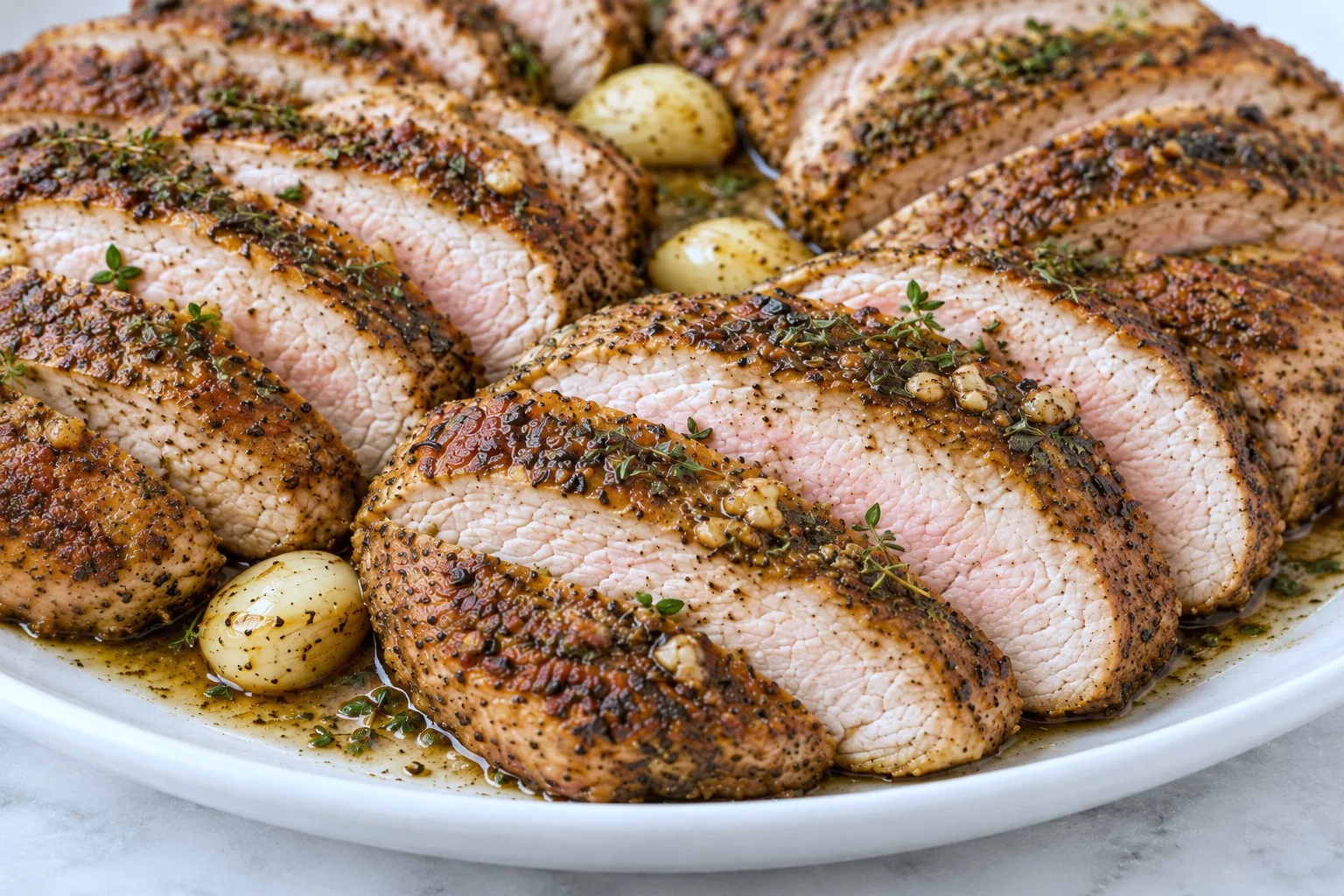
Baked pork chops carry a reputation they did not earn: dry, pale, the cut everyone quietly pushes to the side of the plate.
This version sears first for a deep brown sugar crust, then finishes gently in the oven so the center stays pink and juicy, not gray. Four chops, one skillet, and a thermometer that tells you exactly when to stop.
This post contains affiliate links. If you buy through them, I may earn a small commission at no extra cost to you.
Table of Contents
A Pork Chop That Doesn’t Dry Out
Baked pork chops carry a reputation they did not earn: chalky, gray, the cut everyone secretly dreads on a dinner plate. That reputation comes from thin chops cooked too long, not from the method itself.
Searing first and finishing in the oven solves the actual problem. A hot pan locks in a deep brown crust in minutes, then gentle oven heat carries the inside up to temperature without drying out the edges.
This one leans on a rub, not a marinade, which means no planning ahead and no bag of liquid taking up fridge space. Mix it, press it onto the meat, and the pan does the rest.
It works for a party table too: four chops feed four people from one skillet, and nobody is standing at the stove while guests wait for a plate.
What Makes the Rub Work
Brown sugar is the ingredient doing the heavy lifting here. Under heat it melts and catches at the edges of the meat, turning into a thin, slightly sticky crust rather than a sweet coating.
Paprika brings color more than heat: a deep brick red dusted over the chop that turns a darker mahogany in the hot pan. Smoked paprika works just as well here, if that is what sits in the cupboard.
Garlic powder clings evenly to every side of the chop in a way that fresh garlic in a rub cannot, while fresh thyme adds a green, slightly peppery note that cuts through the sweetness.
Salt does what salt always does: it draws moisture to the surface briefly, then helps that surface sear instead of steam. A butter baste at the end, with a couple of smashed garlic cloves, rounds out the crust right before the chops go into the oven.
How to Make It
The method has two parts: a hard sear on the stovetop, then a short stretch in a hot oven to finish the center gently. Both happen in the same skillet, which means one pan to wash.
Buy chops at least 1 inch thick, closer to 1 1/2 inches if the butcher has them; thinner cuts overcook before the rub has a chance to caramelize. Pull everything at 140°F to 145°F internal and let it rest, since carryover heat does the final work.
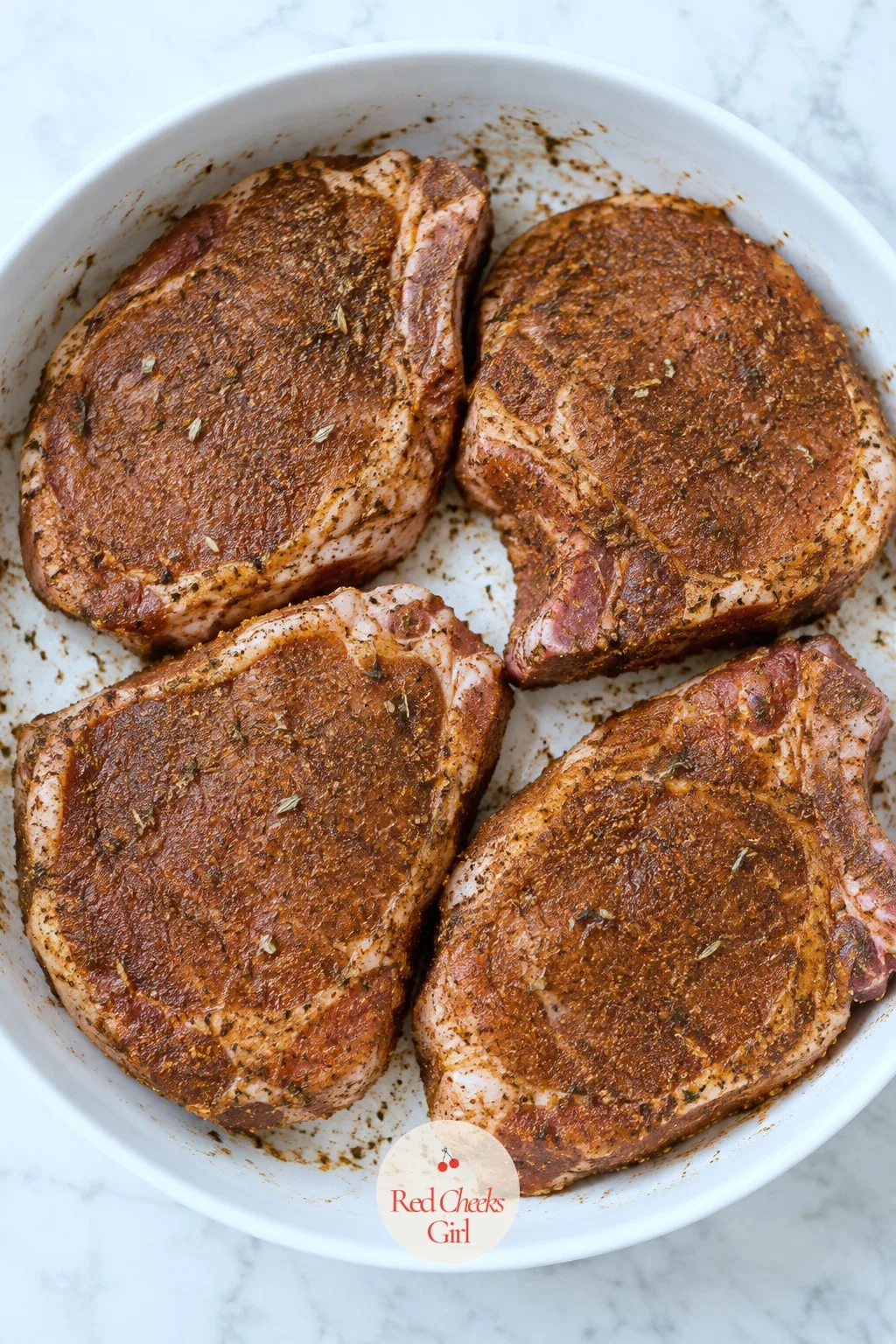
Rub the chops
Press the brown sugar and paprika rub onto every side of the chops until no bare meat shows through. The surface should look damp and darkly speckled, not dry or patchy.
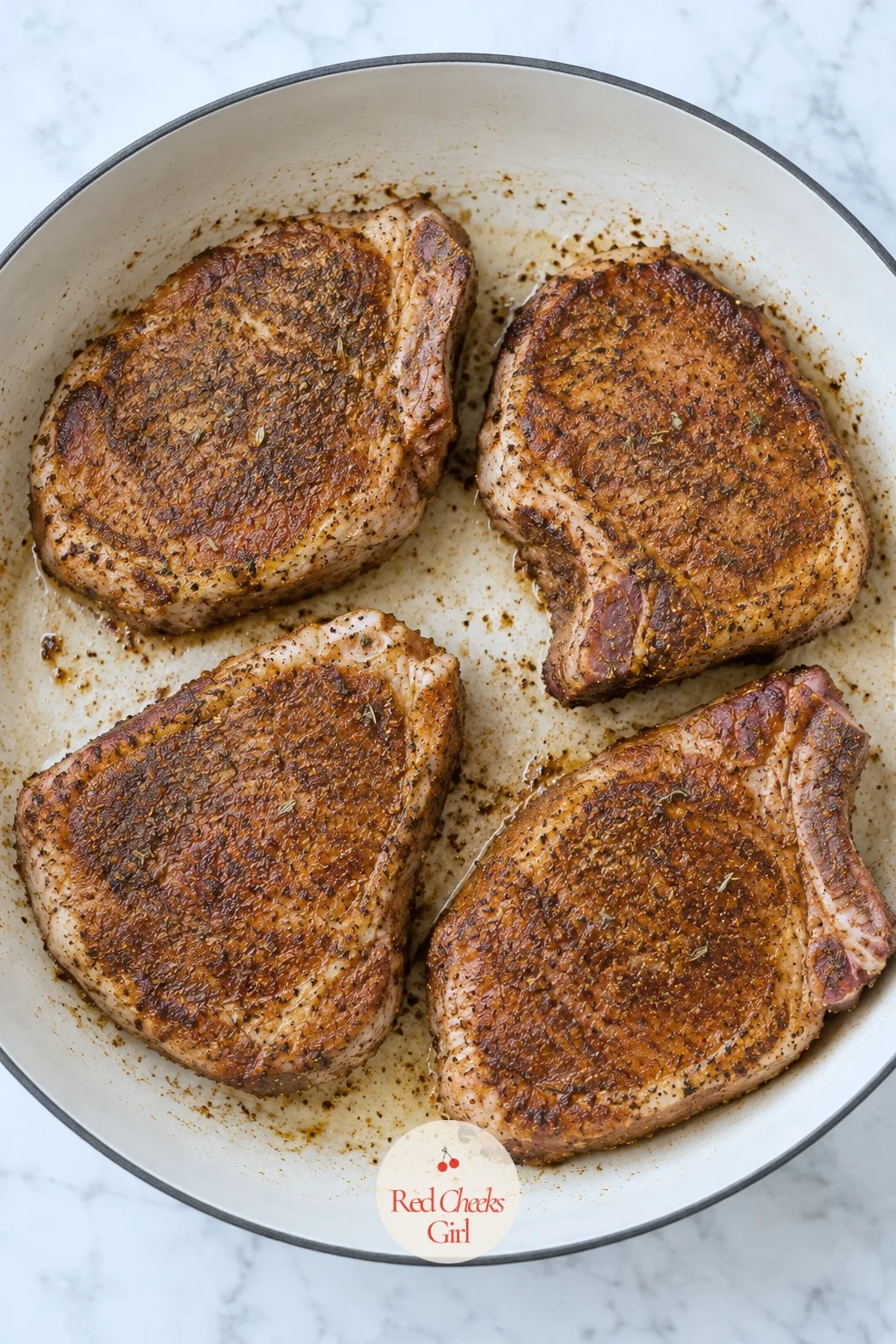
Sear both sides
Both sides of each chop should show a deep, even crust with no raw pink patches left showing. The surface will look matte and slightly crackled where the sugar has caught.
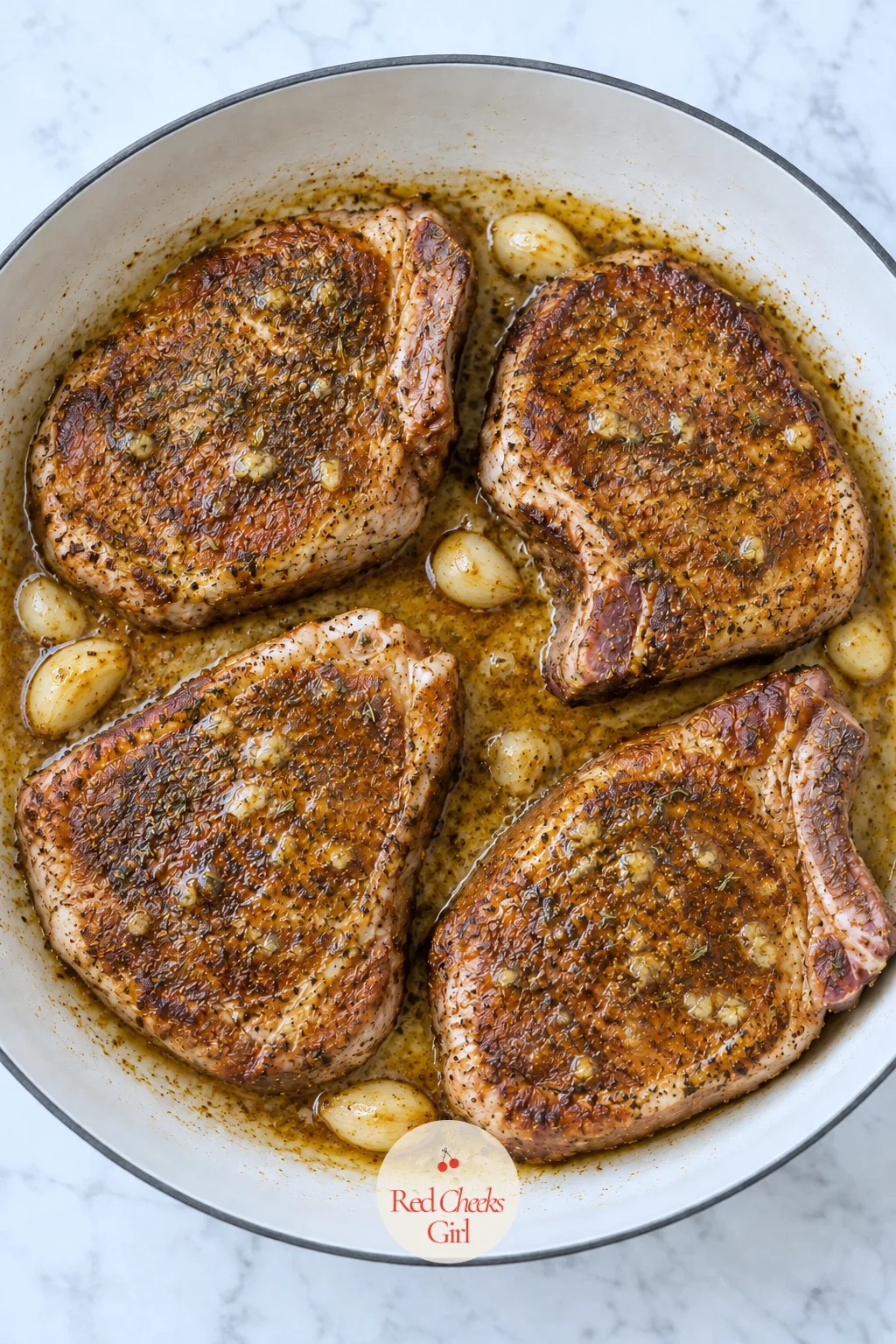
Baste with butter and garlic
Melted butter should pool amber around the chops with the garlic cloves turning soft and golden. The whole surface of the meat will look glossy rather than matte.
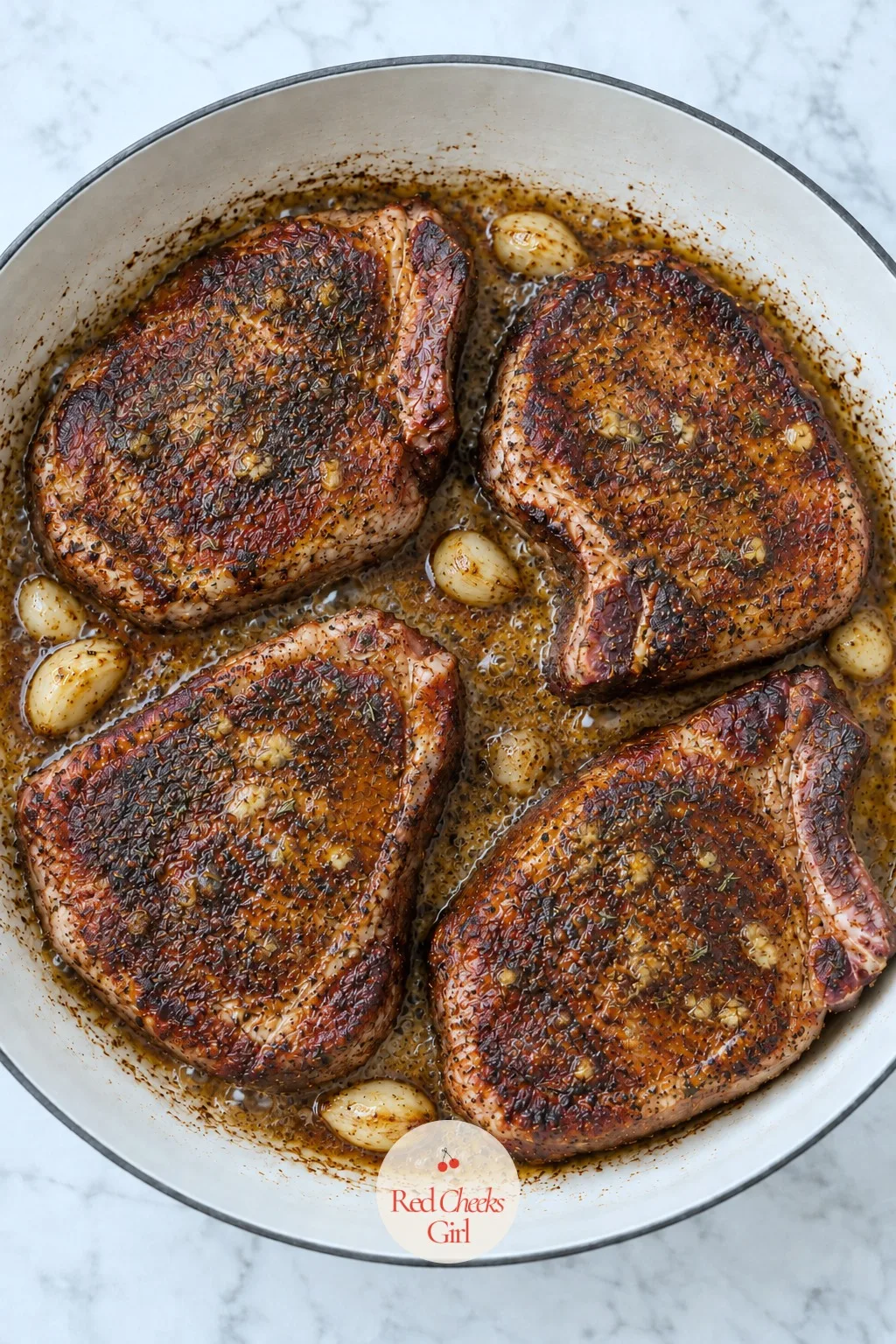
Roast until the thermometer says so
The crust will have deepened to a darker mahogany and the pan juices will be bubbling gently around the chops. This is the moment to check the thermometer, not guess.
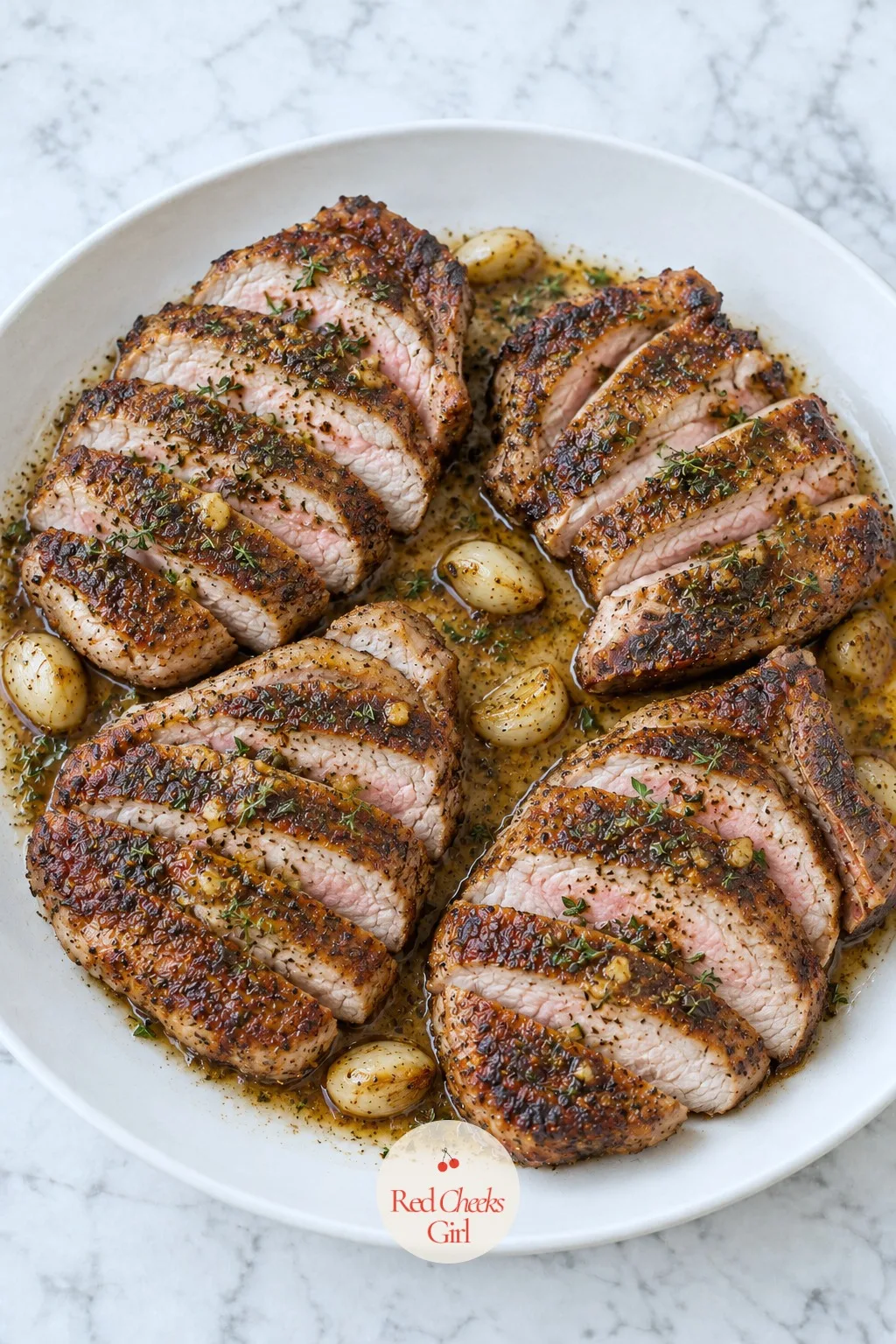
Slice and serve
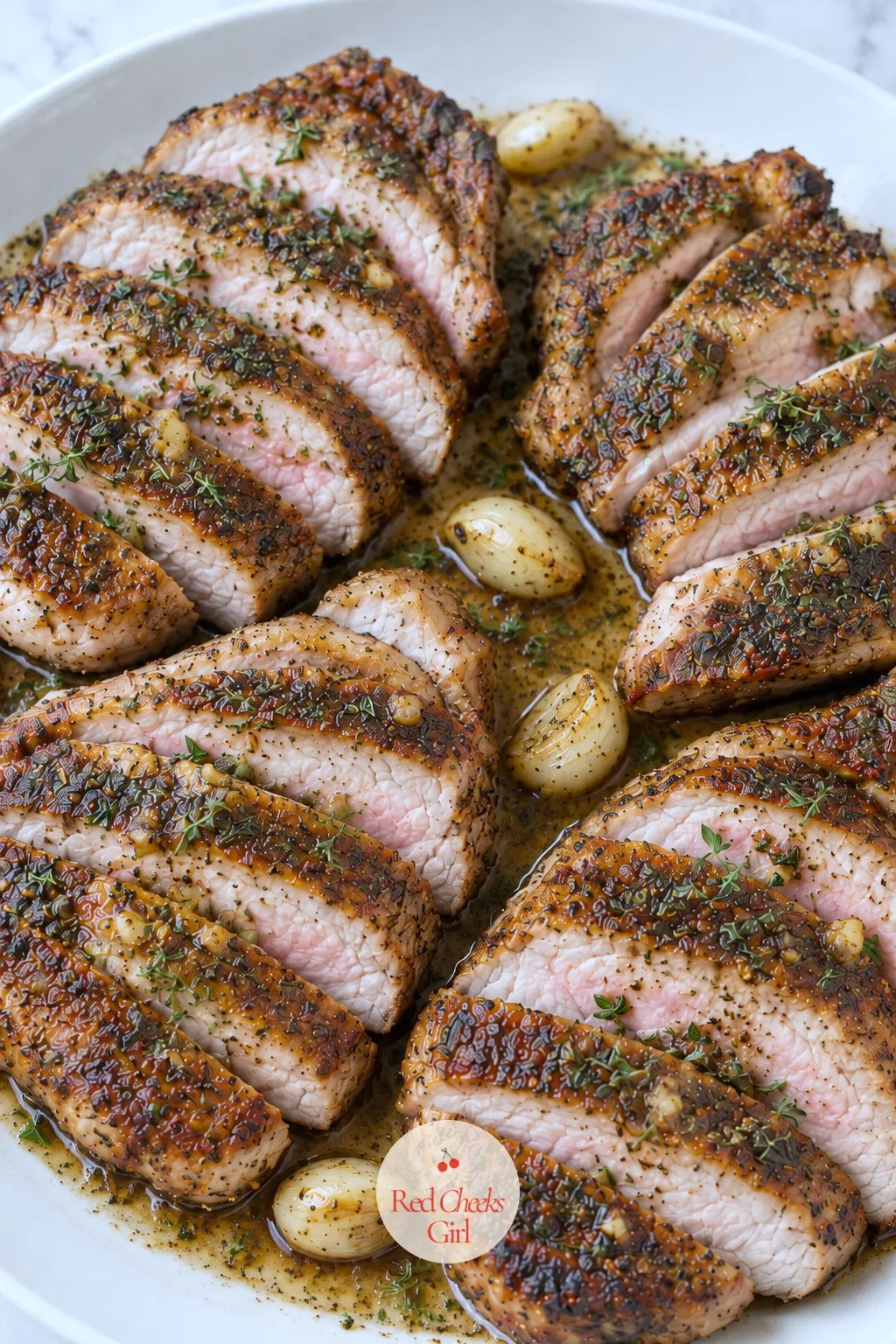
A faint pink blush at the center is normal and a good sign, not a mistake. Spoon the pan juices over the top and scatter fresh thyme just before the plate goes to the table.
🛍 Shopping guide
Getting It Right
The single biggest mistake is reaching for chops under an inch thick. They look like a bargain at the meat counter, but at 400°F they cross from seared to overcooked in the time it takes to flip them twice.
A crowded skillet is the second mistake: chops touching each other steam instead of sear. Give each one space, even if that means searing four chops in two batches of two.
Guessing at doneness by color or time alone is how pork chops end up dry. An instant-read thermometer inserted horizontally into the thickest part removes the guesswork entirely.
Skipping the rest undoes all of the above. Five minutes under foil lets the juices settle back through the meat instead of running out onto the cutting board the moment a knife touches it.
Swaps and Substitutions
Bone-in chops hold moisture a little better and look more generous on the plate, but they need a few extra minutes in the oven since the bone slows heat reaching the center. Boneless chops cook slightly faster and slice more easily for a crowd.
Maple syrup or honey can stand in for the brown sugar in the rub, though the crust turns stickier and darker faster, so watch the pan in the last few minutes.
Rosemary, chopped fine, works in place of thyme if that is what grows on the windowsill. Dried thyme is fine too: use a third of the fresh amount, since dried herbs are more concentrated.
No cast iron skillet in the house is no problem: sear in any oven-safe pan, or sear in a regular skillet and move the chops to a baking dish for the oven stage. For a dairy-free version, skip the butter baste and add an extra teaspoon of olive oil instead.
What to Serve With Baked Pork Chops at a Party
Pork chops this rich want something soft and a little sweet underneath them. Mashed Sweet Potatoes With Brown Butter and Maple catch the pan juices well and need no last-minute attention.
For contrast, something green with a little crunch earns its spot next to all that caramelized sugar. Green Beans With Bacon and Brown Sugar for a Holiday Table brings exactly that, and shares a flavor note with the rub besides.
Feeding more than four means doubling the chops and leaning on a side that holds up on a buffet without drying out. Twice Baked Potato Casserole Loaded With Bacon and Cheddar travels well from oven to table and reheats without fuss.
Once plates are cleared, keep the table from going quiet too fast. 17 Dinner Party Games to Play Right at the Table need nothing more than the glasses already in front of everyone.
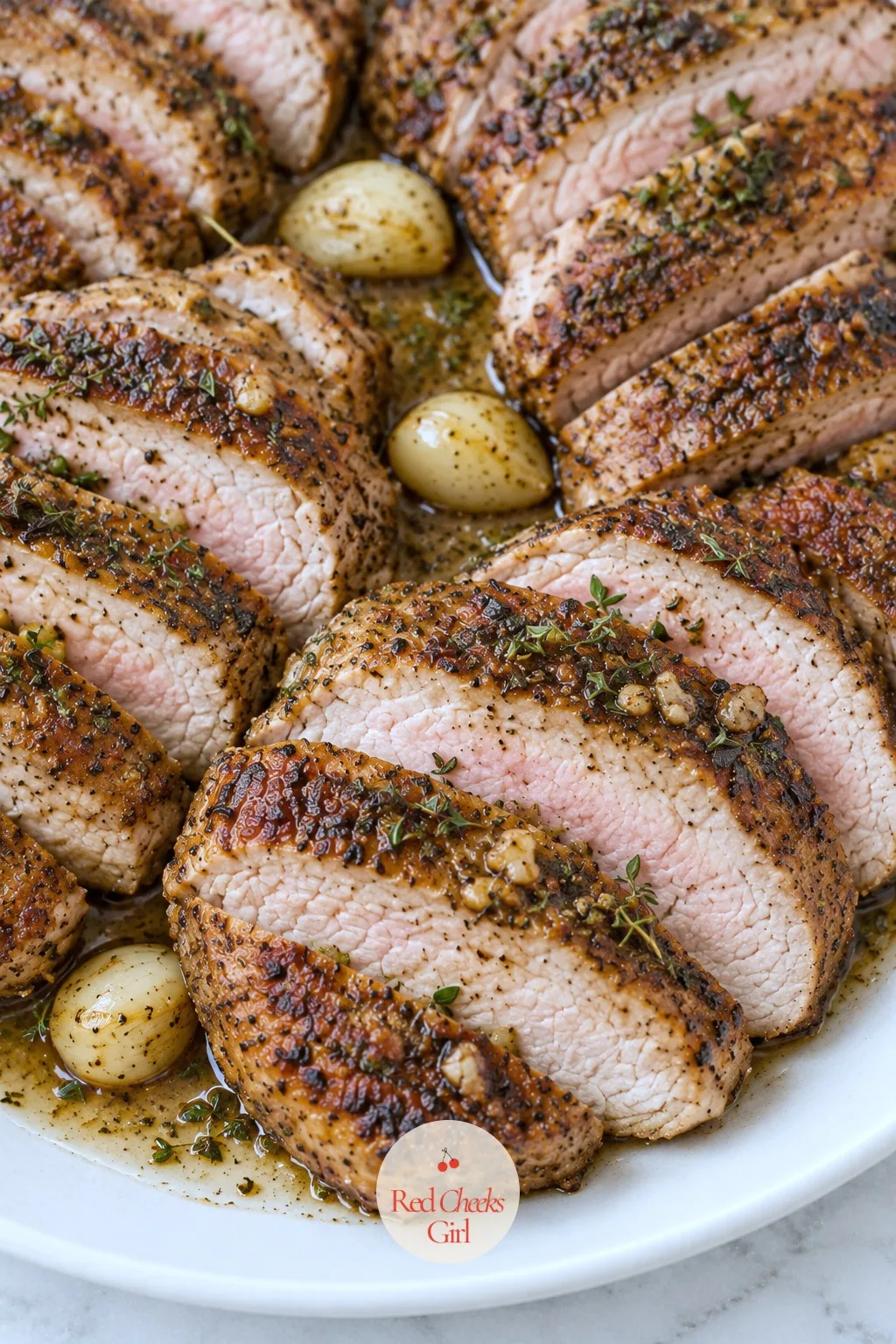
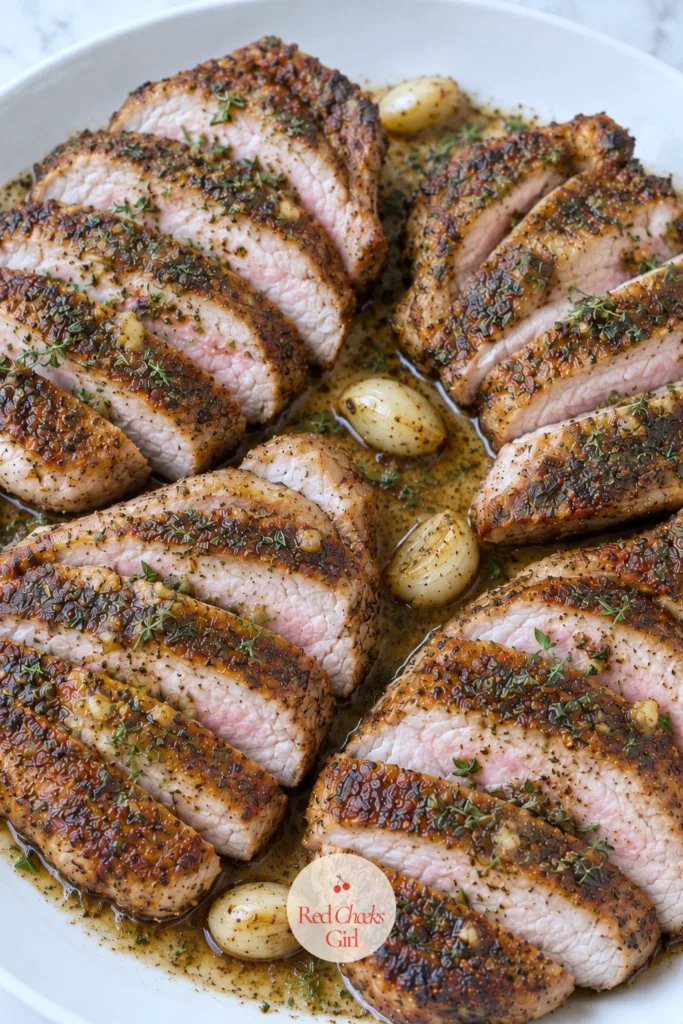
Baked Pork Chops
Ingredients
- 4 thick-cut pork chops bone-in or boneless, 1 to 1 1/2 inches thick (about 10 to 12 ounces each)
- 3 tablespoons packed light brown sugar
- 1 tablespoon paprika
- 1 tablespoon garlic powder
- 1 tablespoon fresh thyme leaves or 1 teaspoon dried thyme
- 1 teaspoon kosher salt
- 1/2 teaspoon black pepper
- 2 tablespoons olive oil
- 2 tablespoons unsalted butter
- 2 cloves garlic smashed
- fresh thyme sprigs for garnish (optional)
Instructions
- Pat the pork chops completely dry with paper towels. Measure the thickness at the fattest point with a ruler and confirm it falls between 1 and 1 1/2 inches.
- In a small bowl, stir together the brown sugar, paprika, garlic powder, thyme, salt and pepper. Rub the mixture evenly over all sides of the pork chops, pressing gently so it adheres.
- Let the rubbed chops stand at room temperature for 15 minutes while the oven preheats to 400°F.
- Heat the olive oil in a cream enameled cast iron skillet over medium-high heat until it shimmers and moves easily across the pan.
- Lay the chops in the hot skillet, leaving space between them, and sear undisturbed for 3 minutes until a deep golden crust forms on the first side.
- Flip the chops with tongs and sear the second side for 3 minutes, until both sides are browned and crusted.
- Add the butter and smashed garlic cloves to the skillet. Tilt the pan and spoon the melted butter over the chops for about 30 seconds, until fragrant and glossy.
- Transfer the skillet to the preheated oven and roast the chops for 10 to 18 minutes, depending on thickness.
- Insert an instant-read thermometer horizontally into the thickest part of a chop. Remove the skillet from the oven once it reads 140°F for chops around 1 inch thick, or 145°F for chops closer to 1 1/2 inches.
- Transfer the chops to a clean cutting board, tent loosely with foil, and let rest for 5 minutes; the internal temperature will climb to a safe 145°F as the juices settle.
- Slice the chops against the grain, spoon the pan juices and browned garlic over the top, and scatter with fresh thyme leaves before serving.
Good to Know
Frequently Asked Questions
How long do you bake pork chops at 400 degrees?
Thick-cut chops seared first need about 10 to 18 minutes at 400°F, closer to 10 minutes for 1-inch chops and up to 18 for chops near 1 1/2 inches.
What temperature should pork chops reach when done?
Pull pork chops at 140°F to 145°F internal temperature; the USDA safe minimum is 145°F, and a short rest carries the center up those last few degrees.
How thick should pork chops be for baking?
Pork chops bake best between 1 and 1 1/2 inches thick; thinner cuts overcook before a crust forms, while thicker chops hold moisture longest through the sear and roast.
Can pork chops be slightly pink in the middle?
Yes, a faint pink blush at 145°F internal temperature is normal and safe, a sign of a properly rested chop rather than an undercooked one.
Why do baked pork chops turn out dry?
Dry chops almost always mean overcooking past 145°F or skipping the rest, both of which let the juices cook out or spill onto the board instead of back into the meat.
Do bone-in pork chops take longer to bake than boneless?
Yes, slightly: the bone insulates the meat near it, so bone-in chops typically need a few extra minutes compared to boneless chops of the same thickness.
13 dinner ideas for two, from beef Wellington to a shared skillet cookie. Small-batch recipes with e
Shrimp fried rice recipe with crispy day-old rice, shrimp, egg, peas and carrots, cooked fast in one
16 chicken breast dinner ideas that stay juicy, from a showstopping hasselback caprese chicken to a
Leave a Reply