

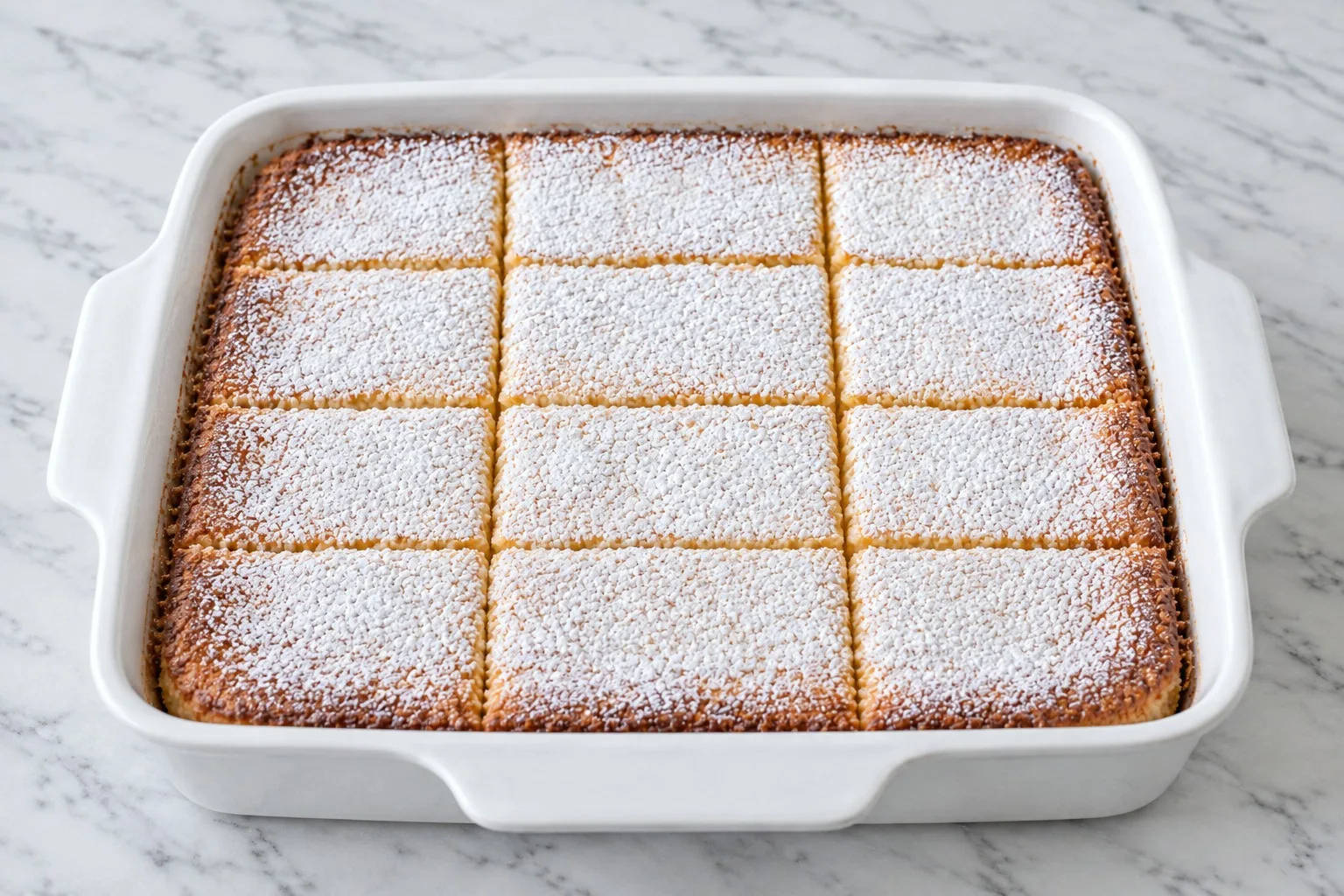
Ooey gooey butter cake is the St. Louis dessert that looks unfinished on purpose, a buttery base under a cream cheese top that sinks softly in the middle instead of rising clean.
No yeast dough, no cake mix shortcut here, just a press-in base and a gooey layer baked until the edges set and the center stays soft. Dust it with powdered sugar right before it hits the table and let the crack down the middle do the talking.
This post contains affiliate links. If you buy through them, I may earn a small commission at no extra cost to you.
Table of Contents
A St. Louis Classic Worth Baking From Scratch
A tray of this arrives at a party already finished, no frosting to smooth, no layers to stack, and it still looks like someone worked for it. The crack across the top and the soft dip in the center are not mistakes, they are the whole point of the cake.
The name comes from a kitchen accident decades back, when a baker’s butter-heavy batter turned out too soft to rise like a normal coffee cake. and scratch bakers have been chasing that same soft, custardy middle ever since.
It travels well in the dish it baked in, holds at room temperature for the length of any gathering, and needs nothing fancier than a sieve of powdered sugar on top.
If the idea of a yeast dough base sounds like more evening than you want to give it, this press-in version gets you the same gooey payoff in one bowl.
The Ingredients That Make It Gooey, Not Just Sweet
Cream cheese carries the whole top layer here, since it instead of letting it bake into something closer to plain cake. Use the full-fat block style, not the whipped kind in a tub, or the layer thins out.
Butter does double duty, moistening the base and enriching the custard on top. Reach for real butter rather than a spread, since, and the fat is what keeps both layers soft instead of dry.
Powdered sugar sweetens the top layer and does more than that: it that sets this cake apart from a regular glaze. Sift it if it looks lumpy straight from the bag.
Eggs hold the gooey layer together, since they without turning it into solid cake. Four eggs go into this recipe between the two layers, so note that along with the dairy and gluten in the base if anyone at the table has allergies.
How to Make It
This version skips the yeast dough that old St. Louis bakeries used, so the base comes together in one bowl and goes straight into the dish with your hands, no proofing or waiting.
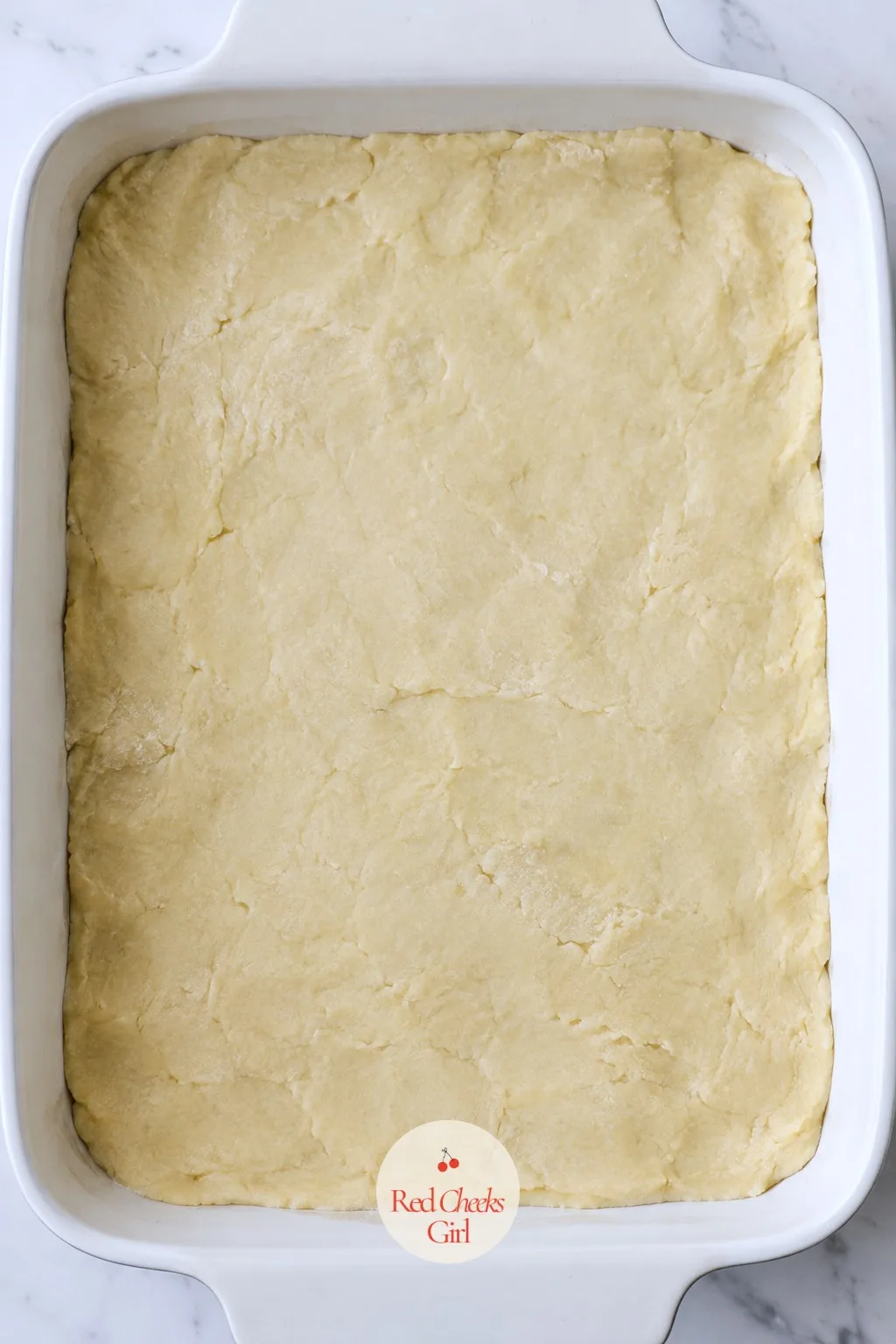
Press the base into the dish
Press the soft dough flat and even into the dish, reaching every corner with your fingers. The surface should look level and slightly matte, not shiny, before it goes further.
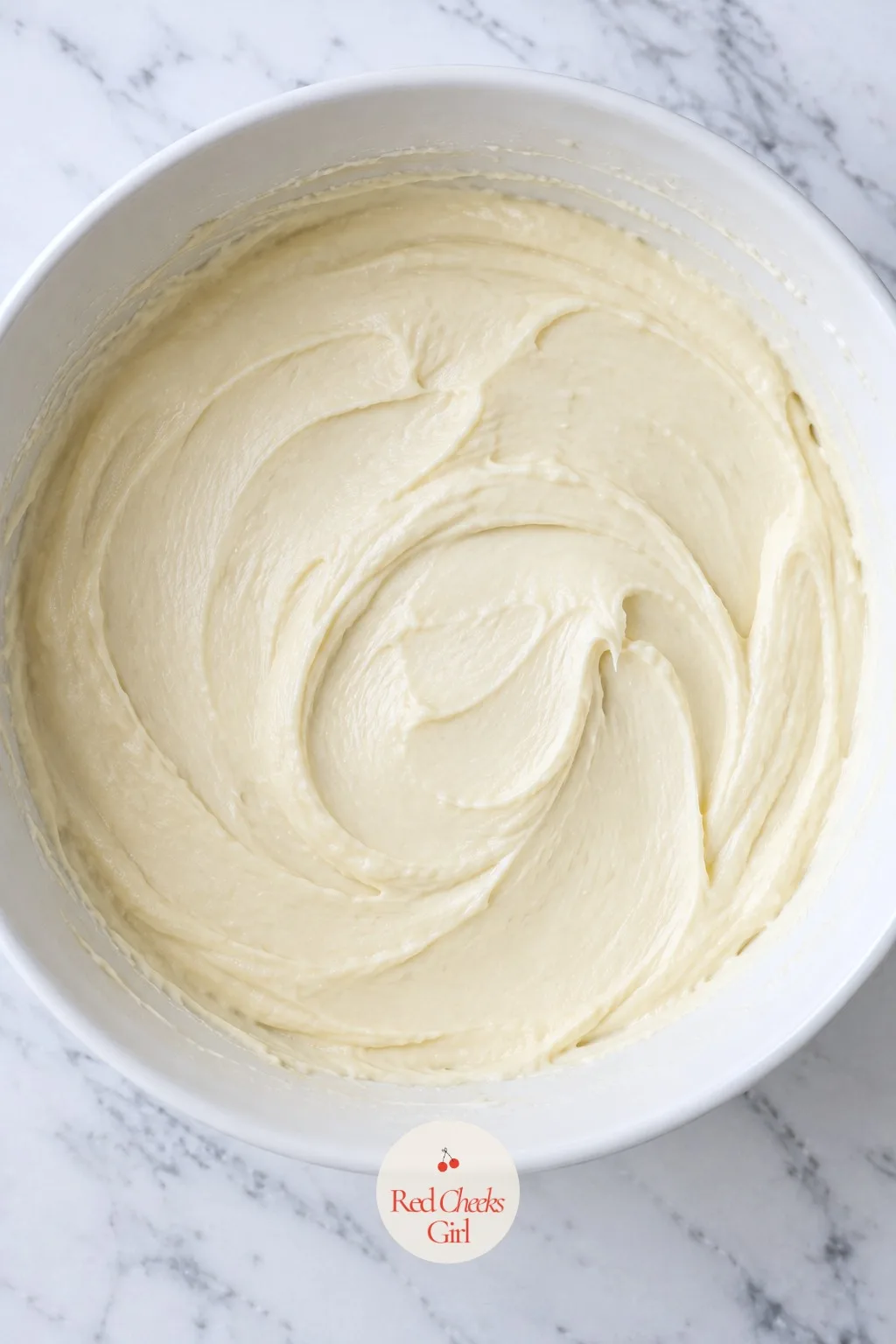
Beat the gooey batter smooth
The cream cheese batter should turn thick, pale and completely smooth once the last of the powdered sugar is beaten in. No streaks of sugar or lumps of cream cheese should remain.
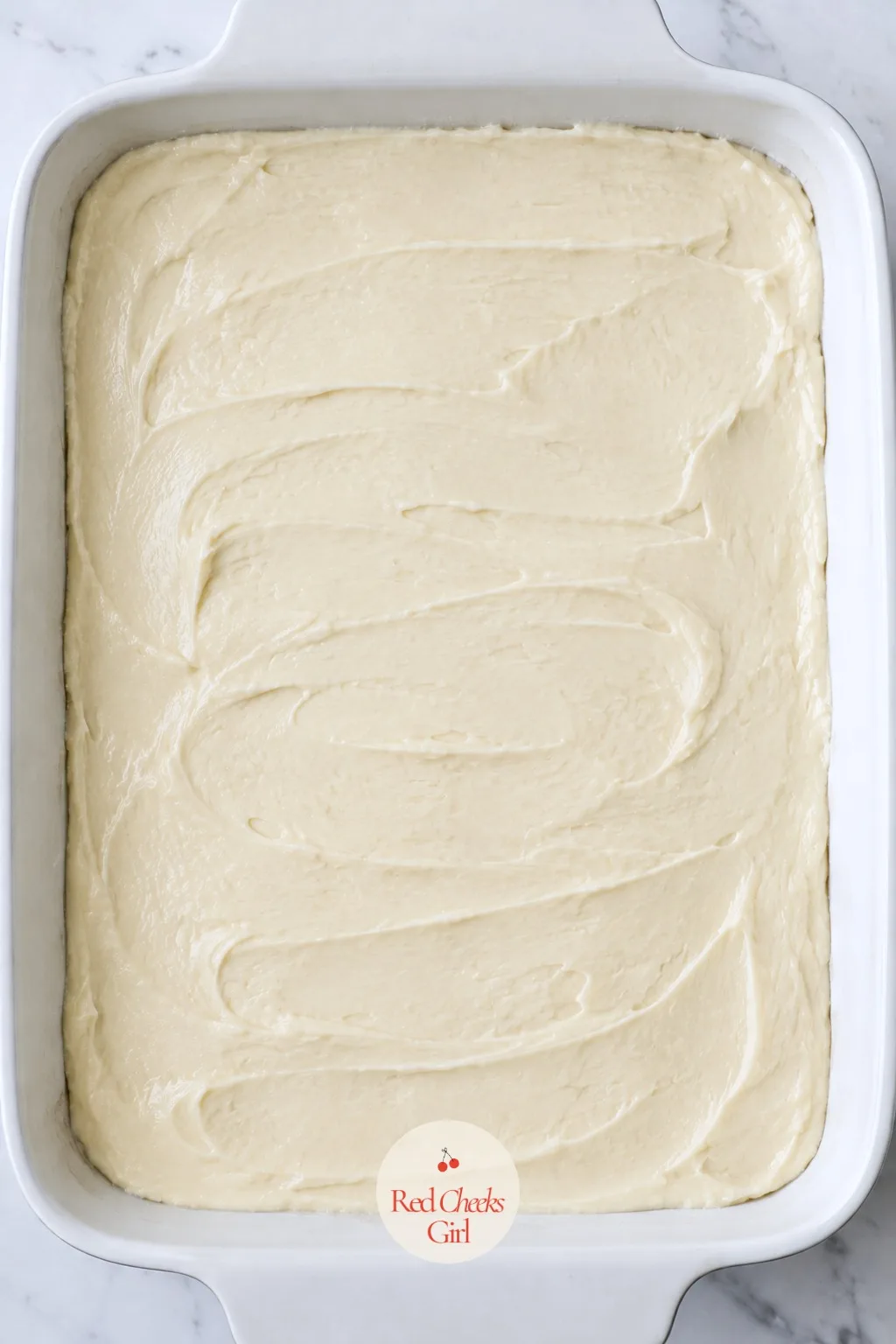
Pour the gooey layer over the base
Spread the gooey batter over the raw dough base until it reaches every edge in one even layer. It should look smooth and unbroken, with no dough showing through.
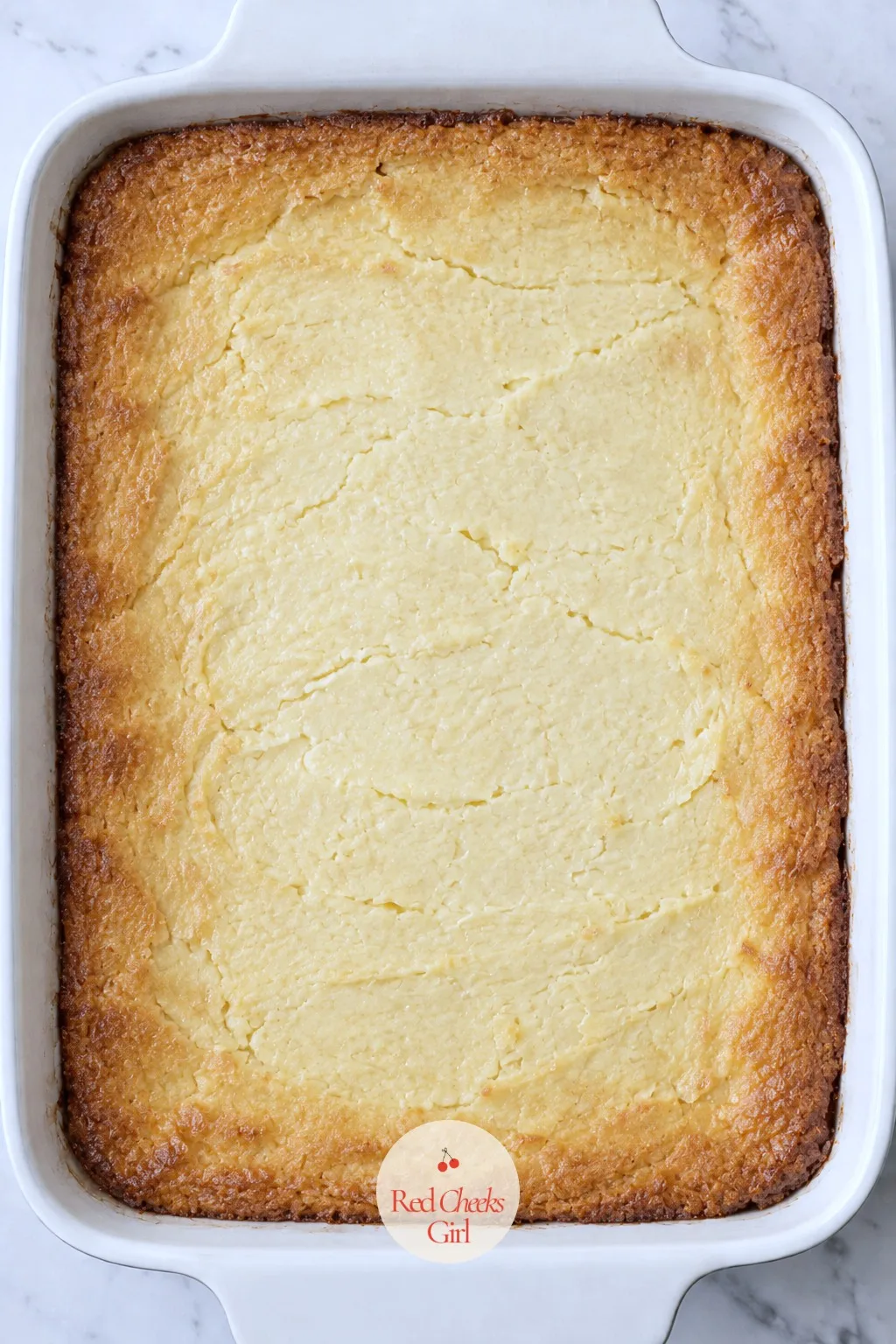
Bake until the edges set
Pull the cake once the edges turn deep golden and the center still looks soft and slightly underdone. That softness in the middle is correct, not a sign to bake it longer.
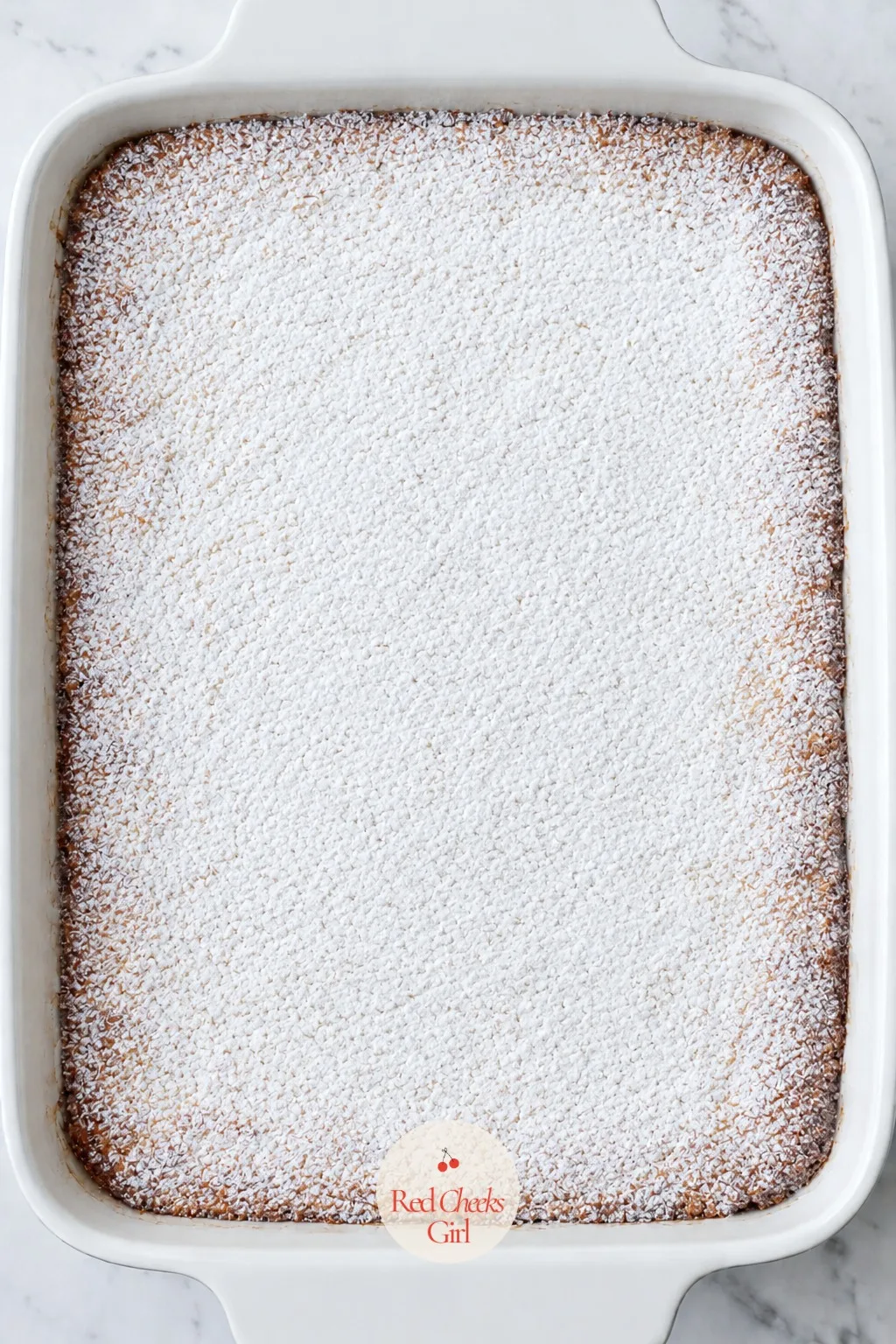
Dust with powdered sugar
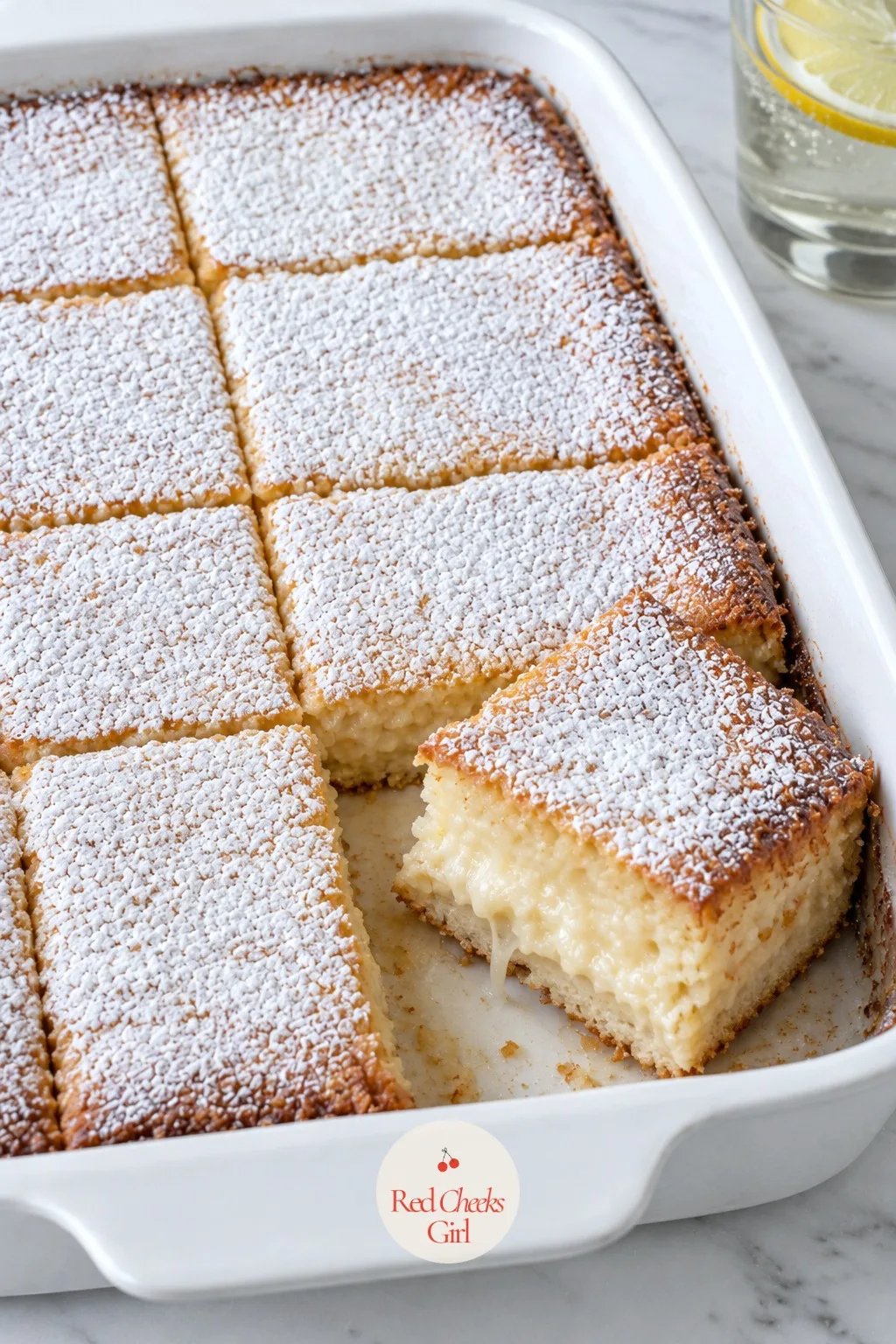
A fine, even layer of powdered sugar covers the cooled cake from edge to edge. Sift it on right before serving so the white stays crisp against the golden surface.
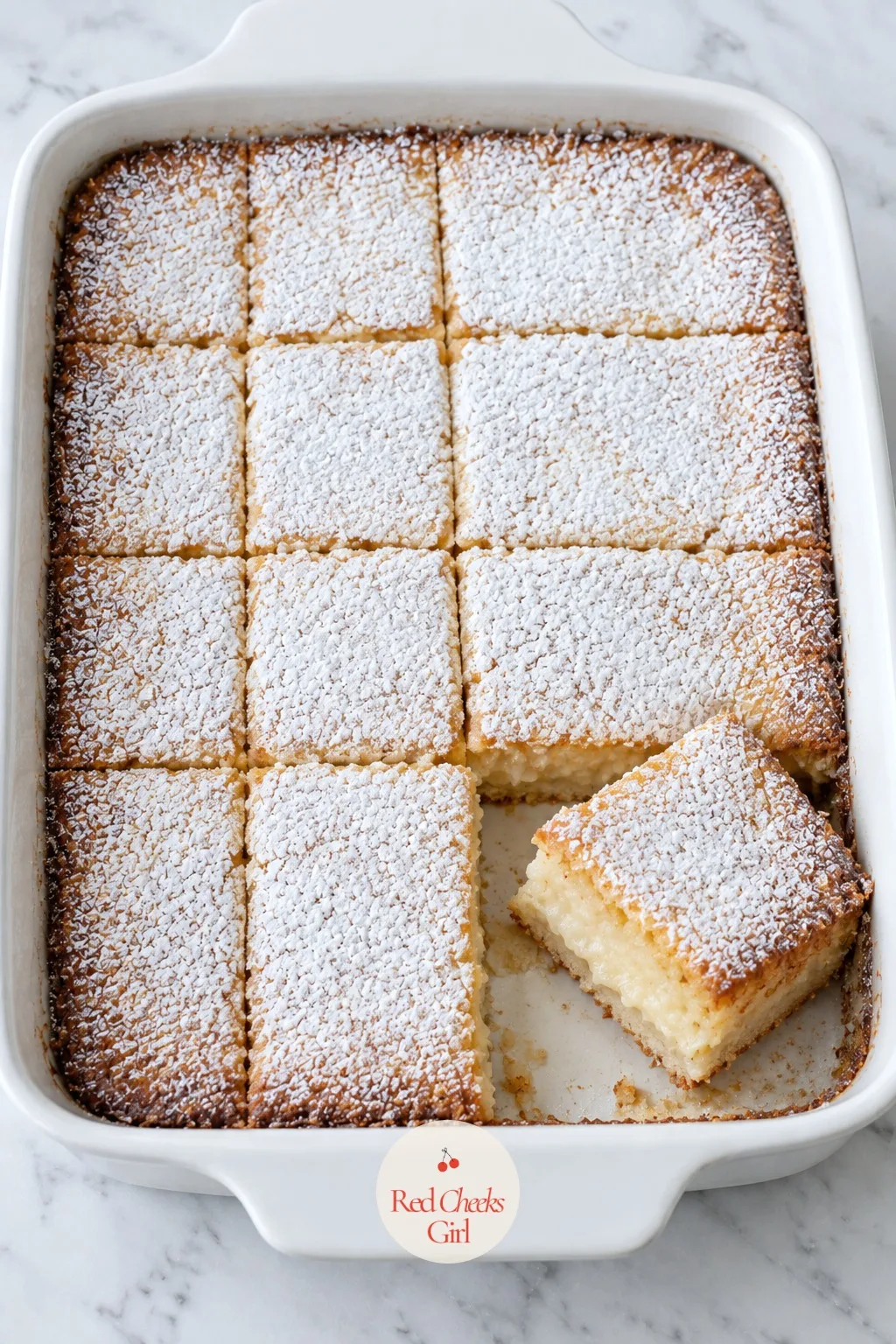
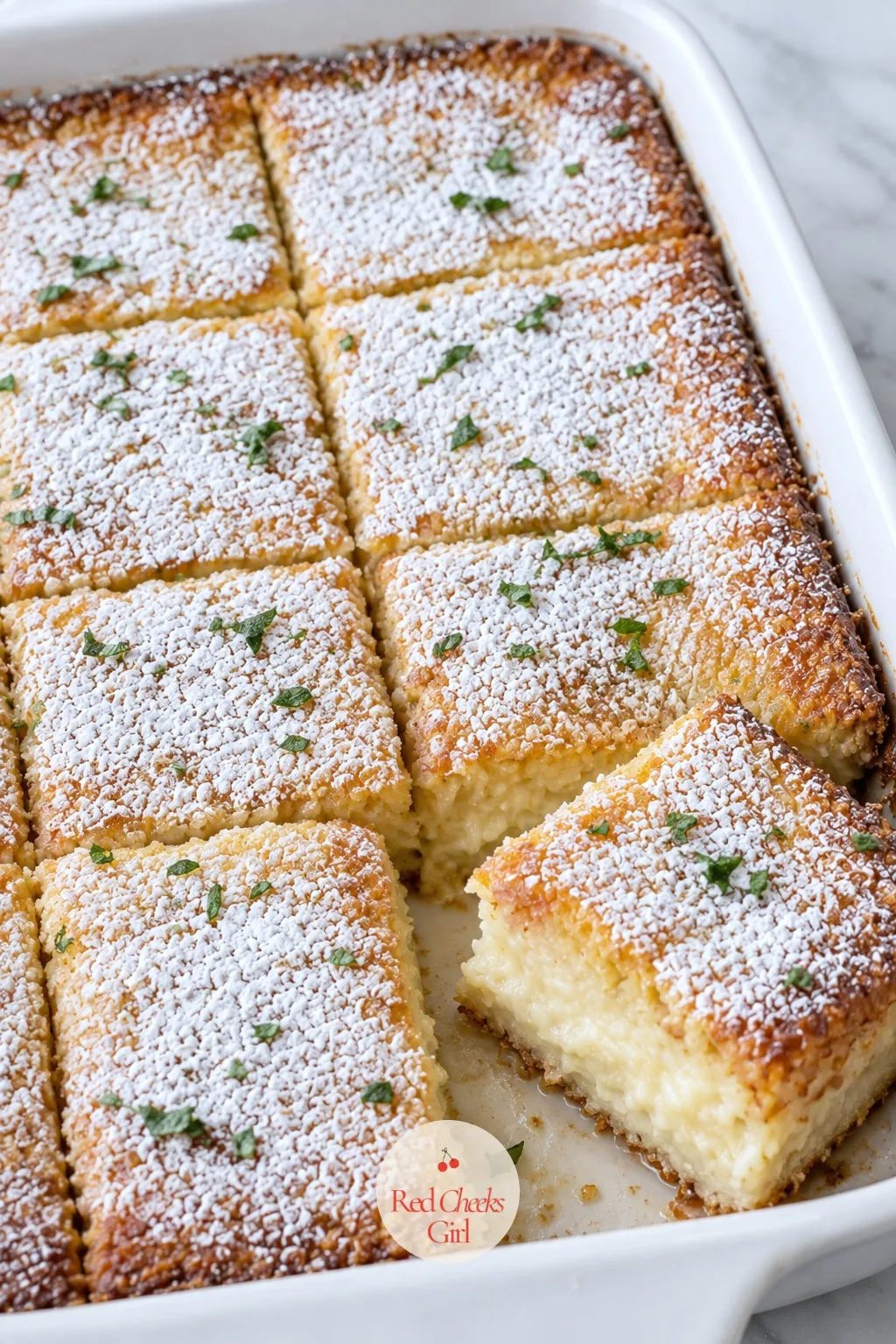
Slice and serve
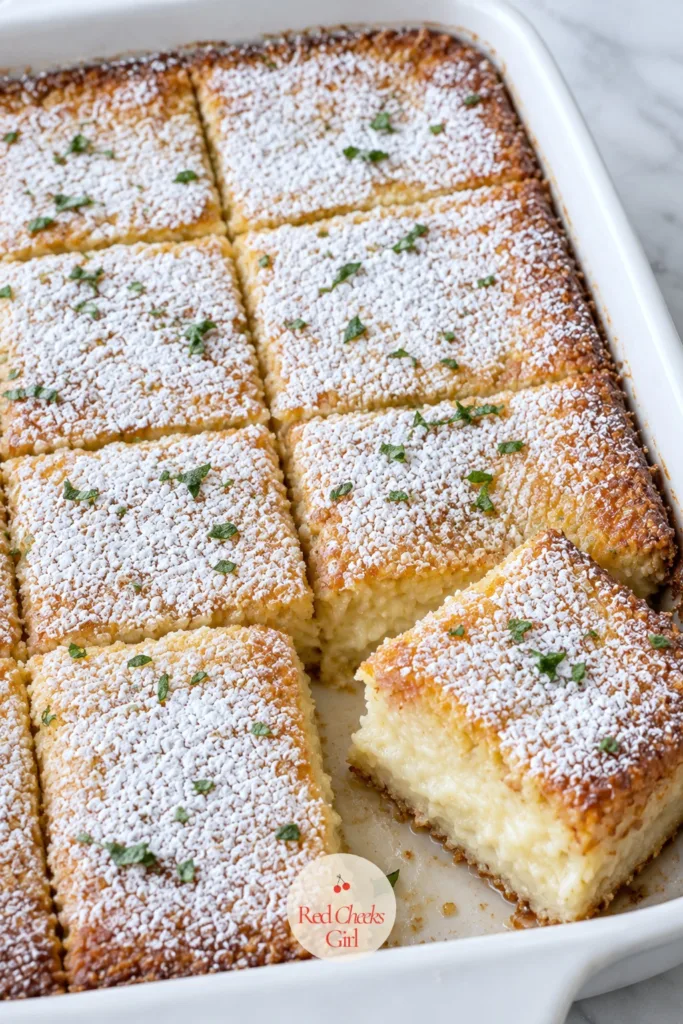
Cut squares sit in the dish with one lifted slightly to show the soft, gooey interior underneath the sugared top. This is the cake ready for the table.
🛍 Shopping guide
Tips for a Center That Stays Soft
The single biggest mistake with this cake is leaving it in until the center looks completely set, since. Once that happens, the gooey layer firms into something closer to a blondie, and there is no walking it back.
Cold cream cheese is the second trap. Let it sit on the counter until it gives easily under a finger, or the gooey layer bakes up with small lumps instead of one smooth sheet.
Resist cutting into it while it is still warm from the oven. The center needs the full cooling time to firm up enough to hold a clean edge, or the slice collapses into the plate.
Keep the dish on the middle rack so the top and the base bake at the same rate. Too close to the top element and the sugar crust browns before the center has a real chance to set.
Swaps and Substitutions
Short on time? Swap the scratch base for a box of yellow cake mix stirred with one egg and the melted butter; it presses into the dish the same way and bakes just as gooey on top.
Salted butter works fine in both layers if that is what sits in the fridge, just leave out the extra pinch of salt in the gooey layer so the sweetness does not tip over.
For a fall table, stir a cup of pumpkin puree and a little cinnamon into the gooey layer; for a cocoa version, whisk two tablespoons of cocoa powder into that same batter before pouring it over the base.
A handful of chopped pecans or mini chocolate chips scattered over the batter before it bakes adds crunch without changing the method, and a few spoonfuls of jam swirled through the top layer give it a bakery look.
A 1:1 gluten-free flour blend works in the base for guests avoiding gluten, since the top layer itself has none, as long as the powdered sugar used is a certified gluten-free brand.
What to Serve It With at a Party
Serve squares slightly chilled next to a pot of coffee, the way St. Louis bakeries always have. If the gathering leans more on caffeine than cake, borrow a few coffee corner ideas that’ll make you actually want to wake up (even on Mondays) and let guests pour their own between slices.
Squares cut small disappear fast next to wings and dip, which is exactly the role dessert plays in a spread built from game day party food: 21 recipes and ideas for your spread.
For a grown-up birthday table, set it beside other birthday treats for adults that beat a shop cake on a plate, so nobody misses candles or a cutting ceremony.
Fresh berries or a small pitcher of lightly whipped cream on the side let guests dress their own square, which keeps the dessert table interactive without any extra baking on your end.
Ooey Gooey Butter Cake
Ingredients
- For the base:
- 2 cups all-purpose flour
- 1 cup granulated sugar
- 1 tablespoon baking powder
- 1/2 teaspoon salt
- 1/2 cup unsalted butter melted and cooled slightly
- 1 large egg
- 1 teaspoon vanilla extract
- 1/4 cup whole milk
- For the gooey top layer:
- 8 ounces cream cheese softened
- 1/2 cup unsalted butter softened
- 3 large eggs
- 1 teaspoon vanilla extract
- 1/4 teaspoon salt
- 1 pound powdered sugar about 4 cups, plus extra for dusting
Instructions
- Preheat the oven to 350°F and butter a 9x13-inch ceramic baking dish generously, right up into the corners, so the base lifts cleanly later.
- In a large mixing bowl, whisk together the flour, granulated sugar, baking powder, and salt until no streaks of baking powder remain.
- Add the melted butter, 1 egg, 1 teaspoon vanilla extract, and the milk to the dry ingredients, then stir with a wooden spoon until a soft, thick dough forms.
- Press the dough evenly into the bottom of the prepared baking dish, pushing it into the corners with lightly floured fingers until the surface is level.
- In a clean mixing bowl, beat the softened cream cheese and 1/2 cup softened butter with an electric hand mixer on medium speed for about 2 minutes, until completely smooth.
- Add the 3 remaining eggs one at a time, beating well after each one, then mix in the remaining 1 teaspoon vanilla extract and 1/4 teaspoon salt.
- Add the powdered sugar in two additions, beating on low speed after each, until the batter is thick, pale and completely smooth with no lumps of sugar.
- Pour the gooey batter over the raw dough base and spread it to the edges with an offset spatula so it covers every corner in an even layer.
- Bake for 40 to 45 minutes, until the edges are deep golden and pulled slightly away from the dish, while the center still jiggles like soft-set custard when you nudge the dish.
- Set the baking dish on a wire rack and let the cake cool completely, about 2 hours, so the gooey layer finishes setting without turning cakey.
- Once the cake is fully cool, dust the top generously with powdered sugar through a small sieve, right before serving so the sugar stays white instead of soaking in.
- Cut into 16 squares with a sharp knife, wiping the blade between cuts, and serve the gooey butter cake at room temperature.
Good to Know
Frequently Asked Questions
Why is it called gooey butter cake?
The name comes from a St. Louis bakery that accidentally used far too much butter in a batch of coffee cake and sold the soft, sticky result anyway. The style caught on and never got fixed.
Should I serve it warm or cold?
Either works, though most bakers prefer it fully cooled or even chilled, since the gooey layer holds its shape better and slices come out clean. A few seconds in the microwave brings back the just-baked softness.
Can I double the recipe for a crowd?
Yes, doubling works well across two 9×13 dishes baked side by side or one deeper pan. Keep the oven temperature the same and start checking the center around the 40 minute mark.
Why did the top crack while baking?
A cracked top usually means the oven ran a touch hot or the dish sat too close to the top element. It still tastes fine, and a dusting of powdered sugar covers the crack completely.
How do I cut clean slices without it falling apart?
Let the cake cool completely, even a few hours in the fridge, before the first cut. Use a sharp knife and wipe the blade between slices so the gooey layer does not drag.
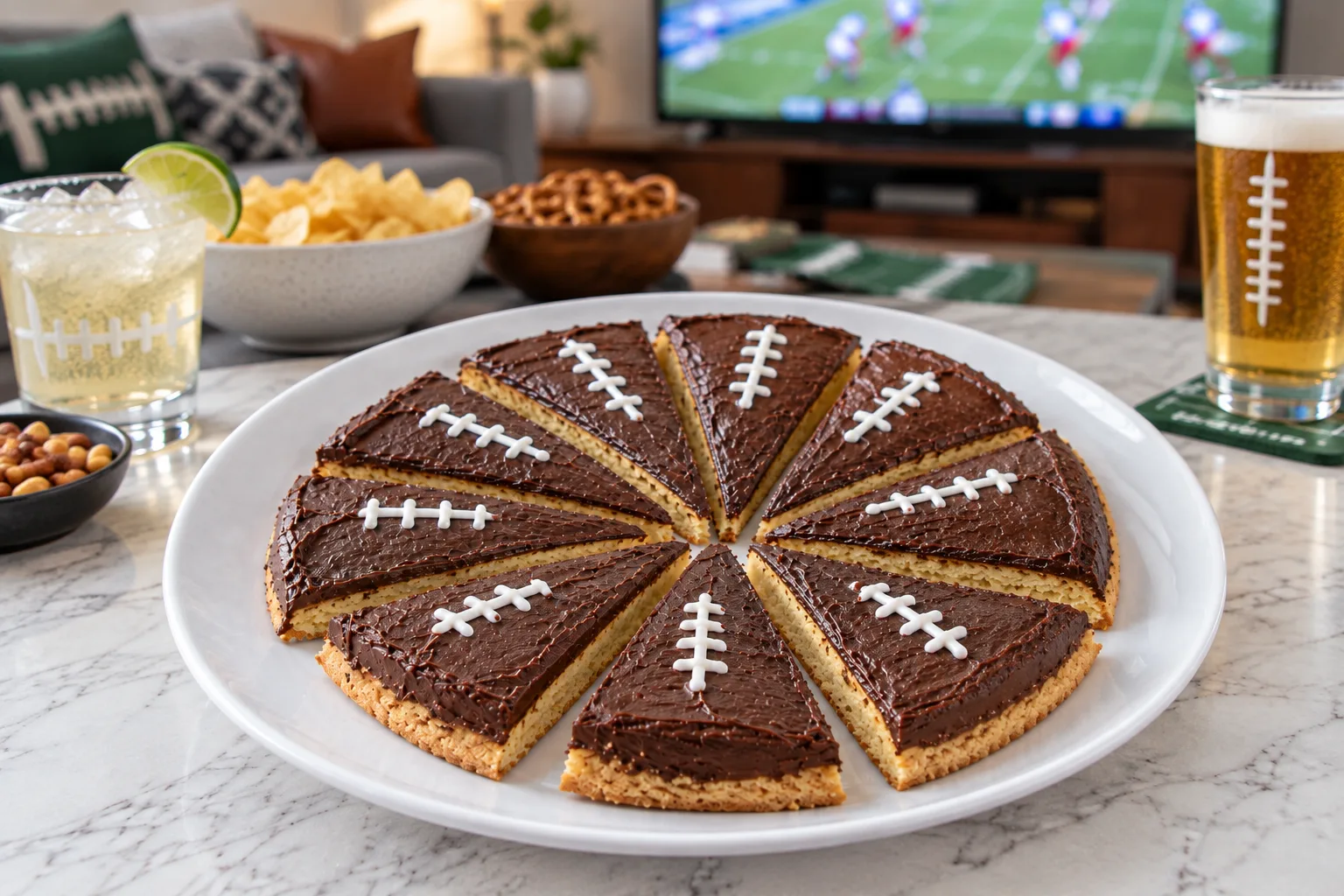
Football cookie cake turns chocolate chip cookie dough into a laced football shape, cut into wedges
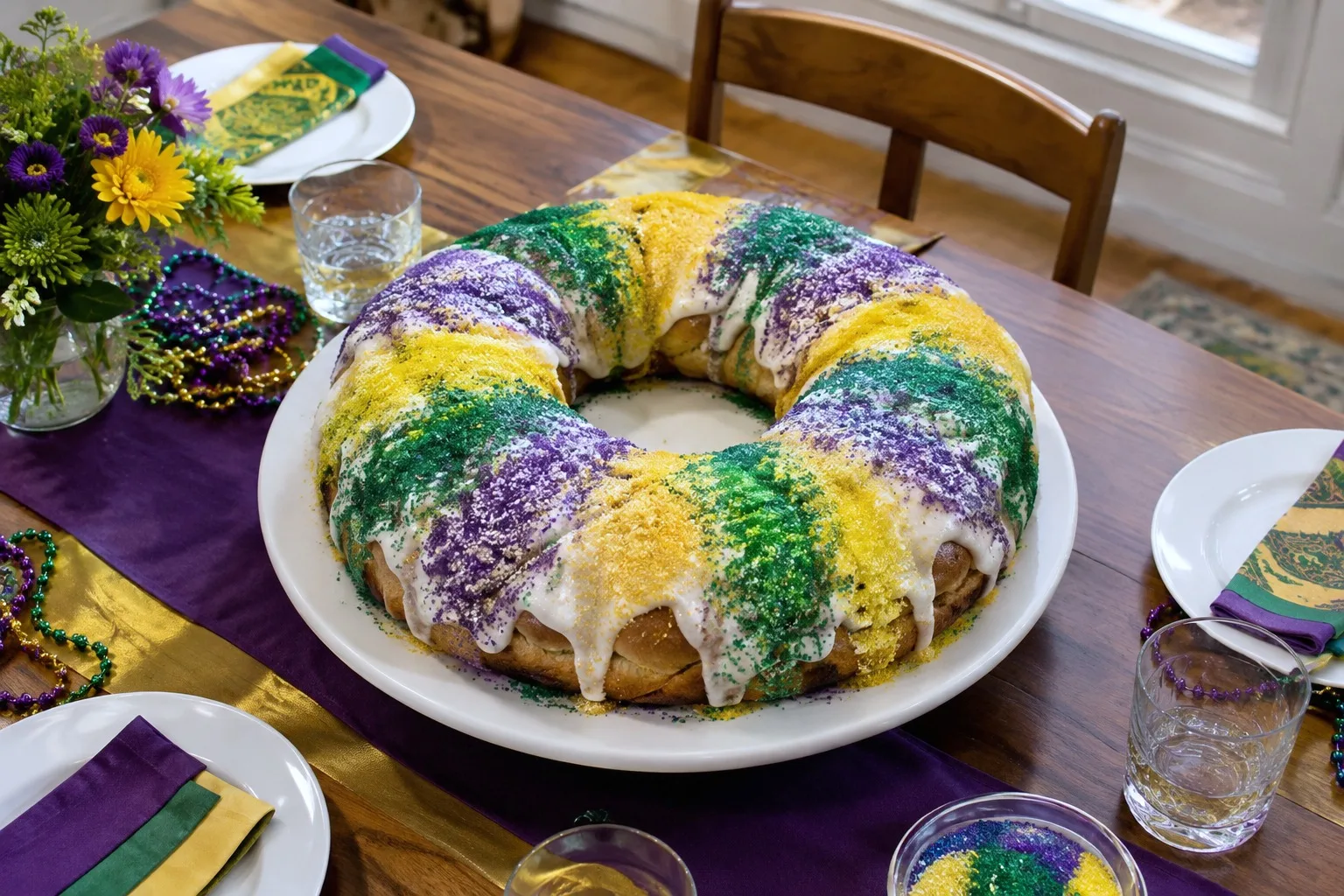
14 king cake recipes for Mardi Gras: classic brioche, cream cheese, poke cake, cupcakes, bites and m
14 valentines dessert recipes from a showstopping sheet cake to a five-minute dip, with notes on whi
Leave a Reply