

French onion meatballs take the slow, sweet work of French onion soup and turn it into something you can eat with a fork off a buffet table.
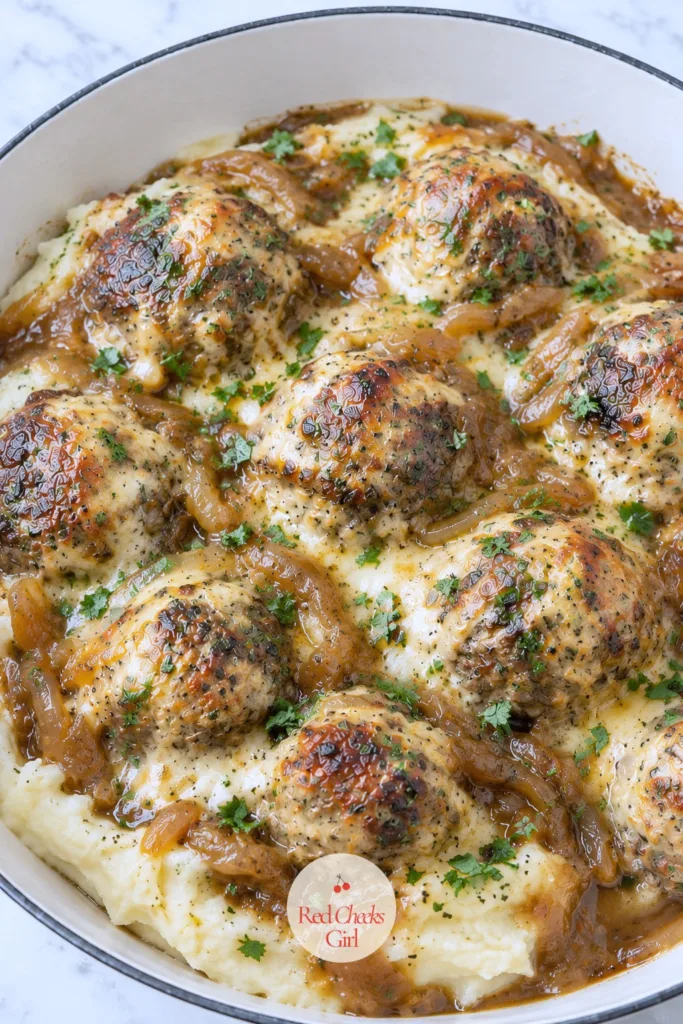
Beef meatballs sit in a skillet of deeply caramelized onions, beef broth and thyme, then go under the broiler until the Gruyere on top turns bronze and bubbling. One pan, one long simmer, and the kitchen smells like a bistro before anyone even sits down.
This post contains affiliate links. If you buy through them, I may earn a small commission at no extra cost to you.
Table of Contents
Why French Onion Meatballs Belong on the Party Table
French onion soup is a wonderful thing to order and a mildly annoying thing to serve a crowd: the bowls run hot, the cheese strings everywhere, and nobody wants to balance a spoon and a napkin standing up. French onion meatballs solve the logistics without losing the flavor that made the soup worth ordering in the first place.
Everything happens in one skillet: brown the meatballs, caramelize the onions in the same fond, build the sauce, then broil the cheese on top. That means one pan to wash and a kitchen that still smells like a bistro by the time guests arrive.
The dish holds its shape on a plate, on a buffet, or spooned over mashed potatoes, which makes it as easy for a seated dinner as for a stand-and-mingle party. Pile it over crusty bread instead and it eats like an open-faced sandwich nobody has to cut with a knife.
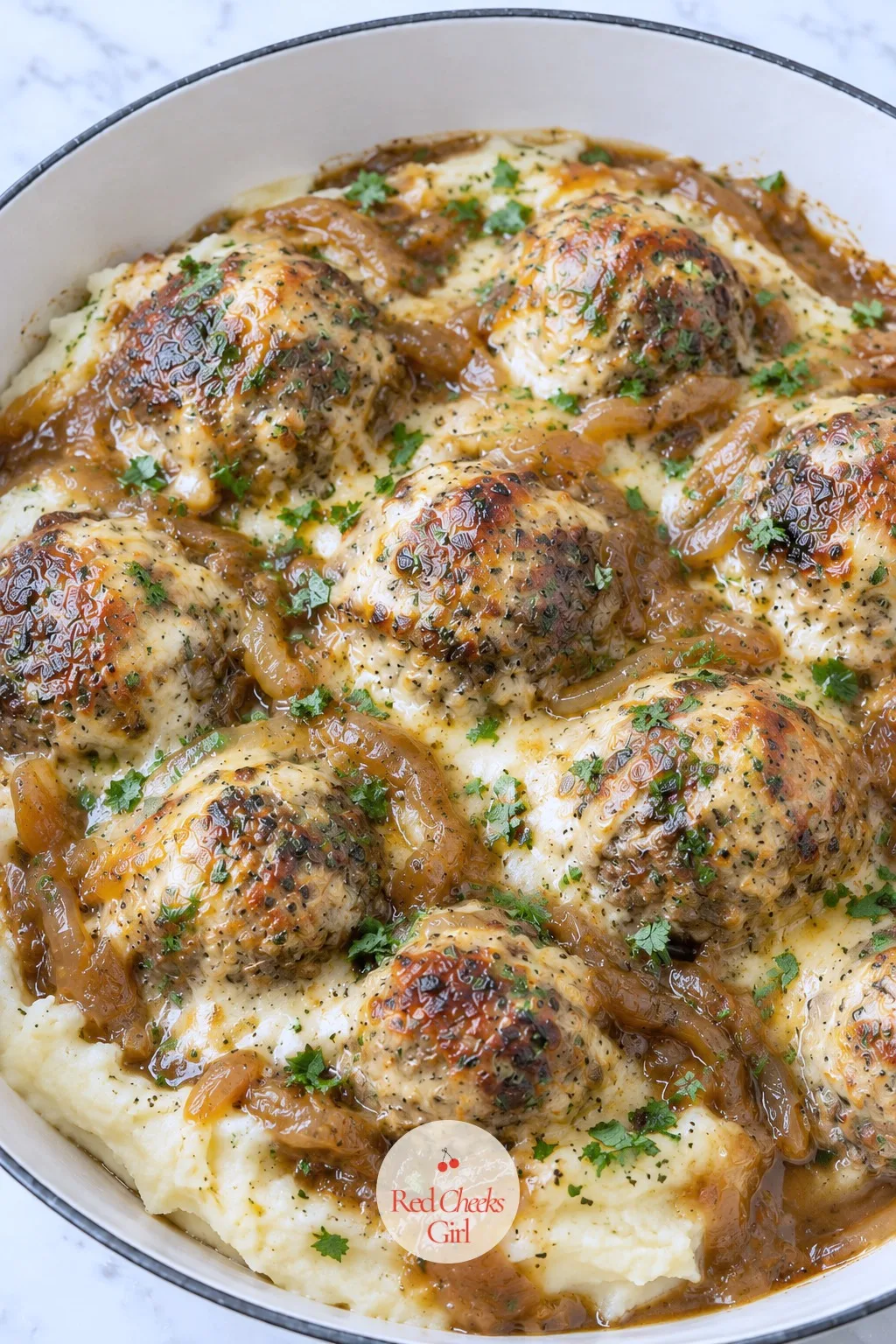
What Makes French Onion Meatballs Taste Like the Soup
The onions are doing almost all the work here, so buy more than seems reasonable: three large yellow onions cook down to a surprisingly small, deeply sweet pile. Sliced thin and even, they caramelize at the same rate, which matters more than any other single step in this recipe.
Ground beef with some fat in it, 80 percent lean or close to it, keeps the meatballs from drying out during the browning and the simmer that follows. Panko, milk and an egg bind the mixture without making it dense, so resist the urge to compress the meat when you shape it.
Gruyere is the cheese the soup is built on: nutty, a little sharp, and it melts into long smooth ribbons instead of turning greasy under a broiler. A cheaper block from the deli counter works just as well as an imported one once it is shredded and bubbling.
Beef broth, not water, carries the fond left behind by the browned meatballs into the sauce, and a low-sodium one lets you control the salt once the cheese goes on top. Fresh thyme smells brighter, but a dried pinch does the job if that is what sits in the cabinet.
How to Make It
This is a one-skillet recipe, start to finish, as long as the skillet is oven-safe for the last few minutes under the broiler. Read through the onion step before starting: it is the one part of this recipe that genuinely cannot be hurried, so plan the rest of the evening around it rather than the other way around.
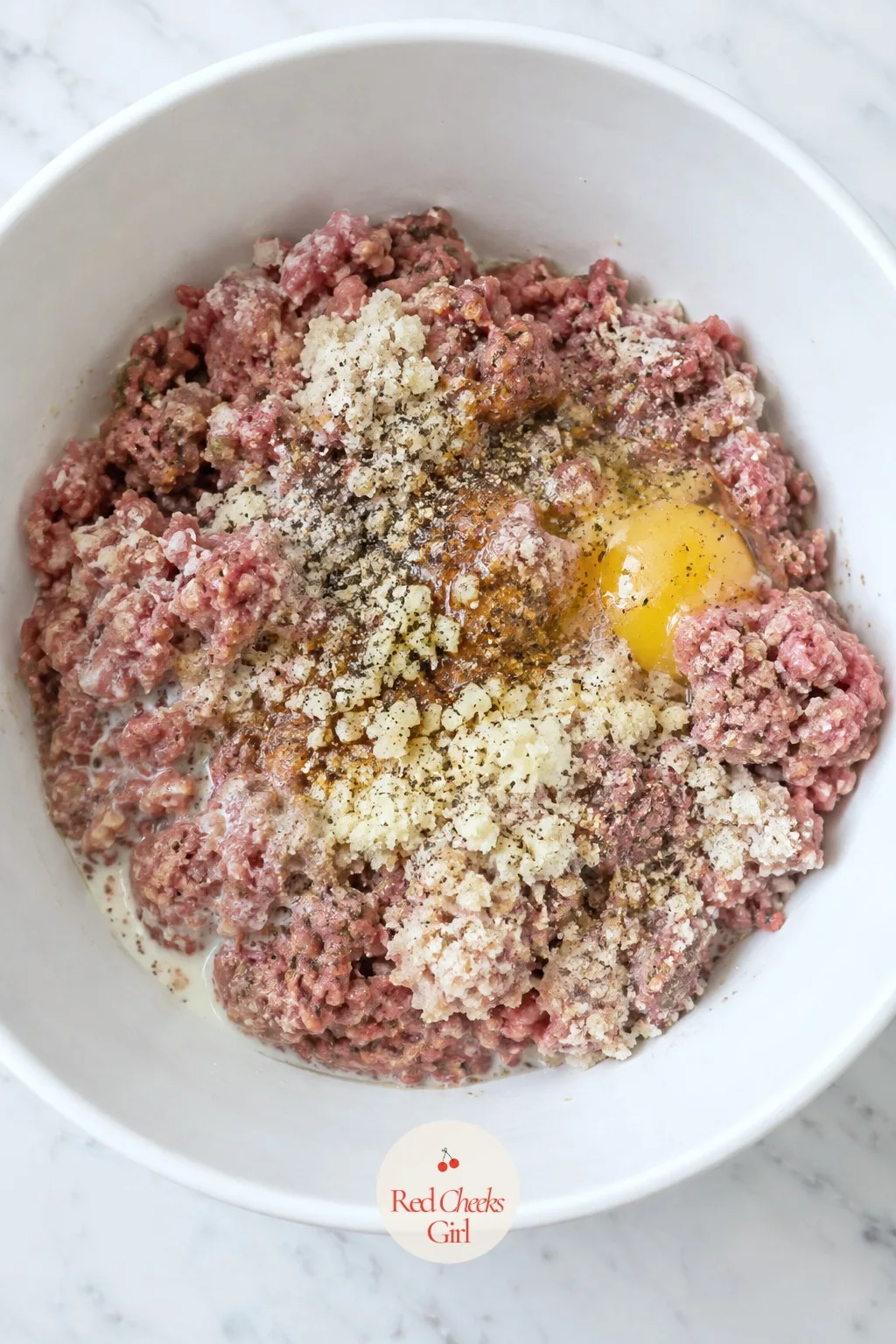
Shape the meatballs
Roll the mixed beef into 24 even meatballs, about 1 1/2 inches across, and line them up on the board. They should look smooth and slightly tacky, not dry or cracked at the edges.
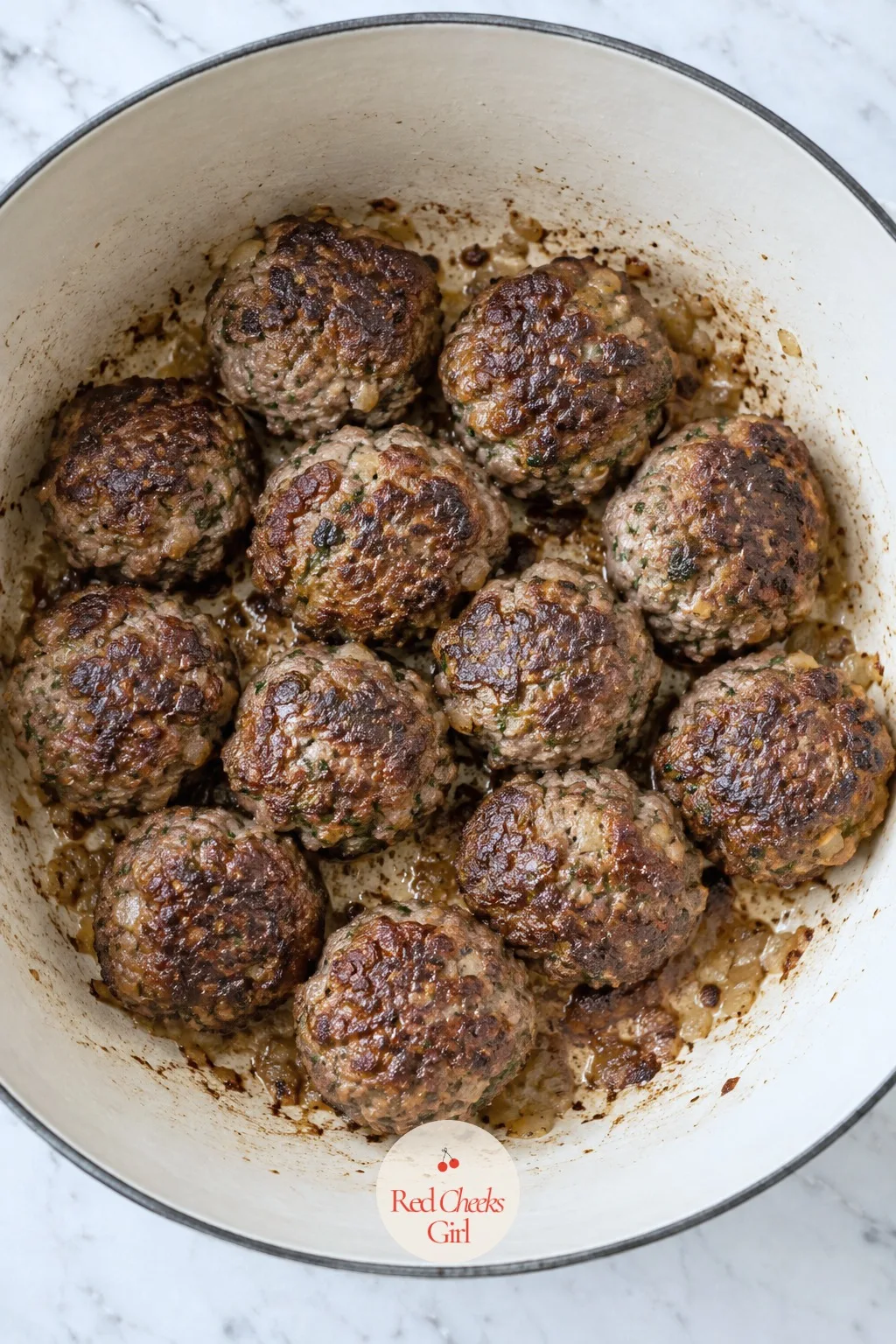
Brown the meatballs
Sear the meatballs in batches until a deep brown crust forms on every side. The centers stay pink for now; that crust is what gives the sauce its flavor later.
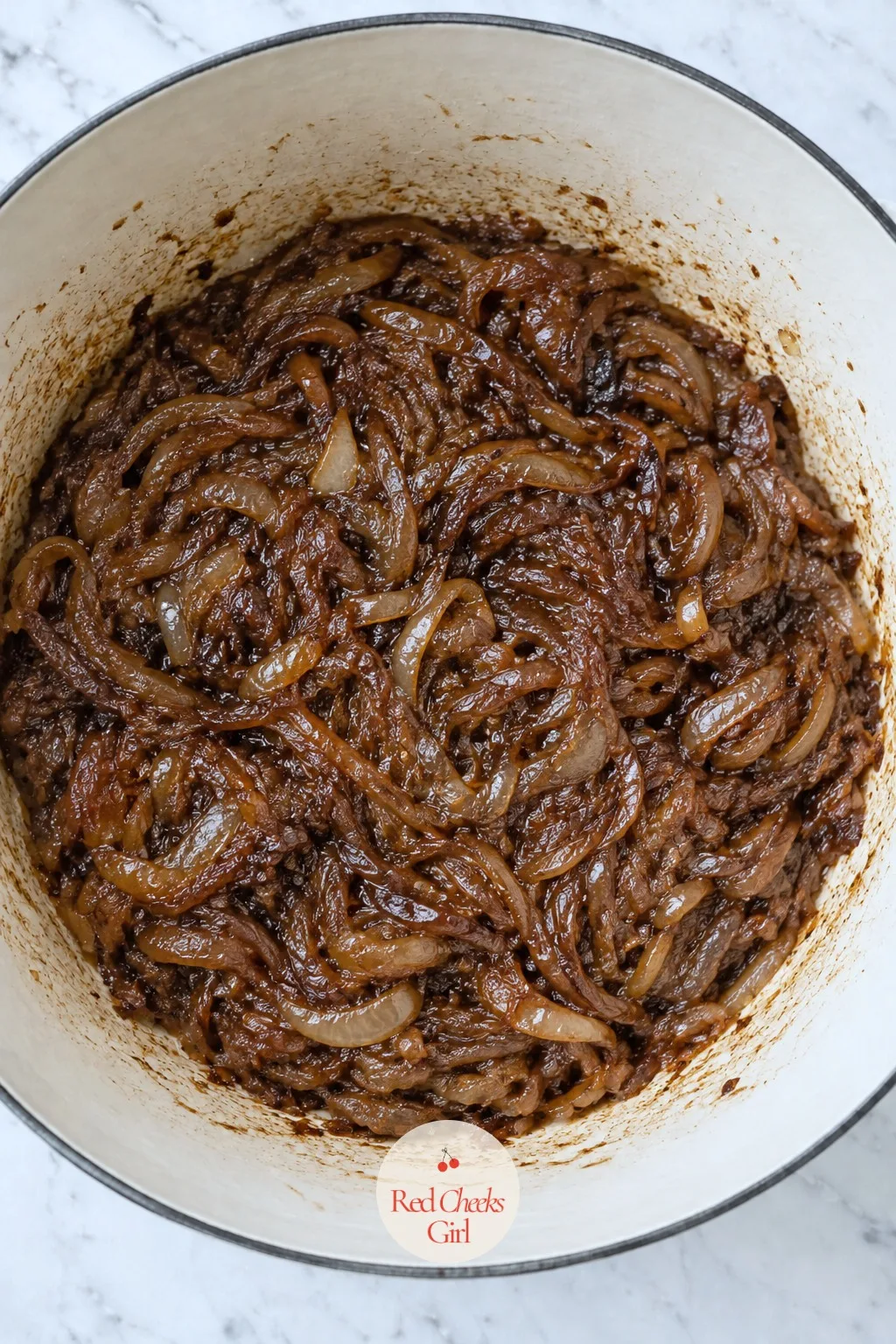
Caramelize the onions low and slow
Watch the onions collapse from pale and crisp into soft mahogany ribbons over the better part of an hour. They are ready when they look jammy and glossy, not just softened.
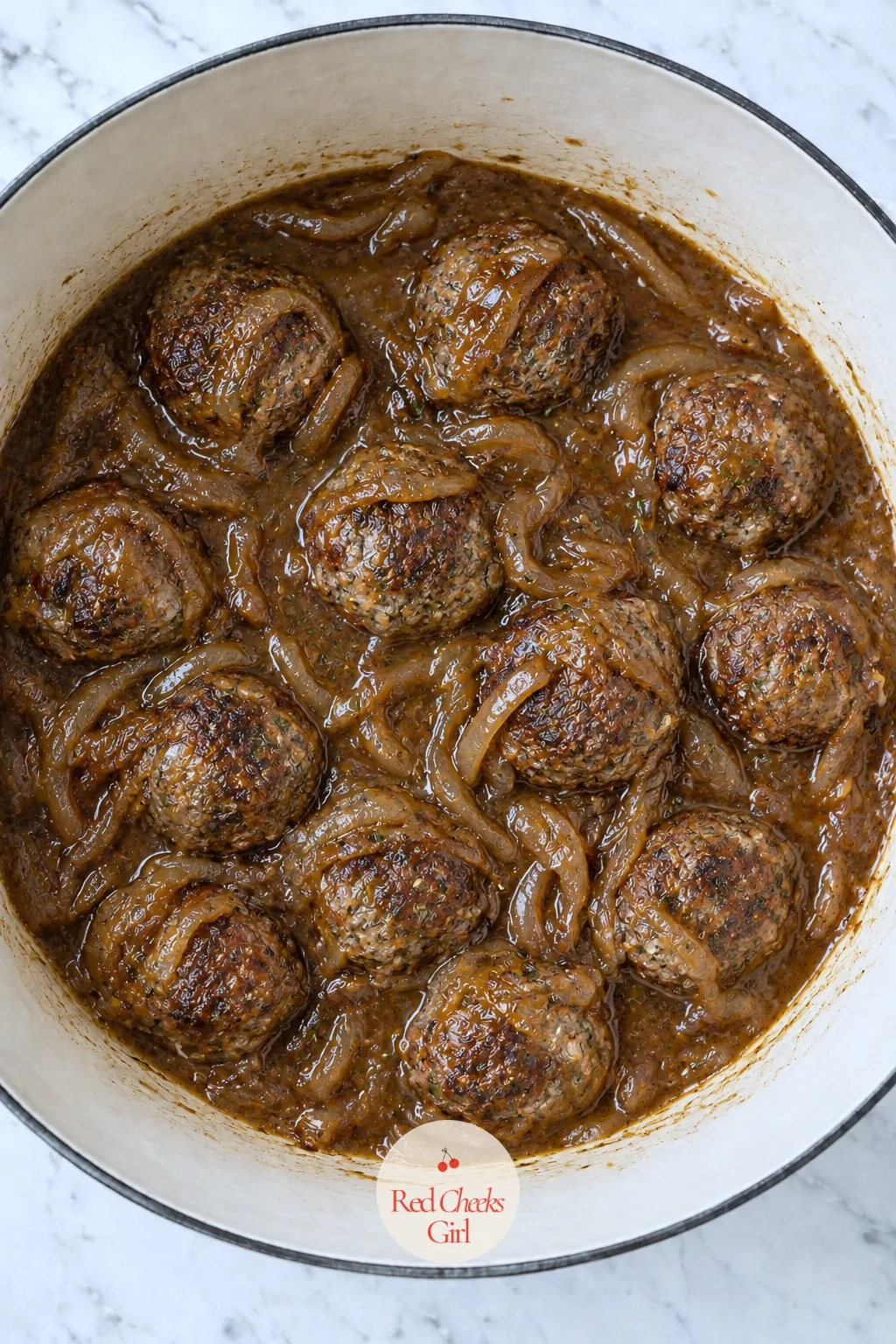
Simmer the meatballs in the onion sauce
Nestle the browned meatballs into the thickened onion sauce and let them simmer until cooked through. The sauce should coat each meatball in a thin, glossy amber layer.
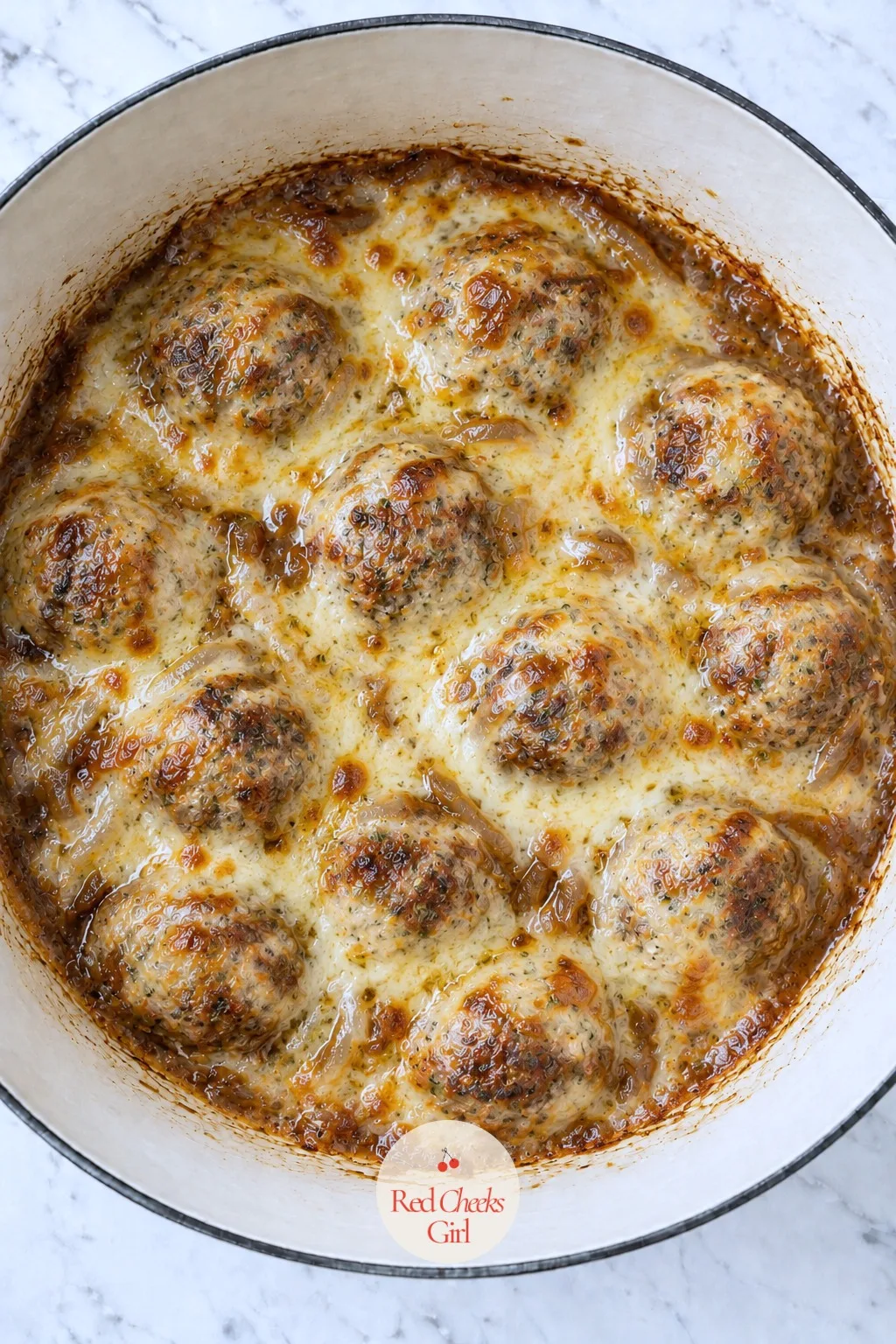
Broil until the cheese is bubbling
Watch closely as the Gruyere melts into bronzed, bubbling patches over the meatballs. It is done the moment it turns golden brown, not black.
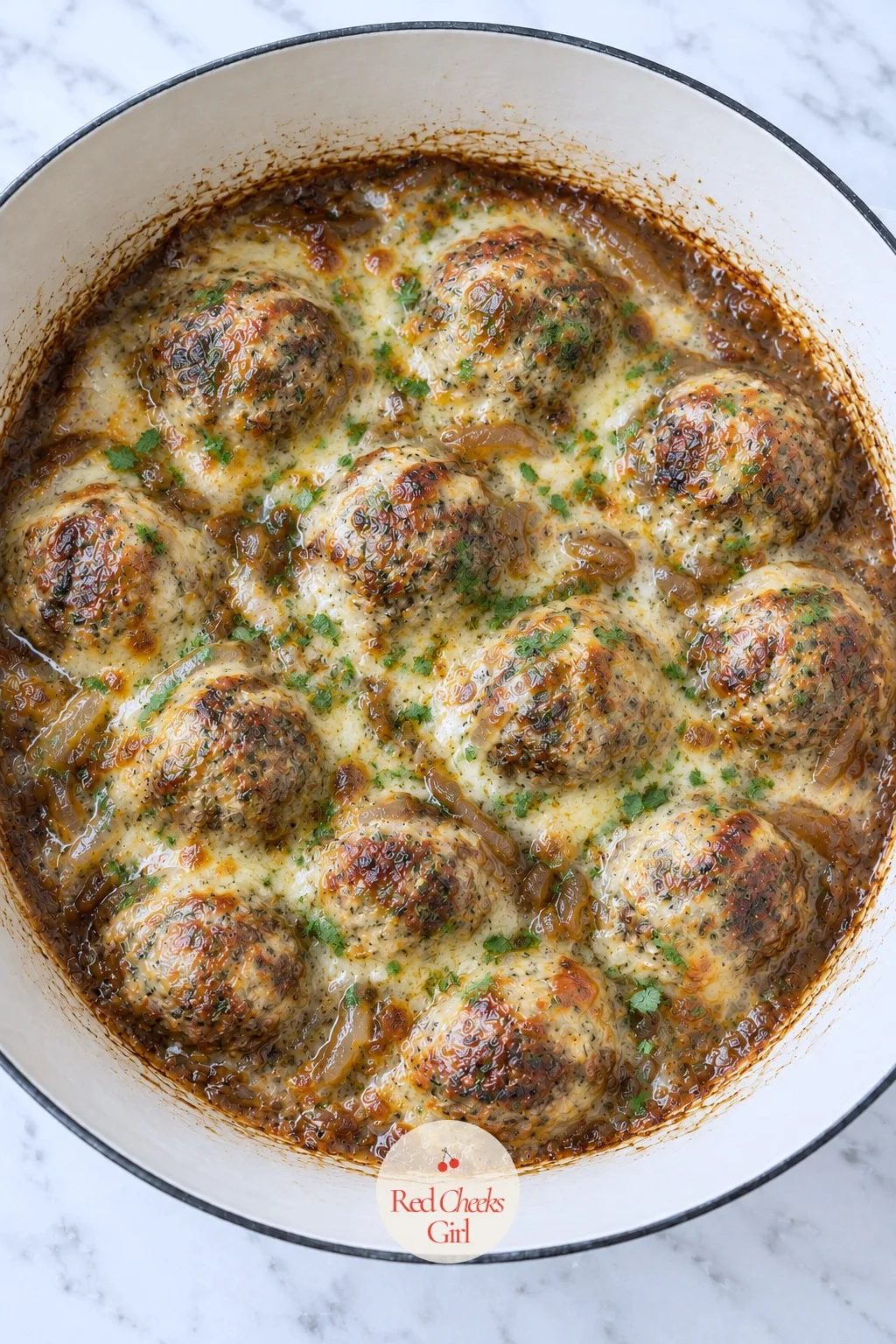
Serve over mashed potatoes with crusty bread
Spoon the cheese-draped meatballs and onion sauce over a mound of mashed potatoes, with torn crusty bread alongside. Parsley flecks scatter across the top for the finished plate.
🛍 Shopping guide
Getting the Onions (and Everything Else) Right
The most common complaint about homemade French onion anything is flat flavor, and it almost always traces back to onions that never got the time they needed. Fifteen or twenty minutes makes onions soft and translucent; it does not make them caramelized, and the difference shows up in every bite.
Give the onions 45 to 55 minutes over medium-low heat, stirring only every 5 to 8 minutes rather than constantly. Constant stirring keeps the pan too cool to brown; a little patience and a wide, heavy pan like the cream Dutch oven lets the sugars actually color.
Overmixed meatballs are the second most common problem: squeeze and pack the meat and it turns dense and bouncy instead of tender. Mix with a light hand, just until the ingredients disappear into each other, and stop.
Watch the broiler instead of trusting a timer. Ovens vary enough that two minutes in one kitchen is four in another, and Gruyere goes from bubbling to burnt in under a minute once it starts to brown.
Swaps and Substitutions That Still Taste Right
Ground turkey or chicken works in place of beef if that is what is in the fridge, though the meatballs will be leaner and slightly less forgiving: add an extra tablespoon of milk to the mixture to keep them moist.
No Gruyere in the shop is not a problem. Swiss, Fontina or a sharp white cheddar all melt the same way and carry the dish just as well; skip pre-shredded bags if possible, since they melt less smoothly than cheese grated off a block.
For a gluten-free version, swap the panko and flour for gluten-free equivalents and check the label on the Worcestershire sauce, since some brands include barley malt. Sweet onions or shallots make a milder, slightly less assertive sauce than yellow onions, useful if the rest of the menu is already rich.
If the table wants something creamier instead, the Swedish Meatballs That Simmer in Their Own Creamy Gravy cover the same one-skillet, crowd-friendly ground, just pointed toward nutmeg and sour cream instead of onions and Gruyere.
What to Serve French Onion Meatballs With at a Party
Crusty bread is the obvious answer and the right one: a sliced baguette, lightly toasted, exists mainly to be dragged through onion sauce. Set a whole loaf on the board next to the skillet and let people tear their own pieces, so nobody has to hover with a knife!
Mashed potatoes turn the same meatballs into a sit-down dinner instead of a party bite: spoon the whole skillet over a bowl of them and let the sauce run into the potatoes. Buttered egg noodles or a simple green salad with a sharp vinaigrette both work if the table already has bread somewhere else.
For a full spread rather than one dish, the Game Day Party Food: 21 Recipes and Ideas for Your Spread collection fills out the rest of the table without repeating flavors. The Christmas Appetizers: 12 Party Themes and Recipe Collections works the same way if the gathering leans toward a seated holiday menu.
A simple dry white wine or a light beer sits well against the richness of the cheese and the sweetness of the onions; pour for the adults in the room and keep a sparkling cider or soda on hand for anyone not drinking.
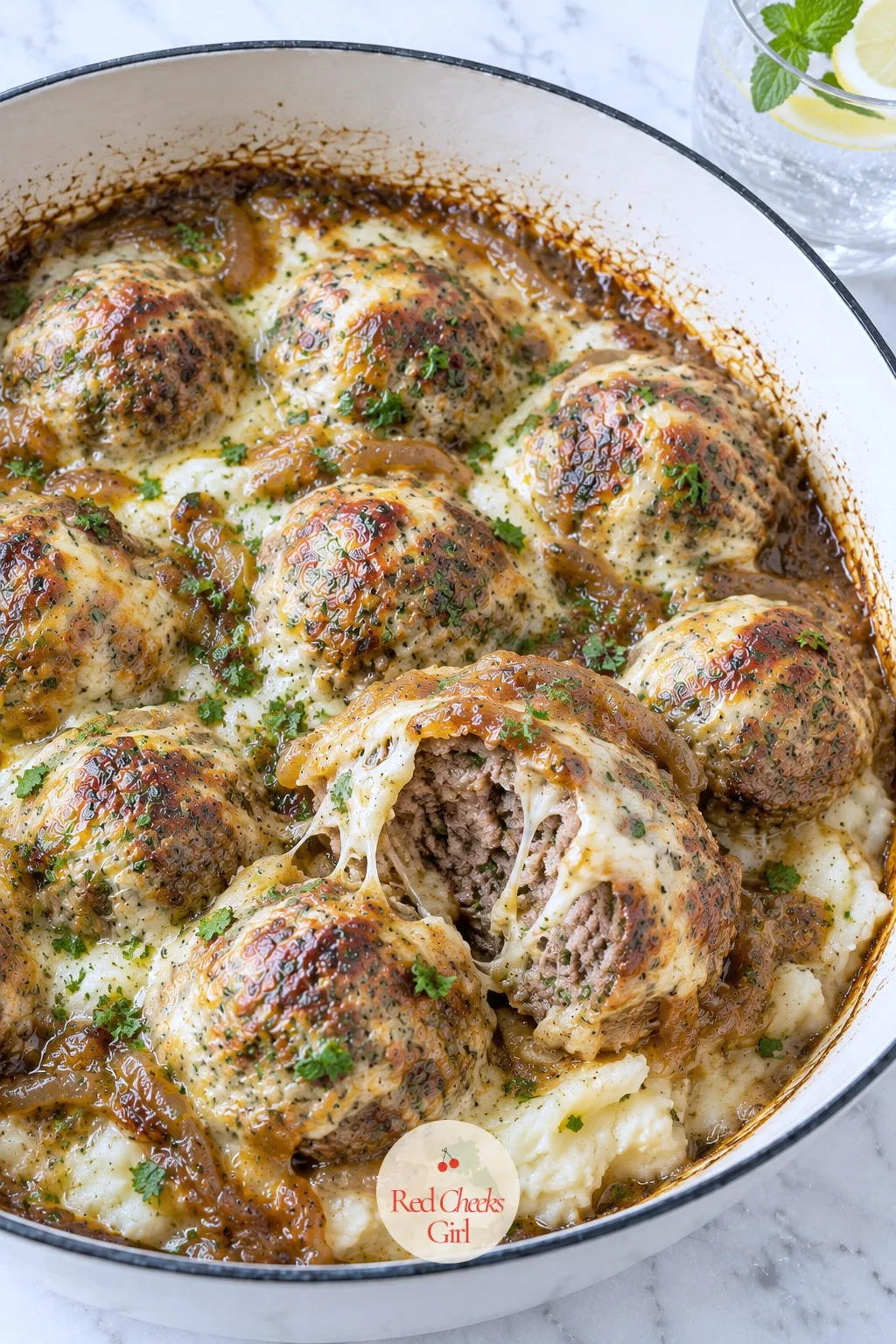
French Onion Meatballs
Ingredients
- 1 1/2 pounds ground beef 80/20
- 1/2 cup panko breadcrumbs
- 1/4 cup whole milk
- 1 large egg
- 1/4 cup grated Parmesan cheese
- 2 tablespoons Worcestershire sauce
- 3 garlic cloves minced, divided
- 1 teaspoon kosher salt divided
- 1/2 teaspoon black pepper
- 2 tablespoons olive oil
- 3 tablespoons unsalted butter
- 3 large yellow onions thinly sliced (about 2 1/2 pounds)
- 2 tablespoons all-purpose flour
- 3 cups low-sodium beef broth
- 1 tablespoon fresh thyme leaves or 1 teaspoon dried thyme
- 1 1/2 cups shredded Gruyere cheese
- 2 tablespoons chopped fresh parsley for serving
- crusty bread or mashed potatoes for serving
Instructions
- In a large white ceramic mixing bowl, combine the ground beef, panko breadcrumbs, milk, egg, Parmesan, Worcestershire sauce, half the minced garlic, 1/2 teaspoon of the salt and the black pepper. Mix gently with your hands until just combined, then roll into 24 meatballs about 1 1/2 inches across and set them on a pale wood board.
- Heat the olive oil in a large oven-safe skillet (the cream Dutch oven works well) over medium-high heat. Brown the meatballs in two batches, turning every 2 minutes, until deeply browned on all sides, about 6 to 8 minutes per batch: the centers will still be pink, that is fine, they finish cooking later. Transfer the meatballs to a clean plate.
- Reduce the heat to medium and add the butter to the same skillet. Once it melts, scrape up any browned bits stuck to the bottom, then add the sliced onions and the remaining 1/2 teaspoon salt. Stir until every slice is coated in butter.
- Cook the onions over medium-low heat, stirring every 5 to 8 minutes, for 45 to 55 minutes, until they collapse into a deep mahogany color and smell sweet rather than sharp. This step cannot be rushed: true caramelization needs the full stretch of time, and onions that only turn golden after 15 minutes are softened, not caramelized.
- Add the remaining minced garlic and cook for 1 minute, stirring, until fragrant. Sprinkle the flour over the onions and stir to coat evenly, then cook for 1 minute to take away the raw flour taste.
- Pour in the beef broth in a slow, steady stream, stirring constantly so the flour does not clump. Add the thyme leaves, raise the heat to medium, and bring the sauce to a gentle simmer: it will look thin at first and thicken as it heats.
- Nestle the browned meatballs back into the skillet, spacing them evenly through the onion sauce and spooning a little sauce over the top of each one. Cover and simmer gently for 12 to 15 minutes, until a meatball checked with an instant read thermometer reads 160 degrees Fahrenheit at the center.
- Position an oven rack about 6 inches from the broiler element and heat the broiler to high.
- Scatter the Gruyere evenly over the meatballs and the sauce, covering as much of the surface as you can reach.
- Broil, uncovered, for 2 to 4 minutes, watching the whole time: the cheese is ready when it melts fully and turns bronze and bubbling in spots, not when it blackens.
- Remove the skillet from the broiler and let it rest for 5 minutes before serving: the sauce settles and thickens slightly as it sits, and the cheese stops bubbling enough to serve without burning anyone's mouth.
- Scatter the parsley over the top and serve the meatballs straight from the skillet, with crusty bread for mopping up the sauce or spooned over a bowl of mashed potatoes.
Good to Know
Frequently Asked Questions
Can I use frozen meatballs instead of making my own?
Yes, frozen meatballs work in a pinch and do not need thawing first. They go straight from freezer to pan; for this skillet version, brown them a few extra minutes before adding the onions.
What can I use instead of Gruyere cheese?
Swiss, provolone, mozzarella or white cheddar all melt smoothly in its place. Skip anything that turns rubbery or oily under the broiler, since that ruins the bubbling top.
How do I keep the meatballs from falling apart?
Mix the meat just until the ingredients come together, since overworking it packs the meatballs too tight and makes them crumble. An egg and panko binder plus a good sear before the sauce helps them hold their shape.
Can I make french onion meatballs in a slow cooker instead of a skillet?
Yes, brown the meatballs first, then add them to a slow cooker with the caramelized onions, broth and thyme, and cook on low for 4 to 5 hours. Add the Gruyere only in the final few minutes so it melts instead of separating.
Do french onion meatballs freeze well?
Yes, they freeze well for up to 2 months in a freezer-safe container. Freeze the meatballs and onion sauce without the cheese, then top with fresh Gruyere and broil after thawing.
21 gifts for mom sorted by budget and personality, from sentimental keepsakes to kitchen upgrades sh
22 travel gifts for women organised by packing, flying and landing, with the real problem each one s

18 gifts for hard to shop for men, sorted by what he actually does: recover, work, travel, stay warm
Leave a Reply