

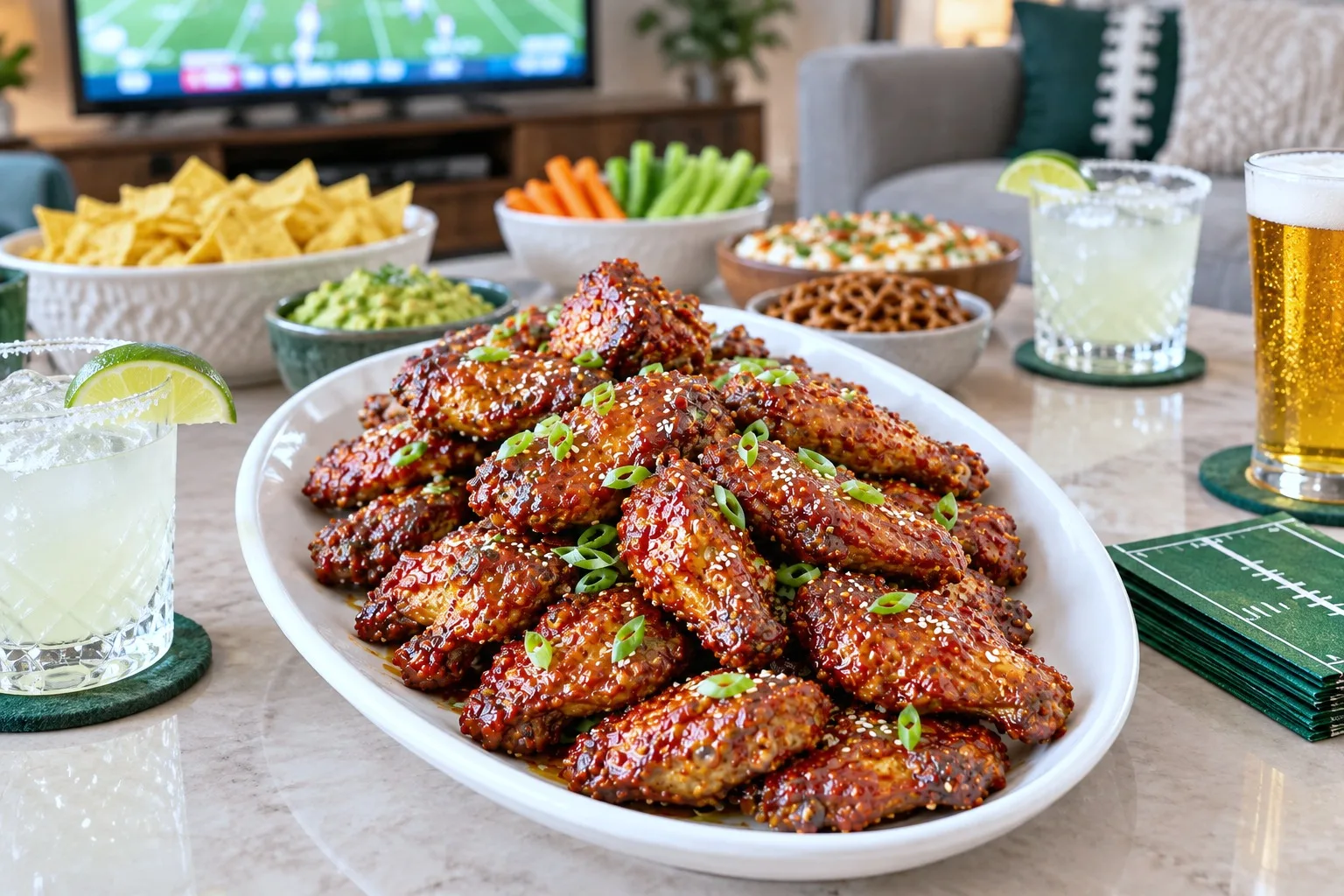
Korean fried chicken earns its reputation through a crust so thin and shattering it barely registers as breading, built by frying the wings twice instead of once.
A sticky gochujang, honey, and garlic glaze goes on only at the very end, so the crunch survives the sauce instead of drowning in it. The platter lands warm, loud under the fork, with sesame seeds, green onion, and a small bowl of pickled radish on the side.
This post contains affiliate links. If you buy through them, I may earn a small commission at no extra cost to you.
Table of Contents
Why Double-Fried Wings Beat the Takeout Box
Delivery wings go soft in the box before they even reach the coffee table, steamed by their own heat on the ride over. Nobody is impressed by a limp wing, however good the sauce tastes.
A second trip through hot oil fixes that for good. The coating blisters into a shell that cracks audibly, not the thick, bready crust of Southern fried chicken but something closer to glass.
Wings are one of the cheaper cuts at the counter, and nothing here needs a deep fryer: a heavy pot and a thermometer do the whole job, no special equipment to buy for one party.
The gochujang glaze goes on last, after the crunch is already locked in, so the heat and the sticky sweetness ride on top of the crust instead of soaking into it.
The Ingredients That Give These Wings Their Crunch and Heat
Wings do the job better than breast or thigh meat here: the skin renders fat in the first fry and holds the glaze in the second, and the bone keeps the meat from drying out under two rounds of heat.
Cornstarch, not flour, is what makes the shell so thin and blistered. Flour alone turns doughy under oil; cornstarch fries up light and almost transparent, the texture Korean fried chicken is known for.
Gochujang brings the color and a slow, fermented heat that plain chili sauce cannot fake. Honey and brown sugar round off the sharp edges, and plenty of garlic and ginger keep the glaze from tasting one-note sweet.
Sesame seeds and sliced green onion go on at the very end, for crunch and a clean, grassy bite against all that sugar. Pickled radish on the side does the same job with a cold, vinegary snap that resets the palate between wings.
How to Make It
Work in two clear stages here: fry the wings plain, twice, then build the glaze while they rest, and only marry the two right before the platter goes out. Nothing about it is hard, it just asks you to not skip the resting step between fries.
Coat the Wings in Cornstarch
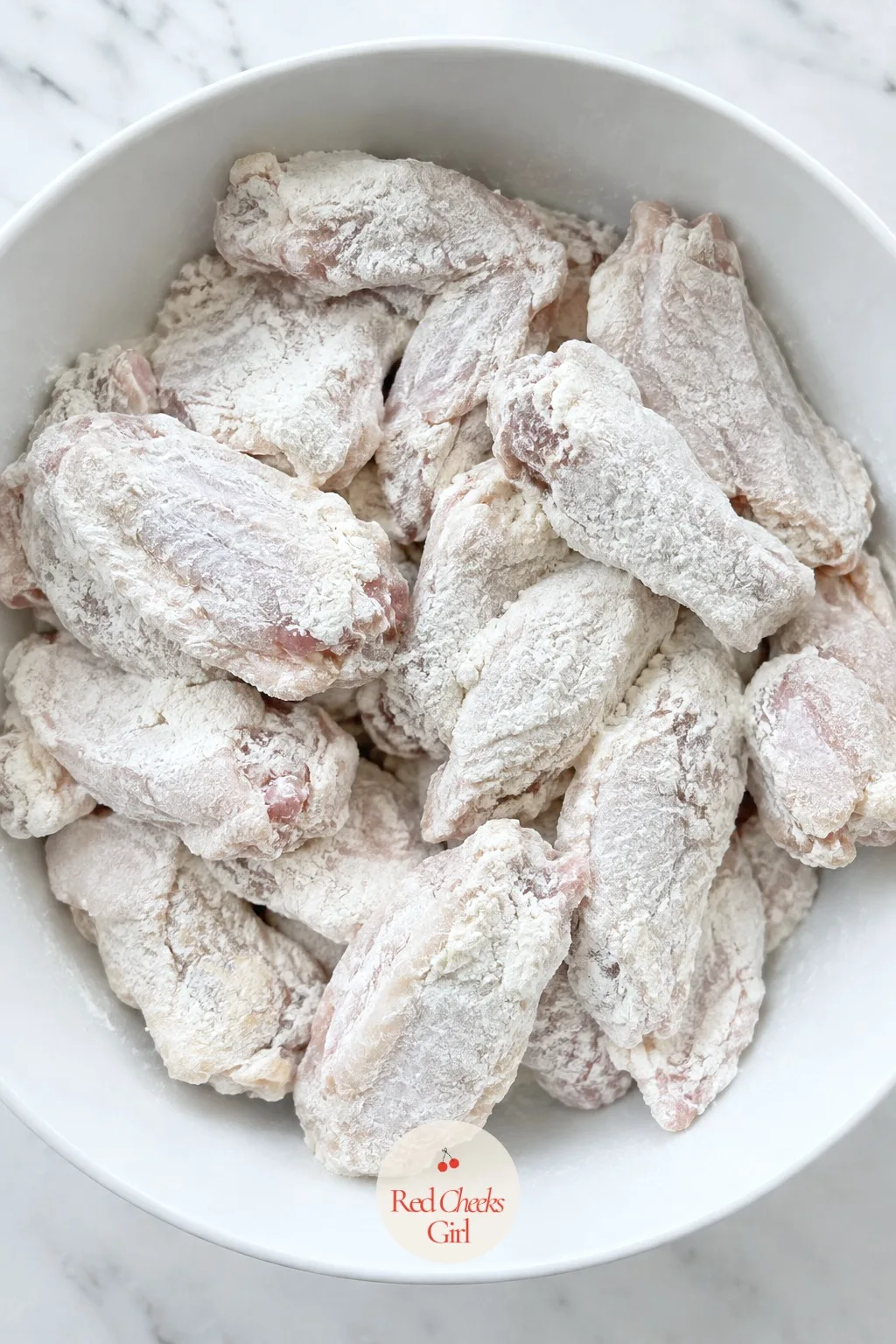
The raw wings go into the dry cornstarch mix and come out looking dusty and matte, no wet batter in sight. Every piece should look evenly powdered with no bare patches of skin showing through.
Second-Fry Until Deep Gold and Crisp
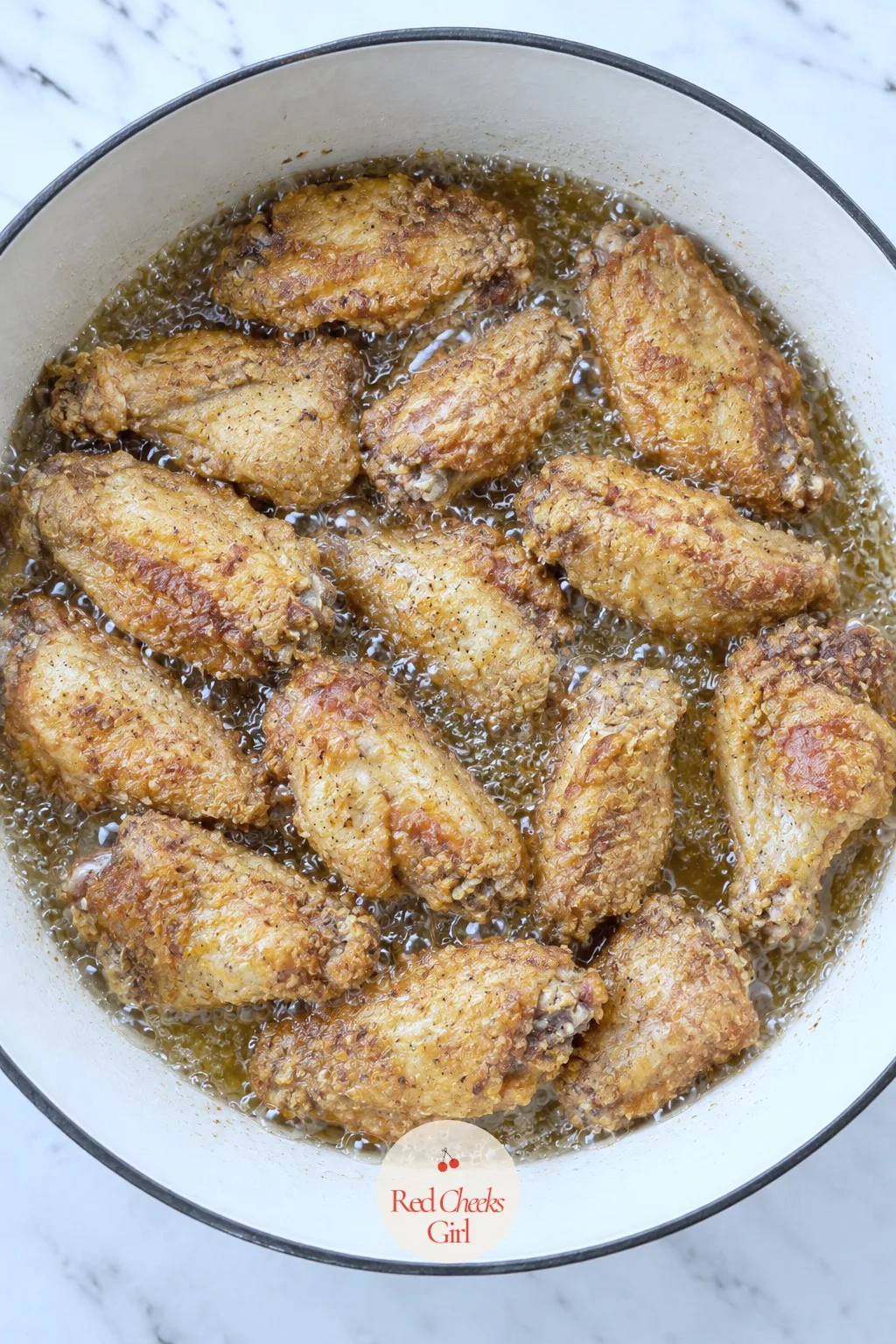
Back in the hotter oil, the same wings turn a deep amber and the bubbles around them slow down, a sign the crust has set hard. The surface should look blistered, almost craggy, not smooth.
Simmer the Gochujang Glaze
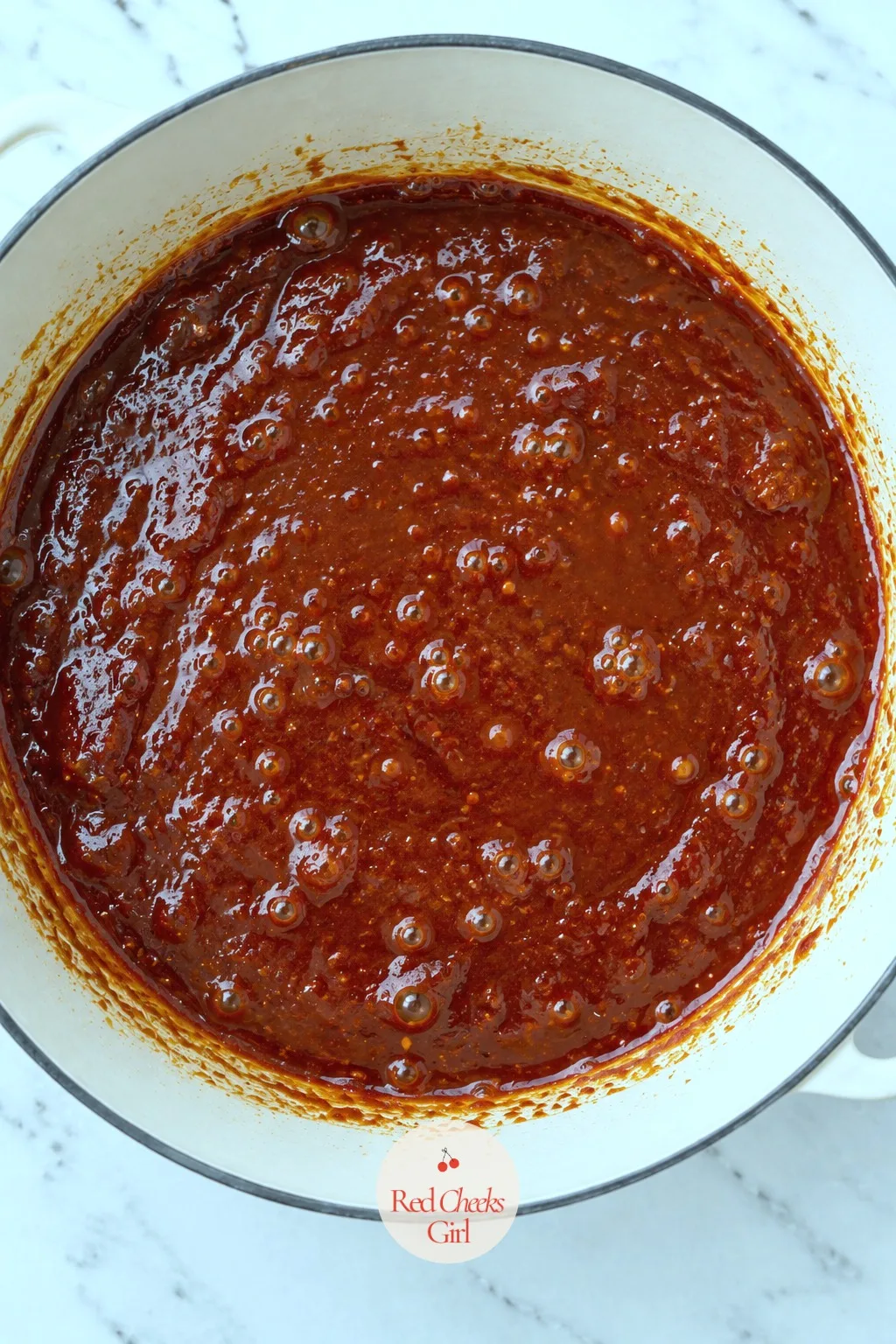
The glaze turns from a loose, grainy paste into a smooth, glossy red sauce as it simmers, thick enough to coat a spoon. It should look shiny, not matte, with small bubbles breaking the surface.
Pile the Wings onto the Platter
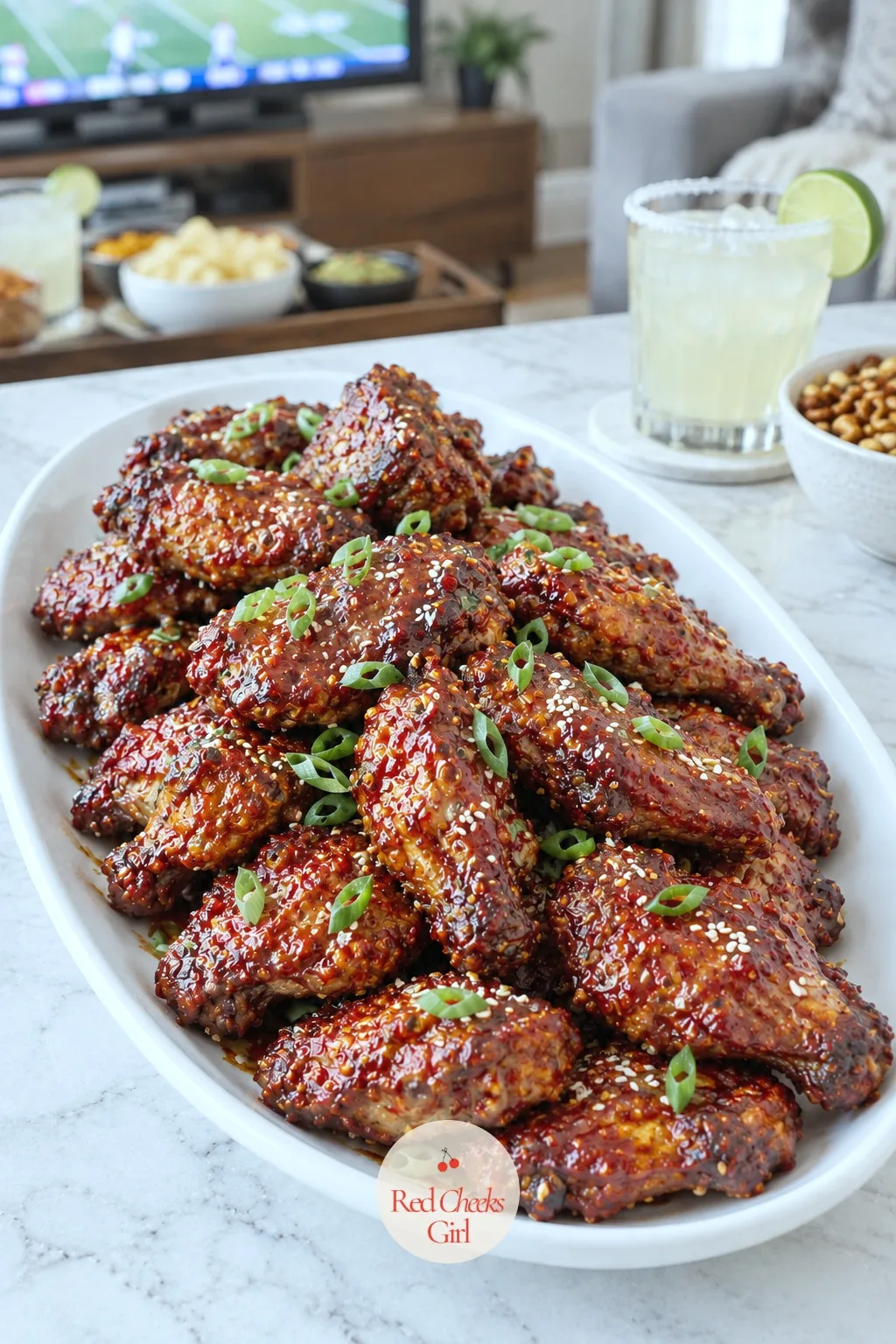
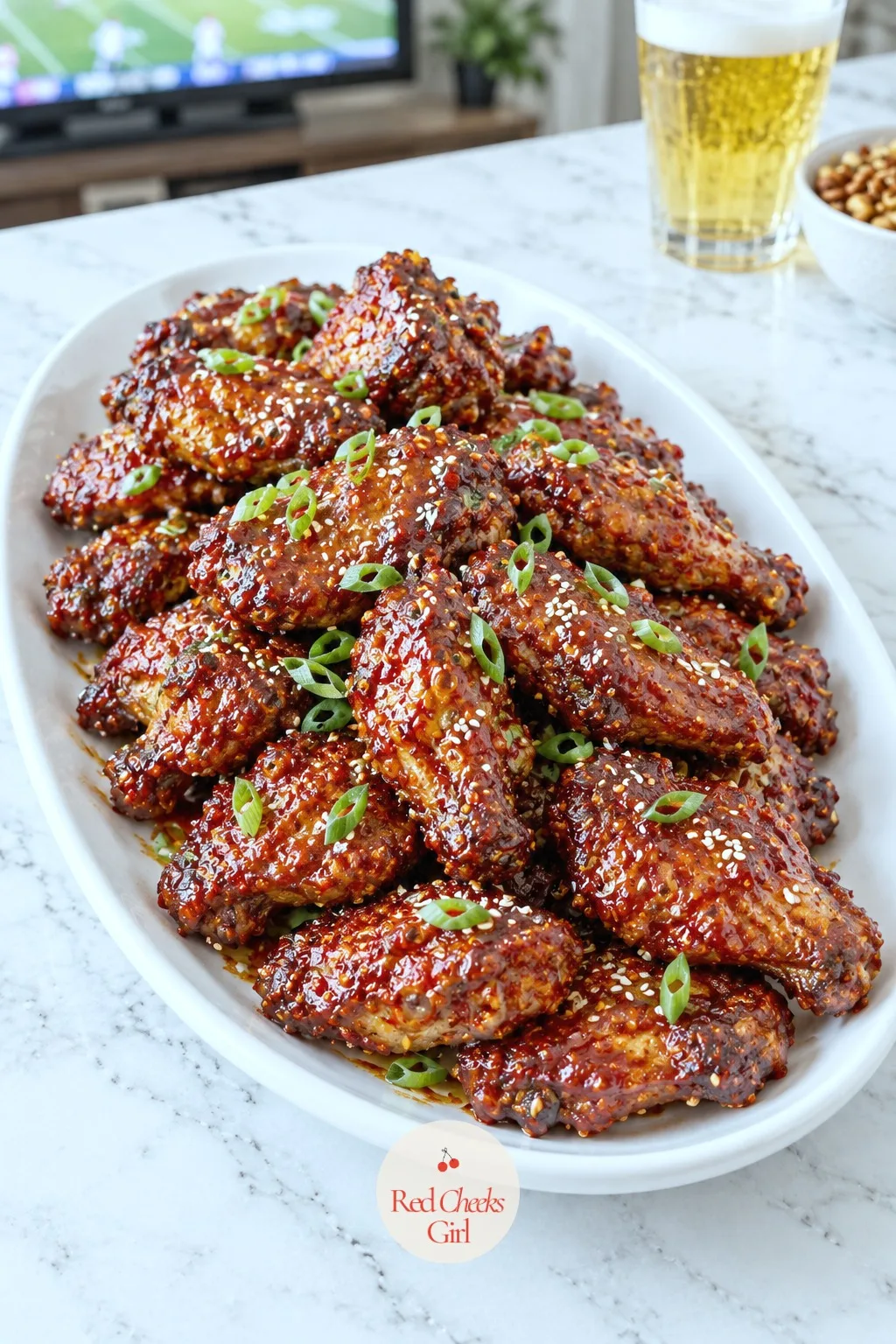
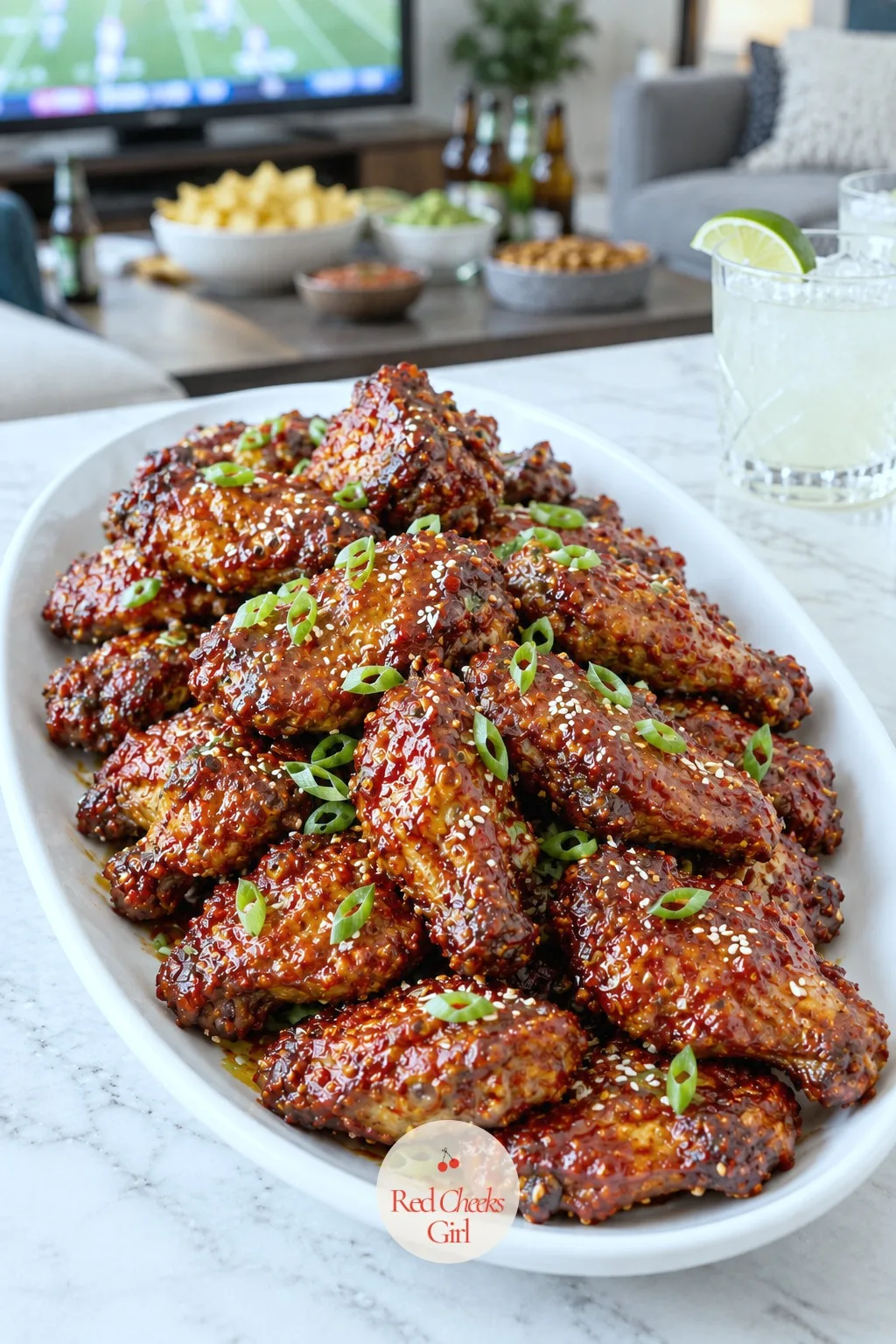
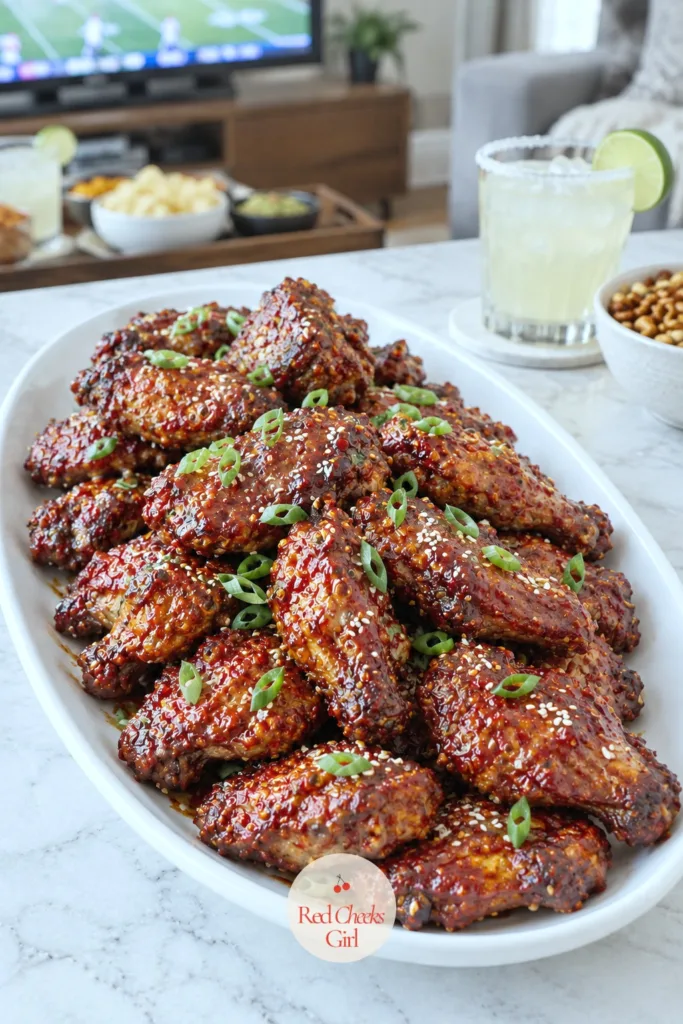
The finished wings stack loosely on the platter, deep red and glossy, flecked with pale sesame seeds and bright green onion. Serve them while the crust still sounds loud.
Where This Crust Actually Falls Apart
The most common complaint about homemade Korean fried chicken is that it goes soft five minutes after the sauce goes on, and the fix starts three steps earlier than the glaze.
Wet chicken is the real enemy. Skip the pat-dry step and the dredge turns pasty instead of craggy, no matter how hot the oil runs.
Skipping the rest between fries is the second mistake: fry straight through twice back to back and the inside overcooks before the crust catches up. Ten minutes off the heat fixes both problems at once.
Crowding the pot drops the oil temperature fast, and a crowded, cooler fry steams the wings instead of crisping them. Work in small batches and let the oil climb back to temperature every time.
Soy sauce and the flour in the dredge carry gluten, and the sesame oil and seeds carry sesame: swap tamari and a gluten-free flour blend if anyone at the table needs it.
Easy Swaps If Your Kitchen Looks Different
Skip the oil entirely and this still works: toss the dredged wings with a little oil, spread them on a wire rack over a sheet pan, and bake at 425°F for about 35 minutes, flipping once, for a fully oven-crisped version.
Out of gochujang, use another Korean chili paste or stir a tablespoon of gochugaru into ketchup and soy sauce instead. It will not be identical, but it will still be sticky and red.
Rice syrup or maple syrup can stand in for the honey without throwing off the glaze’s thickness. Light brown sugar works the same way in place of dark, just slightly less deep in flavor.
Chicken thighs cut into chunks take the same dredge and double fry if wings feel fiddly for a crowd, just add a minute or two to each fry since the pieces run thicker.
For a milder plate, cut the gochujang by half and make up the difference with extra soy sauce and honey: the glaze stays glossy, it just stops short of a real kick.
What to Put Next to the Platter
A platter of only wings asks a lot of one bowl of napkins, and the sauce will end up everywhere without something cold and plain alongside it.
Pickled radish earns its spot here for a real reason: a quick pickle of radish cubes in rice vinegar, sugar, and salt, left to sit for 30 minutes, cuts the glaze’s sweetness every single bite.
Cold beer or a crisp, slightly sweet soju cocktail both stand up to the chili heat; keep a pitcher of iced barley tea or lime soda on the table for anyone not drinking.
For the rest of the spread, a wing platter like this one fits right alongside the dips and finger food in 20 Super Bowl Party Ideas for a Game Day Everyone Remembers, if the day already has a game attached to it.
Keep a tray of raw vegetables or something plain like steamed rice nearby too, for the one guest who always wants a wing without the full heat.
Korean Fried Chicken
Ingredients
- 3 pounds chicken wings split into flats and drumettes (about 20 to 24 pieces)
- 1 teaspoon fine salt for the chicken
- 1/2 teaspoon black pepper for the chicken
- 1 teaspoon grated fresh ginger optional
- 1/2 cup cornstarch
- 1/4 cup all-purpose flour
- 1 teaspoon baking powder
- 1 teaspoon fine salt for the dredge
- 1/2 teaspoon black pepper for the dredge
- 1/2 teaspoon garlic powder
- 6 cups vegetable oil or more as needed for 2 inches depth
- 1/3 cup gochujang Korean red chile paste
- 1/4 cup honey
- 3 tablespoons soy sauce
- 2 tablespoons light brown sugar
- 2 tablespoons rice vinegar
- 4 cloves garlic finely minced
- 1 tablespoon grated fresh ginger
- 1 tablespoon toasted sesame oil
- 1 to 2 tablespoons water to thin the glaze if needed
- 2 tablespoons toasted sesame seeds
- 3 green onions thinly sliced
Instructions
- Pat 3 pounds of chicken wings completely dry with paper towels and place them in a white ceramic bowl. Season with 1 teaspoon salt, 1/2 teaspoon black pepper, and 1 teaspoon grated ginger if using, and toss with your hands so every piece is coated.
- In a separate white ceramic bowl, whisk together 1/2 cup cornstarch, 1/4 cup flour, 1 teaspoon baking powder, 1 teaspoon salt, 1/2 teaspoon pepper, and 1/2 teaspoon garlic powder. Add the wings and toss until every piece wears a thin, even dry coat with no wet patches left.
- Pour 6 cups vegetable oil into a cream enameled Dutch oven, enough to reach about 2 inches up the side, and clip on a deep-fry thermometer. Heat over medium until it reads 325°F.
- Lower a third of the wings into the oil with tongs. Fry for 6 to 8 minutes, until the coating looks pale gold and feels set, not browned, then lift to a wire rack set over a baking sheet. Repeat with the remaining wings, letting the oil return to 325°F between batches.
- Let the fried wings rest on the rack for 10 minutes. This is not optional: it lets the crust firm up and the oil climb back to temperature for the second fry.
- Raise the oil to 375°F. Working in two batches, lower the wings back in and fry for 3 to 4 minutes, until deep golden brown and audibly crackling when tapped with the tongs. Drain again on the wire rack.
- While the wings rest, set a cream enameled saucepan over medium heat and add 1/3 cup gochujang, 1/4 cup honey, 3 tablespoons soy sauce, 2 tablespoons brown sugar, 2 tablespoons rice vinegar, 4 cloves minced garlic, 1 tablespoon grated ginger, and 1 tablespoon sesame oil.
- Simmer the glaze for 2 to 3 minutes, stirring often, until it turns glossy and thick enough to coat the back of a spoon. Thin with 1 to 2 tablespoons water if it looks too tight.
- Tip the hot, fried wings straight into a wide white ceramic bowl, pour over the warm glaze, and toss with two spoons until every wing is lacquered and sticky.
- Pile the glazed wings onto a white ceramic platter. Scatter over 2 tablespoons sesame seeds and 3 sliced green onions, and serve immediately alongside a small bowl of pickled radish while the crust is still loud.
Good to Know
Frequently Asked Questions
What is the difference between Korean fried chicken and American fried chicken?
Korean fried chicken relies on a thin cornstarch dredge and a double fry instead of a thick flour batter, giving a lighter, glass-like crust that stays crisp under a sticky glaze.
Is gochujang very spicy?
Gochujang carries a slow, fermented heat rather than a sharp burn, closer to a mild-to-medium chili paste with sweetness built in; cutting the amount in the glaze lowers the heat without losing the color.
Can I use chicken thighs or breast instead of wings?
Boneless thigh chunks take the same dredge and double fry well, just add a minute or two per fry for the thicker pieces; breast tends to dry out under two rounds of hot oil.
Where can I buy gochujang?
Most large grocery stores now stock gochujang in the international aisle, and any Korean or Asian grocery store carries several brands; it keeps for months in the fridge once opened.
How long does Korean fried chicken stay crispy after it’s glazed?
Glazed wings stay properly crisp for about 30 minutes before the sugar in the sauce starts softening the crust, so glaze only the batch about to be served.
16 pinwheel appetizers rolled in tortillas or puff pastry the night before, chilled, sliced and fann
Twelve stunning Thanksgiving charcuterie boards, each a different theme and moment of the day. No co
Beer cheese dip stays silky with sharp cheddar and lager, served warm with soft pretzel bites for an
Leave a Reply