

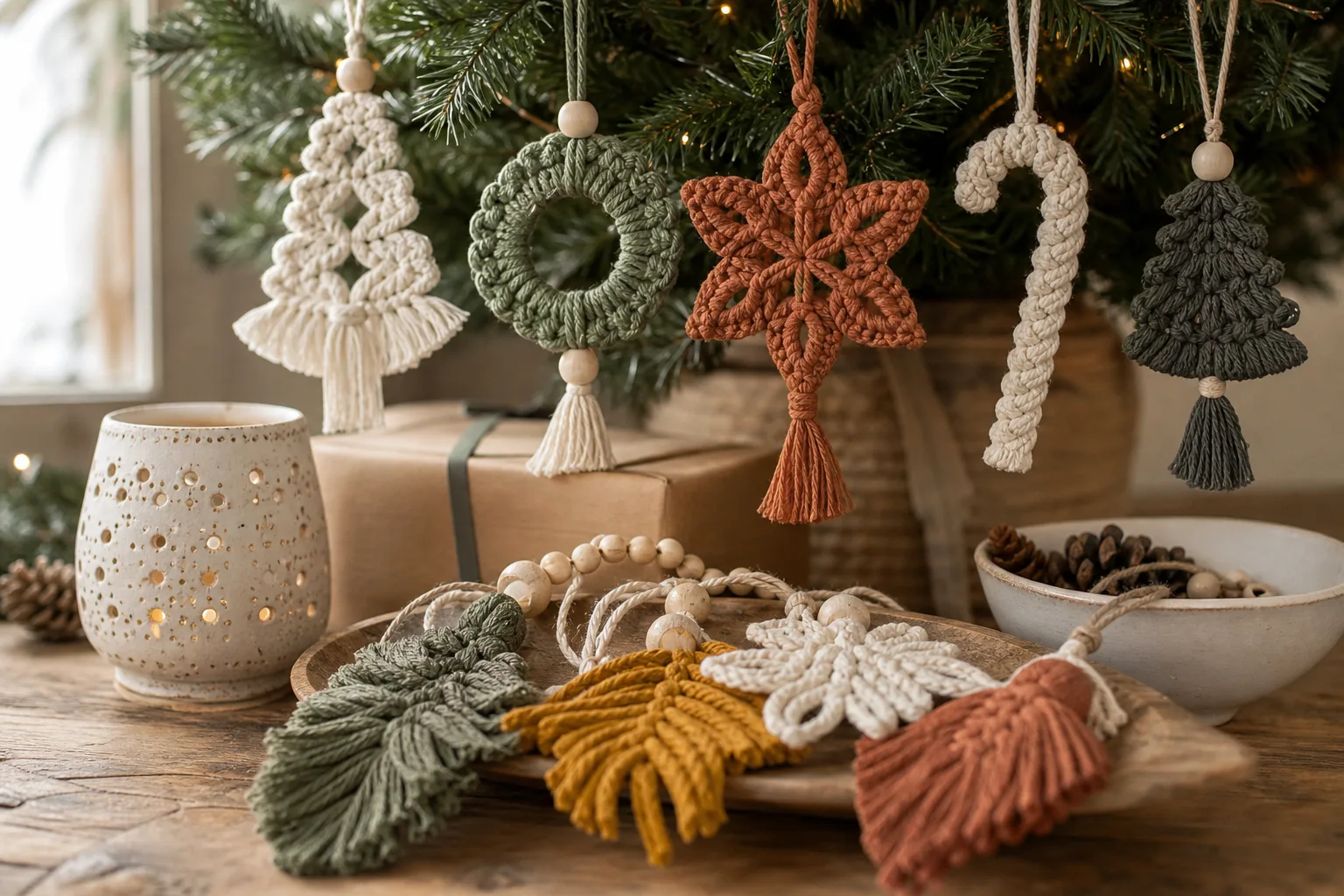
A plastic bauble looks the same from across the room as it does up close, and that is the problem. Macrame does the opposite: knots catch the light differently depending on where you stand, cord has a weight glass never will, and a tree full of it reads handmade even from the doorway.
None of this needs a workshop. A square knot, a lark’s head and an overhand knot cover almost everything here, and most of these finish in under half an hour with cord from the craft aisle. If you already lean toward texture over shine, a tree built from something that was not a tree yesterday is the natural next stop.
Ten ideas follow, grouped from the shapes everyone expects from macrame through to the quiet ones and the ones that double as a gift tag. Pick three or four rather than all ten: a tree this textural wants breathing room between pieces, not a wall of cord.
This post contains affiliate links. If you buy through them, I may earn a small commission at no extra cost to you.
Classic Shapes Straight Off the Branch
These are the four most recognisable macrame forms, the ones that tell a guest instantly what she is looking at without a single word of explanation. Each uses the same handful of knots in a different arrangement, so once she has made one the rest come quickly.
Keep the cord in the 3mm to 4mm range for all four: thin enough to hold a crisp shape, thick enough that the knots read from a few feet away.
Square-Knot Snowflake Ornament
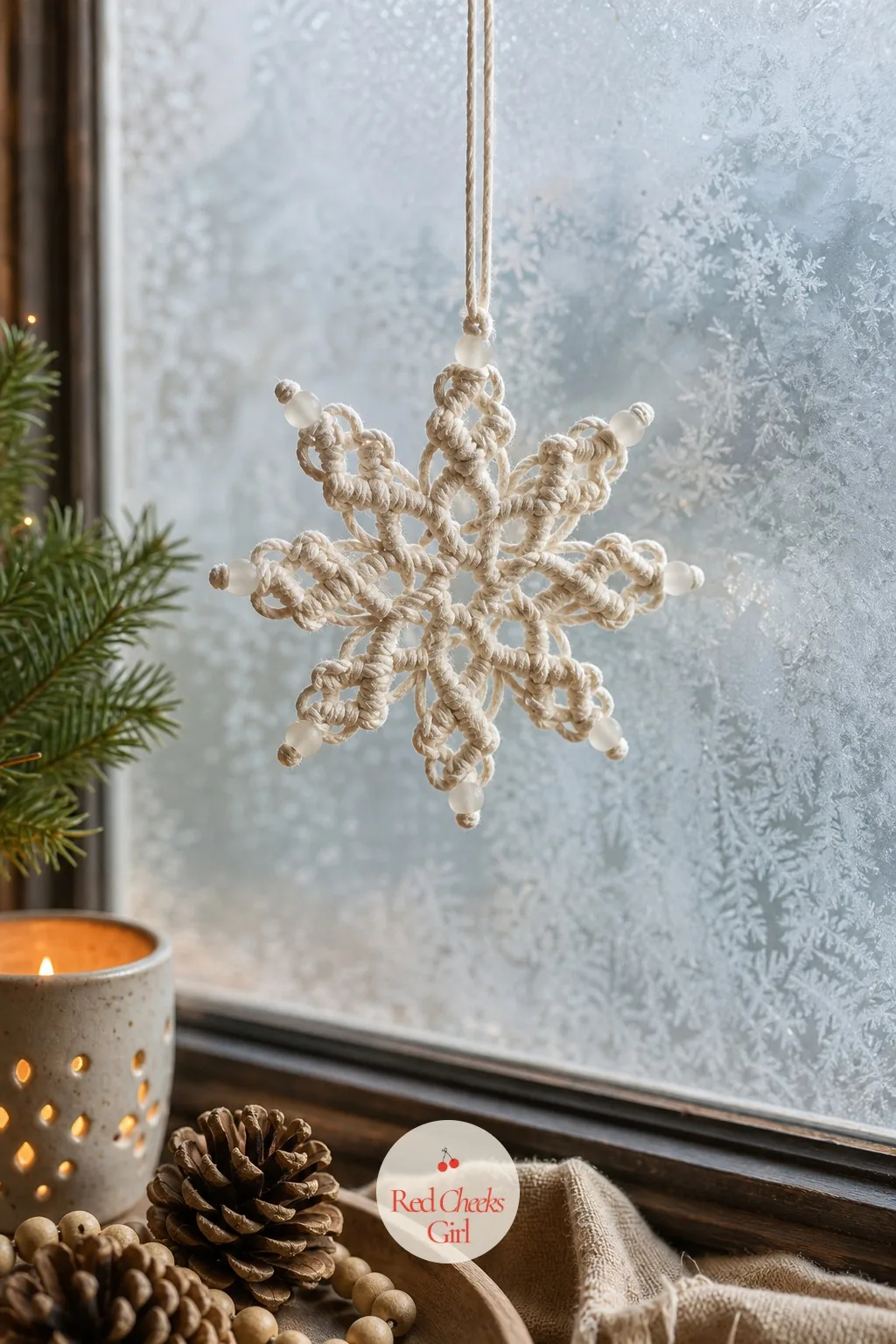
A string of fairy lights gives the illusion of sparkle, but a snowflake with actual dimension does more work for less electricity. This one builds outward from a small ring using nothing but a cow hitch to attach the cords and a run of clove hitches to form each branch, the same method behind most macrame snowflake patterns.
To make a macrame Christmas snowflake ornament, you’ll need a small metal ring to go in the middle of your snowflake and something to hold your thread steady, and keep in mind that a smaller central ring has space for fewer branches. A frosted glass bead at each point tip catches window light the way a real snowflake never quite does indoors.
If a full six-point flake feels fiddly on a first try, stop at four branches and call it a star instead: nobody at the party will know the difference, and you will have cut the time in half.
🛍 Shopping guide
Little Macrame Christmas Tree
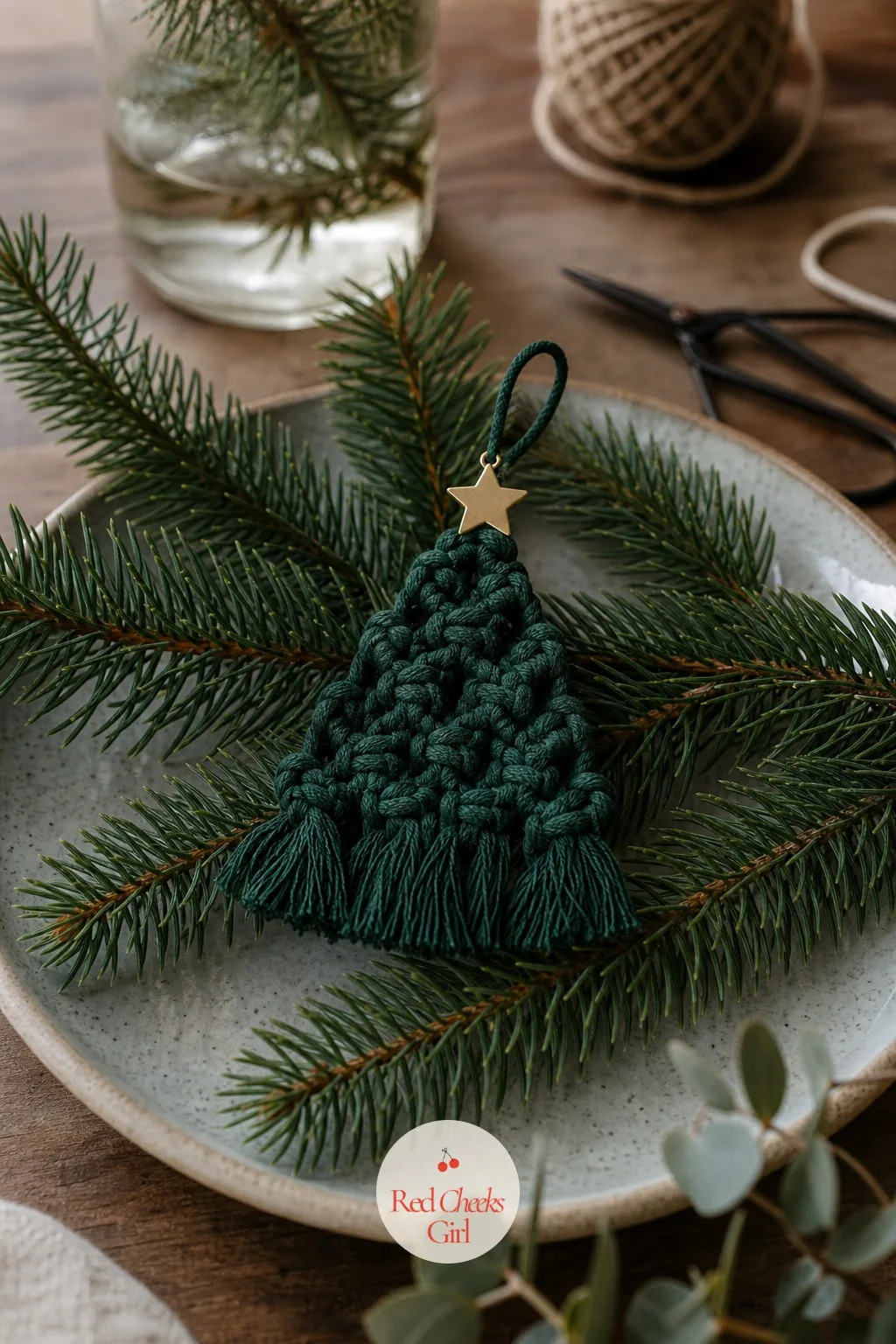
This is the ornament people assume took hours and actually takes one. A single knot, repeated with gradually wider gaps, builds the graduated silhouette: to create the tree-shaped loops, continue tying square knots with increasing gaps between them, and the board’s grid is handy here, no ruler needed.
A wood bead at the top stands in for a star, and the whole thing weighs almost nothing, which means it hangs even on the thinnest branch tip without dragging it down.
Forest green cord with one small gold star charm wired to the top keeps it reading as a tree rather than an abstract triangle, and it survives storage in a shoebox for years without losing its shape.
🛍 Shopping guide
Mini Macrame Angel
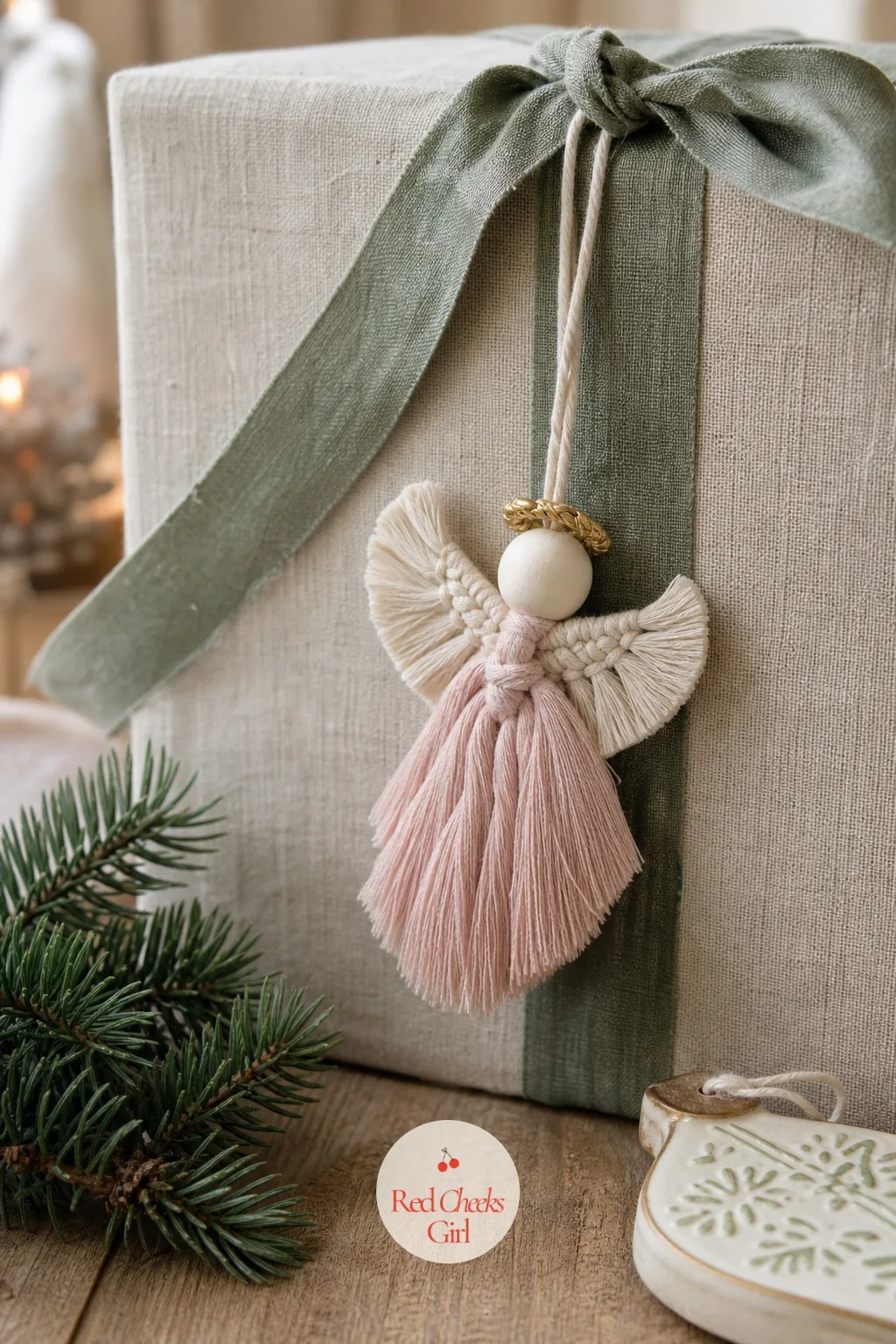
An angel ornament usually arrives in gold plastic with a stiff plastic face. This one swaps all of that for a round ceramic bead head and two folded wings made from a square knot, following the same basic build most tutorials use.
Fold the cord in half with the loop at the top, push the wood bead onto the folded end and push it down about an inch or two, then the wing cords tuck in below. A few wraps of gold metallic thread around the neck stand in for a halo, no glue required.
Blush pink cord against an ivory ceramic bead keeps her soft rather than sweet, closer to the rest of the tree’s palette than a typical gold-and-white angel.
🛍 Shopping guide
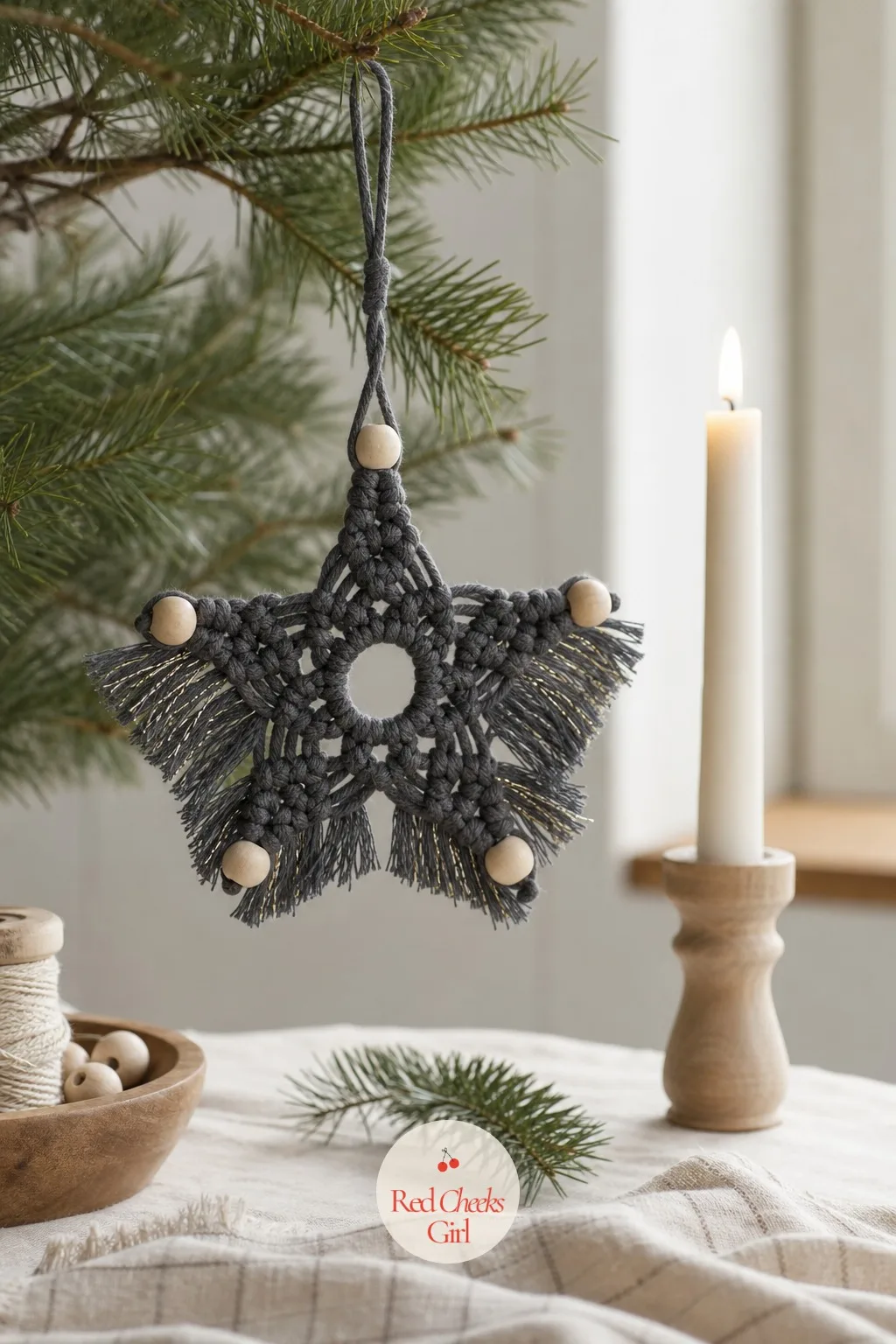
Fringe Star Ornament
Where the tree ornament is all clean lines, this star leans into texture: a wood bead sits at each of the five points, and loose cord between them gets combed into soft fringe rather than left smooth.
A comb or pet brush is the one tool worth owning for this project, since using a comb or hairbrush creates perfectly fluffy fringe at the bottom of each ornament, and it works just as well mid-point as it does at a hem.
Charcoal cord with a run of gold metallic thread through the fringe reads more like a piece of jewellery than a craft project, which is exactly the point on a tree that is otherwise all neutral.
🛍 Shopping guide
Rings, Spirals and Quiet Minimal Shapes
Not every branch wants a full tree or a snowflake. These three sit lower on the tree, closer to eye level, and earn their place by being the ones she keeps glancing at rather than past.
They also happen to be the cheapest of the ten: a ring, a length of cord and one bead is most of the materials list.
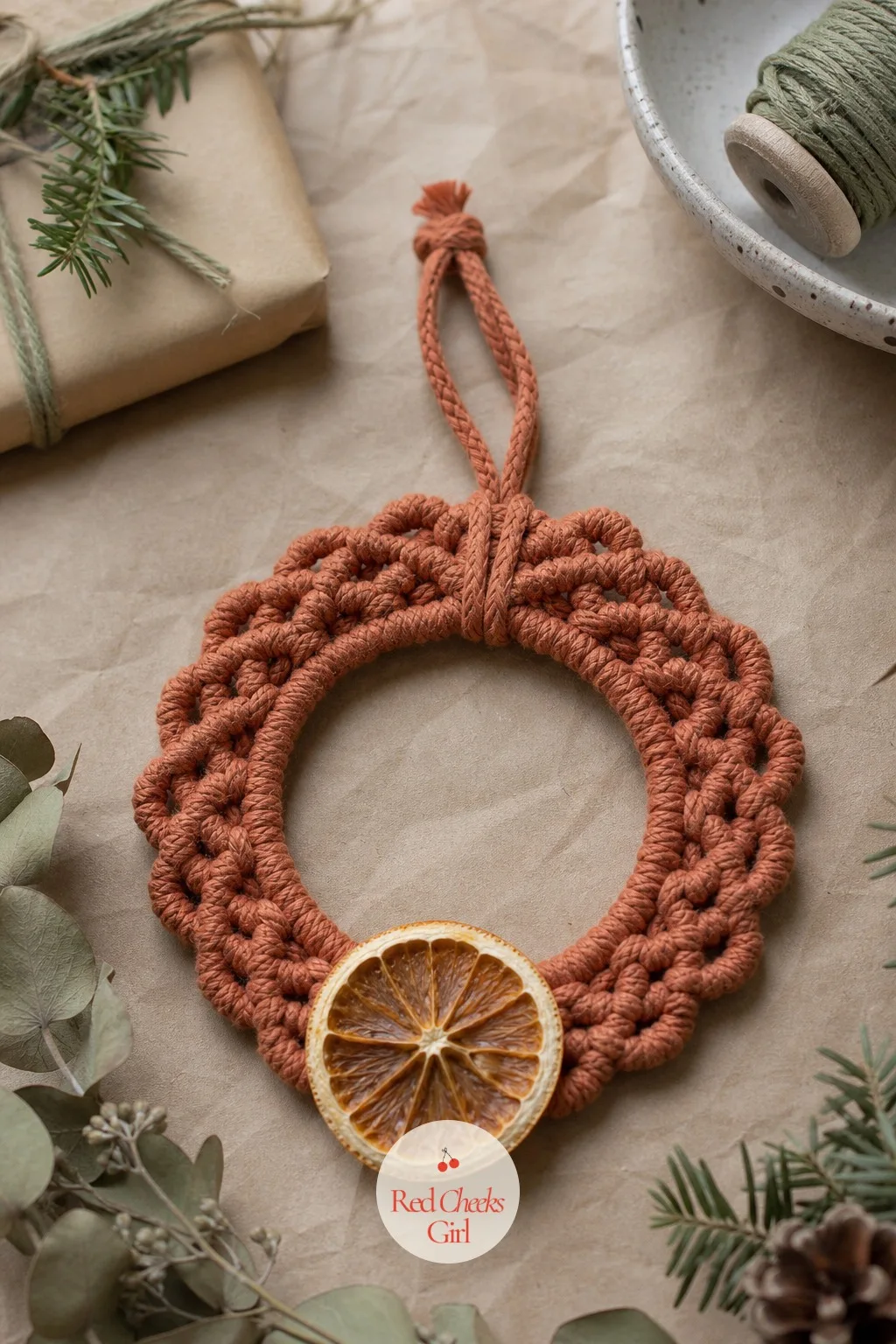
Macrame Wreath Ring Ornament
This is the one to hand someone who insists they are not crafty. One knot, repeated around a wood ring, is the entire technique: the basic macrame knot used is a lark’s head knot, made by folding the cord in half, placing the looped end over the ring, bringing it back behind and slipping the cut ends through, then pulling tight against the ring.
Fifteen or so repeats fill a small ring completely, and the result looks like a tiny woven wreath rather than a single knot pattern, which is more generous than the effort suggests.
Terracotta cord against the pale wood ring, finished with one dried orange slice wired to the bottom, keeps it from reading as plain string and ties it to the rest of a warm, earthy tree.
🛍 Shopping guide
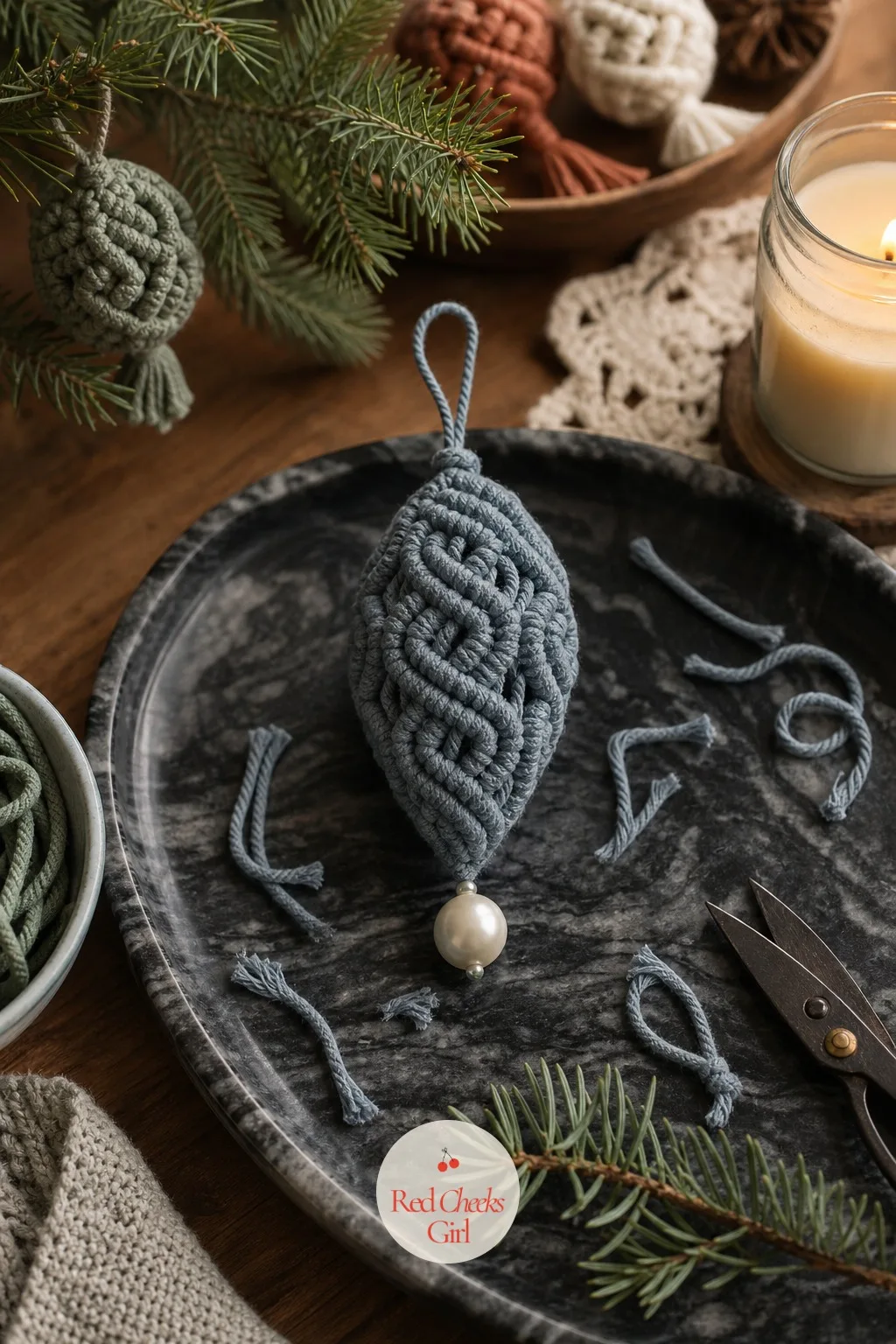
Spiral Knot Bauble
For a round ornament with no bead at all, cord wraps a metal hoop in a continuous spiral until it reads as a solid ball rather than a ring. Fold a single long cord in half around the metal hoop, secure it with an overhand knot, and the metal hoop serves as your filler, meaning you tie the knots around it.
Once the hoop disappears under cord completely, a single overhand knot closes the spiral and the ends trim to a short, clean drop.
Dusty blue cord with one pearl bead at the bottom gives it a quiet, almost jewellery-box quality next to the brighter shapes elsewhere on the tree.
🛍 Shopping guide
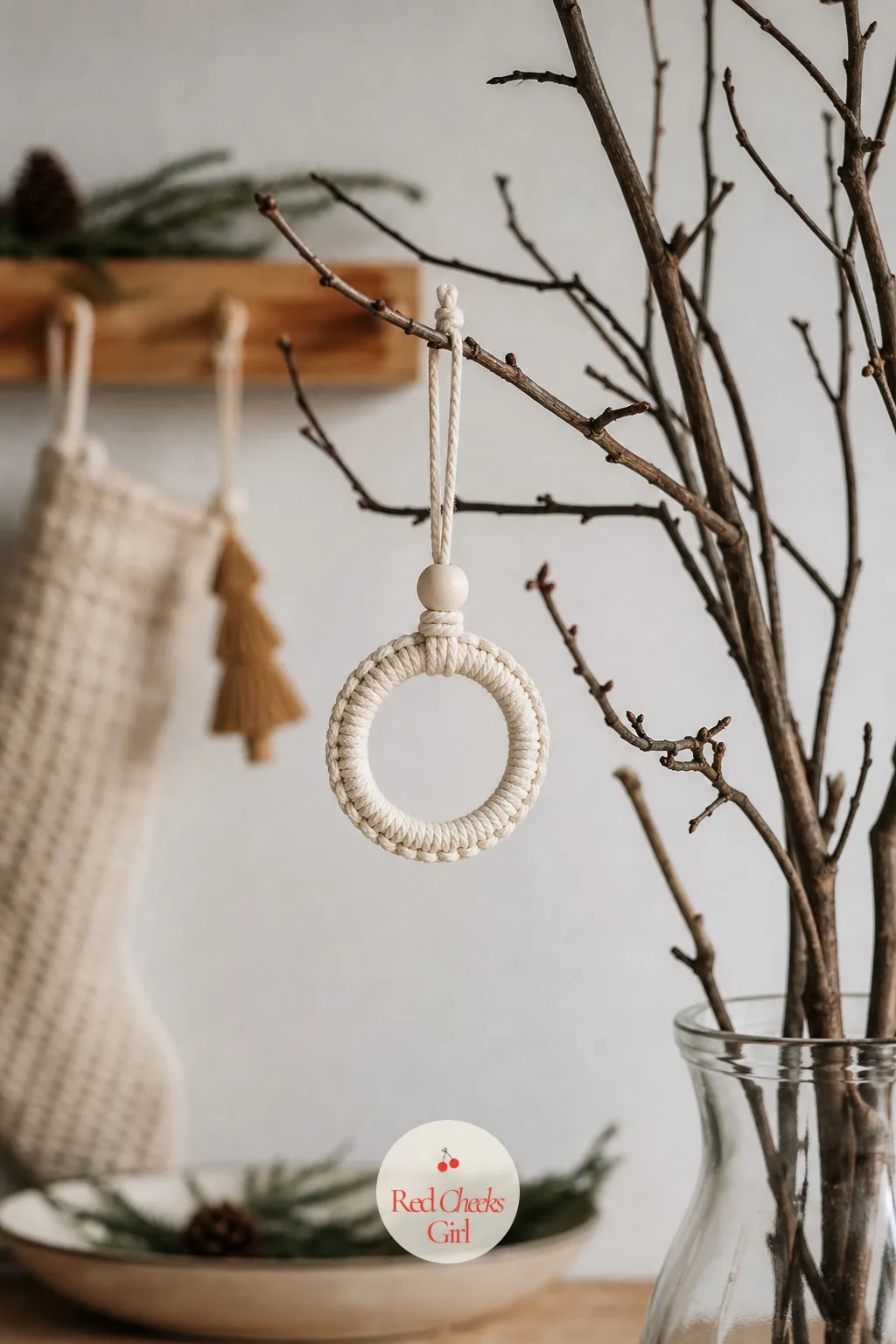
Minimalist Macrame Ring Ornament
Sometimes the least decorated ornament is the one that stops a guest mid-conversation. This is a single long cord threaded through a wood ring and a bead, finished with two overhand knots and nothing else: tie an overhand knot at the top of the bead, leave a space of three or four inches and tie one more, then trim the excess and you are done.
It takes closer to five minutes than thirty, and it is the one worth making a dozen of for a tree that wants quantity over fuss.
Oatmeal cord with one small ivory ceramic bead drop is close to invisible against a pale wall but catches every bit of lamp light on a dark one.
🛍 Shopping guide
Characters and Keepsakes
A tree that is all geometry starts to feel cold after the fourth snowflake. These two bring in a little warmth and a little humour without reaching for anything the site has already said no to.
Both work well as the ornament she hands to a child or a sister: forgiving of uneven knots, and better for it.
Macrame Gnome Ornament
This is the one that makes a stranger laugh out loud at the tree. A cardboard tube wrapped in cord forms the body, cream fringe becomes the beard, and the whole thing takes about ten minutes start to finish, matching the quick builds most gnome tutorials use.
A small cone of cranberry red felt or velvet stands in for the hat, with a single pink wood bead peeking through the fringe as a nose.
Make three or four at once: the cord and tube cost almost nothing, and a cluster of gnomes along one branch reads as a deliberate joke rather than clutter.
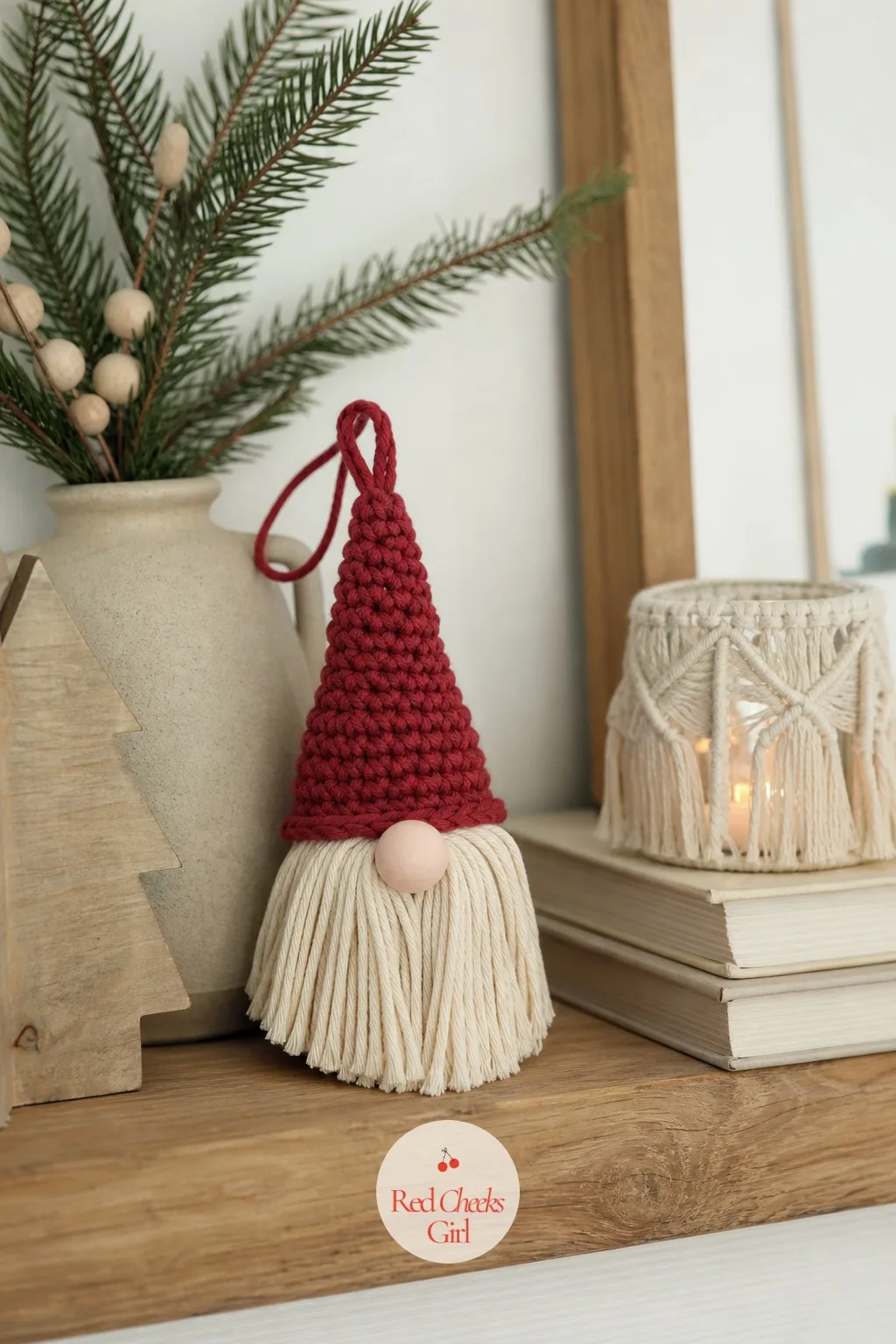
🛍 Shopping guide
Woven Stocking Ornament
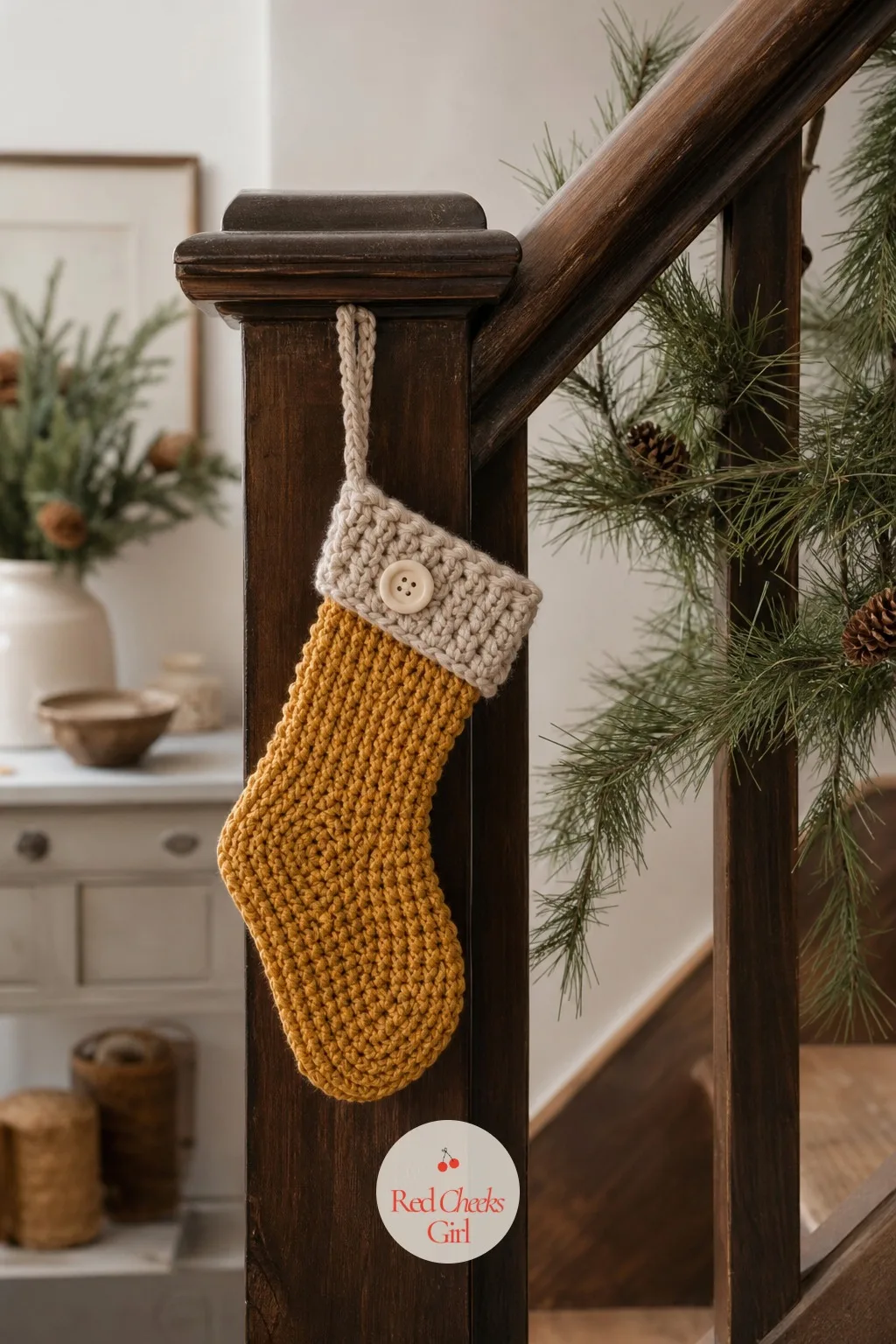
A flat macrame panel, folded and cinched at the ankle, turns into a stocking shape with almost no extra knots beyond the ones already learned for the snowflake. The fold does the heavy lifting here, not the technique.
Mustard gold cord with an ivory button sewn across the cuff keeps it from reading as a miniature actual stocking, more like a gold-threaded sketch of one.
It hangs flat enough to tuck into a card envelope as well as onto a branch, which makes it the rare ornament that also works as a stocking stuffer itself.
Gift-Ready Finishing Touches
This last one is not strictly for the branch. It rides home on a parcel, then migrates to the tree once the paper is in the recycling, which is the kind of double duty a busy December rewards.
Once the tree itself is dressed, the floor underneath is the only bare patch left: a tree skirt that needs no stitch finishes the look without adding another evening of craft.
Macrame Gift Tag Topper
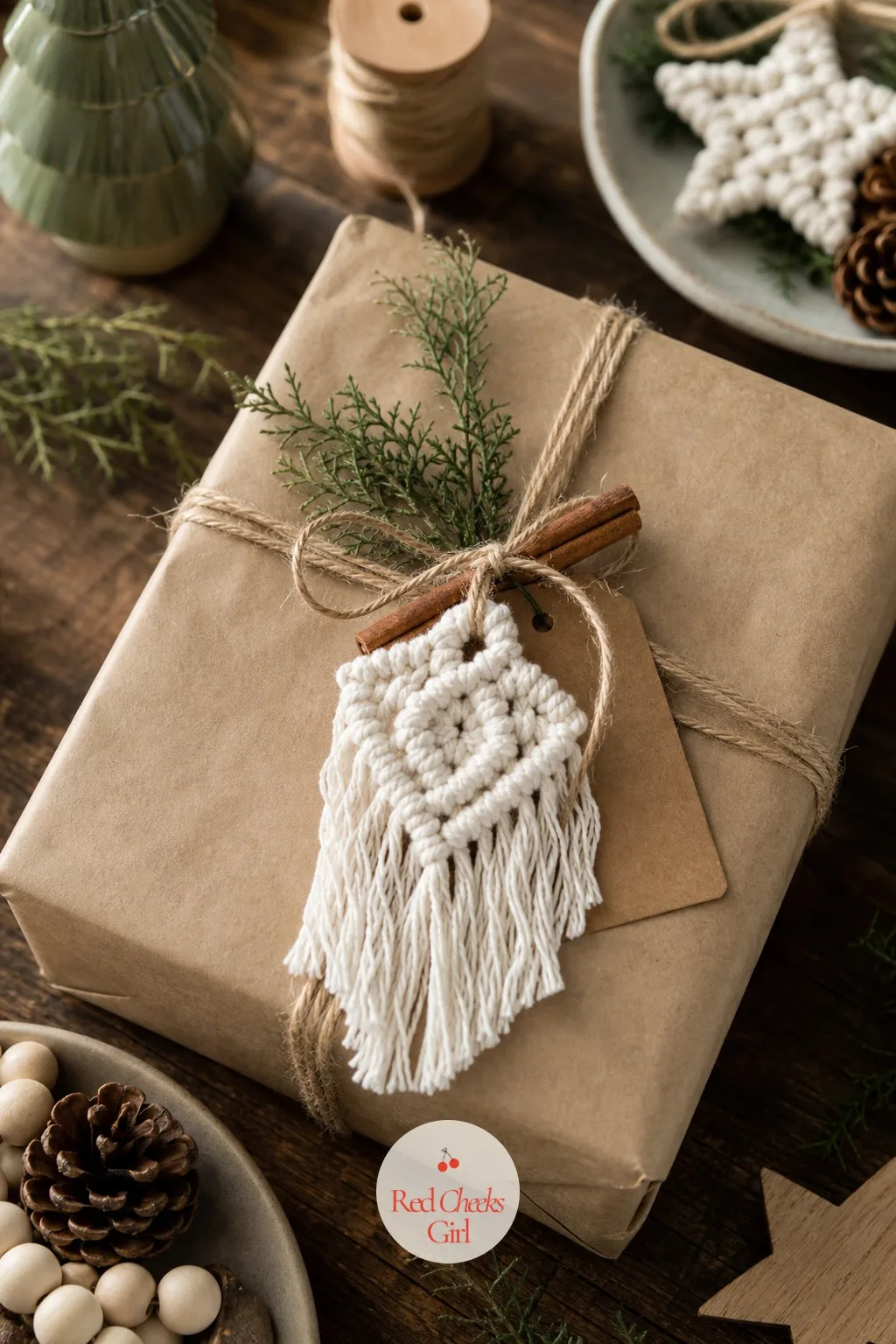
A ribbon bow is fine. A small woven tag with her name looped through the top is the thing she keeps after the paper is gone, and it costs about four minutes and a scrap of cord to make.
A short length folded and knotted at one end becomes the hanging loop, with a kraft paper tag threaded through the middle and one cinnamon stick tucked alongside for scent as much as decoration.
White cord keeps it legible against any wrapping paper, and once the holiday is over it slides straight onto the tree as a plain, quiet ornament with no further work. For more ways to dress ordinary materials up as ornaments, an object nobody would guess is worth a look next.
🛍 Shopping guide
Frequently Asked Questions
What size cord is best for macrame Christmas ornaments?
Most of these shapes hold their form best with cord between three and four millimetres thick. One cord guide notes that this range is one of the most commonly used sizes for home decor because it provides enough thickness for structure while still allowing good knot definition, which matters more on a small ornament than on a large wall hanging.
What knots do I need to know to make these?
Three cover almost everything here: the square knot for trees and stars, the lark’s head (also called a cow hitch) for attaching cord to rings, and a plain overhand knot for finishing ends. None of the ten ideas above asks for anything beyond those three.
Do I need a macrame board or special tools?
No. A strip of masking tape on a clipboard or table edge holds cord steady just as well as a dedicated board, and the only tool worth buying on purpose is a small comb for fluffing fringe ends.
How much cord do I cut for one ornament?
It depends entirely on the shape: a small ring ornament needs a single length of around a yard, while a fuller tree or star with several branches needs multiple shorter pieces, often in the eight to twenty inch range. Cutting a little long and trimming after knotting is always safer than running short.
Can I use yarn instead of real macrame cord?
Yarn works for softer, fuzzier looks, but twisted or braided cotton cord holds a crisp knot shape better and frays into neater fringe when combed, which is why most of the designs above call for cord rather than yarn.
How do I get the fringe to look neat instead of frizzy?
Run a wide-tooth comb or a clean pet brush through loose cord ends once the knotting is finished. The brushing opens up the twisted fibres into soft, even fringe instead of leaving them matted or uneven.

Kids Christmas cards ready to print and color tonight: elves, snowmen, gingerbread, and a line for e
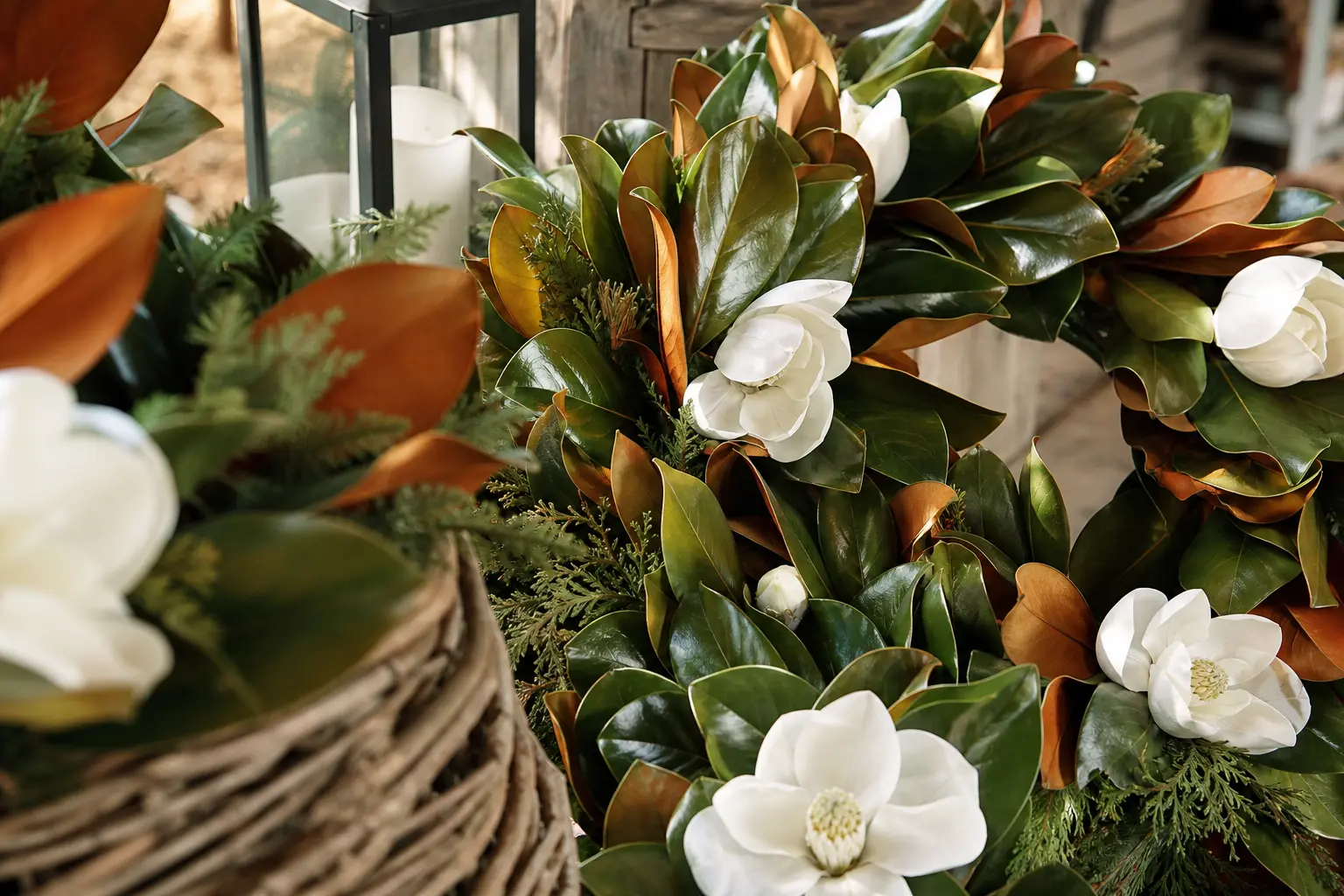
11 magnolia wreath ideas with glossy bronze leaves, from a plain fresh-cut door wreath to a gold-dip
25 Christmas crafts for adults that calm you down, not stress you out: ornaments, gifts, wreaths and
Leave a Reply