

12 Ways to Light Outdoor Trees for Christmas With Glowing Trunks, Canopies and Starry Branches
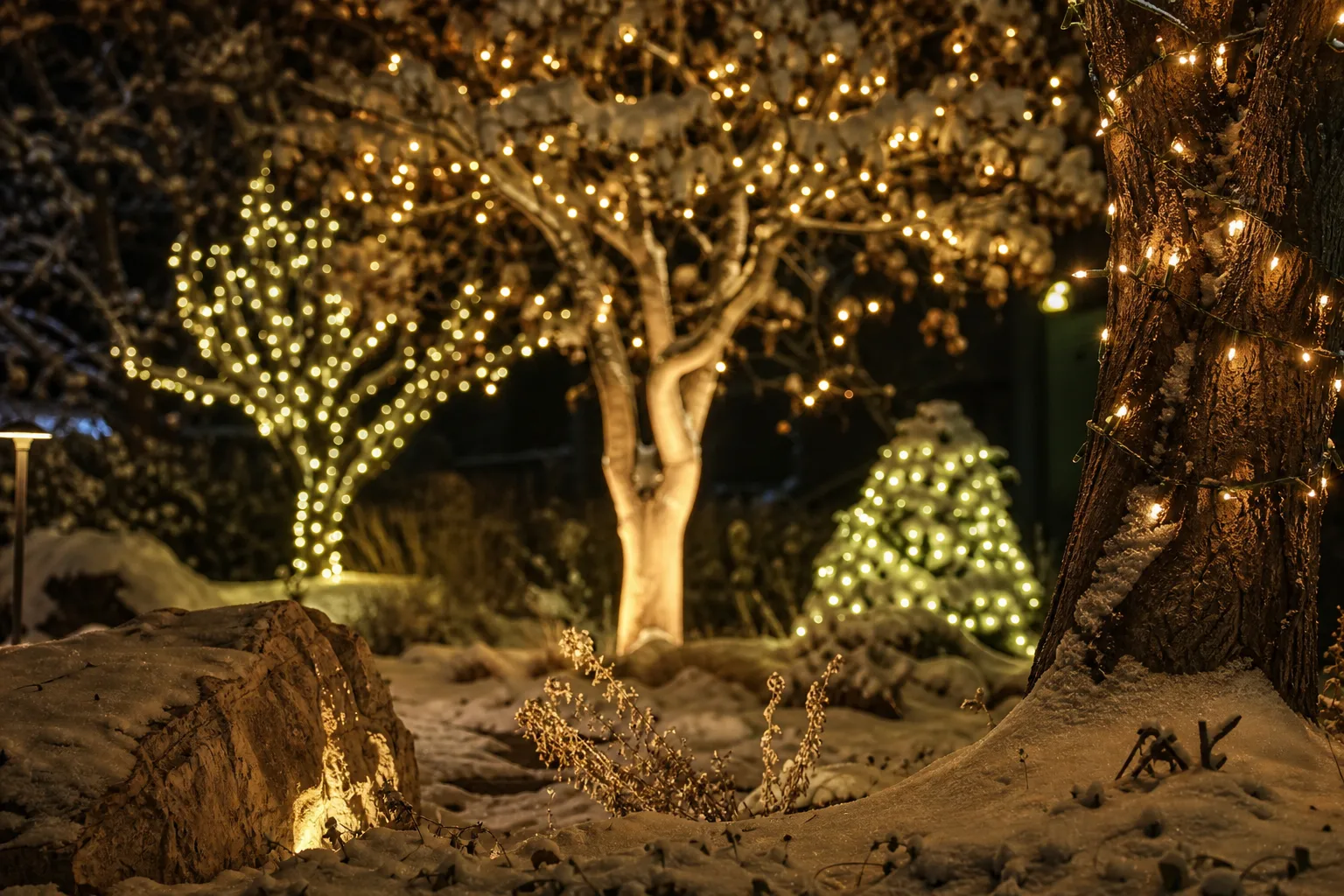
A bare trunk against a grey winter garden always looks like an unfinished sentence. The fix isn’t one string of lights thrown over the top and forgotten, it’s choosing where the glow actually sits: on the bark, inside the canopy, or out at the very tips of the branches.
Some of these need a weekend and a ladder, others take twenty minutes with a single string you already own. None of them need you to drill into anything or spend a fortune on a display built for one night.
Work through the trunk first, then the canopy, then the outer branches, and you end up with a tree that reads properly from the street instead of a patchy wrap that only looks right from one angle.
This post contains affiliate links. If you buy through them, I may earn a small commission at no extra cost to you.
Glowing Trunks
The trunk is the part everyone touches walking past, so it earns the neatest work even though it’s the least visible from a distance. Get the spacing math right here and the rest of the tree forgives almost anything.
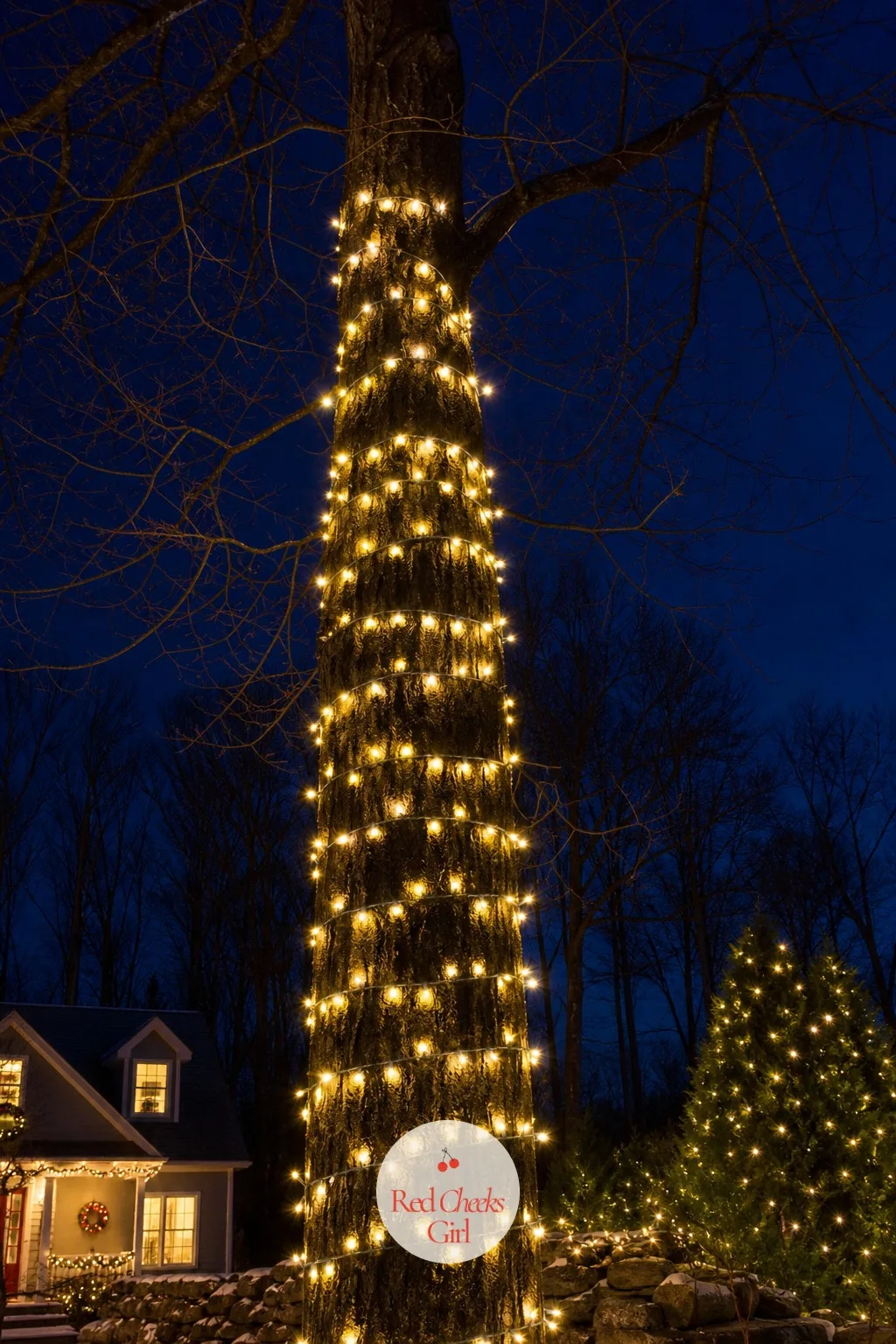
Spiral-Wrapped Warm White Trunk
A naked trunk in November looks like it’s waiting for permission. Warm white mini lights wound in a tight, even spiral give it that permission without a single extra ornament.
Measure the trunk’s circumference and height first, decide on two to three inches of spacing between loops, then do the simple math before you buy a single string so you don’t run out halfway up a ladder. Measure around your tree’s trunk to find the circumference, measure the height of the tree, decide how far apart you want the lights, typically 2 to 3 inches, divide the height by the distance, then multiply the circumference to see how many feet of lights you need.
Wrap firmly enough that the string stays put in wind, but leave the bark room to move. Wrap your lights firmly enough to stay on the tree bark, but not as tightly as possible, since if the tree swells after a heavy rain it needs room to expand without damaging the lights.
This one costs almost nothing if you already own a mini light string, and it takes under half an hour once the ladder is up. For a full plan that runs the whole garden off a single socket, the outdoor light runs planned around one socket are worth a look before you buy anything.
🛍 Shopping guide
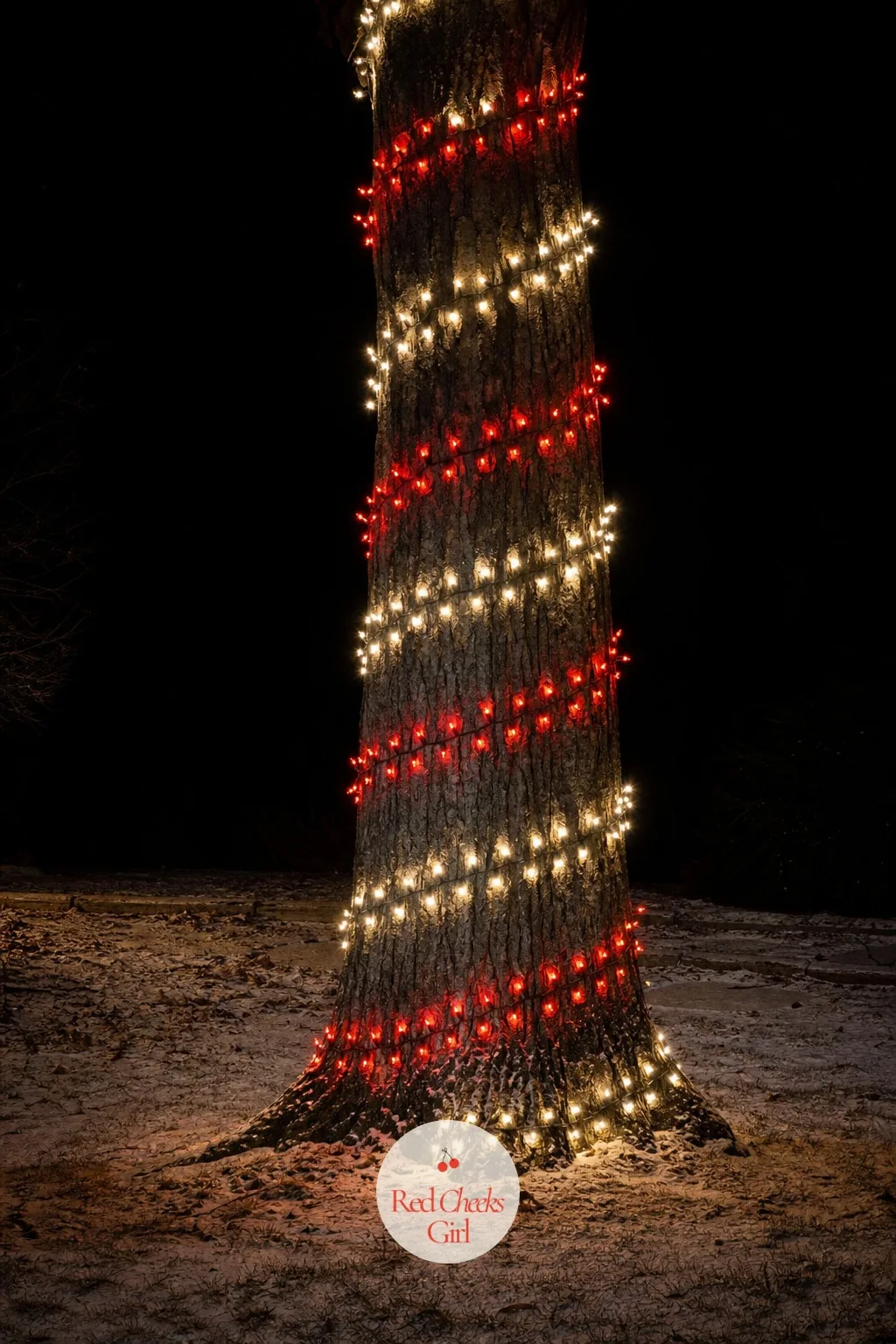
Candy-Cane Spiral Trunk
A single colour of lights plays it safe, and some years safe isn’t the mood you’re after. Twist two strands together as you climb, warm white and red, so the trunk reads like an actual barber pole from the street.
Use the same circumference-and-spacing formula as a plain wrap, just feed both strands up together rather than one after the other. Keep the twist loose so neither colour disappears behind the other.
It costs one extra mini light string over the plain version, nothing more. If red feels too loud for the rest of your garden, swap it for a soft pink spiral instead, and the pink Christmas tree looks that read from the doorway give you the exact shade to match.
From the pavement the twist catches the eye before anyone notices the rest of the display, which is really the point of a trunk treatment.
🛍 Shopping guide
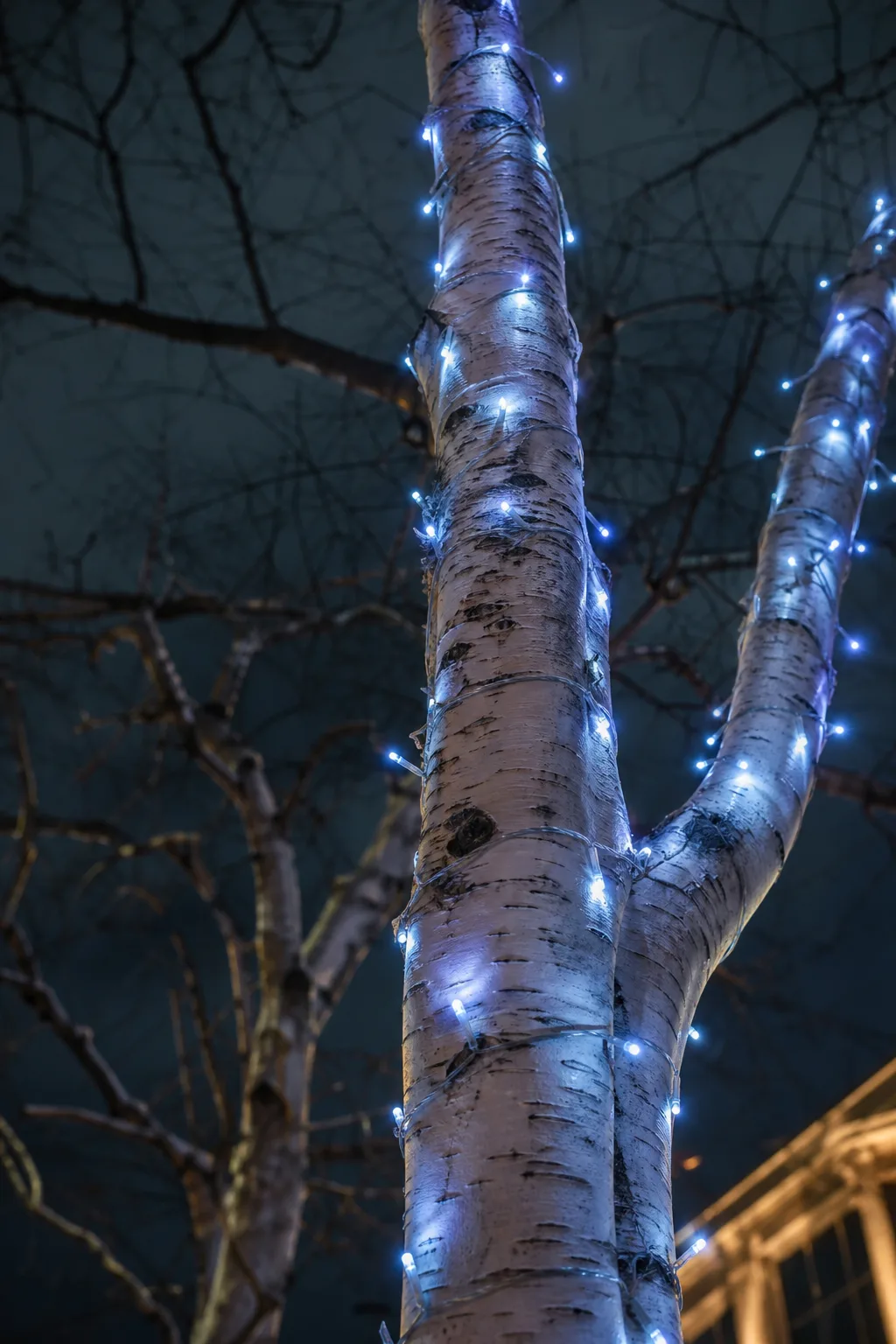
Icy Blue Birch Trunk
Pale bark already looks a little ghostly in December light, so stop fighting it and lean all the way in. Cool white or icy blue micro LEDs wrapped loosely on a birch or aspen trunk turn that paleness into something deliberate.
Textured bark holds a light string far more easily than smooth bark, which is exactly why pale trunks like birch work so well here. In general, trees with more textured bark will hold the lights most easily.
Micro LEDs sip almost no electricity, so this one is cheap to run all season long. On a dark-barked tree the blue tone vanishes rather than glows, so save this particular trick for pale trunks only and keep warm white everywhere else.
Step back after dark and check the shadow the light throws across the grain of the bark, that detail only shows from a few feet away.
🛍 Shopping guide
Lit Canopies
The canopy is where a tree either looks decorated or looks like it’s wearing a string of lights as an afterthought. Some of these take an hour with a net, one of them needs a professional-grade uplight and a wire strap for anything genuinely large.
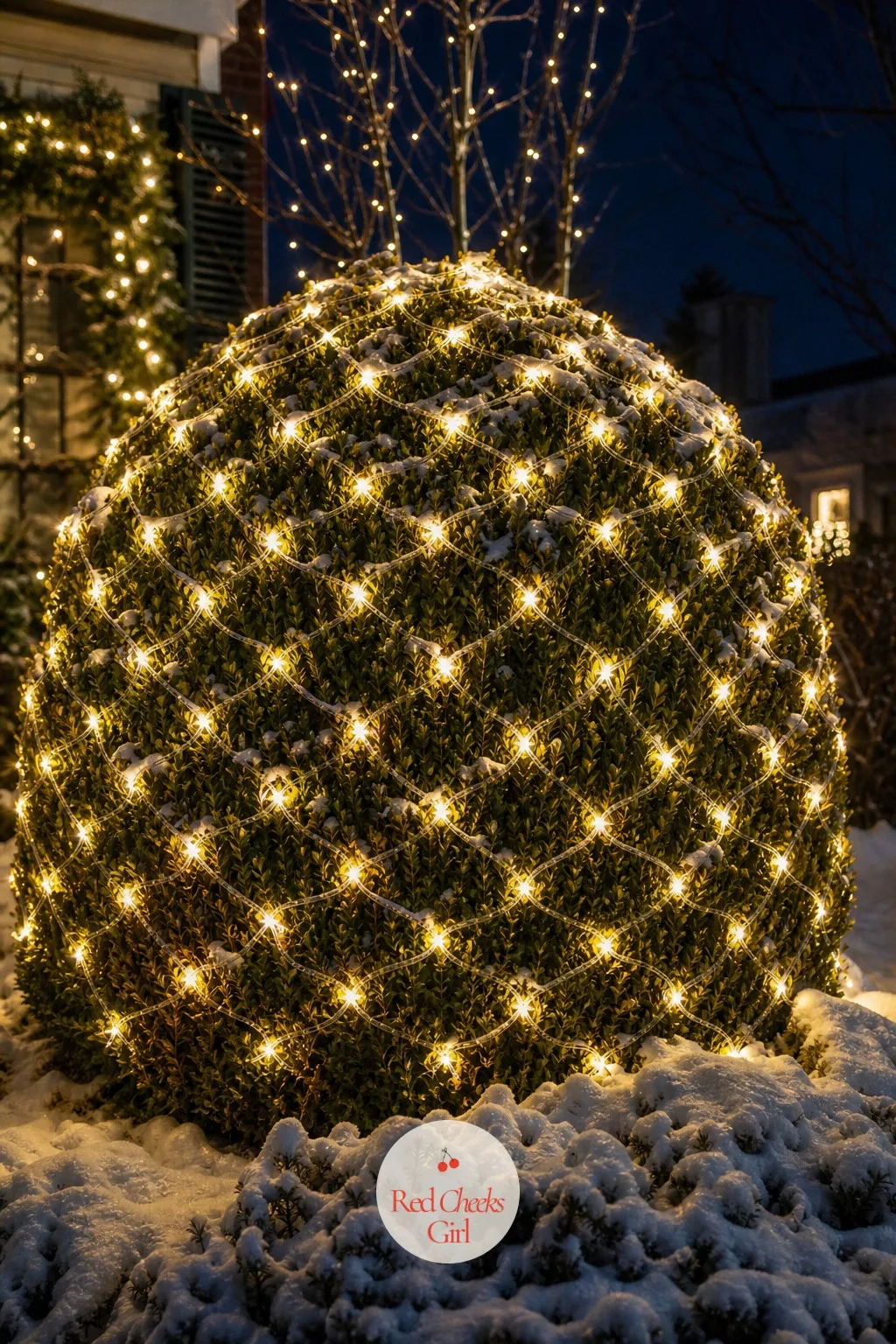
Net-Light Canopy Toss
Some years there isn’t the patience for winding a single strand around every branch by hand, and that’s fine, there’s a version of this that takes ten minutes.
A pre-strung net of lights thrown straight over a small to mid-size tree or shrub covers the whole surface in one go, no weaving required. These lights have LED bulbs spread out in a net, which makes it easy to place the lights in the bush, and you can just throw the whole net over the shrub in one go for fast Christmas lighting, with net lights being inexpensive too.
This is genuinely the cheapest and fastest entry on this whole list. For a balcony tree or a shrub in a pot rather than a full garden specimen, the balcony decor ideas for tiny outdoor spaces cover exactly this scale.
If the canopy is bigger than one net, overlap two smaller nets rather than hunting for one oversized one, the seam disappears once it’s lit.
🛍 Shopping guide
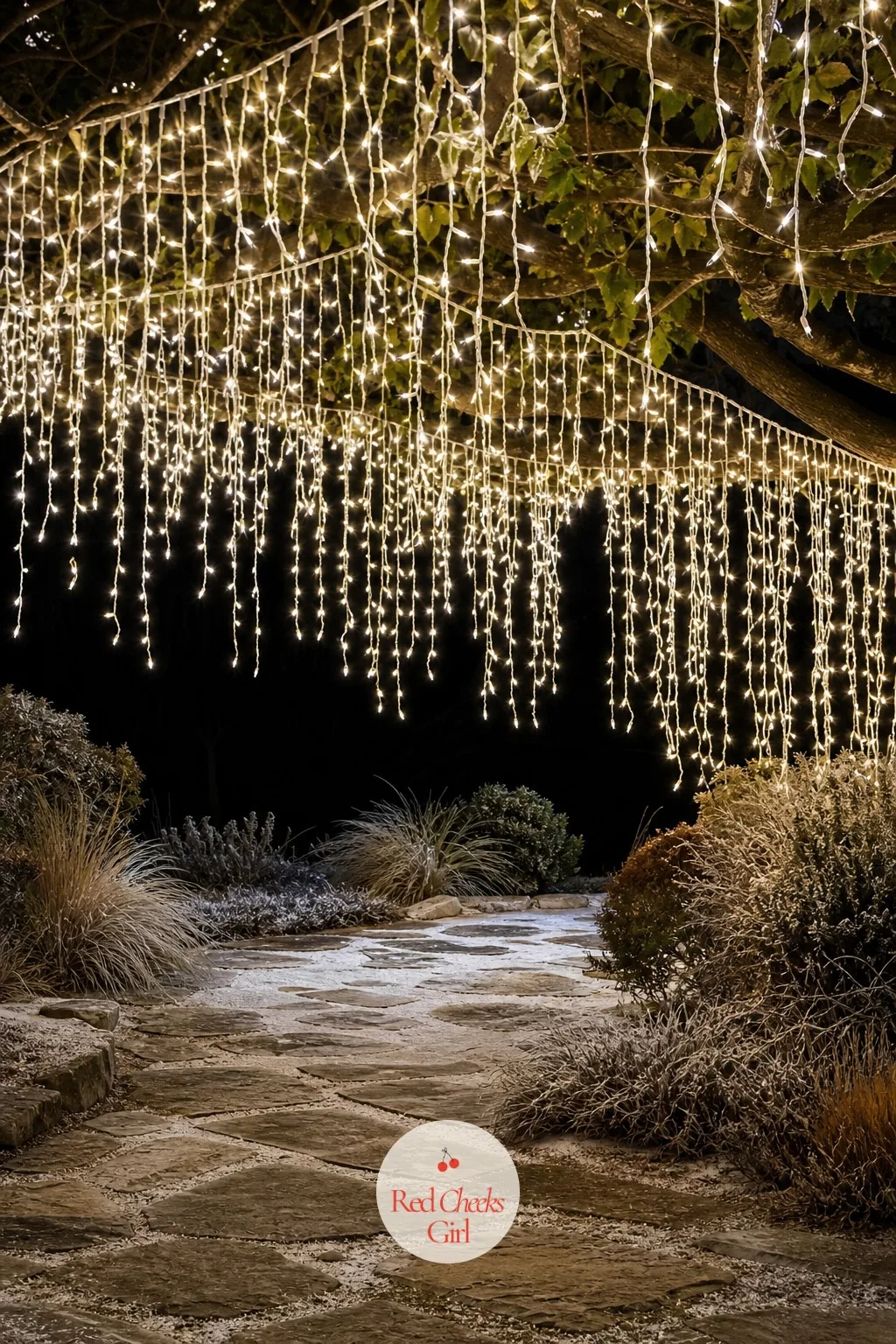
Icicle Cascade From The Canopy Edge
The drama of icicle lights along a roofline is lovely, but not everyone wants to be on a roof in December. Hang the same icicle-style strands from the outer branches instead, so the drips fall below the canopy line like the tree itself is dripping with light.
Cascading strings on the outer branches read as a softer, more romantic effect than a tight wrap. Wrapping and hanging lights around branches while cascading light strings on outer branches creates a romantic effect.
Each drip needs its own clip, so budget a full evening rather than twenty minutes. In a windy spot, use shorter drip lengths so the strands don’t tangle into each other overnight.
Hang the top strand at a height where the longest drips sit around head level for anyone walking underneath, that’s where the eye actually lands first.
🛍 Shopping guide
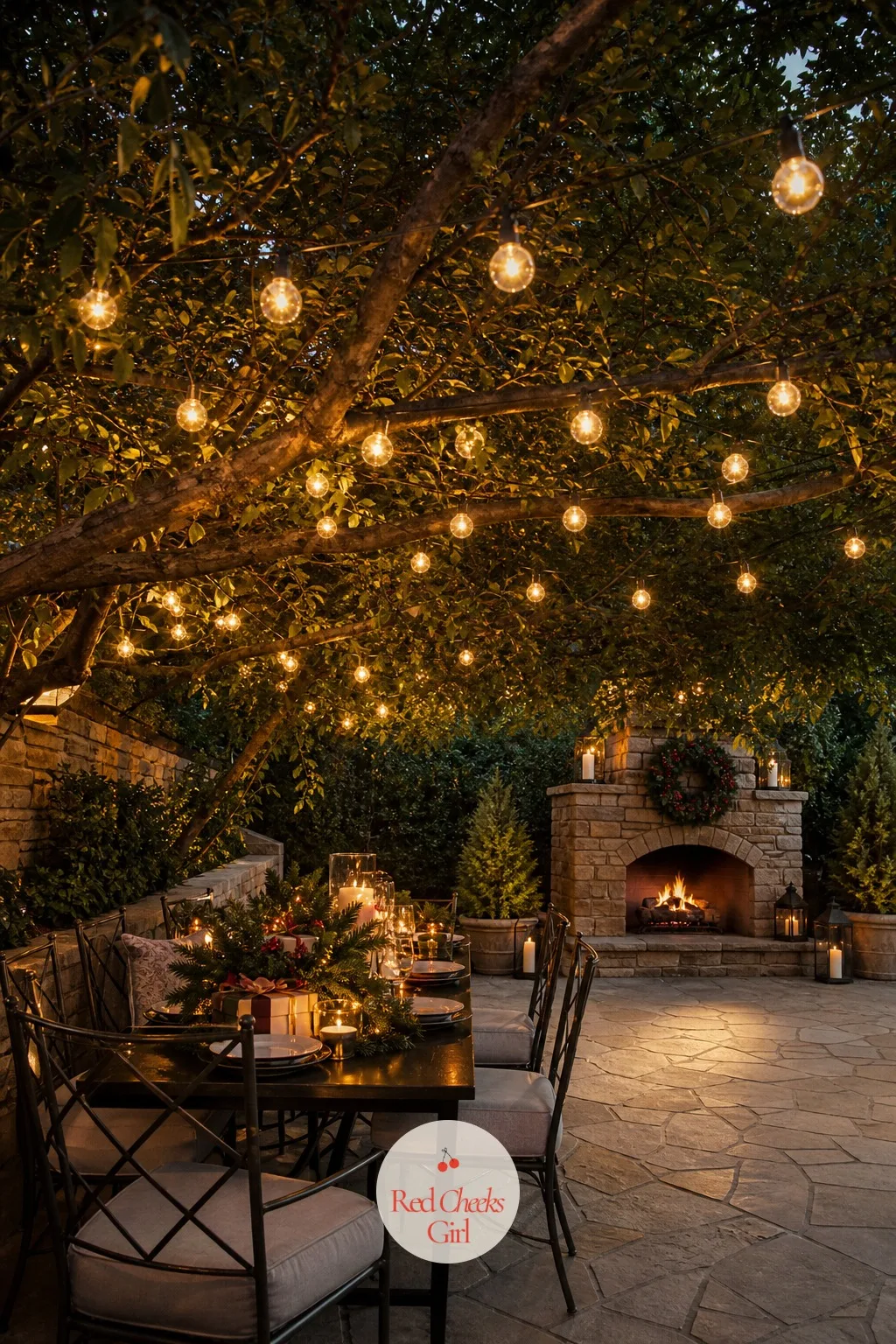
Golden Globe Canopy
Mini lights read perfectly fine from the street, but sitting underneath the tree during a party, they can feel thin and a bit stingy.
String warm amber G40 globe bulbs loosely through the canopy over a patio or seating area instead. The bigger bulb diffuses the light softer on the skin, no pinpoint glare looking straight up from a chair underneath.
They cost more per string than mini lights, but you need far fewer bulbs to fill the same canopy, so the total often lands about the same. For a tiny balcony tree, a single short globe strand does exactly the same job as a full set on a larger tree.
This is the one entry worth running right through the dinner, not just switching on for an hour, since the glow is doing real work for anyone sitting under it.
🛍 Shopping guide
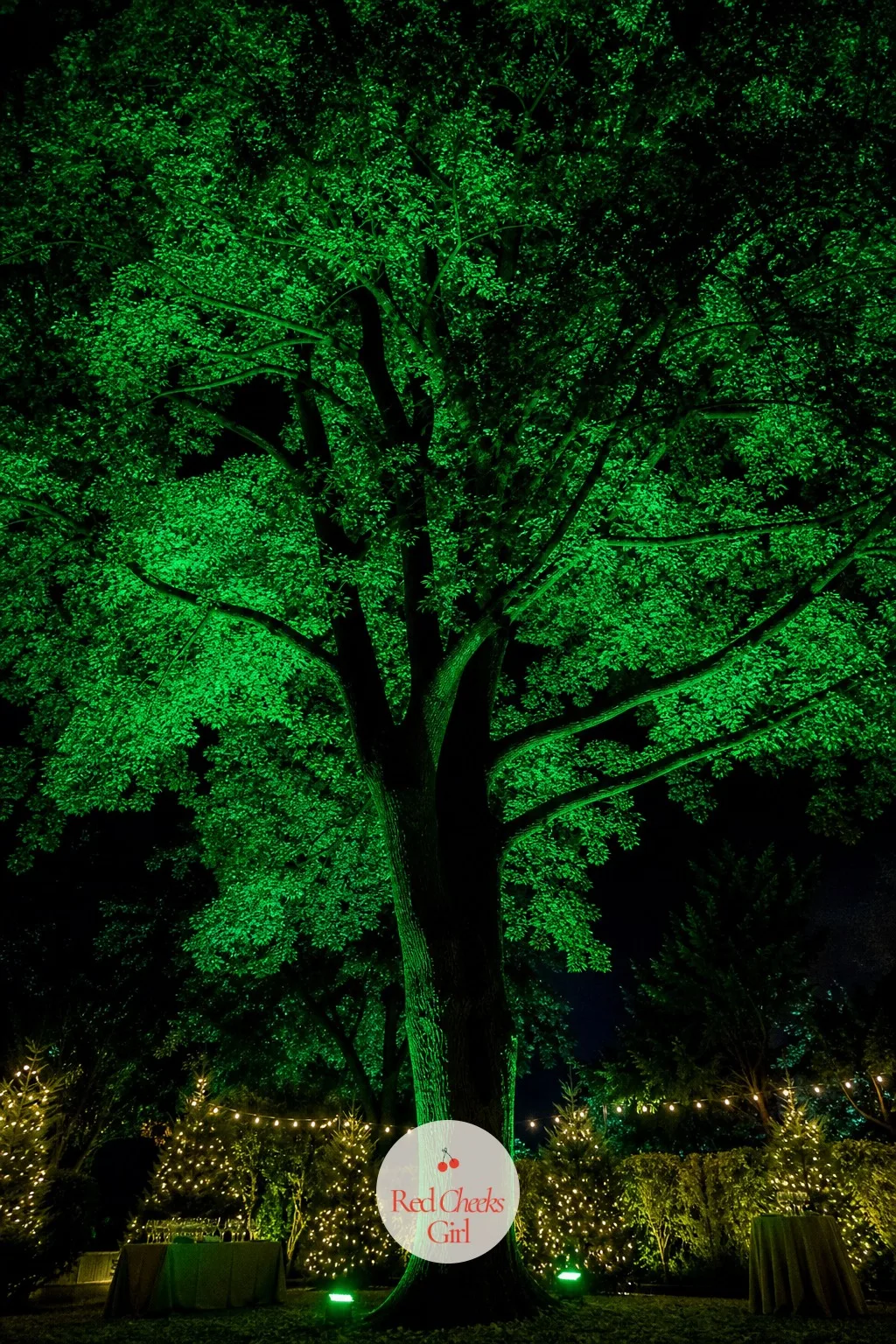
Uplit Emerald Canopy
For a mature tree with a canopy twenty feet up, climbing into it with a light string isn’t realistic, and it isn’t safe either.
Ground spike spotlights in green or gold aimed up into the underside of the canopy light the whole crown from inside out, a completely different read from any wrapped strand. For anything genuinely large, use a dedicated wire support strap rather than letting the light string itself carry the weight. You would want to put a strap around the tree and create a secure point that you can clip a wire onto, with a metal wire setup to hold the weight rather than using the strand of lights as the support.
This is the one real investment on the list, but it covers a tree too large to wrap by hand, and the spotlights come out again every single winter.
Swap the colour to icy white instead of green for a more formal, less jewel-box look, same hardware either way.
Starry Branches
Restraint is the whole trick here: fewer bulbs, more darkness around each one, so each light reads as its own small star rather than part of a string. This is the look for a tree you want to admire rather than announce.
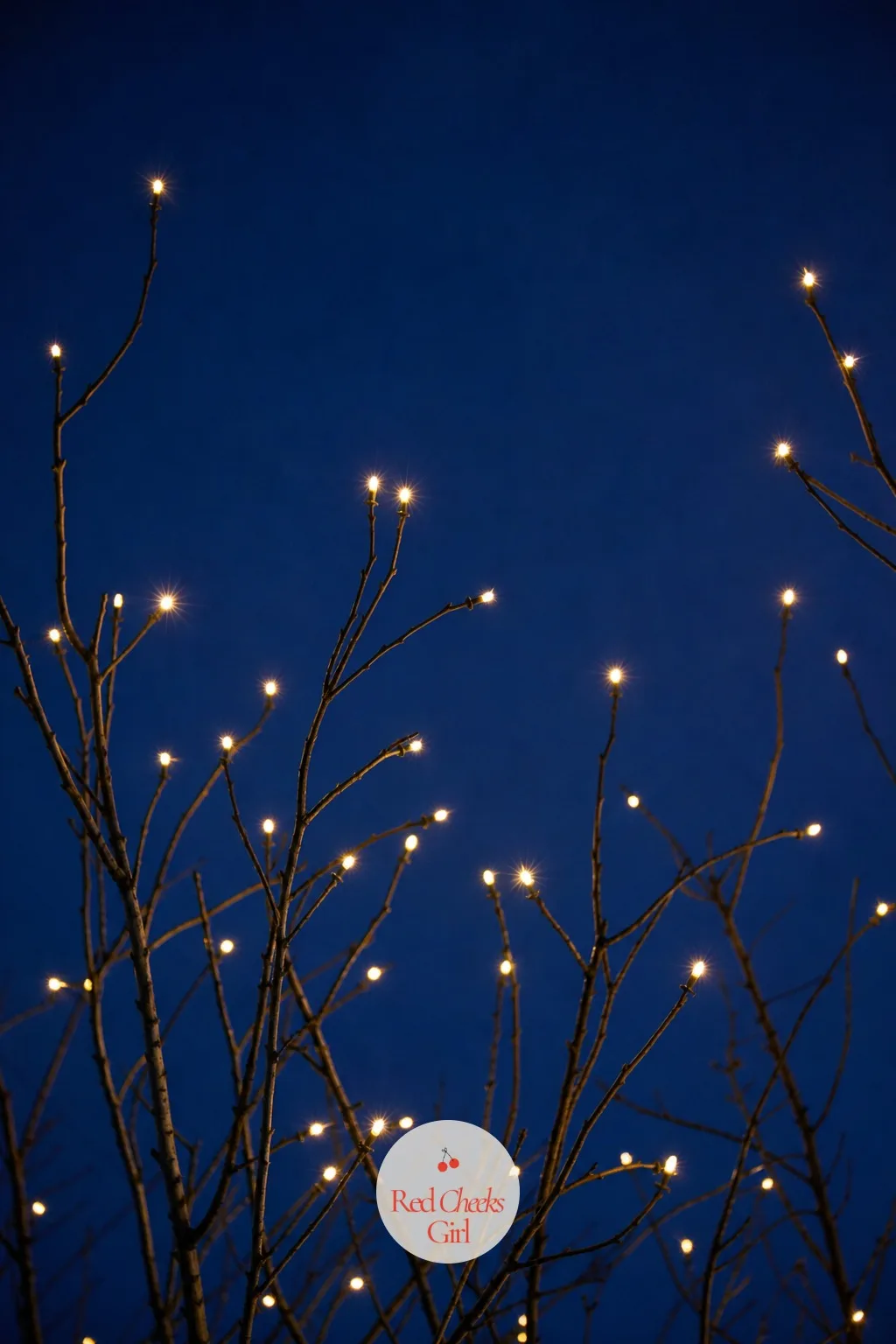
Starlit Twig Ends
A fully wrapped tree can look busy, almost shouty, and sometimes bare winter branches actually want restraint instead.
Clip single warm micro lights sparsely onto the twig tips rather than wrapping whole branches, choosing only the outer, most visible limbs. Not every branch needs covering, so pick enough to make the tree feel full without lighting every single one. Not every single branch needs to be adorned, so take a moment to envision what you want and prioritize outer branches that are more visible, maximizing the coverage area without over-draping.
Because the tree is leafless, it genuinely needs far fewer bulbs than the usual rule suggests. If you are wondering how many lights to put on an outdoor tree without leaves, start with about 50 percent less than the suggested rate.
From across the garden each bulb reads as its own small star through bare branches, not as a string of lights at all, which is exactly the effect.
🛍 Shopping guide
Peekaboo Evergreen Branches
A fully wrapped evergreen can turn into one glowing green blob after dark, which rarely looks as good as it did in the daylight planning stage.
Most guidance for bushes says to lay lights on top of the foliage for an even wash rather than tucking them inside. Don’t worry about setting the lights too deep into the shrub, since for most bushes it’s easier to lay the lights on top.
For this particular look, break that rule on purpose for just a few inner branches: tuck the string in slightly past the needle line so the light glows from inside the cluster rather than sitting on the surface. The contrast between lit-from-within branches and plain dark ones is what gives this one its starry, dappled effect.
Keep the majority of the tree lit on top as usual, and reserve the tucked-in trick for a handful of branches near eye level where it actually shows.

🛍 Shopping guide
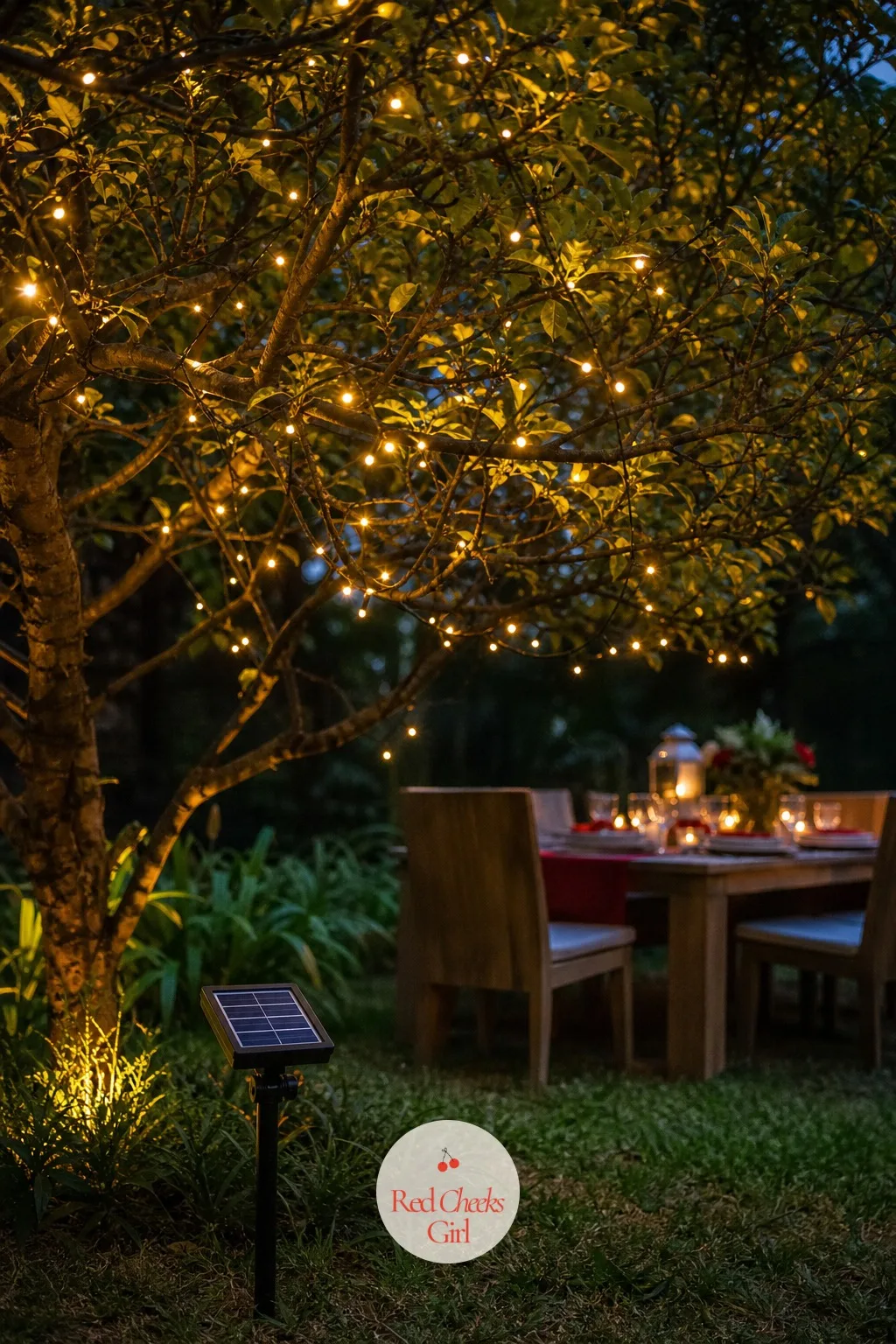
Solar Firefly Strand
A tree at the back of the garden, well away from any outlet, usually gets left undecorated simply because running a cord that far feels like too much effort.
Solar fairy lights solve that completely: wind them loosely through the outer tips, stake the small panel nearby in open sun, and there’s no cord at all to run or hide.
There’s no running cost either, the panel charges free all day and switches on by itself at dusk. In a cloudy climate, choose a model with a battery backup pack so a few grey days don’t leave the tree dark.
No trailing wire across the lawn also means nobody catches a foot on it crossing the garden in the dark, which matters more than it sounds once a party is actually underway.
🛍 Shopping guide
Finishing Touches
The last two ideas aren’t a whole tree treatment, they’re what makes the rest of the display look deliberate instead of half-finished, and what turns a one-night show into something you switch on all season.
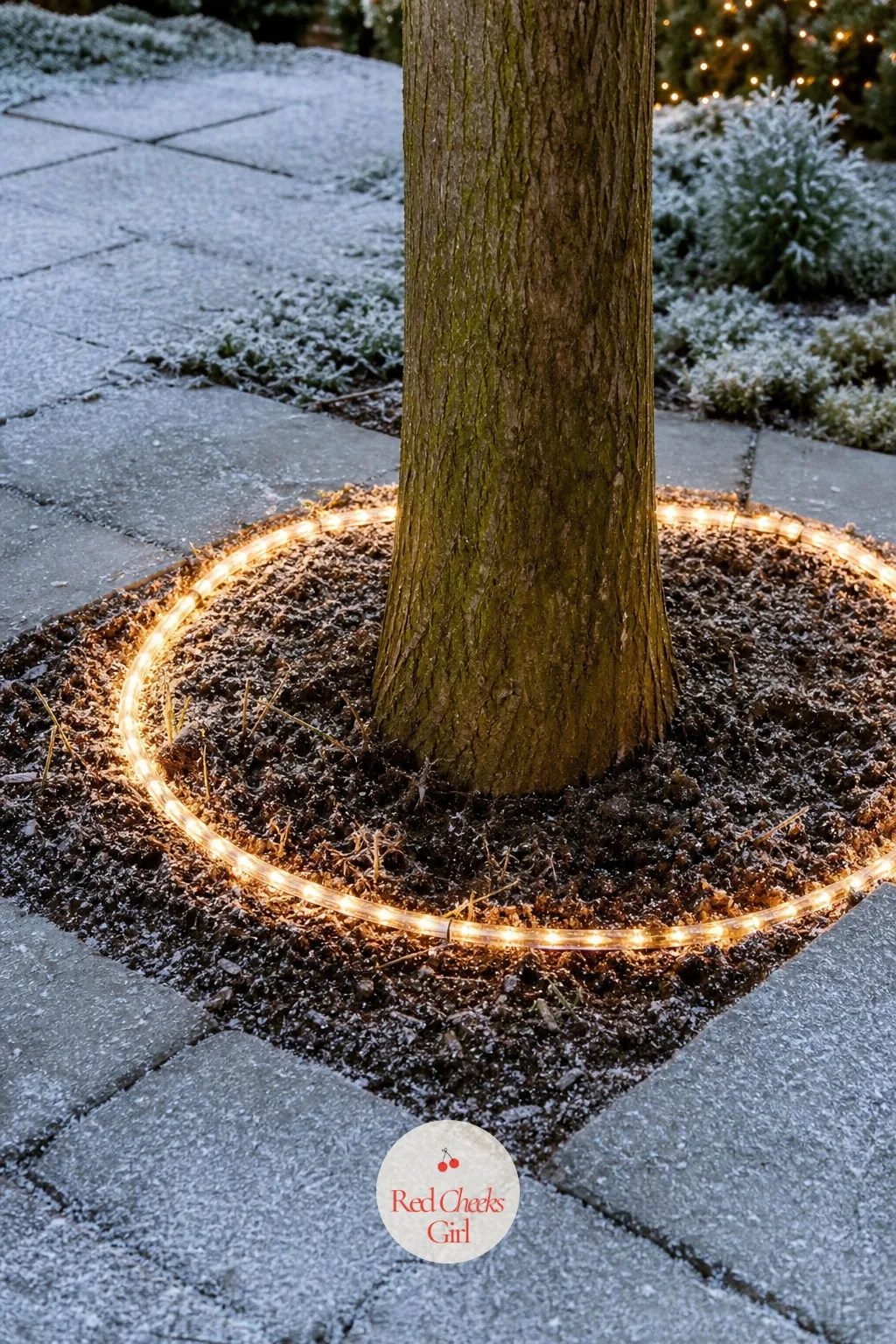
Lit Trunk Collar At The Base
A trunk wrap that just stops abruptly at ground level looks unfinished, like the job ran out of light before it ran out of tree.
Circle a ring of warm rope light around the base where trunk meets soil, starting the wrap a little above ground to keep the wiring clear of any standing water or snowmelt. Start about one inch up to keep your wires out of water or snowdrifts.
This costs almost nothing if it’s made from leftover rope lighting from another project. For something softer than a hard ring, swap it for a small cluster of lanterns instead, the grouped candlelight ideas for a room with no fireplace translate outdoors just as well in weatherproof jars.
It’s also the one spot worth running an extension cord neatly, since it’s exactly where a foot lands first walking up the path toward the front door.
🛍 Shopping guide
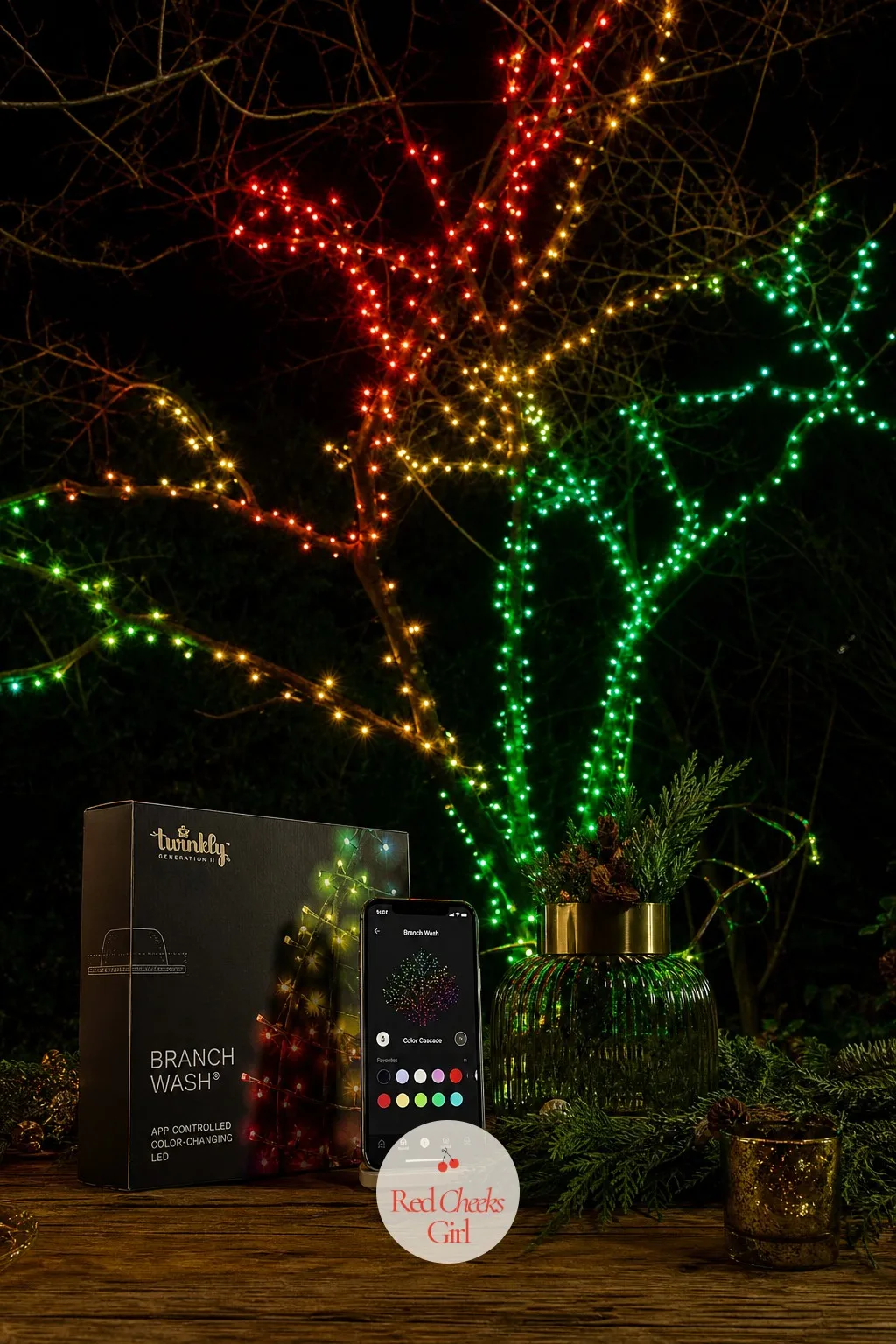
Color-Changing App-Controlled Branch Wash
Every other night, a steady warm glow is exactly right. For the one night of the actual party, it’s fair to want a small show instead.
Programmable colour-changing lights wrapped along the outer branches can be set from a phone app to run jewel tones for the evening, then switch straight back to plain white afterward. Dazzle neighbors with color-changing lights you can program to create your own light display.
This is the priciest entry on the list, but it does double duty, running as a normal warm display most nights and a genuine show for the one that matters. On a quieter street, keep it on a single warm setting all season and save the colour change for the party itself.
The moment the colours shift is the one bit of decor here that actually needs no explaining when a guest looks up.
Frequently Asked Questions
How many Christmas lights do I need per foot for an outdoor tree?
Outdoor trees tend to be bulkier and more uneven than indoor ones, so plan for roughly 50 to 150 lights per foot of height depending on how dense you want the look, with the lower end for a relaxed display and the higher end for a fully lit one.
Will wrapping lights around a trunk damage the tree?
Not if the string is wrapped firmly enough to stay put but not so tight it stops the bark expanding after rain, since a trunk that swells needs a little give in the wire rather than a tight binding.
What’s the fastest way to light a small tree or bush?
A pre-strung net of lights thrown over the top in one go covers the whole surface without any winding, and net lights are usually the cheapest option as well as the quickest.
How do I light a tall tree I can’t safely climb?
Ground spike spotlights aimed up into the underside of the canopy light the whole crown from below, and for anything genuinely large a wire support strap around the trunk should carry the weight rather than the light string itself.
Do bare, leafless trees need fewer lights than full ones?
Yes, a tree without leaves usually only needs around half the lights of the standard per-foot guideline, since there’s no foliage to absorb or hide the glow.
Should I use LED or incandescent lights on an outdoor tree?
LEDs need roughly half as many bulbs per foot as incandescent mini lights to reach the same brightness, and they use a fraction of the electricity, which matters if the display runs every evening for weeks.

20 Christmas party games for groups with zero waiting — team formats, simultaneous play & stations
11 magnolia wreath ideas with glossy bronze leaves, from a plain fresh-cut door wreath to a gold-dip

20 red and green Christmas decor ideas, room by room, with the exact plaid, velvet and berry pieces
Leave a Reply