

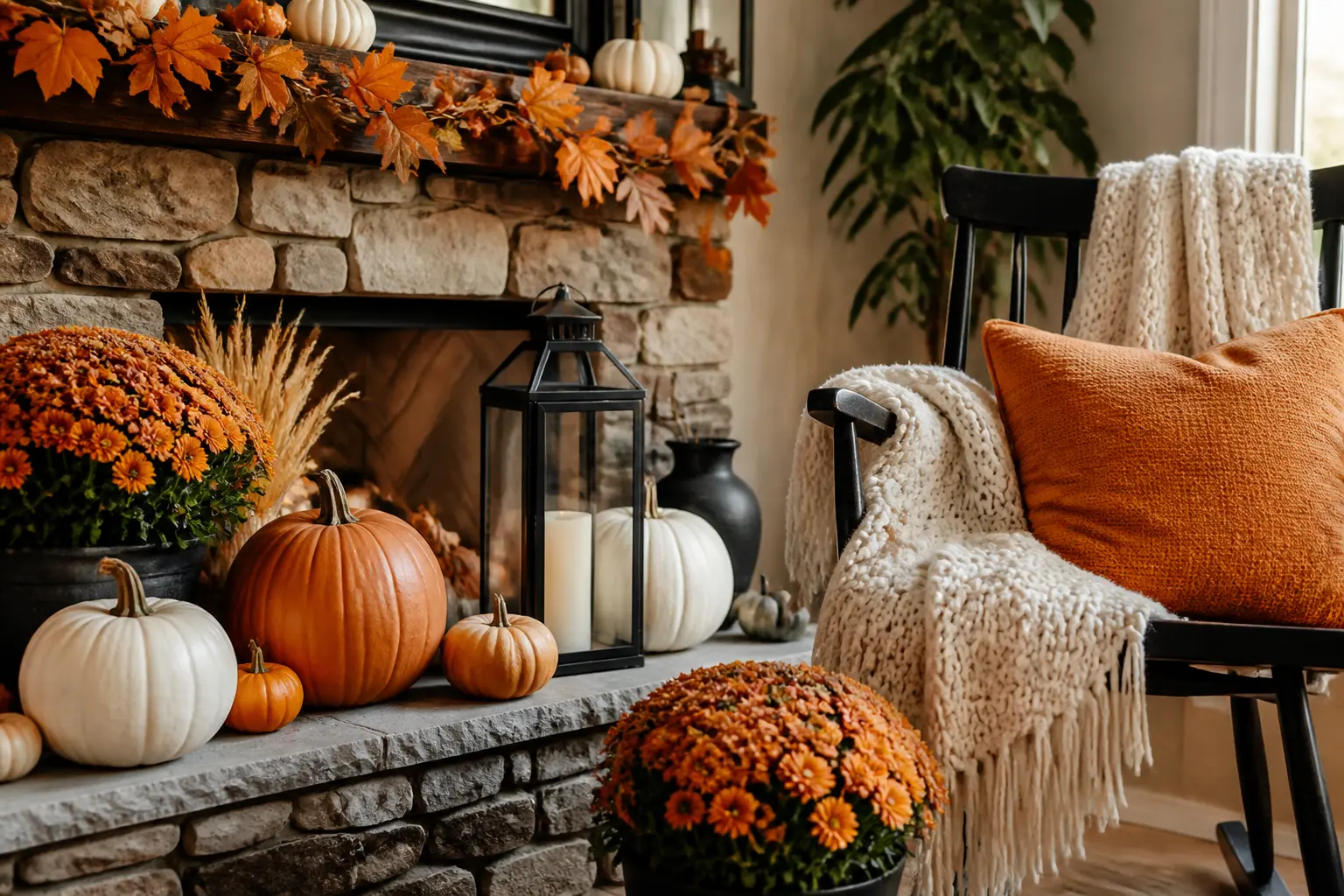
Your dried pampas is still perfect. The brass candleholders are exactly where you left them, and the cream pumpkins on the console look genuinely good. The last thing you need is a bin bag full of autumn decor and a fresh start from zero.
These 32 fall halloween decor ideas work the other way: each one layers onto what is already up, adding just enough shadow and edge to read as Halloween without erasing October. One swap, one addition, one tuck. That is the whole method.
If you are already throwing a party and want games to go with the mood, 20 No-Cringe Adult Halloween Party Games and 30 Unforgettable Halloween Party Ideas and Games are worth a look once you have finished styling the room.
This post contains affiliate links. If you buy through them, I may earn a small commission at no extra cost to you.
Candles and Light
Light does more atmospheric work than any object you can buy. Shift the color or the scale of what is already burning and the whole room follows. These entries stay within whatever candle arrangement you already have, adding depth rather than clutter.
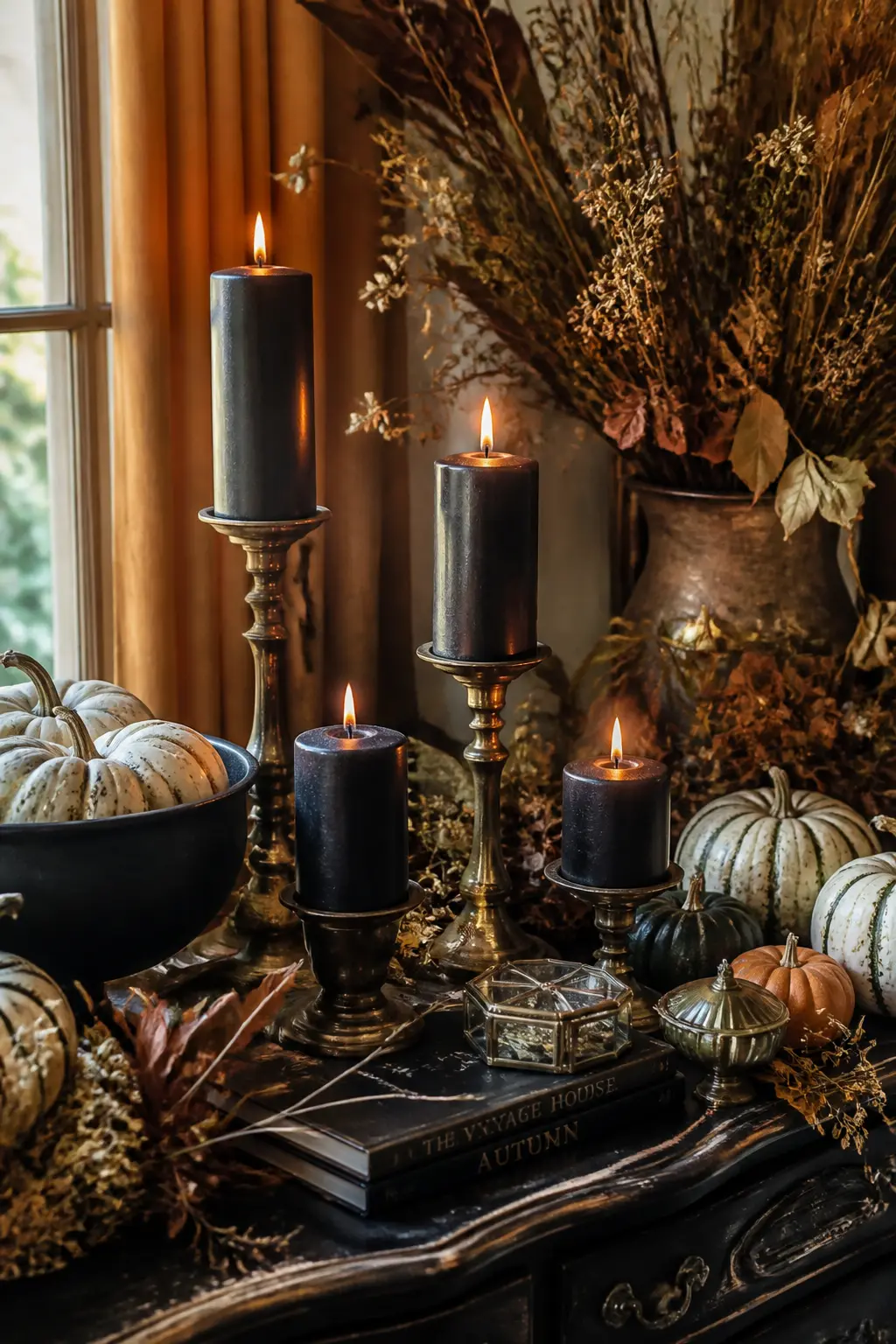
Dark Pillar Candles in the Existing Brass Holders
Pull whatever is in the brass holders out and slot in dark pillar candles: charcoal, near-black, or deep burgundy. The brass reads richer against the dark wax than it ever did against cream, and the autumn arrangement around it looks more intentional, not less.
Buy the same diameter as your current candles so they drop straight in. No adhesive, no fuss. Swap back in November with the cream ones you stored.
🛍 Shopping guide
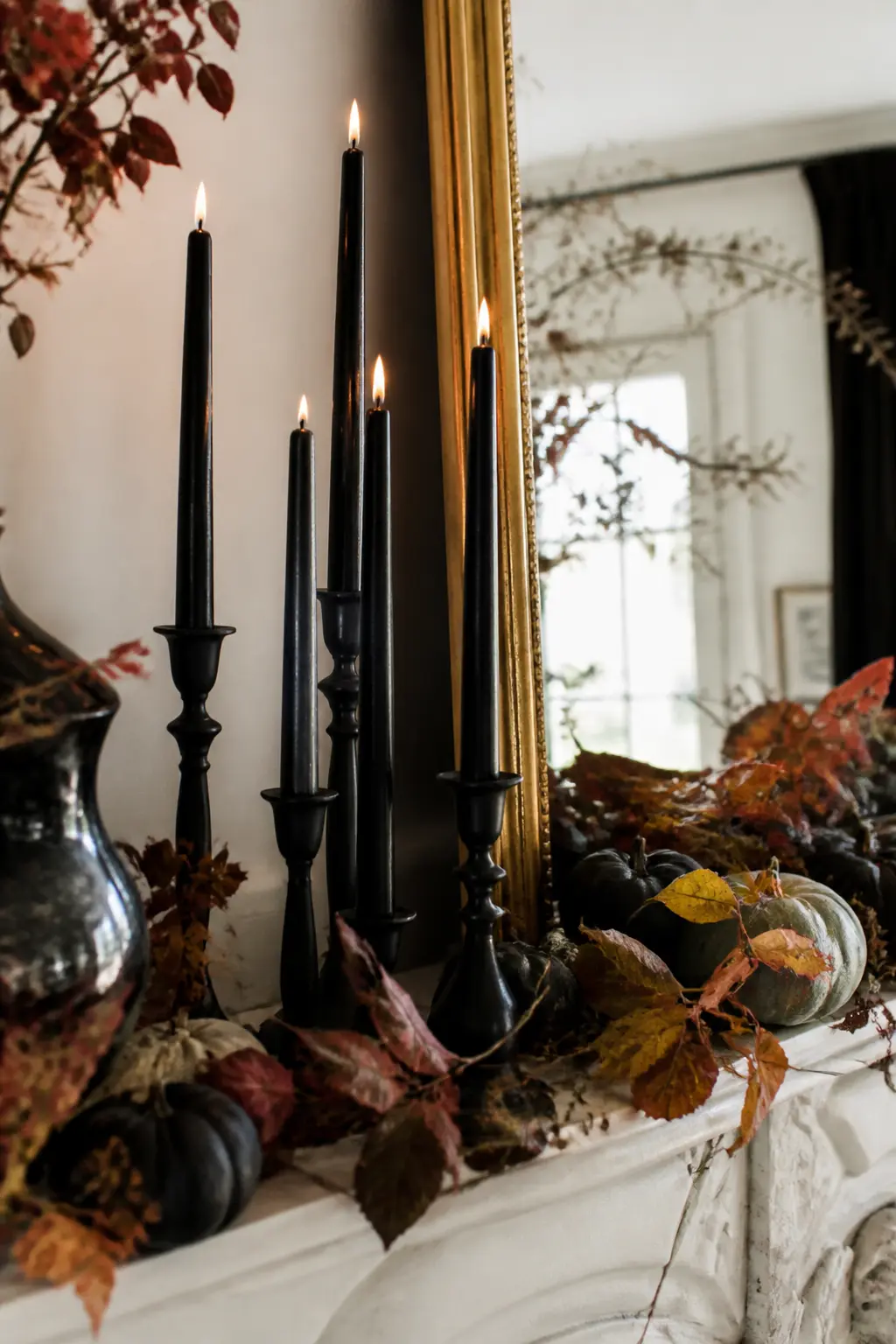
A Black Candle Cluster on the Mantel
Group three to five black taper or pillar candles at one end of the mantel. Leave the garland, the pumpkins, and the foliage exactly where they are. The cluster reads as a deliberate moment, not a full restyle.
Vary the heights. A cluster that steps up in height looks styled; a flat row of identical candles looks like a shop display. Odd numbers, varied heights, done.
🛍 Shopping guide
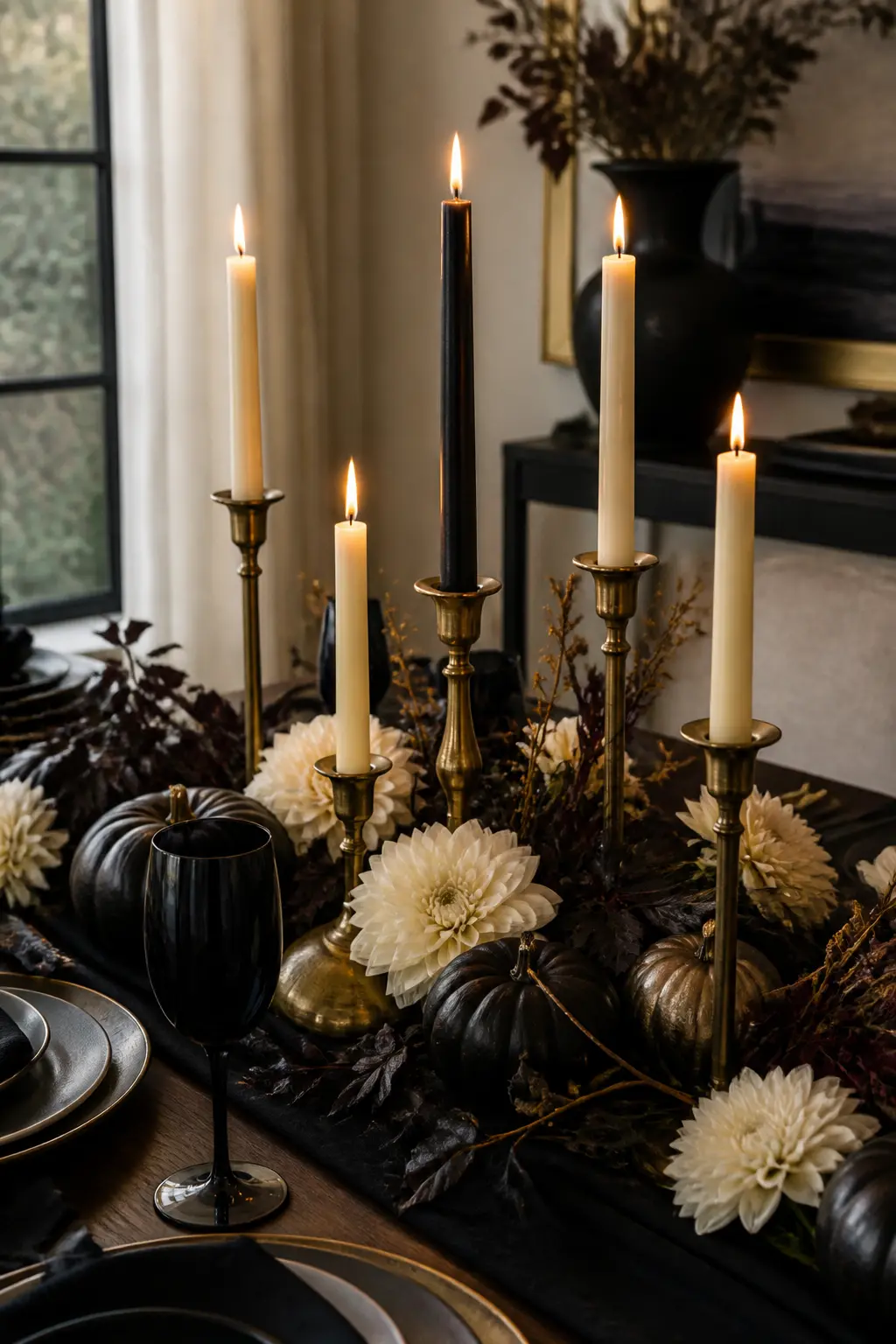
A Single Dark Taper in the Cream Candle Group
One dark taper slipped into the existing cream candle group does something the whole-cluster swap cannot: it looks like an accident, in the best possible way. The contrast is subtle enough to feel grown-up rather than decorated.
Deep aubergine or near-black works better than bright orange here. The point is a quiet note of shadow, not a pop of Halloween color.
🛍 Shopping guide
Pumpkins and Skulls
The pumpkin grouping you already have is the easiest surface for a subtle Halloween note. One dark shape among the orange and cream is enough. No carving, no mess, no commitment.
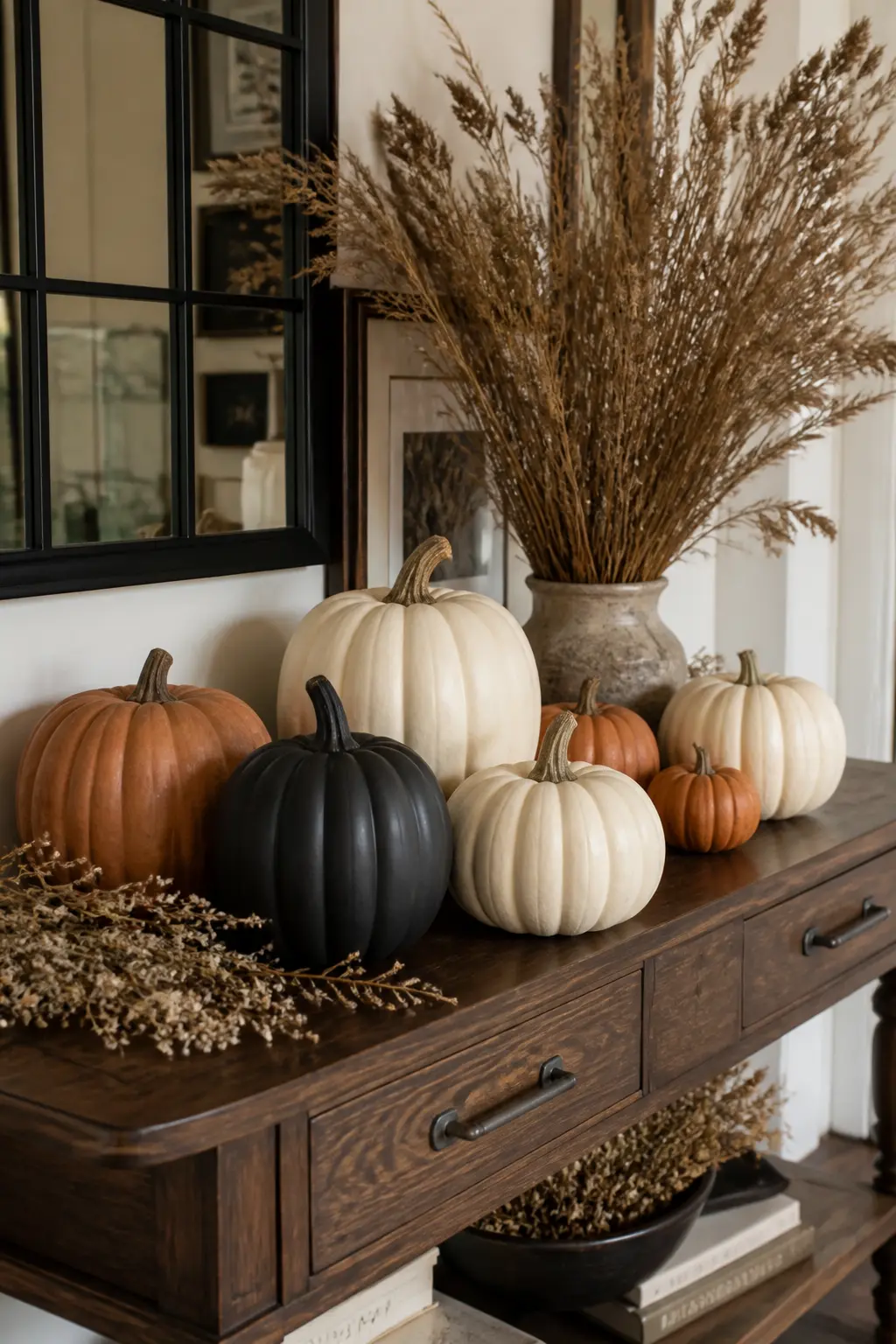
Swap One Cream Pumpkin for a Matte Black One
One matte black pumpkin among cream and orange ones is enough. It does not need to be the biggest pumpkin in the group, and it does not need to be carved. Matte finishes read more editorial than shiny; avoid anything lacquered.
Place it slightly off-center in the grouping, not symmetrically flanked by matching pieces. The slight irregularity is what makes it look intentional rather than themed.
🛍 Shopping guide
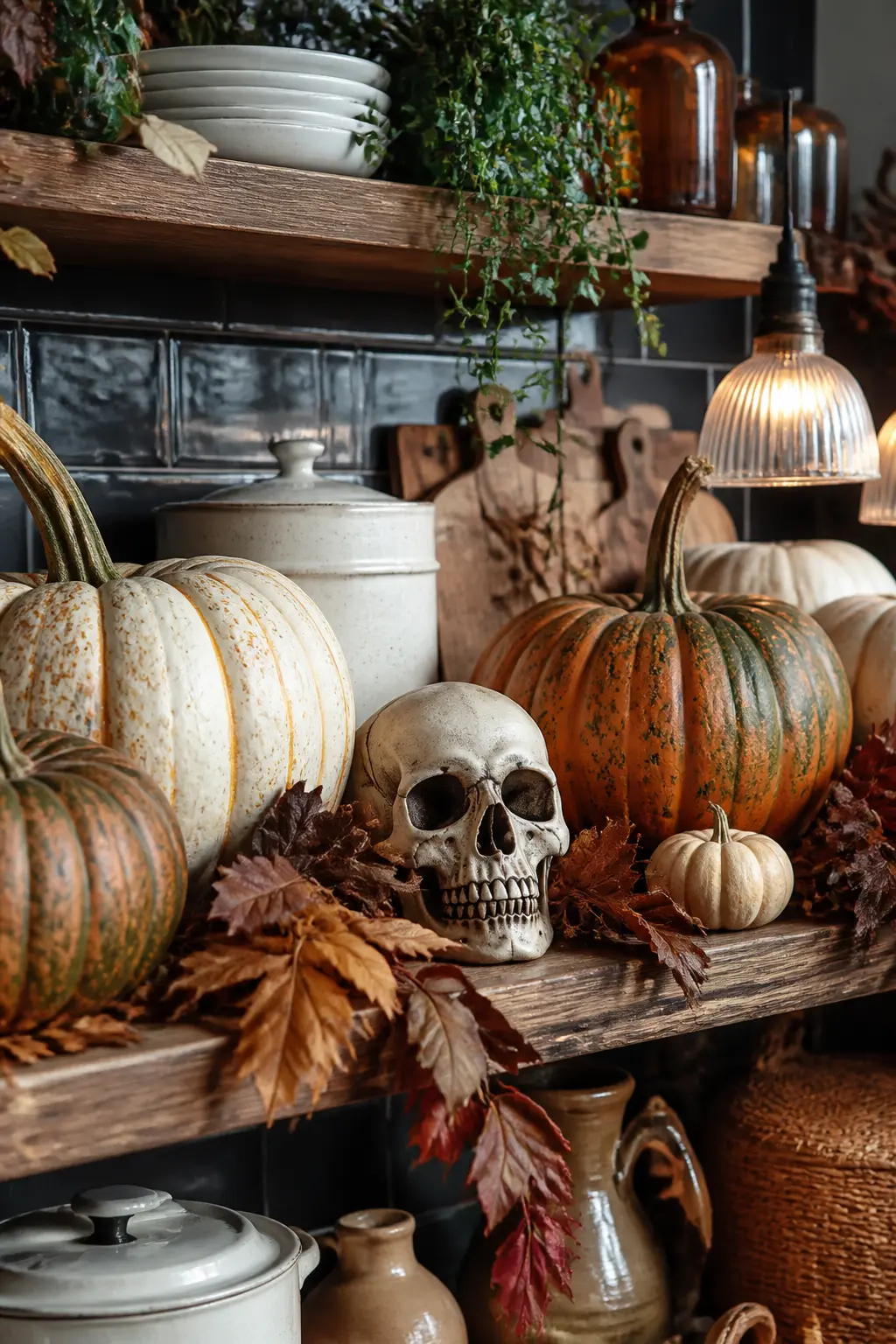
A Skull Among the Existing Pumpkin Grouping
A ceramic or resin skull tucked at the base of the pumpkin grouping reads as Halloween immediately, but because it sits within an autumn arrangement, it feels styled rather than spooky-for-the-sake-of-it. Aged finishes, antique white, or stone-look materials suit this best.
Avoid anything bright white or plastic-looking. The skull should feel like it belongs to the same material palette as the pumpkins around it.
🛍 Shopping guide
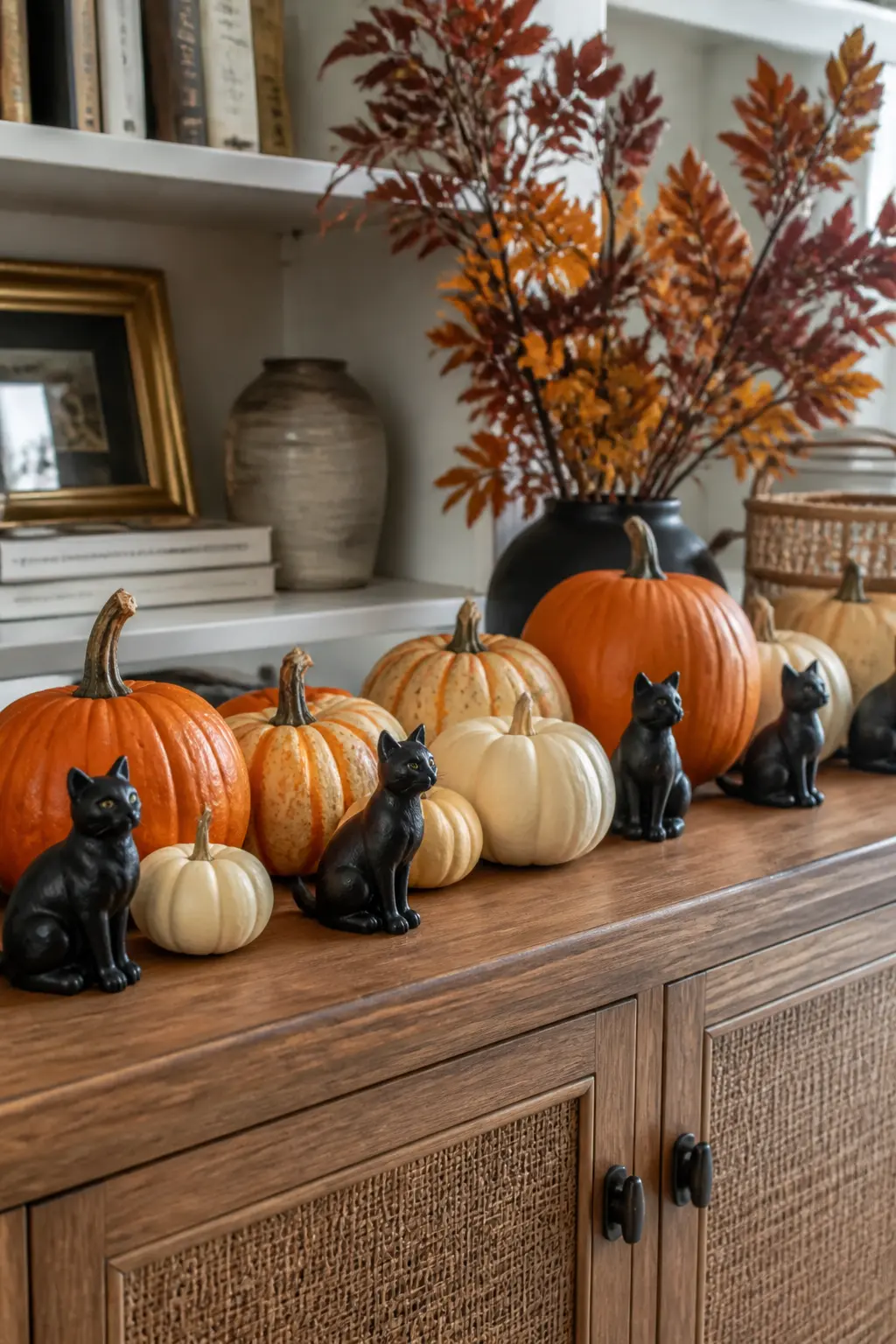
Line the Existing Pumpkin Row with Small Black Cats
Small cast-iron or ceramic black cat figures placed at intervals along an existing pumpkin row look graphic and deliberate. Three figures in a row of five pumpkins is the right ratio: enough to read as a pattern, not so many that it tips into novelty.
Look for cats in a sitting pose rather than arched backs. The sitting form is quieter and sits more naturally within a styled arrangement.
🛍 Shopping guide
Wreaths, Bundles, and Branches
Dried arrangements and wreaths are already halfway to a gothic aesthetic on their own. A single addition changes the reading of everything around it. Work with the texture that is already there.
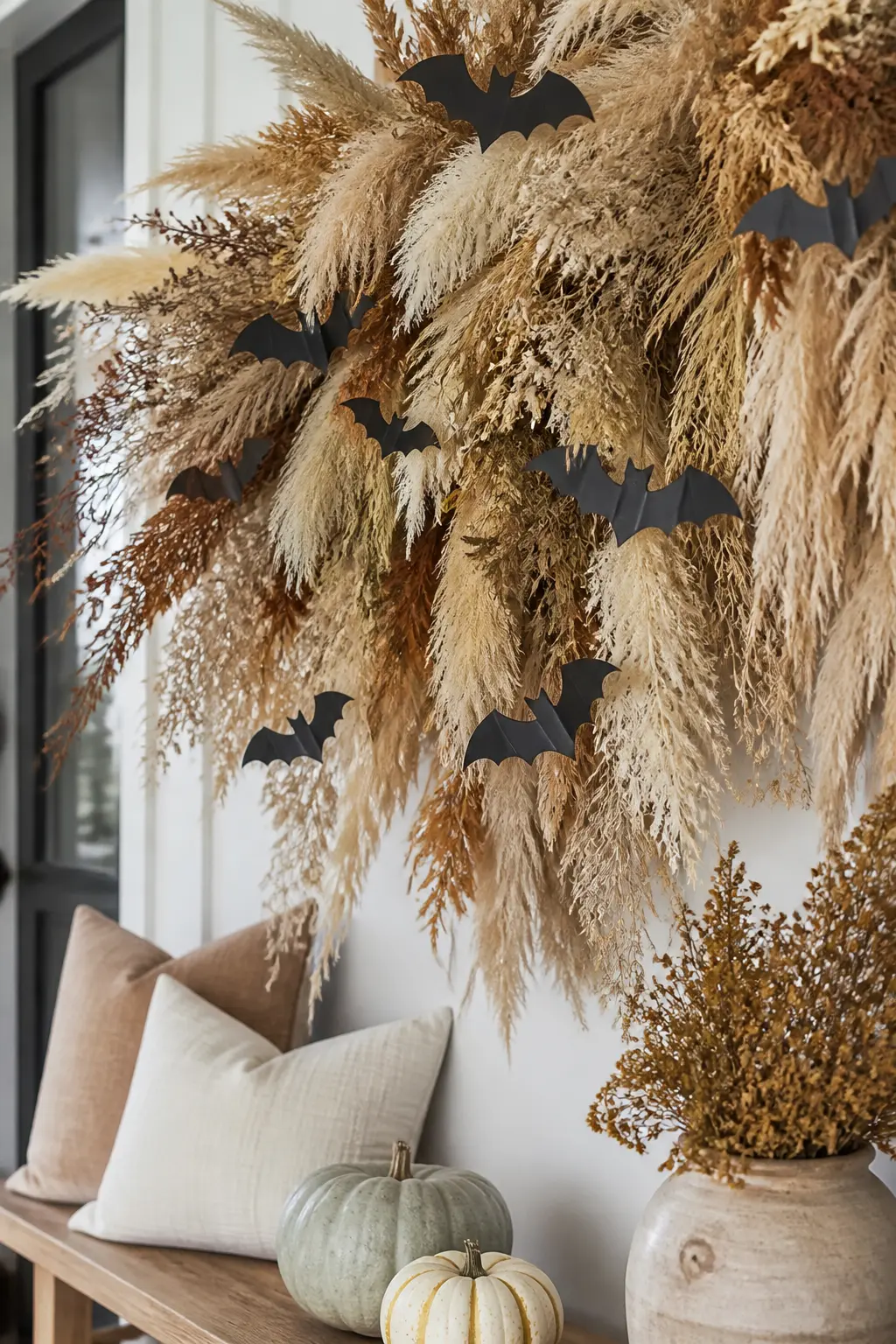
Tuck Small Bat Silhouettes Among the Existing Dried Bundles
Laser-cut wood or heavy black card bat silhouettes are small enough to disappear into a dried bundle until you look closely. That is exactly the effect to aim for: a detail that rewards attention rather than announcing itself from across the room.
Wire or tuck them stem-deep into the dried grasses or eucalyptus. Two or three per bundle is enough. More and it starts to look like a theme party rather than a home.
🛍 Shopping guide
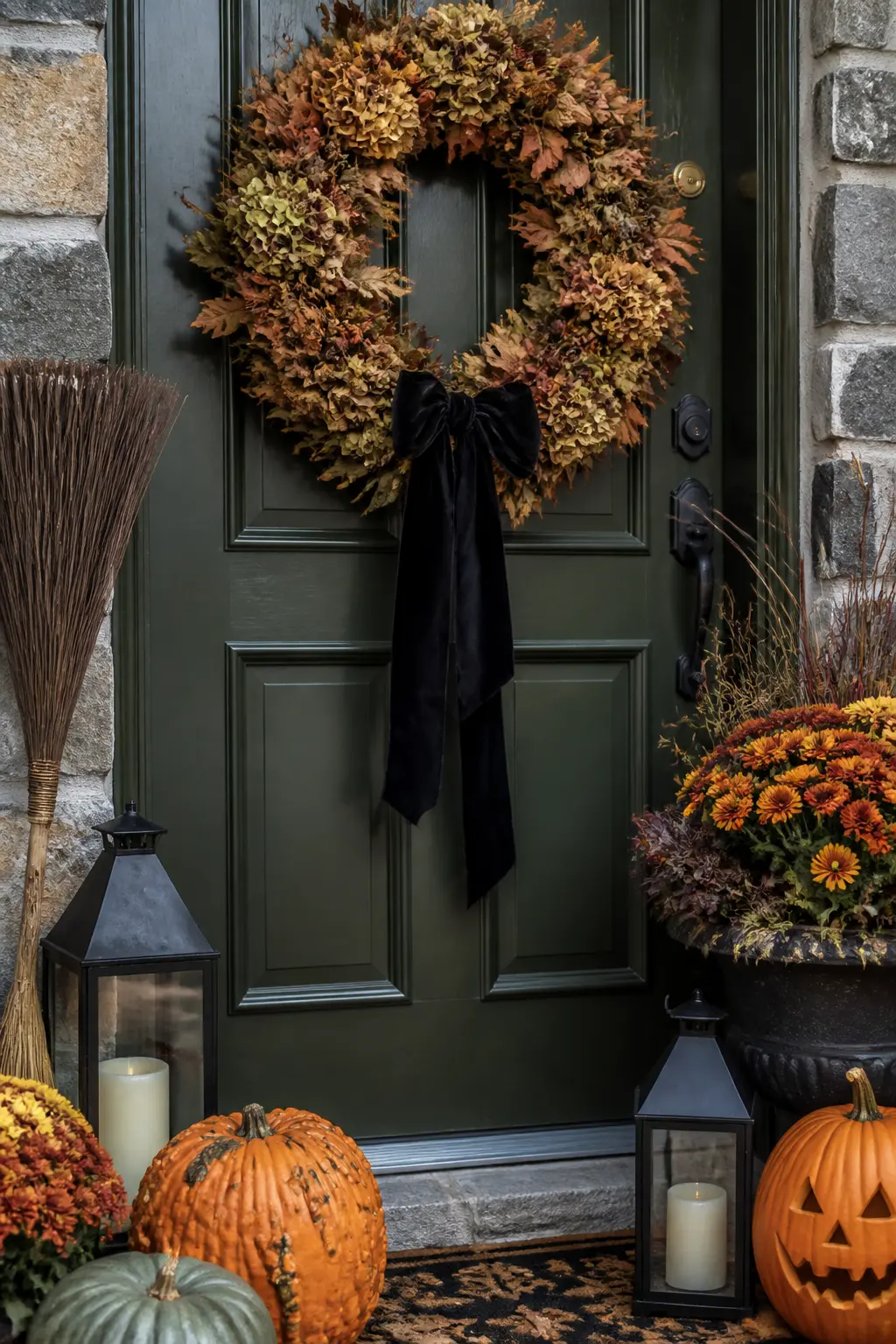
Add a Black Ribbon to the Existing Autumn Wreath
A wide black grosgrain or velvet ribbon tied at the base of an autumn wreath shifts its mood without touching any of the foliage. Tie it in a loose knot rather than a bow: a bow looks gift-wrapped, a knot looks considered.
Leave the tails long and uneven. The asymmetry is what keeps it from reading as a craft project.
🛍 Shopping guide
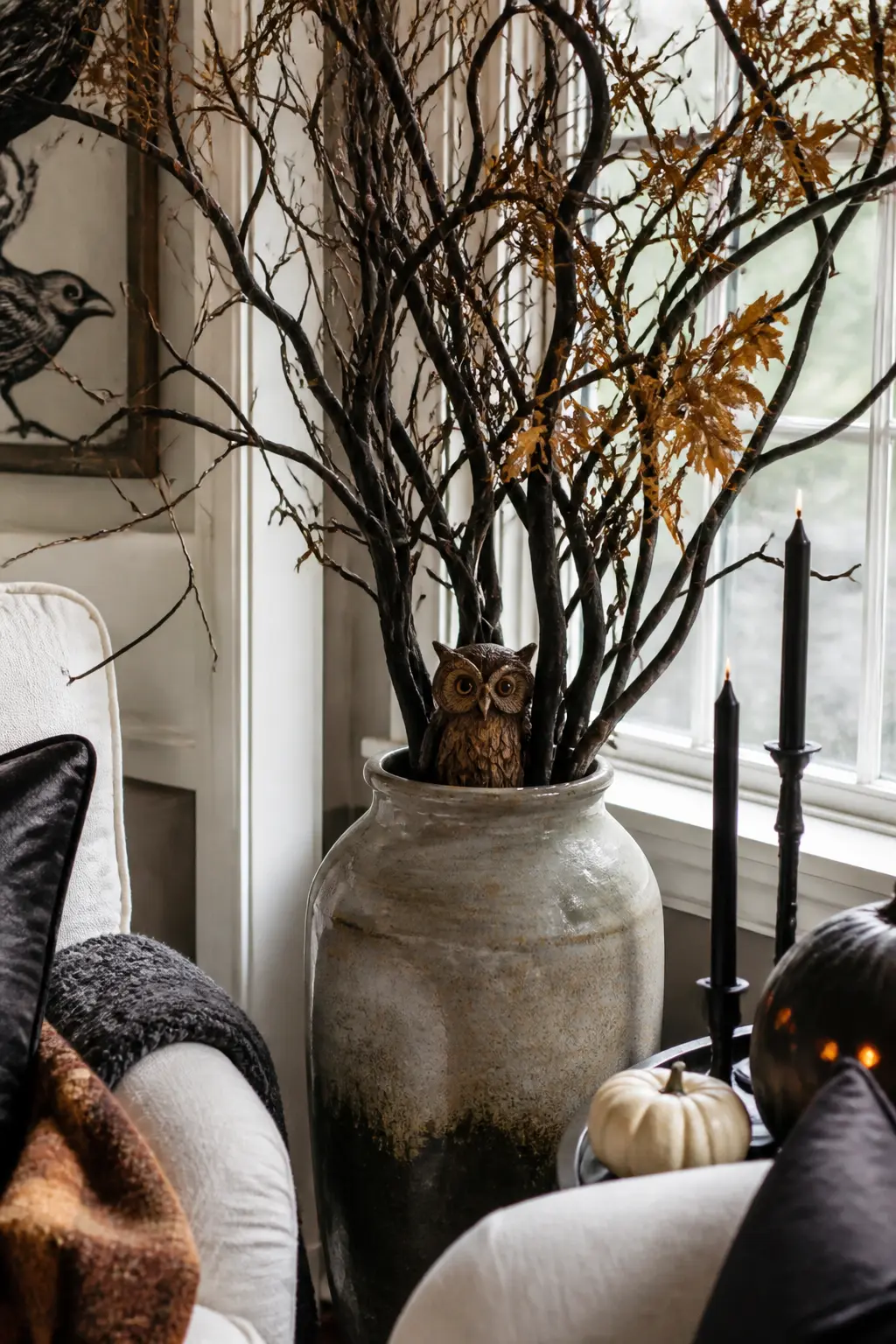
Tuck a Small Owl Figure into the Existing Branch Arrangement
A ceramic or carved wooden owl sitting inside a branch vase reads as both autumnal and quietly spooky, which is exactly the tone this whole approach is going for. It does not need to be obviously Halloween: a naturalistic owl in dark tones is enough.
Prop it at the base of the branches rather than perching it at the top. Lower placement keeps it nestled inside the arrangement rather than competing with the silhouette above.
🛍 Shopping guide
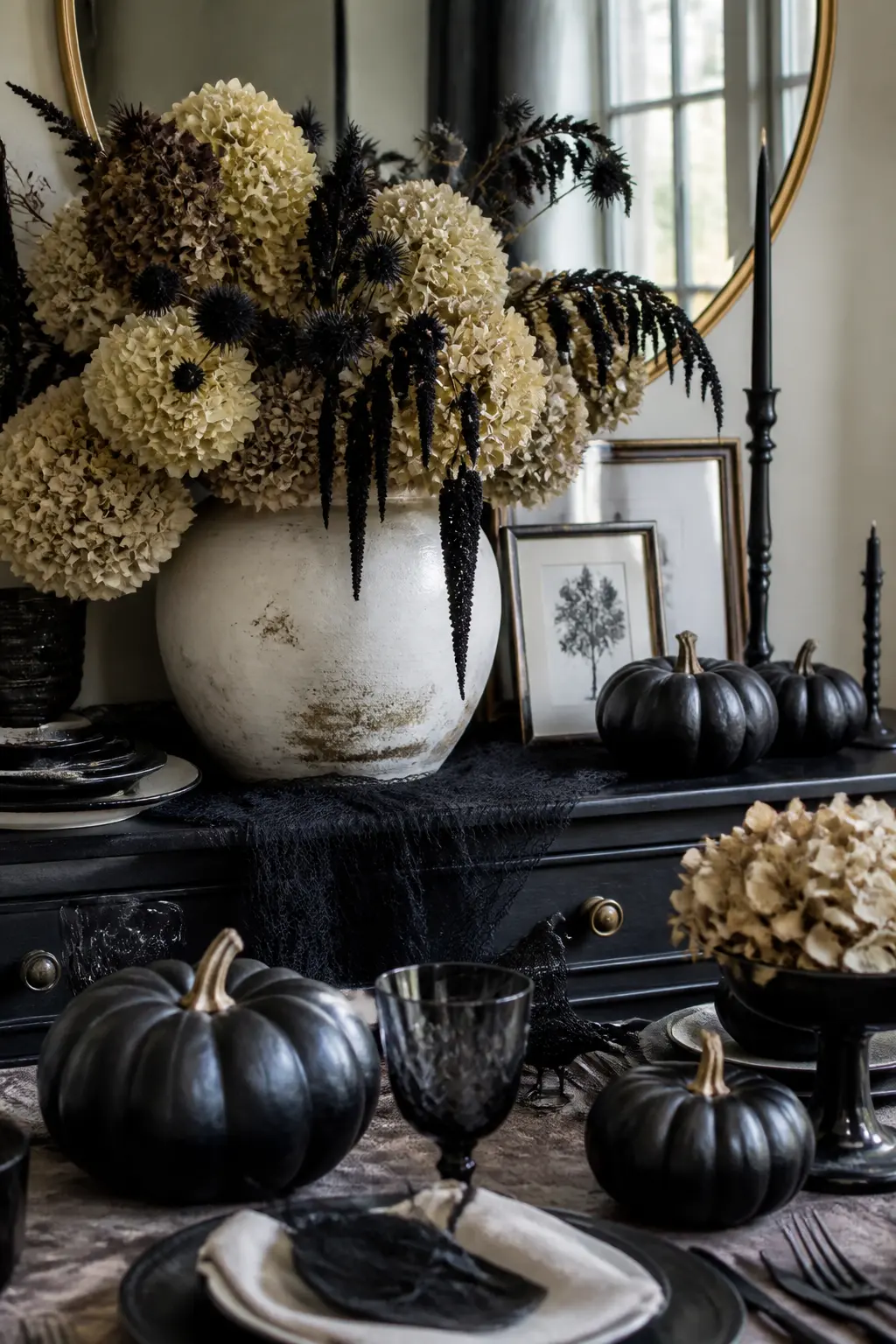
Add Black Dried Florals to the Existing Hydrangea Vase
Black-dyed dried botanicals, amaranth, thistles, or grass heads, added to an existing hydrangea vase darken the arrangement without emptying it out. They also add texture that dried hydrangeas alone lack, which makes the whole vase look more expensive.
Add three to five stems and stop. The existing flowers should still be the majority of what you see.
🛍 Shopping guide
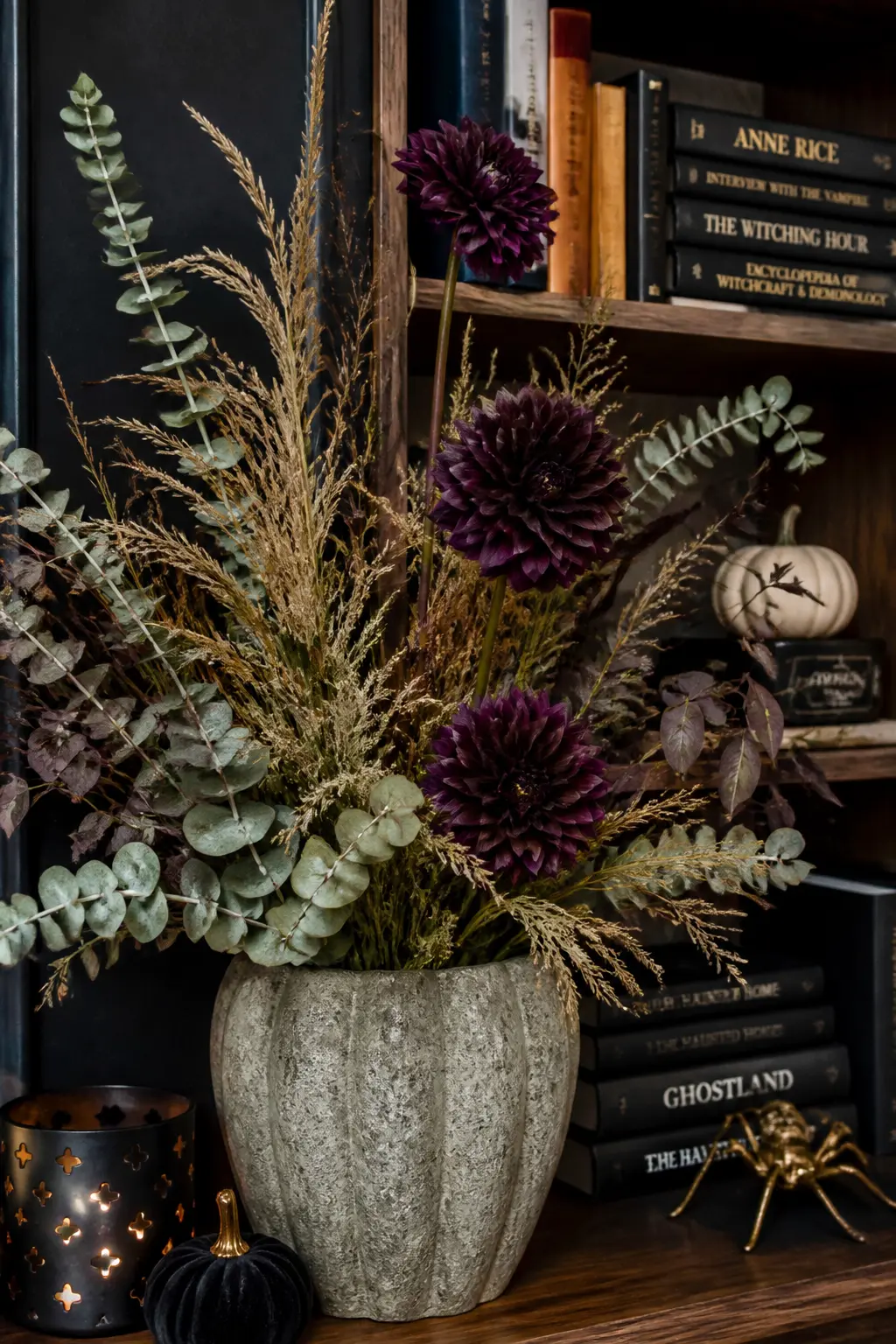
Add Dark Dahlias to the Existing Dried Arrangement
Deep plum, near-black, or burgundy dahlias, fresh or preserved, bring both color and a gothic weight to a dried arrangement that is already earning its keep. The flower form is lush enough to look intentional next to more skeletal dried stems.
Three or five stems, odd numbers, tucked in at varying depths. Let some sit lower than the main arrangement to create a layered silhouette rather than a flat top line.
🛍 Shopping guide
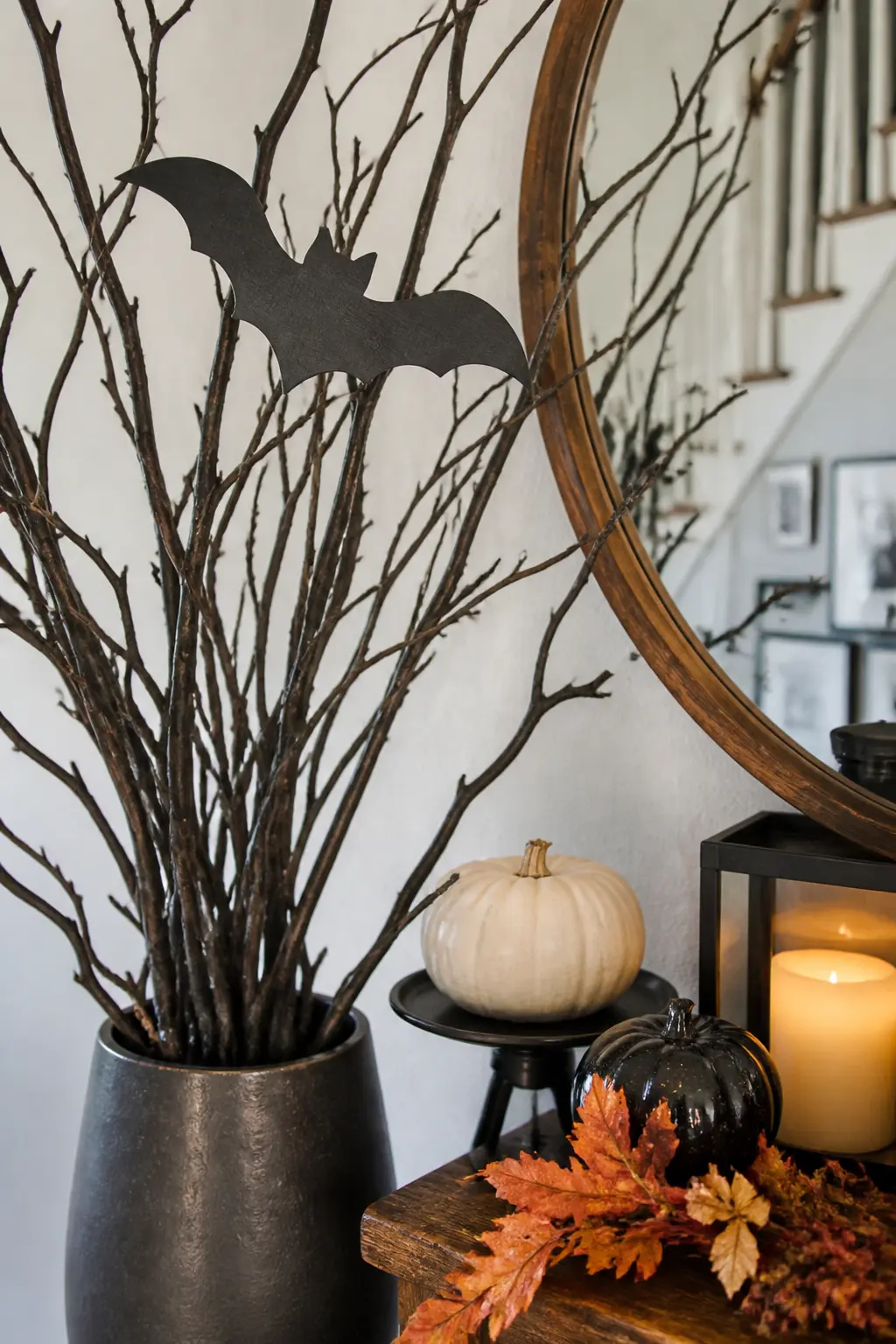
Add a Small Bat Cutout to the Branch Vase
A single oversized bat cutout, laser-cut wood or heavy black card, wired onto one of the upper branches of an existing branch vase has a graphic quality that reads deliberately artistic. One is the correct quantity. Two starts to look like decorating; one looks like a choice.
Wire it at a slight angle rather than flat-on. An angled bat looks like it landed; a flat one looks like it was placed.
🛍 Shopping guide
Table and Textile Layers
Textiles shift a room faster than almost anything else. These entries sit on top of what is already laid, so removal takes thirty seconds and leaves the original setup untouched.
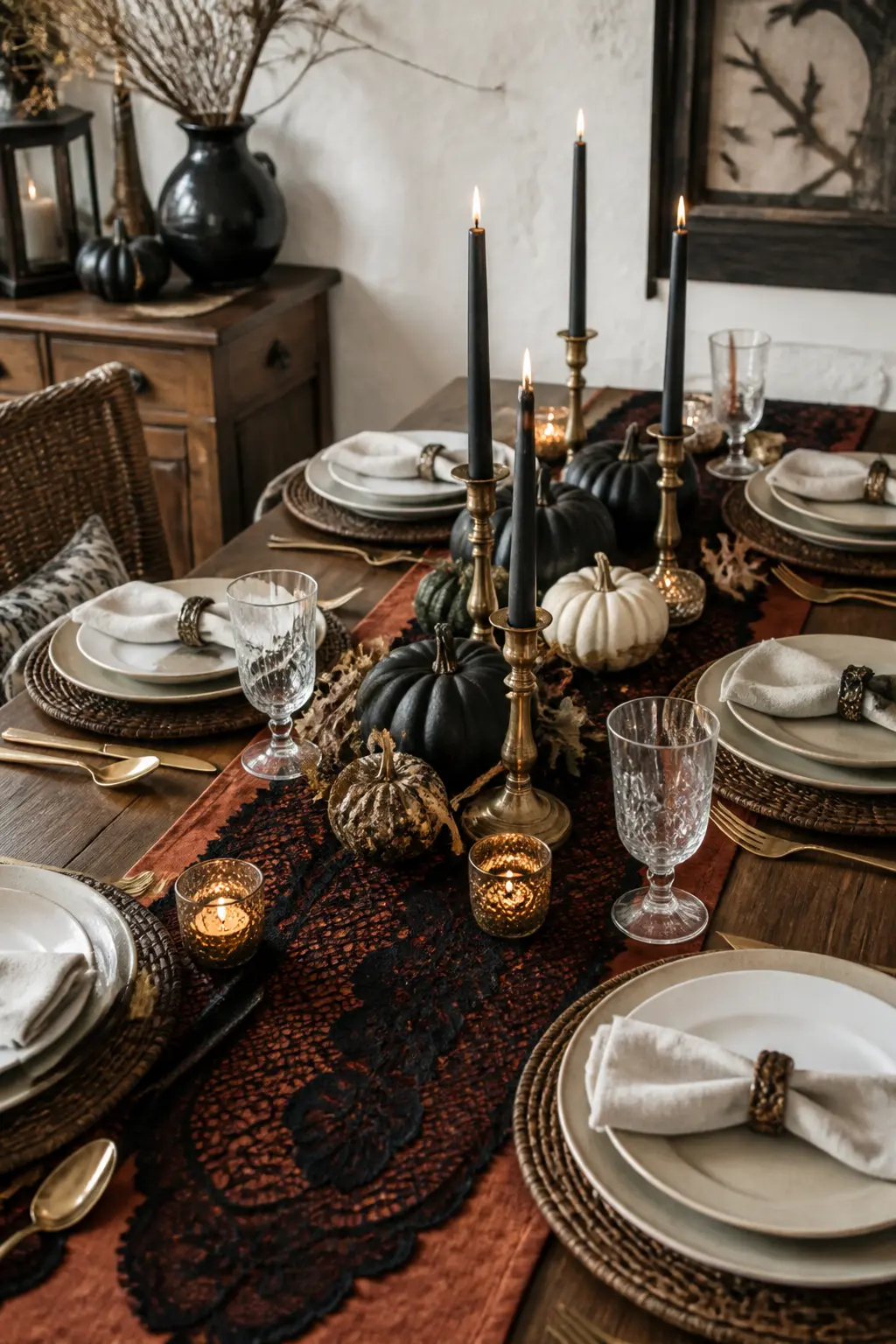
Layer a Black Lace Runner over the Existing Table Runner
A lace runner laid directly on top of an existing runner adds texture and shadow without replacing the colour underneath. The original runner shows through the lace, which actually makes both pieces look better than they would separately.
Centre the lace runner and let it be slightly narrower than what is beneath it so the edges of the original are still visible. That framing effect is what keeps the table from looking covered rather than layered.
🛍 Shopping guide
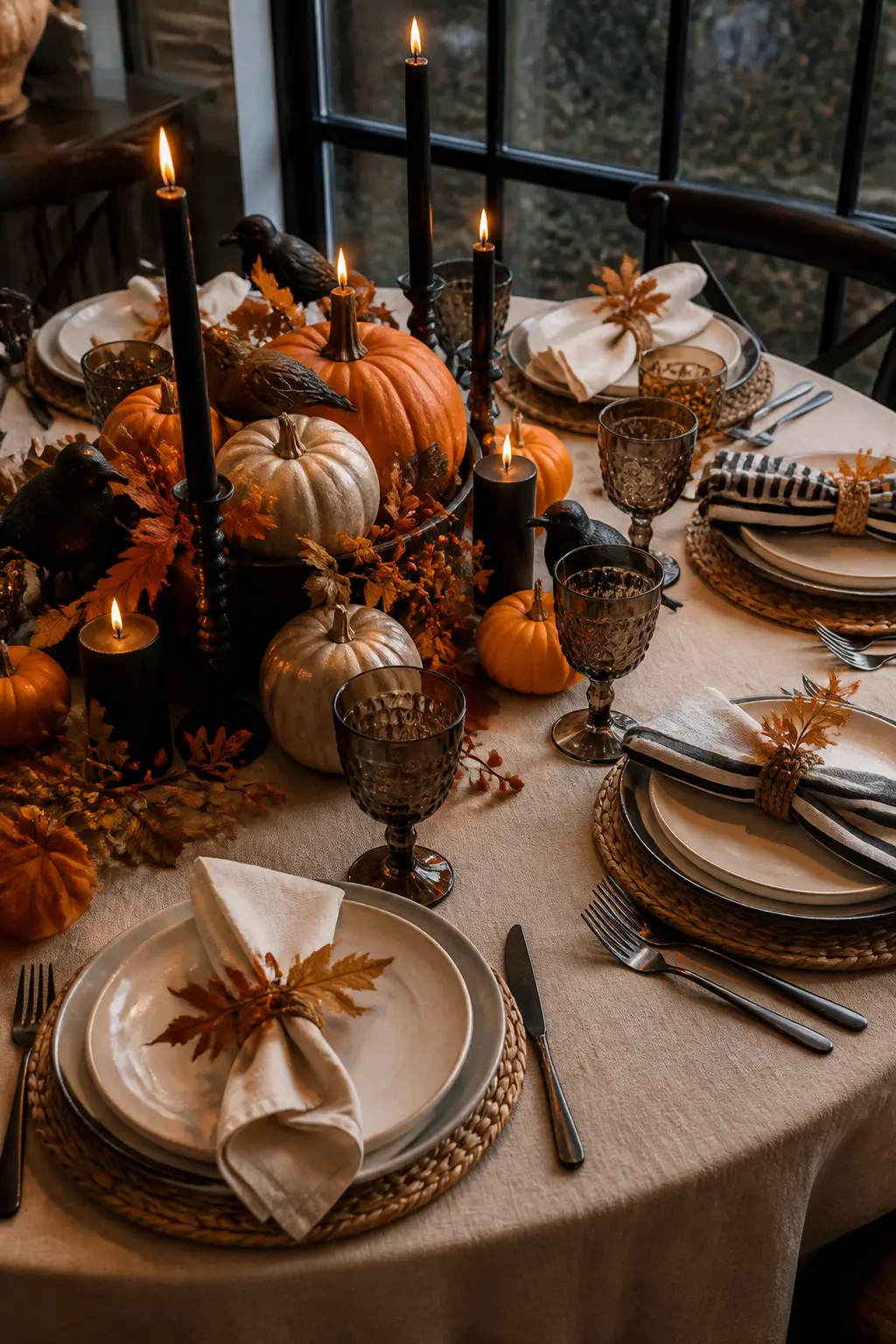
Add Black and White Striped Napkins to the Neutral Set
Set one or two black and white striped napkins among a neutral napkin set. Not all of them: the contrast relies on the majority still being plain. The striped napkins become the graphic note that the rest of the table leans against.
Fold them the same way as the rest, do not fan them or fan only the striped ones. Consistency in fold, contrast in pattern.
🛍 Shopping guide
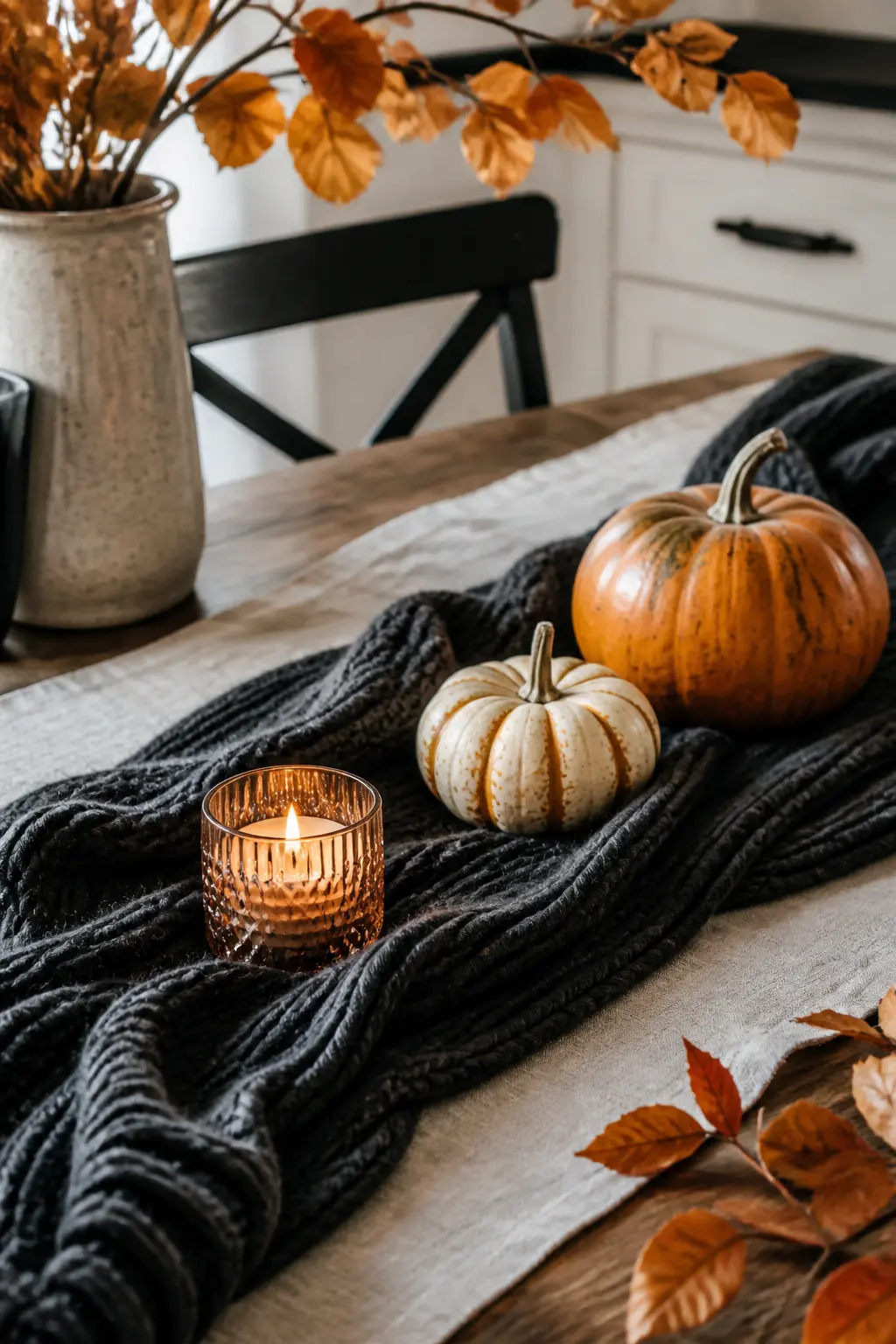
Lay a Dark Scarf over the Existing Table Runner
A dark knit or wool scarf laid diagonally across an existing table runner is one of those moves that looks expensive and costs nothing if you already own a dark scarf. The diagonal placement is the key: it reads as deliberate styling rather than something left behind.
Look for texture: chunky knit, waffle weave, or fine wool all work. Silk or anything shiny does not sit well here; it looks like an accessory that got lost.
🛍 Shopping guide
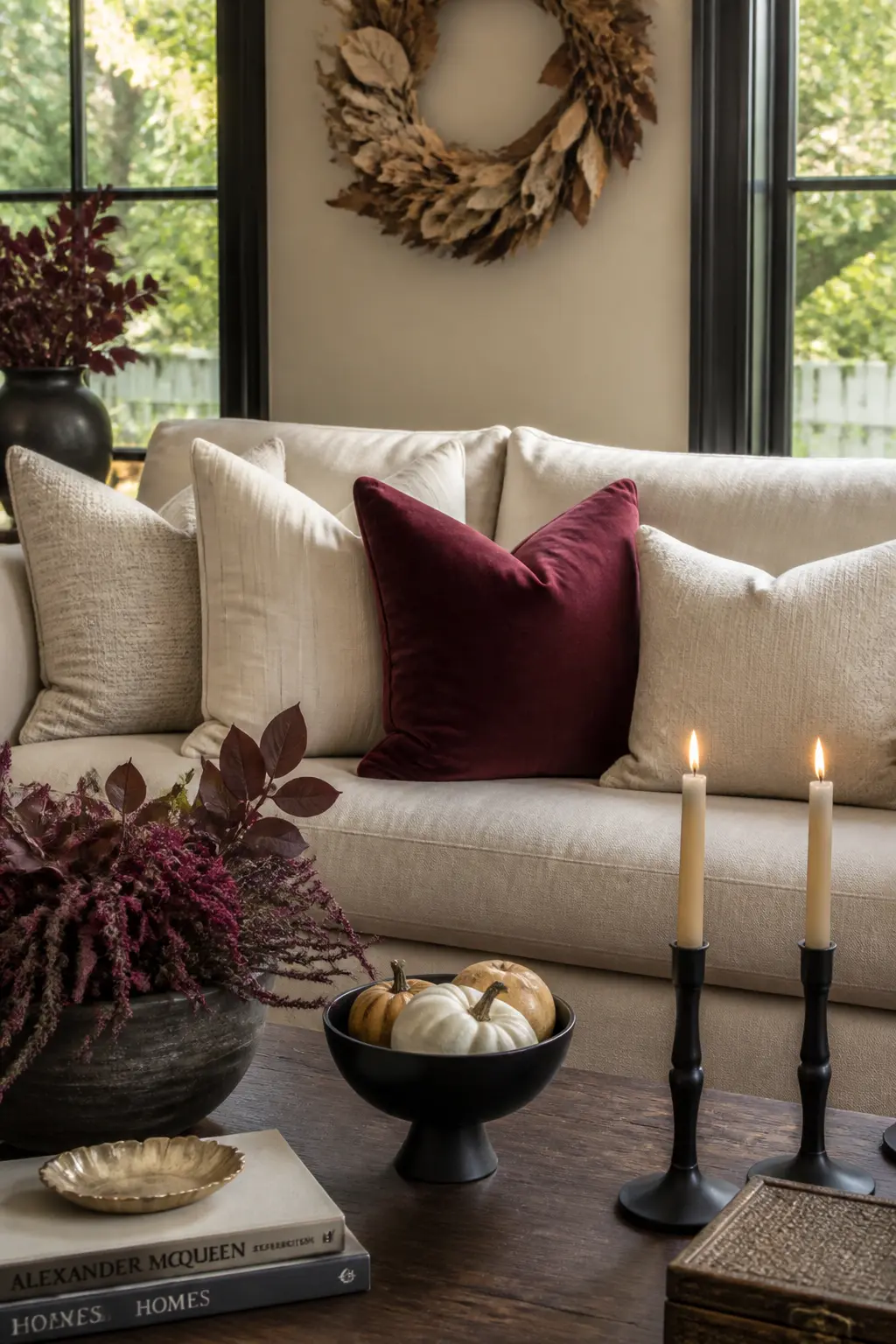
Swap One Cushion Cover to Deep Wine
One cushion cover swapped to deep wine or blackened plum among a set of neutral cushions does the same work as the single dark taper in the candle group: it is the note that tips the palette. The rest of the sofa stays completely untouched.
Keep the same size and roughly the same fill. A cushion that is a different thickness or drape from the rest will look like a replacement rather than a choice.
🛍 Shopping guide
Walls, Frames, and Shelves
A framed print or a shelf object carries a lot of visual weight in a small footprint. One swap in a gallery wall changes the story of all the frames around it. These entries play with that effect without touching the rest of the arrangement.
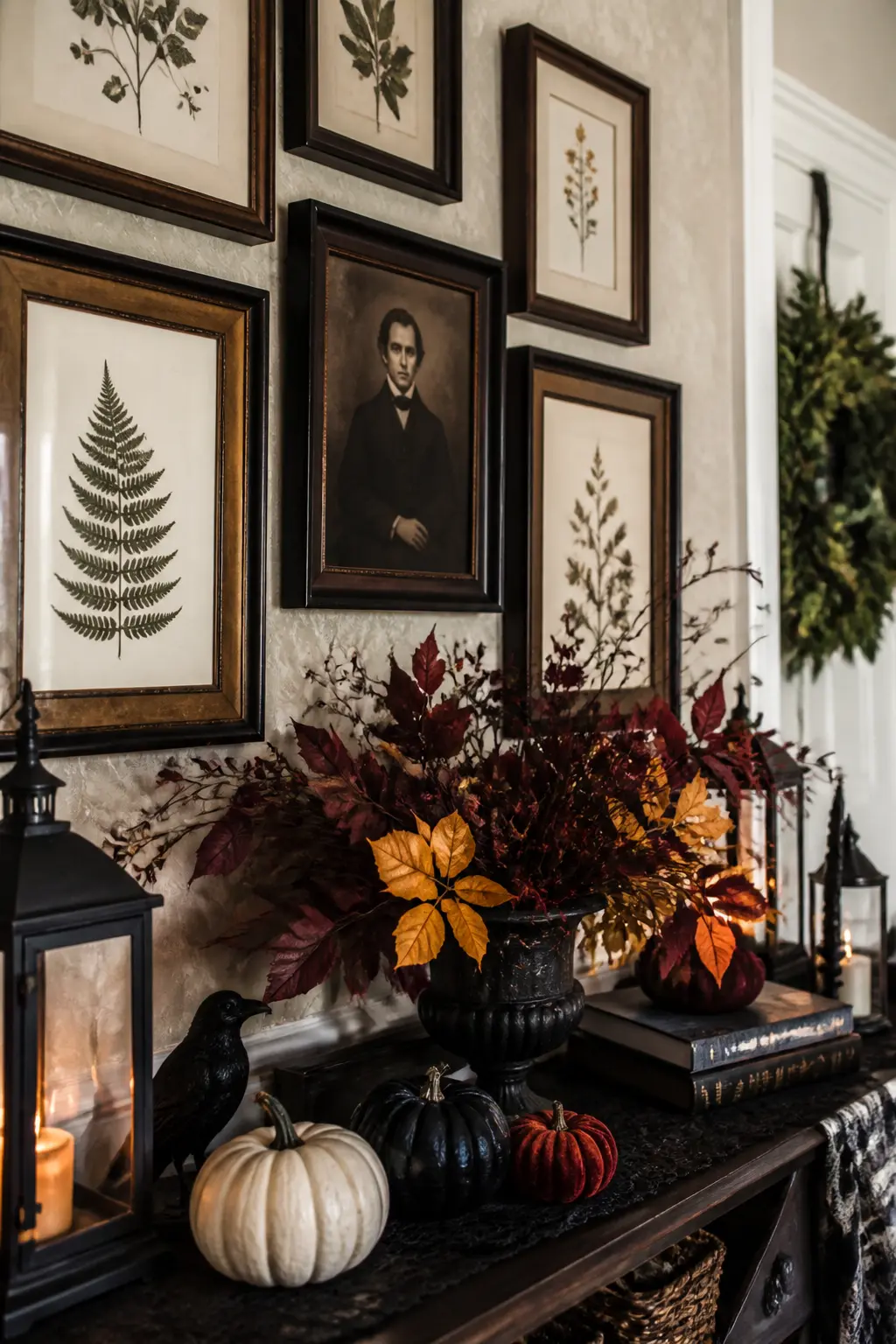
Swap One Framed Botanical for a Spooky Portrait
Remove one framed botanical from a gallery wall and hang a Victorian-style portrait or a dark antique-look print in its place. Use the same frame if possible: consistency of frame makes a swap look like a curation, not an intrusion.
Portraits in sepia or dark muted tones hold the wall better than black and white. The slightly uncanny quality of an old portrait in an autumn gallery wall is exactly the tonal shift this approach is after.
🛍 Shopping guide
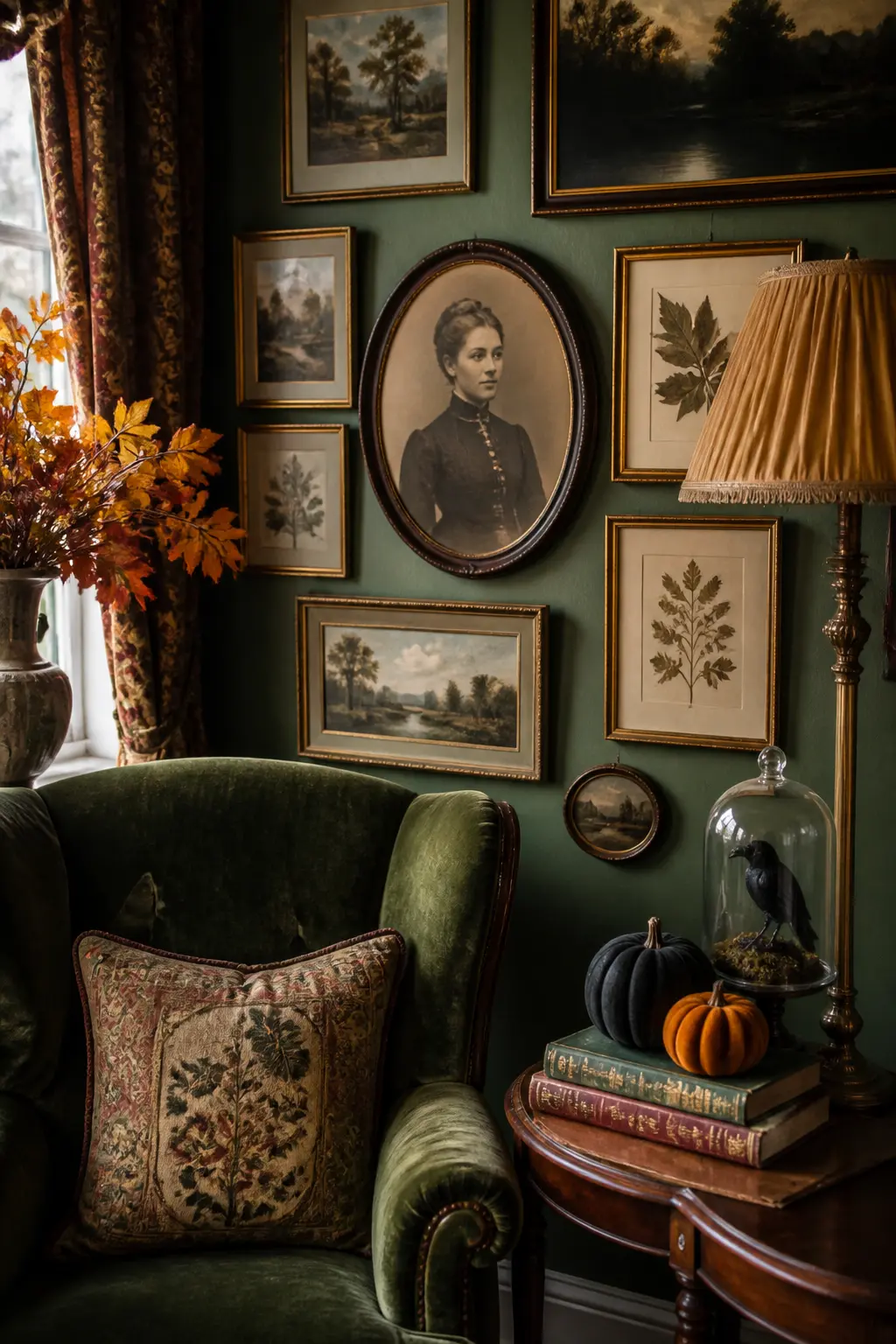
Swap One Framed Botanical for a Sepia Portrait
Where the previous entry uses a clearly gothic portrait, this version is quieter: a sepia family portrait or an aged landscape in the same tonal family as the botanicals. The swap registers as an edit rather than an event, which suits a room where subtlety is doing the work.
This works especially well when the gallery wall is already a mix of art styles. One portrait among several different print types reads as collection rather than Halloween.
🛍 Shopping guide
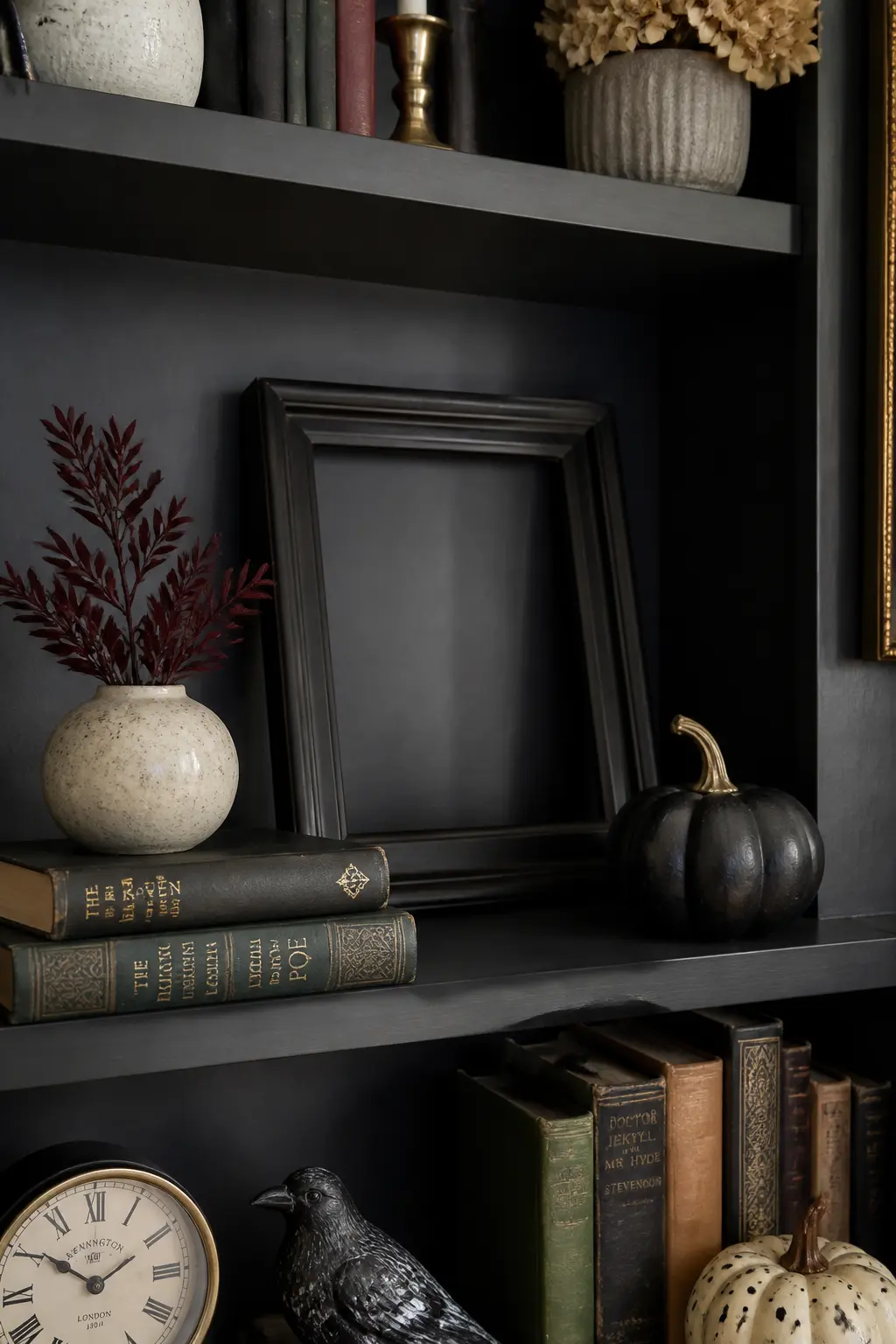
Add One Empty Frame to the Existing Shelf Styling
An empty frame propped against the back of a shelf, with nothing inside it, reads as both deliberately modern and faintly unsettling in an autumn context. That tension is the whole point. It looks like the portrait left of its own accord.
Dark or blackened frames hold the shelf better than gold or pale ones. The emptiness needs weight around it to register as intentional.
🛍 Shopping guide
Prop One Dark Mirror Against the Existing Shelf
A small dark-framed mirror propped against the side or back of a shelf, rather than hung on the wall, adds depth and a slightly witchy quality. Mirrors that are slightly smoky or aged rather than perfectly clear suit this better.
Let it overlap slightly with whatever is already on the shelf. A mirror that is perfectly isolated looks purchased; one that interacts with the existing objects looks discovered.
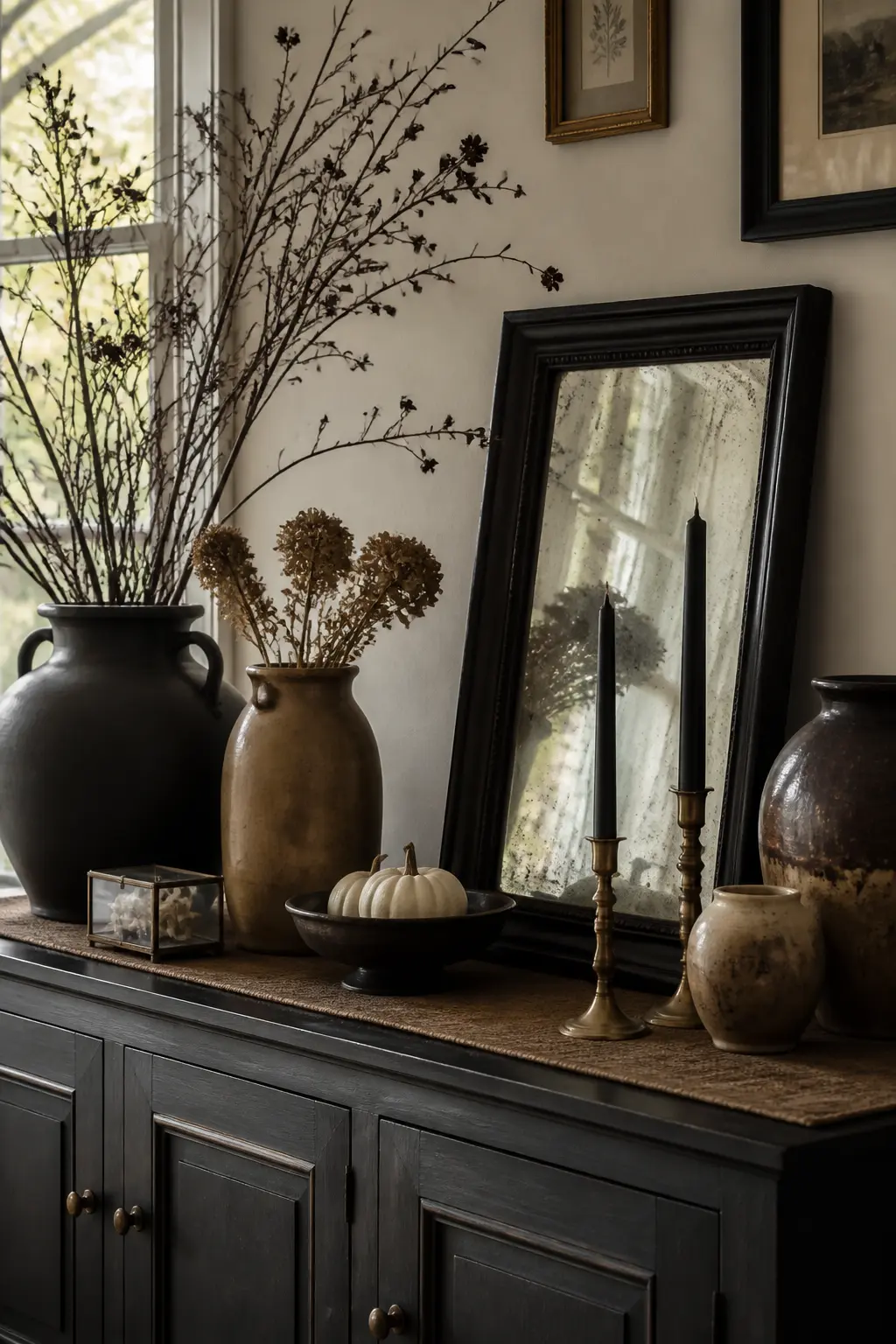
🛍 Shopping guide
Porch and Entry
The entry sets the expectation before anyone steps inside. These ideas work on the existing porch arrangement, adding one layer at a time. The trick is restraint: do one thing well rather than three things noisily.
Drape Torn Muslin over the Existing Porch Arrangement
Torn muslin draped loosely over one element of the porch, a lantern, a hay bale, a large pumpkin, adds the visual shorthand for cobwebs and abandonment without synthetic cotton webbing. It weathers beautifully and costs almost nothing.
Tear rather than cut the edges: cut muslin looks like a fabric, torn muslin looks like decay. That is the exact distinction that earns the effect.
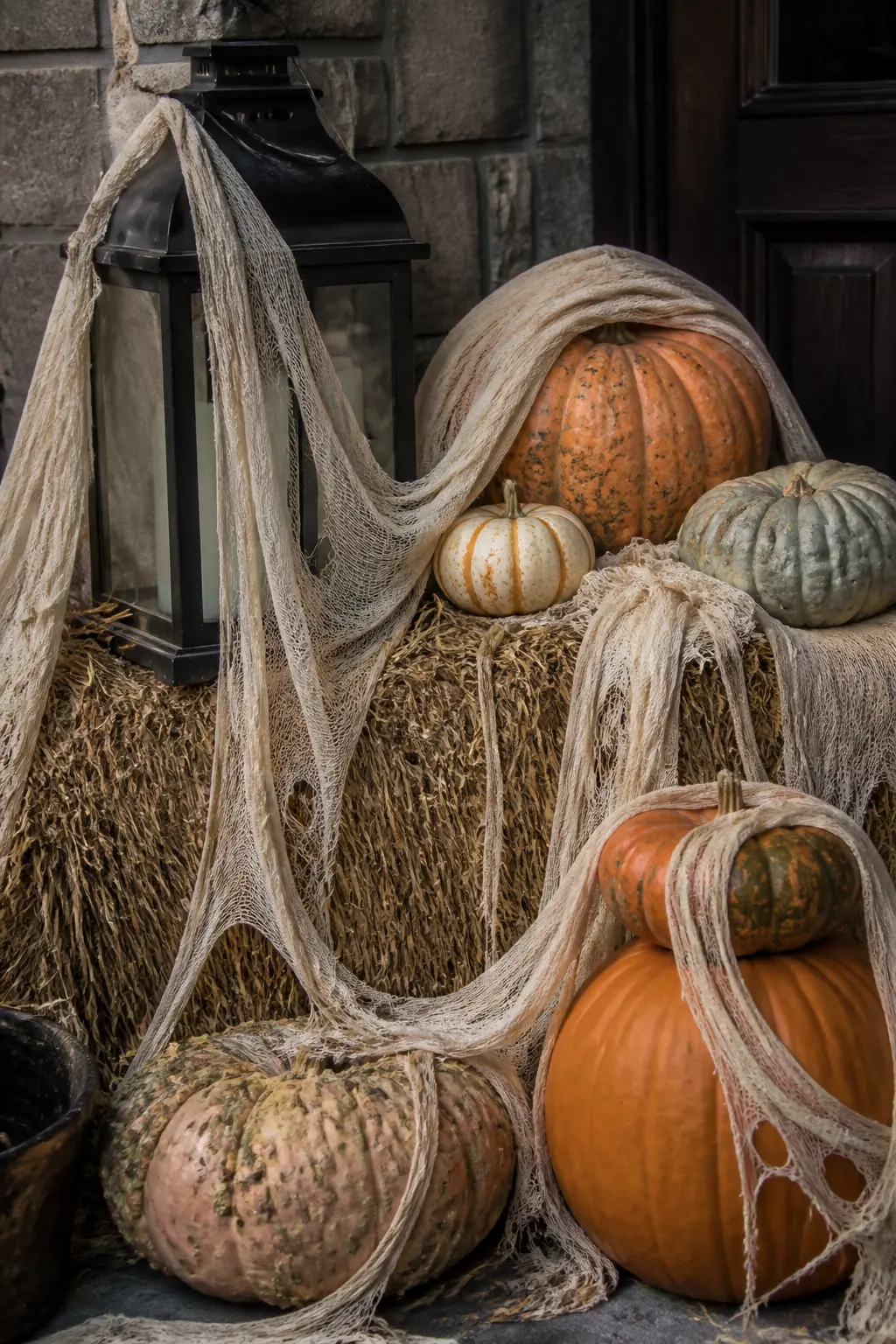
🛍 Shopping guide
Swap the Porch Bulb to Amber for a Moodier Glow
An amber bulb in the porch fixture changes the entire mood of everything outside the front door, without touching a single object. The existing pumpkins, lanterns, and foliage all read differently under amber light than under a standard warm white.
Deep amber reads warmer and more dramatic than orange, which tends toward festive rather than atmospheric. Look for amber rather than coloured party bulbs.
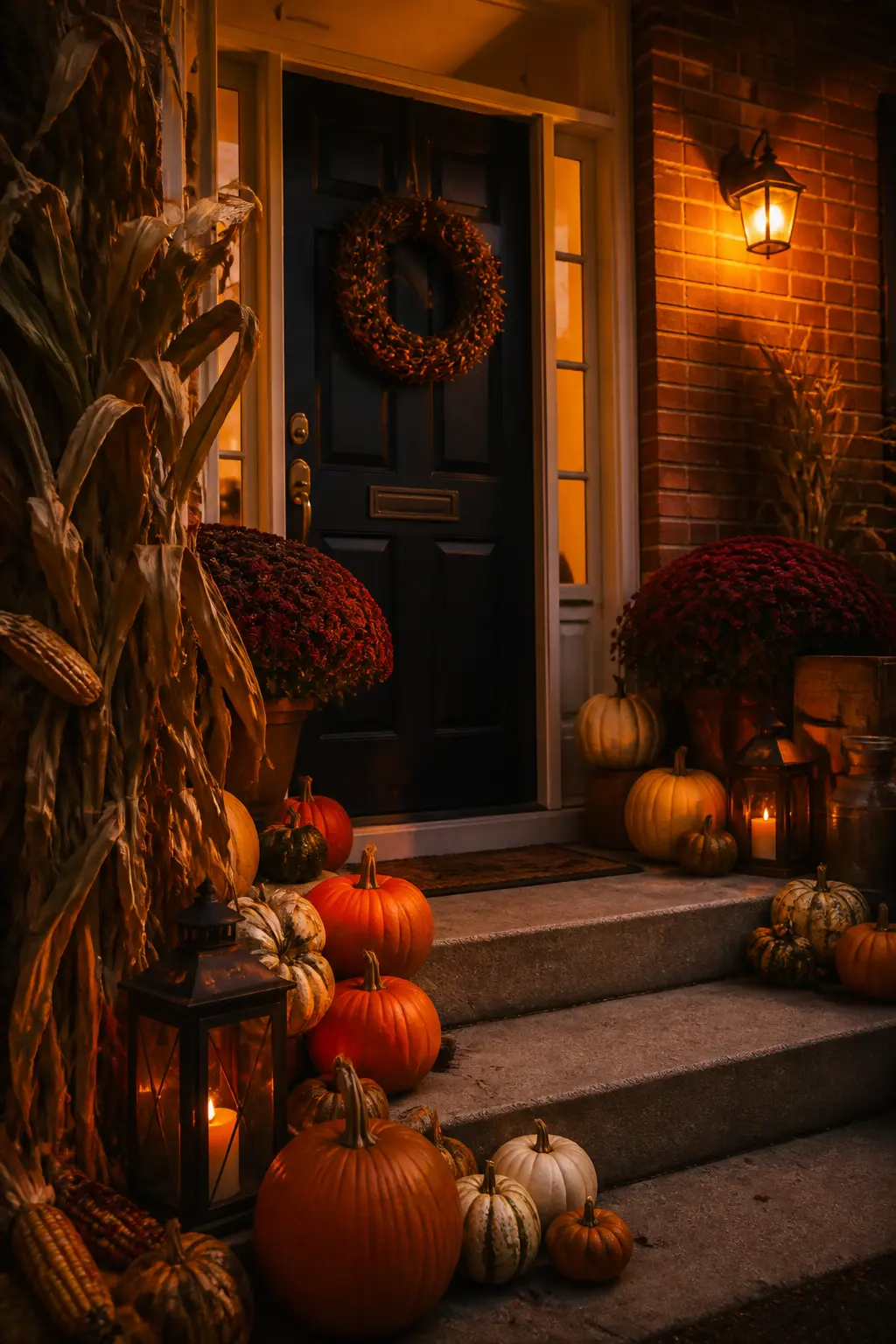
🛍 Shopping guide
Swap the Porch Bulb to a Deeper Tone, Change Nothing Else
Where the amber entry leans warm, this version uses a deep tinted bulb, reddish amber or dark orange, to push the porch into a more dramatic register. The distinction matters depending on what color your front door and porch materials are.
Red-toned light suits dark doors and brick surrounds. Amber suits pale or painted stone. Match the bulb tone to the existing architecture rather than buying the same bulb as someone else.
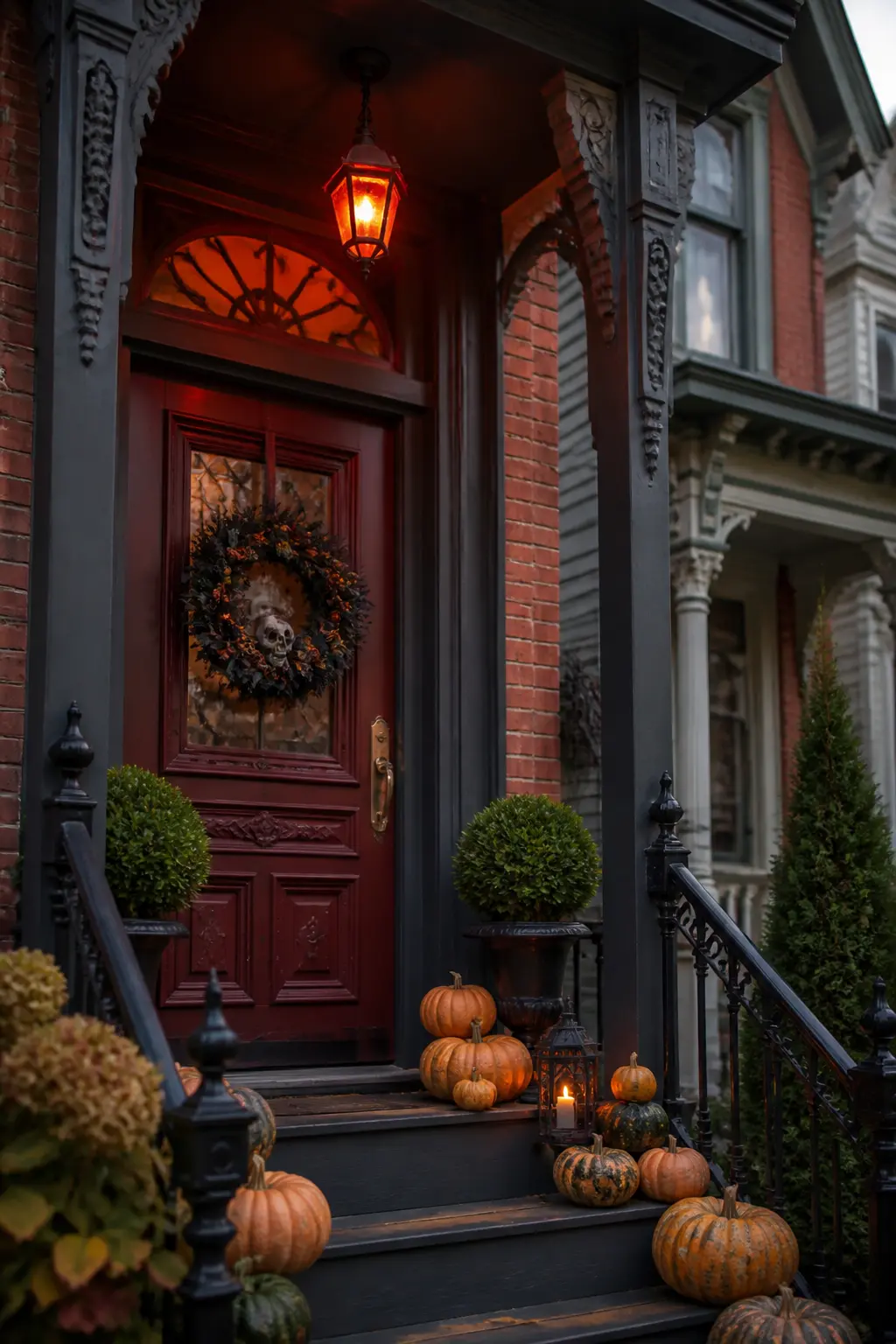
🛍 Shopping guide
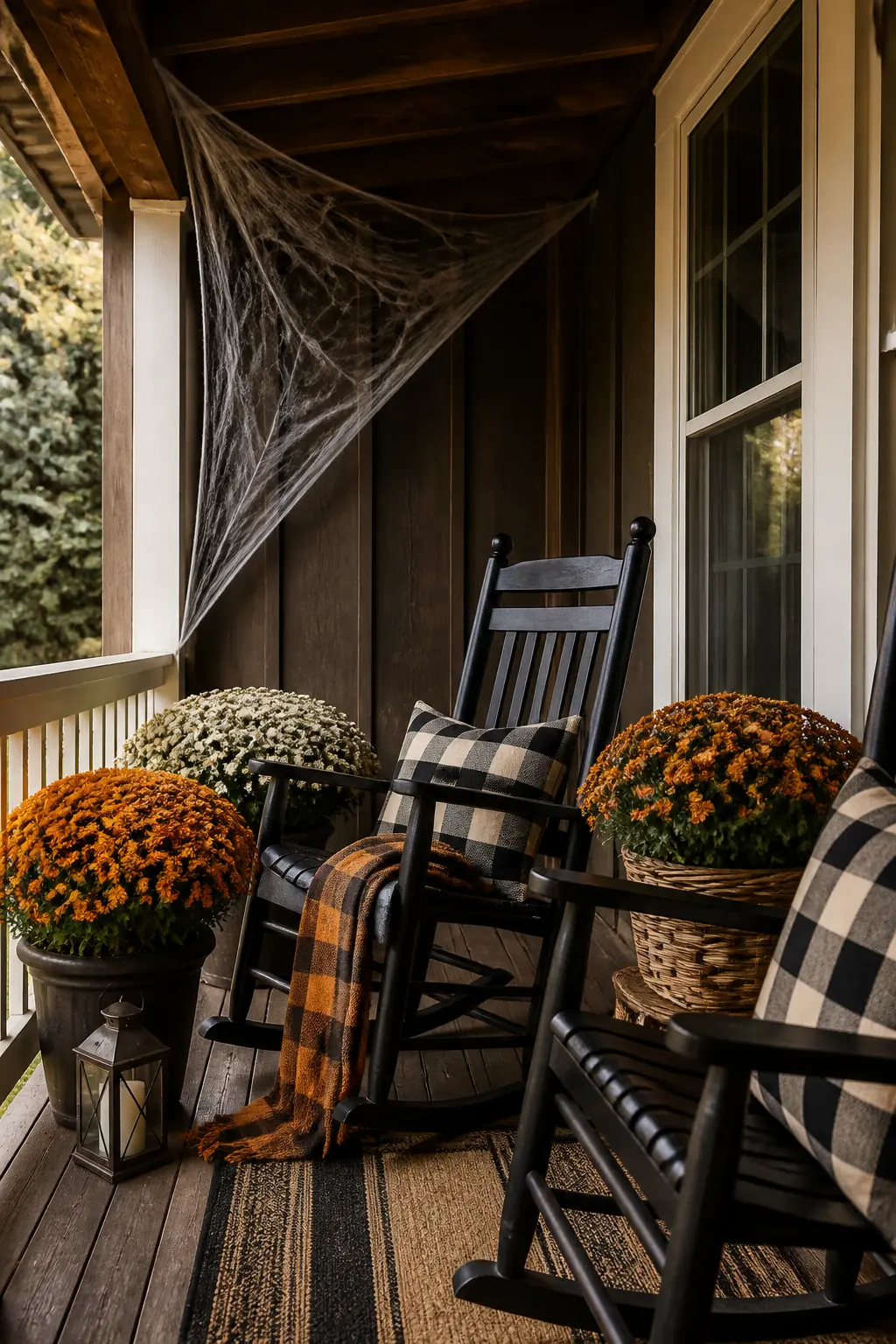
Add Spider Webs Only to the Porch Corner, Leave the Rest
The rule here is in the name. One corner of the porch gets a natural-looking faux web; the rest of the porch stays exactly as it is. Webbing that covers an entire porch looks like a Halloween store exploded. Webbing in one corner looks like the porch has been left alone a little too long.
Gray or off-white webbing reads more realistic than stark white. Avoid anything that includes neon spiders: the spiders that come with most web kits should be quietly discarded.
🛍 Shopping guide
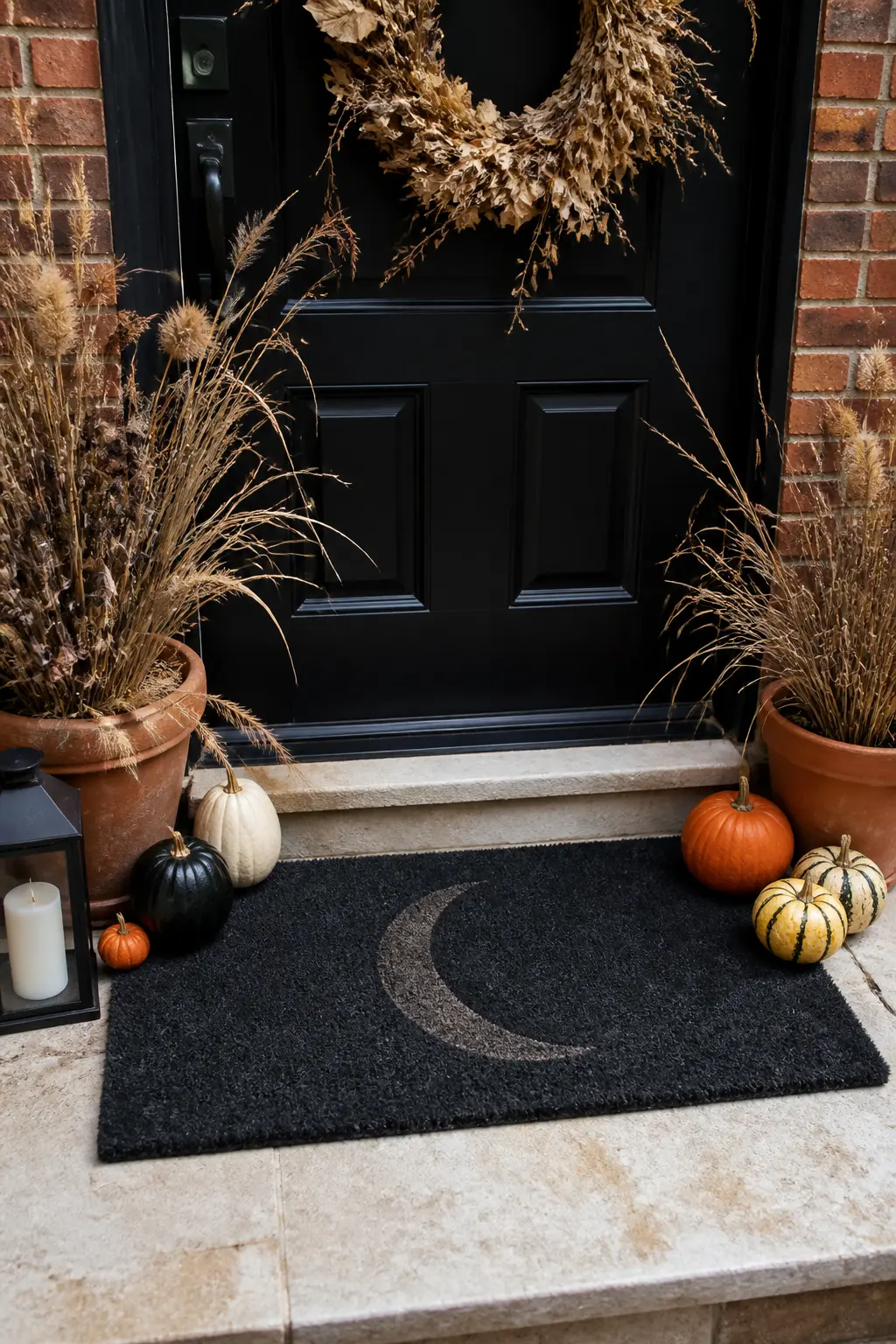
Swap the Doormat Only, Keep Everything Else
A doormat swap is the lowest-effort entry point on this entire list. Remove the existing mat, slide in a dark-toned or subtly spooky replacement, and the porch reads differently before anyone has looked at a pumpkin. Roll the original mat and store it inside.
Look for mats with a simple motif, a moon, a raven, or just a deep pattern with no text. Doormats with words on them are rarely as witty as they appear on a product page.
🛍 Shopping guide
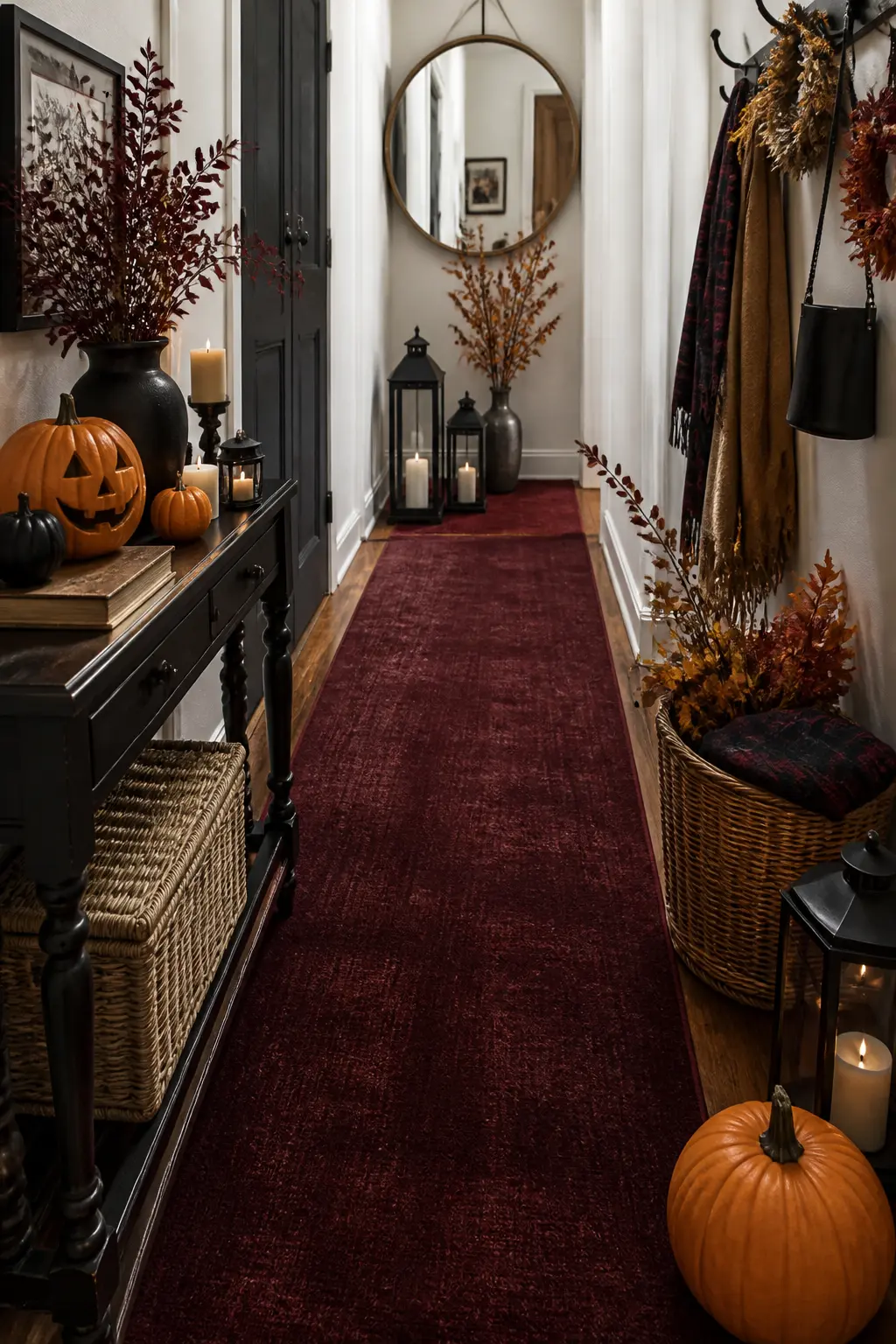
Change the Entry Runner to a Darker Wine Tone
The entry runner covers more visual ground than almost any other single textile in the house because it runs the full length of the first space a guest sees. Swap it to a deep wine, forest, or charcoal tone and the whole entry recalibrates.
Roll and store the original. The swap takes two minutes. The effect lasts the whole season without any further attention.
🛍 Shopping guide
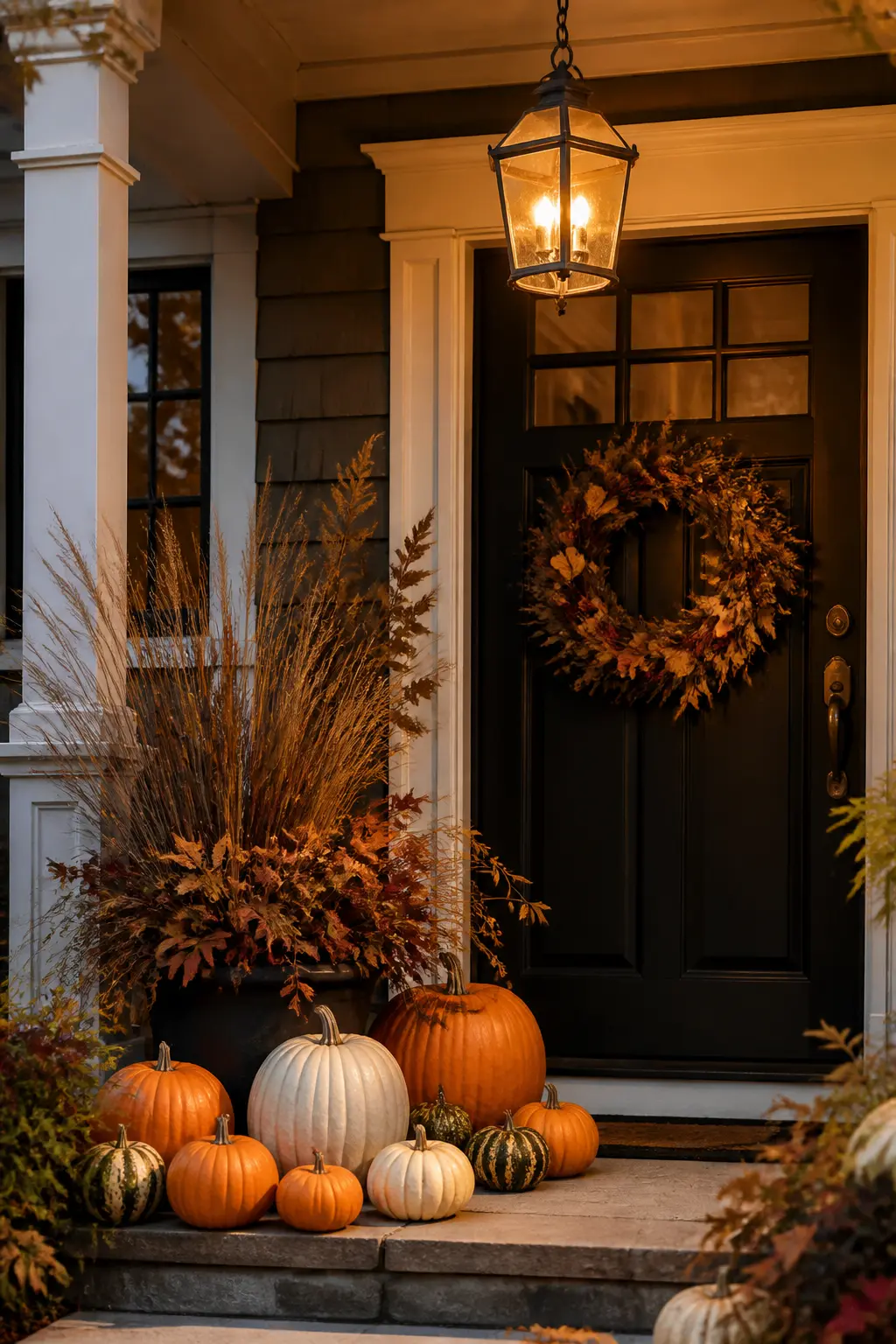
Swap the Porch Bulb and Change Nothing Else
Identical in principle to the amber and deep-tone bulb entries but worth stating plainly as a standalone instruction for anyone who has been adding layers all down this list: sometimes one bulb swap after everything else is already done is the move that ties the whole porch together.
The constraint is the point. If you have done four or five porch changes from this list, adding the bulb swap last lets you see whether the rest still needs anything. Usually it does not.
🛍 Shopping guide
Finishing Details
The entries in this section are single-object additions, each one small enough to feel considered rather than costumed. They close the gap between autumnal and properly Halloween without announcing themselves.
When the decor is done and guests arrive, 23 Hilarious Halloween Games for Adults is a practical next stop.
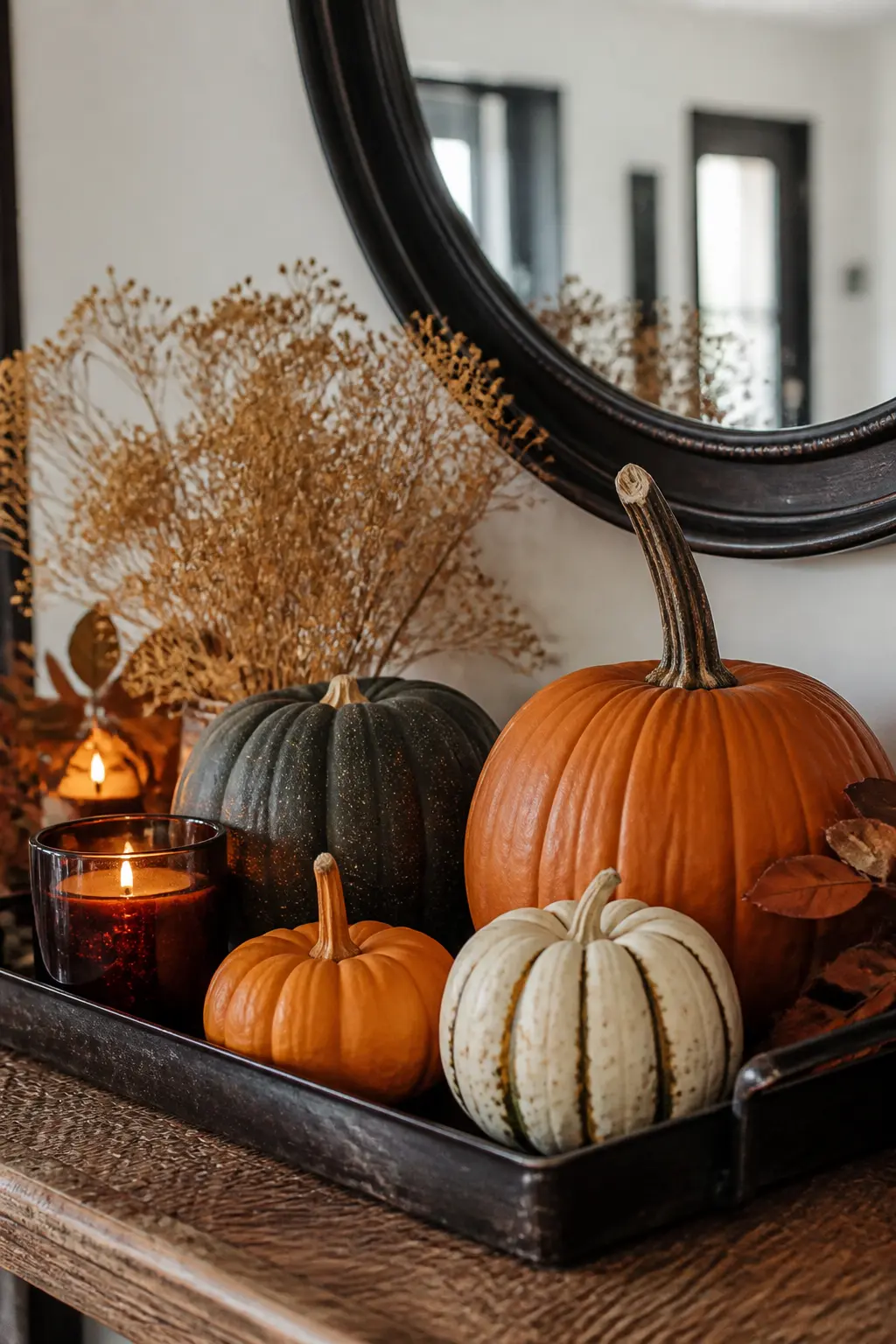
Swap the Console Tray for a Blackened Metal One
A blackened or dark metal tray under an existing console arrangement anchors the whole grouping and shifts its palette without moving any of the objects sitting on top. The dark base makes the autumn-toned objects above it read richer, the way a dark frame improves a pale painting.
Look for raw iron, blackened steel, or oxidized brass finishes. Painted black trays can look cheap in person; natural dark metal finishes almost never do.
🛍 Shopping guide
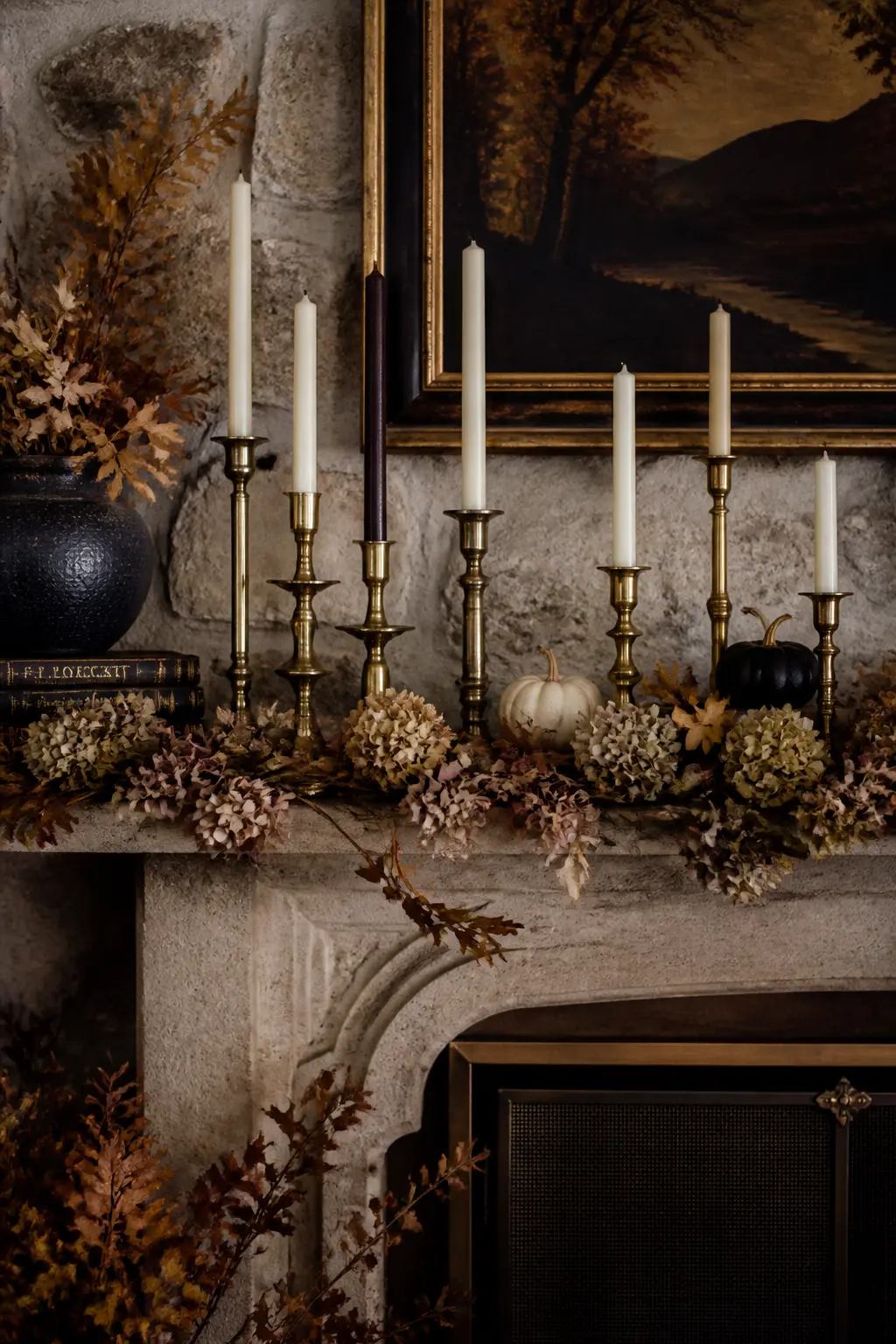
Add a Brass Candlestick to the Existing Group
Adding one more candlestick to an existing brass cluster lets you introduce a dark taper without the swap feeling like a replacement. The new holder houses the dark candle; the existing holders keep their cream or ivory ones. The group reads as collected rather than themed.
Vary the height from what is already there. If the existing cluster is mostly mid-height, add something tall; if it is tall, tuck in something short.
🛍 Shopping guide
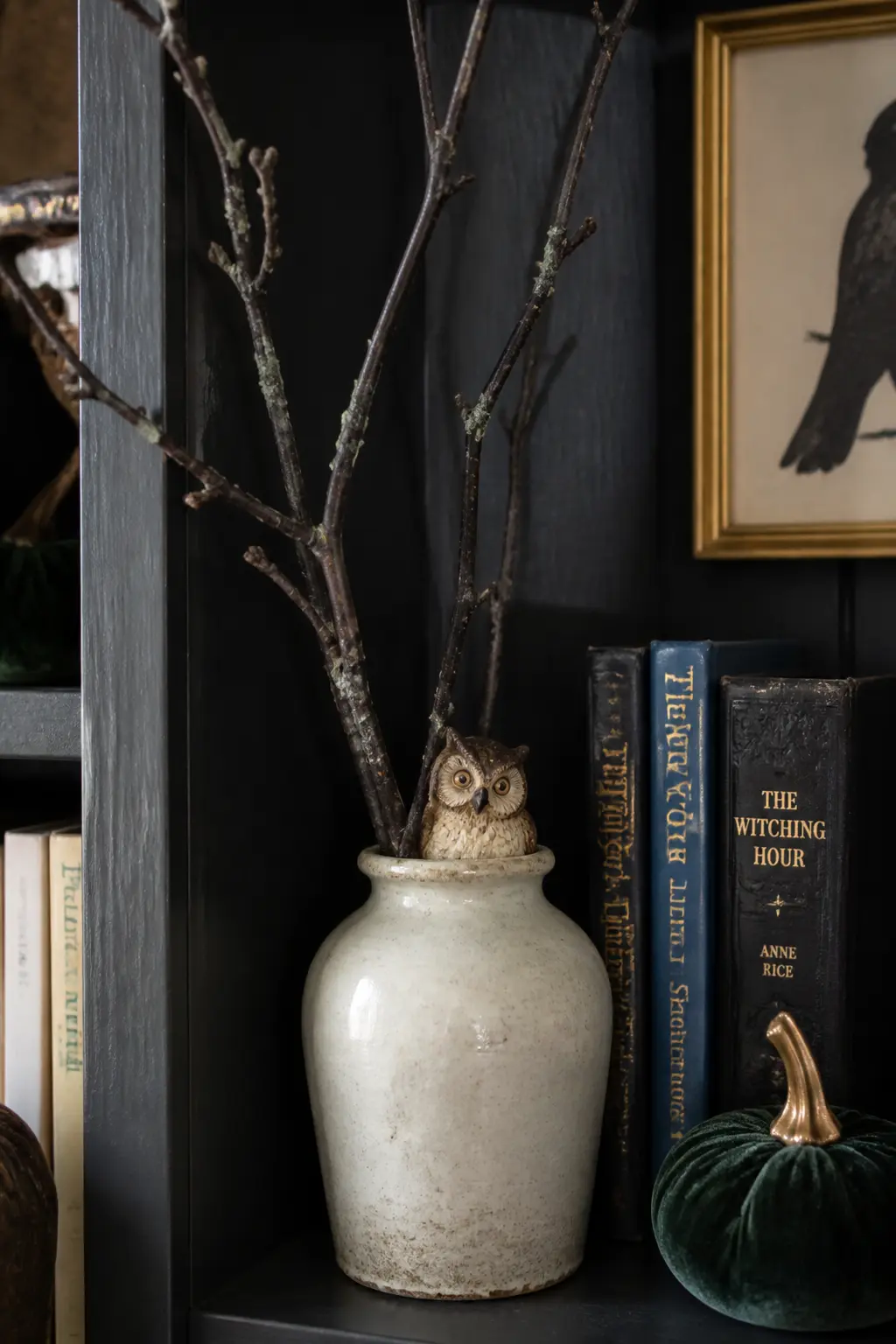
Tuck a Single Owl Figure into the Branch Vase
This is a quieter version of the owl-in-branches entry in the wreaths section. Here the owl is the only addition, the branches are presumably already in place, and the figure is small enough that it rewards a closer look rather than announcing itself immediately. Restraint is the whole method.
A figure between 8cm and 12cm is the right scale for most branch vases. Larger and it dominates; smaller and it disappears entirely.
🛍 Shopping guide
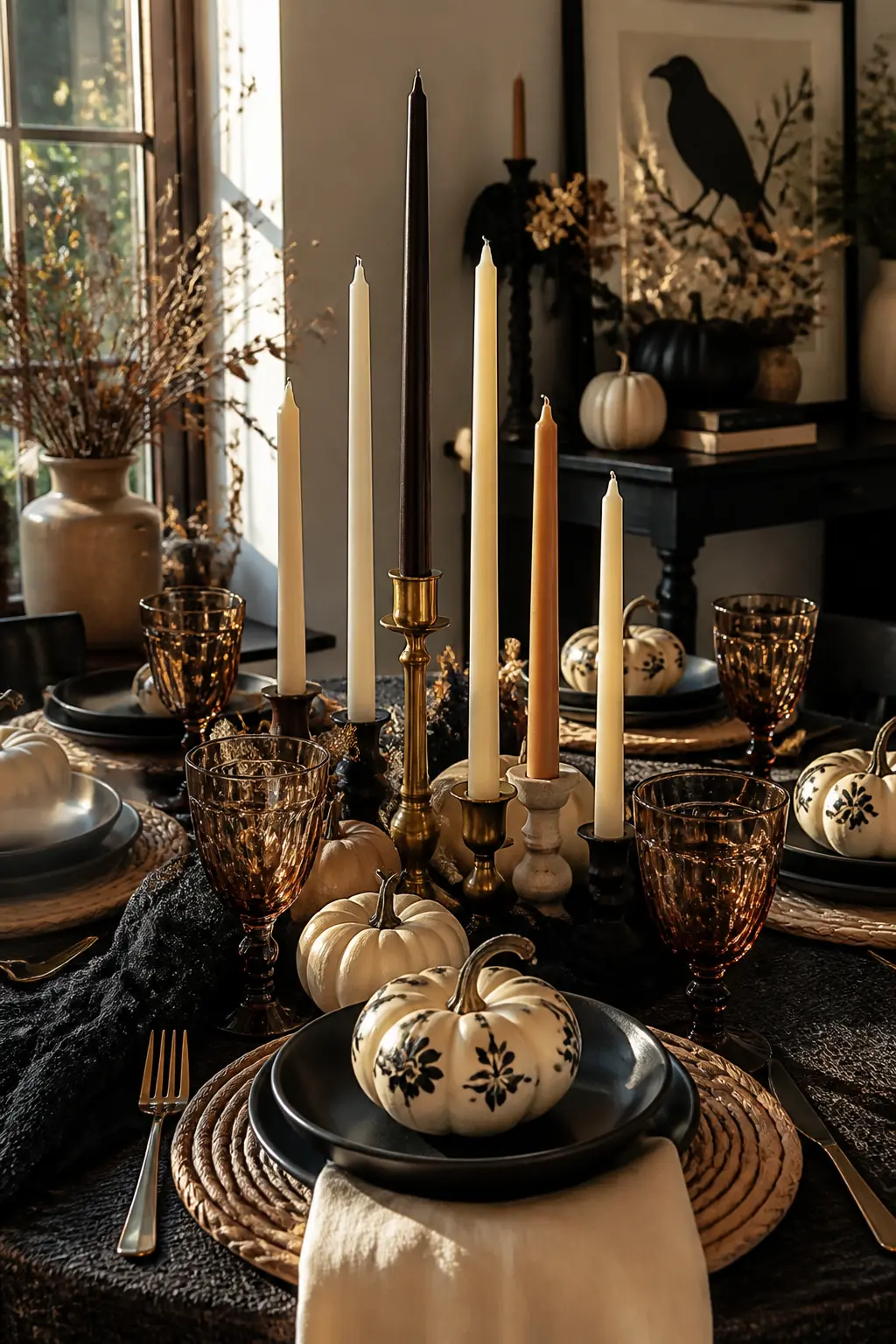
Add a Single Dark Taper to the Cream Group
The taper should be the tallest element in the group. Height draws the eye upward and gives the whole arrangement a more formal quality that suits a dining context.
🛍 Shopping guide
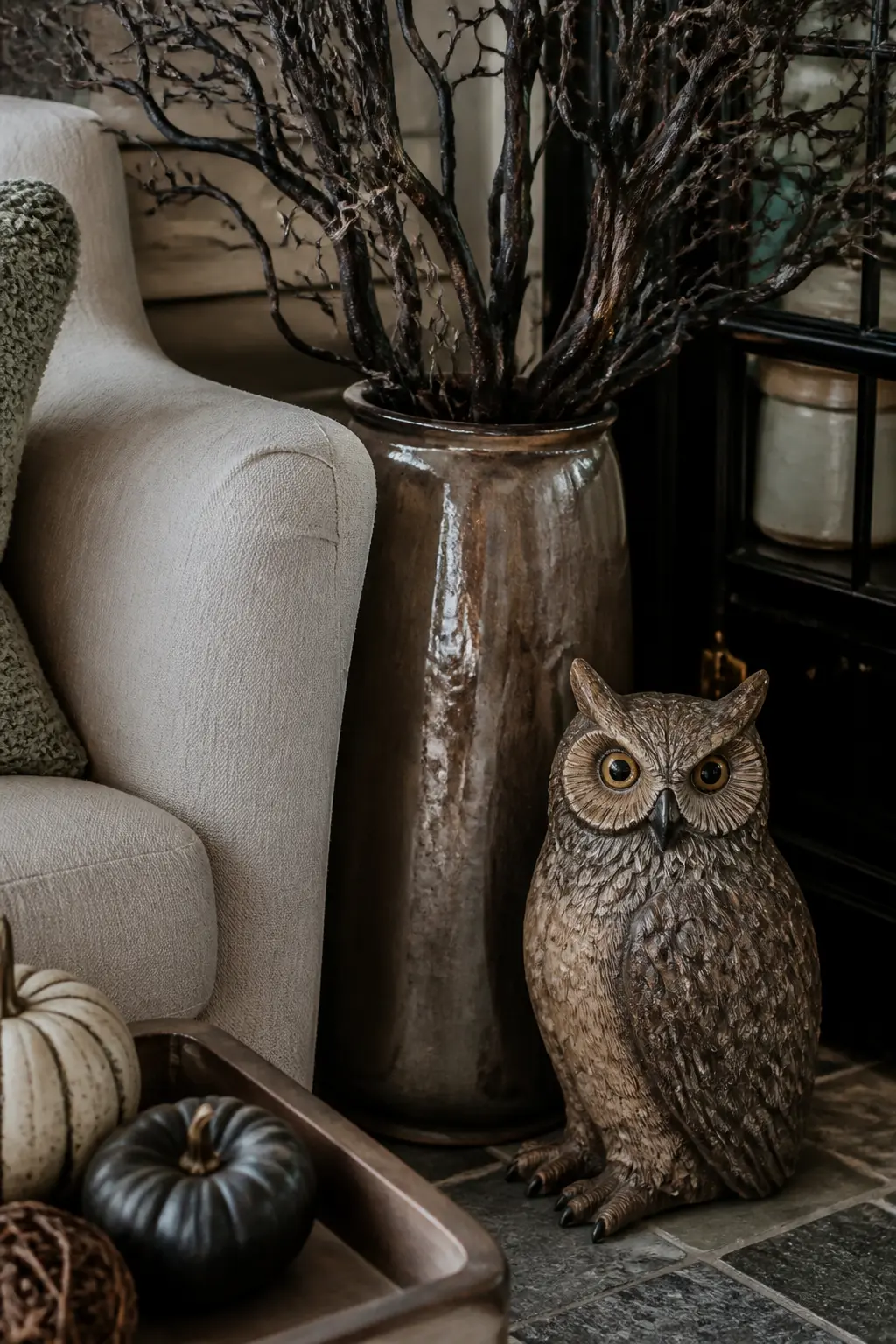
Tuck a Single Owl Figure into the Existing Branch Vase (Entry Two)
A second placement variation for this idea: rather than shelf branches, this version works with a floor-standing branch vase, which reads very differently in scale and context. A floor vase owl figure needs to be larger, 20cm or more, to hold its own against the volume of branches above it.
Set it at ground level, not balanced on a branch. Owls on the ground look naturalistic; owls balanced on a branch tip look like craft store decoration.
🛍 Shopping guide
Frequently Asked Questions
Can fall halloween decor look pulled together without a full Halloween theme?
Yes, and it usually looks better that way. The approach in this list keeps the autumn palette intact and adds dark or gothic notes one at a time. The result reads as a deliberate edit rather than a seasonal switchover, which tends to look more intentional than a full themed setup.
How many of these additions should go in the same room?
Two or three per room is usually enough. A single room with five or six additions from this list starts to tip from layered into decorated, which defeats the whole purpose. Pick the one or two that suit the room’s existing strengths and stop there.
What if my existing fall decor uses a lot of orange? Will dark additions clash?
Dark additions actually anchor orange rather than clashing with it. Black, deep plum, and charcoal are all natural complements to orange tones. The contrast is part of why the combination works so reliably.
Which of these ideas are truly reversible in under five minutes?
The bulb swaps, the dark taper additions, the dark scarf layering, the cushion cover swap, and the doormat swap are all under five minutes in both directions. The lace runner and the portrait swap take a little longer but still involve no tools.
Is there a version of this that costs almost nothing?
Several: the torn muslin drape costs under two pounds of fabric. The dark scarf uses something already in the coat cupboard. The empty frame uses a frame already in the house. The bulb swap is a single cheap bulb. You can do five or six of these entries for well under twenty pounds total if you work with what is already in the room.

15 outdoor Halloween party games for your backyard bash — active, printable, and spooky. Print the
72 Halloween this or that questions sorted by round, plus free printable card sheets. Perfect for a

14 Halloween sugar cookies decorated with a spoon, toothpick, and zip bag. Complete recipes with exa
Leave a Reply